Since the introduction of the Fontan procedure in 1971,Reference Fontan and Baudet 1 there have been improvements in the surgical techniques as well as in the medical management of patients with single ventricle physiology. The improved management of patients undergoing a Fontan procedure has resulted in decreased early and late mortality, demonstrated by numerous centres.Reference Mitchell, Ittenbach, Gaynor, Wernovsky, Nicolson and Spray 2 – Reference d’Udekem, Iyengar and Cochrane 4 As such, these patients like any individual may necessitate elective or urgent non-cardiac surgery in a centre not familiar with their anatomy and physiology.
The aim of this study was, first, to determine the long-term outcome of our Fontan series palliated with the most recent surgical techniques, with specific focus on cardiovascular morbidity and mortality. The second objective of this study was to report the incidence and the perioperative course after anaesthesia for non-cardiac procedures in this cohort of patients.
Materials and methods
We reviewed the records of all patients who had undergone a Fontan procedure between 1996 and 2008. The surgical technique was either a lateral tunnel or an extracardiac conduit. Their follow-up was recorded until June, 2013. Follow-up was analysed as completely as possible, with records from our internal database and reports sent from the primary care physicians and/or referring cardiologists. With regard to data on non-cardiac interventions, all procedures necessitating general anaesthesia or sedation were included. Data on non-cardiac interventions performed in other hospitals were also included if available. Exclusion criteria were patients who underwent non-cardiac interventions during their admission for the Fontan procedure.
Statistical analysis
All data are expressed as mean±standard deviation, median (percentile 25–percentile 75) or numbers and percentages as appropriate. A Mann–Whitney test was used to compare quantitative variables between different independent groups. A χ2 or Fisher’s exact test was used for comparison of dichotomic variables between different independent groups. The probability of survival is estimated using the Kaplan–Meier method. The Kaplan–Meier curve was computed from the date of Fontan surgery to the date of death or last follow-up (censored cases). A log-rank test was used to compare the survival between the different groups of patients. A p<0.05 is considered significant. All the p-values are two-tailed. Statistical analysis was performed using IBM SPSS Statistics 21.
Results
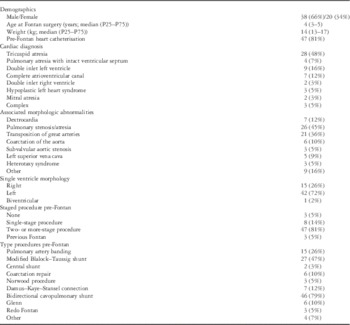
Overall, 58 patients were eligible and included for analysis. Their characteristics are shown in Table 1. Tricuspid atresia was by far the most common diagnosis. Left ventricle morphology was present in 72% of the patients. Right ventricle morphology was found in 26% of the patients. Of the patients, one showed biventricular anatomy, and three underwent conversion of an earlier atriopulmonary Fontan to either a lateral tunnel or an extracardiac conduit Fontan.
Characteristics of patients (n=58).

P25=percentile 25; P75=percentile 75
Data are expressed in numbers (%)
Fontan procedure
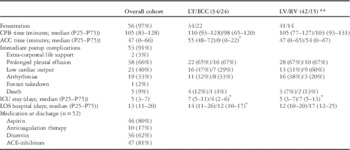
Table 2 illustrates the perioperative and postoperative data. Immediate post-Fontan complications occurred in 91% of patients. Prolonged pleural effusion, low cardiac output, and arrhythmias were among the most common complications. One patient underwent a takedown of his lateral tunnel because of severe vena cava syndrome and low cardiac output. This patient has been eliminated from further follow-up analyses. Patients operated using a lateral tunnel had significantly a longer duration of aortic cross-clamp time (p<0.001), a longer ICU stay (p<0.001), and a longer length of stay in hospital (p=0.03) compared with the extracardiac conduit Fontan group.
Fontan procedure: perioperative and postoperative data (n=58).

ACC=aortic cross-clamp; CPB=cardiopulmonary bypass; ECC=extracardiac conduit; LOS=length of stay; LT=lateral tunnel; LV=left ventricle; P25=percentile 25; P75=percentile 75; RV=right ventricle
Data are expressed as numbers (%)
* p<0.05 in-between group
** One patient had a biventricular anatomy
It is noteworthy that in our series only 17 patients (29%) underwent a Fontan procedure without aortic cross-clamp. Nowadays all our Fontan operations are performed without aortic cross-clamp.
There were five patients who died in the early postoperative course; of them, four patients had undergone a lateral tunnel, and one an extracardiac conduit procedure. There was no statistically significant difference in the early mortality with regard to the type of surgery (p=0.39) or the morphology of the single ventricle (p=0.60). Causes of death were major arrhythmias and severe low cardiac output.
Long-term follow-up analysis
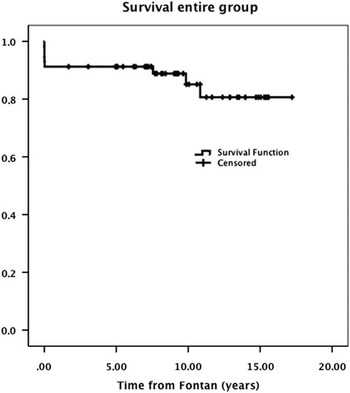
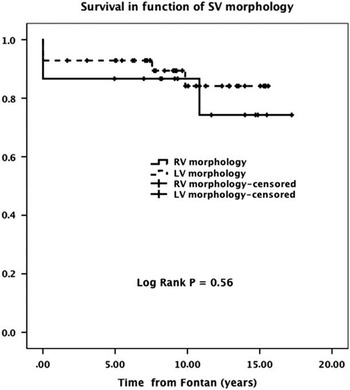
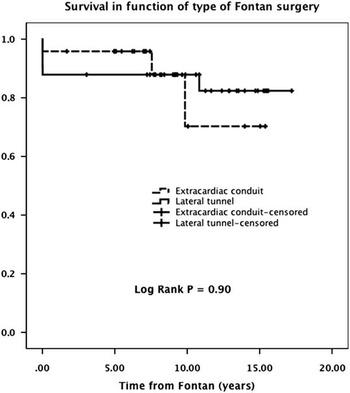
Long-term follow-up was analysed for the remaining 52 patients. The maximum follow-up was 17 years with a cumulative survival of 81%, as shown in Figure 1. Mean survival time was 15 years with a 95% confidence interval of 13.4–16.4 years. There was no significant difference in long-term survival when morphologies of single ventricle were compared (74% for right ventricle versus 84% for left ventricle; log-rank p=0.56) (Fig 2). The type of Fontan surgery did not influence the long-term survival as shown in Figure 3 (71% for extracardiac conduit versus 82% for lateral tunnel; log-rank p=0.9).
Kaplan–Meier survival curve for entire group.

Kaplan–Meier survival curve in function of single ventricle (SV) morphology. LV=left ventricle; RV=right ventricle.

Kaplan–Meier survival curve in function of the type of Fontan surgery.

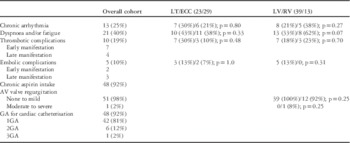
There were three late deaths: one patient died of a hepatocarcinoma, one died after an attempt to restore a biventricular physiology, and one died from bleeding and low cardiac output after a gynaecologic intervention. The atrioventricular valve competence was evaluated in all the patients. Table 3 illustrates these follow-up data. No patient was on a transplant list or had been transplanted at the end of the study. Mean oxygen saturation of the overall cohort was 93±3%.
Follow-up data (n=52).

AV=atrioventricular; ECC=extracardiac conduit; GA=general anaesthesia; LT=lateral tunnel; LV=left ventricle; RV=right ventricle
Data are expressed in numbers (%)
Chronic arrhythmias – including three permanent pacemaker implantation – fatigue/dyspnoea, and thromboembolic complications were among the most recurrent cardiovascular morbidity factors. Thromboembolic complications were divided into early and late presentation to distinguish the pathophysiological mechanisms. Indeed, strategies to prevent early events differ from those used to prevent later complications. Late thrombotic complications occurred in four patients, despite chronic aspirin intake. The diagnosis of thrombosis was either clinical or made by routine echographic imaging. All embolic complications occurred in patients in whom a fenestration had been created at the time of surgery. Only new thromboembolic events after the Fontan procedure were taken into consideration. Thromboembolic complications before Fontan palliation were not considered for this analysis.
Non-cardiac procedures
Of the 52 patients considered for the long-term follow-up, 48 (92%) required general anaesthesia for cardiac catheterisation. Device closure of the fenestration was performed in 32% of the patients and was the most frequent indication for cardiac catheterisation.
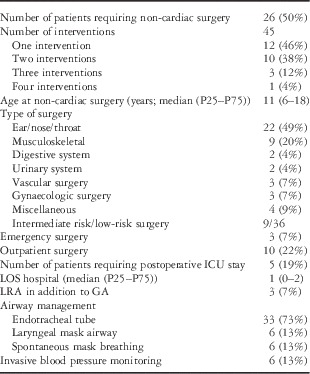
Of the patients, 26 (50%) patients necessitated a non-cardiac intervention. In total, 45 interventions were performed. The perioperative data related to these non-cardiac interventions are shown in Table 4. Most of these interventions were in the low-risk stratification category. No high-risk surgery has been recorded. Outpatient surgery was performed on 10 patients without any rehospitalisation. In total, four patients were transfused. There were three bleeding complications, of whom one necessitated reintervention. There were two patients who needed inotropic support, and one patient developed lactic acidosis because of hypovolemia. Postoperative death occurred in one patient. This 33-year-old woman with a good functioning Fontan underwent an uneventful gynaecologic procedure. On the first postoperative day, she presented major bleeding requiring an emergency reoperation. Postoperative severe ventricular tachyarrhythmias and subsequently severe ventricular dysfunction resulted in death. There were otherwise no other complications.
Perioperative data on non-cardiac interventions.

GA=general anaesthesia; LOS=length of stay; LRA=locoregional anaesthesia; P25=percentile 25; P75=percentile 75
Data are expressed in numbers and percentages
Discussion
This single-centre, retrospective study confirms the excellent long-term survival of patients who underwent a Fontan procedure using a lateral tunnel or an extracardiac conduit technique. The cumulative survival rate after 17 years of follow-up was 81% in our study. There was no significant difference in long-term survival rate between patients who underwent a lateral tunnel versus an extracardiac conduit procedure. No significant difference was observed between both techniques with regard to the incidence of fatigue/dyspnoea, chronic arrhythmias, and thromboemebolic complications at long-term follow-up, despite the perioperative significant differences noted between the two groups at the time of the index procedure: patients in the lateral group had longer aortic cross-clamp time, longer ICU, and hospital stay when compared with the extracardiac conduit group. The better short-term outcome of our patients in the extracardiac conduit group is in contrast with a very large databaseReference Stewart, Pasquali and Jacobs 5 where patients in the lateral atrial tunnel group showed superior early outcome compared with the extracardiac Fontan group. One explanation might be the significant shorter aortic cross-clamp time in our patients who underwent an extracardiac conduit operation, which has not been analysed in the latter study. Another explanation might be that our patients in the lateral tunnel group were sicker before their Fontan surgery. The retrospective nature of our study does not allow to confirm this point. However, our results concur with other publications where very similar short- and mid-term outcome has been reported for both techniques.Reference Kumar, Rubinstein, Simsic, Taylor, Saul and Bradley 6 , Reference Azakie, McCrindle and Van Arsdell 7 Finally, this study has focused on the long-term outcome and in this regard no significant difference could be found between both techniques that is in line with a large retrospective study describing the early and late outcome following the Fontan procedure.Reference Hosein, Clarke and McGuirk 3
In the past few years, much interest has been given to the morphology of single ventricle. Although it was previously presumed that a morphological right ventricle is not suited to function as a systemic ventricle at long term,Reference Siebenmann, von Segesser, Schneider, Schneider, Senning and Turina 8 , Reference Termignon, Leca and Vouhé 9 several studies have failed to demonstrate a significant difference in the long-term outcome after Fontan whether the single ventricle is morphologically right or left.Reference Hosein, Clarke and McGuirk 3 , Reference Tweddell, Nersesian and Mussatto 10 – Reference Gaynor, Bridges and Cohen 13 Our study confirms those data. We did not observe any significant difference in the long-term survival rate of patients with a morphological right ventricle compared with a single ventricle of left morphology (p=0.56). We also evaluated the atrioventricular valve competence with regard to the morphology of the single ventricle. Patients with right ventricular morphology did not show significantly more regurgitant atrioventricular valve when compared with patients with a single ventricle of left morphology. A study conducted on a large cohort of children showed that the atrioventricular valve regurgitation was more prevalent in patients with a dominant right ventricle.Reference Anderson, Sleeper and Mahony 14 Our study population is a small cohort compared with the population of the latter trial, which may explain the discrepancies in the results. Nevertheless, our findings regarding the atrioventricular valve competence in our patients concur with the good survival rate of our cohort, regardless of the morphology of the single ventricle.
One of the striking points of this study was the high incidence of thrombotic and/or embolic complications. The reported incidence of thromboemebolic events in Fontan patients varies widely from 3 up to 20%. This is mainly because of the retrospective type of most trials including a heterogenous group of patients followed over variable time periods. Moreover, the diagnostic methods to detect these complications were not standardised.Reference Grewal, Al Hussein and Feldstein 15 In our series, 92% of the patients were chronically on a low-dose aspirin. One patient presented with thrombosis of his extracardiac conduit. All the other patients showed peripheral vascular thrombosis. Those vascular thromboses were indeed promoted by the multiple cardiac catheterisations performed after the Fontan procedure. Our results open the debate about the ideal anticoagulation therapy in these patients. To date, there is no clear consensus about which anticoagulation is the best choice for these patients. In their recent practice guidelines, the American College of Chest Physicians recommend aspirin or therapeutic unfractioned heparin followed by vitamin K antagonists (grade 1C).Reference Monagle, Chan and Goldenberg 16 A recent meta-analysis of antiplatelet versus anticoagulation therapy after extracardiac conduit Fontan analysed 20 studies over a follow-up period ranging from 2 to 144 months. The overall thromboembolism rate was 5.2%. The anticoagulation therapy compared with the antiplatelet therapy did not reduce the incidence of thromboembolic complications.Reference Morrone, Galasso and Piccolo 17 The only available prospective, randomised controlled trial compared warfarin with acetylsalicylic acid and found a cumulative thrombosis rate of 23% in the first 2 years post-Fontan.Reference Monagle, Cochrane and Roberts 18 The risk of thrombosis, however, was not significantly different between both groups. Considering these data, only well-conducted randomised trials will be able to shed some light into this controversial subject. The embolic manifestations observed in our study are another issue. There is much debate whether a fenestration should be routinely performed at the time of surgery. Fenestration improves the short-term outcome mainly by decreasing pleural effusions and the length of hospital stay.Reference Lemler, Scott, Leonard, Stromberg and Ramaciotti 19 However, the persistence of a fenestration puts the patient at higher risk of paradoxical embolus. As a matter of fact, one of our patients suffered a cerebrovascular accident during device closure of his fenestration. Moreover, long-term studies have not been able to demonstrate the superiority of fenestrated Fontan surgery versus unfenestrated Fontan.Reference Hosein, Clarke and McGuirk 3 , Reference Tweddell, Nersesian and Mussatto 10
In light of the important cardiovascular comorbidities observed in the Fontan population, we also sought to report the incidence and the perioperative management of Fontan patients who were administered anaesthesia for any non-cardiac procedure. Of our patients, 50% underwent at least one non-cardiac intervention, and in total 45 interventions were performed. Although these numbers are rather high, they may not reflect the true incidence of general anaesthesia in this patient population as other non-cardiac interventions might have taken place in other hospitals that are not included in our database. Despite overall low postoperative complications, one death occurred in a patient with a well-functioning Fontan. There are few reports of outcomes of general anaesthesia for non-cardiac surgery in Fontan patients. Rabbitts et alReference Rabbitts, Groenewald and Mauermann 20 reported their 22-year period experience obtained from a database of 1133 Fontan patients at the Mayo Clinic in Rochester. Surprisingly, they had only 39 non-cardiac surgeries performed on 31 patients. The first reason is that they only included patients older than 16 years, and second all diagnostic procedures or procedures without any incision were excluded. On the contrary, we have also considered the diagnostic interventions requiring anaesthesia. As such, we believe that our data represent fairly the type of non-cardiac interventions this population requires. Moreover, our series represent Fontan patients of all ages. This is important considering the growing number of adult Fontan patients in the general population and the increasing probability for these patients to be managed by non-cardiac anaesthesiologists.
Limitations
This retrospective study includes a small cohort of patients. The lack of significant difference between different groups should therefore be interpreted with caution. Because of the small number of patients, it was also not possible to predict determinant factors of mortality. Thrombotic complications were not routinely searched. Their incidence could have been underestimated.
Conclusions
This single-centre, retrospective analysis shows excellent long-term survival for patients who underwent a lateral tunnel or extracardiac Fontan operation, regardless of the morphology of single ventricle and the surgical technique used. Our results also confirm previous reports of high cardiovascular morbidity, especially chronic arrhythmias and thromboembolic complications. The latter raises questions about the ideal type and dose of anticoagulation therapy for these patients and the benefits of performing a fenestration at the time of Fontan procedure.
This study reports a high incidence of general anaesthesia for non-cardiac interventions in this patient population. In the presence of chronic cardiovascular comorbidities observed, it is of utmost importance that the physicians in charge of these patients fully understand their anatomy and physiology.
Acknowledgements
None.
Financial Support
None.
Conflicts of Interest
None.
Ethical Standards
This retrospective study has been approved by « La Commission d’Ethique Biomédicale Hospitalo-Facultaire de l’UCL, Brussels, Belgium (2013/30 JUL/ 408 Chairperson: Prof. J.M. Maloteau) on 19 August, 2013.