

Introduction
The prevalence rates of gaming disorder (GD), a condition characterised by excessive and problematic use of online games, are higher in Asian countries, with estimates ranging from 4.7 to 13.8% (Chia et al., Reference Chia, Ng, Kandasami, Seow, Choo, Chew and Zhang2020; Fam, Reference Fam2018; Kim et al., Reference Kim, Son, Roh, Ahn, Kim, Shin and Choi2022), whereas in North America and Europe, prevalence rates range from approximately 1.2 to 5.5% (Kim et al., Reference Kim, Son, Roh, Ahn, Kim, Shin and Choi2022). In particular, the rate is even higher in China, at about 17% (Liao et al., Reference Liao, Huang, Huang, Tan, Shao, Fang and Shen2020; Xiang et al., Reference Xiang, Jin, Zhang, Li, Ungvari, Ng and Hao2020). This is not surprising, given the rapid growth and popularity of the online gaming industry in Asia, and in global comparison, most revenue will be generated in China in 2023, which accounted for 23.39% of the global online gaming market revenue (Statista, 2021).
Evidence of the harms caused by GD is beginning to emerge; correlational studies have found links between GD and poor sleep, academic underachievement, poor social interaction and depression (Brunborg, Mentzoni, & Frøyland, Reference Brunborg, Mentzoni and Frøyland2014; Velotti, Rogier, Beomonte Zobel, & Billieux, Reference Velotti, Rogier, Beomonte Zobel and Billieux2021; Zhao et al., Reference Zhao, Wei, Zhou, Wang, Wang, Ren and Jiao2021). Rigorous systematic reviews and meta-analyses also have shown that GD is significantly associated with deficits in emotion regulation and decision-making ability (Kim et al., Reference Kim, Lee, Choi, Chung, Park, Koo and Choi2021; Velotti et al., Reference Velotti, Rogier, Beomonte Zobel and Billieux2021). Given the burden that GD places on families and society, GD was classified as a condition for further study when it was included in the Fifth Edition of the Diagnostic and Statistical Manual of Mental Disorders (DSM-5) in 2013 (Petry et al., Reference Petry, Rehbein, Gentile, Lemmens, Rumpf, Mossle and O'Brien2014). In 2018, the International Classification of Diseases (ICD-11) also considered GD as a mental disease and classified it as a disorder caused by addictive behaviours (Pocai, Reference Pocai2019). It was worth noting that this addictive behaviour of games was exacerbated during the COVID-19 pandemic as young people are spending more time on internet games to cope with their psychological distress (i.e. anxiety, depression and stress) (Teng, Pontes, Nie, Griffiths, & Guo, Reference Teng, Pontes, Nie, Griffiths and Guo2021; Wang, Liu, Zhang, & Zhang, Reference Wang, Liu, Zhang and Zhang2022). The psychological distress was often caused by home quarantine, the closed management of schools or the panic of infection with the virus (Teng et al., Reference Teng, Pontes, Nie, Griffiths and Guo2021; Wang et al., Reference Wang, Liu, Zhang and Zhang2022).
To date, there are no specific effective interventions and treatment guidelines for gaming disorders in China (Xiang et al., Reference Xiang, Jin, Zhang, Li, Ungvari, Ng and Hao2020). However, psychosocial intervention such as cognitive behavioural therapy (CBT) has a more substantial body of evidence supporting its efficacy in reducing GD compared to other therapies in different countries (King et al., Reference King, Delfabbro, Wu, Doh, Kuss, Pallesen and Sakuma2017; Sudhir, Reference Sudhir2018; Xiang et al., Reference Xiang, Jin, Zhang, Li, Ungvari, Ng and Hao2020). A study that combined CBT with bupropion found they may effectively treat depressed adolescents with gaming disorders more than bupropion only, particularly in reducing online gameplay and improving mental health (Kim, Han, Lee, & Renshaw, Reference Kim, Han, Lee and Renshaw2012). A systematic review and meta-analysis about the efficacy of CBT for internet GD concluded that CBT is an effective short-term intervention for reducing internet GD, but the effects could not be maintained in the long term (Stevens, King, Dorstyn, & Delfabbro, Reference Stevens, King, Dorstyn and Delfabbro2019), and it is still challenging to make conclusive statements about its advantages (King et al., Reference King, Delfabbro, Wu, Doh, Kuss, Pallesen and Sakuma2017). As such, continued research is needed to further explore the effectiveness of CBT or new forms of treatment for various conditions and countries.
The CBT has been transformed through waves of change. Newer forms of modern CBT have appeared that go beyond the traditional behavioural or cognitive models, such as Acceptance and Commitment Therapy (ACT) (Hofmann & Hayes, Reference Hofmann and Hayes2018). ACT is grounded in functional contextualism and relational framework theory (RFT) and consists of six components: cognitive defusion, acceptance, self as context, contact with the present moment, values and committed action (Fang & Ding, Reference Fang and Ding2020a; Hayes, Reference Hayes2016). ACT aims to improve individuals’ psychological flexibility, which refers to the ability to adapt to changing situational demands by being aware of the present moment, open to experience, and able to take action that is in line with personal values and goals, even in the presence of difficult or unwanted thoughts and emotions (Ding & Wang, Reference Ding and Wang2022; Ding & Zheng, Reference Ding and Zheng2022; Hayes, Reference Hayes2016). Psychological flexibility as a core tenent of ACT is a primary determinant of mental health and effective action (Hayes, Luoma, Bond, Masuda, & Lillis, Reference Hayes, Luoma, Bond, Masuda and Lillis2006; Hayes, Pistorello, & Levin Reference Hayes, Pistorello and Levin2012). Some meta-analyses and reviews have found that ACT has efficacy for improving mental health and reducing behavioural disorders in adults and children (A-Tjak et al., Reference A-Tjak, Davis, Morina, Powers, Smits and Emmelkamp2015; Fang & Ding, Reference Fang and Ding2020b; Graham, Gouick, Krahe, & Gillanders, Reference Graham, Gouick, Krahe and Gillanders2016; Powers, Vording, & Emmelkamp, Reference Powers, Vording and Emmelkamp2009), such as decreasing anxiety, depression, stress, eating disorders (Juarascio et al., Reference Juarascio, Shaw, Forman, Timko, Herbert, Butryn and Lowe2013), obsessive-compulsive disorder (Twohig, Reference Twohig2009) and smoking (Heffner, McClure, Mull, Anthenelli, & Bricker, Reference Heffner, McClure, Mull, Anthenelli and Bricker2015). To date, the efficacy of ACT for gaming disorders has not been explored.
It is important to note that modern CBT focuses on process-based therapy (Hofmann & Hayes, Reference Hofmann and Hayes2018), where components matched to therapeutic processes can be applied to specific problems (Levin, Krafft, Hicks, Pierce, & Twohig, Reference Levin, Krafft, Hicks, Pierce and Twohig2020). Component research can improve efficiency by removing unnecessary components, making treatment simpler or shorter and enhancing efficacy by highlighting components that may be more useful and should be added to treatment protocols. This approach could gain a more fine-grained understanding of how a treatment works (including the specific components and processes of change that influence outcomes), rather than simply knowing whether a multi-component treatment protocol is effective (Hofmann & Hayes, Reference Hofmann and Hayes2019; Levin et al., Reference Levin, Krafft, Hicks, Pierce and Twohig2020). Therefore, a direct study is needed to assess the efficacy of single versus combined components of ACT for gaming disorder. The research indicated that the Engaged components of ACT (i.e. intervention converged values and committed action) could increase more adaptive behavioural regulation and improve more on valued action than other components (Villatte et al., Reference Villatte, Vilardaga, Villatte, Plumb Vilardaga, Atkins and Hayes2016).
Due to the COVID-19 restrictions around social interaction, face-to-face interventions have been inhibited. As a result, it is imperative to explore alternative forms of intervention such as self-help or online interventions. An online self-help prevention program is cost-effective, anonymous, and can be tailored to the needs of different groups in various formats (written, video, audio), so it would be convenient for participants and may increase their engagement (Amstadter, Broman-Fulks, Zinzow, Ruggiero, & Cercone, Reference Amstadter, Broman-Fulks, Zinzow, Ruggiero and Cercone2009; Levin, Hayes, Pistorello, & Seeley, Reference Levin, Hayes, Pistorello and Seeley2016). Past studies showed that web-based self-help intervention programs offer an excellent alternative to preventing mental health problems (Levin et al., Reference Levin, Hayes, Pistorello and Seeley2016) and behavioural disorders (Kass et al., Reference Kass, Trockel, Safer, Sinton, Cunning, Rizk and Taylor2014). Furthermore, a meta-analysis of 13 studies involving 2580 participants showed that self-help ACT could be a suitable intervention for anxiety and depression, particularly when clinician guidance is given (French, Golijani-Moghaddam, & Schroder, Reference French, Golijani-Moghaddam and Schroder2017). During the COVID-19 pandemic, self-help interventions can also reduce the risk of virus transmission.
The primary objective of this study was to conduct a pilot evaluation comparing two self-help ACT programs, each consisting of 10 sessions. One program encompassed the complete ACT content, while the other program placed a greater emphasis on Engaged actions. The study aimed to examine the effectiveness of these programs in addressing gaming disorder among college students. We predicted that all self-help ACT conditions could reduce gaming disorder and gaming frequency, but the Engaged condition would have a larger effect on gaming frequency. In addition, our secondary aim was to see if self-help ACT conditions can reduce anxiety, depression and stress among university students during the COVID-19 pandemic. We also predicted that the two conditions could reduce this negative emotion.
Method
Participants
The initial potential participants were 557 students taking an online optional psychology course from two online classes (Class 1 had 243 students, and Class 2 had 314 students). Following the administration of the Internet Gaming Disorder Test (IGD-20) (Qin, Liu, & Luo, Reference Qin, Liu and Luo2020) in the initial survey, the top 20% of students with the highest scores were chosen as participants for the study. The deliberate decision to include participants with higher gaming disorder or at risk of gaming disorder was based on previous research, indicating that individuals with subclinical gaming disorder symptoms may experience significant impairments in areas such as interpersonal relationships, coping strategies and developmental adaptation. Furthermore, they may be susceptible to developing full-blown gaming disorder (Hong et al., Reference Hong, Hwang, Starcevic, Choi, Kim and Han2023; Milani et al., Reference Milani, La Torre, Fiore, Grumi, Gentile, Ferrante and Di Blasio2017). By including participants at risk of gaming disorder, we aimed to capture a broader range of individuals who may benefit from the intervention and explore the potential preventive effects of the intervention on the progression of gaming disorder symptoms.
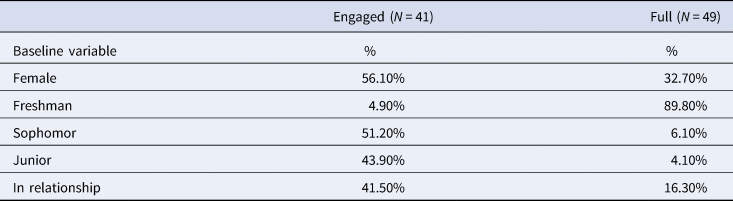
To ensure effective supervision of their self-help intervention, participants were categorised into either the Engaged group or the Full group based on their respective online classes. A few students discontinued their participation in the follow-up intervention and survey due to personal reasons, leading to a final count of 41 students in the Engaged group (from Class 1) and 49 students in the Full group (from Class 2). The detailed demographic information can be seen in Table 1 of both groups.
Full Session Overview

It is worth noting that these students did not engage in any other interventions or utilise medication to alleviate their symptoms. Course credit was given to students based on the courses they were enrolled in. Informed consent was obtained for all students. This study was approved by the Ethical Committee of Bengbu Medical College.
Intervention
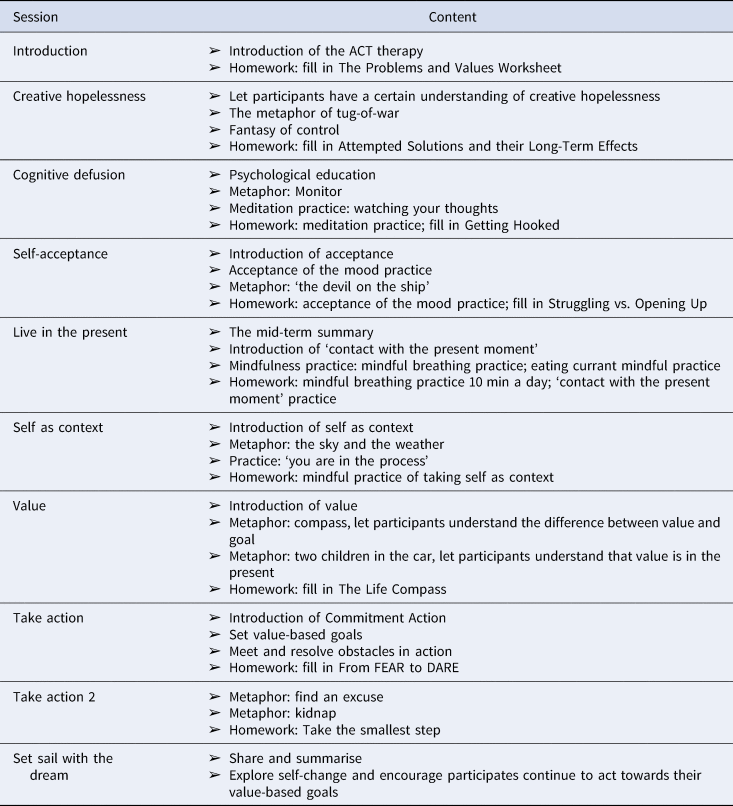
Each group consisted of 10 self-guided online sessions that participants were asked to complete over 2 weeks. These sessions were designed to be brief and took approximately 15–30 min to complete. ACT experts developed intervention content based on existing, empirically validated ACT protocols. All online sessions followed a similar structure. Details can be found in Tables 1 and 2.
Engaged Session Overview

Full ACT condition
The Full ACT sessions were designed to target all processes of psychological flexibility. The content and sequence were based on the translated version of the ‘ACT Made Simple’ manual (Harris, Reference Harris2009). Details can be found in Table 1.
Engaged condition (values and committed action) condition
The Engaged condition consisted of the same five sessions as the Full ACT website, along with an additional five sessions specifically developed to focus on the Engaged components of ACT. According to relevant books and literature (Harris, Reference Harris2009; Levin et al., Reference Levin, Krafft, Hicks, Pierce and Twohig2020; Petersen, Krafft, Twohig, & Levin, Reference Petersen, Krafft, Twohig and Levin2021), additional content, which was not to double the dosage of the engaged component in the Full ACT, was added to make the length of the Engaged condition consistent with that of the Full ACT. Details can be found in Table 2.
Procedure
Following the baseline survey, students in the top 20% based on their scores on the IGD-20 were allocated to either the Engaged group or the Full group according to their online class. This allocation aimed to enhance the students’ completion of the self-help courses, manuals and homework assignments. The self-help sessions, homework assignments, informed consent process and subsequent surveys for the ACT intervention were conducted on Xuexitong, an online study platform commonly utilised during the COVID-19 pandemic. After the assignment, both groups were asked to complete online sessions each day for the next 2 weeks. The teacher will review the student's progress in the course group and remind them to complete the sessions and submit their homework. In case participants did not promptly complete sessions and surveys, the teacher would personally remind them every 2 days. If students have any questions during this period, the teacher will provide immediate assistance in answering them.
One week later, at the midway point of the intervention, students were requested to participate in an online mid-treatment survey. Following 2 weeks, all students completed the sessions and received an online post-treatment survey. A final follow-up survey was administered to all participants 4 weeks after the post-treatment survey.
Each intervention session comprised a 10-min video and a corresponding self-help manual. Participants could view the video to comprehend the session content, and they had the option to replay the video as desired. The self-help manual provided detailed information about the content of each session and interactive exercises. Participants could access the sessions through the Xuexitong platform using either the web interface or mobile app. Xuexitong is the online learning platform for most Chinese universities during the COVID-19 epidemic, allowing researchers to rapidly develop interactive, multi-component online intervention sessions with an accessible user interface. The platform established two task checkpoints for each session: watching the video and reading the self-help manual. It also automatically recorded the completion rates for each student. Sessions were scheduled to be automatically released at 00:00 am daily, while homework assignments became available at 5:00 pm each day. Participants had the flexibility to study the intervention content at their convenience throughout the day and submit their homework through the platform.
Measures
Main outcome measure
According to previous research, spending more than 2 h a day on online gaming is considered an important threshold for addiction (Tian & Wang, Reference Tian and Wang2022). Gaming frequency per day and gaming frequency per week are measured with two items based on previous research (Tian & Wang, Reference Tian and Wang2022), ‘For the last week, the hours you took on playing the game each day’, and ‘For the last week, the total number of days you spent on playing the game’. The two items were rated on a 5-point scale (i.e. 1 = approximately one hour/day, 2 = between two and three hours/day, 3 = between three and four hours/day, 4 = between four and five hours/day and 5 = more than five hours/day).
Gaming disorder scores were measured with the Chinese Internet Gaming Disorder Test-20 (IGD-20) (Pontes, Kiraly, Demetrovics, & Griffiths, Reference Pontes, Kiraly, Demetrovics and Griffiths2014; Qin et al., Reference Qin, Liu and Luo2020). IGD-20 includes 20 items (e.g. ‘When I am not gaming, I feel more irritable’) that are rated on a 5-point Likert scale ranging from ‘Strongly Disagree’ to ‘Strongly Agree’. The scale has shown good reliability and validity in China (Cheng, Liu, & Tong, Reference Cheng, Liu and Tong2020; Qin et al., Reference Qin, Liu and Luo2020). Higher IGD-20 scores indicate a higher risk of gaming disorder. In the present study, Cronbach's α was 0.91.
Secondary outcome measures
Psychological flexibility was assessed using the Chinese version of the Acceptance and Action Questionnaire II (AAQ-II) (Cao, Ji, & Zhu, Reference Cao, Ji and Zhu2013). This questionnaire included seven items (e.g. ‘I worry that I can't control my worries and feelings’), and was rated on a 7-point Likert scale ranging from 1 (never) to 7 (always). The scale has shown good reliability and validity in China (Fang & Ding, Reference Fang and Ding2020a). Higher AAQ scores indicate lower levels of psychological flexibility. In the present study, Cronbach's α was 0.88.
Anxiety, depression and stress were measured with the Chinese version of Depression Anxiety Stress Scales–21 items (DASS-21) (Gong, Xie, Rui, & Yue-jia, Reference Gong, Xie, Rui and Yue-jia2010; Lovibond & Lovibond, Reference Lovibond and Lovibond1995). Each symptom was measured with seven items (e.g. ‘I found it difficult to relax’ for stress, ‘I felt that I had nothing to look forward to’ for depression and ‘I felt scared without any good reason’ for anxiety) and was rated on a 4-point Likert scale ranging from 1 (never) to 4 (always). The DASS-21 has good reliability and validity, and it can be used as an effective tool to investigate the negative emotion level of Chinese college students (Tuo et al., Reference Tuo, Weidong, Hong, Yanchao, Zhang, Zhang and Congxia2021). In the present study, Cronbach's α was 0.94 for the whole scale, 0.86 for the subscale of depression, 0.81 for anxiety and 0.83 for stress.
Treatment adherence and program acceptability
Participants were asked at post-treatment how many sessions they had taken. The options were (1) less than two sessions, (2) about three sessions, (3) about four sessions, (4) about five sessions, (5) about six sessions, (6) about seven sessions, (7) about eight sessions and (8) more than nine sessions.
The 10-item System Usability Scale (Brooke, Reference Brooke1996) was used at post-treatment to assess the session's acceptability. The SUS was rated on a 5-point Likert scale ranging from 1 (never) to 5 (always), and it was a gold-standard measure of usability (Levin et al., Reference Levin, Krafft, Hicks, Pierce and Twohig2020). Higher scores represent greater program acceptability. In the current study, Cronbach's α was 0.76.
Data analysis
Multivariate outliers were detected with Mahalanobis distances evaluated at a level of p < .001. Given the nested nature of the data, all analyses were conducted using multilevel modelling with the packages nlme and gglot2 in R (R Core Team, 2016).
In the four-wave data, pre-treatment was set to 0, mid-treatment set to 1, post-treatment to 2 and follow-up to 6. Intervention conditions were used as binary group variables, with the Engaged set to 0 and the Full set to 1. The female was coded as 1, and the male was coded as 0. If the individual is in a romantic relationship, it is coded as 0 and otherwise coded as 1. A series of models were estimated using Restricted Maximum Likelihood (REML) estimation for the treatment outcomes.
Previous studies found that demographic variables like age and gender are related to GD (Pontes et al., Reference Pontes, Kiraly, Demetrovics and Griffiths2014; Teng et al., Reference Teng, Pontes, Nie, Griffiths and Guo2021; Wang et al., Reference Wang, Liu, Zhang and Zhang2022). Thus, gender, grade and whether in a relationship were covariates for models. First, a random intercept model was adapted to estimate the intraclass correlation coefficient (ICC). Then, in step 1, models with a random effect for the time were run. In step 2, groups with fixed effects were run. In step 3, we evaluated the effects of time and group, and the interaction of time and group. In addition, one-way ANOVA was used to explore the differences between the two groups at pre-treatment. Within- and between-group effect sizes were calculated using Cohen's d, which can be interpreted as small (0.20), medium (0.50) and large (0.80).
Results
Descriptive statistics
Demographic variables for both groups are shown in Table 3. There were significant differences between the two groups in gender (χ2 = 4.94, p < .05), grade (χ2 = 76.51, p < .001) and whether or not they were in a relationship (χ2 = 6.95, p < .05). Thus, these variables would be included in covariates.
Participant Demographics

Program usage and acceptability
The average number of sessions completed in the two groups was 6.42 for Engaged (SD = 2.18) and 7.00 for Full (SD = 1.48). An ANOVA comparing the two conditions was non-significant for programs usage (F = 1.47, p = .23). There was no difference between the two conditions on program acceptability and satisfaction (M Engaged = 32.38, SD = 5.27, N = 24; M Full = 33.31, SD = 5.79, N = 29; F = .37, p = .54).
Outcome analyses
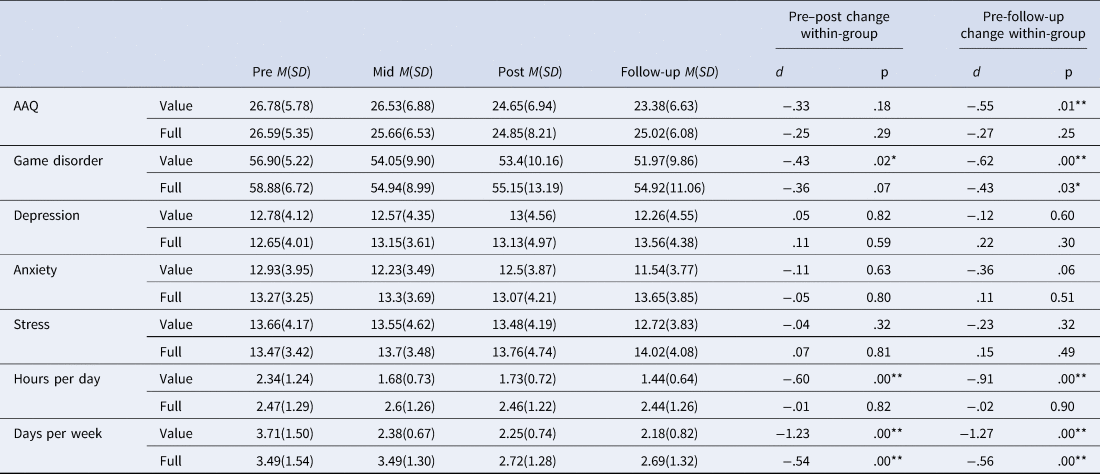
One-way ANOVA compared the two groups at pre-treatment showed no significant differences for all outcomes (i.e. the frequency of playing games, scores of IGD-20, AAQ-II and DASS-21). Table 4 displays the means and standard deviations for both groups at different time points, and the effect sizes for pre–post change and pre-follow-up change within each group on all outcomes.
Estimated mean values and standard deviation for outcomes at pre, mid, post and at follow-up.

* *p < .05, **p < .01.
The Engaged condition exhibited a slight decrease in AAQ scores from pre (M = 26.78, SD = 5.78) to follow-up (M = 23.38, SD = 6.63), indicating a statistically significant improvement in psychological flexibility (d = −.55, p < .01). However, in the Full condition, the pre-follow-up change within the group did not reach significance (d = −.27, p = .25). Concerning gaming disorder scores, there was a consistent decline in the Engaged condition from pre to post (d = −.43, p < .05) and follow-up (d = −.62, p < .01), suggesting a reduction in gaming disorder symptoms over time. Similarly, in the Full condition, there was a significant pre-follow-up change within the group (d = −.53, p < .05). However, the Full group did not exhibit significant changes between pre- and post-tests (d = −.36, p > .05). Changes in depression, anxiety and stress scores over time were not significant in both the Engaged and Full conditions, and the effect sizes were small. Regarding gaming frequency, both hours per day and days per week demonstrated significant decreases from pre to post and follow-up in the Engaged condition. The effect sizes were large for both variables, indicating a substantial reduction in the number of hours per day (d = −.60, p < .01, d = −.91, p < .01) and days per week (d = −1.23, p < .01, d = −1.27, p < .01). However, the Full condition only exhibited significant decreases in days per week from pre to post and follow-up (d = −.54, p < .01, d = −.56, p < .01).
The frequency of playing the game
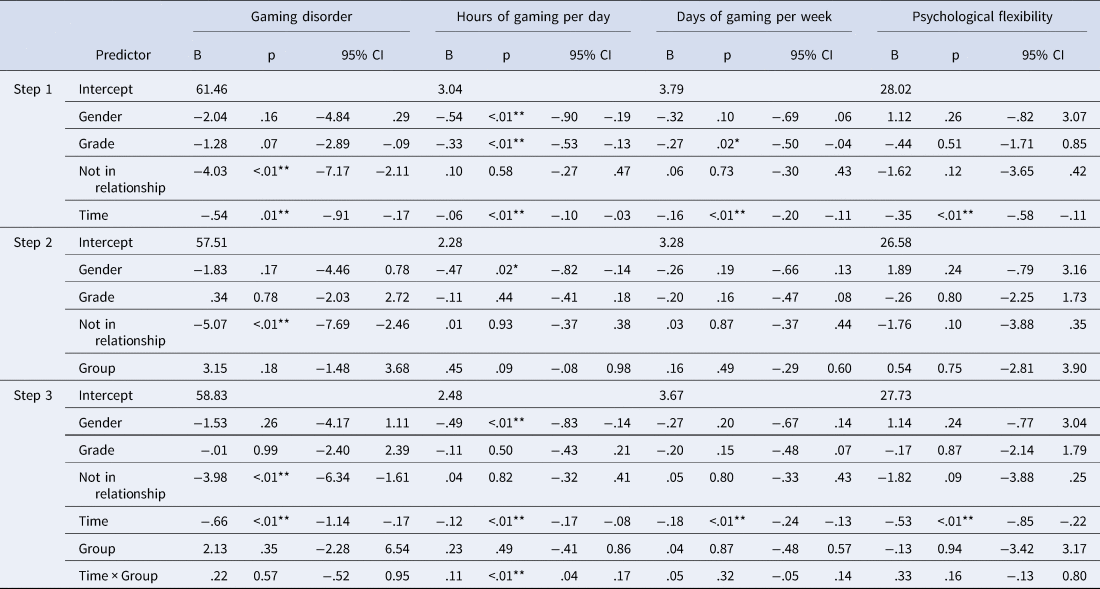
In Step 1, there was a significant effect of time on hours of gaming per day (B = −.06, p < .01) and days of gaming per week (B = −.16, p < .01). Additionally, grade had a significant effect on days of gaming per week (Grade, B = −.27, p < .01), and both gender and grade had a significant effect on hours of gaming per day (Gender, B = −.54, p < .01; Grade, B = −.33, p < .01). The detailed information can be found in Table 5.
Effects of Conditions by Time on Gaming Frequency per Day and per Week, Gaming Disorder Scores, Psychological Flexibility, Anxiety, Depression and Stress

Note: B, regression coefficients; CI, confidence interval.
*p < .05, **p < .01.
In Step 2, there was no significant effect of the group. However, the effect of gender on hours of gaming per day was significant (Gender, B = −.47, p < .05).
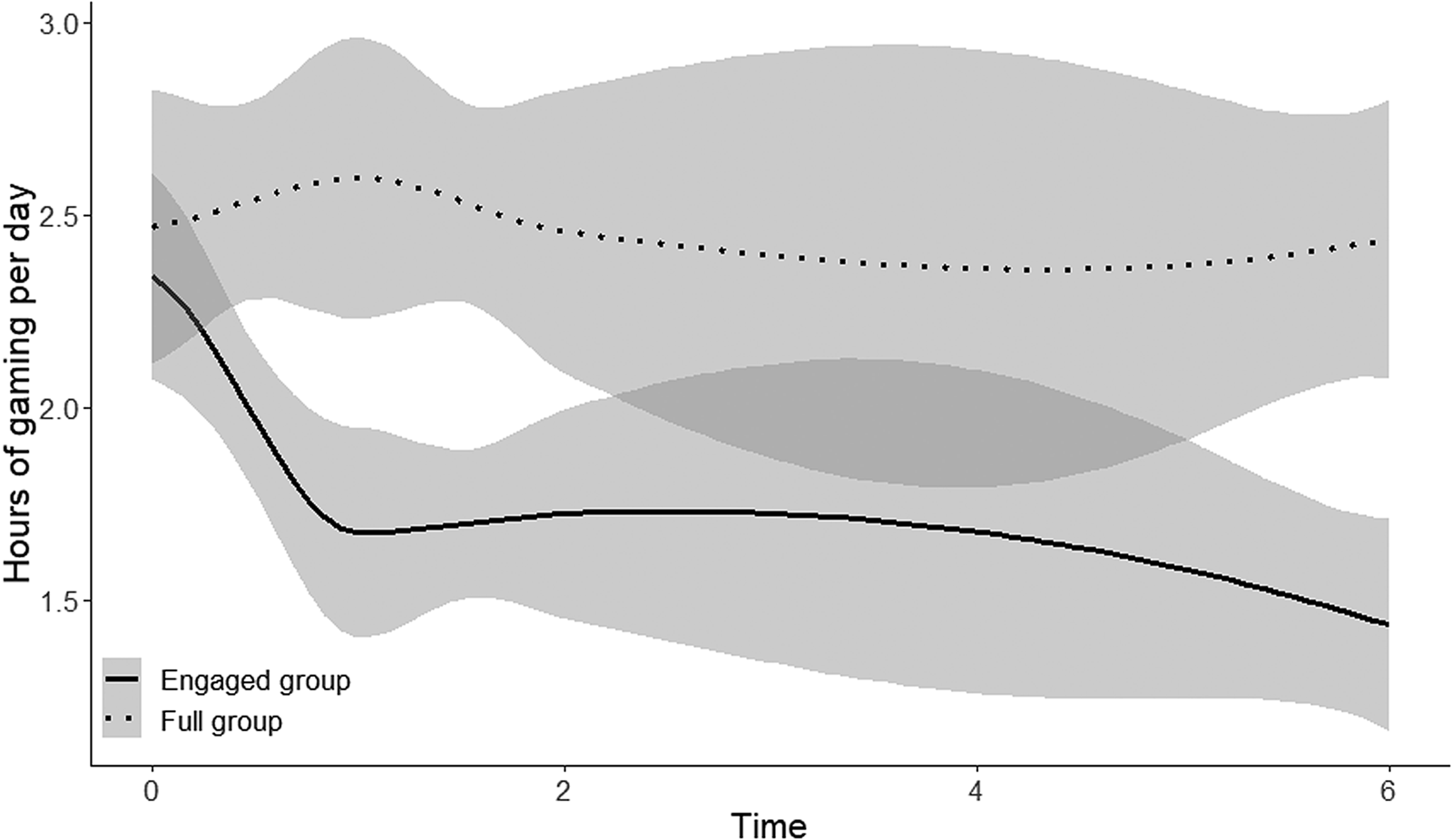
In Step 3, the effect of time was significant for hours of gaming per day and days of gaming (B = −.12, p < .01; B = −.18, p < .01). There was no significant interaction effect of time and group on days of gaming per week (see Figure 1). However, the interaction effect on hours of gaming per day (B = .11, p < .01) was significant, suggesting that the Engaged group experienced a greater reduction in hours of gaming per day (see Figure 2). Additionally, the effect of gender on hours of gaming per day was significant (Gender, B = −.49, p < .05), indicating that males spend more hours per day playing games.
The change of hours of gaming per day over time.

The change of hours of gaming per week over time.

Gaming disorder scores
In Step 1, the effect of time was significant (B = −.54, p < .01). Furthermore, being in a romantic relationship had a significant effect on gaming disorder scores (B = −4.03, p < .01).
In Step 2, there was no significant effect of the group. However, being in a romantic relationship had a significant effect (B = −5.07, p < .01).
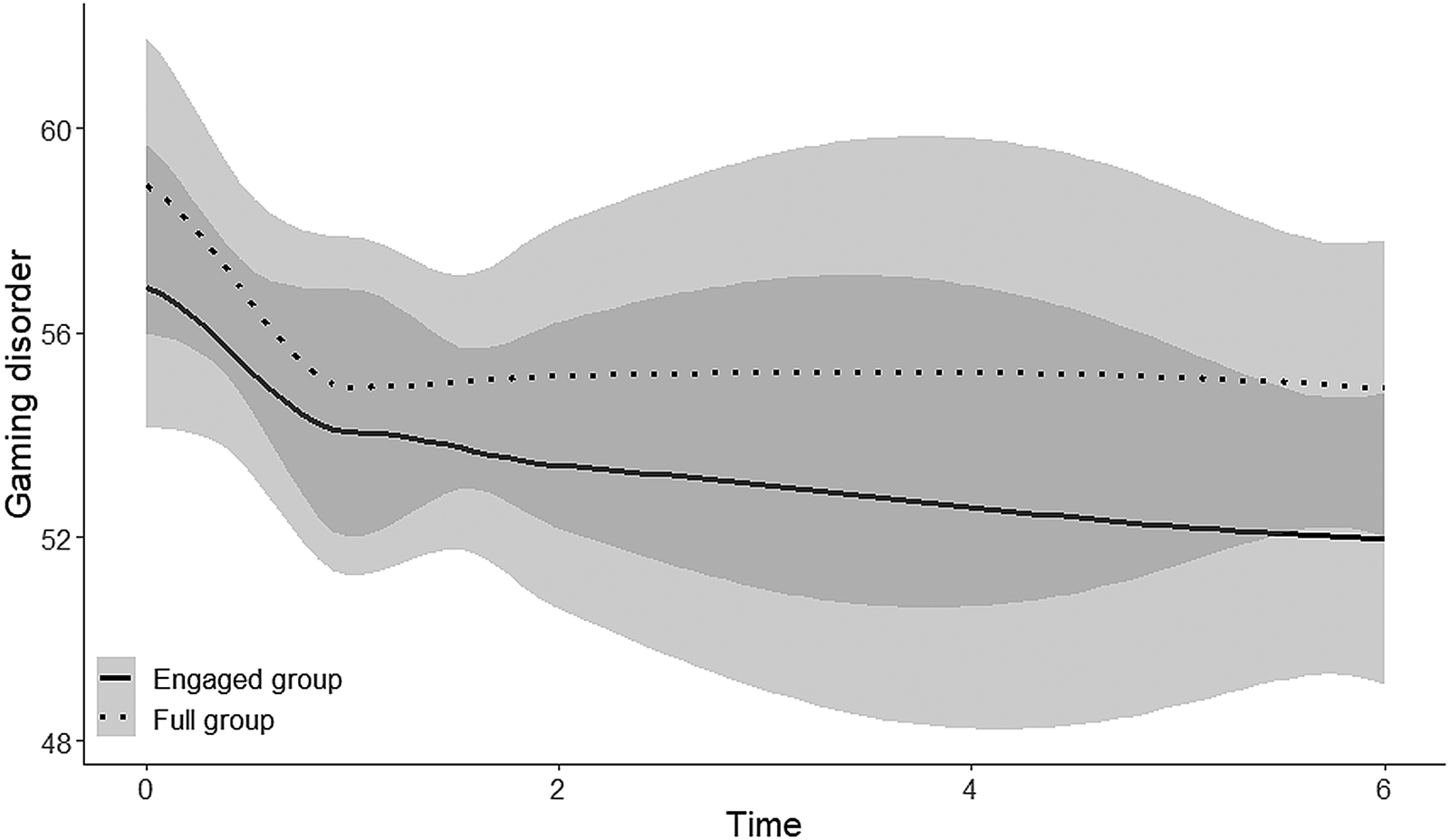
In Step 3, there was no significant interaction effect of time and group. However, the effect of time was significant (B = −.66, p < .01), suggesting that both groups experienced a decrease in gaming disorder over time (see Figure 3). Additionally, being in a romantic relationship had a significant effect (B = −3.98, p < .01), indicating that being in a romantic relationship was associated with increased gaming disorder.
The change of gaming disorder over time.

Secondary outcomes
In terms of psychological flexibility, demographic factors did not have a significant effect. In Step 1, the effect of time was significant (B = −.35, p < .01). In Step 2, there was no significant effect of the group. In Step 3, there was no significant interaction effect of time and group. However, the effect of time was significant (B = −.53, p < .01), indicating that both groups demonstrated an increase in psychological flexibility over time.
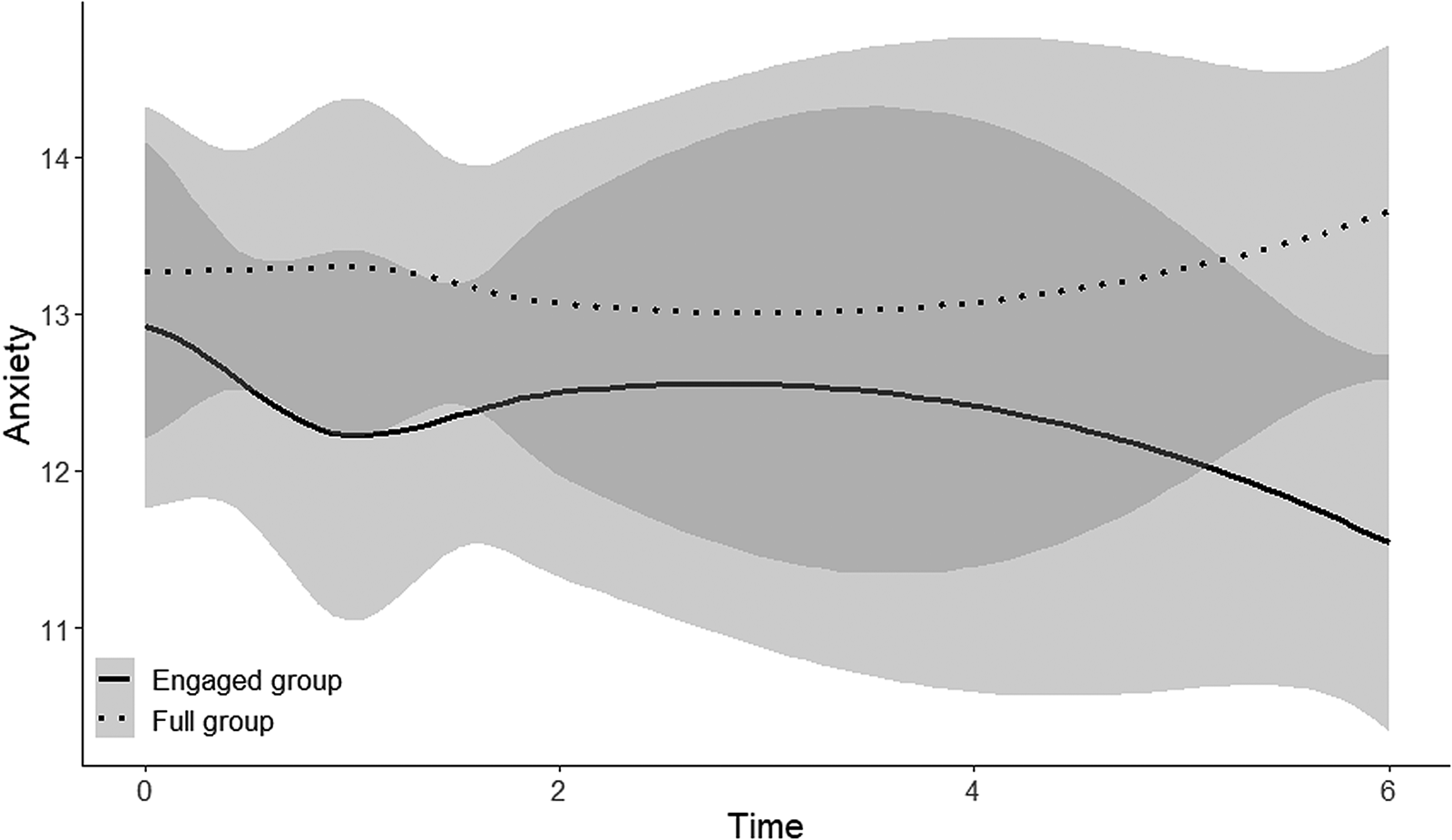
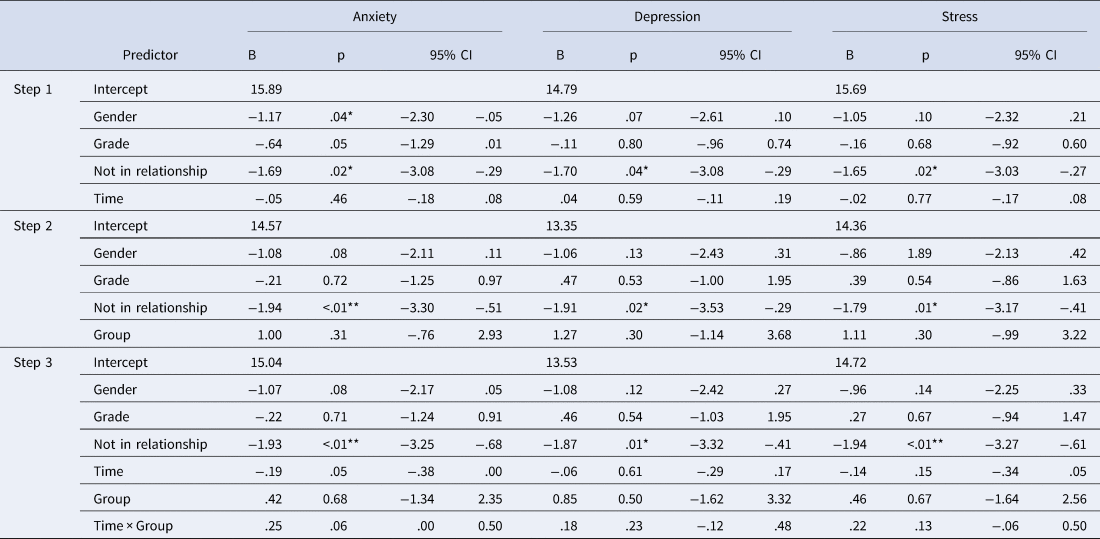
Regarding depression and stress, there was no significant effect of group, time or the interaction effect of time and group (see Figure 4). Additionally, demographic factors had a significant effect on anxiety. For instance, gender and relationship status were significantly associated with anxiety in Step 1, suggesting that females and individuals not in a romantic relationship experienced lower levels of anxiety. Furthermore, relationship status was also significantly associated with depression and stress (see Table 6).
The change of anxiety over time.

Effects of Conditions by Time on Gaming Frequency per Day and per Week, Gaming Disorder Scores, Psychological Flexibility, Anxiety, Depression and Stress

Note: B, regression coefficients; CI, confidence interval.
*p < .05, **p < .01.
Discussion
This study examined the effects of 10 self-help sessions, comparing full online ACT with the Engaged components of ACT, on the gaming frequency per day, gaming frequency per week, gaming disorder scores, psychological flexibility, anxiety, depression and stress among college students at risk of gaming disorder. The results revealed no significant differences between the two groups in terms of gaming disorder score, number of days of game playing per week and psychological flexibility. Both groups demonstrated significant reductions in gaming disorder scores and days of game playing per week, as well as improvements in psychological flexibility over time. However, a significant difference was observed in the number of hours of game playing per day between the two groups, with the Engaged group showing a significant reduction in hours of game playing per day. Conversely, there was no significant difference in the Full group between pre- and post-treatment. Neither group experienced significant reductions in anxiety, depression and stress during the COVID-19 pandemic. It is worth noting that at the follow-up assessment, the Engaged group appeared to have lower levels of anxiety compared to the Full group, although no significant difference was found before and after the intervention within either group. Furthermore, demographic variables had significant effects on gaming disorder scores, frequency of game playing and psychological distress. Individuals in romantic relationships exhibited higher levels of gaming disorder and psychological distress, while males spent significantly more hours gaming per day than females. Additionally, students in lower grades had a higher frequency of game playing.
In this study, the Engaged group incorporated more elements related to values and actions compared to the Full group. However, the Engaged group did not include the Open module components (acceptance and cognitive defusion) and aware components (contact with the present moment and self as context), which were present in the Full group. It is noteworthy that there were no significant differences observed between the two groups in terms of improvement in psychological flexibility. Given that the primary objective of ACT is to enhance individuals’ psychological flexibility, it was expected that the Full condition would yield a more substantial increase in psychological flexibility compared to the Engaged condition. It is possible that the specific components included in the Engaged condition were adequate to exert a significant influence on psychological flexibility as previous studies have shown (Levin et al., Reference Levin, Krafft, Hicks, Pierce and Twohig2020). These selected components may have captured the essential elements necessary for promoting psychological flexibility, thereby compensating for the reduced number of other components in the Engaged condition. Another aspect to consider is the potential impact of intervention dosage and duration (Conn & Chan, Reference Conn and Chan2016). Despite the Engaged condition including only a subset of ACT components, the cumulative effect of repeated exposure to the engaged components throughout the intervention period could have contributed to the observed effects on psychological flexibility.
Although there was no difference between the two groups in terms of gaming disorder scores and the days of gaming per week, the Engaged group was significantly lower than the full group in terms of the hours of gaming per day. Values matter in approach behaviours (Flynn & Hebert, Reference Flynn and Hebert2022). People who realise their own values and life goals would have greater motivation to engage in good health-related behaviour and adhere to them (Chew, Fernandez, & Shariff-Ghazali, Reference Chew, Fernandez and Shariff-Ghazali2018). Similarly, the previous study found that the Engaged component of ACT showed more significant improvements in value-based behaviours than the Open component (Villatte et al., Reference Villatte, Vilardaga, Villatte, Plumb Vilardaga, Atkins and Hayes2016), which was generally consistent with this study, considering that the number of sessions was the same for both groups. However, it did not indicate that the Engaged condition outperforms the Full condition in improving gaming disorders as this finding was specific to the measure of hours-per-day and was based on pilot data, which may limit the generalizability of the results. Further research with a larger sample size and more comprehensive measures is needed to confirm these findings. While there are some limitations, our study provides some insights into the potential benefits of value-based interventions, and further investigation and comparison with alternative intervention approaches are warranted to draw definitive conclusions regarding the most appropriate and cost-effective interventions for individuals with gaming-related behavioural problems.
The present study found that psychological distress (i.e. anxiety, depression and stress) could not be improved in both groups during COVID-19. This may be because college students are more vulnerable to negative events and tend to feel more anxious, depressed or stressed during COVID-19 than during normal times (Gloster et al., Reference Gloster, Lamnisos, Lubenko, Presti, Squatrito, Constantinou and Karekla2020; Lee, Reference Lee2020; Tuo et al., Reference Tuo, Weidong, Hong, Yanchao, Zhang, Zhang and Congxia2021). Due to the pervasive negative impacts of COVID-19 and social restrictions on mental well-being, it is not surprising that a brief self-help intervention was insufficient to reduce measures of psychological distress. And, there was no increase in psychological distress in either group in this study.
This study found significant associations between being in a romantic relationship and gaming disorder scores, as well as psychological distress. Due to epidemic control, college lovers could only contact each other through the Internet. Previous studies found that online dating could reflect higher psychological distress (Stevens & Morris, Reference Stevens and Morris2007) and may increase internet GD (Taechoyotin et al., Reference Taechoyotin, Tongrod, Thaweerungruangkul, Towattananon, Teekapakvisit, Aksornpusitpong and Piyaraj2020). Since the effects of romantic relationships on gaming disorders and psychological distress were not the focus of the present study, they were not elaborated on. Future research could explore why loving relationships during an epidemic have a negative effect on these variables.
Many evidence-based psychosocial interventions share core components and target analogous psychological processes, so having therapists learn each new full treatment protocol may be redundant and unnecessary (Chorpita et al., Reference Chorpita, Rotheram-Borus, Daleiden, Bernstein, Cromley, Swendeman and Regan2011; Villatte et al., Reference Villatte, Vilardaga, Villatte, Plumb Vilardaga, Atkins and Hayes2016). Therefore, component research could provide training and guidance in an effective, flexible and easily updated way (Villatte et al., Reference Villatte, Vilardaga, Villatte, Plumb Vilardaga, Atkins and Hayes2016). The current component research found that a self-help Engaged intervention was as effective as a Full intervention for college students at risk of gaming disorders, in reducing gaming disorders and days of gaming per week. The Engaged group targeting values and actions may be more effective for individuals with gaming disorders in terms of the hours of gaming per day. The current study provided a fine-grained understanding of the effectiveness of specific ACT components (i.e. values and action), which would allow for more intensive treatment application and resource savings. Besides, this pilot test supported the feasibility and potential efficacy of the self-help online ACT components, which could be cost-effective and efficient for future intervention approaches. In addition, the present study provided evidence that a subset of ACT components may be important and even more effective for specific disorders. Thus, future research needs to explore which psychological or behavioural disorders ACT modules could be more effective for, and maximise the efficacy of ACT in mental or behavioural health.
The main limitations of this study were the absence of a waitlist or inactive control group and the fact that it was a non-randomised controlled experiment. In addition, the sample of this study was college students, which may not be representative. The sample size of our study was relatively small, with a total of 90 participants in the combined Full ACT and Engaged ACT groups. This limited sample size may restrict the generalizability of our findings to other populations. It is important to note that a larger sample size would allow for more robust statistical analyses and increase the external validity of the study. Future research with a larger and more diverse sample is warranted to validate and extend our findings. It should be noted that the individuals included in this study were students with higher gaming disorder scores, but not all of these individuals met the clinical diagnostic criteria for gaming disorders (scores greater than 71). The inclusion criteria limited the sample to college students in the top 20% of IGD-20 scores. This specific selection criterion may introduce selection bias and limit the generalizability of the findings to individuals with lower levels of gaming disorder. It is important to recognise that individuals with lower levels of gaming disorder may exhibit different characteristics, experiences and treatment needs compared to those in the higher-scoring group. To mitigate this limitation and enhance the generalizability of the findings, future research should consider including a more diverse range of participants across the spectrum of gaming disorder severity. Also, individuals who meet the clinical diagnostic criteria should be targeted. These would enable a more comprehensive understanding of the effectiveness and applicability of the intervention across different levels of gaming disorder.
This study was also limited to the use of self-reports, so individual reports may be subjective. Future studies could benefit from including active control conditions to evaluate the effects of self-help online ACT components with randomised design. It would be helpful to consider sample diversity and use multiple reporting formats. Multiple reporting formats, such as collateral reports from significant others (for example, family members, friends or treatment providers) and behavioural assessments, can offer valuable perspectives on participants’ behaviours and functioning as well as treatment outcomes, in addition to self-reports. These reports provide an external viewpoint that may enhance the accuracy and completeness of the data collected in a more objective manner.
Besides, due to the lack of appropriate Chinese research measurements for process variables (i.e. values or acceptance), this study did not examine changes in the specific process except for psychological flexibility. Future studies could explore whether changes in process variables during subcomponent interventions would be consistent with the intervention approach. In our study, the measures of gaming disorders included self-reported hours of gaming per day and days of gaming per week. While these measures provide valuable information about participants’ gaming habits, they may not capture the full extent of gaming disorder. It is important to acknowledge that gaming disorder involves more than just the quantity of gaming. Measures that assess the interference of gaming with various aspects of life, such as the extent to which gaming interferes with daily functioning or the degree to which individuals prioritise gaming over other activities, may provide a more comprehensive understanding of gaming disorder.
The validity of the intervention components also limited the study. Although the content was delivered in the online platform in a highly controlled manner and based on an established validated intervention trail, it was difficult to know how the participants perceived and understood the content and whether it was similar to the face-to-face ACT components. However, the current study still suggested that a subset of ACT components may be more effective in some cases. Finally, it must be acknowledged that an open-only condition and an aware-only condition were missing from this study. These additional conditions could have provided valuable insights into the effects of individual components of ACT. Future studies could consider including these conditions to further explore the effects of specific ACT components.
Funding
This research is supported by the Humanities and Social Sciences Research Foundation of Anhui (SK2019A0181), Key Project of Bengbu Medical College (2020byzx249sk), and Innovative Training Program for Chinese College Students (bydc2021085).
Competing interest
The authors have no conflicts of interest to declare.
Ethical approval
The study was approved by the Psychology and Ethics Committee of Bengbu Medical College.
The study was performed in accordance with the ethical standards as laid down in the 1964 Declaration of Helsinki and its later amendments or comparable ethical standards.
Informed consent
Informed consent was obtained from all individual participants included in the study.