Background
The world's population is ageing. Chronic liver disease is increasingly prevalent in developed countries, probably reflecting an increase in alcohol intake, the emerging obesity epidemic and the impact of viral hepatitis. Currently, liver disease is the fifth leading cause of death in the UK.1
As management of adults with liver disease improves and as the population ages, geriatricians will see increasing numbers of older people with long-standing liver disease as well as older people presenting for the first time.
No liver disease is specific to old age. In general, management is independent of age, but older adults have reduced physiological reserve and are more likely to have accumulated co-morbidity and be on multiple medications. These may impact on investigation and treatment strategies.
We present an overview of the investigation and management of older adults with chronic parenchymal liver disease.
Search strategy
Publications were identified by computerized search of the Ovid Medline database, from 1980 to 2010. Search terms used were: ‘chronic liver disease’, ‘cirrhosis’, ‘alcoholic liver disease’, ‘fatty liver disease’, ‘hepatitis B’, ‘hepatitis C’, ‘autoimmune hepatitis’, ‘primary biliary cirrhosis’, ‘haemochromatosis’, ‘hepatocellular carcinoma’, ‘hepatic encephalopathy’, ‘ascites’, ‘variceal haemorrhage’, ‘transjugular intrahepatic portosytemic shunt’, ‘liver transplant’, ‘aged’ and ‘older’. Studies were considered for inclusion if they were written in the English language and had relevant applications to the older population.
Additional publications were identified through searching the reference lists of retrieved articles. Other sources included reference books and selected references from affiliated bibliographies.
The ageing liver
The liver reaches maximum size in early adult life. Thereafter, there is a steady reduction in liver mass and blood flow by 37 and 40%, respectively.Reference Wynne, Cope and Metch2, Reference Le Couteur and McLean3, Reference Wynne and James4 Throughout life the liver retains a remarkable ability to regenerate, which is exemplified by the fact that hepatic resection is feasible in older adults. However, this population is heterogeneous. Sub-acute liver failure is a phenomenon peculiar to older people, making it conceivable that age-related physiological changes reduce hepatic function.
Adverse drug reactions
Medication use is common in older people, with 45% of medicines in the UK prescribed to people aged 65 years and over.5 Polypharmacy, advancing age and increased drug use are associated with adverse drug reactions (ADRs),Reference Bordet, Gautier, Le Louet, Dupuis and Caron6 which cost the National Health Service (NHS) approximately £466 million annually.Reference Cunningham, Dodd, Grant, McMurdo and Richards7–Reference Piromohamed, Sally and Meakin9 Understanding alterations in drug metabolism and drug response in older people is therefore important.
Drug handling
With ageing, there is a decrease in total body water and lean body mass, with an increase in the proportion of body fat.Reference Loran, Hyde and Zwischenberg10 Consequently, water-soluble drugs (like ethanol and digoxin) have a smaller volume of distribution, resulting in higher serum levels, while lipid-soluble compounds (like benzodiazepines) have an increased volume of distribution and a prolonged half-life.
Hepatic drug clearance (first-pass metabolism) declines by 5–30% from adulthood to old age.Reference Woodhouse and James11, Reference Vestel12 This may be a consequence of the decline in hepatic volume and blood flow.Reference Wynne, Cope and Metch2, Reference Schnegg and Lauterberg13 Oxidative metabolism by cytochrome P450 liver enzymes declines with age, resulting in impaired drug elimination.Reference Le Couteur and McLean3, Reference Greenblatt, Sellers and Shader14, Reference Schmucker15
Work-up of suspected chronic liver disease
There are no age-associated changes in conventional laboratory markers of liver disease.Reference James16–Reference Verslype, George, Buchel, Nevens, van Steenbergen and Fevery19 Evidence exists that substantial liver damage may be present with even relatively mild liver biochemistry derangement.Reference Green and Flamm20 Therefore, all perturbations should be investigated with equal diligence in the young and old, although there is no clear guidance regarding timing. Some authors suggest only investigating abnormalities that persist after 3 months.Reference Cobbold, Anstee and Thomas21 Any person presenting with hepatic decompensation mandates urgent diagnostic evaluation.
A thorough history and clinical examination are essential. An accurate history of alcohol intake and viral risk factors should be elicited. Use of prescription and over-the-counter or herbal remedies in the preceding 6 months should be determined.
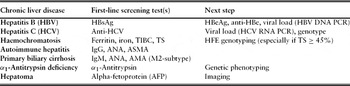
First-line tests include ultrasonography (USS) and a hepatic parenchymal screen. Positive results warrant further investigation, as outlined in Table 1. Ultrasonography is non-invasive and readily available. It permits assessment of biliary tree calibre, identifies features suggestive of cirrhosis and portal hypertension, and is useful for detecting focal lesions.
Parenchymal liver screen in older adults

HBsAg, hepatitis B surface antigen; HBeAg, hepatitis B e-antigen; Anti-HBe, antibody to hepatitis B e-antigen; DNA, deoxyribonucleic acid; RNA, ribonucleic acid; PCR, polymerase chain reaction; Anti-HCV, antibody to hepatitis C; TIBC, total iron binding capacity; TS, transferrin saturation (iron/TIBC); Ig, immunoglobulin; ANA, anti-neutrophil antibody; ASMA, anti-smooth muscle antibody; AMA, anti-mitochondrial antibody.
If first-line screening tests are positive, referral to a hepatologist is advised. Faced with a negative screen, extra-hepatic diseases such as cardiac failure and inflammatory, infective and mitotic conditions should be considered. If diagnostic doubt persists, a percutaneous ultrasound-guided liver biopsy should be considered. It may clarify diagnosis, thereby directing therapy, and through staging (assessment of fibrosis), prognosticate. It is often overlooked in the older population due to safety concerns. However, complications are rare and mortality is age independent at approximately 0.2%.Reference Gilmore, Burroughs, Murray-Lyon, Williams, Jenkins and Hopkins22, Reference Bravo, Sheth and Chopra23
Novel, non-invasive methods of assessing fibrosis, particularly the FibroScan (transient elastography) technique are gaining favour, though validation data are lacking in certain situations and availability is variable.Reference Castera, Forms and Alberti24 This may ultimately reduce the need for biopsy.
Severity assessment of chronic liver disease
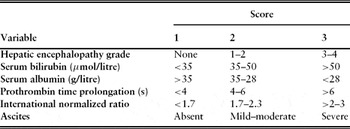
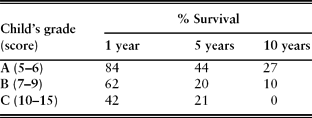
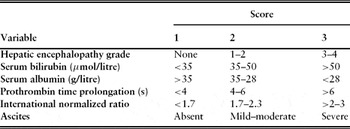
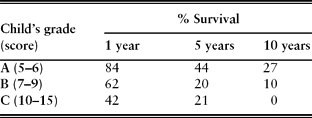
There are several evidence-based scoring tools for stratifying severity and prognosticating chronic liver disease, which are also used for prioritizing allocation of liver allografts. The most widely used is the Child-Pugh system for which a score of 1 to 3 is assigned to five variables. The sum translates to a corresponding Child's grade (A, B or C), which predicts survival as outlined in Tables 2 and 3.
Child-Pugh scoring table
Survival in chronic liver disease according to Child's grade
The Model for End-stage Liver Disease (MELD) score (range 6–40) predicts 3-month mortality in patients with cirrhosis.Reference Kamath, Wiesner, Malinchoc, Kremers, Therneau, Kosberg, D'Amico, Dickson and Kim25 It is calculated using a formula based on measurements of serum bilirubin, creatinine and International Normalized Ratio (INR). Unlike the Child-Pugh score, there are no subjective components. Scores of less than 9 and more than 30 are associated with 3-month mortality rates of 1.9 and over 50%, respectively.Reference Wiesner, Edwards, Freeman, Harper, Kim, Kamath, Kremers, Lake, Howard, Merion, Wolfe and Krom26
The United Kingdom End-stage Liver Disease (UKELD) score predicts which patients are at risk of dying while on the transplant waiting list. Its calculation additionally incorporates measurement of serum sodium (which more accurately identifies patients at a greater risk of death).Reference Kim, Biggins, Kremers, Wiesner, Kamath, Benson, Edwards and Therneau27 A score of 49 or greater predicts a 1-year survival of less than 91%, which is equal to the mortality risk (9%) after elective transplantation and is an objective basis minimal listing criterion.Reference Neuberger, Gimson, Davies, Akyol, O'Grady, Burroughs and Hudson28
Alcoholic liver disease
Alcohol consumption is common in older adults who are more susceptible to its deleterious effects.Reference Smith29 Among community-dwellers aged over 60 years, 62% drink alcohol and 6% are classified as ‘heavy’ drinkers.Reference Mirand and Welte30 Moreover, 8% of acute elderly admissions consume alcohol in excess of recommended weekly limits, and of these 24% are admitted with alcohol-related problems.Reference Mangion, Platt and Syam31
Alcoholic liver disease (ALD) is perceived as being uncommon in older people; however, it is becoming an increasing problem. In the UK 28% of cases present over the age of 60 years,Reference Potter and James32 while in France 20% are aged over 70 years.Reference Aron, Dupin and Jopard33
Typically, presentation is non-specific, although decompensated disease is more often seen in the older population, suggestive of more advanced disease.Reference Potter and James32, Reference Woodhouse and James34 This is supported by histological studies which demonstrate that almost all patients over 70 years are cirrhotic at presentation compared with approximately 50% of those under 60 years of age.Reference Potter and James32, Reference James35 The long-term outlook is poor, with half of older adults who develop ALD-related cirrhosis being dead within a year of diagnosis.Reference Smith29
No studies of long-term treatment of ALD, specifically in elderly patients, have been conducted. Lifestyle modification and nutritional support are paramount.
Non-alcoholic fatty liver disease
Non-alcoholic fatty liver disease (NAFLD), best considered as the hepatic manifestation of the metabolic syndrome, is characterized by hepatic fat accumulation with a clinico-pathological spectrum ranging from bland steatosis to non-alcoholic steatohepatitis (NASH). It has become the commonest reason for deranged liver biochemistry and referral to hepatology clinics in developed countries.Reference Rafiq, Bai, Fang, Srishord, McCullough, Gramlich and Younossi36
As the incidence of metabolic risk factors increases, the prevalence of NAFLD will also increase, particularly in older people.Reference Targher, Bertolini, Padovani, Rodella, Tessari, Zenari, Day and Arcaro37, Reference Amos, McCarty and Zimmet38 At present 26% of patients with NAFLD are aged over 60 years.Reference Frith, Day, Henderson, Burt and Newton39 Among type II diabetics, the prevalence of NAFLD is 65 and 75% in those aged 40–59 and over 60 years, respectively.Reference Targher, Bertolini, Padovani, Rodella, Tessari, Zenari, Day and Arcaro37
NAFLD is not benign and can cause significant liver diseaseReference Rafiq, Bai, Fang, Srishord, McCullough, Gramlich and Younossi36, Reference Ekstedt, Franzén, Mathiesen, Thorelius, Holmqvist, Bodemar and Kechagias40 with up to 15% progressing to cirrhosis.Reference Angulo41 A large proportion of cases of so-called cryptogenic cirrhosis are now thought to represent the end-stage liver disease of NASH.Reference Neuschwander-Tetri and Caldwell42
Dietary modification and increased physical activity are the only measures that have been shown to reduce hepatic steatosis and inflammation, and should be addressed as early as possible.Reference Kugelmas, Hill, Vivian, Marsano and McClain43, Reference Palmer and Schaffner44 Associated cardiovascular risk factors, which may represent a greater risk to the patient than the liver disease, should be tackled.
Viral hepatitis
Viral hepatitis is less common in older age. There are, however, several considerations with regard to older adults.
Hepatitis B
The prevalence of chronic hepatitis B virus (HBV) infection declines with advancing age.Reference Quoilin, Hutse, Vandenberghe, Claeys, Verhaegen, De Cock, Van Loock, Top, Van Damme, Vranckx and Van Oyen45 However, outbreaks of HBV have been reported in care homes, without the typical blood-borne route of transmission.Reference Braconier and Nordenfelt46 Possible sources include sharing bath brushes and razor blades.Reference Chiaramante, Floreani and Naccarato47, Reference Wright48 Only 0.9% of over-65-year-olds have been vaccinated against HBV compared with 21% in the 35- to 44-year-old age group.Reference Quoilin, Hutse, Vandenberghe, Claeys, Verhaegen, De Cock, Van Loock, Top, Van Damme, Vranckx and Van Oyen45 Immunization could be recommended for all care home residents, but the response to the vaccine is significantly reduced in older people.Reference Cook, Gualde, Hessel, Mounier, Michel, Denis and Ratinaud49, Reference Looney, Hasan, Coffin, Campbell, Falsey, Kolassa, Agosti, Abraham and Evans50 In an American study, all younger adults (mean age of 28 years) acquired seroprotection compared with only 42% of older subjects (mean age 74 years).Reference Looney, Hasan, Coffin, Campbell, Falsey, Kolassa, Agosti, Abraham and Evans50 This may reflect immunosenescence.
Immune dysfunction probably also underlies the sub-clinical course older adults infected with HBV tend to follow. Since markers of active viral replication, namely HBV DNA, HBeAg and ALT, are generally low or absent in older adults, few subjects within this cohort require treatment.Reference McMahan, Alward and Hall51
Management of chronic hepatitis B is complex and requires specialist care. The goal is to suppress viral replication and prevent the evolution of chronic liver disease and its sequelae. Detailed guidelines on the management of HBV have been published, but further discussion is beyond the scope of this review.52 Simplistically, when treatment is indicated in older people, the newer, potent but well-tolerated antiviral agents with a high genetic barrier to resistance, namely entacavir and tenofovir, would be recommended as first-line monotherapy.
Chronic carriers (HBsAg-positive) and those with evidence of previous exposure to HBV (anti-HB core antibody-positive) are at risk of a flare-up or disease reactivation, respectively, if given cytotoxic chemotherapy or immunosuppressant therapy.Reference Yeo and Johnson53 Antiviral prophylaxis with lamivudine is recommended in these cases.52
Hepatitis C
It is estimated that hepatitis C virus (HCV) affects up to 400,000 individuals in the UK.Reference Booth, O'Grady and Neuberger54 As many as 90% of these develop chronic liver diseaseReference Alter, Margolis and Krawczynski55 in whom the incidence of hepatocellular carcinoma (HCC) is high (3–4% per year).Reference Di Bisceglie56 HCV-related cirrhosis is the most frequent indication for orthotopic liver transplantation (OLT).Reference Hoofnagle57 The average age of patients with hepatitis C is increasing as a consequence of infected middle-aged subjects growing older.Reference Poynard, Yen and Ratzui58
In general, the route of infection differs with age. In younger adults infection is typically acquired following intravenous drug use. In contrast, blood transfusion in the pre-screening era (prior to 1991) is often the culprit in the latter. Anti-HCV is present in up to 4.5% of nursing home residents and is attributed to previous transfusion.Reference Chien, Dundoo and Horani59
Chronic hepatitis C is generally silent and its diagnosis fortuitous. The median time from infection to cirrhosis is approximately 30 years. Disease progression is not linear and may accelerate with advancing age,Reference Poynard, Bedossa and Opolon60, Reference Zarski, McHutchison and Bronowicki61 thus it is unsurprising that cirrhosis and HCC are more prevalent in older subjects.Reference Watson, Brind, Chapman, Bates, Gould, Johnson, Burt, Ferguson, Simmonds and Bassendine62, Reference Pagliaro, D'Amico and Puleo63
The goal of therapy is to eradicate the virus and prevent the development of cirrhosis and its complications. Combination therapy with pegylated interferon-alpha (PEG IFN-α) and ribavirin represents current standard therapy.
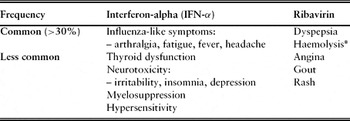
The decision to treat is complex and should be made by a specialist. Treatment is associated with a multitude of adverse effects (Table 4), the incidence of which do not vary with age,Reference Honda, Katano, Urano, Murayama, Hayashi, Ishigami, Nakano, Yoshioka, Toyoda, Kumada and Goto64 and cure is not guaranteed. Response to therapy is dependent on host, virological and histological factors. In general, old age, genotype 1, high baseline viral load and a high degree of fibrosis on histology are associated with diminished response.Reference Goa, Hong and Radeva65
Side-effects of combination antiviral therapy for chronic hepatitis C

*Mean decrease in haemoglobin of approximately 3 g/dl.Reference Poynard, Marcellin, Lee, Niederau, Minuk, Ideo, Bain, Heathcote, Zeuzem, Trepo and Albrecht66
Autoimmune hepatitis
The incidence of autoimmune hepatitis (AIH) exhibits a bi-modal pattern with pubertal and post-menopausal peaks.Reference Al-Chalabi, Boccato, Portmann, McFarlane and Heneghan17, Reference Schramm, Kanzler, Büschenfelde, Galle and Lohse18, Reference Parker and Kingham67 Disease onset and progression are characteristically insidious and consequently diagnosis is often not secured until features of severe liver disease are present. Subjects aged over 65 years are significantly more likely to have ascites than younger patients (30 vs. 9%, P < 0.001), suggesting more advanced disease at presentation.Reference Schramm, Kanzler, Büschenfelde, Galle and Lohse18 Fulminant liver failure may occur, but is rare. AIH co-exists with other autoimmune conditions; rheumatoid arthritis, ulcerative colitis and thyroid disease are the most common in the older cohort.Reference Al-Chalabi, Boccato, Portmann, McFarlane and Heneghan17 Prognosis is not influenced by age.Reference Newton, Burt, Park, Mathew, Bassendine and James68
The mainstay of treatment is immunosuppression. Prednisolone alone or combined with azathioprine has been used with similar rates and outcomes in both the old and young.Reference Al-Chalabi, Boccato, Portmann, McFarlane and Heneghan17, Reference Verslype, George, Buchel, Nevens, van Steenbergen and Fevery19 As treatment in advanced stages is associated with a higher risk of relapse, early treatment affords most benefit.Reference Kirk, Jain, Pocock, Thomas and Sherlock69 It is paramount not to miss diagnosis of this readily treatable condition.
Primary biliary cirrhosis
Half of patients with primary biliary cirrhosis (PBC) present for the first time after the age of 65 years.Reference Parker and Kingham67 In northern England, in women over 65 years of age, prevalence is approximately 1 in 1000.Reference Metcalf, Bhopal, Gray, Howel and James70 Increasing age has been shown to be an independent prognostic factor for PBC, even when deaths from liver disease alone are considered.Reference Grambasch, Dickson and Kaplan71 The majority are asymptomatic on presentation, but younger subjects are significantly more likely to report non-specific symptoms.Reference Newton, Jones, Metcalf, Park, Burt, Bassendine and James72 Fatigue is a poor prognostic marker, increasingly more so with advancing age.Reference Zein and McCullough73
Transplantation is the only curative option and may be indicated for intractable pruritus and fatigue, as well as for liver failure. There is no satisfactory medical therapy. Ursodeoxycholic acid (UDCA), a synthetic bile acid, is safe, well tolerated and, at a dose of 10–15 mg/kg/day, improves liver biochemistry and histology, but its effect on disease progression and transplant-free survival is debated. Pruritus is usually controlled by cholestyramine (which should not be given at the same time as UDCA), while second-line alternatives include rifampicin, ondansetron, naltrexone and gabapentin.
All patients with cirrhosis are at risk of osteoporosis, with those on steroids at increased risk.Reference Solerio, Isaia and Innarella74 Prophylaxis, through the use of calcium and cholecalciferol supplements and bisphosphonate therapy, should be considered.
Hereditary haemochromotosis
Despite estimates of C282Y homozygosity (the commonest genetic mutation underlying hereditary haemochromatosis (HHC)) ranging from 1-in-100 to 1-in-300, HHC is considered a rare disease.Reference Jeffrey, Adams, McDonald, Burroughs and Feagan75 This is a consequence of variable phenotypic penetrance amongst homozygotes and a ‘clinical iceberg’ of undiagnosed subjects. Estimates suggest that 70,000 people in the UK have symptomatic HHC, although only about 3000 cases are recognized.Reference Rosenberg, Howell, Roderick, Eccles and Day76
HHC is classically diagnosed in middle age,Reference Niederau, Fischer, Pürschel, Stremmel, Häussinger and Strohmeyer77 but can present in old age,Reference Willis, Wimperis, Smith, Fellows and Jennings78 by which time significant iron overload may have developed. It is ten times more common in males than females who are spared by therapeutic menstruation.Reference Sheldon79
Due to the lack and non-specific nature of symptoms, diagnosis is not straightforward, particularly in a population who may have accumulated multiple co-morbidities. It should be considered in older subjects presenting with fatigue (the commonest complaint), arthralgia and diabetes mellitus. Those presenting with movement disorders may be misdiagnosed with Parkinson's disease or cerebellar syndromes.Reference Demarquay, Setiey, Morel, Trepo, Chazot and Broussolle80
HHC is an important diagnosis to consider in older adults, not only for family screening, but because the complications are preventable with early de-ironing. Venesection is the mainstay of treatment, with an aim to achieve a target ferritin less than 50 μg/l (although there is no evidence base for this endpoint) while maintaining a haemoglobin concentration above 10 g/dl.81 Therapeutic phlebotomy is well toleratedReference Adams82 but may induce orthostatic hypotension in older adults. Adequate hydration and avoidance of vigorous physical activity for 24 hours is recommended.81 Chelation therapy is a second-line treatment alternative. Venesection prevents the progression of, and may even reverse, fibrosis in pre-cirrhotic patients.Reference Milman, Pederson and Steig83–Reference Powell and Kerr85 It improves fatigue and skin pigmentation.Reference Niederau, Fischer, Pürschel, Stremmel, Häussinger and Strohmeyer77 Glycaemic control may improve, although insulin dependence is not reversed.Reference Niederau, Fischer, Pürschel, Stremmel, Häussinger and Strohmeyer77 Arthropathy is typically unaffected.Reference Milman, Pederson and Steig83
Once iron depletion has been achieved some patients may not show re-accumulation of iron at the expected rate. Proton pump inhibitors are associated with reduced iron absorption,Reference Hutchison, Geissler and Powell86 while non-steroidal anti-inflammatory drugs (NSAIDS) may cause occult blood loss. In older patients it is necessary to be alert to co-morbid conditions that may lead to iron loss which warrant appropriate investigation.
Patients with cirrhosis have an increased risk of death, while non-cirrhotic treated patients have a survival rate similar to age- and sex-matched controls.Reference Niederau, Fischer, Pürschel, Stremmel, Häussinger and Strohmeyer77, Reference Adams, Speechley and Kertesz87
Wilson's disease
Wilson's disease is a disease of children and young adults and will not be discussed further.
Drug-induced liver injury
Drug-induced liver injury (DILI) may be divided into direct-toxic and idiosyncratic reactions. While the former are predictable, dose dependent and typically manifest within 48 hours of exposure, the latter are dose independent and arise unpredictably, following a latent period ranging from days to months, in a small percentage of susceptible individuals.
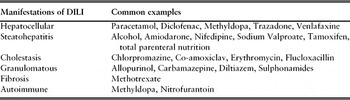
The exact prevalence of DILI is difficult to define, although it is thought to be more common with advancing age.Reference Woodhouse, Mortimer, Wilholm and Kitani88 In older adults DILIs are responsible for up to 40% of presentations with acute hepatitic biochemistry.Reference Benhamous and Fillastre89 Polypharmacy and co-morbidity may potentiate the adverse effects of some medications on the liver; however, age-related decline in drug clearance is probably irrelevant as most reactions are idiosyncratic. The clinical and biochemical pattern of liver injury can mimic any acute or chronic liver disease, as outlined in Table 5.
Simple classification of hepatic drug reactions and common culprit agents (an individual drug may cause more than one type of reaction)

Manifestations of drug-related hepatotoxicity are variable, ranging from asymptomatic liver enzyme derangement to fulminant hepatic failure. Knowledge of the commonly implicated agents and a high index of suspicion are essential in diagnosis. Early detection and drug withdrawal can lessen the severity. In the UK all suspected cases should be referred to the Medicines and Healthcare products Regulatory Agency (MHRA) via the ‘Yellow Card’ scheme.
Hepatocellular carcinoma
Hepatocellular carcinoma (HCC) is the third most common cause of cancer-related mortality worldwide.90, Reference Bosch, Ribes, Díaz and Cléries91 Up to 90% of cases arise in the setting of cirrhosisReference Kumagi, Hiasa and Hirschfield92 with ALD, HBV and HCV the most common underlying aetiologies.Reference Michielson, Sven and Van Dongen93
Incidence increases with ageReference Ikeda, Saitoh, Suzuki, Kobayashi, Tsubota, Koida, Arase, Fukuda, Chayama, Murashima and Kumada94 with 15–31% of cases occurring in the over-70s.Reference Collier, Curless, Bassendine and James95–Reference Schöniger-Hekele, Müller, Kutilek, Oesterreicher, Ferenci and Gangl97 Moreover, the number of elderly subjects diagnosed with HCC is expected to increase in developed countries because of the rising incidence of NASH-related cirrhosisReference Bugianesi98 and the ‘delaying’ effect of anti-viral therapy in cases of viral hepatitis.Reference Cammà, Giunta, Andreone and Craxì99
Owing to surveillance programmes, HCCs in older adults tend to be detected at a less advanced stage and, consequently, symptomatic disease is significantly less prevalent than in younger counterparts.Reference Mirici-Cappa, Gramenzi, Santi, Zambruni, Di Micoli, Frigerio, Maraldi, Di Nolfo, Del Poggio, Benvegnù, Rapaccini, Farinati, Zoli, Borzio, Giannini, Caturelli, Bernardi and Trevisani100, Reference Trevisani, Cantarini, Wands and Bernardi101 In all subjects with chronic liver disease HCC must be excluded in the setting of acute decompensation.
There are three potentially curative treatment modalities, namely percutaneous ablation, most commonly radiofrequency ablation (RFA), surgical resection and liver transplantation. For those deemed unsuitable for radical intervention, transcatheter arterial chemo-embolization (TACE) is a palliative option shown to prolong survival from a median of 16 to 20 months.Reference Llovet and Bruix102 Three-year survival is best in transplanted patients (70%), followed by resection (30.9%), ablation (9.8%) and TACE (6.1%).Reference El-Serag, Siegal and Davila103
Treatment strategy is dependent on the severity of underlying chronic liver disease, stage at diagnosis and performance status. Although treatment outcomes are not age dependent, in practice older adults more frequently undergo ablation therapy and less often resection or TACE.Reference Mirici-Cappa, Gramenzi, Santi, Zambruni, Di Micoli, Frigerio, Maraldi, Di Nolfo, Del Poggio, Benvegnù, Rapaccini, Farinati, Zoli, Borzio, Giannini, Caturelli, Bernardi and Trevisani100
Cirrhotic patients who are potential candidates for intervention warrant surveillance with sonography and serum alpha-fetoprotein (AFP) measurement at 6-monthly intervals.Reference Ryder104, Reference Bruix and Sherman105
Managing decompensated chronic liver disease
When chronic liver disease decompensates it may manifest with hepatic encephalopathy (HE), ascites and/or variceal haemorrhage. Management strategies are independent of the underlying aetiology and do not differ with age.
Hepatic encephalopathy
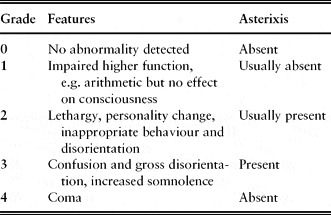
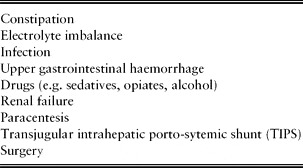
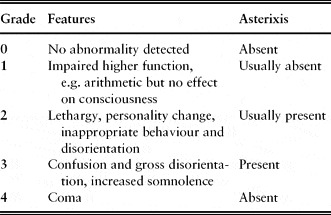
HE is a potentially reversible neuropsychiatric state that may complicate cirrhosis. It ranges from life-threatening coma to sub-clinical forms and should be staged according to the West-Haven criteria, as outlined in Table 6. It may interfere with quality of life and can be chronically debilitating. It should be considered in any patient with liver disease and confusion or altered consciousness. Diagnosis is clinical, but may be more challenging in the older population where delirium and dementia are both common. Treatment aims are to reduce ammonia production and absorption and manage any precipitating factors, as listed in Table 7.
West Haven criteria for grading mental state in hepatic encephalopathy
Common precipitants of hepatic encephalopathy in chronic liver disease

Lactulose reduces ammoniagenic substrate absorption from the gut and, although it has no survival benefit,Reference Morgan, Blei, Grüngreiff, Jalan, Kircheis, Marchesini, Riggio and Weissenborn106 has been shown to improve cognition and quality of life.Reference Prasad, Dhiman, Duseja, Chawla, Sharma and Agarwal107 When prescribing laxatives in older people, special consideration should be given to the effects on faecal continence, hydration and electrolyte homeostasis.Reference Romero, Evans, Fleming and Phillips108 Non-absorbable antimicrobials reduce the colonic load of ammoniagenic bacteria and may be used as secondary prophylaxis. Rifaximin is well tolerated and has been reported to significantly reduce the risk of an episode and hospitalization over a 6-month period.Reference Bass, Mullen, Sanyal, Poordad, Neff, Leevy, Sigal, Sheikh, Beavers, Frederick, Teperman, Hillebrand, Huang, Merchant, Shaw, Bortey and Forbes109
Ascites
Ascites is an important landmark in the natural history of cirrhosis, with a 2-year survival of approximately 50%.Reference Ginés, Quintero, Arroyo, Terés, Bruguera, Rimola, Caballería, Rodés and Rozman110 Medical therapy aims to mobilize the ascites by inducing a negative sodium balance. First-line treatment is restriction of dietary sodium (40–80 mEq/l) and fluid intake. Diuretic therapy, using potassium sparing agents and loop diuretics to achieve weight loss of up to 500 g/day is safe, although older adults may not tolerate this due to symptomatic orthostatic hypotension and increased risk of incontinence. If ascites becomes refractory to diuretics, the 1-year mortality is approximately 50%Reference Arroyo, Ginès, Gerbes, Dudley, Gentilini, Laffi, Reynolds, Ring-Larsen and Schölmerich111–Reference Gerbes113 and therapeutic options thereafter include large volume paracentesis (LVP), transjugular intrahepatic porto-sytemic shunt (TIPS) and OLT.
LVP offers rapid symptomatic benefit, reduces length of hospitalization and is safe and easy to perform.Reference Moore and Aithal112, Reference Grabau, Crago, Hoff, Simon, Melton, Ott and Kamath114, Reference Gines, Arroyo and Quintero115 However, there are a number of limitations. Firstly, it exerts negative effects on systemic haemodynamics and renal function, which are somewhat reduced by synchronous infusion of salt-poor human albumin solution (8 g/litre of ascitic fluid removed).Reference Peltekian, Wong and Lui116–Reference Sola-Vera, Miñana, Ricart, Planella, González, Torras, Rodríguez, Such, Pascual, Soriano, Pérez-Mateo and Guarner118 Furthermore, LVP leads to a protein loss of 200 g per 10 litres of ascites removed, which accelerates protein wasting and malnutrition and has deleterious effects on survival.Reference Plauth, Scheutz and Buckendahl119–Reference Peng, Plank, McCall, Gillanders, McIlroy and Gane121 Finally, LVP does not address the underlying pathophysiology and, consequently, ascites typically recurs.Reference Salerno, Cammà, Enea, Rössle and Wong122
TIPS insertion, where a stent is deployed angiographically between the portal and hepatic venous systems, reduces portal hypertension, which is one of the main factors underlying ascites development. It should be considered for those with recidivant ascites requiring frequent LVP.Reference Moore, Wong, Gines, Bernardi, Ochs, Salerno, Angeli, Porayko, Moreau, Garcia-Tsao, Jimenez, Planas and Arroyo123
TIPS is highly effective, with 51 and 68% achieving a complete or partial response not requiring further LVP, respectively.Reference Russo, Sood, Jacobson and Brown124 Survival in TIPS-treated subjects is significantly longer than in those treated with paracentesis.Reference Salerno, Cammà, Enea, Rössle and Wong122 In contrast to LVP, TIPS often improves renal function,Reference Ochs, Rössle, Haag, Hauenstein, Deibert, Siegerstetter, Huonker, Langer and Blum125 has a positive impact on nutritional status,Reference Plauth, Scheutz and Buckendahl119, Reference Allard, Chau, Sandokji, Blendis and Wong120 and may enhance quality of life.Reference Gulberg, Lib and Bilzer126 However, there are drawbacks. Firstly, TIPS may precipitate HE in up to a third of cases,Reference Salerno, Cammà, Enea, Rössle and Wong122, Reference Riggio, Merli and Pedretti127, Reference Sanyal, Freedman, Shiffman, Purdum, Luketic and Cheatham128 with those of more advanced age (over 60 years), advanced liver failure (MELD >12.5)Reference Salerno, Cammà, Enea, Rössle and Wong122 or a previous history of HE at most risk.Reference Rossle and Piotraschke129–Reference Riggio, Angeloni, Salvatori, De Santis, Cerini, Farcomeni, Attili and Merli131 In addition, TIPS may produce haemodynamic changes provoking cardiac dysfunction, particularly in the presence of underlying cardiac disease, which is more common in older people.Reference Moller and Henrikson132 An ejection fraction below 50% is regarded as a relative, and below 40% an absolute, contraindication for TIPS.Reference Pozzi, Carugo, Boari, Pecci, de Ceglia, Maggiolini, Bolla, Roffi, Failla, Grassi, Giannattasio and Mancia133
Variceal haemorrhage
Variceal bleeding is a complication of portal hypertension and a major cause of death in patients with cirrhosis. Prognosis is linked to Child-Pugh status but is independent of age.Reference Bullimore, Miloszewski and Losowsky134–Reference Goulis, Armonis, Patch, Sabin, Greenslade and Burroughs137
Standard therapy comprises splanchnic vasoactive agents, prophylactic antibimicrobials, and endotherapy.Reference Garcia-Tsao, Sanyal, Grace and Carey138, Reference De Franchis139 Gastroscopy is safe and well tolerated in the older person.Reference Cooper and Neumann140 Variceal band ligation is the modality of choice. Sclerotherapy results in an increased incidence of re-bleeding and overall mortality in older people.Reference Roberts, Carey, Faizallah, Walker, Krasner, Morris and Marcus141 Haemostatic failure occurs in 10–15% of patients, necessitating consideration of repeat endotherapy, salvage TIPS or palliation.Reference Bosch, Abraldes, Berzigotti and Garcia-Pagan142–Reference Azoulay, Castaing, Majno, Saliba, Ichaï, Smail, Delvart, Danaoui, Samuel and Bismuth144
Evidence has recently emerged demonstrating that early TIPS significantly reduces failure to control bleeding, mortality and duration of hospitalization.Reference García-Pagán, Caca, Bureau, Laleman, Appenrodt, Luca, Abraldes, Nevens, Vinel, Mössner and Bosch145 However, results must be interpreted with caution in older people as subjects over 75 years of age were excluded.
Orthotopic liver transplantation
OLT is principally aimed at restoring health and improving quality of life and survival. However, limited donor availability restricts the number of beneficiaries. In the UK approximately 600 transplants are undertaken annually with the average recipient over the age of 50 years.146
The average age of patients undergoing OLT is consistently increasing.Reference Montalti, Rompianesi, Di Benedetto, Ballarin, Gerring, Busani, De Pietri, De Ruvo, Iemmolo, Guerrini, Smerieri and Gerunda147 According to the European Liver Transplant Registry (ETLR) the proportion of adult liver recipients older than 60 years increased from 9% in 1990 to more than 16% in 1999, and approximately 20% in 2008.148 The lead indications for OLT among those aged 60 years or older in Europe between 1988 and 2008 were cirrhosis (63%), cancer (25%), and acute liver failure (4%).148
Advanced age was previously considered a contraindication to OLT. However, recent studies comparing younger and older adults have reported similar lengths of hospitalization, incidence of complications and survival rates.Reference Montalti, Rompianesi, Di Benedetto, Ballarin, Gerring, Busani, De Pietri, De Ruvo, Iemmolo, Guerrini, Smerieri and Gerunda147, Reference Collins, Pirsch, Becker, Hanaway, Van Der Werf, D'Alessandro, Knechtle, Odorico, Leverson, Musat, Armbrust, Becker, Sollinger and Kalayoglu149, Reference Audet, Piardi, Panaro, Cag, Ghislotti, Habibeh, Giulini, Jaeck and Wolf150 A recent Italian study, comparing older (over 65 years) adults and younger (41–64 years) matched controls, demonstrated 1-, 3- and 5-year survival rates of 83.9, 80.6 and 80.6%, respectively, for the older group, and 80.6, 73.8 and 73.8%, respectively, for the younger group.Reference Montalti, Rompianesi, Di Benedetto, Ballarin, Gerring, Busani, De Pietri, De Ruvo, Iemmolo, Guerrini, Smerieri and Gerunda147 A similar French study showed that older subjects are more likely to have coronary heart disease (50 vs. 12%), and subsequently cardiac complications are more frequent in this cohort (8.8 vs. 1.4%).Reference Audet, Piardi, Panaro, Cag, Ghislotti, Habibeh, Giulini, Jaeck and Wolf150 These studies suggest that chronological age alone should not deter OLT when an adequate cardiac assessment has been performed.
While younger patients are most likely to die from infection, the commonest cause of death in those aged over 60 years is malignancy.Reference Collins, Pirsch, Becker, Hanaway, Van Der Werf, D'Alessandro, Knechtle, Odorico, Leverson, Musat, Armbrust, Becker, Sollinger and Kalayoglu149 Mortality related to cardiovascular events is similar in both age groups, perhaps because the older age group undergo more comprehensive pre-transplant screening for co-morbidities.Reference Collins, Pirsch, Becker, Hanaway, Van Der Werf, D'Alessandro, Knechtle, Odorico, Leverson, Musat, Armbrust, Becker, Sollinger and Kalayoglu149
Transplantation is not an option for frail older adults or those with significant co-morbidity, for whom a palliative strategy should be adopted.
As the 20-year survival rate following transplantation exceeds 50%, geriatricians will increasingly encounter OLT recipients.Reference Dawwas, Gimson, Lewsey, Copley and Van Der Meulen151, Reference Pomfret, Fryer, Sima, Lake and Merion152 It is paramount to consider the potential for drug interactions with maintenance immunosuppression. Medications that impact on the cytochrome P-450 system affect the serum levels of calcineurin inhibitors (CNI), namely cyclosporin and tacrolimus. Enzyme inducers produce sub-therapeutic levels, thereby risking allograft rejection, while enzyme inhibitors may cause toxicity. In particular, macrolide antimicrobials and phenytoin should be avoided.
Medical morbidity is substantial in the long-term following transplantation. Hypertension develops in 60% of recipients, diabetes in 35% and chronic kidney disease (CKD) in up to 20%.Reference Sheiner, Magliocca, Bodian, Kim-Schluger, Altaca, Guarrera, Emre, Fishbein, Guy, Schwartz and Miller153, Reference Ojo, Held, Port, Wolfe, Leichtman, Young, Arndorfer, Christensen and Merion154 Furthermore, more than 20% of non-obese recipients become obese 2 years after grafting.Reference Everhart, Lombardero, Lake, Wiesner, Zetterman and Hoofnagle155 Such metabolic disturbances broadly relate to the aetiology of the original disease, post-transplant weight gain and the side-effects of immunosuppression. Transplantation is also associated with an increased risk of malignancy, in particular cutaneous and gastrointestinal carcinomas and lymphoproliferative disorders.Reference Fung, Jain, Kwak, Kusne, Dvorchik and Eghtesad156
Prognosis in chronic liver disease
Increased age is the most important independent adverse risk factor influencing survival in cirrhosis.Reference Johnson, Hayllar and Metivier157 While older, fatigued patients with PBCReference Zein and McCullough73 and those with ALDReference Woodhouse and James34 and NAFLDReference Adams, Lymp, St Sauver, Sanderson, Lindor, Feldstein and Angulo158 all demonstrate age-associated increased risk of death,Reference Woodhouse and James34, Reference Zein and McCullough73, Reference Adams, Lymp, St Sauver, Sanderson, Lindor, Feldstein and Angulo158 the majority of deaths in older people with PBC,Reference Newton, Jones, Metcalf, Park, Burt, Bassendine and James72 AIHReference Newton, Burt, Park, Mathew, Bassendine and James68 and HCVReference Watson, Brind, Chapman, Bates, Gould, Johnson, Burt, Ferguson, Simmonds and Bassendine62, Reference Monica, Lirussi, Pregun, Vasile, Fabris and Okolicsanyi159 are unrelated to the liver.
Conclusion
Geriatricians can expect to see increasing numbers of older people with chronic liver disease. A high index of suspicion is paramount given that the presentation is often vague and non-specific. Abnormal liver biochemistry should be investigated thoroughly (unless inappropriate). In cases of diagnostic uncertainty, percutaneous liver biopsy is safe, but often overlooked. In general, management of cirrhosis and its complications is not influenced by age. Biological age is more important than chronological age. Treatment goals should be realistic and individualized.
Conflicts of interest
The authors declared no conflicts of interest.