





Introduction
At our institution, the placement of pleural drains following paediatric cardiac surgery is determined by the surgeon’s discretion rather than formal guidelines. The prevailing practice is to avoid bilateral drains when the pleurae are intact. Over time, our clinical experience suggested that patients managed with unilateral drainage occasionally develop effusions on the undrained side, necessitating postoperative bedside drain insertion. We hypothesised that these patients might require more intensive postoperative care, including prolonged mechanical ventilation, extended ICU stays, increased diuretic use, and additional sedation or analgesia. This hypothesis, however, had not been systematically investigated.
Patients undergoing tetralogy of Fallot repair may particularly benefit from bilateral pleural drainage, given the restrictive right ventricular physiology commonly observed postoperatively, which elevates systemic venous pressure and impairs pleural drainage. Reference Talwar, Agarwala, Mittal, Choudhary and Airan1,Reference Cullen, Shore and Redington2
The medical literature provides guidance on pleural drains following paediatric cardiac surgery, focusing on removal criteria, complications, and chylothorax. However, it offers limited information regarding the number or anatomical positioning of drains after tetralogy of Fallot repair. Notably, there is significant variability in management both between and within institutions. Reference Taylor, Bates and Kipps3–Reference Yeh, Brown and Kellogg6 Our review of the literature revealed that only a small number of studies address drain-placement practices, and none assess the impact of unilateral versus bilateral pleural drainage on clinical outcomes. Reference Bates, Madsen and Khadr4–Reference Agati, Mignosa and Gitto8
Our cardiac surgery programme has provided care to children from low-income countries globally for the past 30 years, in collaboration with “Save a Child’s Heart,” a non-profit organisation dedicated to this mission. Among them is a large population of tetralogy of Fallot patients, who present for care at an older age, compared to contemporary practice, in which elective complete repair is typically undertaken in early infancy, most often between 3 and 6 months of age. Reference Finkelstein, Sion-Sarid, Zipper, Mitler and Erell9
We conducted a retrospective review of cases to substantiate our observation, comparing the outcomes of patients with bilateral pleural drains to those with unilateral placement.
Material and methods
This single-centre retrospective cohort included all tetralogy of Fallot repairs performed between September 2020 and June 2025. The protocol was approved by the institutional review board (IRB 0030-24-WOMC), and consent was waived. Eligible patients underwent complete repair of tetralogy of Fallot or completion of staged repair (defined as prior palliative systemic to pulmonary shunt followed by definitive repair). Exclusions were previous complete repair, palliative shunt only during the study period, preoperative extracorporeal membrane oxygenation, failure to separate from bypass, postoperative extracorporeal membrane oxygenation, delayed sternal closure, and chylothorax. Patients were grouped by intraoperative pleural drain placement (unilateral versus bilateral). The primary outcome was undrained postoperative pleural effusion, defined as an effusion in a haemithorax without a pleural drain, detected on routine chest radiographs during the ICU stay. Radiographs were reviewed by a paediatric intensive care specialist, with formal paediatric radiology reports available in most cases. Secondary outcomes were postoperative pleural drain insertion, duration of invasive mechanical ventilation, ICU length of stay, and a diuretic score calculated as total intravenous furosemide dose (mg) divided by weight (kg) and by days of treatment, expressed as mg/kg/day. Oral hydrochlorothiazide was not used in this cohort. Furosemide was administered intravenously throughout the period relevant to this analysis; transition to oral furosemide occurred only after resolution of the pleural effusion and was therefore not included in the score. Operations were performed by one of two senior surgeons. Surgical strategy was based on preoperative echocardiography and, when indicated, CT angiography or catheterisation, complemented by intraoperative measurements including passage of a minus two Z-score probe across the pulmonary annulus, assessment of valve dysplasia, direct pressure measurements with a needle and transducer, and echocardiographic gradients (tricuspid regurgitation jet velocity and maximum right ventricular outflow tract pressure gradient). Repair types were classified as no ventriculotomy with valve preservation, ventriculotomy with valve preservation, transannular patch with valve reconstruction, and complex procedures (right ventricle–pulmonary artery conduit, tetralogy of Fallot with atrioventricular septal defect or absent pulmonary valve repair, and transannular patch with biologic valve), in alignment with the Society of Thoracic Surgeons—European Association for Cardio-Thoracic Surgery (STAT) definitions of the mortality category. Reference Jacobs, Shahian and Prager10 In cases when a transannular patch augmentation was chosen, a polytetrafluoroethylene monocusp or bicuspid valve was reconstructed. The institutional preference is to drain only disrupted pleurae; when both pleurae were disrupted, bilateral drains were placed, and one surgeon used bilateral drains more often, regardless of pleural disruption. A 15 French pleural drain was most commonly used, and all patients had a separate mediastinal drain. Pleural drains were removed when output was less than 2–3 ml/kg/day of clear or serosanguineous fluid, with no air leak and adequate lung expansion on chest radiograph, in accordance with published recommendations. Reference Bertrandt, Saudek and Scott5,Reference Bates, Connelly and Khadr11 A follow-up radiograph was routinely obtained the morning after removal and before transfer to the cardiology ward. To avoid overestimating the disadvantage of unilateral drainage, undrained effusions were counted only when a pleural drain remained in the contralateral haemithorax, i.e., during a period when bilateral drainage could still have been maintained. Effusions were recorded as present or absent because a validated grading system for supine chest radiographs is lacking. Indications for bedside pleural drain insertion for effusion were respiratory compromise, sometimes with haemodynamic instability or radiographic progression; in all such cases, radiographs demonstrated at least costophrenic angle blunting and diffuse opacity of the affected haemithorax. Pleural drains for pneumothorax were inserted when there was haemodynamic or respiratory instability attributable to the air leak or radiographic evidence of substantial lung compression not suitable for conservative management. Clinical data were obtained from electronic medical records (Metavision, iMDsoft) and the institutional database (REDCap electronic data capture tools. Reference Harris, Taylor, Thielke, Payne, Gonzalez and Conde12,Reference Harris, Taylor and Minor13 ) Digital radiographs (PACS IDS7, Sectra) were reviewed for pleural drain position, effusions, and complications. Recorded variables included demographics, tetralogy anatomy, prior interventions, baseline oxygen saturation and haemoglobin at preoperative admission, pre-and postoperative maximum right ventricular outflow tract gradient, bypass and cross-clamp durations, repair type, pleural drain sidedness and number, highest vasoactive-inotropic score, timing (relative to pleural drain removal) and side of effusions, postoperative pleural drain placement, mechanical ventilation duration, diuretic score, ICU stay, and survival to hospital discharge. Continuous variables were summarised as mean and standard deviation or median and interquartile range, and categorical variables as counts and percentages. Group comparisons used t-tests or Mann–Whitney U-tests for continuous variables and chi-square or Fisher’s exact tests for categorical variables. The primary outcome (effusion) was analysed using multivariable logistic regression, including drain sidedness, repair type, bypass duration, cross-clamp duration, and surgeon; adjusted odds ratios with 95% confidence intervals were reported, and model performance was summarised by likelihood ratio chi-square, pseudo-R 2 metrics, and area under the receiver operating characteristic curve. Secondary continuous outcomes (mechanical ventilation duration, diuretic score, and ICU stay) were analysed using multivariable linear regression with drain sidedness and repair type as predictors; unstandardised regression coefficients with 95% confidence intervals and R 2 statistics were reported. All tests were two-sided, with significance defined as p < 0.05. Analyses were performed using JASP (Version 0.19.3).
Results
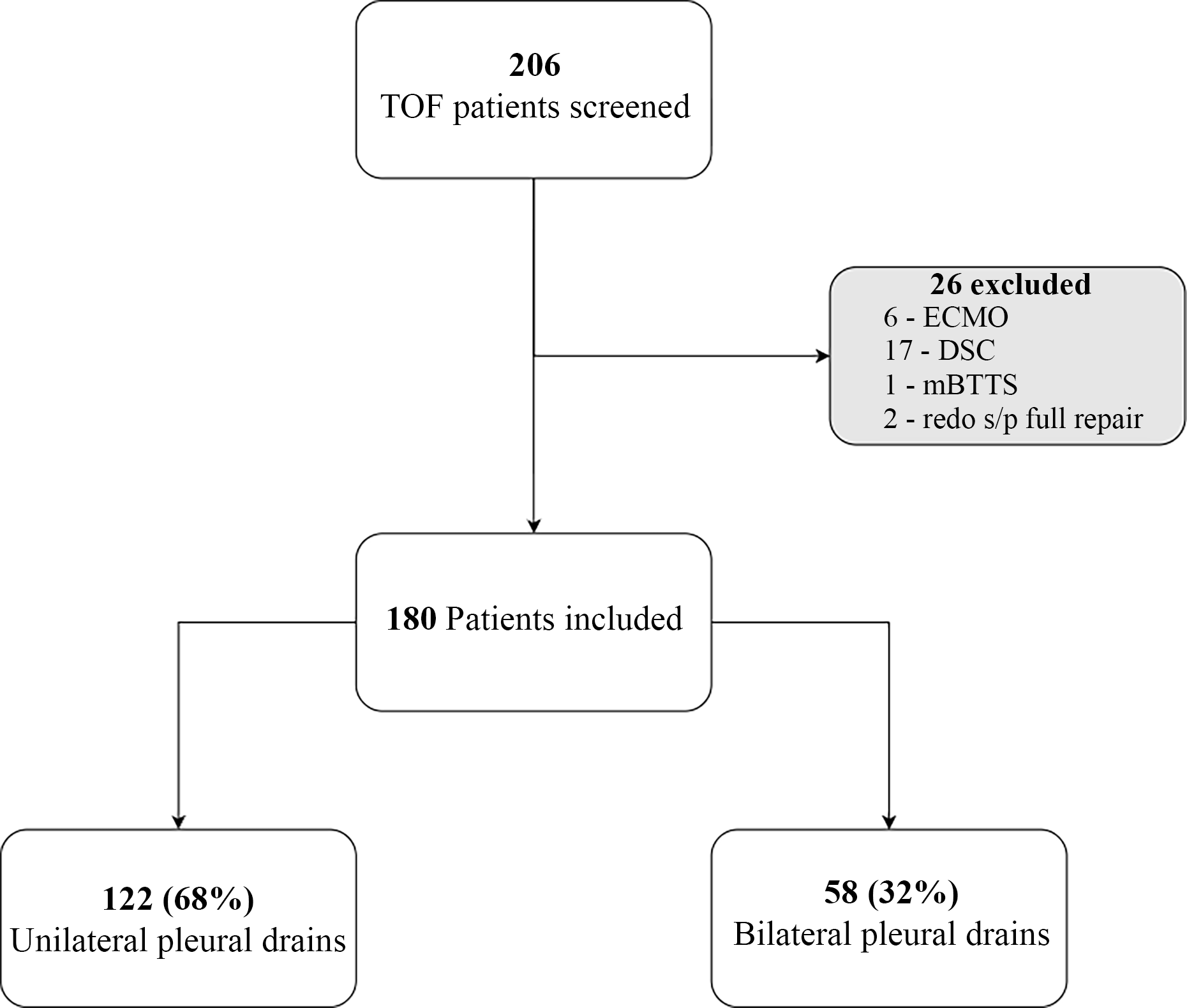
A review of medical records from September 2020 to June 2025 identified 206 eligible patients. The majority of these patients were referred from countries in Africa and Asia. After exclusions, 180 patients remained in the cohort: 122 (68%) underwent unilateral pleural drain placement, whereas 58 (32%) underwent bilateral placement (Figure 1).
Flowchart of study cohort.

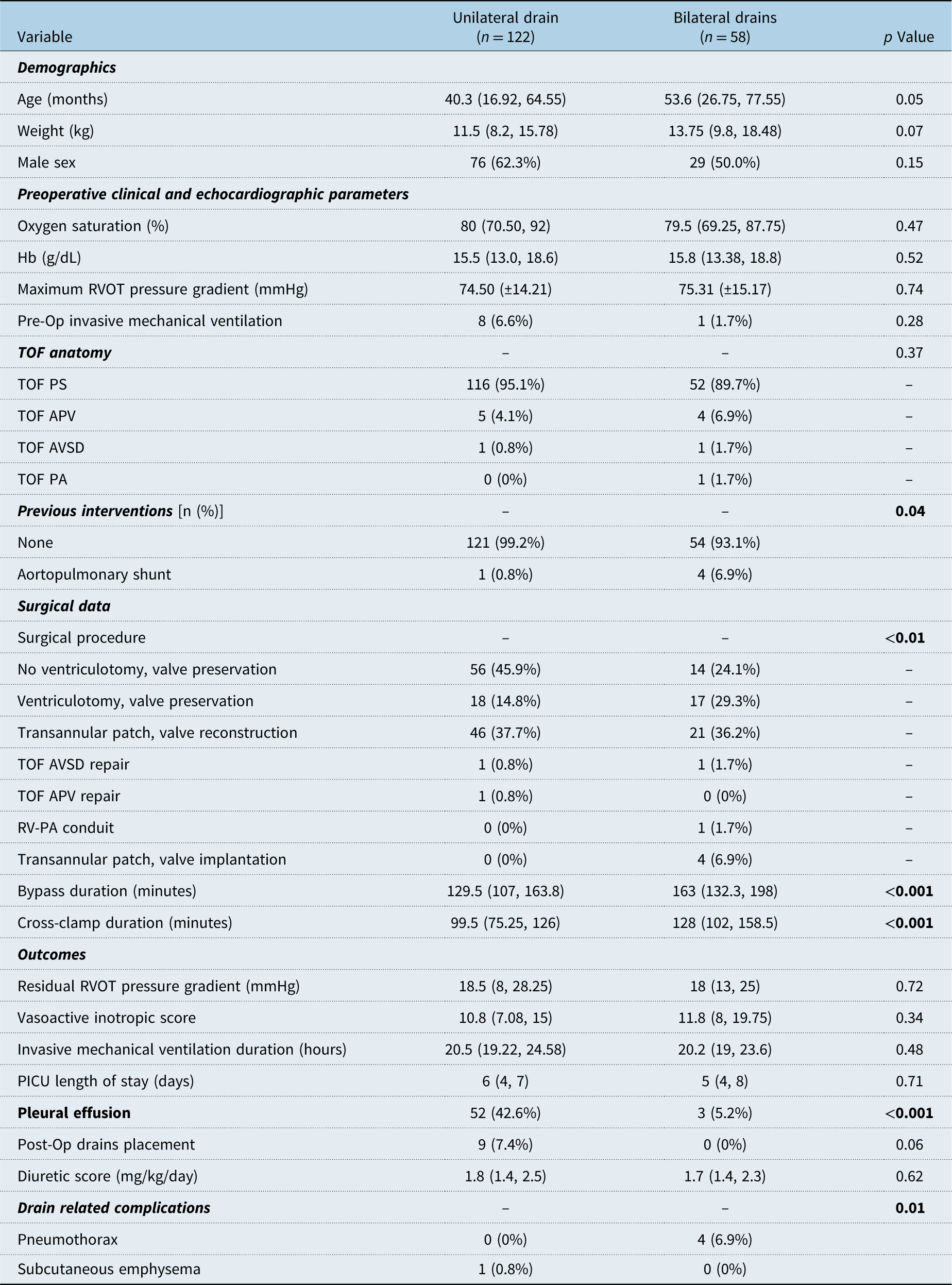
Table 1 presents a univariate analysis of demographic data, baseline clinical and surgical variables, as well as the primary and secondary outcomes for the two groups. The median age was lower in the unilateral group, at 40.3 months, compared to 53.6 months in the bilateral group, with the difference approaching statistical significance (p = 0.05). Additionally, there were 4 (6.9%) previous aortopulmonary shunts in the bilateral group compared to 1 (0.8%) in the unilateral group (p = 0.04).
Patient demographics, operative characteristics, and clinical outcomes

Table 1. Long description
A table comparing patient demographics, operative characteristics, and clinical outcomes for unilateral and bilateral groups. The table has 30 rows and 5 columns. Column headers are Variable, Unilateral drains (n = 122), Bilateral drains (n = 58), and p Value. Row labels include Age (months), Weight (kg), Male sex, and various preoperative clinical and echocardiographic parameters, maximum RVOT pressure gradient (mmHg), pre-op invasive mechanical ventilation, TOF anatomy, previous interventions, surgical data, and outcomes. Each row provides specific values for both groups and the p-value indicating statistical significance. Notable trends include a lower median age in the unilateral group and a higher number of previous aortopulmonary shunts in the bilateral group.
APV = absent pulmonary valve; AVSD = atrioventricular septal defect; Hb = haemoglobin sampled on admission; PA = pulmonary atresia; PICU = paediatric intensive care unit; PS = pulmonary stenosis; RV-PA = right ventricle to pulmonary artery; RVOT = right ventricular outflow tract; TOF = tetralogy of Fallot.
Data presentation: Continuous variables are presented as median (interquartile range) or mean (±standard deviation) as appropriate. Categorical variables are presented as number (percentage). p values < 0.05 are shown in bold.
Missing Data: Maximum RVOT pressure gradient (7 unilateral, 6 bilateral); residual RVOT pressure gradient (2 unilateral, 3 bilateral); diuretic score—in 1 and 3 patients in the unilateral and bilateral groups, respectively, no IV furosemide was used.
The distribution of repair types varied significantly between the unilateral and bilateral drain groups (p < 0.01). The unilateral group exhibited a higher frequency of valve-preserving procedures without ventriculotomy, whereas the bilateral group had more ventriculotomy repairs. The duration of bypass and cross-clamp was notably longer in the bilateral group, with a median difference of approximately 30 minutes (p < 0.001). The residual right ventricular outflow tract pressure gradient and the highest vasoactive-inotropic score within the first 24 hours were comparable between the groups. Routine postoperative chest radiographs revealed an undrained pleural effusion in 52 patients (42.6%) in the unilateral group, compared to 3 patients (5.2%) in the bilateral group (p < 0.001). In the unilateral group, nine patients (7.4%) required bedside postoperative drain placement for pleural effusion, whereas none in the bilateral group did (p = 0.06). Although the overall complication rates differed significantly (p = 0.01), the absolute difference was small. In the bilateral group, there were four (6.9%) cases of pneumothorax necessitating pleural drain insertion, with one occurring spontaneously during drainage and three immediately following pleural drain removal. None of these events were associated with overt respiratory or haemodynamic instability; however, chest drains were inserted on the basis of the radiographic extent of air and the degree of lung compression, which the treating teams deemed unsuitable for conservative management with supplemental oxygen alone. There was one (0.8%) case of self-resolving subcutaneous emphysema in the unilateral group. Diuretic scores, the duration of invasive mechanical ventilation, and ICU length of stay did not differ significantly between the groups. All patients survived to hospital discharge.
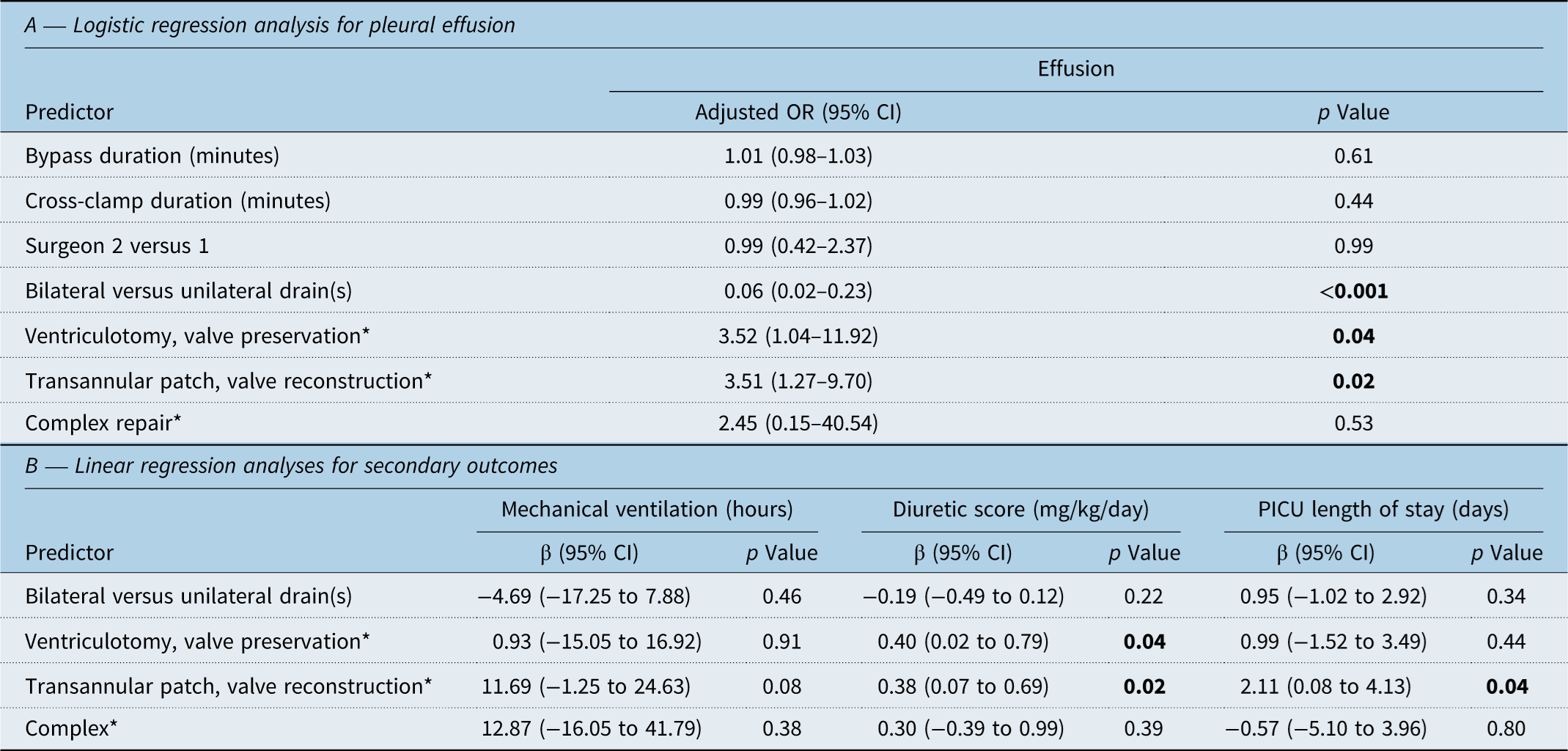
Table 2 presents the results of multivariable analyses for both primary and secondary outcomes. After adjusting for factors such as bypass duration, cross-clamp duration, surgeon, and repair type, bilateral drain placement was found to be independently associated with a reduced likelihood of undrained pleural effusion prior to drain removal (adjusted OR 0.06, 95% CI 0.02–0.23; p < 0.001). Conversely, ventriculotomy with valve preservation (adjusted OR 3.52, 95% CI 1.04–11.92; p = 0.04) and transannular patch with valve reconstruction (adjusted OR 3.51, 95% CI 1.27–9.70; p = 0.02) were linked to an increased likelihood of effusion. Bypass and cross-clamp duration, surgeon, and complex repair did not emerge as significant predictors. Furthermore, multivariable linear regression indicated no independent association between the sidedness of the drain and the duration of mechanical ventilation, diuretic score, or ICU length of stay. However, certain repair types, notably transannular patch with valve reconstruction, were associated with elevated diuretic scores and prolonged PICU stays.
Multivariable regression analyses for pleural effusion and secondary outcomes

Table 2. Long description
Panel A: Logistic regression analysis for pleural effusion. The table has 8 rows and 3 columns. The columns are labeled Predictor, Adjusted OR (95% CI), and p Value. The predictors include Bypass duration (minutes), Cross-clamp duration (minutes), Surgeon 2 versus 1, Bilateral versus unilateral drain(s), Ventriculotomy, valve preservation, Transannular patch, valve reconstruction, and Complex repair. Notable p values include <0.001 for Bilateral versus unilateral drain(s), 0.04 for Ventriculotomy, valve preservation, and 0.02 for Transannular patch, valve reconstruction. Panel B: Linear regression analyses for secondary outcomes. The table has 5 rows and 7 columns. The columns are labeled Predictor, Mechanical ventilation (hours) β (95% CI), Mechanical ventilation (hours) p Value, Diuretic score (mg/kg/day) β (95% CI), Diuretic score (mg/kg/day) p Value, PICU length of stay (days) β (95% CI), and PICU length of stay (days) p Value. The predictors include Bilateral versus unilateral drain(s), Ventriculotomy, valve preservation, Transannular patch, valve reconstruction, and Complex repair. Notable p values include 0.04 for Ventriculotomy, valve preservation in Diuretic score (mg/kg/day) and 0.04 for Transannular patch, valve reconstruction in PICU length of stay (days).
Panel A: Data are presented as adjusted odds ratios (OR) with 95% confidence intervals (CI) from multivariable logistic regression.
Panel B: Data are presented as unstandardised regression coefficients (β) with 95% confidence intervals (CI) from multivariable linear regression.
p values < 0.05 are shown in bold.
* The reference category for repair type is no ventriculotomy with valve preservation.
Model fit—Panel A: Δχ2 = 40.1, p < 0.001; McFadden R 2 = 0.18; AUC = 0.78. Panel B: Mechanical ventilation R 2 = 0.02; diuretic score R 2 = 0.04; PICU length of stay R 2 = 0.03.
Discussion
In paediatric cardiac surgery, the number and sidedness of pleural drains are determined primarily by anticipated postoperative fluid accumulation, surgical complexity, and local practice, in the absence of high-quality evidence to guide their placement. Within this context, this study investigated the association between two approaches to drain placement—bilateral versus unilateral—and short-term postoperative outcomes following tetralogy of Fallot repair. Radiographically evident undrained pleural effusion occurred significantly more frequently with unilateral than bilateral drain placement. However, this radiographic difference did not correspond to differences in other clinically important outcomes.
The groups did not differ in clinical characteristics that correlate with the severity of right ventricular outflow tract obstruction and affect the postoperative degree of systemic venous hypertension. A higher proportion of patients in the unilateral group underwent postoperative placement of an additional pleural drain. Although this difference did not reach statistical significance, it may be clinically relevant and warrants further investigation in a larger cohort or a prospective trial. In contrast, the rate of pneumothoraces was higher in the bilateral group, although the clinical impact is uncertain given the small number of events.
In a multivariable analysis, the use of bilateral drains was independently associated with reduced odds of undrained effusion, indicating that confounding by case mix is unlikely to fully account for this observation. Conversely, no independent association was found between drain sidedness and the duration of mechanical ventilation, diuretic score, or ICU length of stay, suggesting that bilateral drainage does not confer a clinical advantage in short-term postoperative outcomes.
The study’s limitations stem from its retrospective cohort design, which is inherently susceptible to selection bias and residual confounding. Although multivariable analyses were employed to address confounding related to surgical complexity and repair type, unmeasured variables may still have impacted drain selection and outcomes. The generalisability of the findings is further constrained by the single-centre design and the cohort’s older age at repair, reflecting delayed presentation. Moreover, the timing of drain removal was not systematically recorded in our dataset. Future prospective studies should incorporate this as a pre-specified outcome to more accurately characterise the clinical trajectory of both drainage approaches. In the absence of a randomised prospective trial, the findings of this study contribute to the existing evidence on drain placement strategies.
Conclusion
In a large cohort of tetralogy of Fallot repair, we found a higher rate of postoperative undrained pleural effusion on chest radiographs with unilateral compared to bilateral pleural drain placement. However, this radiographic difference did not translate into differences in clinically important outcomes. While postoperative pleural drains were placed for pleural effusion in the unilateral group, pneumothoraces requiring postoperative pleural drain placement occurred in the bilateral group, resulting in an overall comparable complication burden. These findings suggest that routine bilateral drain placement does not confer a measurable clinical benefit over unilateral placement in this population. Pending further prospective investigation, factors such as intraoperative anatomical findings, physiologic reasoning, and institutional preference should guide placement.
Acknowledgements
We would like to thank Mrs Elizabet Moreinis for her invaluable curation of the database.
Financial support
This research received no specific grant from any funding agency, commercial or not-for-profit sectors.
Competing interests
None.
Ethical standard
The authors assert that all procedures contributing to this work comply with the ethical standards of the relevant national guidelines on human experimentation and with the Helsinki Declaration of 1975, as revised in 2008, and were approved by the hospital’s clinical research review board (IRB number 0030-24-WOMC). The requirement for individual informed consent was waived by the institutional review board due to the retrospective nature of the study.

 Open access

