INTRODUCTION
The increasing life expectancy of patients with cancer (United Nations Department of Economic and Social Affairs, 2015) seems to involve longer disease trajectories that come with bothersome symptoms and a poor quality of life (QoL), which may call for specialized palliative care (SPC) (Seale, Reference Seale2000; Gomes & Higginson, Reference Gomes and Higginson2008; Gomes et al., Reference Gomes, Cohen, Deliens, Gott and Ingleton2011; Johnsen et al., Reference Johnsen, Petersen and Pedersen2009). Patients with certain cancer diagnoses have been shown to live longer due to earlier diagnosis and improved treatment options (von Hoff et al., Reference von Hoff, Ervin and Arena2013; Slattery et al., Reference Slattery, Herrick and Mullany2015; Whynes et al., Reference Whynes, Frew and Manghan2003).
SPC is designed to treat patients with life-threatening diseases and primarily aims to increase QoL by utilizing an interdisciplinary framework. This is achieved via a holistic approach to alleviating the physical, psychological, social, and spiritual suffering associated with a life-threatening disease and the end of life (World Health Organization, 2016).
It has been shown that some of the most frequent symptoms in patients with advanced cancer are fatigue, pain, anxiety and depression, all of which negatively impact QoL (Saevarsdottir et al., Reference Saevarsdottir, Fridriksdottir and Gunnarsdottir2010). Other symptoms and conditions include lack of energy, weakness, and loss of appetite as part of a cachexic syndrome (Johnsen et al., Reference Johnsen, Petersen and Pedersen2009; Doorenbos et al., Reference Doorenbos, Given and Given2006; Teunissen et al., Reference Teunissen, Wesker and Kruitwagen2007). It has also been demonstrated that the treatments available for these symptoms are inadequate (Johnsen et al., Reference Johnsen, Petersen and Pedersen2009) and that the prevalence of unmet needs in patients with advanced cancer is high (Johnsen et al., Reference Johnsen, Petersen and Pedersen2009).
Symptom burden and QoL are factors that have both been demonstrated to be associated with length of survival. It has also been shown that QoL can serve as an indicator of prognosis (Karvonen-Gutierrez et al., Reference Karvonen-Gutierrez, Ronis and Fowler2008; Mainio et al., Reference Mainio, Tuunanen and Hakko2006; Steel et al., Reference Steel, Geller and Robinson2014) and that a heavy symptom burden is associated with reduced survival in patients with advanced cancer (Wang et al., Reference Wang, Shi and Lu2010). In some studies, SPC has been shown to prolong survival in these patients (Lee et al., Reference Lee, Yang and Lee2015; Bakitas et al., Reference Bakitas, Tosteson and Li2015).
A systematic review of the literature in this field seems justified and timely in the face of the emerging evidence for the efficacy of different types of SPC. Some of the reviews on the effectiveness of SPC have been conducted in mixed populations, without separating out the results for patients with cancer (Davis et al., Reference Davis, Temel and Balboni2015; Gomes et al., Reference Gomes, Calanzani and Curiale2013; Zimmermann et al., Reference Zimmermann, Riechelmann and Krzyzanowska2008; Salisbury et al., Reference Salisbury, Bosanquet and Wilkinson1999; Higginson et al., Reference Higginson, Finlay and Goodwin2002; Kavalieratos et al., Reference Kavalieratos, Corbelli and Zhang2016). Three previous systematic reviews focused on patients with cancer (Nordly et al., Reference Nordly, Vadstrup and Sjøgren2016; Smeenk et al., Reference Smeenk, van Haastregt and de Witte1998; Hearn & Higginson, Reference Hearn and Higginson1998), but two of these reviews only included studies that examined home-based SPC (Smeenk et al., Reference Smeenk, van Haastregt and de Witte1998; Nordly et al., Reference Nordly, Vadstrup and Sjøgren2016), and two were published during the late 1990s, when the number of RTCs related to SPC was very small (Smeenk et al., Reference Smeenk, van Haastregt and de Witte1998; Hearn & Higginson, Reference Hearn and Higginson1998). The primary aim of our present systematic review was to evaluate the efficacy of RCTs of different types of SPC with regard to QoL, physical and psychological symptoms, and survival in adult patients with advanced cancer.
METHODS
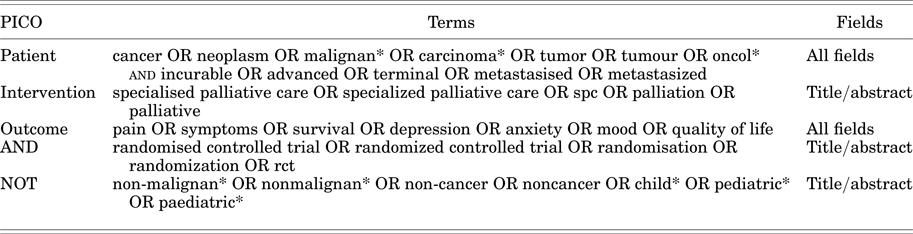
Our search strategy was based on the PICO (problem/population, intervention, comparison, and outcome) framework, and terms related to cancer, palliative care, mood, quality of life, and symptoms were included in the search (Table 1). The searches were performed in the PubMed and Embase databases and in the Cochrane Central Register of Controlled Trials through to October of 2016. Abstracts were imported into EndNote X7® (Thomson Reuters, New York), from which duplicates were excluded via electronic resources and manual review. The remaining abstracts were screened individually by two of our coauthors (K.R.H. and M.N.). Abstracts that met the inclusion criteria and those that at first glance failed to meet the exclusion criteria were selected for a full reading. The inclusion and exclusion criteria were then reapplied, and relevant articles for further analysis were then selected. The analysis was performed by two of our coauthors (K.R.H. and M.N.). The reference lists of included studies were also reviewed to identify any other relevant studies. The hand search yielded two additional studies.
Search strategy

Inclusion Criteria
-
■ Patients diagnosed with advanced, metastatic, incurable, and/or a life-limiting (poor clinical prognosis) cancer disease
-
■ Patients aged at least 18 years
-
■ RCTs conducted to investigate the effects of SPC
-
■ Data presented on the relevant outcomes (QoL, physical symptoms, mood, survival)
-
■ Written in English
Exclusion Criteria
-
■ Duplicate publications
-
■ Studies with nonmalignant diseases or mixed populations and no provision of separate results for cancer patients
-
■ Conference abstracts that did not provide results on the relevant outcomes
-
■ Protocols
Analysis of Evidence
The studies that we selected were different in terms of aims, designs, outcomes, and interventions, thus hampering a metaanalysis and assessment of effect size. Our analysis was based on the statistical significance of results, type of intervention, and strength of recommendation.
Strength of Recommendation
All the included studies were RCTs, which yielded an initial quality grade of + 4. Quality points were added or subtracted (Atkins et al., Reference Atkins, Best and Briss2004) depending on the following indicators:
-
■ Quality based on the blinding and allocation process, follow-ups and withdrawals, sparse data, and other methodological concerns (grade decreased by 1 point for serious limitations and by 2 points for very serious limitations)
-
■ Consistency of effect within or between studies (grade decreased 1 point in case of lack of agreement)
-
■ Direct generalizability of the population and outcomes from each study to the population of interest (grade decreased 1 point for some uncertainty and 2 for major uncertainty)
-
■ Further elements that could lower the quality of the evidence included imprecise or sparse data (grade decreased 1 point) and a high risk of reporting bias (grade decreased 1 point).
The strength of recommendations was established based on the examined quality of evidence and classified as “strong for using the intervention,” “weak for using the intervention,” “weak against using the intervention,” and “strong against using the intervention” (Atkins et al., Reference Atkins, Best and Briss2004).
RESULTS
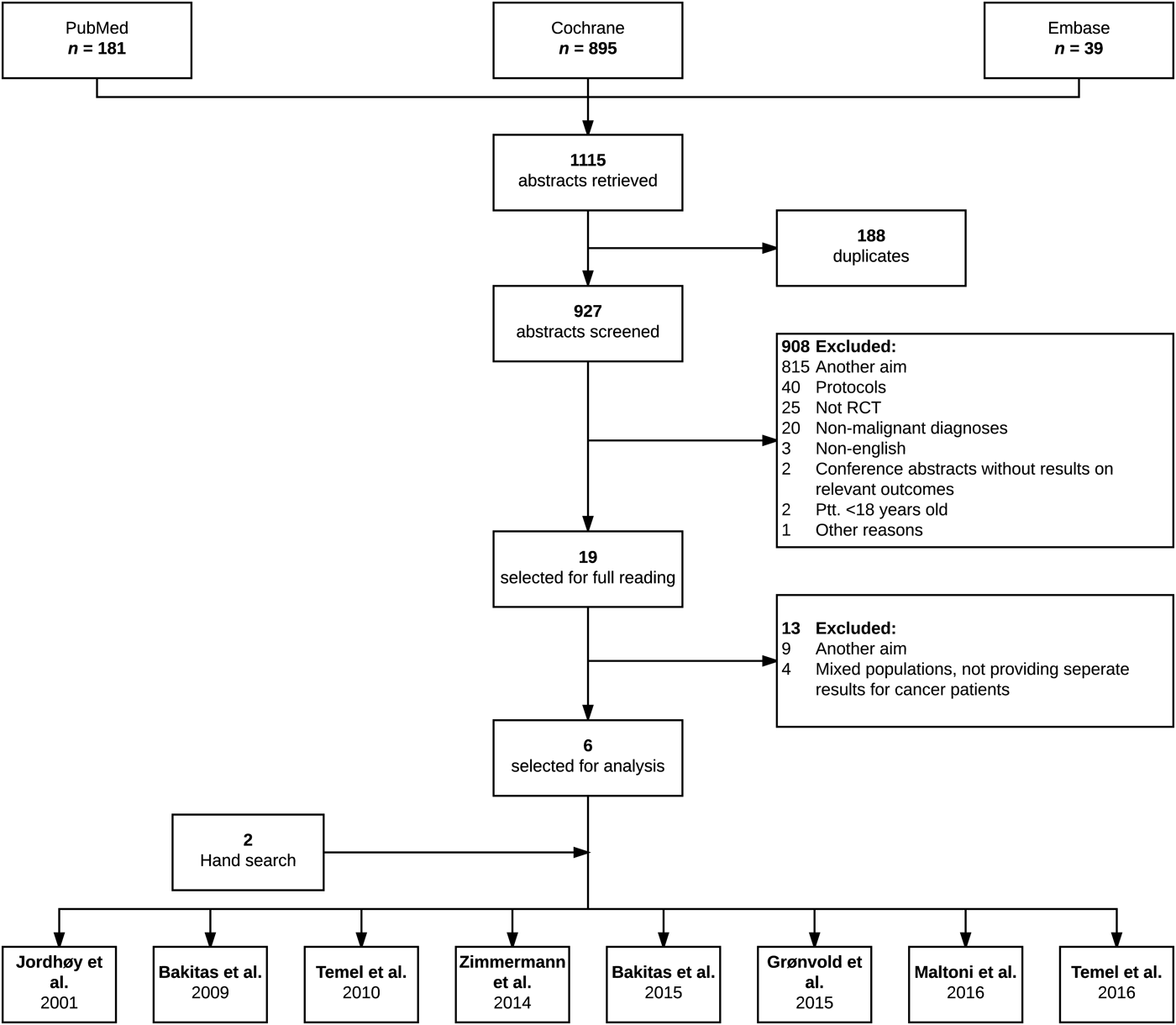
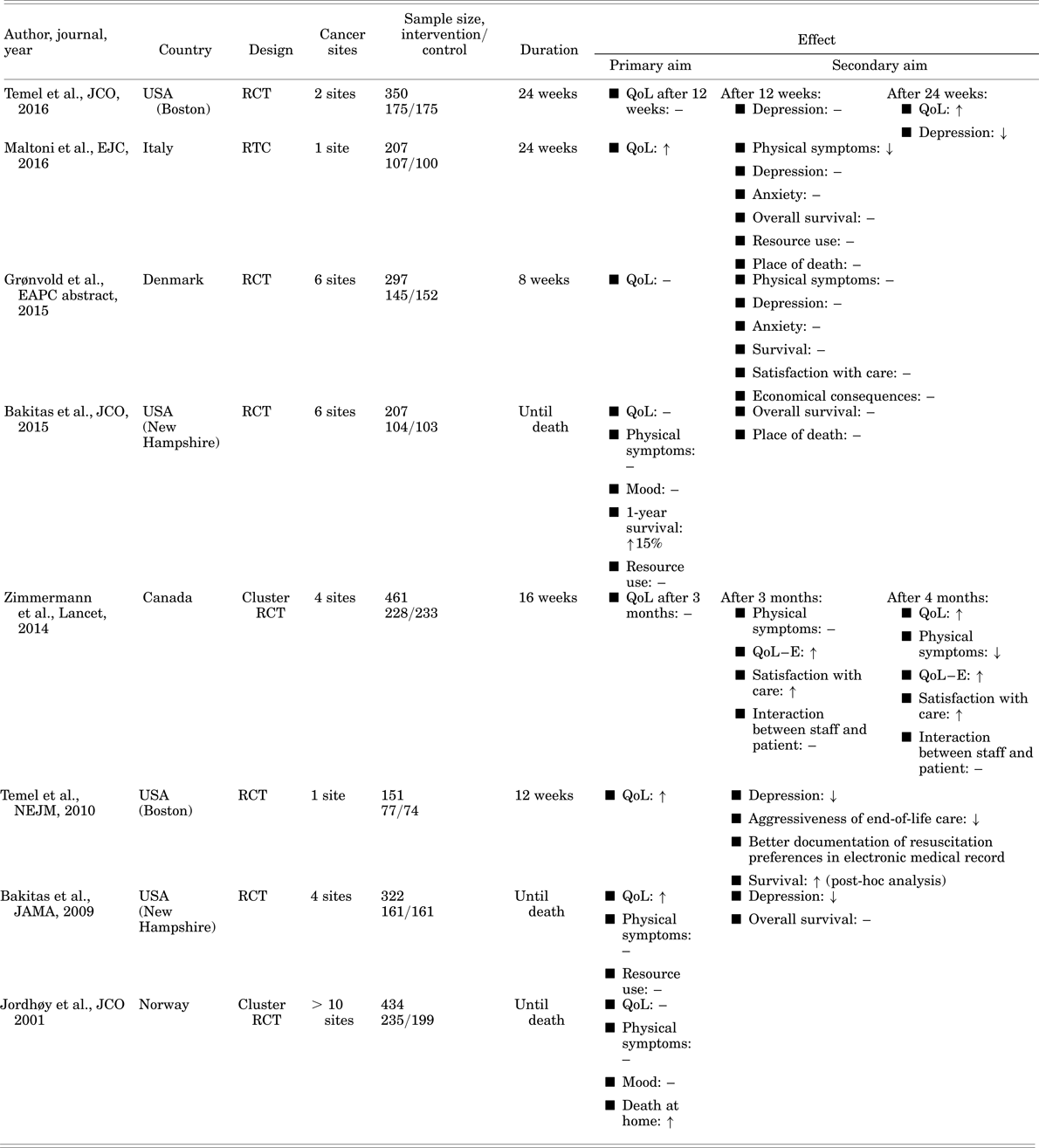
The total number of abstracts screened was 1,115, out of which 188 were duplicates (Figure 1). A total of 6 RCTs (Bakitas et al., Reference Bakitas, Lyons and Hegel2009; Reference Bakitas, Tosteson and Li2015; Jordhøy et al., Reference Jordhøy, Fayers and Loge2001; Maltoni et al., Reference Maltoni, Scarpi and Dall'Agata2016; Temel et al., Reference Temel, Greer and Muzikansky2010; Zimmermann et al., Reference Zimmermann, Swami and Krzyzanowska2014) were selected for further analysis after a full reading of 19 studies. Two additional RCTs were found by hand search (Grønvold et al., Reference Grønvold, Petersen and Damkier2015; Temel et al., Reference Temel, Greer and El-Jawahri2016), one of which had been published only as a conference abstract (Grønvold et al., Reference Grønvold, Petersen and Damkier2015). The selected RCTs differed in terms of aims, designs, interventions, and outcomes. The size of study populations ranged from 151 to 461 (Temel et al., Reference Temel, Greer and Muzikansky2010; Zimmermann et al., Reference Zimmermann, Swami and Krzyzanowska2014), the lowest median age was 60 years (Zimmermann et al., Reference Zimmermann, Swami and Krzyzanowska2014), and the highest median age was 70 years (Jordhøy et al., Reference Jordhøy, Fayers and Loge2001). They were performed in the United States (Bakitas et al., Reference Bakitas, Lyons and Hegel2009; Reference Bakitas, Tosteson and Li2015; Temel et al., Reference Temel, Greer and Muzikansky2010; Reference Temel, Greer and El-Jawahri2016), Canada (Zimmermann et al., Reference Zimmermann, Swami and Krzyzanowska2014), and Europe (Jordhøy et al., Reference Jordhøy, Fayers and Loge2001; Maltoni et al., Reference Maltoni, Scarpi and Dall'Agata2016; Grønvold et al., Reference Grønvold, Petersen and Damkier2015). See Table 2 for additional study sample characteristics.
Flowchart of the search conducted for our review.

Study sample characteristics and findings

Design
All eight studies were RCTs, two of which were cluster RCTs (Jordhøy et al., Reference Jordhøy, Fayers and Loge2001; Zimmermann et al., Reference Zimmermann, Swami and Krzyzanowska2014).
Aims
The objectives of the studies varied, as six investigated the effect of early SPC (Bakitas et al., Reference Bakitas, Tosteson and Li2015; Grønvold et al., Reference Grønvold, Petersen and Damkier2015; Maltoni et al., Reference Maltoni, Scarpi and Dall'Agata2016; Temel et al., Reference Temel, Greer and Muzikansky2010; Zimmermann et al., Reference Zimmermann, Swami and Krzyzanowska2014; Temel et al., Reference Temel, Greer and El-Jawahri2016) and two examined the effect of SPC regardless of when it was initiated during the course of the disease (Bakitas et al., Reference Bakitas, Lyons and Hegel2009; Jordhøy et al., Reference Jordhøy, Fayers and Loge2001). The primary aim of all the studies was to investigate whether patients with cancer could benefit in terms of QoL from being referred to SPC (Bakitas et al., Reference Bakitas, Lyons and Hegel2009; Reference Bakitas, Tosteson and Li2015; Jordhøy et al., Reference Jordhøy, Fayers and Loge2001; Grønvold et al., Reference Grønvold, Petersen and Damkier2015; Maltoni et al., Reference Maltoni, Scarpi and Dall'Agata2016; Temel et al., Reference Temel, Greer and Muzikansky2010; Zimmermann et al., Reference Zimmermann, Swami and Krzyzanowska2014; Temel et al., Reference Temel, Greer and El-Jawahri2016). In addition to QoL, the primary objective of three studies was to also investigate the effect of SPC on physical symptoms (Bakitas et al., Reference Bakitas, Tosteson and Li2015; Jordhøy et al., Reference Jordhøy, Fayers and Loge2001; Bakitas et al., Reference Bakitas, Lyons and Hegel2009). In addition to QoL, the primary aim of two other studies was to examine the effect of SPC on patients' mood (Bakitas et al., Reference Bakitas, Tosteson and Li2015), emotional function, and psychological distress (Jordhøy et al., Reference Jordhøy, Fayers and Loge2001).
Inclusion/Exclusion Criteria
Patients were included in studies based on criteria related to time since diagnosis of an advanced/metastatic cancer (Bakitas et al., Reference Bakitas, Lyons and Hegel2009; Reference Bakitas, Tosteson and Li2015; Maltoni et al., Reference Maltoni, Scarpi and Dall'Agata2016; Temel et al., Reference Temel, Greer and Muzikansky2010; Reference Temel, Greer and El-Jawahri2016) and/or survival expectancy (Bakitas et al., Reference Bakitas, Lyons and Hegel2009; Reference Bakitas, Tosteson and Li2015; Jordhøy et al., Reference Jordhøy, Fayers and Loge2001; Zimmermann et al., Reference Zimmermann, Swami and Krzyzanowska2014). Four studies had Eastern Cooperative Oncology Group Performance Status (ECOG PS) scores of 0–2 as inclusion criterion (Maltoni et al., Reference Maltoni, Scarpi and Dall'Agata2016; Temel et al., Reference Temel, Greer and El-Jawahri2016; Reference Temel, Greer and Muzikansky2010; Zimmermann et al., Reference Zimmermann, Swami and Krzyzanowska2014). One included patients with metastatic cancer who reported one palliative care need and four additional symptoms as per symptom and QoL screening (Grønvold et al., Reference Grønvold, Petersen and Damkier2015). Two studies were diagnosis-specific, as one included patients with pancreatic cancer (Maltoni et al., Reference Maltoni, Scarpi and Dall'Agata2016) and another included patients with lung cancer (Temel et al., Reference Temel, Greer and Muzikansky2010). The other six studies included patients with different cancer diagnoses (Bakitas et al., Reference Bakitas, Lyons and Hegel2009; Grønvold et al., Reference Grønvold, Petersen and Damkier2015; Bakitas et al., Reference Bakitas, Tosteson and Li2015; Jordhøy et al., Reference Jordhøy, Fayers and Loge2001; Zimmermann et al., Reference Zimmermann, Swami and Krzyzanowska2014; Temel et al., Reference Temel, Greer and El-Jawahri2016).
Three studies excluded patients with impaired cognitive function: a Callahan score under 4, a Mini-Mental State Examination score below 17, or a Short Orientation–Memory–Concentration Test score under 20 along with more than 10 errors (Bakitas et al., Reference Bakitas, Lyons and Hegel2009; Reference Bakitas, Tosteson and Li2015; Zimmermann et al., Reference Zimmermann, Swami and Krzyzanowska2014). The other exclusion criteria were: an axis 1 psychiatric diagnosis (schizophrenia, bipolar disorder) (Bakitas et al., Reference Bakitas, Lyons and Hegel2009; Reference Bakitas, Tosteson and Li2015; Temel et al., Reference Temel, Greer and El-Jawahri2016); another comorbid disease (Temel et al., Reference Temel, Greer and El-Jawahri2016); addiction problems (Bakitas et al., Reference Bakitas, Tosteson and Li2015); already receiving SPC (Maltoni et al., Reference Maltoni, Scarpi and Dall'Agata2016; Temel et al., Reference Temel, Greer and Muzikansky2010); prior therapy for metastatic disease (Temel et al., Reference Temel, Greer and El-Jawahri2016; Reference Temel, Greer and Muzikansky2010); participation in other studies with QoL as an outcome (Jordhøy et al., Reference Jordhøy, Fayers and Loge2001); or not speaking English (Zimmermann et al., Reference Zimmermann, Swami and Krzyzanowska2014; Temel et al., Reference Temel, Greer and El-Jawahri2016) or Danish (Johnsen et al., Reference Johnsen, Damkier and Vejlgaard2013).
Interventions
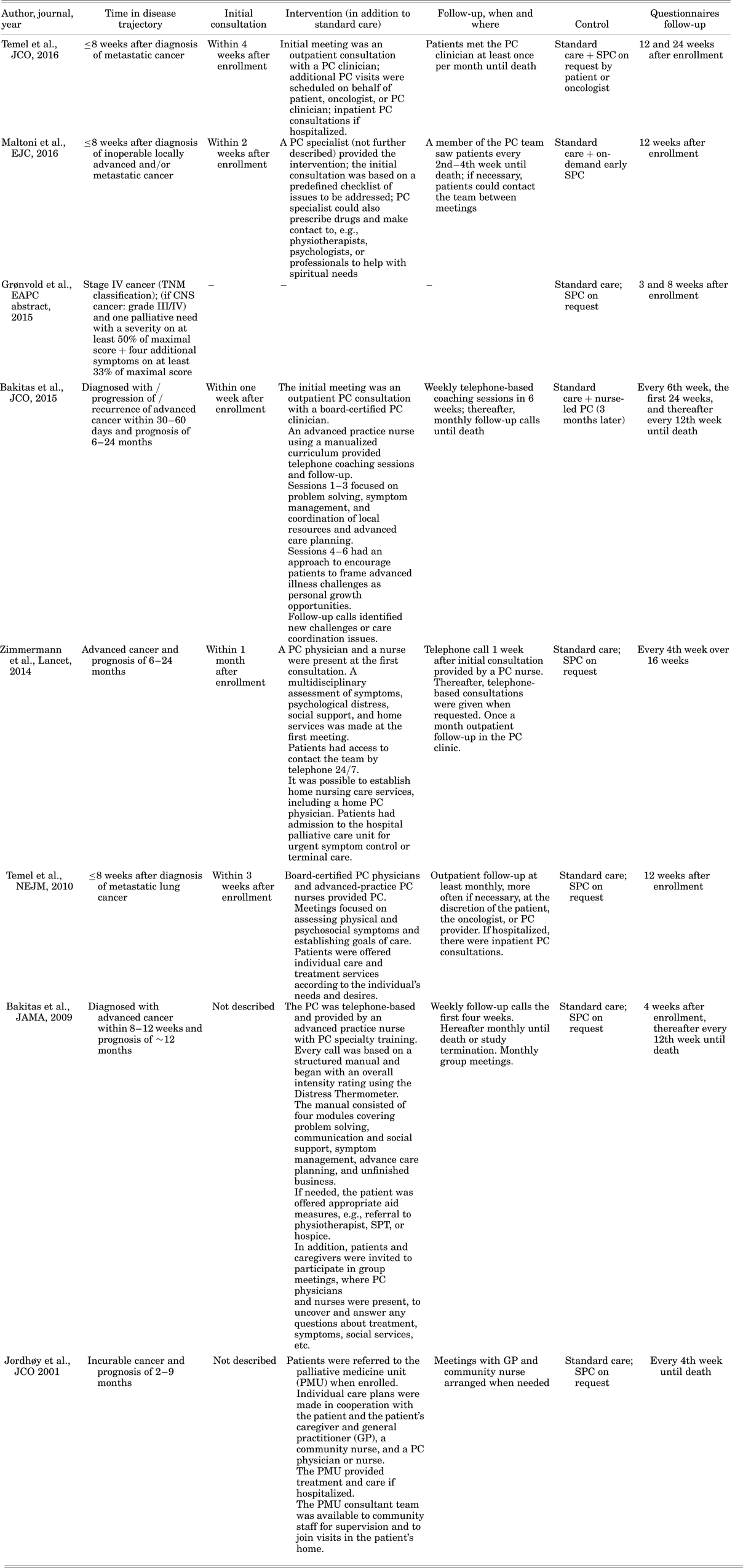
The timing of the initial consultations ranged from one week to one month after enrollment, and they were conducted as an outpatient (Bakitas et al., Reference Bakitas, Tosteson and Li2015; Jordhøy et al., Reference Jordhøy, Fayers and Loge2001; Maltoni et al., Reference Maltoni, Scarpi and Dall'Agata2016; Johnsen et al., Reference Johnsen, Damkier and Vejlgaard2013; Temel et al., Reference Temel, Greer and Muzikansky2010; Zimmermann et al., Reference Zimmermann, Swami and Krzyzanowska2014; Temel et al., Reference Temel, Greer and El-Jawahri2016) or telephone-based (Bakitas et al., Reference Bakitas, Lyons and Hegel2009) consultation. The primary goal of the initial consultation in seven studies was to determine the individual patient's needs and challenges and to establish treatment and care plans (Bakitas et al., Reference Bakitas, Lyons and Hegel2009; Reference Bakitas, Tosteson and Li2015; Jordhøy et al., Reference Jordhøy, Fayers and Loge2001; Maltoni et al., Reference Maltoni, Scarpi and Dall'Agata2016; Johnsen et al., Reference Johnsen, Damkier and Vejlgaard2013; Temel et al., Reference Temel, Greer and Muzikansky2010; Zimmermann et al., Reference Zimmermann, Swami and Krzyzanowska2014), and one study did not report the primary goal of the initial consultation (Temel et al., Reference Temel, Greer and El-Jawahri2016). Furthermore, the nature of the follow-up procedure differed with respect to frequency and content (Table 3). Two of the three studies that provided telephone-based follow-up (Bakitas et al., Reference Bakitas, Lyons and Hegel2009; Reference Bakitas, Tosteson and Li2015; Zimmermann et al., Reference Zimmermann, Swami and Krzyzanowska2014) also provided monthly outpatient meetings (Zimmermann et al., Reference Zimmermann, Swami and Krzyzanowska2014) or offered monthly group meetings with the presence of palliative care (PC) physicians and nurses (Bakitas et al., Reference Bakitas, Lyons and Hegel2009). For the details of the interventions, see Table 3.
Interventions and follow-up

Control Groups
Control groups received standard oncological care managed by their department of oncology (Bakitas et al., Reference Bakitas, Lyons and Hegel2009; Reference Bakitas, Tosteson and Li2015; Jordhøy et al., Reference Jordhøy, Fayers and Loge2001; Maltoni et al., Reference Maltoni, Scarpi and Dall'Agata2016; Johnsen et al., Reference Johnsen, Damkier and Vejlgaard2013; Temel et al., Reference Temel, Greer and Muzikansky2010; Zimmermann et al., Reference Zimmermann, Swami and Krzyzanowska2014; Temel et al., Reference Temel, Greer and El-Jawahri2016). One study differed from the others in that, in addition to standard care, the control group received the same intervention as patients in the intervention group but postponed for three months. However, half of the patients in the control group ended up being referred to SPC earlier than the prescribed three months (Bakitas et al., Reference Bakitas, Tosteson and Li2015). In all these studies, control group patients were not denied referral to SPC when requested (Bakitas et al., Reference Bakitas, Lyons and Hegel2009; Reference Bakitas, Tosteson and Li2015; Jordhøy et al., Reference Jordhøy, Fayers and Loge2001; Maltoni et al., Reference Maltoni, Scarpi and Dall'Agata2016; Johnsen et al., Reference Johnsen, Damkier and Vejlgaard2013; Temel et al., Reference Temel, Greer and Muzikansky2010; Zimmermann et al., Reference Zimmermann, Swami and Krzyzanowska2014; Temel et al., Reference Temel, Greer and El-Jawahri2016); but in one study 34.3% of the control patients crossed over to SPC (Temel et al., Reference Temel, Greer and El-Jawahri2016). In three studies, only a small minority of patients in the control group crossed over to SPC (Jordhøy et al., Reference Jordhøy, Fayers and Loge2001; Temel et al., Reference Temel, Greer and Muzikansky2010; Zimmermann et al., Reference Zimmermann, Swami and Krzyzanowska2014). Two studies did not report the number of crossover patients (Bakitas et al., Reference Bakitas, Lyons and Hegel2009; Maltoni et al., Reference Maltoni, Scarpi and Dall'Agata2016).
Outcomes and Assessments
Five studies recorded a greater positive effect on QoL in the intervention group (Bakitas et al., Reference Bakitas, Lyons and Hegel2009; Maltoni et al., Reference Maltoni, Scarpi and Dall'Agata2016; Temel et al., Reference Temel, Greer and Muzikansky2010; Zimmermann et al., Reference Zimmermann, Swami and Krzyzanowska2014; Temel et al., Reference Temel, Greer and El-Jawahri2016), whereas three reported no effect (Bakitas et al., Reference Bakitas, Tosteson and Li2015; Jordhøy et al., Reference Jordhøy, Fayers and Loge2001; Grønvold et al., Reference Grønvold, Petersen and Damkier2015).
In two studies, QoL was measured using the Functional Assessment of Cancer Therapy–Lung (FACT–L) subscale, the Lung Cancer Subscale (LCS) (Temel et al., Reference Temel, Greer and Muzikansky2010), the Functional Assessment of Cancer Therapy–Hepatobiliary (FACT–HEP) subscale, and the Hepatobiliary Cancer Subscale (HCS) (Maltoni et al., Reference Maltoni, Scarpi and Dall'Agata2016), summarized as the Trial Outcome Index (TOI). Both studies found positive effects in favor of the intervention group (Maltoni et al., Reference Maltoni, Scarpi and Dall'Agata2016; Temel et al., Reference Temel, Greer and Muzikansky2010). Another study reported an improvement in QoL in favor for the intervention group, both among all participant and among those who died before study termination, measured by the FACIT-PAL (Bakitas et al., Reference Bakitas, Lyons and Hegel2009).
Zimmermann et al. (Reference Zimmermann, Swami and Krzyzanowska2014) measured QoL with the Functional Assessment of Chronic Illness Therapy–Spiritual Well-Being (FACIT–Sp) subscale and reported improved QoL after four months, even though three months was the original endpoint. The same pattern was observed by Temel et al. (Reference Temel, Greer and El-Jawahri2016), who employed the Functional Assessment of Cancer Therapy–General (FACT–G) subscale as the assessment tool. They reported improved QoL in the intervention group after 24 weeks, despite the fact that 12 weeks was the primary endpoint. However, when analyzing the results according to cancer diagnosis, QoL was found to have improved after 12 weeks in patients suffering from lung cancer, whereas this improvement first occurred after 24 weeks in patients suffering from gastrointestinal (GI) cancers.
The remaining studies measured QoL using the Impact of Event Scale (IES) (Jordhøy et al., Reference Jordhøy, Fayers and Loge2001), the European Organisation for Research and Treatment of Cancer–Quality of Life Questionnaire–Core-30 (EORTC–QLQ–C30) (Grønvold et al., Reference Grønvold, Petersen and Damkier2015; Jordhøy et al., Reference Jordhøy, Fayers and Loge2001), or the FACIT–PAL subscale summarized as the TOI (Bakitas et al., Reference Bakitas, Tosteson and Li2015) but found no difference between the intervention and control groups. In addition to QoL, the primary objective in three studies (Bakitas et al., Reference Bakitas, Lyons and Hegel2009; Reference Bakitas, Tosteson and Li2015; Jordhøy et al., Reference Jordhøy, Fayers and Loge2001) was to investigate the effect of SPC on physical symptoms. None of these studies found reduced symptom intensity in the intervention group, though one did find a trend toward a reduction in the intervention group (Bakitas et al., Reference Bakitas, Lyons and Hegel2009). For assessment, they employed the Quality of Life at the End of Life (QUAL–E) measure (Bakitas et al., Reference Bakitas, Tosteson and Li2015), the Edmonton Symptom Assessment System (ESAS) (Bakitas et al., Reference Bakitas, Lyons and Hegel2009), and the EORTC–QLQ–C30 (Jordhøy et al., Reference Jordhøy, Fayers and Loge2001).
In addition to QoL, two studies examined the association between SPC and patient mood (Bakitas et al., Reference Bakitas, Tosteson and Li2015), emotional function, and psychological distress (Jordhøy et al., Reference Jordhøy, Fayers and Loge2001) as their primary aim. The Center for Epidemiologic Studies Depression Scale (CES–D) (Bakitas et al., Reference Bakitas, Tosteson and Li2015), and the IES and EORTC–QLQ–C30 (Jordhøy et al., Reference Jordhøy, Fayers and Loge2001) were employed as assessment tools. However, neither observed a difference with respect to mood between the intervention and control groups.
One study had 1-year survival as the primary outcome (Bakitas et al., Reference Bakitas, Tosteson and Li2015) and found that it was 15% higher in the intervention group.
The effect of SPC on physical symptoms was defined as a secondary outcome in three studies (Maltoni et al., Reference Maltoni, Scarpi and Dall'Agata2016; Grønvold et al., Reference Grønvold, Petersen and Damkier2015; Zimmermann et al., Reference Zimmermann, Swami and Krzyzanowska2014), two of which found a decrease in symptom intensity in the intervention group (Maltoni et al., Reference Maltoni, Scarpi and Dall'Agata2016; Zimmermann et al., Reference Zimmermann, Swami and Krzyzanowska2014) using the ESAS (Zimmermann et al., Reference Zimmermann, Swami and Krzyzanowska2014) and the FACT–HEP and HCS (Maltoni et al., Reference Maltoni, Scarpi and Dall'Agata2016) as assessment tools. One study (Grønvold et al., Reference Grønvold, Petersen and Damkier2015) employed the EORTC–QLQ–C30 and did not find any effect on physical symptoms, except for a trend toward reduced nausea/vomiting in the intervention group.
Patients' mood and tendency to depression or anxiety were secondary outcomes in five studies (Bakitas et al., Reference Bakitas, Lyons and Hegel2009; Grønvold et al., Reference Grønvold, Petersen and Damkier2015; Maltoni et al., Reference Maltoni, Scarpi and Dall'Agata2016; Temel et al., Reference Temel, Greer and Muzikansky2010; Reference Temel, Greer and El-Jawahri2016). Two of these (Temel et al., Reference Temel, Greer and Muzikansky2010; Reference Temel, Greer and El-Jawahri2016) assessed the effect of SPC using the Hospital Anxiety and Depression Scale (HADS) and the Patient Health Questionnaire (PHQ–9) and found that patients receiving early SPC were less depressed than patients who received standard care alone. One study (Temel et al., Reference Temel, Greer and El-Jawahri2016) found that patients in the lung cancer cohort were less depressed after 12 and 24 weeks, while patients in the GI cancer cohort did not experience an effect. Temel et al. (Reference Temel, Greer and Muzikansky2010) also observed that the use of antidepressants was similar in the intervention and control groups, but no differences were found with respect to anxiety between the two groups. Bakitas et al. (Reference Bakitas, Lyons and Hegel2009) employed the CES–D and found fewer instances of depressed mood in patients who received SPC (among all participants and in those who died before the study was terminated). Maltoni et al. (Reference Maltoni, Scarpi and Dall'Agata2016) and Grønvold et al. (Reference Grønvold, Petersen and Damkier2015) used the HADS as an assessment tool and found no differences between the intervention and control groups with regard to anxiety and depression.
The effect of SPC on survival was examined as a secondary outcome in four studies (Bakitas et al., Reference Bakitas, Lyons and Hegel2009; Reference Bakitas, Tosteson and Li2015; Maltoni et al., Reference Maltoni, Scarpi and Dall'Agata2016; Grønvold et al., Reference Grønvold, Petersen and Damkier2015), none of which found an effect.
Temel et al. (Reference Temel, Greer and Muzikansky2010) found that patients in the intervention group had ~2 months of prolonged median overall survival, but survival was not defined as a primary or secondary outcome in their study.
Strength of Recommendation
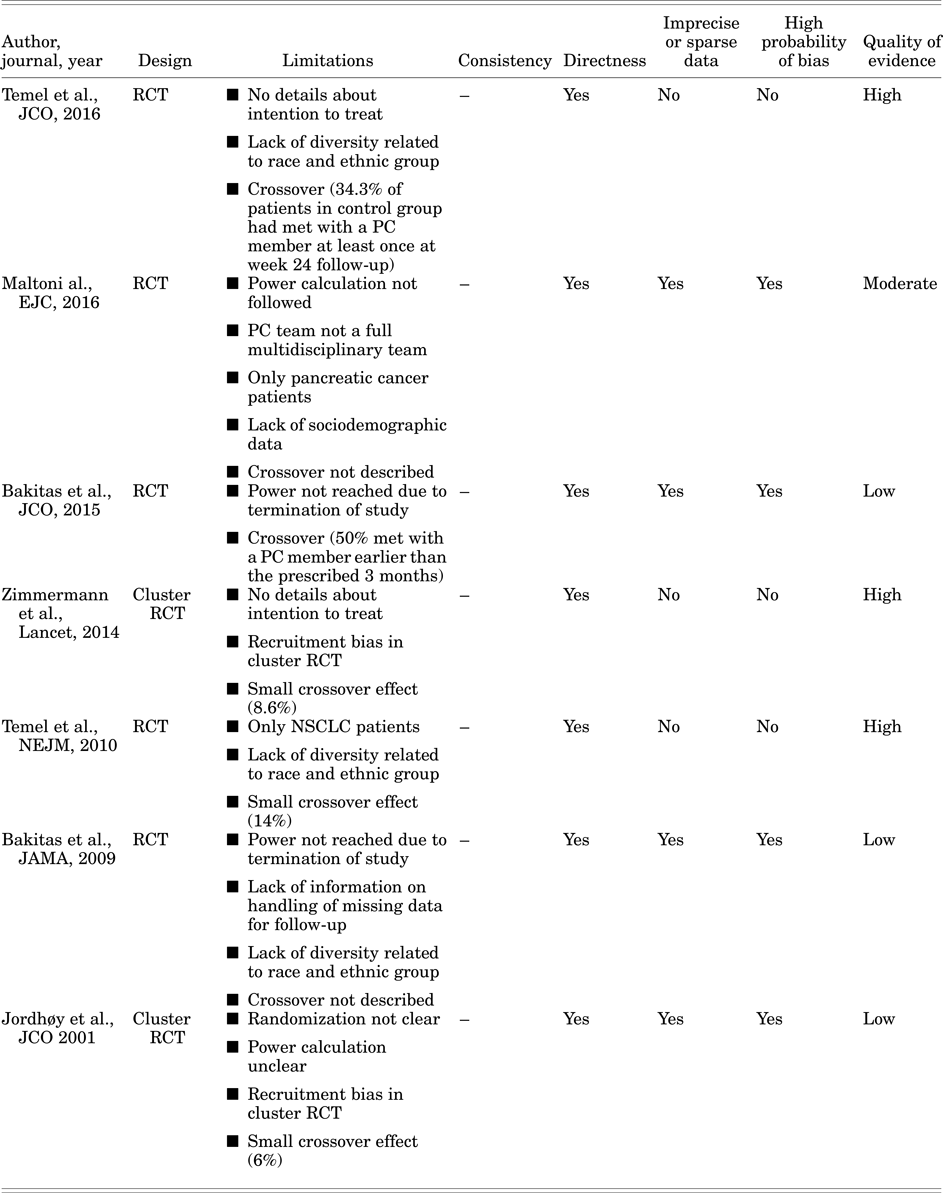
The study design of all the research included in our systematic review received an initial score of + 4 points according to the GRADE system. However, two studies (Jordhøy et al., Reference Jordhøy, Fayers and Loge2001; Zimmermann et al., Reference Zimmermann, Swami and Krzyzanowska2014) demonstrated recruitment biases due to their cluster design. The type of intervention was not possible to blind, so that no points were subtracted.
The quality of evidence was high in three studies; however, these studies had such methodological limitations as a lack of racial and ethnic diversity and no details about an intention-to-treat analysis. One of these studies included only patients with lung cancer, and one reported a crossover level of 34% (Temel et al., Reference Temel, Greer and Muzikansky2010; Reference Temel, Greer and El-Jawahri2016; Zimmermann et al., Reference Zimmermann, Swami and Krzyzanowska2014). Another study demonstrated a moderate quality level due to a lack of sociodemographic data and the lack of details reported about the organization of the specialized palliative care team (SPT). The power calculations were not tracked, and they only included patients with pancreatic cancer. In addition, there were no details about crossover (Maltoni et al., Reference Maltoni, Scarpi and Dall'Agata2016). Three other studies (Bakitas et al., Reference Bakitas, Tosteson and Li2015; Reference Bakitas, Lyons and Hegel2009; Jordhøy et al., Reference Jordhøy, Fayers and Loge2001) demonstrated low-quality evidence. This was due to unclear power calculations and randomization, an unfulfilled power rating, a lack of information about how missing data were handled for follow-up, a lack of racial and ethnic diversity, and a crossover level of 50% in one study. Finally, another study was published only as a conference abstract, making it impossible to evaluate its quality rating (Grønvold et al., Reference Grønvold, Petersen and Damkier2015) (see Table 4 for details).
Major limitations of the studies and the quality of evidence

DISCUSSION
The primary aim of our systematic review was to evaluate the efficacy of specialized palliative care in adult patients with advanced cancer in regard to quality of life, physical and psychological symptoms, and survival. Only 8 of the total 1,117 studies were RCTs that investigated these outcomes in patients with advanced cancer.
Due to the heterogeneity of the populations studied, their design, the interventions employed, the studied outcomes of the RCTs, as well as the limited number of RCTs, a comparison between studies was difficult. The evidence to support the efficacy of different forms of SPC in different clinical environments is therefore still sparse. The vast majority of RCTs found SPC to have a positive effect on QoL (Temel et al., Reference Temel, Greer and Muzikansky2010; 2016; Bakitas et al., Reference Bakitas, Lyons and Hegel2009; Maltoni et al., Reference Maltoni, Scarpi and Dall'Agata2016; Zimmermann et al., Reference Zimmermann, Swami and Krzyzanowska2014), but the evidence for an effect on physical symptoms, psychological symptoms, and survival was inconsistent.
Several possible explanations for this inconsistency in the results of the RCTs should be noted. First, methodological issues can explain some of the differences. Two of the studies used cluster designs to avoid contamination of the control groups (Zimmermann et al., Reference Zimmermann, Swami and Krzyzanowska2014; Jordhøy et al., Reference Jordhøy, Fayers and Loge2001). Both of these studies accounted for clustering in both sample-size calculations and in the analyses to limit the risk of type I and type II errors. However, cluster sampling comes with greater measurement uncertainty compared to individual sampling due to the risk of a lack of diversity within clusters. Both the clinics involved and the patients in those clinics can differ considerably (Kirkwood & Sterne, Reference Kirkwood, Sterne and Goodgame2009a ).
Further, two RCTs were diagnosis-specific (Temel et al., Reference Temel, Greer and Muzikansky2010; Maltoni et al., Reference Maltoni, Scarpi and Dall'Agata2016), while the other studies in our review included patients with mixed cancer diagnoses (Temel et al., Reference Temel, Greer and El-Jawahri2016; Jordhøy et al., Reference Jordhøy, Fayers and Loge2001; Bakitas et al., Reference Bakitas, Lyons and Hegel2009; Zimmermann et al., Reference Zimmermann, Swami and Krzyzanowska2014; Grønvold et al., Reference Grønvold, Petersen and Damkier2015; Bakitas et al., Reference Bakitas, Tosteson and Li2015). The study by Maloney et al. (Reference Maloney, Lyons and Li2012), derived from the ENABLE II RCT (Bakitas et al., Reference Bakitas, Lyons and Hegel2009), found that the intervention was more efficient when symptom burden was high (Maloney et al., Reference Maloney, Lyons and Li2012). Both lung and pancreatic cancers were characterized by high symptom burden and short life expectancy (Hopwood & Stephens, Reference Hopwood and Stephens1995; Sohal et al., Reference Sohal, Mangu and Khorana2016; Hopwood & Stephens, Reference Hopwood and Stephens2000), while other cancer diagnoses often had longer chronic phases not necessarily associated with severe symptom burden. The need for SPC may differ at any given point in time, depending on the type of cancer, due to the heterogeneity of patient characteristics, so that it is possible that the effect of SPC could have been diluted in RCTs that investigated mixed cancer diagnoses. On the other hand, as found by Temel et al. (Reference Temel, Greer and Muzikansky2010; Reference Temel, Greer and El-Jawahri2016), the efficacy of and response to SPC may vary between different cancer diagnoses.
Four studies included patients based on expected survival as assessed by an oncologist (Bakitas et al., Reference Bakitas, Lyons and Hegel2009; Reference Bakitas, Tosteson and Li2015; Zimmermann et al., Reference Zimmermann, Swami and Krzyzanowska2014; Jordhøy et al., Reference Jordhøy, Fayers and Loge2001). It has been shown that prediction of survival can be unreliable, and that the longer the time left before the expected death, the more inaccurate the predictions seem to be (Oxenham & Cornbleet, Reference Oxenham and Cornbleet1998; Glare et al., Reference Glare, Virik and Jones2003). The possibility of bias when estimating survival and the expected differences in perceived symptom intensity at a given point in the disease trajectory may indicate that the time for initiating an intervention should depend on symptom intensity rather than time since diagnosis or expected survival.
Improvement of patient quality of life is one of the main goals of SPC (World Health Organization, 2016), which is the major reason why QoL was chosen as the primary outcome in all the included studies. However, the definition of QoL and how to assess it varied across studies. Jordhøy et al. (Reference Jordhøy, Fayers and Loge2001) measured QoL as total difference in mood and symptom control from baseline until follow-up, while Grønvold et al. (Reference Grønvold, Petersen and Damkier2015) defined it based on the difference in main symptom scores. QoL is a distinctly individual and subjective outcome, so that is not easy to describe or quantify this complex construct with a questionnaire (Felce & Perry, Reference Felce and Perry1995).
Despite the fact that prolonging survival is not a principal aim of SPC (World Health Organization, 2016), survival was an outcome in five of our studies (Grønvold et al., Reference Grønvold, Petersen and Damkier2015; Temel et al., Reference Temel, Greer and Muzikansky2010; Bakitas et al., Reference Bakitas, Tosteson and Li2015; Reference Bakitas, Lyons and Hegel2009; Maltoni et al., Reference Maltoni, Scarpi and Dall'Agata2016). Two reported prolonged survival among patients in the intervention group (Temel et al., Reference Temel, Greer and Muzikansky2010; Bakitas et al., Reference Bakitas, Tosteson and Li2015), with one noting that patients in the intervention group received less aggressive antineoplastic treatment during end-of-life care (Temel et al., Reference Temel, Greer and Muzikansky2010). However, survival was not specified as a primary or secondary outcome, which may suggest that the outcome resulted from factors other than the intervention (e.g., more aggressive chemotherapy in the control group).
Some other issues related to the studies are associated with the timing of the SPC intervention. The discussion about the timing of integration of PC into oncology practice has been intensifying in recent years (see, e.g., Hui et al., Reference Hui, Kim and Park2015). It is thus also important to determine when SPC should be implemented in the course of the disease trajectory (Simone, Reference Simone2015). Six of our studies investigated the effect of “early” SPC intervention (Temel et al., Reference Temel, Greer and Muzikansky2010; Reference Temel, Greer and El-Jawahri2016; Grønvold et al., Reference Grønvold, Petersen and Damkier2015; Zimmermann et al., Reference Zimmermann, Swami and Krzyzanowska2014; Bakitas et al., Reference Bakitas, Tosteson and Li2015; Maltoni et al., Reference Maltoni, Scarpi and Dall'Agata2016); however, the definition and the concept of “early” varies widely. There is much confusion about the definition of early palliative care (Hui et al., Reference Hui, Nooruddin and Didwaniya2014; Gaertner et al., Reference Gaertner, Lutz and Chow2015). Three of our studies recommended initiating SPC when patients had had metastatic cancer for no longer than two months (Temel et al., Reference Temel, Greer and Muzikansky2010; Reference Temel, Greer and El-Jawahri2016; Maltoni et al., Reference Maltoni, Scarpi and Dall'Agata2016), and two others defined “early SPC” as within 30 to 60 days of a diagnosis of advanced cancer (Bakitas et al., Reference Bakitas, Tosteson and Li2015) and/or a prognosis of 6–24 months (Bakitas et al., Reference Bakitas, Tosteson and Li2015; Zimmermann et al., Reference Zimmermann, Swami and Krzyzanowska2014). Grønvold et al. (Reference Grønvold, Petersen and Damkier2015) initiated early SPC in patients with metastatic cancer at the point of screening.
There is some discussion about whether initiation of SPC six months prior to death is “early.” Two studies began SPC when patients had advanced cancer and a prognosis of 2–12 months, and they did not define this as “early” (Jordhøy et al., Reference Jordhøy, Fayers and Loge2001; Bakitas et al., Reference Bakitas, Lyons and Hegel2009). A previous review of early PC for patients with serious illnesses also concluded that the definition of “early” vastly differed between studies (Davis et al., Reference Davis, Temel and Balboni2015). While their comprehensive review supported integration of early PC into oncology care, their findings highlight the need for better design and execution of studies to determine the best time to intervene and for formulation of an optimal model of care (Davis et al., Reference Davis, Temel and Balboni2015). Finally, the World Health Organization (WHO) and the American Society of Clinical Oncology (ASCO) recommend that implementation of “early PC” is appropriate alongside life-prolonging treatment (Smith et al., Reference Smith, Temin and Alesi2012; World Health Organization, 2007).
Other concerns can be raised related to the timing of assessment of outcomes. Some RCTs followed patients with questionnaires until death (Bakitas et al., Reference Bakitas, Lyons and Hegel2009; Jordhøy et al., Reference Jordhøy, Fayers and Loge2001; Bakitas et al., Reference Bakitas, Tosteson and Li2015), while others followed patients for from 8 weeks (Grønvold et al., Reference Grønvold, Petersen and Damkier2015) to 6 months (Temel et al., Reference Temel, Greer and El-Jawahri2016). The impact of SPC might not be possible to detect after 8 weeks, whereas a later assessment might detect differences between groups. Two studies observed improved primary outcomes later than what was anticipated in the original design (Zimmermann et al., Reference Zimmermann, Swami and Krzyzanowska2014; Temel et al., Reference Temel, Greer and El-Jawahri2016), and four studies observed improved outcomes after 12 (Temel et al., Reference Temel, Greer and Muzikansky2010; Maltoni et al., Reference Maltoni, Scarpi and Dall'Agata2016), 16 (Zimmermann et al., Reference Zimmermann, Swami and Krzyzanowska2014), and 24 (Temel et al., Reference Temel, Greer and El-Jawahri2016) weeks. These findings indicate that it may require at least 3 to 4 months to obtain the full benefit of SPC in these patients.
In addition, issues surrounding the structure and organization of interventions may account for inconsistencies in the evidence. Only one study described an intervention that was provided by a full multidisciplinary SPT (Jordhøy et al., Reference Jordhøy, Fayers and Loge2001), despite the fact the multidisciplinary approach is a cornerstone of SPC (World Health Organization, 2016). In two studies the intervention was nurse-led and telephone-based (Bakitas et al., Reference Bakitas, Lyons and Hegel2009; Reference Bakitas, Tosteson and Li2015), while the setting for follow-up meetings in other studies was outpatient consultations provided by PC physicians and nurses (Zimmermann et al., Reference Zimmermann, Swami and Krzyzanowska2014; Temel et al., Reference Temel, Greer and Muzikansky2010; Reference Temel, Greer and El-Jawahri2016), by PC specialists (Maltoni et al., Reference Maltoni, Scarpi and Dall'Agata2016), or by the patient's general practitioner and a community nurse (Jordhøy et al., Reference Jordhøy, Fayers and Loge2001). Bee et al. (Reference Bee, Bower and Lovell2008) demonstrated that telephone-based psychotherapy can be effective, but it is possible that symptom burden can be further alleviated by direct clinical consultations. The number of consultations and frequency of follow-ups also differed substantially between studies.
Issues pertaining to treatment of the control arm are also noteworthy. All the RCTs reported that patients received “standard,” “usual,” or “conventional” care. Only two studies described differences between standard and interventional care (Zimmermann et al., Reference Zimmermann, Swami and Krzyzanowska2014; Jordhøy et al., Reference Jordhøy, Fayers and Loge2001). Standard care programs can differ according to individual care providers, as well as according to the different healthcare systems in different countries. They will certainly differ across practice types according to availability, size of and existing resources of the healthcare system, patient population, patient needs, and existing level of palliative care provided by PC specialists, oncologists, and primary care physicians. There were geographic differences in the RCTs, as the Scandinavia studies did not find an effect of SPC on QoL, mood, or physical symptoms (Grønvold et al., Reference Grønvold, Petersen and Damkier2015; Jordhøy et al., Reference Jordhøy, Fayers and Loge2001), while studies from the United States, Italy, and Canada did (Zimmermann et al., Reference Zimmermann, Swami and Krzyzanowska2014; Maltoni et al., Reference Maltoni, Scarpi and Dall'Agata2016; Bakitas et al., Reference Bakitas, Tosteson and Li2015; Reference Bakitas, Lyons and Hegel2009; Temel et al., Reference Temel, Greer and Muzikansky2010; Reference Temel, Greer and El-Jawahri2016). Negative findings can be attributed to the fact that standard care was not very different from the intervention, and was generally good, leaving room for only marginal improvement. However, these results can also be ascribed to the low efficacy of SPC. For example, the capacity of SPC in Denmark was reported to be about half of what is recommended by the EAPC, which may prevent execution of early palliative care, because patients with more severe needs get higher priority (Radbruch & Payne, Reference Radbruch and Payne2009). Another possibility is that the focus on the palliative needs of patients in the control groups was in general increased due to the influence of ongoing studies.
One study reported a crossover rate of 50%, which implied that patients in the control group received an intervention earlier than the prescribed three months (Bakitas et al., Reference Bakitas, Tosteson and Li2015). Another study reported a crossover level of 34.3% (Temel et al., Reference Temel, Greer and El-Jawahri2016), which may also have improved efficacy in the control group.
Finally, two studies did not reach adequate statistical power due to early study termination (Bakitas et al., Reference Bakitas, Tosteson and Li2015; Reference Bakitas, Lyons and Hegel2009), which increases the risk of type II errors. The power calculations were unclear in another study (Jordhøy et al., Reference Jordhøy, Fayers and Loge2001). An intention-to-treat analysis was not reported in two studies (Zimmermann et al., Reference Zimmermann, Swami and Krzyzanowska2014; Temel et al., Reference Temel, Greer and El-Jawahri2016), some studies did not describe how they handled missing data (Bakitas et al., Reference Bakitas, Lyons and Hegel2009; Jordhøy et al., Reference Jordhøy, Fayers and Loge2001), and the randomization procedure was not clearly described in another study (Jordhøy et al., Reference Jordhøy, Fayers and Loge2001). In addition, some studies lacked racial and ethnic diversity (Temel et al., Reference Temel, Greer and Muzikansky2010; Bakitas et al., Reference Bakitas, Lyons and Hegel2009; Temel et al., Reference Temel, Greer and El-Jawahri2016), which may have resulted in selection bias.
STRENGTH AND LIMITATIONS OF THE STUDY
The search strategy that we employed was a broad one, which made it possible to include studies with different types of SPC interventions for patients with advanced cancer. We included only RCTs, which are recognized as being the study design that yields the highest-quality evidence in medical research (Kirkwood & Sterne, Reference Kirkwood, Sterne and Goodgame2009b ). Furthermore, our review did not only focus on early SPC. We considered this a strength, as “early SPC” is not feasible in many countries. Moreover, studies with non-cancer diagnoses were excluded, since non-cancer patients encounter other effects of SPC due to different disease trajectories. Limitations include that the evidence level of the included studies ranged from low to high. In addition, one of the studies was only published as a conference abstract (Grønvold et al., Reference Grønvold, Petersen and Damkier2015), making it impossible to evaluate its quality or level of evidence.
CONCLUSIONS
The evidence for the effect of SPC on quality of life, physical and psychological symptoms, and survival in patients with advanced cancer is still sparse. We find that there is high-quality evidence that SPC can improve QoL, as five of our eight studies demonstrated significant improvement. Furthermore, there is a moderate level of evidence that SPC can reduce physical and psychological symptoms, as demonstrated in five of our eight studies. However, there is only weak evidence that SPC can prolong survival, as demonstrated in two of our studies. Our studies presented several limitations in terms of secondary outcomes and post-hoc analysis; nevertheless, the quality of evidence was high in three studies and moderate in one. The evidence in this area is still nascent, but there is growing support for using SPC to improve the quality of life of adult patients with advanced cancer.
Future investigations should focus on optimal timing for initiating SPC interventions and utilization of standardized SPC interventions according to cancer diagnosis and symptomatology.