


Like many public policies that have redistributive implications, estate taxation is a controversial subject. Academic economists have often disagreed about the merits of taxing inherited wealth. Across a range of countries and time periods, attitudes of members of the general public have been no less divided. Many emphasize the potential usefulness of this form of taxation for raising revenue and simultaneously reducing inequality of opportunity for future generations. But others see bequest taxation as arbitrary because it depends on the timing of death, as unfairly interfering with the ability of parents to save for their children, and finally as having potentially severe efficiency costs. Within the United States these questions are certainly of current interest, given proposals to alter, reform, or eliminate bequest taxation.Footnote 1
Although the normative debates about bequest taxation are extensive, much less is known about the actual conditions that lead some governments to levy significant taxes on inherited wealth while others refrain from doing so. This question is of increasing interest because a growing literature has suggested that progressive capital and income taxation has played an important role in the evolution of wealth accumulation during the course of the twentieth century.Footnote 2 Basic intuition suggests that electoral democracy, characterized by universal suffrage, ought to be one of the most powerful conditions leading to the taxation of inherited wealth, and in particular to a form of bequest taxation in which large estates are taxed at a significantly higher rate than small estates. In a society where most decedents leave either no estate or a relatively small estate, the logic of electoral politics would seem to dictate that large estates will be taxed heavily.Footnote 3
At first glance, the prediction that universal suffrage and progressive inheritance taxation should go together seems strongly supported by the fact that they both emerged during the same general time period—the turn of the twentieth century. Scholarly observers at the time explicitly stated that the development of progressive inheritance taxation was attributable to the spread of democratic ideas and democratic institutions.Footnote 4 But if early twentieth-century observers commented on the possible association between democracy and inheritance taxation, they also pointed to another empirical regularity—innovations in inheritance taxation were driven by the exigencies of war.Footnote 5 In this article we present and test an argument that wars of mass mobilization are particularly likely to be characterized by progressive taxation of large fortunes. We argue that mass warfare played a greater role in the development of progressive inheritance taxation than did the advent of universal suffrage.
Why would wars of mass mobilization be associated with increased taxation of large fortunes via inheritance taxation? The most simple response to this question is that wars are expensive, and they need to be financed, but there are two main reasons why this answer is insufficient. First, simply referring to the need for finance does not tell us why taxes on large fortunes should be privileged, as opposed to drawing revenue from other sources, in particular indirect taxes generally believed to be regressive in their incidence. Second, the simple “need for finance” explanation ignores the fact that European states had fought expensive wars for centuries before 1900 without ever resorting to anything resembling the progressive tax policies that emerged during the twentieth century.
As an alternative, we present an argument that suggests more precisely why wars of mass mobilization would be associated with increased taxation of top fortunes. Fighting a war in which a large segment of a country's population is mobilized requires societal consensus in favor of the war effort. This societal consensus will be easier to maintain if there is a sentiment that the burden of the war effort is fairly shared among different social groups. There are two specific reasons why a progressive tax on top fortunes (such as an inheritance tax) might be seen as part of equal burden sharing related to war. The first would be if wealthier individuals are less likely to fight, either because they have not enlisted or because they have avoided conscription through a deferment, an exemption, or simply because of age. In this case those who fight might demand that the wealthy bear a disproportionate share of the financial burden for a war in order to establish a greater equality of sacrifice.Footnote 6 The second possibility would be if wealth holders benefit financially from a war that increases demand for goods produced by companies in which they hold investments. This could further strengthen demands for having wealth holders bear a disproportionate share of the financial burden for a war. Taken together, these considerations lead to a prediction that wars of mass mobilization will be associated with political pressures for increased taxation of top fortunes. Furthermore, to the extent that a war is financed by debt that is repaid with taxes levied after the war's end, then political pressures for taxation of top fortunes will continue for some time.
To conduct our empirical tests we make use of an original data set that records marginal rates for bequest taxes in 19 countries over the period between 1816 and 2000. Our sample includes the majority of the core industrial countries for which it is most commonly suggested that the extension of the suffrage led to greater redistribution. For our sample of countries, it is generally known when a country first established an inheritance tax, but this often tells us little about the extent to which governments actually taxed large fortunes heavily. In fact, we show that top marginal rates of inheritance taxation were extremely low (i.e., < 5%) in many of our sample countries for long periods after their initial establishment. Whereas information on changes in marginal inheritance tax rates for a country like the United States is easy to come by, for most other countries this is not the case, and it is not generally reported by finance ministries. We have compiled our database of inheritance tax rates by consulting original legislation for each of the 19 countries in our sample together with a range of other sources, all of which are listed in the supplemental Online Appendix (available at http://www.journals.cambridge.org/psr2012003).
We focus on inheritance taxation in this article not only because it is an inherently interesting subject but also because of the possibility that it affords us for testing propositions about the determinants of progressive taxation in an environment in which our results are less likely to be biased by a failure to control for levels of administrative capacity. In contrast to more recent forms of taxation, such as the income tax, inheritance taxes generally require less administrative capacity to collect. As long as heirs have an incentive to use the legal system to establish their right to property from an estate, then tax authorities are able to use information collected by legal authorities to calculate taxes owed.Footnote 7 The fact that an inheritance tax can be administered without a substantial expansion of bureaucratic capacity reduces the possibility that any empirical relationship we observe (or fail to observe) between democracy, war, and taxes might depend on the confounding factor of administrative capacity.
To analyze the relationship between democracy, war, and taxes we employ two different empirical approaches. Our main reported results employ a difference-in-differences framework. The top marginal rate of inheritance taxation is modeled as a function of several alternative democracy measures, a measure of war mobilization, country fixed effects that control for time-constant unobserved country-level heterogeneity, time-period effects that control for common shocks, and several time-varying control variables. Our second approach is to estimate the effect of war mobilization and democracy on inheritance taxation by conditioning on the marginal tax rate in the previous period. The identifying assumption in this approach is that the lagged value for the top marginal rate of inheritance taxation controls for any unobserved heterogeneity that might otherwise bias our estimates.
These analyses yield two main results. First, our estimates do not suggest a positive relationship between democracy and the top rate of inheritance taxation. Our simplest measure of democracy, which directly captures the main mechanism suggested by the democratization hypothesis, is the presence of universal male suffrage. Our estimates for the coefficient on this variable are inconsistently signed, small in magnitude, and statistically insignificant. This pattern of results is repeated for ordinal measures of the extent of the suffrage, measures based on political competition, and a measure of the presence of a secret ballot.
In strong contrast to the suffrage results, our estimates indicate a substantively and statistically significant positive relationship between war mobilization and the top rate of inheritance tax. All else equal, a country that mobilized for mass warfare for an entire five-year period would be estimated to increase its top inheritance tax rate by 14 to 25 percentage points compared to a country that did not mobilize for war. These results are evident across both our difference-in-differences and lagged dependent variable models with and without the inclusion of time-varying control variables, as well as the further robustness test of including individual linear time trends for each country. We further consider multiple measures of war mobilization, possible interactions between war mobilization and democracy and left partisanship, and several alternative econometric models. Although our results clearly reflect the strong correlation between mass warfare and the establishment of high rates of inheritance taxation, our argument may also provide insight into the reasons why numerous countries have reduced or even eliminated taxes on large fortunes in recent decades. During a period in which advanced industrial countries have shifted from a format of military force based on universal conscription to one characterized by small professional armies, war-related arguments for heavy taxation of the rich have inevitably become less salient.
A final point worth emphasizing about our statistical results is that, in addition to providing evidence about the evolution of progressive taxation during a critical historical period, they also provide a more general lesson about the conditions under which there will be broad political support for taxing those with high incomes or large fortunes at higher rates than other individuals. Such support is most likely to exist when there exists a clear argument that it is fair to tax the rich more heavily than others because doing so corrects for some preexisting unfairness involving the way that incomes have been earned or the way in which some have been obliged to contribute disproportionately on other dimensions. During the course of the twentieth century, mass warfare has provided the primary context in which such arguments have been successfully made, but it does not have to be the only context in which this could occur.
In the remainder of this article we proceed as follows. In the next section we outline our argument that mass mobilization for war leads to political pressures favorable to the progressive taxation of inherited wealth. This is followed by a presentation of the data set in which we discuss measurement issues and illustrate key trends in marginal inheritance taxes by examining the data for the Netherlands and the United Kingdom in some detail. We then present our econometric models and our core estimation results, followed by a presentation of more evidence supporting our argument about mass mobilization. Finally, we present a brief conclusion summarizing our results and their implications.
WAR SACRIFICE AND THE TAXATION OF TOP FORTUNES
In the introduction to this article we briefly considered two alternative mechanisms that might be expected to lead to the progressive taxation of top fortunes. The first mechanism involving the extension of the suffrage is already familiar from the work of Acemoglu and Robinson (Reference Acemoglu and Robinson2000; Reference Acemoglu and Robinson2006) and Boix (Reference Boix2003). The argument for why mass mobilization might lead to progressive taxation is not as well established, and so we devote the remainder of this section to this second possibility.
Consider the choice faced by a government seeking to raise an army. As one option it can pay a body of professional soldiers a sufficiently high wage that this pay outweighs the risks inherent in military service. As an alternative, a government can resort to some form of civic obligation in lieu of high pay. This obligation could be formal, such as in a system of conscription, or it could be informal, such as if those who fail to volunteer for a war suffer social sanctions or feelings of guilt. Since at least the time of Sidgwick (Reference Sidgwick1883, 545) it has been suggested that a government seeking to mobilize the great mass of its citizens for war would need to use obligation as a means of recruitment. The reason for this is that the deadweight costs of taxation involved in raising a mass army would be prohibitively high. Compliance with an obligation may be enforced by sanctions, but it is also now well established that individuals are more likely to comply if they believe that the burden for an obligation is fairly distributed. So, for example, it is easier to ensure compliance with a system of conscription that is universal and that excludes possibilities such as paying for substitutes.Footnote 8 We suggest two prominent factors liable to create a perception that a burden of war sacrifice is unfairly shared even when there is universal conscription.
First, all modern forms of universal conscription exempt individuals above a certain age, which raises the question of how older individuals might be compelled to participate in the war effort. One possibility, suggested by one of the founders of modern welfare economics, Arthur Pigou, is that because older men on average have accumulated much more wealth than younger men, then a tax on large fortunes would help re-equilibrate the burden of war sacrifice. It is worth quoting Pigou at length on this point.
From the statistics of estates passing at death it can be deduced that practically all the material capital of the country is held by persons over twenty years of age; that persons over forty-five, who constitute about one-third of these persons, own about three-fourths of the whole; so that the representative man over forty-five holds about six times as much material capital as the representative man between twenty and forty-five. But young men, who excel older men in physical strength, have been forced to give their physical strength in the war, while older men have been exempted. The fact that old men excel young men so greatly in financial strength suggests that the balance might be partly adjusted, and something less unlike equality of sacrifice secured, by a special levy whose incidence would in the main fall upon persons exempted from military service (Pigou Reference Pigou1918, 145).
The most direct implication of Pigou's claim would seem to be that mass warfare will generate political pressures for a one-time levy on wealth. However, to the extent that such a levy is judged infeasible, impractical, or otherwise undesirable, we can expect that Pigou's reasoning could be used to justify the taxation of wealth through alternative means, such as a progressive inheritance tax.
A second reason why perceptions of unequal sacrifice may emerge even under a system of universal conscription is if some individuals earn higher than usual profits during a war because they happen to have investments in firms involved in the production and distribution of materials necessary for the war effort. During the twentieth century perceptions regarding war profits and war profiteering have played a prominent part in political debates. One response to this phenomenon has been to propose new taxes on wealth justified largely on fairness grounds. As John Hicks and colleagues, observed in explaining the motivation for such schemes,
The inequality of incomes is always one of the sore spots of modern society; when severe sacrifices have to be imposed on all classes, inequality of sacrifice may become a danger to national unity. New inequalities, which have not even custom and familiarity to recommend them, are less to be borne than old. The sense of unfairness is particularly aroused when the high incomes are earned, not by those who are in the centre of the war effort, but by those who are on the edge of it (Hicks, Hicks, and Rostas Reference Hicks, Hicks and Rostas1941, 5).
From this discussion we derive the prediction that when a government mobilizes the great mass of its citizens for war, pressures will emerge to tax top fortunes and high incomes, with inheritance taxes being one obvious policy instrument to do so. It is important to emphasize that our argument applies to wars of mass mobilization, not to wars in general. For the reasons laid out by Sidgwick, war with a smaller army can be more easily fought by raising a professional army paid a sufficiently high wage. Under these circumstances, questions of fairness do not enter into the equation. In addition, even if a small-scale war is fought by raising an army of conscripts, then there will be fewer people in practice who can make the argument that they have sacrificed on the field.
We expect that in a democratic context the mechanism through which mass warfare led to increased top rates of inheritance taxation would operate via a shift in the messages sent by parties and an alteration in opinion of the electorate. For parties previously supportive of progressive taxation with high top rates, arguments emphasizing the need for such a policy as a means of restoring “equality of sacrifice” should provide a potentially powerful message for increasing vote shares. The wartime context provides a way of supplementing standard “ability to pay” arguments for progressivity with an appeal to fairness. This appeal to fairness may ensure broader support. Parties previously opposed to heavy taxation of the rich would then face a choice of either maintaining their platforms or conceding some ground on this issue so as to maintain vote share. After a war's conclusion, there is no reason to believe that the debate over progressive taxation should immediately shift back to where it stood before the war's outbreak, as long as the issue of repaying war debt remained politically salient.
Although it is perhaps easiest to suggest how our argument would apply in a democratic context, it could also apply to countries under autocratic rule. Autocrats pursuing a war still need to be concerned about issues of compliance with wartime conscription policies, and they also need to be concerned about broader societal support for the war effort to the extent that civilians are engaged in necessary wartime production.Footnote 9 After a war, autocrats can be subject to demands by those who have fought. The mechanism through which such demands are made will involve street protests, rather than voting, seemingly implying higher costs of collective action. Yet there is no reason to believe that these higher barriers to collective action should be insurmountable. We are not suggesting that mass mobilization should have an identical effect on tax rates in democracies and autocracies (albeit through a different channel), but simply that there is no reason to believe that the effect would operate exclusively in democracies.
Before proceeding further we should acknowledge the affinity between our argument and those made by other scholars who have emphasized the role of war in the development of progressive taxation and other social reforms. Important previous work has emphasized how participation in World War I led to political pressures for steeply progressive taxes in the United States (Bank, Stark, and Thorndike Reference Bank, Stark and Thorndike2008; Brownlee Reference Brownlee2004) and in the United Kingdom (Daunton Reference Daunton2002), as well as a select number of additional countries.Footnote 10 Our study is different first in that it conducts an empirical investigation across a broad set of countries, and second in that we lay out a precise theory suggesting why we should expect our effect to operate during wars of mass mobilization, as opposed to during more limited conflicts. Likewise, if existing work on war and taxation has often implied a one-way mechanism in which war leads to higher taxes on the rich, we also suggest how transition toward a new format of military force may result in an eventual return to lower tax rates on the wealthy. This possibility that pressures for taxation of the rich might both wax and wane bears a similarity to the discussion of the effect of war participation on rights for African Americans as presented by Klinkner and Smith (Reference Klinkner and Smith2002). They emphasize how participation by African Americans in war efforts has resulted in claims for extension of new rights, but periods of peace have often given way to retrenchment in this regard.
A final question regarding our mechanism involves its persistence: If the underlying problem is one of achieving a new societal bargain during wartime, then why would this bargain not quickly unravel after war's end? We have already referred to two important reasons why this would not be the case. First, the question of who should pay for a war often persists for some time as the debate shifts to collection of revenues for settling war debts. Second, those who return from fighting a war may feel a new sense of entitlement, and this may influence their political behavior whether in the form of voting or street protest.Footnote 11 To these two important sources of persistence we can also add a third involving simple status quo bias. Status quo bias is not as relevant at the war's outset because new revenue has to be found from some source (the reversion outcome being defeat), and the question is how the burden will be distributed among different social groups. After the war's end the issue becomes how to arrive at a bargain over the tax burden that will avoid the reversion outcome of default. Yet once the immediate issue of war finance is settled, high tax rates on the rich become a new status quo, and in the absence of a very penalizing reversion outcome associated with their maintenance, we can expect that they may endure for some time.
If this discussion suggests why mass mobilization would lead to an effect on top tax rates that persists for some time, it can also be used to suggest what we would observe in terms of the decay of this effect. Decay of the mobilization effect will be hastened as the generation that fought a war ages and eventually becomes a smaller voting bloc. Even so, we can expect that the decay of the mobilization effect would vary from country to country, because those favorable to lowering top tax rates would still need to be able to gain control of the necessary veto points in a political system, and such opportunities will depend on both national institutional structures and exogenous events.
A NEW DATA SET ON INHERITANCE TAXATION
To assess the comparative history of inheritance taxation over the last two centuries, we have constructed a new data set recording key features of inheritance taxation for 19 countries.Footnote 12 In this article, for simplicity we refer to all forms of bequest taxation as inheritance taxes, and we combine multiple bequest taxes where necessary to determine the total amount of inheritance taxes at a given time.Footnote 13 We focus on measuring the key feature of inheritance taxation that captures the burden of the tax on a country's wealthiest citizens—the top marginal rate for a direct descendant inheriting an estate.Footnote 14 We prefer this to the alternative of simply asking whether there was an inheritance tax, because, as we show, countries often initially levied inheritance taxes but at extremely low rates. We also prefer the top marginal rate to the alternative of an indicator measuring whether there was a progressive scale of rates or not, because it was often the case that governments adopted the principle of progressivity at the same time that they maintained extremely low top rates. We focus on the top marginal rate of inheritance taxation for direct descendants because they were the most common beneficiaries, and it is the tax on the direct descendants that would have the biggest impact on government revenues and the distribution of wealth.
Figure 1 presents our data for the top marginal tax rate for the 19 countries in our sample over the period from 1816 (or the date of national independence) to 2000. The sources for these data vary, but we primarily rely on the legislation itself or other government sources. In most cases, we were able to check our series with the secondary literature that focuses on inheritance taxation in a particular country. The supplemental Online Appendix to this article describes our sources in detail. The graphs reveal some interesting patterns.Footnote 15 First, from the beginning of the nineteenth century through the first decade of the twentieth century, the taxation of direct descendants existed, but rates were very low. Second, the twentieth century was marked by tremendous variation over time and across countries. For example, Canada went from having no federal inheritance tax to a top marginal tax rate of more than 50% to a repeal of the tax. In 2000, there were four countries—Australia, Canada, New Zealand, and Switzerland—without a national inheritance tax, but also six countries—France, Ireland, Japan, Korea, the United Kingdom, and the United States—with top marginal rates of 40% or higher.Footnote 16
Inheritance Taxation, 1816–2000
Note: This figure records the top marginal inheritance tax rate for direct descendants from 1816 (or independence) to 2000. See the supplemental Online Appendix (available at http://www.journals.cambridge.org/psr2012003) and text for full description of rate definitions and sources.

Although we use this data to systematically test the suffrage and war mobilization hypotheses, it is useful as an exploratory analysis to focus on the contrast in top rates of inheritance tax between the United Kingdom and the Netherlands as highlighted in Figure 2. Despite being very different countries, in the first decades of the twentieth century the United Kingdom and the Netherlands shared a number of commonalities that one might expect would have led to similar developments with regard to inheritance taxation. During the course of the nineteenth century each country took successive steps to expand the suffrage, with universal male suffrage in both cases passed in 1918. Likewise, by the twentieth century each country had a political party mobilizing working-class groups. In spite of these commonalities, the twentieth-century evolution of top inheritance tax rates in these two countries has been marked by a very substantial divergence, followed by a recent convergence. In the United Kingdom, after several early modest increases, in the immediate wake of World War I the top rate of inheritance taxation was doubled from 20% to 40%, and then dramatically increased again during World War II, reaching a peak of 80%. After remaining at this level through the mid-1970s, the top inheritance tax rate was reduced in steps and currently stands at 40%. Now contrast this with the evolution of the top rate in the Netherlands, a country that did not mobilize a large fraction of its population for either of the two world wars. In the Netherlands the top marginal rate of inheritance taxation long remained well below the top rate in the United Kingdom.
Inheritance Taxation in the Netherlands and the United Kingdom
Note: This figure plots the top marginal rate of inheritance taxation for direct descendants from 1816 to 2000 in the Netherlands and the United Kingdom along with the date of universal suffrage in both countries and the United Kingdom's participation in world wars.

What interpretation should we give to the past divergence and recent convergence between top inheritance tax rates in the Netherlands and United Kingdom? A first observation is that suffrage extensions are not necessarily associated with increased redistribution via inheritance taxation. This is abundantly clear for the Netherlands. Even in the United Kingdom, though the establishment of universal suffrage coincided with an increase in the top rate of inheritance taxation, the case for the suffrage hypothesis is undermined by the fact that as early as 1886 more than three-quarters of the British adult male population could vote. If the case for the suffrage hypothesis seems weaker than is often suggested, the prima facie case for the mass mobilization hypothesis could hardly be more strong. In the United Kingdom the top marginal rate of inheritance taxation was doubled in 1919 in the immediate wake of an election in which the opposition Labour party had adopted the “conscription of wealth” (via progressive taxation) as one of its manifesto commitments and parliamentary statements by Conservative chancellors of the exchequer paid heed to concerns about the accumulation of “war wealth.”Footnote 17 Similar logic continued to dominate discussions about inheritance taxation during World War II. After the war, the United Kingdom retained a top marginal rate of inheritance taxation of 80% until 1975, and the current rate of 40% was established following the Conservative Chancellor Nigel Lawson's budget speech in 1988. Though the opposition Labour leader, Neil Kinnock, referred to the “immense injustice” created by these top rate reductions, in light of previous history, one wonders whether this argument would have had broader resonance if it had referred to an injustice involving war participation and war wealth, instead of the question of redistribution in a peacetime economy.Footnote 18
Before proceeding further with our analysis, it is important to consider how useful top rates are likely to be for testing our hypotheses more generally. The choice of using top rates was motivated by the need to make data collection feasible, by the fact that top rates can provide a useful measure of progressivity, and finally because it is inherently interesting to investigate the rate at which a society taxes its wealthiest citizens. Nevertheless, the use of top rates for this sample of countries raises three questions for the analysis.
A first question is whether possibilities for engaging in fraud, in inter vivos transfers, or in exploiting legal loopholes render top statutory rates of inheritance taxation meaningless. Regarding the possibility of fraud, although it certainly exists, inheritance taxation requires less administrative enforcement capacity than other modern taxes such as the income tax because the beneficiaries have an incentive to establish their property rights over bequests. Regarding inter vivos transfers it is important to emphasize that most of the countries in our sample moved quickly to establish a gift tax on inter vivos transfers once they began to apply significant marginal rates of inheritance taxation. It is also known, at least for the United States, that even the majority of households that, because of their wealth, are likely to be subject to the estate tax do not avail themselves of opportunities for making significant inter vivos gifts of the form that could reduce their overall eventual tax liability (Poterba Reference Poterba1998). Finally, regarding opportunities for exploiting what we have imprecisely called “legal loopholes,” the top marginal rates we report do not take account of differences in how certain assets are valued or classified. A much more complete analysis of this issue would involve collection of evidence on actual revenues collected by type of estate, something that would be impractical for a 19-country sample. We have, however, collected data on the total volume of inheritance taxes for several of our sample countries. These data show how significant increases in the top statutory rate of inheritance taxation have been associated with increases in revenues derived from inheritance taxes. As an example, when the United Kingdom's chancellor of the exchequer announced in April 1919 that effective January 1, 1920, the top rate of estate duty would be increased from 20% to 40%, he suggested that this and other increases in inheritance tax rates would produce 10 million pounds in additional revenue. As it turns out, total revenues from estate duties in the following year increased by exactly this amount (Mallet and George 1924).
A second set of questions focuses on whether these taxes were actually progressive. To consider this possibility, we collected evidence on complete inheritance tax schedules in six of our sample countries. We then used this data to calculate the marginal tax rate faced by estates of different values, expressed as a ratio of estimated per capita GDP. The results of this exercise are presented in Table 1. A quick glance at the table provides several important insights. First, inheritance tax rates were generally progressive, and top rates reflected the extent of progressivity. Second, as governments increased statutory rates of inheritance taxation during the course of the twentieth century, they generally increased rates on larger fortunes by greater amounts—an increase in progressivity. Third, statutory tax increases were not limited to symbolic increases of the top marginal rate.
Marginal Tax Rates Applying to Estates of Different Sizes

Note: Estate sizes are measured as a multiple of per capita GDP. In cases where a country had not yet established an inheritance tax, the marginal rate is listed as 0.0. For Japan, rates listed for 1900 are those enacted in 1905. Tax rates for periods immediately following mass mobilization for war are highlighted in bold.
A third question is whether there is a risk of sample bias given the countries and time period that we have chosen. As described in the introduction, our sample is concentrated on those countries for which it is most commonly suggested that the extension of the suffrage led to greater redistribution from rich to poor. Countries outside this sample, such as those in Latin America, are then often presented as deviations for which it needs to be explained why the advent of universal suffrage did not lead to substantial redistribution. But if we find that, even in the core countries of Western Europe and North America, democracy did not result in greater redistribution (at least in the form of inheritance taxation), then there may be no deviation to be explained. Consequently, understanding inheritance taxation in this sample of countries is of considerable interest. With this said, we ought to still consider how the exclusion of certain cases might limit the generalizability of our findings. Although a definitive conclusion on this question awaits the careful study of more countries, there are good reasons to think our findings would hold for a larger sample. Take the case of Latin America. Its countries have on the whole not significantly mass mobilized for warFootnote 19 and, despite substantial episodes of democracy, have not heavily taxed inherited wealth.Footnote 20 We also think that it is unlikely that starting our analysis in 1816 biases our results. There were very limited expansions of the franchise before this date, making earlier periods of limited use for evaluating the democratization hypothesis. War mobilization is also less extensive before 1816, with even the most large-scale wars having levels of mobilization of 2 or 3% if that.
METHODS
In this section, we describe our econometric models for evaluating the effects of democratization and war mobilization on the taxation of inherited wealth. We focus on our two main empirical strategies, but also briefly describe several alternative approaches that we adopt to evaluate the robustness of our results.
Each of our strategies requires a measure of democratization and war mobilization. To measure democracy, we focus our discussion on two variables. The first measure, Universal Male Suffrage, is set equal to 1 for years in which all adult males are eligible to vote in national elections and 0 otherwise.Footnote 21 This variable focuses on the feature of democracy of most direct interest theoretically, the eligibility of poor voters to participate in elections. Although suffrage is clearly central to most arguments about why democracy might affect the taxation of inherited wealth, other features of democratic government could also be influential. One possibility is that competitive elections with or without a full expansion of the franchise will lead to greater taxation of inherited wealth. Our second measure, Competitive Elections, is set equal to 1 if the legislature is elected in free multiparty elections, if the executive is directly or indirectly elected in popular elections and is responsible either directly to voters or to a legislature elected according to the first condition, and finally if at least 50% of adult males have the right to vote and 0 if not.Footnote 22
Although we think these measures capture well the main institutional features of democratic political institutions, we consider a number of other possibilities and report results of these analyses in the Online Appendix. For example, one potential limitation of the universal male suffrage measure is that it is insensitive to potentially important expansions of the franchise that fall short of universal suffrage. An alternative set of measures that we construct, Electorate 25, Electorate 50, and Electorate 75, are set, respectively, equal to 1 if 25%, 50%, and 75% or more of adult males are eligible to vote and 0 otherwise. This allows us to evaluate the impact of expansions of the franchise that lead to less than universal suffrage.Footnote 23 Another possibility is that, for poorer economic groups to be able to pressure their representatives to tax the rich, ballots need to be confidential. The variable Secret Ballot is equal to 1 if the country uses a secret ballot for lower house elections and 0 if not.Footnote 24 We also investigate whether it is the introduction of direct elections for the lower house that moves countries to tax inherited wealth at higher rates by constructing the variable Direct Elections equal to 1 if a country has direct elections for the lower house and 0 if not.Footnote 25 Finally, we also consider the effect of having an unelected upper house by constructing the variable No Upper equal to 1 for the absence of an upper house with veto power for which representatives are either not directly elected, elected by a restricted constituency, appointed, or who sit by hereditary right.Footnote 26
To indicate whether a country engaged in mass warfare between 1816 to 2000, we constructed the dummy variable War Mobilization equal to 1 if in a particular year the country was engaged in an interstate war and a prespecified percent of the population was serving in the military. For our main estimates we set the cutoff at 2% of the total population, but we also discuss results involving alternative cutoffs as well as other measures.Footnote 27 Our War Mobilization variable captures the key characteristics necessary for conflict to have its hypothesized effect on taxing inherited wealth. There must be a war fought in which the citizens who fight in the conflict sacrifice not only their time and livelihood but also risk their lives. It must also be a conflict that involves a significant proportion of the population. This operationalization captures high-mobilization years during the Franco-Prussian War, World War I and II, and the Korean War.Footnote 28
Our first model employs the following generalized difference-in-differences framework:

where i indexes each country and t indexes the time period; Tit is the top inheritance tax rate for direct descendants discussed in the previous section; Dit is one of the several measures of the extent of democracy described earlier; Wit is our measure of participation in mass warfare; Xit is a vector of control variables and is excluded in some specificationsFootnote 29; α, β, and γ are parameters to be estimated; ηi are country fixed effects parameters also to be estimated; θt are period fixed effects parameters; and εit is the error term.Footnote 30 In some specifications, we also add individual linear time trends for each country to this model. We present the ordinary least squares (OLS) estimates of this model and report country-clustered standard errors to account for within-country correlations including serial autocorrelation in our data. The primary hypotheses evaluated in this article are that increases in democracy (variously measured) cause the adoption of higher inheritance taxes on the largest fortunes (β1>0) and that mass mobilization for warfare also increases inheritance taxation (β2>0).
Our estimates measure the causal effect of democracy and mass mobilization for warfare on the taxation of inherited wealth under the usual assumptions of the difference-in-differences framework. In addition, in some specifications we control for the time-varying factors of government partisanship and levels of development and include country-specific time trends. It is, of course, possible for the assumptions of the model to be violated in a way that generates correlations between the error term and our key independent variables that would bias our results.
For example, our estimates of β1would be inconsistent if there are time-varying unobserved factors that influence inheritance taxation and are correlated with democracy. Yet, most of the plausible unobservables based on the existing literature would suggest a positive correlation between democracy and the error term—that is, factors that would lead countries both to adopt democratic institutions and tax the rich at a higher rate. Such a correlation would suggest that our estimates, if inconsistent, are biased in a positive direction and as such we have, if anything, overestimated the effect of democracy on top inheritance tax rates. Unfortunately, it is not plausible to treat our estimates solely as an upper bound of the effect of democracy on top inheritance tax rates. Specifically, there is the possibility of reverse causality in which a country under a nondemocratic form of government adopts higher taxes of inherited wealth to avoid having to democratize (see, e.g., Acemoglu and Robinson Reference Acemoglu and Robinson2006). Such a relationship would tend to bias our estimates in a negative direction, leading us to underestimate the positive effect of democracy on inheritance taxation.
The same general concerns may apply to our estimates of the effect of war mobilization on the top rate of inheritance taxation, β2. It is possible that countries select into war participation in part because of their beliefs about their ability to finance the war by taxing the rich generally and inherited wealth in particular. This would bias our estimates in a positive direction and lead us to overestimate the effect of war on inheritance taxation. There are several reasons that we are skeptical about the importance of this potential selection issue with our sample. First, many of the decisions by countries that lead them to be differentially exposed to mass warfare are long-term choices that remain fixed during the period of our study. In particular, it is implausible that the timing of war exposure for the key conflicts in our data, such as World War I and World War II, was determined by expectations about the ease of taxing inherited wealth. Skepticism about the importance of this potential source of bias is further bolstered by the fact that in critical cases, such as World War I, none of the initial participants correctly anticipated the length of the conflict or the extent of mobilization necessary to fight the war.Footnote 31
Although we have collected a data set with annual frequency from 1816 to 2000, we do not know a priori how long it may take for democratization or war mobilization to influence policy choices. It seems likely that the influence of these factors would not necessarily be immediate, making analyses based on annual frequencies problematic. Consequently, we focus our analysis on specifications with observations spaced at 1, 5, and 10-year intervals with particular attention on the results over 5-year intervals. Given the infrequency of mass war mobilization, it is essential to measure the presence of war mobilization for the entire preceding period rather than simply the initial year of the preceding period. Moreover, for both democracy and war mobilization, we expect a more substantial effect the greater the number of years in the preceding period that were either democratic or mobilized for war.
Our second econometric model takes the following form:

There are several differences between this model and our initial approach. This specification adds the lagged dependent variable and deletes the country fixed effects. It takes an alternative strategy to concerns about potential time-varying unobservables that might bias our estimates of β1 and β2. It conditions on the lagged value of the top rate of inheritance taxation. In this specification, we base our estimates on comparisons between democracies and nondemocracies and mobilizers for war and nonmobilizers conditioning on a country's most recent tax policies, time-period fixed effects to control for common shocks, and our other time-varying controls. As before, in some specifications we also add individual linear time trends for each country. The country fixed effects are omitted here because OLS estimates are biased in models with a lagged dependent variable and fixed effects. We present the OLS estimates of this model and report panel-corrected standard errors to account for country heterogeneity and cross-country correlations in our data.Footnote 32
Generally, the same issues discussed for the first model are potential sources of bias for this second specification. The exception is that the inclusion of the lagged dependent variable controls for a number of potential time-varying unobservables that we might be concerned about, but of course, dropping the fixed effects opens up a new set of concerns. Angrist and Pischke (Reference Angrist and Pischke2009) note that the different identifying assumptions in our two models can, under some simple assumptions about the sources of selection, be considered to bound our estimates of the positive treatment effects.
ESTIMATION RESULTS
Tables 2 and 3 report the results for our main analyses. The first three columns in each table report the results of our fixed-effects specifications for our five-year panels. Column 1 excludes our time-varying control variables, column 2 includes them, and column 3 adds country-specific time trends. Columns 4–6 in each table report the results of our lagged dependent variable specifications also for our five-year panels. Column 4 excludes our time-varying control variables, column 5 includes them, and column 6 adds country-specific time trends. Columns 7 and 8 report results for our 10 year interval panels for the fixed-effects specification (with time-varying control variables and country-specific time trends) and the lagged dependent variable specification (also with time-varying control variables and country-specific time trends). Columns 9 and 10 report results for our annual panels for the fixed-effects specification (with time-varying control variables and country-specific time trends) and the lagged dependent variable specification (also with time-varying control variables and country-specific time trends). Table 2 employs our Universal Male Suffrage measure of democracy and Table 3 uses the Competitive Elections measure.
War Mobilization, Democracy, and Inheritance Taxation, 1816–2000: Universal Male Suffrage Measure of Democracy

Note: The table reports the results of pooled cross-sectional OLS regressions of the variable Top Rate on the variable War Mobilization lagged one period and the variable Universal Male Suffrage lagged one period. The specifications in columns 1–3, 7, and 9 include country fixed effects and report robust standard errors clustered by country in parentheses and p-values. The specifications in columns 4–6, 8, and 10 include a lagged dependent variable and report panel-corrected standard errors in parentheses and p-values. Specifications in columns 2, 3, and 5–10 include control variables for lagged partisan control of government and lagged GDP per capita. All specifications include period fixed effects.
War Mobilization, Democracy, and Inheritance Taxation, 1816–2000: Competitive Elections Measure of Democracy

Note: The table reports the results of pooled-cross-sectional OLS regressions of the variable Top Rate on the variable War Mobilization lagged one period and the variable Competitive Elections lagged one period. The specifications in columns 1–3, 7, and 9 include country fixed effects and report robust standard errors clustered by country in parentheses and p-values. The specifications in columns 4–6, 8, and 10 include a lagged dependent variable and report panel-corrected standard errors in parentheses and p-values. Specifications in columns 2, 3, and 5–10 include control variables for lagged partisan control of government and lagged GDP per capita. All specifications include period fixed effects.
The estimates in Table 2 provide no evidence consistent with the idea that expansion of the franchise increased the taxation of inherited wealth. The estimated coefficient for Universal Male Suffraget−1 is positive in columns 1–3, 6–8, and 10, but negative in columns 4, 5, and 9. None of the positive estimates approach statistical significance at conventional levels, and the magnitudes of the estimates are not particularly large. Importantly, for the five-year panels, the two specifications that include time-varying controls and country-specific time trends yield estimates of less than 1 and relatively large standard errors (the fixed-effects estimate is 0.934 with a standard error of 3.973 and the lagged dependent variable estimate is 0.751 with a standard error of 1.779). The results for the 10-year and annual panels are qualitatively the same. Although the standard errors for these estimates are too large for us to exclude the possibility of a substantively meaningful effect for Universal Male Suffraget−1, none of the results are consistent with a substantively and statistically significant positive effect of democratization on the top marginal rate of inheritance taxation.
Although we discuss most of our robustness checks later, it is worth noting two measurement issues here. First, in unreported regressions, we obtained very similar results when using a dummy variable for countries with universal and equal male suffrage; that is, excluding from the “democratic” years cases in which there was universal suffrage but a plural voting system. As discussed in the previous section, we also evaluated the impact of expansions of the franchise that led to less than universal suffrage by including the variables Electorate 25 t−1, Electorate 50 t−1, and Electorate 75 t−1 as our measure of the extent of suffrage. These results are reported in the supplemental Online Appendix in Table A4 and also fail to provide any evidence consistent with the hypothesized effect of democratization. The key result that can be inferred from these estimates is that there is no evidence that expanding the franchise increases the top rate of inheritance taxation in this data.
In contrast, the estimates in Table 2 are consistent with a substantively and statistically significant positive effect of war mobilization on the top rate of inheritance tax. Across all 10 specifications reported, the coefficient estimate for the variable War Mobilizationt−1 is positive and statistically significant. In the fixed-effects specifications for the five-year panels, the coefficient estimates range between 18.468 and 23.017 with relatively small standard errors. This indicates that, all else equal, a country that mobilized for mass warfare for an entire five-year period increased its top inheritance tax rate by 18 to 23 percentage points compared to a country that did not mobilize for war. The magnitude of this effect is somewhat larger than the mean of the Top Rate variable (17) and about the same size as its standard deviation (22). This implies, of course, that a shorter conflict of one or two years would be associated with a 4 to 10 percentage point increase, which although smaller is still substantively significant. The coefficient estimates for the five-year panels with a lagged dependent variable are between 14.456 and 14.651, again with relatively small standard errors.Footnote 33 The estimates for the 10-year and annual panels are qualitatively the same.Footnote 34
The results in Table 3, which employs the Competitive Elections measure of democracy, follow those in Table 2 extremely closely. The coefficient estimates for Competitive Elections have mixed signs and are statistically insignificant at conventional levels. There is simply no evidence in these results consistent with the argument that democratization increases the top rate of inheritance taxation. The coefficient estimates for War Mobilization t−1 closely mirror the estimates in Table 2, providing further evidence for the war mobilization effect.
The evidence in Tables 2 and 3 strongly suggests that war mobilization increases the top rate of inheritance taxation, but casts substantial doubt on the importance of democratic institutions. We evaluated the robustness of these results in several ways.Footnote 35
First, as discussed earlier we considered several alternative measures of democracy including the presence of a secret ballot, the existence of direct elections, partial extensions of the franchise, and the absence of a nondemocratic upper house with the power to veto legislation. Results for these measures are reported in Online Appendix Tables A2–A5. Across all specifications the coefficient estimates for our war mobilization measure are positive, statistically significant, and very close in magnitude to those reported in Tables 2 and 3. Moreover, the democracy measures for Direct Elections, Secret Ballot, and partial extensions of the franchise are not significantly correlated with the top rate of inheritance taxation.
The one partial exception to the pattern of results that we have observed so far is for specifications that include the No Upper measure of democracy reported in Table A5. It is still the case that the coefficient estimates for War Mobilization t−1 are positive and statistically significant across all 10 specifications. What differs is that the coefficient estimates for the variable No Upper are positive across all specifications and statistically significant in 5 of the 10 specifications (albeit only at the 0.10 level in two of the specifications). The positive estimates are consistent with a somewhat alternative form of the democratization argument in which democratic politics may lead to higher taxation of inherited wealth but only after key veto points, such as a nondemocratic upper house, are democratized. However, this result is not robust to alternative specifications and as such does not substantially change the overall story that there seems to be little evidence in this data consistent with the democratization hypothesis.
Second, we also considered three alternative measures of war mobilization. The first alternative is a dummy variable set equal to 1 if in a particular year the country was engaged in an interstate war and at least 5% of the population was serving in the military. As such, this measure is the same as our War Mobilization t−1 variable except that the threshold has been adjusted from 2 to 5%. Estimating analogous specifications to those reported in Tables 2 and 3 yields positive and statistically significant estimates for the mobilization coefficient. The second alternative we investigated set each country's value for war mobilization equal to the proportion of the population mobilized in war years and equal to 0 in all other years. Again, the results closely mirror those reported in Tables 2 and 3. The third alternative measure of mobilization that we defined was based simply on a qualitative coding of significant participation in World War I and World War II. The main advantage of this variable is that it does not rely on the Correlates of War mobilization data that may be measured with error but rather focuses simply on the dates of participation in these wars. These specifications also yield positive and statistically significant estimates for the war mobilization coefficient.
Third, one might be concerned that the results were driven by policy choices under occupation—e.g., U.S. occupation of Japan after World War II—rather than the result of an independent country setting its own policy. We reestimated our specifications in Tables 2 and 3 dropping any period for which a country was occupied during any year of the period. The results of these estimates closely mirror our findings reported in Tables 2 and 3 for both our democracy measures and war mobilization.
Fourth, we investigated two arguments related to the war mobilization hypothesis. Thus far, we have assumed that both democratic and nondemocratic governments may be compelled to tax inherited wealth at a higher rate in order to mobilize the population for war, particularly to the extent that those tax policies help to ensure equal sacrifice in the war effort. This assumption is justified to the extent that nondemocratic leaders have an incentive to set policies that make protests and revolutions less likely and encourage effort during times of war. However, it is also certainly possible that the war mobilization effect would be larger in democratic states because these leaders have a greater incentive to respond to the policy preferences of their citizens. Table A7 reports results in columns 1–4 that test this argument by interacting the Universal Male Suffrage t−1 and Competitive Elections t−1 measures of democracy with War Mobilization t−1. If the war mobilization effect was stronger in democracies, we would expect a positive coefficient on the interaction term. The estimates are mixed across measures and specifications. The only statistically significant result for the interaction term is in the wrong direction and is sensitive to specification choices.
Another argument related to the war mobilization hypothesis is that left governments, who were more likely to support the taxation of capital in the first place, adapted their policies to the changes in preferences induced by war more significantly. Table A7 reports results in columns 5 and 6 that test this argument by interacting Left Executive t−1 with War Mobilization t−1. If the war mobilization effect was stronger under left governments, we would expect a positive coefficient on the interaction term. Our estimates, however, are of mixed signs and not statistically significant. This is consistent with the idea that although the left certainly supported the taxation of inherited wealth more than the right, governments of both the left and the right felt compelled to raise these taxes as a consequence of a country's mobilization for war.
Fifth, our two econometric approaches make particular assumptions about the data-generating process, and each would produce biased estimates under the assumptions of the other model. Consequently, a model with fixed effects and a lagged dependent variable is of obvious interest. We do not consider this in our main specifications because OLS estimates are biased in models with a lagged dependent variable and fixed effects. Nonetheless, the OLS estimator is consistent as the number of periods goes to infinity, which given our somewhat long time series may justify consideration of the estimates for this specification. Online Appendix Table A6 reports estimates for specifications including a lagged dependent variable and country fixed effects.Footnote 36 The main results reported in Tables 2 and 3 hold for these alternative specifications. War Mobilization t−1 is positively and significantly correlated with the top rate measure of inheritance taxation. None of the coefficient estimates for Universal Male Suffrage t−1 and Competitive Elections t−1 are statistically significant or large in magnitude.
Finally, in the supplemental Online Appendix, Table A8 reports further specifications using the annual data set. These specifications do not include country-specific time trends as in Tables 2 and 3, but the results are qualitatively the same. We also estimated regressions with the annual data that included each independent variable lagged five times and found these results to be consistent with our overall findings.Footnote 37
All of these considerations help support the strong positive correlation between our measures of war mobilization and the top rate of inheritance taxation, but no positive correlation between our democracy variables and the top rate. The results are also consistent with war mobilization having a positive causal effect on the top rate of inheritance taxation under the identifying assumptions of our two sets of econometric models. As discussed in the previous section, there are good reasons to think these assumptions hold. Most importantly, once we control for country fixed effects, period fixed effects, and country-specific time trends, our greatest remaining concern should be time-varying unobserved factors that would lead countries to enter wars and tax inherited wealth at particular times. But as we discussed previously, the timing of mass conflicts seems generally unpredictable—driven by factors such as assassination, geography, and military technology—and unanticipated by many of the combatants.
INTERPRETING THE WAR RESULT
We have presented evidence of a robust correlation between war mobilization and top marginal rates of inheritance taxation. We have further argued that this correlation is due to political conditions that favor setting higher taxes on the wealthy to establish greater equality of sacrifice in the war effort. For this interpretation of the war result to be compelling, it needs to be the case that the result for the top rate reflects overall changes in the progressivity of inheritance taxation—that is, war mobilization is associated with greater taxation of larger estates rather than just increased taxation of all estates. Further, our argument requires that other forms of taxes and spending did not counterbalance the progressive effect of inheritance taxation. Finally, we need to explicitly consider the most obvious alternative interpretation of the war result, which is that top rates of inheritance taxation were raised simply because the wars were expensive affairs that needed to be financed. In this section we focus on each of these issues in turn.Footnote 38
Evidence of Progressivity from Complete Inheritance Tax Schedules
We can explore the first question by using the data in Table 1 that report the marginal tax rate on the last unit of wealth for estates of different sizes. Ideally, we would be able to report the rates prevailing for estates at specific points in the wealth distribution for each country, but the sort of information necessary to construct such statistics is only available for a limited number of cases. As a feasible alternative, we can consider estates at different multiples of GDP per capita.
Using this evidence, now consider changes in tax rates immediately following periods of mass mobilization for war. These data show clearly that the war effect observed in the previous section applies for large fortunes more generally. For the case of World War I it is clear that participant countries increased rates very substantially for fortunes equivalent to 1,000 times per capita GDP or more (roughly $45 million in the United States today). However, for fortunes equivalent to 100 times per capita GDP or less, the war effect is much less apparent. In the United States and United Kingdom fortunes of this magnitude were not taxed at higher rates after World War I. In France, smaller fortunes were more heavily taxed after the war, but the magnitude of this increase was small compared to the magnitude of the tax increase on the largest fortunes. Now consider the case of participation in World War II. For the United Kingdom, the United States, and Japan war participation was accompanied by increases in rates of inheritance taxation and in the progressivity of inheritance tax schedules. France was an exception to this pattern.
It is also worth noting how the Table 1 evidence can provide further insight into our results regarding suffrage extensions. In our econometric analysis we found essentially no evidence that the extension of the suffrage was associated with an increase in the top marginal rate of inheritance taxation. Perhaps this result is attributable to the fact that new democracies actually increased inheritance tax rates at other levels. The Swedish and Dutch examples strongly suggest that this was not the case. Regardless of the level of fortune considered, before the end of World War II both of these countries maintained low marginal tax rates. Nor is there evidence in any other country of a significant post-suffrage extension increase in tax rates during peacetime.
Compensating Taxes and Transfers
Our argument that mass mobilization for war creates political conditions favoring more progressive inheritance taxation suggests that the overall tax and transfer system should be more redistributive to ensure equal sacrifice in the war effort. Although producing a full and comprehensive evaluation of this larger claim is beyond the scope of the current study, it is nonetheless important to consider how likely it is that the overall pattern of taxation and spending is consistent with our results for inheritance taxation.
We begin by focusing on the progressivity of a country's tax system. A first question we might ask is whether the war mobilization effect is also apparent when we look at top marginal rates of income taxation. We focused on inheritance taxation in this article because doing so helps reduce the likelihood that bureaucratic capacity is a confounding factor in our analysis. But over time in all of our sample countries the income tax has become much more important than inheritance taxation as an aggregate revenue source. As a result, it is important to see whether we draw similar conclusions regarding war mobilization (and universal suffrage) when looking at income tax rates. Online Appendix Table A9 reports top marginal income tax rates for the same set of six countries considered in Table 1. Among these six countries the United Kingdom, United States, and France crossed the 2% threshold for mass mobilization in World War I, whereas the other three countries did not. Among these six countries the United Kingdom, United States, France, and Japan crossed the 2% threshold during World War II, whereas Sweden and the Netherlands did not. If we compare the difference in rates between 1900 and 1920 we observe that the countries that mobilized for the war increased their top tax rates very substantially, whereas the three nonmobilizers implemented only moderate increases. Turning next to World War II the evidence for the effect of war mobilization is not as stark as in the case of World War I, but it is still present. It should also be noted here that among the two countries that did not mobilize for war, the increase in the top income tax rate in the Netherlands was actually a decision made by the Nazi occupying forces.Footnote 39 That said, Sweden's adoption of relatively high marginal income tax rates in the mid and late twentieth century suggests that war mobilization was not the only path to progressive taxation for modern states.
The information in Table A9 can also be used to draw inferences about the effect of the extension of the suffrage. The evidence for the universal suffrage hypothesis in this table is weak. Sweden, the Netherlands, and France all had universal suffrage for a number of decades before top rates of income taxation reached levels above 40%. In the United Kingdom the final achievement of universal suffrage in 1918 did coincide with a very substantial increase in the top marginal rate of income taxation, but we need to remember that a substantial majority of adult males had the vote for several decades before this date. Finally, neither Japan, which adopted universal suffrage in 1925, nor the United States, which adopted universal suffrage for whites before the period considered here and for all groups in 1965, provides a particularly compelling case for the suffrage hypothesis. Using annual data for the 1900–30 period in a slightly larger set of countries that also included Canada and Spain, we did identify a statistically significant effect of universal suffrage on the top rate of income taxation, but the magnitude of this effect was small (an approximately 7 percentage point increase) relative to the very large effects that we identify for World War I mobilization.Footnote 40
Overall then there is little evidence that our main conclusions regarding democracy, war, and taxes are biased by focusing on inheritance taxation to the exclusion of income taxation. But we have still said little about the overall burden of taxation on households, which would include direct taxes on income and inheritance, indirect taxes on consumption goods, and taxes on corporate profits for owners of capital. It may have been the case that income and inheritance taxes became more progressive as a result of war, but increases in indirect taxes (commonly thought to be regressive in their incidence) meant that the overall burden of taxation did not become more progressive. Dealing with this question in full is extremely complicated, because it depends on knowledge of consumption and ownership patterns of households with different levels of income. Fortunately, there is one existing study that attempts this exercise for the United Kingdom over the first half of the twentieth century. The results of the study by Shirras and Rostas (Reference Shirras and Rostas1943) are reported in Table 4. The figures for each cell in the table represent the total burden of taxation as a percentage of gross income for a family of five, and they include income taxation, death duties (with cost spread over a lifetime), indirect taxes (assuming moderate consumption of alcohol, tobacco, sugar, and tea), and finally the burden from taxation of business profits.
Total Burden of Taxation in the United Kingdom

Note: The estimate includes the burden from all forms of taxation, both direct and indirect. Direct taxes include income tax and death duties. Indirect taxes include all customs and excise duties. The estimated burden from taxes on business profits is also included. All estimates are for the case of a married taxpayer with three children under the age of 16. Data are for fiscal years from Shirras and Rostas (Reference Shirras and Rostas1943, 59).
The results of the Shirras and Rostas study are very revealing. At the beginning of the twentieth century the total burden of taxation in the United Kingdom was essentially identical across different income groups. At the outset of World War I, in spite of the fact that a large majority of adult males had enjoyed the right to vote for some time, the schedule for the total burden of taxation was only mildly progressive. As can be seen, by 1918 this situation had changed very dramatically. For those with incomes less than £1,000 tax rates had doubled, but for those at the top of the income scale tax rates had increased by more than a factor of five, so upward of half of gross income would now be paid in one form of taxes or another. This situation remained relatively unchanged until fiscal 1941, the first year of World War II in which the government significantly increased direct tax rates. Although households at all income levels saw their tax burden increase quite substantially, those with high incomes were by far the hardest hit.
These results suggest that, at least for the United Kingdom, the inferences we have drawn about progressivity by looking at top rates of inheritance taxation are not biased by the failure to consider the burden of indirect taxation. Is there any reason to believe that the United Kingdom would be unrepresentative in this regard? We know from our investigation of inheritance and income tax rates that the United Kingdom was certainly not alone among war participants in increasing the progressivity of direct taxation. The main question then would be whether other war participants increased indirect taxation more substantially than the United Kingdom, which would likely imply that their overall burden of tax was allocated in a less progressive fashion. There is no reason to believe that the United Kingdom was dramatically different in this regard, even if it is true that there were variations among countries in the extent to which governments raised money primarily through direct versus indirect taxation.Footnote 41
Though our evidence suggests that wartime increases in top rates of inheritance taxation were indicative of a broader shift toward tax progressivity, there does remain another important question. The shift toward tax progressivity appears to have come above all in the form of taxes on those at the top of the income and wealth distributions. However, it raises the question whether increased taxes on the rich were primarily of symbolic importance because the number of individuals concerned was so small, or whether it was instead the case that these increased taxes on the rich made it possible to tax everyone else significantly less than would otherwise have been the case. If the first of these two interpretations held our results would still be important; because of the need to satisfy fairness demands, the rich in a number of industrial countries were taxed at rates that previously seemed unimaginable, and we know from the studies cited in the introduction that this had a notable effect on overall wealth inequality. But we can go further than this to suggest that higher taxation on the rich actually did make it possible to reduce the extent to which taxes on other social groups would also need to increase. Take the case of Great Britain in the wake of World War I.Footnote 42 In a country with 24 million tax units, 3 million of these were liable for the reduced and standard rates of income tax (15% and 30%). Within this group roughly 79,000 tax units (or 0.3% of total tax units) were also liable for the super tax, which had a maximum rate of 30% (to be added to the standard rate of income tax). Now imagine the hypothetical case in which the supertax was abolished, death duties were also abolished (another tax hitting only those at the top), and the government compensated for this revenue loss by increasing excise taxes on common consumption goods such as alcohol, cigarettes, tea, and sugar. To compensate for the £55 million pounds in lost super tax revenue and the £41 million pounds in lost revenue from death duties, the government would have been obliged to increase receipts from excise taxation by almost 50% (these stood at £200 million in that same year). This is very clear evidence that the taxes paid by even a small number of wealthy individuals could actually have a significant impact on the taxes it was necessary to charge on the broader British population.
In addition to other taxes, theoretically patterns of government spending could in some countries redistribute to the poor in the absence of increased tax progressivity and thereby undermine our interpretation of the war result. Although this question merits further investigation, it should be emphasized that before World War II levels of social spending (health, pensions, and welfare) were very low across all of our sample countries. According to the most comprehensive data set available, which was collected by Peter Lindert (Reference Lindert2004) and which overlaps significantly with our own sample, as late as 1930 the average combined level of health, pensions, and welfare spending was only 1.34% of GDP, with a maximum of 3.4%. Therefore the tax system was the principal means through which any redistribution was occurring in our sample countries, and so at least for this period, our results are not biased by the failure to take account of spending.Footnote 43
Even if one considers later years in the twentieth century when social spending becomes a more significant factor in overall redistribution, there are few reasons to think that the consideration of social spending would undermine our main conclusion that mass mobilization for war pushes policy in a more redistributive direction in order to preserve equal sacrifice in the war effort. It is certainly the case that some countries that did not mobilize for war eventually adopted more redistributive spending policies than some war mobilizers. This, however, simply suggests that war mobilization is not the only factor driving redistributive policy making. The relevant question for our study is whether those differences in spending between countries that mobilized for war and those that did not would have been even larger in the absence of war mobilization. The importance of war in accounting for important redistributive spending policies such as the National Health Service in the United Kingdom suggests that this is the case and bolsters our interpretation of the war effect on progressive taxation.Footnote 44
Alternative Interpretations of the War Result
The most obvious alternative interpretation of the war effect is that mass-mobilized wars are expensive affairs that need to be financed and that states respond to this need by taxing inherited wealth and high incomes. As suggested in the introduction, it seems hard to sustain this claim given that European states had fought expensive wars for centuries and often found themselves in desperate fiscal straits, yet did not respond by levying significant taxes on top fortunes. World War I and II did indeed involve unprecedentedly large expenses for combatant states, but this feature of these wars should not be overemphasized. If we take the case of Great Britain we observe that its peak annual level of spending during World War I was 39% of GDP.Footnote 45 Peak spending during the Napoleonic wars amounted to 22% of GDP, a significantly but not dramatically smaller figure.Footnote 46 Moreover, if we look at the fiscal position of the British government as it entered these two periods of conflict we see that it was dramatically worse during the Napoleonic Wars. In 1914 Great Britain had a low level of public debt that amounted to only 25% of GDP, leaving substantial room for further borrowing without increased taxation. In strong contrast, when Napoleon seized power in France, British public debt already stood at 166% of GDP as a result of more than a century of borrowing to fund participation in conflicts.Footnote 47 As a result, if simple fiscal necessity was the main force prompting the British government to raise the top rate of inheritance taxation, we would have expected this development to occur considerably earlier. The main explanation for why it was only during World War I that the British government significantly raised inheritance taxes may therefore lie elsewhere, and in particular with the fact that a much greater percentage of the British population was mobilized during this later conflict.Footnote 48
The comparison between Great Britain during World War I and during the Napoleonic Wars is obviously not ideal, because many other features also differed between these two periods, in particular the extension of the suffrage. One other way to consider the fiscal necessity argument is to augment our regression specifications from equations 1 and 2 with a variable representing total military spending. After this modification we can observe whether the β2 coefficient on our war mobilization variable remains of similar magnitude and significance. If the effect was primarily due to the need for revenue, we would expect it to be substantially attenuated once we control for military spending.
Our measure of military spending, Military Expenditures, is equal to total military expenditures in a given country and year.Footnote 49 The results of this analysis are reported in Table 5. The coefficient estimates for the variable Military Expenditures are positive and statistically significant, as would be expected if spending needs put upward pressure on states to tax inherited wealth. However, there is no evidence that the inclusion of the spending variable significantly attenuates the impact of mass-mobilized wars on inheritance taxation. This pattern of estimates is consistent with our argument that the chief mechanism driving the war effect is that mass-mobilized wars create political conditions conducive to the progressive taxation of wealth in order to ensure equal sacrifice in the war effort, but is not consistent with the alternative mechanism that war-generated revenue needs alone account for the war effect.
War Mobilization, Democracy, and Inheritance Taxation, 1816–2000: Conditioning on Military Expenditures

Note: The table reports results of pooled cross-sectional OLS regressions of the variable Top Rate on the variable War Mobilization lagged one period, the variable Military Expenditures lagged one period, selected democracy measures lagged one period, and control variables. The specifications in columns 1–2 include country and period fixed effects and report robust standard errors clustered by country in parentheses and p-values. The specifications in columns 3–4 include a lagged dependent variable and period fixed effects and report panel-corrected standard errors in parentheses and p-values.
CONCLUSION
What factors prompt a society to significantly tax inherited wealth? The evidence that we have collected suggests that democracy based on universal suffrage has not been a sufficient condition for this to occur. This result has important implications for the extensive literature on the political economy of redistribution, taxation, and political regimes. The idea that democracy generally, and expansion of the franchise specifically, constitutes a credible commitment to redistribute plays a central role in much work in this field. Our study suggests that in at least one important policy domain—the taxation of inherited wealth—the absence of a relationship between democratization and redistribution may be more general. This raises a number of questions for future research. If the result is specific to certain policy domains and democratization systematically leads to policies favoring the poor in some issue areas but not others, identifying compelling accounts for when democratic institutions are influential is an important research agenda. If, in contrast, more systematic data collection and analysis throw doubt on the importance of democratization across many or most redistributive policy instruments, more attention should be focused on identifying the alternative mechanisms by which democracy fails to result in greater redistribution from rich to poor.
The much more consistent result in our analysis is that mass mobilization for war has been a major force leading to heavy taxation of inherited wealth. Trends in inheritance taxation have closely followed shifts in the format of military force. As the industrial countries adopted militaries based on universal conscription and they fought major wars against each other, this mass mobilization generated pressures for an analogous conscription of wealth based on fairness grounds. As the industrial countries have shifted away from fighting large wars with mass armies the argument for a conscription of wealth has no longer had such salience. This may provide one important reason (although certainly not the only reason) why so many governments have lowered taxes on top fortunes over the last few decades.
Finally, although we have made a specific claim about mass warfare, our results also have more general implications for progressive taxation, including during periods of peace. In modern societies there is a strong sense that individuals ought to be treated equally. Yet progressive taxation involves treating individuals unequally by obliging some individuals to pay a higher tax rate than others. A main lesson of our work is that support for progressive taxation is greatest when its advocates can make a convincing case that it is necessary to tax some individuals more heavily to compensate for some prior source of unfairness. In the absence of such an appeal, arguments that the rich should pay more simply because they have a greater ability to pay may fall on deaf ears.
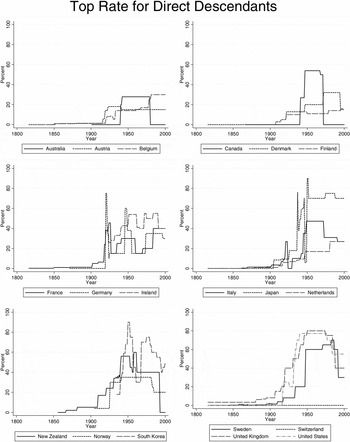
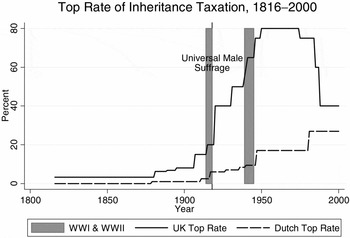
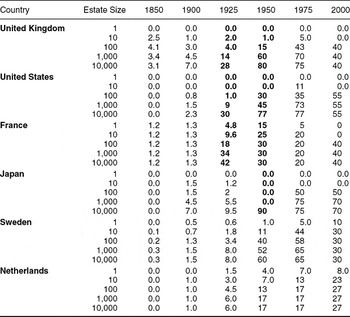
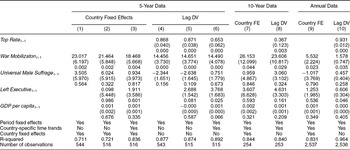
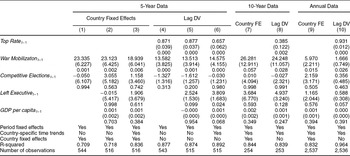
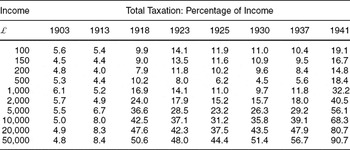
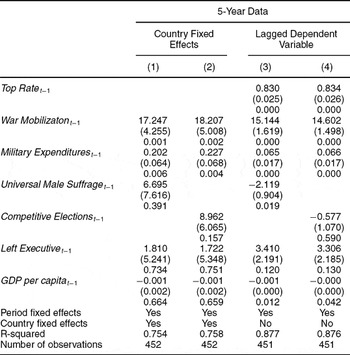




Comments
No Comments have been published for this article.