Introduction
Flue-cured tobacco is an important economic crop, widely grown in China, the USA, Brazil, etc. Its production focuses not only on economic yield but also on the quality of tobacco leaves. Nitrogen fertilizer is essential for the growth and development of plants, especially for flue-cured tobacco (Nicotiana tobacum L.) (Collins and Hawks, Reference Collins and Hawks1994). The influence of the nitrogen application rate on flue-cured tobacco yield and nicotine content is much greater than other nutrient elements (MacKown and Sutton, Reference MacKown and Sutton1997). Insufficient and excessive nitrogen fertilizer rates both result in poor quality flue-cured tobacco; excessive nitrogen fertilizer rates also cause nitrogen leaching into groundwater and pollution of the environment. Yunnan province is famous for its superior tobacco quality and is the biggest tobacco plant area in China; however, excessive nitrogen fertilization is a common phenomenon in Yunnan. Therefore, exploring an appropriate nitrogen fertilizer rate for the main cultivar of flue-cured tobacco is significant for achieving sustainable development of tobacco.
Nitrogen fertilizer rates can be influenced by many factors, such as flue-cured tobacco cultivar, weather conditions and soil fertility (Gous et al., Reference Gous, Terrill and Kroontje1971). The needs of flue-cured tobacco to nitrogen fertilizer changes with cultivar, for example, the Golden cultivar has a lower nitrogen requirement than other cultivars while cultivar K326 has a higher nitrogen requirement (Crafts-Brandner et al., Reference Crafts-Brandner, Sutton and Sims1987; Parker, Reference Parker2009). For flue-cured tobacco, nitrogen fertilizer should be applied during the early growth stage, since excessive nitrogen fertilizer application during the late growth stage will delay maturity and reduce the tobacco quality under conditions of high precipitation and temperatures (Rathier and Frink, Reference Rathier and Frink1986). In addition, nitrate nitrogen is more easily lost through runoff, leaching and denitrification in wet and rainy areas (Yang et al., Reference Yang, Weber and Silver2012), while high temperatures or neutral and alkaline soil allow ammonium nitrogen to be diffused easily into the atmosphere through ammonia volatilization (Jensen et al., Reference Jensen, Lam, Revsbech, Nagel, Gaye, Jetten and Kuypers2011). Sandy loam soils have low organic matter contents and a poor ability to retain water, so fertilizer and nutrients tend to lose more easily from them.
Nitrogen fertilizer rates have a great influence on tobacco agronomic traits. When nitrogen fertilizer rate is excessively low, tobacco plants grow slowly and leaf area decreases. However, when nitrogen fertilizer rate is excessively high, tobacco plants overgrow and nitrogen metabolism is enhanced. As a result, tobacco leaves appear dark green (Marchetti et al., Reference Marchetti, Castelli and Contillo2006). In addition, flue-cured tobacco is particularly sensitive to ammonium nitrogen in soil, which can limit the growth and development of tobacco. When ammonium nitrogen content is excessively high, the shape of tobacco leaves is abnormal and chlorine content increases; the tobacco leaves are also prone to developing grey speckles (Walch-Liu et al., Reference Walch-Liu, Neumann and Engels2001). Tobacco is a crop that preferentially absorbs nitrate nitrogen; therefore, this is more beneficial than ammonium nitrogen for flue-cured tobacco growth (Williams and Miner, Reference Williams and Miner1982).
Nitrogen fertilizer rate also greatly affects the yield of tobacco leaves. Within a certain range, tobacco yield increases with increasing nitrogen fertilizer rate and other crops also show a similar yield-increasing relationship (Sinclair and Horie, Reference Sinclair and Horie1989). In 1950, the nitrogen fertilizer rate used for flue-cured tobacco was 40 kg/ha; it then increased until reaching a peak (> 110 kg/ha) in 1960–1970 before decreasing again. It has remained stable at 70~80 kg/ha since 1980. During this period, the yield of flue-cured tobacco nearly tripled (Sisson et al., Reference Sisson, Rufty and Williamson1991). However, excessive nitrogen fertilizer rate is detrimental to yield and economic traits of tobacco leaves, and the yield increment function of nitrogen fertilizer to tobacco decreases gradually (Miner and Sims, Reference Miner and Sims1983). Cerrato and Blackmer (Reference Cerrato and Blackmer1990) developed a model for the response of maize yield to nitrogen fertilizer and found that a quadratic-plus-plateau model was the most suitable. Bélanger et al. (Reference Bélanger, Walsh, Richards, Milburn and Ziadi2000) found that the response of potato economic value to nitrogen fertilizer obtained through the quadratic model or square root and exponential models was not accurate enough; however, the quadratic model was found to be the best for obtaining the response of potato yield to nitrogen fertilizer. At present, there is much in the literature about the response of yield to nitrogen for many crops; however, the response of flue-cured tobacco yield to nitrogen fertilizer and the optimal nitrogen fertilizer rate is unclear. The hypothesis for the current work was that the quadratic model is the most suitable for the response of tobacco yield to nitrogen fertilizer.
Nitrogen fertilizer rate influences the coordination of chemical components and final quality of tobacco leaves, and improper application of nitrogen fertilizer is an important cause of poor quality (Weybrew et al., Reference Weybrew, Wan Ismail and Long1983). The ratio of total sugar to nicotine is an important index used to measure ‘sensory evaluation’, which is a method used to judge the quality and industrial usability of flue-cured tobacco. Ratios of total sugar to nicotine in the range of 7–9 are generally believed to produce an acid-base equilibrium, where chemical components can form a coordinated sensory evaluation leading to tobacco smoke that tastes neither too irritating nor too bland (Williams and Miner, Reference Williams and Miner1982). If the ratio is higher than the appropriate range, flue-cured tobacco causes less irritation in sensory evaluations, while lower ratios produce strong irritation and a biting taste (Elliot and Court, Reference Elliot and Court1978). The content of reducing sugars in tobacco leaves decreases with increases in nitrogen fertilizer rate, while contents of nicotine and total nitrogen (TN) increase so that chemical components are ‘uncoordinated’. Research has found that excessive application of nitrogen fertilizer can lead to excessive nitrate contents in tobacco leaves (Broaddus et al., Reference Broaddus, York and Moseley1965), which is unfavourable for their final quality.
The current paper studied the effects of nitrogen fertilizer rate on yield, quality and residual soil nitrogen of flue-cured tobacco cultivar K326. Moreover, the relationships of nitrogen fertilizer rate with yield and quality of cultivar K326 were explored. The research aims to provide a theoretical basis for scientific and reasonable nitrogen fertilizer application and improve the utilization rate of fertilizer and yield and quality of tobacco leaves.
Material and methods
Field situations
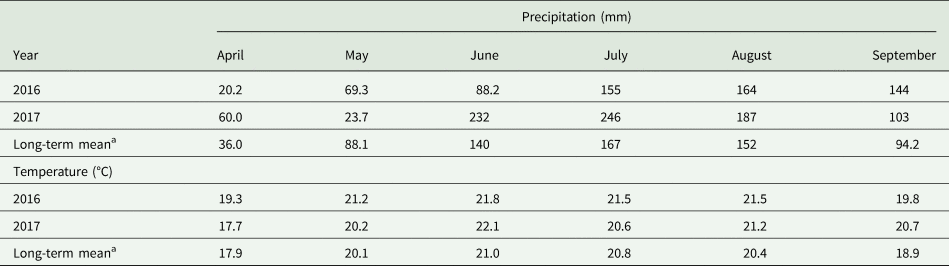
The test was conducted in Jiuxi town, Jiangchuan district, Yuxi city, Yunnan province, China (102°38′E and 24°18′N, 1730 m asl). In this region, annual average temperature and annual average precipitation are 15.6°C and 773 mm, respectively. The soil in the test field was typical of the sandy red soil found in Yunnan province as the main type of tobacco planting soil. Based on the USDA soil taxonomy, the red soil was classified as an Ultisol (USDA, 2014). The soil is composed of 28% of sandy soil, 50% silt and 22% clay. Data on the basic chemical nutrients in the soil are shown in Table 1 and the actual temperature and precipitation in Table 2.
Contents of soil nutrients in the Jiuxi tobacco-growing area of China

Monthly total precipitation and mean temperature in Jiangchuan district, Yuxi city, Yunnan province for the tobacco growing seasons in 2016 and 2017
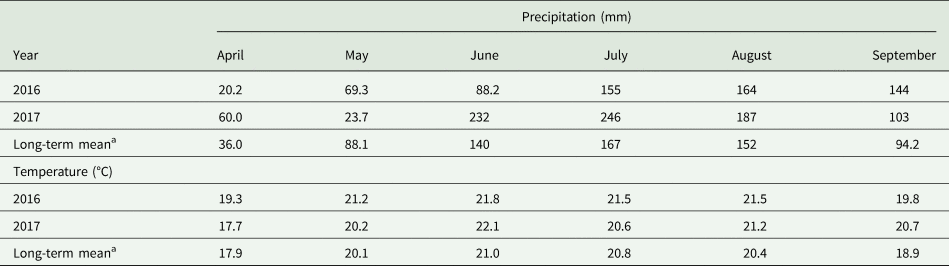
a Long-term means calculated using data from 2000 to 2017. The monthly total precipitation of 2016 and 2017 were the data detected by the weather station at the test site, and the long-term monthly mean precipitation was the data obtained by the meteorological department. The long-term mean precipitation was used to reflect the local precipitation situation. The June, July and August were the key water requirement stages for tobacco. Compared with the long-term mean precipitation, the precipitation in June, July and August of 2017 was relatively higher, while 2016 was relatively normal.
Experimental design
Seven different nitrogen fertilizer rates (i.e. 0, 30, 60, 90, 120, 150 and 195 kg N/ha) were used in a randomized block design with three replications. The size of the experiment plots is 15 m × 10 m (length × breadth), the planting density of flue-cured tobacco was 16 500 plants/ha, and plant spacing 50 cm × 120 cm. A compound fertilizer (N: P2O5: K2O = 1: 2: 2.5) was strip-applied, with one-third applied as a base fertilizer before transplanting and the remaining two-thirds applied 30 days after transplanting. The test included three components, i.e. nitrogen fertilizer rate, leaf position (the lower, middle and upper leaves, going from soil level to the top of the plant) and year.
The tobacco cultivar K326 for the test was provided by Zhongyan Tobacco Seed Co., Ltd., China. Seedling production using a floating system, where seedlings absorb water and nutrients from a substrate and water bed, was conducted on 5 March in both 2016 and 2017. Seedlings were subsequently transplanted into prepared plots on 20 April in 2016 and 22 April 2017. When the tobacco plants grew to 23~25 leaves, they were topped (i.e. the flowers at the top of the plant were removed), 2~3 basal leaves removed and 20 effective leaves reserved per plant. After topping on 23 July in 2016 and 25 July in 2017, a chemical suckercide named ‘Maleic hydrazide’ (Weifang Chemical Products Co., Ltd., China; active ingredient N-sec-Butyl-4-(2-methyl-2-propanyl)-2,6-dinitroanilin) was applied within 2 days to suppress buds. Other cultivation measures were carried out in accordance with the technical guidelines recommended by Yunnan Academy of Tobacco Agricultural Sciences.
Analysis and methods
Agronomic traits
After transplanting for 90 d, when plants entered the mature stage, chlorophyll content in the leaves was determined using a soil and plant analyser development (SPAD)-502 portable chlorophyll meter. Chlorophyll content was measured in the 5th leaf (representing the lower leaf), the 12th leaf (representing the middle leaf) and the 16th leaf (representing the upper leaf), counting up from soil level. Six integral tobacco leaves (i.e. complete leaves including blade, main vein and branch vein) were selected from each of the upper, middle and lower positions tobacco samples of different treatments. These leaves were weighed immediately to determine the fresh weight, then weighed again after the flue-curing process to record their dry weight. Based on this, the ratio of fresh weight to dry weight (RFT) was calculated.
Economic traits
The tobacco leaves at each position in different treatments were graded according to Standard of the People's Republic of China for Flue-cured Tobacco (GB2635-92, 1992) and the average price calculated in accordance with procurement price lists of flue-cured tobaccos in 2016 and 2017. In accordance with the dry weight of tobacco leaves at each position, yield and output value of tobacco leaves were calculated.
Chemical components and sensory evaluation scores
After harvest, a sample (1.5 kg) of the fresh tobacco leaves taken from each position was placed into an oven at 55°C until a constant weight was reached and the contents of total sugar (TS), reducing sugar (RS), TN, nicotine, potassium oxide (PO), protein and starch were determined. The remaining fresh tobacco leaves were put into the curing barn; after flue-curing the contents of TS, RS, TN, nicotine, PO, protein, starch and polyphenol were determined on samples (1.5 kg) of the dry tobacco leaves from each position. Sensory evaluation scores were given for the tobacco leaves by seven experts from the Technology Center of China Tobacco in Yunnan Province, using the Standard of the People’s Republic of China (GB5606.4-2005, 2005). There were ten indices: the original aroma, aroma volume, aroma quality, concentration, irritation, physiological strength, offensive odour, cleanliness, wetness and aftertaste.
Residual soil nitrogen
After harvesting tobacco leaves, soil samples in each plot were obtained by taking cores (2.5 cm in diameter) from layers at the depths of 0~25 cm and 25~50 cm. Soil samples were ground after air drying then passed through a 2 mm sieve for laboratory analysis. The nitrate nitrogen was determined by cadmium reduction and Griess–Ilosvay reaction (Paratech, Lexington, KY, USA) (Crutchfield and Grove, Reference Crutchfield and Grove2011).
Statistical analysis
Data were analysed with the General Linear Model (GLM) procedure and using multiple regression in the SAS 9.3 computer package (SAS Institute Inc., Cary, NC, USA). This research was a randomized complete block design, factor design with seven levels of nitrogen as treatments: 0, 30, 60, 90, 120, 150 and 195 kg N/ha. A total of 126 observations (7 nitrogen treatments × 3 replicates × 3 positions × 2 years) were used for statistical analysis. The results indicate that there were significant treatment effects if the probability (p) was < 0.05. Tukey's honest significant difference (HSD) test was conducted for separation of the means at the 95% confidence level. All linear and quadratic regression analyses were conducted with Sigma Plot 12.3 (Systat Software Inc., Chicago, IL, USA) by regression wizard equation and all associated output plots were produced by Sigma Plot 12.3.
Results
Effects of nitrogen fertilizer rate on agronomic traits of tobacco leaves
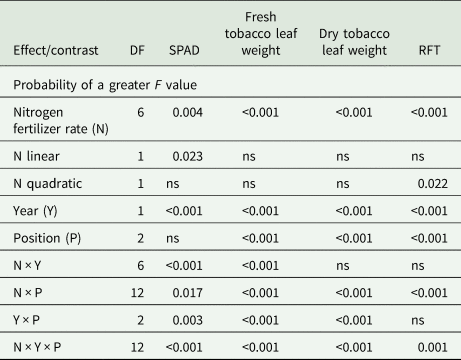
The SPAD of tobacco leaves was significantly (P < 0.05) affected by nitrogen fertilizer rate and year, rather than position (Table 3). Fresh weight, dry weight and RFT were remarkably influenced by nitrogen fertilizer rate, year and position as well as their interactions. In comparison with the quadratic model, the linear model better described the response of SPAD to nitrogen fertilizer rate, while the quadratic model better represented the response of RFT to nitrogen fertilizer rate.
Analysis of variance for the effects of nitrogen fertilizer rate, year and position on agronomic traits of tobacco leaves

DF, degrees of freedom; SPAD, soil and plant analyser development measurement; RFT, ratio of fresh weight to dry weight; ns, not significant.
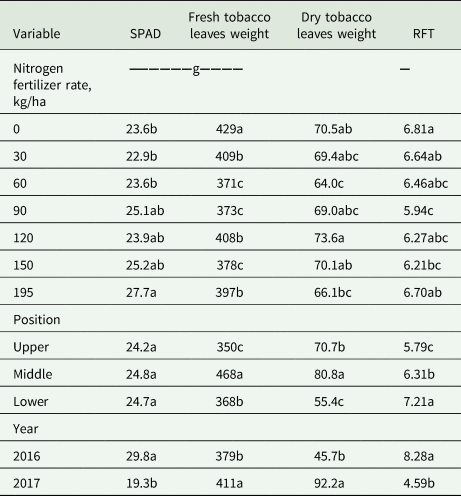
The SPAD changed in the form of a bimodal curve with increasing nitrogen fertilizer rate and reached its maximum when nitrogen fertilizer rate was 195 kg/ha (Table 4). Although differences in SPAD value between leaf positions were not significant, the highest was obtained for middle leaves; in addition, SPAD in 2016 was markedly higher than in 2017. As nitrogen fertilizer rate increased, fresh weight and dry weight of tobacco leaves decreased initially and then increased gradually. Fresh and dry weights of the middle leaves were markedly higher than those of the upper and lower leaves. The RFT was lowest in the 90 kg N/ha treatment and RFT in the upper leaves has a significant (P < 0.05) difference with the middle and lower leaves. Moreover, the ratio in 2017 was 44.6% lower than that in 2016.
Effects of nitrogen fertilizer rate, year and position on agronomic traits of tobacco leaves

SPAD, soil and plant analyser development measurement; RFT, ratio of fresh weight to dry weight.
Note: Different lowercase letters represent significance of difference in treatments, positions and years (P < 0.05).
Effects of nitrogen fertilizer rate on economic traits of tobacco leaves
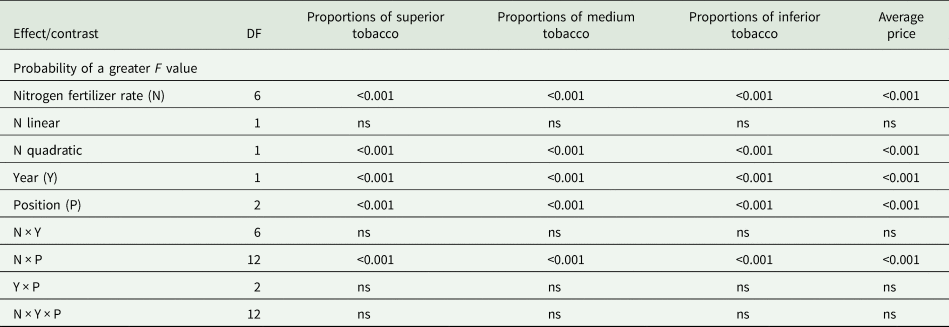
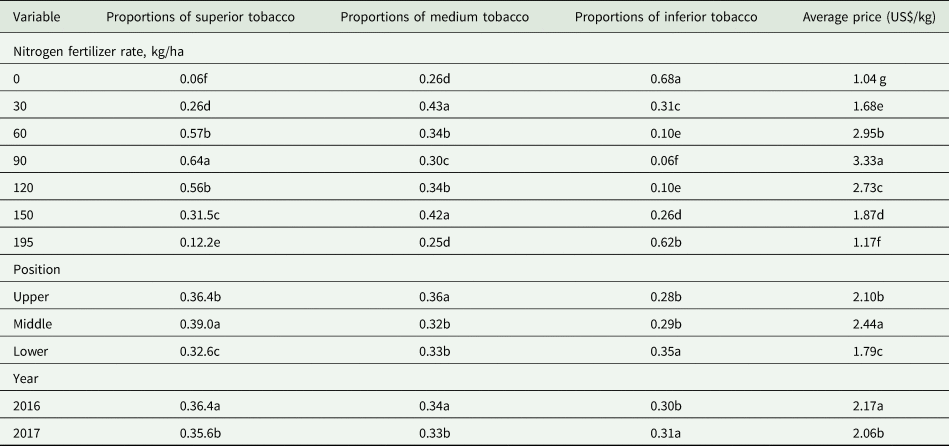
The average price of tobacco leaves and the proportions of superior, medium and inferior tobacco were notably affected by nitrogen fertilizer rate, year and position (P < 0.05, Table 5). Compared with the linear model, the quadratic model better described the response of economic trait indexes to nitrogen fertilizer rate.
Analysis of variance for the influences of nitrogen fertilizer rate, year and position on economic traits of tobacco leaves
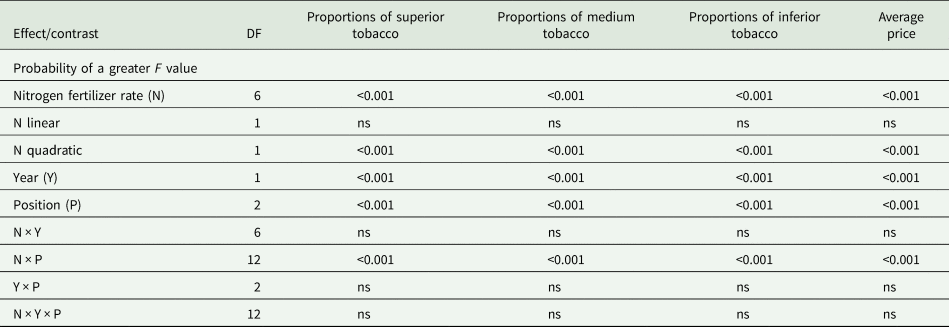
DF, degrees of freedom; ns, not significant.
The proportion of superior tobacco demonstrated a parabolic change with the increase of nitrogen fertilizer rate (Table 6). The proportion of superior tobacco was significantly different in different positions and years (P < 0.05, Table 6): at 90 kg N/ha, the proportions of superior tobacco was the highest and significantly different from other treatments (P < 0.05). The proportions of medium tobacco were the lowest at 0 kg N/ha and 195 kg N/ha, and the highest at 30 kg N/ha and 150 kg N/ha and significantly different from other treatments (P < 0.05). Finally, proportions of inferior tobacco were the lowest at 0 kg N/ha and the highest at 90 kg N/ha and significantly different from other treatments (P < 0.05). The difference of average prices in different treatments was significant (P < 0.05). The average price reached a maximum of US$ 3.33/kg when nitrogen fertilizer rate was 90 kg N/ha.
Influence of nitrogen fertilizer rate, year and position on economic traits of tobacco leaves
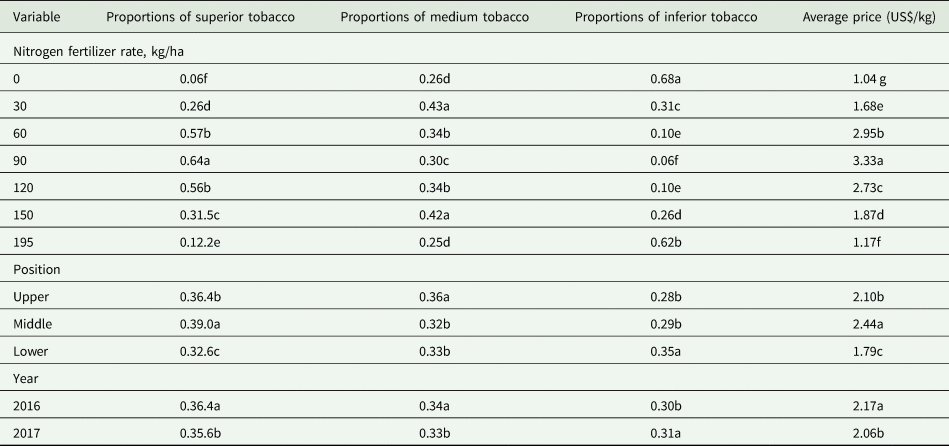
Note: Different lowercase letters represent the significance of difference in treatments, positions and years (P < 0.05).
Effects of nitrogen fertilizer rate on chemical components and quality of tobacco leaves
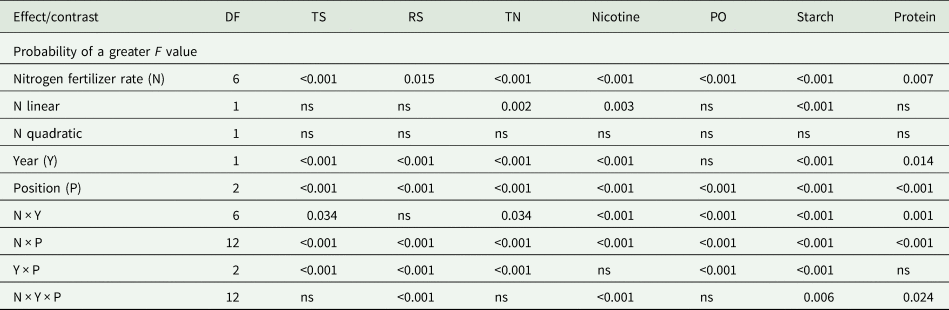
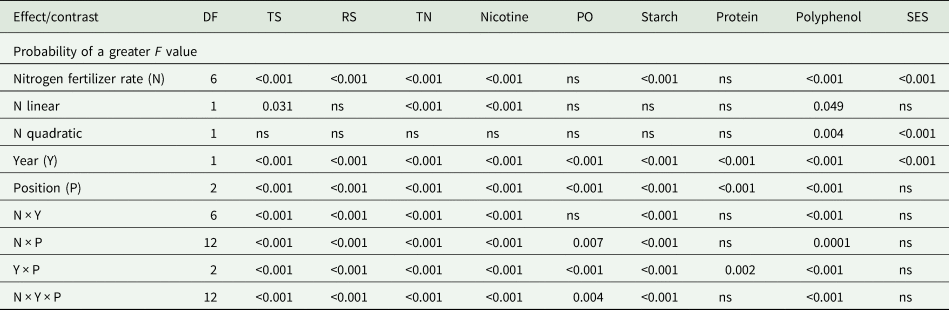
The contents of TS, RS, TN, nicotine, starch and protein in fresh tobacco leaves were significantly influenced by nitrogen fertilizer rate, year and position (P < 0.05, Table 7). The linear model showed the response of contents of TN, nicotine and starch to nitrogen fertilizer rate better than the quadratic model. The contents of TS, RS, TN, nicotine, starch and polyphenol as well as sensory evaluation score (SES) of flue-cured tobacco leaves were significantly (P < 0.05) affected by nitrogen fertilizer rate, year and position (Table 8). Moreover, the contents of PO and protein were only influenced significantly (P < 0.05) by position and year, rather than nitrogen fertilizer rate. Comparing the two models, the linear model better described the response of TS, TN and nicotine contents to nitrogen fertilizer rate while the quadratic model better presented the response of polyphenol content and SES to nitrogen fertilizer rate.
Analysis of variance for effects of nitrogen fertilizer rate, year and position on chemical components of fresh tobacco leaves
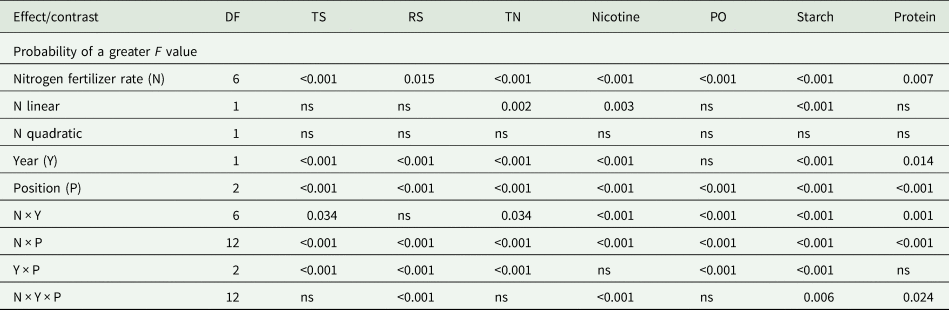
DF, degrees of freedom; TS, total sugar; RS, reducing sugar; TN, total nitrogen; PO, potassium oxide; ns, not significant.
Analysis of variance for impacts of nitrogen fertilizer rate, year and position on chemical components and quality of flue-cured tobacco leaves
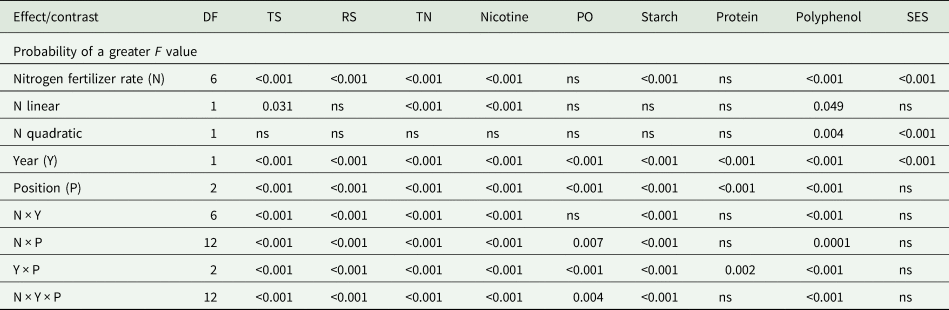
DF, degrees of freedom; TS, total sugar; RS, reducing sugar; TN, total nitrogen; PO, potassium oxide; SES, sensory evaluation scores; ns, not significant.
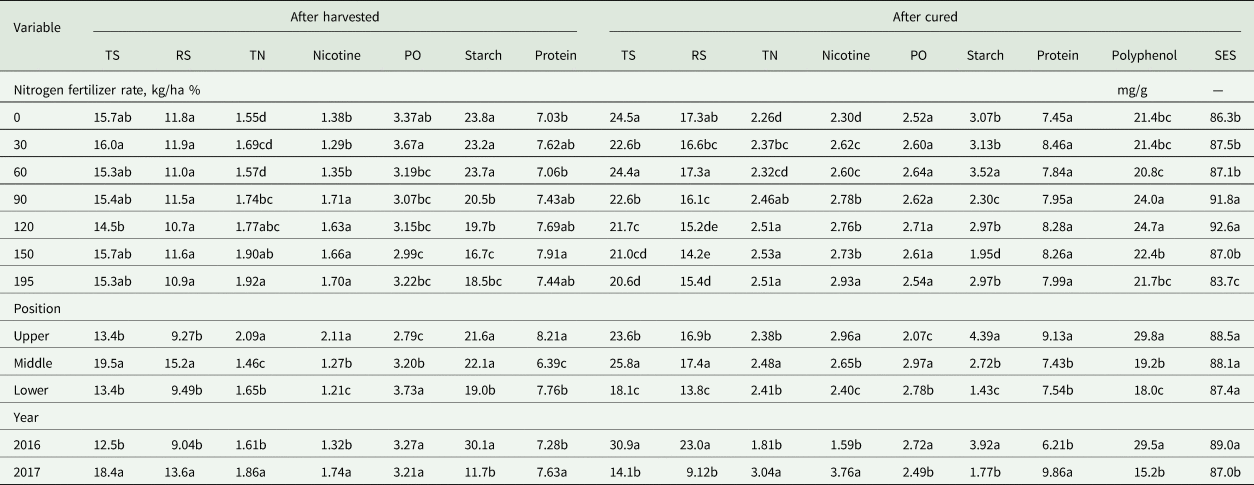
The differences in the content of RS in fresh tobacco leaves under different nitrogen fertilizer rates were not significant (P < 0.05; Table 8). The greatest content of RS was seen in the 30 kg N/ha treatment, while it was lowest at 120 kg N/ha (Table 9).
Effect of nitrogen fertilizer rate, year and position on chemical components and quality of tobacco leaves
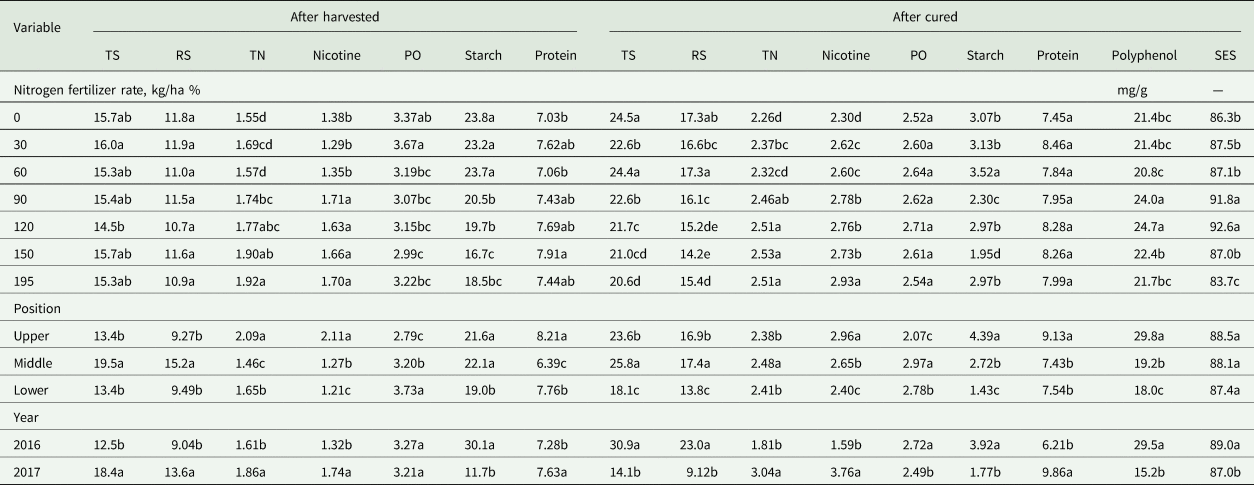
TS, total sugar; RS, reducing sugar; TN, total nitrogen; PO, potassium oxide; SES, sensory evaluation scores.
Note: Different lowercase letters represent significance of difference in treatments, positions and years (P < 0.05).
The content of TN in fresh tobacco leaves increased with increasing nitrogen fertilizer rate. The content of TN was highest at 195 kg N/ha and decreased to its lowest at 0 kg N/ha. The contents of TN in different positions and years were significantly different, with the maximum values seen in the upper leaves (P < 0.05, Table 9). Nicotine content was higher at 90~195 kg N/ha than at 0~60 kg N/ha and there were significant differences between the treatment of 90~195 kg N/ha and 0~60 kg N/ha (P < 0.05). The content of nicotine in the upper leaves was higher than those in the middle and lower leaves and there was a significant difference (P < 0.05). Potassium oxide contents in fresh tobacco leaves were highest at 30 kg N/ha treatment and were lowest at 150 kg N/ha treatment, there was a significant difference between them (P < 0.05). As nitrogen fertilizer rate increased, starch content in fresh tobacco leaves exhibited a decreasing trend, while the opposite was seen for protein content. When nitrogen fertilizer rate was 150 kg N/ha, protein content in fresh tobacco leaves was significantly higher than at rates of 0 and 60 kg (P < 0.05).
The content of TS in flue-cured tobacco leaves decreased with increasing nitrogen fertilizer rate (Table 9). At 0 and 60 kg N/ha, contents of TS in flue-cured tobacco leaves were significantly higher than in other treatments (P < 0.05). The content of RS in flue-cured tobacco leaves under different nitrogen fertilizer rates was significantly different (P < 0.05), reaching a maximum at 60 kg N/ha and minimum at 150 kg N/ha. As nitrogen fertilizer rate increased, the content of TN in flue-cured tobacco leaves increased and reached its maximum at 150 kg N/ha. Moreover, the content of TN in flue-cured tobacco leaves with no application of nitrogen fertilizer was significantly lower than in other treatments (P < 0.05). The nicotine content in flue-cured tobacco leaves at 195 kg N/ha was significantly higher than in other treatments but significantly lower than in other treatments at 0 kg N/ha (P < 0.05). Furthermore, the content of PO in flue-cured tobacco leaves was highest at 120 kg N/ha and lowest at 0 kg N/ha. Starch content in flue-cured tobacco leaves was significantly higher at 60 kg N/ha than in other treatments, but significantly lower than in other treatments at 90 kg N/ha and 150 kg N/ha (P < 0.05). With increases in nitrogen fertilizer rate, protein content in flue-cured tobacco leaves exhibited changes in the form of a bimodal curve. Protein content in flue-cured tobacco leaves reached its maximum when 30 kg N/ha of nitrogen fertilizer was applied and was lowest at 0 kg N/ha. Polyphenol content in flue-cured tobacco leaves initially decreased, then increased before decreasing again with increasing nitrogen fertilizer rate. Moreover, when nitrogen fertilizer rates were 90 kg N/ha and 120 kg N/ha, polyphenol contents were significantly higher than those in other treatments (P < 0.05). With an increasing nitrogen fertilizer rate, SES of flue-cured tobacco leaves increased initially and then decreased. The highest SES was obtained when nitrogen fertilizer rate was 120 kg N/ha. When 195 kg N/ha of nitrogen fertilizer was applied, SES of flue-cured tobacco leaves was significantly lower than those in other treatments (P < 0.05).
Effects of nitrogen fertilizer rate on yield and output value of tobacco leaves
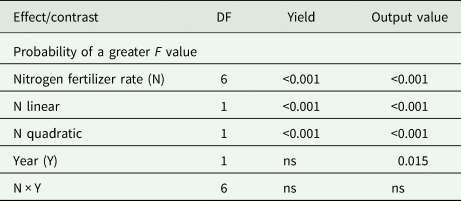
The yield of tobacco leaves was significantly affected by nitrogen fertilizer rate, while output value was significantly influenced by nitrogen fertilizer rate and year (P < 0.05, Table 10). Both the linear and quadratic models demonstrated the influences of nitrogen fertilizer rate on yield and output value, but the R2 value of the linear model each year was lower than the quadratic model.
Analysis of variance for influences of nitrogen fertilizer rate and year on yield and output value of tobacco leaves
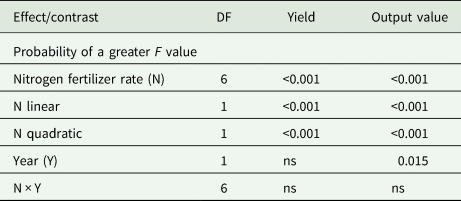
DF, degrees of freedom; ns, not significant.
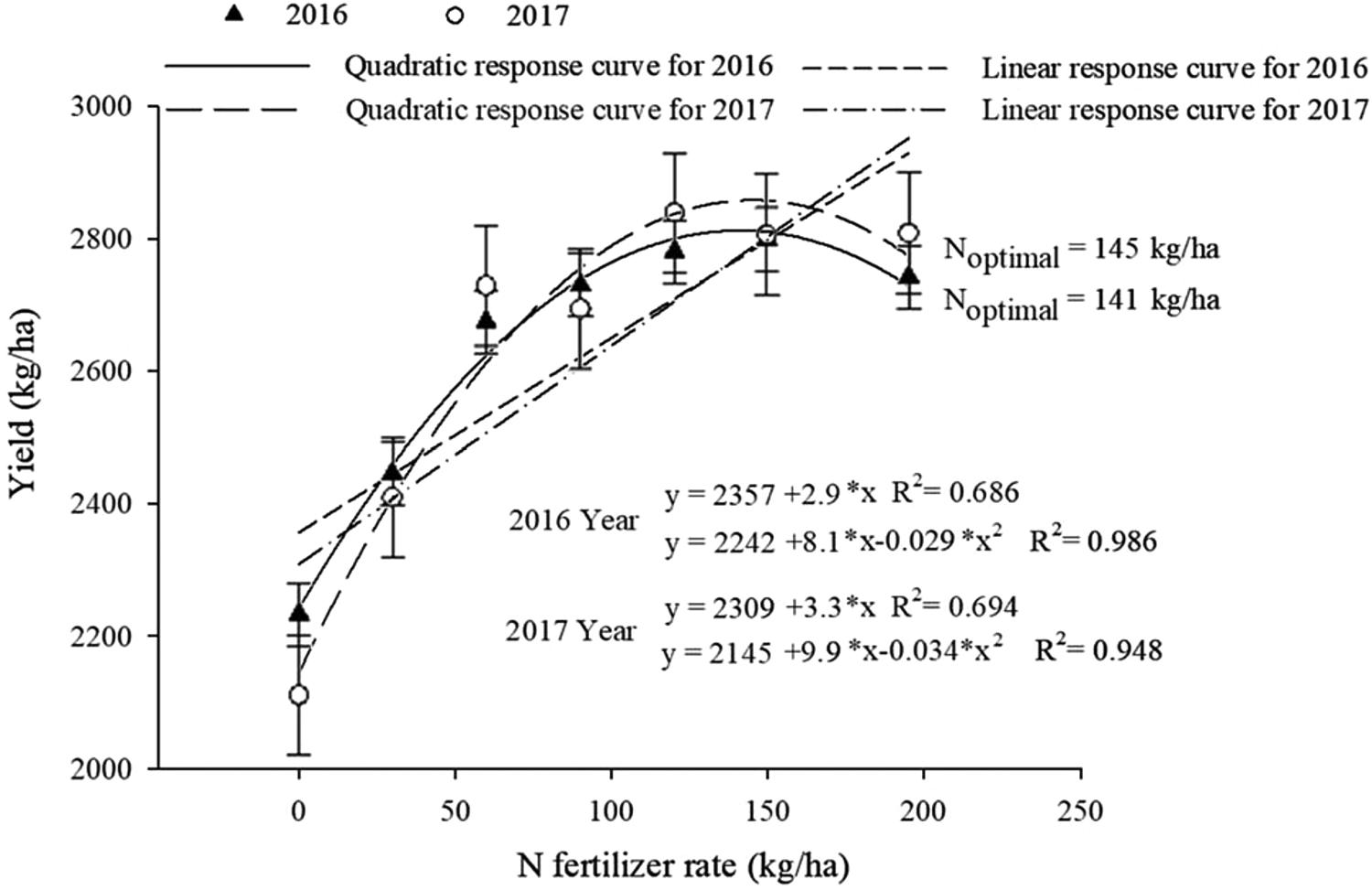
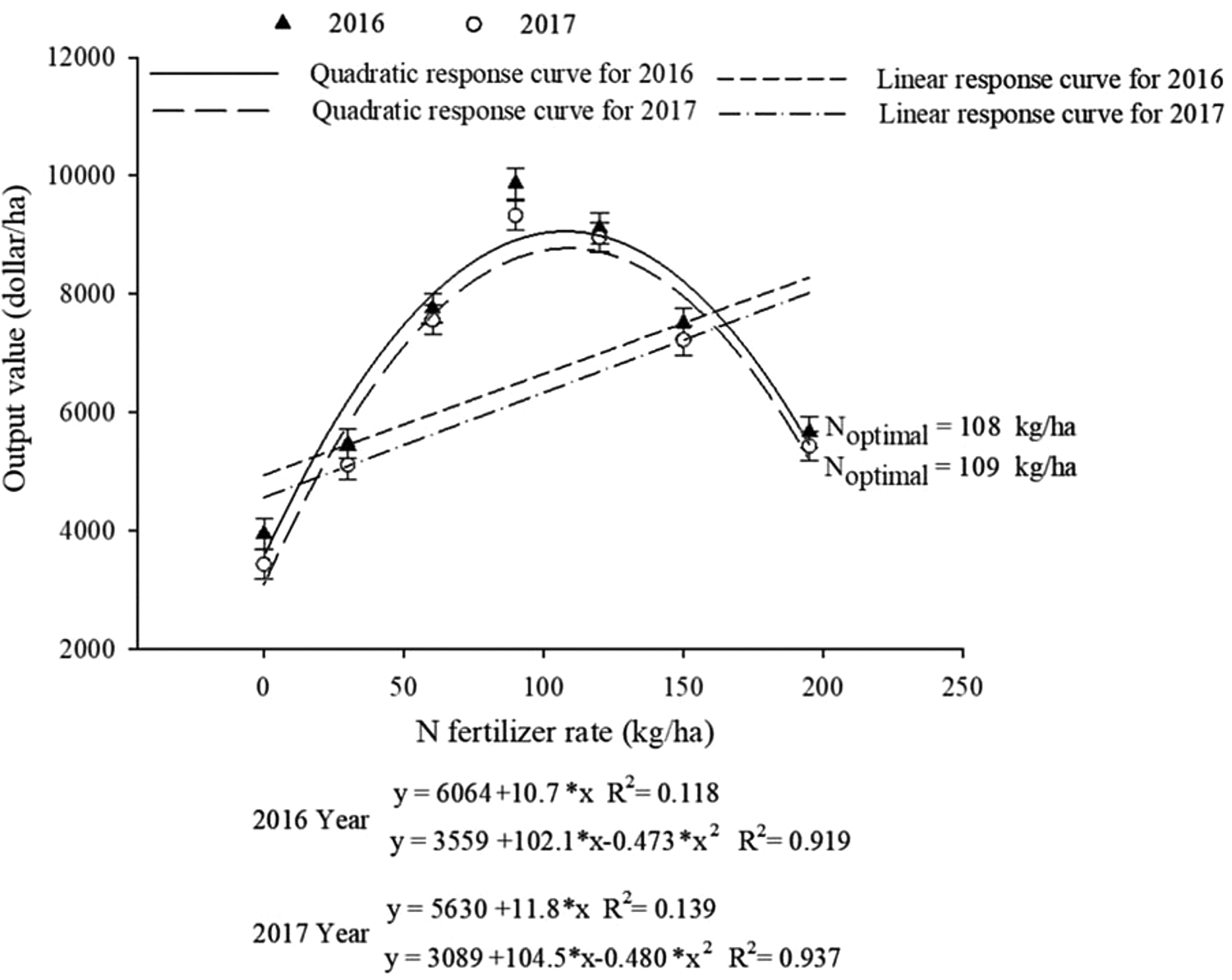
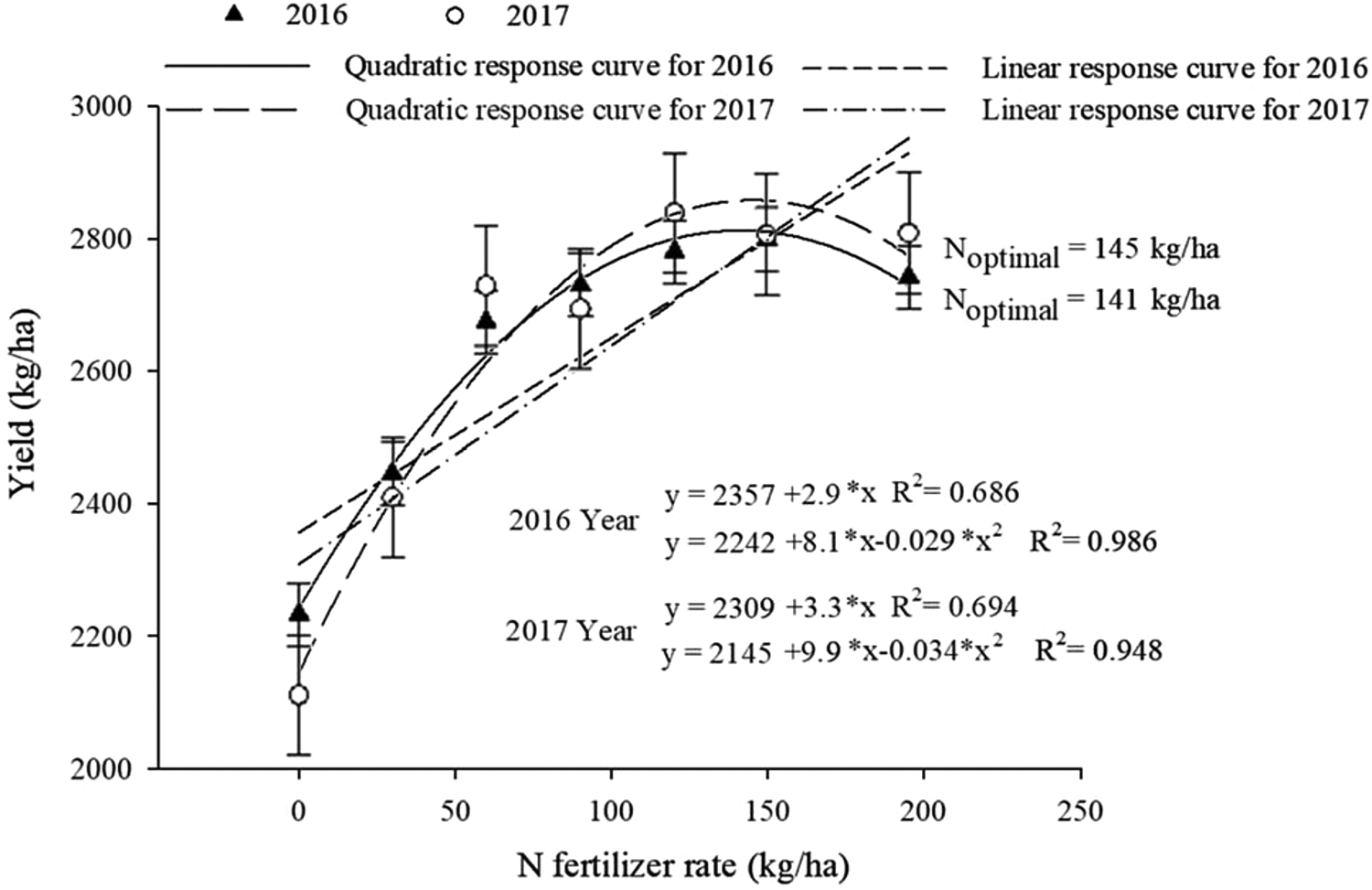
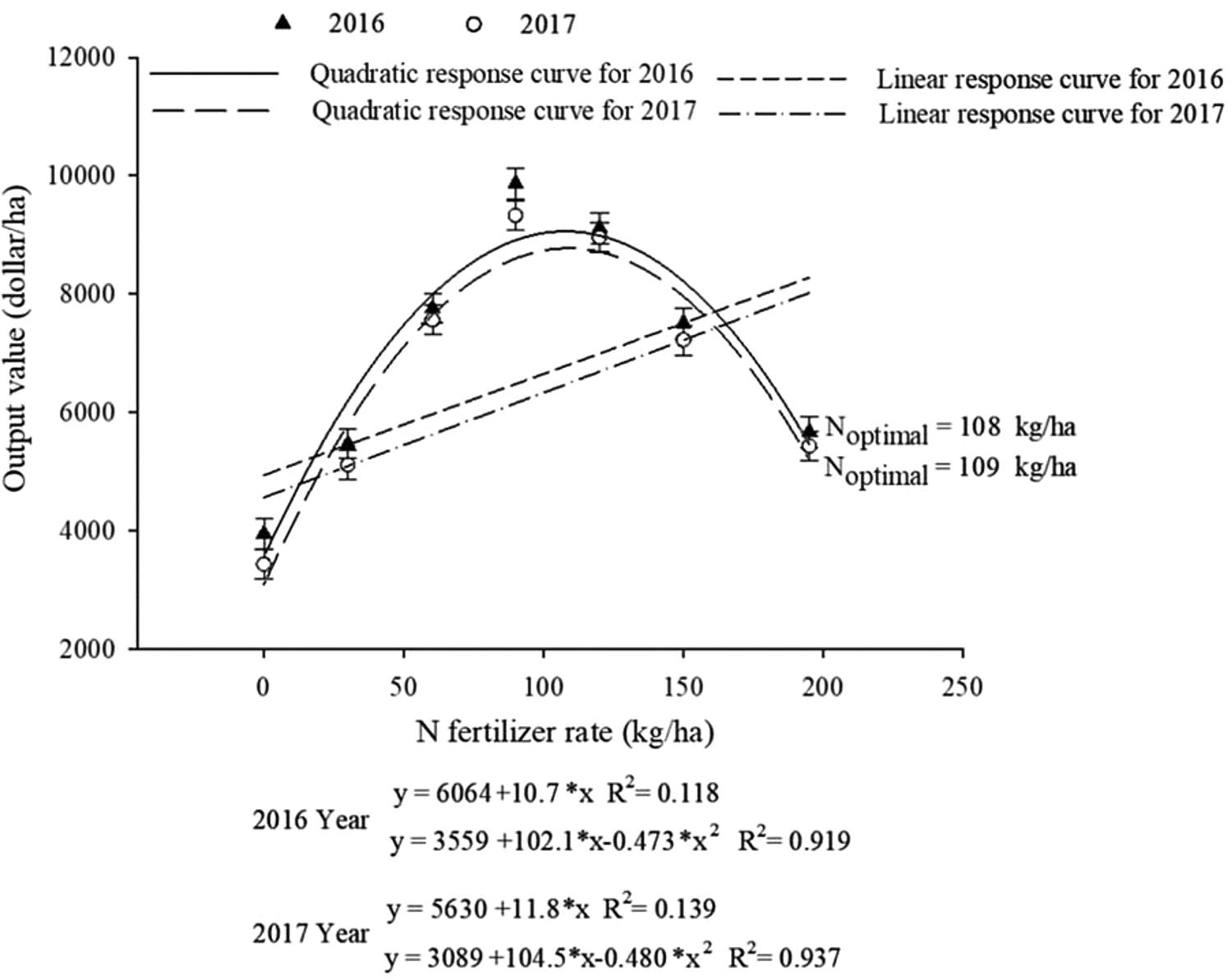
The quadratic model described the response of yield to nitrogen fertilizer rate better than the linear model, especially when nitrogen fertilizer rate was 60~120 kg N/ha (Fig. 1). The quadratic model also better reflected the effect of nitrogen fertilizer rate to output value (Fig. 2), while the maximum output values estimated by the two models were both lower than the actual output value. Moreover, the output values predicted by the linear model at nitrogen fertilizer rates of 0 kg N/ha and 195 kg N/ha were higher than the actual output value, while when nitrogen fertilizer rate ranges from 60 kg N/ha to 120 kg N/ha, the predicted output value was lower than the actual output value. The effect of different nitrogen fertilizer treatments on yield and output values are shown in Figs 1 and 2; error bars are used to reflect experimental data reliability.
Response of tobacco yield to nitrogen fertilizer rate and date, fitted using both the linear and quadratic models for 2 years (2016 and 2017). The linear equation represented the linear model of yield response to nitrogen fertilizer, and the quadratic equation represents the quadratic model of yield response to nitrogen fertilizer. N optimal was the optimal nitrogen fertilizer rate predicted by the quadratic model in the highest tobacco yield.
Response of tobacco output value to nitrogen fertilizer rate and date, fitted using both the linear and quadratic models for 2 years (2016 and 2017). The linear equation represents the linear model of output value response to nitrogen fertilizer, and the quadratic equation represents the quadratic model of output value response to nitrogen fertilizer. N optimal was the optimal nitrogen fertilizer rate predicted by the quadratic model in the highest tobacco output value.
Influences of nitrogen fertilizer rate on residual soil nitrogen
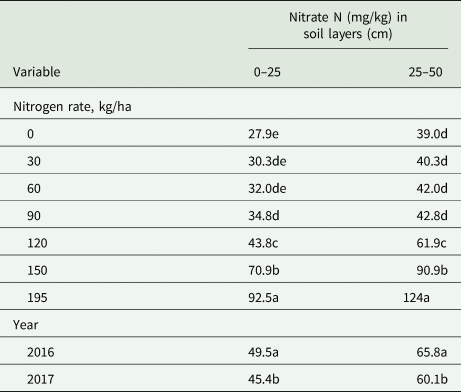
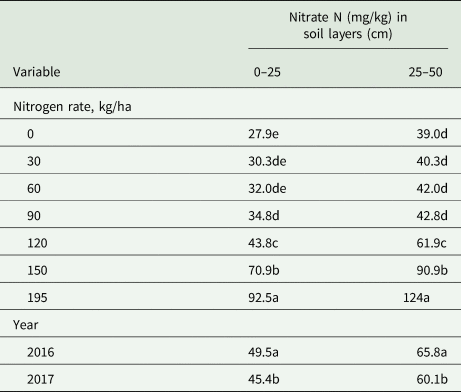
Nitrate nitrogen contents in soil layers at depths of 0~25 cm and 25~50 cm increased with the increase of nitrogen fertilizer rate (Table 11). When 0~90 kg N/ha of nitrogen fertilizer was applied, the difference of nitrate nitrogen contents in soil layers at depths of 25~50 cm was not significant. When nitrogen fertilizer rate exceeded 120 kg N/ha, the nitrate nitrogen contents found in the two soil layers were significantly different (P < 0.05). Moreover, nitrate nitrogen contents in soil layers in different years were significantly different (P < 0.05). Nitrate nitrogen contents in both soil layers were lower in 2017 than in 2016.
Effects of nitrogen fertilizer rate on nitrate-nitrogen leaching in soil
Note: Different lowercase letters indicate significance of differences in treatments and years (P < 0.05).
Discussion
Effects of nitrogen fertilizer rate on agronomic traits of flue-cured tobacco
Nitrogen is one of the main elements of chlorophyll, which directly regulates the agronomic characters of flue-cured tobacco by promoting the photosynthesis (Golcz and Politycka, Reference Golcz and Politycka2009). The SPAD value is a relative value that characterizes the chlorophyll content of crop and is positively correlated with the leaf photosynthetic rate (Dwyer et al., Reference Dwyer, Anderson, Ma, Stewart, Tollenaar and Gregorich2013). Nitrogen supply has a direct impact on plant photosynthesis, within a certain range: with increases in nitrogen fertilizer rate, SPAD increases (Dordas and Sioulas, Reference Dordas and Sioulas2008; Grant et al., Reference Grant, Derksen, McLaren and Irvine2011; Diacono et al., Reference Diacono, Rubino and Montemurro2013). Due to the relationship between photosynthetic activity and leaf nitrogen, chlorophyll concentration is a useful index for predicting yield potential (Evans, Reference Evans1983). In the current study, with the increase of nitrogen fertilizer rate, SPAD changes showed a bimodal curve and reached a maximum when the nitrogen fertilizer rate was 195 kg/ha. This result indicated that nitrogen fertilizer could directly regulate the photosynthetic efficiency of flue-cured tobacco and was positively correlated with photosynthesis, which was consistent with existing research results (Hajaji and Gouia, Reference Hajaji and Gouia2014). MacKown and Sutton (Reference MacKown and Sutton1998) also considered that chlorophyll concentration initially increased, then decreased and finally increased again with increasing nitrogen fertilizer rates, and the linear relationship of chlorophyll concentrations at different nitrogen fertilizer rates was more significant. A higher SPAD value in fresh tobacco leaves does not mean the good quality of final tobacco leaves. During the flue-curing process, excessive SPAD makes it difficult to turn the flue-cured tobacco leaves from green to the desired yellow colour and they become prone to developing yellow-green spots, which affects the quality of tobacco leaves. In the current study, nitrogen application rates of 90 kg/ha and 150 kg/ha resulted in SPAD values in the appropriate range to obtain better curing characteristics and higher tobacco leaf quality.
Nitrogen fertilizer rate can influence length and width of tobacco leaves significantly (Miner and Sims, Reference Miner and Sims1983), in turn affecting tobacco leaf area and weight per leaf. In the current study, the fresh weight of tobacco leaves without applying nitrogen fertilizer was the highest. Residual and mineralized nitrogen in the soil can be absorbed and utilized by tobacco plants (Aulakh et al., Reference Aulakh, Khera, Doran and Bronson2001) and although agronomic traits increase with increasing nitrogen fertilizer rate in the early growth stages of flue-cured tobacco, in later growth stages excessive nitrogen fertilizer rate results in exuberant growth and subsequent self-shading of lower leaves; thus the plants receive little ventilation and sunlight, which inhibits growth (Marchetti et al., Reference Marchetti, Castelli and Contillo2006). The RFT is an index reflecting flue-curing characteristics of flue-cured tobacco and the characteristics are better when the ratio is 5.5~8.0. When the ratio is lower, it is difficult to turn the leaves yellow during the flue-curing process and sometimes grey speckles appear on the leaves, while when the ratio is higher, it is even more difficult to fix the colour of tobacco leaves during the flue-curing process (Zou et al., Reference Zou, Hu, Huang, Zhao, Yang, Jin, Gu, Yan, Li, Wu and Xiong2019). In the current work, the ratio reached its maximum when no nitrogen fertilizer was applied, indicating that it is more difficult to fix colour in the flue-curing process and that dry matter such as starch and total sugars were largely consumed, leading to a decrease in dry tobacco leaf weight.
In order to better explore and predict the relationship between nitrogen supply and crop growth dynamics, Yang et al. (Reference Yang, Li, Yang, Wang, Zou and He2014) established a quadratic function model to describe the dynamic distribution of SPAD values in different canopies of rice leaves under the different nitrogen application rates and leaf ages and found that the linear model better described the effect of nitrogen fertilizer on SPAD, and the quadratic model better fits the effect of nitrogen fertilizer on RFT. The current study can provide a research direction for further prediction of the response of agronomic traits to nitrogen rates.
Effects of nitrogen fertilizer rate on economic traits of flue-cured tobacco
A reasonable nitrogen application rate is an important agronomic measure to ensure the economic traits of flue-cured tobacco (Collins and Hawks, Reference Collins and Hawks1994). Inadequate nitrogen application will severely hinder the physiological development of flue-cured tobacco in the field; further, the curing characteristics will decline in quality. However, excessive nitrogen application will prolong the growth period of flue-cured tobacco, thereby increasing the risk of meteorological disasters and insect pests. Both of the above conditions will lead to a decline in the economic characteristics of flue-cured tobacco. In the current work, as nitrogen fertilizer rate increased, the proportions of superior and medium tobacco and the average price of flue-cured tobacco leaves initially increased and then decreased, while the proportion of inferior tobacco exhibited an inverse trend. When nitrogen fertilizer rate was 60~120 kg N/ha, flue-cured tobacco leaves had the highest economic value. In contrast to other crops, a high yield of fresh flue-cured tobacco leaves does not mean high output value. Flue-cured tobacco needs to undergo a series of physiological and biochemical changes during the flue-curing process and high economic value can be obtained by ensuring coordination of internal quality while improving high yield. Excessive nitrogen fertilizer rates postpone the mature stage of tobacco, which is unfavourable for improving flue-curing quality of flue-cured tobacco (Ma et al., Reference Ma, Liang, Liu, Shi and Zhang2016). Nevertheless, low nitrogen fertilizer rates fail to meet the nutrient requirements for vegetative growth of tobacco plants; the leaves, therefore, mature earlier, which again is not conducive to improving the flue-curing quality of tobacco leaves (Qin et al., Reference Qin, Li, Zhao, Wu and Zhang2007). Medium nitrogen fertilizer rates are beneficial to the growth and development of flue-cured tobacco; the proportions of superior and medium tobacco and the average price of flue-cured tobacco leaves are in the optimal state (Li et al., Reference Li, Zou, Huang, Huang and Liu2007). Excessively high or low nitrogen fertilizer rates reduce the quality of tobacco leaves, which is unfavourable for maximizing economic benefits of tobacco leaves.
Effects of nitrogen fertilizer rate on chemical components and quality of flue-cured tobacco
In the current work, increasing nitrogen fertilizer rate led to decreasing contents of TS and RS in fresh and flue-cured tobacco leaves, while the contents of TN and nicotine increased. When the nitrogen application rate was 90 kg N/ha and 120 kg N/ha, the content of TS and RS was in the range suitable for high-quality flue-cured tobacco (Lu et al., Reference Lu, Zhou, Lin, Niu and Nie2013; Liu et al., Reference Liu, Dai, Wang and Rang2017). The research of Brown and Terrill (Reference Brown and Terrill1973) demonstrated that sugar content is relatively low when nitrogen content in tobacco leaves is too high. Metabolism of carbon and nitrogen in plants have a reciprocal relationship and the best state is a balance between the two (Paul and Pellny, Reference Paul and Pellny2003). For fresh and flue-cured tobacco leaves, nicotine contents in the upper leaves were significantly higher than those in the middle and lower leaves. Walker (Reference Walker1968a) also found that alkaloid contents are highest in the upper leaves, which probably results from constant synthesis and accumulation of alkaloid in the upper leaves with long leaf age. Differences in protein contents between fresh and flue-cured tobacco leaves with different nitrogen fertilizer rates are not significant, because protein metabolism in plants constantly changes between synthesis and degradation (Matt et al., Reference Matt, Geiger, Walch-Liu, Engels, Krapp and Stitt2001). The starch content in fresh tobacco leaves increased with nitrogen fertilizer rate. In early tobacco growth stages, amylase activity is positively correlated with nitrogen fertilizer rate (Shi et al., Reference Shi, Han, Zhao and Yang1999) and activities of amylase and invertase increase with nitrogen fertilizer rate (Lu et al., Reference Lu, Zeng, Zhang and Li2017). In comparison with fresh tobacco leaves, starch content in flue-cured tobacco leaves largely decreased. Bacon et al. (Reference Bacon, Wenger and Bullock1952) found that initial starch content in tobacco leaves is about 29% and then decreases to 12% in the yellowing stage and finally reduces to only 5.5% after the flue-curing process. In the current study, sugar content in fresh tobacco leaves was low and then largely increased after the flue-curing process, and there was a transforming relationship between starch and sugar during the flue-curing and yellowing stages. Furthermore, the content of PO in fresh or flue-cured tobacco leaves increased initially and then decreased with increasing nitrogen fertilizer rate. Within a certain range, increasing nitrogen fertilizer rate is conducive to absorbing potassium by tobacco plants, while an excessively high nitrogen fertilizer rate is unfavourable (Daliparthy et al., Reference Daliparthy, Barker and Mondal1994; Cui et al., Reference Cui, Ruan, Chen, Zhang, Zheng, Gao, Jin and Zhang2016). The content of PO in flue-cured tobacco can influence the combustibility of cigarette, with excessively low PO content inducing low combustibility. Too much nitrogen fertilizer can reduce the content of PO in flue-cured tobacco, thus decreasing industrial availability of tobacco leaves.
Polyphenol content is closely related to appearance as well as aroma and taste of flue-cured tobacco. Li et al. (Reference Li, Chen, Li and Ke2012) found that with increases in nitrogen fertilizer rate, neochlorogenic acid in flue-cured tobacco leaves showed an increasing trend, while contents of chlorogenic acid, rutin and scopoletin initially decreased and then slightly increased. This is similar to the results for polyphenol content in the current work, that is, polyphenol content initially decreased, then increased and decreased again as nitrogen fertilizer rate increased. Sensory evaluation characteristics of tobacco leaves, such as aroma, alcohol degree and irritation provide the basis for evaluating the intrinsic value of tobacco leaves in cigarette production (Walker, Reference Walker1968b). In the current study, SES of flue-cured tobacco were highest when nitrogen fertilizer rates were 90 kg N/ha and 120 kg N/ha and lowest with a nitrogen fertilizer rate of 195 kg N/ha. Nicotine markedly affects the smoking quality of tobacco leaves, while nitrogen fertilizer rate dramatically influences nicotine content. Excessively low or high nitrogen fertilizer rates induce inappropriate nicotine content, which can reduce smoking quality (Pianezza et al., Reference Pianezza, Sellers and Tyndale1998).
Effects of nitrogen fertilizer rate on yield and output value of tobacco leaves and comparisons of prediction models of yield and output value
In the current study, as nitrogen fertilizer rate increased, the yield of flue-cured tobacco increased in the early stage, but with increasing nitrogen fertilizer rate, yield began to decrease. The main reason for this is that too much nitrogen fertilizer can enhance soil acidity, and acidic soil can lead to shallow and stunted roots, thus affecting normal growth of tobacco leaves (Karaivazoglou et al., Reference Karaivazoglou, Tsotsolis and Tsadilas2007). In addition, the contents of soluble manganese and aluminium in acid soil are higher, which can be toxic and result in a nutritional imbalance in plants (Matsi et al., Reference Matsi, Papadopoulos, Stefanou, Kanellopoulos, Baharis and Barbyannis2000).
In terms of influences of nitrogen fertilizer rate on yield of flue-cured tobacco, the linear and quadratic models both have significant influences and a small difference in R2 values. However, R2 of the quadratic model is higher than that of the linear model. Predictions on yield using the linear and quadratic models separately fitted four and six points, respectively, so the fitting degree of yield using the quadratic model was higher. As for effects of nitrogen fertilizer rate on output value, both models yield significantly different results and R2 of the quadratic model was much larger than that of the linear model. A higher R2 indicates that the model better fits the data (Vann et al., Reference Vann, Fisher, Jordan, Smith, Hardy and Stewart2013). Therefore, the quadratic model better describes the impacts of nitrogen fertilizer rate on output value in the current study. The prediction of the quadratic model to output value is closer to the true value.
When studying the effects of nitrogen fertilizer on maize yield, Cerrato and Blackmer (Reference Cerrato and Blackmer1990) found that with the increase of nitrogen fertilizer rate, maize yield increases, and then tends to plateau rather than increasing after reaching a certain range. However, the generally used quadratic model fails to effectively describe maize yield and the optimal fertilizer application obtained using the model is excessively high. The current research demonstrates that in contrast to other crops such as maize, the yield and output value of flue-cured tobacco increase initially with increasing nitrogen fertilizer rate, while decreasing when nitrogen fertilizer rate is excessively high. For flue-cured tobacco, excessive nitrogen fertilizer rates are unfavourable for the growth of flue-cured tobacco, which leads to a decrease of yield and poor quality of tobacco leaves, thus finally reducing economic benefits.
Effects of nitrogen fertilizer rate on residual soil nitrogen after harvest
Nitrate-nitrogen leaching is an important path to nitrogen loss and the main cause of groundwater pollution (Liu et al., Reference Liu, Li, Zhang and Lin2004). Excessive application of nitrogen fertilizer is an important factor inducing leaching loss of nitrate nitrogen, and nitrogen fertilizer rates in line with crop demands can markedly reduce nitrogen leaching (Riley et al., Reference Riley, Ortiz-Monasterio and Matson2001). In the current study, nitrate nitrogen content in soil increased with increasing nitrogen fertilizer rate. In particular, when nitrogen fertilizer rate was > 120 kg N/ha, nitrate nitrogen content in soil increased significantly. This indicates that the nitrogen fertilizer rate exceeded the needs of flue-cured tobacco growth when > 120 kg N/ha of nitrogen fertilizer was applied. If excessive nitrogen fertilizer is applied, the risk of nitrogen leaching increases and fertilizer utilization decreases. Moreover, crop yield decreases (Dempster et al., Reference Dempster, Jones and Murphy2012). Soil nitrate nitrogen content in 2017 was significantly lower than that in 2016 because precipitation is an important factor affecting nitrogen leaching and water is the carrier of nitrate nitrogen in soil. Therefore, the water content in the soil determines the quantity of nitrate-nitrogen leaching (Dinnes et al., Reference Dinnes, Karlen, Jaynes, Kaspar, Hatfield, Colvin and Cambardella2002).
Conclusions
Nitrogen fertilizer rates determine not only the yield of flue-cured tobacco but are also closely related to final quality. Tobacco yield, economic output value (i.e. gross margin) and sensory evaluation did not increase continuously as nitrogen fertilizer rate increased, and the quadratic model best described the response of yield and output value to nitrogen fertilizer rate and provided a referential nitrogen fertilizer rate for production. With increasing nitrogen fertilizer rate, the fresh weight and the ratio of fresh weight to dry weight of flue-cured tobacco showed a bimodal curve change. The economic traits of flue-cured tobacco leaves increased initially and then decreased, and soil nitrate nitrogen content gradually increased. The sensory evaluation scores were highest when nitrogen fertilizer rates were 90 kg N/ha and 120 kg N/ha, but when nitrogen fertilizer rate exceeded 120 kg N/ha, the economic value of flue-cured tobacco reduced and the passive impact to the environment increased. The optimal nitrogen fertilizer rate provided by the quadratic model is beneficial for tobacco yield and quality, and is also favourable for the soil and environmental health.
Acknowledgements
The authors are thankful to M.S. Coyne for his valuable assistance and advice in the preparation of this paper.
Financial support
This study was financially supported by several projects from the National Natural Science Foundation of China [No.41601330], Yunnan Science and Technology Innovation Project [2019HB068], Yunnan Ten Thousand People Program [2018-73], Yunnan Applied Basic Research Projects [No.2017FB074], Yunnan Agricultural University Scientific Research and Development Fund [KX900187000] and Tobacco Monopoly Bureau China [2016 YN28, 2016YN31, 2017YN07, 2017YN09].
Conflicts of interests
The authors declare that they have no competing interests. All authors approved the final manuscript.
Ethical standards
Not applicable.