

Kaolin is an important industrial clay that is widespread on the Earth's surface (Murray et al., Reference Murray, Bundy and Harvey1996). At present, kaolin is widely used in papermaking, ceramics, rubber and plastics, refractories, chemicals, building materials and other industrial applications because of its excellent properties such as its plasticity, cohesiveness, dispersibility, adsorption and chemical stability (Murray, Reference Murray2002; Chandrasekhar & Ramaswamy, Reference Chandrasekhar and Ramaswamy2006; Cao et al., Reference Cao, Xia, Lu, Huang and Xu2016).
The particle size distribution (PSD) of kaolin has a significant influence on its plasticity, slurry viscosity, ion-exchange capacity, moulding performance, drying performance and sintering performance (Cheng et al., Reference Cheng, Yu and Shen2007). Therefore, PSD is an important performance index for evaluating kaolin products, directly affecting its application scope and approach. For example, in China, the size requirement of kaolin for the enamel industry is that the oversize of 45 μm sieve should be <0.07%, and in the coating industry the content of –10 μm particles should exceed 80%, while for the paper industry, >90% of particles need to be <2 μm (Standardization Administration of China, 2020). In addition, whiteness is also an important optical property of kaolin minerals, which is used to characterize their application as mineral functional materials (mineral fillers) in polymers and papermaking, as well as in ceramics and glass processing (Taran & Aghaie, Reference Taran and Aghaie2015). The greater the whiteness, the better the mineral quality. The factors mainly affecting the whiteness of kaolin include the type and abundance of mineral impurities, moisture and particle size (Wang et al., Reference Wang, Hu and Wang2019). Therefore, ultra-fine processing and whitening treatments of kaolin might significantly expand its application potential and improve the value of the application of such products (Murray & Kogel, Reference Murray and Kogel2005).
At present, ultra-fine grinding technologies for kaolin can be divided into two categories: dry grinding and wet grinding. The dry grinding process is mostly used for ultra-fine grinding of hard kaolin into ultra-fine powder products to meet the requirements of users. The main equipment used in dry grinding includes Raymond mills, high-speed impact mills, vibration ball mills, stirring mills and air jet mills, among others, and they are often used to process products with D 90 <10 μm fineness requirements. However, the dry grinding process is not as effective as the wet grinding process for processing products with finer requirements. The wet grinding process is mostly used for ultra-fine comminution of soft and sandy kaolin after the removal of impurities. The main equipment used for wet grinding includes stirring mills, sanding mills and strippers, which are mostly applied to process kaolin products with D 90 <2 μm fineness requirements (Zhang et al., Reference Zhang, Chen, Yan and Lin2012). Figure 1 shows the comparison of the dry and wet grinding processes. The dry grinding process is simple and low cost, but it has strict requirements regarding the moisture of the raw material, and the final product fineness is limited. By contrast, the wet grinding process is more effective, but the grinding product needs to be further dehydrated, dried and dispersed in a more complex process, which results in greater grinding costs (Yang & Li, Reference Yang and Li1999).
Comparison of the dry and wet grinding processes.

In the field of ultra-fine powder processing, the powder products prepared by air jet mills have advantages of fine particle size, high purity and concentrated PSD compared with any other dry grinding processes (Palaniandy & Azizli, Reference Palaniandy and Azizli2009). However, the application of conventional jet mills with compressed air is limited due to the disadvantage of their high energy consumption (Alfano et al., Reference Alfano, Saba and Surracco1996), and this approach is more suitable for processing powder products with high added value (Wang & Peng, Reference Wang and Peng2011).
Steam jet mills are a type of jet mill used in dry grinding devices. Instead of compressed air, superheated steam (pressure ≥0.2 MPa, temperature ≥200°C) is applied as the grinding energy source (Zhang & Chen, Reference Zhang and Chen2018). Compared with the conventional jet mill, the steam jet mill has the following characteristics. Firstly, the viscosity of superheated steam is much lower than that of air and the molecular weight is smaller. Hence, a much greater nozzle outlet velocity can be obtained with the same inlet pressure, which produces a greater grinding strength. Secondly, direct utilization of superheated steam does not lead to energy loss in the power generation process, thereby improving the energy efficiency and greatly reducing the grinding cost. In addition, the steam source is extensive and may directly use the industrial waste heat steam to achieve energy savings and emissions reductions. Moreover, the superheated steam may dehydrate or modify the materials in the grinding process. Based on the above characteristics, the steam jet mill grinding technology has been widely used in the processing of fly ash, steel slag, coke, gypsum desulfurization, etc. (Li et al., Reference Li, Li, Niu and Qiu2012, Reference Li, Fu, Lin, Qin and Chen2020; Lv et al., Reference Lv, Fu, Huang, Teng, Chen, Belzile and Chen2020).
In this paper, a steam jet mill was applied for the first time for ultra-fine grinding of a kaolin concentrate (with 23.80% moisture content) produced by a kaolin processing plant. The effects of moisture removal along with grinding were investigated, and the feasibility of this dry grinding method to shorten the ultra-fine grinding process of kaolin was examined. Furthermore, the influence of steam jet mill grinding on the physical and chemical properties and crystal characteristics of kaolinite was studied.
Material and methods
Materials
The kaolin sample used in this study was provided by Prominer Mining Technology Company (Shanghai, China). The raw material is a kaolin filter cake, a product of filtration with 23.80 mass% moisture. The size of the filter cake is –50 mm (the original particle size is <325 mesh), and the initial whiteness of the kaolin was 84.32%.
Experimental
A chemical analysis of the kaolin was conducted. All chemicals (NaOH, KCl, Na2CO3, H2SO4, etc.) used were of reagent grade and deionized water was used throughout the experiments.
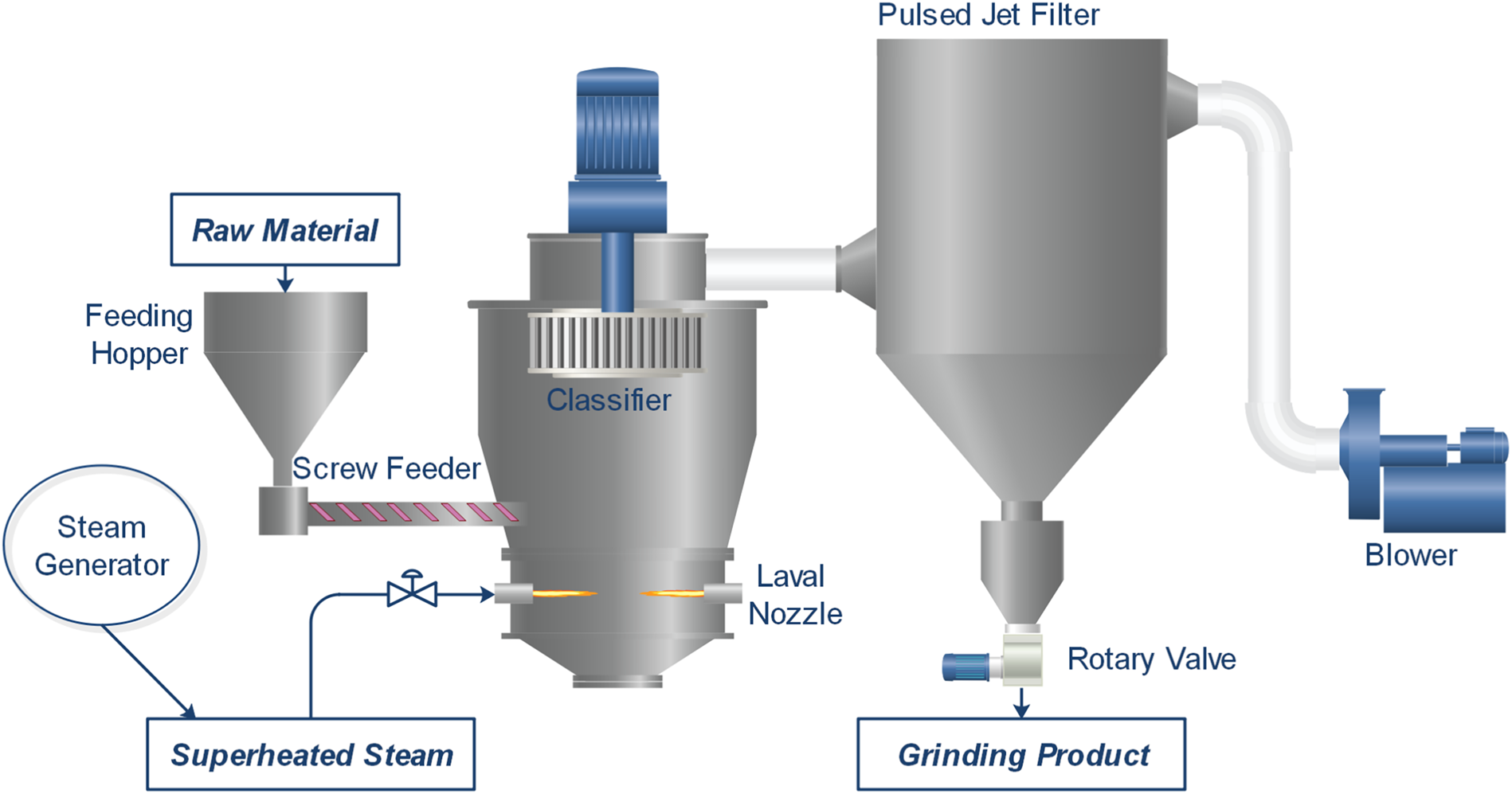
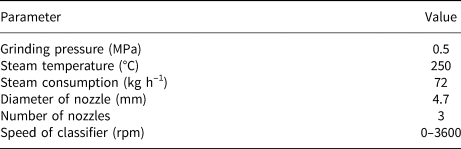
The grinding test work was carried out with a LNGS-80K steam jet milling system designed and built by the Key Laboratory of Solid Waste Treatment and Resource Recycling of Southwest University of Science and Technology (China). The jet milling system is shown in Fig. 2. Superheated steam (250°C, 0.5 MPa) was obtained with a superheated steam generator, composed of a boiler and a heater. The superheated steam generates high-speed impinging airflow in the grinding chamber through three Laval supersonic nozzles. Meanwhile, the raw materials of kaolin are inserted into the grinding chamber continuously using a screw feeder. The kaolin is dehydrated and ground in the grinding chamber under the impact of high-speed superheated steam. The ground particles enter the classification section under the action of negative pressure generated by the blower. The kaolin particles go through the turbo classifier and are then collected in the filter. The coarse kaolin particles are separated from the air classifier and return to the grinding chamber to continue grinding. The main performance parameters of the LNGS-80K steam jet mill system are shown in Table 1.
The LNGS-80K steam jet milling system.

Main parameters of the LNGS-80K steam jet mill.

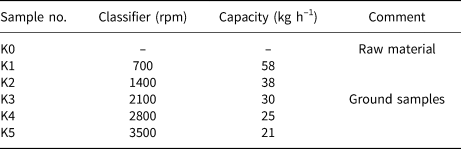
The raw kaolin filter cake is fed into the LNGS-80K steam jet milling system through a screw feeder. Various rotation speeds of the classifier are set to control the fineness of the ground products. The final products, namely K1, K2, K3, K4 and K5, are collected through the collector, and the grinding capacities of the system corresponding to various rotation speeds are counted. The parameter settings and product conditions used are listed in Table 2.
Test parameter settings.

Characterization
In order to study the effects of steam jet mill pulverization on the physical and chemical properties of kaolin, the raw material (K0) and the ground samples are dried to a constant weight in a temperature-controlled oven at 105°C and the moisture contents of each sample are measured. The PSDs of the samples are measured with a Mastersizer 3000 (Malvern, UK) laser particle-size instrument in liquid mode, adding sodium hexametaphosphate as a dispersant, and the samples are treated in an ultrasonic bath for 2 min. The whiteness index of the kaolin samples is determined with a WSB-3 colorimeter (Shanghai, China).
To study the variation in the kaolinite structure during steam jet mill grinding, the samples are analysed with a STA 449 F5 Jupiter (Netzsch, Germany) synchronous thermal analyser from room temperature to 1000°C with a heating rate of 10°C min–1 in a nitrogen atmosphere. The X-ray diffraction (XRD) traces of the samples are recorded with an X'Pert Pro (PANalytical, The Netherlands) diffractometer using Cu-Kα (λ = 1.5406 Å), at 30 mA and 40 kV, in the range 3–80°2θ with a scanning speed of 0.02°2θ s–1. Fourier-transform infrared (FTIR) spectroscopy is recorded on a Nicolet 6700 FTIR spectrophotometer (Thermo Electron, Madison, WI, USA) at 2 cm–1 resolution with the KBr technique. The morphology of the samples is observed using an ULTRA55 scanning electron microscope (SEM; ZEISS, Germany) under an acceleration voltage of 10 kV.
Results and discussion
Raw material analysis
The chemical composition of the kaolin raw material is listed in Table 3. The Al2O3 and SiO2 contents of the material are 38.07 and 46.71 mass%, respectively, which are close to the theoretical values for pure kaolinite, indicating that the raw material is of high purity and has a high kaolinite content. The raw material contains 0.72 mass% Fe2O3, meeting the requirements of most industrial kaolin products. For instance, in enamel and ceramics, the Fe2O3 content should not exceed 0.8 and 1.5 mass%, respectively (Standardization Administration of China, 2020). The natural whiteness of the raw material is 84.32%, which is considered low in terms of the standards of high-grade kaolin products for the paper industry. Further purification or calcination must be carried out to improve its properties (Chen et al., Reference Chen, Zhou, Alshameri, Zhou, Ma and Sun2014). In addition, the raw materials have a high moisture content (23.80 mass%), and thus they cannot be directly processed by conventional dry ultra-fine grinding equipment. The filter cake needs to be dried and crushed before further ultra-fine grinding. However, the steam jet mill can directly process raw materials with moisture contents up to 50 mass%, which can greatly shorten the grinding process (Zhang & Chen, Reference Zhang and Chen2018).
Chemical composition of the kaolin clay.

LOI = loss on Ignition (1050°C).
Mean particle size and PSD
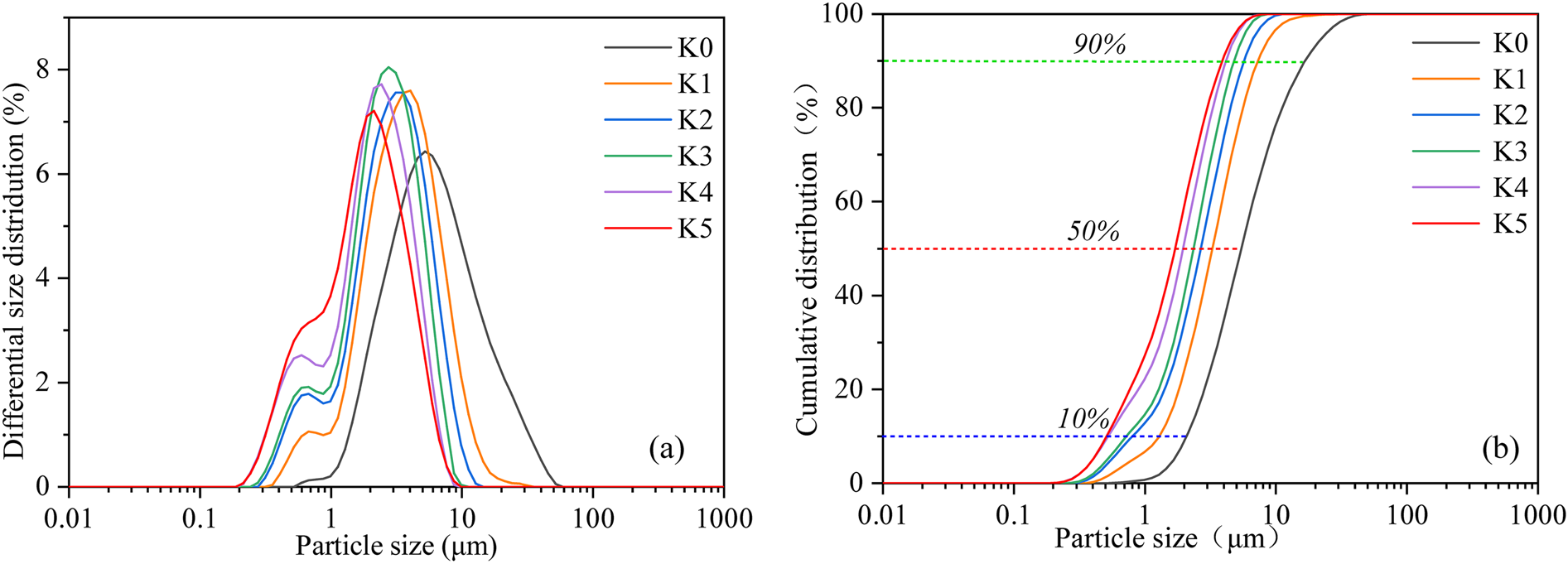
Particle size and PSD are important parameters of the ground products that reflect the effect of grinding to a great extent (Galk et al., Reference Galk, Peukert and Krahnen1999; Nied, Reference Nied2004). The PSDs of the ground samples obtained under various classifier rotation speeds are shown in Fig. 3. With increasing rotation speed, the particle size of the product becomes finer. At the same time, the shape of the PSD becomes narrower and the peak value becomes greater, which indicates that the PSD of the product is more homogeneous after grinding.
(a) PSD and (b) cumulative size distribution of the kaolin samples.

The span value Ψ was proposed to characterize the PSD of the samples, and it was calculated using Equation 1 (Nakach et al., Reference Nakach, Authelin, Chamayou and Dodds2004):
 $$\Psi = \displaystyle{{D_{90}{\rm \;}-\;D_{10}} \over {2D_{50}}}$$
where Di (i = 10, 50 or 90) are the characteristic diameters of the PSD, with i being the percentage of the particles smaller than the given diameter.
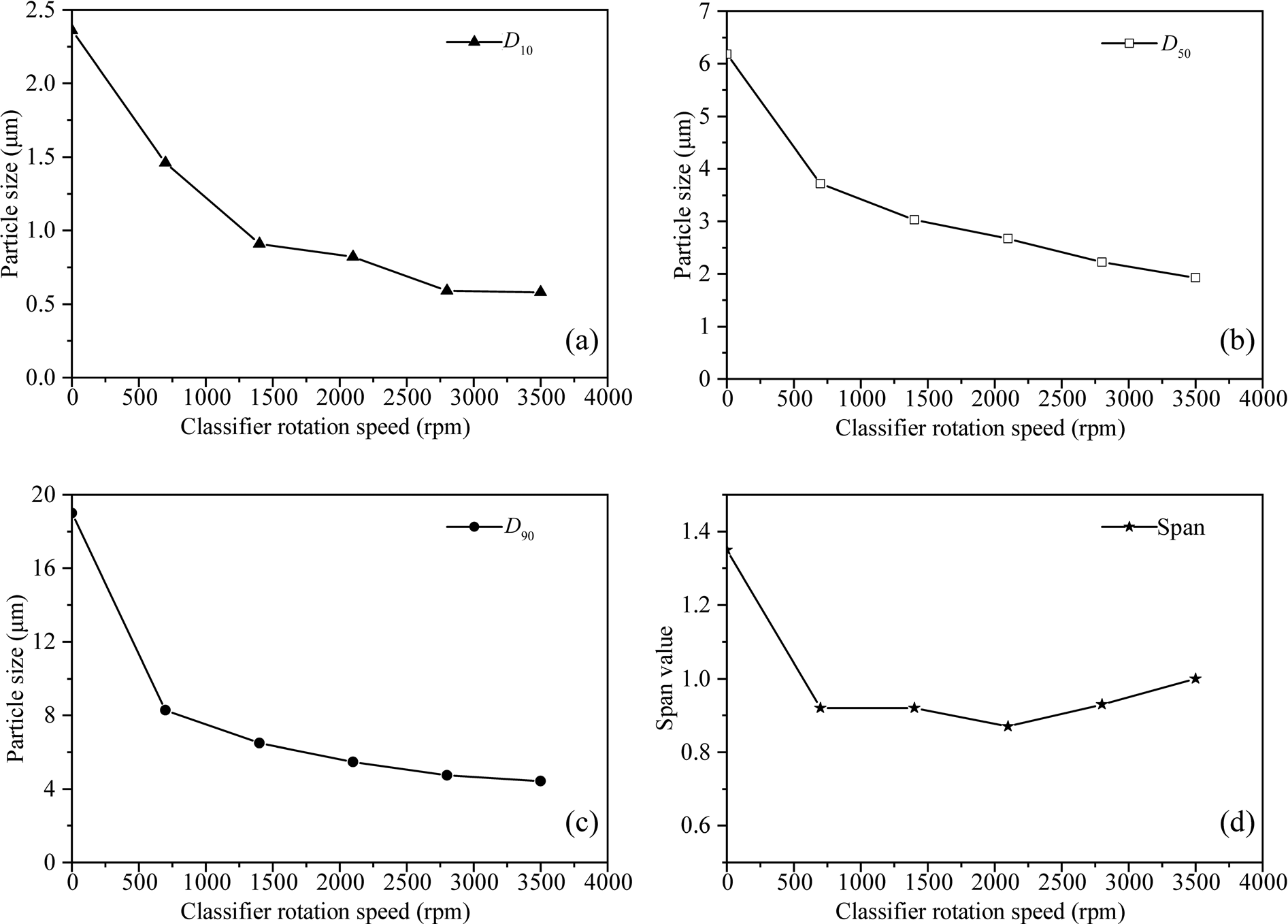
The variation of D 10, D 50, D 90 and Ψ with increasing classifier rotation speed is shown in Fig. 4. The values of D 10, D 50 and D 90 decrease by 57.62%, 68.77% and 56.42%, respectively, with increasing classifier rotation speed. The greater the rotation speed of the classifier, the longer the material remains in the chamber and the more grinding energy is exerted on the material so as to increase the possibility of being ground. The D 50 value shows an obvious decreasing trend (from 6.18 μm in the raw material K0 to 1.93 μm in sample K5 at 3500 rpm classifier rotation speed). The D 10 value decreases from 2.36 μm (K0) to 0.59 μm (K4 at 2800 rpm classifier rotation speed), remaining virtually constant at greater rotation speeds. This is mainly because the grinding strength represents a strict limitation to further grinding of the finest particles; thus, even by increasing the speed of the classifier (exceeding 2800 rpm), the ultra-fine particles are not ground further. In addition, the D 90 value decreases rapidly from 19.00 μm (K0) to 8.28 μm (sample K1 at 700 rpm classifier rotation speed), and then decreases slowly down to 4.43 μm (K5 at 3500 rpm classifier rotation speed). After that, the influence of classifier rotation speed on the D 90 value gradually lessens. This is mainly due to the structure of the classification wheel, which has a limited blocking effect on larger particles. The span value Ψ of the raw material K0 is 1.35 and the Ψ of the ground product fluctuates around ~1.00, indicating that the PSD of the ground powders is more homogeneous and tends to show the standard normal distribution.
Variation of the particle-size characteristics with increasing classifier rotation speed: (a) variation of D 10; (b) variation of D 50; (c) variation of D 90; and (d) variation of the span value Ψ.

Hence, the steam jet mill may be an efficient method for making up for the shortcomings of traditional dry grinding equipment. In addition, a finer powder product might be obtained by increasing grinding strength via increasing the grinding pressure and the gas-flow rate and by adjusting the structure of the classification wheel.
Morphology analysis of the raw material and ground samples
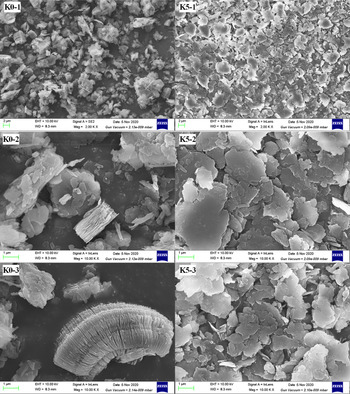
The surface morphology of the kaolin particles before and after grinding was analysed using SEM (Fig. 5). The raw kaolin is mainly composed of regular laminated (layered) kaolinite and hexagonal kaolinite particles of various sizes and minor kaolinite books (Liu et al., Reference Liu, Spears and Liu2001). The thickness of the kaolinite layer is uniform, the edges are regular and the particle size is large, indicating that the kaolinite has a good crystal order (Lu et al., Reference Lu, Xia and Zhang2017). After grinding, almost all of the samples consist of thin pseudohexagonal flakes, and some crystal edges are blunt and irregular (Xia et al., Reference Xia, Lu, Su and Zhao2012; Zhang et al., Reference Zhang, He, Lü, Peng, Li and Chen2020). In addition, the diameter and thickness of the lamellar crystals are obviously reduced and more uniform. The steam jet milling process effectively destroys the bonding between the kaolinite flakes and realize the demand of kaolin flaking processing.
SEM images of kaolin before and after grinding: K0, raw material; K5: product ground at 3500 rpm classifier rotation speed.

Moisture and whiteness
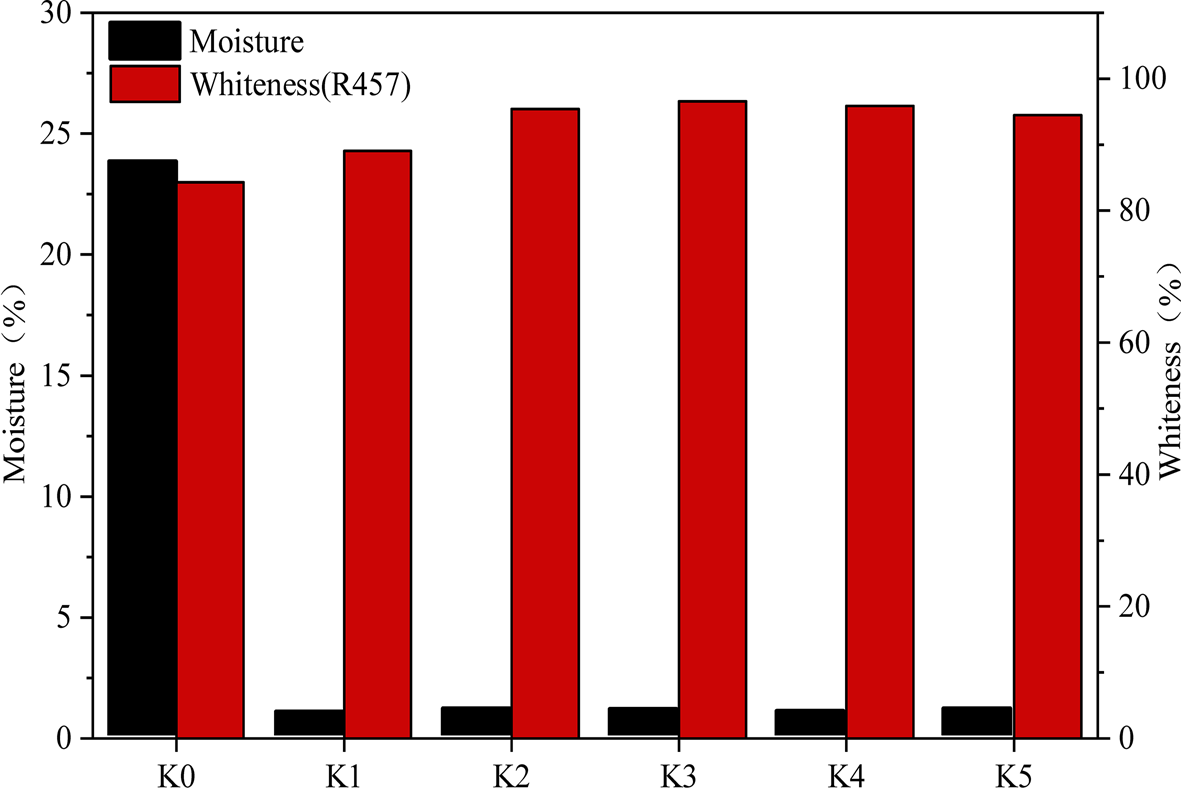
The moisture and whiteness of the raw material and the products ground in various conditions are shown in Fig. 6. The moisture content (M) of the raw material filter cake is 23.80%, while the moisture contents of samples K1, K2, K3, K4 and K5 are 1.09%, 1.08%, 1.03%, 0.98% and 0.94%, respectively, which meet the requirements for moisture content of powder products (M ≤ 2%) (Standardization Administration of China, 2020). In the steam jet milling system, most of the moisture is removed due to the impact of the high-speed and high-temperature steam flow. Compared with the conventional ultra-fine dry grinding process (dewatering, drying, grinding) and the wet ultra-fine grinding process (grinding, dewatering, drying, dispersion), the steam jet milling process reduces the production time and solves the problem of the low dewatering and drying efficiency of fine particles; as a result, the initial investment and operating costs can be greatly reduced. Thus, the steam jet milling process has significant advantages and could potentially replace the conventional dry and wet ultra-fine grinding processes.
Moisture content and whiteness of the kaolin samples.

Whiteness is an important colour property of kaolin fillers, which directly determines the use and value of such products (Lee et al., Reference Lee, Cho and Wook Ryu2002). The whiteness value of the raw materials is 84.32%, and the whiteness values of the ground samples K1, K2, K3, K4 and K5 are 89.01%, 95.40%, 96.60%, 95.91% and 94.50%, respectively (Fig. 6). Hence, by increasing of the rotation speed of the classifier, the particle size of the product gradually decreases and the whiteness of the product increases to a maximum value, decreasing thereafter. This is attributed to two factors. On the one hand, the adsorbed water is exposed in the steam jet milling process, and then it is removed under the action of the high-speed superheated steam flow, which results in the increased mineral refractive index and whiteness. On the other hand, with the decrease of the mineral particle size, the specific surface area increases, thereby gradually increasing the interference, diffraction and scattering between the mineral powder and air, resulting in greater whiteness (Wang et al., Reference Wang, Cui and Tang2010). However, if the particle size is too small (<0.3 μm), transmission becomes the main form of light, leading to the decrease in reflectivity (Wang et al., Reference Wang, Hu and Wang2019). Therefore, when the rotation speed of the classifier exceeds 2400 rpm, the fine particles of the product increase and the whiteness of the product decreases to a certain extent.
Thermogravimetric analysis
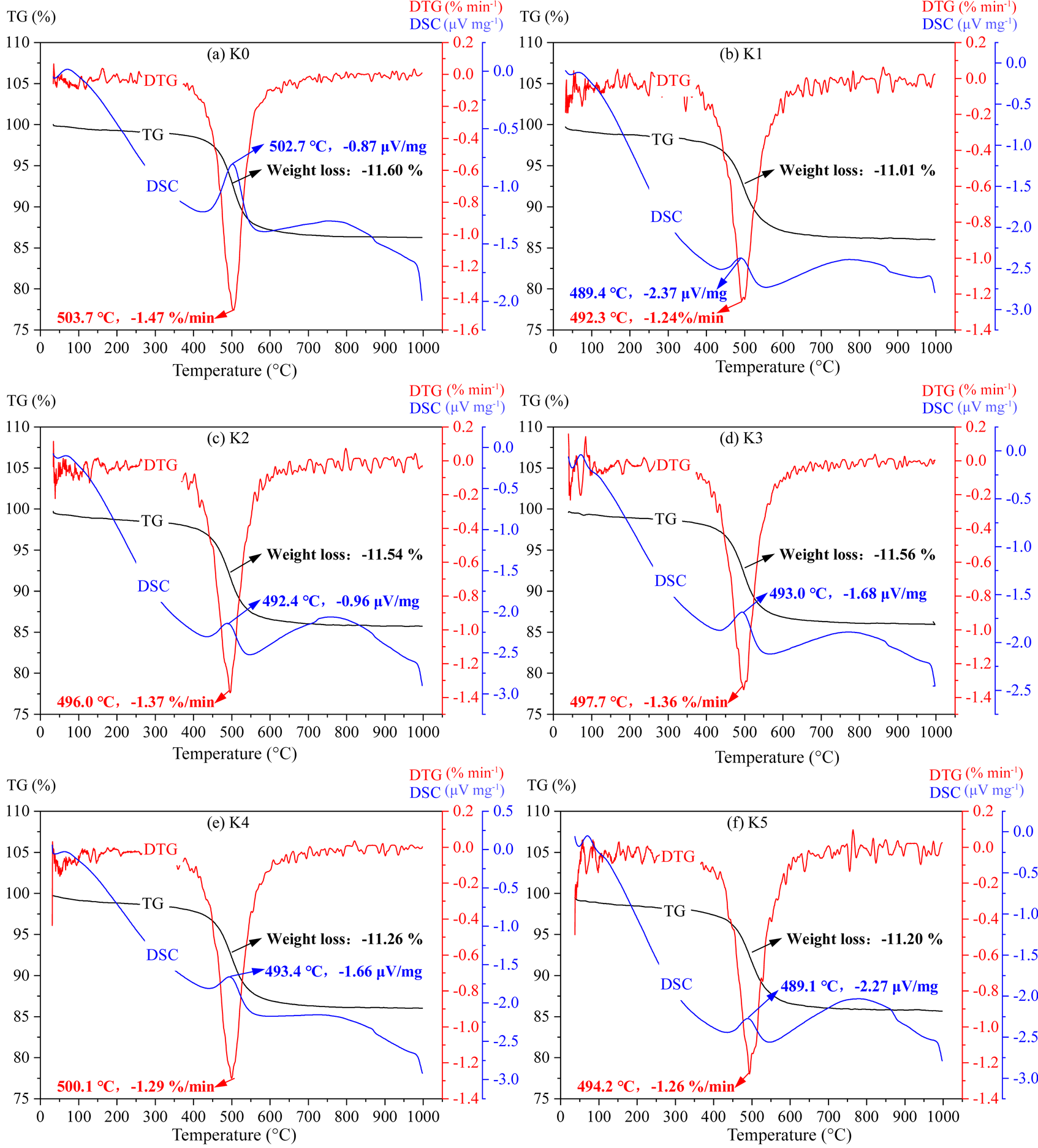
Thermal analysis can provide some information regarding the structural changes of kaolinite after mechanochemical treatment. Figure 7 shows the thermal analysis results for dried raw material K0 and samples K1, K2, K3, K4 and K5 ground with the steam jet mill system. The first small weight loss event occurs from room temperature to 150°C, which is mainly due to the removal of free water and adsorbed water from the kaolinite (Frost et al., Reference Frost, Makó, Kristóf, Horváth and Kloprogge2001). The thermogravimetric curves of the ground samples K1, K2, K3, K4 and K5 are basically consistent with sample K0, again suggesting that steam jet mill grinding can meet the dehydration and drying requirements of powder products. In the temperature range of 450–700°C, the second weight loss event appears in the curve. In this temperature range, kaolinite is dehydroxylated and structural water is lost, generating metakaolinite (Liu et al., Reference Liu, Liu and Hu2015). The weight loss seen in several of the ground samples in this stage is slightly lower than that of sample K0, which indicates that the mechanochemical effect produced by the steam jet mill results in the partial removal of hydroxyls.
Thermogravimetric (TG), differential thermogravimetric (DTG) and differential scanning calorimetry (DSC) thermograms: (a) K0, (b) K1, (c) K2, (d) K3, (e) K4 and (f) K5.

The differential scanning calorimetry curve shows that all materials have a weak endothermic peak near 80°C due to the removal of free water and adsorbed water in the samples. The second endothermic peak appears at ~500°C due to dehydroxylation of kaolinite. Compared with the raw material K0 (502.7°C), the endothermic peak of samples K1 (489.4°C), K2 (492.4°C), K3 (493.8°C), K4 (493.4°C) and K5 (489.1°C) gradually shift to lower temperatures. This is attributed to the fact that the smaller particle size reduces the removal resistance of structural water. In addition, the activation energy of the kaolinite dehydration reaction is lessened due to the lower crystal order and lattice torsion of the samples during the steam jet milling process (Qiu, Reference Qiu1991; Naicen et al., Reference Naicen, Jialin and Hongyu2014; Luo et al., Reference Luo, Fukumori, Guo, Osseo-Asare, Hirajima and Sasaki2017).
X-ray diffraction
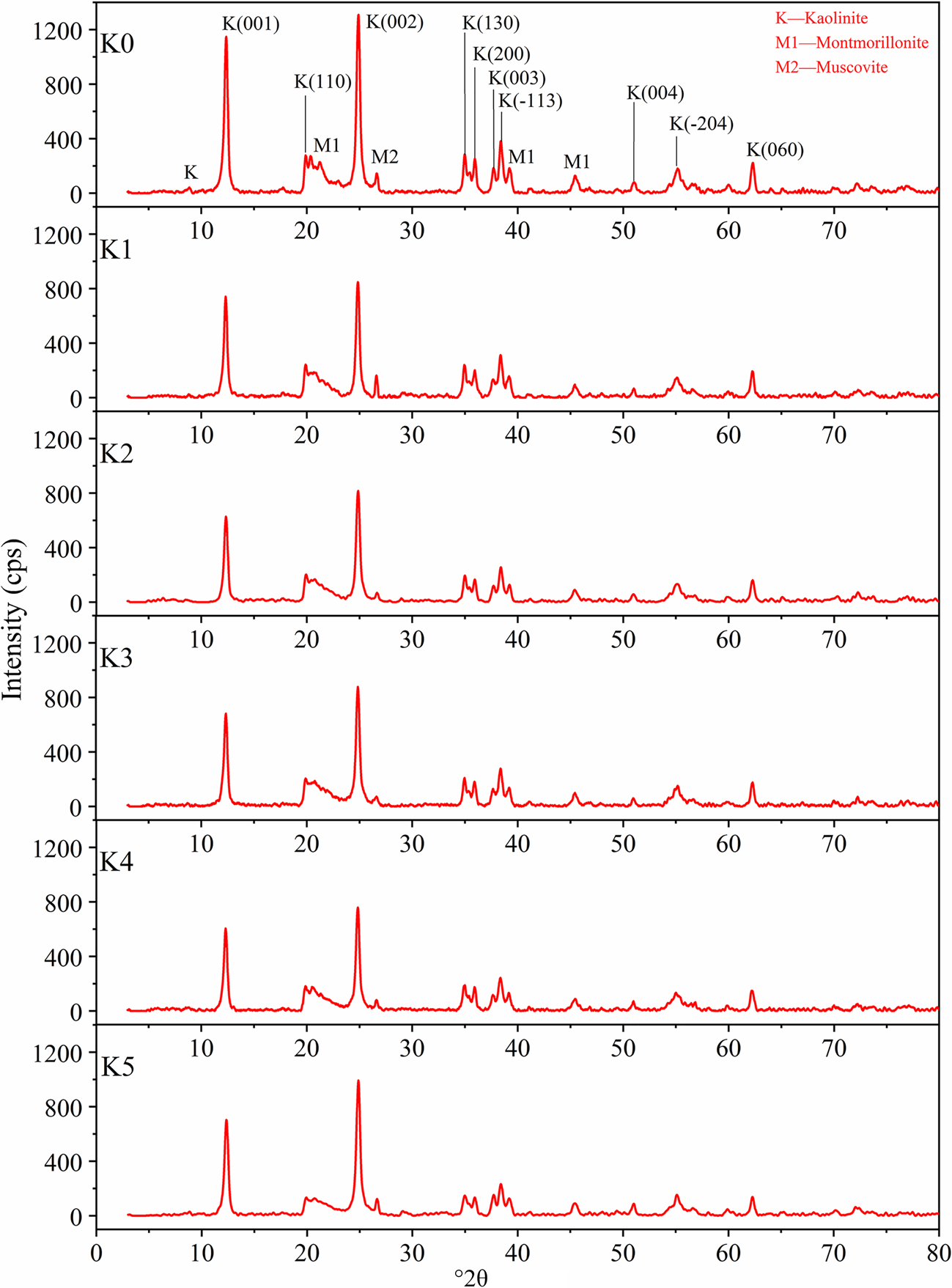
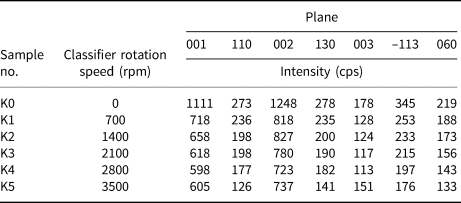
The XRD traces of the raw material and the ground samples are shown in Fig. 8. The original sample, K0, consists mainly of kaolinite with minor smectite and illite/mica, which is consistent with the chemical analysis. Compared with the raw material, the intensity of the XRD peaks of the samples ground in the steam jet mill decreases to a certain extent. Table 4 shows the intensities of the main peaks of the samples ground at various classifier rotation speeds.
XRD traces of the kaolin samples. K0 = raw material; K1, K2, K3, K4 and K5 = grinding products.

Variation of XRD intensity of kaolin samples before and after grinding.

The modifications to the crystal structure of kaolinite might be reflected by the changes in XRD intensity. With increasing classifier rotation speed, the grinding time of the material increases, hence the grinding action and the effects on the structure material are enhanced (Table 4). The crystal structure is disrupted and fractured by the impact force, shear force and thermal effect exerted during steam jet milling, making the structure became more disordered and the intensity of the diffraction peaks decrease. Kaolinite is a layer silicate. In the initial stage of grinding, the interlayer bonding of kaolinite is first destroyed, increasing the degree of disorder and rapidly decreasing the XRD intensity (Pagano et al., Reference Pagano, Marmottini, Nocchetti, Ramella and Perioli2018). As grinding proceeds, weak bonds are destroyed and a large number of fine particles are produced. The mechanical force and thermal effect during grinding and the structural disruption gradually decrease, so that the XRD intensity eventually becomes stable (Frost et al., Reference Frost, Horváth, Makó, Kristóf and Cseh2003).
On the whole, as the grinding proceeds, the XRD intensity decreases, but the peaks do not disappear completely, which indicates that the grinding strength provided in this experimental condition cannot cause total collapse of the crystal structure. This is consistent with the results from the thermal analysis that grinding reduced the crystal order but did not totally remove structural hydroxyls.
FTIR analysis
FTIR spectroscopy is widely used in the qualitative and quantitative analysis of organic and inorganic functional groups. It is an effective method for studying the crystal structure of kaolinite. Changes in vibration band position and absorption intensity may reflect the structural changes of groups in kaolinite to a certain extent.
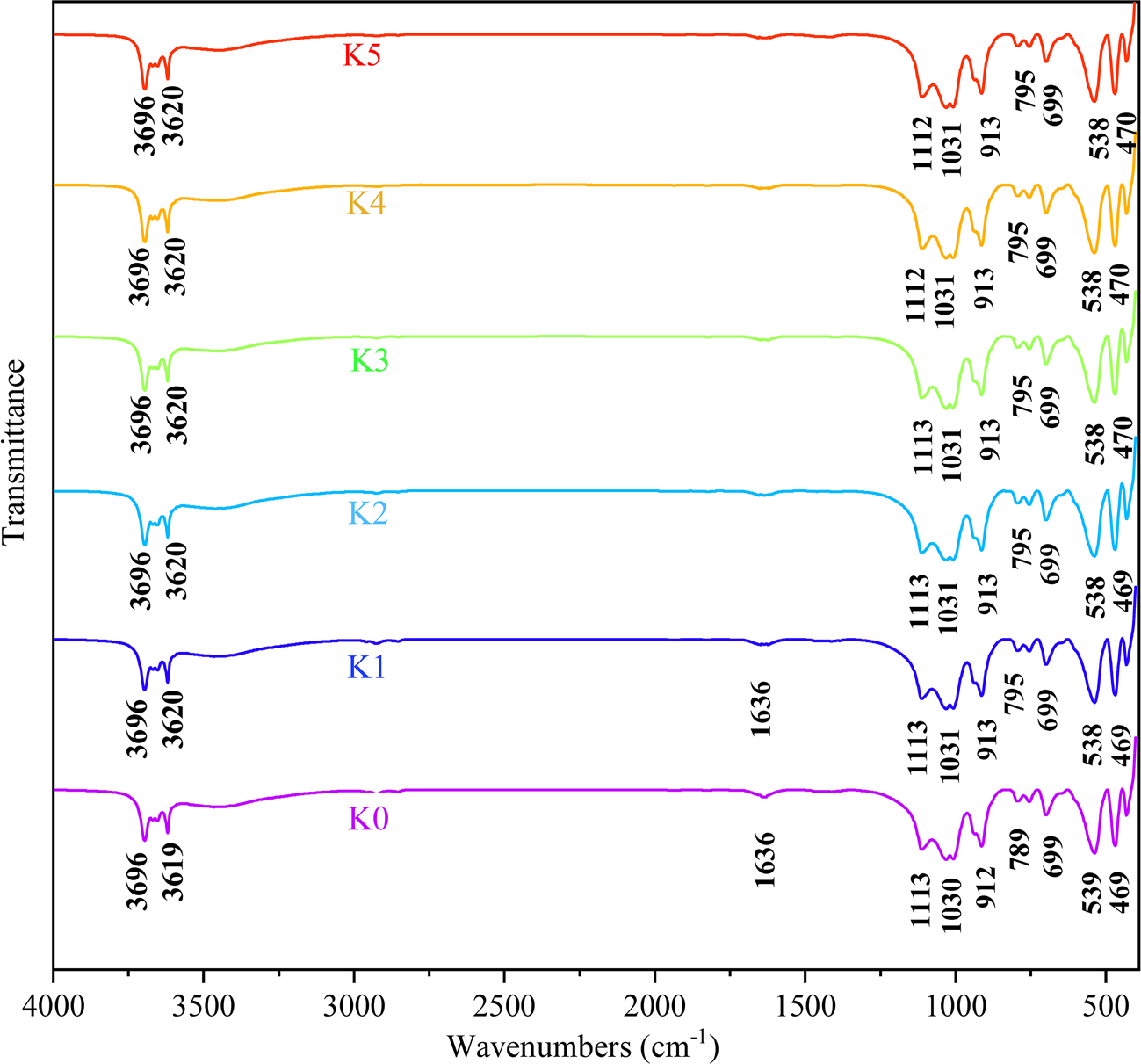
For kaolinite, the absorption bands near 3696, 3667 and 3652 cm–1 are attributed to stretching vibrations of inner surface hydroxyls, and the band near 3620 cm–1 is due to stretching of the inner hydroxyl groups located between the tetrahedral and octahedral structural units. In addition, the Si–O stretching vibrations near 1114 and 1006 cm–1, the Al–O stretching vibration near 937 cm–1, the Al–O bending vibration at ~912 cm–1 and the absorption bands near 789, 536 and 467 cm–1 are typical of kaolinite. Finally, the band near 1636 cm–1 is the bending vibration of adsorbed water (Balan et al., Reference Balan, Saitta, Mauri and Calas2001; Pagano et al., Reference Pagano, Marmottini, Nocchetti, Ramella and Perioli2018).
The FTIR spectra of the raw material K0 and the ground samples K1, K2, K3, K4 and K5 are essentially the same, suggesting that the crystal structure of kaolinite has not been significantly affected by grinding (Fig. 9). However, some minor changes may be observed in the FTIR spectra, such as the water bending vibration band near 1636 cm–1, which is present in K0 and K1. With increasing grinding strength, the intensity of this band gradually decreases in the K2, K3, K4 and K5 samples, indicating that the steam jet milling process removes adsorbed. Moreover, the bands at 3696 and 3620 cm–1 slightly shift to a higher frequency and their intensity decreases, suggesting that crystal disorder is enhanced during grinding.
FTIR spectra of the kaolin samples. K0 = raw material; K1, K2, K3, K4 and K5 = grinding products.

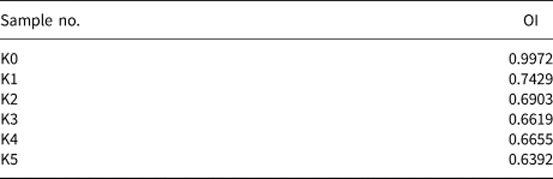
The crystal order of kaolinite analysed using FTIR spectroscopy is based on the intensity of the OH stretching band in the 3704–3696 cm–1 range (H 1, inner surface hydroxyls) and the intensity of the OH stretching band in the 3628–3620 cm–1 range (H 2, inner hydroxyls). The intensity ratio of H 1 over H 2 is called infrared crystallization index (OI) (Xu et al., Reference Xu, Shen and Luo2014), , as shown in Equation 2:
 $${\rm OI} = \displaystyle{{H_1} \over {H_2}}$$
The OIs of the samples calculated according to Equation 2 are listed in Table 5. The OI for K0 is greater than those of the ground samples. With increasing grinding strength, the OI values decrease, suggesting a decrease in the crystal order with comminution, in accordance with the results of the XRD and thermal analyses.
OI values of the kaolin samples before and after grinding.

Summary and conclusions
Ultra-fine grinding of the filter cake of kaolin (moisture content 23.80%) was conducted using the steam jet milling system. Dehydration of the ground material was caused by the high-speed superheated steam flow. As a result, the moisture contents of ground products were ~1%, thereby meeting the requirement for moisture content M ≤ 2%.
The steam jet milling caused dehydration and drying of the materials during grinding. Compared with the conventional ultra-fine dry grinding process, the raw materials with moisture contents >50% can also be directly treated and the drying process before grinding can be avoided. Compared with the conventional ultra-fine wet grinding process, the dehydration, drying and disintegration after grinding can be omitted. Thus, with the application of the steam jet mill, conventional ultra-fine grinding might be shortened and the initial investment and operating costs might be reduced efficiently.
Using steam conditions of 0.5 MPa and 250°C, the D 90 of K5 was reduced to 4.23 μm and the span value Ψ was 1.05. In addition, product K5 had a uniform flake shape, with a size mainly <2 μm. A ground product with a finer particle size and more narrow PSD might be achieved by increasing further the pressure and temperature of the steam. Therefore, the steam jet mill might be an efficient method for making up for the shortcomings of traditional dry grinding equipment.
After grinding using the steam jet mill, the whiteness values of the kaolin products were improved, because the adsorbed water was exposed during grinding and was subsequently removed under the action of high-speed superheated steam flow, which increased the kaolinite refractive index. In addition, the specific surface area increased with decreasing particle size, and both diffraction and scattering between mineral grains and air gradually increased, resulting in increased whiteness.
A decrease in the crystal order and partial removal of the hydroxyl groups of kaolinite took place during the steam jet milling, which improved the whiteness and might be beneficial in the subsequent calcination of kaolin.
Financial support
This work was supported by Open Foundation of Key Laboratory of Solid Waste Treatment and Resource Reuse of Ministry of Education, Southwest University of Science and Technology, Mianyang, China (No. 17kfgk02).