Introduction
It is increasingly recognised that chronic diseases frequently co-occur and that their causes and consequences are best understood in terms of multimorbidity (Wallace et al., Reference Wallace, Salisbury, Guthrie, Lewis, Fahey and Smith2015). The WHO definition of multimorbidity is the coexistence of two or more chronic conditions, where each must be a non-communicable disease, a mental health disorder, or an infectious disease of long duration (Multimorbidity: a priority for global health research, 2018). In 2016 a Work Foundation report found that 14% of working-age respondents (16–64 years) in the UK had two or more long-term health conditions, equivalent to about 5 million people in England alone (Working With Multiple Health Conditions, 2016).
Mental health has been identified as an important dimension of multimorbidity (Barnett et al., Reference Barnett, Mercer, Norbury, Watt, Wyke and Guthrie2012). There is a strong association between a range of mental and physical long-term health conditions including obesity, inflammatory diseases, depression, cardiovascular disease, respiratory disease, diabetes and cancer (Carnethon, Kinder, Fair, Stafford, & Fortmann, Reference Carnethon, Kinder, Fair, Stafford and Fortmann2003; Dregan et al., Reference Dregan, Matcham, Harber-Aschan, Rayner, Brailean, Davis and Hotopf2019; Scott et al., Reference Scott, Bruffaerts, Tsang, Ormel, Alonso, Angermeyer and Von Korff2007; Teesson et al., Reference Teesson, Mitchell, Deady, Memedovic, Slade and Baillie2011; Woodhead, Ashworth, Schofield, & Henderson, Reference Woodhead, Ashworth, Schofield and Henderson2014). Multimorbidity clusters comprising coexisting mental and physical conditions are associated with poorer clinical and functional outcomes, lower quality of life, and increased risk of premature mortality than physical conditions alone (Das-Munshi et al., Reference Das-Munshi, Stewart, Ismail, Bebbington, Jenkins and Prince2007; Palacios, Khondoker, Mann, Tylee, & Hotopf, Reference Palacios, Khondoker, Mann, Tylee and Hotopf2018; Watkins et al., Reference Watkins, Koch, Sherwood, Blumenthal, Davidson, O'Connor and Sketch2013).
One common impact of chronic conditions is an occupational impairment (Black, Reference Black2008; Foundation, 2016; Working With Multiple Health Conditions, 2016; World Report on Disability, 2011). In the previous paper, we identified that depression was the condition most strongly associated with occupational disability (measured by fit-note use) and contributed the greatest disease burden (measured by population attributable fraction) particularly in young people (Dorrington et al., Reference Dorrington, Carr, Stevelink, Dregan, Whitney, Durbaba and Hotopf2020). Mental disorders are frequently under-recognised and a leading cause of occupational disability (Harvey, Henderson, Lelliott, & Hotopf, Reference Harvey, Henderson, Lelliott and Hotopf2009); depression is a major cause of occupational disability amongst young people (Dorrington et al., Reference Dorrington, Carr, Stevelink, Dregan, Whitney, Durbaba and Hotopf2020). Little is known about the impact of multi-morbidity and comorbid mental and physical conditions on occupational functioning.
Introduced in 2010, the fit note was designed to address the problem of long-term sickness absence in the UK (Black, Reference Black2008). Similar to partial sickness absence in Nordic countries, the fit note was designed to change the sickness certification process from advising individuals on their inability to work, to advising them on what they could do if work could be adapted (Dorrington et al., Reference Dorrington, Roberts, Mykletun, Hatch, Madan and Hotopf2018; Kausto, Miranda, Martimo, & Viikari-Juntura, Reference Kausto, Miranda, Martimo and Viikari-Juntura2008).
In the UK the introduction of the digital fit note in 2012 offered an opportunity to explore the impact of chronic conditions on occupational impairment (Fit notes issued by GP practices: experimental statistics, 2017). The fit note is an electronic document easily identifiable in health record systems, unlike its predecessor the paper sick note. The new fit note introduced a third ‘maybe fit’ to the traditional binary ‘fit’ v. ‘not for work’ options available on the sick note. The maybe fit option was designed to facilitate general practitioners (GPs) to recommend work adjustments to enable patients to remain in work, for example, with reduced working hours or adapted duties. A fit note can be prescribed multiple times during a period of sickness absence, this can indicate multiple trips to health services and/or long periods of sickness absence. We focus here on the impact of multimorbidity on the first fit note and maybe fit use, testing the specific impact of depression on first fit note use in populations with multimorbid long-term conditions (LTCs). We use a large, longitudinal urban primary care database firstly to examine the distribution of multimorbidity and first fit note receipt by age, gender, socioeconomic deprivation and self-defined ethnicity. Secondly, we analyse first fit note receipt by multimorbid physical and mental health disorders. Lastly, we examine first fit note and maybe fit use by the number of multimorbid conditions, with and without depression.
Methods
Study population
This is a longitudinal study using prospective data collected by Lambeth DataNet (LDN), a primary care database of all 45 general practices within the London Borough of Lambeth. LDN collects patient-level anonymised data on clinical diagnoses, referrals, consultations, treatment prescriptions, lab tests, and public health initiatives, such as the Quality and Outcomes Framework (QOF) diagnostic data. The methods have previously been described (Dorrington et al., Reference Dorrington, Carr, Stevelink, Dregan, Whitney, Durbaba and Hotopf2020). LDN also includes demographic information such as age, gender and self-identified ethnicity. LDN was created in 2006 as a local resource to improve ethnicity recording and to explore local health inequalities, particularly those based on ethnicity or social deprivation (Kumarapeli, Stepaniuk, de Lusignan, Williams, & Rowlands, Reference Kumarapeli, Stepaniuk, de Lusignan, Williams and Rowlands2006; Lambeth Datanet Community Engagement Project, 2017). The recording of self-identified ethnicity in this sample is a particular advantage over other GP databases (Kumarapeli et al., Reference Kumarapeli, Stepaniuk, de Lusignan, Williams and Rowlands2006).
The London Borough of Lambeth, home to a population of just over 318 000, is the 22nd most deprived local authority in England and has the 4th highest level of income inequality of any borough in London (Overview of London Boroughs, 2019; State of the Borough, 2016). Lambeth contains a young and ethnically diverse population, including large Portuguese, South American and Black populations. Around 150 different languages are spoken and around 17 000 people (6% of the population) speak a main language other than English (Mixed & balanced communities, 2014). Of the total, 38% of the population was born outside of the UK (State of the Borough, 2016). The number of individuals registered on LDN at any one time (N = 405 000) exceeds the total Lambeth population recorded in the Census, due to the cross-boundary registration of patients not living in Lambeth, GP list inflation, and the temporary residence of students in the Lambeth area from surrounding universities.
Study design
We analysed records covering a period of 40 months from 1 January 2014 to 30 April 2017. Data were extracted in May 2017 from the primary care clinical record system, EMIS Web. We restricted the sample to working-age adults with an LTC, age 16–60 years in order to prevent exit from the workforce due to reaching statutory pension age (60–65 years during our study period), which is not measured in our sample.
Measures
Demographic variables
Information on individuals’ first recorded gender, year of birth, ethnicity and 2011-defined lower super output area (LSOA), an area covering an average population of n = 1722 in London (LSOA Atlas, 2014) were extracted from the GP records. Ethnicity was coded using seven subcategories of ethnicity (White, Black African, Asian, Black Caribbean, Mixed, Other and Black Other). Following previous research within south London that suggested differences in mental health outcomes between Black Caribbean and Black African groups, the same classification was used in this study (Hatch et al., Reference Hatch, Frissa, Verdecchia, Stewart, Fear, Reichenberg and Hotopf2011). LSOA data were used to derive a measure of deprivation for each individual based on the area of residence and the Index of Multiple Deprivation (IMD 2010, after conversion to 2011 LSOA boundaries). IMD scores were divided into quintiles, based on deprivation scores in Lambeth.
Long-term health conditions and pain
Presence of long-term health conditions was assessed using the QOF data, which is an annual reward and incentive programme for all GP practices in England. It requires GPs to identify individuals who meet quality targets for various LTCs such as depression, obesity and diabetes. We included in our analysis binary indicators (present/not present) of 15 QOF conditions (QOF Business Rules - version, 35, 2017): depression, epilepsy, diabetes mellitus (DM), coronary heart disease (CHD), chronic obstructive pulmonary disorder (COPD), cancer (non-specified), atrial fibrillation (AF), heart failure (HF), stroke, rheumatoid arthritis (RA), obesity, severe mental illness (SMI; schizophrenia, bipolar disorder), learning disability, hypertension and asthma. In addition, chronic pain (‘From One to Many: Exploring people' progression to multiple long-term conditions in an urban environment,’, 2018) was derived based on receipt (yes/no) of any prescriptions listed in British National Formulary medication chapters 4.7.2 or 4.7.3 (with repeat, repeat dispensed or automatic issue type). QOF conditions excluded from our analysis were: palliative care (patients are very unlikely to be in employment), osteoporosis, dementia and chronic kidney disease (excluded due to the small numbers with these diagnoses in the age group under study).
QOF measures have been shown to underestimate the prevalence of disorders in the general population due to the reliance on presentation to the GP for diagnosis (Impact of Quality & Outcomes Framework on Health Inequalities, 2011). QOF diagnosis is, therefore, a specific, but not sensitive measure (Economou et al., Reference Economou, Grey, McGregor, Craddock, Lyons, Owen and Lloyd2012) with low false-positive but high false-negative rates. In this paper, we applied ‘QOF35’ criteria, published by the Department of Health in October 2017. Online Supplementary Table 1 describes the definition of each QOF diagnosis included.
Where possible, QOF diagnoses were grouped according to ICD-10 chapter groupings (Table 3). ‘Respiratory’ includes asthma and COPD; ‘cardiac’ includes CHD, AF, HF; ‘vascular’ includes stroke and peripheral arterial disease (PAD); and ‘cardiovascular’ includes CHD, AF, HF, stroke and PAD. In addition to analysing individual QOF diagnosis, we analysed and compared the impact of combinations of comorbid QOF conditions on fit note receipt. The bi-directional relationship between conditions is extremely complex and falls outside the scope of this study (Eaton, Armenian, Gallo, Pratt, & Ford, Reference Eaton, Armenian, Gallo, Pratt and Ford1996). We defined multimorbidity as the presence of two or more LTCs, consistent with the WHO definition (Barnett et al., Reference Barnett, Mercer, Norbury, Watt, Wyke and Guthrie2012).
Fit note
Date of the first fit note was derived for each participant based on digital fit notes issued between 1 January 2014 and 30 April 2017. We excluded fit notes issued before this period because although digital fit notes were introduced in 2012, they were not in widespread use until 2014. Due to the lack of information on prior sickness certification (before January 2014), we could not determine whether a ‘first fit note’ during the study period represented the individual's first-ever sickness certification. The mean number of fit notes received per person within the 40-month period was analysed by demographic variables. Within the population given a fit note, every fit note has the potential to be classified as ‘maybe fit’. We found no ‘fit for work’ fit notes in our sample, therefore, each fit note which recommended the ‘maybe fit’ option was categorised as ‘1’ (‘maybe fit to work’) v. ‘0’ (‘not fit to work’) to create an indicator of receipt of ‘maybe fit’ note.
Statistical analysis
The analysis proceeded in three stages. First, descriptive percentages and multinomial logistic regression (mlogit in Stata) were used to describe baseline characteristics among study patients. Second, among those who received a fit note, the odds of ‘maybe fit’ use was analysed using logistic regression with standard errors adjusted to take into account the clustering of patients within GP practices. Third, the risk of receiving a fit note over the 40-month period was analysed using multilevel Cox proportional hazards regression. All analysis took into account the clustering of patients within GP practices. Time at risk of a fit note was calculated from the beginning of the study period (1 January 2014) or registration with a GP practice in Lambeth (whichever occurred later), until one of four events occurred: receipt of the fit note, deregistered from Lambeth primary care, date of death or end of the study period (30 April 2017). The latter three events (discharge, date of death and end-of-study) were treated as censoring events. The proportional hazards assumption was assessed and found not to be violated. All models were adjusted for study covariates associated with fit note receipt (Dorrington et al., Reference Dorrington, Carr, Stevelink, Dregan, Whitney, Durbaba and Hotopf2020), including demographic variables (age, gender, LSOA deprivation) and chronic disorders (such as depression and cardiovascular conditions). For all analyses, we included each patients’ first fit note during the study period (representing 27.9% of all fit notes). All models were estimated using Stata version 15 (Stata Corporation, USA).
Ethical committee approval
Clinical Record Interactive Search (CRIS) was established in 2008 and approved by the Oxfordshire Research Ethics Committee in 2008 (reference 18/SC/0372) (CITE https://doi.org/10.1186/1471-244X-9-51). Approval for linkage with LDN was granted by Lambeth Clinical Commissioning Group and Information Governance Steering Group. This project was approved by the CRIS Oversight Committee in 2015.
Results
Population sample
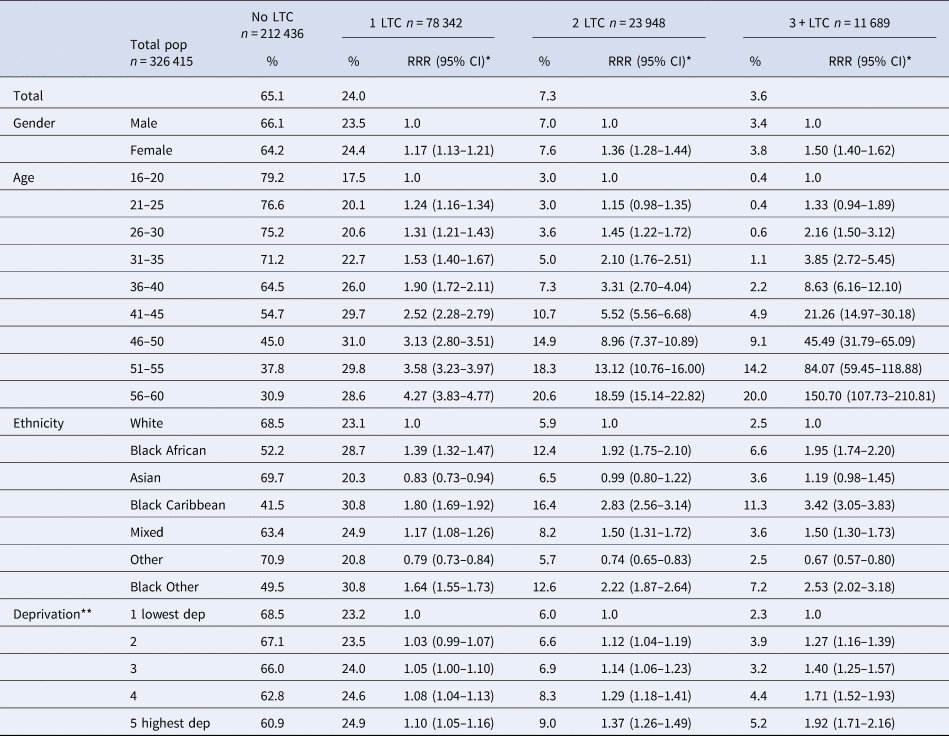
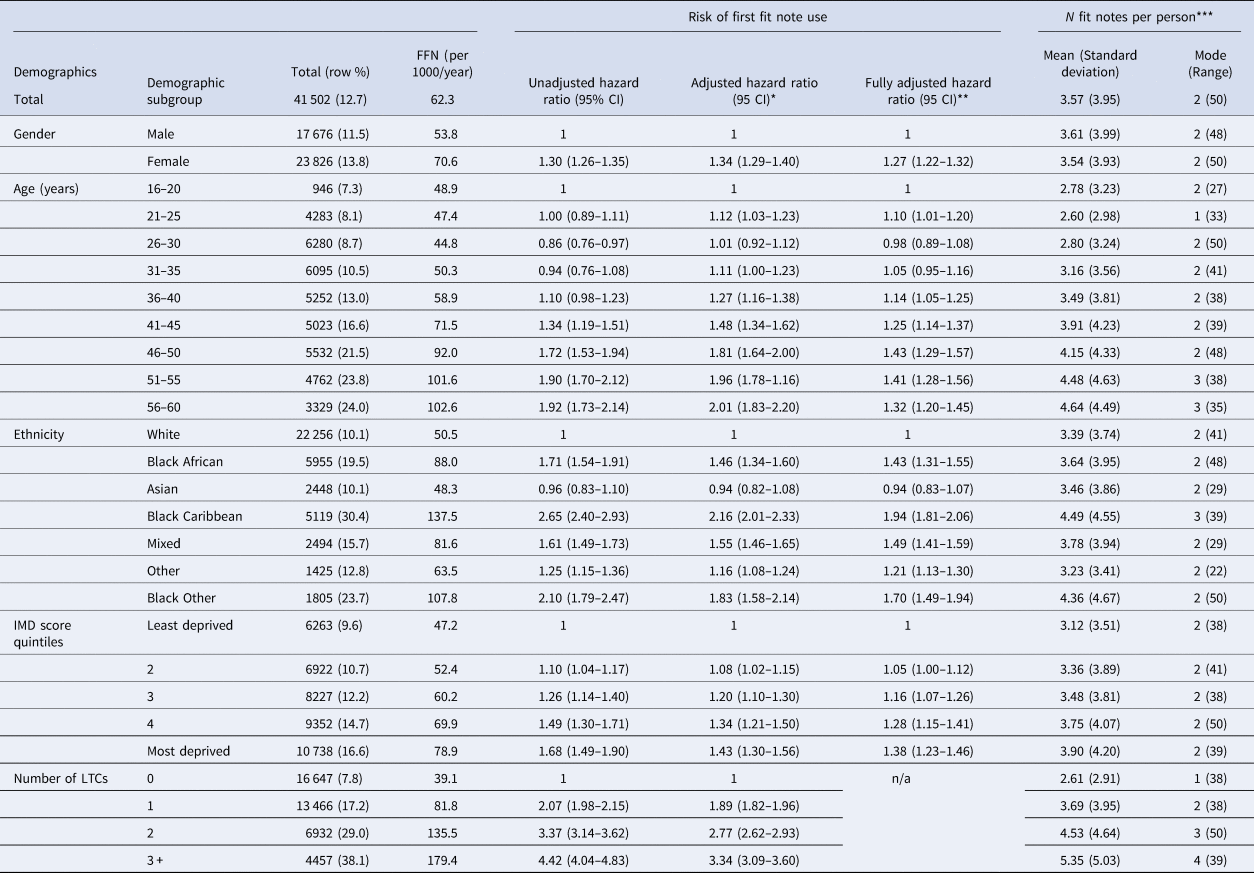
The analytical sample included a total of 326 415 working-age adults, including 113 979 people with LTCs, 34.9% of the population of Lambeth. Compared to the whole population of Lambeth, the population with multiple LTCs are older, more deprived, more likely to be women, Black African, Black Caribbean, Mixed or Black Other (see Table 1). Demographic variation increased with the number of multimorbid conditions. For example, for each additional LTC, there is an increase in the difference between men and women with multiple LTCs. The more multimorbid conditions, the bigger the difference between the proportion of men and women with those conditions. These associations persisted after mutually controlling for age, gender, ethnicity and deprivation. In Table 2, in the unadjusted model, fit note receipt was associated with increased age, female gender, deprivation, ethnicity; Black African, Black Caribbean, Mixed, Other and Black Other ethnic groups had increased fit note receipt compared with White individuals, and by number of LTCs. Controlling for comorbidity greatly attenuated the association between age and fit note receipt, but the association between fit note receipt and gender, ethnicity and deprivation persisted.
Multimorbidity by demographic variables
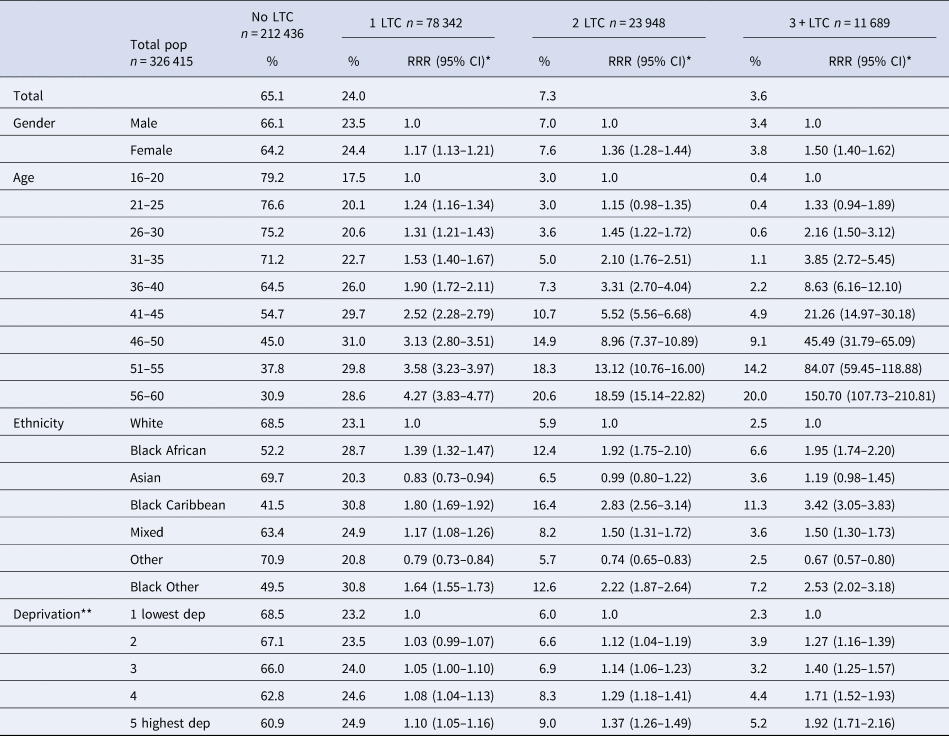
*Relative Risk Ratio (RRR) mutually adjusted for age, gender, ethnicity and deprivation **Quintiles of area-level deprivation (derived from index of multiple deprivation based on address postcode) LTC = long term condition: 1. Epilepsy, 2. Chronic pain, 3. Depression, 4. Vascular, 5. Cancer, 6. Cardiac disease, 7. Rheumatoid arthritis (RA), 8. Severe mental illness (SMI), 9. Hypertension, 10. Diabetes, 11. Obesity, 12. Respiratory disease, 13. Learning disability.
Demographic distribution of first fit note use
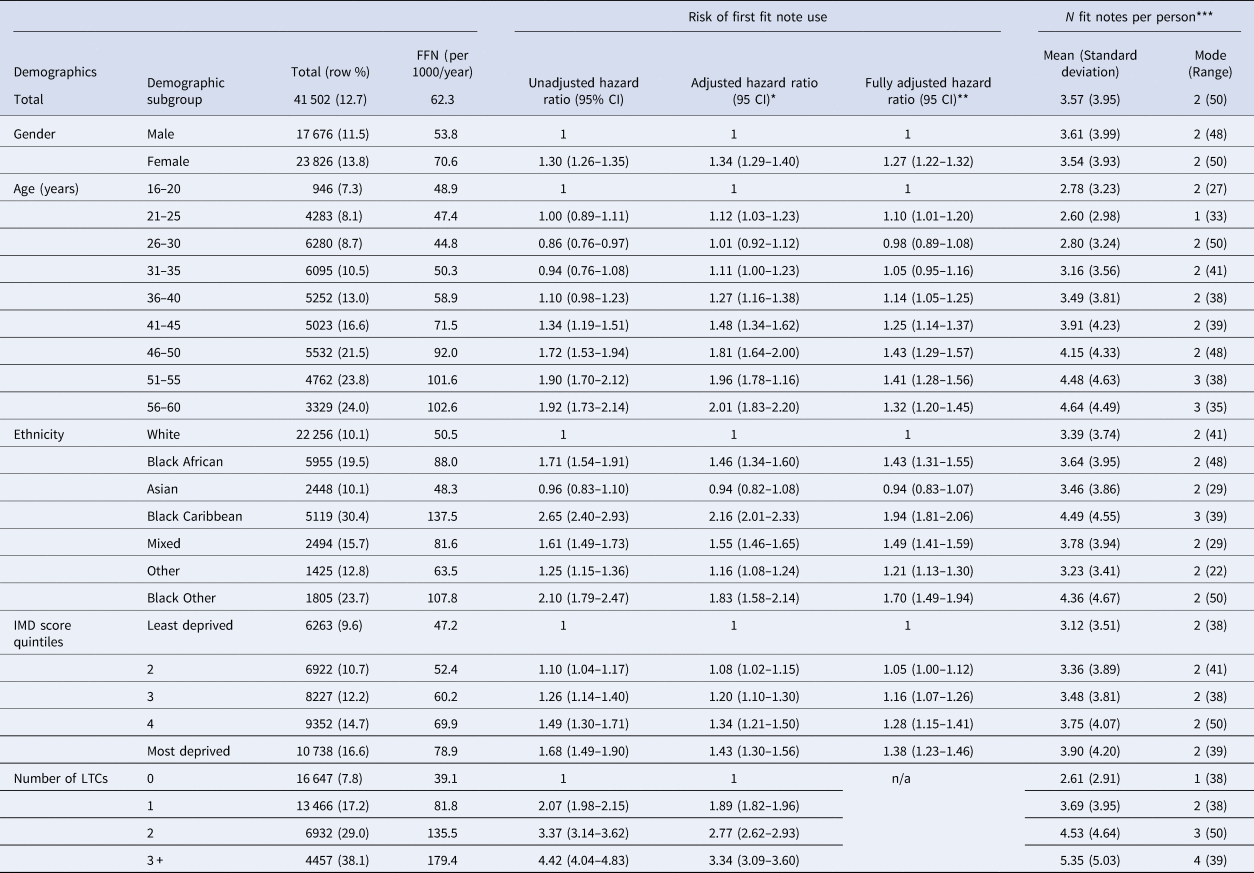
CI = confidence interval; IMD = index of multiple deprivation; FFN = first fit note.
*adjusted for age, gender, ethnicity and IMD score **adjusted for age, gender, ethnicity, IMD score and QOF diagnosis ***in population with a fit note.
Fit note receipt amongst patients with comorbidity
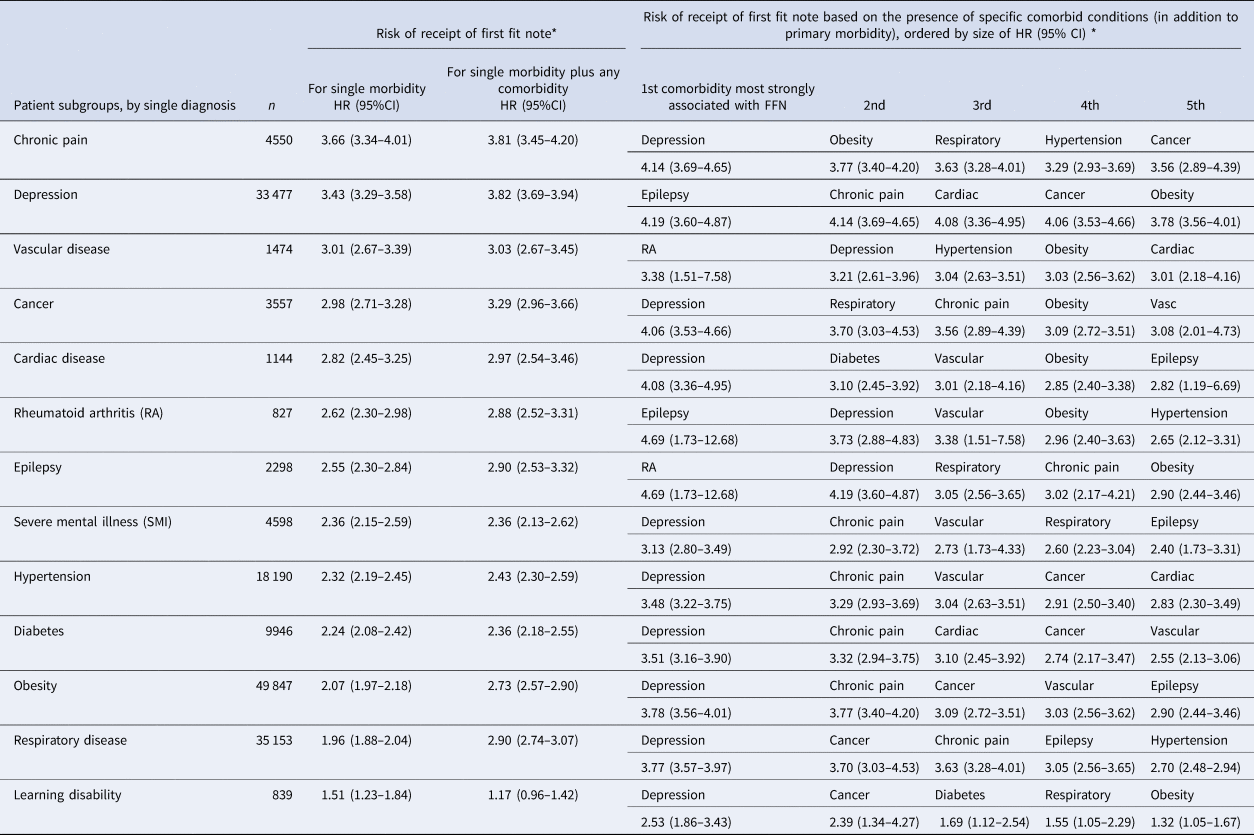
We tested the impact of single morbidity and comorbid conditions on fit note receipt in patients with different comorbid LTCs, controlled for age, gender, deprivation and ethnicity (Table 3). Condition-specific subgroups are not mutually exclusive. Chronic pain and depression were the two single morbidities with the strongest association with fit note receipt. Regarding comorbidities, we found that for every LTC, except epilepsy, RA and vascular disease, comorbid depression had the strongest association with fit note receipt; followed by chronic pain, which had the second strongest association with fit note receipt for 5 out of the 13 conditions. Comorbid depression significantly increased the rate of first fit note receipt for people with epilepsy, cancer, cardiac disease, serious mental illness, hypertension, diabetes, obesity, respiratory disease and learning disabilities. Epilepsy and rheumatoid arthritis had the highest risk of the fit note, but the risk was not statistically significantly higher than the risk for single morbidity RA and epilepsy alone. Of all comorbid conditions with a significant increase in the risk of fit note receipt, epilepsy and depression had the highest hazard ratio for first fit note receipt, hazard ratio (HR) 4.19; 95% confidence interval (CI) 3.60–4.87.
Risk of receipt of first fit notes by single morbidities and comorbid conditions
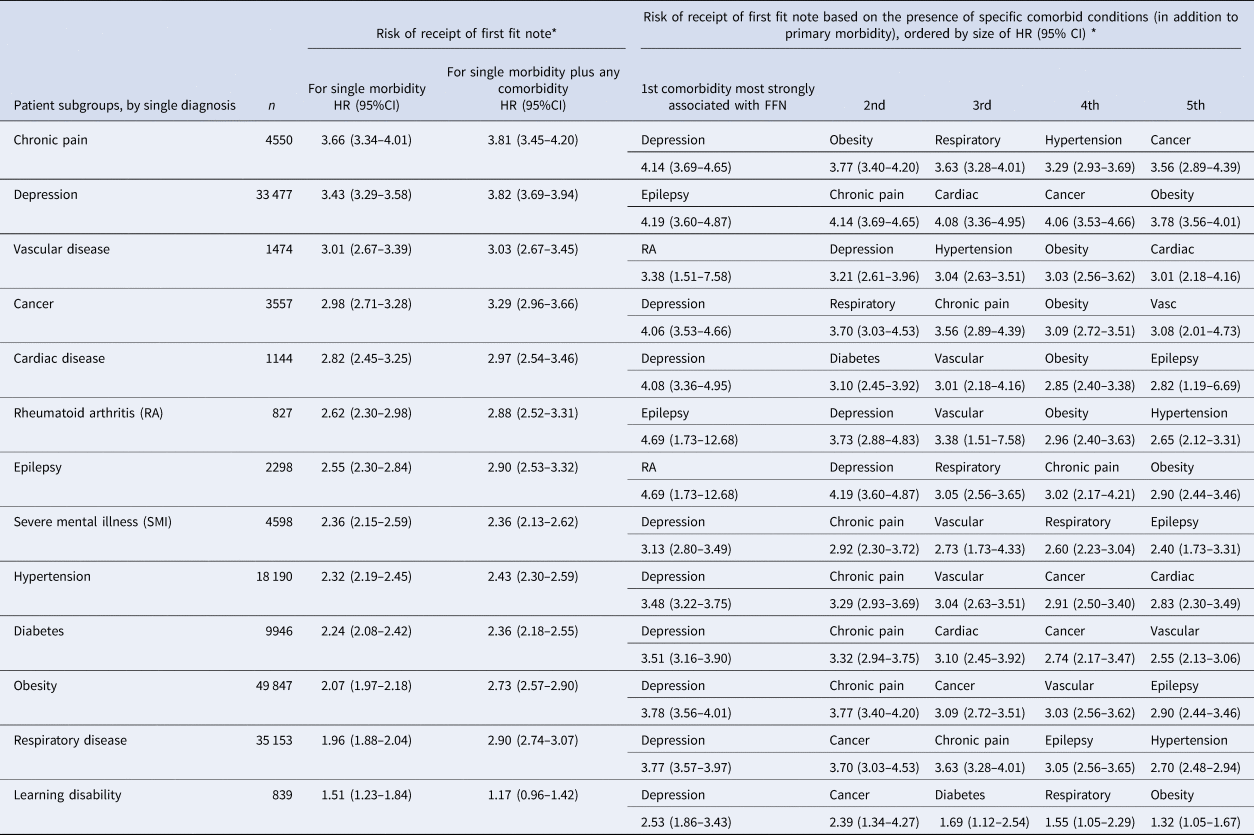
Respiratory disease’ includes asthma and COPD; ‘cardiac’ includes CHD, AF, HF; ‘vascular’ includes stroke and peripheral arterial disease (PAD); and ‘cardiac disease’ includes CHD, AF, HF, stroke and PAD. *adjusted for gender, age, ethnicity and deprivation.
Fit note and maybe fit receipt amongst patients with multimorbidity stratified by depression
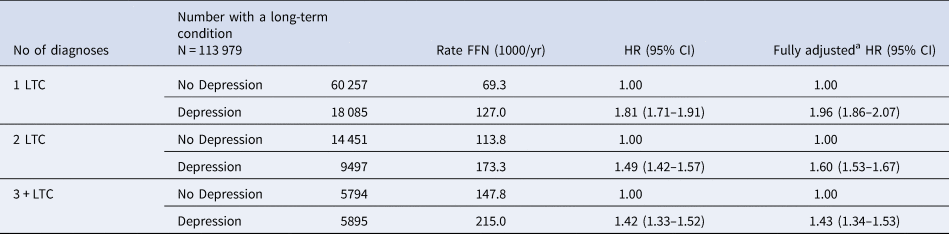
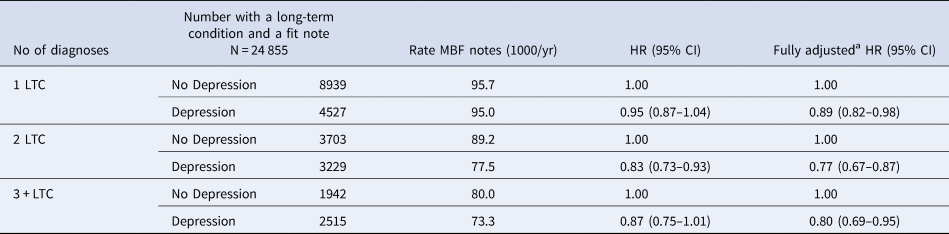
Table 4 shows first fit note receipt by the number of morbidities stratified by the presence of comorbid depression. Comorbid depression was associated with an increased rate of first fit note receipt in patients with 1 to 3 + LTC, compared to other LTC. We analysed the subsample of patients with first fit notes who were recommended ‘maybe fit’. Table 5 shows ‘maybe fit’ use by a number of LTCs stratified by the presence of comorbid depression. Comorbid depression was associated with reduced ‘maybe fit’ use in the fully adjusted model.
Rate of first fit notes by number of LTC diagnoses stratified by depression
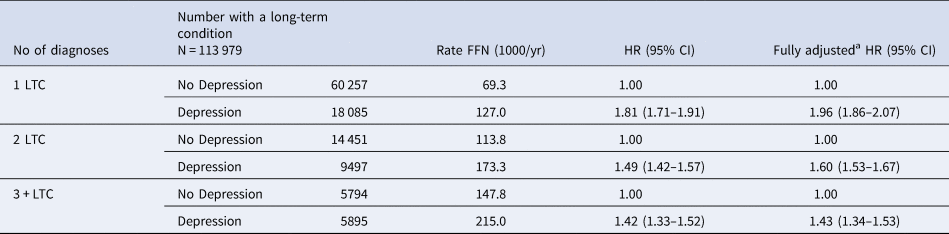
a adjusted for gender, age, ethnicity and deprivation.
Maybe fit (MBF) notes use by a number of LTC stratified by depression
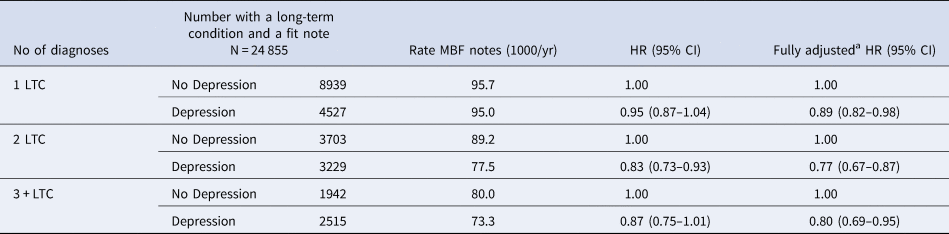
a adjusted for gender, age, ethnicity and deprivation.
Discussion
For the first time, we show the association between fit note receipt and comorbid conditions in a primary care population of UK working-age people with long-term health conditions, using individual-level data.
First, we show an anticipated association between gender, increasing age, deprivation and multimorbidity, plus an association between ethnic group and multimorbidity. Local studies of individual LTCs and ethnicity have found different patterns of variation across the UK suggesting there are distinctive patterns of intersectional inequalities (Das-Munshi et al., Reference Das-Munshi, Ashworth, Dewey, Gaughran, Hull, Morgan and Prince2017; Li et al., Reference Li, Green, Kearns, Holding, Smith, Haywood and Relton2016; Mathur, Hull, Badrick, & Robson, Reference Mathur, Hull, Badrick and Robson2011; Shiwaku, Anuurad, Enkhmaa, Kitajima, & Yamane, Reference Shiwaku, Anuurad, Enkhmaa, Kitajima and Yamane2004). We found that for the Black Caribbean population, the odds of having 3 + LTCs is over three times higher than for the White population. Whilst the impact of ethnicity on individual LTCs has been shown before (Schofield, Saka, & Ashworth, Reference Schofield, Saka and Ashworth2011; Woodhead et al., Reference Woodhead, Ashworth, Schofield and Henderson2014), variation in multimorbidity by ethnicity is a particularly concerning health disparity, because multimorbidity is an important indicator for disability and mortality (Jani et al., Reference Jani, Hanlon, Nicholl, McQueenie, Gallacher, Lee and Mair2019; Multimorbidity: a priority for global health research, 2018; Trends in Disease & Disability, Long Term Conditions & Multimorbidity, 2018; Lancet, 2018).
Secondly, we found strong associations between receipt of first fit notes and increasing age, female gender, minority ethnic groups, and increased deprivation. We also found, as expected, a strong association between multimorbidity and fit note receipt with an above threefold increase in fit notes in the group with 3 + LTCs. Individuals with multimorbidity who receive a fit note were also more likely to have multiple fit notes. The impact of demographic variables on fit note receipt was attenuated when the total number of conditions was included in the model, but the attenuation for ethnic minority groups was limited. This may be partially explained by occupational variables that we were unable to account for in our analysis, such as employment type. Demographic groups containing the highest proportion of adults with multimorbidity and the highest rates of fit note receipt are in groups with the higher exposure to insecure and low paid work (Benach, Muntaner, & Santana, Reference Benach, Muntaner and Santana2006; Employment by Occupation, 2018; Insecure work & ethnicity, 2017). Precarious employment has been identified by researchers as a risk factor for increased sickness absence (Oke, Braithwaite, & Antai, Reference Oke, Braithwaite and Antai2016) and defined as an important social determinant of health (Benach et al., Reference Benach, Muntaner and Santana2006). Our results suggest that working-age adults with the highest rates of first fit note receipt are managing a combination of risk factors: high levels of depression and multimorbidity, and possible exposure to insecure and low paid work.
Lastly, for the majority of individual health conditions, depression is the comorbidity associated with the greatest risk of receiving a fit note. This means that depression is particularly impactful as comorbidity when it is present alongside another LTC. For many disorders under study, comorbid depression had the largest impact on first fit note receipt of all comorbid LTCs (Table 3). Depression also increases the probability of first fit note receipt in highly multi-morbid individuals. Whilst many common disorders like obesity, diabetes and respiratory disease lead to work disability, the impact of concurrent comorbid depression almost doubles the likelihood of fit note receipt. ‘Maybe fit’ recommendations were introduced to support workers presenting for a fit note. Despite having a higher rate of fit note use, we found patients with comorbid depression had a lower rate of ‘maybe fit’ receipt than patients with other comorbid conditions (Gabbay, Shiels, & Hillage, Reference Gabbay, Shiels and Hillage2016).
Researchers have found that comorbid depression greatly increases the risk of work loss days and long-term work disability (Buist-Bouwman, de Graaf, Vollebergh, & Ormel, Reference Buist-Bouwman, de Graaf, Vollebergh and Ormel2005; Kessler, Ormel, Demler, & Stang, Reference Kessler, Ormel, Demler and Stang2003; Lowe et al., Reference Lowe, Willand, Eich, Zipfel, Ho, Herzog and Fiehn2004; Sundstrup, Jakobsen, Mortensen, & Andersen, Reference Sundstrup, Jakobsen, Mortensen and Andersen2017; Wynne-Jones et al., Reference Wynne-Jones, Chen, Croft, Peat, Wilkie, Jordan and Petersson2018) and that comorbid mental illness and physical conditions are associated with greater reporting of somatic symptoms, independent of the severity of the somatic illness (Katon & Ciechanowski, Reference Katon and Ciechanowski2002; Katon, Lin, & Kroenke, Reference Katon, Lin and Kroenke2007; Ludman et al., Reference Ludman, Katon, Russo, Von Korff, Simon, Ciechanowski and Young2004; Matcham, Ali, Hotopf, & Chalder, Reference Matcham, Ali, Hotopf and Chalder2015). Health care costs and occupational needs are amplified when chronic physical conditions are coupled with mental disorders (Naylor et al., Reference Naylor, Parsonage, McDaid, Knapp, Fossey and Galea2012; Working With Multiple Health Conditions, 2016). Depression and pain are leading sources of occupational disability (Cornelius, van der Klink, Groothoff, & Brouwer, Reference Cornelius, van der Klink, Groothoff and Brouwer2011; Gaspar, Zaidel, & Dewa, Reference Gaspar, Zaidel and Dewa2018). Our results confirm the importance of multimorbidity, particularly comorbid depression, as a leading cause of disability in the population. It is probable that because depression is under-recognised, particularly when it is comorbid with other conditions, the true impact of depression on fit note receipt is still higher (Mykletun et al., Reference Mykletun, Overland, Dahl, Krokstad, Bjerkeset, Glozier and Prince2006).
Limitations
Whilst our use of complete population data at an individual level (rather than aggregated), improves on previous work in this field, there are inevitable limitations in using such routine data. We focused on a single geographical area for which we had GP data. This had the advantage of providing information on virtually all individuals seeking help within that population. This borough has one of the highest levels of income inequality in London and in 2019 ranked as the 42nd most deprived area of 317 local authorities in England (Indices of Deprivation: 2019 and 2015), therefore our findings should be tested in other areas.
We were unable to explore contextual factors such as the nature of employment, educational level, or benefit information, making it impossible to ascertain whether fit notes were issued for individuals in work v. those already out of work who were applying for health benefits. We could not determine the proportion of people who do not receive a fit note despite being ill – either due to relaxed work policies or because they feel unable to take time off work. Further, long-term health conditions were assessed using QOF, which provides incomplete diagnostic information, and we were unable to access information on the reason the GP gave for giving the fit note because free text qualitative data extraction is not permitted from anonymised primary care datasets.
Implications
Firstly, for any policy on improving the occupational capacity of people with LTCs, there must be primacy given to the importance of reducing depression and optimising pain control. Secondly, depression is often unrecognised, therefore it is likely to have more of an impact than we describe here: improved detection of depression is required to improve occupational capacity in patients with other LTCs. Thirdly, certain demographic groups are at particularly high risk of occupational disability, highlighting a need for an intersectional approach, including a more in-depth analysis of contextual factors, such as employment type and opportunities, migration, education and discrimination, which may all potentially interact with health to worsen the occupational and health outcomes for some groups (Carbado, Crenshaw, Mays, & Tomlinson, Reference Carbado, Crenshaw, Mays and Tomlinson2013; Hatch et al., Reference Hatch, Gazard, Williams, Frissa, Goodwin and Hotopf2016; Henderson, Clark, Stansfeld, & Hotopf, Reference Henderson, Clark, Stansfeld and Hotopf2012; Oke et al., Reference Oke, Braithwaite and Antai2016).
In order to understand the complex social factors and processes involved in fit note use, qualitative research and a carefully designed cohort study are needed. This paper highlights the challenges facing policymakers in providing adequate support for working-age adults with long-term conditions to prevent long-term socioeconomic disadvantage and exclusion from the workplace.
Supplementary material
The supplementary material for this article can be found at https://doi.org/10.1017/S0033291720002937
Acknowledgements
Particular thanks to Megan Pritchard and Amelia Jewell at the NIHR Maudsley Biomedical Research Centre for their support with this study. This paper represents independent research part-funded by the Royal College of Psychiatrists’ Donald Dean Fellowship and the National Institute for Health Research (NIHR) Biomedical Research Centre at South London and Maudsley NHS Foundation Trust and King's College London. Jayati Das-Munshi is funded by the Health Foundation working together with the Academy of Medical Sciences. The views expressed are those of the authors and not necessarily those of the Royal College of Psychiatrists, the NHS, the NIHR or the Department of Health and NIHR Maudsley Biomedical Research Centre, South London and Maudsley NHS Foundation Trust, London, UK.
Conflict of interests
Professor Matthew Hotopf receives funding from Janssen as part of the RADAR-CNS consortium, which includes a project on depression. He is a principal investigator of RADAR-CNS, a pre-competitive public-private partnership co-funded by Innovative Medicines Initiative (European Commission) and European Federation of Pharmaceutical Industries and Associations (EFPIA). He has also been an independent expert witness in group litigations instructed by claimants against pharmaceutical companies for alleged harmful effects of their products.
Authors have no other conflict of interest to declare.