Chlorine gas is a chemical agent that significantly affects lung function; this gas may cause upper respiratory problems ranging from mild cough to acute lung injury, acute respiratory distress syndrome, and other problems, including lachrymation and bronchoconstriction, especially in patients with reactive airway disease or a past medical history of lung disease (ie, chronic obstructive pulmonary disease). In addition, inhalation of chlorine gas may also induce a heart attack, acute ischemic stroke, and hyperglycemia. Death generally occurs due to lung edema, respiratory failure, and vascular collapse. Reference Ciottone, Biddinger and Darling1 Chlorine gas is a toxic gas, which may leak and disperse due to accidental problems, unsafe storage, and transportation. People exposed to chlorine gas may begin to experience clinical symptoms at an exposure range of 2 to 5 ppm. Reference Uemura, Isono and Kagohashi2-Reference Council4
Severe clinical symptoms occur when the person is exposed to chlorine gas at a concentration of 30 to 60 ppm for about half an hour. Reference Ciottone, Biddinger and Darling1,Reference Ford, Honavar and Albert3-Reference Howe5 Also, terrorist use of this gas in 2007 in Iraq and the train accident with chlorine gas tankers in the United States also caused poisoning and damage in 2005. Reference Van Sickle, Wenck and Belflower6 Between 2000 and 2005, about 9000 cases of chlorine gas exposure were reported annually to the poison control centers in the United States. Reference Becker and Forrester7
In addition, frequent exposures to occupational and non-occupational accidents with chlorine gas have been reported to induce large mass casualty in the world. Reference Van Sickle, Wenck and Belflower6-Reference Evans10 Chlorine gas is a toxic and deadly gas that is widely employed in industrial and non-industrial applications, such as its application in wars, industrial combinations, paper industry, drinking water purification, household sewage, textile industry, etc. Reference Ciottone, Biddinger and Darling1,Reference Das and Blanc11 Evidence shows the high prevalence of this gas leakage due to different reasons. It causes serious damage to people as seen in the case of the train collision in South Carolina and leakage of 50 tons of chlorine gas, which induced the death of more than 9 people and hospitalization of about 70 people. Reference Van Sickle, Wenck and Belflower6 In addition, toxicity chlorine gas in the pools Reference Parimon, Kanne and Pierson12 and leakage of chlorine gas related to the municipality of Diyarbakir in Turkey led to the injury of 106 people. Reference Güloğlu13
Also, the high risk of gas leakage in the world prompted this study, which was aimed at examining the strengths and weaknesses of the chlorine gas leakage crisis in the city of Dezful, southwest of Iran, with the goal of providing an opportunity to better manage such emergencies in the future.
GEOGRAPHICAL SITUATION OF DEZFUL
Dezful, with a population of over 450 000, is located in the oil-rich province of Khuzestan, Iran. Dezful is situated close to the foothills of the Zagros Mountains on the main north-south highway from Tehran to Ahvaz, the provincial capital of Khuzestan. The main rail line from Tehran to the Persian Gulf is 15 km from Dezful, on the opposite side of the Dez River.
BRIEF INCIDENT REPORT
On August 12, 2017, at around 8:00 PM local time (temperature 43°C, day actual temperature 48°/30°C, historical average 45°/29°C; wind speed 7 meters per second, 160 degrees, humidity 53–14%), following the bad smell of sodium hypochlorite in the air of Dezful city, Emergency Medical Services (EMS) announced that the smell was from a gas that leaked from reservoirs in an abandoned warehouse belonging to the local water supply company (established in 1945). A tube of cylinder of about 500 kg with specific weight of 282 kg of chlorine gas appeared to have had a problem and leaked due to human exhaustion or manipulation such as burglary. It should be noted that the old water supply network was responsible for providing irrigation water and green space prior to the establishment of the new water network in the city in 1961.
EMERGENCY RESPONSE MEASUREMENTS
According to reports, following the occurrence of the gas leakage, all hospitals in Dezful were on alert to render medical services to the injured and, within a split second, more than 4 relief organizations such as EMS, fire stations, Red Crescent, and the municipality came together with the aim of proffering a solution to this problem as well as manage the situation. Rapid primary measures were taken to evacuate more than 5000 people who lived in the city as well as visitors to the city. The incident command advised that all dwellers should leave the risk stations and relocate to another safe vicinity such as relatives’ homes who live outside of the zone. The injured were taken to the hospital by EMS and the Iranian Red Crescent Society, and some were treated as outpatients. Firefighters tried to stop the chlorine gas leakage. The military and police forces also controlled the movement of people and ambulances.
After this event, EMS reported that more than 475 people were affected by the chlorine gas leakage. The victims suffered from respiratory problems, eye irritation, mucous membrane irritation, coughing, choking, and chlorine toxicity. A total of 475 victims were taken to the 4 local hospitals (Ganjavian Hospital, Emam Ali Hospital, Nabavi Hospital, and Army Hospital) and to other hospitals in the suburbs by EMS and other public spirited individuals. Out of these, 40 were admitted to the hospital. For this reason, all physicians and nurses in the storage list were contacted to join the team in the hospital. Extra beds were placed in the corridors and hospital admission halls. Also, inpatient departments were allocated the wards that required less hospitalization.
Some of the victims affected by the poisonous chlorine gas leakage were discharged from the hospital after receiving ambulatory care. Some unofficial sources also said that 1 person had died due to this disaster.
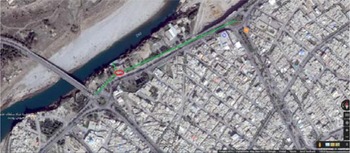
On August 13, 2017, at around 1:00 AM local time, after several hours of the gas leakage, leakage from reservoirs in the abandoned warehouse was rectified and another chlorine cylinder was moved to a safe place outside of the city (Figure 1).
Views of Reservoirs in an Abandoned Warehouse Belonging to the Local Water Supply Company (in orange) and Evacuated Location (in green).

METHODS
This was a field study conducted by observation scholars through visitation to the field visit, review of after action reports, and several group and individual interviews with people, relief staffs, nurses, physicians, and managers of organizations involved in returning normalcy to the area.
To study and assess the news and reports on this incident, immediately after the incident, the researchers visited the area and started taking notes and observing the scene as well as the performance of the people and reinforcements. Also, the reports of the incident, during and 1 month after the incident, were collated and recorded, and the results were 6 interviews, 4 phone interviews, an evaluation of 4 recorded movies from the scene of the incident, and its reports and evaluation of 3 official documents. The interviews for the present study were conducted with the head of the emergency department (ED) of the hospital (emergency medicine specialists), the manager of the department of emergency of the hospital (nursing specialist), the head of the university’s Emergency Operation Center (EOC), the specialists of the hospital and prehospital triage for about 1 hour, the staff of the hospital and prehospital emergency for about 1 hour, the specialists of the EOC of Dezful for about 1 and a half hours, 3 persons who were present at the scene of the incident each for 30 minutes, and phone interviews with the experts of the meteorological organization for about 15 minutes. Then, all the news, official reports, radio and television interviews of the mayor, the deputy of treatment of the university, and the experts and spokespersons of the fire services were recorded and transcribed and organized. After collecting and recording all the data, the research team was able to highlight the strengths and weaknesses of the incident. Afterward, 4 scholars in emergency and disaster fields checked the findings and gave their comments. Then data were summarized by the research team that consisted of 4 experts in the disaster field and 1 in the management field. Finally, a consensus was obtained after discussing the results.
In addition, to confirm the validity and reliability of the final reports, after organizing the reports, observations, and interviews, all the ambiguous and controversial points were checked again with the official reports and interview with the related authorities. In this field report, weaknesses, strengths, and lessons learned were assessed and discussed. Also, all the ethical issues were taken into consideration. In this regard, the objectives of the study were clearly explained to all the participants (their participation was totally voluntary) and they were assured of the confidentiality of their responses before answering the questions.
RESULTS
The results of this study were categorized as weaknesses and strengths, and each was explained in detail.
Strength Points
-
Based on field scene observations and command report in official reports and video recorded from news media
-
– All responsible organizations came together to help people, and the actions of each organization were based on their duties. The timely emergency evacuation saved hundreds of lives. All streets close to the disaster area were closed and only disaster management cars were allowed into the area. The people were instructed by the EMS staff or firefighters to safely leave the disaster zone. This could indicate relative readiness and coordination at this stage of the work.
-
-
Based on hospital ED command report
-
– Declaration of crisis code and hospital preparedness, activation of the hospital incident command system, hospital storage personnel recall, increasing the capacity of hospital beds, activation of triage place in hospital, continuation of hospital work and recall of standby personnel up to 2 hours after vacancy of the position.
-
-
Based on researchers’ observations and EOC command report
-
– Public risk communication included disseminating warning and educational messages through local radio and social media platforms such as Telegram Messenger and WhatsApp. This action facilitated the process of citizens’ evacuation, which reduced the number of casualties.
-
Weakness Points
-
Based on fire station interview and other reports
-
– The absence of a protective device to keep the chlorine gas environment safe for human habitation before the occurrence of the incident.
-
-
Based on field scene observations and EMS staff
-
– Lack of knowledge on establishing the danger zone by relief organization staffs; the evidence from the scene showed that no danger zones were identified, and the relief forces, the people, and authorities entered and exited the scene of the incident with no limitation.
-
-
Based on field scene observations and people’s interview
-
– Lack of spatial and trained warning system for rapid announcement of leaking gas. The results of the observations and interviews showed that the notification for evacuation was given just about half an hour after the incident occurred. The notification was given by the relief forces present at the scene, local radio, and social messengers.
-
-
Based on field scene observations and EMS staff and hospital nurses’ interview
-
– Lack of proper triage or decontamination in the scene and the hospital; consequently, in this incident, a hospital triage for patients was done by the Emergency Severity Index technique. The prehospital triage was not also performed, and decontamination was not done.
-
-
Based on field scene observations and reports
-
– Use of inappropriate personal protective equipment for the chemical gas. For example, those present at the scene had typical surgical masks, and the reason for not using special chemical masks was their lack of anticipation of potential health hazards.
-
– Lack of special chemical relief clothes and respiratory equipment for rescuers was quite obvious. In the incident scene, other than 1 or 2 fire staff, the remaining officials and personnel of relief agencies such as prehospital emergency staffs did not have any facility and equipment to enter the hot and cold zones, which made them to enter the scene with non-standard equipment. This unsafe entry also caused injuries and poisoned a large number of them and triggered the arrival of a third wave of diseases in the hospital.
-
-
Based on field scene observations and audio and visual reports
-
– Lack of instructions for proper handling of chlorine gas leakage was quite obvious and that is why the incident was the first recorded in this city.
-
-
Based on field scene observations and visual reports
-
– The lack of knowledge on how to deal with this type of disaster on the part of the directors and relief personnel. Confusion and lack of appropriate scientific interventions at the scene showed that there was no proper and feasible instruction regarding the leakage of chlorine gas.
-
-
Based on interview and audio video reports
-
– Not paying attention to this incident in other dimensions, such as the terrorist incident.
-
-
Based on field scene observations and visual reports
-
– Inappropriate evacuation; unfortunately, in this incident, not only was attention not given to the wind, but also the radius of danger was not properly considered, and the evacuation routes were not symmetrical.
-
-
Based on visual reports
-
– Incorrect and non-professional reporting; unfortunately, reporters who reported the incident did not know the principles of journalism in such events. This caused problems for others. In addition to granting an interview in the hot spot, they did not wear their masks and also urged the officials and authorities who were at the scene to get into the area without a protective device.
-
– In this incident, some relief organization staffs, deputy commander, mayor, director of the fire stations, and the director of the Red Crescent Society who attended to people following the chlorine gas leakage, as well as the TV and radio team were poisoned and hospitalized at the outpatient department and thereafter discharged.
-
-
Based on a fire station interview and visual reports
-
– Failure to cordon off and insure the location of the incident.
-
DISCUSSION
Chemical accidents may occur due to equipment failure, human error, operational errors, terrorism, or natural disasters. Reference Soman and Sundararaj14 This report shows that it is very important to plan for such incidents; otherwise, the consequences will be dangerous and will lead to high casualties. Thus, regarding preventing a humanitarian disaster, it should be avoided as much as possible to minimize the risks and become prepared to deal with such disasters, and a timely and appropriate response is required in the case of such events. Reference Culley, Richter and Donevant15
In particular, good preparation and responses are more important, when we know that being at the exposure of certain chemicals, such as chlorine and phosgene, may delay the onset of clinical symptoms. Reference Culley, Svendsen, Craig and Tavakoli16
As we know, severe exposure to chlorine is injurious to human health and can lead to the destruction of living tissues along with symptoms of acute airway obstruction, including wheezing, cough, chest tightness, acute lung injuries, and even death.
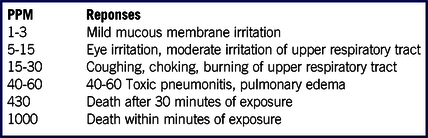
The effects of chlorine gas on the body depend on 2 factors, including the concentration of chlorine gas and duration of exposure. The effects of chlorine gas on health and death can be predicted, and the necessity of using appropriate equipment (especially respiratory aids) in relief groups can be demonstrated according to the dose-response and duration of contact time shown in Table 1. Reference Mackie, Svendsen and Grant17
Dose-Response

In this regard, we discussed the weakness and strength points in learning to prepare for future events of this magnitude through the preparedness and early warning system.
Strategic Cooperation With Stakeholders
Although, at first glance, the coordination of this incident seems appropriate and perfect, a more scientific and critical view of the coordination process would reveal that there were lapses in the coordination process. In general, when a plan requires the presence, programming, and input of more than 1 person, coordination would come into play. Coordination could be categorized into 2 groups – strategic and operational – and each of these groups can be divided into internal parts and external parts. 18
To have an appropriate coordination in the time of disasters and consequently provide a more appropriate response at the time of the incident, it is necessary that, during the preparation phase, joint work meetings are held, collaborative programs are developed, and internal and external local, regional, and national memorandums of understanding are written and signed by the reinforcements and the governmental, semi-governmental, and private organizations.
In addition, to have a comprehensive preparation against disasters, guidelines on approaches to risks should be available and based on the Emergency Operations Plan (EOP) and these guidelines; goals should be developed and updated.
Risk Assessment
Lack of an initial warning system, guards, and security systems at the place of the incident indicated lack of investigation and evaluation of possible risks in Dezful.
The second measure in the preparation phase for disasters in EOPs is risk evaluation. During the risk evaluation stage, the risks that would threaten or damage society, system, or a center should be determined. Then, based on the severity of the risk, the level of vulnerability and the capacities of the society, and considering the priorities, prevention and preparation plans should be developed for them.
Despite that similar disasters have been mentioned in articles and books of disasters, if the risk evaluation had been carried out in the city, this incident could have been completely forestalled and, in case of an occurrence, the existence of an appropriate initial warning system could have led to a swift reaction, better and faster evacuation, and adequate preparation and coordination.
EOP and Emergency Response Plan (ERP)
Production, storage, and the use of hazardous chemicals may pose a great risk to the life of humans and the environment. The deliberate or non-deliberate release of hazardous chemicals can trigger an emergency, and therefore the need for an Emergency Response Plan (ERP) is unavoidable to minimize the side effects of the accident. The ERP for chlorine emissions is an integral component of the safety process and risk information system. Reference Soman and Sundararaj14
To succeed in every measure, having a plan is essential and necessary. Although, in Iran, no national inter-organizational EOP has been developed, except in the health and treatment division, an EOP was developed in 2015 with regard to the macro goals of the health system, which is aimed at decreasing the risks of disasters in the society. Facilities and resources of the health system are being reviewed and reevaluated every year taking into account all risks and approaches. Therefore, it can be concluded that these types of EOPs could improve the preparation of the health system for a more effective response to disasters. Perhaps, intersectoral and intra-organizational coordination, which is one of the strengths of the hospital and prehospital division during this incident, was based on the experiences obtained from this plan. Therefore, it is recommended that all the regions and countries that are prone to disasters should develop an EOP, which would increase their preparedness against disasters.
Storage of Supplies and Equipment
As was reported in the weakness points, a shortage and lack of appropriate storage of rescue equipment and facilities and amenities before the incident caused a third wave of referrals to the hospital. In this regard, it is necessary that, in the preparation phase and after studying and evaluating the risks of every region, all the necessary equipment and facilities for responding to the disaster should be supplied and stored in a sufficient amount and controlled based on a time schedule.
Training
The negative points mentioned in response to this incident showed a lack of education and weakness in the knowledge of people, reporters, authorities, and rescue staff in dealing with chemical incidents. It can be surmised that if appropriate training was provided for the people, authorities, and the rescue staff before the incident, the level of damages and injuries might have been reduced.
In a study, Soman and Sundararaj showed that proper training of personnel can effectively manage any level of accidents occurring at a chlorine gas processing plant. Reference Soman and Sundararaj14 Also, Mitchel et al. emphasized the need for competency training in emergency room nurses to deal with chemical accidents. Reference Mitchell, Kernohan and Higginson19
In this regard, public education for people through the mass media and organization of educational courses for reporters, authorities, and rescue staff on how to deal with incidents of this magnitude could decrease the impact of these disasters and provide a better preparation blueprint for dealing with incidents of this nature.
Exercise and Drill
As mentioned previously in the weakness points of this incident, a lack of preparation doubled the problems and damages caused by this incident. However, if a drill or exercise had been performed for the authorities and rescue staffs before the incident to better prepare them to enter the scene of the incident and respond to chemical incidents, many of the insufficiencies would have been addressed and the simple negative points that could have been determined during the exercise would have been eliminated.
Therefore, it can be concluded that an exercise or drill is an important strategy in improving the knowledge, attitude, and performance of the authorities and staff in dealing with an emergency incident. Consequently, it is recommended that, based on the priority of the evaluated risks in every region, at least 1 operational and 2 theoretical drills be held annually for coordination and retraining of the forces. Also, in the cities where people do not have strong social relationships or are not natives in the region, a place should be set aside for rapid evacuation of people who have lost their houses due to the disaster; however, in Dezful, due to its local context and appropriate social conditions, all the evacuated people were relocated to their relatives’ homes.
In addition, Darracq et al. suggested that if you expect many injuries in such incidents, a hospital emergency plan system should be activated and a patient triage should be conducted after decontamination. Reference Ciottone, Biddinger and Darling1,Reference Darracq, Clark and Jacoby20
RECOMMENDATIONS
The incident of a chlorine gas leakage is not peculiar to the city of Dezful and could possibly occur in every city and village in the world where chlorine gas is still being used for industrial and non-industrial purposes, such as maintenance and transportation or where chlorine capsules are still being stored in their warehouses. Therefore, the recommendations are as follows:
-
In places where any chemical gas is stored (which could disrupt the public order or cause disasters), guards, protective walls, and security cameras should be used for appropriate protection and maintenance.
-
Evidence from this incident showed that no danger zone was developed and determined in this incident. Since it is necessary that danger zones be determined in chemical incidents, in every chemical incident, after developing an Incident Command System (ICP) and writing an Incident Action Plan (IAP), a danger zone instruction should be developed (cold, warm, and hot), and efforts should be made for its appropriate implementation.
-
In cases where dangerous materials are being stored or applied, it is necessary that local warning systems be installed for possible cases of acute leakage. For example, an alarm for rapid awareness and evacuation seems necessary because during the early stages of this disaster, national audio and video media could not work effectively (because the gas would spread and injure many people before the time the news could get to the officials, confirmed, and released to the people. Specifically, in this case, since the incident was close to a recreation center, people could not have access to audio and video media news).
-
It must be noted that the method of triage is completely different in disasters and unexpected incidents from normal accidents; also, the triage method for chemical accidents is different from other incidents; consequently, the instructions should be applied thoroughly. In this regard, the US Department of Health and Human Services stated: “ In a mass casualty situation, asymptomatic patients who are reliable historians and those who experienced only minor sensations of burning of the nose, throat, eyes, and respiratory tract (with perhaps a slight cough) may be released. In most instances these patients will be free of symptoms in an hour or less. They should be advised to seek medical care promptly if symptoms develop or recur. If the incident involved a small number of patients, or the victims included young children (especially infants or patients with special needs), they should be monitored in an ED ‘extended care’ area for 6–12 hours.
-
– Victims exposed only to chlorine gas who have no skin or eye irritation do not need decontamination. They may be transferred immediately to the support zone. All others require decontamination.
-
– Symptomatic patients complaining of persistent shortness of breath, severe cough, or chest tightness should be admitted to the hospital and observed until they are symptom-free (pulmonary injury may progress for several hours).
-
– If the health care provider feels that the patient has been exposed to a significant amount of chlorine, despite a relatively benign clinical appearance, he or she should be admitted for observation.
-
– Clinical signs of pulmonary edema will typically present 2–4 hours following a moderate exposure and 30–60 minutes following a severe exposure.” 21
-
-
Different types of face masks should be defined for chemical disasters and incidents, and their place of application should be mentioned on the masks’ brochures. This is necessary because in the mentioned incident, some of the rescue staffs and the people used normal masks.
-
Developing instructions for handling leakage of gases such as chlorine gas used in urban areas is imperative for rescue organizations, and public education should be provided on how to deal with such incidents.
-
The manner of interviewing and breaking the news of disasters should be taught to the authorities and staffs of rescue organizations because unnecessary and non-scientific interviews might exacerbate the problem and make rescue missions more difficult.
-
Such incidents that can lead to major injuries should be considered as passive defense because they might be due to enemy sabotage. Therefore, the causes of incidents should be comprehensively and thoroughly investigated.
-
Unfortunately in this incident, not only was the direction of wind not considered, but also the radius of danger was not designed correctly. Therefore, in similar incidents, the direction of wind, the manner of entry into the incident scene without paying attention to the direction of wind, and the correct evacuation distance should be considered.
-
The issue with reporters and their method of interview have indicated the necessity of conducting specialized educational courses for reporters and media staff on the method of performing the interviews, reporting, and announcing the news about disasters.
-
Lack of insurance for these places would cause severe damages to the organizations involved. Therefore, it is recommended that all places used for storing and maintaining any type of gas be insured against any possible leakage of gas.
-
Overcrowding in the hospitals is one of the common problems in such incidents, which definitely affect the patient care service. If there is no triage and treatment at the scene, the mortality rate would be much more. Reference Mackie, Svendsen and Grant17
-
In chemical, microbial, and nuclear events, the decontamination programs are important during the training, planning, and management phases. Patients should be decontaminated twice: at the incident scene and in front of the hospital’s ED. This is done to ensure the safety of the ED and relief staff.
-
– Relief workers are subjected to the risk of being poisoned by chlorine gas by either having their skin or clothes soaked with industrial bleach, which might release harmful chlorine gas, or by dealing with victims of a chlorine gas leakage incident.
-
– During a chlorine gas leakage incident, all victims should be decontaminated, except those who don’t have a skin or eye irritation. 21
-
CONCLUSION
The conditions for having appropriate preparation to deal with disasters include a good risk evaluation, development of a risk map, prioritization of risks, planning to increase the capacity, decreasing damages, and increasing preparation to reduce vulnerability and injuries. Since chlorine gas has an extensive application in industrial and domestic regions, it is necessary that guidelines for the control of damages and preparation plans be developed for its storage, accumulation, transportation route, and application. Annual exercises and training should be organized for better preparation.
Acknowledgments
The authors wish to express their gratitude to M Habibi Moghaddam and his colleagues at the EMS.
Author Contributions
HA and LAA conceived and designed the original study. HA, AOT, and MM coordinated the study and collected data. HA, MM, AOT, and GHM drafted the manuscript.
Conflict of Interest Statement
The authors have no conflicts of interest to declare.