Implications
Environmental enrichment is an important tool for improving animal welfare. Intensively farmed broiler chickens are not usually provided with enrichments that promote dustbathing, which is a highly motivated behaviour to domestic fowl. The results of this study suggest that oat hulls, which is a by-product of oat milling, may be a suitable and sustainable dustbathing enrichment that could be practically introduced into broiler housing as an environmental enrichment. Future studies should, however, determine the effect of oat hulls on levels of dust within the house.
Introduction
Dustbathing is a distinctive behaviour observed in many bird species and has been well documented in both red jungle fowl and modern chickens (Kruijt, Reference Kruijt1964; van Liere et al., Reference van Liere and Bokma1991). With access to litter, birds will perform dustbathing approximately every 2nd day (Vestergaard, Reference Vestergaard1982), with the individual elements of the behaviour developing in younger birds until the sequence becomes fixed around 10 to 12 days old (Kruijt, Reference Kruijt1964). Dustbathing bouts usually begin with the birds scratching at the ground and raking dust closer to their bodies, before squatting with their feathers erect. The birds then kick dust into their feathers by scratching their legs and performing vertical wing shakes, before rubbing their heads along the ground and stretching their legs. A dustbathing bout usually ends with the bird standing and shaking excess substrate off their body (van Liere et al., Reference van Liere and Bokma1991).
Thought to function to maintain feather condition and remove ectoparasites (van Liere and Bokma, Reference van Liere, Aggrey, Brouns and Wiepkema1987; Martin and Mullens, Reference Martin and Mullens2012), dustbathing has proved to be highly motivated and birds demonstrate observable frustration when prevented from performing the behaviour (Vestergaard et al., Reference Vestergaard and Sanotra1997). Despite this, the level of dustbathing reported in commercial broilers is usually very low, matching a generally low level of foraging and locomotion in these birds (e.g. Bailie et al., Reference Bailie, Ball and O’Connell2013). This may reflect a reduced physical capacity, and probably motivation, to perform active behaviours without stimulation in birds genetically selected for high productivity (Lindqvist, Reference Lindqvist, Zimmerman and Jensen2008). Low levels of dustbathing may also reflect a lack of a suitable substrate in the house. While bedding is provided in commercial systems, the typical consistency of the litter, and the fact that it tends to become wetter and more compact across the production cycle, may limit its attractiveness for dustbathing. Broiler chickens may therefore be experiencing frustration from a lack of suitable substrate, and providing birds with a preferred dustbathing material that is compatible with commercial systems may be an effective environmental enrichment.
Domestic fowl display preferences for dustbathing materials and consistently choose loose, friable substrates, which may reflect their effectiveness at removing lipids. Although previous experience may influence a bird’s perception to an extent, identifying suitable dustbathing substrates appears to be innate and adult birds will still show a preference for substrates they have no previous experience of (Sanotra et al., Reference Sanotra, Vestergaard, Agger and Lawson1995; Wichman and Keeling, Reference Wichman and Keeling2008). Peat has been identified as a highly preferred substrate (Petherick and Duncan, Reference Petherick and Duncan1989; de Jong and van Reenen, Reference Hetland and Svihus2005; de Jong et al., Reference Hogan, Honrado and Vestergaard2007) and is thus a frequently used stimulant in trials investigating dustbathing (e.g. Wichman and Keeling, Reference Wichman and Keeling2008). Sand also appears to be beneficial and highly attractive to broilers (Shields et al., Reference Shields, Garner and Mench2004 and Reference Shields, Garner and Mench2005). Other substrates that have been tested in dustbathing trials with less success include rice hulls, wood shavings, shell sand and paper (Shields et al., Reference Shields, Garner and Mench2004; Toghyani et al., Reference Toghyani, Gheisari, Modaresi, Tabeidian and Toghyani2010, Guinebretière et al., Reference de Jong and van Reenen2014; Villagrá et al., Reference Villagrá, Olivas, Althaus, Gómez, Lainez and Torres2014). The quality of the dustbathing performed may also be influenced by substrate type. More vertical wing shakes and ground pecking were performed on sand compared with wood shavings (Shields et al., Reference Shields, Garner and Mench2004), and dustbathing bouts were longer in peat compared with sand, sawdust and wood shavings (Petherick and Duncan, Reference Petherick and Duncan1989).
Biosecurity restrictions prevent the use of untreated earth, and, although sand and peat are frequently used in dustbathing trials and consistently reported as optimal, sand may interfere with the processing of used litter and peat is environmentally unsustainable and expensive. This trial was designed to test the attractiveness and level of use of various substrates that would be appropriate for inclusion in commercial broiler houses. Although the primary focus was on dustbathing, other activities performed in each substrate were also recorded to determine whether they would promote additional active behaviours, such as foraging. The substrates that were evaluated included peat, ground oat hulls, straw pellets, clean wood shavings and litter (standard wood shaving bedding which degraded across the cycle and served as a control treatment). It would also be valuable to know, in a commercial house, whether level of use of a substrate varies depending on its position around the house and therefore this study also investigated the effect of location on enrichment use.
Material and methods
Subjects and housing
This trial was carried out between July and December 2015, in one commercial broiler house over three replicate 6-week cycles, with ~22 000 Ross broiler chickens (Aviagen Ltd, Newbridge, UK) housed per cycle. Day old chicks were placed ‘as hatched’ at the start of each cycle, and therefore there was ~50 : 50 mix of males and females. The windowed commercial house used was a standard 19×74 m metal framed shed, with a total floor area of ~1398 m2, giving an initial stocking density of 16 birds/m2. At day 30, a proportion of the birds were removed for ‘thinning’ which is the common commercial practice of partial depopulation of the flock for slaughter, and the remaining birds were cleared between days 37 and 42.
Birds were raised under commercial management practices. Water was provided by nipple drinkers and feed was supplied ad libitum throughout rearing. Temperature and humidity were controlled automatically to maintain levels within the commercial standard. Natural light was provided through 43 windows along the long sides of the house (measuring 220 cm wide×60 cm high, at a height of 1.5 m), and artificial strip lighting was also provided. The lighting regime used followed EU regulations: time in darkness increased by 1 h/day, from 1 h at a day old to 6 h on day 7, and then decreased on day 29 by 1 h/day to 1 h of darkness, which was maintained from day 33 to slaughter. Wood shavings were provided as bedding before the birds were placed, with additional shavings then distributed at the farmer’s discretion across the cycle to maintain litter quality.
Treatments and experimental design
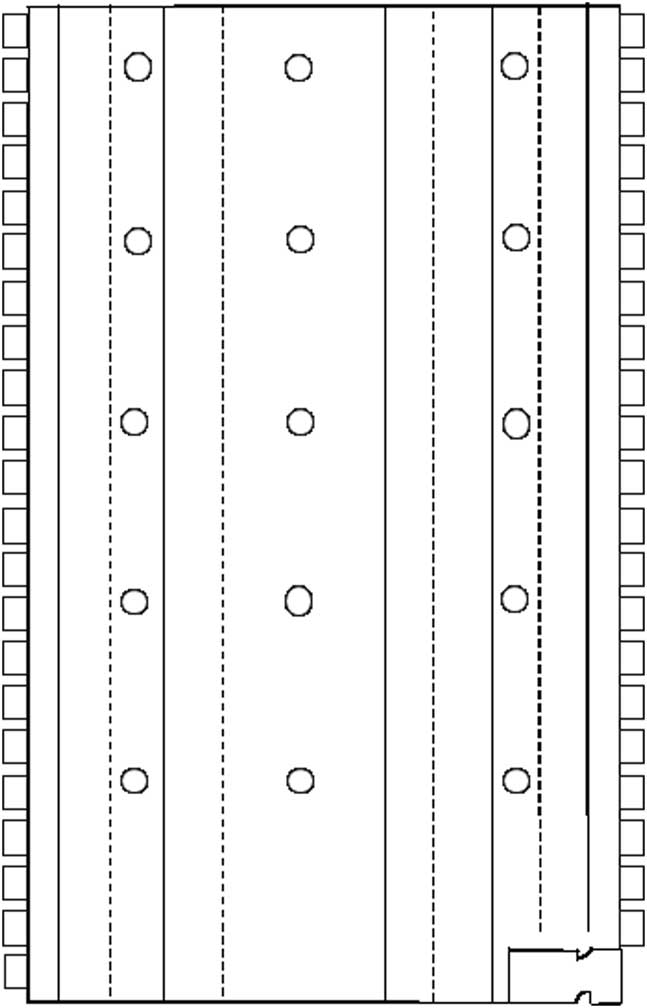
A total of 15 steel rings were positioned evenly (~1/93 m2; Figure 1) throughout the house on day 10 of the cycle. The rings had a diameter of 1.1 m and were 7.62 cm deep; birds were able to climb into the rings from day 10 and were unable to perch on the ring edges. With the exception of the litter control, three rings of each substrate were cleared of litter and filled with either Irish moss-peat (P), oat hulls (OH), straw pellets (SP) or wood shavings (WS). The moss-peat provided was commercially available Sphagnum peat (Better Growing Ltd, Dungannon, UK). Oat hulls are the ground outer hull of oats, produced as a by-product of oat milling and locally sourced, with a consistency and colour similar to sawdust. Straw pellets are compressed, pelleted wheat straw which can be used as an alternative bedding for broilers. The pellets degrade into a dark brown, moisture absorbent material that is also similar in consistency to sawdust. The wood shavings supplied were the same material that the birds were initially bedded on. All materials have previously been included in trials with poultry (e.g. Petherick and Duncan, Reference Petherick and Duncan1989; Hetland and Svihus, Reference de Jong, Wolthuis-Fillerup and van Reenen2001) or are used within the poultry industry. The three rings for the litter control treatment were simply placed on top of the existing wood shavings bedding and allowed to degrade into ‘litter’ (which can involve a mixture of wood shavings, faeces and feed). The substrate locations were pre-determined to ensure the presence of each substrate in both central and edge locations of the house. Rings in edge locations were equidistant from feeders and drinkers and birds were able to reach both from the rings (Figure 1). Rings placed in central lines were further from feeders and drinkers and neither could be reached by birds inside the central rings. For each replicate, rings remained in the same location but the substrates they contained were rotated.
Representation of ring placement (circles) within the commercial broiler house. Rectangular boxes along the walls of the house represent windows. Within the house, vertical solid lines are drinker lines and broken vertical lines are feeders.

In order to keep the P, OH, SP and WS dry, friable and in a condition suitable for dustbathing and foraging they were replenished throughout the study. These substrates degraded at a different rate and, as such, were maintained based on their individual condition. Fresh substrate was added to the rings either when they contained ⩽half the original level of substrate, or when the substrate was no longer considered friable enough for dustbathing (e.g. was compacted or damp). However, regardless of condition, all P, OH, SP and WS rings were always refilled to their original level on the morning of observations to avoid novelty bias. Control rings were not refilled with wood shavings, and therefore degraded similarly to the house litter.
Data collection
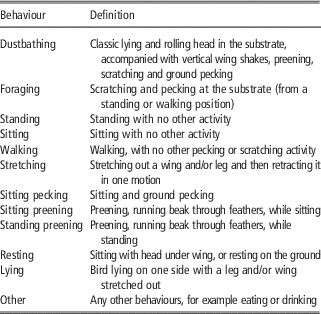
The farm was visited four times per production cycle in weeks 3, 4, 5 (before thinning) and 6 (after thinning). Between 1200 and 1600 h, 10 rings (two of each substrate) were filmed for 1 h each using five Camileo X-Sports cameras (Toshiba Ltd, Surrey, UK) mounted on wooden tripods. The rings filmed were chosen randomly each week, with the condition that one ring containing each substrate was located in an edge location and one in a central location. The order of filming, either edge or central ring first, was randomised each week. All data collection was performed by the same observer. Scan sampling of video recordings was used to observe birds inside the rings (Weeks et al., Reference Weeks, Nicol, Sherwin and Kestin2000; Shields et al., Reference Shields, Garner and Mench2005). For each hour of footage, instantaneous scans were performed at 5, 15, 25, 35 and 45 min. The total number of birds in the ring was counted and the behaviour of each bird was categorised according to Table 1.
Ethogram of broiler chicken behaviours used in the present trial, based on Cornetto and Estevez (Reference Cornetto and Estevez2001) and Shields et al. (Reference Shields, Garner and Mench2005)

Although comparison of dustbathing components was planned for all substrates, sufficient dustbathing for analysis was only recorded in peat and oat hulls rings. Comparison of the elements of dustbathing performed in peat and oat hulls was made using focal observations of 24 birds per substrate (n total=48). These observations were performed during week 5 when the highest mean number of dustbathing bouts was performed. For each of three cycles, two videos (one central and one edge) were analysed per substrate. In each video, the first four birds to perform a vertical wing shake (VWS) after a 10 min settling period were identified. The video was rewound to their first VWS in each case and the rest of their dustbathing bout was analysed. The duration of the dustbathing bout was determined as the time between the first VWS and when the bird either performed a body shake, left the ring or performed no dustbathing behaviour for 10 min after the last VWS. During the bout, the number of VWS’s (classic dustbathing action that shuffles the wings up and down), ground pecks, leg scratches and side rubs (rubbing the head and neck along the ground) were counted. The method that ended the bout was also recorded: either with or without a body shake.
Statistical analysis
For the instantaneous scan observations, counts from the five scans were pooled to give an average number of birds present in the ring (ring occupancy) and average number counted in each behavioural category, per hour. Behaviours were then grouped to facilitate analysis. ‘Standing’ and ‘walking’ scores were grouped into ‘locomotion’ as both behaviours were performed from an upright position but were separate from foraging behaviour. ‘Sitting inactive’, ‘resting’ and ‘lying’ were grouped into ‘sitting inactive’ because the motivation for these behaviours is linked and the outcome on leg health is similar. ‘Standing preening’ and ‘sitting preening’ were grouped in order to see the effect on overall preening behaviour. ‘Stretching’ and ‘other’ were excluded from analysis because they were infrequently recorded. The behaviour ‘other’ was almost exclusively scored when birds sat inside the ring but interacted with feeders and drinkers. This was deemed irrelevant to the aims of this study and was excluded from analysis. Normality of the data was assessed through inspection of histograms, Q-Q plots and Shapiro–Wilk tests on data residuals. Where necessary, data were transformed to improve normality before parametric analysis, or where transformations were not appropriate non-parametric tests were applied. A significance level of P<0.05 was used for all tests.
Total counts of birds using the rings were used to demonstrate the general attractiveness of substrates. This was analysed using overall counts (all weeks) and counts within weeks. The latter analysis was performed to determine if preference for substrate was affected by age. Residuals for ring occupancy counts were positively skewed and were improved with square root transformation before analysis with a one-way ANOVA of transformed means by ‘substrate type’. ‘Cycle’ was initially included within the model and was disregarded as it had no significant effect on variation between substrates. Due to one case of missing data for the oat hulls rings, a Gabriel test was chosen for post-hoc analysis to account for the unequal sample size.
To compare the behaviours performed in each substrate, analysis was carried out on both the average number of birds performing each behaviour, and the percentage of birds that they represented (in relation to the total number in that substrate ring). The average number of birds performing each behaviour showed how many birds were attracted to use the substrate, while values for the percentage use were limited to showing how much of a behaviour was performed in relation to the other birds in the ring. Results for both methods were similar and only analysis of the average number of birds is presented; percentage values are presented for interpretation. Residuals were positively skewed and improved with a square root transformation before analysis. For each behaviour, the overall number of birds was compared by substrate using a one-way ANOVA on transformed means. Analysis was also performed to investigate possible changes in substrate use over time. Only the percentage of birds in the ring performing different behaviours was used for analysis; this was because the average number of birds using each ring reduced over time as fewer broilers could fit in the ring. Residuals for the percentage of birds performing each behaviour by week were non-normally distributed and could not be improved by transformation. Therefore, to investigate substrate use over time, a Mann–Whitney U test was used to assess whether differences were observed between weeks 3 and 6 in the percentage of birds engaged in different behaviours within each substrate type.
To investigate the effect of ring location, the average number of birds present in the rings and the per cent birds performing each behaviour were grouped by ring location; either central (n=59) or edge (n=60). A two-way ANOVA with ‘location’ and ‘substrate’ as treatment factors was used to compare location main and interaction effects on ring occupancy and proportional use. For focal dustbathing observations of peat and oat hulls, independent t-tests were used to compare bout length and components in focal observations, and the method of bout termination was analysed using a χ 2 test.
Results
Ring occupancy
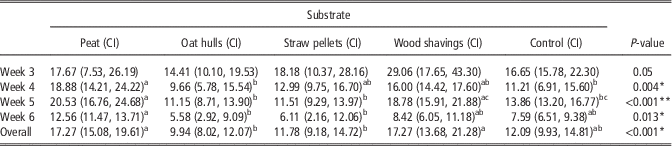
Substrate had an effect on the mean number of birds recorded in the rings (F 4,114=6.740, P<0.001). Overall, significantly more birds were counted in the peat and wood shavings rings compared with the oat hull and straw pellets, however there was no significant difference between the litter control and any other substrate (Table 2). Between each week, there was some variation in occupancy between substrates although the occupancy patterns tended to reflect the overall pattern of higher numbers of birds counted in the peat and wood shavings rings compared with the oat hulls and straw pellets. The higher occupancy in peat developed over time, with a clear preference for peat developing from week 5 over oat hulls and straw pellets (Table 2).
The mean number of broilers counted in each substrate each week throughout the production cycle and overall

a,b,cValues within a row with different superscripts differ at P<0.05. Means and confidence intervals (CI) have been back-transformed to their original scale.
*P<0.05, **P<0.001.
Behaviour in each substrate
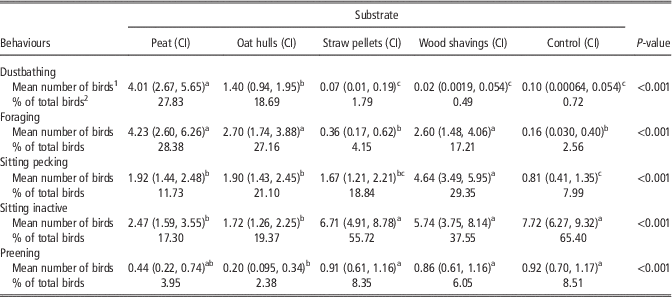
Of all birds observed in the rings in total, 10% were observed dustbathing, 16% foraging, 18% sitting pecking, 39% sitting inactive, 6% preening and 10% were in locomotion. Substrate type had a significant effect on several behavioural categories, including the number of birds observed dustbathing (F 4,114=63.86, P<0.001) and foraging (F 4,114=20.27, P<0.001); post-hoc tests are presented in Table 3. The highest levels of dustbathing were seen in peat rings. Oat hulls were the next most preferred substrate for dustbathing, with significantly more dustbathing observed in oat hulls compared straw pellet, wood shavings and control rings. Significantly higher levels of foraging were recorded in peat, oat hulls and wood shaving rings compared with straw pellets and the control. The number of birds recorded sitting pecking (F 4,114=17.27, P<0.001) and sitting inactive (F 4,114=15.85, P<0.001) was also affected by substrate. The highest level of sitting pecking was recorded in the wood shavings rings, and significantly more birds were sitting inactive in the wood shavings, straw pellet and control rings compared with the oat hull and peat rings. Although generally low levels were observed, substrate also had an effect on levels of preening (F 4,114=8.84, P<0.001), with lower levels of preening observed in oat hulls compared with all other substrates.
The average number and percentage of broiler chickens observed in each behaviour category in different substrates

a,b,cValues within a row with different superscripts differ at P<0.05.
1 Means and confidence intervals (CI) have been back-transformed to their original scale.
2 For interpretation: values are the percentage of birds performing each behaviour in relation to the average number of birds recorded in the substrate.
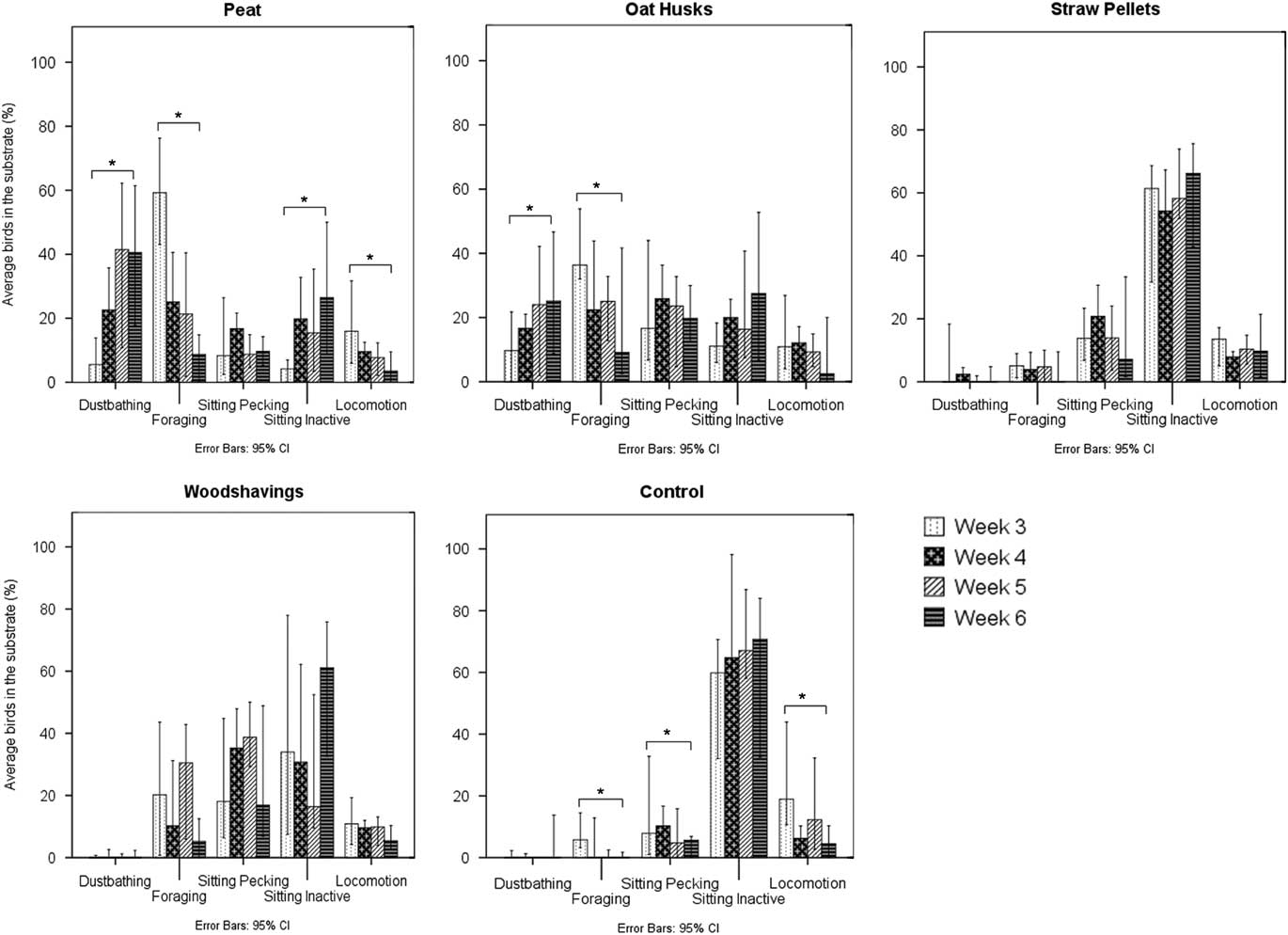
With the exception of wood shavings and straw pellets, the use of the remaining substrates changed between weeks 3 and 6 of the cycle (key behaviours affected are illustrated in Figure 2). In the peat rings, there was an increase in the percentage of birds using the peat for dustbathing (U=36, r=0.83, P=0.002), and a reduction in foraging (U=21, r=−0.83, P=0.002) and locomotion (U=1, r=−0.79, P=0.004) which was parallel to an increase in inactivity (U=36, r=0.83, P=0.002). Similarly, in oat hull rings, an increasing percentage of birds used the rings for dustbathing between weeks 3 and 6 (U=32, r=0.65, P=0.026), and there was a reduction in foraging behaviour recorded (U=4, r=−0.65, P=0.026). For the control rings, levels of dustbathing remained consistently low, and levels of sitting inactive remained consistently high. However, the use of the control rings for foraging (U=0, r=−0.86, P=0.002), sitting pecking (U=5, r=−0.60, P=0.041) and locomotion (U=0, r=−0.83, P=0.002) decreased between weeks 3 and 6.
The effect of age on the behaviour of broiler chickens in each substrate offered (peat, oat hulls, straw pellets, wood shavings and litter control). *Indicates that the median number of birds performing that behaviour, expressed as a percentage of the total birds counted in each substrate, differed significantly between week 3 and week 6 of the production cycle (P<0.05).

Ring location
There were no significant interactions between location and substrate for ring occupancy (F 4,109=0.24, P=0.92), however significantly more birds overall were counted in the central (M=16.48) compared with the edge rings (M=12.36; F 1,109=11.59, P=0.001). There were no location by substrate interactions for behaviours performed (P>0.05), and no main effect of location on any behaviours (P>0.2).
Dustbathing complexity
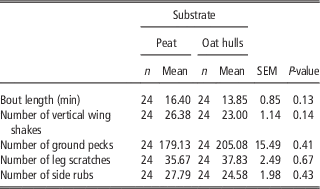
There were no significant differences in length of bout or any of the components of a bout between the peat and oat hulls rings (Table 4). There was also no significant effect of substrate on method of bout termination, χ 2(1)=0.105, P=0.75.
Comparison of dustbathing bouts performed by commercial broiler chickens in peat and oat hulls

Discussion
All substrates were used by the birds throughout the cycle, and there were clear distinctions in the types of behaviours performed in each. Although there was no difference in the overall number of birds counted in each substrate compared with the control, more birds were recorded in the peat and wood shavings rings compared with the oat hulls and straw pellets. Peat was predicted to attract a high number of birds, however the preference for wood shavings over the more friable and ‘sand-like’ oat hulls was less expected. It may be that some quality of wood shavings makes it an attractive substrate, but the preference may also be influenced by previous experience (Sanotra et al., Reference Sanotra, Vestergaard, Agger and Lawson1995; Nicol et al., Reference Nicol, Lindberg, Phillips, Pope, Wilkins and Green2001). Although the head count in each substrate gave a general indication of attractiveness, the suitability of substrates as enrichments depends on the types of behaviours they promote. Consistent with previous trials (Petherick and Duncan, Reference Petherick and Duncan1989), the highest level of dustbathing was seen in peat. Birds also appeared to identify oat hulls as a dustbathing substrate, with significantly more dustbathing performed in oat hulls compared with the remaining substrates. Despite the birds’ early experience of wood shavings bedding, the low level of dustbathing observed in the wood shavings rings is consistent with research that showed that birds have an innate ability to identify ‘dust’ rather than developing a preference based on initial exposure to substrates (Wichman and Keeling, Reference Wichman and Keeling2008). However, wood shavings did prove to be an attractive foraging substrate, with similarly high levels of foraging performed in peat, oat hulls and wood shavings rings compared with straw pellets and the control. This is consistent with previous trials that have found wood shavings to be attractive for ground scratching and pecking (Petherick and Duncan, Reference Petherick and Duncan1989; Toghyani et al., Reference Toghyani, Gheisari, Modaresi, Tabeidian and Toghyani2010). Foraging is a much-reduced behaviour in broiler chickens compared with their ancestors and laying hen counterparts. Modern broilers have been selected for rapid growth rate and increased muscle mass which has resulted in an inefficient, tiring gait pattern (Corr et al., Reference Corr, Gentle, McCorquodale and Bennett2003) and a susceptibility to skeletal disorders and deformities that are assumed to be painful (Vestergaard and Sanotra, Reference Vestergaard, Skadhauge and Lawson1999; Danbury et al., Reference Danbury, Weeks, Chambers, Waterman-Pearson and Kestin2000). However, broilers are capable of moving more than they choose to (Reiter and Bessei, Reference Reiter and Bessei1995; Bessei, Reference Bessei2006), and providing a substrate that promotes foraging would be central in increasing overall activity levels. It is worth noting that although levels of foraging by birds did not differ significantly between wood shavings, peat and oat hulls in the current experiment, levels of sitting inactive were significantly higher in wood shavings. High levels of resting could indicate comfort, however a key aim of providing enrichments for broiler chickens is to reduce the amount of time spent sitting down and encouraging exercise in young broilers, which allows for proper bone and muscle development and improves leg condition (Thorp and Duff, Reference Thorp and Duff1988; Reiter and Bessei, Reference Reiter and Bessei1995).
Broilers’ physiology and behaviour patterns change significantly over the 6-week cycle, with inactivity increasing to around 80% by slaughter weight (Weeks et al., Reference Weeks, Nicol, Sherwin and Kestin2000). Effective enrichments should therefore continue to promote activity as birds age. In this trial, we found an expected decrease in foraging behaviour in older birds, however there was an increase in the per cent of birds using preferred substrates for dustbathing. Current literature is inconsistent on the effect of age on dustbathing behaviour in domestic fowl, with reports of no effect of age (Weeks et al., Reference Weeks, Nicol, Sherwin and Kestin2000; Cornetto and Estevez, Reference Cornetto and Estevez2001; Shields et al., Reference Shields, Garner and Mench2004; Bailie et al., Reference Bailie, Ball and O’Connell2013; Villagrá et al., Reference Villagrá, Olivas, Althaus, Gómez, Lainez and Torres2014), and some trends of increased dustbathing to peaks at around week 6 to 7 (Weeks et al., Reference Weeks, Danbury, Davies, Hunt and Kestin1994; Bokkers and Koene, Reference Bokkers and Koene2003). These increases in dustbathing may be consistent with the normal development of the behaviour. In red jungle fowl, dustbathing frequency and vertical wing shakes increase in young birds until it stabilises at around 3 to 4 weeks (Hogan et al., Reference Guinebretière, Beyer, Arnould and Michel1991). They may also, however, reflect an increased redirection of the behaviour towards more suitable substrates as house litter quality declines. There was no apparent increase in dustbathing in the straw pellet, wood shaving and control rings which may suggest that the lack of age effect noted in some previous studies was due to a lack of suitable substrate. The per cent of birds foraging declined with age in peat, oat hull and control rings, and remained low throughout in straw pellets. Once birds get larger and their gaits become more inefficient (Corr et al., Reference Corr, Gentle, McCorquodale and Bennett2003), energy resources are likely to be reallocated and the reduction in foraging can be explained as an adaptive reduction in contrafreeloading (Lindqvist et al., Reference Lindqvist2006). Dustbathing behaviour is likely to be less affected by this phenomenon and the motivation for dustbathing may remain higher.
More precise measures of the components of dustbathing performed in the peat and oat hulls rings were used to investigate whether one substrate was more capable of satisfying the motivation than the other. No significant difference was found in bout length, method of termination, number of vertical wing shakes or any other elements. Given the overall higher attractiveness of peat, a difference in dustbathing structure may have been expected. Vestergaard et al. (Reference Vestergaard, Hogan and Kruijt1990) recorded very little difference in the frequency and components of dustbathing in jungle fowl birds housed on either wire or sand. However, they did find that dustbathing bouts tended to be longer on wire and that in longer bouts birds were more likely to end the dustbathing with a body shake in sand compared with wire. They propose that although dust may not be required to begin a dustbathing bout, hence sham dustbathing, it may be important in giving the feedback that ends the bout. This would suggest that although the lack of difference in components cannot necessarily mean that peat and oat hulls were an equally satisfying ‘dust’, the lack of difference in how the bout was terminated could show that they were both providing the necessary feedback of a proper dustbathing substrate. However, Petherick and Duncan (Reference Petherick and Duncan1989) found that birds dustbathe in peat for significantly longer than in sand, sawdust and wood shavings, which they interpret as meaning that peat is more satisfying and preferred. This infers that oat hulls and peat may be considered equally satisfactory as a dustbathing substrate.
The location of the rings (either edge or central) did not have an effect on the types of behaviours performed. However, overall there were more birds counted in the rings in central areas of the house which was unexpected as broilers have a tendency to stay near pen walls (Cornetto and Estevez, Reference Cornetto and Estevez2001). The edge rings in this trial were not located against the house walls, which means birds crowding directly against the walls were unlikely to come into contact with the rings, reducing the edge effect expected. Litter moisture is considered to have multidimensional causal factors and varies between farms, house design and cycle, however in this house it was noted that litter tended to be wetter towards the edges, which could also account for increased occupancy in the central areas.
Dustbathing is considered to be a highly motivated behaviour, however there is limited information on the overall level of dustbathing performed in commercial settings, with dustbathing sometimes excluded from the birds’ ethogram or not observed at all throughout the trial (e.g. Murphy and Preston, Reference Murphy and Preston1988). However, the consensus is that dustbathing makes up a very small portion of the birds’ time budget, with reports of the % of birds dustbathing over the cycle averaging at 0.38% (Thomas et al., Reference Thomas, Son, Ravindran and Thomas2011), 0.57% (Weeks et al., Reference Weeks, Danbury, Davies, Hunt and Kestin1994) and 0.18% (Bailie et al., Reference Bailie, Ball and O’Connell2013) in birds housed on wood shavings, and 1% (Shields et al., Reference Shields, Garner and Mench2004) with constant access to sand. The average proportion of birds using the rings for dustbathing in this trial was substantially higher in some cases; the average % of birds dustbathing in rings over the whole cycle was 28% in peat, 19% in oat hulls, 2% in straw pellets, 0.5% in wood shavings and 0.7% in the control treatment. The overall % of birds observed dustbathing in all the rings over the cycle was 10%. This suggests that the substrates offered in this trial resulted in a higher level of dustbathing than would normally be observed in a commercial house.
In conclusion, our findings are consistent with previous research that indicates peat is an attractive substrate to broilers and promotes high levels of dustbathing. Further work would be useful to determine the nature of the qualities that make peat attractive. As peat is considered an impractical addition to UK farming systems, oat hulls may be an alternative commercial enrichment. In this trial, oat hulls stimulated significantly more dustbathing than straw pellets, wood shavings or litter, and promoted similarly high levels of foraging and low levels of inactivity compared with peat. There was no difference in the duration or components of dustbathing bouts performed in peat and oat hulls, suggesting they both satisfy the broilers’ motivation to dustbathe. One limitation to the use of oat hulls, which was not measured in the current study but which should be considered in subsequent research, is its effect on dust levels within the house. The clear change in proportional use of the peat and oat hulls, with an increase in dustbathing and reduction in foraging over time, suggests that dustbathing will continue to be performed as broiler chickens age, and therefore that provision of a suitable dustbathing substrate will provide effective environmental enrichment for commercial broiler chickens throughout the cycle.
Acknowledgements
This research project was funded by the Department for Employment and Learning in Northern Ireland. The authors also wish to thank Stephen Bell and Moy Park Ltd for providing access to the farm and for their support and advice throughout the project.