Introduction
The family study research design is a key approach for establishing the validity of clinical phenotypes associated with psychiatric illness (Robins and Guze, Reference Robins and Guze1970). Family studies of borderline personality disorder (BPD) are relatively few in number and have mainly focused on the risk of psychiatric disorders in relatives of probands with an index diagnosis of BPD (see White et al., Reference White, Gunderson, Zanarini and Hudson2003). Most consistently, relatives of probands with BPD show an elevated risk for depressive disorders and impulse-spectrum disorders, such as substance use disorders and Cluster B personality disorders (Loranger et al., Reference Loranger, Oldham and Tulis1982; Pope et al., Reference Pope, Jonas, Hudson, Cohen and Gunderson1983; Soloff and Millward, Reference Soloff and Millward1983; Loranger and Tulis, Reference Loranger and Tulis1985; Schulz et al., Reference Schulz, Soloff, Kelly, Morgenstern, Di Franco and Schulz1989; Riso et al., Reference Riso, Klein, Anderson and Ouimette2000). The risk for BPD is also significantly higher in the relatives of probands with BPD (Loranger et al., Reference Loranger, Oldham and Tulis1982; Baron et al., Reference Baron, Gruen, Asnis and Lord1985; Links et al., Reference Links, Steiner and Huxley1988; Zanarini et al., Reference Zanarini, Gunderson, Marino, Schwartz and Frankenburg1988; Gunderson et al., Reference Gunderson, Zanarini, Choi-Kain, Mitchell, Jang and Hudson2011). Furthermore, dimensions of BPD psychopathology, including affective, cognitive, impulse control, and interpersonal dimensions, appear to aggregate in families affected with the diagnosis (Silverman et al., Reference Silverman, Pinkham, Horvath, Coccaro, Klar, Schear, Apter, Davidson, Mohs and Siever1991; Zanarini et al., Reference Zanarini, Frankenburg, Yong, Raviola, Bradford Reich, Hennen, Hudson and Gunderson2004; Gunderson et al., Reference Gunderson, Zanarini, Choi-Kain, Mitchell, Jang and Hudson2011).
Increasingly, family studies of psychiatric disorders have incorporated intermediate phenotype measures, in part, to increase the statistical power of genetic linkage analyses (Gottesman and Gould, Reference Gottesman and Gould2003; Meyer-Lindenberg and Weinberger, Reference Meyer-Lindenberg and Weinberger2006). Only a small number of family studies of BPD have included intermediate phenotype measures, revealing subtle deficits on tests of higher order neurocognitive abilities in probands with BPD and their first-degree relatives (Gvirts et al., Reference Gvirts, Harari, Braw, Shefet, Shamay-Tsoory and Levkovitz2012) or within a subset of relatives (Ruocco et al., Reference Ruocco, Laporte, Russell, Guttman and Paris2012). However, the participant samples are relatively small, limiting explorations of clinical, personality, and neurodevelopmental factors that may moderate the heterogeneous findings. More broadly, family studies of BPD have been limited by notable methodological weaknesses, including small sample sizes, use of different diagnostic instruments across studies to assess BPD, inconsistent masking across studies of the diagnostic assessments of relatives to the proband's diagnosis, and indirect (i.e. informant-based) assessments of relatives (White et al., Reference White, Gunderson, Zanarini and Hudson2003).
In the present study, we recruited probands with an index diagnosis of BPD and their first-degree biological relatives to a family study incorporating clinical and personality assessments, intermediate phenotype measures, and genetic analyses. All participants were clinically characterized in direct interviews using standardized instruments and self-report questionnaires to assess categorical psychiatric diagnoses, symptom dimensions of emotion dysregulation and impulsivity (considered the two core symptoms of BPD; Crowell et al., Reference Crowell, Beauchaine and Linehan2009), ‘big five’ personality domains (John and Srivastava, Reference John, Srivastava, Pervin and John1999), and neurodevelopmental histories. The primary aims of the broader family study included the following:
(a) To investigate the aggregation of clinical, personality, and neurodevelopmental phenotypes in families affected with BPD;
(b) To evaluate differences in neurocognitive and brain imaging measures between probands, relatives, and non-psychiatric controls; and
(c) To examine associations between intermediate phenotype measures and genetic markers reflecting a liability for BPD.
Here, we present the primary results pertaining to the clinical, personality, and neurodevelopmental phenotypes ascertained from probands, relatives, and non-psychiatric controls (i.e. participants without a personal or familial history of psychiatric disorder). Consistent with the results of other family studies of BPD (White et al., Reference White, Gunderson, Zanarini and Hudson2003), we anticipated that mood- and impulse-spectrum psychiatric disorders would be the most prevalent diagnoses among probands and relatives. However, a major limitation of most prior family studies of BPD is that they did not include dimensional measures of psychopathology and personality. Accordingly, our second hypothesis was that relatives would fall intermediate to probands and controls on measures of symptom dimensions underlying BPD (i.e. emotion dysregulation and impulsivity) and ‘big five’ personality traits relevant to BPD (Samuel and Widiger, Reference Samuel and Widiger2008), especially in the directions of higher neuroticism and lower conscientiousness and agreeableness (Distel et al., Reference Distel, Trull, Willemsen, Vink, Derom, Lynskey, Martin and Boomsma2009). Third, we hypothesized that neurodevelopmental features most prevalent in probands would also be detected in relatives more frequently than in controls, in line with studies that highlight the significance of developmental factors in BPD (Herman et al., Reference Herman, Perry and van der Kolk1989; Zanarini et al., Reference Zanarini, Williams, Lewis, Reich, Vera, Marino, Levin, Yong and Frankenburg1997) but which have not comprehensively investigated key neurodevelopmental characteristics (e.g. childhood histories of attentional difficulties and physical aggression). Taken together, findings from this study contribute to a growing literature on the validation of core phenotypes in BPD, which may have relevance to neurobiological substrates (Ruocco and Carcone, Reference Ruocco and Carcone2016) and genetic markers (Amad et al., Reference Amad, Ramoz, Thomas, Jardri and Gorwood2014) in families affected with the disorder.
Method
Participant characteristics
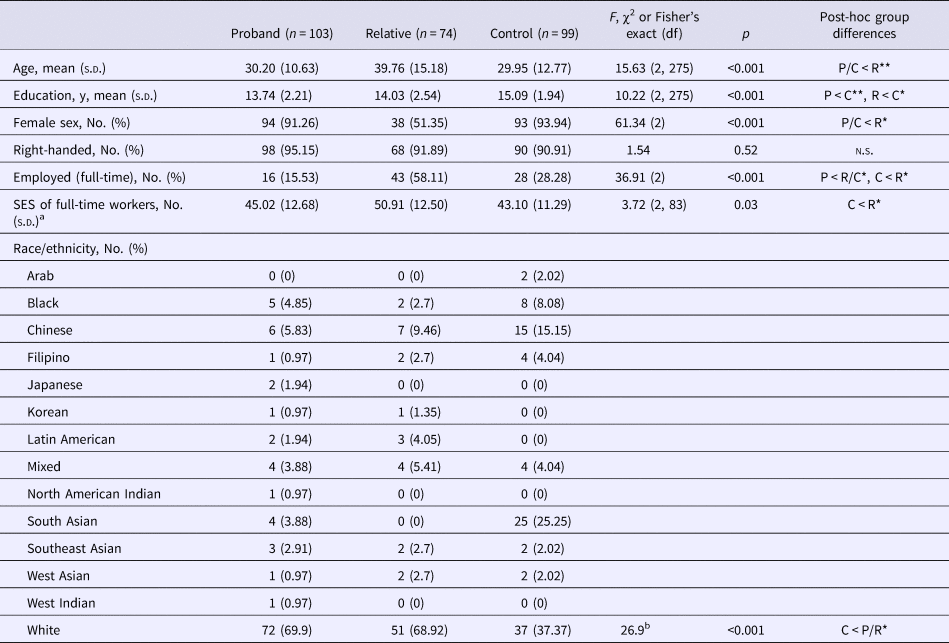
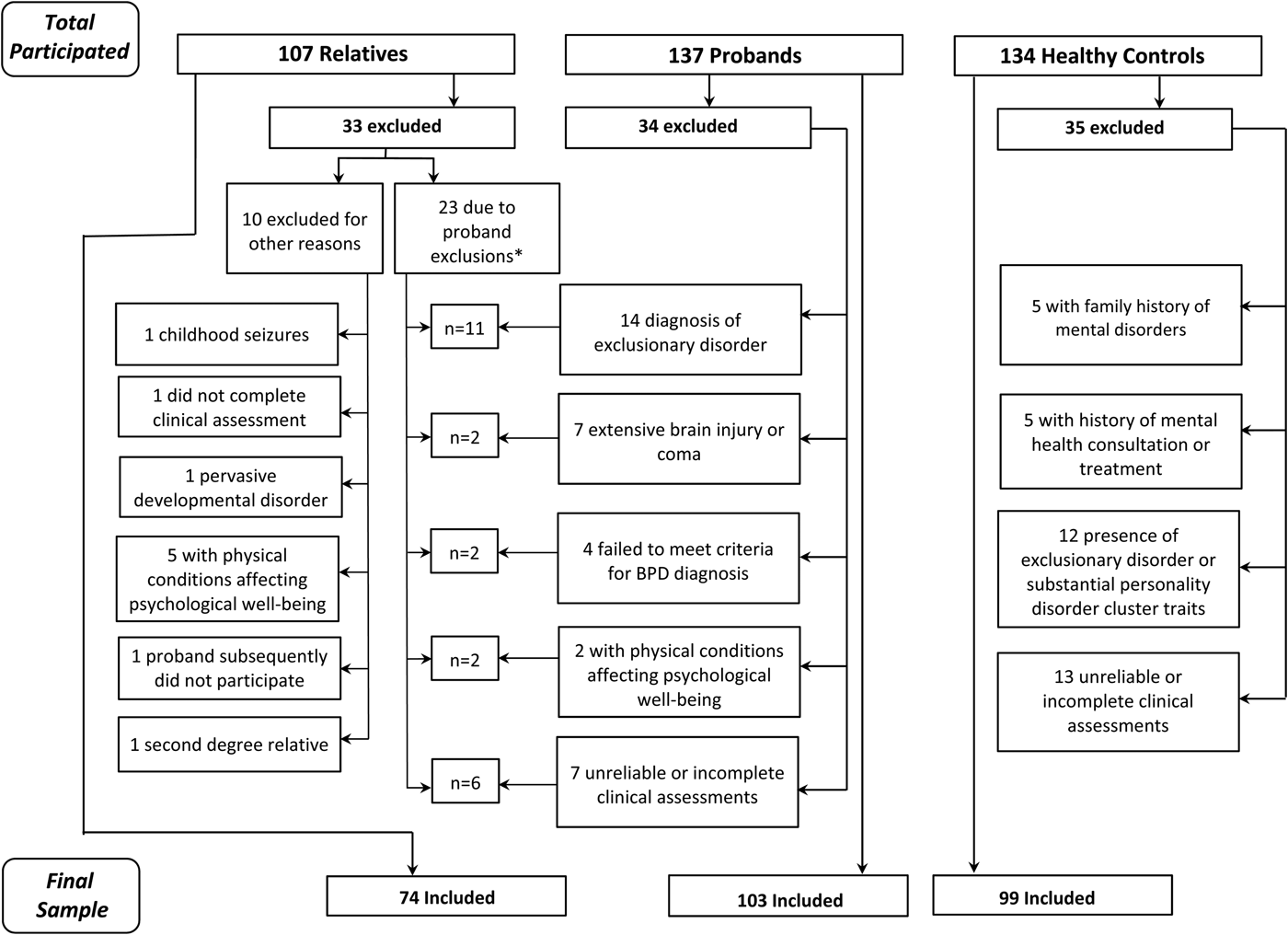
Major demographic characteristics for the three participant groups are presented in Table 1. There were expected group differences in age, sex, ethnicity, years of education, socioeconomic status (SES), and full-time employment status. Relatives were significantly older than probands and controls (p < 0.001) and there was a lower proportion of females in the relative group (p < 0.001). Controls also had slightly more years of education than probands and relatives (p < 0.01). Additionally, proband and relative groups had higher proportions of white ethnicity compared with the control group (p < 0.05). Online Supplementary Table S1 lists the prescribed psychiatric medications reported by participants in the three groups. Figure 1 depicts participant exclusions following in-person assessments.
Demographic characteristics of probands with borderline personality disorder, first-degree relatives and non-psychiatric controls

s.d., standard deviation; SES, socioeconomic status; P, proband; R, relative; C, healthy control, n.s., non-significant. *p < 0.05, **p < 0.01.
a SES of full-time workers (n = 16 probands, n = 40 relatives, and n = 28 healthy controls) are coded according to the 1981 socioeconomic index for occupations in Canada, presented in Blishen et al. (Reference Blishen, Carroll and Moore1987).
b Comparison between white and non-white participant groups.
Measures
In this article, we report on the results of the clinical, personality, and neurodevelopmental phenotype assessments. The intermediate phenotype measures and genetic findings will be described in separate reports based on a subset of the participants described in the present study.
Semi-structured interviews
Participants completed the Structured Clinical Interview for DSM-IV Axis I Disorders – Patient Edition (SCID; First et al., Reference First, Spitzer, Gibbon and Williams2002), which assessed mood, psychotic, alcohol and non-alcohol substance use, anxiety, somatoform, and eating disorders. The Structured Interview for DSM-IV Personality (SIDP; Pfohl et al., Reference Pfohl, Blum and Zimmerman1995) was used to assess each criterion for all 10 personality disorders. Interviews were conducted by assessors trained to reliably administer the instruments under the direct supervision of a licensed psychologist (ACR) who has expertise in the clinical assessment and diagnosis of BPD.
Self-report symptom and personality questionnaires
The Difficulties in Emotion Regulation Scale (DERS; Gratz and Roemer, Reference Gratz and Roemer2004) is a 36-item self-report measure that assesses problems with emotion regulation in six areas: non-acceptance of emotional responses, difficulty engaging in goal-directed behavior when experiencing emotions, impulse control difficulties, lack of emotional awareness, limited access to emotion regulation strategies, and lack of emotional clarity. Items are rated on a five-point Likert scale from 1 (almost never) to 5 (almost always), with a higher total score indicating greater difficulties. In the present study, the mean internal consistency of the DERS subscale scores was 0.93 and ranged from 0.86 (awareness) to 0.96 (strategies). The Big Five Inventory (BFI; John et al., Reference John, Naumann, Soto, John, Robins and Pervin2008) is a 44-item self-report questionnaire that assesses five hierarchical dimensions of personality: neuroticism, extraversion, openness to experience, agreeableness, and conscientiousness. Items are rated on a five-point bipolar scale that ranges from 1 (strongly disagree) to 5 (strongly agree). The mean internal consistency of the BFI subscale scores was 0.86 in the present study, ranging from 0.75 (openness to experience) to 0.93 (neuroticism). The Barratt Impulsiveness Scale – 11 (BIS; Patton et al., Reference Patton, Stanford and Barratt1995) is a 30-item self-report questionnaire that assesses multiple components of impulsivity. The BIS produces six first-order impulsiveness factors, which include attention, motor, self-control, cognitive complexity, perseverance, and cognitive instability. Items are rated from 1 (rarely) to 4 (almost always). Internal consistency of the first-order BIS subscale scores in the present study ranged from 0.49 (cognitive complexity) to 0.86 (self-control) with a mean Cronbach's α = 0.70. Finally, a range of neurodevelopmental features was rated in the clinical assessment using a standard set of questions administered by an interviewer, including delays in achieving developmental milestones, speech and language problems, learning problems, and school-related and behavioral difficulties.
Statistics and data analysis
Statistical analyses were carried out using IBM SPSS Statistics (Version 24; Armonk, NY, USA). Differences between participant groups on demographic, diagnostic, symptom, personality, and neurodevelopmental characteristics were investigated using analysis of variance, χ2, and Fisher's exact test (two-tailed), where appropriate. The first set of analyses focused on comparing all three participant groups (proband, relative, and control) on the prevalence of DSM-IV Axis I and II diagnoses, severity of emotion dysregulation and impulsivity symptom dimensions, levels of ‘big five’ personality traits, and prevalence of neurodevelopmental features. Given that participant groups differed in expected directions on demographic variables [age, sex, years of education, and ethnicity (white or non-white)], these factors were included as covariates in relevant multivariate analyses of covariance and results were reported based on Pillai's trace (V). SES data were only determined for full-time workers (n = 84); therefore, this variable was not examined as a covariate. Post-hoc between-group comparisons on continuous measures were based on pair-wise comparisons at a confidence interval of 95% using 1000 bootstrapped samples and with a conservative Bonferroni correction (p < 0.05) to reduce the likelihood of producing spurious findings. Family grouping was not a significant covariate in analyses examining impulsivity, emotion dysregulation, and ‘big five’ personality trait subscales. A second set of analyses was carried out on the symptom and personality phenotypes to compare non-affected relatives (i.e. those without any lifetime psychiatric diagnoses; 43% of the sample) with controls, while also covarying for the aforementioned variables. An exploratory analysis with 1000 bootstrapped samples examined relatives with v. without BPD traits based on SIDP ratings on symptom and personality dimensions. To investigate differences in symptom and personality subscales for probands with v. without relatives available and recruited to the study (regardless of whether they ultimately were included or excluded), another bootstrapped analysis with 1000 samples was conducted and only p values <0.01 are reported to reduce spurious findings. Descriptive statistics (raw means and standard deviations without covarying for demographic variables) for all dimensional measures (personality disorder scales calculated from SIDP item scores, and subscales from the BIS, DERS, and BFI subscales) are provided in Supplementary Materials (Online Supplementary Tables S2—S6).
Results
Psychiatric diagnoses
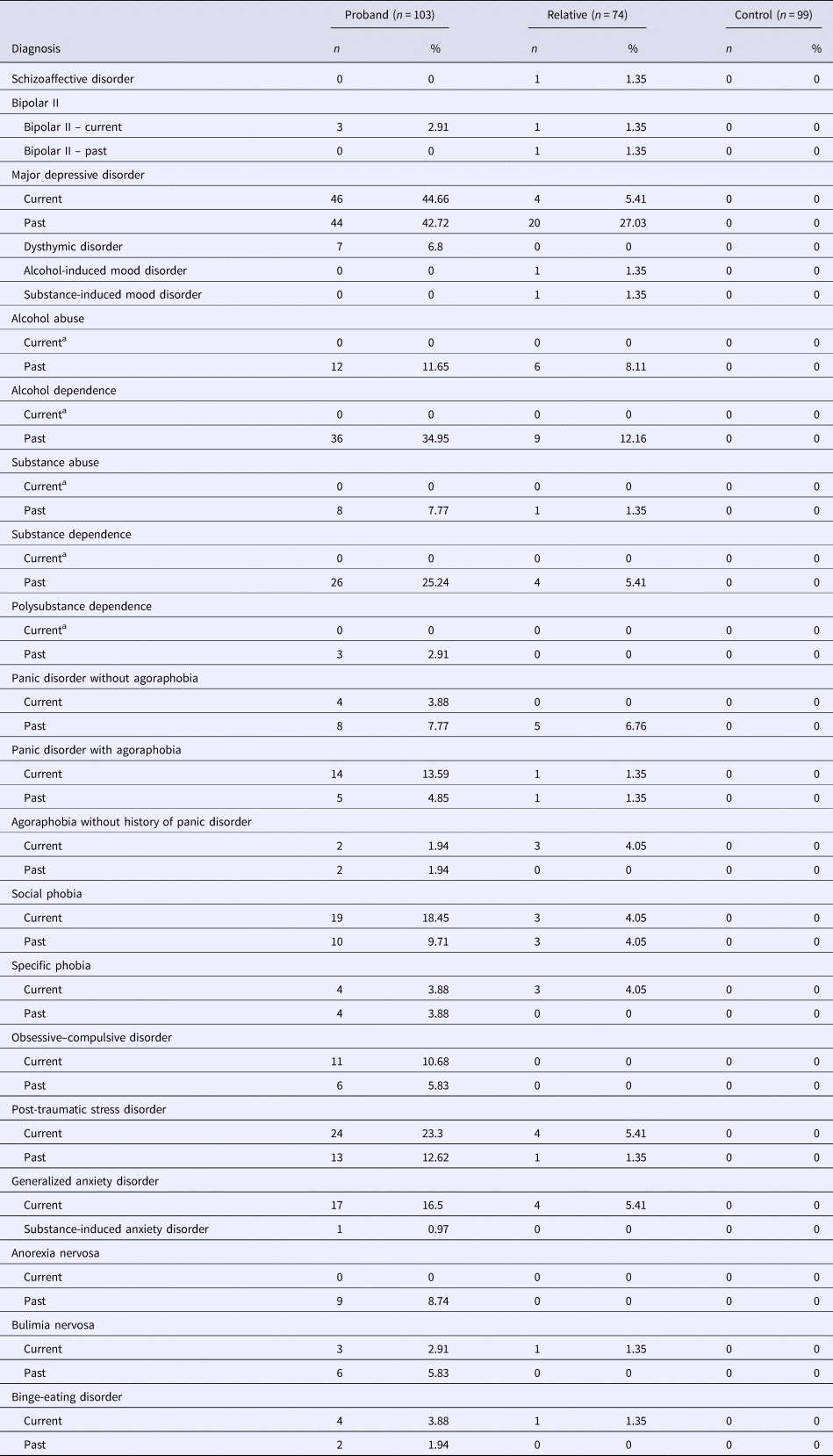
Table 2 summarizes the prevalence of DSM-IV Axis I diagnoses in probands, relatives, and controls. As expected, the most common diagnoses among probands and relatives were major depressive disorder (MDD), substance use disorders, post-traumatic stress disorder (PTSD), social phobia, and generalized anxiety disorder. Given that controls were screened out based on the presence of any personal or familial history of psychiatric illness, solely probands and relatives were compared on their lifetime history of psychiatric diagnoses. Probands were more likely than relatives to have any depressive disorder (90.3% v. 35.6%, Fisher's exact test, p < 0.001), substance use disorder (57.3% v. 20.3%, Fisher's exact test, p < 0.001), PTSD (37.0% v. 6.8%, Fisher's exact test, p < 0.001), anxiety disorder (excluding PTSD; 67.7% v. 25.7%, Fisher's exact test, p < 0.001), and eating disorder (22.0% v. 2.7%, Fisher's exact test, p < 0.001).
DSM-IV Axis I diagnoses for probands with borderline personality disorder, first-degree relatives, and non-psychiatric controls

a A current (past month) diagnosis of an alcohol or substance use disorder was exclusionary for the study.
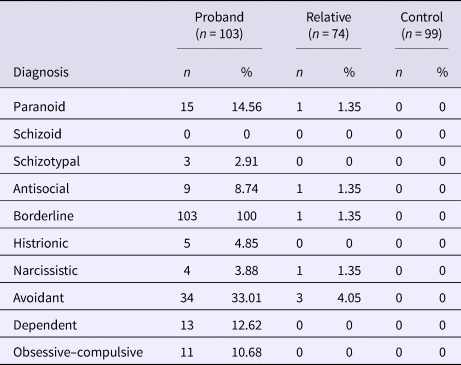
Table 3 lists the prevalence rates of current (i.e. past 5 years) DSM-IV personality disorder diagnoses across the participant groups. The most prevalent disorders among probands with BPD were avoidant, paranoid, dependent, and obsessive–compulsive personality disorders (all >10%). Each of these personality disorder diagnoses was significantly more prevalent in probands compared with relatives (Fisher's exact test, p < 0.01).
Flowchart showing participant exclusions by group following in-person assessments. Note: *Relatives of excluded probands were also excluded.

DSM-IV personality disorder diagnoses

Personality disorders were present at least within the past 5 years.
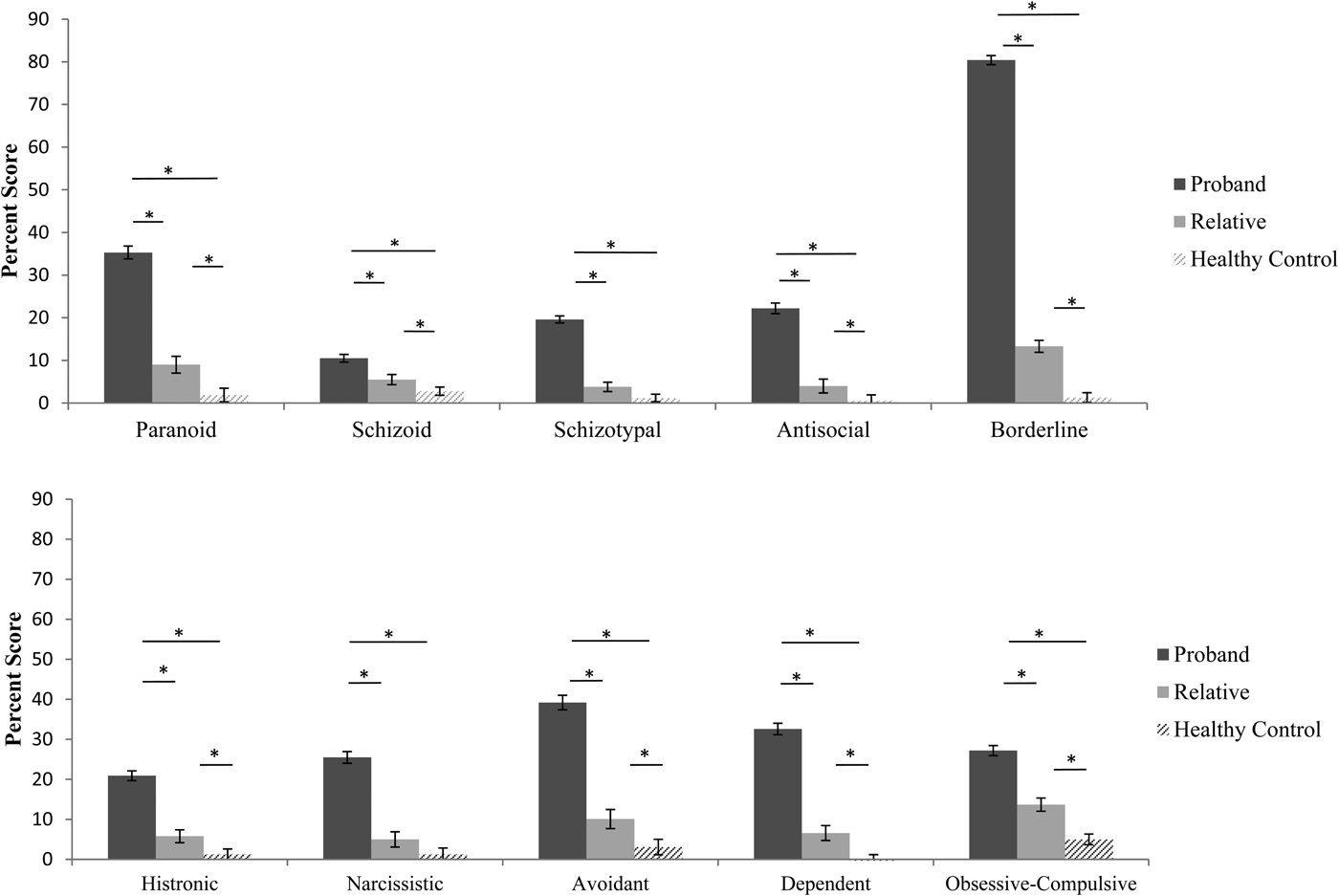
The multivariate result for analyses based on dimensional personality disorder ratings was significant for participant group, V = 0.96, F 20, 518 = 23.96, p < 0.001, η p2 = 0.48.Footnote †Footnote 1 The univariate F tests showed that there were significant main effects of participant group for each of the scales, F > 17.23, p < 0.001, η p2 > 0.11. Scales that were significantly higher for probands and relatives compared with controls were paranoid, schizoid, borderline, antisocial, histrionic, avoidant, dependent, and obsessive–compulsive personality disorders (p = 0.02). Probands (p = 0.02), but not relatives (p ⩾ 0.06), were also significantly higher on schizotypal and narcissistic personality disorder scales compared with controls. Figure 2 displays estimated marginal means for each participant group across the 10 personality disorder scales.
Estimated marginal means of dimensional personality disorder scales covarying for participant sex, age, education, ethnicity, and family membership. Error bars represent standard error of the mean. *p < 0.05.

Impulsivity and emotion dysregulation symptom dimensions
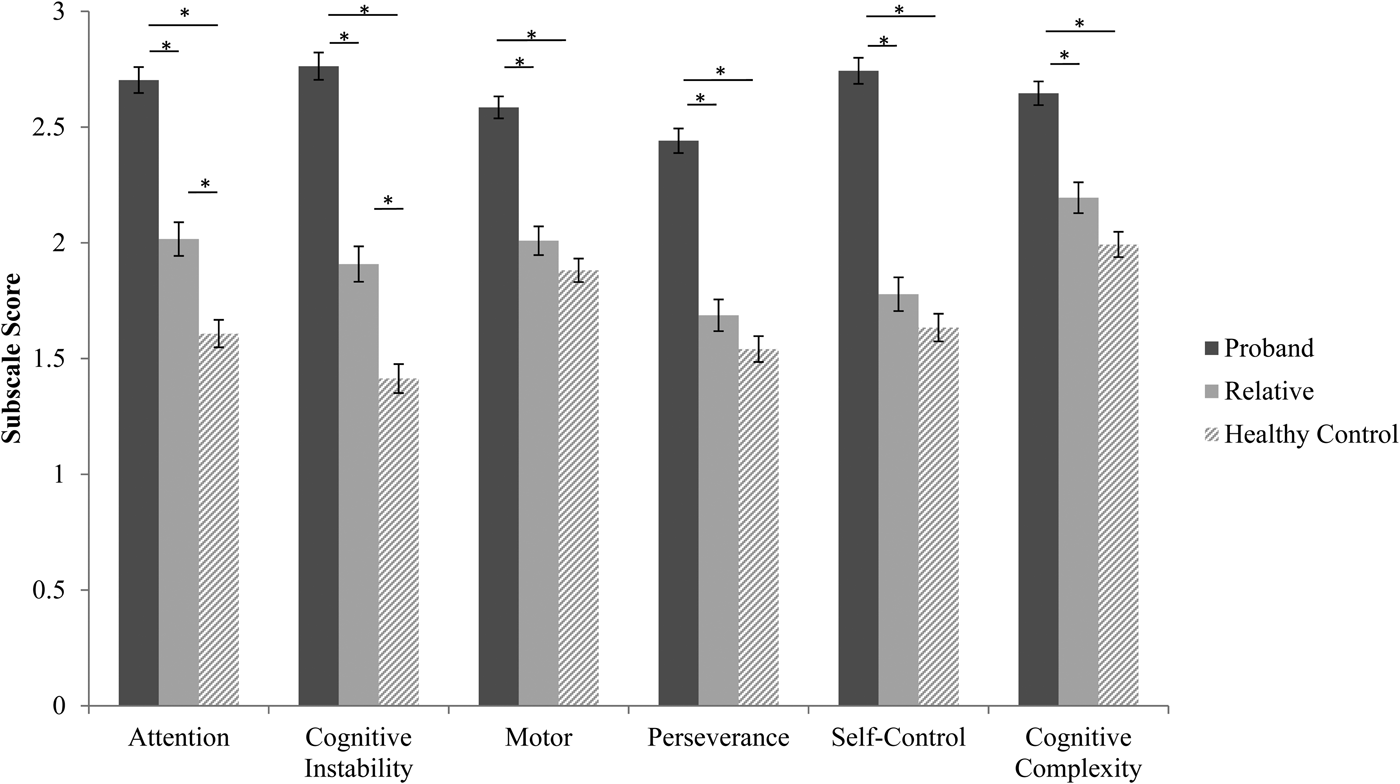
On the BIS, there was a significant multivariate effect of participant group, V = 0.67, F 12, 508 = 21.24, p < 0.001, η p2 = 0.33. Univariate tests were significant for all BIS subscales, F ⩾ 40.78, p < 0.001, η p2 > 0.24. Both probands and relatives scored higher than controls on the attention and cognitive instability subscales (p = 0.024). Otherwise, probands scored higher than relatives and controls on all other BIS subscales (p = 0.024; see Fig. 3).
Estimated marginal means of first-order factor scale scores from the Barratt Impulsiveness Scale covarying for participant sex, age, education, ethnicity, and family membership. Error bars represent standard error of the mean. *p < 0.05.

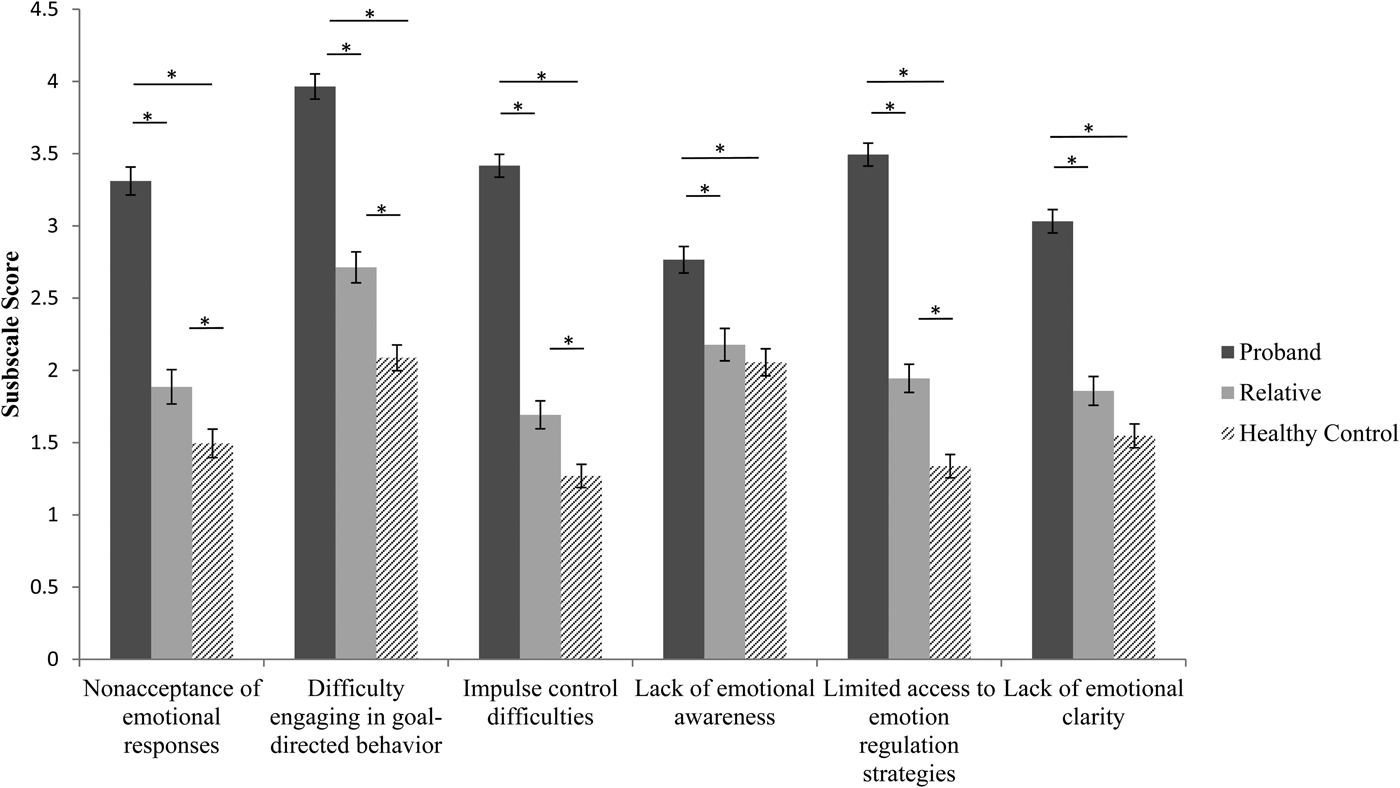
The multivariate effect of participant group was significant on the DERS, V = 0.69, F 12, 494 = 21.89, p < 0.001, η p2 = 0.35. All DERS subscales had significant univariate effects, F ⩾ 16.89, p < 0.001, η p2 > 0.12. Both probands and relatives scored higher than controls on non-acceptance, difficulty engaging in goal-directed behavior, impulse control difficulties, and limited access to emotion regulation strategies subscales of the DERS (p ⩽ 0.024). Otherwise, probands scored higher than relatives and controls on the remaining DERS subscales (p = 0.024; see Fig. 4).
Estimated marginal means of subscale scores from the Difficulties in Emotion Regulation Scale covarying for participant sex, age, education, ethnicity, and family membership. Error bars represent standard error of the mean. *p < 0.05.

Big five personality traits
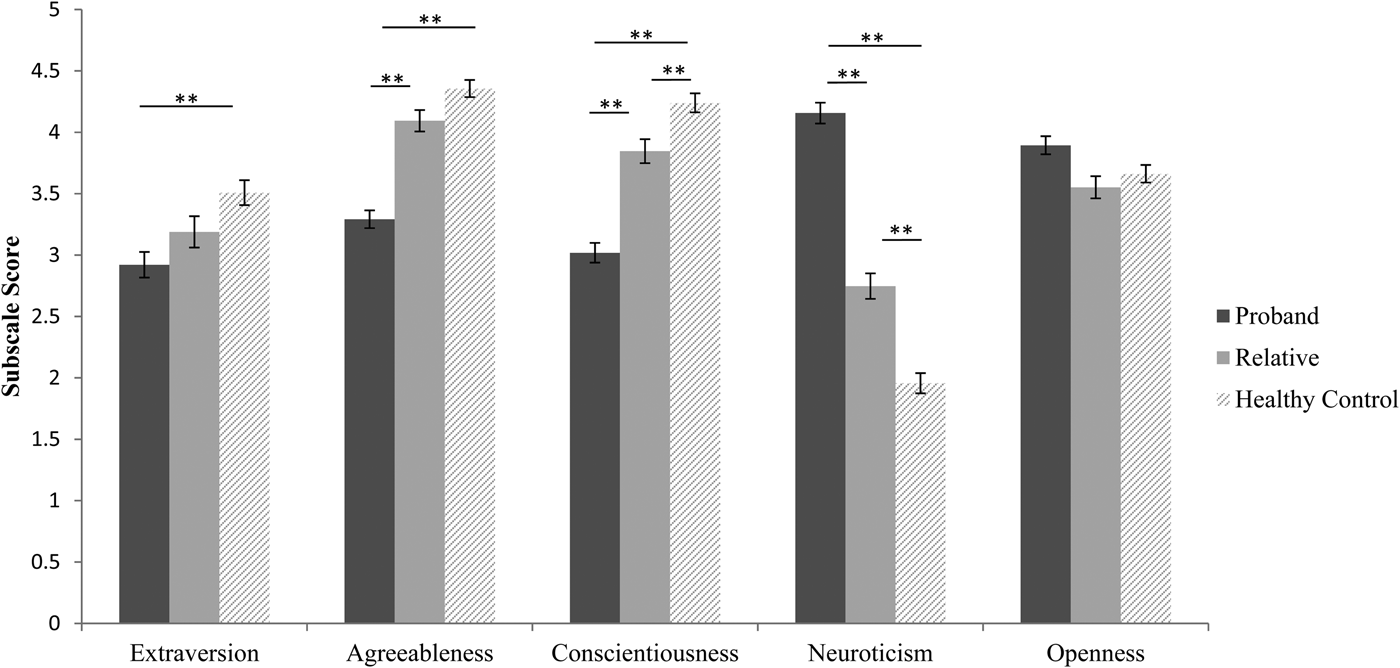
With respect to the BFI, there was a significant multivariate effect of participant group, V = 0.66, F 10, 442 = 21.61, p < 0.001, η p2 = 0.33. Univariate tests were also significant for all BFI subscales, F ⩾ 3.41, p ⩽ 0.035, η p2 ⩾ 0.03. Figure 5 displays the estimated marginal means across groups for each of the BFI subscales. Post-hoc comparisons revealed differences in the expected directions between all participant groups in neuroticism and conscientiousness (p = 0.01). Probands scored significantly lower on extraversion and agreeableness than controls (p = 0.01), while relatives did not differ from controls on these subscales (p ⩾ 0.09). No significant pair-wise group differences were found for openness (p ⩾ 0.12).
Estimated marginal means of subscale scores from the Big Five Inventory covarying for participant sex, age, education, ethnicity, and family membership. Error bars represent standard error of the mean. **p < 0.01.

Non-affected relatives compared with healthy controls
Given that most relatives had at least one lifetime psychiatric diagnosis (n = 42; 57%), analyses were carried out comparing healthy controls and non-affected relatives (i.e. those without a lifetime psychiatric diagnosis based on the SCID and SIDP) on key symptom and personality measures. There was a significant multivariate effect of participant group on the BIS, V = 0.16, F 6, 117 = 3.68, p = 0.002, η p2 = 0.16. There were significant univariate effects on the attention and cognitive stability subscales, F 1, 122 ⩾ 13.58, p < 0.001, η p2 ⩾ 0.10, with relatives scoring significantly higher than controls (p ⩽ 0.015). There were no significant multivariate effects of participant group on the DERS and BFI (V ⩾ 0.07, F ⩾ 1.49, p ⩾ 0.15, η p2 ⩾ 0.07).
Relatives with v. without BPD traits
Relatives were divided into two groups based on whether they endorsed any BPD traits (including the one relative with a diagnosis of BPD) (n = 55) or denied all BPD traits on the SIDP (n = 18). The groups did not differ in age, t(71) = 0.41, p = 0.69, sex, χ2(1) = 0.004, p = 0.95, or years of education, t(71) = −0.56, p = 0.58.
Relatives with v. without BPD traits did not score higher on any scales on the BIS, p ⩾ 0.07, or DERS, p ⩾ 0.06. On the BFI, relatives with BPD traits scored lower in agreeableness, p uncorrected = 0.038, 95% CI (−0.64 to −0.05), and higher in neuroticism, p uncorrected = 0.007, 95% CI (0.22–1.01), than relatives with no BPD traits.
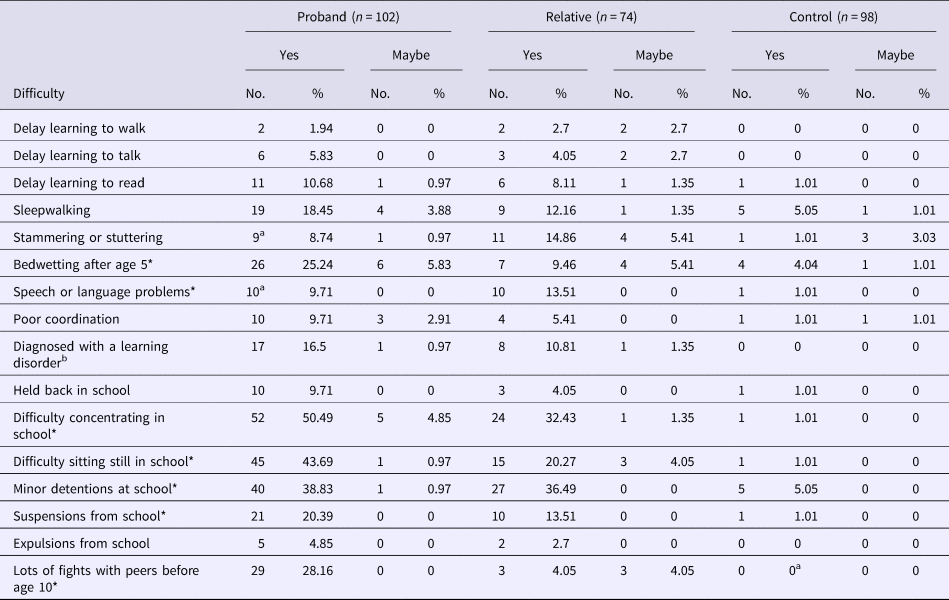
Neurodevelopmental features
Table 4 presents the frequency of neurodevelopmental features reported in each participant group, including delays in major developmental milestones, speech or language problems, behavioral problems, and learning, attention, and concentration difficulties. Compared with controls, both probands and relatives more frequently reported having had difficulty concentrating and sitting still in school, and minor detentions at and suspensions from school (p < 0.05, Bonferroni corrected).
Neurodevelopmental features of probands with borderline personality disorder, first-degree relatives, and non-psychiatric controls

a Missing data for one participant.
b Fisher's exact test compared probands and relatives only because controls were screened out based on the presence of a learning disorder.
*p < 0.05 (Bonferroni adjusted) based on Fisher–Freeman–Halton exact test (2 × 3 contingency tables). Responses were categorized as ‘no’ or ‘yes/maybe’ for analysis. Post-hoc Fisher's exact tests were significant (p < 0.05, Bonferroni adjusted) for the following: bedwetting after age 5 (proband > control); speech or language problems (relative > control); difficulty concentrating in school (proband/relative > control); difficulty sitting still in school (proband/relative > control); minor detentions at school (proband/relative > control); suspensions from school (proband/relative > control); and lots of fights with peers before age 10 (proband > relative/control).
Discussion
In the present study, we examined the aggregation of clinical, personality, and neurodevelopmental phenotypes in families affected with BPD and compared these factors to controls without a personal or familial history of psychiatric disorder. As we expected, the most common psychiatric diagnoses in probands and relatives fell within a spectrum of disorders characterized primarily by negative affectivity (depressive-, anxiety-, and trauma-related disorders) and impulse control difficulties (substance use disorders). Personality disorders were infrequently diagnosed in relatives but dimensional scores based on ratings of personality disorder interview items revealed higher levels of nearly all personality disorder traits in relatives compared with controls. Consistent with our hypotheses, relatives scored intermediate to probands and controls on dimensional measures of impulsivity and emotion dysregulation, as well as big five personality traits. Non-affected relatives also reported higher attentional impulsivity and cognitive instability than controls, suggesting an aggregation of these aspects of impulsivity even in relatives without a personal history of psychiatric disorder. Additionally, both probands and relatives reported a higher incidence of attentional and behavioral control difficulties in childhood.
The prevalence rates of psychiatric diagnoses observed for relatives in our study are largely consistent with other family studies that reported elevated rates of MDD and impulse-spectrum disorders as compared with a variety of control groups (for a review, see White et al., Reference White, Gunderson, Zanarini and Hudson2003). Rates of lifetime DSM-III and DSM-III-R MDD among relatives in other family studies are somewhat lower than the present study – for example, 13.4% in Links et al. (Reference Links, Steiner and Huxley1988), 15.8% in Zanarini et al. (Reference Zanarini, Gunderson, Marino, Schwartz and Frankenburg1988), 15.3% in Schulz et al. (Reference Schulz, Soloff, Kelly, Morgenstern, Di Franco and Schulz1989), and 13.2% in Silverman et al. (Reference Silverman, Pinkham, Horvath, Coccaro, Klar, Schear, Apter, Davidson, Mohs and Siever1991). By comparison, we obtained a 27.0% prevalence rate for a past history of DSM-IV MDD (and 5.4% for current MDD), which is more similar to a study by Riso et al. (Reference Riso, Klein, Anderson and Ouimette2000), which reported a 25.9% prevalence of DSM-III-R MDD. Similarly, the prevalence rates of substance use disorders in other family studies is reported as high as 25.9% in relatives (Riso et al., Reference Riso, Klein, Anderson and Ouimette2000, for alcohol abuse or dependence diagnoses), which is comparable to our 20.3% rate of any lifetime substance use disorder in relatives (note that a current diagnosis was exclusionary). Antisocial personality disorder was diagnosed very infrequently in the present study (one in 74 relatives had a current diagnosis, or a prevalence rate of 1.4%), whereas other family studies have observed rates ranging from 0% (Schulz et al., Reference Schulz, Soloff, Kelly, Morgenstern, Di Franco and Schulz1989) to 9.6% (Links et al., Reference Links, Steiner and Huxley1988). Furthermore, Zanarini et al. (Reference Zanarini, Gunderson, Marino, Schwartz and Frankenburg1988) reported a morbidity risk of 13.6% for antisocial personality disorder in their sample of relatives of probands with BPD.
A current diagnosis of BPD was made in only one of 74 relatives based on our psychiatric diagnostic assessments, which was substantially below lifetime estimates obtained in other family studies (see White et al., Reference White, Gunderson, Zanarini and Hudson2003), and may be a function of the restricted timeframe of the diagnosis in the present study (i.e. at least within the past 5 years according to the SIDP) and the strict psychiatric exclusions applied to probands in the present work. A dimensional measure of BPD traits based on SIDP ratings showed stronger evidence of familial aggregation given that such traits were higher in relatives compared with controls. That dimensional scores showed stronger evidence of familial aggregation than the categorical diagnosis was not entirely unexpected in light of findings that continuous measures of psychopathology are more valid and reliable than discrete measures (Markon et al., Reference Markon, Chmielewski and Miller2011) and given research showing that the symptom dimensions of BPD are highly heritable (Kendler et al., Reference Kendler, Myers and Reichborn-Kjennerud2011b). Similarly, non-affected relatives also scored higher than controls on the attentional and cognitive instability components of impulsivity corroborating perspectives on BPD that consider impulsivity as an essential feature of the disorder (Links et al., Reference Links, Heslegrave and van Reekum1999; Crowell et al., Reference Crowell, Beauchaine and Linehan2009), as the traits were not only elevated in probands with BPD but also relatives without a personal history of psychiatric disorder.
With respect to big five personality traits, relatives scored higher than controls in neuroticism and lower in conscientiousness. Relatives with BPD traits scored higher in neuroticism and lower in agreeableness than relatives without BPD traits. These findings are consistent with behavior genetics research indicating that neuroticism shares the strongest genetic correlation between BPD and big five traits in twin pairs, while the magnitude of the association is lower for conscientiousness and agreeableness (Kendler et al., Reference Kendler, Myers and Reichborn-Kjennerud2011b). The importance of considering big five traits in the familial aggregation of BPD is underscored by the results of the present study and bolstered by research showing that BPD traits share all of their genetic variation with big five traits (except openness) in twins and other siblings recruited from the community (Distel et al., Reference Distel, Trull, Willemsen, Vink, Derom, Lynskey, Martin and Boomsma2009). That neuroticism is a key personality dimension underlying BPD is not a novel finding (e.g. Samuel et al., Reference Samuel, Carroll, Rounsaville and Ball2013), yet its aggregation even in non-affected relatives suggests that the trait may not only be core to the disorder but also have important biological and genetic underpinnings that may be detected in relatives without a personal history of psychiatric disorder. Importantly, neuroticism is a personality trait that is also shared across many psychiatric disorders (Malouff et al., Reference Malouff, Thorsteinsson and Schutte2005; Hettema et al., Reference Hettema, Neale, Myers, Prescott and Kendler2006) and therefore may not be specific to BPD and its familial risk.
Much less attention has been paid to neurodevelopmental characteristics of individuals with BPD and their relatives despite their potential relevance to neurocognitive, neurobiological, and genetic factors. There was no evidence indicating that probands or their relatives had delays in major developmental milestones, such as learning to walk, talk, or read. Both probands and relatives reported an elevated history of difficulties concentrating and sitting still in school, findings that are supported by research showing that individuals with BPD retrospectively report more attention-deficit/hyperactivity disorder symptoms compared with people with various other personality disorders but not BPD (Fossati et al., Reference Fossati, Novella, Donati, Donini and Maffei2002). In conjunction with elevated self-reported attentional impulsivity in probands and relatives, these findings provide preliminary evidence of long-standing attentional difficulties that originate in childhood and persist into adulthood. Importantly, this developmental pattern is also present in at least a subset of persons who have a familial risk for BPD, suggesting that possible attentional limitations earlier in life among relatives might require greater consideration by researchers and clinicians, especially given potential downstream influences on psychiatric symptoms and functional abilities (e.g. academic performance, occupational attainment) over the course of development. Additionally, both probands and relatives more frequently endorsed minor detentions at and suspensions from school compared with non-psychiatric controls. These difficulties may be suggestive of specific childhood temperamental characteristics and disruptive behavior problems that are predictive of BPD (and other personality disorder) symptoms in adulthood (Chanen and Kaess, Reference Chanen and Kaess2012).
While the present findings build on those obtained from previous family studies of BPD, important differences in study methodology should be noted given that the overarching aim of the present study was primarily to examine neurocognitive, neurobiological, and genetic markers in families with BPD. Accordingly, our study employed a control group without a personal or familial history of psychiatric disorder, which differs from previous family studies that often employed control families, including those with an index psychiatric diagnosis (e.g. MDD), allowing them to assess for some degree of specificity of the findings to BPD as compared with other psychiatric diagnoses. Relatedly, it was not appropriate to calculate odds ratios for psychiatric disorders in relatives compared with controls because the latter were intentionally recruited on the basis of having no history of psychiatric disorder. The present work also excluded several psychiatric diagnoses (i.e. psychotic disorders, bipolar I disorder) in probands because they are known to be associated with neurocognitive deficits and neurobiological differences in probands and relatives (Hill et al., Reference Hill, Reilly, Keefe, Gold, Bishop, Gershon, Tamminga, Pearlson, Keshavan and Sweeney2012; Narayanan et al., Reference Narayanan, O'Neil, Berwise, Stevens, Calhoun, Clementz, Tamminga, Sweeney, Keshavan and Pearlson2014; Zhang et al., Reference Zhang, Picchioni, Allen and Toulopoulou2016; Bora, Reference Bora2017). These exclusions were applied to probands to reduce the likelihood that these disorders would impact the neurocognitive and neuroimaging measures that were incorporated into the larger study. Additionally, individuals reporting current alcohol or non-alcohol substance abuse or dependence, or an extensive history of alcohol or non-alcohol substance dependence, were excluded, which may have resulted in a selection bias and reduced the severity of impulsivity and related traits or symptoms observed in probands and relatives in the present study. While there did not appear to be any systematic ascertainment biases with respect to demographic variables or overall clinical severity as a function of recruiting probands with an available relative, it is possible that the present findings related to psychiatric diagnoses, symptom and trait dimensions, and neurodevelopmental features, do not fully reflect the familial risk for BPD because we were not able to directly assess all relatives within each family. However, probands with relatives recruited to the study were less impulsive and more agreeable than probands without relatives, highlighting potentially important ascertainment biases that should be considered in future family studies. Nevertheless, one might speculate that the present findings, if anything, underestimate the full risk of psychiatric liability to BPD if probands’ less symptomatic and more functional relatives participated in this study. The study findings might be explained by shared environment (e.g. maltreatment), although the research design could not separate out genetic and environmental influences, as would be aided by twin studies. Indeed, twin studies have yielded important insights into familial contributions to the co-occurrence of BPD with other psychiatric disorders (Kendler et al., Reference Kendler, Aggen, Knudsen, Røysamb, Neale and Reichborn-Kjennerud2011a), to the phenotypic heterogeneity (Reichborn-Kjennerud et al., Reference Reichborn-Kjennerud, Ystrom, Neale, Aggen, Mazzeo, Knudsen, Tambs, Czajkowski and Kendler2013) and temporal stability (Reichborn-Kjennerud et al., Reference Reichborn-Kjennerud, Czajkowski, Ystrøm, Ørstavik, Aggen, Tambs, Torgersen, Neale, Røysamb, Krueger, Knudsen and Kendler2015) of BPD symptoms, and to the associations of pathological personality traits with BPD symptoms (Reichborn-Kjennerud et al., Reference Reichborn-Kjennerud, Krueger, Ystrom, Torvik, Rosenström, Aggen, South, Neale, Knudsen, Kendler and Czajkowski2017). Another notable limitation is that the neurodevelopmental characteristics relied on retrospective self-reports, which may not be reliable for some participants and should be examined in subsequent research alongside collateral information provided by caregivers. For example, the diagnosis of attention-deficit hyperactivity disorder, while not assessed in this study, is diagnosed with some frequency in childhood and adulthood among individuals with BPD and may be associated with greater clinical severity (Philipsen et al., Reference Philipsen, Limberger, Lieb, Feige, Kleindienst, Ebner-Priemer, Barth, Schmahl and Bohus2008). Future family studies may systematically assess the presence of a developmental history of attention-deficit hyperactivity disorder given the pattern of neurodevelopmental features observed in both probands and relatives in our family study. Finally, it would be informative to expand the age range of probands to include adolescents with BPD, which could help to clarify developmental differences in symptom dimensions that are likely to change with age. Similarly, it will be important for future research to recruit suitably large samples of males with BPD to understand potential sex differences in core BPD phenotypes. A promising approach that could be adopted in future studies to reduce potential participant selection biases could be to recruit a random, population-based sample of individuals with BPD, as well as controls that are more closely aligned to probands in psychiatric eligibility criteria.
In summary, the results of the present study provide substantial evidence supporting the validity of key clinical, personality, and neurodevelopmental phenotypes in BPD. In light of these findings, subsequent work will investigate neurocognitive functioning and neuroimaging measures in probands and relatives, as well as specific genetic markers that may reflect a familial liability for BPD. Taken together, this research has the potential to offer new insights into the neurobiological and genetic mechanisms that underlie the core phenotypes of BPD and illuminate the diverse factors that contribute to its development.
Supplementary material
The supplementary material for this article can be found at https://doi.org/10.1017/S0033291718002908.
Financial support
This work was supported by the Canadian Institutes of Health Research (A.C.R., grant numbers 123413; MSH130177); and the Ministry of Research, Innovation and Science (A.C.R., grant number ER14-10-185).
Conflict of interest
None.
Ethical standards
The authors assert that all procedures contributing to this work comply with the ethical standards of the relevant national and institutional committees on human experimentation and with the Helsinki Declaration of 1975, as revised in 2008.