Introduction
Sexuality in dementia is a topic often overlooked by professionals. However, sexual behaviours in dementia can present considerable challenges for both people with dementia and their carers, contributing to carer stress, institutionalization and increasingly restrictive living environments. In this review evidence and opinion on what is understood by the phrase ‘inappropriate sexual behaviour in dementia’ (ISBD) will be explored. Approaches to assess and to manage sexual behaviour problems in dementia will be discussed, with reference to legal and ethical considerations.
Relevant publications were identified through a search of English language literature indexed on Cochrane, Embase, Medline and Psychinfo databases using the search terms ‘dementia’, ‘cognitive impairment’, ‘Alzheimer's disease’, ‘frontotemporal dementia’, ‘Pick's disease’, ‘sexual behaviour’, ‘psychosexual disorder’, ‘hypersexuality’, ‘inappropriate sexual behav*’, ‘sexual disinhibition’, ‘therap*’, ‘behav* therapy’, ‘treatment’, ‘drug therapy’, ‘medication’, ‘pharmacological treatment’ and hand searching the reference lists of relevant publications. Textbooks provided further background information.
Prevalence of inappropriate sexual behaviours in dementia
It is unsurprising that prevalence rates vary considerably in the literature given that prevalence studies tend to be small, using heterogeneous populations and inconsistent definitions for ISBD. Most studies also rely either on primary caregivers retrospectively and subjectively identifying ‘sexual disinhibition’ or ‘inappropriate sexual behaviour’ in subjects, or on retrospective review of clinical records looking for documentation of sexual behaviour problems. Both of these methods are limited by recall bias and inaccurate record keeping. For example, SzaszReference Szasz1 surveyed the nursing staff of a 400-bed extended care unit for aged men with dementia who estimated that 25% of the men created problem sexual behaviour incidents. Burns et al.Reference Burns, Jacoby and Levy2 found a prevalence of 7% when they asked the primary carers for 178 men and women with Alzheimer's disease (AD) in community, residential and in-patient settings to rate patients for ISBD. Tsai et al.Reference Tsai, Hwang, Yang, Liu and Lirng3 found a prevalence of 15% in 133 consecutive admissions to a psychogeriatric ward by asking home carers to complete a questionnaire on admission and also retrospectively reviewing patient case records during admission. Alagiakrishnan et al.Reference Alagiakrishnan, Lim, Brahim, Wong, Wood, Senthilselvan, Chimich and Kagan4 performed a retrospective review of 2278 case records for patients with dementia from a variety of settings and found a prevalence of ‘aberrant’ sexual behaviours in 1.8% with a 9:1 male excess. De Medeiros et al.Reference de Medeiros, Rosenberg, Baker and Onyike5 found that 7.9% of residents with dementia in a long-term care facility had ‘improper sexual behaviours’ recorded in their case record over a 1-week period. Zeiss et al.Reference Zeiss, Davies and Tinklenberg6 conducted an observational study in an effort to obtain direct observational data, but the study was limited by small numbers (n = 40) of exclusively male care home residents, only observed for a total of 45 minutes. ISBDs were observed in 18%, but the behaviours were described as generally fleeting, never aggressive, and completely ignored by care staff.
A summary of the published evidence on ISBD is as follows:
• Prevalence rates of 1.8–25% are reported.
• A higher prevalence is generally reported in care home and in-patient facilities, compared with community settings.
• Gender ratios vary from 1:1Reference Burns, Jacoby and Levy2, Reference Derouesné, Guigot, Chermat, Winchester and Lacomblez7 to male excess.Reference Alagiakrishnan, Lim, Brahim, Wong, Wood, Senthilselvan, Chimich and Kagan4, Reference Ehrenfeld, Bronner, Tabak, Alpert and Bergman8
• ISBD is observed across the severity spectrum, from mild cognitive impairment to severe dementia. Some studies show an association with more severe dementia.Reference Bardell, Lau and Fedoroff9
• ISBDs are seen in all types of dementia, but several studies suggest that they may be more common in vascular dementia.Reference Tsai, Hwang, Yang, Liu and Lirng3, Reference Alagiakrishnan, Lim, Brahim, Wong, Wood, Senthilselvan, Chimich and Kagan4, Reference Bardell, Lau and Fedoroff9
• ISBD is consistently observed less than agitation and aggression.Reference Knight, Alderman, Johnson, Green, Birkett-Swan and Yorstan10
The problem of definition
Sexuality and dementia are both complex biological, psychological and emotional entities and defining ISBD will never be straightforward. Furthermore, there is no clear boundary between what is considered appropriate and inappropriate human sexual expression, and opinion will differ among individuals, institutions and cultures. Thus experts urge readers not to confuse normal sexual desires and behaviours with inappropriate sexual behaviour in older people with dementia who are constrained by increasing dependence on care and restrictive living environments;Reference Guay11, Reference Harris and Weir12 it is this very confusion that many definitions of ISBD have struggled to avoid.
Alagiakrishnan et al.Reference Alagiakrishnan, Lim, Brahim, Wong, Wood, Senthilselvan, Chimich and Kagan4 define ISBD using another phrase open to interpretation: ‘verbal or physical aberrant behaviours’. Other common definitions focus on the sexual behaviour being perceived as disruptive or distressing to those involved,Reference Black, Muralee and Tampi13–Reference Series and Degano15 or unacceptable within the social context in which it is carried out.Reference Johnson, Knight and Alderman16, Reference Stubbs17 Giving greater attention in defining ISBD to whether those involved experience distress, rather than whether behaviour is normal,Reference Series and Degano15 still risks undue influence of individual values and biases when deciding on the inappropriateness of an observed behaviour. As Ward et al.Reference Ward, Vass and Aggarwal18 suggest, ‘an act of sexual expression holds meaning according to the perspective from which it is judged’ (p. 56). What one person regards as inappropriate, another might view as acceptable sexual expression.Reference Wallace and Safer19 Nevertheless, issues of distress and safeguarding cannot be ignored and are key determinants when deciding whether intervention is needed. The tension that exists between facilitating sexual expression for people with dementia and protecting dementia patients and carers is immediately apparent.
The other confusion is that the term ‘inappropriate sexual behaviour’ is used interchangeably in the literature with ‘hypersexuality’ and ‘sexual disinhibition’ as if they are all one and the same thing.Reference Wallace and Safer19, Reference Tsatali, Tsolaki and Christodoulou20 However, certain definitions of ISBD, particularly those that focus more on descriptions of the behaviour, rather than on the effect of the behaviour on others, appear to describe true hypersexuality. For example, Bardell et al.Reference Bardell, Lau and Fedoroff9 suggest that ISBD are defined as overt sexual acts associated with increased libido and/or persistent, uninhibited, sexual behaviours directed at oneself or others, a definition perhaps less open to interpretation and characterizing an abnormal increase in sexual desire or activity.
As awareness and appreciation of the sexual needs of older people grow,Reference Archibald21, Reference Tabak and Shemesh-Kigli22 the use of subjective terms like ‘inappropriate’ is being called into question and new phrases such as ‘sexual behaviour causing concern to others’, are emerging.Reference Benbow and Beeston23 Benbow and Beeston also support the simple descriptive classification into sex talk, sex acts and implied sex acts, originally proposed by Szasz,Reference Szasz1 rather than an interpretive classification such as that proposed by de Medeiros et al.Reference de Medeiros, Rosenberg, Baker and Onyike5 that uses categories of intimacy seeking, disinhibited behaviour, normal sexual behaviour and non-sexual behaviours, or the classification into appropriate, inappropriate and ambiguous behaviours.Reference Zeiss, Davies and Tinklenberg6 Whilst interpretive classifications usefully highlight the range of potential aetiologies subsumed in the umbrella term of ISBD, they continue the trend of high reliance on inference regarding intent and appropriateness of behaviours.
Aetiology of sexual behaviours that cause concern for others
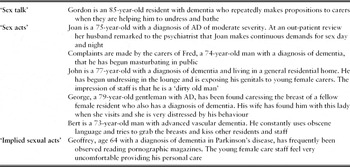
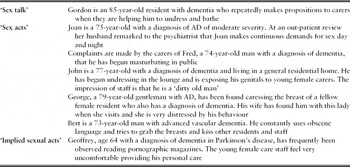
Table 1 gives examples of the range of cases commonly presenting to health professionals, grouped according to the classification of sex talk, sex acts and implied sex acts. What is clear is that the origins of each individual's behaviour are probably a result of different biological, social and psychological factors. The range and themes of aetiological factors will be discussed, but in order to best understand them, it is helpful to first briefly consider the neurobiology of sexuality, normal sexuality in ageing and sexuality when ageing with dementia.
Common presenting behaviours
Neurobiology of sexuality
The neurological and endocrine systems involved in the 3-stage sexual response of sexual desire or libido, arousal and orgasm are complex. In brief: the hypothalamus is a key area in the regulation of libido. Hormones and neurotransmitters positively regulating sexual desire by acting on hypothalamic areas include oestrogen, testosterone and dopamine. In contrast, prolactin and serotonin have a negative influence on sexual desire. Arousal is transmitted from the brain to the genitalia via the parasympathetic and sympathetic autonomic nervous system. Two key neurotransmitters promote arousal: acetylcholine in the parasympathetic innervation of the genitalia and nitric oxide acting on smooth muscle of the genitalia. Other neurotransmitters and hormones that promote arousal include noradrenalin, testosterone and oestrogen. Serotonin has a negative influence on sexual arousal. Descending spinal serotonergic fibres exert an inhibitory action on orgasm and descending spinal noradrenergic fibres and noradrenergic sympathetic innervation of the genitalia facilitates orgasm.Reference Stahl24 In summary, serotonin has a negative influence on libido, arousal and orgasm, whilst dopamine, noradrenalin and acetylcholine have positive effects on sexual response.
Normal sexuality in ageing
Levels of sexual drive will vary enormously between individuals at any age, but normal ageing-related changes include a slowing of the sexual response and a less powerful response. Rates of erectile dysfunction increase with age and it is associated particularly with conditions commonly experienced by older men, including prostate pathology, use of antihypertensive medication, diabetes and vascular disease.Reference Dunn, Croft and Hackett25 It is important to remember, however, that sexual desire and response is not all biological. It is influenced by the beliefs and values that are acquired over a lifetime, and by current motivation. Whilst the frequency of sexual activity tends to decrease in older adults, interest in sexuality remains high, and many older adults remain sexually active and find it more fulfilling than they did in their younger days.Reference Benbow and Beeston23, Reference Wright26 Furthermore, the literature encourages a broad definition of sexuality in older people to include not just intercourse, but intimacy, affection, romance, companionship and personal grooming,Reference Hajjar and Kamel27 and expressions of affection have been found to increase with age.Reference Wright26
Despite these positive reports of sexuality in ageing and the World Health Organisation28 reminding us that ‘Sexuality is a central aspect of being human throughout life’ (p. 5), the attitude of the young to sexuality in older people tends to be conservative at best and very negative at worst, with older people stereotyped as asexual and any sexual expression often viewed as amusing, disgusting or disgraceful.Reference Ehrenfeld, Bronner, Tabak, Alpert and Bergman8, Reference Tzeng, Lin, Shyr and Wen29 Older people may continue to view their sexuality as a normal aspect of their lives, but they may also internalize society's attitudes and feel that to actively engage in sex is improper.Reference Taylor and Gosney30
Sexuality in dementia
Sexual behaviour tends to follow a life-long pattern, with behaviour in younger adulthood a strong predictor of sexual behaviour in older adulthood.Reference White31 Given that people have lived with their sexuality for much longer than with their dementia, this is likely to still hold true for individuals ageing with dementia. There have been several studies of how sexuality changes in couples where one spouse has a diagnosis of ADReference Kuppuswamy, Davies and Spira32–Reference Davies, Newkirk, Pitts, Coughlin, Sridhar, Zeiss and Zeiss35 and if there is a change, it is most commonly that of a gradual decline in sexual interest and activity. For example, Kuppuswamy et al.Reference Kuppuswamy, Davies and Spira32 interviewed 50 spouses of people with AD (32 female, 98% Caucasian). When asked if sex was initiated more or less often than before diagnosis, almost half the spouses reported no change, 38% reported decreased frequency and 10% reported an increase. Duffy's studyReference Duffy33 of 38 spousal carers of people with AD reported a decline of sexual intimacy most commonly, and increased sexuality in a few patients. Male spouses were more tolerant of increased sexuality than female spouses, whose feelings ranged from mild irritation to strong aversion.
Reasons for a decline in sexual activity in AD include cognitive sequencing and initiation difficulties, forgetting actions and rituals, changes in the nature of the marital relationship, individuals becoming more egocentric and rigid, loss of communication and reciprocity skills, concerns from spouses about their partners’ capacity to consent to sex and depression.Reference Davies, Newkirk, Pitts, Coughlin, Sridhar, Zeiss and Zeiss35–Reference Mittleman, Zeiss, Davies, Coon, Gallagher-Thompson and Thompson37 In addition, high rates of erectile dysfunction have been reported in AD, occurring in up to 50% of affected males independent of other risk factors such as physical health problems or medication.Reference Davies, Zeiss and Shea36
Increased sexual activity in a small minority of couples is, however, also a consistent theme. For example, Wright'sReference Wright26 study investigated longitudinal trends of marital sexuality in the presence of AD versus normal ageing. Five years after the onset of AD, 14% of caregivers reported suffering demands for frequent sexual contact from their spouses, which was experienced as distressing. However, 2 years later this behaviour had disappeared for all but one couple. There has been little research into how sexuality is commonly affected by other types of dementia.
Hypersexuality in dementia
It is worth emphasizing that the first consideration must be whether the behaviour is truly hypersexual (i.e. a pathological increase in sexual desire or activity), or if it is just perceived as hypersexual. Whilst research suggests that attitudes of care staff towards aged sexuality in residential homes are becoming more positive, sexual expression of institutionalized people with dementia remains a topic of great sensitivity.Reference Mahieu and Gastmans38 Any expression of sexuality by a person with dementia is often seen by care staff as problematic and hypersexual,Reference Elias and Ryan39 particularly if the individual is male.
In a study of residential carers’ perspectives, only 7% felt that sexual expression was a natural and/or expected aspect of the lives of a person with dementia living in residential care.Reference Ward, Vass and Aggarwal18 Take the example of Fred (Table 1), the resident who has reportedly begun masturbating in public. A full assessment might find that carers have found him masturbating in the bathroom several times a week, which has been his habit since the sexual relationship between Fred and his wife ceased several years ago. His sexual expression has not changed, but his access to privacy has, and his behaviour is at risk of being pathologized.
Behaviours perceived as hypersexual may represent needs other than sexual ones,Reference Tsatali, Tsolaki and Christodoulou20 for example a need for closeness and security or a way of coping with extreme boredom, or they may represent attempts at normal sexual expression altered by cognitive deficits. Take the case of Joan (Table 1) who is making frequent demands of her husband for sex. This may be the result of her short-term memory deficits, she having forgotten an earlier episode of sexual intercourse, coupled with a desire to feel loved and secure, rather than a new increase in libido or arousal. The behaviour of Gordon, who frequently makes sexual propositions to carers helping him with personal care, may be the result of his misinterpreting his female carers’ intentions due to cognitive deficits in orientation, recognition and memory, together with a lack of opportunity for affectionate exchanges in his daily life. The case of John, who is undressing in the lounge, may well have no sexual motivation whatsoever, but be a response to his urge to urinate and an inability to find the lavatory.
The literature does, however, present rare cases of new onset sexual behaviours that are of a nature and/or degree to be considered truly hypersexual or paraphilic. Medication and dysfunction in several different brain regions are most commonly implicated. Other proposed potential causes include delirium, manic and psychotic psychiatric disorders, and other disorders of the central nervous system including temporal lobe epilepsy, Huntington's disease, multiple sclerosis and Wilson's disease.Reference Guay11
Medication-related hypersexuality
Whilst benzodiazepines, dopamine agonists, fluvoxamine and mirtazapine have all been proposed as potential causes,Reference Series and Degano15, Reference Shoyama, Yamamoto and Iwatani40, Reference Ward41 the only medication that has been clearly implicated in a few cases of hypersexuality in dementia is the cognitive enhancer, donepezil. Donepezil is a selective acetylcholinesterase inhibitor with a half-life of 60 to 100 hours. ChemaliReference Chemali42 presented two cases of women, one 81-year-old with mild mixed dementia, and one 72-year-old with mild cognitive impairment, who both experienced overwhelming increases in libido, obsessive sexual thoughts and urges for sexual activity 1 week after starting donepezil 5 mg daily. These symptoms abated for both women a few days after stopping donepezil. Coco and CannizareReference Coco and Cannizaro43 present a further case of increased libido and sexual activity 4 days after commencing donepezil 5 mg daily, this time in a 71-year-old man with AD. His hypersexuality resolved within 1 week of stopping donepezil treatment and re-emerged following a rechallenge with donepezil. The postulated mechanism is of increased acetylcholine activity directly stimulating the sexual organs, causing arousal.
Dopamine agonist therapy, when used to treat Parkinson's disease and multi-system atrophy, has been associated with the emergence of compulsive hypersexual behaviours.Reference Klos, Bower and Josephs44 The mechanism postulated is a reduction in serum prolactin and increased central dopaminergic activity. Indeed the dopamine receptor agonist, cabergoline, has been used to treat erectile dysfunction and to increase libido.Reference Guay11 There are no case reports of dopamine agonist therapy and hypersexuality specifically in dementia.
Brain areas implicated in hypersexuality
The neuroanatomical correlates of hypersexuality in neuropsychiatric disorder are complex and our understanding incomplete; however, associations with frontal and temporal lobe damage are consistent research findings.Reference Joyal, Black and Dassylva45 Frontal lobe impairments most probably result in disinhibited sexual behaviour as part of a general reduction in inhibitory control of socially inappropriate conduct.Reference Bradford46 Bilateral lesions of the temporal lobe can cause Kluver-Bucy syndrome, consisting of visual agnosias, hyperorality, emotional changes and increased sexual behaviour. The Kluver-Bucy syndrome has been described in both AD and fronto-temporal dementia (FTD), typically as a partial syndrome.Reference Burns, Jacoby and Levy2
Poetter and StewartReference Poetter and Stewart47 note that FTDs often affect both frontal and anterior temporal cortices and so both frontal disinhibition and Kluver-Bucy syndrome symptoms may be seen. They present a case of a 78-year-old man with a diagnosis of FTD and hypersexuality who made repeated indiscriminate verbal and physical sexual advances towards carers and residents, both male and female. Mendez et al.Reference Mendez, Chow, Ringman, Twitchell and Hinkin48 present a case of another man with FTD, a 60-year-old former college professor, with increased sexual activity and paedophilia, repeatedly stalking, accosting and attempting to molest children, accompanied by generally disinhibited compulsive behaviours and aggression. He had a past history of paedophilic tendencies 35 years previously. FDG-PET imaging showed a prominent area of focal hypometabolism in the right temporal region. He was diagnosed with right temporal variant FTD, a variant associated with sexual aggression, disinhibition and altered sexual orientation. People with left temporal lobe variant FTD are reportedly more socially appropriate and more aphasic. Other studies have demonstrated an association of hyposexuality with left temporal lobe lesions and hypersexuality with right temporal lobe lesions.Reference Braun, Dumont, Duval, Hamel and Godbout49 Markedly increased libido has been reported following strokes involving the right anterior temporal horn.Reference Monga, Monga, Raina and Hardjasudarma50 The Klein Levin syndrome, caused by hypothalamic dysfunction, can include hypersexualityReference Mendez, Chow, Ringman, Twitchell and Hinkin48 that might well be anticipated given the key role of the hypothalamus in the regulation of libido.
Assessment of ISBD
Good management will start with an excellent assessment, taking holistic account of the person and their needs. Establishing whether or not a person is experiencing hypersexuality is facilitated by obtaining a comprehensive history of the presenting symptoms, including the frequency, intensity, severity and duration of episodes of concern, and a history of the person's past sexual history, behaviours and values. When the person themselves cannot fully communicate their own experience then the use of a rating scale can be useful.
There is only one validated tool to measure the type and severity of sexual behaviour problems – the St Andrew's Sexual Behaviour Assessment (SASBA) – developed by Knight et al.Reference Knight, Alderman, Johnson, Green, Birkett-Swan and Yorstan10 and validated in people with progressive cognitive impairment and acquired brain injury admitted to specialist services in the UK. An unvalidated rating scale is used in clinical practice in Swindon (The Manchip Rating Scale – see Appendix).Reference Ward41 The tool has also proved useful not just in assessing sexual behaviours causing concern, but also in opening up discussions about sexual behaviours with patients, families, care staff and health professionals, raising awareness of sexual behaviour in dementia and in monitoring response to treatment.
The assessment should also screen for other causes for behaviours including psychiatric disorders such as hypomania or delusional disorder, medications or substances misuse and delirium. An important question to ask in the assessment is ‘Who is the behaviour a problem for?’ Clearly identifying what risks the behaviour may pose to the individual, to other vulnerable people, to carers and to the institution will help to guide a balanced and thoughtful person-centred risk management plan, rather than interventions aimed only at reducing carers’ feelings of discomfort or concerns about an institution's reputation.
Management
Psychosocial and behavioural management
The two main approaches to managing sexual behaviour causing concern are behavioural and pharmacological, often in combination.Reference Harris and Weir12 Before discussing interventions directed at the individual, however, it is important to consider how addressing general environmental factors should help to improve both the sexual lives and well-being of people ageing with dementia and prevent the emergence of sexual behaviour problems in the first place.
The principal factor is ensuring that care staff and health professionals provide a tolerant environment that respects and supports people with dementia to safely meet their sexual needs. This is probably best achieved through staff education on sexuality in ageing and dementia and managerial promotion of a culture of willingness to discuss sexual issues and dilemmas with each other, with patients/residents and with relatives.Reference Ehrenfeld, Tabak, Bronner and Bergman51 Lack of privacy and lack of opportunity to express and receive affection, both risk factors for ‘inappropriate’ sexual behaviours in long-term care facilities,Reference Tzeng, Lin, Shyr and Wen29 should be challenged and addressed whenever possibleReference Wright26 and strategies that help people with dementia to meet their needs for love and intimacy should be promoted.Reference Kamel and Hajjar52
If assessment reveals an unmet need or cognitive difficulty at the root of behaviour, then an intervention to meet the need or assist the difficulty should be devised.Reference Martin53 Take the case of George (Table 1) who has upset his wife by displaying sexual behaviours towards a female co-resident. His behaviour may be the result of his not remembering or recognizing his wife. The solution may be in treating the memory by providing him with cues to remind him of her, such as displaying large photos of her in his room, staff frequently reminding him that his wife will be coming in to see him soon, and encouraging his wife to show him physical affection. In the case of Gordon who is propositioning staff during episodes of personal care, the behaviour may be reduced by staff consistently orientating him to the situation, to who they are, and by responding to his requests with a simple and neutral statement such as ‘I don't do that’.Reference Harris and Weir12
There are no studies of non-pharmacological therapies specifically for hypersexual behaviour problems in dementia and only one case report of an effective non-pharmacological therapy.Reference Tune and Rosenberg54 This concerns a case of a 68-year-old man who repeatedly touched and grabbed the genitalia of random female staff and residents, a behaviour that was unresponsive to treatment with risperidone, quetiapine and valproate. He was given a 3-foot tall stuffed ‘Pink Panther’ toy which he grasped and fondled and he became less intrusive with females. Other proposed strategies for managing ISBD include same-sex carers, redirection and distraction, increased socialization and activities, sensory stimulation and clothing modifications such as trousers that open at the back to prevent public masturbation.Reference Wallace and Safer19, Reference Tsatali, Tsolaki and Christodoulou20, Reference Rosen, Lachs and Pillemer55
Pharmacological treatment strategies
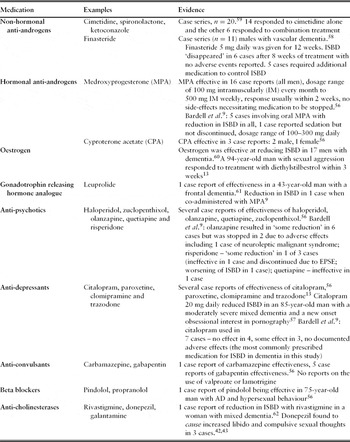
The published evidence of pharmacological treatments for ISBD is limited to case reports, case series and retrospective case control studies. TuckerReference Tucker56 comprehensively reviewed all published literature on pharmacological treatments of ISBD up to April 2009. One further case report,Reference Chen57 one case seriesReference Na, Lee, Park, Ko, Kim and Cho58 and one retrospective case control studyReference Bardell, Lau and Fedoroff9 have been published since Tucker's review. The results of these case reports and studies are condensed in Table 2.
Summary of pharmacological evidence for the treatment of ‘inappropriate’ sexual behaviours in dementia

In summary, medications that have been reported as reducing ISBDs include selective serotonin reuptake inhibitors (SSRIs), clomipramine, first and second generation antipsychotics, carbamazepine, gabapentin, rivastigmine, pindolol, non-hormonal and hormonal anti-androgens, oestrogens and a gonadotrophin releasing hormone analogue. A reduction in behaviours rather than complete extinction is the norm. It can be postulated that the efficacy of most of these medications is through their effects on the neurotransmitter and hormone systems involved in the sexual response. For example, SSRIs can reduce libido and inhibit orgasm through central and peripheral stimulation of 5-HT2 receptors and are the most likely psychotropic to cause sexual dysfunction.Reference Stimmel and Gutierrez63 Antipsychotics’ dopamine antagonism and propensity to increase prolactin levels decrease libido, their anticholinergic effects may reduce arousal and they may cause ejaculatory problems through alpha-1 adrenergic blockade.Reference Stahl24 Carbamazepine has been shown to reduce testosterone levels,Reference Clossius64 as do the hormonal and non-hormonal anti-androgens.
Many of the patients included in these reports and studies had trialled multiple medications before finding an effective agent. Many were also on more than one psychoactive drug at the same time, making it difficult to assess the relative contribution of each medication type to observed behavioural changes. Authors differ in their views on which medication should be used first-line for ISBD.Reference Guay11, Reference Ozkan, Wilkins, Muralee and Tampi14
There are no reports on the use of valproate, lamotrigine, memantine or mirtazepine specifically in the treatment of ISBD. Memantine has been found to be effective for disinhibition in dementia, particularly agitation and aggression, in a large retrospective, pooled data analysis of multicentre, randomized, placebo-controlled trials.Reference Gauthier, Loft and Cummings65
A UK national survey of prescribing patterns for psychotic and behavioural symptoms in dementia was published in 2002,Reference Scott, Lawrence and Duggal66 consisting of an anonymous questionnaire sent out to all members of the Faculty of Old Age Psychiatry, enquiring about preferred drug treatments. A total of 247 (66%) completed questionnaires were returned. For ‘sexual disinhibition’, the preferred categories were classical and atypical antipsychotics. The most common individual choices were haloperidol (15%), thioridazine (11%) and risperidone (10%). In a survey of prescribing practices of old age psychiatrists in Avon and Wiltshire in 2012, the two most popular medication categories prescribed by respondents were SSRI anti-depressants and anti-androgens, along with new use of memantine.Reference Ward41 These trends are in keeping with relative drug safety in dementia issues.Reference Banerjee67
The recent literature usually only recommends trials of pharmacological treatment for sexual behaviour problems when initial behavioural approaches have failed, given that all the proposed medications carry the risk of potentially serious side-effects.Reference Wallace and Safer19, Reference Tsatali, Tsolaki and Christodoulou20, Reference Tucker56 For example, whilst SSRIs are generally well-tolerated, they can cause dangerous hyponatraemia and increase risks of gastro-intestinal bleeding; the association between anti-psychotic use in dementia and increased risk of stroke and mortality is now widely reported;Reference Banerjee67 hormonal anti-androgens are associated with increased venous thromboembolic risk, osteopenia and osteoporosis; blood dyscrasias and hypersensitivity reactions are rare complications of carbamazepine use. However, whilst the decision to trial medication should never be made lightly, it must include a balanced appraisal of the risks to the person by not treating potentially tormenting symptoms, perhaps subjecting them to significant restrictions in terms of modified clothing, close observation, having to move home, and the potential for the person to become increasingly isolated and ostracised due to their behaviours. The risk sexual behaviours pose to others must also be considered, particularly risk to vulnerable cognitively impaired and/or physically frail fellow residents in care home and hospital settings.Reference Rosen, Lachs and Pillemer55
Legal perspectives
Decisions surrounding sexual relationships in dementia can be fraught with dilemma, particularly when a new relationship is discovered between residents in care. Care homes have a duty to protect their residents, but also a duty to uphold residents’ rights to autonomy and respect for their private lives. Where the subjects involved in an episode of concern retain capacity, the behaviour is not prohibited by law and does not infringe on the rights of others, the issue is simple: individuals should be free and supported to act as they choose.Reference Everett68 However, when the capacity of one or both of the people involved is called into question (and it should be noted that assessment of capacity is not always straightforwardReference Everett68, Reference Kuhn69 and can easily be underestimated in people with dementiaReference Mahieu and Gastmans38) then balancing rights to sexual expression with risks of sexual abuse and exploitation is often challenging.
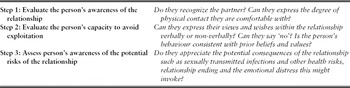
It is important to remember that all practicable steps must be taken to support a person's ability to make their own choices and that assessments of capacity must always relate to a specific decision. A person with dementia may have capacity to decide about a relationship with one person, but not another. Lichtenberg and SteizepeckReference Lichtenberg and Steizepeck70 set out a very useful three-step framework for assessing the capacity of a person with dementia to participate in a sexual relationship (Table 3). If professionals cannot agree about a person's capacity, then the case can be referred to the Court of Protection for a decision.71
Lichtenberg and Steizepeck's guide to assessing the capacity of a person with dementia to participate in a sexual relationship and possible questions to consider

Two key legislative Acts in England and Wales, the Sexual Offences Act 2003 and the Mental Capacity Act (MCA) 2005, may leave professionals and carers feeling compelled by law to rigidly ban sexual relationships in individuals judged to lack capacity. The Sexual Offences Act clearly states that sexual activity with someone who has not consented is a sexual offence. In addition, the MCA 2005 states that, unlike with most health and welfare decisions, if a person lacks capacity to make a decision about having a sexual relationship then nobody has the right to make this decision for them in their best interests. However, the key principle of the MCA 2005 must not be forgotten: to limit restrictions in people's rights and freedom due to incapacity. Therefore, if a person with dementia is found already engaging in a sexual relationship and lacks capacity to consent, arguably the relationship should not necessarily be stopped.
Safeguarding Vulnerable Adults procedures72 provide a framework for managing situations where only one person in the relationship lacks capacity. If the capacitous person is deliberately taking advantage of the person who lacks capacity then a sexual offence is likely to have been committed. However, if the sexual relationship is a natural continuance of a relationship where one partner has now lost capacity, but shows no signs of distress or unwillingness, then in the keeping with the spirit of the MCA 2005, it is possible and perhaps likely that no offence will be implied. To date there has been no such case tried in the Courts to assist in uniting conflicts of opinion on the subject.Reference Bartlett73
Where two people found engaged in a sexual relationship both lack capacity, then the MCA 2005 framework of ‘best interests’ decision-making, which takes into account the persons past and present wishes, feelings, beliefs and values, considers risks and benefits and gathers views of family and involved staff, is the logical process to follow. The law as stated in the MCA 2005, however, does not allow this process to result in others reaching a decision in the best interests of an incapacitated individual, an issue that can rest uncomfortably with staff working towards delivering person-centred care. Improved guidance on this issue is warranted.
In any case, rigid approaches to issues of sexual relationships in dementia prevent creative problem solvingReference Martin53 and increase the risk of depriving people with dementia of their liberty. Indeed, where an incapacitous person's sexual behaviour poses significant risk and requires high levels of supervision or intervention then it is necessary to consider whether the restrictions are of an intensity and degree to be a deprivation of liberty (DOL).71 The DOL assessment will provide the person with safeguards and will also consider whether the person meets criteria for detention under the Mental Health Act 1983.
Conclusion
Human sexuality is a complex affair of biological, social and emotional interactions. When any or all of these become disrupted by a progressive dementia it is not surprising that sexual ‘problems’ are identified. The issue most often encountered by patients, relatives, carers and health professionals in relation to sexual behaviour concerns in dementia is of how to manage relatively normal sexual expression in the face of changes in relationships, independence, living arrangements and cognitive ability, rather than the onset of new hypersexual or paraphilic behaviours. Allowing sexual needs and problems to be a part of consultations, and for residential care settings to have policies to address sexual expression, should assist families, carers and professionals help people with dementia meet their needs for love, affection and sexual expression, whilst proactively protecting others from risks posed by sexual behaviours.Reference Benbow and Beeston23 There are, however, rare cases when new and severe hypersexual behaviours emerge, usually due to damage to certain brain areas or rarely due to medication effects or other biological causes. These behaviours may be tormenting and dangerous for both the person, through stigma, isolation and increasingly restrictive living conditions, as well as posing a risk to others. Intervention including the judicious use of medication may be justified. The evidence base is insufficient to guide prescribing practice but a number of different medications have been tried reportedly with success and limited side-effects. It is important to note that physicians have often tried several medications before arriving at any success.
Conflicts of interest
R.W. has no conflicts of interest to declare. S.M. has lectured for and/or sat on advisory boards for Novartis, Eisai, Pfizer and Lundbeck. He also works as a dementia advisor for the Order of St Johns Care Home Trust.
Appendix
The Manchip Rating Scale of Sexual Behaviour Problems in Dementia
To be used to rate sexual behaviour problems in dementia. It is not to be used to understand/diagnose the behaviour, but to rate whether it occurs and how frequently it occurs. From this the care team will look at the cause of the behaviour. For example, ‘fiddling’ may be innocuous, e.g. trying to urinate, pain or discomfort. Some male patients may not be able to have an erection for physical reasons.
Please score how often behaviours are observed during the week:
1 = never, 2 = less than once a week, 3 = once or twice a week, 4 = a few times a week, 5 = once or twice a day, 6 = a few times a day, 7 = a few times an hour