





Introduction
Donald Trump’s social media communication is heavily dominated by attacks on his opponents (Yu, Wojcieszak and Casas Reference Yu, Wojcieszak and Casas2024), whereas Viktor Orbán frequently presents himself surrounded by supporters and highlights aspects of his personality that extend beyond his political role (Sonnevend Reference Sonnevend2024). Danish political actors devote considerable attention to articulating public policy positions (Horn and Jensen Reference Horn and Jensen2023), Belgian politicians often address specific social groups (De Mulder, Gevers and Poljak Reference De Mulder, Gevers and Poljak2026), and Bernie Sanders frequently invokes the notion of a unified, homogeneous people (Maurer and Diehl Reference Maurer and Diehl2020). Social media has emerged as a crucial platform through which politicians, ahead of elections, communicate the foundations of how they intend to represent the electorate. Such representative offers can rest on a variety of bases: politicians may ground their offer of representation in policy positions, in the appeal of their political persona, in a direct and intimate connection with voters, in the representation of specific social groups or the people conceived as a homogeneous collective, or in the promise to protect against misrepresentation and stand against perceived adversaries. Although contemporary political communication research has devoted substantial attention to each of these communicative dimensions in isolation (Bene, Magin, Haßler et al. Reference Bene, Magin, Haßler, Russmann, Lilleker, Kruschinski, Jackson, Fenoll, Farkas, Baranowski and Balaban2025; Fine, Smith, Oliveira et al. Reference Fine, Smith, Oliveira, Deas, Shellnutt, Stotzky and Clyburn2025; Horn and Jensen Reference Horn and Jensen2023; Huber Reference Huber2022; Metz, Kruikemeier and Lecheler Reference Metz, Kruikemeier and Lecheler2020), the representational style that emerges from their combination – conceived as a distinctive ‘representational offer’ – has not yet been subjected to systematic empirical scrutiny. The aim of this study is to investigate the types of representative offers European political leaders put forward to voters via social media (RQ1) and how these offers differ across contexts and actors (RQ2).
According to the constructivist theory of representation (Disch, van de Sande and Urbinati Reference Disch, van de Sande and Urbinati2020; Saward Reference Saward2010), which has gained significant traction in recent years, the content of representation is constituted in the interaction between representative and represented; in other words, every communicative relationship between citizens and representatives carries relevant information about how the representative relationship operates (Wolkenstein and Wratil Reference Wolkenstein and Wratil2025). This perspective points out that the substance of political representation cannot be reduced solely to responsiveness to voter preferences or programmatic institutional mandates but may manifest in multiple forms (Wolkenstein and Wratil Reference Wolkenstein and Wratil2021). Yet little is known about the actual substance of contemporary political representation – what kinds of representative offers political leaders articulate – particularly in a comparative, cross-national framework. We know even less about whether and how the nature of political representation varies between countries, political contexts, and actors.
In the framework of this study, such offers are understood to be grounded in a representative style, which emerges from the extent to which a political actor’s communication emphasizes: (1) public policy issues, (2) personal qualities, (3) a direct relationship with voters, (4) appeals to specific social groups or (5) to the people conceived as a homogeneous whole, and (6) antagonism toward political opponents. The combination of these communicative elements, representing different dimensions of political representation (see Wolkenstein and Wratil Reference Wolkenstein and Wratil2021), gives rise to distinct representative styles, which may serve as the basis of the representative relationship. The main purpose of our study is to inductively identify major representative styles as combinations of these dimensions of political representation that characterize European political leaders’ social media discourse and, in doing so, shape the content of contemporary political representation.
In our research, we examine the Facebook communication of 110 political leaders from eight European countries (Austria, Czech Republic, Denmark, Hungary, Germany, the Netherlands, Poland, Sweden), within the context of both national and European Parliament (EP) election campaigns, using content analysis tools to investigate what kinds of representative styles are enacted through these communicative practices. Although the study of political actors’ social media campaigns has become a prominent area in the literature, very few studies have examined, on a large international sample and at the level of individual political actors, the distinct communicative strategies that emerge (e.g., Ceccobelli Reference Ceccobelli2018; Zulianello, Albertini and Ceccobelli Reference Zulianello, Albertini and Ceccobelli2018). Similarly rare are investigations into a combination of these different communicative tools (e.g., Huber and Haselmayer Reference Huber and Haselmayer2025; Thau Reference Thau2024) and the communication styles that arise from these combinations (e.g., Bracciale and Martella Reference Bracciale and Martella2017; Cassell Reference Cassell2023); most research tends to analyze the use of individual communicative elements in isolation, rather than in relation to one another.
These styles are identified in an inductive, data-driven manner: we explore whether distinct and recurrent patterns – or style clusters – emerge from the various combinations of the six communicative elements. Overall, our findings underscore the multiplicity of representative forms even within Europe and demonstrate that the meaning of political representation is shaped by its contextual embeddedness.
Theoretical background
A constructivist approach to political representation
The constructivist-performative approach to representation (Disch, van de Sande and Urbinati Reference Disch, van de Sande and Urbinati2020; Saward Reference Saward2010) has demonstrated that the way political actors communicate actively shapes both the representative relationship itself and its substantive content (Wolkenstein and Wratil Reference Wolkenstein and Wratil2025). Constructivists see representation as a constitutive process, where the preferences and identities of the represented are formed during the interactions between the represented and the representatives. When this approach is applied to politicians running for office, it practically means that their communication constitutes a form of representational claim-making (see, Saward Reference Saward2010) that shapes the content of representation, which can take multiple forms and manifest across multiple dimensions (Wolkenstein and Wratil Reference Wolkenstein and Wratil2021). An analysis of politicians’ communication can therefore yield crucial insights into the contemporary substance of political representation, and this is precisely the aim of the present study.
Although empirical applications of constructivist representation theory remain relatively narrow (Wolkenstein and Wratil Reference Wolkenstein and Wratil2021), the small body of work in this area has largely revolved around the key concept in Saward’s (Reference Saward2010) account: the representative claim. In such claims, a claim-maker presents an image of themselves (the subject) and of a desired constituency (the object) to an audience, asserting some kind of linkage or fit between the two.
One strand seeks to capture and describe these claims using quantitative content-analytic tools (de Wilde Reference De Wilde2020; Guasti and Geissel Reference Guasti and Geissel2019; Vermassen, Caluwaerts and Erzeel Reference Vermassen, Caluwaerts and Erzeel2023). Its core challenge is that, for reasons of empirical tractability, it tends to privilege explicit and ‘complete’ claims – yet claims are often partial and partly implicit. This focus can therefore understate the diversity of representative practices and overlook important elements of the representative process (Severs and Smets Reference Severs and Smets2024). A second strand adopts a much more open, fluid discursive–performative perspective, examining representative claims through qualitative, case-oriented studies (Aiolfi Reference Aiolfi2025a, Reference Aiolfi2025b; Rai Reference Rai2015). While this approach is better suited to capturing implicit and non-textual forms of claiming, its interpretive epistemology makes it difficult to standardize and generalize in large-N research designs.
In this research, we adopt a middle-ground position. In line with the second body of literature, we argue that political actors do not only offer explicit representative claims but also propose broader representational styles that, even in the absence of precise claim-making, indicate whom, what, and how they intend to represent. Style is more than just a matter of claim-making, as it captures the representative offer of the politician as a whole, grasping it as a complex pattern that emerges from individual expressions. This broader approach is particularly warranted in electoral contexts, where voters do not respond to isolated claims alone, but to the entirety of the representative offer presented to them – an offer they may either accept or reject through their vote. At the same time, aligning with the first body of literature, we approach these representative offers at a high level of generalizability by observing a large number of political leaders, and we therefore analyze them using quantitative methods. Rather than conducting in-depth performative analyzes, we seek to translate the concept of representational style into measurable instruments that allow for broad, comparative examination.
Representative style as the representative offer
The concept of political style gained traction already before the millennium, primarily as a tool aimed to capture differences between political alternatives beyond the technical minutiae of policy-making (Ankersmit Reference Ankersmit1997; Hariman Reference Hariman1995) and to better understand the tendencies of mediatization and personalization of politics (Pels Reference Pels2003). More recently, it has played a central role in steering the study of populism away from focusing on ideological content (Aiolfi Reference Aiolfi2025a; Bracciale and Martella Reference Bracciale and Martella2017; Moffitt Reference Moffitt2017). According to Aiolfi’s most recent and clearest definition, political style is a ‘repertoire of embodied performances’ (Reference Aiolfi2025a: 61). It is recurrently emphasized in the literature that having a certain style is what sets someone apart from others. Or, as Aiolfi puts it, style has a ’singularising function’ (Aiolfi Reference Aiolfi2025a: 52; cf. Ankersmit Reference Ankersmit1997: 157): it is a special way of combining what we might call stylistic elements, characteristic only of certain actors or groups (see also, Hariman Reference Hariman1995). While in common parlance, style is often equated with form and counterposed to content (which pertains to the ’how’ instead of the ’what’), the literature is quite univocal in claiming style ‘fuses matter and manner, message and package’ (Pels Reference Pels2003: 45). It is ‘also a preference for a certain content’ (Ankersmit Reference Ankersmit1997: 159) and is rather about the interaction between form and content (Aiolfi Reference Aiolfi, Petrovic Lotina and Aiolfi2023: 28). Put bluntly, speaking about certain topics can also be considered a stylistic feature.
The concept of style has appeared in the literature on political representation independently of constructivist approaches. The early notion of a ‘style of representation’ (see, Eulau, Wahlke, Buchanan et al. Reference Eulau, Wahlke, Buchanan and Ferguson1959), however, carries a markedly different meaning than the performative interpretation of political style discussed above. The so-called delegate, trustee, and partisan styles refer more to role conceptions than to stylistic patterns manifested in communicative activity – indeed, in much of the literature, they are treated synonymously with the notion of role (e.g., De Smedt, Haesevoets, Steyvers et al. Reference De Smedt, Haesevoets, Steyvers and Wauters2025). Much closer to our approach is the more recent and less frequently applied concept of representational style, which in many ways draws inspiration from Fenno’s (Reference Fenno1978) notion of ‘homestyle’. While homestyle focused on the nature of personal interactions between representatives and those they represent, Grimmer (Reference Grimmer2013) extended this idea to the public communication of representatives, framing it explicitly as a representational style. According to this definition, a representational style is the way representatives communicate their work to their constituents. Empirically, however, this conceptualization was limited to thematic focus, distinguishing five styles based on the extent to which representatives spoke about general policy issues versus the resources they had secured for their constituencies. Blidook and Koop (Reference Blidook and Koop2024) offered a different interpretation of representational style as a ‘method of connection’, differentiating representatives based on where they fall along a continuum from highly service-oriented to highly symbolic-oriented styles.
Despite these contributions, our understanding of representational styles remains limited – a crucial gap, particularly when approached through the lens of constructivism, which conceives of representational relationships as constituted through these very styles. For the purposes of the present study, we define representative styles as unique patterns of linguistic and non-linguistic signals through which prospective representatives communicate to the constituents in what sense they offer to represent them. We believe that such a definition, while tailored to our specific purposes, remains consistent with both the broader theoretical literature on political style and the constructivist approach to representation.
While in-depth, case-focused studies of the constructivist literature have offered valuable insights, they provide little information about the general prevalence of identified styles in contemporary political representation. Furthermore, both the existing representational style and claim-based approaches are relatively rare and tend to focus on only narrow aspects of the representative offer. Importantly, these efforts have not explored the domain of social media communication (for a recent exception, see De Mulder, Gevers and Poljak Reference De Mulder, Gevers and Poljak2026), where political actors can present their representative offer largely independent of media gatekeeping and guided by their own strategic considerations, communicating to voters whom, what, and how they intend to represent. To address this gap in the literature, our research is guided by the following central question:
RQ1 What representational styles characterize European political leaders?
The ingredients of the representative styles
Scholars working on the topic generally describe political style as a particular constellation of different elements, a view also reflected in the notion of the ‘repertoire’ (Hariman Reference Hariman1995; Moffitt Reference Moffitt2017). This approach first requires identifying those elements whose combination may yield distinct styles (for a similar approach, see Bracciale and Martella Reference Bracciale and Martella2017). Since our aim is to define representational styles, we focus specifically on elements that carry meaning regarding the nature of political representation – elements that clearly signal to the audience what and how a given politician intends to represent and can therefore be understood as components of the representative offer. We identified six such elements (for a similar approach, see Wolkenstein and Wratil Reference Wolkenstein and Wratil2025).Footnote 1 Through their communication, a representative may ground their representative offer in: (1) policy issues, (2) personal qualities, (3) a close and direct relationship with voters, (4) the representation of specific groups, (5) the unified representation of the people as a whole, or (6) antagonism toward political opponents.
First, politicians may ground their representative offer in the substance of the representative linkage, namely their public policy activity: If policy issues feature prominently in a politician’s social media presence, voters have good reason to interpret representation primarily as the advocacy of specific policy issues and positions – even when this is expressed in critical terms, for instance, through the critique of others’ public-policy performance. This is what Wolkenstein and Wratil (Reference Wolkenstein and Wratil2025) called ‘substantive representation’ in a Pitkinian sense but can also be related to Severs’ (Reference Severs2012) ‘substantive claims’ or Grimmer’s (Reference Grimmer2013) ‘stateperson’ representational style. Wolkenstein and Wratil (Reference Wolkenstein and Wratil2025) argue that this form of representation is rewarded primarily by more politically sophisticated voters, who tend to hold relatively clear policy preferences, but that it carries less meaning for less interested and less educated voters. In the literature on social media campaigning, empirical research has shown that political actors adopt divergent strategies in this regard. While some politicians actively and visibly engage with policy issues, others tend to avoid substantive policy discussions (Farkas, Burai and Bene Reference Farkas, Burai and Bene2024; Horn and Jensen Reference Horn and Jensen2023). This also suggests that substantive policy-based representation is only one possible – yet by no means indispensable – component of political representation (e.g., Stromer-Galley, Rossini, Hemsley et al. Reference Stromer-Galley, Rossini, Hemsley, Bolden and McKernan2021).
Second, politicians can assert that it is their personal qualities and capacities that make them suitable representatives by placing their own persona at the center of their communication – in this case, representation is grounded in its subject. This dimension is close to what Wolkenstein and Wratil (Reference Wolkenstein and Wratil2025) term the ‘personalization’ dimension. However, whereas they operationalize this dimension as the articulated independence of representatives from their parties, we conceptualize it more broadly as personal, character-based appeals, consistent with how political communication research typically treats the concept (see, Metz, Kruikemeier and Lecheler Reference Metz, Kruikemeier and Lecheler2020). This may involve making ‘competence claims’ (Severs and Smets Reference Severs and Smets2024), emphasizing character traits (Bittner Reference Bittner2011), performing extraordinariness (Moffitt Reference Moffitt2017), or leveraging the candidate’s personal charm (Sonnevend Reference Sonnevend2024). From our perspective, this conceptualization is preferable because personal autonomy at most specifies the form of a representation, whereas its substance is provided by the political character being offered (Pedersen and van Heerde-Hudson Reference Pedersen and van Heerde-Hudson2019). Moreover, given the growing prevalence of personal parties (Calise Reference Calise2015), personal appeals and party image frequently overlap to a substantial degree, especially in that we focus on party and party list leaders in this research. In fact, personalized representation (Papp, Reference Papp2015; Pedersen and van Heerde-Hudson, Reference Pedersen and van Heerde-Hudson2019) has been a defining feature since the rise of audience democracy (Manin Reference Manin1997), and social media is frequently used to intensify this trend by showcasing both the private and political dimensions of politicians’ selves to voters (Farkas and Bene Reference Farkas and Bene2021; Metz, Kruikemeier and Lecheler Reference Metz, Kruikemeier and Lecheler2020). Nonetheless, research also shows substantial variation among political leaders in the extent to which they build their communication around their personal traits (Ceccobelli Reference Ceccobelli2018; McGregor, Lawrence and Cardona Reference McGregor, Lawrence and Cardona2017), as well as in the degree to which voters reward candidate-centered communication (Giger, Bailer, Sutter et al. Reference Giger, Bailer, Sutter and Turner-Zwinkels2021; Laustsen and Bor Reference Laustsen and Bor2017).
Third, politicians may ground their representative role in the claim that they maintain a vivid and direct connection with their voters – something that can both be demonstrated and initiated on social media platforms. In this case, the representative offer is explicitly grounded in the linkage between the representative and the represented. Such direct contact has long been a central concern in the study of representation, from Eulau and Karps’ (Reference Eulau and Karps1977) notion of ‘service responsiveness’ to Mansbridge’s (Reference Mansbridge2019) concept of ‘recursive representation’. Indeed, early hopes surrounding online politics were based on the expectation that it would foster a new, higher-quality form of political representation by creating substantive connections between representatives and the represented (Coleman Reference Coleman2005). However, empirical findings have generally failed to confirm these expectations (Magin, Russmann, Fenoll et al. Reference Magin, Russmann, Fenoll, Haßler, Haßler, Magin, Russmann and Fenoll2021; Stromer-Galley Reference Stromer-Galley2014). From a constructivist perspective, though, even the appearance of such a relationship is meaningful for the content of representation: if a political actor consistently presents themselves among their constituents and initiates direct interactions with them, this suggests a representational self-understanding oriented toward attentiveness to voters’ concerns – something closely aligned with what Blidook and Koop (Reference Blidook and Koop2024) describe as a symbolic-oriented representational style. On social media, politicians frequently deploy these tools to present themselves as interactive and accessible to ordinary voters (Larsson Reference Larsson2023; Sonnevend Reference Sonnevend2024).
A representative offer may also be grounded in the construction of the object of representation – that is, the represented themselves – when the representative explicitly appeals to those whom they intend to represent. This can take two principal forms, which are loosely related to Wolkenstein and Wratil’s (Reference Wolkenstein and Wratil2025) justification dimension, itself derived from Rehfeld’s (Reference Rehfeld2009) distinction between two types of representative justification. In this framework, republican justification legitimates representative aims by reference to the interests of the people as a whole, whereas pluralist justification does so by reference to the interests of specific social groups. We do not, however, restrict these two dimensions to justification alone; instead, we approach them as distinct dimensions of representation and, accordingly, as two modes through which representation can be constituted.
The first mode, that is our fourth dimension and which may be described as a pluralist approach, rests on the idea that society is composed of a multitude of heterogeneous groups and that political actors assume the role of representing some of these groups (Dahl Reference Dahl1972). When a politician frequently addresses specific social groups in their social media communication, the representative offer is, in essence, directed toward the representation of these groups (De Mulder, Gevers and Poljak Reference De Mulder, Gevers and Poljak2026). According to cleavage theory, the organization of twentieth-century mass parties was fundamentally structured around the representation of distinct social groups (Lipset and Rokkan Reference Lipset and Rokkan1967), and although sociologically grounded cleavages have narrowed (Franklin, Mackie and Valen Reference Franklin, Mackie and Valen1992), social group-based appeals continue to play a central role in political communication (De Mulder, Gevers and Poljak Reference De Mulder, Gevers and Poljak2026; Stuckelberger and Tresch Reference Stuckelberger and Tresch2024). Research shows that political actors strategically employ social-group-based appeals (Huber Reference Huber2022) and that such appeals shape voters’ evaluations as a function of voters’ sentiments toward the referenced group (Huber, Meyer and Wagner Reference Huber, Meyer and Wagner2024). It is important to note, however, that this strategic repertoire may also include negative references to social groups (Huber Reference Huber2022). In such cases, however, the object of representation is often not a clearly identifiable social group but rather that group’s opponents – who are not clearly delineated on the basis of social identity. Consequently, while this type of messaging can be part of a broader group-based appeal strategy, it should not be treated as a group-based representational offer (see, Dolinsky Reference Dolinsky2023). Social media provides a unique opportunity to deliver such messages to their intended target groups, thanks to its extensive targeting capabilities. Political actors readily exploit these tools, frequently employing sociologically group-based targeting strategies to tailor their communication to specific segments of the electorate (Votta, Kruschinski, Hove et al. Reference Votta, Kruschinski, Hove, Helberger, Dobber and de Vreese2024).
Fifth, the other form of constructing the object of representation is the populist (or republican) conception, which – unlike the pluralist approach that centers on social groups – imagines the political community primarily as a homogeneous people and presents the politician as their sole representative (Caramani Reference Caramani2017). In this dimension as well, representation is grounded in the notion of the represented; by frequently appealing to the interests of the unified people, the political actor frames their representative offer as one that speaks on behalf of the entire, undivided populace (Werner and Giebler Reference Werner and Giebler2019). Numerous studies have shown that the architecture, norms, and affordances of social media are particularly conducive to populist communication, and thus also to one of its key elements: appeals to a homogeneous people (Engesser, Ernst, Esser et al. Reference Engesser, Ernst, Esser and Büchel2017; Gerbaudo Reference Gerbaudo2018). Moreover, while other aspects of populist discourse are more distinctively associated with populist actors, people-centric rhetoric – despite significant variation across individual politicians – is equally characteristic of mainstream figures as it is of populist ones (Bene, Magin, Haßler et al. Reference Bene, Magin, Haßler, Russmann, Lilleker, Kruschinski, Jackson, Fenoll, Farkas, Baranowski and Balaban2025). Research has also shown that people-centric appeals are effective both in shaping voter attitudes (Kittel Reference Kittel2025) and in eliciting user reactions (Bene, Ceron, Fenoll et al. Reference Bene, Ceron, Fenoll, Haßler, Kruschinski, Larsson, Magin, Schlosser and Wurst2022); accordingly, citizens tend to respond particularly favorably to this kind of representative rhetoric.
Sixth and last, a representative offer may also be articulated in reverse – through antagonism. When a politician devotes significant attention to attacking political opponents, the basis of representation shifts to the rejection of misrepresentation (Guasti and Almeida Reference Guasti and de Almeida2019) and the expression of opposition: in this case, the essence of representation lies in avoidance preferences (Mouffe Reference Mouffe1999). The representative relationship is thus constructed as a means of preventing the emergence of an undesired form of representation. This type of representative offer is of growing importance, as the phenomenon of negative voting plays an increasingly prominent role in modern democracies: people increasingly cast their votes against rather than for someone (Garzia and Ferreira Da Silva, Reference Garzia and Ferreira Da Silva2024; Goodliffe, Magleby and Scanlan Reference Goodliffe, Magleby and Scanlan2025). Negative campaigning – much like populism – is strongly facilitated by the architecture and dynamics of social media. platforms (Fine, Smith, Oliveira et al. Reference Fine, Smith, Oliveira, Deas, Shellnutt, Stotzky and Clyburn2025; Robertson et al. Reference Robertson, Pröllochs, Schwarzenegger, Pärnamets, Van Bavel and Feuerriegel2023). At the same time, it is well established that negative campaigning entails considerable risks (e.g., Galasso, Nannicini and Nunnari Reference Galasso, Nannicini and Nunnari2023), and as a result, significant variation exists among political actors in how and to what extent they adopt it (Baranowski, Kruschinski, Russmann et al. Reference Baranowski, Kruschinski, Russmann, Haßler, Magin, Márton, Ceron, Jackson and Lilleker2023).
These elements, taken individually, receive considerable attention in the literature on social media campaigning, and their significance for the functioning of political representation has likewise been acknowledged in the representation literature. What has not been explored, however, is the style that emerges from their particular constellations. A few studies have examined combinations of at most two of these elements (see Bene, Magin, Haßler et al. Reference Bene, Magin, Haßler, Russmann, Lilleker, Kruschinski, Jackson, Fenoll, Farkas, Baranowski and Balaban2025; Huber and Haselmayer Reference Huber and Haselmayer2025; Thau Reference Thau2024), but research has not yet identified the more complex styles that emerge from their overarching configuration. Yet the complex representative offer that political actors present to voters in an electoral context unfolds precisely from such unique combinations.
The styles arising from these combinations can be defined in two ways. On the one hand, they can be derived deductively by identifying interpretable combinations in advance and examining their empirical occurrence (e.g., Cassell Reference Cassell2023; Hariman Reference Hariman1995; Moffitt Reference Moffitt2017). Wolkenstein and Wratil (Reference Wolkenstein and Wratil2021) caution that attempts to construct representational ideal types typically remain far removed from empirical reality and, precisely for that reason, tend to function as ‘dialogue stoppers’ between theory and quantitative research rather than facilitating an understanding of empirically existing representational dynamics. On the other hand, styles can be identified inductively by exploring which combinations frequently occur in the empirical material – i.e., whether there are indeed representational styles that are empirically distinct and separable (Bracciale and Martella Reference Bracciale and Martella2017; Grimmer Reference Grimmer2013). Given the limited theoretical guidance currently available for the prior definition of representational styles, and because our interest lies in identifying styles that actually exist in practice, we follow the latter approach and use cluster analysis on these individual elements to identify representational styles.
Explaining the different representational styles
In this study, however, we aim to move beyond merely descriptive goals and examine how the use of representational styles and their constituent elements varies across political contexts and actors. One of the key strengths of our research design lies in its inclusion of a large number of political leaders from diverse political contexts – spanning multiple countries and different types of electoral campaigns. This allows us to test which contextual and actor-specific factors shape representational styles. At this stage, however, we do not formulate concrete hypotheses, as we cannot anticipate in advance which styles will emerge from the analysis. At this stage, therefore, all we can do is exploratorily identify those factors that, on the basis of the existing literature, may plausibly contribute to differences across styles.
First, we investigate whether political context influences the application of representational styles in both static and dynamic ways. By static effects, we refer to cross-national differences. Countries differ in terms of political culture, traditions, and patterns of citizen engagement, which may result in variation in the use of representational elements and styles. Blidook and Koop (Reference Blidook and Koop2024), for instance, identified differences in representational styles even among otherwise similar countries. However, given broader trends toward the homogenization of political communication strategies (Ceccobelli Reference Ceccobelli2018; Mancini and Swanson Reference Mancini and Swanson1996), it is also possible that the repertoire of representational styles is not context-dependent. In the domain of social media strategies, the picture is mixed: in some respects, the country context appears to matter little (e.g., for personalized communication, Russmann, Klinger and Koc-Michalska Reference Russmann, Klinger and Koc-Michalska2024), while in others, it plays a more significant role (e.g., for social targeting, Votta, Kruschinski, Hove et al. Reference Votta, Kruschinski, Hove, Helberger, Dobber and de Vreese2024).
As for dynamic effects, the type of election may prove important. There exists a vast body of literature on the distinctive character of EP elections, so-called second-order elections, as compared to national elections, so-called first-order elections (Marsh Reference Marsh1998; Reif, Schmitt and Norris Reference Reif, Schmitt and Norris1997), and we also know that the logic and meaning of representation differ between these two contexts (Marsh and Norris Reference Marsh and Norris1997). EP elections receive less media attention (De Vreese, Lauf and Peter Reference De Vreese, Lauf, Peter, van der Brug and van der Eijk2007), tend to focus on domestic issues rather than European ones (Vesnic-Alujevic and Van Bauwel Reference Vesnic-Alujevic and Van Bauwel2014), and make more references to the national than the European level (Haßler, Magin, Russmann et al. Reference Haßler, Magin, Russmann, Baranowski, Bene, Schlosser, Wurst, Fenoll, Kruschinski, Maurer and Holtz-Bacha2020). In contrast, national elections on social media address concrete domestic concerns more directly (Haßler, Magin, Russmann et al. Reference Haßler, Magin, Russmann, Baranowski, Bene, Schlosser, Wurst, Fenoll, Kruschinski, Maurer and Holtz-Bacha2020; Vesnic-Alujevic and Van Bauwel Reference Vesnic-Alujevic and Van Bauwel2014) and involve more negative campaigning (Reiter and Russmann Reference Reiter and Russmann2025). Overall, national elections promote more immediate, conflict-oriented, and domestically grounded communication, whereas EP elections remain more subdued and nationally framed. To our knowledge, however, no multicountry comparative study has examined these two election types from the perspective of social media strategies in terms of representational behavior. The stakes of such a comparison go beyond these two specific cases: it may reveal the extent to which representational styles and their elements are flexibly deployed and whether politicians adapt them to specific situations or apply them independently of context. Grimmer (Reference Grimmer2013) found that representational styles display a high degree of stability, but their conceptualization was narrower than ours and did not assess behavior across different types of elections.
Another dynamic contextual factor that may shape representational style is the political position of the actor. First, the distinction between incumbency and opposition status may be relevant (de Vries and Hobolt Reference De Vries and Hobolt2020); second, the level of political support enjoyed by the actor may also play a role. If representational styles are indeed adapted dynamically to context, it is reasonable to assume that different styles may appear more effective depending on one’s political position. Research on social media strategies has found variation along these dimensions (Gelman, Wilson and Sanhueza Petrarca Reference Gelman, Wilson and Sanhueza Petrarca2021; Rossini, Stromer-Galley, Kenski et al. Reference Rossini, Stromer-Galley, Kenski, Hemsley, Zhang and Dobreski2018), as has the literature on representational behavior more broadly (Papp and Zorigt Reference Papp and Zorigt2018).
Beyond contextual factors, it is also crucial to consider whether ideological differences manifest in representational style. Do actors with different ideological profiles offer voters distinct forms of representation, or is political competition taking place along other dimensions? Grimmer (Reference Grimmer2013), in their analysis of representational styles, did not find significant differences across parties, but findings by Bengtsson and Wass (Reference Bengtsson and Wass2010) suggest that left – and right-wing voters hold different expectations regarding representation. In the context of social media campaigning, the relevance of ideology depends on the specific element under investigation: for example, it matters in the use of negative campaigning (Baranowski, Kruschinski, Russmann et al. Reference Baranowski, Kruschinski, Russmann, Haßler, Magin, Márton, Ceron, Jackson and Lilleker2023) but not in the degree of personalized communication (Russmann, Klinger and Koc-Michalska Reference Russmann, Klinger and Koc-Michalska2024).
Finally, individual characteristics of politicians may also influence their representational style. Here, we focus on two such characteristics: gender and age. There is clear evidence that female politicians present themselves differently as representatives (e.g., Childs Reference Childs2004) and communicate in distinct ways on social media compared to their male counterparts (e.g., McGregor, Lawrence and Cardona Reference McGregor, Lawrence and Cardona2017). The question, however, is whether these differences are also reflected in representative style. Age has received comparatively less attention, but there are indications that younger politicians engage in politics differently (Hájek Reference Hájek2019) and use digital campaigning tools in other ways than older politicians (Hansen and Kosiara-Pedersen Reference Hansen and Kosiara-Pedersen2014).
Accordingly, our second research question is as follows:
RQ2 How does the use of representational styles and their constituent elements vary across: (a) countries, (b) types of electoral campaigns (EP vs. national), (c) political positions (incumbency and party size), (d) political ideology, and (e) individual sociodemographic characteristics (gender, age)?
Methods
Datasets and samples
To answer our research questions, we rely on data collected within the frameworks of two international collaborations: DigiWorldFootnote 2 and CamforS.Footnote 3 Both initiatives aim to collect cross-country data on social media election campaigns through multimodal manual content analysis, using a shared codebook. The main difference between the two is that DigiWorld focuses on national elections and collects data on a continuous basis, while CamforS concentrates on EP elections, where the coding takes place roughly simultaneously in each country. Most categories in the codebook are identical across both projects.
Our sample includes political leaders from those countries for which politician-level data were available for both the 2024 EP elections and parliamentary elections held between 2021 and 2024 and where most of the variables we analyzed produced acceptable intercoder reliability scores. Eight countries met these criteria, representing the main regions of the EU relatively well: five pre-2004 member states and three post-2004 member states, including two Northern European countries (Denmark, Sweden), three Western European countries (Austria, Germany, the Netherlands), and three Central and Eastern European countries (Czech Republic, Hungary, Poland). The only major uncovered region is Southern Europe.
We focused on Facebook because it is the most commonly used social network platform for political information in all the countries included in our sample (Newman, Fletcher, Robertson et al. Reference Newman, Fletcher, Robertson, Arguedas and Nielsen2024). From the perspective of identifying general representative styles, a major advantage of Facebook is that it typically addresses a broad, heterogeneous public, in contrast to other platforms – such as X/Twitter or TikTok – whose audiences are more strongly structured along demographic or sociocultural lines (Bossetta Reference Bossetta2018; Lukito, Macdonald, Chen et al. Reference Lukito, Macdonald, Chen, Brown, Prochaska, Yang, Greenfield, Suk, Zhong, Dahlke and Borah2025). It is also important that, among major platforms, Facebook is the least tightly coupled to a single communicative modality: while all platforms are in some sense multimodal, X has historically been text-centered, whereas visual modalities predominate on Instagram and TikTok (Lukito, Macdonald, Chen et al. Reference Lukito, Macdonald, Chen, Brown, Prochaska, Yang, Greenfield, Suk, Zhong, Dahlke and Borah2025). By contrast, Facebook affords extensive use of both textual and visual modes, which are commonly deployed both in combination and independently (Cowburn, Klinger and Larsson Reference Cowburn, Klinger and Larsson2026). Consequently, the communication styles we identify are less likely to be driven by a dominant modality. In both projects, we categorized the Facebook posts of the most prominent candidates of parties that crossed the parliamentary threshold during the campaign’s final four weeks, using the shared codebook.
For candidate selection, our general rule was to include list leaders or prime ministerial candidates for national elections and list leaders for EP elections. However, country teams had the discretion to deviate from this rule if they believed it was more appropriate to include other figures of specific parties (for more details, see online Supplementary Material: Sample specificities). In the case of coalition lists, they were free to decide whether to include the leaders of the individual member parties, and if so, which ones. As a result, there are a few deviations from the general rule. Using this method, we included a total of 110 lead candidates with 7,854 posts in the sample; the full list is provided in Figure SM4 in Supplementary Material.
Variables
In line with our theoretical framework, we focus on six variables from our multimodal manual content analysis datasets. Each variable is binary, where any presence of the given category in a post is coded as 1, and its absence as 0.
The policy representation variable was coded if the post’s content included any policy issue or if the accompanying visual material presented a policy position (51% of posts in the total sample). Personal representation was recorded if the post text referred to the candidate’s professional competence, personal preferences or interests, or private background (e.g., home and family) or if the accompanying visual content depicted the candidate’s private environment or life beyond politics (10%). Contact-based representation was marked when the visual content showed the candidate among ordinary voters or if the post invited users to get in touch with the candidate via private offline (letter, phone) or online (email, social media) means (9.2%). Group representation was coded when the post addressed a specific social group directly, such as age groups, family status groups, sexual orientation groups, gender groups, occupational or sectoral groups, or religious groups (13.7%). People-centric representation was coded when the post addressed ‘the people’ as a homogeneous unit (7.8%). Finally, antagonistic representation was recorded if the post made a negative statement about another politician or party (23%) (More detailed coding instructions and empirical examples are available in Table SM5 of Supplementary Material).
All country team leaders received thorough training in the manual codebook categories and were responsible for training local coders in their respective countries. To test the reliability of our categories, we conducted several intercoder reliability tests. First, during each campaign, coders participated in an intercoder test covering at least 64 posts (exact numbers are listed in Table SM1 in Supplementary Material). Second, since the EP campaign took place simultaneously across countries and in a similar context, we were able to conduct cross-country intercoder testing, in which every country’s coders coded the same 100 English-language posts. Unfortunately, due to contextual and temporal differences, such cross-country testing was not possible for national campaigns. However, since the same team leaders oversaw coder training for both the national and EU campaigns, we have good reason to assume that any systematic country-specific misinterpretation of a category would have become evident in the EP data. Since no such issue was observed among the countries included in our sample – and all countries worked from identical coding instructions – we can reasonably assume that no significant between-country inconsistency affects the national campaign coding either.
Given the scale of our project – 16 separate manual content analyzes, 6 variables, and 24 intercoder tests – it is virtually impossible to achieve sufficient intercoder scores in every single case. Nevertheless, in the eight countries we selected, the vast majority of cases showed high reliability across all variables (see Table SM1 in Supplementary Material). Only three exceptions performed slightly below the commonly accepted reliability threshold (kappa = 0.6): the Polish policy representation variable during the EP campaign, the German populist representation also during the EP campaign, and the German group representation in the national campaign, which fell slightly below even that.
Excluding entire country cases or theoretically important variables due to such marginal discrepancies would be too costly. Therefore, we retain these cases and variables in our analysis, but we flag them as potentially problematic in terms of validity. To address this concern, we excluded from the element-level analyzes those cases that had been coded with low reliability (Poland EP, Germany EP, Germany NAT), while for the differentiation of styles, we re-ran the analyzes after removing these problematic cases as a robustness check (Supplementary Material, Robustness Test). The cluster structure did not change in any substantive way (see Figure SM5), and only minor differences emerged in the explanatory model (Table SM4), which we also report in the relevant section of the text.
To explain representational styles, we also incorporated a number of non-content-related variables at the level of political actors. At the individual level, we recorded the gender of each politician (0 = male, 66.4%; 1 = female; 33.6%) and their age (between 26 and 69; M = 48.8; SD = 9.8), with both pieces of information sourced from the politicians’ Wikipedia pages. At the ideological level, we first categorized each politician’s party according to its affiliation with a EP group. Politicians whose parties belonged to the Green/EFA, S&D, and GUE/NGL groups were coded as left-wing (30.9%); those affiliated with the EPP, ECR, or RE as right-wing/liberal (51.8%); and those in ID (until 2024), Patriots (from 2024), or ESN as radical right (17.3%) (for more details on the categorization, see Supplementary Material: Party categorization).
To assess each party’s position in the political competition, we used two indicators. First, we measured the proportion of parliamentary seats won in the given election, which reflects the party’s support during the campaign (between 1.30% and 58%; M = 12.4%; SD = 10.7%). We opted for seat share instead of vote share because in several countries, parties ran in alliances, and the joint vote share would have been attributed equally to major and minor partners – despite the fact that parliamentary seats tend to be distributed according to the relative strength of each party. Second, we recorded whether the party was in government at the time of the campaign: parties participating in the governing coalition were coded as incumbents (36.4%), while those outside of government were considered opposition (63.6%).
In line with our theoretical framework, the analysis was conducted not at the level of individual posts, but at the level of individual politicians. Thus, our unit of analysis is the politician. All variables were aggregated at this level, capturing the proportion of posts by each politician in which a given representational element appeared. Based on these indicators, we used cluster analysis to identify characteristic representational styles, followed by a multinomial logistic regression model to determine which types of politicians are more likely to adopt each style.
Results
The elements of the representation style
Regarding the presence of the six elements in political leaders’ communication (Figure 1), it is evident that policy focus clearly dominates over the others; however, this is also the element with the greatest variation in intensity. The remaining elements each appear in leaders’ communication with average frequencies ranging between 7% and 20%. Thus, while all are distinctly present, they occur less frequently than policy content, and the differences among them are not particularly pronounced. The second most prevalent element is antagonistic representation, followed by group representation. The differences among the remaining three elements are minimal.
Presence of the elements of the representation style in political leaders’ Facebook communication.

We then examined which types of political leaders are more likely to employ specific elements of representational style (Table 1). To assess the robustness of the results, we also examined whether these effects varied across different election types (Table SM3). Compared to the main effects, only a limited number of differences emerge, which are outlined below.
Beta-regression models explaining the proportion of the elements of the representation style (Beta regression coefficients, Standard Errors in parentheses)

Table 1. Long description
The table presents beta regression models explaining the proportion of elements in political representation styles. It includes six columns: Policy, Personal, Contact-based, Group, People-centric, and Antagonistic. Each column lists estimates and standard errors for various predictors. The predictors include intercept, election type, seat share, position, and ideology. Each row corresponds to a predictor, with estimates and standard errors provided for each representation style. Notable predictors include election type, seat share, position, and various ideological stances. The table aims to identify which types of political leaders are more likely to employ specific representational styles.
*p < 0.05 **p < 0.01 ***p < 0.001.
Note: Country fixed effects are added but not displayed (see Figure 2). Cases with leverage values exceeding three were excluded from the models (see Supplementary Material, Table SM2). In addition, due to low intercoder reliability scores on the respective variable, we excluded the German national campaign cases from the group representation model, the German EP campaign cases from the populist representation model, and the Polish EP candidates from the policy representation model. The ideology variable is included only once in each model, but the table displays results both with the right-liberal category as the reference group and, highlighted in grey, with the left-wing category as the reference.
A first notable distinction emerges between EP and national election campaigns: candidates running in national elections more frequently refer to groups and the people and are more prone to attacking their opponents. This last pattern is especially pronounced: while, holding all other factors constant, the predicted proportion of antagonistic posts for EP candidates is 15%, this figure rises to 24% for national election candidates. The difference is also considerable in the case of group references, while more moderate for references to ‘the people’. In contrast, no significant differences were observed between the two campaign types regarding policy focus, personal presentation, or contact-based communication.
At the party level, ideological affiliation plays the most decisive role, primarily because leaders of radical right-wing parties employ markedly different representational strategies than their mainstream counterparts. The most striking differences appear in the use of people-centric appeals and negativity, where radical right actors differ significantly from both left-wing and right-liberal politicians – between whom no significant differences are found. Holding other factors constant, left-wing and right-liberal politicians are predicted to use negative representational strategies in 18% and 19% of their posts, respectively, while the corresponding figure for radical right politicians is 27%. Similarly, people-centric appeals occur in 9% of radical right posts, compared to only 3% (left) – 4% (right-liberal) among mainstream parties. Radical right politicians also emphasize policy topics more frequently than leaders of right-liberal parties, though this difference is not significant compared to left-wing parties. In contrast, mainstream politicians devote significantly more attention to representational strategies that emphasize personal qualities and contact with constituents. Notably, in all elements – except for the aforementioned policy element relative to the left – there are statistically significant differences between radical right and mainstream political leaders, whereas it is only one element (policy) where significant differences were found between left-wing and right-liberal leaders. The robustness test focusing on election type difference (Table SM3) also shows that in EP elections, left-wing political actors conduct more personalized and more contact-based campaigns than actors representing other ideological families, although in the latter case this difference is observed only in comparison with the radical right. No such difference is found in national campaigns. By contrast, right-liberal actors appear more personalized than the radical right only in national elections, while this pattern does not hold in EP contests.
Compared to ideology, the position of politicians’ parties within the structure of political competition matters significantly less. With regard to governmental position, the only significant differences are that the personalized strategy is employed more frequently by government-affiliated politicians than by those in the opposition and that opposition politicians more typically use antagonism toward opponents. Additionally, larger parties tend to be somewhat more active in portraying direct connections with voters than smaller parties. However, the magnitude of these effects is minimal. The robustness test focusing on election type difference (Table SM3) further indicates that, in national campaigns, smaller parties tend to publish somewhat more antagonistic content, while the absence of an association between seat share and such content is observed only in EP campaigns.
Individual sociodemographic differences likewise play a negligible role. No systematic differences were found in the representational strategies of male and female politicians. Age only marginally influences people-centric appeals.
By contrast, country-level differences are striking, and a significant share of the models’ explanatory power can be attributed to these national contexts (Figure 2). Due to space constraints, we do not elaborate here on the finer-grained patterns also visible in the figure; however, in general terms, the findings reveal distinct national profiles in representational strategies: Swedish politicians tend to combine a focus on groups and people-centric appeals with a strong policy orientation. Danish leaders favor a policy-based strategy (for similar results, see Horn and Jensen Reference Horn and Jensen2023) that avoids both negativity and people-centric rhetoric. Czech politicians emphasize personal traits; Dutch politicians combine policy with personalized strategies; Polish leaders focus on group representation and voter contact; Hungarian politicians largely avoid policy-oriented communication; German leaders avoid people-centric appeals and direct contact, while Austrian politicians exhibit average usage patterns across all elements.
Predicted values of the elements of the representation style for individual countries.

Representation styles
The central question of our research, however, is whether distinct combinations of these representational elements give rise to clearly differentiated representation styles. To address this, we conducted a cluster analysis. Based on the elbow, silhouette, and gap statistic methods (see Figure SM1-3 in Supplementary Material), we determined that a three-cluster solution best fits the data when using the six elements as input variables. The initial k-means clustering yielded an average silhouette score of 0.27 and explained 46% of the total variance. While these values are not particularly high, they indicate the potential for identifying a meaningful cluster structure – though the three-cluster solution does not perform well in classifying certain ambiguous cases.
To improve the clarity of the cluster boundaries, we removed those observations whose classification was uncertain, i.e., those with a silhouette value below 0.15. (A silhouette score of 0 suggests the observation is equally close to two clusters, while a score of 1 indicates perfect fit within its cluster.) Excluding these 27 poorly fitting cases resulted in a much more distinct cluster solution: the explained variance increased to 56%, the average silhouette score rose to 0.38, with the lowest individual score at 0.15, and none of the clusters had an average silhouette value below 0.30.
These results suggest that the final cluster structure distinguishes representation styles that are clearly, though not sharply, separated from each other and that each case fits relatively well within one of the identified types. However, it is important to note that the representational style of 27 political leaders could not be adequately captured by any of the three clusters. The resulting style clusters (see Figures 3 and 4) therefore characterize a substantial portion of political leaders, but not all of them.
The content of the three clusters along the six input variables.

Average proportions of the six input variables in each cluster.

The first two clusters share a common emphasis on policy-focused communication. However, they diverge in the way this emphasis is articulated: the first cluster frames policy issues primarily through antagonistic narratives and people-centric appeals, while allowing some room for group-based representation. In contrast, the second cluster explicitly avoids both negativity and people-centric rhetoric, focusing instead on represented groups and the political persona, while generally neglecting direct engagement with voters. The third cluster stands out for its marked avoidance of both policy focus and antagonism, prioritizing instead voter contact and, to a lesser extent, personal traits. While labeling these clusters is necessarily interpretative, we tentatively identify the first group as People’s Policy Warriors, the second as Technocratic-Pluralist Heroes, and the third as (Wo)man of the People.
The People’s Policy Warrior cluster is the smallest, comprising only 13 leaders, including prominent figures such as Herbert Kickl, leader of the Austrian FPÖ and winner of the 2024 national elections; Geert Wilders, leader of the Dutch far-right PVV; and Ulf Kristersson, the right-wing Swedish Prime Minister. The largest group is the (Wo)man of the People cluster, encompassing 41 leaders such as Polish Prime Minister Donald Tusk, Hungarian Prime Minister Viktor Orbán, Czech Prime Minister Petr Fiala, and Manfred Weber, leader of the EPP group in the EP. The Technocratic-Pluralist Hero group consists of 29 politicians, including Germany’s winning left-wing candidate Olaf Scholz; his CDU challenger Armin Laschet; Kira Peter-Hansen, who led the victorious Green Left list in the Danish EP elections and Mark Rutte, the Dutch Prime Minister. Among those who could not be clearly assigned to any cluster are former Czech Prime Minister Andrej Babiš, AfD leader Alice Weidel, and former Polish Prime Minister Mateusz Morawiecki (see Figure SM4 in Supplementary Material).
Due to the relatively small size of the clusters, our analysis of their characteristics is not limited to multivariate regression models (Table 2); we also present bivariate comparisons using percentages (Figure 5). The type of election does not have a statistically significant effect; however, the descriptive patterns indicate that the People’s Policy Warrior style is less prevalent among politicians running in EP campaigns than among those contesting national elections (this effect is significant in the robustness test, see Table SM4). Government status and party size did not emerge as significant factors in either the bivariate or the regression analysis (but government status is significant in the robustness test showing that opposition actors are more common in the People’s Policy Warrior group compared to the [Wo]man of the People group; see Table SM4), though Technocratic-Pluralist Heroes are somewhat more likely to come from governing parties. Ideology, however, matters: radical right-wing politicians are more likely to belong to the People’s Policy Warrior group than right-liberal ones.
Multinomial logistic regression model explaining cluster membership (Log-Odds, Standard Errors in parentheses)

Table 2. Long description
The table presents a multinomial logistic regression model explaining cluster membership, with log-odds and standard errors in parentheses. It includes three columns for different political types: People’s policy warrior (VS. (Wo)man of the People), Technocratic-pluralist heroes (VS: (Wo)man of the People), and Technocratic-pluralist heroes (VS: People’s Policy Warrior). The table has 12 rows of predictors, including intercept, election type, seat share, position, and ideology. Each row lists the values for each political type. Notable predictors include ideology, with radical right-wing politicians more likely to belong to the People’s Policy Warrior group. Government status and party size did not emerge as significant factors in the analysis.
*p < 0.05 **p < 0.01 ***p < 0.001.
Note: Country fixed effects are added but not displayed. The ideology variable is included only once in each model, but the table displays results both with the right-liberal category as the reference group and, highlighted in grey, with the left-wing category as the reference.
The composition of the clusters.
Note: Average values for (1) seat share: PPW: 9.2; TPH: 10.8; WP: 15.2; (2) age: PPW: 46.6; TPH: 47.3; WP: 50.6.

Gender and age did not emerge as statistically significant predictors; however, the descriptive percentages suggest a notable trend: women appear more likely to adopt the Technocratic-Pluralist Hero style, whereas the (Wo)man of the People style is more characteristic of male leaders.
In contrast, country-level differences are both statistically significant and substantively meaningful in this context as well. The People’s Policy Warrior style is most prevalent in Sweden and Hungary, where approximately one-quarter of candidates fall into this cluster, while it is entirely absent in Denmark. Danish political leaders are predominantly classified as Technocratic-Pluralist Heroes. This style is also widespread among German and Dutch leaders, while it is virtually nonexistent in Hungary and only moderately present in Poland and the Czech Republic. In these latter countries, the (Wo)man of the People style is clearly dominant. These patterns reveal a striking East–West divide in representational styles. In Western European member states, the Technocratic-Pluralist Hero approach prevails, whereas in Central and Eastern European (CEE) countries and in Austria, the (Wo)man of the People style is the dominant mode of representation.
Conclusion
According to constructivist theories of representation (Disch, van de Sande and Urbinati Reference Disch, van de Sande and Urbinati2020), political representation can take on a wide range of forms, shaped within the communicative space between politicians and citizens (Wolkenstein and Wratil Reference Wolkenstein and Wratil2025) – of which social media is a particularly prominent arena. Our study set out to explore this diversity by examining the representative styles that 110 political leaders from eight countries displayed on social media. We analyzed their communicative strategies along six dimensions: public policy focus, personalized communication, expressions of direct connection with voters, appeals to social groups, references to a homogeneous people, and antagonism toward political opponents. Our goal was to identify the types of representative offers articulated in European leaders’ social media communication and to explore the underlying causes of variation across cases.
Our findings confirm the diversity of representative offers. While all six elements play a significant role in the communication of political leaders, their relative weight and the ways in which they are combined vary substantially across actors. From these combinations, three distinct representative styles emerged.
The People’s Policy Warrior style primarily channels the grievances of a homogeneous people while simultaneously maintaining a strong focus on substantive policy. In our view, the existence of such a style raises several theoretically consequential issues. First, the concurrent articulation of concrete policy positions and symbolic appeals to ‘the people’ challenges a common preconception in the populism literature, namely that populism is necessarily ‘empty’ or substantively thin (Mény and Surel Reference Mény, Surel, Mény and Surel2002; Taggart 2000). This finding resonates with Moffitt’s (Reference Moffitt2017) argument that the relationship between stylistic performance and programmatic content is more complex than such accounts imply. Second, the comparatively weak personal dimension of this cluster calls into question the assumption of an intrinsic affinity between populism and personalism. Such an affinity is frequently treated as self-evident even in theoretically sophisticated accounts of populist representation (Urbinati Reference Urbinati2019) and populist style (Moffitt Reference Moffitt2017). Third, the defining features of this style underscore that frequent appeals to a homogeneous people need not preclude appeals to specific groups; this pattern indicates a noteworthy divergence from ideal-typical constructions of populist representation that attribute an explicitly non-pluralistic conception of society to populism (e.g., Caramani Reference Caramani2017).
The second representative style, the Technocratic–Pluralist Hero, which combines an emphasis on public policy with the representation of multiple social groups while also foregrounding personal traits, can plausibly be situated – at least in part – within the normative logic of party democracy or party government. In this model, societal plurality is explicitly acknowledged, and parties structure electoral choice by offering programmatic policy packages, on the basis of which they may subsequently be held accountable at the next election (Manin Reference Manin1997). At the same time, however, the personalism of this style departs from the classic party-democratic script and, when coupled with its strong policy orientation, may also be interpreted through Moffitt’s (Reference Moffitt2017) notion of ‘appealing to expertise’, whereby politicians underscore technocratic competence and professional pedigree as a source of legitimacy. This would suggest affinities with technocratic representation, albeit with the important distinction that the Technocratic–Pluralist Hero explicitly appeals to specific groups and thus affirms societal pluralism – an element more characteristic of party democracy than of technocratic modes of legitimation (cf. Bickerton and Accetti Reference Bickerton and Accetti2017). Precisely how these stylistic components and representational logics cohere, and whether they constitute a stable configuration or a context-dependent assemblage, cannot be determined within the confines of the present analysis; disentangling these mechanisms would require further research, most notably in-depth individual case studies.
Finally, the (Wo)man of the People stands in sharp contrast to the other two ideal types by downplaying policy while highlighting an intimate, relational connection with voters alongside a measure of personalized communication. This pattern points to a representational form that is neither substantive nor descriptive (Wolkenstein and Wratil Reference Wolkenstein and Wratil2025) nor straightforwardly populist but instead approximates what might be termed linkage representation: a mode in which representatives connect a constituency to the political system and enact performances appropriate to this connective task (cf. Crewe and Sarra Reference Crewe, Sarra, Rai, Gluhovic, Jestrovic and Saward2021; Mansbridge Reference Mansbridge2019). Social media, moreover, has opened new avenues for performing ‘being in touch’ (Illés and Körösényi Reference Illés and Körösényi2024) with constituencies that are broader and less strictly territorially bounded, a shift that may have made this stylistic element salient even for office-holders – such as prime ministers – whose representative claims are not conventionally anchored in geographically circumscribed districts. Nonetheless, fuller conceptual clarification and empirical investigation are needed to specify the conditions under which this style emerges, the mechanisms through which it operates, and the representational consequences it entails.
A promising direction for future research would be to examine what types of representative relationships these distinct styles tend to produce. Tentatively, it appears that the Technocratic-Pluralist Hero style is conducive to a mandate-based model of representation (Pitkin Reference Pitkin1967), given its focus on policy-oriented offers. In the case of the (Wo)man of the People, representation is more grounded in general (not policy-based) responsiveness (Mansbridge Reference Mansbridge2019), with the offer consisting in the politician’s attentiveness to their constituents. The People’s Policy Warrior style, by contrast, presents a more open-ended representative offer, one that is primarily defined in opposition to others – ‘I am not them, and I won’t do what they would do’ – which may afford the representative a greater degree of discretionary power. However, substantiating these claims will require further theoretical refinement and empirical research.
A key finding of the study is the extent to which representative offers vary across national contexts. These differences are already apparent at the level of individual communicative elements – for example, the centrality of public policy in the Nordic countries, the emphasis on personality in the Czech Republic, the prominence of direct voter contact and appeals to social groups in Poland, and the dual invocation of both social groups and the homogeneous people in Sweden. The variation, however, becomes even more pronounced when examining representative styles: Technocratic-Pluralist Hero emerges as the dominant style in Western European countries, while (Wo)man of the People plays a central role in Central and Eastern Europe. This may suggest that political representation carries fundamentally different meanings in Western and Eastern Europe. If our earlier assumption holds, then Western contexts are more likely to foster a mandate-based relationship, while in the East, representation is more often grounded in responsiveness. This distinction may also help explain why citizens in the latter region tend to express greater dissatisfaction with political institutions and actors (Van Der Meer and Hakhverdian Reference Van Der Meer and Hakhverdian2017): fulfilling the promise of responsiveness is more difficult to sustain in everyday governance than delivering on often vague policy commitments.
The analysis also revealed that the People’s Policy Warrior style is most characteristic of Swedish and Hungarian politicians, particularly those affiliated with radical right parties or smaller political formations. This finding highlights that it is primarily radical right politicians who diverge from geographically dominant patterns of representation, advancing an alternative model. This divergence is more observable at the level of communicative elements: radical right actors build their representative offers more strongly on appeals to a homogeneous people, on expressions of grievance, and on policy issues, whereas mainstream actors emphasize personal connections with voters and the politician’s own persona. The representative offers of mainstream left- and right-wing actors closely resemble each other, underscoring that the radical right is proposing a fundamentally different model of representation to the electorate. These findings also challenge the common assumption that the radical right appeal is centered on the leader’s personality (Eatwell Reference Eatwell2018). On the contrary, our data suggest that mainstream politicians are more likely than their radical right counterparts to foreground their personal traits.
An important implication of our findings is the observation that representative offers are not consistent across national and EP elections. This discrepancy is most visible in the case of people-centric and antagonistic representation – which, together with group-based appeals, is significantly more prominent in national-level campaigns (see also, Reiter and Russmann Reference Reiter and Russmann2025). This suggests that in national elections politicians are more inclined to explicitly articulate whom they claim to represent – whether a homogeneous people or specific social groups – and to draw sharper contrasts with political alternatives. In contrast, such forms of explicit constituency and enemy signaling are markedly less prevalent in EP campaigns.
Compared to these structural factors, political position and personal attributes play only a marginal role. We observe little variation in representative style across leaders of large and small parties, incumbents and challengers, men and women, or younger and older politicians. This indicates that representative style is shaped less by individual traits and more by political context and ideology. At the same time, it is important to note that our analysis could only account for a limited set of personal characteristics, and it remains possible that other individual attributes may prove more consequential.
Naturally, our study is not without limitations. The findings are restricted to European countries, and even though our country sample is diverse, it does not fully capture the heterogeneity of the European Union. A notable gap is the absence of Southern European countries, and future research should examine whether alternative representative offers emerge in Southern Europe or beyond the European context. Another limitation of the study is that, although the components of representative style were defined on theoretical grounds, it cannot be ruled out that other elements may also play a significant role in shaping the nature of representation and may serve as important signals to voters about the content of the representative offer. A further important avenue for developing this research consists in a more fine-grained and nuanced operationalization of the underlying dimensions within representative styles. For instance, future work could disaggregate personalized communication by distinguishing character-based from competence-based self-presentations (e.g., Bittner Reference Bittner2011) or by differentiating among distinct types of policy signals rather than treating policy emphasis as a single, undifferentiated domain.
It is also consequential that the present study focuses exclusively on campaign periods, that is, moments when politicians explicitly seek direct authorization for their representative offers. Subsequent research should therefore examine whether these representative styles also persist outside electoral campaigns, especially given prior evidence that at least some elements of representative communication vary between campaign and non-campaign contexts (e.g., Ceccobelli Reference Ceccobelli2018). Another key question concerns scope conditions across political strata: to what extent can the representative styles identified among leaders be generalized to the representative offers of rank-and-file politicians, who often constitute the closest and most immediate point of representative linkage in local political spaces. Finally, questions of generalizability also arise with respect to arenas and media environments: it remains to be established whether these representative styles are platform-specific and, correspondingly, how far they travel beyond social media to other representational arenas. We hope that the present study provides a conceptually and empirically salient point of departure for such extended investigations.
Supplementary material
The supplementary material for this article can be found at https://doi.org/10.1017/S1475676526101546
Data availability statement
Interested researchers are encouraged to contact the authors to request access to the data, which will be provided whenever feasible. For copyright and privacy reasons, the data cannot be published freely at this point of time.
Acknowledgements
The authors are grateful to the anonymous reviewers and the editors for their valuable comments and suggestions, which helped improve the manuscript.
Funding statement
The research was supported by the Momentum program of the Hungarian Academy of Sciences (MTA–ELTE TK Lendület ‘Momentum’ PRISMA research project [LP2024-2/2024]). Jörg Haßler received funding during the data collection as part of the junior research group DigiDeMo (https://digidemo.ifkw.lmu.de), which was funded by the Bavarian State Ministry of Science and the Arts and coordinated by the Bavarian Research Institute for Digital Transformation (bidt).
Competing interests
The author(s) declared no potential conflicts of interest with respect to the research, authorship, and/or publication of this article.
Generative AI statement
Generative AI tools (ChatGPT) were used exclusively for language improvement and for coding assistance related to R-based plot editing.
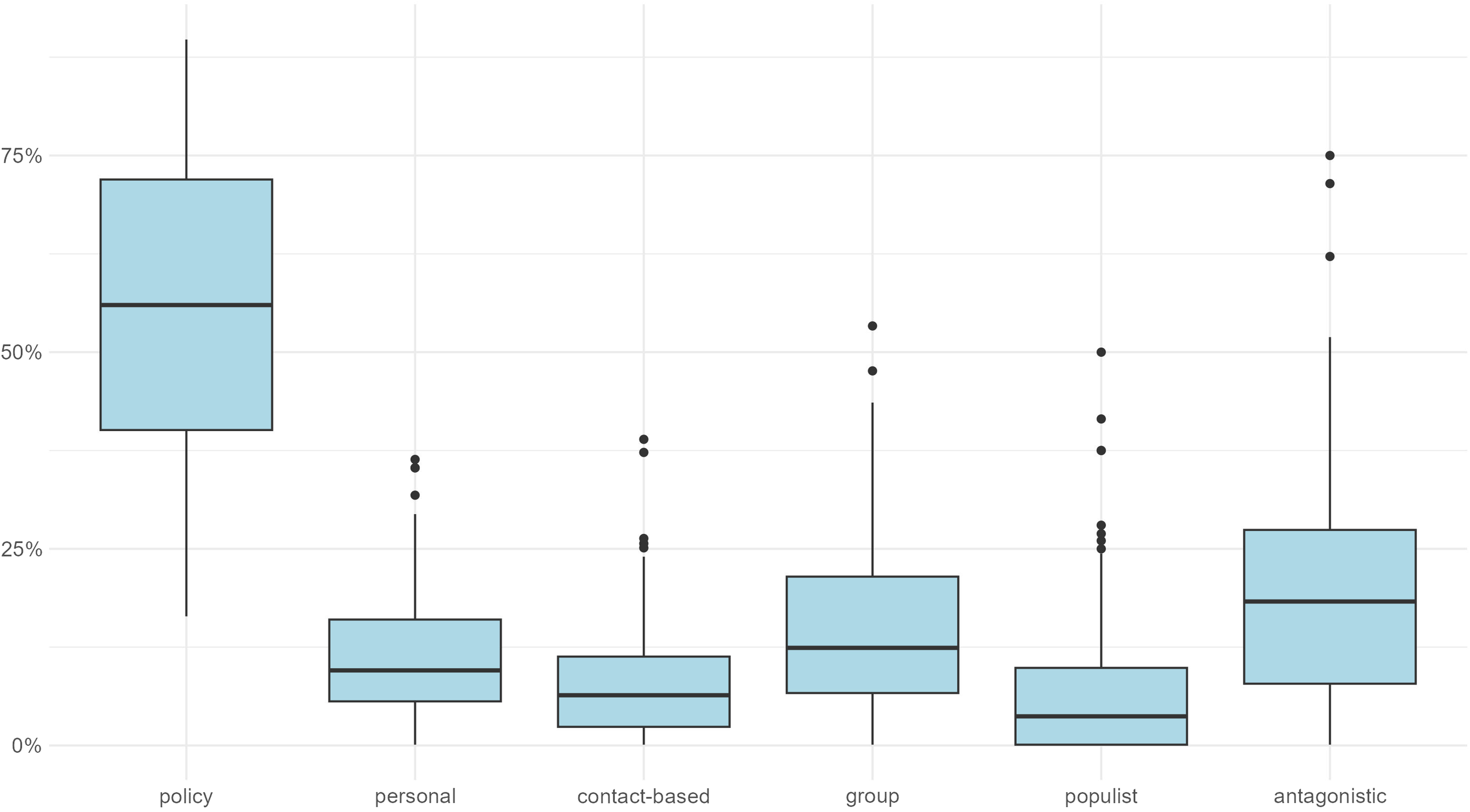
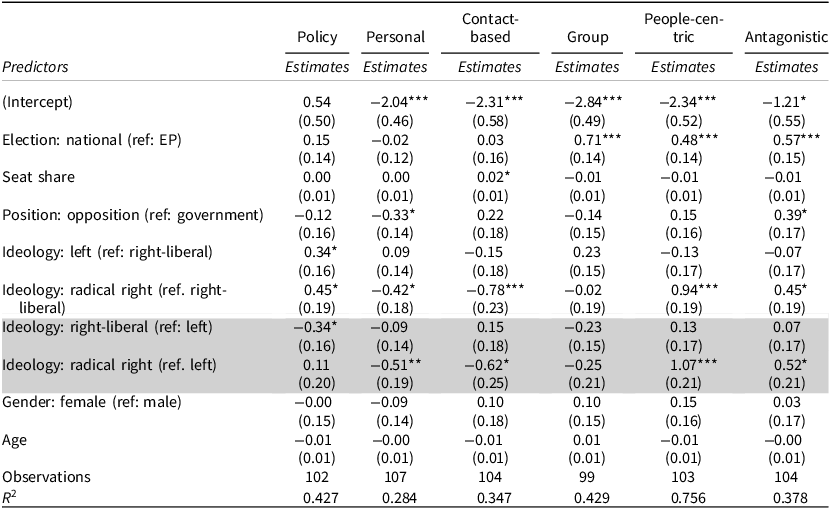


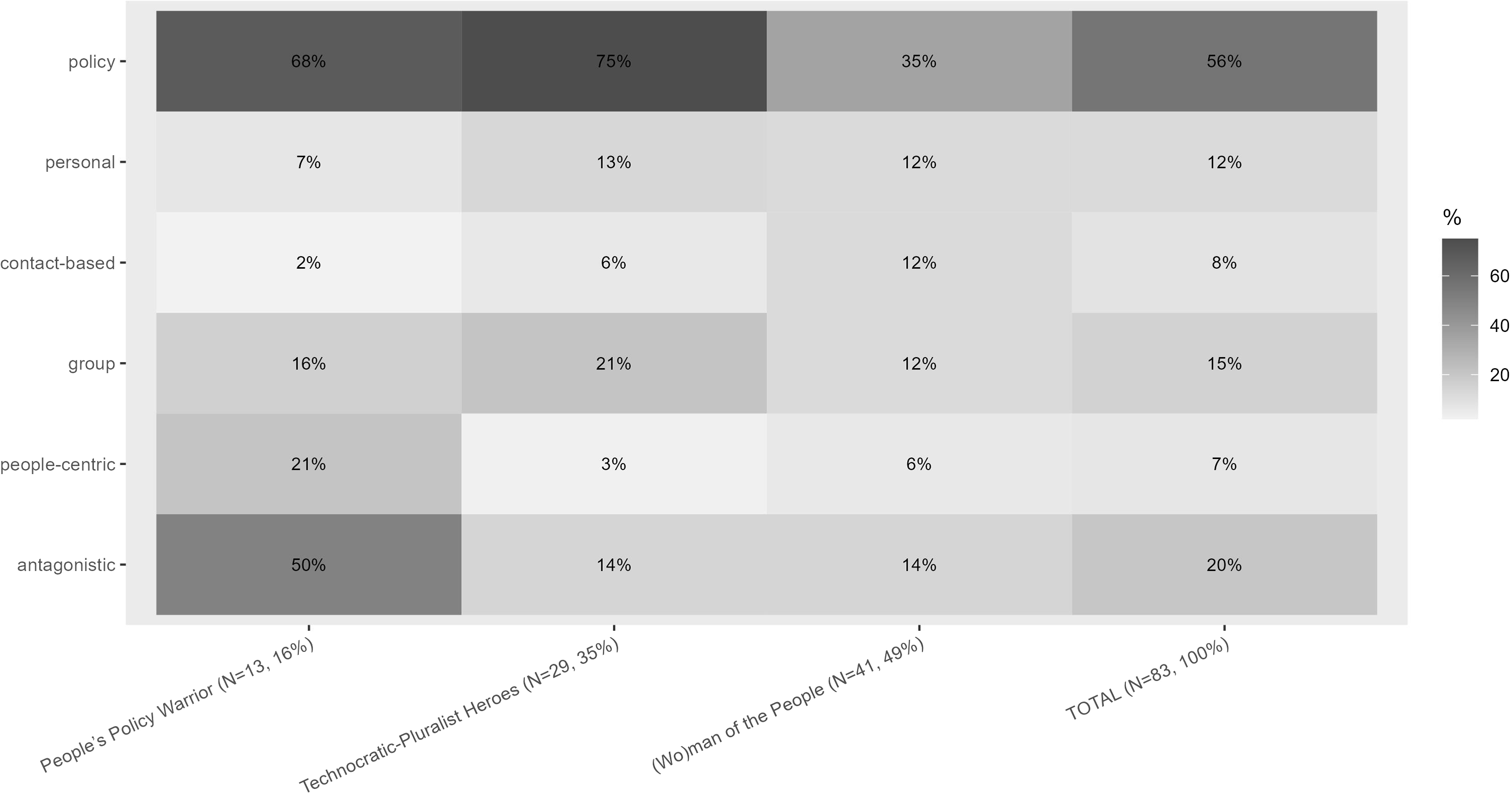
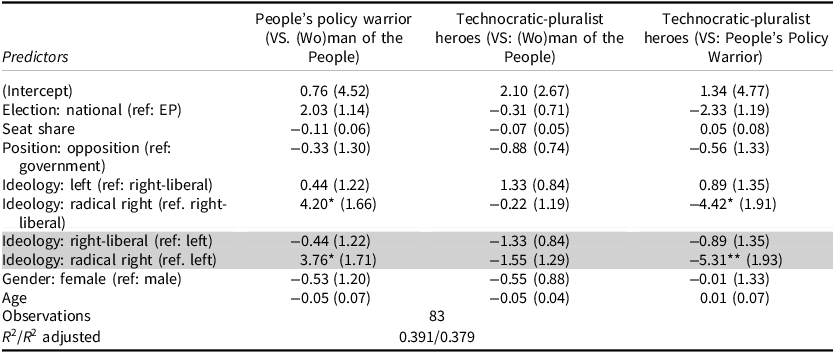


 Open access

