Introduction
The world's population is aging and migration is becoming more common. In Australia and other Western countries, this means an increasingly culturally and linguistically diverse older population. The 2011 Australian census reported that 36% of older Australians were born in another country and 17% speak a language other than English at home (Australian Bureau of Statistics, 2012). Chinese people make up the world's largest ethnic group, and are one of the largest and fastest growing immigrant groups in many Western countries, including Australia, Canada, and the United States (e.g. Gibson et al., Reference Gibson, Braun, Benham and Mason2001, Turcotte and Schellenberg, Reference Turcotte and Schellenberg2006).
Depression and anxiety are common mental health issues for older people, with 10–15% and 15–52% of the older population experiencing symptoms of depression and anxiety, respectively (Baldwin, Reference Baldwin, Jacoby, Oppenheimer, Dening and Thomas2008). Common symptoms of depression are low mood, loss of interest and enjoyment, and disturbed sleep, and common symptoms of anxiety include excessive fear or worry, uncontrollable or overwhelming panic, and increased heart rate or racing heart (Kogan et al., Reference Kogan, Edelstein and Mckee2000; Baldwin, Reference Baldwin, Jacoby, Oppenheimer, Dening and Thomas2008, Bryant et al., Reference Bryant, Jackson and Ames2008). There is a high level of comorbidity between depression and anxiety in late life, although the directionality of this relationship is currently not clear (Bryant et al., Reference Bryant, Jackson and Ames2008).
A recent review by the authors found that depression is more common among older Chinese immigrants than the general older population, with a 20–30% prevalence rate among older Chinese immigrants living in Western countries (Lin et al., Reference Lin, Haralambous, Pachana, Bryant, Logiudice, Goh and Dow2016). There is only one published study on anxiety among this group (Asian American Federation of New York, 2003). The study included 105 older Chinese immigrants living in New York of whom 35% identified themselves as “being too anxious” and considered it a serious problem (Asian American Federation of New York, 2003).
Early detection of mental health symptoms can lead to improved treatment outcomes and better quality of life (Watson and Pignone, Reference Watson and Pignone2003). As screening tools can help with early symptom detection and diagnosis (Pachana et al., Reference Pachana, Mitchell, Pinsker, Morriss, Lo and Cherrier2016), it is important that such tools are valid, reliable, and culturally appropriate.
This study focused on two commonly used screening tools that have been specifically designed for older people, the Geriatric Depression Scale (GDS, Yesavage and Sheikh, Reference Yesavage and Sheikh1986) and the Geriatric Anxiety Inventory (GAI, Pachana et al., Reference Pachana, Byrne, Siddle, Koloski, Harley and Arnold2007), and explored the validity, concurrent reliability, and cultural appropriateness of these two tools for detecting depression and anxiety symptoms among older Chinese immigrants. These tools have few somatic items, and thus limit the impact of common physical illnesses in old age that can often mask or confound detection of mental health issues (Kogan et al., Reference Kogan, Edelstein and Mckee2000). The original GDS has 30 items, and participants are asked to answer “yes” or “no” to these items based on how they felt over the past week. One sample item is “Do you feel that your life is empty?” In clinical practice and research, the shorter version with 15 items (GDS-15, Yesavage and Sheikh, Reference Yesavage and Sheikh1986) is generally preferred over the original version because it is quicker to complete and has good psychometric properties (McCurren, Reference Mccurren2002). The GAI was developed by Pachana and colleagues (Reference Pachana, Byrne, Siddle, Koloski, Harley and Arnold2007), and its format was intentionally designed to model that of the GDS. It consists of 20 items and participants are asked to answer “agree” or “disagree” to these items based on how they felt over the past week. One sample item is “I worry a lot of the time.”
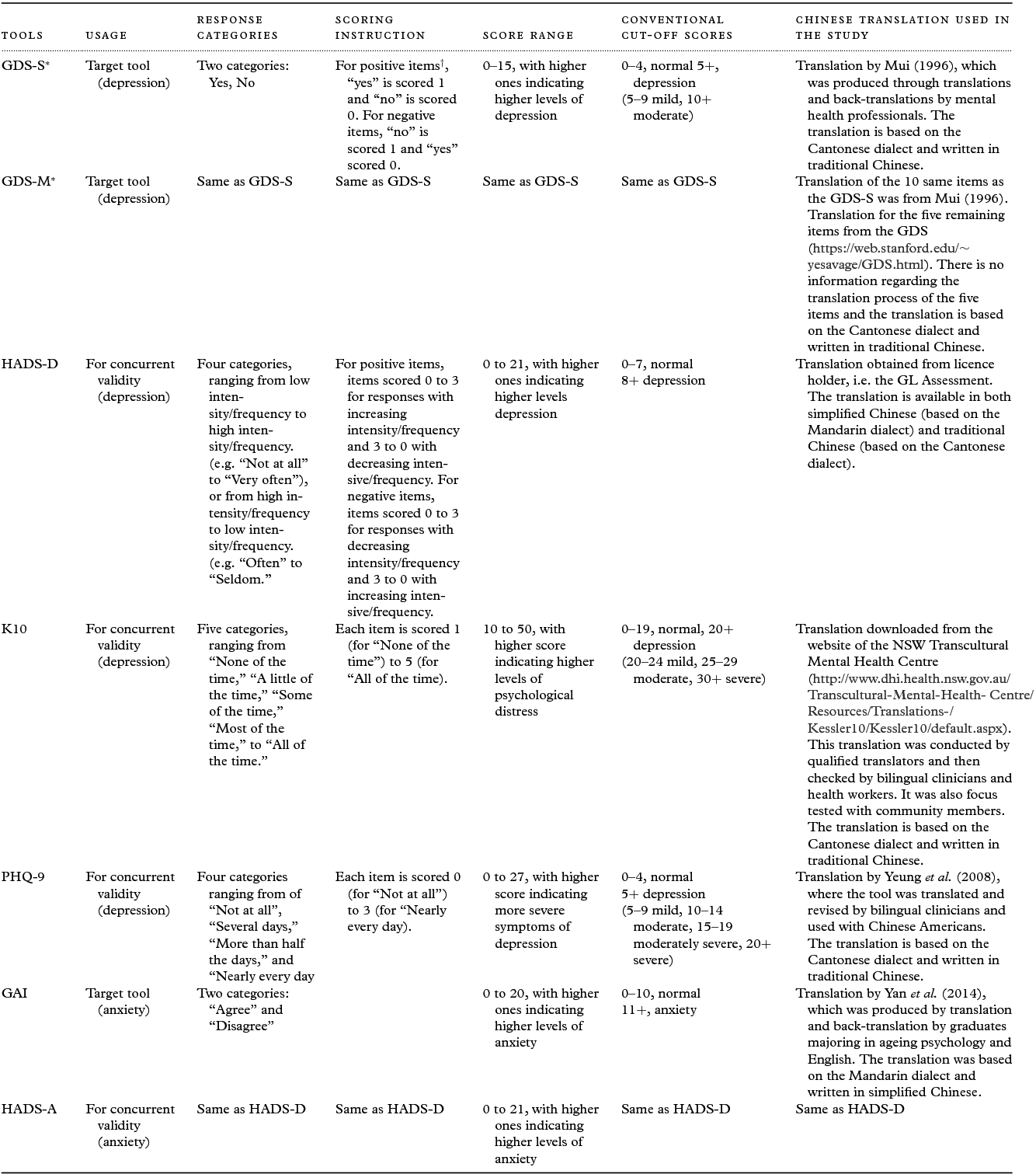
Two versions of the GDS-15 have been used in previous research with older Chinese immigrants, including the standard GDS-15 (hereafter referred to as GDS-S) and Mui's (Reference Mui1996) 15-item GDS (hereafter referred to GDS-M) (Lin et al., Reference Lin, Haralambous, Pachana, Bryant, Logiudice, Goh and Dow2016). The two versions have ten items in common and five different items (see Table 1). The GDS-M was developed because the GDS-S reported a relatively low reliability (Cronbach's α = 0.72) in Mui's (Reference Mui1996) study. Mui (Reference Mui1996) selected the 15 items in the GDS-30 that had no missing data based on the view that an unanswered item might mean that the item was difficult for older Chinese immigrants to comprehend or was culturally irrelevant, and that items with no missing data might be more culturally appropriate for older Chinese immigrants. A review by the authors on the use of the GDS among older Chinese immigrants found that the GDS-M has been more commonly used with this group than the GDS-S and is reported to have better internal reliability than the GDS-S (Lin et al., Reference Lin, Haralambous, Pachana, Bryant, Logiudice, Goh and Dow2016). However, there are limited validity data for either of the two GDS versions (Lin et al., Reference Lin, Haralambous, Pachana, Bryant, Logiudice, Goh and Dow2016). Although these two tools have been validated with Chinese residing in China, it is still important to validate these tools with Chinese immigrants living in Western countries because there are factors associated with the immigration experience, which might have impact on the reliability and validity of these tools.
Assessment tools used in the study

* The GDS-S and GDS-M have ten items in common and five different items. The five items that are included in the GDS-S but not in the GDS-M are as follows: Item 10 in the GDS-30 (feel helpless), Item 12 (prefer to stay home), Item 15 (wonderful to be alive), Item 21 (full of energy), and Item 22 (situation hopeless). The five items that are included in the GDS-M but not in the GDS-S are as follows: Item 11 (get restless and fidgety), Item 13 (worry about future), Item 16 (feel downhearted and blue), Item 24 (get upset about little things), and Item 25 (feel like crying).
† Positive items are items that indicate the presence of depression or anxiety when participants answer “yes,” whereas negatives items are items that indicate the absence of depression or anxiety when participants answer “yes.”
With regard to the GAI, although it has been translated into Chinese and used with older Chinese people living in mainland China (Yan et al., Reference Yan, Xin, Wang and Tang2014), it has not yet been used with older Chinese immigrants (Lin et al., Reference Lin, Haralambous, Pachana, Bryant, Logiudice, Goh and Dow2016). Research on the mental health of older Chinese immigrants to date has been largely conducted in North America, despite the large and growing populations in other Western countries, such as Australia and New Zealand. Thus, the current study had the following aims:
1. to explore the cultural appropriateness of current translations of the GDS and the GAI for older Chinese immigrants living in the state of Victoria in Australia and revise the translations as required based on the results of this study,
2. to examine the validity, concurrent reliability, and cultural appropriateness of the GDS and the GAI as screening tools for depression and anxiety among this population,
3. to explore the differences in the performance (i.e. reliability and concurrent validity) between the GDS-S and the GDS-M, and
4. to explore the differences in rates of detection of depression and anxiety using the various screening instruments.
Method
Ethics approval for the study was granted by the Melbourne Health Human Research Ethics Committee (MHREC 2013.153).
Recruitment
A convenience sampling approach was used. Most participants were recruited from Chinese seniors’ groups in metropolitan Melbourne. Chinese-speaking researchers visited these groups and provided an introductory talk on mental health among older people. They then introduced the research project and invited the members to participate. In addition, the researchers contacted older Chinese volunteers known from earlier projects. They also received referrals from community workers who were aware of this project.
Measures
Socio-demographic data was collected from participants, including age, gender, marital status, country of birth, education level, English proficiency, and self-reported physical health. The study also included questions relevant to migration experience, such as, time of arrival in Australia, and satisfaction with life in Australia.
The six screening tools used in the study included the GDS-S, the GDS-M, the GAI, the Hospital Anxiety and Depression Scale (HADS, Zigmond and Snaith, Reference Zigmond and Snaith1983), the Kessler 10 (K10, Kessler et al., Reference Kessler2003), and the Patient Health Questionnaire (PHQ-9, Spitzer et al., Reference Spitzer, Kroenke, Williams and Group1999). The HADS, the K10, and the PHQ-9 were included to investigate concurrent validity of the GDS and the GAI. Table 1 provides detailed information on these screening tools, including response categories, scoring instructions, score range, conventional cut-off scores, and the source of the Chinese translation used in the current study.
The HADS is a screening tool for detection of anxiety and depression in people with poor physical health (Zigmond and Snaith, Reference Zigmond and Snaith1983) and has been validated in an older population (Alwahhabi, Reference Alwahhabi2003). It has anxiety and depression subscales (HADS-A and HADS-D, respectively), both containing seven items. Participants are asked to respond based on how they have been feeling in the past week. One sample item from the HADS-D is, “I still enjoy the things I used to enjoy” and one from the HADS-A is, “I get a sort of frightened feeling as if something awful is about to happen.” The HADS has been used and validated with the Chinese population (Yang et al., Reference Yang, Ding, Hu, Zhang and Sheng2014).
The K10 is a 10-item self-report screening scale of psychological distress and has been used in many population-based surveys, such as the United States National Health Interview Survey and the Australian National Surveys of Mental Health and Well-being. Participants are asked to respond to the K10 based on how they have been feeling over the past 30 days and one sample item is “how often did you feel tired out for no good reason?” The K10 has been validated with the older population (Anderson et al., Reference Anderson, Sunderland, Andrews, Titov, Dear and Sachdev2013). It has also been used with the Chinese population (Feng and Xu, Reference Feng and Xu2015), but there is limited validity data regarding its use with this population. Although there are limited validity data regarding K10, it is one of the most commonly used mental health scales in population-based surveys, such as the United States National Health Interview Survey and the Australian National Surveys of Mental Health and Well-being. It is also commonly used by General Practitioners. This is why the K10 was included in this study.
The PHQ-9 is a self-reported screening instrument for depression. It consists of nine criteria upon which the diagnosis of depressive disorders is based in the Diagnostic and Statistical Manual of Mental Disorders, Fourth Edition (American Psychiatric Association, 1994). One sample symptom to be rated is “little interest or pleasure in doing things.” The PHQ-9 has been used and validated with the Chinese population (Bian et al., Reference Bian, Li, Duan and Wu2011).
Table 1 also provides information on the Chinese translations of the screening tools that were used in the current study. For translations that were based on the Cantonese dialect and written in traditional Chinese, the researchers used the online conversion tool mentioned previously to convert these translations into simplified Chinese to ensure that the translations could be understood by Chinese immigrants from mainland China who generally speak Mandarin and read and write in simplified Chinese. For the translations based on the Mandarin dialect and written in simplified Chinese, the same online tool was used to convert the translations into traditional Chinese to ensure that they were understood by Chinese immigrants from Hong Kong and other East Asian countries who generally speak Cantonese and read and write in traditional Chinese. These translations were then checked by a native Mandarin-speaking researcher and a native Cantonese speaker to ensure that they could be understood by speakers of these languages.
The researchers also collected feedback on the translations of the GDS and GAI through consultation with community workers and health professionals who work with older Chinese immigrants (Haralambous et al., Reference Haralambous2016). All of these people were of Chinese backgrounds and spoke either Mandarin and/or Cantonese. With regard to the GDS, the translations were considered accurate and only minor changes were made to the translations. However, they did not provide information on internal reliability and concurrent validity. Therefore, a validity study is still needed. For the GAI, it was noted that the translation of Item 15 “I often feel shaky inside” was not accurate. This item assesses the worry aspect in anxiety disorders, whereas the original Chinese translation (“我经常胆战心惊的”) highlighted the fear aspect. Changes were made in the translation (“我经常感到心里发慌”) to reflect this. The revised translation was then discussed with and agreed to by the researcher who conducted the original translation.
Procedure
Data in this study were collected through standardized interviews with participants. The interviews were conducted in the participant's home or at another venue if preferred. A two staged ethics approval process was used in the study. Initially, the interviewer explained the project and provided the participants with the written plain language statement and consent form (PICF). Instead of the usual process of gaining written consent before the interviews, participants gave verbal consent to participate in the interview. Only at the end of the interview, the participants signed the written consent form so that the researcher could use the information collected in the interview. This was done as our previous work with the Chinese community had shown that older Chinese people were often reluctant to sign the consent forms until they knew exactly what information would be asked of them.
Fifty seven of the participants participated in the study individually and the remaining 30 took part in the study together with their spouses (i.e. 15 couples). For practical purposes, the project was explained to both members of the couples before consent was sought. The interviewer then asked which member of the couples would like to be interviewed first and 15 couples responded that they would like to be interviewed together (i.e. with their spouse present during the interviews). Therefore, 57 participants were interviewed individually and 30 (i.e. 15 pairs) were interviewed with their spouses present during the interviews. Of these 15 pairs, eight were Cantonese speaking and seven were Mandarin speaking. Although the spouses were present during the interviews, the interviews were conducted separately for each participant and these participants were considered separately.
The interviews were conducted in Cantonese (using the traditional Chinese version of the tools) or Mandarin (using the simplified version of the tools), depending on the preferred language of the participants. Written consent was obtained. The interviews lasted from 30 min to 3 h, depending on how much information the participants chose to share.
Statistical analyses
SPSS 22.0 was used for data analysis. The reliability of the GDS and the GAI was assessed using Cronbach's α, and the validity of these two tools was assessed through their association with other depression and anxiety tools, respectively. All statistical tests performed were 2-sided, and the significance level was set at the α level of 0.05.
Results
Profile of participants
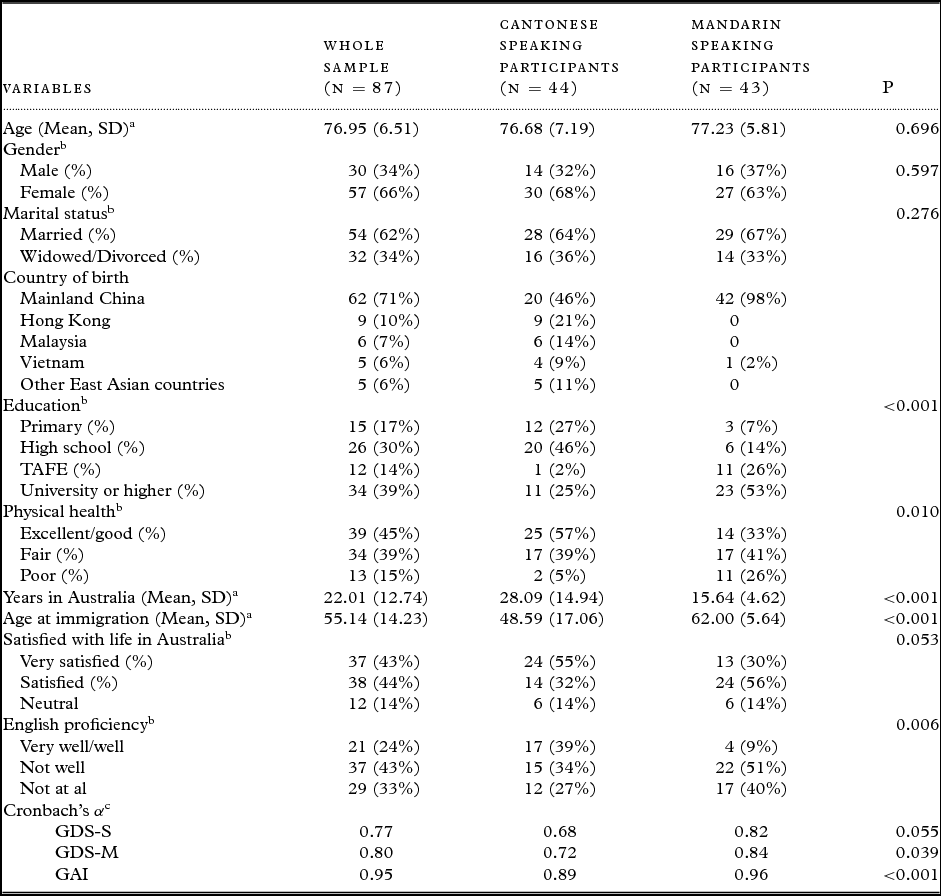
The project team visited a total of 18 community groups during May and June 2014. The approximate number of participants that attended these education sessions was 419. A total of 87 older Chinese immigrants were recruited (response rate: 21%), comprising 44 Cantonese speaking and 43 Mandarin speaking people. Table 2 outlines the profile of the participants. They ranged in age from 60 years to 92 years. Most of them were born in mainland China, were female, and married. Most participants had a university or higher degree and considered their physical health to be “excellent” or “good.”
Socio-demographic characteristics of participants

a Independent t-test.
b χ 2 test.
c Fisher-Bonette Test.
Of these participants, 86 had immigrated to Australia and one was currently on a visitor visa but had applied for permanent residency. Those who had immigrated had been living in Australia from 3 to 63 years and the ages at which they immigrated to Australia ranged from 12 to 82 years (mean age at immigration = 55 years, SD = 14). Most participants were satisfied with their lives in Australia, and only a quarter indicated that they spoke English well.
There were no differences between Cantonese speaking and Mandarin speaking participants in age, gender, marital status, and satisfaction with life in Australia. However, there were differences in terms of country of birth, education, self-reported physical health, numbers of years living in Australia, age at immigration, and English proficiency. Most Mandarin speakers were born in mainland China, whereas there was a great diversity in the countries of birth among Cantonese speakers, including mainland China, Hong Kong, Malaysia, Vietnam, and other East Asian countries. Compared to Cantonese speaking participants, Mandarin speakers reported higher levels of education and worse physical health. They also had been living in Australia for a shorter period of time, immigrated at an older age, and reported poorer English proficiency.
Scoring of the GDS and the GAI
As noted in the Methods section, participants were asked to answer “yes” or “no” to the GDS and the GAI items based on how they felt over the past week. The “yes” responses were scored “1” if they indicate the presence of depression or anxiety (e.g. a “yes” response to the GDS item “Do you feel life is empty?”) and were scored “0” if they indicate the absence (e.g. a “yes” response to the GDS item “Are you basically satisfied with your life?”
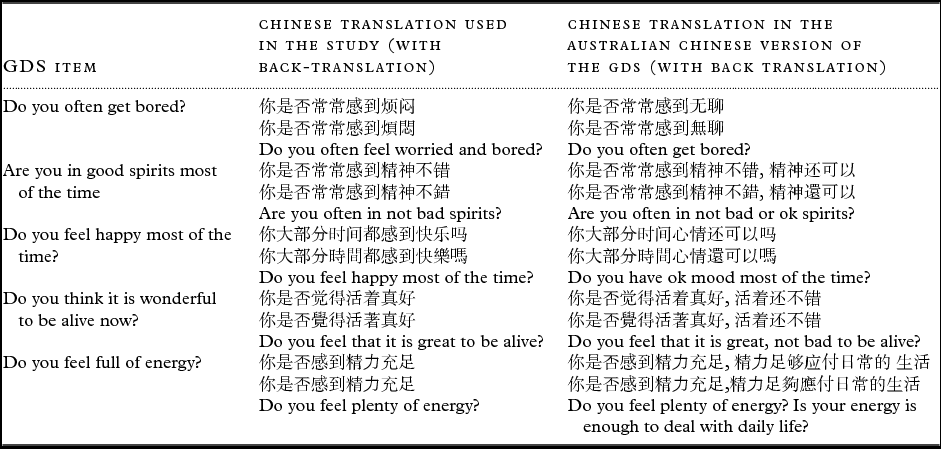
Many participants reported that it was hard to simply answer “Yes” or “No.” For example, when answering the GDS item of “Are you basically satisfied with your life?” (included both in the GDS-S and the GDS-M), one participant answered “yes . . . but having lots of worries.” The “Yes/No” format is particularly problematic to the items that do not have a word indicating frequency (e.g. “Do you feel life is empty?” vs. “Do you often get bored?”). Some participants also found it difficult to respond to items indicating strong emotions, such as the GDS items of “Do you feel happy most of the time?” (included both in the GDS-S and the GDS-M) and “Do you think it is wonderful to be alive now?” (included only in the GDS-S). These participants often used “just so so,” “average,” “just ok” when responding to these items. One possible reason for this is that in Chinese culture, it is preferable to stay in a calm and stable emotional state and avoid extreme emotions. For example, there is a Chinese saying: extreme joy begets sorrow. The other possible reason is that individuals of East-Asian cultures tend to use more ambivalent and moderate responses than those from European backgrounds with whom these tools were developed (Hamamura et al., Reference Hamamura, Heine and Paulhus2008). Considering these cultural factors, these moderate responses were scored as the absence of depression or anxiety symptoms.
Finally, there were some ambiguous responses that did not clearly indicate a “Yes” or “No” response and these responses were coded as missing. Some examples are as follows:
1. GDS item: “Are you basically satisfied with your life?” (included both in the GDS-S and the GDS-M): “I am satisfied with some aspects, but unsatisfied with others”;
2. GDS item: “Do you feel happy most of the time?” (included both in the GDS-S and the GDS-M): “I am not particularly happy or unhappy”;
3. GDS item of “Do you think it is wonderful to be alive now?” (included only in the GDS-S): “It is neither good or bad”;
4. GDS item of “Do you feel that your situation is hopeless?” (included only in the GDS-S): “I do not have hopes or expectations: If you don't have them, you won't be disappointed I never think of this issue.”
One participant had more than 20% of items missing in his GDS results and his data were not included in the study. For participants with less than 20% of missing items, the final scores were adjusted using the formula suggested by the GDS author to minimize the impact of missing items (Yesavage, Reference Yesavage2015):
Final score= (total scores × 15)/number of items with non-missing responses
When the scores resulted in a fraction, it was rounded to the nearest whole number.
Of the possible range from 0 to 15, the GDS-S responses ranged from 0 to 12 and the GDS-M ranged from 0 to 13 in the current study. For the GAI which has a possible range from 0 to 20, responses ranged from 0 to 19 in the current study.
Reliability of the GDS and the GAI
Both versions of the GDS reported acceptable reliability in the study (see Table 1). These reliability data could not be compared to the original study with Anglo participants because Yesavage and Sheikh (Reference Yesavage and Sheikh1986) did not report data on internal reliability. These data, however, were comparable to those reported in Lin et al. (Reference Lin, Haralambous, Pachana, Bryant, Logiudice, Goh and Dow2016)’s review on the use of GDS among older Chinese immigrants (ranging from 0.72 to 0.87 for GDS-S and 0.84 to 0.90 for GDS-M). Consistent with the result in Lin et al. (Reference Lin, Haralambous, Pachana, Bryant, Logiudice, Goh and Dow2016), the GDS-M reported higher internal reliability than the GDS-S. However, the difference failed to reach significance, z = 0.68, p = 0.7515.
The GAI reported good internal reliability, Cronbach's α = 0.95. This result was comparable to that reported by Pachana et al. (Reference Pachana, Byrne, Siddle, Koloski, Harley and Arnold2007) when they first developed the measure (Cronbach's α = 0.91). It was also consistent with the result from Yan et al. (Reference Yan, Xin, Wang and Tang2014), who piloted the GAI with older Chinese people living in mainland China (Cronbach's α = 0.94).
Interestingly, the internal reliability was higher among the Mandarin speaking group for all three measures. The Fisher-Bonette Tests (Kim and Feldt, Reference Kim and Feldt2008) found that the differences reached significance for the GDS-M and the GAI, z = 1.77, p = 0.0387 and z = 3.44, p < 0.001, respectively, whereas the differences in the GDS-S did not reach significance, z = 1.59, p = 0.0554.
Concurrent validity of the GDS and the GAI
The GDS-S and the GDS-M scores were highly correlated, Gamma = 0.90, p < 0.001. As seen in Table 3, both tools were significantly correlated with the other depression screening tools (i.e. HADS-D, K10 and PHQ-9), although their associations with GDS-M appeared to be higher than those with the GDS-S. Interestingly, the correlations between the two GDS versions and other depression scales were slightly higher among the Mandarin speaking participants than the Cantonese speakers. However, these differences did not reach significance.
Gamma correlations between depression screening tools

*<0.05, **<0.01, ***<0.001.
The GAI was significantly associated with the other measure of anxiety, the HADS-A, Gamma = 0.70, p < 0.001. There was a little difference in these correlations between the Mandarin (Gamma = 0.74, p < 0.001) and the Cantonese groups (Gamma = 0.72, p = 0.001), z = 0.19, p = 0.8493.
Detection of depression and anxiety
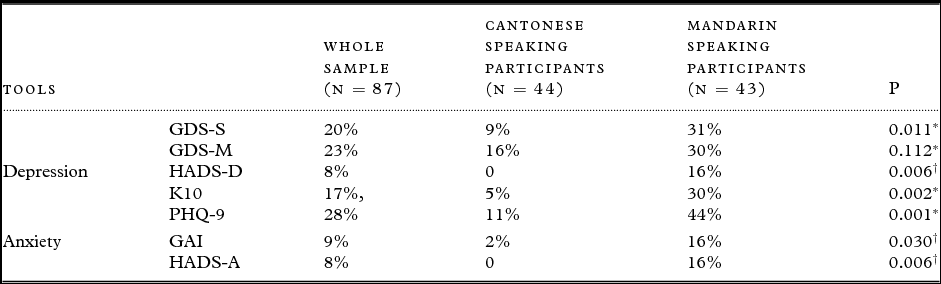
Table 4 provides information on the rate of detection of depression and anxiety using different screening tools. With regard to depression, the GDS-S and the GDS-M reported moderate prevalence rates and there were only minor differences between the two tools (20% for GDS-S and 23% for GDS-M, respectively). The HADS-D reported the lowest prevalence (8%) and the PHQ-9 reported the highest (28%). With regard to anxiety, the GAI reported a 9% prevalence rate and the HADS-A reported an 8% prevalence rate.
Rates of detection of depression and anxiety using different screening tools

* χ 2 test, †Fisher's exact test.
There were significant differences in the detection rates of depression and anxiety between the Cantonese speaking and the Mandarin speaking participants in all screening tools, with Mandarin speaking participants reporting higher levels of depression and anxiety (see Table 4). The differences reached significance for all tools except the GDS-M.
Revision of the GDS and the GAI for future studies
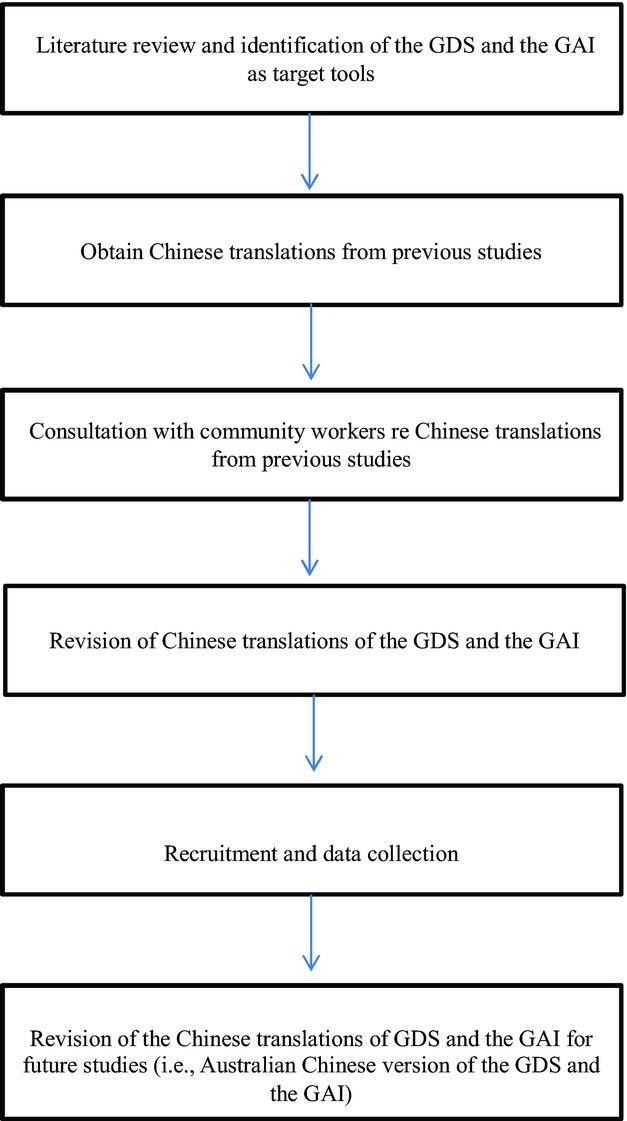
Based on participants’ feedback about the GDS, minor changes were made to five items (see Table 5). Most of these revisions reflected the finding that Chinese participants preferred more moderate terms to describe their emotions. No changes were made to the translation of the GAI. These final versions were named as the Australian Chinese version of the GDS-S, GDS-M, and the GAI respectively (see Figure 1 for detailed information on how these versions were developed) and they are available the websites of the GDS and the GAI, respectively, for future studies and clinical use.
Revision of five GDS items for the Australian Chinese version of the GDS

Flow chart of the development of the Australian Chinese version of the GDS and the GAI.

Discussion
Reliability and validity of the GDS and the GAI
Both the GDS-S and the GDS-M were found to be valid screening tools for depression among older Chinese immigrants in this study. Of these two, the GDS-M performed better than the GDS-S as a screening tool. It had higher internal reliability and was more closely correlated with other depression screening tools. Furthermore, consistent with Mui (Reference Mui1996), the GDS-M appeared to be more culturally appropriate for older Chinese immigrants than the GDS-S because it was easier to score. Older Chinese people appeared to find it easier to endorse a “yes” or “no” answer when the questions that ask for extreme expression of emotion (e.g. “Do you think it is wonderful to be alive now?”) were removed. It is important, however, to highlight that the translation used in this study was slightly different from that used in previous studies, based on our consultation with the Chinese community (Haralambous et al., Reference Haralambous2016).
The GAI was found to be a reliable and valid tool for the detection of anxiety in the sample of older Chinese immigrants living in Australia in this study. However, as this is the first and only study to investigate the validity and reliability of the GAI among older Chinese immigrants, more research is needed to confirm this finding.
Detection of depression and anxiety
Based on the results of the five depression screening tools, approximately 20% and 8% of participants respectively exhibited clinically significant symptoms of depression and anxiety. The result regarding depression is consistent with the previous international literature (Kuo et al., Reference Kuo, Chong and Joseph2008; Lin et al., Reference Lin, Haralambous, Pachana, Bryant, Logiudice, Goh and Dow2016), providing further evidence that older Chinese immigrants are at greater risk of depression than older Caucasian people. This finding has important implications for the planning and provision of mental health services to older Chinese immigrants. For example, there should be education among GPs about the increased risk of depression among older Chinese immigrants. There is also a need for additional investment in the prevention and treatment of depression among this cultural group, for example, a help-line that is staffed by Chinese speaking counselors as help lines have been found to be effective in reducing distress and providing referrals for English speaking clients (Kalafat et al., Reference Kalafat, Gould, Munfakh and Kleinman2007).
Interestingly, when the two language groups are examined independently, there was a much higher detection rate of depression (GDS-S 31% cf 9%, p = 0.011) and anxiety (GAI 16% cf 2%, p = 0.030) among Mandarin speaking people compared with Cantonese speaking people. As this result had not been reported in any previous research, the study was not designed to explain these differences statistically. Mandarin is usually spoken by people from mainland China, Taiwan, Singapore and some other East Asian countries, whereas Cantonese is usually spoken by people from the Guangdong Province of China, Hong Kong, Macau, Vietnam, Malaysia and some other East Asian countries. Due to the diversity in these countries, it is difficult to compare cultures between Mandarin and Cantonese speakers. However, there were some demographic differences that provide potential explanation. Mandarin speakers reported higher levels of education, living in Australia for a shorter period of time, older age at immigration and poorer English proficiency. Therefore, compared to Cantonese speaking people, Mandarin speaking people are more likely to come to Australia in later life and experience greater difficulty as immigrants, which might include language difficulties, changed role and status within the family and society, financial dependence, and possibly fewer social networks. We know from our previous qualitative research (Haralambous et al., Reference Haralambous2016) that many older Chinese immigrants have come to Australia to help care for their grandchildren. They have generally migrated at an older age and may have left behind high prestige and well paid employment to become financially dependent on their adult child/ren. They also often live together with their adult son or daughter/in law. Although multi-generational living is preferred in traditional Chinese culture, it is usually the younger generation who resides in the older person's home and this has implications for control and authority over finances and activities of each member of the household (Thomas, Reference Thomas2003). In the migration context, the nature of multi-generational living changes when older parents come to live in their children's houses. This change in home ownership means that older Chinese immigrants might experience a change in their status within the family (i.e. that they are no longer the head of the family), resulting in relatively higher levels of depression and anxiety. Further studies are needed to explore and clarify these issues and the implications they have for providing support to older Mandarin speaking immigrants. For example, specific education may be needed for GPs and mental health providers to understand the issues and risks to mental health faced by this population.
Based on feedback from participants and consultation with community workers and health professionals, minor changes were made to the Chinese translation of some items of the GDS and the GAI. These revised versions were named as the Australian Chinese version of the GDS and the GAI. Administration and scoring instructions were provided for these version and they are now available on the websites of the GDS and GAI for future studies and clinical use. For health professionals, we recommend that they use either version of the GDS as the revision should improve the performance of the GDS-S. For researchers, it is suggested that they use the GDS-20, which includes the GDS-S and the GDS-M, as currently there is limited research comparing the performance of these two versions.
Limitation of the current study and directions for future study
The current study had three key limitations that require acknowledgment. First, the study was based on a relatively small convenience sample. This might affect the generalizability of the findings to the broader population. Second, we did not conduct structured diagnostic interviews for determining the validity of screening tools (Pettersson et al., Reference Pettersson, Bengtsson Bostr ö m, Gustavsson and Ekselius2015) as the funding for the study did not allow for this. Finally, as most participants were recruited from seniors’ groups, it is likely that they were socially more active than the general older Chinese immigrant population. Therefore, the prevalence of depression and anxiety reported in the study might be lower than that among the general older Chinese population, in particular, those who are socially isolated.
We understand that age at migration has an important impact on a person's immigration experience. However, it is not a common practice in the literature to include age at immigration as an inclusion criterion for studies with older Chinese immigrants. In this study, we did not include this as an inclusion criterion for several reasons. First, it is difficult to recruit older immigrants in research projects. Second, we did not want those who immigrated at a younger age to feel excluded or offended. Finally, we checked the age range of our participants. Although we did have one participant who immigrated at the age of 12, the majority of the participants came to Australia when they were older (mean age at immigration = 55, SD = 14).
In light of the findings and limitations of the present study, there are some key directions for future studies in this field. First, a population-based study is needed to provide more comprehensive data on the prevalence of depression and anxiety among older Chinese immigrants. Second, further studies are required to explore the factors underlying the finding of increased risk of depression among older Chinese immigrants. While the study has proposed a number of possible factors, such as the immigration experience of older Chinese people, it was not designed to explore the impact of these factors. Some possible directions for these studies might be comparing prevalence between older Chinese people living in Western countries and those living in their country of origin, or a longitudinal study investigating the impact of immigration among this group. Furthermore, as the current study is the first to report differences in the experience of depression and anxiety between Cantonese and Mandarin speaking people, more research is required to explore whether this exists at the population level and in other Australian states or Western countries. It would also be interesting to compare the findings of this study with those of other migrant groups in order to tease out the relative influence of cultural factors versus migration on mental health. Finally, there is still a need to establish the diagnostic validity of the GDS and the GAI, including evaluation of the cut-off scores for depression and anxiety among older Chinese immigrants.
Conclusion
This study found that the GDS and the GAI are valid and reliable screening tools for depression and anxiety among older Chinese immigrants. It also added to the evidence that older Chinese immigrants are at greater risk of depression than the general older population. The finding that there are differences within the Chinese community in the rates of depression suggests some explanations for this increased rate, including reason for immigration, immigration experience and changing occupational and family status. This study recommends that primary care and mental health services should be aware of and responsive to the increased risk of depression among this group and that further studies are needed to clarify exactly what is contributing to this increased risk.
Conflict of interest
None.
Description of authors’ roles
BD, BH, and XL designed and conducted the study, drafted and revised the paper. AG was involved in ethics submissions, data collection and analysis, and reviewed and revised earlier drafts of the paper. CB, DL, and NP provided advice throughout the study as members of the project team and reviewed and revised earlier drafts of the paper.
Acknowledgments
This study was conducted as part of a research project entitled “Assessing the Geriatric Depression Scale (GDS) and the Geriatric Anxiety Inventory (GAI) and education about depression and anxiety among the older Chinese community in Australia.” The authors would like to acknowledge beyondblue, an independent, not-for-profit organization working to increase awareness and understanding of anxiety and depression in Australia, for providing funds for this research project. The authors would also like to thank the project advisory group for their guidance, advice, and feedback. We would also like to thank all participants who were involved in the research.