Introduction
Cycloneuralians have relatively strong fossilization potential because of the development of cuticle and thus have abundant fossil records in Cambrian deposits with exceptionally preserved fossils (Maas, Reference Maas2013), such as typical Burgess Shale-type Lagerstätten (Conway Morris, Reference Conway Morris1977; Chen, Reference Chen2004; Hou et al., Reference Hou, Aldridge, Bergström, Siveter, Siveter and Wang2004; Maas et al., Reference Maas, Huang, Chen, Waloszek and Braun2007a) and Orsten-type Lagerstätten (Maas et al., Reference Maas, Waloszek, Haug and Müller2007b, Reference Maas, Waloszek, Haug and Müller2009; Liu et al., Reference Liu, Xiao, Shao, Broce and Zhang2014; Zhang et al., Reference Zhang, Xiao, Liu, Yuan, Wan, Muscente, Shao, Gong and Cao2015; Shao et al., Reference Shao, Liu, Wang, Zhang, Tang and Li2016). The disassociated armor of their cuticles can also be preserved as small shelly fossils (Bengtson, Reference Bengtson1977; Hinz et al., Reference Hinz, Kraft, Mergl and Müller1990) or small carbonaceous fossils (Smith et al., Reference Smith, Harvey and Butterfield2015; Harvey and Butterfield, Reference Harvey and Butterfield2016). It has previously been proposed that the cycloneuralians originated in early Cambrian macrobenthos and that palaeoscolecids might represent ancestral cycloneuralians or even ancestral ecdysozoans (Budd, Reference Budd2001; Harvey et al., Reference Harvey, Dong and Donoghue2010). This hypothesis was challenged by recent discovery of microscopic cycloneuralians from earlier geological time (Liu et al., Reference Liu, Xiao, Shao, Broce and Zhang2014; Zhang et al., Reference Zhang, Xiao, Liu, Yuan, Wan, Muscente, Shao, Gong and Cao2015). It is thus evident that cycloneuralians should have originated in the Cambrian Fortunian Stage or earlier.
Cambrian microscopic cycloneuralians in South China are represented by Eopriapulites sphinx Liu and Xiao in Liu et al., Reference Liu, Xiao, Shao, Broce and Zhang2014, Eokinorhynchus rarus Zhang et al., Reference Zhang, Xiao, Liu, Yuan, Wan, Muscente, Shao, Gong and Cao2015, Markuelia hunanensis Dong and Donoghue in Dong et al., Reference Dong, Donoghue, Cheng and Liu2004, Markuelia qianensis Zhang et al., Reference Zhang, Pratt and Shen2011, and palaeoscolecids. Among them, palaeoscolecids are characterized by a high level of abundance and diversity. Here, we describe new material of three-dimensionally phosphatized and microscopic cycloneuralians from the Paibian (Furongian) Bitiao Formation in Wangcun Lagerstätte, western Hunan, South China. These microscopic cycloneuralians, together with the other microscopic cycloneuralians in the Cambrian, are used as models to test the origin and ancestral type of cycloneuralians.
Materials and methods
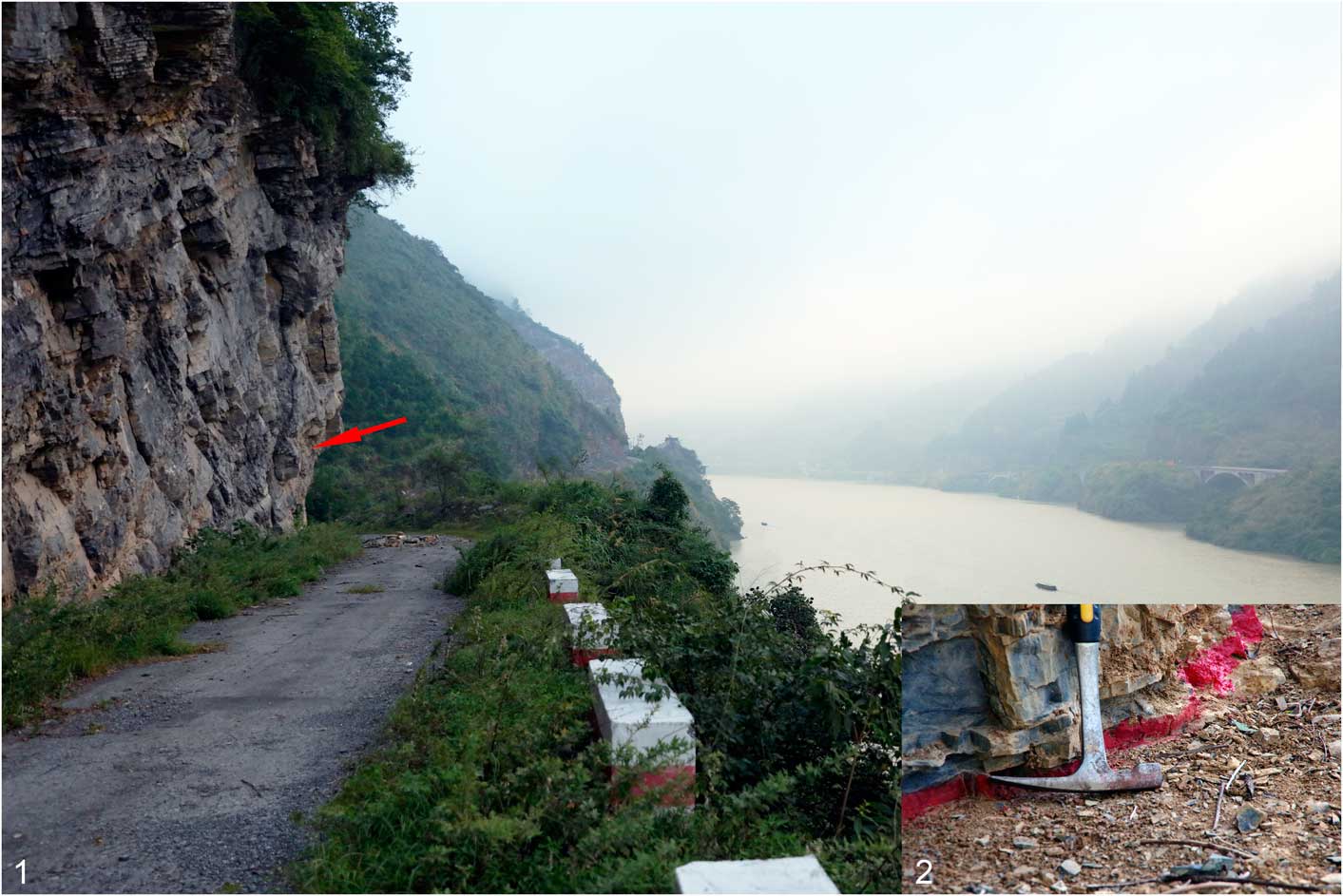
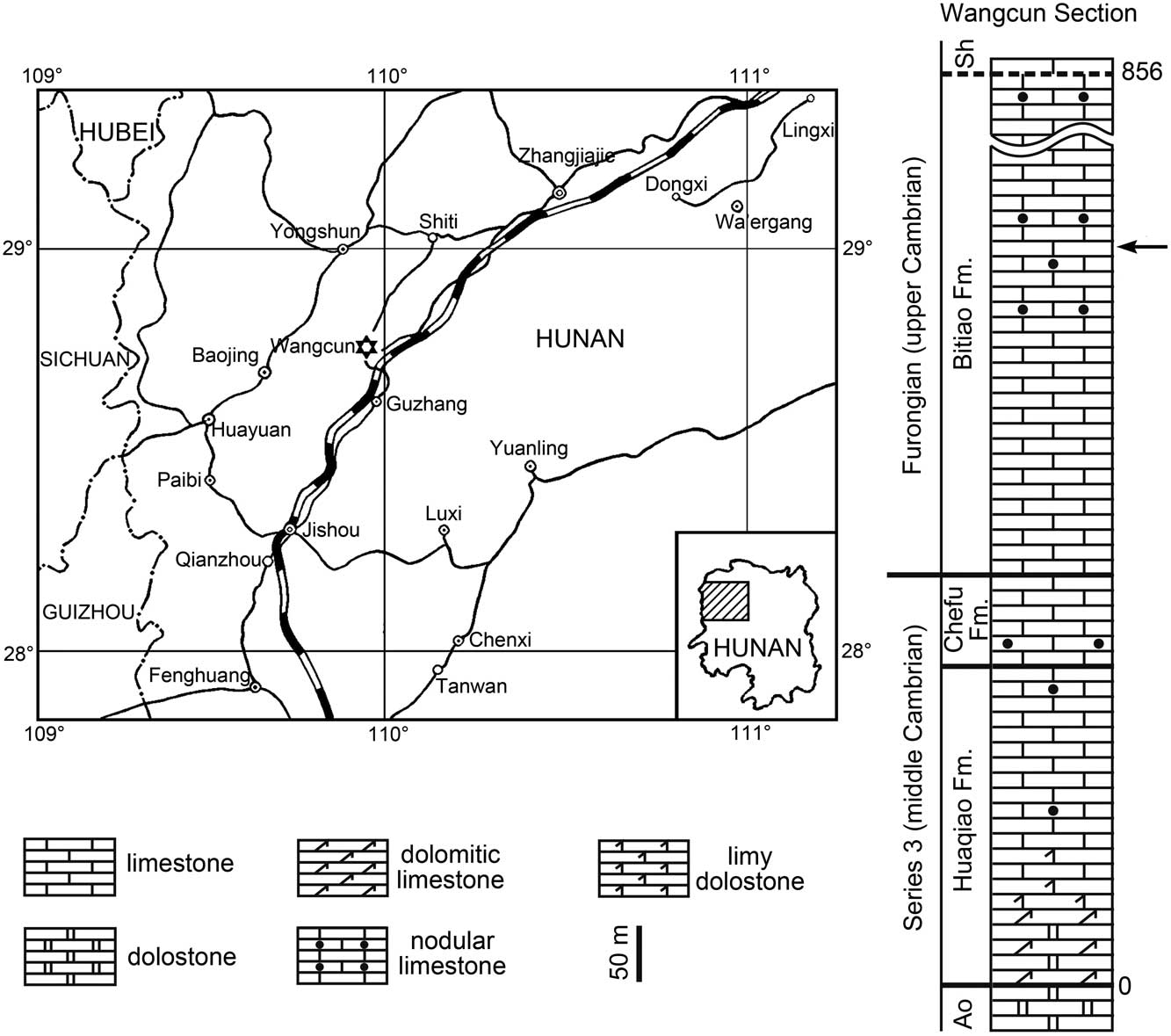
The new cycloneuralians illustrated in this paper were recovered from the Bitiao Formation of Wangcun section, western Hunan, South China (Figs. 1, 2). The Wangcun Lagerstätte has yielded a large number of exceptionally preserved microfossils, including the classic Orsten-type fossils, such as Skara hunanensis Dong in Liu and Dong, Reference Liu and Dong2007, phosphatocopid crustaceans (Zhang and Dong, Reference Zhang and Dong2009; Zhang et al., Reference Zhang, Dong and Maas2011a, Reference Zhang, Dong and Xiaob, Reference Zhang, Dong and Xiao2012), and a single type A larva (Zhang et al., Reference Zhang, Dong, Waloszek and Maas2016), as well as bivalved arthropods Cambrolongispina (Zhang et al., Reference Zhang, Dong and Xiao2014). The key horizon yielding the present specimens is a thin-bedded, dark gray limestone (about 5 cm thick; Fig. 1.2) and has been constrained to part of the conodonts Westergaardodina cf. calix–Prooneotodus rotundatus Zone, Bitiao Formation, belonging to Paibian Stage, Furongian Series (traditional upper Cambrian; Peng et al., Reference Peng, Babcock and Cooper2012; Dong and Zhang, Reference Dong and Zhang2017). This horizon has previously yielded fossil embryos of Markuelia hunanensis (Dong et al., Reference Dong, Bengtson, Gostling, Cunningham, Harvey, Kouchinsky, Val’kov, Repetski, Stampanoni, Marone and Donoghue2010), trunk fragments of palaeoscolecids (Harvey et al., Reference Harvey, Dong and Donoghue2010; Duan et al., Reference Duan, Dong and Donoghue2012; Duan and Dong, Reference Duan and Dong2013), and a single type A larva (Zhang et al., Reference Zhang, Dong, Waloszek and Maas2016).
Wangcun section in western Hunan, South China. (1) Wangcun section (red arrow) is measured along the northeastern bank of Mengdong River; (2) the key horizon (painted in red) yielding the present material.

Location map and stratocolumn of Wangcun section in western Hunan, South China. The arrow indicates the key horizon yielding the present material, about 650 m above the base of Huaqiao Formation. Sh=the overlying Shenjiawan Formation; Ao=the underlying Aoxi Formation. Revised from Dong and Zhang (Reference Dong and Zhang2017).
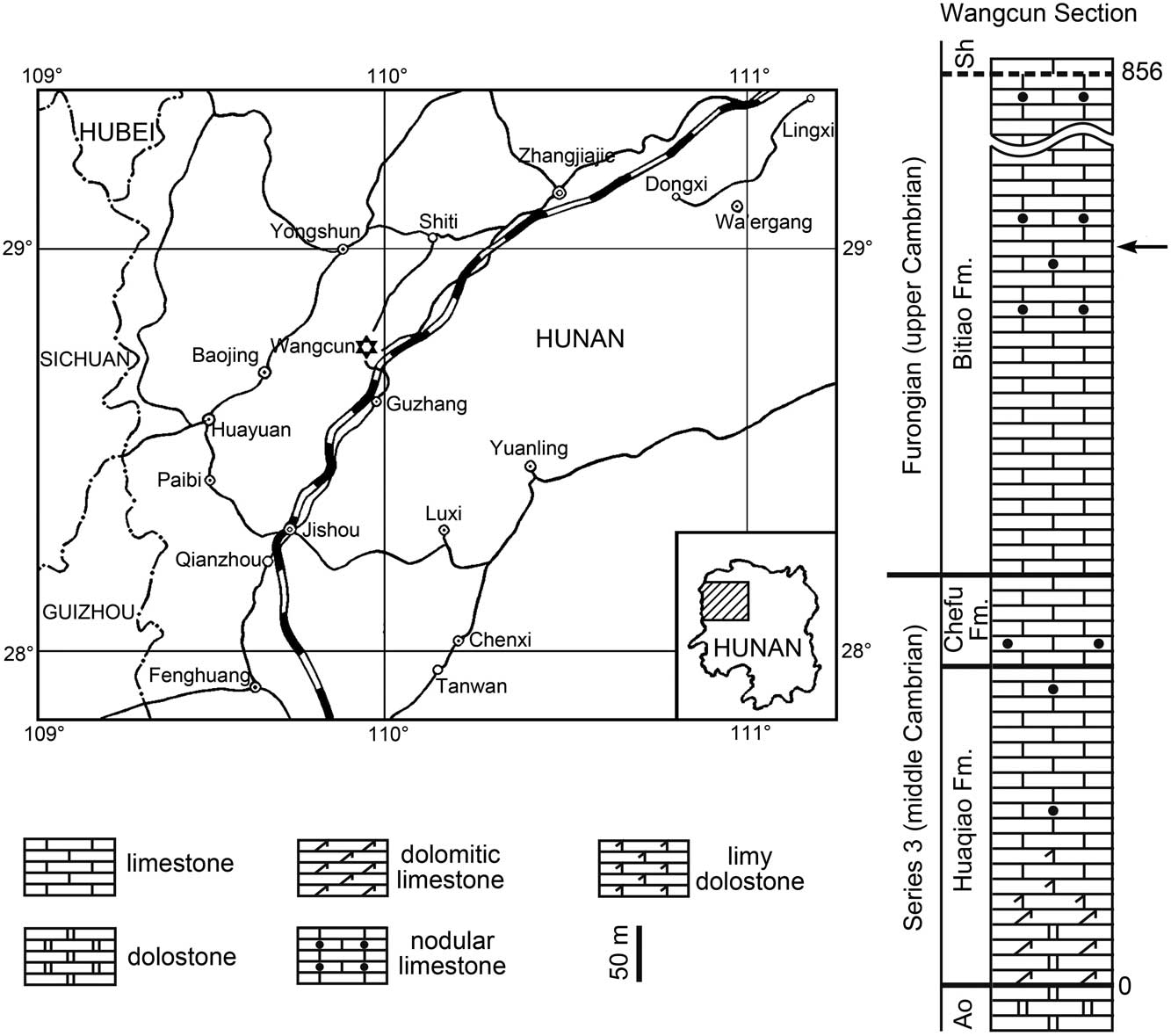
Since 2013, rock samples of about 1,100 kg from the key horizon (Fig. 1.2) were collected during three field trips and were processed in Nanjing Institute of Geology and Paleontology. The rock samples were first crushed into walnut-sized pieces (2~3 cm in diameter) and then dissolved in acetic acid following procedures described by Müller (Reference Müller1985). Rock fragments were immersed in diluted acetic acid (~10%), and residues were retrieved regularly after three days of reaction in summer (ambient temperature around 40°C in Nanjing). The residues were dried naturally, and microfossils were handpicked under an Olympus SZ binocular microscope. The selected microfossils were mounted on aluminum stubs for observation under a LEO 1530VP field-emission environmental scanning electron microscope (SEM) or a Carl Zeiss Axio Zoom V16 stereo microscope at Nanjing Institute of Geology and Paleontology. The photos of the Wangcun section and the key horizon (Fig. 1) were taken using a Canon 5DsR digital camera (with Canon EF 11–24 mm F/4 lens). The figures were processed using Adobe Photoshop CS5.
Repository and institutional abbreviation
The specimens are deposited at Nanjing Institute of Geology and Paleontology (NIGP), Chinese Academy of Sciences, Nanjing, China.
Systematic paleontology
Cycloneuralia Ahlrichs, Reference Ahlrichs1995
Phylum, Class, Order, and Family uncertain
Genus Markuelia Val’kov, Reference Val’kov1983
Type species
Markuelia secunda Val’kov in Val’kov and Karlova, Reference Val’kov and Karlova1984.
Markuelia sp.
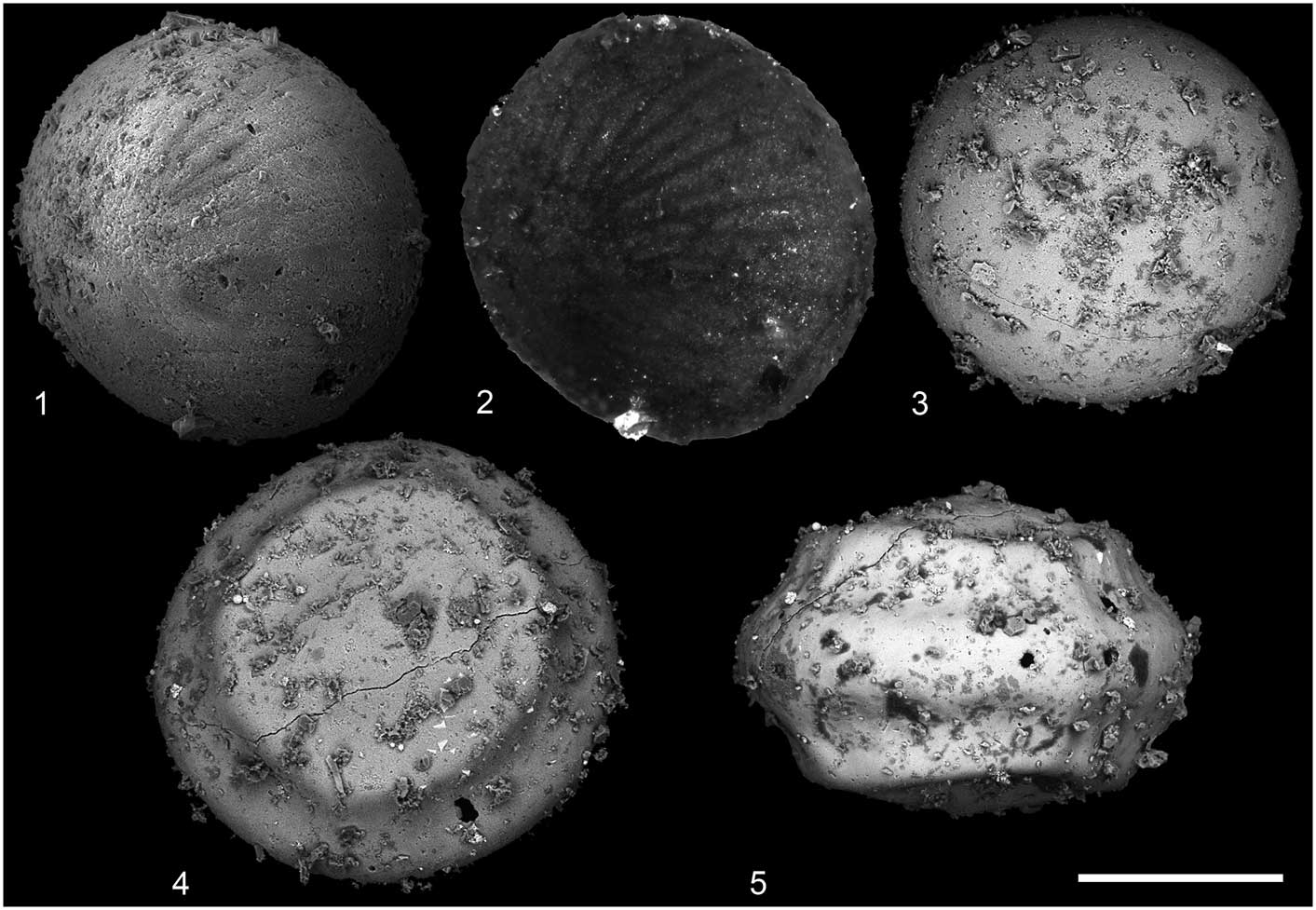
Fossil embryos from the Furongian Bitiao Formation of Wangcun section. (1) Markuelia sp., NIPG160452; (2) light microscope image of (1); (3) an egg case, NIGP160498; (4) a discoidal embryo, NIGP160497; (5) lateral view of (4). Scale bar=200 µm.

Occurrence
Conodonts Westergaardodina cf. calix–Prooneotodus rotundatus Zone, Bitiao Formation, Furongian (upper Cambrian); Wangcun section, Yongshun County, western Hunan, South China.
Materials
One specimen, NIGP160452.
Measurements
Specimen NIGP160452 is about 420 μm in diameter.
Remarks
We obtained 20 embryo-like fossils, but only one (Fig. 3.1; NIGP160452) can be assigned unambiguously to Markuelia. This specimen has weak annulations, which are vague under SEM (Fig. 3.1) but more visible under light microscope (Fig. 3.2). Its poor preservation hinders a further assignment to either of the two known species from the fossil horizon, Markuelia hunanensis or Markuelia spinulifera Dong et al., Reference Dong, Bengtson, Gostling, Cunningham, Harvey, Kouchinsky, Val’kov, Repetski, Stampanoni, Marone and Donoghue2010.
Other spherical microfossils can be grouped into two types: egg case–like microfossils (Fig. 3.3) and discoidal microfossils (Fig. 3.4). They are comparable in size with NIGP160452 (Fig. 3.1). They may represent Markuelia embryos, but currently this assignment cannot be confirmed.
Phylum and Class uncertain
Palaeoscolecida Conway Morris and Robison, Reference Conway Morris and Robison1986
Palaeoscolecidae Whittard, Reference Whittard1953
Genus Dispinoscolex Duan, Dong, and Donoghue, Reference Duan, Dong and Donoghue2012
Type species
Dispinoscolex decorus Duan, Dong, and Donoghue, Reference Duan, Dong and Donoghue2012.
Dispinoscolex decorus Duan, Dong, and Donoghue, Reference Duan, Dong and Donoghue2012
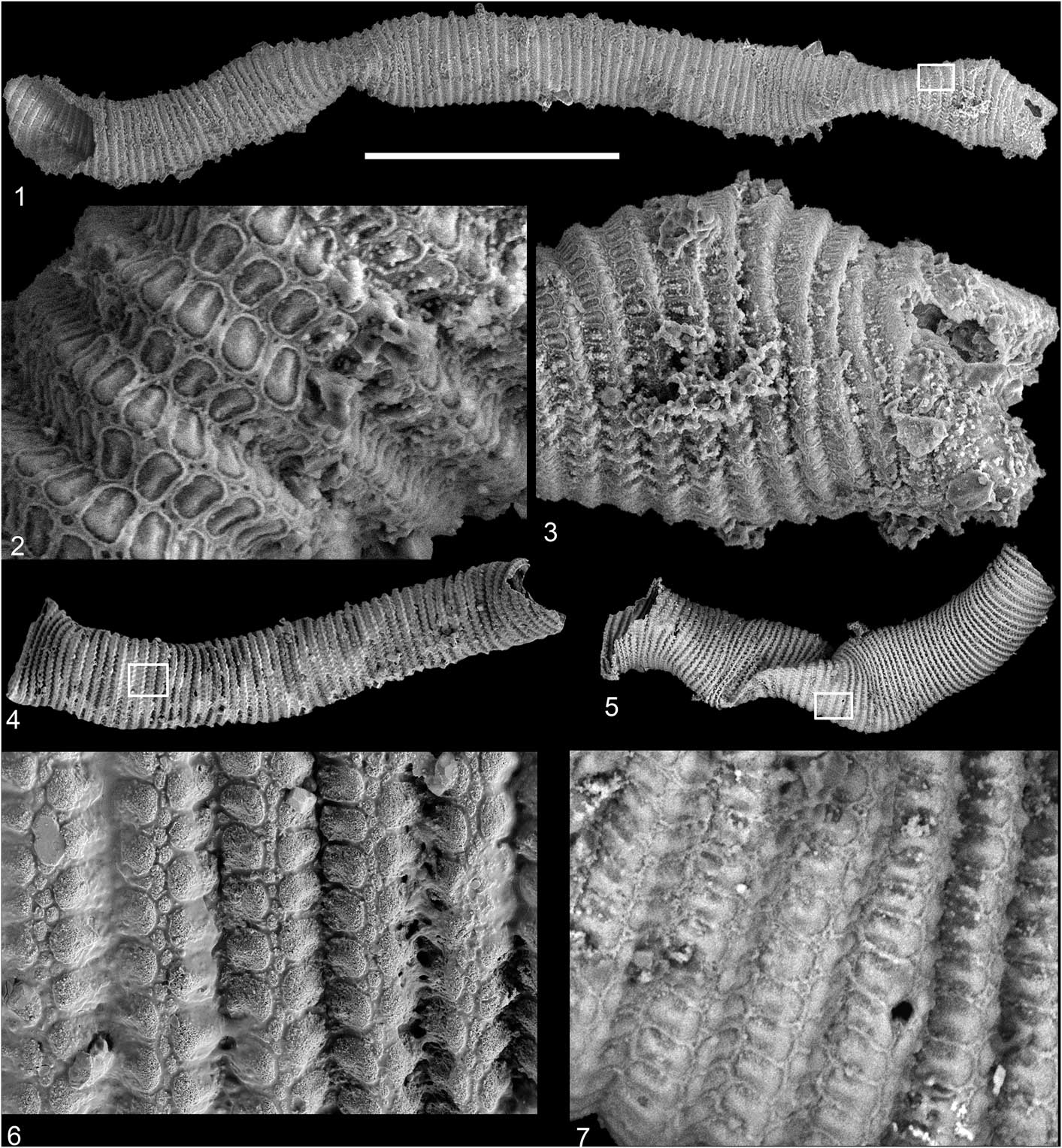
Dispinoscolex decorus Duan, Dong, and Donoghue, Reference Duan, Dong and Donoghue2012 from the Furongian Bitiao Formation of Wangcun section. (1) A slender trunk part with two tail spines, NIGP160453; (2) enlargement of area in rectangle in (1); (3) close-up of (1), the posterior trunk end with two spines; (4) NIGP165198; (5) NIGP160494; (6) enlargement of area in rectangle in (4); (7) enlargement of area in rectangle in (5). (1, 4, 5) Scale bar=500 µm; (2) scale bar=52 µm; (3) scale bar=128 µm; (6, 7) scale bar=49 µm.

2010 unnamed; Reference Harvey, Dong and DonoghueHarvey, Dong, and Donoghue, p. 181, fig. 2E.
2012 Dispinoscolex decorus; Reference Duan, Dong and DonoghueDuan, Dong, and Donoghue, p. 615, figs. 1, 2.
Holotype
Specimen GMPKU2394, deposited at the Geological Museum of Peking University, recovered from the Furongian of Wangcun section, western Hunan, South China (Duan et al., Reference Duan, Dong and Donoghue2012, fig. 2E–I).
Occurrence
Conodonts Westergaardodina cf. calix–Prooneotodus rotundatus Zone, Bitiao Formation, Furongian (upper Cambrian); Wangcun section, Yongshun County, western Hunan, South China.
Description
Palaeoscolecids with slender trunk parts (Fig. 3.1, 3.4, 3.5). Trunk annuli are narrow, each with two rows of plates of equal size. Plates are elliptical and closely arranged (Fig. 3.2, 3.6, 3.7). The intercalary zone is indistinct; the median annular zone is also indistinct (Fig. 3.2, 3.6). Plates are shed from the annuli, but their attachment sites are still visible. However, ornamentation on plates is unclear.
Materials
Three specimens, NIGP160453, 160494, 165198.
Measurements
Specimen NIGP160453 (Fig. 3.1) is about 2.24 mm long and 180 μm in diameter and has 108 preserved annuli. Specimen NIGP165198 (Fig. 3.4) is about 1.1 mm long and 180 μm in diameter and has 53 preserved annuli. Specimen NIGP160494 (Fig. 3.5) is about 940 μm long and 170 μm in diameter and has 76 preserved annuli. Each annulus is about 20 μm long (anterior-posterior). Plates are 12 μm in length and 10 μm in width. There are an estimated 30–50 plates in each annulus.
Genus Schistoscolex Müller and Hinz-Schallreuter, Reference Müller and Hinz-Schallreuter1993
Type species
Schistoscolex umbilicatus Müller and Hinz-Schallreuter, Reference Müller and Hinz-Schallreuter1993.
Schistoscolex hunanensis Duan, Dong, and Donoghue, Reference Duan, Dong and Donoghue2012
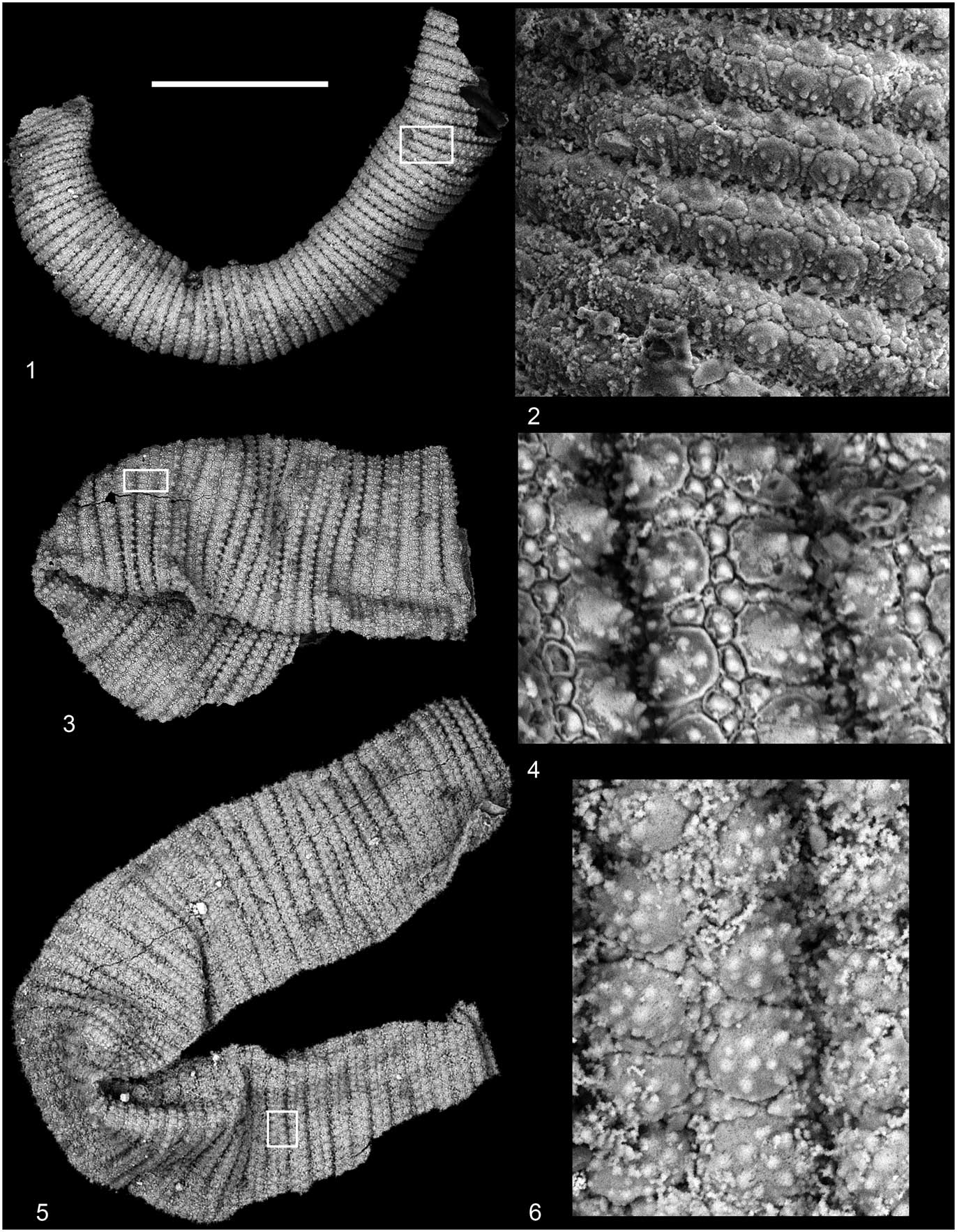
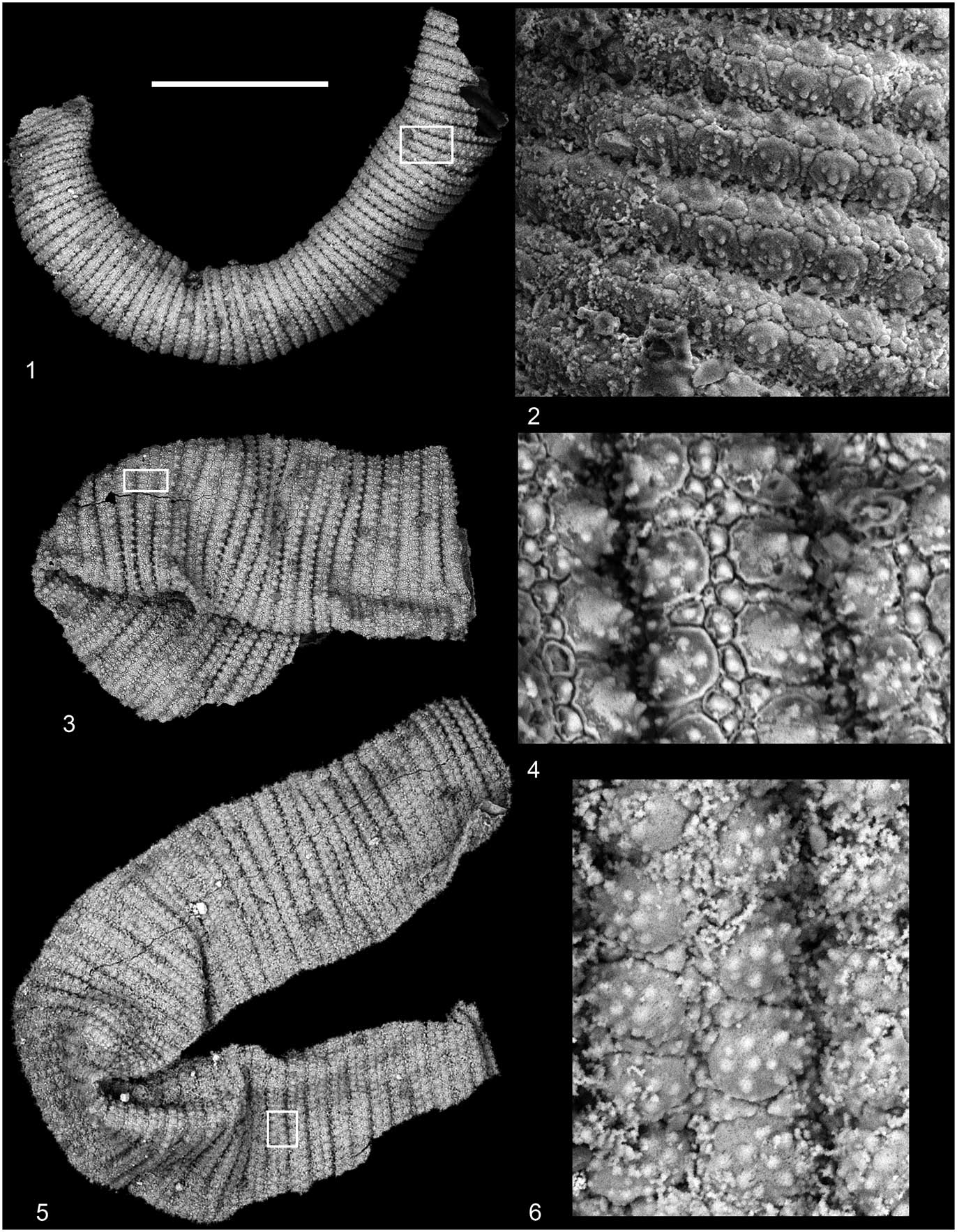
Schistoscolex hunanensis Duan, Dong, and Donoghue, Reference Duan, Dong and Donoghue2012 from the Furongian Bitiao Formation of Wangcun section. (1) NIGP160454; (2) enlargement of area in rectangle in (1); (3) NIGP160455; (4) enlargement of area in rectangle in (3); in (5) NIGP160496; (6) enlargement of area in rectangle in (5). (1, 3, 5) Scale bar=500 µm; (2) scale bar=70 µm; (4) scale bar=46 µm; (6) scale bar=43 µm.
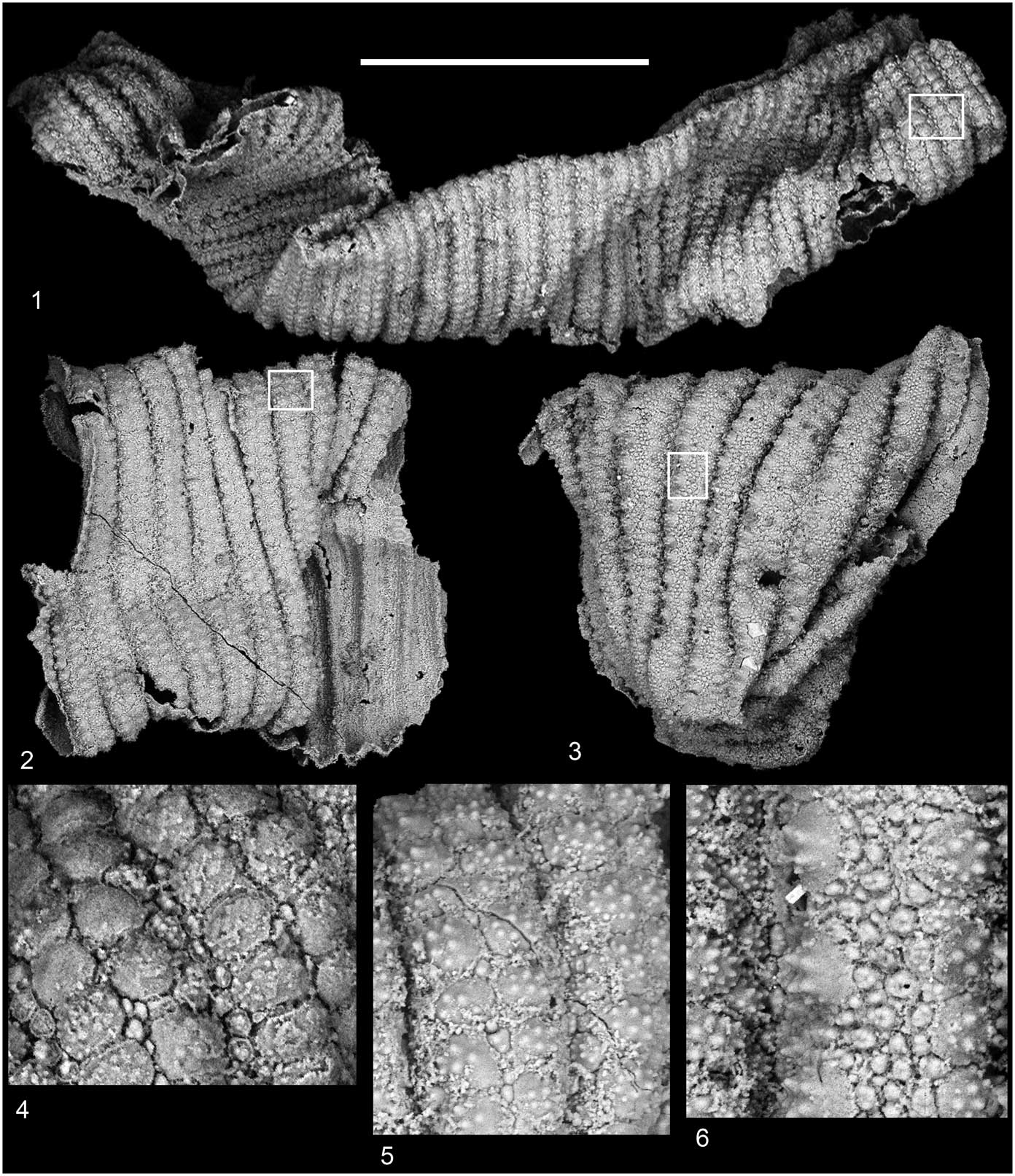
Schistoscolex hunanensis Duan, Dong, and Donoghue, Reference Duan, Dong and Donoghue2012 from the Furongian Bitiao Formation of Wangcun section. (1) NIGP165199; (2) NIGP165200; (3) NIGP165201; (4) enlargement of area in rectangle in (1); (5) enlargement of area in rectangle in (2); (6) enlargement of area in rectangle in (3). (1, 2, 3) Scale bar=500 µm; (4) scale bar=107 µm; (5) scale bar=93 µm; (6) scale bar=115 µm.

2012 Schistoscolex hunanensis; Reference Duan, Dong and DonoghueDuan et al., p. 617, fig. 3.
Holotype
Specimen GMPKU2404, deposited at the Geological Museum of Peking University, recovered from the Furongian of Wangcun section, western Hunan, South China (Duan et al., Reference Duan, Dong and Donoghue2012, fig. 3A–B, E).
Occurrence
Conodonts Westergaardodina cf. calix–Prooneotodus rotundatus Zone, Bitiao Formation, Furongian (upper Cambrian); Wangcun section, Yongshun County, western Hunan, South China.
Description
Palaeoscolecids with heavily armored trunk annuli (Figs. 5, 6). Trunk annuli are narrow, each with two rows of nearly circular plates of equal size (Figs. 5.2, 5.4, 5.6, 6.4). Plates are relatively large (Fig. 5.4, 5.6) and in direct contact with each other. Each plate has one to four main central nodes surrounded by a circlet of six~nine smaller peripheral nodes. Peripheral nodes are sometimes distributed at random (Fig. 5.6). The intercalary zone is indistinct (Fig. 5.2) or narrow with densely spaced platelets and microplates (Figs. 5.4, 6.4, 6.6). The median annular zone is indistinct (Fig. 6.4) or narrow (Figs. 5.4, 6.6) and is populated with densely spaced platelets.
Materials
Six specimens, NIGP160454, 160455, 160496, 165199, 165200, and 165201.
Measurements
Specimen NIGP160454 is curved and has a length of 1.7 mm, a diameter of 300 μm, and 61 preserved annuli. Specimen NIGP160455 is folded, and if unfolded it would have a length of 1.8 mm, a diameter of 480 μm, and 37 preserved annuli. Specimen NIGP160496 is also folded, and if unfolded it would have a length of 2.94 mm, a diameter of 530 μm, and 57 preserved annuli. Specimen NIGP165199 has a length of about 1.8 mm, a diameter of 400 μm, and 39 preserved annuli. Specimen NIGP165200 has a length of 700 μm, a diameter of 670 μm, and 11 preserved annuli. Specimen NIGP165201 has a length of 800 μm, a diameter of 650 μm, and 8 preserved annuli. Except NIGP160454, the specimens are all laterally compressed; hence, their measured trunk diameter cannot mirror the original condition. Each annulus is about 30~50 μm in length. Plates are 30 μm in length and 25 μm in width. There are an estimated 50 plates in each row. Platelets are 7 μm in diameter. Microplates are 11 μm in diameter.
Genus Austroscolex Müller and Hinz-Schallreuter, Reference Müller and Hinz-Schallreuter1993
Type species
Austroscolex spatiolatus Müller and Hinz-Schallreuter, Reference Müller and Hinz-Schallreuter1993
Austroscolex sinensis new species
urn:lsid:zoobank.org:act:F83B376E-7B04-4C32-AB76-F02456F72928
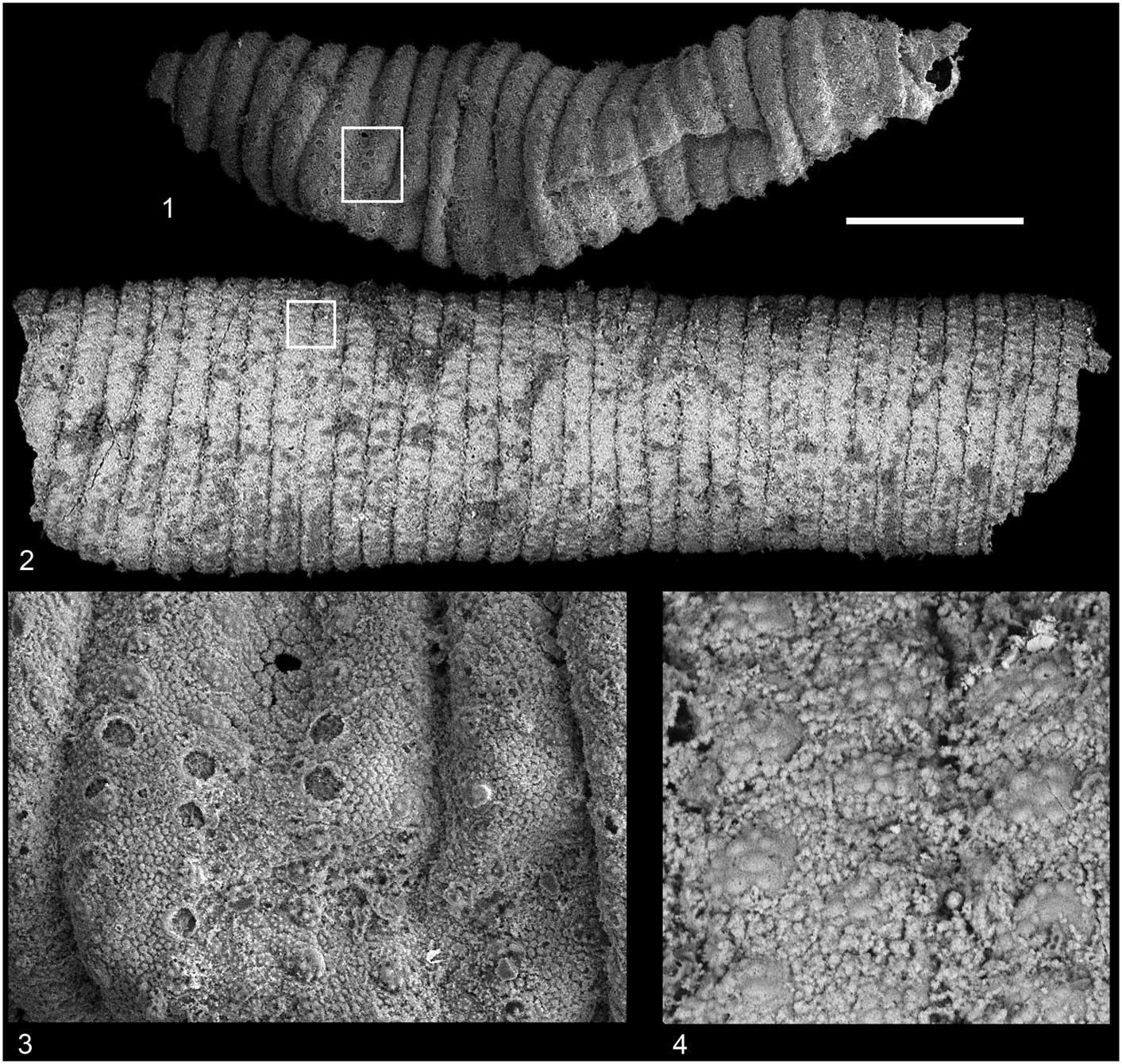
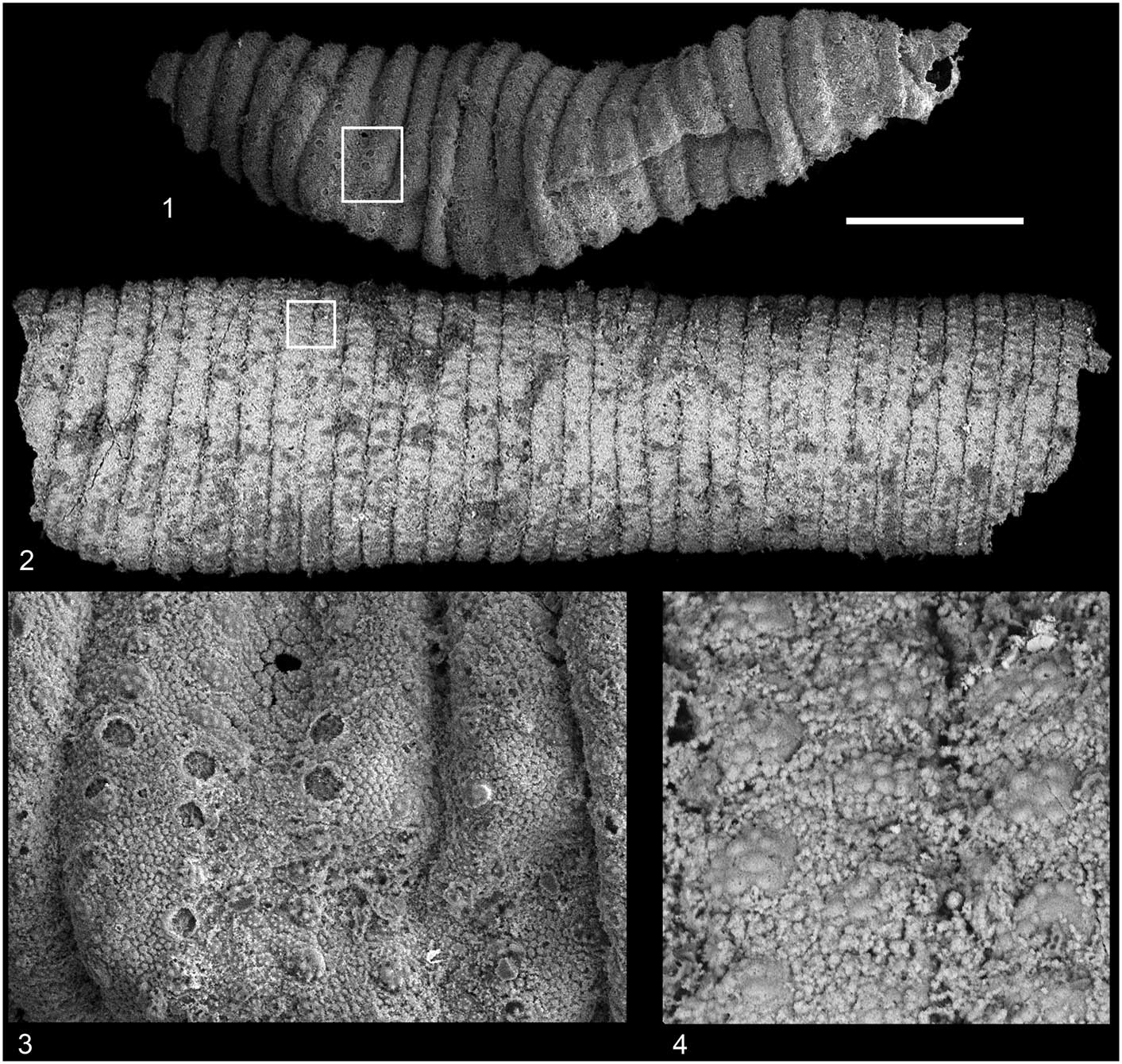
Austroscolex sinensis new species from the Furongian Bitiao Formation of Wangcun section. (1) NIGP160457; (2) holotype, NIGP160456; (3) enlargement of area in rectangle in (1); (4) enlargement of area in rectangle in (2). (1, 2) Scale bar=500 µm; (3) scale bar=128 µm; (4) scale bar=59 µm.
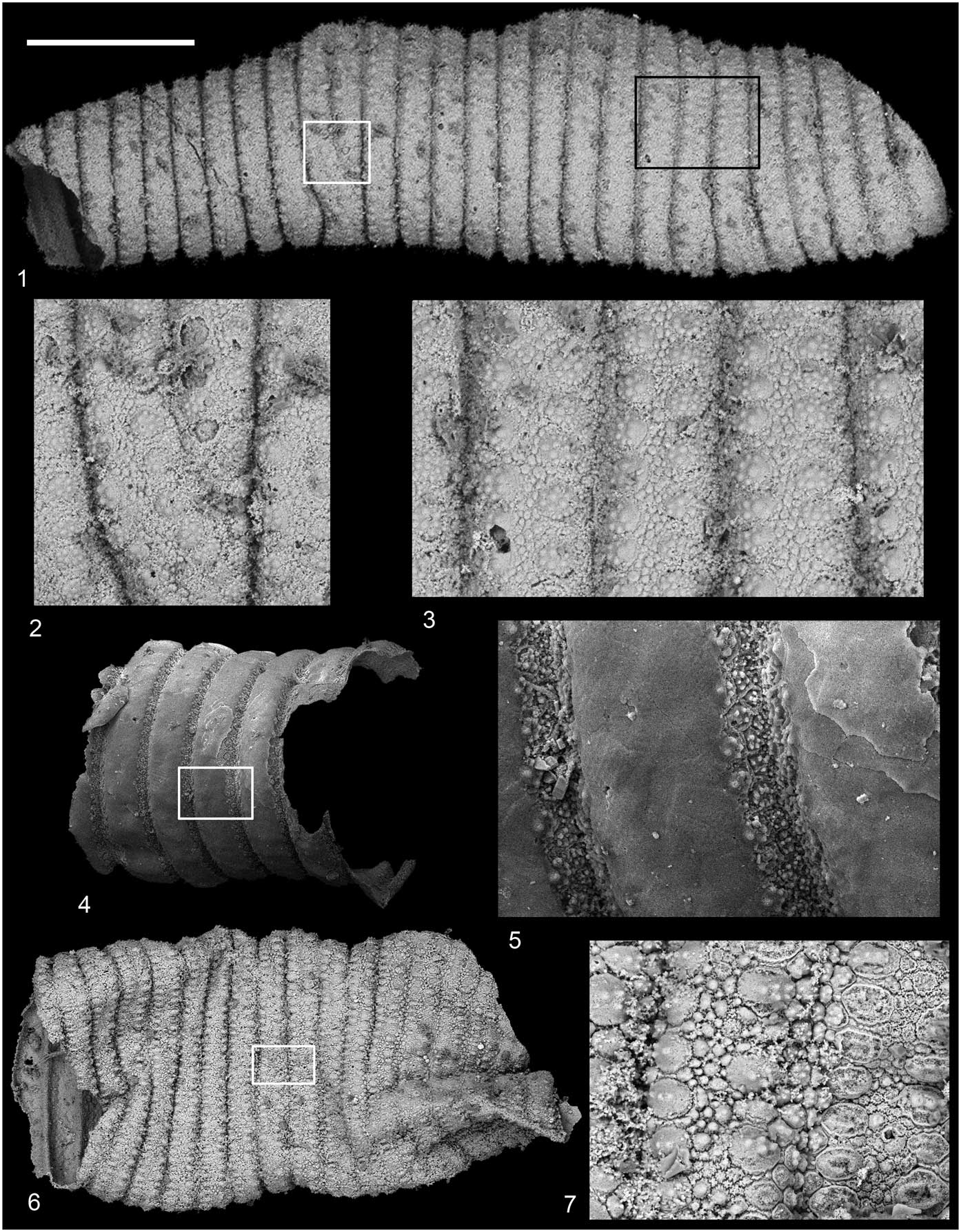
Austroscolex sinensis new species from the Furongian Bitiao Formation of Wangcun section. (1) NIGP160495; (2) enlargement of area in white rectangle in (1); (3) enlargement of area in black rectangle in (1); (4) NIGP165202; (5) enlargement of area in rectangle in (4); (6) NIGP165203; (7) enlargement of area in rectangle in (6). (1, 4, 6) Scale bar=500 µm; (2) scale bar=173 µm; (3) scale bar=138 µm; (5) scale bar=110 µm; (7) scale bar=93 µm.

Holotype
Specimen NIGP160456 (Fig. 7.2), a fragment more than 3 mm long.
Diagnosis
Broad annuli with two rows of circular plates of equal size; plates sparsely distributed; median annular zone wide with densely spaced platelets; intercalary zone indistinct or narrow with densely spaced microplates.
Occurrence
Conodonts Westergaardodina cf. calix–Prooneotodus rotundatus Zone, Bitiao Formation, Furongian (upper Cambrian); Wangcun section, Yongshun County, western Hunan, South China.
Description
Palaeoscolecids with broad trunk annuli (Figs. 7, 8). Bifurcation of annuli occurs (Fig. 8.1, 8.2). Each annulus with two rows of circular plates of equal size (Figs. 7.4, 8.3, 8.7). On each annulus, the anterior and posterior rows of plates are alternately arranged (Figs. 7.4, 8.3, 8.7). Each plate has one to three central nodes and one circlet of five to eight nodes surrounding the central ones. Plates are sparsely spaced, each surrounded by 10–15 nodular platelets. Intercalary zone is indistinct. Median annular zone is wide, with densely spaced platelets. There are densely spaced microplates along the boundary between two adjacent annuli (Figs. 7.3, 8.7).
Etymology
Species name derived from the Greek Sin-, with reference to occurrence of Austroscolex species in South China.
Measurements
Specimen NIGP160456 (holotype; Fig. 7.2) is about 3.12 mm long and 756 μm in diameter, with 36 preserved annuli. Specimen NIGP160457 (Fig. 7.1) is about 2.4 mm long and 670 μm in diameter, with 22 preserved annuli. Specimen NIGP160495 (Fig. 8.1) is about 2.8 mm long and 770 μm in diameter, with 27 preserved annuli. Specimen NIGP165202 (Fig. 8.4) is about 880 μm long and 700 μm in diameter, with seven preserved annuli. Specimen NIGP165203 (Fig. 8.6) is about 1.5 mm long and 800 μm in diameter, with 18 preserved annuli. Each annulus is about 100 μm long. Plates are 35 μm in diameter. There are an estimated 30–40 plates in each annulus. Platelets are 6 μm in diameter. Microplates are 14 μm in diameter.
Comparisons
Austroscolex was previously reported only from the middle Cambrian of Australia, including Austroscolex primitivus Müller and Hinz-Schallreuter, Reference Müller and Hinz-Schallreuter1993 and Austroscolex spatiolatus Müller and Hinz-Schallreuter, Reference Müller and Hinz-Schallreuter1993. Austroscolex primitivus has a single row of plates on each annulus, whereas A. spatiolatus has two rows of plates on each annulus, one row with smaller plates than the other. The specimens illustrated here are assigned to Austroscolex because they have broad annuli (about 100 μm), two rows of plates, narrow or indistinct intercalary zone, and broad median annular zones. They differ from A. spatiolatus in that the two rows of plates are of equal size and are thus assigned to a new species here. Austroscolex sinensis differs from Hunanscolex Duan and Dong, Reference Duan and Dong2013 in that the latter has a relatively wide intercalary zone filled with densely spaced microplates.
Origin of cycloneuralians
Previously reported microscopic cycloneuralians from the Cambrian strata of South China include Markuelia, Eopriapulites, Eokinorhynchus, and microscopic palaeoscolecids. Eopriapulites and Eokinorhynchus were reported from the Fortunian Stage and are the oldest known cycloneuralians. Markuelia was reported from the middle to late Cambrian (Dong et al., Reference Dong, Donoghue, Cheng and Liu2004; Zhang et al., Reference Zhang, Pratt and Shen2011). Three-dimensionally phosphatized and microscopic palaeoscolecids are widely distributed, from the early Cambrian (Zhang and Pratt, Reference Zhang and Pratt1996) to late Cambrian (this paper; also see Duan et al., Reference Duan, Dong and Donoghue2012; Duan and Dong, Reference Duan and Dong2013).
Microscopic cycloneuralians from the Cambrian of South China can be divided into two groups according their trunk armor. Palaeoscolecids and Eokinorhynchus rarus have heavily armored trunk annuli, while Markuelia hunanensis and Eopriapulites sphinx have smooth trunk annuli with no armor. In general, trunk armor functions as a defense organ. The earliest animals might have been unarmored. With increasing minerals in the oceans and increasing ability to utilize these minerals, some animals evolved trunk armor, while others remained unarmored. The appearance of predators accelerated the evolution of trunk armor. With increasing predation pressure, those animals with trunk armor were able to protect themselves from predators and unfavorable environment, and were thus nature selected to survive. Thus, cycloneuralians with armor might be comparatively more derived than those with no armor. As to the microscopic cycloneuralians, it is proposed here that palaeoscolecids and Eokinorhynchus might be more derived than Markuelia and Eopriapulites.
It has previously been proposed that ancestral cycloneuralians were macroscopic, priapulid-like, and introvert-bearing, and in this respect, macroscopic palaeoscolecids might represent ancestral cycloneuralians or even ancestral ecdysozoans (Budd, Reference Budd2001; Harvey et al., Reference Harvey, Dong and Donoghue2010). We propose that Eopriapulites might be more suitable than palaeoscolecids to be a representative of ancestral cycloneuralians or even ancestral ecdysozoans, not only because Eopriapulites appears more primitive than palaeoscolecids, but also because Eopriapulites is known earlier in geological time—Eopriapulites occurred in the Cambrian Fortunian Stage, while palaeoscolecids first occurred in Cambrian Stage 3 (Liu et al., Reference Liu, Xiao, Shao, Broce and Zhang2014). Since Eopriapulites was part of the Cambrian Fortunian small shelly faunas, it is proposed herein that cycloneuralians should have originated in the Cambrian Fortunian small shelly fossil faunas, or even earlier. Due to its primitive trunk armor and old geological age, Eopriapulites likely represents an ancestral form of cycloneuralians. If we accept Eopriapulites as a potential ancestral cycloneuralian, the last common ancestor of the Cycloneuralia, and even of the Ecdysozoa, might have been microscopic and possessed an introvert with internally hollow scalids. This character was retained by the last common ancestor of Scalidophora and by the last common ancestor of Nematoida, but got lost secondarily in crown-group Nematoida.
Discussion
The Wangcun section is an ideal place to test the possible relationship between the fossil embryo Markuelia and palaeoscolecids because they co-occurred in the key horizon (Fig. 1.2). Markuelia was previously proposed to be a direct developer (Dong et al., Reference Dong, Donoghue, Cheng and Liu2004), but this is difficult to verify due to the lack of fossils representing the postembryonic or free-living stages (Haug et al., Reference Haug, Maas, Waloszek, Donoghue and Bengtson2009). Huang et al. (Reference Huang, Chen and Vannier2006) proposed that Markuelia might be a palaeoscolecid, but this was challenged by Duan et al. (Reference Duan, Dong and Donoghue2012) because of the distinct anatomies of the two taxa. For example, Markuelia fossils uniformly have three pairs of tail spines (Dong et al., Reference Dong, Bengtson, Gostling, Cunningham, Harvey, Kouchinsky, Val’kov, Repetski, Stampanoni, Marone and Donoghue2010), whereas palaeoscolecids have only one or two pairs of tail spines (Duan et al., Reference Duan, Dong and Donoghue2012). Palaeoscolecids are ornamented with plates, platelets, and microplates on the trunks, whereas Markuelia has few trunk ornamentations. The debate cannot be resolved with confidence because palaeoscolecids are represented only by postembryonic stages whereas Markuelia is only known as embryonic stages. On the other hand, because palaeoscolecids and Markuelia are the only preserved cycloneuralians at the key horizon of Wangcun section (Fig. 1), there is an intriguing possibility that Markuelia might represent the embryonic stage of palaeoscolecids. This possibility assumes that there were no other cycloneuralians that cohabitated with Markuelia and palaeoscolecids, or they left no fossil records. This proposition can be confirmed only if the morphological gap between Markuelia and palaeoscolecids is filled with transitional forms to establish an ontogenetic linkage between the two taxa. Additional and more complete fossils are needed to test this hypothesis, and particularly useful and critical fossils are those with proboscis preservation, which would provide key insights into the possible ontogenetic relationship between palaeoscolecids and Markuelia.
The new fossils also provide new information about the upper size limit of Orsten-type fossils. Traditionally, Orsten-type preservation is thought to favor microscopic arthropods, generally between 100 μm and 2 mm, and larger organisms are only preserved as fragments<2 mm (Maas et al., Reference Maas, Braun, Dong, Donoghue, Müller, Olempska, Repetski, Siveter, Stein and Waloszek2006). However, it seems that specimens larger than 2 mm, either as complete individuals or as fragments, are not uncommon among cycloneuralians in Orsten-type Lagerstätten. For example, one of the paratypes of Eokinorhynchus rarus from the early Cambrian Xinli Member, Dengying Formation in northern Sichuan Province, South China (Zhang et al., Reference Zhang, Xiao, Liu, Yuan, Wan, Muscente, Shao, Gong and Cao2015, fig. 2) has a length of 2.08 mm. Among the palaeoscolecid fossils described here, NIGP160453 (Fig. 4.1) has a length of 2.24 mm, NIGP160495 (Fig. 8.1) has a length of 2.8 mm, and NIGP160456 (Fig. 7.2) has a length of 3.12 mm. Still larger specimens have been recovered recently from Orsten-type Lagerstätten. For example, a new fragment of cycloneuralian about 3.8 mm in length has been recovered from the early Cambrian Kuanchuanpu Formation in southern Shaanxi Province, South China (personal observation, Y.H. Liu, 2017). This new worm is folded; if unfolded it would have a length of about 6 mm. More important, this new worm is represented by fragmented preservation, and the complete organism is estimated to have exceeded one centimeter in length. These new fossils raise a very important question: whether there is a taxonomic control on the size bias of Orsten-type preservation. In other words, is it possible that, unlike arthropod fossils, which are typically <2 mm in size, larger cycloneuralians can be preserved in Orsten-type Lagerstätten? The underlying mechanism of such a preservational and taxonomic bias is difficult to interpret, but the discovery of large cycloneuralian fragments shows that: (1) specimens larger than 2 mm can indeed be preserved in Orsten-type preservation, and (2) some of the Cambrian meiofaunal animals (<1 mm) can finally reach several millimeters or even a centimeter in size.
Conclusions
We described new material of three-dimensionally phosphatized and microscopic cycloneuralians from the Furongian (traditional upper Cambrian) Bitiao Formation, Wangcun Lagerstätte, western Hunan, South China. The new material includes fossil embryos Markuelia sp., two other types of fossil embryos that might be correlated with Markuelia, and three species of palaeoscolecids including Dispinoscolex decorus Duan et al., Reference Duan, Dong and Donoghue2012, Schistoscolex hunanensis Duan et al., Reference Duan, Dong and Donoghue2012, and Austroscolex sinensis n. sp. The microscopic palaeoscolecids together with Eopriapulites, Eokinorhynchus, and Markuelia represent the microscopic cycloneuralians from the Cambrian oceans of South China. It is proposed here that the cycloneuralians and ecdysozoans should have originated in the Cambrian Fortunian small shelly faunas, or even earlier, and Eopriapulites might be a candidate ancestral type of cycloneuralian. The last common ancestor of Cycloneuralia might be microscopic and similar to Eopriapulites, with internally hollow scalids.
Acknowledgments
This work was supported by the Chinese Ministry of Science and Technology 973 Project (2013CB837100), the National Natural Science Foundation of China (41572007, 41572009), the Youth Innovation Promotion Association, Chinese Academy of Sciences (2016283), College Students’ Entrepreneurial Training Program (201610710043, 201610710044, 201610710045, 201610710047), and the Tenth “Challenge Cup” Competition of Chang’an University (C-P-B-2, C-P-B-6, C-P-B-8). Correspondence should be addressed to HZ (hqzhang@nigpas.ac.cn).