Implications
Severe feather-pecking (SFP) adversely impacts hen welfare and production efficiency in the egg industry worldwide. More research is required to understand the behaviour, its relationship with feather-eating, and whether it may be preceded by feather-eating. The present findings support an association between feather-eating and SFP. Further, birds preferentially ingested feathers from different body areas and particular birds, and a positive association between age, feather-eating and plumage damage was found. An improved understanding of SFP and associated factors may contribute to its eventual control.
Introduction
Severe feather-pecking (SFP) is a detrimental behaviour, whereby birds vigorously peck at, pull, and sometimes remove and ingest feathers from other birds (Blokhuis and Arkes, Reference Blokhuis and Arkes1984; Savory, Reference Savory1995; Gunnarsson et al., Reference Gunnarsson, Keeling and Svedberg1999). It has been identified as the most serious welfare risk for laying hens (Bestman et al., Reference Bestman, Koene and Wagenaar2009; Bessei and Kjaer, Reference Bessei and Kjaer2015). SFP can be more difficult to control in non-cage housing systems due to large group sizes. Non-cage housing systems, including free-range, have been increasing in prevalence in countries including Australia (Rault et al., Reference Rault, Van De Wouw and Hemsworth2013). Despite over five decades of extensive research on the topic, SFP persists as an unresolved problem in the poultry industry worldwide (Harlander-Matauschek and Rodenburg, 2011; Bessei and Kjaer, Reference Bessei and Kjaer2015).
The dominant theory proposes that SFP is a form of redirected pecking, whereby birds redirect pecking behaviour normally associated with foraging and food-searching, away from the environment and towards conspecifics instead (Blokhuis, Reference Blokhuis1986; Huber-Eicher and Wechsler, Reference Huber-Eicher and Wechsler1998). This may occur in environments that lack adequate stimuli (Hughes and Duncan, Reference Hughes and Duncan1972; Blokhuis, Reference Blokhuis1986). However, birds also express SFP in housing systems that contain plentiful environmental stimuli, such as deep litter and free-range systems (Bessei and Kjaer, Reference Bessei and Kjaer2015). Although environmental influences are important (Rodenburg et al., Reference Rodenburg, van Krimpen, de Jong, de Haas, Kops, Riedstra, Nordquist, Wagenaar, Bestman and Nicol2013), other factors have been identified as increasing the risk of SFP, including genetic influences and individual bird differences (Jensen et al., Reference Jensen, Keeling, Schutz, Andersson, Mormede, Brandstrom, Forkman, Kerje, Fredriksson, Ohlsson, Larsson, Mallmin and Kindmark2005; Wysocki et al., Reference Wysocki, Bessei, Kjaer and Bennewitz2010). In particular, previous experiments have reported a positive relationship between feather-eating and SFP (McKeegan and Savory, Reference McKeegan and Savory1999; Harlander-Matauschek et al., Reference Harlander-Matauschek and Häusler2006; Harlander-Matauschek and Häusler, Reference Harlander-Matauschek and Bessei2009).
Specific body areas, such as the rump and back regions, are often targeted when birds perform SFP. This can cause certain areas on birds’ bodies to become denuded, while other areas remain fully feathered (McKeegan and Savory, Reference McKeegan and Savory1999; Harlander-Matauschek et al., Reference Harlander-Matauschek and Rodenburg2007b). Similarly, particular birds in a flock may become targeted for SFP and experience extensive denuding and wounds, while other birds in the same flock remain undamaged (McKeegan and Savory, Reference McKeegan and Savory2001). It is not known why some body areas or birds in a flock become the targets for SFP.
The present study is comprised of two separate experiments. Experiment 1 investigated the association between feather-eating and plumage damage, on a group level. Studies in this area have focused on the individual bird level, although it is also important to collect information on feather-eating and SFP on a group level. Experiment 1 assessed feather-eating by presenting single feathers to groups of free-range ISA Brown laying hens with extensive plumage damage compared with control pens, in which there was very little plumage damage. Plumage damage is highly correlated with the amount of SFP received (Bilcik and Keeling, Reference Bilcik and Keeling1999), and feather-scoring is often used to assess the level of SFP in flocks of laying hens (Hughes and Duncan, Reference Hughes and Duncan1972; Gunnarsson et al., Reference Gunnarsson, Keeling and Svedberg1999; Ramadan and Von Borell, Reference Ramadan and Von Borell2008). The best age at which to feather-score was deemed to be 40 weeks by Yamak and Sarica (Reference Yamak and Sarica2012). The three groups of birds in the present study were feather-scored at 40, 41 and 44 weeks of age. This was also the time the most plumage damage was evident (plumage damage appeared cumulative), as the groups were depopulated at these ages. An additional aim of Experiment 1 was to investigate responses to feathers sourced from different birds. Feathers were collected from birds housed in a separate cage facility, from birds housed within the same shed as the present testing took place, and from the floor of the shed in which testing took place. It was hypothesised that pens of birds with plumage damage would have shorter latencies to peck at and ingest single feathers presented to them, and would also be more likely to ingest feathers than pens of birds with little plumage damage. Feathers taken from different birds were expected to elicit different reactions.
Experiment 2 aimed to investigate the predictive relationship between feather-eating and plumage damage, by presenting feathers to pens of birds before, and following, the development of plumage damage. In addition, feathers were taken from different areas of the body, to investigate whether birds show preferences for feathers from particular body areas. Experiment 2 also included quantification of feathers on the pen floor, and novel object tests in the home pens. Novel object tests were to investigate whether the placement of feathers by experimenters may have caused stimulus enhancement, and whether some pens may have been more fearful than others (Forkman et al., Reference Forkman, Boissy, Meunier-Salaün, Canali and Jones2007), which could affect bird responses to the introduction of feathers to the pen.
It was hypothesised that pens of birds that developed plumage damage would demonstrate higher rates of feather-eating prior to the development of plumage damage than those that did not develop plumage damage. In addition, it was expected that birds would show preferences for feathers from different body areas. Since the rump was the first body area to exhibit feather loss attributed to SFP, it was predicted that birds may prefer to ingest feathers from the rump. The initial aim of both experiments was to discern whether there was significant variation between pens of birds in their plumage damage, in order to then use plumage damage as a predictor variable for outcome variables including feather-eating. ISA Brown laying hens were used due to their popularity for egg production, their high rates of SFP in commercial conditions, and their sensitivity to the environment compared with white hens (de Haas et al., Reference De Haas, Bolhuis, Kemp, Groothuis and Rodenburg2014a).
Material and methods
Experiment 1
Birds, husbandry and housing
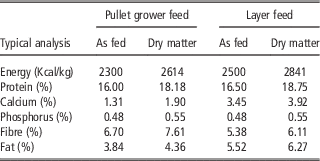
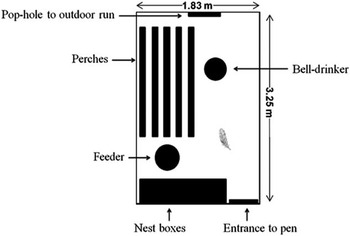
Two groups of 300 non-beak-trimmed ISA Brown laying hens were used (n=600), housed in 12 pens, in the same housing facility, 1 year apart. Both groups were reared in indoor, non-cage facilities, in pens of 50 birds. A total of 50 birds were then housed in each pen in the free-range laying facility. Pens measured 1.83×3.25 m in a naturally ventilated, uninsulated shed with wood shavings spread on concrete floors. Each pen had continuous access to an outdoor range area measuring 1.83×10 m from 26 weeks of age in the first group, and 20 weeks of age in the second group, relative to the age at which they started laying. The total space for the 50 birds in each pen was 24.25 m2, giving a stocking density of 2.1 birds/m2 including the range area. Range areas were separated from each other by wire fences, 2.1 m high, with wire netting over the top to protect against predators; indoor pens were separated by wire as well as shade cloth to provide visual barriers. All birds were of the same strain, originated from the same commercial hatchery and parent stock, and housed in the same environment with the same feed and water provisions. Water was provided via one red bell drinker and a commercial mash feed (Vella Stock Feeds, Sydney, Australia; Table 1) was available ad libitum via a metal feed hopper suspended from the ceiling in each pen. Continuous lighting was provided for 15 h in every 24 h via fluorescent tubes, with some natural light entering the shed through shed doors and pop-holes, giving an average light intensity of 52.0 lux throughout the shed. Light levels were measured using a Tonda j Digital Lux Meter (Model number: LX-1010B; Instrument Choice, Laboratory Equipment Supplier, Dry Creek, South Australia). Each pen contained a perch unit consisting of five timber perch rungs, 4 cm wide×125 cm long, at five different heights. Distance from the floor surface to the top of the lowest perch was 25 cm, with each perch (top surface) 20 cm higher than the perch below it (based on the vertical profile). Each perch was 20 cm apart (based on the horizontal profile).
Nutrient composition of the pullet grower feed and layer feed provided to ISA Brown laying hens during the experimental period

Single feather test
Single feathers were presented to pens of birds at 43 weeks of age in the first group. Feathers were collected from the floor of the housing facility and from three ISA Brown laying hens (n=4) of a similar age to the study hens, but housed individually in conventional cages in a separate facility. The same testing methodology was repeated 1 year later on a second group of free-range ISA Brown laying hens, at 41 weeks of age. For this flock, feathers were collected from three birds in three different pens (n=3) within the same housing facility as the tested birds, from pens that were not being tested (total number of birds from which feathers were taken, n=7). Feathers were cut from the belly and legs of all birds (see figure in Bilcik and Keeling, Reference Bilcik and Keeling1999). All feathers used for testing were short and downy, of the same dimensions, ~3 cm in length. Feathers were not plucked from live birds.
Single feathers were placed on the litter in the centre of each home pen. One observer entered the test pen, holding a feather between thumb and forefinger at arm’s length for a period of ~5 s to give birds an opportunity to view each feather before placement. Following this, the observer slowly placed the feather on the litter in the centre of the pen away from any obstructing elements such as the perches, nest boxes or feeders. Feathers were placed in a central location in all pens, which was deemed to be most easily visible to all birds within the pens (Figure 1). Immediately after each feather had been placed, the observer took one step back from the feather towards the door through which they had entered, and stood stationary to record responses to the feather. Birds were habituated to regular human presence in the pens. The variables recorded were the latency to the first peck at the feather by any bird, the latency to ingestion of the feather by any bird, and whether or not the feather was ingested. The test was terminated at 30 s, as preliminary observations showed that if the birds were to react to the feathers that they would do so within 30 s. If the feather had not been ingested at 30 s, it was manually removed from the pen by the observer before placing the next feather. Feathers were presented to each pen five times in a row. Pens were tested in a random order, balanced for plumage damage. Feathers were presented to pens at least 15 times each, on a single day. Pre-existing feathers on the floor of the pens were not removed before the commencement of the test. Birds pecked and ingested feathers that were placed on the floor of the pen despite the presence of existing feathers. All test pens had existing feathers on the pen floors. Since there was no variability between the physical aspects of the pens, this was a constant, and did not need to be controlled for in test procedures.
Housing pen layout, in which 50 ISA Brown laying hens were kept. The image of the feather denotes the approximate feather placement site for the single feather test. Figure modified from Hartcher et al. (Reference Hartcher, Tran, Wilkinson, Hemsworth, Thomson and Cronin2015).

Feather-scoring and behaviour observations
All birds were individually feather-scored at 44 and 41 weeks of age, in groups 1 and 2, respectively. The body areas scored were the neck, back, rump, tail, sides and cloacal region (diagram in Bilcik and Keeling, Reference Bilcik and Keeling1999). The method for feather-scoring was adapted from Tauson et al. (Reference Tauson, Kjaer, Maria, Cepero and Holm2005). Each body area was assigned a score from 0 to 4, where a score of 0 denoted perfect plumage condition for that body area, a score of 1 indicated some feather damage but no bare batches, 2 denoted some small bare patches, 3 indicated a body area with extensive feather loss and bare patches, and 4 signified a denuded body area. Two methods were used to determine the difference between pens in the amount of plumage damage; the proportion of body areas with plumage damage per bird, and the proportion of birds in each pen with plumage damage. This is described later in the ‘Statistical analyses’ section.
In situ behaviour observations were conducted for the first group at 43 to 44 weeks of age. Ten focal birds were selected for observations in four pens (n=39 due to one death); two pens with extensive plumage damage, and two pens with minimal plumage damage. In the pens with minimal plumage damage, focal birds were selected for observation at random. Random selection involved preselecting areas within the pen and then randomly selecting a bird by sight, and then selecting two birds over for testing, thereby avoiding any bias or the selection of birds which may have been slower or less fearful of humans, and easier to catch. In pens with extensive plumage damage, focal bird selection attempted to balance for plumage damage and SFP. Three birds per pen were selected due to extensive plumage damage, and three were selected if they were seen to perform SFP, plus four others that did not exhibit extensive plumage damage nor SFP behaviour (n=10 focal birds/pen). Hens performing SFP were selected as focal birds when they were observed to perform more than four severe feather-pecks in a 10-min period.
The order of pens and birds observed was randomised to account for the effect of time of day. Birds were marked with coloured spray-paint on the tail or wings for identification, and each observed for a 2-min period, which was classified as one observation session. A total of 27 observation sessions were conducted for each bird, giving a total of 54 mins for each of the 39 focal birds. Each 2-min observation session was divided into 30 s intervals in which behaviours were recorded binomially as ‘present’ or ‘absent’. Behaviours which were recorded included SFP (performed and received), gentle feather-pecking (performed and received), ground-pecking, ground-scratching, dustbathing, and aggressive pecking (performed and received). Definitions of these behaviours were based on descriptions in the ethogram by Nicol et al. (2009). Gentle feather-pecking was recorded when a peck did not appear to involve the grasping or pulling of feathers and was not administered with force. SFP was administered with force, and was recorded if a peck involved the grasping or pulling of feathers, or both. Dustbathing was when birds lay on the floor to scratch the litter, open their wings and disperse wood shavings through their feathers. Ground-scratching was performed when birds assumed a standing, slightly crouching posture and raked their legs in a backwards motion across the litter. Ground-pecks were performed to the floor of the pen, and aggressive pecks were vigorous pecks directed at the head region (Nicol et al., 2009).
Statistical analyses
Feather-scores were analysed using the generalised linear mixed models procedure in GenStat (15th edition; VSN International, Hemel Hempstead, UK), run with a binomial distribution. For the first analysis, the number of birds per pen with plumage damage (yes or no) was the response variate. For the second analysis, the response variate was the number of body areas with plumage damage per bird. The fixed model for both analyses was the pen, with year as the random effect. As reported in the results section, half of the pens were identified as having extensive plumage damage and half with little plumage damage. Two subpopulations were then created; pens with extensive plumage damage and pens with little plumage damage. All further analyses were then run with these subpopulations as the fixed effect. Hence, the fixed effect was the presence of extensive plumage damage in a pen (yes or no), and year as the random effect. Data from behaviour observations were also analysed using the generalised linear mixed models procedure in GenStat (15th edition) run with a binomial distribution. The response variate was the number of time periods in which a behaviour was observed (i.e. ground-pecking or ground-scratching, etc.). The total number of observation periods was the denominator. Hence, behaviours were analysed as a proportion of observation sessions in which they were recorded as present. Pen and bird were the random effects, as there were multiple observations per bird.
Binomial data for the probability of feather ingestion were also analysed using the logistic generalised linear mixed models procedure in GenStat (15th edition), run with a binomial distribution. Feather ingestion (yes or no) was the binomial outcome variable. Latencies to peck and ingest feathers were analysed using Cox’s proportional hazards model using the ‘survival’ package in R, version 3.0.1 (R Core Team, 2015). Survival analyses were used due to censoring at 30 s. Hence, the times to peck and ingest feathers in the 30 s are presented as hazard rates. The bird from which feathers were collected was a fixed effect (as well as the presence of plumage damage in a pen).
Experiment 2
A total of 800 ISA Brown laying hens were used, housed in 16 pens of 50 birds, in the same free-range housing facility as Experiment 1, 1 year later (i.e. the year after the second group from Experiment 1 was depopulated). This flock was sourced from the same hatchery, and the rearing and laying housing conditions were the same as described for Experiment 1. An ISA Brown laying hen in a separate shed was culled at 15 weeks of age, and feathers were cut from the rump and back. The same methodology for the single feather test was then performed as in Experiment 1. The total number of pecks administered to each feather was also counted. This was conducted in all 16 pens at two time points: before the development of plumage damage at 15 weeks of age, and when birds were exhibiting plumage damage at 40 weeks of age. Quantification of feather coverage on the pen floors was performed once before the development of plumage damage, at 18 weeks of age, and once when birds were exhibiting plumage damage, at 34 weeks of age. Feathers were quantified using a 0.5×0.5 m quadrat, placed over the middle of the pen (as in McKeegan and Savory, Reference McKeegan and Savory1999) where the single feather test was performed. The number of feathers was then counted. A novel object test was also performed. Four different objects were used, where one object was presented to each pen at 15, 19, 33, and 40 weeks of age. Objects were blue cleaning cloths, wooden blocks spray-painted pink as the second object and then re-coloured blue as the third object, and green glass bottles. The novel object was placed in the centre of each pen in the same position as the feathers in the single feather test. The observer then exited the pen and stood quietly on the outside of the pen. After 10 s from placement, the number of birds interacting or interested in the novel object was counted. Interest or interaction with the object was recorded when birds pecked the object or were within an ~20 cm radius and looking at, or approaching the object, with their body angled in the direction of the object, appearing to investigate. The number of birds interacting with the novel object was counted every 2 min, for 10 min. Birds were individually feather-scored at 40 weeks of age, using the same scoring procedure as in Experiment 1. Both experiments 1 and 2 in this study complied with the University of Sydney Animal Ethics Committee approved protocols and with the Australian code of practice for the care and use of animals for scientific purposes (National Health and Medical Research Council, 2004).
Statistical analyses
Feathers taken from the rump (n=128) and back (n=128) were compared, presented at 15 (n=160) and 40 (n=96) weeks of age. Analyses were performed as in Experiment 1, but with body area and week of age as the fixed effects, and the pen as the random effect. Week was included in the random model when analysing for the main effect of body area. The number of pecks to the feathers was analysed using the generalised linear mixed models procedure in GenStat (15th edition), using a Poisson distribution. The number of existing feathers on the pen floor and the average number of birds interacting with the novel objects were analysed using ANOVA, with pen as the fixed effect and week of age in the random model.
Results
Experiment 1
Feather-scoring and behaviour observations
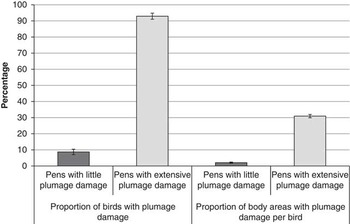
There was a difference between pens in the proportion of birds with plumage damage (F=16.97, DF=11, 593, P<0.001) and the proportion of body areas with plumage damage per bird (F=23.07, DF=11, 593, P<0.001). In half of the pens, >80% of birds exhibited plumage damage (average of 88.2%), with >20% of their body areas damaged (average of 31.4%). In the other half of the pens, <20% of birds exhibited plumage damage (average of 10.5%), with 4% or less of their body areas with plumage damage (average of 2.2%). Hence, there were two distinct subpopulations; pens with extensive plumage damage and pens with very little plumage damage, both in terms of number of birds affected, and number of body areas per bird. Consequently, analyses were run with these subpopulations as the fixed effect (with or without extensive plumage damage), and results presented in Figure 2 (31% v. 2% of body areas with plumage, F=99.63, DF=1, 10, P<0.001, and 93% v. 9% of birds with plumage damage, F=39.5, DF=1, 39, P<0.001). Focal birds in pens with plumage damage received more SFP (SFP was observed in 5.4% v. 0.4% of the observation sessions, F=21.95, DF=1, 3, P=0.02). Other behaviours (including ground-scratching, ground-pecking, dustbathing and aggressive pecking) did not differ between pens with and without extensive plumage damage (P>0.1).
Feather-scores between pens of hens with extensive plumage damage and pens with little plumage damage, as analysed using generalised linear mixed models (F=99.63, DF=1, 10, P<0.001).

Single feather test
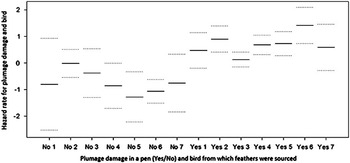
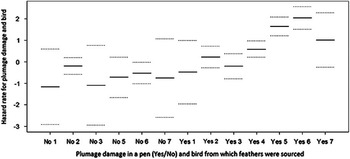
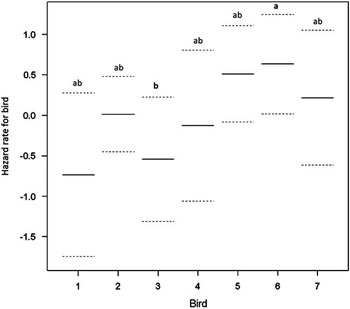
Birds in pens with plumage damage ingested more feathers (80% v. 26%, F=8.1, DF=1, 8, P=0.02) and showed shorter latencies to peck at (4.4 v. 17.9 s, χ 2=54.5, DF=1, P<0.001) and ingest (12.9 v. 23.9 s, χ 2 = 55.6, DF=1, P<0.001) single feathers than birds in pens with little plumage damage. There was an interaction between the birds from which feathers were sourced (n=7) and plumage damage in a pen (yes or no), on the latency to peck (Figure 3, χ 2=11.5, DF=6, P=0.07), and an interaction effect on the latency to ingest (Figure 4, χ 2=15.4, DF=6, P=0.02) single feathers. There was a significant effect of bird on the latency to ingest (Figure 5, χ 2=39.0, DF=6, P<0.001) feathers. From the term plots, it appears that the shortest latencies to ingest single feathers occurred in pens in which there were high levels of plumage damage and which were presented with feathers from birds 5, 6 and 7. Birds 1 to 3 were housed individually in the cage facility and their feathers were presented to pens in the first flock, bird 4 denotes feathers collected from the floor of the free-range housing facility and presented to the first flock, and birds 5 to 7 were those in pens within the free-range housing facility in the second flock.
Hazard rate for the latency to peck feathers. Term plot with means and standard errors for the latency of any ISA Brown laying hen within a test pen to peck feathers during single feather tests (χ 2=11.5, DF=6, P=0.07). Data were analysed using a survival analysis, for the interaction between the hen from which feathers were sourced (1 to 7), and the presence of plumage damage in the test pen (Yes or No).

Hazard rate for the latency to ingest feathers. Term plot with means and standard errors for the effect of bird and plumage damage in a pen on the latency of a hen to ingest feathers (χ 2=15.4, DF=6, P=0.02). Data were analysed using a survival analysis, as in Figure 2.

Term plot with means and standard errors for the latency of a hen within the test pen to ingest feathers presented during the single feather test. Data were analysed using a survival analysis to test the effect of the hen from which feathers were sourced (1 to 7). Birds 1 to 3 were housed individually in a separate cage facility, bird 4 denotes feathers taken from the floor of the free-range housing facility in which testing took place and birds 5 to 7 indicate the birds in pens within the free-range facility. Bars with differing superscripts differ significantly (χ 2=39.0, DF=6, P<0.001).

Experiment 2
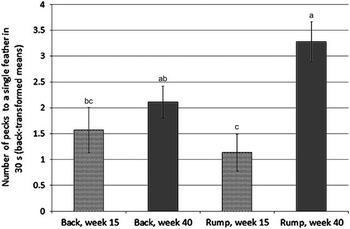
There was a tendency for birds to peck rump feathers more than back feathers at 40 than 15 weeks of age (interaction: body area×week of age) (Figure 6, F=3.46, DF=1, 237, P=0.06). At 40 weeks of age, birds were more likely to ingest feathers, (91% v. 5%, F=142.0, DF=1, 231, P<0.001), pecked feathers more times (2.7 v. 1.4 pecks/feather, F=11.24, DF=1, 239, P<0.001), and were faster to peck (hazard ratio=8.5, 95% CI: 5.6 to 13.1, χ 2 = 127.3, DF=1, P<0.001) and ingest (hazard ratio=30.0, 95% CI: 14.8 to 60.8, χ 2=189.3, DF=1, P<0.001) feathers. Birds in pen 14 had a higher proportion of body areas with plumage damage compared with birds in pens 1, 2 and 5 (F=13.87, DF=15, 715, P<0.001). However, further analyses using plumage damage as a predictor variable was not possible in this experiment. This was due to the lack of differentiation between more pens, and an unbalanced design if plumage damage in a pen was to be used as a fixed variable in a statistical model. In addition, there were no differences between pens in the number of birds with plumage damage per pen (P=1.0). There were no differences between pens in the number of existing feathers on the pen floor (P=0.79), or the number of birds interacting with the novel objects (P=1.0).
The effect of the body area from which feathers were sourced, and week of age at testing, on the number of pecks to a single feather presented in the home pen. Feathers were sourced from the rump or back area of a bird, and presented at 15 and 40 weeks of age. The total number of pecks per feather by all hens was analysed using the generalised linear mixed models procedure with a Poisson distribution. Columns with differing superscripts differ significantly (P<0.05). Each column tends to differ from all other columns (P<0.1).

Discussion
Both experiments aimed to discern whether there was significant variation in plumage damage between pens of birds. Experiment 1 determined differences between pens, while Experiment 2 was unsuccessful in this. It was hypothesised in Experiment 1 that pens with plumage damage would have shorter latencies to peck at, and ingest single feathers presented to them, and would also be more likely to ingest feathers than pens of birds without plumage damage. An additional aim was that birds would preferentially ingest feathers from some birds over others, potentially those in the same housing facility as the tested birds. Results showed the pens with extensive plumage damage ingested more feathers, and showed shorter latencies to peck and ingest feathers. In addition, birds with plumage damage were quicker to ingest feathers taken from a bird housed in the same housing facility than a bird in the cage facility. The results thereby support the hypothesis and suggest that birds may prefer feathers taken from particular birds. It has not been determined why feathers taken from some birds may be more attractive than others. Experiment 2 hypothesised that birds which developed SFP would demonstrate feather-eating prior to the development of plumage damage, and that birds would preferentially ingest feathers taken from different body areas, such as the rump rather than the back area. Pens of birds that developed plumage damage did show feather-eating before the development of plumage damage, but the lack of variation in plumage damage between pens precluded further investigation of this relationship. Birds pecked rump feathers more than back feathers at 40 weeks of age. This result implies that birds may prefer feathers from the rump area. This should be investigated in further experiments.
Individual bird differences
All birds were reared under similar conditions, sourced from the same donor flock, and received the same diet, with the same availability of dietary fibre. The differences in plumage damage and feather-eating were observed between pens despite these environmental and genetic consistencies. The differences seen between pens may therefore be attributed to individual differences between birds. Indeed, feather ingestion may have been performed by the same birds each time. The particular birds instigating SFP and feather-eating may have heightened requirements for environmental stimuli or structural elements in the diet, etc. This theory was proposed by Brunberg et al. (Reference Brunberg, Jensen, Isaksson and Keeling2011), who stated that SFP is performed by individual birds, regardless of environmental factors.
Age-related changes and learning
Plumage damage did not develop differentially between pens in Experiment 2. Therefore, the predictive relationship between plumage damage and feather-eating remains unclear. There was an effect of age, where birds were more likely to ingest feathers, and were quicker to peck and ingest feathers, at 40 compared to 15 weeks of age. It therefore appears that interest in feather-eating increased with age. Similarly, plumage damage increased with age. De Haas et al. (Reference De Haas, Nielsen, Buitenhuis and Rodenburg2014b) also investigated the temporal relationship between feather-eating and plumage damage and found that flocks with severe plumage damage at 40 weeks of age tended to eat feathers more often at 15 weeks of age, compared with flocks with no severe plumage damage at 40 weeks of age. In the present experiment, feather-eating appeared to precede plumage damage and may have acted as a predictor, although since there was a lack of variability between pens this could not be fully explored. It is possible that the nutritional requirements of the birds changed with age, which affected feather-eating and SFP. Similar to the present study, McKeegan and Savory (Reference McKeegan and Savory1999) were unable to establish a causal link between SFP and feather-eating, but also commented on age-related changes, and theorised that once feather-eating is established, low availability of feathers on the pen floor can result in redirected foraging behaviour in the form of SFP.
Role of feather-eating
Birds in pens with plumage damage showed shorter latencies to peck and ingest feathers, but did not perform significantly more ground-pecking. Hence, it appeared that there was a heightened interest in feathers, rather than a higher motivation to perform general pecking behaviour. However, the only measure of pecking motivation in the present experiment was the incidence of ground-pecking between pens. De Haas et al. (Reference De Haas, Bolhuis, de Jong, Kemp, Janczak and Rodenburg2010) deduced that high feather-pecking birds have a stronger pecking motivation than low feather-pecking birds, rather than a preference for eating feathers. Newberry et al. (Reference Newberry, Keeling, Estevez and Bilcik2007) also found that birds which performed more SFP performed more ground-pecking during rearing, and Dixon et al. (Reference Dixon, Duncan and Mason2008) deduced that birds with a high foraging motivation can be more likely to perform SFP if foraging behaviour is inhibited. Kjaer (2009) suggested a hyperactivity model for SFP, whereby birds that perform more SFP have higher general activity levels.
Kriegseis et al. (2012) reported a decrease in SFP, and improved plumage condition, when feathers were added to the diet. Likewise, van Krimpen et al. (Reference Van Krimpen, Veldkamp, Binnendijk and de Veer2011) stated that while the causal factors for feather-eating are unknown, feather-eating and SFP may be related to feed structure and composition. In particular, the presence of dietary fibre may minimise feather-eating. Harlander-Matauschek and Bessei (Reference Harlander-Matauschek, Baes and Bessei2005) suggested that feathers may be considered either as foraging material or food (Rodenburg and Koene, 2003), while Harlander-Matauschek et al. (2007a) suggested that besides offering a role in digestive function, feathers also represent material for exploration. Hence feather characteristics may affect their attractiveness as foraging material. Therefore, the consumption of feathers may have an exploratory basis, but nutritional influences and satiation may also play a role.
Feather characteristics
Birds preferred feathers from birds housed in the free-range facility than the cage facility or from the floor, which was demonstrated by shorter latencies to ingest the feathers from these birds. Possible characteristics affecting feather attractiveness include texture, colour, shape, olfactory properties, and gustatory stimuli provided by preen oil (Bolliger and Varga, Reference Bolliger and Varga1961; McKeegan and Savory, Reference McKeegan and Savory2001). Meyer et al. (Reference Meyer, Bessei, Vahjen, Zentek and Harlander-Matauschek2012) also found that feathers can alter the microbiota in the gut, which may affect bird behaviour. Studies suggest that olfactory cues may be important in birds’ selection of feathers for eating (McKeegan and Savory, Reference McKeegan and Savory2001), and that individual recognition may occur due to variation in composition of preen oil (Jacob and Ziswiler, Reference Jacob and Ziswiler1982). Since there was variation between reactions to feathers from birds housed in separate housing facilities (cage v. the free-range facility in which the testing was conducted), the feathers may have been affected by the environment in which birds were housed, which altered birds’ speed to ingest the feathers. However, there was also a difference in the latency to ingest feathers from individual birds, so there may be individual bird differences which affect feather properties and attractiveness for ingestion.
In Experiment 2, there was a trend for an interaction effect between week of age at testing and the body area from which feathers were sourced. This result indicates that feather characteristics may vary depending on the body area from which they are taken, and that this could play a role in birds’ selection of body areas for SFP and subsequent feather-eating. This was also suggested by Harlander-Matauschek et al. (Reference Harlander-Matauschek and Rodenburg2007b). This finding is in line with anecdotal observations from the present study where the rump was the first area exhibit plumage damage and also exhibited the most damage. It also agrees with suggestions by McKeegan and Savory (Reference McKeegan and Savory1999) that feathers within close proximity to the uropygial gland may be particularly attractive due to their liberal supply of preen oil. The uropygial gland appears to have evolved in order to keep feathers supple and flexible with its secretion of preen oil. However, many bird species have a well-developed sense of smell, and uropygial secretions may play a role in communication between birds (Jacob and Ziswiler, Reference Jacob and Ziswiler1982). It is therefore possible that the characteristics of feathers may play a role in the selection of body areas, as well as the selection of birds which are targeted for SFP (Harlander-Matauschek et al., Reference Harlander-Matauschek and Rodenburg2007b). This should be investigated in future experiments.
Birds may have been interested in feathers despite pre-existing feathers on the pen floor due to stimulus enhancement occurring when feathers were introduced. Alternatively, the introduced feathers, having been cut from donor birds, may have possessed different and more attractive properties (olfactory, visual, etc.) than the feathers on the floor, which may have been present due to a juvenile moult. Birds’ responses to novelty were investigated in the novel object test. The methodology employed in this study investigating the introduction of novel objects to the home pen, feather coverage on pen floors, and the ingestion of loose feathers before, and following the development of extensive plumage damage, is a method that may yield important results in future studies.
Conclusions
The results from the present study confirm the association between feather-eating and SFP. In addition, hens showed preferences for feathers from particular hens, and from the rump area compared with the back. Pens of birds showed higher propensities for feather ingestion, as well as more plumage damage, at 40 compared to 15 weeks of age. Future experiments should focus on elucidating whether feather-eating may act as a predictor of SFP.
Acknowledgements
Experiments were part of a larger project funded by the Australian Egg Corporation Limited, and a postgraduate stipend for the first author was provided by the Poultry Cooperative Research Centre, established and supported under the Australian Government’s Cooperative Research Centres Program. The authors gratefully acknowledge the assistance of Dr Evelyn Hall (University of Sydney) for her advice on statistical analyses, and Ryan Hopcroft (University of Sydney) for his help in experimental work.