Introduction
Critically ill patients face tremendous physical and psychological stresses in intensive care units (ICUs), including respiratory insufficiency, painful procedures, activation of the hypothalamic–pituitary–adrenal axis (often with reduced adrenocortical responsiveness), high levels of endogenous and exogenous catecholamines to maintain blood pressure, and delirium often with frightening perceptual experiences (Jones et al. Reference Jones, Griffiths and Humphris2000; DiMartini et al. Reference DiMartini, Dew, Kormos, McCurry and Fontes2007; Kiekkas et al. Reference Kiekkas, Theodorakopoulou, Spyratos and Baltopoulos2010), all in the context of reduced autonomy and a limited ability to communicate. By definition, critical illnesses are life-threatening, and survivors frequently have clinically significant post-traumatic stress disorder (PTSD) symptoms/PTSD (median study point prevalence = 20–30%) (Davydow et al. Reference Davydow, Desai, Needham and Bienvenu2008a,b).
Indirect evidence suggests that in-ICU delirium may be a risk factor for PTSD symptoms. Specifically, amounts of benzodiazepine and opiate sedation, agitation and physical restraint in the ICU have been associated with both delirium/coma (Kollef et al. Reference Kollef, Levy, Ahrens, Schaiff, Prentice and Sherman1998; Micek et al. Reference Micek, Anand, Laible, Shannon and Kollef2005; Pandharipande et al. Reference Pandharipande, Shintani, Peterson, Pun, Wilkinson, Dittus, Bernard and Ely2006, Reference Pandharipande, Pun, Herr, Maze, Girard, Miller, Shintani, Thompson, Jackson, Deppen, Stiles, Dittus, Bernard and Ely2007, 2008; Peterson et al. Reference Peterson, Pun, Dittus, Thomason, Jackson, Shintani and Ely2006; Payen et al. Reference Payen, Chanques, Mantz, Hercule, Auriant, Leguillou, Binhas, Genty, Rolland and Bosson2007; Weinert & Calvin, Reference Weinert and Calvin2007; Arroliga et al. Reference Arroliga, Thompson, Ancukiewicz, Gonzales, Guntupalli, Park, Wiedemann and Anzueto2008; Riker et al. Reference Riker, Shehabi, Bokesch, Ceraso, Wisemandle, Koura, Whitten, Margolis, Byrne, Ely and Rocha2009) and later PTSD symptoms (Nelson et al. Reference Nelson, Weinert, Bury, Marinelli and Gross2000; Kress et al. Reference Kress, Gehlbach, Lacy, Pliskin, Pohlman and Hall2003; Girard et al. Reference Girard, Shintani, Jackson, Gordon, Pun, Henderson, Dittus, Bernard and Ely2007; Jones et al. Reference Jones, Backman, Capuzzo, Flaatten, Rylander and Griffiths2007; Samuelson et al. Reference Samuelson, Lundberg and Fridlund2007b). Furthermore, early post-ICU memories of in-ICU frightening psychotic/nightmare experiences have frequently been associated with later PTSD symptoms (Jones et al. Reference Jones, Griffiths, Humphris and Skirrow2001, Reference Jones, Skirrow, Griffiths, Humphris, Ingleby, Eddleston, Waldmann and Gager2003, Reference Jones, Backman, Capuzzo, Flaatten, Rylander and Griffiths2007; Rattray et al. Reference Rattray, Johnston and Wildsmith2005, Reference Rattray, Crocker, Jones and Connaghan2010; Samuelson et al. Reference Samuelson, Lundberg and Fridlund2007b; Weinert & Sprenkle, Reference Weinert and Sprenkle2008; note that almost all of these studies excluded patients with prior psychosis). Conversely, the results of several small studies suggest that in-ICU corticosteroid administration may be protective against later PTSD symptoms. Specifically, stress doses of hydrocortisone were protective against later PTSD symptoms in patients with septic shock and in patients undergoing cardiac surgery (Schelling et al. Reference Schelling, Stoll, Kapfhammer, Rothenhausler, Krauseneck, Durst, Haller and Briegel1999, Reference Schelling, Briegel, Roozendaal, Stoll, Rothenhausler and Kapfhammer2001, Reference Schelling, Kilger, Roozendaal, de Quervain, Briegel, Dagge, Rothenhäusler, Krauseneck, Nollert and Kapfhammer2004, Reference Schelling, Roozendaal, Krauseneck, Schmoelz, de Quervain and Briegel2006; Weis et al. Reference Weis, Kilger, Roozendaal, de Quervain, Lamm, Schmidt, Schmölz, Briegel and Schelling2006).
Acute lung injury (ALI), including its common severe subcategory, acute respiratory distress syndrome, is an archetypal critical illness (Herridge & Angus, Reference Herridge and Angus2005). ALI is defined by acute onset of severe hypoxemia and bilateral pulmonary infiltrates on chest X-ray (not due to heart failure) in the setting of various pulmonary (e.g. pneumonia) or non-pulmonary (e.g. sepsis) risk factors (Bernard et al. Reference Bernard, Artigas, Brigham, Carlet, Falke, Hudson, Lamy, Legall, Morris and Spragg1994). The objective of the present study is to describe the 2-year prevalence and duration of PTSD symptoms after ALI, and to examine potential baseline and critical illness/intensive care-related risk factors. We hypothesized that prior psychiatric illness, high-dose in-ICU benzodiazepine and opiate administration and in-ICU delirium would be associated with post-ALI PTSD symptoms. We also hypothesized that sepsis would be associated with post-ALI PTSD symptoms because sepsis compromises the blood–brain barrier (Sharshar et al. Reference Sharshar, Hopkinson, Orlikowski and Annane2005; Ebersoldt et al. Reference Ebersoldt, Sharshar and Annane2007; Siami et al. Reference Siami, Annane and Sharshar2008), such that peripheral catecholamines could enter the brain (Ekström-Jodal & Larsson, Reference Ekström-Jodal and Larsson1982; Ekström-Jodal et al. Reference Ekström-Jodal, Häggendal, Larsson and Westerlind1982) and enhance traumatic memory formation/fear conditioning (Pitman, Reference Pitman1989; McGaugh, Reference McGaugh2003; Pitman & Delahanty, Reference Pitman and Delahanty2005). Finally, we hypothesized that in-ICU corticosteroid administration would protect against post-ALI PTSD symptoms.
Method
Study population
Mechanically ventilated patients with ALI were enrolled consecutively in a prospective cohort study involving 13 ICUs at four hospitals in Baltimore, Maryland, between October 2004 and October 2007 (Needham et al. Reference Needham, Dennison, Dowdy, Mendez-Tellez, Ciesla, Desai, Sevransky, Shanholtz, Scharfstein, Herridge and Pronovost2005). To avoid inclusion of patients with primary neurologic disease or head trauma, neurologic specialty ICUs at the participating hospitals were excluded. Other key exclusion criteria were (1) pre-existing illness with a life expectancy of <6 months; (2) pre-existing cognitive impairment or communication/language barriers; (3) no fixed address; (4) transfer to a study site ICU with pre-existing ALI >24 h; (5) >5 days of mechanical ventilation before ALI; and (6) a physician order for no escalation of ICU care (e.g. no vasopressors or hemodialysis) at the time of study eligibility.
Informed consent was obtained after patients regained capacity, typically around the time of hospital discharge (Fan et al. Reference Fan, Shahid, Kondreddi, Bienvenu, Mendez-Tellez, Pronovost and Needham2008). Follow-up occurred at 3, 6, 12 and 24 months after ALI onset. At the 24-month follow-up, patients reported retrospectively on mental health treatment since ALI. The institutional review boards of Johns Hopkins University and all participating study sites approved this research.
Measurement of ‘PTSD symptoms’
We measured symptoms of PTSD at each follow-up using the Impact of Event Scale – Revised (IES-R) questionnaire (Weiss & Marmar, Reference Weiss, Marmar, Wilson and Keane1997). The precursor of the IES-R, the IES (Horowitz et al. Reference Horowitz, Wilner and Alvarez1979), is the most widely used measure of PTSD symptoms in critical care outcomes research (Griffiths et al. Reference Griffiths, Fortune, Barber and Young2007; Davydow et al. Reference Davydow, Gifford, Desai, Needham and Bienvenu2008b). However, the IES only measures the intrusion and avoidance symptoms of PTSD, not hyperarousal symptoms. The IES-R includes six hyperarousal items, 22 items in total (Weiss & Marmar, Reference Weiss, Marmar, Wilson and Keane1997). An important feature of the IES-R is that the measure is ‘grounded’ to a particular trauma (in this case, critical illness/ICU treatment). Respondents report how distressed/bothered they have been by particular difficulties in the past 7 days: ‘not at all’ (item score = 0), ‘a little bit’ (1), ‘moderately’ (2), ‘quite a bit’ (3), or ‘extremely’ (4). The IES-R has high internal consistency (α ≈ 0.9), short-term test–retest reliability (r ≈ 0.9) and concurrent and discriminant validity, without substantial social desirability effects (Asukai et al. Reference Asukai, Kato, Kawamura, Kim, Yamamoto, Kishimoto, Miyake and Nishizono-Maher2002; Beck et al. Reference Beck, Grant, Read, Clapp, Coffey, Miller and Palyo2008). It has performed well as a screening instrument for PTSD, with optimal thresholds (item mean scores) between 1.0 and 2.2 in different populations (Asukai et al. Reference Asukai, Kato, Kawamura, Kim, Yamamoto, Kishimoto, Miyake and Nishizono-Maher2002; Creamer et al. Reference Creamer, Bell and Failla2003; Adkins et al. Reference Adkins, Weathers, McDevitt-Murphy and Daniels2008; Rash et al. Reference Rash, Coffey, Baschnagel, Drobes and Saladin2008; Sveen et al. Reference Sveen, Low, Dyster-Aas, Ekselius, Willebrand and Gerdin2010).
We recently evaluated the IES-R against the Clinician-Administered PTSD Scale (CAPS; Blake et al. Reference Blake, Weathers, Nagy, Kaloupek, Gusman, Charney and Keane1995) in 60 ALI survivors, 1–5 years after their index ALI episode (Bienvenu et al. Reference Bienvenu, Williams, Yang, Hopkins and Needham2012b). The area under the receiver operating characteristic curve for CAPS-diagnosed DSM-IV PTSD was 0.95 [95% confidence interval (CI) 0.88–1.00]. At an optimal IES-R threshold of 1.6, the sensitivity was 100%, specificity 85%, positive predictive value 50% and negative predictive value 100%.
Definitions for prevalence, remission and recurrence of PTSD symptoms
‘Post-ALI PTSD symptoms’ were defined as having an IES-R (item mean) score ⩾1.6 at any follow-up (3, 6, 12 or 24 months after ALI). We defined remission as having an IES-R score <1.6 at any follow-up after apparent onset of PTSD symptoms, along with a statistically reliable decrease in score using the Reliable Change Index (RCI; Jacobson & Truax, Reference Jacobson and Truax1991). To calculate the RCI, we used standard deviation and test–retest reliability estimates from prior research (Asukai et al. Reference Asukai, Kato, Kawamura, Kim, Yamamoto, Kishimoto, Miyake and Nishizono-Maher2002). To achieve a statistically reliable change, a difference in scores of ⩾0.3 was required. We defined recurrence as having an IES-R score ⩾1.6 at any follow-up after remission, along with an increase in score of ⩾0.3.
Potential risk factors for PTSD symptoms
We considered several potential risk factors for PTSD symptoms. Potential baseline (pre-hospitalization) risk factors included demographic characteristics (age, sex and education) and baseline health characteristics (abstracted from the medical record): overweight/obesity (a correlate identified in prior general population studies; Scott et al. Reference Scott, McGee, Wells and Oakley Browne2008; Pagoto et al. Reference Pagoto, Schneider, Bodenlos, Appelhans, Whited, Ma and Lemon2012), the burden of co-morbid medical conditions (summarized using the Charlson Comorbidity Index; Charlson et al. Reference Charlson, Pompei, Ales and MacKenzie1987) and psychiatric and substance use problems (depression, tobacco smoking, heavy alcohol use and illicit drug use).
Potential critical illness-related risk factors included initial ICU severity of illness [assessed using the Acute Physiology and Chronic Health Evaluation II (APACHE II) score; Knaus et al. Reference Knaus, Draper, Wagner and Zimmerman1985], worst organ failure status during the ICU stay [assessed using the maximum daily Sequential Organ Failure Assessment (SOFA) score; Vincent et al. Reference Vincent, Moreno, Takala, Willatts, De Mendonça, Bruining, Reinhart, Suter and Thijs1996], ICU length of stay, the proportion of ICU days that patients were delirious [with a positive daily screening using the Confusion Assessment Method for the Intensive Care Unit (CAM-ICU); Ely et al. Reference Ely, Inouye, Bernard, Gordon, Francis, May, Truman, Speroff, Gautam, Margolin, Hart and Dittus2001], the proportion of ICU days that patients were comatose [with Richmond Agitation–Sedation Scale (RASS) scores of –4 or –5; Ely et al. Reference Ely, Truman, Shintani, Thomason, Wheeler, Gordon, Francis, Speroff, Gautam, Margolin, Sessler, Dittus and Bernard2003], and the proportion of ICU days patients were septic (defined using standard consensus criteria; Bone et al. Reference Bone, Balk, Cerra, Dellinger, Fein, Knaus, Schein and Sibbald1992). Because research staff were not always available on weekends, the daily prospective sedation and delirium assessments were missing for some days; thus, we used multiple imputation with chained equations (Schafer & Graham, Reference Schafer and Graham2002) to impute missing RASS and CAM-ICU values. Potential intensive care-related risk and protective factors included mean and maximum daily benzodiazepine, opiate and systemic corticosteroid doses (presented as midazolam, morphine and prednisone equivalents respectively), along with proportions of ICU days that patients received each of these medications.
Statistical methods
We considered onset and recurrence to begin when symptoms were first observed to be above threshold (e.g. the earliest possible onset would be at the 3-month follow-up), and remission to occur when symptoms were observed to fall below threshold. When patients had a missing IES-R value during follow-up, we assumed that their prior PTSD symptom status remained unchanged. Thus, when patients had missing data prior to first onset, it may seem that they had onset of post-ALI PTSD symptoms much later than was the case. In a sensitivity analysis, we excluded data for patients who had missing IES-R data prior to first onset. Similarly, recurrences may seem to occur later than was the case (or not at all) if data were missing after remission, or patients may seem to have a longer duration of symptoms than was the case if missing data points occur after PTSD symptoms were established. Thus, we conducted another sensitivity analysis in which we excluded data for patients who had missing IES-R data at any follow-up time point (a ‘complete case’ analysis). When describing the longitudinal course of PTSD symptoms over the 24-month follow-up, we excluded data from patients who died during follow-up because including their data would bias the results towards shorter durations and fewer remissions and recurrences.
We used χ 2 or Fisher's exact tests to compare proportions of patients with and without PTSD symptoms who received mental health treatment over the first 2 years of follow-up. In risk factor analyses of discrete-time survival data, we used pooled polytomous logistic regression models that simultaneously modeled associations between potential risk factors and PTSD symptoms or death (death was a competing risk accounted for in the regression models). Multivariable models included all potential risk factors that had a bivariable association (p ⩽0.10) with later PTSD symptoms. Given our a priori hypothesis that delirium would be related to later PTSD symptoms, we included this variable in our multivariable model of critical illness/ICU-related risk factors regardless of bivariable statistical significance. Because exploratory analyses indicated some non-linear relationships between continuous variables and PTSD symptoms (including ‘U-shaped’ relationships), continuous independent variables were categorized roughly into tertiles for risk factor analyses, unless exploratory analyses suggested a linear relationship with PTSD symptoms. To avoid ‘over-fitting’ our multivariable models, we limited the ratio of number of patients with PTSD symptoms to the number of potential risk factors to ∼10 (Harrell et al. Reference Harrell, Lee, Matchar and Reichert1985).
We also conducted five additional sets of sensitivity analyses when evaluating risk factors. In the first two sets we assumed that patients who survived their initial hospitalization and consented but died without any IES-R assessments alternately had or did not have PTSD symptoms. In the next two sets we assumed that patients who were alive at the 3-month follow-up but did not have any IES-R assessments alternately had or did not have PTSD symptoms. In the fifth set we assumed that patients who staff felt had psychiatric reasons for missed visits had PTSD symptoms. The results of these five sets of analyses did not differ substantially from our primary analyses, so we limit our presentation to our primary analyses.
Statistical significance was defined as p < 0.05 (two-sided). Mental health treatment analyses were conducted using IBM SPSS version 19 (SPSS Inc., USA). Risk factor analyses were conducted using R statistical software (R Development Core Team, 2010).
Results
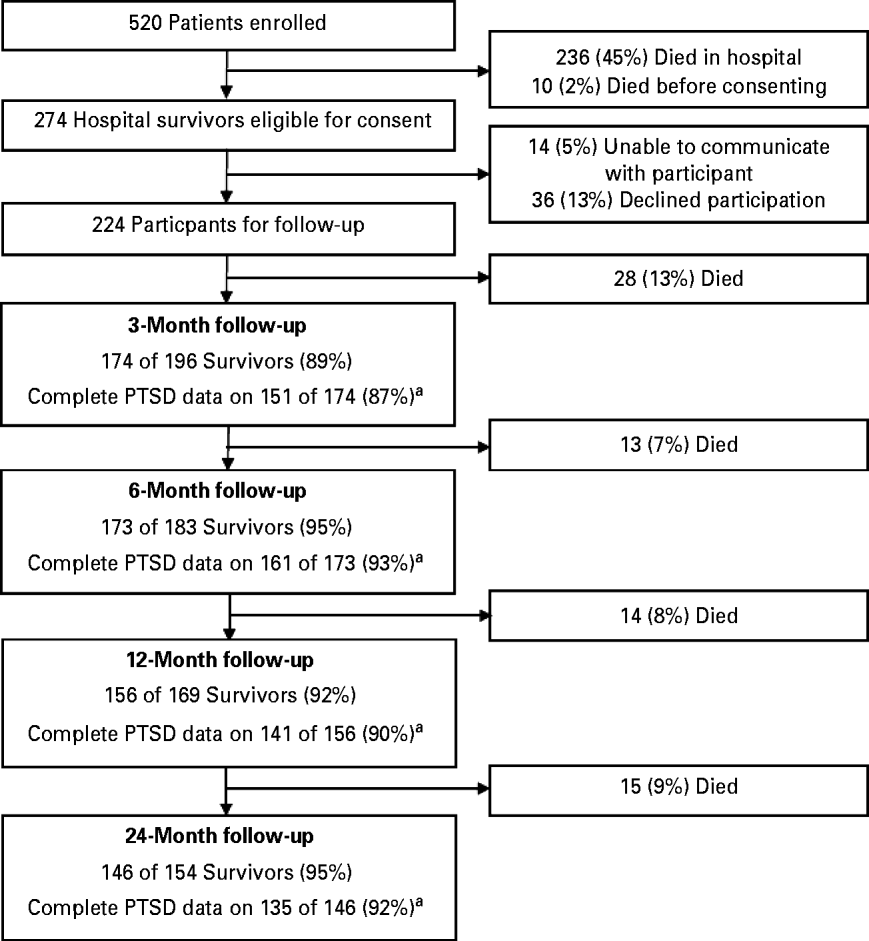
Of 520 eligible patients with ALI enrolled in the study, 274 (53%) survived their acute hospitalization and were eligible for consent. Additional patients died, declined or could not be contacted for consent, leaving 196 consenting survivors 3 months after ALI (Fig. 1). Of these 196 participants, 186 (95%) had at least one follow-up visit over the 2-year study period with complete IES-R data. The point prevalence of PTSD symptoms related to ALI and intensive care at the 3-month follow-up was 24%, at the 6-month follow-up 20%, at the 12-month follow-up 23%, and at the 24-month follow-up 24%.
Flow diagram of study participants. a Some patients had a follow-up visit but did not have complete data from the Impact of Event Scale – Revised [IES-R; the post-traumatic stress disorder (PTSD) symptom questionnaire]. At each follow-up time point, the number of patients who had a follow-up visit without complete IES-R data and the reasons (physical/cognitive/psychiatric/declined/other) were as follows: at 3 months, 23 patients (7/5/2/7/2); at 6 months, 12 patients (4/2/1/4/1); at 12 months, 15 patients (5/4/2/4/0); and at 24 months, 11 patients (1/5/1/4/0).

Apparent onset and duration of PTSD symptoms after ALI
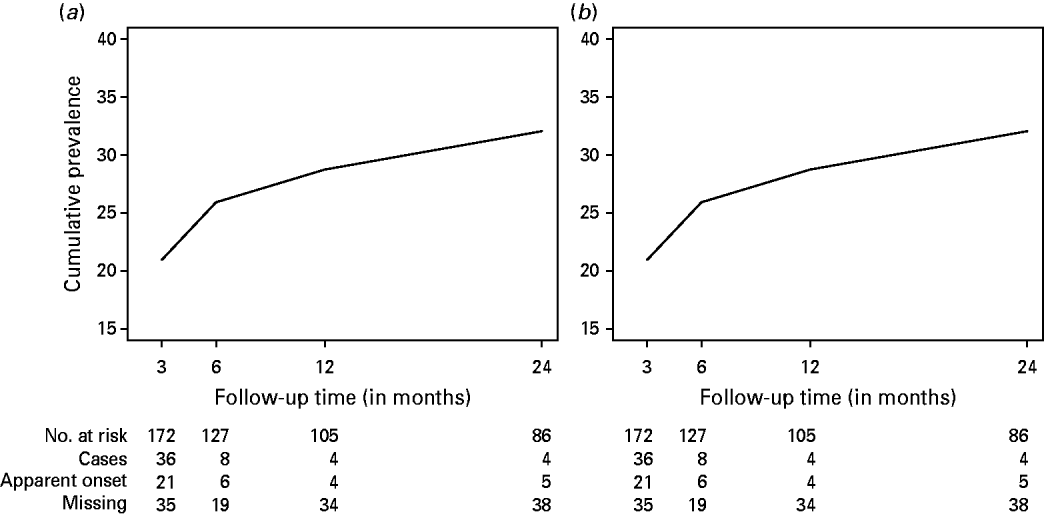
PTSD symptoms occurred in 66 of the 186 patients over the 2-year follow-up period (35%). Apparent onset was highest by the 3-month follow-up and declined thereafter (Fig. 2). Notably, in the patients who had no missing data prior to apparent onset of PTSD symptoms, and onset after the 3-month follow-up, the median IES-R score at the first (i.e. the 3-month) follow-up was 1.4; that is, most of these patients were not completely asymptomatic before their IES-R scores exceeded the ⩾1.6 threshold.
Cumulative proportion of patients with post-traumatic stress disorder (PTSD) symptoms [Impact of Event Scale – Revised (IES-R) item mean score ⩾1.6] in the first 2 years after acute lung injury (ALI). (a) Patients are included whether or not they had missing data prior to apparent onset, and 54% had onset by 3 months. (b) Patients are excluded if they had missing data prior to apparent onset, and 69% had onset by 3 months.
Ten patients with PTSD symptoms died during the 2-year follow-up. In the remaining 56 patients, the median initial duration of PTSD symptoms was 12 months, although the modal initial duration was 21 months (the maximum possible duration given onset at 3 months and presence at 24 months). Remissions occurred in 58% of the 50 eligible patients (i.e. those with PTSD symptoms before the 24-month follow-up), and recurrences occurred in 42% of the 19 eligible patients (i.e. those with remission before the 24-month follow-up). The median total duration of PTSD symptoms (including recurrences) was 18 months. Of the survivors with PTSD symptoms, 62% had PTSD symptoms at the 24-month follow-up. The results of the ‘complete case’ analysis were similar (36 patients had PTSD symptoms and no missing data); specifically, 61% had onset by 3 months, 61% of those eligible had remissions, 50% of those eligible had recurrences, the median and modal initial durations were 12 and 21 months respectively, and 58% had PTSD symptoms at the 24-month follow-up.
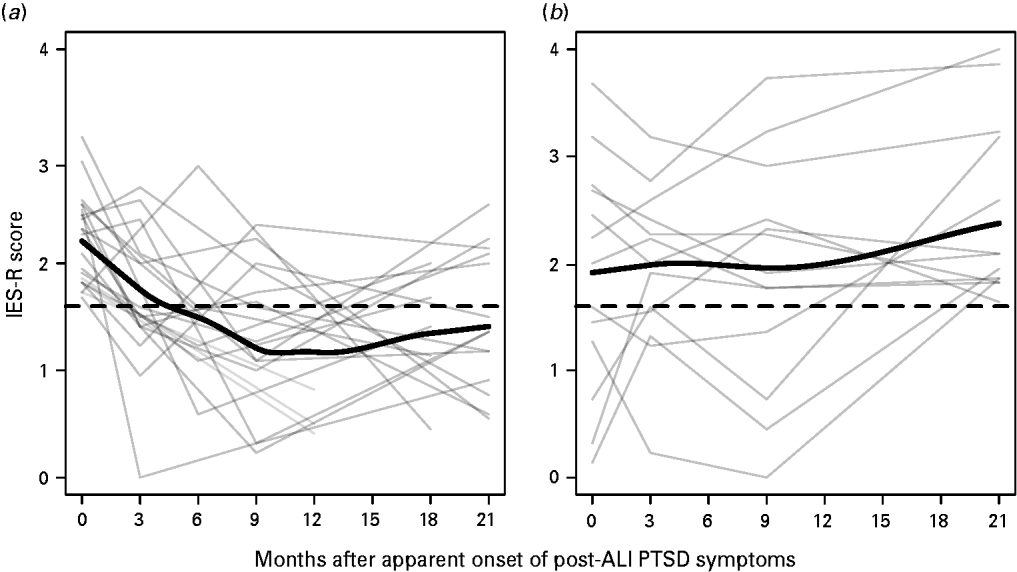
Fig. 3 illustrates individual and overall mean IES-R scores, at each follow-up assessment, for patients whose PTSD symptoms did, and did not, remit during the 2-year follow-up. In patients whose PTSD symptoms remitted (including those who had recurrences), the mean IES-R score averaged ∼1.3 throughout the follow-up period. In patients whose PTSD symptoms did not remit, the mean IES-R score averaged ∼2.0 throughout the follow-up period.
Longitudinal course of post-traumatic stress disorder (PTSD) symptoms in patients with apparent onset [Impact of Event Scale – Revised (IES-R) item mean score ⩾1.6] in the first 2 years after acute lung injury (ALI). Thin and thick lines indicate individual and mean trajectories respectively for patients whose PTSD symptoms (a) remitted and (b) did not remit during 2-year follow-up. Horizontal dashed lines indicate the threshold for PTSD symptoms (IES-R item mean score = 1.6).
Psychiatric treatment
Of 138 survivors who reported on mental health treatment at the 24-month follow-up, 47 (34%) had taken ‘any psychiatric medications, such as for depression or anxiety’, 42 (30%) had received ‘any psychiatric, psychological, or mental health care’, 35 (25%) had seen a psychiatrist, 16 (12%) had seen a psychologist and 11 (8%) had seen a counselor since hospital discharge. Seeing a psychiatrist was associated with taking psychiatric medications (74% v. 21%, p < 0.0005), as was seeing a psychologist (88% v. 27%, p < 0.0005). Seeing a psychiatrist was also associated with seeing a psychologist (37% v. 3%, p < 0.0005) or a counselor (17% v. 5%, p = 0.03).
Fifty of these 138 patients (36%) had had post-ALI PTSD symptoms. Post-ALI PTSD symptoms were associated with taking psychiatric medications (50% v. 25%, p = 0.003), any mental health care (44% v. 23%, p = 0.009) and seeing a psychiatrist (40% v. 17%, p = 0.003).
Baseline risk factors for PTSD symptoms after ALI
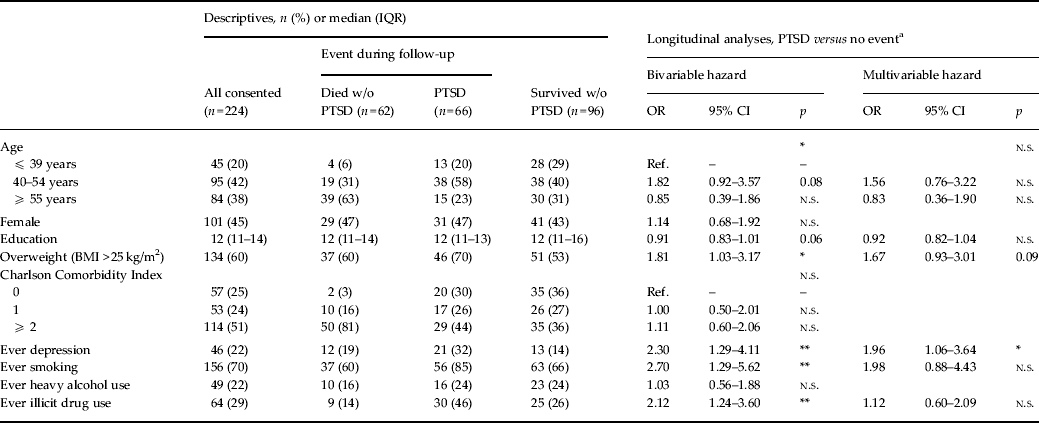
In bivariable models, statistically significant baseline risk factors for post-ALI PTSD symptoms were overweight/obesity [hazard odds ratio (OR) 1.81, 95% CI 1.03–3.17, p = 0.04], pre-ALI depressive illness (OR 2.30, 95% CI 1.29–4.11, p = 0.005), ever smoking (OR 2.70, 95% CI 1.29–5.62, p = 0.008) and ever using illicit drugs (OR 2.12, 95% CI 1.24–3.60, p = 0.006) (Table 1). Predictors with a trend toward statistical significance (α = 0.05–0.1) were age between 40 and 54 years (compared to ⩽39 years, OR 1.82, 95% CI 0.92–3.57, p = 0.08) and less education (per year of education, OR 0.91, 95% CI 0.83–1.01, p = 0.06).
Patient baseline characteristics and PTSD symptoms (‘PTSD’) during follow-up
PTSD, Post-traumatic stress disorder; BMI, body mass index; OR, hazard odds ratio; w/o, without; CI, confidence interval; IQR, interquartile range; n.s., not significant (p > 0.10); Ref., reference.
a Discrete-time survival pooled polytomous logistic regression models simultaneously modeled associations between potential risk factors and two separate outcomes, PTSD symptoms and death.
* p < 0.05, ** p < 0.01.
In a multivariable model including all of the above risk factors, only baseline depressive illness was independently associated with post-ALI PTSD symptoms (OR 1.96, 95% CI 1.06–3.64, p = 0.03) (Table 1).
Critical illness and intensive care-related risk and protective factors for PTSD symptoms after ALI
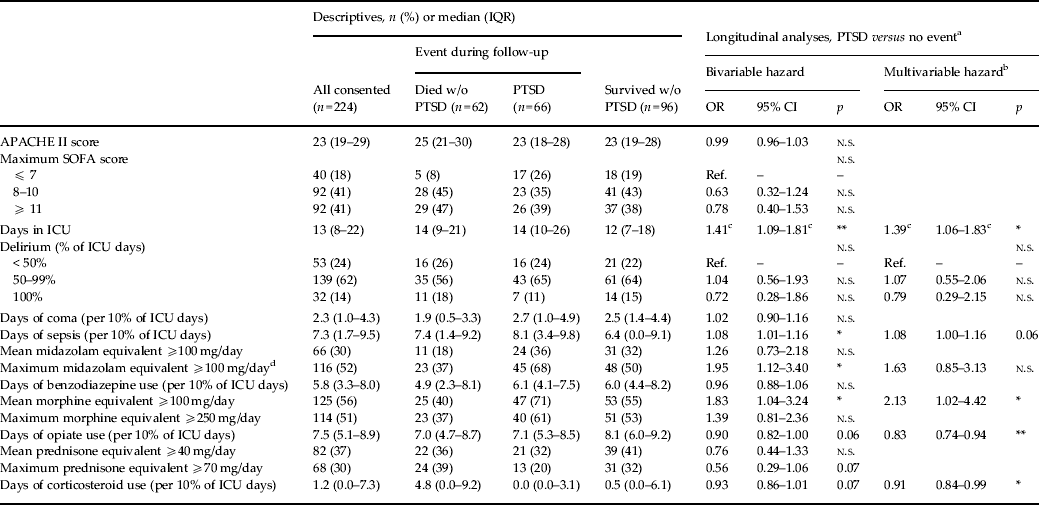
Statistically significant critical illness/intensive care-related risk factors for post-ALI PTSD symptoms were ICU length of stay (for a doubling in length of stay, OR 1.41, 95% CI 1.09–1.81, p = 0.008), proportion of ICU days with sepsis (per decile, OR 1.08, 95% CI 1.01–1.16, p = 0.03), maximum midazolam equivalent dose ⩾100 mg/day (OR 1.95, 95% CI 1.12–3.40, p = 0.02) and mean morphine equivalent dose ⩾100 mg/day (OR 1.83, 95% CI 1.04–3.24, p = 0.04) (Table 2). Factors with a trend toward a statistically significant protective effect (α = 0.05–0.1) were proportion of ICU days on opiates (per decile, OR 0.90, 95% CI 0.82–1.00, p = 0.06), maximum prednisone equivalent ⩾70 mg/day (OR 0.56, 95% CI 0.29–1.06, p = 0.07) and proportion of ICU days on corticosteroids (per decile, OR 0.93, 95% CI 0.86–1.01, p = 0.07).
Critical illness and intensive care-related characteristics and PTSD symptoms (‘PTSD’) during follow-up
APACHE II, Acute Physiology and Chronic Health Evaluation II; SOFA, Sequential Organ Failure Assessment; ICU, intensive care unit; PTSD, post-traumatic stress disorder; OR, hazard odds ratio; w/o, without; CI, confidence interval; IQR, interquartile range; n.s., not significant (p > 0.10); Ref., reference.
a Discrete-time survival pooled polytomous logistic regression models simultaneously modeled associations between potential risk factors and two separate outcomes, PTSD symptoms and death.
b A separate multivariable mode included maximum prednisone equivalent ⩾70 mg/day instead of delirium, and the former was not a significant predictor of PTSD symptoms in that model.
c Corresponds to a doubling in ICU length of stay.
d Or propofol infusion.
* p < 0.05, ** p < 0.01.
In a multivariable model including all of the above factors, several were independently associated with post-ALI PTSD symptoms, including ICU length of stay (for a doubling in length of stay, OR 1.39, 95% CI 1.06–1.83, p = 0.02), mean morphine equivalent dose ⩾100 mg/day (OR 2.13, 95% CI 1.02–4.42, p = 0.04), proportion of ICU days on opiates (per decile, OR 0.83, 95% CI 0.74–0.94, p = 0.002) and proportion of ICU days on corticosteroids (per decile, OR 0.91, 95% CI 0.84–0.99, p = 0.02) (Table 2). There was a trend for proportion of ICU days with sepsis to have an independent association (per decile, OR 1.08, 95% CI 1.00–1.16, p = 0.06); as the OR relating sepsis to PTSD symptoms was identical in our bivariable and multivariable models, limited statistical power probably explains the borderline statistical significance in the latter (i.e. rather than confounding).
Discussion
This multi-site, prospective longitudinal study of 186 ALI survivors demonstrates that PTSD symptoms are common, long-lasting and associated with psychiatric treatment in the first 2 years after ALI. Risk factors for post-ALI PTSD symptoms were prior depression, a longer ICU length of stay, a longer duration of sepsis in the ICU and administration of high-dose opiates in the ICU; protective factors were longer durations of opiate and corticosteroid administration in the ICU. Identification of risk and protective factors may be helpful to determine who is at greatest risk for PTSD symptoms following ALI and other critical illnesses, for the purpose of closer monitoring during follow-up. In addition, because in-ICU medication administration is under critical care clinicians' control, information on medications' potential effect on PTSD symptoms (and other long-term outcomes) could affect clinicians' risk/benefit analyses when deciding whether and how to administer them.
One in three survivors had PTSD symptoms during follow-up, with highest apparent onset by the 3-month follow-up, as may be expected given the close temporal relationship with survivors' critical illness and ICU care. Moreover, by the 2-year follow-up, more than 60% of patients with PTSD symptoms were still affected (some having had remissions and recurrences). The occurrence of substantial PTSD symptoms later than the 3-month follow-up suggests that events after the ALI hospitalization, such as further illness, hospitalization and social stressors (Cheung et al. Reference Cheung, Tansey, Tomlinson, Diaz-Granados, Matté, Barr, Mehta, Mazer, Guest, Stewart, Al-Saidi, Cooper, Cook, Slutsky and Herridge2006), may contribute to ongoing psychiatric morbidity for ALI survivors. Because of this very high burden of suffering, clinicians caring for ALI survivors should assess their patients' mental health, in addition to their physical (Herridge et al. Reference Herridge, Tansey, Matté, Tomlinson, Diaz-Granados, Cooper, Guest, Mazer, Mehta, Stewart, Kudlow, Cook, Slutsky and Cheung2011; Bienvenu et al. Reference Bienvenu, Colantuoni, Mendez-Tellez, Dinglas, Shanholtz, Husain, Dennison, Herridge, Pronovost and Needham2012a) and cognitive recovery (Hopkins & Jackson, Reference Hopkins and Jackson2006), and provide treatment or referrals if indicated.
Post-ALI PTSD symptoms were associated with a high prevalence of psychiatric treatment; 44% of patients with post-ALI PTSD symptoms in the past 2 years received any mental health care, and 40% saw a psychiatrist. In the US National Comorbidity Survey Replication (NCS-R), 34% of persons with DSM-IV PTSD in the past year received any mental health care for PTSD symptoms, and 23% saw a psychiatrist (Wang et al. Reference Wang, Lane, Olfson, Pincus, Wells and Kessler2005). The high prevalence of treatment associated with post-ALI PTSD symptoms in this study provides additional support for the validity of our outcome measure. Notably, patients without post-ALI PTSD symptoms also had a relatively high prevalence of psychiatric treatment. It is important to note that these patients also have high prevalences of depressive and non-specific anxiety symptoms (Davydow et al. Reference Davydow, Desai, Needham and Bienvenu2008a; Dowdy et al. Reference Dowdy, Dinglas, Mendez-Tellez, Bienvenu, Sevransky, Dennison, Shanholtz and Needham2008, Reference Dowdy, Bienvenu, Dinglas, Mendez-Tellez, Sevransky, Shanholtz and Needham2009; Bienvenu et al. Reference Bienvenu, Colantuoni, Mendez-Tellez, Dinglas, Shanholtz, Husain, Dennison, Herridge, Pronovost and Needham2012a).
Our hypotheses regarding risk factors for PTSD symptoms were partially supported. As expected, prior depression was a potent risk factor for post-ALI PTSD symptoms. This is consistent with the post-ICU and general psychiatric literature regarding PTSD risk factors (Brewin et al. Reference Brewin, Andrews and Valentine2000; Ozer et al. Reference Ozer, Best, Lipsey and Weiss2003; Davydow et al. Reference Davydow, Gifford, Desai, Needham and Bienvenu2008b, Reference Davydow, Zatzick, Rivara, Jurkovich, Wang, Roy-Byrne, Katon, Hough, Kross, Fan, Joesch and MacKenzie2009; Jubran et al. Reference Jubran, Lawm, Duffner, Collins, Lanuza, Hoffman and Tobin2010). Our results suggest that tobacco and illicit drug use are indirectly related to post-ALI PTSD symptoms (through their relationship with depression).
Contrary to our hypothesis, high-dose benzodiazepine administration was only associated with post-ALI PTSD symptoms in a univariable analysis. Of note, other studies have demonstrated minimal or no relationships between in-ICU benzodiazepine doses and later PTSD symptoms, including another observational study (Weinert & Sprenkle, Reference Weinert and Sprenkle2008) and three controlled trials of reduced sedative administration (Treggiari et al. Reference Treggiari, Romand, Yanez, Deem, Goldberg, Hudson, Heidegger and Weiss2009; Jackson et al. Reference Jackson, Girard, Gordon, Thompson, Shintani, Thomason, Pun, Canonico, Dunn, Bernard, Dittus and Ely2010; Strøm et al. Reference Strøm, Stylsvig and Toft2011).
Also contrary to our hypothesis, the proportion of ICU days delirious was not associated with post-ALI PTSD symptoms; this is consistent with results from a prior small study (Girard et al. Reference Girard, Shintani, Jackson, Gordon, Pun, Henderson, Dittus, Bernard and Ely2007). Notably, in both our study and that of Girard et al. (Reference Girard, Shintani, Jackson, Gordon, Pun, Henderson, Dittus, Bernard and Ely2007), in-ICU delirium occurred in 80–90% of patients. With efforts to reduce delirium in critically ill patients, future studies may have adequate statistical power to address whether having any delirium increases risk for PTSD. Currently, it seems that the duration of delirium is not as relevant to post-ICU PTSD symptoms as the quality of a patient's delirious experiences, given the apparent relationship between frightening psychotic/nightmare experiences in the ICU and later PTSD symptoms (Jones et al. Reference Jones, Griffiths, Humphris and Skirrow2001, Reference Jones, Skirrow, Griffiths, Humphris, Ingleby, Eddleston, Waldmann and Gager2003, 2007; Rattray et al. Reference Rattray, Johnston and Wildsmith2005, Reference Rattray, Crocker, Jones and Connaghan2010; Samuelson et al. Reference Samuelson, Lundberg and Fridlund2007b; Weinert & Sprenkle, Reference Weinert and Sprenkle2008).
Although a high average daily opiate dose (i.e. ⩾100 mg of morphine or equivalent) was positively associated with post-ALI PTSD symptoms, the proportion of ICU days on opiates was negatively associated with these symptoms. We speculate that adequate pain control without excessive clouding of consciousness may prevent PTSD symptoms (high-dose opiates typically would not have been needed for pain control in this mostly medical ICU patient group); however, more study is needed to investigate this possibility. A preventative effect of morphine has been reported in patients with burn and traumatic injuries (Saxe et al. Reference Saxe, Stoddard, Courtney, Cunningham, Chawla, Sheridan, King and King2001; Bryant et al. Reference Bryant, Creamer, O'Donnell, Silove and McFarlane2009; Holbrook et al. Reference Holbrook, Galarneau, Dye, Quinn and Dougherty2010). Although morphine could have a beneficial effect on fear conditioning through minimization of pre-synaptic norepinephrine release (Pitman & Delahanty, Reference Pitman and Delahanty2005), an effect mediated by pain control cannot be ruled out in any of these studies.
In our study, a longer ICU length of stay was a potent risk factor for later PTSD symptoms, similar to previous studies in ALI survivors (Nelson et al. Reference Nelson, Weinert, Bury, Marinelli and Gross2000; Kapfhammer et al. Reference Kapfhammer, Rothenhäusler, Krauseneck, Stoll and Schelling2004; Hauer et al. Reference Hauer, Weis, Krauseneck, Vogeser, Schelling and Roozendaal2009). However, a longer ICU stay may not merely be a reflection of greater illness severity. As in many previous studies (Nelson et al. Reference Nelson, Weinert, Bury, Marinelli and Gross2000; Jones et al. Reference Jones, Griffiths, Humphris and Skirrow2001; Cuthbertson et al. Reference Cuthbertson, Hull, Strachan and Scott2004; Kapfhammer et al. Reference Kapfhammer, Rothenhäusler, Krauseneck, Stoll and Schelling2004; Nickel et al. Reference Nickel, Leiberich, Nickel, Tritt, Mitterlehner, Rother and Loew2004; Rattray et al. Reference Rattray, Johnston and Wildsmith2005; Girard et al. Reference Girard, Shintani, Jackson, Gordon, Pun, Henderson, Dittus, Bernard and Ely2007; Samuelson et al. Reference Samuelson, Lundberg and Fridlund2007b; Sukantarat et al. Reference Sukantarat, Greer, Brett and Williamson2007; Jubran et al. Reference Jubran, Lawm, Duffner, Collins, Lanuza, Hoffman and Tobin2010; Schandl et al. Reference Schandl, Brattström, Svensson-Raskh, Hellgren, Falkenhav and Sackey2011), initial severity of illness was not associated with later PTSD symptoms. In addition, maximum severity of organ failure during the ICU stay was not associated with PTSD symptoms in our study. Of note, longer ICU stays seem to increase the likelihood of frightening psychotic/nightmare experiences (Samuelson et al. Reference Samuelson, Lundberg and Fridlund2007a; Myhren et al. Reference Myhren, Tøien, Ekeberg, Karlsson, Sandvik and Stokland2009); we speculate that increased exposure to these experiences may explain the relationship between longer stays and PTSD symptoms.
As hypothesized, sepsis (specifically, the duration of sepsis) was associated with later PTSD symptoms. To our knowledge, this is the first study to examine sepsis as a risk factor for PTSD symptoms. We hypothesize that sepsis compromises the blood–brain barrier (Sharshar et al. Reference Sharshar, Hopkinson, Orlikowski and Annane2005; Ebersoldt et al. Reference Ebersoldt, Sharshar and Annane2007; Siami et al. Reference Siami, Annane and Sharshar2008), thus allowing peripheral catecholamines to enter the brain (Ekström-Jodal & Larsson, Reference Ekström-Jodal and Larsson1982; Ekström-Jodal et al. Reference Ekström-Jodal, Häggendal, Larsson and Westerlind1982) and enhance traumatic memory formation/fear conditioning (Pitman, Reference Pitman1989; McGaugh, Reference McGaugh2003; Pitman & Delahanty, Reference Pitman and Delahanty2005). This mechanism could complement a vagus nerve-mediated effect of peripheral catecholamines on the brain (Schelling, Reference Schelling2008). As sepsis is extremely common in patients with ALI, future studies should examine the role of sepsis in other patient populations.
Our findings regarding the preventative effect of corticosteroid administration are consistent with those of prior small studies in patients with septic shock or undergoing cardiovascular surgery (Schelling et al. Reference Schelling, Stoll, Kapfhammer, Rothenhausler, Krauseneck, Durst, Haller and Briegel1999, Reference Schelling, Briegel, Roozendaal, Stoll, Rothenhausler and Kapfhammer2001, Reference Schelling, Kilger, Roozendaal, de Quervain, Briegel, Dagge, Rothenhäusler, Krauseneck, Nollert and Kapfhammer2004, Reference Schelling, Roozendaal, Krauseneck, Schmoelz, de Quervain and Briegel2006; Weis et al. Reference Weis, Kilger, Roozendaal, de Quervain, Lamm, Schmidt, Schmölz, Briegel and Schelling2006). There are several possible explanations for this salutary effect (Schelling et al. Reference Schelling, Roozendaal, Krauseneck, Schmoelz, de Quervain and Briegel2006). First, administration of corticosteroids during a period of critical illness-related insufficiency may result in less endogenous catecholamine release, in addition to less need for exogenous catecholamine administration to maintain adequate blood pressure (Annane et al. Reference Annane, Sébille, Charpentier, Bollaert, François, Korach, Capellier, Cohen, Azoulay, Troché, Chaumet-Riffaud and Bellissant2002; Schelling et al. Reference Schelling, Roozendaal, Krauseneck, Schmoelz, de Quervain and Briegel2006). Second, corticosteroids themselves may advantageously affect memory formation and retrieval (Schelling et al. Reference Schelling, Roozendaal, Krauseneck, Schmoelz, de Quervain and Briegel2006). A third possibility is that corticosteroids prevent PTSD symptoms through their anti-inflammatory properties (Davydow et al. Reference Davydow, Gifford, Desai, Needham and Bienvenu2008b). We are aware of only one study in which there was no evidence of a protective effect of corticosteroids during critical illness (Boer et al. Reference Boer, van Ruler, van Emmerik, Sprangers, de Rooij, Vroom, de Borgie, Boermeester and Reitsma2008). In their observational study of 107 survivors of abdominal sepsis, Boer and colleagues found that the number of days of hydrocortisone during the first 2 weeks of ICU treatment was not predictive of later PTSD symptoms.
Strengths and limitations
The current study has several strengths. First, we used a large, multicenter, longitudinal cohort design. Second, we used a PTSD symptom measure that we validated in ALI survivors as strongly related to the current ‘gold standard’ clinical measure (Bienvenu et al. Reference Bienvenu, Williams, Yang, Hopkins and Needham2012b). Third, we had fairly high retention rates.
Nevertheless, several limitations are worth noting. First, we measured PTSD symptoms using a well-validated self-report questionnaire rather than psychiatric diagnoses using expert clinicians with specialized training to perform semi-structured interviews and incorporate informant and medical record data (Spitzer, Reference Spitzer1983). We consider that, given the added burden for participants, the latter method would have pushed the limits of feasibility and resulted in substantially higher losses to follow-up and incomplete data, especially during the first 12 months when patients were still in early recovery and required three follow-up assessments. In addition, obtaining psychiatric diagnoses of PTSD would have been logistically difficult, given the need for expert clinicians to be physically present in patients' homes or long-term care facilities (58% of participants required at least one such visit during the 2-year follow-up to reduce loss to follow-up). Although we chose a higher IES-R threshold for ‘caseness’ than other investigators in this field (Samuelson et al. Reference Samuelson, Lundberg and Fridlund2007b; Boer et al. Reference Boer, van Ruler, van Emmerik, Sprangers, de Rooij, Vroom, de Borgie, Boermeester and Reitsma2008; Wallen et al. Reference Wallen, Chaboyer, Thalib and Creedy2008; de Miranda et al. Reference de Miranda, Pochard, Chaize, Megarbane, Cuvelier, Bele, Gonzalez-Bermejo, Aboab, Lautrette, Lemiale, Roche, Thirion, Chevret, Schlemmer, Similowski and Azoulay2011), we did not measure clinical diagnoses.
Second, although we asked patients to rate PTSD symptoms related to their critical illness/ICU experience, it is possible that some patients had pre-existing chronic PTSD symptoms and difficulty differentiating the trauma of critical illness/ICU care from previous traumas. Jones et al. (Reference Jones, Bäckman, Capuzzo, Egerod, Flaatten, Granja, Rylander and Griffiths2010) found that 3% of a population of critical illness survivors had pre-existing chronic PTSD, a figure similar to the 3.5% 12-month prevalence of PTSD reported in the NCS-R (Wang et al. Reference Wang, Lane, Olfson, Pincus, Wells and Kessler2005). Thus, we may modestly overestimate the onset of post-ALI PTSD symptoms.
Third, we used medical records to identify baseline (pre-ALI) psychiatric illness, probably a relatively specific, but insensitive, method (especially for non-depressive psychiatric illnesses, which appeared rarely in the medical records). This potential bias is generally unavoidable, given the infeasibility of directly assessing patients' psychiatric history prior to ALI onset.
Fourth, we did not account for possible effects of treatment of PTSD symptoms. Thus, we may have missed instances of PTSD symptoms that occurred and resolved prior to the first follow-up or in between follow-ups.
Fifth, although we statistically controlled for several potential confounders in our analyses of risk factors, residual confounding could have influenced the associations detected in this study. However, as it is not possible to randomize patients to many of the potential risk factors we examined (e.g. pre-ALI depression, ICU length of stay, and sepsis), observational studies provide essential information regarding likely relationships.
Conclusions
PTSD symptoms are common, long-lasting and associated with psychiatric treatment during the first 2 years after ALI. Risk factors include pre-ALI depression, durations of stay and sepsis in the ICU, and administration of high-dose opiates in the ICU. Protective factors include durations of opiate and corticosteroid administration in the ICU.
Acknowledgments
We thank all of the patients who participated in the study and the dedicated research staff who assisted with the study, including N. Belayneh, R. Bell, K. Boucher, A. Damluji, S. Desai, V. Dinglas, C. Feild, T. Harrington, M. Herridge, P. Kondreddi, F. Magliacane, S. Murray, K. Nguyen, S. Prassl, A. Sampaio, K. Sepulveda, J. Sevransky, S. Shahid, F. Siddiqi and M. Silas.
This research was supported by the National Institutes of Health (Acute Lung Injury SCCOR Grant no. P050 HL73994) and R01 HL88045.
Declaration of Interest
None.