Implications
The effect of anti-stress treatment with azaperone, a sedative neuroleptic of the butyrophenone drug class, on the ovarian and endocrine activity during the weaning-to-ovulation interval was evaluated in winter-farrowing second parity sows. Mean daily growth rates of ultrasonographically detected ovarian antral follicles were less in azaperone-treated sows. Azaperone treatment suppressed a resumption of pulsatile LH secretion for ~48 h after treatment and delayed the onset of behavioral estrus, the preovulatory LH surge and ovulations by ~12 h. A significantly greater ovulation rate (OR) was observed in 12 weaned sows that had received azaperone injections.
Introduction
A crucial factor in large-scale pork production, which is closely tied to its profitability, is the reproductive efficiency of a sow. Therefore, it is imperative to limit the amount of stress the breeding sow experiences as this can negatively affect reproduction (Etim et al., Reference Etim, Williams, Evans and Offiong2013). Moberg (Reference Mermillod, Oussaid and Cognie2000) defined stress as the biological response expressed by an individual who perceived a threat to homeostasis, more specifically assigning the term ‘distress’ to any harmful state of stress. Prolonged stress can negatively affect the functioning of the hypothalamo–pituitary–gonadal axis, ultimately impeding reproductive processes (Dantzer and Mormede, Reference Dantzer and Mormede1983). Stress is multifactorial, stemming from an array of conditions including, but not limited to, transportation and relocation, the type of animal housing, and weaning (Ensminger and Parker, Reference Ensminger and Parker1997).
Successful weaning requires that proper breeding and feeding programs be implemented with appropriate management of the sow post-lactation (Ensminger and Parker, Reference Ensminger and Parker1997). A great deal of stress for post-weaning sows is either psychological or caused by mixed housing (physical and physiological; Blackshaw, Reference Barbarino, De Marinis, Tofani, Della Casa, D’Amico, Mancini, Corsello, Sciuto and Barini1981). In high production facilities, where frequent movement of sows is commonplace, there is evidence of increased aggression shown especially by the native sow to introduced members (Blackshaw, Reference Barbarino, De Marinis, Tofani, Della Casa, D’Amico, Mancini, Corsello, Sciuto and Barini1981). Although this behavior is significant primarily among primiparous sows, it nonetheless exemplifies the potential source of stress caused by grouping or re-grouping of animals (Blackshaw, Reference Barbarino, De Marinis, Tofani, Della Casa, D’Amico, Mancini, Corsello, Sciuto and Barini1981).
Stress has numerous impacts on neuroendocrine function, including pronounced increases in serum cortisol concentrations, elevated prolactin and somatotropin secretion, and moderating effects on gonadotropin synthesis and release (Moberg, Reference Mermillod, Oussaid and Cognie2000). The timing of estrus and ovulation depends on normal, uninterrupted development of highly estrogenic preovulatory follicles and the occurrence of an LH surge. Any stressful event that alters this timing can directly alter reproductive performance of animals and become a significant financial burden (Muneyyirci-Delale et al., Reference Moberg1989; Magiakoui et al., Reference Malikova and Arefolov1997; Moberg, Reference Mermillod, Oussaid and Cognie2000). A putative mechanism links chronic stress to impaired reproduction due mainly to the activation of the hypothalamo–pituitary–adrenal axis and significantly increased concentrations of corticotropin-releasing hormone (CRH), which directly suppress gonadotropin secretion (Barbarino et al., Reference Blackshaw1989). As CRH will eventually lead to the production of cortisol, elevated serum cortisol levels are associated with altered LH release (Moberg, Reference Mermillod, Oussaid and Cognie2000). Einarsson et al. (Reference Einarsson, Madej and Tsuma1996) reported that there was a significant rise in cortisol secretion in sows on the day of weaning that waned gradually on subsequent days.
On the basis of clinical (Dewailly et al., Reference Dewailly, Bourdelle-Hego, Pouplard-Barthelaix and Fossati1988) and experimental (Urban et al., Reference Urban, Bodenburg, Nagamani and Pierce1994) data, glucocorticoids have been implicated in the regulation of ovarian function. The discoveries of cortisol and a cortisol-binding protein in porcine follicular fluid, and the presence of glucocorticoid receptors in rat granulosa cells, were early indications of glucocorticoid activity in the ovary (Adashi et al., Reference Adashi, Jones and Hsueh1981; Schreiber et al., Reference Schoonmaker and Erickson1982). Elevated levels of hydrocortisone have been detected in follicular fluid from ovulatory follicles (Andersen et al., Reference Andersen, Morineau, Fukuda, Westergaard, Ingerslev, Fiet and Byskov1999) and an increase in follicular concentrations of cortisol occurs in response to the preovulatory LH surge in women (Thomas et al., Reference Thomas, Thomas, Tetsuka, Mason and Hillier1998; Keay et al., Reference Keay, Harlow, Wood, Jenkins and Cahill2002). Glucocorticoids produced during an adaptive response to stress or administration of pharmacological doses of ACTH/glucocorticoids may both have anti-ovulatory effects in pigs (Liptrap, Reference La Torre and Falorini1970), rats (Cunnigham et al., Reference Cunnigham, Caperton and Goldzieher1975; Baldwin and Sawyer, Reference Bidarimath, Khalaj, Kridli, Wessels, Koti and Tayade1974; Kol et al., Reference Kendall, Richards and Shih1998), cattle (Ewy et al., 1985; Edwards et al., Reference Edwards and Foxcroft1987) and humans (Iannaccone et al., Reference Harlow, Jenkins and Winston1959). The proposed mechanisms include actions on the hypothalamic–pituitary relay, leading to attenuated release of gonadotropic hormones (Schoonmaker and Erickson, Reference Riviere and Papich1983), but also direct effects of glucocorticoids on the ovary, namely down-regulation of gonadotropin receptors and diminished pregnenolone biosynthesis due to inhibition of the cytochrome P450 side-chain cleavage (P450scc) activity (Harlow et al., Reference Gore1997).
Cumulative effects of many endogenous factors that stimulate ACTH production imply that its role in homeostasis is regulated across numerous systems. The neuroendocrine cascade that is activated in times of stress makes the neuroleptic drug, azaperone, a subject of intense investigation as to how it directly or indirectly alters the stress response and reproduction. Azaperone is a sedative neuroleptic and a member of the butyrophenone family of drugs. It is the most frequented butyrophenone in veterinary practice to combat aggression and stress in pigs (Riviere and Papich, Reference Pope2009). Azaperone has been shown to limit aggressive behaviors, specifically during the first 8 h after injection, but little evidence supports its effectiveness in reducing stress in mixed housing systems (Blackshaw, Reference Barbarino, De Marinis, Tofani, Della Casa, D’Amico, Mancini, Corsello, Sciuto and Barini1981). Azaperone is usually given by intramuscular route, with the rapid onset of action occurring 5 to 10 min after injection, and maximal effects observed within 30 min in sexually mature pigs (Stresnil Injection (Canada), Reference Spitzer, Sajjad and Benjamin2016). The range for duration of action is quite broad, spanning a 2-to 6−h window. As a member of the butyrophenone family, azaperone exerts its effects mainly through antagonism toward the G-protein coupled dopamine D2 receptor and anti-adrenergic properties (Golan, Reference Ewy, Wierzchoś, Bielański and Gajda2016). The sedative and calming effects of azaperone are due to its antagonistic action toward central adrenergic receptors located in the reticular activating system (Golan, Reference Ewy, Wierzchoś, Bielański and Gajda2016). Moreover, the effects of azaperone include substantial reductions in motor activity, catalepsy as well as diminished stress-related mortality (The European Agency for the Evaluation of Medicinal Products (EMEA), Reference Tayade, Fang, Hilchie and Croy1998).
The specific objective of this study was to determine the effects of azaperone administered at weaning on cortisol concentrations, LH and estradiol secretion, and ovarian activity during the weaning-to-ovulation interval in breeding sows. In addition, the quantitative endocrine patterns were examined for correlations with reproductive outcomes in both the azaperone-treated and control animals.
Material and methods
Animals and experimental procedures
The present study employed 24 clinically healthy, second parity sows (Polish Large White×Polish Landrace), weighing between 196 and 220 kg, and was conducted in a field research station situated in Olszanica near Cracow, Poland (50°3' N, 19°49' E). All experimental procedures had been formally approved by the local Animal Care and Ethics in Research Committee at the Jagiellonian University of Kraków, Poland. In the fall, the sows were randomly assigned to two groups of 12 animals each and the treatment group received azaperone injections (Stresnil®; 40 mg/ml solution for injection in pigs; Janssen Pharmaceutica, Beerse, Belgium) at an i.m. dose of 1 ml per 20 kg BW immediately before weaning on day 28 of lactation; control animals received an i.m. injection of saline. In order to facilitate blood sampling and daily ultrasonographic examinations, all animals were kept in individual stalls. Starting 2 days after weaning, the sows were checked twice a day with a teaser boar for the signs of behavioral estrus and were artificially inseminated (AI) using semen obtained from PIC 337 or PIC 408 line boars (3×10⁹ spermatozoa per dose in 100 ml of Cronos® extender; Medichimica, Reggio Emilia, Italy) at the time of estrous detection. The sows that continued to show a positive standing response during teasing were inseminated for the second time, ~16 to 20 h after the first service. Pregnancy detection utilized transabdominal sonography and was performed 30 days post-AI. During the entire weaning-to-service interval and after 90 days of gestation, all sows received a dry fodder mix containing 13.1 MJ of metabolic energy (ME) and 134 g/kg of digestible protein (DP); with an average daily dose of 2.8 kg of the fodder/sow per day, the estimated mean daily energy intake was 36.7 MJ of ME per sow. Before gestational day 90, all animals received a dry fodder mix containing 11.1 MJ of ME and 90 g/kg of DP, and with a daily food consumption averaging 2.5 kg/sow, the mean amount of ME was ~27.75 MJ/sow per day. December-farrowing second parity sows were chosen for this experiment because in our earlier year-round trial conducted in a commercial facility, an application of azaperone at weaning significantly increased the litter size (LS) and numbers of live-born piglets (LPN) in winter-farrowing second parity animals (Schwarz et al., Reference Schwarz, Murawski, Wierzchoś and Bartlewski2017).
Blood sampling and hormone assays
Blood samples from both groups were taken every 10 min during the 1st hour following azaperone injections, and then every hour over the next 6 h and every 4 h until ovulation via indwelling jugular catheters inserted surgically 5 days before weaning (Kotwica et al., Reference Kol, Ben-Shlomo, Payne, Ando, Rohan and Adashi1978; Zięcik and Ziemińska, Reference Zięcik and Ziemińska1995). Blood samples (7 to 8 ml) were drawn into heparinized tubes and centrifuged for 10 min at 6000 r.p.m. Blood plasma was then harvested and stored at −25°C until hormone assays at a later date.
Serum concentrations of LH were determined using a validated double-antibody radioimmunoassay (RIA; Zięcik et al., Reference Zięcik, Jedlińska and Rzucidło1992). The assay sensitivity was 0.29 ng/ml, and the intra- and inter-assay CVs were 7.4% and 16.8%, respectively. Steroid hormone concentrations were measured using commercially available RIA kits (Spectria®; Orion Diagnostica, Espoo, Finland). The cross-reactivity of primary antibodies against cortisol was 42% for prednisolone, 12.1% for fludrocortisone, 1.4% for ethinyl estradiol and 1.1% for equilin; the level of cross-reactivity with other steroids tested (i.e. estrone, estriol, progesterone, testosterone and corticosterone) was <1%. The assay detection limit was 1.8 ng/ml, and the intra- and inter-assay CVs were 7.4% and 10.3%, respectively. Estradiol antibody cross-reacted with ethinyl estradiol (1.4%) and equilin (1.1%). Assay sensitivity was 2 pg/ml, and the intra- and inter-assay CVs were 7.3% and 10.3%, respectively.
Antral follicular growth rates and corpora lutea detection
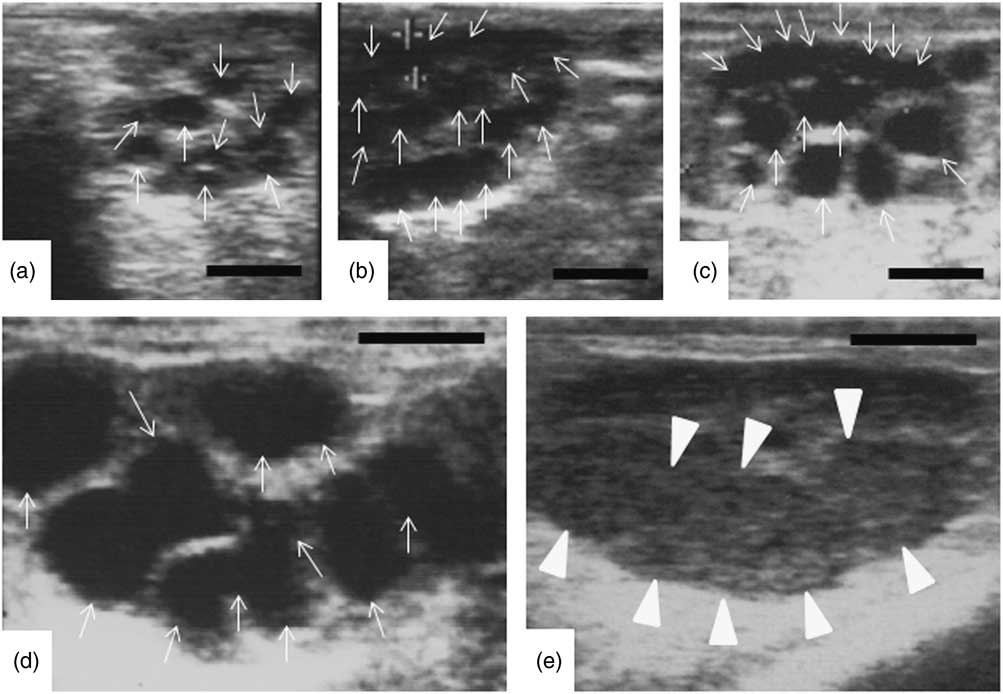
Transrectal ovarian ultrasonography utilized the Aloka PS2 scanner (Aloka Co. Ltd., Tokyo, Japan) equipped with a 7.5-MHz linear-array rectal probe. The settings for main gain (67% of maximum), focal points (1 and 4 cm deep), depth of penetration (10 cm) and time gain compensation (near and far gains) were kept constant throughout the study. Daily examinations were done from 2 days before weaning until the end of estrus and again at 15 to 16 days post-AI, to visualize all antral follicles ⩾2 mm in diameter and corpora lutea (CL), respectively, using a previously validated technique (Schwarz et al., Reference Schreiber, Nakamura and Erickson2013). Briefly, the sows were examined in a standing position in the pens in which they were kept, without additional restraint. An ultrasound probe with a plastic extension was lubricated and manipulated externally during the transrectal scanning. Both ovaries were visualized on the viewing screen of the scanner at 2× image magnification. The cineloop of the Aloka PS2 (Tokyo, Japan), or a period of images stored digitally as a sequence of individual frames, spans about 20 s, during which time 450 frames are saved. Approximately 20 to 25 frames per ovary were analyzed to identify and enumerate individual ovarian structures (Figure 1); an attempt was made to maintain an equal spatial interval of ~1.5 mm between consecutive still images, which permits the detection of intraovarian structures ⩾2 mm in size (Duggavathi et al., Reference Duggavathi, Bartlewski, Barrett and Rawlings2003; Jaiswal et al., Reference Iannaccone, Gabrilove, Sohval and Soffer2004). The diameters of all identified follicles were measured using the built-in electronic calipers to the nearest 0.1 mm (Figure 1b). When individual follicles or CL were visible on more than one ultrasonographic image, the measurements continued until a frame containing the largest diameter of the follicle/CL was encountered. The relative position of intraovarian structures was verified using ovarian charts sketched and updated daily. Individual growth profiles were determined for a total of 310 antral follicles. The day of emergence was defined as the day on which a follicle that attained ⩾4 mm in diameter could be retrospectively identified at 2 mm in diameter. The duration of the growth phase was defined as a period taken by an identified follicle to grow to its maximum size before regression or ovulation. Ovulation was defined as a collapse of ovarian follicles that had been identified for several days before follicle rupture followed by ultrasonographic detection of CL.
Photographic reproductions of ovarian ultrasonograms obtained in lactating, weaned and early pregnant sows. White arrows indicate ovarian antral follicles and white arrowheads point at corpora lutea (CL) identified in sequential ultrasonographic images. (a) An ovary of a second parity sow during the final days of lactational anestrus containing small antral follicles (mainly 2 to 3 mm in size); (b) an ovary scanned 1 day after weaning containing numerous follicles ranging from 2 to 4 mm in diameter; (c) a pool of ovarian follicles on the sow’s ovary 4 days after weaning, containing ovarian antral follicles that attained a size of 5 to 6 mm; (d) at day 4 post-weaning, the largest ovarian follicles were usually 7 to 8 mm in size (an ostensibly ovulatory diameter); (e) CL recorded at the beginning of the 3rd week of gestation. Black lines represent the 10-mm scale bars. Follicular diameters were measured with built-in electronic calipers (b; upper left corner).

Data analyses
Ovarian data were combined for both ovaries of each animal and analyzed statistically on a per animal basis. Episodic fluctuations in serum cortisol concentrations were detected with the cycle detection program developed for determining the frequency and amplitude of both regular and irregular endocrine rhythms in the presence of high levels of random measurement noise (Clifton and Steiner, Reference Clifton and Steiner1983). A complete cycle, or fluctuation, is defined as two increases greater than the threshold that are separated by a decrease which is also greater than the pre-determined threshold value (calculated using intra-assay CVs). In addition, the duration (nadir-to-peak-to-nadir), the maximum (peak) concentration and amplitude, and the time from the azaperone treatment to the beginning, peak and end of the preovulatory increase in serum LH and estradiol concentrations were calculated. All single time-point observations and means were compared between the treatment and control groups by Student t-test. Serial endocrine data were analyzed using two-way repeated-measures ANOVA with the Fisher’s protected least significant test for post-ANOVA comparisons of individual means. Simple linear regression analyses among endocrine and reproductive variables (listed in Tables 1–3) were also conducted. All results are given as mean±SD and statistical significance was set at P<0.05.
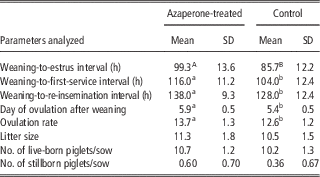
Reproductive parameters recorded in December-farrowing second parity sows with or without an i.m. azaperone injection given at weaning (both groups n=12)

AB P<0.001; ab P<0.05 (within rows).
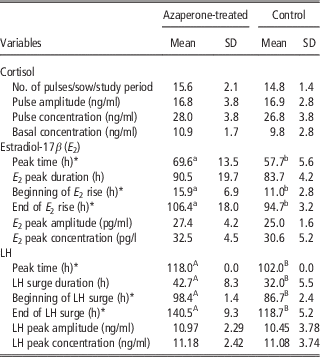
Characteristics of periodic fluctuations in serum cortisol concentrations detected with the Cycle Detector Program (Adaptive Threshold Method) in December-farrowing second parity sows with or without azaperone treatment at weaning (both groups n=12)

* Relative to Time 0=azaperone injection.
AB P<0.001; ab P<0.05 (within rows.)
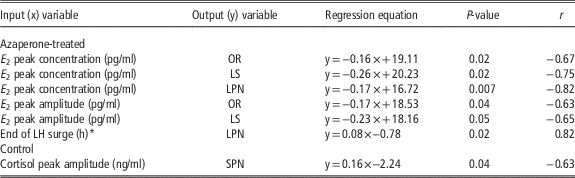
Summary of significant correlations between endocrine (input) and reproductive (output) variables in December-farrowing second parity sows with or without azaperone treatment at weaning (both groups n=12).

E 2=estradiol-17β; OR=ovulation rate (number of ultrasonographically detected corpora lutea); LS=litter size; LPN=number of live-born piglets/sow; SPN=number of stillborn piglets/sow; Time 0=time of azaperone injection.
* Relative to Time 0.
Results
All animals ovulated and became pregnant following artificial insemination procedures and 11 sows in each group carried piglets to term. The intervals from weaning to the onset of estrus (P<0.001), first insemination, second insemination and ovulation (P<0.05) were all greater in azaperone-treated compared with control animals (Table 1). Azaperone-treated sows exceeded (P<0.05) their control counterparts in the mean OR, but there were no statistical differences between the two groups of animals in the LS, LPN and stillborn piglet at farrowing (Table 1). The mean growth rate of identified antral follicles during the entire observation period in azaperone-treated sows was 1.08±0.17 mm/day and it was lower (P<0.05) than in control animals (1.23±0.18 mm/day).
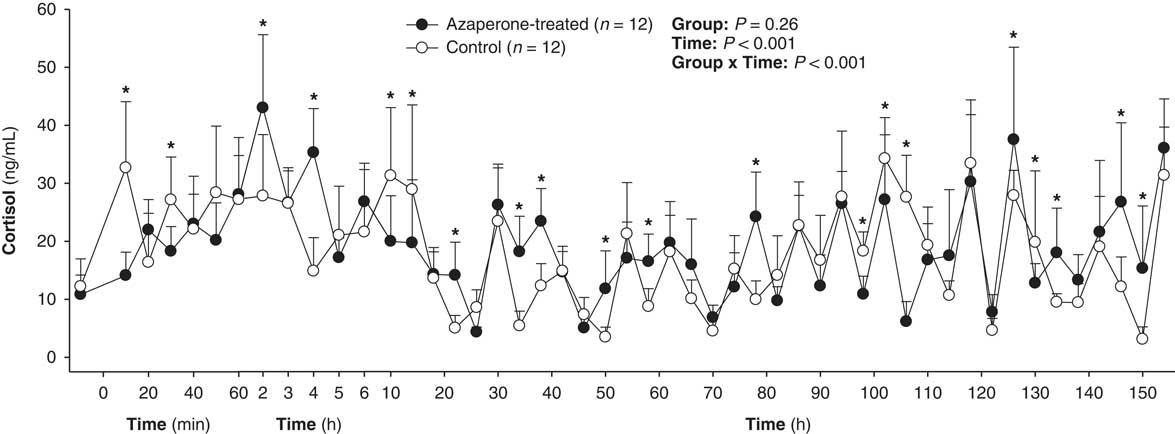
Mean circulating concentrations of cortisol were greater (P<0.05) in control animals at 10 and 30 min, and 10, 14, 22, 98 and 106 h after azaperone treatment, but they were lower (P<0.05) in controls compared with azaperone-treated sows at 2, 4, 32, 36, 50, 58, 78, 102, 134, 146 and 150 h following azaperone injections (Figure 2). There were no significant differences between the treatment and control groups in the number and characteristics of periodic fluctuations in circulating concentrations of cortisol (Table 2). The number of detected cortisol fluctuations in control animals correlated directly with the number of stillborn piglets/sow (r=0.63, P=0.04; Table 3).
Mean (±SD) circulating concentrations of cortisol in blood samples collected every 10 min during the 1st hour following azaperone injections, and then every hour over the next 6 h, and every 4 h until ovulation from azaperone-treated and control second parity Polish Large White×Polish Landrace sows farrowing in December. *Significant differences between the treated and control groups. Time 0=azaperone injections.

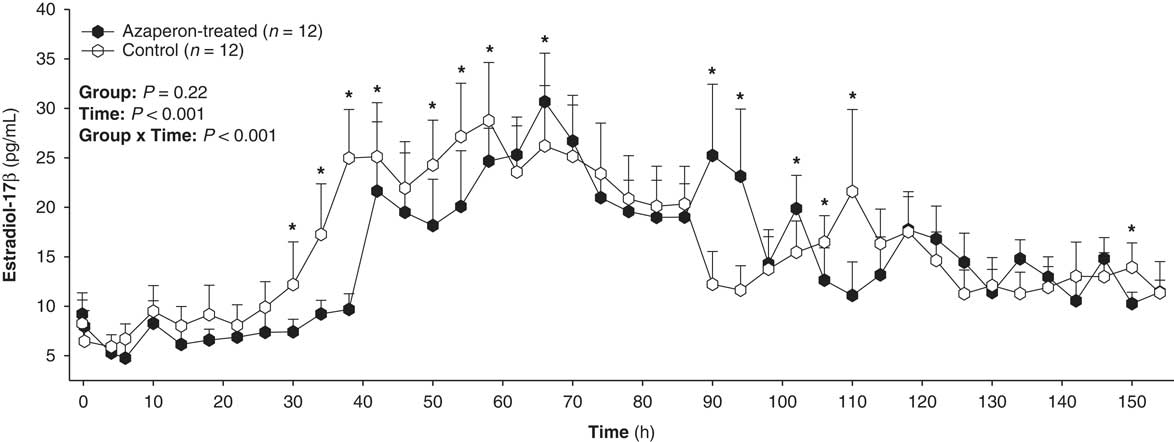
Mean estradiol-17β (E 2) concentrations were greater (P<0.05) in control animals between 30 to 44 h, 50 to 62 h and at 106 and 150 h, but were greater (P<0.05) in azaperone-treated sows at 66, 90, 94 and 102 h post-weaning (Figure 3). The onset, the peak and the end of the preovulatory rise in E 2 secretion determined in individual animals occurred earlier in the control compared with the azaperone-treated group (P<0.05, Table 2). The mean peak concentration of the preovulatory rise in E 2 secretion was inversely related to the OR (r=−0.67, P=0.02), LS (r=−0.75, P=0.02) and the LPN (r=−0.82, P=0.007) in azaperone-treated sows. In addition, the E 2 peak amplitude was negatively correlated with OR (r=−0.63, P=0.04) and LS (r=−0.65, P=0.03) in the treatment group (Table 3).
Mean (±SD) circulating concentrations of estradiol-17β (E 2) in blood samples collected throughout the weaning-to-ovulation period in azaperone-treated and control second parity Polish Large White×Polish Landrace sows farrowing in December. *Significant differences between the treated and control groups. Time 0=azaperone treatment.

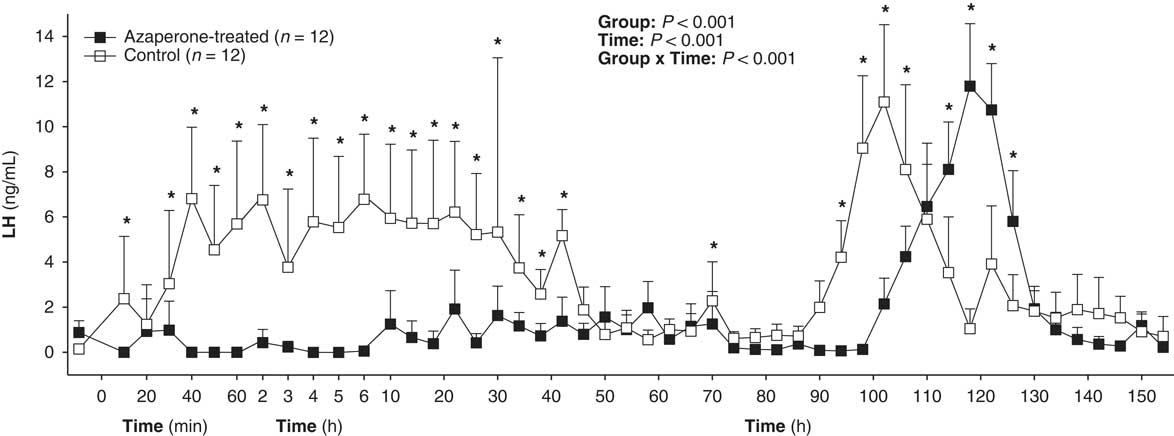
Control animals exceeded (P<0.05) the treatment group in mean circulating concentrations of LH at 20 min, from 30 min to 44 h, at 70 h and from 94 to 106 h, but were lower than in azaperone-treated sows from 114 to 126 h after weaning (Figure 4). The onset, the end and the peak of the preovulatory LH discharge were all delayed (P<0.001), and the duration of the LH surge was greater (P<0.001) in azaperone-treated animals compared with their control counterparts (Table 2). There was a positive correlation between the time at which the LH surge ended and LPN in azaperone-treated sows (r=0.82, P=0.002; Table 3).
Mean (±SD) circulating concentrations of LH in blood samples collected every 10 min during the 1st hour following azaperone injections, and then every hour over the next 6 h, and every 4 h until ovulation from azaperone-treated and control second parity Polish Large White×Polish Landrace sows farrowing in December. *Significant differences between the treated and control groups. Time 0=azaperone injections.

Discussion
The sows of the present study ovulated, on average, 13 to 14 ova at the end of the estrous cycle studied with the conception rate of 100%, and the LPN in animals with full-term pregnancies was around 10 to 11 per litter. It has now been well established that up to 45% of porcine conceptuses can arrest by mid-gestation (Pope, Reference Muneyyirci-Delale, Goldstein and Reyes1994). Specifically, two major periods of spontaneous conceptus loss may occur during porcine pregnancy: a primary embryo loss of ~30% is usually observed around gestational day 20 and a second loss of ~20% of remaining conceptuses around gestational day 50 (Jamil et al., Reference Jaiswal, Singh and Adams2017). These losses are thought to be due to abnormal embryonic development (Youngs et al., Reference Youngs, Ford, McGinnis and Anderson1993; Zudova et al., Reference Zudova, Rezacova, Kubickova and Rubes2003), aberrant angiogenesis and inappropriate immune responses at the sites of implantation (Tayade et al., 2006 and Reference Tayade, Black, Fang and Croy2007; Wessels et al., Reference Wessels, Linton, Croy and Tayade2007; Croy et al., Reference Croy, Wessels, Linton and Tayade2009; Bidarimath et al., Reference Baldwin and Sawyer2016) or uterine overcrowding (Wu et al., Reference Wu, Hentzel and Dziuk1987; Wilson et al., Reference Wilson, Biensen and Ford1999). Increased numbers of ovulations in azaperone-treated animals could be, at least partly, due to the slower growth rate and hence extended lifespan of ovarian antral follicles that were rescued from regression and maintained until ovulation. A later preovulatory LH surge may have allowed for prolonged follicular maturation and, consequently, better ovulatory responses (Mermillod et al., Reference Magiakoui, Mastorako, Webster and Cgrousos1999). The delayed onset of estrus and ovulations seen in present study can evidently be attributed to the alterations in LH secretion caused by azaperone injections, and the effects of somewhat diminished gonadotropic support of antral follicular development and secretory function. Similar LSs in both groups of animals may suggest that the breed-specific uterine capacity was a major determinant of embryonic and fetal development in the sows of the present study. However, on the basis of the present correlation analyses, the influence of the post-weaning mode of estradiol and LH secretion (treatment group) and of periodic cortisol fluctuations (control sows) on the ovulation process, oocyte competence and/or ensuing embryo viability cannot be completely ruled out.
The present study found little differences in circulating concentrations of cortisol between azaperone-treated and control sows throughout the weaning-to-ovulation period, but protracted effects of azaperone treatment on the post-weaning secretion of LH. This indicates that azaperone may not necessarily work through a biological feedback mechanism (rapid effects), but rather imparts a residual control of the hypothalamo–pituitary regulatory unit. Although azaperone exerts its sedative effects rapidly, it gets metabolized to azaperol, which only retains pharmacological activity that is 4 to 30 times less than that of the parent drug (EMEA, Reference Tayade, Fang, Hilchie and Croy1998). However, in vivo studies have shown that azaperol may undergo oxidation to revert back to azaperone, suggesting the possibility of extended effects of the drug (EMEA, Reference Tayade, Fang, Hilchie and Croy1998). Again, such prolonged effects of azaperone were clearly not manifest in its ability to consistently suppress cortisol release in the sows of the present study and so its continuous direct interference with gonadotropin secretion is doubtful.
In this study, there was a suppression of pulsatile LH release in azaperone-treated sows for ~44 h following azaperone injections. In addition, the preovulatory LH surge occurred in azaperone-treated sows ~12 h later than in untreated controls. Initially elevated LH levels seen in the control animals are due to the removal of suckling stimulus causing the inhibition of gonadotropin production to cease (Edwards and Foxcroft, Reference Edwards, Rahe, Griffin, Wolfe, Marple, Cummins and Pitchett1983; Shaw and Foxcroft, Reference Schwarz, Nowicki, Tuz and Bartlewski1985). The inhibitory effect of azaperone on LH secretion may be due to the combined dopamine D2 and α 1 adrenergic receptor antagonism of butyrophenones (Kendall et al., Reference Jamil, Kridli, Ngo, Liu, Khalaj, Tayade and Bartlewski1983). Maximal effects of azaperone are evident between 20 and 60 min after injection (Riviere and Papich, Reference Pope2009), with sedation taking effect for upwards of several hours (similar to the time by which the LH surge was delayed in the present study). The antagonistic effects of azaperone on the D2 receptors could have altered gonadotropin-releasing hormone (GnRH) gene expression through reduced dopamine availability and resultant hyperprolactinemia (Gore, Reference Golan2010).
Many instances of non-physiologic hyperprolactinemia may be attributed to the use of psychotropic drugs, tranquilizers and neuroleptic medications, the latter two being the characteristics of azaperone. A study on 15 patients receiving haloperidol, a member the butyrophenone family of drugs, has shown significant increases in serum prolactin levels 3 days after drug administration (Spitzer et al., Reference Shaw and Foxcroft1988). Further evidence has shown that haloperidol influences prolactin secretion in swine (Kendall et al., Reference Jamil, Kridli, Ngo, Liu, Khalaj, Tayade and Bartlewski1983). The reproductive influences of elevated prolactin concentrations include a reduced level of pulsatile GnRH release causing a number of gonadal impairments (La Torre and Falorini, Reference Kotwica, Krzymowski and Dębek2007). The affinity of haloperidol toward the D2 receptors is much higher than that of azaperone, meaning that the neuroendocrine effects of haloperidol might be significantly more pronounced than those of azaperone; the azaperone-induced increase in prolactin secretion in sows might be only transient, leading to the suppression of pulsatile and basal LH release that normally rises immediately after weaning (Edwards and Foxcroft, Reference Edwards, Rahe, Griffin, Wolfe, Marple, Cummins and Pitchett1983). Azaperone is also known to inhibit central nervous system catecholamine release and hence it can interfere with norepinephrine-stimulated pulsatile release of LH (via adrenergic stimulation of GnRH biosynthesis). A study by Malikova and Arefolov (Reference Liptrap1983), demonstrating the protective measures of azaperone during the exhaustive stages of the stress response, has shown that norepinephrine is indeed reduced in mice upon azaperone injections.
The direct influence of relatively minor variations in cortisol secretion on the post-weaning mode of LH secretion in the treated sows of the present study is debatable. In some previous experiments, stress-induced elevation in cortisol secretion observed in estradiol benzoate-treated ovariectomized gilts had little effect on the timing and amplitude of the ensuing LH surge (Zięcik and Ziemińska, Reference Zięcik and Ziemińska1995). An injection of hydrocortisone advanced the occurrence of an LH surge by 10 h but only if hydrocortisone was administered 24 h after estrogen pre-treatment (Zięcik and Ziemińska, Reference Zięcik and Ziemińska1995). In the present experiment, azaperone injections were given before the onset of the preovulatory rise in estradiol production and so it is rather unlikely that any deviations in the preovulatory LH discharge were caused by cortisol.
Correlations were computed among the quantitative characteristics of hormone secretion during the post-weaning period and reproductive end-points determined in the sows of the present study. Within the ranges of values observed, there was a significant correlation between the number of periodic cortisol fluctuations and the number of stillborn piglets in control sows. In azaperone-treated animals, all but one detected correlation were for estradiol peak concentration or amplitude, and one correlation was for the time at which the preovulatory LH surge ended. In contrast to control sows, all of the six significant correlations recorded in the treatment group were with ovulatory responses, LSs and LPN. Therefore, not only different endocrine variables were correlated with reproductive outcomes but also different reproductive variables were related to the post-weaning patterns of hormone secretion in the two subsets of animals under study. These discrepancies and a lack of stable relationships between hormonal and reproductive events are puzzling and difficult to explain. Further experimental studies are warranted to confirm or refute the causative nature of associations between endocrine profiles during the weaning-to-ovulation interval and reproductive potential of sows with or without azaperone treatment at weaning.
In closing, an application of azaperone at the time of weaning delayed the preovulatory rise in E 2 and LH secretion, onset of behavioral estrus and ovulations by ~12 h. Mean daily growth rates of ovarian antral follicles that had been identified and followed with daily transrectal ultrasonography were less in azaperone-treated than in control animals but the treatment group exceeded controls in the mean OR. Only a numerical, non-significant increase in the LS and LPN was observed in azaperone-treated sows. Evidently, a significant positive effect of azaperone given at weaning on the piglet productivity of December-farrowing second parity sows observed in commercial settings (Schwarz et al., Reference Schwarz, Murawski, Wierzchoś and Bartlewski2017) may not be manifest in a smaller subset of experimental animals. A transient suppression of cortisol release in azaperone-treated sows was confined to ~30 min post-treatment but various characteristics of estradiol and cortisol secretion determined in individual animals throughout the weaning-to-ovulation period did not vary substantially between the two groups. The duration of the delayed LH surge was significantly greater in azaperone-treated sows than in controls. Correlations of assorted characteristics of cortisol, estradiol and LH secretion with reproductive variables recorded in this study may be interpreted to suggest that azaperone treatment was associated with an alteration in hormonal dependency of ovarian activity in weaned pigs. Collectively, the administration of azaperone at weaning mainly altered the preovulatory secretion of LH and follicular estradiol, growth kinetics of ovarian antral follicles, and OR in sows.
Acknowledgments
Supported by a grant from the Polish Ministry of Science and Higher Education (MNiSW; no. N N311 370837) and Statutory Founds of Department of Swine and Small Animal Breeding (DS 3265/ZHTChiDI).
Declaration of interest
None.
Ethics statement
All experimental procedures had been formally approved by the local Animal Care and Ethics in Research Committee at the Jagiellonian University of Kraków, Poland.
Software and data repository resources
None.