Introduction
There is an increasing interest in the creation of chemically active polymer surfaces that can be used for cell adhesion and tissue engineering. It was found from the literature that nitrogen (N)-containing functional groups, mainly primary amines (NH2), are most effective.[Reference Siow, Britcher, Kumar and Griesser1–Reference Truica-Marasescu, Ruiz and Wertheimer5] These groups are known to promote protein and cell adhesion via positive charges in aqueous solutions at physiologic pH values. Ideally, the surfaces require a high concentration of primary amines and long-term stability in air and aqueous environments. The most commonly used method to produce many –NH2 groups is plasma chemistry, in which the primary amine groups are produced together with other N-containing functionalities at the same time[Reference Siow, Britcher, Kumar and Griesser1, Reference Forch, Zhang and Knoll2, Reference Girard-Lauriault, Mwale, Iordanova, Demers, Desjardins and Wertheimer6–Reference Qing and Wenbin9]; this results in excessive solubility in polar solvents, and primary amine groups decay upon storage in air after 1 week, thus making it difficult to achieve a highly specific surface functionality.[Reference Girard-Lauriault, Mwale, Iordanova, Demers, Desjardins and Wertheimer6] Ultraviolet energy with the addition of a photosensitizer, such as benzophenone, has been applied for the surface graft of polymers[Reference Bullet, Truica-Marasescu, Lerouge, Mwale and Wertheimer10, Reference Shanmugharaj, Kim and Ryu11]; in this case, we have additives in the system that are undesirable for cell adhesion. Qi et al.[Reference Qi, Yihe, Tao and Xinglong12] studied a method for preparing multilayer films by layer-wise self-assembly; this was accomplished by grafting amino-β-cyclodextrin onto poly(acrylic acid) to obtain a polymer and soaking the quartz sheet in poly(allylamine hydrochloride) solution, which can separately regulate the flow of small-molecule drugs. Panarin et al.[Reference Panarin, Gorshkov, Krasikov, Nazarova, Murko and Zolotova13] synthesized copolymers of N-vinylpyrrolidone and allylamine (AA) with AIBN as initiator. Iman et al.[Reference Iman, Amir, Elham and Homayon14] proposed a new method for the use of functionalized magnetite nanoparticles (MNPs) for adsorption of chromium ions from industrial wastewater by free radical copolymerization of N,N-dimethylacrylamide and AA, which forms a functional chelating group that can be grafted onto MNPs using (3-mercaptopropyl)trimethoxysilane as novel adsorbent.
Radiation grafting could be a better technique to synthesize polymers with surface primary amine groups without the disadvantages of plasma modification, the presence of additives, and with greater surface homogeneity; to our knowledge, there are no previous studies on the radiation grafting of allyl amine onto polymers.
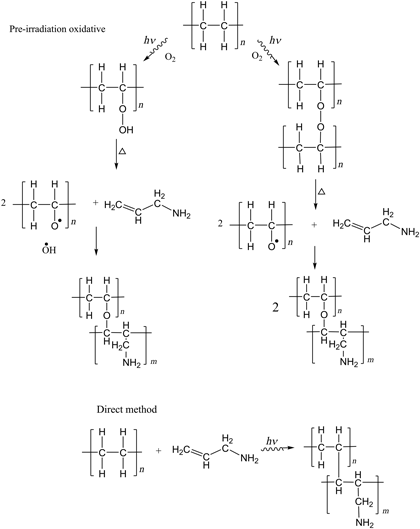
In this research, grafting of AA by γ radiation onto polypropylene (PP) and polyethylene (PE) hydrophobic surfaces was realized by a direct and pre-irradiation peroxidation method (Fig. 1), and the optimum reaction conditions of dose, dose rate, concentration, and reaction time were determined. Because AA is a single allyl monomer that strongly inhibits amino groups, it would lead to serious chain transfer during radical polymerization and a low grafting degree; therefore, the radiation grafting reaction using the redox system (NH4)2S2O8/NaHSO3, suggested by Yang et al.[Reference Yang, Li, Chen, Zhao and Li15] was also studied. Another suggestion was given by Hayashi,[Reference Hayashi16] the salt formation of AA before the polymerization reaction. In our case, we studied AA phosphate salt formation before radiation grafting. The grafted systems were characterized by Fourier transform infrared spectra (FTIR), thermogravimetric analysis (TGA), differential scanning calorimetry (DSC), atomic force microscopy (AFM), scanning electron microscopy (SEM-EDS), and contact angle measurements.
Grafting reaction of AA onto PE by pre-irradiation and direct methods.

Experimental
Materials
AA was purchased from Sigma-Aldrich México and used as it was received; methanol, NaHSO3, (NH4)2S2O8, and H3PO4 were supplied by J. T. Baker, Mexico; PP and PE films of 0.1 mm thickness were purchased from GoodFellow Co, UK., washed with methanol for 6 h, vacuum-dried, and weighed.
Radiation grafting by pre-irradiation peroxidation method
The γ radiation was generated in a 60Co source (Gammabeam 651 PT, MDS Nordion).
PP and PE samples of 1.2 × 4 cm were introduced in Pyrex ampoules and irradiated in the presence of air at different doses (40–120 kGy), but the same dose rate of 10.7 kGy/h, to form hydroperoxides and peroxides in the films. A solution of AA in water, at concentrations ranging from 1% to 3% with or without the redox initiator NH4S2O8/NaHSO4 1:1, was added. The ampoules were sealed after 20 min argon bubbling, to eliminate the presence of oxygen and heated at different temperatures (60–90 °C) and different reaction times (12–24 h). After heating, the grafted films were extracted with water, vacuum-dried, and weighed.
Synthesis of AA phosphate was realized in a reaction vessel equipped with a stirrer, a reflux condenser, and an addition funnel with (7.5 mL) of phosphoric acid; then, 2.5 mL mono AA was added dropwise, under stirring, at a temperature of approximately 10 °C. After the addition, the mixture was heated to 50 °C for 2 h. Then, 7.5 mL of this solution was mixed with 2.5 mL of water. This mixture was added to pre-irradiated samples in glass Pyrex ampoules, sealed under an argon atmosphere and heated at different temperatures.
Grafting percentage was determined with Eq. (1).
 $${\rm Graft\;} ({\rm \%} ) = \left( {\displaystyle{{W_{\rm f} - W_{\rm i}} \over {W_{\rm i}}}} \right) \times 100,$$
where W f and W i are the final weight after grafting and the initial weight of the film, respectively.
Radiation grafting by direct method
PP and PE samples were introduced in Pyrex ampoules with different concentrations of aqueous AA with or without redox initiator; they were then sealed after argon bubbling and irradiated at different doses. After irradiation, the samples were extracted with water to eliminate the homopolymer and ungrafted AA monomers. The grafted percentages were determined using Eq. (1).
Attempts to increase the grafting percentage of AA in the studied polymers were realized by grafting AA as an inorganic acid salt such as AA-hydrochloride, AA-phosphate, or AA-sulfate, synthesized in accordance with the Susumu Harada, Process for preparing a solution of poly(allylamine) (US 4626577 A; 1986),[Reference Hamerli, Weigel, Groth and Paul8] and then using the irradiation grafting methods. In this work, we synthesized phosphate AA salts. After grafting of the AA acid salt, with direct or pre-irradiation methods, the samples were treated with 1 M KOH methanol solution under stirring for 12 h at 60 °C to destroy the acid salts.
Characterization
The physicochemical properties of unmodified and modified PP and PE grafted samples and the confirmation of the grafting reaction were determined by FTIR-ATR (attenuated total reflection spectra) using a Perkin-Elmer Spectrum 100 spectrometer (Perkin-Elmer Cetus Instruments, Norwalk, CT, (USA).
The decomposition temperatures of pristine and grafted samples were determined under a nitrogen atmosphere using a TGA Q50 (TA Instruments, New Castle, DE, USA) from 25 to 600 °C at 10 °C/min.
The thermal stability of the films was determined using DSC (TA Instruments) between 25 and 350 °C at 10 °C/min.
The contact angle was measured using static sessile drop contact-angle measurements (Kruss, model DSA100) using distilled water without and after grafting polymerization; the samples were kept in air at room temperature. Approximately 2 µL of distilled water was dropped vertically onto the samples using a syringe; the contact angles were measured using drop analysis at 4 different sites on the films.
The surface and cross-section morphologies of the films were characterized with SEM and SEM-EDS carried out on a Tescan Mira 3 LMU at different magnifications. The dried samples were coated with Au under vacuum over 10 s using an SPI Module Sputter Coat.
Results and discussion
Radiation grafting
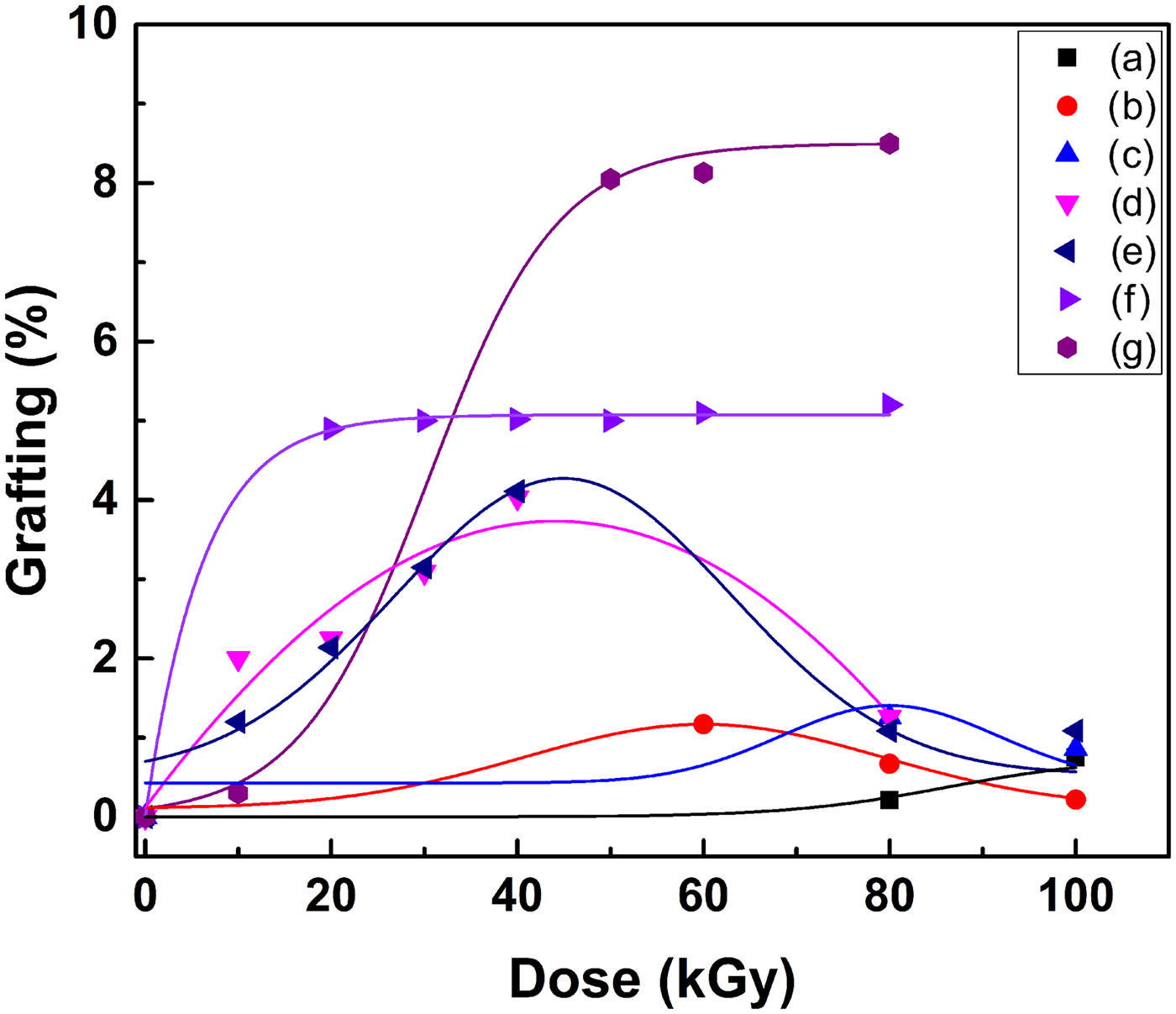
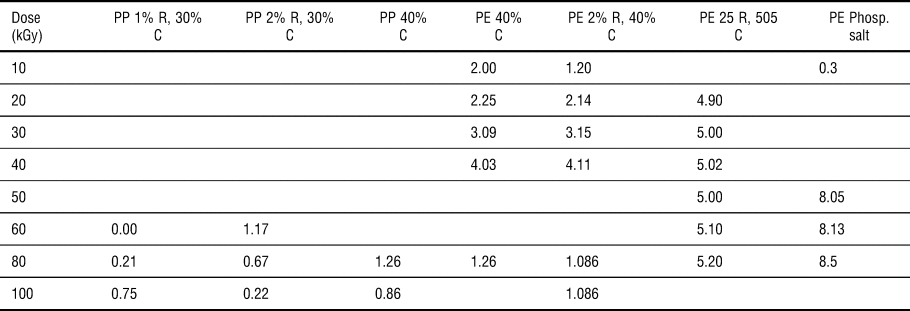
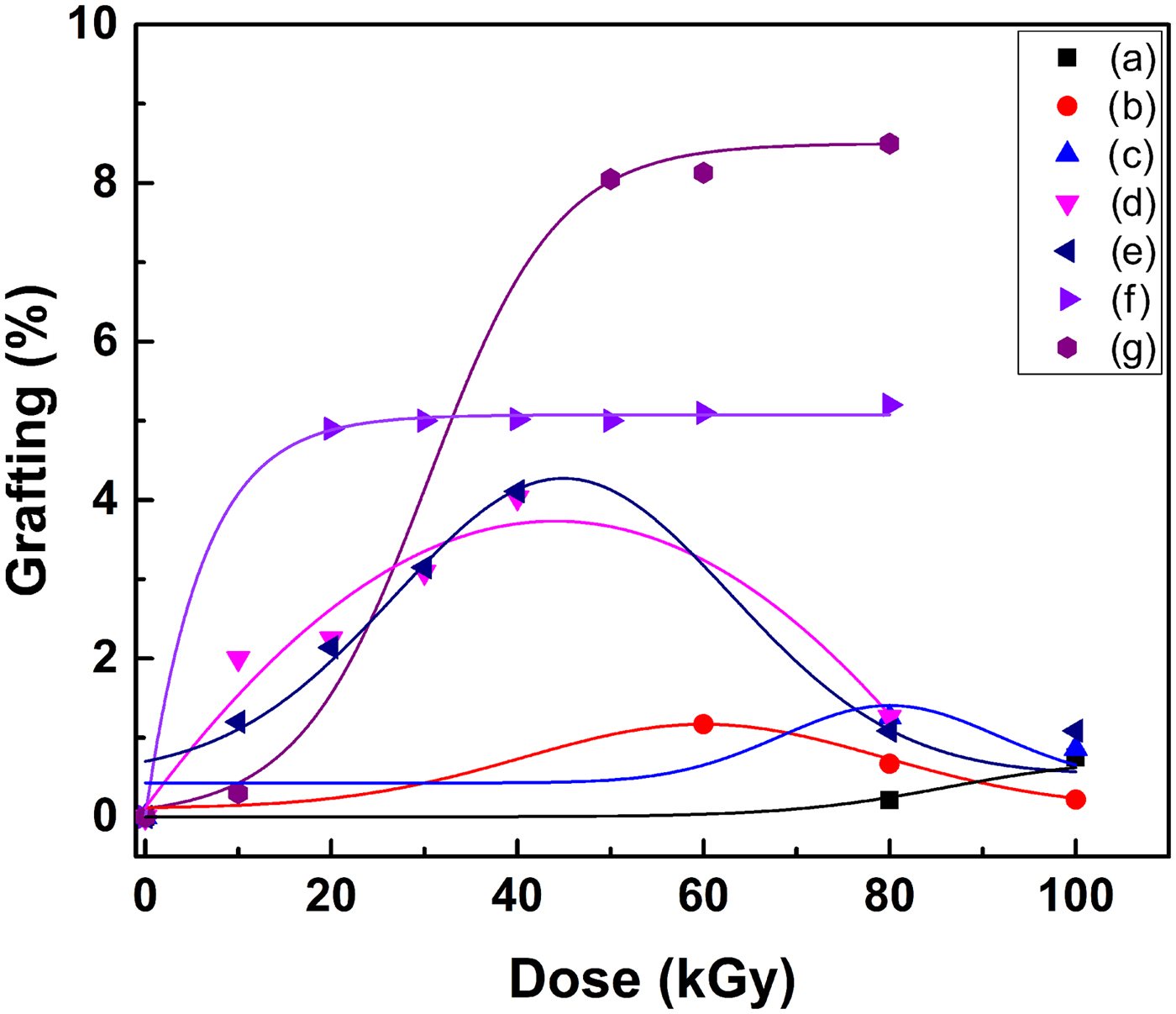
Grafting of AA onto PE and PP was studied by direct and pre-irradiation peroxidation methods, with and without redox agent, at different AA concentrations. The results of different radiation conditions, polymers, and methods can be observed in Tables I and II. While PE presented higher grafting percentages than PP, and presence of the redox agent increased the grafting percentage, the most important parameter was concentration: a higher concentration of the AA monomer increased the grafting percentage. The direct method showed higher yields of grafting (Fig. 2). Doses higher than 100 kGy produced rigid films, which were easily broken due to polyolefin cross-linking. Grafting of the phosphonated salt of AA increased the grafting percentage because the salt of amine avoided the serious chain transfer during radical polymerization.
Grafting percentages as a function of dose by direct method, at different radiation conditions. PP: (a) AA concentration 30%, 1% redox; (b) AA concentration 30%, 2% redox; (c) AA concentration 40%. PE: (d) AA concentration 40%, (e) AA 40% concentration, 2% redox; (f) 50% AA concentration, 2% redox; (g) AA concentration 33%, phosp salt.
Grafting percentages of monomers onto AA by pre-irradiation method under different radiation conditions. R denotes redox agent, and phosp. represents phosphate salt.

Grafting percentages of AA by direct method under different radiation conditions.

Characterization
SEM analysis
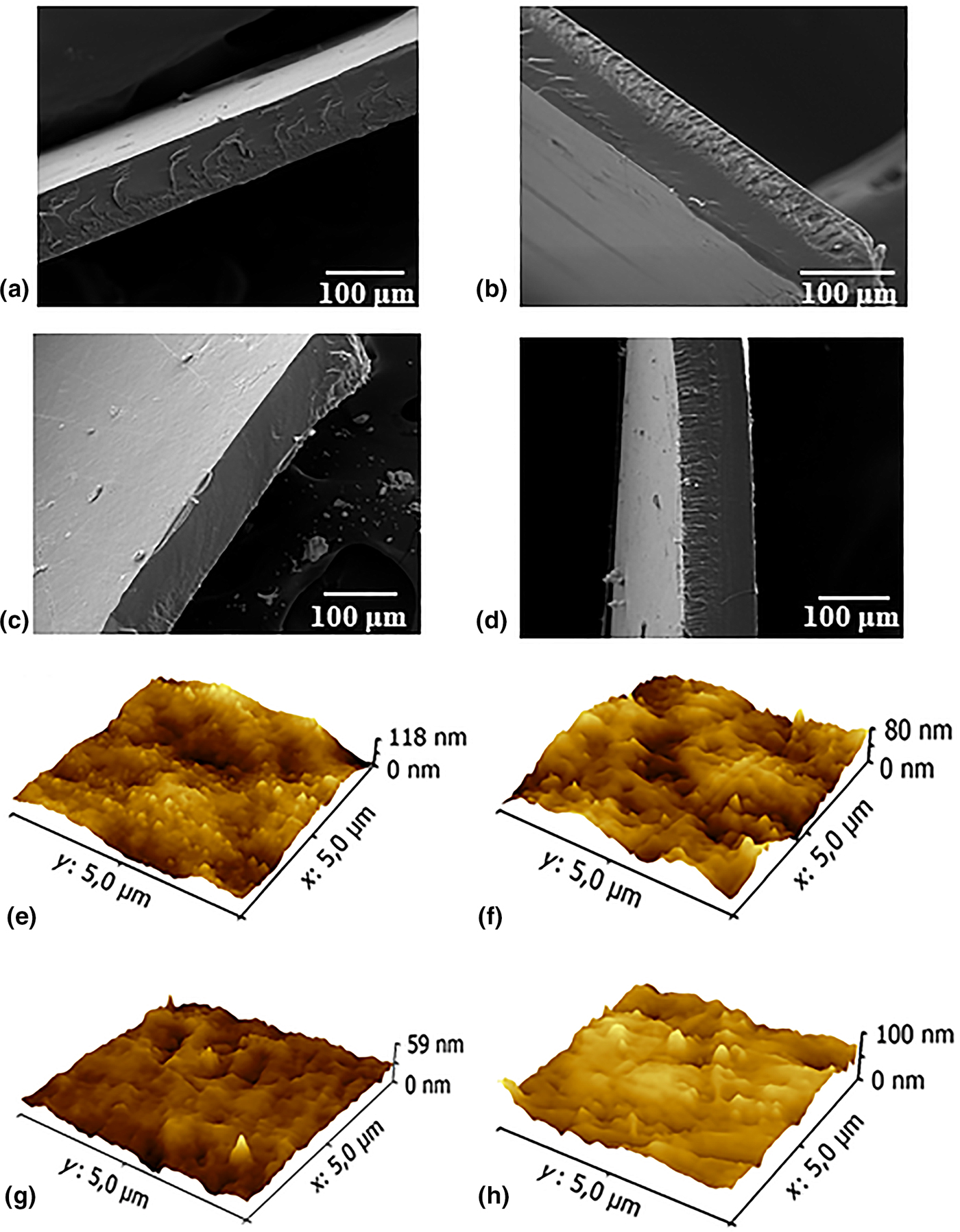
Cross-section SEM images are observed in Fig. 3. Unmodified PE (3a) and PP (3c) were compared with (3b) and (3d), which correspond to PE-g-AA and PP-g-AA. PE and PP cross-sections have smoother surfaces than do the grafted surfaces.
SEM micrographs of (a) PP; (b) PP-g-AA (8.8% graft); (c) PE; (d) PE-g-AA (8.24% graft). AFM (5 µm × 5 µm) projection area: 25 µm2 of (e) PE; (f) PE-g-AA 1.2% graft; (g) PP; (h) PP-g-AA 1.2% graft.
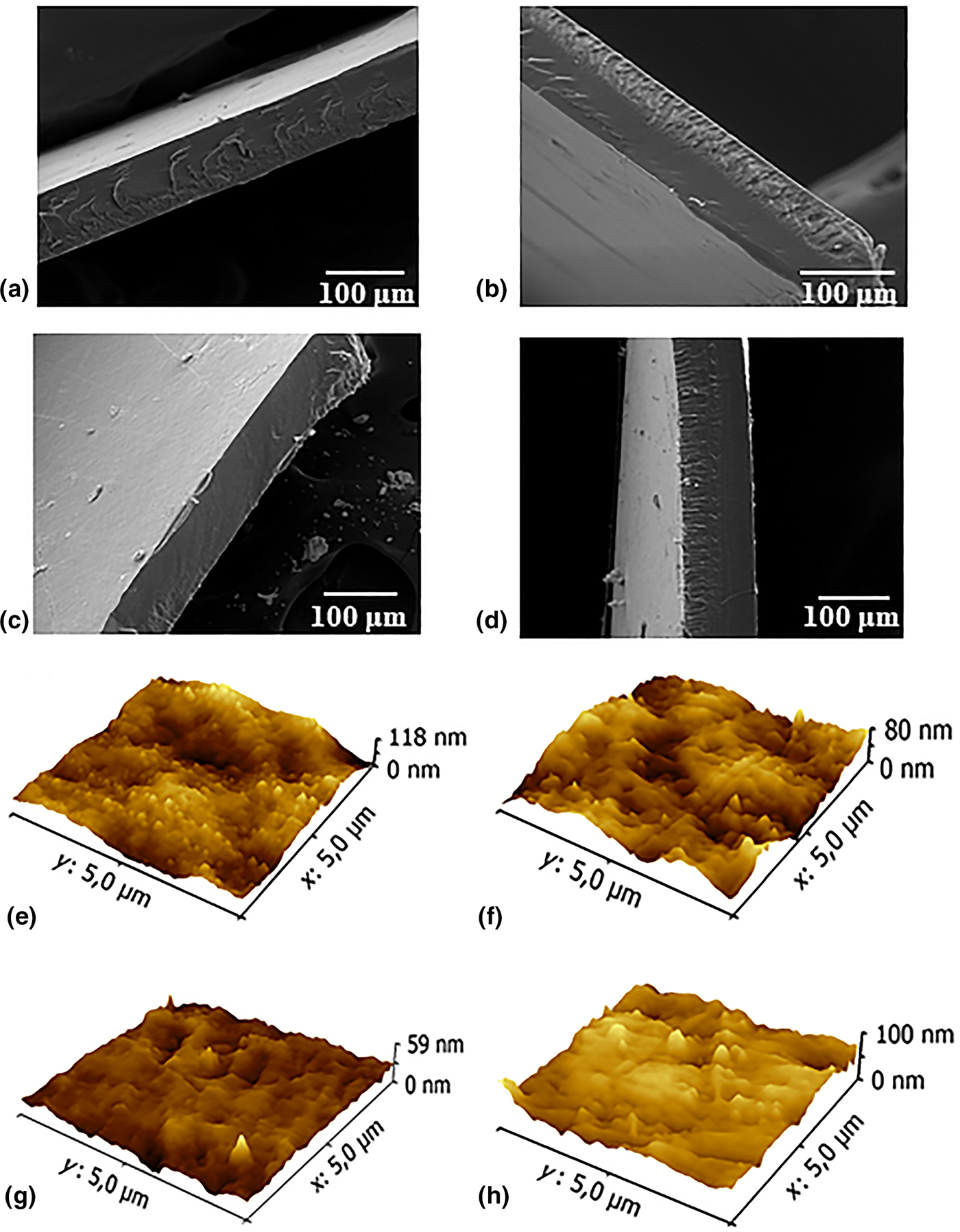
The cross-section morphology of the pristine and 8% grafted films were investigated by SEM. The thickness of the PP film samples increased from 24 to 96 µm for the PP graft using 8.8% AA, and from 83 to 100 µm for the PE film with 8.24% grafted. The surface of the films did not present appreciable changes for these low grafting percentages. The increased thickness, together with a rough and porous appearance, means the surfaces were grafted.
EDS analysis
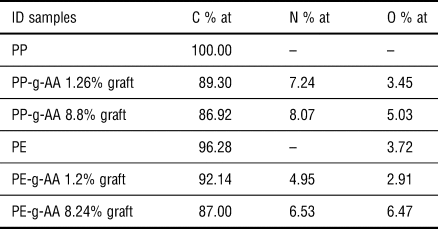
In Table III, EDS results of unmodified PE and PE-g-AA, graft, and PP and PP-g-AA were presented: the grafted samples show a decrease of carbon percentage with respect to pristine samples. The percentage of atomic nitrogen present in the samples could confirm the grafting of AA onto PE, as could the presence of nitrogen on the surface.
EDS analysis of PE and PP grafted.

Atomic force microscopy
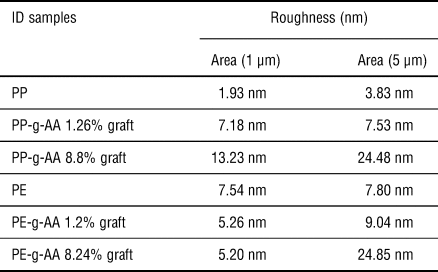
Figure 3 shows three-dimensional AFM images of the PE and PE-g-AA surfaces obtained using AFM with a rectangular cantilever (tip curvature <10 nm). The PE surface was smoother and uniform [Fig. 3(e)], with a surface RMS roughness of 7.8, while textured PE-g-AA 1.25% [Fig. 3(f)] and 8.24% graft surfaces possessed a roughness of 9.04 and 24.85 nm, respectively. The PP surface [Figs. 3(g) and 3(h)] was smoother than PE, with an RMS of 3.83 nm and 24.48 at 8.8% graft, respectively. The RMS in both polymers with approximately 8% grafting are similar, with the roughness depending mainly on grafting percentage.
The roughness of different systems increased slowly with grafting percentage, but more drastically above 8% graft, from 3.83 and 7.8 nm for pristine PP and PE, respectively, up to 24.48 and 24.85 nm for grafted PP and PE, respectively (Table IV). It is known that an increase in roughness at the surface is correlated with greater cell adhesion.
AFM roughness of studied systems at different grafting percentages.

Contact angle
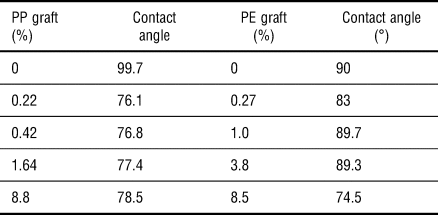
Contact angle decrease confirms grafting of AA at doses as low as 60 kGy, where it is not possible to measure by the gravimetric method, and the lowest value of contact angle (representing higher hydrophilicity) was obtained at 100 kGy. Doses higher than 100 kGy form rigid, easily broken samples, because of the cross-linking effect.
The contact angle of PP films decreased from 99.7 to 76 with a graft percentage as low as 0.22%, and then stayed nearly constant.
In PE samples, the contact angle decreased from 99.7 for unirradiated PP to 76 at only 0.22 graft percentage, and then, it stayed nearly constant at further doses; PE films have a contact angle of 90, which decreases into the range of 83–89 at lower grafted percentages to reach 74.5% at 8.8% graft. Grafting at approximately 8% gives approximately the same contact angles in both polymers, PP or PE. Decrease in contact angle is due to the combined effects of hydrophilicity and contact angle hysteresis due to higher roughness (Table V).
Contact angle as a function of graft percentage on PP and PE.

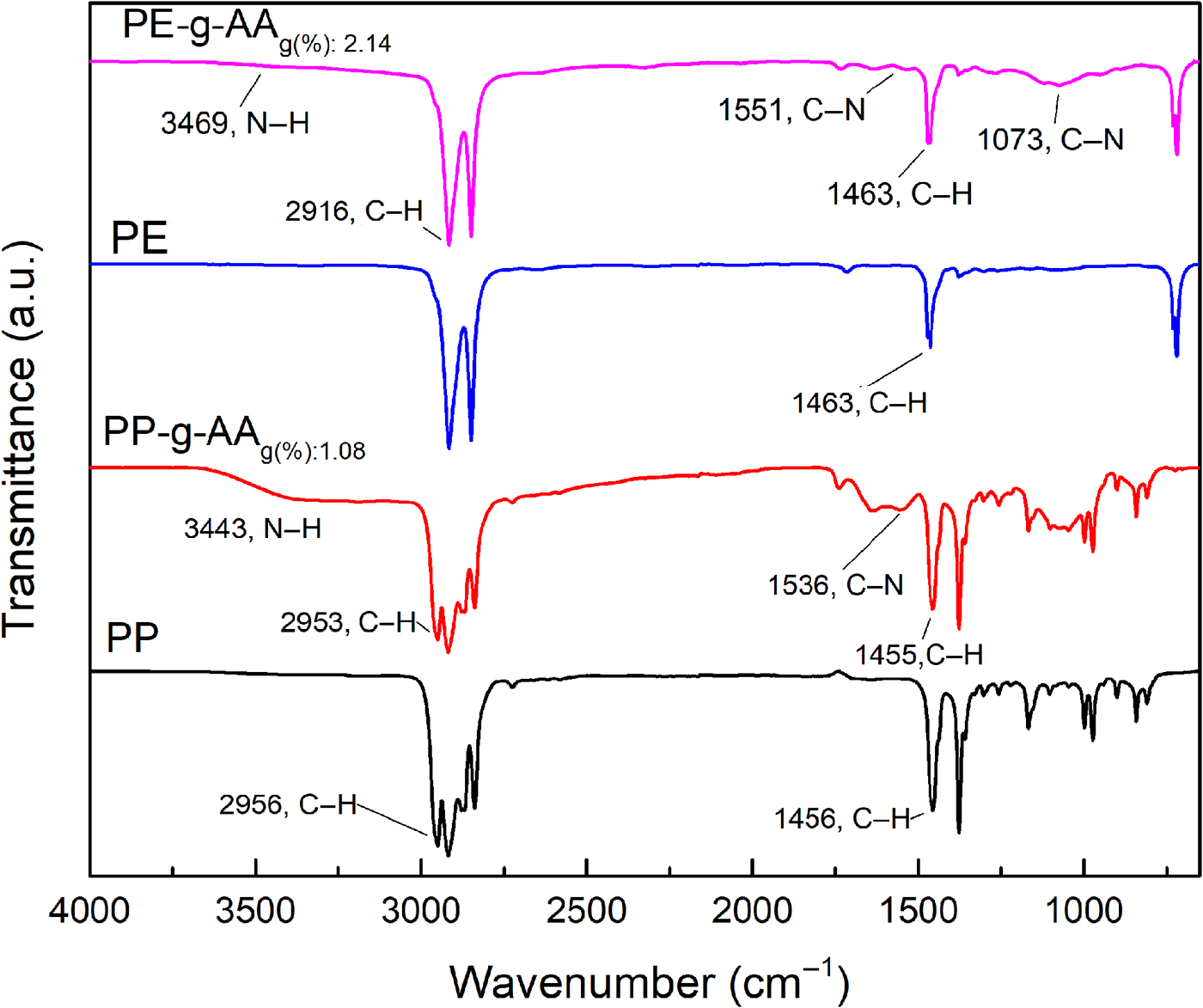
FTIR-ATR spectra of different films
The FTIR spectra of the modified PE and PP (Fig. 4) presented new peaks at 3400/cm that correspond to −NH stretching of amine, as well as symmetric N–H deformation vibrations at 1590/cm together with a C–N peak at 1597/cm in PE and 1536 in PP, confirming the presence of AA on the surface.
A. FTIR spectra of PP, PP-g-AA (1.08% graft), PE and PE-g-AA (8.05% graft).

Thermal analysis: TGA and DSC
TGA was performed on pristine and grafted PP and PE films [Figs. S1(a)–S1(b)]. PP and PE exhibited initial decomposition (10% mass loss) at 409 and 429 °C, respectively; nevertheless, no significant differences in decomposition temperatures (T d) were observable between copolymers and pristine PP and PE samples because of the low graft percentages of approximately 8%. A DSC scan of pristine PP revealed a melting point (T m) of 168 °C, and this value decreased with grafting due to loss of crystallinity resulting from the grafting polymerization [Figs. S1(c)–S1(d)].
DSC scans of the grafted samples shift to lower values. The T g due to AAc was found at a lower value in PE (72 °C) than in PP (89 °C). Decrease in crystallinity due to the grafting reaction is more important in PE, with a substantial decrease observed in the melting point peak.
Conclusions
Radiation grafting of AA onto PP and PE was successful in both direct and oxidative pre-irradiation methods. Optimum conditions for oxidative pre-irradiation grafting were found at doses between 90 and 100 kGy, AA concentration of 50%, and 2% redox agent. PE presents higher grafting percentages than PP. The direct method gives higher yields of grafting, except when phosphonated AA was utilized: in this case, the pre-irradiation method results in maximum grafting yields of 8%. In all cases, doses higher than 100 kGy produce rigid films due to cross-linking of polyolefins.
In spite of very low grafting percentages (although higher than in the case of plasma modification), a change in hydrophilicity, a small shift of the melting point to lower temperatures, morphologic changes, and increasing thickness of transversal edge SEM samples were observed. The contact angle with water decreases with increasing grafting, which is due to the effect of both increasing hydrophilicity and higher roughness this effect is more pronounced in the case of the higher grafting percentages of approximately 8% (for PE) and direct radiation method. In the case of PP, a change in hydrophilicity was found at very low grafting percentages of 0.22.
Supplementary material
The supplementary material for this article can be found at https://doi.org/10.1557/mrc.2018.213.
Acknowledgments
The authors thank A. Ortega, A. Ramirez, L.M Valdez, L. M Escamilla, and F. García from ICN UNAM and E. Reyes-Morales from IIM UNAM, for technical support, as well as DGAPA UNAM grant IN200116 for financial support.