Introduction
‘Eminently respectable within the business world, this is how the house of Volkart Bros. stands there today,’ claimed a member of the Swiss trading firm's senior staff in 1919, ‘and many an observer looks with amazement at the structure which took root in a landlocked provincial town in Switzerland 68 years ago and which could grow into such a mighty tree despite … the attacks of better suited competitors.’Footnote 1 At first sight, it might be astonishing indeed that a Swiss firm could become one of the most eminent trading companies in South Asia in the second part of the nineteenth century.Footnote 2 Yet, as this article will point out, it was by no means exceptional for a non-British enterprise to compete successfully in British India. The history of one continental European firm in South Asia thus allows for a fresh look at Indian economic history in the colonial period in particular, and the history of imperialism in general, by bringing together two lines of argument.
First, such an account allows for an examination of the history of colonial rule from a transnational perspective, thus transcending a restricted view which interprets the story of imperialism as basically a relationship between colony and motherland. A reassessment of this nature is crucial for better understanding the economic history of India. For a long time, this field of research was preoccupied with the impact of imperial rule on the subcontinent. Indian nationalists and a number of economic historians have blamed the Raj for the underdevelopment of India in the nineteenth century.Footnote 3 Others have explained the establishment of imperial rule by the metropolitan hunger for raw materials and the desire to open up new overseas markets for British manufacturers.Footnote 4 These arguments are, without any doubt, legitimate, given the extent to which the economy on the subcontinent was transformed by imperial policies. They imply, though, that Indian economic history was primarily determined by the dichotomy between metropole and colony. In contrast, recent research initiatives have aimed at replacing older centre-periphery models with a more nuanced approach that takes into account the relation between India and the economic areas beyond the British empire. Sugihara Kaoru and Shigeru Akita have made the convincing argument that we should not just examine the history of nineteenth- and twentieth-century Asian regional economies as a mere side-effect of European expansion and Asian reaction but also of numerous inter-Asian business ties.Footnote 5
Recent research has also considered the role of continental European businesses in British India.Footnote 6 What is more, scholars have pointed out that only a fraction of exports from India went to Great Britain, and, likewise, only a fraction of imports were of British origin. Larger quantities of industrial products and goods like steel, iron, or raw oil came from Germany, Belgium, or the United States, and Indian yarn, rice, and jute was sold throughout East and Southeast Asia during the colonial period.Footnote 7 The same is true for raw cotton, one of the most important commodities exported from the subcontinent and the major article traded by Volkart: only about 3 per cent of Indian cotton was exported to Great Britain at the turn of the twentieth century. Instead, the majority of Indian raw cotton found ready markets in East Asia and continental Europe, the latter giving a Swiss firm such as Volkart a competitive edge.Footnote 8
Due to the importance of such transregional connections, Tirthankar Roy has urged historians to ‘question the fixation with the colonial state’ that has characterized most accounts of Indian economic history and to analyse in more detail the social and economic networks which shaped economic affairs on the subcontinent in the late nineteenth and early twentieth centuries, and which often had a reach beyond the empire.Footnote 9 Basically, this approach calls for interpreting the economic history of India not only in terms of imperialism but also in the context of nineteenth-century globalization and the emergence of an ever-more integrated world market in that period.Footnote 10
Considering such transnational entanglements ties in with recent research initiatives in global and imperial history, respectively, that go well beyond economic affairs. For a long time, imperial historians have considered colonial rule as a relation between metropole and colony, thus seeing the colony as a mere extension of the colonial motherland. Only recently have scholars begun to question this container-model by studying the integration of other countries into the structural framework of distinct empires. These studies have, among others, examined the involvement of German actors in British India;Footnote 11 the relation between central European nations and Dutch imperialism in Southeast Asia;Footnote 12 and, more generally, the integration of countries without Asian or African colonies, such as Switzerland, Austria-Hungary, or the United States, into the history of European imperialism.Footnote 13
Second, establishing the history of a private company such as Volkart makes possible a study of the often ambiguous relations between the business goals of individual enterprises and imperial rule. Such a micro-perspective challenges, to some extent, the argument put forth by scholars such as Sven Beckert, who emphasizes the crucial role of imperialism in establishing global capitalism.Footnote 14 There is no doubt that European expansion fundamentally transformed societies in the global South and facilitated the production of raw materials that were the base of industrial production. However, the claim that empires were the main drivers of globalization implies complicity between capitalist entrepreneurs and imperial bureaucrats in the exploitation of the colonial world; the potential conflicts between the two groups of actors are generally not examined in more detail. As I will point out in this article, individual businessmen were not mere executors of imperial master plans, and this is true for both British and non-British firms doing business on the subcontinent. They often pursued goals that were not in line with the aims of imperial bureaucrats, and they established business structures that, while involving power inequality and means of exploitation of their own, were not necessarily confined within the territorial borders of the empire.
A focus on individual businesses thus helps in examining the relation between mercantile cosmopolitanism and imperial rule. Evidence for a cosmopolitan attitude among business elites may be found in the frequent cooperation between European firms and Indian businessmen that was generally characterized by mutual respect, despite the prevalence of imperial racism in this period, and which was fundamental for the penetration of the subcontinent by European enterprises. The South Asian mercantile elite in the imperial age was by no means a mere comprador bourgeoisie, as Indian nationalists had maintained. Claude Markovits, for instance, revealed the ‘global world of Indian merchants’ and their significance in establishing business ties between the subcontinent and East Africa, Central Asia, and Latin America.Footnote 15 What is more, Indian businessmen not only provided European traders with credits (which were, until the mid-nineteenth century, a prerequisite for participation in the export trade to Europe), they also did regular business on their own account or entered into joint ventures with European firms.Footnote 16 All of these factors may reflect the considerable agency of Indian entrepreneurs in the colonial period.
More generally, the cooperation between European and Indian businessmen points to the fact that even in the age of empire, the class background of actors could be more important for cooperative ventures than the colour of their skin or their respective geographical origin.Footnote 17 Indian and European merchants interacted as members of a cosmopolitan bourgeoisie whose activities were crucial for the establishing of world markets.Footnote 18 On the other hand, their cooperation could have detrimental effects on subaltern groups such as the Indian peasantry: the frequent famines during the period of the Raj may be evidence for the devastating consequences of the integration of Indian agriculture into the capitalist world market.Footnote 19 Such a perspective provides the opportunity to examine the interaction of economic elites—and their relation to agricultural labour—in terms of global social history as a distinct approach.Footnote 20 It may suggest that capitalism and imperialism are two different, although sometimes converging, spatial structures, each with a distinct logic of its own.Footnote 21
The history of a continental European merchant house is particularly well suited to integrate these two trajectories. The article will examine the Swiss firm Volkart Bros. as an exemplary case of one of those non-British actors that were responsible for conducting an economic exchange between India and the wider world. Volkart was founded in Winterthur, a small town near Zurich, and Bombay in 1851, and became one of the biggest exporters of Indian raw cotton and one of the biggest trading firms in South Asia in the colonial period. The success of the firm thus challenges a master narrative that for a long time has dominated the economic history of the subcontinent, namely, the examination of Indian trade and production under an imperial paradigm. The Volkart company was doing much more than merely executing an imperial strategy of exploitation and subordination. Nor was it a mere agent of supply and demand as neoclassical economics would have it. Rather, Volkart's business will be interpreted as a social entity that was characterized by a distinct mercantile culture and shaped by everyday interactions with a multitude of actors, not only Indian merchants, peasants, colonial bureaucrats, and industrialists in Europe and Asia, but also European and Asian staff within the firm.Footnote 22 Particular attention will be paid to the discrepancies, but also the similarities, between the experience of a Swiss firm such as Volkart and that of British businesses in the Raj. An examination of the firm's history reveals that relations between European and Indian actors were characterized by a constant shift in power and influence. The inhabitants of colonial possessions such as those on the Indian subcontinent were by no means hapless victims of colonization. In contrast, it will be argued that while the nineteenth- and early twentieth-century global economy was unquestionably dominated by expanding European political and economic power, global economic relations were nonetheless shaped by local conditions and power structures on the subcontinent, even during this period. The article will therefore claim that the world did not become ‘flat’, despite the increasing consolidation of global economic structures after the mid-nineteenth century.Footnote 23 Rather, it will point out that these structures were shaped by processes of ‘glocalization’, as Roland Robertson has termed the entanglements of local and global structures.Footnote 24
The article is organized into five sections. The first section points out the contradictory attitudes towards colonial rule on the part of the Swiss merchants. On the one hand, Volkart's business relied on colonial rule to a considerable extent; on the other hand, the firm was dependent on smooth business relations with the Indian mercantile elite and was thus critical of colonial racism and imperial hubris, which they considered detrimental to their business interests. The second section reveals that the global market for Indian raw cotton was shaped to a large degree by agrarian labour on the subcontinent; upcountry credit networks and the structure of Indian agriculture had an influence on the quality of Indian fibres and were responsible for the fact that Indian cotton was not sold to British industrialists, as colonial bureaucrats had hoped. Rather, Indian cotton was primarily used in continental European and East Asian textile mills. Local conditions in the producing areas could thus determine the sales territories of a cotton trader such as Volkart. The third section examines the ways in which Volkart's employees experienced colonial India, which oscillated between being fascinated by the exoticism of the subcontinent and overstrained by the extreme climate and foreign environment. The fourth section points out that, in a similar vein to British expatriate firms, Volkart's corporate structure involved a hierarchy that was organized along ethnic lines. Whereas Europeans held managerial executive staff positions, its numerous indigenous staff had to content themselves with the subaltern positions of clerks and assistant accountants. This hierarchal relation between Europeans and South Asians, however, was ever more challenged by the rise of the Indian independence movement, which compelled the firm's partners to promote Indian employees into more senior positions, a policy that was often met with suspicion and resistance on the part of European managers on the spot. The final section argues that the cosmopolitan attitude prevalent among business elites allowed Volkart to establish joint ventures with Indian firms, most prominently the Tata company, which facilitated its step-by-step withdrawal from the subcontinent and the shift of commercial operations to the Americas after Indian independence.
Indian capital in the imperial age
When Volkart was founded in 1851, the firm contented itself with conducting its import-export business between the subcontinent and Europe from its Bombay branch. At that time the entire trade between the coast and the Indian hinterland was controlled by Indian merchants. European traders were not able to extend their activities beyond these coastal cities due to a lack of both reliable routes of transport and institutes of credit in the interior of the country.Footnote 25 This situation changed after the American Civil War, when the naval blockade of ports in the American South interrupted the supply of American cotton to European mills. To defuse the crisis, the British colonial government and British investors stepped up their efforts to promote the cultivation of cotton in India. They shipped large quantities of cottonseed to Bombay and pressed ahead with the construction of irrigation systems, paved roads, and railway lines. During the 1860s, the colonial government also began to standardize the weights and measures used in the Indian trading business.Footnote 26
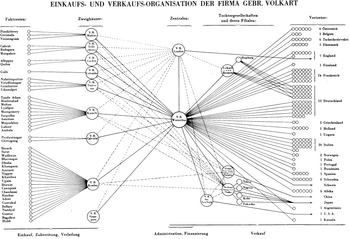
These measures fundamentally altered the export trade from the Indian subcontinent, in particular the export of raw cotton. European traders, who until then had been restricted to the coast, now began to establish upcountry buying agencies and cotton gins from the 1870s onwards. What is more, trade on consignment, which had been common for exports from the subcontinent, came to an end with the advent of telegraphic communication in the 1860s. European spinners could order standardized qualities of cotton with the help of price lists provided by European merchant houses. The standardization of cotton in turn was a result of these merchant houses being able to select raw materials by setting up agencies and gins that bought cotton upcountry. As a consequence, after the 1860s the cotton export trade to Europe was controlled by a handful of European firms. These firms had huge turnovers and large agencies in both the producing areas and the spinning districts.Footnote 27 Together with the Greco-British firm Ralli Brothers, by the late nineteenth century Volkart had become one of the main exporters of Indian raw cotton to Europe (see Figure 1).Footnote 28 The firm regularly exported between 50,000 and 100,000 bales of cotton to Europe, which was equivalent to about 5 to 10 per cent of all cotton exports from the subcontinent.Footnote 29
Graphic description of the buying and selling organization of Volkart in 1926. The small dots on the left are the upcountry buying agencies in India, the larger dots are the branches on the Indian coast. On the right, we see the branches and selling agencies, which were located on the European continent and in China and Japan. In the middle we see the two head offices in Winterthur and London which were responsible for control and finance. Source: Georg Reinhart, Gedenkschrift zum fünfundsiebzigsten Bestehen der Firma Gebrüder Volkart (Winterthur: Volkart Bros., 1926), pp. 38–39.

The realignment of the Indian cotton trade in the late nineteenth century also shifted the balance between Indian and European merchants. Whereas Indian merchants had accounted for a substantial share of cotton exports to China and Europe until the 1860s, they were not able to keep up with the changes in the export trade after that date. They did not possess the resources of Western trading firms to invest in the establishment of buying agencies, gins, pressing factories, and warehouses, and they found it hard to create networks with European cotton exchanges and financial institutions.Footnote 30 It was only in the early twentieth century that Indian traders staged a comeback when Patel Brothers started exporting cotton to Europe. This is evidence that, in time, Indian companies were fully capable of winning back the share of the market that they had lost after the mid-nineteenth century.Footnote 31 The shift in balance between European and Asian merchants after the 1860s, however, was not the result of imperial politics; it was largely the consequence of commercial transformations after the mid-nineteenth century whose effects on the trade in commodities was felt across the world. These transformations involved the acceleration of transport and communication, the breakthrough of economies of scale in global capitalism, and the establishment of new institutions in the Western world such as merchant banks and commodity exchanges in the second half of the nineteenth century.Footnote 32
Despite the shift in balance between European and Indian merchant houses in the export of raw cotton, local businessmen remained essential for the endeavours of European traders on the subcontinent. As is well known, European trading firms continued to cooperate with wealthy Indian merchants throughout the colonial period.Footnote 33 On the one hand, these merchants acted as bankers, or so-called shroffs, who would finance upcountry purchases. On the other, they acted as brokers and arranged contacts between the Europeans and local petty traders and peasants. The duty of Volkart's cotton purchase brokers, for instance, was to regularly visit the local cotton dealers in the bazaar. If the broker could not agree terms with the bazaar dealers, one or two of the leading dealers were invited to the office for negotiations. At the end of their discussions, a special custom was enacted: the broker and the dealers gripped hands under the broker's scarf and exchanged ‘mysterious signs’, as August F. Ammann, a former employee and later partner of Volkart, put it in his reminiscences, which confirmed that a deal had been struck.Footnote 34 This account can be seen as evidence that markets were not only commercial structures but also social systems in which transactions had to be embedded, sometimes by means of cultural customs such as the ‘mysterious’ hand signals under the broker's scarf. It is also clear that the exact meaning of such customs could not be deciphered by Europeans. The cooperation with the brokers was thus based on a relationship of mutual trust.
Both broker and shroff had to be absolutely reliable, and were generally highly esteemed by their European clients, an appraisal that stands in striking contrast to the paternalist disdain they often showed for their Indian clerks or domestic staff—and obviously also distinct from the imperial racism prevalent at that time. An example of such high regard for members of the Indian mercantile elite can be found in the reminiscences of Ammann. He recorded that the merchants he dealt with in Karachi were ‘a class of men who would be an ornament to any commercial community in and out of India. They were honest, straightforward and reliable in their dealings with others and cautious, nay conservative, as regards their own affairs.’Footnote 35 Similar expressions of mutual esteem can be found in the communication between Indian merchants and British trading companies such as Jardine Matheson.Footnote 36 Obviously, there was no cultural gap between European and Indian traders, either in terms of business practices or in terms of cultural features such as reliability and accuracy. Their cooperation was facilitated by a shared mercantile culture and the fact that both possessed skills such as double bookkeeping and a distinct mercantile sense of honour.Footnote 37 In fact, features such as double bookkeeping had long been established in Asia and the Middle East among the upper crust of far-distance traders and had been adopted by Italian merchants in the Middle Ages.Footnote 38 The business practices of mercantile elites in different parts of Eurasia thus shared many similarities (and can be considered a striking example of connected history) which provided the grounds for business cooperation in the age of empire as well.
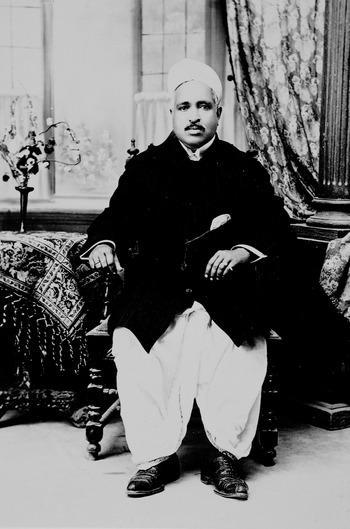
Due to their essential position as intermediaries, Indian merchants played a prominent part in Volkart's accounts. The in-house publication V.B. News, which was published between 1920 and 1927 to inform both customers and staff about the firm's business, not only published portraits of several of Volkart's Indian brokers but also emphasized their importance by pointing out that the broker was ‘the central figure, around which the daily business is transacted, the connecting link between the European firm and the dealers’.Footnote 39 In order to remain successful in business transactions on the subcontinent, it was of vital importance for the merchant house to be on good terms with Indian middlemen, customers, and suppliers. Volkart, in this regard, pursued a strategy which was similar to that of other European trading firms. For instance, Ralli Bros., Volkart's main competitor, also regularly used brokers to gain market information and establish business ties (see Figure 2).Footnote 40
Seth Sobhraj Chetumal, one of Volkart's brokers in their Karachi branch at the end of the nineteenth century. Source: Volkart Foundation.

Volkart's partners constantly reminded their European staff that imperial hubris and racist attitudes would be damaging for business. In a manual from the 1920s, for instance, they pointed out that it was understood that the ‘goodwill and loyalty [of Indian merchants] to the firm can only be earned and sustained by friendly and polite treatment and will be spoiled by acting in a contrary manner. Our most talented European buying agents owe their successes to a friendly and considerate treatment of their indigenous customers … to a considerable extent.’Footnote 41
Furthermore, Volkart's European employees had to complete an intensive ‘study of the indigenous languages’ to allow them to ‘express themselves fluently in overseas countries without the aid of an interpreter’, as the then partner Georg Reinhart wrote in the jubilee publication celebrating the company's seventy-fifth anniversary in 1926.Footnote 42 When employees passed the tests that certified their basic level of proficiency in Hindi, Tamil, Malayalam, Singhalese, or Kanare, they received a bonus and were urged to take additional courses.Footnote 43 Based on the limited available source material, it is no longer possible to determine exactly when employees were urged to learn the local languages, but the records do show that August F. Ammann had no such linguistic knowledge when he arrived in India in 1874 and he did not learn Hindi until he was in Cochin and Karachi.Footnote 44 It therefore stands to reason that the requirement to learn the vernacular languages was made in connection with the company's expansion into the Indian backcountry.
The impact of local structures on global markets
The encounters of the firm's staff members with their South Asian environment took place against the backdrop of fundamental new structural relations between India and Europe. The establishment of a colonial cotton economy had caused Indian agriculture to lose its self-sustaining character. Cultivators who traditionally were subsistence farmers and worked to meet the needs of the local rural economy were increasingly urged to plant cash crops for the world market, with priority given to growing cotton. As a consequence, they became inextricably dependent on world market prices, which is why the colonial cotton economy was described as a major cause of the increase of famines in the colonial period.Footnote 45 As mentioned previously, one of the main reasons why the British colonial government commissioned the construction of railway lines, telegraph stations, and roads was that it wanted to make the subcontinent into a provider of raw cotton for the textile mills of Lancashire. In this, however, the British failed for the most part: at the end of the nineteenth century only 3 per cent of cotton exports from India was destined for Great Britain. The vast majority of Indian cotton was spun in continental European and East Asian mills.Footnote 46 This was a consequence of the rather low quality of Indian cotton, which resulted not least from the fact that the seeds of long-stapled (fibred) American cotton the British had brought to South Asia were continually mixed with short-stapled Indian cotton varieties because the mixed seeds could be sold as the American variety to obtain a higher price. Such mixing of different cotton types, however, rendered the growth of high-quality, long-stapled cotton varieties difficult. Furthermore, cotton bales were often tampered with by adding dirt, stones, cotton waste, or lower quality cotton, which gave Indian cotton a bad name with many spinners in the industrialized world.Footnote 47 These fraudulent practices, notorious since the late eighteenth century, were in turn a consequence of the persistence of credit networks in the interior of the subcontinent that the British were unable to control throughout the colonial period and whose structure they arguably never entirely understood. These quality issues determined the markets in which Indian cotton could be sold, and thus directly influenced the selling organization of exporters such as Volkart.
The British repeatedly attempted to improve the purity of Indian cotton by introducing legal regulations, but to little avail.Footnote 48 Following the outbreak of the American Civil War, however, the tampering increased to such a degree that the British launched a new attempt and passed the Cotton Fraud Act in 1863. But the law never achieved its desired effect because the colonial government, still reeling from the shock of the Indian Mutiny of 1857, was wary of provoking any conflict with Indian merchants or peasants.Footnote 49 Furthermore, the Bombay and Manchester Chambers of Commerce were against it because the Indian colonial government imposed a duty on every bale of cotton the officials examined, thus jeopardizing the competitiveness of Indian cotton on the world market.Footnote 50 Likewise, merchants argued that as long as East Asian and continental European spinners were willing to purchase the cotton, government interference was undesirable.Footnote 51 The resistance of European trading companies was a source of constant frustration for the British colonial government.Footnote 52 Instead of relying on the colonial bureaucracy, merchants generally sought to resolve conflicts within the business community. This was the case with both British firms and continental traders such as Volkart. For example, during the 1875–76 season Volkart purchased illicit bales of cotton from an Indian middleman. Colonial officials hoped that the company would help them take legal action against the Indian merchant, but were severely disappointed when they learned that Volkart had reached an out-of-court settlement with the merchant and that there would be no criminal prosecution.Footnote 53 After years of this sort of futile tug-of-war between the colonial bureaucracy and the business community, the Cotton Fraud Act was ultimately suspended in 1882, and the problems associated with adulterated cotton remained endemic until well into the twentieth century.Footnote 54 This changed only with the Government of India Act of 1919, which gave Indian businessmen more influence over the cotton economy. As they found it easier to relate to the business networks in the Indian hinterland, they were able to allow the introduction of new laws and to promote the foundation of agricultural cooperatives, which gave peasants better control over their crops, resulting in an increased production of long-stapled cotton on the subcontinent after the 1920s.Footnote 55
As legal means did not produce the desired effects, colonial bureaucrats hoped that the construction of railway lines between the cotton districts in the interior of the country and the coast would lead to the disappearance of the multitudes of middlemen who were considered responsible for the low quality of Indian cotton. At first, it actually looked as if these objectives could be realized. In a price booklet that Volkart distributed to its customers in 1873, the company wrote that it was highly optimistic that the railway lines would eliminate the Indian intermediaries in the cotton trade: ‘Direct buying from cultivators namely makes it possible for us to avoid the traditional interventions of native cotton traders and ensures that we purchase genuine, unadulterated quality right from the source.’Footnote 56
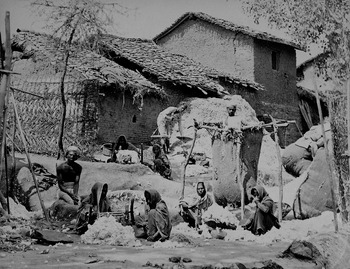
In contrast to what is maintained in the company publication cited here, Volkart and other trading companies rarely purchased cotton directly from cultivators in the cotton districts, instead continuing to rely on local intermediaries.Footnote 57 The colonial cotton laws failed precisely because of the particularities of the colonial situation and the structure of nineteenth-century Indian agriculture.Footnote 58 Indian cotton was cultivated by petty farmers who planted cotton in addition to other crops. Because they lacked capital, long before the harvest, they had to sell their crops to local moneylenders, who resold the commodities later (see Figure 3). Up until the 1870s, Indian cotton thus passed through a number of hands before it finally reached the coast, where it was shipped to Europe and China. Furthermore, the ryot who sold his cotton in advance received no reward for high quality and suffered no penalty for poor quality goods. He was simply obliged to provide a certain quantity of cotton to the moneylender from whom he had received an advance. The same was true for the other dealers in the inland trade. And since cotton was generally sold by weight, each owner was tempted to adulterate it by adding dirt, seed, or lower quality cotton to the bales. And because all cotton was equally adulterated before reaching the coast, the European and Indian merchants who exported it to Europe and East Asia had no choice but to accept it, regardless of its quality.Footnote 59
Cleaning of raw cotton in an Indian village, late nineteenth century. Source: Volkart Foundation.

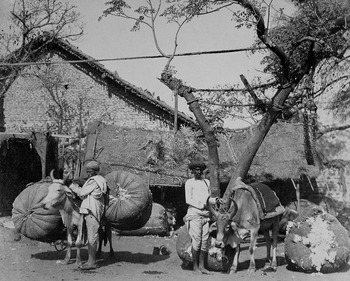
When European trading companies opened buying agencies in the interior of the country at the beginning of the 1860s, they had initially tried to circumvent the moneylenders and purchase directly from the peasants (see Figure 4). But rural moneylenders enjoyed such a strong position in the villages that they could counter these efforts with a strategy of non-cooperation, which ultimately forced European merchants’ hands.Footnote 60 This was not only the case with the cotton trade but for other commodities as well. In the late nineteenth century, Ralli Bros. had tried to buy wheat and oilseed from cultivators and bullock caravan runners, but this backward integration was not successful as Ralli could not penetrate the rural credit networks and thus had to continue to purchase from Indian intermediaries.Footnote 61 This was not such a serious problem for European trading companies, however. Cooperating with local lenders generally allowed export companies like Volkart to avoid providing highly risky credits to suppliers.Footnote 62
Transport of bags of loose cotton to the storage yards of a European exporter. Source: Volkart Foundation.

The modalities of the upcountry purchase of Indian cotton after the 1860s are interesting for two reasons. First, they reveal the path dependency of commodity chains and the fundamental role of local labour in establishing global markets. The liaison between metropolitan and local capital for the procurement of raw cotton ultimately relied on the fact that the cultivation of the fibre had such a long history on the subcontinent; consequently, European exporters could use existing business structures for their own benefit. With other cash crops, Europeans had to build these structures from scratch. The production of opium by Indian petty farmers, for instance, could only be achieved by means of coercion by the colonial government. While the processing of the poppies was done in factories owned by the East India Company, the smuggling of opium to China was conducted by Marwari, Parsi, or Gujarati traders and private British firms such as Jardine, Matheson or Dent and Co.Footnote 63
The cultivation of tea, in contrast, required the implementation of the plantation model in South Asia. In China, tea had been produced by small-scale peasant farmers who sold their harvest to intermediary traders, who in turn sold it to factories that transformed the leaves into manufactured tea and brought it to market. This system was quite similar to the production and marketing of raw cotton on the subcontinent as it also relied on smallholder production. However, it could not be adopted in India: when the British began tea cultivation in Assam as a way to become independent from Chinese production after the mid-nineteenth century, the British did not have the necessary workforce in northern India.Footnote 64 For this reason, they adapted the plantation system that had been devised in the Americas and the Caribbean.Footnote 65 Plantations had an important advantage in comparison to smallholder production as they allowed for the cultivation of high-quality produce; this was not only the case with tea but also with other plantation goods such as indigo or coffee.Footnote 66 Yet they also posed a challenge: how to recruit the great numbers of cheap agricultural labour needed. Between 1860 and 1947, over three million workers were brought to Assam from other parts of the subcontinent to work on tea plantations. Interestingly, these plantations also allowed for cooperation between European and Indian businessmen. Several tea firms were established as joint ventures between European and Indian capitalists, and some of them were managed very successfully by Indian chief executives.Footnote 67
The second interesting element in the upcountry purchase of Indian cotton points to the relative importance of quality in the organization of various commodity chains. As mentioned above, the production of cotton at that time was very quality sensitive: matters of quality determined where the fibres from each producing country could be marketed. In fact, it was the capacity to guarantee standardized quality that allowed multinational trading firms such as Volkart or Ralli to control the sale to spinners in industrial countries. Other products, such as jute, were much less quality sensitive. As a consequence, the jute market was primarily a low-price outlet. There is reason to believe that it was not least for this reason that Marwari traders could challenge the predominance of British entrepreneurs in the jute market after the turn of the century. Until the 1930s, the Marwaris conducted over one-third of all jute exports from Bengal. Likewise, Indian firms such as Birla and Co. had become very successful in the manufacturing of jute. As Omkar Goswami has argued, the Marwaris’ greater capacity to establish ties with upcountry credit networks gave them an edge over their British competitors and allowed them to make forward integration from financing the inland trade to export and manufacturing.Footnote 68
This shows that the structure of commodity chains was very much shaped by local conditions such as the availability of labour and the material features of distinct cash crops.Footnote 69 In the case of cotton, it is remarkable that, despite the fact that by the 1870s the Europeans had managed to assert control over the thousands of miles between the mandis [collecting points for cotton] in the Indian backcountry and the textile manufacturing districts in Europe, they were unable to exert the desired influence over the first 10 or 20 miles between the cotton fields and the Indian inland markets. Due to the persistence of traditional structures of loans and commerce in rural India the cultivation of long-stapled cotton varieties failed since the seed of first-rate cotton was consistently mixed with the seed of short-stapled cotton varieties.Footnote 70 As mentioned before, Indian cotton thus never equalled the quality of American fibres. This was one of the reasons why British spinners continued to use American cotton throughout the colonial period, rather than that of India as the colonial bureaucracy had hoped, because American cotton had a longer staple (fibre), making it more suitable for the production of the fine cloth that was woven in Lancashire.Footnote 71 For this reason, very little Indian cotton was used in British mills at the end of the nineteenth century. Indian fibres, however, found ready markets in continental Europe—where spinning machines were specially designed to process short-staple Indian varietiesFootnote 72—and East Asia, with Japan the most important market for Indian cotton after the 1890s for several decades.Footnote 73 Most of the exporting of Indian cotton to East Asia was conducted by Japanese trading houses such as Toyo Menka, Nihon Menka, or Gosho, which confirms the agency of Asian businesses during the colonial period. What is more, these firms not only opened buying agencies for Indian raw cotton on the subcontinent, they also set up selling agencies in Western Europe, Africa, Southeast Asia, and the Americas in the first decades of the twentieth century, thus competing with Western trading firms in the global cotton market.Footnote 74
The position of the Indian fibre on the global cotton market obviously also shaped the business structure of merchant houses such as Volkart. Throughout the colonial period, the firm never sold more than a small fraction of its Indian cotton exports in Britain.Footnote 75 Being one of the very few continental trading houses operating in India, though, it benefited greatly from the fact that there was a steady demand for Indian cotton in continental Europe. With its headquarters in Winterthur, Switzerland, Volkart had the highly productive spinning districts of northern Italy, Austria, Germany, Belgium, and France more or less in its backyard. What is more, the firm took advantage of Asian industrialization and intensified its exports to East Asia, opening up selling agencies in Shanghai in 1878 and Kobe in 1903. In the 1930s, by which time the firm had become the sole representative of the American Cotton Cooperative for Asia, Volkart also began to import American cotton to India and thus benefited from increasing industrialization on the subcontinent.Footnote 76 It would thus be a vast oversimplification to reduce Indian economic history to the relationship between India and Britain, or between the subcontinent and Europe. Even during colonial times, the trade connections with East Asian countries and the United States were often just as important, if not more so, than India's business ties with Europe.Footnote 77
Colonial culture and the physical experience of India
The expansion of Volkart's business led to a steady increase of staff, both in Europe and India. In 1860, only nine European employees were working in the branches in India and Ceylon combined, which soon proved to be hardly enough staff to keep pace with burgeoning sales and the rapid establishment of new agencies. By 1926 the number of European staff members had therefore increased to 116 and to 139 by 1951.Footnote 78 Until the 1950s, employees were only hired for limited periods, but the first five-year contract was generally followed by additional four-year contracts, and employees could always count on their contracts being renewed if they performed their duties diligently.Footnote 79 Europeans working for the company in India were usually employed at the company headquarters after their return to Europe. Such long-standing working relationships were also common at other trading companies and resulted from the fact that an employee's expertise—their knowledge of the products, the company's business practices, and local conditions—was vital to the success of a trading firm.Footnote 80
The main motivation for European staff to work in a merchant house in India was certainly the aim to earn enough to maintain themselves and a small family after their eventual return to Europe (no employee seems to have considered remaining permanently in India).Footnote 81 But what was the encounter with India like for employees? Apparently they had widely diverging reactions. For some European merchants, the subcontinent offered an opportunity to enjoy a certain colonial romanticism and to experience exotic adventures. Ammann wrote extensively in his memoirs of hunting tigers, elephants, and crocodiles, recounted unpleasant encounters with snakes and scorpions, and recorded his attempts to win the friendship of a moody little monkey in Cochin.Footnote 82 Aside from statistics and serious business essays, the employee magazine V.B. News also regularly featured so-called ‘monkey stories’ in which staff members described their weekend excursions to the backcountry and their encounters with the Indian animal world.Footnote 83
However, for many employees India was by no means the paradise of their dreams, in large part due to the rigours of the subtropical climate. Papers and documents had to be kept in steel cabinets to avoid being consumed by ants or destroyed by the high levels of humidity.Footnote 84 The climatic conditions were also physically taxing. The trials and tribulations experienced by many Europeans are vividly reflected in a poem written by a Volkart employee in 1926:
Balmy fragrances fill the breeze,
with dried fish and rancid cheese;
Roaming about, sweaty and tattered,
a former man, completely shattered.
His noble face, once so fair,
has turned gray under his disheveled hair,
and with a tinge of curry and rice
blue-black rings have formed around his eyes.
His spindly legs are sheathed in a loose pantaloon
that oddly resembles a hot-air balloon,
and swarms of mosquitoes stab into his skin
and suck the red juice that pulses therein.
Who is this wretch, this unfortunate creature?
And what, pray tell, is his most prominent feature?
A man who has endured all manner of injury,
a European in India, a picture of misery.Footnote 85
In view of the mood of these lines, it is hardly surprising that this employee, who was sent to India in 1926 at the age of 22, had already left the company by 1927.Footnote 86 He was not the only one to throw in the towel. Although many Volkart employees remained with the firm for decades, others disappeared from the payroll after only a brief stint with the company. Their reasons for leaving cannot be reconstructed based on the available sources. While a number of employees presumably proved to be unsuited for the commercial sector, others no doubt saw better prospects in establishing their own trading companies. Still others had to return to Europe for health reasons because they could not cope with the subtropical climate and poor sanitary conditions. Various members of the firm, including the two partners Georg Volkart and Henry L. Bodbeck, died while working in India.Footnote 87
Despite the fact that they were working for a Swiss company (and were, for the most part, of Swiss origin), Volkart employees were an integral part of the colonial system on a sociocultural level. When it came to clothing, for instance, they seamlessly fitted in with the colonial system, dressing for a temperate climate. In view of the frequent complaints about the extreme climatic conditions, it is astonishing that Volkart's European employees wore such heavy clothing to work, including full suits with long-sleeved shirts and ties.Footnote 88 This was largely motivated by colonial pretension—the desire to stand out from the local population and never renounce the cultural symbolism of European clothing as an icon of civilization, no matter how extreme the conditions.Footnote 89 What is more, the company's sources are full of descriptions of Indian servants and subaltern staff expressed in a condescending and paternalistic manner; these accounts stand in striking contrast to the respect demonstrated for members of the Indian mercantile elite.Footnote 90
Clubs and dinner parties were often the only occasions available to European merchants for amusement and social contact. Complaints of boredom were commonplace in the letters written by members of the firm stationed in India. Even if the entertainment in the clubs was, at times, somewhat dubious, for most Europeans this was an essential element of their stay in India. Ammann reminisced that ‘a European who expatriates himself to a country like India … must have distraction or recreation of some kind, otherwise he is sure to fall into a state of moroseness, if not worse’.Footnote 91 Membership of the club was also an opportunity to forge contacts with other European businessmen.Footnote 92 Accordingly, Volkart instructed its employees that it was essential for them to apply to join one,Footnote 93 and the firm often even paid their dues and fees.Footnote 94
Even though the business world at this time was a purely male-dominated arena, women were expected to play a key role in the social life of colonial India. Ammann wrote the following:
In a country like India, and especially in small stations where there are no theatres, no concerts, none of all those many things which in Europe contribute to make life pleasant and interesting, the one thing which helps to make life not only bearable, but agreeable, is sociability and that can only be had where there are ladies, good, gentle and cultured ladies who take an interest in the station's life and their neighbors. I am, of course, speaking of married ladies who know something of life and are ready to take pity on lonely bachelors.Footnote 95
Ammann declined to comment on whether there were affairs between European ladies and unmarried Volkart employees, and there is no information on this in the company archives, nor does the source material reveal any details of love affairs between European employees and Indian women. In Shanghai, in contrast, sexual relationships between European men and local women appear to have been commonplace, as the accounts of several Swiss merchants who had worked in China reveal.Footnote 96
Up until the turn of the century, very few Volkart employees working in Asia were married. Many of them could not afford a family, not least because the company did not pay for their passage nor contribute to the costs of maintaining a household.Footnote 97 It was not until living conditions in India became more bearable for Europeans in the twentieth century that more employees opted for marriage during their stay in Asia or sent for their families.Footnote 98 But the unaccustomed life in the tropics was not easy for many wives. As a consequence, the presence of their spouses and children at times further complicated the stay of Volkart's staff on the subcontinent. Even under normal circumstances the climatic stresses in Asia and the personal adjustments that were necessary to adapt to a foreign culture were so immense that the attitude of an employee's wife could have a decisive influence on whether or not he felt at home in Asia. Not surprisingly, Werner Reinhart, who had become a partner at Volkart's in 1912, noted with great satisfaction during a visit to Karachi that the wife of an employee was ‘delighted with India’, saying that she ‘copes well with everything and knows how to navigate social circles with great skill’. He drew a direct connection between these private circumstances and the company's business success: ‘I am addressing these questions because the home of a manager also plays a certain role for the branch office.’Footnote 99
Ethnic diversity and hierarchy among the staff
The Volkart company not only acted as a connecting link between India and the global markets for cotton and other produce or between Western and Asian capital, as was pointed out in the previous sections, but also as a contact zone between European and South Asian staff. Whereas in the first two decades of its existence, Volkart had only European staff, Indians were employed as buying agents in the hinterland and as clerks in the agencies on the coast after the 1870s and 1880s respectively. Most of the Indian staff members were Hindus or Indians who had converted to Christianity; they generally remained at Volkart's their entire professional lives, and often their sons were employed by the firm as well.Footnote 100 While most European staff came from Switzerland, Volkart also employed British or German clerks and the occasional American employee. After the turn of the century and the opening up of subsidiaries in Osaka and Shanghai, the firm also had Japanese and Chinese employees on its payroll. Even though Volkart emphasized its Swiss origin in times of political crisis—such as the two world wars, when the firm's German employees in London and India were interned and when Volkart's survival relied on its success in convincing British officials that it came from neutral Switzerland—most of the time this was of minor importance.Footnote 101 As was the case for many multinational firms, to a considerable degree Volkart was characterized by hybridity in terms of nationality.Footnote 102 As a consequence, the company emphasized a distinct cosmopolitan attitude in its self-presentation. When Volkart celebrated its seventy-fifth year of existence, the firm's partner Georg Reinhart gave voice to his conviction that those commemorating at the Winterthur headquarters were
joined today by thousands of people of virtually every race, nationality and religion throughout the world in celebration of the sense of community that we share under a unifying flag, which bears the initials V.B. Japanese, Chinese, Malays, Indians, Parsi, Swiss, Germans, Englishmen and Americans today feel more than ever that they are part of an organism that extends across the globe and that, regardless of state borders and national rivalries, lives its own life and embodies its own laws.Footnote 103
This cosmopolitan attitude, however, stood in tension to the dichotomy between colonizers and colonized which was as characteristic of India as of other colonial possessions (see Figure 5). As mentioned before, Volkart's European staff were integrated into the cultural system of colonialism that the British had established on the subcontinent. And for a long time there was a distinct hierarchy separating European and Indian staff members within the firm. Until the 1920s, Indian employees were restricted to subordinate roles and all senior positions were filled by European managers (see Figure 6). The organizational hierarchy within the firm was thus equivalent to the hierarchy between Europeans and Indian subalterns in the colonial period.Footnote 104
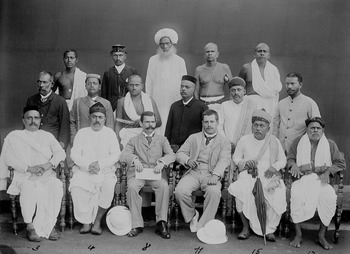
Staff of the Cochin branch of Volkart Bros. in 1890. Source: Volkart Foundation.

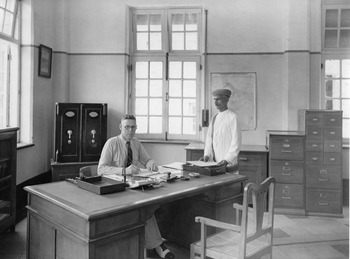
Swiss manager with Indian clerical assistant at Volkart's Bombay agency, early 1940s. Source: Volkart Foundation.

This structure was, however, challenged more and more often after the end of the First World War. As the call for Indian independence grew louder, European firms came under pressure to assign more responsible tasks—such as the translation of telegrams, the writing of letters, or the recording of orders—to Indian employees and to promote them to more senior positions.Footnote 105 Furthermore, the firm endeavoured to integrate both its European and Indian employees into the corporate culture. From the early 1930s onwards, for example, Volkart's Bombay branch held an annual in-company sporting event that was attended by both European and Indian employees and their families. They competed in disciplines like the long jump, sack races, hurdle races, obstacle courses for children and veterans, and an egg-and-spoon race for the ladies (see Figure 7).Footnote 106
A Swiss firm in colonial India: on the occasion of a sporting event involving Indian and European employees in Bombay to mark the seventy-fifth anniversary celebrations of Volkart Bros. on 1 February 1926. Source: Volkart Foundation.

After the mid-1930s, Volkart recruited well-qualified Indian staff who were trained to become district agents in the firm's cotton division and who would replace European staff in these positions in due course.Footnote 107 However, the idea of giving Indian employees the opportunity to work for the firm in Europe (or for the firm's subsidiaries in East Asia or the United States) or to study at a European university or business school was never considered—within the cultural framework of the imperial age, transcontinental social mobility was strictly reserved for metropolitan staff members and barred for those coming from the colonies as a matter of course. It also goes without saying that the working conditions of manual labourers, comprising the vast majority of the 5,000 indigenous employees who worked for Volkart on the subcontinent in the 1920s, were direr than those of the Indian clerks. Many of them were day labourers; their working conditions, however, are not mentioned once in the sources that have survived in the company's archive.
Among the European staff, the promotion of Indian employees was disputed. The European executives who managed the firm's agencies in India were at times reluctant to hire local staff, as these employees demanded higher salaries than they had been accustomed to earning.Footnote 108 It is interesting to note that at this time the divide between Europeans and Asians in the Japanese subsidiary Nichizui was far less pronounced than appears to have been the case in colonial India. When the firm's partner Georg Reinhart visited Nichizui during his trip to Asia in 1923, he immediately noticed the cooperative atmosphere between Japanese and European employees: ‘In contrast to the practice in India, where the Europeans assumed prominent positions, there is no noticeable gap here between Europeans and Japanese.’Footnote 109 The somewhat ambivalent feelings that Volkart's European managers in India had towards local staff could be seen as a sign that, due to British colonial rule, they had a far more conflicted relationship with the indigenous population than Volkart's staff in Japan. Since there is hardly any surviving source material on working conditions in Volkart's Japanese—and Chinese—subsidiaries, this supposition unfortunately cannot be empirically verified.
Whereas the firm's partners in the Winterthur head office tried to adapt to the new situation and pay competitive wages in order to ‘attach diligent staff to the firm by paying adequate salaries and fair treatment’, the managers on the spot were much more reluctant to do so.Footnote 110 This ‘alarming lack of understanding’ on the part of the local management of the changing sociopolitical realities on the subcontinent enraged the firm's partners time and again.Footnote 111 In 1928, for instance, the Winterthur head office reproved the management of the Karachi branch because they had found the statement of a European staff member more trustworthy than that of an Indian employee. The firm's partners argued that ‘a European agent is not impeccable due to his race, neither in his judgement nor in his ethics’. And they urged their executives to behave differently from the managers of European plantations on the subcontinent: ‘We demand from our Europeans, namely those in executive positions, to renounce ignorant prejudices in regards of the relative value of the 2 races which are prevalent among planters among others.’Footnote 112
The concerns of the firm's partners obviously resulted not least from the fact that the Indian independence movement had gained strength after the end of the First World War. Like other European firms on the subcontinent, Volkart had to deal with the call for Indianization, which became ever more pressing after the late 1920s. All in all, the firm's policy—an incremental, albeit sometimes reluctant, integration of Indian staff into middle and upper management—did not differ remarkably from that of British multinationals and managing agencies. This is rather surprising, given that establishing relations of trust both within the firm and between the firm and its customers is a crucial feature of trading companies, and arguably of much higher importance than for industrial firms.Footnote 113 Yet their attitude towards the demand for Indian independence was rather different from that of firms originating in other European countries. Whereas British firms, as the main object of the boycott campaigns of the 1920s and 1930s, linked their fate to the continuity of the colonial order, German firms aimed to establish ties with Indian nationalists in order to take advantage of the new political realities in the offing in India.Footnote 114 Volkart, again, decided to take a distinctly Swiss approach and endeavoured to maintain a neutral attitude towards the political tensions on the subcontinent. In 1932, the firm's partners summed up their position in a letter to the managers of their Bombay branch:
We owe the British administration our thanks that they have maintained the calm, law and order that has facilitated the economic development of this country and given us the opportunity to pursue our business, safely and unimpeded, for 80 years. On the other hand, one can also feel sufficient sympathy for the justified political aspirations of a great people in order not to follow, through political thick and thin, a government that is nonetheless an imperialist power and, despite all its good deeds, would not, for reasons having to do with its own nature, carry through with the full national development of the country.Footnote 115
If push came to shove, however, Volkart did have to fall in with the government because the Congress was not an administrative body.Footnote 116 A similar declaration of political neutrality had been set out in a manual published in the early 1920s when the firm's owners reminded its European staff that they, as employees ‘of a non-British firm … enjoyed hospitality in India which was provided by the government in a very liberal manner. It was a matter of good manners to abstain from any depreciatory critique of British administration in India when consorting with Englishmen.’Footnote 117
As a consequence, explicit political attitudes were only rarely given voice in the firm's publications, as was the case after Gandhi's arrest in 1922, when a situation report to the company's customers said that the firm had been ‘terrorized by Gandhi's supporters’, who had pressured Volkart to boycott British textiles.Footnote 118 Such pro-British statements, however, were a rare exception and would certainly not have been appropriate after 1929, when the Indian National Congress stepped up its boycott. Non-British export firms such as Volkart now came under pressure from British officials. Frederick Hugh Sykes, who was the governor of Bombay until 1931, argued that ‘some of the foreign firms, namely, Swiss and Japanese, are helping the boycotters’ and maintained that ‘the position is easy for them, since they have not to perform any positive act of boycott in order to obtain from Indian firms the business which would otherwise have gone to their British competitors’.Footnote 119 This development, which Sykes refers to explicitly in his letter, was extremely unpleasant for the Volkart company. For the first time since the end of the First World War, the Swiss nationality of the company—which was otherwise of no consequence to its business in India—was once again an issue. This is reflected in a letter sent from Bombay to the Volkart headquarters in Winterthur in 1932: ‘We take the position that, as a foreign company, we must assume a completely neutral attitude in a political sense and under no circumstances shall we stray from this principle in the future.’ The competition was green with envy that, as a non-British firm, Volkart enjoyed a privileged position. Ralli allegedly went so far as to lobby the Indian government in a bid to sway opinion against Volkart. Moreover, staff members at the Bombay branch said that they had been subject to considerable pressure in an effort to convince Volkart to join forces with the boycotted companies.Footnote 120 Despite coming under attack from both sides, Volkart sat out the situation until the boycott was lifted in 1933.
Besides political shifts, the interwar period also saw economic changes on the subcontinent.Footnote 121 After the late 1920s, managers of Volkart's branches repeatedly proposed that the firm's partners should invest in the rising Indian industrial sector and take over the management of manufacturing companies. Yet these suggestions were turned down again and again.Footnote 122 In contrast to many British trading firms that had chosen to take over the managing agency of plantations and manufacturing companies after the mid-nineteenth century, Volkart chose not to diversify into manufacturing but retained its primary focus on the trade in raw cotton.Footnote 123
Nevertheless, the interwar period saw some remarkable changes in the firm's activity. On the one hand, this involved transgressing the restricted Indian-European business environment and engaging in transactions that became ever more global. Volkart intensified its expansion into East Asia by opening up branches in Osaka and Shanghai; after it had secured the sole agency of the American Cotton Cooperative Association for Asia in 1930, the firm became one of the major importers of American cotton into Japan and China.Footnote 124 What is more, the firm opened up its first buying agency for Brazilian cotton in the 1920s, which allowed it to become a major exporter of raw cotton after the 1930s.Footnote 125 At the same time, Volkart responded to Indian industrialization and the emergence of a consumer society on the subcontinent by opening up an engineering department which imported European and American machinery—power plants, boilers, refrigerators, and tractors—into India.Footnote 126
The fact that Volkart developed into a global player after 1918 challenges the thesis, still upheld in many economic history handbooks, that the interwar period was an era of de-globalization. This claim is certainly simplistic when one considers the history of individual enterprises. In fact, a number of companies strengthened their foreign investments in the period between the wars as a way to counter increasing levels of protectionism, and to seize the opportunities offered by economic development in areas such as South, Southeast, and East Asia.Footnote 127 Indeed, many companies only became globally operating enterprises during this period.Footnote 128
Many of the business ties that were established in the interwar period were characterized by a distinct cosmopolitan attitude. Importers such as Volkart cooperated on a regular basis with manufacturers from other European countries and the United States and with businessmen from India, China, and Japan. And manufacturers did not appoint their agents merely on the basis of their national origin, but rather according to their performance. Swiss engineering companies such as Rieter, Sulzer, or Brown and Boveri and Cie. did not necessarily choose a Swiss importer (such as Sulzer, Bruderer and Co., Volkart, or Volkart's Japanese subsidiary Nichizui) to become their representative in South and East Asia. Repeatedly, they chose British firms such as Bird and Co. for machinery imports into India, Japanese trading firms such as Suzuki or Okura Trading Co. for imports into Japan, or Chinese firms such as the Shanghai-based merchant house Chien Hsin for imports into China, and only occasionally opted for other Swiss companies.Footnote 129
Continuity and change after the end of colonial rule
This global orientation and cosmopolitan attitude facilitated the realignment of Volkart's business after 1947. As the import and export trade to and from India became ever more difficult due both to the pressure of the Indian government for Indianization and to export restrictions, the firm's partners began to ponder whether it would be necessary to withdraw from the Indian market in due course.Footnote 130 In this matter, its considerations as a Swiss company were remarkably similar to those of British traders post-independence.Footnote 131 In 1953, Volkart received a request from the Tata company, which had evolved from its beginnings as a trading firm to become one of the leading conglomerates on the subcontinent.Footnote 132 Tata planned to establish its own company for importing Western machinery and proposed a collaboration with Volkart's engineering department: ‘[The] Tatas would be an outstanding match because they would be equal partners,’ said Balthasar Reinhart, one of Georg Reinhart's sons and a partner at Volkart since the mid-1940s, ‘so no one could be accused of a sell-out or stooge arrangement.’Footnote 133 It was agreed that the Swiss would receive a 45 per cent minority stake in the newly established firm called Voltas (a portmanteau of the names of the two partners), while the remaining 55 per cent would go to Tata.Footnote 134 The share owned by Volkart gradually declined and by the 1960s it had dropped to just under 10 per cent. By then the board of directors was made up exclusively of Indians.Footnote 135 By and by, the company diversified into manufacturing. In addition to opening its own Voltas factory near Bombay, the Tata Group joined forces with several companies—which Voltas had represented to handle their imports to the subcontinent—to establish joint production facilities in India. Sales of the products of these new joint ventures were then managed by Voltas, which had a workforce of nearly 7,000 employees by the mid-1970s.Footnote 136
The founding of Voltas was a measure of how Volkart would realign its business on the subcontinent in the years that followed. For that matter, the relationship with Tata facilitated the joint venture between the Swiss firm and Indian businessmen in other business areas as well. After the Indian government temporarily banned the export of cotton due to a bad harvest, Volkart considered shutting down its entire cotton purchasing organization in India in 1960.Footnote 137 But before the firm could implement its plan, Peter Reinhart discussed the situation with a manager from Tata, who put him in contact with an Indian firm, Patel Cotton Company Private Ltd., which had been active in the cotton export trade since the turn of the century and which was interested in merging with Volkart's Indian cotton organization. On 1 September 1961, Patel acquired Volkart's Indian cotton organization. The newly merged entity continued to go by the name of Patel Cotton Company Private Ltd. Volkart had a 20 per cent share of the company. In 1964, Volkart (Bombay) Private Ltd., which had handled Volkart's remaining cotton division and its sales representation for shipping lines in India, changed its name to Volkart (India) Ltd. and transferred the cotton import business to Patel, which changed its name to Patel-Volkart Private Ltd.Footnote 138
After the once-independent branches in Bombay, Madras, Cochin, and Tuticorin were incorporated into Volkart (India) Ltd. in 1964, the only remaining independent branch in India was Volkart Tellicherry, which had acquired three coffee plantations in the years 1952 and 1954. Thanks to its excellent sales channels in Europe, Volkart rapidly rose to become India's leading coffee exporter. From the mid-1960s onwards, however, Volkart pursued the same divestment strategy as it had elsewhere in India and endeavoured to transfer ownership of the coffee plantations to an Indian firm. Once again with the aid of the Tata Group, Volkart was able to establish contact with Consolidated Coffee Estates Ltd., which was one of the leading operators of coffee plantations in India and completely managed by Indians. In 1966, the property and personnel of Volkart Tellicherry were transferred to Consolidated Coffee Estates Ltd., for which Volkart received a 20 per cent share in the company.Footnote 139
In Pakistan, finally, Volkart responded to the situation by transforming all the company's branches in Pakistan—including the export division and the sales representation for the shipping lines—into a joint-stock company called Volkart (Pakistan) Ltd. in 1963. This was to make it easier for local capital to be invested in the company, which was a measure the government had been urging Volkart to take.Footnote 140 In 1977, Volkart sold 70 per cent of its shares in the Pakistani subsidiary to the British firm Peninsular and Oriental Steam Navigation Co., and in return acquired a 30 per cent stake in Mackinnon Mackenzie and Co. of Pakistan Ltd., a company that, until then, had been solely owned by Peninsular and Oriental Steam and was in the business of representing shipping lines, airlines, and insurance companies in Pakistan.Footnote 141 Accordingly, after largely divesting in India, Volkart was only left with minority interests in companies there, as well as in Pakistan.
At the same time that Volkart started to withdraw from South Asia, and after entering the Latin American coffee trade after the mid-1940s, the firm extended its operations in the Americas by opening up cotton buying agencies in the United States. This move was facilitated by a collaboration with local exporters, including the American cotton exporter Manget Brothers (between 1939 and 1942) and Pardo Chaves, a major Brazilian coffee and cotton exporter (until the early 1950s). It also acquired minority shares in German and Swiss coffee exporting firms in Costa Rica and Guatemala (after the early 1960s). As a consequence, Volkart's business structure changed fundamentally during this period. Where once Volkart had been a partnership that had been owned by members of the Reinhart family until the late 1930s, it now began to enter into joint ventures with domestic companies and was transformed into a multinational trading company with a distinct holding structure, a process that was accelerated by the policies of the governments of newly founded nations after decolonization. The company was gradually evolving from ‘an organization that focused uniquely on the cotton trade and, more recently, the trade in coffee’ to an entity consisting of ‘a number of individual companies that are tailored to the opportunities and needs of the countries concerned’, as stated in the company's 1961 annual report.Footnote 142
In that sense, it was not least its ability to establish interorganizational networks with businessmen in both South Asia and the Americas that allowed the Volkart firm to penetrate new markets in North and South America while withdrawing from South Asian markets after the 1950s without suffering major losses. This confirms that the activities of a trading firm which, like Volkart, did business in a colonial possession, were not entirely reliant on imperial rule. Rather, by establishing ties with members of the respective mercantile elites in different parts of the world some leeway was found.
Conclusion
The case of Volkart Bros. provides evidence that it is too narrow an approach to examine the economic history of British India merely in terms of colonial history. This ties in with recent research that aims to examine imperialism from a transnational perspective. To be sure, colonial rule facilitated Volkart's business considerably by providing political stability, building infrastructure, and establishing mercantile legislation on the subcontinent. Yet the company's scope definitely extended beyond the spatial confines of the British empire, with Volkart establishing subsidiaries in Japan, China, Brazil, and the United States until the 1930s. As with other big companies of that period, irrespective of their country of origin or business area, Volkart increasingly focused on the global market after the turn of the twentieth century, thus becoming one of the multinational enterprises that would shape the economy of the twentieth century. What is more, Volkart, as a non-British firm doing business in the Raj, was by no means an isolated case. Throughout the colonial period, continental European and, after the turn of the century, Japanese and American firms established themselves on the subcontinent. Their nationality was, except in times of political crisis, such as during the world wars or following the boycott of British firms by the Swadeshi movement, of secondary importance for their business. This sustains the argument that we should examine the economic history of India as part of nineteenth- and twentieth-century globalization, on the one hand, and the expansion of the British empire, on the other.
The importance of Indian businessmen for the undertakings of expatriate firms on the subcontinent confirms that the integration of India into the global economy was not the feat of European agency alone, but rather the consequence of close cooperation between Eastern and Western capitalists. Yet the fact that European merchants such as those employed by Volkart regularly cooperated with Indian businessmen, and often expressed their high esteem and respect for these merchants, does not mean that the colonial economy was not characterized by distinct structures of inequality. The respect shown towards members of the Indian mercantile community can be considered evidence of the fact that both European and Indian traders were part of a transnational bourgeoisie with similar economic interests and a shared business culture. This cosmopolitan attitude stands in striking contrast to the expressions of paternalist contempt uttered by European merchants when referring to domestics or the lower ranks of their Indian staff. Likewise, the fate of Indian peasants who were forced to produce cotton in dire conditions by the colonial government, and who literally faced starvation in situations of drought and falling world market prices, respectively, is barely mentioned in the accounts of European merchants. These relations, however, were not characterized by imperial racism alone, but also by class differences and the divergent interests of members of a cosmopolitan mercantile elite, both European and Indian, and those of Indian subalterns. In fact, it was precisely the intersectionality of imperial racism and mercantile cosmopolitanism that was one of the main features of the colonial economic system.