Introduction
Traumatic and other acquired brain injury (ABI) in children and adolescents can result in persisting difficulties in areas of cognition, behaviour, physical function, communication, emotional function, education, employment, social relationships and leisure (Anderson & Yeates, Reference Anderson, Yeates, Levin, Shum and Chan2014; Catroppa, Godfrey, Clasby, & Anderson, Reference Catroppa, Godfrey, Clasby, Anderson, Wilson, Winegardner, van Heugten and Ownsworth2017). As the adolescent with brain injury matures, he/she is particularly vulnerable at certain transition phases which can be emotionally challenging, confusing and anxiety provoking (Connor et al., Reference Connor, Dettmer, Dise-Lewis, Murphy, Santistevan and Steckinger2001). For adolescents, one of the most significant transition periods is leaving high school and entering ‘the adult world’. This involves, for example, a change of routine, more responsibility, long term plans, and life altering decisions. If adolescents with ABI leave school without supports specifically tailored to meet their needs, they may be disadvantaged in their entry to the adult world (Wehman, Reference Wehman2006).
A large body of literature exists regarding best practices to facilitate the transition process. For example, it is recommended that transitional supports are tailored to meet the adolescent's needs (Blosser & DePompei, Reference Blosser and DePompei2003; Todis & Glang, Reference Todis and Glang2008), that they include specific short- and long-term transition goals (Benz, Lindstrom, & Yovanoff, Reference Benz, Lindstrom and Yovanoff2000; Wehman, Reference Wehman2006; Wehman, Chen, West, & Cifu, Reference Wehman, Chen, West and Cifu2014) and involve the adolescent's family and professionals such as educators and health services (Blosser & DePompei, Reference Blosser and DePompei2003). Much of the school-transition literature addresses the general special education population. The systematic review of Test et al. (Reference Test, Fowler, Richter, White, Mazzotti, Walker and Kortering2009) identified a large and broad-ranging number of specific evidence-based practices for students with disabilities, which fit within the eight domains identified in the systematic review of Landmark, Ju, and Zhang (Reference Landmark, Ju and Zhang2010): paid/unpaid work experiences, employment preparation, family involvement, general educational inclusion, social skills training, daily living skills training, self-determination skills, and community/agency collaboration.
Coaching offers an alternative to school-based practices for facilitating the school transition process, particularly in its emphasis on self-determination skills. Green, Grant, and Rynsaardt (Reference Green, Grant and Rynsaardt2007) describe coaching as ‘a collaborative, solution-focused, results-orientated systematic process, in which the coach facilitates the enhancement of the coachee's life experience, goal attainment and well-being and fosters the self-directed learning and personal growth of people from normal (i.e. non-clinical) populations’ (p. 24). Coaching is the process of the individual setting a goal, developing a plan of action, beginning the action, and monitoring his or her performance. The role of the coach is to help the person through this process (Grant, Reference Grant2003). Green et al. (Reference Green, Grant and Rynsaardt2007) implemented a randomised controlled trial (RCT) of a 10-week group coaching programme with a non-clinical sample of high-school students and reported significant increases in goal striving, well-being and hope in the coaching group in comparison with the control waitlist group.
Coaching has been recommended for use with similar clinical populations to adolescents with traumatic brain injury (TBI), e.g., adolescents with executive functioning or behavioural difficulties (Dawson & Guare, Reference Dawson and Guare2009; Merriman & Codding, Reference Merriman and Codding2008; Sleeper-Triplett, Reference Sleeper-Triplett2008; Swartz, Prevatt, & Proctor, Reference Swartz, Prevatt and Proctor2005) and adults with chronic illness (Linder, Menzies, Kelly, Taylor, & Shearer, Reference Linder, Menzies, Kelly, Taylor and Shearer2003). We conducted a systematic review of the literature to identify coaching intervention studies for adolescents with ABI, and searched two databases (Medline and PsycINFO), last updated on 28 June, 2017. Selection criteria comprised intervention studies with adolescents with traumatic or other ABI, involving a coaching, mentoring or goal-setting intervention. Search terms are provided in the Appendix. After deleting duplicates, the searches yielded 31 references. Two authors (RLT and MG) independently reviewed the titles and abstracts to identify eligible studies, but none met selection criteria.
In the course of reviewing the literature, we identified some reports that informed our study. Kennedy and Krause (Reference Kennedy and Krause2011) trialled a treatment for two college students with TBI, both aged 20 years, based on a coaching model combined with cognitive and education rehabilitation strategies. The authors reported case studies in support of the benefits of treatment to both students, but noted that the motivation and self-awareness of the students affected the outcome. Izumi et al. (Reference Izumi, Ando, Ono, Suzukamo, Michimata and Fukuhara2007) conducted an RCT to evaluate a telephone coaching intervention with participants with spinocerebellar degeneration. Self-efficacy was higher in the intervention group compared to the control group at follow-up, although the difference was not statistically significant.
Our searches did not identify any controlled trials of the coaching approach for adolescents with ABI about to complete high school. Accordingly, the aim of the present study was to implement a targeted intervention using a coaching approach for adolescents with ABI completing high school (secondary education) and thus in transition to the adult world. The study and preparation of this article followed the CONSORT statement (Moher et al., Reference Moher, Hopewell, Schulz, Montori, Gotzsche, Deveraux and Altman2010) and the TIDieR reporting guideline (Hoffmann et al., Reference Hoffmann, Glasziou, Milne, Perera, Moher, Altman and Michie2014).
Methodology
Design
The study design was a parallel group RCT, with blinded outcome assessors.
Participants
Participants were recruited from the four paediatric brain injury rehabilitation units in the state wide networked Brain Injury Rehabilitation Program in New South Wales, Australia. Two hospitals were located in metropolitan Sydney (Children's Hospital at Westmead and Sydney Children's Hospital) and two hospitals were in regional cities in the state (Kaleidoscope at Newcastle and Illawarra Brain Injury Service).
Inclusion criteria were as follows: (1) moderate to severe TBIFootnote 1 as indicated by Glasgow Coma Scale (GCS) score of 12 or less, and/or post-traumatic amnesia (PTA) duration greater than 1 day, or other standard severity of brain injury indicator; (2) injury sustained while eligible for paediatric rehabilitation services; (3) current outreach clients of one of the state brain injury rehabilitation services; (4) in later high school years (9, 10, 11 or 12) or completing the higher school certificate at the Technical and Further Education Commission or via ‘Pathways’; (5) planning to leave school within the next 12 months; and (6) aged between 14 and 20 years at the time of recruitment.
Exclusion criteria comprised the following: (1) discharged to a destination outside the state or currently resided outside the state; (2) did not attend a mainstream high school and/or participate in other education methods or programmes (e.g., home schooling); (3) spoke a primary language other than English and required an interpreter to complete the assessment; and (4) severity of brain injury sequelae preventing participation in the assessment and intervention components of the study.
Measures
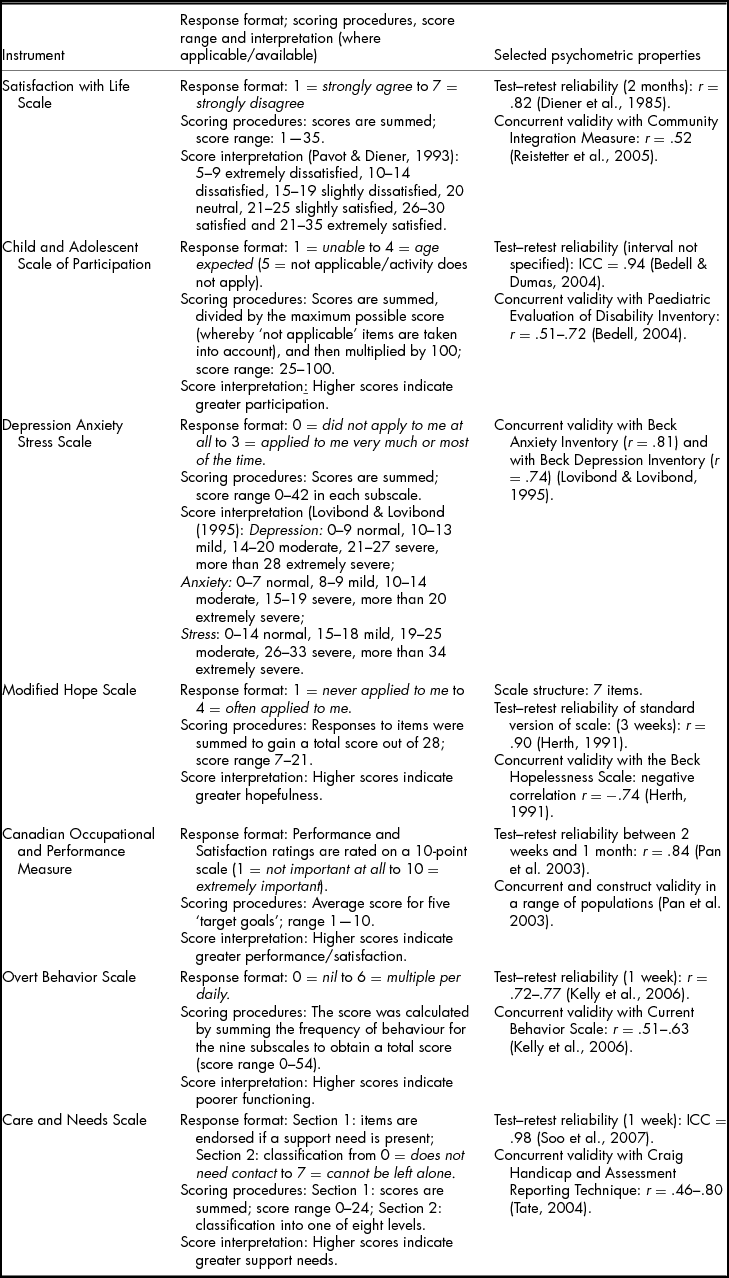
The primary and secondary outcome measures comprised both self-report (adolescent rated) and parent-rated instruments. In addition, five contextual factors were examined. The rationale for including the contextual measures was to examine whether selected personal and/or family factors affected intervention outcomes. All instruments have good psychometric properties, although two instruments (the Hope Scale and the Life Events Tool for Adolescents), adapted to and constructed for the present study, respectively, did not have established measurement properties. All instruments were administered in the context of an interview. For the adolescent, the self-report scales were either completed independently, or, for those participants whose impairments made it difficult to complete the instruments independently, the researcher read out and recorded the adolescent's response. Table 1 provides the response format, scoring procedures and brief information on the psychometric properties of the primary and secondary outcome measures and the contextual instruments.
Description of Measures Used

Primary outcome measures
Satisfaction with Life Scale (SWLS; Diener, Emmons, Larsen, & Griffin, Reference Diener, Emmons, Larsen and Griffin1985): The primary adolescent-rated outcome measure was the SWLS, a 5-item self-rated scale designed to measure quality of life.
Child and Adolescent Scale of Participation (CASP; Bedell, Reference Bedell2004): The primary parent-rated outcome measure was the CASP, a 20-item scale covering four domains: Home Participation (6 items), Neighbourhood/Community Participation (4 items), School Participation (5 items), and Home and Community Living Activities (5 items). The scale measures age appropriate participation in home, school and community by children and adolescents with acquired brain injury.
Secondary outcome measures – adolescent
Depression, Anxiety and Stress Scale (DASS; Lovibond & Lovibond, Reference Lovibond and Lovibond1995): The DASS is a self-report scale measuring negative emotional states. It consists of three subscales: Depression, Anxiety and Stress, each of which contains 14 items, rated in terms of frequency over the preceding week.
Modified Hope Scale (mHS): The mHS is an abbreviated version of the 30-item Herth Hope Scale designed by Herth (Reference Herth1991) to measure hopefulness. A number of items in the original scale are abstract and have complex phrasing. Consequently, the seven most concrete items were chosen so that they could be understood by the adolescent with severe brain injury.
Canadian Occupational and Performance Measure (COPM; Law et al., Reference Law, Baptiste, Carswell, McColl, Polatajko and Pollock2005): The COPM is an individualised measure for use with clients who have disabilities to detect their self-perceived change in occupational performance over time. Using a semi-structured interview format, the client is guided to generate their five most important goals. Performance and satisfaction ratings are made for each goal.
Secondary outcome measures – parent
Overt Behavior Scale (OBS; Kelly, Todd, Simpson, Kremer, & Martin, Reference Kelly, Todd, Simpson, Kremer and Martin2006): The OBS measures common challenging behaviours of people with ABI. It contains 9 items corresponding to 9 subscales: Verbal Aggression, Physical Aggression against Objects, Physical Aggression against Self, Physical Aggression against Others, Inappropriate Sexual Behaviour, Perseveration, Wandering/Absconding, Inappropriate Social Behaviour and Lack of Initiation. For each item, the parent was asked if their child displayed the behaviour. If the parent answered ‘yes’, the researcher asked additional questions about the severity, frequency and impact of the behaviour.
Care and Needs Scale (CANS; Tate, Reference Tate2004): The CANS measures the support needs for everyday activities and community living of people with TBI. It contains two sections: Section 1 is a 24-item Needs Checklist divided into four groups (A = special needs, B = basic activities of daily living, C = instrumental activities of daily living and D = informational and emotional supports). Section 2 uses the information from section 1 to classify the individual support needs into one of the eight levels. Clinical researchers interviewed the parents to complete Section 1, and then used this information and the adolescent's age to determine the individual's support needs in section 2.
It was hypothesised that after the intervention, in comparison with the control group, the intervention group would have higher personal satisfaction (SWLS), greater home, school and community participation (CASP), better emotional functioning (DASS), higher level of hope for the future (mHS), better goal achievement (COPM), better behavioural functioning (OBS), and lower level of care and support needs (CANS).
Contextual measures
An additional five instruments were administered to capture contextual factors as follows: (i) 24-item Change Assessment Questionnaire (Lam, Chan, & McMahon, Reference Lam, Chan and McMahon1991; Lam, McMahon, Priddy, & Gehred-Schultz, Reference Lam, McMahon, Priddy and Gehred-Schulz1988) assessing motivation/readiness to change, (ii) 28-item Australian adaptation (Waters, Salmon, Wake, Wright, & Hesketh, Reference Waters, Salmon, Wake, Wright and Hesketh1999) of the Child Health Questionnaire (Landgraf, Abetz, & Ware, Reference Landgraf, Abetz and Ware1996) evaluating physical and psychological aspects of general health, (iii) 53-item Family Assessment Device (FAD; Epstein, Baldwin, & Bishop, Reference Epstein, Bladwin and Bishop1983) evaluating family functioning in 7 domains, (iv) 30-item Caregiver Burden Interview (CBI; Machamer, Temkin, & Dikmen, Reference Machamer, Temkin and Dikmen2002) measuring positive and negative responses to the caregiving process in caregivers of people with TBI, and (v) the Life Events Tool for Adolescents (LETA).
The LETA is a self-report measure of life events occurring in the previous 12 months. The LETA was designed for this study using elements from the Life Events Scale for Students (Clements & Turpin, Reference Clements and Turpin1996), the Peri Life Events Scale (Dohrenwend, Krasnoff, Askenasy, & Dohrenwend, Reference Dohrenwend, Krasnoff, Askenasy and Dohrenwend1978) and the Junior High Life Experiences Survey (Swearington & Cohen, Reference Swearington and Cohen1985). The LETA was administered by the researcher in collaboration with the adolescent. In part A, the adolescent specified which of 25 events had occurred in the past 12 months. In part B, the researcher identified items the adolescent had endorsed with ‘yes’ and asked additional questions about the emotional quality (1 = really bad, 2 = bad, 3 = good, 4 = really good) and impact (1 = not much, 2 = a bit, 3 = a lot) of the event. Items 5 and 6 regarding alcohol and drug use were not rated for emotional quality or impact. Items endorsed as ‘yes’ with an emotional quality of ‘good’ or ‘really good’ were summed for the ‘Positive’ score. Items endorsed as ‘yes’ with an emotional quality of ‘bad’ or ‘really bad’ were summed for the ‘Negative’ score.
Intervention
The funding body employed clinical consultants with expertise in coaching to develop and implement the intervention, thereby keeping the intervention and assessment components of the trial separate and independent. Three coaches were employed to implement the intervention. The coaches had experience working with people with brain injury and other disabilities, in the areas of rehabilitation counselling, vocational rehabilitation, career counselling, occupational therapy and teaching. The coaches underwent a training programme that included five days training in coaching and five days training in other psychological techniques. The coaches attended group discussion sessions that were facilitated by the clinical consultants for one hour per fortnight for the duration of the intervention.
The intervention for each participant was developed by the coaches in collaboration with the participant, as well as the clinical consultant. The intervention was designed to span a 12-month period, including after the adolescent completed high school. Session duration was planned to be 30–60 minutes occurring every two to four weeks. Content of the sessions was flexible and adapted to each adolescent. Initial sessions included rapport building to engage and encourage the adolescent. Later sessions included the implementation of coaching techniques as appropriate to the adolescent's progress. A typical session involved time spent identifying areas of importance for the adolescent, then developing goals to achieve in these areas. It also included review of the past plans, progress on goals since the previous session and problem solving to address obstacles encountered. Parents were included in the initial explanation of the intervention in the first session, and then the adolescent attended sessions on their own. One exception was when a parent attended a later session with the adolescent due to a particular concern.
Each coach was allocated seven participants based on geographical location. Sessions were generally conducted face-to-face after school at the adolescent's home. Frequency of sessions was flexible with regard to the adolescent's other commitments, e.g., school exams. If unable to meet face-to-face, contact was made by telephone or e-mail.
Procedure
Ethics approval to conduct the study was obtained from the New South Wales Department of Health Central Committee and each of the four participating sites, as well as the New South Wales Department of Education and Communities. A representative clinician from each paediatric brain injury rehabilitation unit compiled a list of eligible participants who met the selection criteria. Recruitment began in March 2009. The parents of potential participants were contacted by letter of invitation to participate and written consent was obtained from both the parents and adolescents who elected to participate. A researcher attended the participant's home or the hospital to complete the pre-intervention assessment.
Data on the primary and secondary outcome measures were collected on three occasions: prior to intervention implementation, immediately post-intervention and at a 6-month follow-up. After the pre-intervention assessment was completed, participants were randomised to one of the two groups: group 1 received the intervention (intervention) and group 2 no intervention (control). Allocation to intervention or control group was concealed; randomisation was conducted by the principal investigator (author RLT), who was located offsite and was not involved in either the delivery of the intervention or the assessments. A block randomisation procedure was used, stratified by geographical location (metropolitan vs. non-metropolitan), using a computer-generated random number sequence, with blocks of at least six participants.
When the intervention was complete, the post-intervention assessment was arranged. Because the control participants did not receive the intervention, there was no ‘post-intervention’ date for those participants. Moreover, the intervention component of the study was conducted over a 12-month period, which meant that participants in the intervention group commenced and completed their intervention at different times during the year. A ‘post-intervention’ date within that year therefore had to be constructed for each control participant. We used the procedure of examining the date of their pre-intervention assessment (along with their geographical region: metropolitan vs. nonmetropolitan), and then matched these data as closely as possible to that of a participant from the intervention group. In this way, we obtained pairs of participants (one intervention; one control) who had very similar pre-intervention dates. We then used the actual post-intervention date of the respective intervention participant as the timeframe for the ‘post-intervention’ assessment for the control participant from the same pair. The post-assessment was conducted as soon as possible after the scheduled date by a researcher who was blind to the participant's allocated group. Follow-up assessment was scheduled for six months after the post-assessment and conducted as soon as possible after the scheduled date. The final follow-up assessment was conducted in January 2011.
Statistical Analysis
Assessments were scored by a researcher blind to the participant's allocated group. Data were entered into an Statistical Package for the Social Sciences database and analysed. Non-parametric analyses were conducted because all measures produced ordinal-level data. Demographic and injury variables were analysed using Chi-Square or Mann–Whitney U tests, as appropriate.
A series of Mann–Whitney U tests was used to compare scores in the intervention vs. control groups at pre-intervention assessment, post-assessment and follow-up assessment occasions. Bonferroni adjustments were made to the critical alpha level to control for inflated type I error due to multiple comparisons. An alpha level of p < .025 was set for the two primary outcome measures, as well as for the two secondary outcome measures administered to the parents.
For the three secondary outcome measures for the participant, data from one of the secondary measures, COPM, were not analysed because the goals worked on by the coaches for the intervention group differed from the goals as identified at pre-intervention assessment. One of the remaining two secondary measures administered to the adolescents (DASS) has three subscales and thus the critical alpha level for the four comparisons (three DASS subscales and mHS) was set at p < .0125. Corrections were not made to the five contextual measures due to their exploratory nature and an alpha level of p < .05 was used. Wilcoxon Signed Ranked Tests were used to analyse within-group changes over time, between pre- and post-treatment test occasions (and follow-up when changes between pre- and post-intervention assessments were significant). Reduced alpha levels were also used for the Wilcoxon tests, as described previously.
Power Analysis
No relevant studies with a clinical population were available upon which to conduct a power analysis to determine the sample size required for the present study. Green, Oades and Grant (Reference Green, Oades and Grant2006) conducted an RCT to examine the effect of a coaching intervention on psychological functioning of healthy adults. In a sample of 23 participants randomly allocated to the coaching group, a medium effect size (.4) was found on the SWLS following completion of the programme, whereas a very small effect size (.1) was found in the control group. The final sample size for this study was n = 43, and on the basis of the Green, Oades and Grant (Reference Green, Oades and Grant2006) study it was expected that the present study was sufficiently powered to detect a medium effect size on the Satisfaction with Life Scale in the coaching group.
Results
Recruitment and Retention
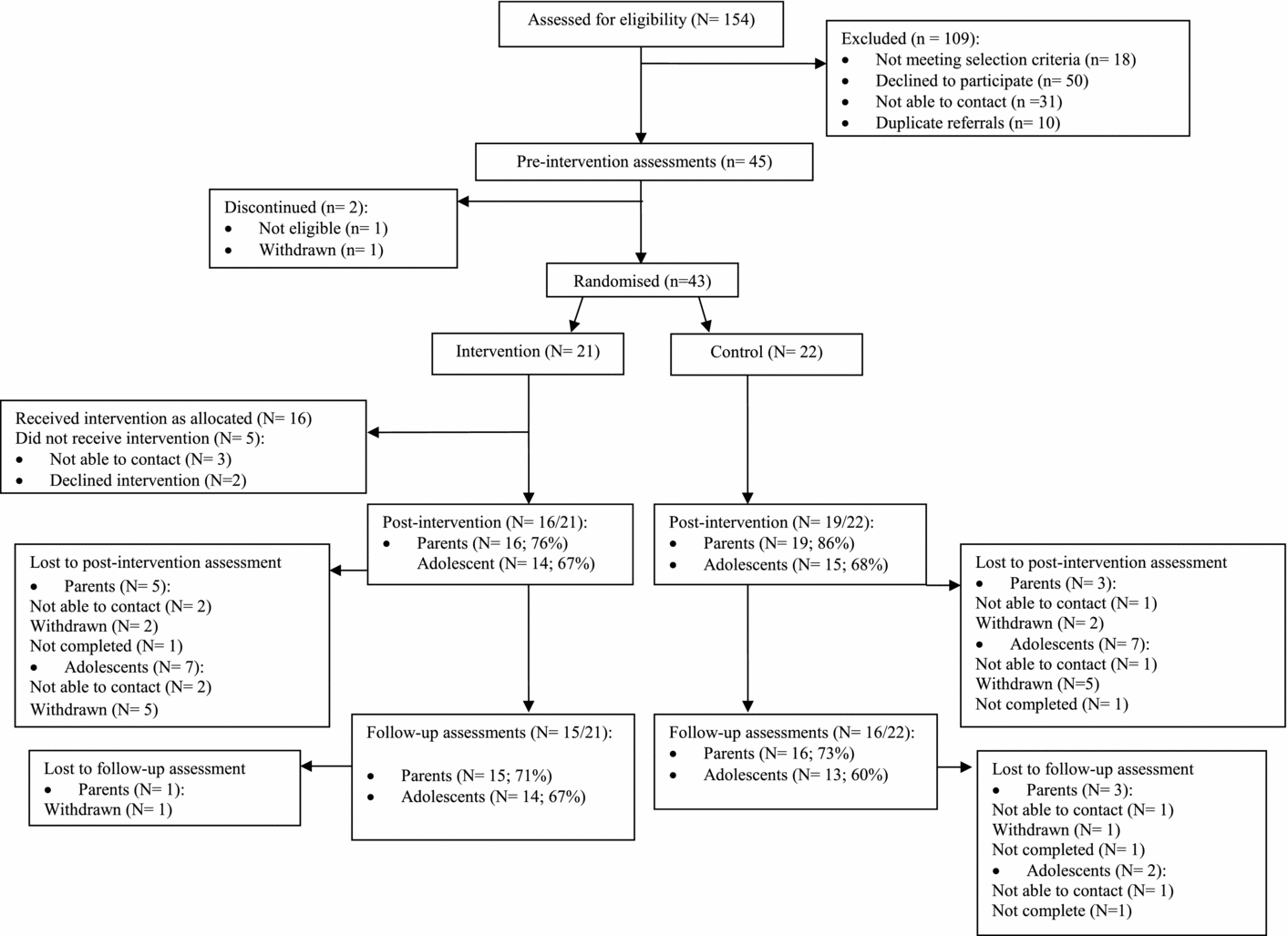
The flow diagram of the study progress is described in Figure 1. A total of 154 potential participants were screened for eligibility, 45 of whom met selection criteria and completed the pre-intervention assessment. After 1 participant withdrew and another was discovered ineligible, 43 participants were randomly allocated to either the intervention group (n = 21) or the control group (n = 22).
Study flowchart.

All participants remained in the group to which they had been allocated. During the study, 16 of 21 (76%) participants from the intervention group received the intervention as allocated. Five participants did not commence the intervention, although two of these completed both the post-intervention and follow-up assessments and their data were subject to intention to treat analysis. The reasons for non-participation in the intervention were as follows: declined (n = 1), no longer available (n = 1) and coaches not able to make contact by phone or letter (n = 3).
Following completion of the intervention, 16 parents and 14 adolescents from the intervention group completed the post-intervention assessment, a retention rate of 76% and 67%, respectively. From the control group, 19 (86%) parents and 15 (68%) adolescents completed the post-assessment. At the follow-up assessment, 15 (71%) parents and 14 (67%) adolescents from the intervention group completed the assessment, as did 16 (73%) parents and 13 (60%) adolescents from the control group.
Success of Blinding Procedures
For two participants, the assessor became unblinded during post-assessment, and therefore, another blind assessor completed the follow-up assessment. Effectiveness of the blinding was evaluated by asking the assessors to guess group membership at the conclusion of the follow-up assessment. Data were available for 22 participants (8 intervention and 14 control). The assessor correctly guessed group allocation for 13 participants (59%), which is only marginally better than chance.
Participant Characteristics
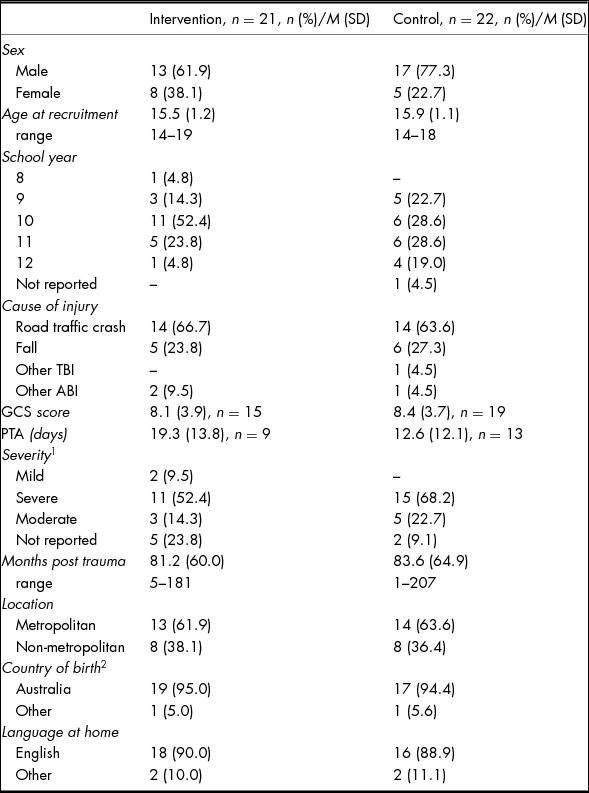
Table 2 describes the demographic and injury data for the adolescents at pre-intervention. All pre-intervention demographic and injury variables were examined statistically for differences between the intervention and control groups using Chi-square or Mann–Whitney U tests, as appropriate, and no statistically significant differences were found on any variable. The majority of participants were male and age ranged from 14 to 19 years, with a mean of approximately 16 years for both groups. They were in years 8–12 at school with a slightly different spread across the years between groups. The groups had a similar mean score for the Glasgow Coma Scale and PTA. The majority of participants were classified as having a severe brain injury and both groups were on average almost 7 years post-trauma, although the range was large (1 month to 17 years). With three exceptions, all participants sustained TBI, the most common cause being road traffic crash. Two-thirds of participants from both groups resided in the metropolitan region of Sydney and the majority of participants were born in Australia and spoke English at home. All participants attended main-stream schools.
Demographic and Injury Data at Pre-Assessment

TBI = traumatic brain injury; ABI = acquired brain injury; GCS = Glasgow Coma Scale; PTA = post-traumatic amnesia.
1 From GCS, PTA or information in neuropsychology report. For 9 (21%) participant's GCS and PTA indicated different severity. The more severe category was selected.
2 Country of birth and Language at home not known for 1 Coaching and 4 Control group participants.
To identify any pre-existing and co-morbid conditions, parents were asked about their child's medical history. Other health conditions, whether pre-existing or onset after the brain injury were as follows: intervention group (mild cerebral palsy (n = 1), mild autism spectrum disorder (n = 1), onset of epilepsy (n = 1), concussion from a subsequent head injury (n = 2)); control group (n = 5; previous sport-related head and spinal injury, dyslexia, ADHD, sleep apnea and epilepsy). In spite of these medical issues, all participants attended mainstream schools.
Neuropsychological assessment reports were available for 38 of the 43 participants, but there was a variable interval between the report and pre-intervention assessment for the study (mean approximately 33 months; range: 1–89 months). Consequently, the reports serve as a general guide only. As a group, the reports indicated that almost all participants experienced cognitive impairments in a range of domains, including the characteristic deficit profile of people with TBI: attention, processing speed, memory and executive function. The particular pattern of impairments varied among participants from a single domain through to four or five cognitive domains, as well as behavioural deficits, but mostly one or two domains. Similarly, the severity of impairments varied, and was predominantly in the mild range. It is noted that a number of participants had additional difficulties with literacy skills. With a single exception (control group participant), all participants had functional abilities, and it appeared that there were no marked between-group differences with respect to the neuropsychological profile.
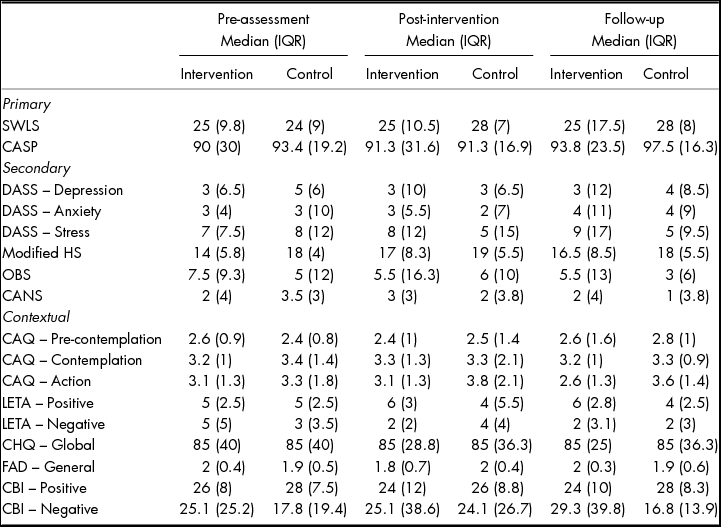
Table 3 presents the data on the primary and secondary outcome measures for the intervention and control groups at pre-intervention assessment. With a single exception (one secondary measure, the mHS (z = −3.147, p = .002)), there were no significant group differences. Interpretation of median scores for the outcome measures at pre-intervention assessment for both groups suggested that neither group experienced major problems: the SWLS scores were in the mid-range of the scale, the CASP scores showed a fairly high level of age appropriate participation, all subscales of the DASS were in the normal range, the OBS showed a very low level of challenging behaviour and the CANS suggested relatively low support needs. Interpretation of scores for the mHS is made difficult by the absence of normative data; both groups, however, scored in the upper 50% of the score range.
Intervention and Control Groups at Pre-assessment, Post-intervention and Follow-up

Intervention
A total of 16 of the 21 adolescents allocated to the intervention group participated in the intervention. Participants received a mean of 6 sessions (range 3–8 sessions), with their interventions occurring over a mean of 22 weeks (range 10–41 weeks). Most sessions were conducted face-to-face; two participants completed their final two sessions by phone and e-mail. Goals developed between the coaches and adolescent were most commonly in the educational, vocational, social and leisure domains.
There was a range of reasons the intervention concluded: (i) Five adolescents were occupied with education or employment, (ii) three decided to continue working on their goals by themselves, (iii) three could not be engaged following the Christmas break, (iv) two were occupied with family issues, (v) one was not able to engage in ongoing structured sessions, (vi) one required mental health intervention, and (vii) the final adolescent remained in phone contact for six months until the coach and adolescent agreed that contact was no longer needed.
Outcomes
Table 3 presents descriptive data on the primary and secondary outcome measures for the respective post-intervention and 6-month follow-up assessments. The results of Mann–Whitney U tests between the intervention and control groups were not statistically significant at either the post-intervention or follow-up testing occasions for any of the outcome measures for life satisfaction, community participation, mood, hope for the future, behaviour or support needs. Nor did Wilcoxon tests show statistically significant within-group changes over time between pre- vs. post-intervention scores.
Descriptive data for the contextual measures are also presented in Table 3. At the post-intervention assessment, there were no significant between-group differences on any of the measures at p < .05 for motivation to change, general health, life events, family functioning or parental response to caregiving. Nor were differences found at the follow-up assessment. No significant within-group changes occurred over time between pre- vs. post-intervention for either the intervention or control groups on any measure.
Discussion
In summary, this RCT evaluated the effectiveness of a targeted intervention using a coaching approach to support adolescents with TBI during the transition phase from school to ‘adult world’. Multiple variables compatible with the coaching philosophy were selected to evaluate changes in a variety of areas, capturing both self-report values and objective functioning as reported by the parent. Contextual factors that may have impacted on the intervention were also evaluated. Results provided no evidence of treatment effect: relative to pre-intervention assessment, the intervention group did not show greater improvement following the intervention in comparison with the control group on the primary outcome measures of satisfaction and community participation or secondary outcome measures of emotional functioning, behaviour and support needs. There were no group differences on any of the contextual factors of readiness to change, positive and negative life events, general health, family functioning or parental responses to the caregiving role.
We evaluated the methodological quality of this study using the PEDro methodological rating scale (Maher, Sherrington, Herbert, Moseley, & Elkins, Reference Maher, Sherrington, Herbert, Moseley and Elkins2003). It scored 7/10, losing 3 points because neither (i) the participants nor (ii) the therapists were blind to group (which was not possible with this type of study) and also (iii) attrition was greater than 15%. The non-significant results are therefore unlikely to be attributed to weaknesses in the study design.
It is possible that the instruments used were not the most suitable to capture changes within the intervention group. Alternatively, other factors not measured in the study may have contributed to the null results. In the initial planning of the study, we tried to anticipate potential contextual factors in the participants’ lives that were beyond the researchers’ control yet may have interfered with obtaining a treatment effect. By including the five contextual variables, we are confident that none of these factors (participants’ motivation, life events or physical and psychological health; nor parental or family stress), operated in the present study.
A number of possible reasons may account for the null results. The most obvious possibility was that the sample size was not sufficiently large. Although the study was initially adequately powered to detect a medium effect on the primary outcome measure of life satisfaction (SWLS), 5 of the 21 participants allocated to the intervention group did not commence the intervention (data were available and analysed from two of these participants for all assessment occasions). This would have inevitably weakened any results with respect to treatment effectiveness. It is unknown whether the participants received sufficient ‘dosage’ of the intervention for it to be effective. On average, they received 6 coaching sessions (range 3–8) over a 22-week period (range 10–41). Dawson and Guare (Reference Dawson and Guare2009) recommended that coaching sessions be conducted on a daily basis for change to occur. The application of such intensive treatment in a community setting raises feasibility issues but does indicate that a higher dosage may be required.
At a more general level, we did not evaluate treatment adherence and so we do not have evidence to substantiate that components of the intervention were implemented as intended. As noted, in this study the coaches received training in delivering the intervention, as well as fortnightly supervision sessions and Bumbarger (Reference Bumbarger, Sanetti and Kratochwill2014) has emphasised the importance of having an infrastructure for the purpose of ‘quality control’ of intervention implementation. Nonetheless, it would have been advantageous to monitor intervention implementation quantitatively. Resources are available that provide specific guidance for implementing interventions in the research setting so that treatment fidelity is maximised (e.g., Sanetti & Kratochwill, Reference Bumbarger, Sanetti and Kratochwill2014; Tate & Perdices, Reference Tate and Perdicesin press). Treatment fidelity protocols are also available (e.g., Borelli, Reference Borelli2011), as well as procedures to evaluate treatment adherence (Tate et al., Reference Tate, Perdices, Rosenkoetter, Wakim, Godbee, Togher and McDonald2013).
Other reasons for failure to detect a treatment effect may also apply. As a group the participants had unremarkable profiles on the outcome measures, with the pre-intervention assessment scores at the median. It is, thus, possible that, notwithstanding the severity of the initial injury and presence of impairments in a range of cognitive and behavioural domains as indicated in the neuropsychological reports, participants in the intervention group nonetheless performed within normal limits on the outcome measures, leaving little potential for improvement as a result of the intervention. Moreover, as noted, due to procedures implemented to keep the assessors independent from the coaches delivering the intervention, no ongoing communication occurred between the two sets of personnel during the intervention period. An unanticipated consequence of this procedure was that the goals that were established at pre-intervention assessment with the assessors using the COPM were not the same as those worked on during the intervention with the coaches. Therefore, data from the COPM could not be used in analyses, and as a result there was no proximal measure of the effectiveness of the intervention in relation to goals worked on during the course of the intervention.
A final consideration is that a coaching intervention may not be effective for adolescents with TBI. There have been relatively few trials into the use of the coaching approach with clinical populations (Dawson & Guare, Reference Dawson and Guare2009; Izumi et al, Reference Izumi, Ando, Ono, Suzukamo, Michimata and Fukuhara2007; Linder et al., Reference Linder, Menzies, Kelly, Taylor and Shearer2003; Merriman & Codding, Reference Merriman and Codding2008; Sleeper-Triplett, Reference Sleeper-Triplett2008; Swartz et al., Reference Swartz, Prevatt and Proctor2005) and adolescents with TBI in particular (Kennedy & Krause, Reference Kennedy and Krause2011). Green, Grant and Rynsaardt (Reference Green, Grant and Rynsaardt2007) explicitly stated that the coaching model was developed for non-clinical groups. One feature of coaching is its capacity to be delivered in a fairly fluid and naturalistic way, although such a mode of delivery may not be well suited to people with acquired cognitive impairments, whose best performances are often facilitated with prompts and structure (Ylvisaker, McPherson, Kayes, & Pellet, Reference Ylvisaker, McPherson, Kayes and Pellet2008). It may also have been advantageous to include a feedback questionnaire for the adolescent and their parents. This may have provided insights into the study in general and the intervention process in particular, including an understanding of the adolescent's perception and experience of the intervention.
In the meantime, there is already an extensive clinical and evidence-based literature that, as described in the introduction to this paper, discusses approaches to support adolescents with TBI, as well as other disabilities and health conditions, during the transition phase when completing high school. These include planning for the transition early in high school, consulting with the adolescent, their family and professionals, developing the adolescent's general life skills such as decision making and autonomy and setting goals that are visionary yet realistic.
Acknowledgements
Special thanks are due to the staff at Lifetime Care and Support Authority, Children's Hospital at Westmead Brain Injury Service, Illawarra Brain Injury Service, Kaleidoscope Paediatric Brain Injury, Rehabilitation Team Newcastle and Liverpool Hospital Brain Injury Rehabilitation Unit, New South Wales Department of Education and Nardoo for their contribution to this study. Appreciation is expressed to the 43 adolescents and their parents who generously gave their time to participate in this study.
Financial Support
This research was funded by the Lifetime Care and Support Authority.
Conflict of Interest
None.
Ethical standards
The authors assert that all procedures contributing to this work comply with the ethical standards of the relevant national and institutional committees on human experimentation and with the Helsinki Declaration of 1975, as revised in 2008.
Appendix: Search terms for systematic review
Medline
(1) adolescents.mp. or Adolescent/
(2) coaching.mp. or Mentoring/
(3) Goals/ or goal setting.mp.
(4) brain injury.mp. or Brain Injuries/
(5) traumatic brain injury.mp. or Brain Injuries, Traumatic/
(6) acquired brain injury.mp.
(7) head injury.mp. or Craniocerebral Trauma/
(8) 2 or 3
(9) 4 or 5 or 6 or 7
(10) intervention.mp.
(11) rehabilitation.mp. or Rehabilitation/
(12) therapy.mp. or Therapeutics/
(13) program.mp.
(14) programmes.mp.
(15) 13 or 14
(16) treatment.mp.
(17) 10 or 11 or 12 or 15 or 16
(18) 1 and 8 and 9 and 17
PsycINFO
(1) adolescents.mp.
(2) exp ADOLESCENT PSYCHOLOGY/ or adolescents.mp.
(3) coaching.mp. or exp COACHING PSYCHOLOGY/ or exp COACHING/ or exp LIFE COACHING/
(4) 1 or 2
(5) exp Goal Setting
(6) 3 or 5
(7) exp Brain Damage/ or exp Head Injuries/ or exp Traumatic Brain Injury/ or brain injury. mp.
(8) acquired brain injury.mp.
(9) traumatic brain injuries.mp
(10) head injury.mp
(11) 7 or 8 or 9 or 10
(12) intervention.mp or exp INTERVENTION/
(13) exp REHABILITATION/ or rehabilitation.mp
(14) therapy.mp or exp INTERVENTION/
(15) therapy.mp. or exp PROGRAM DEVELOPMENT/ or EXP PROGRAM EVALUATION/
(16) PROGRAMME.MP
(17) 15 or 16
(18) 12 or 13 or 14 or 17
(19) 4 and 6 and 11 and 18