Introduction
FLORIAN SCHEDING
In 2013, trucks and vans were driving across London, bearing the message ‘In the UK illegally? Go home or face arrest.’ These mobile billboards declared the number of arrests that had taken place ‘in your area’ in the previous week and provided a number to which people could text the message ‘HOME’ to initiate voluntary repatriation. In 2016, Theresa May, who had organised this scheme as home secretary, became prime minister, following the upheaval caused by the country's plebiscite to leave the European Union. One of the main strands of argument of the successful ‘Brexit’ campaign centred on the ‘deep public anxiety . . . about uncontrolled immigration’Footnote 1 and promised to reduce numbers of immigrants to the country. This desire to control the nation's borders continued to dominate the official soundscape of Britain's government. At the 2016 annual Tory conference, May endeavoured to draw clear lines on issues of belonging, territory, citizenship, and the fuzzy notion of British values, discursively excluding not only migrants, but also anyone with an international(ist) outlook from the national debate: ‘If you believe you are a citizen of the world’, she posited, ‘you are a citizen of nowhere.’
Arguments against ideologies that propose homogeneous national cultures are widespread. Homi Bhabha issues a hefty warning against monocultural nationalism when he cautions that ‘the very idea of a pure, “ethnically cleansed” national identity can only be achieved through the death, literal and figurative, of the interweavings of history’, and calls instead for ‘a more transnational and translational sense of the hybridity of imagined communities’.Footnote 2 And yet, even discourses such as Bhabha's imply an unease with the nation that permeates several of the foundational texts of migration and diaspora studies. In his seminal ‘Reflections on Exile’, Edward W. Said explicitly constructs the migrant as the Other to the Nation. While he acknowledges the deep connection between nationalism and exile, he sees their relation as ‘a dialectic of servant and master’ in which the nation ‘fends off exile, fights to prevent its ravages’.Footnote 3 Hannah Arendt, too, positions the migrant on the margins of history, even as she advocates for the refugee to be moved to the centre of historical discourse.Footnote 4 Tariq Modood has discussed the potential of concepts such as multiculturalism to function as ‘a nation making, or, more precisely, a nation-remaking project’. And yet, he holds out little hope, suggesting that multiculturalism has ‘given up [on] protecting/promoting the project of multicultural Britishness’ and positing the ‘incompatibility between multiculturalism and cosmopolitanism in relation to migration’.Footnote 5 Bleaker still is David Goodhart's view that migration after the Second World War has undermined national solidarity and Britishness as a whole.Footnote 6 Extreme views such as Goodhart's might be exceptions, but they nonetheless point to a current historical debate that Tony Kushner, one of the leading migration historians, has termed the ‘battle of Britishness’. Kushner illustrates how discourses on migration and national identity are informed by an imagined past of a homogeneous, monocultural, pre-immigrant England.Footnote 7 As Laurence Brown has pointed out, Kushner provides a ‘much needed counterpoint’ to recent polemics on post-war immigration that allege precisely such a past.Footnote 8
Things get even more complicated, perhaps, when we focus on music's (and musicology's) relation with the nation. Music and nationalism are uneasy bedfellows, as Philip V. Bohlman has put it.Footnote 9 While song might have the potential to sound the nation into being, the nation is not a necessary, much less a sufficient, condition of song. Despite our discipline's love–hate relationship with nationalism as posited by Bohlman, the national occupies a prominent role at the centre of mainstream musicology. In his Oxford History, for example, Richard Taruskin frames his discussion of Benjamin Britten against the backdrop of the British homeland. While Taruskin mentions Britten's transatlantic journeys of the 1940s that saw him connect with an international artistic jet set in New York and elsewhere, he portrays the composer as a man ultimately tied to his native soil who ‘could only fulfil his musical potential in his aboriginal surroundings, in the bosom of . . . his native society’.Footnote 10 Immigrant composers such as Handel are implicitly excluded from the thrust of British music history, as Taruskin suggests that Britten became the country's first composer of international standing since the seventeenth century. A similar emphasis on engagements with the soil permeates the ‘England’ entry in Grove Music Online. (There exists no separate entry for ‘Britain’; according to the authors, ‘England has always been the predominant entity within Britain.’Footnote 11) While the authors, Stephen Banfield and Ian Russell, prominently place Handel in their section on the eighteenth century, reference what they term ‘musical xenophilia’ during the nineteenth century, and give some room to the spreading of British music as part of the imperial project, their main concern is the elusive search for ‘Englishness’. Bearing the headings ‘Englishness in Music’ and ‘English musical identity’, the first and last subsections bracket the substantial first half of the entry, which is on art and commercial music. Concerning the time period covered by this forum, which spans from the late nineteenth into the early twenty-first century, immigrant voices are almost entirely absent from the Grove entry, and the authors freely admit that ‘the discipline's emphasis on composers and their styles has tended to play into the hands of 19th- and 20th-century nationalism in its search for an intrinsic Englishness’.Footnote 12 The cognitive dissonance is palpable. While the authors problematize ‘Englishness’ and nationalism, they ultimately end up following the same line, as though it were some inevitable track they cannot deviate from.
In his contribution to this forum, Erik Levi shows how this search for Englishness manifests itself in recent scholarship on twentieth-century British concert music. For example, he points out that in his monograph on the ‘Manchester School’ of the 1960s, Philip Rupprecht only mentions immigrant composers such as Mátyás Seiber and Egon Wellesz in passing, a tokenistic strategy that is shared by the editor of another recent publication, Matthew Riley.Footnote 13 While acknowledging the occasional internationalist striving, Rupprecht instead foregrounds the insularity of the Manchester School and posits a specifically English (rather than internationalist) musical modernism.Footnote 14 Paradoxically, research on Egon Wellesz, who spent half his professional life in Britain and serves as Levi's case study, remains the domain of exile studies, much of it by Austrian-based authors and published in German. This perplexing paradox is also manifest in the field of film and film music studies, as I detail in my section. On the one hand, Richard Farmer and Sarah Street effectively exclude immigrant voices from their narrative of British film history, while, on the other, Tobias Hochscherf, Kevin Gough-Yates, Tim Bergfelder, and Christian Cargnelli centre their discussion on the exilic status of the migrants, thus de facto isolating them from wider debates of British cultural identity.Footnote 15 It is noteworthy how those titles of the books here listed that mostly exclude immigrants tend to emphasize national belonging (British musical modernism, British national cinema), while those focused on migrants play on semantic denominators of Otherness (continental connection, exile, émigrés).
Discourses outside academia point towards a similar chasm. In 2014, BBC Radio 3 ran a year-long series. Entitled ‘Best of British’, the corporation broadcast a different work by a British composer every day of the year. Only one of them, Handel, was an immigrant. As Tom Western shows in his contribution, such seemingly innocuous editorial decisions matter, as they erect what Josh Kun has termed aural borders.Footnote 16 Pointing towards mid-twentieth-century British phonography projects that endeavoured to capture and archive the nation in sound through field recordings, Western explains how acts of sonic bordering erect cultural-political barriers that preclude migrant voices from discursive participation.Footnote 17 Simon Rattle's eleven CD box set ‘British Music’, released in 2009 on EMI, likewise participates in sonically bordering the nation, as it includes only British-born composers except for Australian-born Percy Grainger, whose father was English. Conversely, the double CD ‘Continental Britons’, released on the Nimbus label in 2006, exclusively features immigrant composers. What emerges is almost a picture of parallel musical histories of British- versus non-British-born musicians, who interact little, if at all. It is striking that Rob Barnett, for example, picks up on this separation. In his review of ‘Continental Britons’, he highlights the foreignness of the featured composers, stranded in Britain almost arbitrarily, as ‘German and Austrian composers who were émigrés to the UK in the 1930s’.Footnote 18
This sense that migrants might be in the nation, but not be fully part of the nation, to paraphrase Paul Gilroy, has frequently been highlighted. Christina L. Baade, for example, in her detailed study of popular music broadcasts on the BBC during the Second World War, points out that the BBC programme Radio Rhythm Club ‘helped ensure black cultural production, and black British musicians, a place on the national airwaves’.Footnote 19 And yet, ‘nearly all of the experts and critics who contributed to the program were white’, thus situating ‘Negroes, whether Americans, West Indians, or British, as Other to a white British audience’.Footnote 20 At the same time, such acts of Othering afforded a sense of racial authenticity, a point Catherine Tackley elaborates on in this forum, with black musicians alleged to be authentic jazz musicians, regardless of their individual biographies and identities. The Windrush scandal that dominated headlines in the British media in spring 2018 is further evidence for the paradoxical treatment particularly of immigrants from Caribbean countries, who, despite being born British subjects and having lived and worked in Britain for decades, were detained, denied legal rights, threatened with deportation, and in some cases wrongly deported. While the arrival of the Windrush on 22 June 1948 has become something of a trope in the history of immigration to Britain, Catherine Tackley rightly highlights that black musicians, for example, were active well before then in British music. Indeed, groundbreaking publications such as Black British Jazz, which Tackley co-edited with Jason Toynbee and Mark Doffman, and Black Popular Music in Britain since 1945 by John Stratton and Nabeel Zuberi combine attention to immigrant stories with a careful handling of the issue of race.Footnote 21 Even so, they raise questions about the risks of narrating a parallel history of black music in Britain rather than a more integrated history of British jazz music.
The above-mentioned ‘England’ entry in New Grove only mentions immigrant communities in passing, racializing them as ethnic Other and excluding them from the national narrative of British (or English) music. On British Asian music, for example, the authors suggest that ‘Asian and West Indian musics speak on the whole of the originating race rather than the absorbing nationality’.Footnote 22 In his contribution to this volume, Justin Williams directly tackles such assessments, showcasing how Riz MC's work blurs the lines between clearly demarcated identities on the one hand and first- and second-generation migrants on the other. Williams shows how black and minority ethnic artists respond critically to what Gilroy terms postcolonial melancholia, connecting with other artists from different migrant and non-migrant backgrounds in the process. Despite these connections and the nationwide exposure of British Asian artists such as Riz MC, for example, a sense of disconnect remains readable in the literature on British Asian music. Sanjay Sharma, for example, has argued that, rather than forming part of the fabric of British music more broadly, ‘from Bhangra to tabla & bass, Asian sounds continue to make a noise which dis-orientates and transforms British culture’.Footnote 23 Instead of conceiving of British Asian music as British, Helen Kim, too, de-prioritizes the national (she mostly drops the word ‘British’), instead writing of a London Asian scene, for example. Indeed, she suggests that many British Asian cultural producers she interviewed favoured ‘narratives [that] inscribe essentialist ideas about Asian authenticity’.Footnote 24 Such essentialist strategies are not, of course, unique to British Asian music. Ian Collinson and David Hesmondhalgh have pointed out how terms such as Britpop not only engendered a neo-nationalist British identity, but also displaced minority ethnic British artists into transnational categories such as Asian Kool or World Music.Footnote 25 Edited by Jason Toynbee and Byron Dueck, the volume which contains Helen Kim's chapter, Migrating Music, undoubtedly represents a major contribution to broader theoretical discussions regarding themes of movement in the study of music. And while not specifically focused on British music, the narrative of two further chapters, by Carolyn Landau and Sara Cohen, unfolds in Britain. Before this background, it is striking that the book does not index the word ‘Britain’ or a variation thereof. The index entry on ‘identity’ likewise eschews the term, instead calling on urban denominators of place, notably London and Liverpool. Correspondingly, Cohen's chapter charters musicians’ journeys across Liverpool, while Landau explores the multilayered process of identity making in the case of a Moroccan in London, thus foregrounding diaspora rather than immigrant voices as part of a wider British sonic diversity.Footnote 26
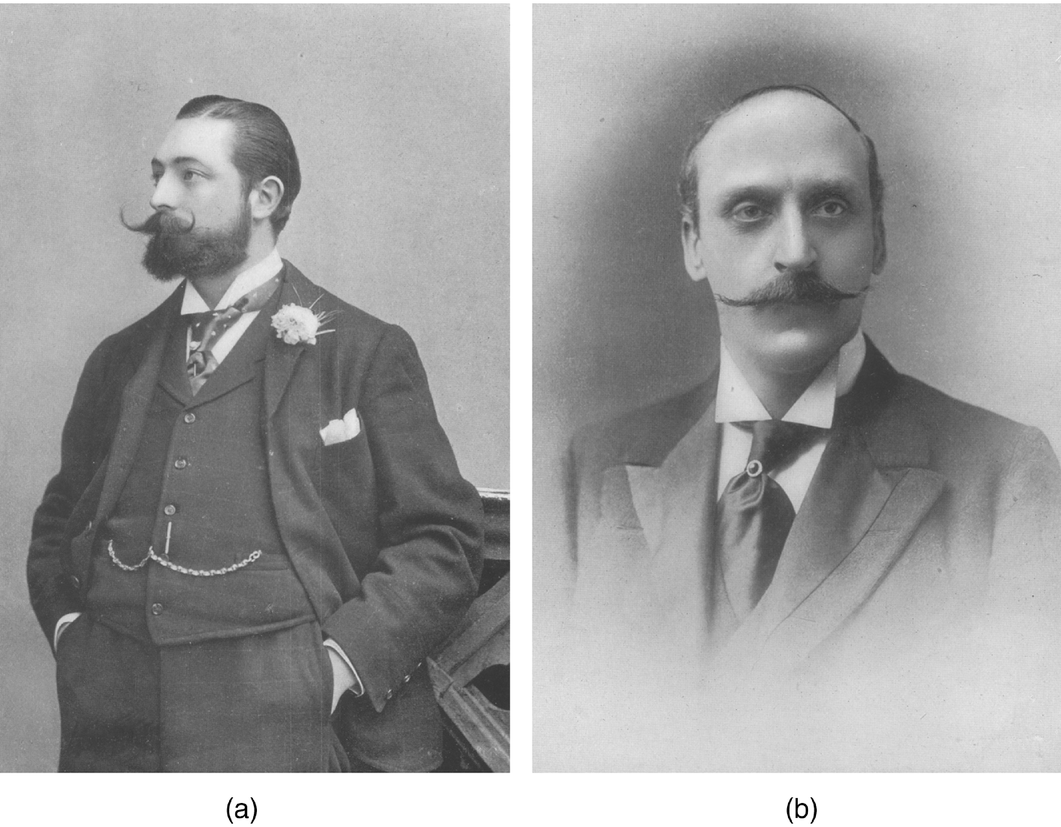
As this brief bibliographic overview confirms, excellent scholarly investigations of migrations and mobility as crucial factors for music in Britain have been undertaken, but the field is fragmented, with patchy collaboration across discussions of specific musical genres and diasporic communities. In some studies on British music, migrants are almost entirely excluded, although, more recently, conferences with titles that reference ‘British music’ have featured more and welcome attention to immigrant voices.Footnote 27 Conversely, studies that investigate musics of diasporic communities in Britain seldom conceptually extend their discussions beyond the specific community or genre demarcations and against what this might mean for an understanding of ‘British music’ more broadly. There remains a lingering sense that musicology's subdisciplines have some ground to cover when it comes to collaboration. The conference ‘The State We're in: Directions in Researching Post-1900 British Music’, held at the University of Surrey on 16–17 April 2015, for example, featured only one session each with papers focusing on popular music and migrant musicians respectively.Footnote 28 Ethnomusicology was not represented. This disconnect between the subdisciplines can be problematic, and Derek B. Scott points to the case of Ivan Caryll whose work, despite its huge successes at the turn to the twentieth century, remains largely unnoticed by musicologists, partly as a result of having fallen in between subdisciplinary gaps. In fact, Caryll's case matters as that of a composer who achieved some fame and seemingly never suffered as a result of his immigrant status. While Caryll dabbled in exoticisms, his Belgian heritage is outwardly absent from his artistic contributions to the history of British operetta.
Taking seriously musicology's political agency,Footnote 29 this forum embraces a multifaceted approach to the history of Britain's diverse musical immigrants across a wide range of musical styles and genres that span the entirety of the twentieth century, reaching into the late nineteenth and the early twenty-first centuries. Between them, the papers not only reveal the impact of immigrant composers and second-generation migrants and diasporic communities with global backgrounds on popular music, musical comedy, jazz, concert music, folk music, and film music. In conversation, the individual contributions highlight the connections across genres, the time period, and diverse migrant backgrounds, thus revealing a multifaceted narrative in which debates concerning ‘the national’ form a current in British musical life and open up questions regarding constructions of a national music history and historiography. The forum thus highlights the contributions of immigrants to British musical life; the extent to which immigrants are, or are not, narrated as part of British music history and the extent to which their musics have been marginalized or otherwise; and what opportunities this poses for an understanding of what ‘British music’ actually means.
Bringing their music with them, migrants arrived in Britain across the time period covered here from all over the world. Building on the excellent work of colleagues working across musicology's various subdisciplines – some of this is mentioned above, more is referenced in the individual contributions – this forum seeks to further holistic approaches that fully integrate migration within national music history and historiography and highlight narratives of (musical) diversity. We advocate a holistic discussion of the impact of migrants on British musical life and aim to represent a small step towards providing a more integrated discussion of diverse migrations and migrants in its historicization of a national cultural history that conceives of the relation between migration and the nation as dialectic. Putting music centre stage, this forum widens the debate on migration as it encourages a discourse that is not restricted solely to economic, legal, and narrow political contexts. Our discipline, perhaps more than any other, has the ability to draw attention to the multitude and heterogeneity of voices and embed them in our historicization of musical life in Britain. The focus on music allows for an exploration of the impact of highly creative migrants and migrant communities on British cultural history, thus foregrounding questions of national belonging and the sonic-cultural narratization of the nation.
Performing Multiculturalism in UK Hip-Hop: The Case of Riz MC
JUSTIN WILLIAMS
We're in search of a new national story. It needs updating.
– Riz MCFootnote 30
With its origins in the 1970s Bronx, hip-hop music and culture has since spread globally as a lucrative and often politically powerful genre of popular music. In the UK, rap music transformed from an imitation of US styles in the 1980s to carving out something more unique. The nation's most visible form of hip-hop, which has been labelled ‘grime’, emerged out of electronic dance music-based MCing in the early 2000s and has celebrated a renaissance in the mid-2010s,Footnote 31 leading to exposure on the 2015 BRIT awards, a BBC late night Prom in the same year, and rapper Skepta winning the Mercury Prize the following year.
Despite this high level of exposure and institutional backing from public service broadcasters such as the BBC (Radio 1Xtra in particular), hip-hop in the UK is vastly misunderstood by the wider public, often conflated with mainstream imagery imported from the United States (which is why much of UK rap is referred to as ‘grime’, to distance itself from the US model). Black and Minority Ethnic (BAME) rap artists arouse suspicion and scepticism from more racist streams of British society, who see British-born second- or third-generation citizens still as ‘immigrants’. Those who define Britain in monoethnic terms, or for those who feel outside such a construction, reflect what Tariq Modood and John Salt call the ‘tacit whiteness’ of national identity in Britain.Footnote 32 In contrast to the often-stereotyped conflation of ‘Britishness’ with ‘whiteness’, UK hip-hop tells a different story. For many practitioners and fans who feel part of this imagined community, hip-hop provides a cultural citizenship separate from more traditional notions of citizenship in the UK and elsewhere.Footnote 33 In response to the question ‘Who is British music?’, then, I posit that many youth cultures have turned to hip-hop both to express themselves and to gain cultural citizenship where other forms of belonging have seemed unavailable. These alternative voices, while varied and multifaceted, reflect a crucial musical and political voice in the British landscape.
Of the wide range of topics that UK rappers discuss and critique, I will focus on hip-hop's performance of marginality to critique what Gilroy outlines as ‘postcolonial melancholia’ in the UK, and its resistance through the celebration of multiculturalism. While space does not allow for discussion of the omnipresent immigration debates which led in part to the ‘Brexit’ outcome of the June 2016 referendum to leave the EU, I will show that rap music can provide a vehicle to address the cultural amnesia found in ethno-nationalist definitions of British identity. Using rapper and actor Riz MC (Rizwan Ahmed) as a case study, I will show how some ethnic minority British citizens navigate a notion of ‘Englishness’ through rap in opposition to and alongside mainstream/stereotypical signifiers in unique ways.Footnote 34 Grime and hip-hop should be considered part of the British musical landscape, providing a widely visible vehicle for its practitioners while simultaneously critiquing such systems and structures it helps comprise.
Postcolonial melancholia
Before engaging with Riz MC's music, it is important to outline the social context to which these rappers’ discourses are responding. In his 2004 book After Empire, Paul Gilroy outlines a concept he calls ‘postcolonial melancholia’, a psychological condition mourning the loss of Empire in an unhealthy manner.Footnote 35 For many, the Second World War becomes an idealized focal point, highlighting past victories fuelled by a heritage industry focused on that era and its perceived whiteness. Within postcolonial melancholia, the immigrant reminds xenophobic Britain of its imperial past and atrocities committed under the banner of colonialism. The symbolic figure of the ‘immigrant’ as an ethnic minority (either from within or outside Britain), according to Gilroy, lends a sense of discomfort to the nation's postcolonial melancholia. He notes that, ‘The vanished empire is essentially unmourned. The meaning of its loss remains pending. The chronic, nagging pain of its absence feeds a melancholic attachment.’Footnote 36
Racism, binge drinking, and neurotic repetition of a selective past are symptoms of this condition. Gilroy writes, ‘Indeed, the incomers may be unwanted and feared precisely because they are the unwitting bearers of the imperial and colonial past . . . The immigrant is now here because Britain, Europe, was once out there.’Footnote 37 We can see these anxieties played out by groups such as the English Defence League, a far-right protest movement that vocalizes opposition to the spread of Islamism and Sharia law in the United Kingdom. Political parties such as the British National Party (BNP) and the UK Independence Party (UKIP) include substantial reduction in immigration numbers as part of their platform. In 2015 and 2016, UKIP's then leader Nigel Farage was vocal about the ‘migrant crisis’ as a reason to leave the EU, most symbolized by the ‘Breaking Point’ poster which depicted a large queue of predominantly non-white migrants wanting to enter the country. The ever-elusive concept of ‘British culture’ is something that parties like UKIP want to retain, as opposed to what they see as the spread of multiculturalism eclipsing traditionally recognized symbols of the ‘quintessentially British’ and their taken-for-granted associations with whiteness.Footnote 38
Responses from BAME rappers to this anti-multicultural, anti-immigrant narrative are rife in UK hip-hop. For example, Riz MC advocates immigrant contributions to society as positive factors: ‘Who these fugees [refugees], what did they do for me but contribute new dreams taxes and tools, swagger and food to eat.’ He continues ‘Buckingham Palace or Capitol Hill, blood of my ancestors had that all built.’ This verse, from ‘Immigrants, We Get the Job Done’ from the Hamilton Mixtape (2016), points out the labour and cultural contributions of ethnic minorities and migrants to both the US and the UK. The track, which features Riz MC (Pakistani-British), Snow tha Product (Mexican-American), Residente (Puerto Rican), and K'naan (Somali-Canadian), discusses the hidden labour of national economies, and rappers speak on behalf of these marginalized and hidden figures.
For many rappers in the UK who represent and enact the lived consequences of Empire, lyrical content often includes a critique of postcolonial melancholia alongside a more introspective reflection on ethnic identities. British-born BAME rappers tell of the lived experience of racism and being made to feel they do not belong. British-Iraqi Lowkey, for example, raps ‘Still I feel like an immigrant, Englishman amongst Arabs and an Arab amongst Englishmen.’ He says in Iraqi that his mother is from Baghdad and father from Dover before switching mid-sentence back to English: ‘And that is the weight that I carry on my shoulders’ (‘Cradle of Civilisation’, 2011). Rapper Akala questions fixed ethnic categorization when he states: ‘Apparently I'm second generation black Caribbean and half white Scottish whatever that means . . . See lately I feel confused with the boxes ’cause to me all they do is breed conflict’ (‘Find no Enemy’, 2010). In terms of gaining cultural citizenship through hip-hop, rapping becomes a way to perform individualized experiences while also being part of something more. Riz MC and others, while articulating their own unique experiences of fractured identities, are also part of a ‘family of resemblances’ found in hip-hop's minority politics.Footnote 39 Hip-hop thus provides counter-narratives to seemingly more dominant ideologies such as postcolonial melancholia.
Riz MC
Riz MC is a British actor whose parents are of Pakistani descent. He has been in a number of television series and films including Four Lions (2010), Nightcrawler (2014), Jason Bourne (2016), Rogue One: A Star Wars Story (2016), and Girls (2017), and has won an Emmy in 2017 for his work on the show The Night Of (2017). One of Riz MC's earliest forays into music was the song ‘Post 9/11 Blues’ (2006, under the name MC Riz), which was deemed too controversial for commercial radio airplay,Footnote 40 but was a scathing critique of Bush and Blair's involvement in the Iraq war and the new climate of racial profiling after the terrorist attacks of 9/11 in New York City and 7/7 in London. In addition to his solo rap career, he also forms half of the duo the Swet Shop Boys with American-Indian Himanshu Suri, aka Heems.Footnote 41 In March 2017, he gave a speech to parliament on the importance of representing minorities in the media: ‘what people are looking for is a message that they belong, that they are part of something, that they are seen and heard and despite, or perhaps because of the uniqueness of their experience, they are valued. They want to feel represented.’Footnote 42
His South Asian identity is part of a wider tradition of those who have used ‘black music’ to navigate their place in the British landscape. Given that ‘Black British’ in the 1970s and 1980s was used to categorize West Indians and South Asians, the two cultures have felt some solidarity in their ‘non-white’ grouping. But, as Rollefson points out, discussion of South Asian identity is missing from theorizations by Gilroy and others. Rollefson's work on the Sri Lankan-British rapper MIA notes how she complicates the blackness of black music, and more broadly, that while the South Asian experience has been largely mediated by ‘black music’, this is far from a simple appropriation.Footnote 43
The Englistan EP was released on St George's Day (23 April) 2016, with its title track released as a music video on the Muslim holiday Eid al-Fitr (6 July 2016, celebrating the end of Ramadan). The cover of the EP immediately puts into focus a sense of duality: wearing a cricket jersey with his back to the viewer, we see ‘Engl’ of England on the left and the ‘istan’ of Pakistan on the right. While postcolonial theorists such as Homi Bhabha have written on the ‘third space’ found in the supposed hybridity of such identities, the cricket jersey is a visual reminder of the doubleness of his identity, the perceivably separate nature of the two worlds. Themes on the album include multiculturalism (‘Englistan’), banking scandals (‘A Few Bob’), mental health (‘Sunburnt’), honour killings (‘Benaz’), the double lives of many second-generation immigrants (‘Double Lives’), and the fallacy of a monoracial British history (‘I Ain't Being Racist But. . .’). Riz MC describes his EP as a mixtape ‘all about our society and trying to find a place in it.’Footnote 44
The title track ‘Englistan’ highlights England's dualities, the good and the bad, the ‘politeness mixed with violence’ that defines his country. He raps of the ‘green and pleasant land’ and the ‘mean and pleasant land’ – that these two sides of English identity go together. To cite one of the many food references in the song, he raps, ‘Racist beef, cakes and tea, all go together like a do-re-mi.’ Multicultural English is described as a ‘kicharee’ (Hindi for mixture), a mix of rice, daal, vegetables, and numerous spices: ‘This is England, the bridge we living in, a kicharee simmering, women in hijabs, syringe popstars and the promise of a Patel as a ManU star.’ When he raps ‘Big up the Queen's Christmas speech and all the shit her kids get for free’ you can see the hybridity of ‘big up’ (Caribbean patois) mixed with an initial pro-monarchy sentiment followed by a critique of it. This is an example of code combining, rather than code switching, something that Nabeel Zuberi discusses with British MC culture in particular.Footnote 45 The end of each chorus has a sampled-sounding voice saying ‘This is England’ in a South Asian accent, reflective of the multi-accentuality of the nation (and in opposition to the ‘BBC English’ received pronunciation accent said to represent stereotypical mainstream Britain).
The music video shows a range of the everyday in local England. It opens with a mosaic of anti-immigrant headlines (including, for example, those from the Daily Express: ‘Send in Army to Halt Migrant Invasion’, ‘No End to Migrant Crisis’, ‘Soaring cost of teaching migrant children’). A news commentator speaks over images of these headlines: ‘if it's the referendum or whether it's the barrage of anti-immigrant media coverage in the run up to it, for some, the result has compounded a feeling of isolation, a sense of disconnection from the country they moved to’. The video then opens to a large park with Riz MC wearing his Englistan shirt, isolated in the large field. The camera quickly switches to a residential area with terraced brick houses and children playing in the street. Video settings include a mosque, a synagogue,Footnote 46 a pub, his house (with his family having tea), a kebab shop, petrol station, and other settings of everyday life in England. We hear a bansuri, a side-blown flute found in Hindustani classical music, as part of the beat to add a sonic signifier of Eastern exoticism. The beat is therefore a mix of Western and Eastern sounds which can mirror the lyrics and visual content from the music video. Ultimately, like many pop songs about England, ambivalence comes to the fore rather than a flag-waving patriotism or a scathing disavowal or critique: ‘Is Britain great? Well hey don't ask me/But it's where I live and why my heart beats.’
In one interview, Riz MC states that ‘Englistan, as a mixtape, is about stretching the flag so that it's big enough for all of us. It's about identity – from what it means to be English today, to what it's like growing up living a double life, or feeling like you don't fit in.’Footnote 47 Sonically, hip-hop becomes an important form to say ‘we are here’. In terms of ethnic marginality, this gets to the heart of the double bind that Rollefson writes about in European hip-hop: ‘hip hop is claiming its seat at the table and having its cake, not to eat it – it doesn't have much of a taste for that cake – but simply to have the cake it was promised. For it turns out that you can have cake – or mithai, or baklava, or flan – and eat it, too, if you aren't beholden to the notion that there is only one true cake at the table.’Footnote 48 Hip-hop is able to navigate both resistance and belonging, as hip-hop has been a mouthpiece for counter-narratives and marginality around the globe, forming a family of resemblances that spans beyond the level of the national.
Including hip-hop music and culture in wider academic discussions of British music adds value to its practices and the communities its practitioners represent. Diversifying mainstream arts and culture, such as the recent social media-led initiative by UK university students to ‘decolonise the curriculum’ to include non-white playwrights and authors, is one such action that aims to represent multicultural Britain more accurately. Postcolonial melancholia is not just a condition felt to varying degrees by the British public, but has real consequences: since the Brexit vote, hate crime has increased by an average of 41 per cent, and it has increased by 326 per cent against Muslims specifically.Footnote 49 If hip-hop can provide a cultural citizenship for those who feel marginalized, then placing the spotlight on them may go some way to promote inclusivity in the divisive times we are living in.
Realizing that ‘Who is British music?’ covers a wider range of people than previously assumed gets to the heart of what we value in music studies and elsewhere. If art and culture provide a lens through which to view society, to not value the artistic and cultural products of certain members risks further devaluing and marginalizing them. Riz MC and other rappers become ambassadors for the voiceless, with an interest in changing such existing dynamics both within and outside the realms of art and culture.
West Indian Roots and Routes of British Jazz
CATHERINE TACKLEY
On 22 June 1948 the Empire Windrush docked at Tilbury in East London having made the transatlantic journey from the Caribbean. (Passengers had boarded first in Trinidad, before the ship proceeded to Jamaica, Tampico, Havana, and Bermuda.) Amongst the passengers were the Trinidadian calypsonians Lord Beginner (Egbert Moore), Lord Woodbine (Harold Philips), and Lord Kitchener (Aldwin Roberts), whose performance of his calypso ‘London is the Place for Me’ on the deck when the ship arrived in Britain was captured by Pathé News.Footnote 50 Although the arrival of the Windrush is understandably heralded as a significant moment in the history of Britain and the Empire, historians have recently developed a more critical approach to the event. Matthew Mead suggests that ‘the shorthand symbolic usage of the Windrush tends towards the monadic’Footnote 51 and the editors of Before Windrush: Recovering an Asian and Black Literary Heritage within Britain argue that ‘the prehistory of that event becomes more crucial than ever for a country trying to understand the process through which it has become a postcolonial nation state’.Footnote 52 These perspectives illuminate the arrival of the Windrush within the broader context of migration and its impact on British culture and society. Certainly, there were precedents for West Indian migration, albeit not on such a scale. The aforementioned calypsonians in particular found in London a flourishing live music scene with many established West Indian musicians.Footnote 53 In this contribution I explore the pre-Windrush migration to Britain of West Indian musicians, who were mainly from Jamaica and Trinidad, assessing the impact of their cultural roots and migratory routes on the development of British jazz in the interwar period.Footnote 54
In the early twentieth century, several West Indian musicians came to Britain via the USA. Trumpeter Leslie Thompson, a later migrant direct from Jamaica, recalled that the circumstances of economic stagnation around the turn of the century led Jamaicans to seek work in the USA, often via Cuba or Panama.Footnote 55 By the start of the century, violinist and pianist Dan Kildare, whose father was paymaster general of the Kingston (Jamaica) constabulary, was resident in the USA. A contemporary of James Reese Europe who was famous for bringing syncopated music to France with his Hellfighters band during the First World War, Kildare was similarly involved in the Clef Club, which had been set up to advocate black musicians and to act as a booking agency. He assumed the presidency of the organization in 1913. In imitation of the exhibition dancers Vernon and Irene Castle, who performed with Europe's all-black orchestra, the dancer Joan Sawyer hired Kildare to provide a similar band for her performances at the Persian Garden at the Winter Gardens Theater in New York. As with many American fashions of the day, this trend for black musicians became influential in London, where a group led by Kildare arrived in 1915. Kildare's West Indian roots are not obviously reflected in the surviving performances and known repertoire of this ensemble. Rather, in accordance with the fashions of the times, Hawaiian references are frequent, and Kildare's band was billed in explicitly racial terms in Britain as ‘Ciro's Club Coon Orchestra’. Moreover, the continued presence of the banjo linked this latest manifestation of American popular music performance in Britain unequivocally back to the stereotyped, generalized racial imagery of the minstrel show.Footnote 56
In the early 1920s, West Indian musicians also performed in Britain with the Southern Syncopated Orchestra (SSO). Formed by the violinist, composer, and conductor Will Marion Cook in New York to perform a wide-ranging repertoire of spirituals, plantation songs, ragtime, blues, jazz, and light classical pieces, the original group which arrived in Britain in 1919 consisted mainly of African-American musicians, including noted saxophonist Sidney Bechet. Once the group was resident in Britain, disputes led to multiple fractures in the personnel. Replacements came direct from the USA, but increasingly also drew on diasporic populations in Britain and Europe including those with West Indian connections. Egbert Thompson, a Sierra Leonian raised in Jamaica who developed his career in New York, took over from Cook as leader of the group for a time. Similarly, trumpeter James Briggs from Grenada, George Clapham from St Kitts, and clarinettist Anthony Rivera from Puerto Rico had all joined up with the SSO to come to Britain having first emigrated to New York. Jamaican-born clarinettist John Russell and trumpeter Joe Smith, as well as Trinidadians Cyril and George Blake (vocalist and drummer respectively) and banjoist Alston Hughes also became members. Latterly, the SSO included some white British musicians such as the trombonist and later bandleader Ted Heath, trombonist John Greer, pianist Billy Mason, drummer Harry Robbins, and trumpeter Tommy Smith.Footnote 57
In this early period then, the precise racial identity of the musicians was not a factor which significantly influenced either the nature of their performances or their employment opportunities in Britain, but their migratory routes via New York, or collaboration with African-American musicians in Britain, were often vital in allowing them to gain experience of the music which would secure their success. As we shall see, by 1935 the origins of the performers began to become logistically significant and more explicit in musical performance. But the story of the SSO also makes clear that by the early 1920s there was a growing community of black musicians in London who were well placed to exploit current fashions in popular music performance.
Alongside those West Indian musicians who had developed their musical skills in the US, the structures of the Empire, notably the Exhibition and the military, were significant in bringing musicians directly from the Caribbean to Britain. In the summer of 1905, the band of the West India Regiment from Jamaica performed at the Colonial Exhibition at Crystal Palace in South London.Footnote 58 The following year the Kingston Choral Union came to Britain to perform at the Colonial Products Exhibition at St George's Hall in Liverpool, and then toured the country, billed as the ‘Native Choir of Jamaica’.Footnote 59 A notable precedent for the latter was the Fisk Jubilee Singers, an African-American choir who toured Britain in the late nineteenth century to raise money for university buildings at Fisk University, a historically black college in Nashville, Tennessee. The Jamaican Choir performed a not dissimilar mix of religious and popular material in formal dress, which endeared them to their British audiences.Footnote 60 These types of encounter with black ‘others’ were familiar tropes in Britain. Exhibitions had long provided a way for Europeans to encounter their ‘others’ in a controlled manner, since they allowed a suitable distance to be maintained between the visitor and the exhibit.Footnote 61 However, the close links between the British and West Indian military were more significant than to merely permit invitations for the West India Regiment band to perform at exhibitions, since a steady stream of West Indian musicians were sent to Britain to study at Kneller Hall, the Royal Military School of Music. Military service enabled West Indian musicians such as trumpeters Leslie Thompson and Leslie ‘Jiver’ Hutchinson, saxophonist Louis Stephenson, and numerous others to experience something of life in the ‘mother country’. These three musicians later settled permanently in Britain where they had significant musical careers.
The importance of the West India Regiment band, which became the Jamaica Military Band when the regiment disbanded in 1927, to the musical life of Kingston, Jamaica cannot be overstated.Footnote 62 In particular, the band enjoyed close links with the famous Alpha School, which provided an education for poor boys in Kingston, with an emphasis on music. The school boasts an impressive list of musician alumni including saxophonist Joe Harriott, who was to develop a style of free jazz playing when resident in Britain which ran parallel to that of African-American saxophonist Ornette Coleman. Leslie Thompson, a pupil at the school, recalled that the soldiers were employed as instrumental instructors, and the regiment band provided an obvious destination for the pupils when they left school.Footnote 63
The few early reports of jazz performance in Jamaica are associated with the Myrtle Bank Hotel, originally constructed to house visitors to the 1891 Jamaica Exhibition and then rebuilt following an earthquake in 1907. Although proficient jazz performers began to emerge from the 1930s, jazz was regarded primarily as music for outsiders and therefore its performance would be influenced primarily by their tastes rather than the artistic expression of the musicians involved.Footnote 64 The idea that Jamaican audiences were not sufficiently equipped to understand jazz was advanced persistently, and even by the time of independence, jazz continued to be positioned as an adjunct to the musical culture of Jamaica. Rather, independence could encourage jazz musicians to be more original within the context of the development of a local music industry. In 1962 journalist Hartley Neita described how ‘Jamaican jazzmen threw off the colonial cloak they had worn these many years. In the past, our jazzmen looked abroad for their musical ideas’ arguing how it was now possible for Jamaican jazz musicians to be more creative and individual.Footnote 65 However, the critic Dermot Hussey remained sceptical:
It is one of the myths about Jamaica that we have jazz musicians, and I must set about destroying it. The only jazz musicians that Jamaica has produced are currently abroad, what we have behind are hotel musicians and club musicians, an occupation merely for them not to grow thin and take up other arts like janitoring and pool-room keeping.Footnote 66
Indeed, the successes of Jamaican jazz musicians in Britain were reported with great fanfare in newspapers such as The Gleaner in the 1930s and 1940s. Amongst the first Jamaicans to make a living from jazz in Britain was saxophonist Joe Appleton, who apparently went AWOL from the West India Regiment and arrived in Britain in 1924. In 1929 he was joined by Leslie Thompson, whose fascinating memoirs have been published by Jeffrey Green.Footnote 67 Thompson had already visited Britain twice, to attend Kneller Hall in 1919 and then with the West India Regiment band for the British Empire Exhibition at Wembley in 1924. Thompson recalled that his decision to settle permanently in Britain was unusual at the time: ‘That American magnet was still pulling Jamaicans away from the island in the 1920s. Indeed, hardly anyone thought of going to England unless it was on a scholarship, or to study law or medicine. Ordinary working chaps thought of America.’Footnote 68 Having left the military band, Thompson had enjoyed a career as a theatre and cinema musician in Kingston, but had little direct acquaintance with jazz. However, he found that in Britain, as he put it, ‘my face was my fortune’ and that he was in demand as a black trumpeter as Louis Armstrong's records became better known prior to his 1933 visit. He recalled that ‘I had never heard anything of Louis Armstrong in Jamaica, but . . . fanatics had his records . . . Absolutely marvellous – the style was new to me, and that swing, that beat, was tremendous . . . It taught me a lot, and I knew that my concept of trumpet playing was lacking.’Footnote 69 Despite his apparent authenticity, then, Thompson was in a position similar to aspiring white British jazz musicians who were increasingly reliant on records for their experiences of American jazz. Around this time, young British jazz cognoscenti such as Nigel Finch-Hill and Spike Hughes, with whom Thompson performed and recorded, had begun to appreciate and perhaps fetishize the black contribution to jazz. Hughes recalled this discovery,
The Negro's music achieved a degree of personal expression rarely found in that of his white colleagues; it had a directness, a suggestion of personal experience translated into terms of music which began to raise jazz from the status of a musical accomplishment to that of an art.Footnote 70
At this stage, as with previous West Indian immigrants, Thompson's Jamaican roots had little influence on the nature of his musical output. However, it was in London that he became more politically aware through his interactions with the community of West Indian students, lawyers, and doctors, amongst them Harold Moody, who led the League of Coloured Peoples. This fuelled his desire to form an all-black band.
It can be no coincidence that Thompson judged that the time was right for this venture following a significant increase in the number of West Indian musicians in London in the mid-1930s, but the wider context for the migration of musicians in the interwar period is also significant. During the 1920s, the British Ministry of Labour introduced increasingly restrictive policies on visiting musicians in response to pressure from the Musicians’ Union. By 1935 American musicians, as ‘aliens’, were restricted to performing only in theatres (rather than for dancing) as soloists or as part of a band accompanying an act and positioned on the stage, thereby ensuring that a band of British musicians was retained in the pit.Footnote 71 The established popularity of African-American entertainment in Britain fuelled a demand for black musicians to provide apparently ‘authentic’ jazz performances which, as citizens of the British Empire and therefore not subject to the restrictions, West Indian musicians were well placed to provide. Thompson's group was later taken over by British Guianian Ken ‘Snakeships’ Johnson as the West Indian Dance Orchestra and achieved great success in London before the bombing of the Café de Paris in 1941 caused the band to split.Footnote 72
The Trinidadian brothers Cyril and George ‘Happy’ Blake were vital to the development of the West Indian music scene in London in the interwar period. Both were long-standing residents of Europe and listed as part of the SSO at the time of a disastrous collision in 1921 involving a boat transporting the group to Ireland, in which several members were killed. After some time in France, the Blakes returned to London and ran a band at the Cuba Club on Gerrard Street in Soho for which they recruited Jamaicans Louis Stephenson and Yorke De Souza, who arrived in Britain in 1935, and subsequently Bertie King and Leslie ‘Jiver’ Hutchinson. These migrations are significant as they are the result of a specific demand for West Indian musicians, rather than general economic reasons. London's club scene had long been vital to the development of British jazz, since it provided spaces in which visiting American jazz musicians and their British colleagues could interact, largely free from musical, social, or legal restrictions. In the 1930s clubs such as the Nest, Jigs, and the Bag O'Nails remained popular amongst the large numbers of African-American performers who visited Britain and also attracted a white clientele who were keen to interact with them and possibly experience an impromptu cabaret of a more intimate and informal nature than was possible in a theatre.Footnote 73 Entrepreneurs were keen to exploit the fashion for black entertainment, providing opportunities for black musicians that brought them to the capital from elsewhere in the UK and, indeed, the British Empire.
At the same time, Latin American and West Indian music, which had also begun to become available on record in Britain, contributed to its popularity beyond the associated diasporic communities.Footnote 74 This musical migration produced a vibrant diversity of styles in Soho's clubs, including West Indian calypso and Cuban rumba as well as jazz, which were often played by the same musicians. The West End policeman Robert Fabian recalled, ‘I learnt all about jazz, boogie-woogie and calypso from my coloured friends years before they became known outside the murky little “coloured clubs.”’Footnote 75 The Cuba Club was an early example of a venue which referenced Latin America and the Caribbean. The black Welsh guitarist Joe Deniz remembered the club as a small, dark, tatty basement, most likely of the ‘bottle party’ type in avoidance of licensing laws. Deniz also recalled the mixture of music performed, which included jazz standards such as ‘Honeysuckle Rose’ with the occasional rumba.Footnote 76 Even in this early period there is some evidence of stylistic fusion, as Ken ‘Snakehips’ Johnson's band was said to have played ‘intriguing Calypso rumbas’.Footnote 77 In time, this fusion of styles began to become more deliberate, and can perhaps begin to be understood as an expression of black British and/or diasporic identity. Obvious examples include Lord Kitchener's ‘Kitch's Bebop Calypso’, recorded with Guianaian saxophonist Freddy Grant's band in London in 1951, which alternates calypso and jazz styles with lyrics that name-check key jazz musicians, and Young Tiger's 1953 ‘Calypso Be’, which was rather less complimentary of modern jazz (‘This modern music's got me confused/to tell your friends I'm quite unenthused’), while still drawing on its stylistic features to some extent. Later examples include Joe Harriott's ‘Calypso Scenes’, which uses a calypso groove as a basis for ‘free’ improvisation, from his 1960 album Free Form. More recently, black British bassist Gary Crosby's group ‘Jazz Jamaica’ has fused West Indian music with jazz.
In Britain in the interwar period, racial non-specificity was key to the reception of West Indian musicians in Britain, and thus influenced the work that was available to them – Thompson's statement ‘my face was my fortune’ powerfully reminds us that the generalized assumptions around blackness, inherent musicality and jazz were both limiting of a better understanding of racial diversity but also offered important opportunities to newly arrived West Indian musicians. However, there is evidence of an emerging understanding of the specific styles that West Indian immigrants contributed to popular music in Britain, alongside a growing awareness of the origins of jazz as African-American music, all of which were present and popular especially within subcultural environments. This led to more explicit combinations of musical styles, initially within the repertoire of bands and venues but then extending to musical fusions within individual numbers. Jazz has provided a common denominator through which these cultural and musical relationships have been articulated, resulting in musical outputs which often and variously reflected roots, both long-standing and newly constructed, and routes, the literal and metaphorical spaces between them.
Egon Wellesz: British or Austrian Symphonist?
ERIK LEVI
Composer, musicologist, teacher, and critic Egon Wellesz arrived in England in 1938 following the Nazi occupation of his native Vienna. Appointed a fellow of Lincoln College Oxford in 1939, university lecturer in 1943 and reader in Byzantine music in 1947, he became a British citizen three years later and was awarded a CBE in 1957. Prior to the Anschluß, he had established an international reputation as a composer and scholar, remaining at the epicentre of Viennese musical life for over thirty years. An almost exact contemporary of Berg and Webern, Wellesz was a composition pupil of Schoenberg and published the first detailed book on his teacher's music in 1921.Footnote 78 He also studied musicology with Guido Adler, developing academic expertise in a wide range of subjects, from eighteenth-century opera to Byzantine church music.Footnote 79
A founding member of the International Society for Contemporary Music, Wellesz was cosmopolitan in outlook, being amongst the earliest Austrian composers to acknowledge the achievements of Debussy, Ravel, and Bartók.Footnote 80 He also established very good relations with British musicians, having already visited the UK twice before the First World War, the second time to appear as a delegate for the Conference of International Musicologists held in London in 1911. In the 1920s, he encouraged the wider dissemination of British music in Vienna, writing sympathetically, for example, on the work of Vaughan Williams.Footnote 81 Welsh composer Grace Williams and the writer Martin Cooper were given scholarships to study composition with him in the early 1930s, and the University of Oxford in 1932 awarded him an honorary doctorate in music for his services to composition and musicology. Wellesz was justifiably proud to have been the first Austrian musician after Haydn to receive this honour.
This connection with Britain effectively saved his life. Early in March 1938, Wellesz was visiting Amsterdam to hear the Concertgebouw Orchestra perform his orchestral piece Prosperos Beschwörungen. The concert coincidentally took place on the same day that Hitler's armies marched into Austria. Because of his partial Jewish heritage, Wellesz realized the dangers posed by returning to Austria and turned to his academic colleagues in Britain for help. Thanks to their efforts, he was able to move to Oxford and bring his wife and daughters out of Austria.Footnote 82
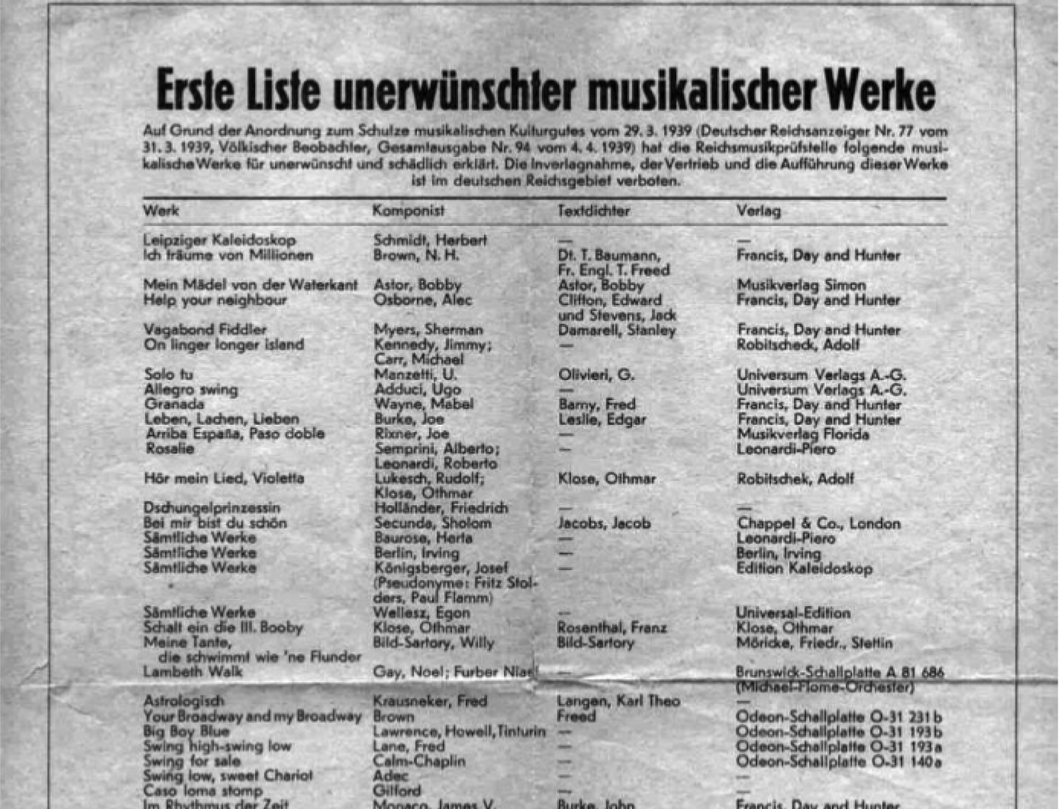
After arriving in Oxford, Wellesz busied himself with intensive musicological activity.Footnote 83 But the trauma of his sudden departure resulted in him giving up composition altogether. Further traumas must have exacerbated the situation. On 1 September 1939, the Reichsmusikkammer singled out his entire oeuvre for proscription in the Erste Liste unerwünschter musikalischer Werke (see Figure 1). The following year, he was interned for six months as an ‘Enemy Alien’ on the Isle of Man. He was eventually released thanks to the efforts of the music historian H. C. Colles and Ralph Vaughan Williams, and was able to return to Oxford. Nevertheless, it would be a further three years before he regained the necessary equilibrium to begin composing again. Establishing the same working pattern between his academic and creative work as had been the case in Vienna proved far more difficult, particularly since the university regarded him first and foremost as a musicologist who happened to compose, as opposed to someone who was equally talented in both areas.
The first list of unwanted music issued by the Reichsmusikkammer in 1939 proscribed all of Egon Wellesz's compositions.

This problem was highlighted in the first extended post-war appraisal of Wellesz's music by his composition pupil Wilfrid Mellers, which was published in 1947. Mellers acknowledged that the British had not been slow to honour Wellesz's achievements as a scholar, but was highly critical of his fellow countrymen for allowing ‘the most important creative musician to come to this country from Austria . . . to remain for more than six years completely neglected’.Footnote 84 According to Mellers, Wellesz was unquestionably ‘the one great exiled European composer we have amongst us’, arguing that he deserved to be recognized in the way that the Americans to differing degrees had honoured Schoenberg, Hindemith, Bartók, Milhaud, and Stravinsky.Footnote 85
Mellers could not offer any plausible explanation for Wellesz's current neglect. He speculated as to whether it had something to do with a peculiarly deep-rooted nineteenth-century concept that was inimical to the British which maintained that ‘it was dangerous for a composer to have brains’.Footnote 86 He could also have pointed to the entrenched insularity and insecurity that had reared its head at this particular moment in British cultural life, especially with regard to the influx of Hitler refugees. Such fears were articulated by Ralph Vaughan Williams when invited to become a patron of the newly formed Anglo-Austrian Music Society in 1942. In a letter to the Society's secretary, Vaughan Williams expressed alarm at what he termed the ‘late peaceful invasion of this country’ by Austrian musicians, believing that it could ‘entirely devour the tender little flower of our English culture’:
The Austrians have a great musical tradition, and they are apt to think that it is the only musical tradition, and that everything which is different must be wrong or ignorant; they think moreover that they have a mission to impose their culture wherever they go as being the only one worth having . . . To try and make England musically a dependency of Austria could kill all musical initiative in this country – destroy all that is vital and substitute a mechanical imitation of your great art – which will have no vitality, no roots in the soil and no power to grow to full stature.Footnote 87
To counter this danger, Vaughan Williams exhorted his Austrian colleagues to ‘become Englishmen’. He urged them to ‘try to assimilate our artistic ideals and then strengthen and fertilize them from your own incomparable art’. What was entirely unacceptable, however, would be to ‘force a “Little Austria” on England – keeping itself apart from the “untouchables” and having its own musical life without any reference to the life going on around’.Footnote 88
Whether or not he was made aware of Vaughan Williams's sentiments, there is a good deal of evidence to suggest that after he resumed composing in 1943, Wellesz genuinely attempted to ‘become an Englishman’. One obvious signal of this new orientation came through his vocal music which included a setting of Gerald Manley Hopkins's poem The Leaden and the Golden Echo scored for soprano, violin, clarinet, cello, and piano, and the composition of songs after Dryden and Milton for baritone and piano. Another came in an article he wrote in 1945 in which he claimed that for opera to be fully appreciated in this country, it needed to be sung in English and be written by living composers. Only under these conditions, he argued, ‘could the whole audience . . . be united in the incidents of the action, and . . . experience the emotions aroused by the drama, as in the theatre’. Furthermore, he believed that the untapped resources of English dramatic literature of the seventeenth and eighteenth centuries ‘need only be a guiding hand in order to transform them into libretti for generations of operatic composers and to make of the new opera, so eagerly expected by all friends of English music, a reality’.Footnote 89
Wellesz's article intimates that he was already contemplating a resumption of his operatic career with a setting of an English text. True to the principles expressed in 1945, he would eventually choose to write his sixth opera based on the seventeenth-century novel Incognita by William Congreve. It received its only staging in Oxford in 1951. Concurrently with his thoughts about English opera, he had also embarked on an entirely new compositional venture at the relatively late age of sixty by writing a symphony. It was to be the first of nine symphonies that he composed between 1945 and 1972.
The obvious explanation for Wellesz's post-war decision to write symphonies, particularly when he had avoided doing so in Vienna, was that it was an act of nostalgia indicative of yearning for his lost homeland that at the same time paid homage to his great symphonic forebears, Bruckner and Mahler. The fact that coincidentally other exiled Austrian composers, such as Ernst Toch and Erich Wolfgang Korngold, also turned for the first time to writing in this genre might also support such a notion. We can even point to Wellesz's own anecdotal evidence that some of the thematic ideas for the early symphonies were generated whilst he was holidaying in the Lake District, an area of the country that vividly reminded him of the Alt-Aussee in Styria.
An alternative justification for Wellesz developing an interest in symphonic form was that in 1945 this particular genre was much more widely appreciated in Britain than on the Continent, and that by choosing this path, he would gain greater acceptance here. Wellesz remained acutely aware that musical taste in Britain was much less progressive than in Europe and that it was therefore incumbent upon him to make his musical language more accessible, cleansing it so to speak of too many allusions to the dissonant language of the Second Viennese School – a process that is certainly apparent in his first two symphonies.
Yet Wellesz faced another difficulty in his quest for acceptance. He openly acknowledged that the models for his symphonic style were Bruckner and Mahler, two composers who were distinctly undervalued or misunderstood in Britain at that time. A good indication of the level of hostility accorded to Mahler can be gleaned from an anonymous review that appeared in The Times of the first British performance of his Fifth Symphony in 1945. The critic lambasted Mahler's work: ‘It contained diatonic tunes of the utmost banality made to serve for aspiration and grandiloquence . . . The movements are interminable, a jumble of a huge number of episodes which defy unification.’Footnote 90
Given the general lack of understanding and appreciation of Mahler, it is hardly surprising that the poignancy of the finale Adagio movement of Wellesz's First Symphony, unmistakably evoking the similar bitter-sweet emotions to the analogous movement in Mahler's Ninth, failed to register. In fact, Wellesz's First was premiered not in Britain but by the Berliner Philharmoniker under Sergiu Celibidache in 1948. This performance was subsequently transmitted by the BBC a year later, but at 11.10 pm which hardly guaranteed it a large audience. Indeed, with only one exception, European rather than British orchestras gave the first performances of Wellesz's subsequent symphonies (see Table 1). Even the Second, to which Wellesz gave the nickname The English, was heard first at the Vienna Festival in 1948, before two London performances took place under Walter Goehr and Sir Adrian Boult.
Chronicle of early performances of Wellesz's symphonies

Notes: FP = first performance
AP = Austrian first performance
UK = British first performance
BBC = broadcast performance
Wellesz justified calling his Second Symphony ‘The English’ on the unsubstantiated claim that the some of the thematic material from the slow third movement was inspired by English folk music. It is also possible that he naively hoped that the nickname ‘The English’ might give the symphony a better chance of approval. But if this was really his intention, the gambit seems not to have paid off. Lewis Foreman has noted the generally critical comments of members of the BBC Reading Panel vetting the score for future broadcast, the most hostile coming from composer William Alwyn: ‘This is a scholarly work – erudite, rather than musical. The slow movement owes much to Mahler (as indeed does the scherzo) . . . The scoring is generally competent without showing any original flair for orchestration. In construction the work is thoroughly grounded on Brahms. I cannot recommend it with any enthusiasm.’Footnote 91
The BBC Reading Panel report dates from 1951, the same year as the ill-fated Festival of Britain opera competition took place. As is well known, the competition rules required that submissions be entered anonymously. But any plans for the winning operas to be staged were shelved after the adjudicators discovered to their embarrassment that two of them had been composed by former ‘enemy aliens’. Wellesz was not one of the competition winners. His sixth opera, Incognita, which at least secured a staging by the Oxford University Opera Society in 1951, failed to get past the first round – a humiliating experience for a composer whose previous opera, Die Bakchantinnen, received its premiere at the Vienna State Opera in 1932.Footnote 92
Another disappointment came with the BBC's apparent reluctance to sponsor the premiere of the Third Symphony, which Wellesz had composed between 1950 and 1951. The work was to have been given by the BBC Symphony Orchestra under Sir Adrian Boult. But Wellesz's publisher was not prepared to issue the score and parts without a cast-iron guarantee of performance. Since the BBC refused to sign such an agreement, a stalemate ensued and the performance never took place. Although very disillusioned by this experience, Wellesz nevertheless moved on to new compositional projects. But from now on, he relied more than ever on foreign orchestras to promote his symphonies. It is also notable that during the mid-1950s, his musical language became more brittle, reflecting a closer alliance with Schoenberg particularly through a partial adoption of twelve-note technique. Whether this evolution would have happened as a matter of course or was prompted by the bitter experiences of 1951 remains unclear, but there is little doubt that Wellesz suppressed his former adherence to conventional tonality. Yet becoming more adventurous in musical style did not necessarily guarantee wider acceptance. In many respects, Wellesz's later music fell between two stools, too bold for the conservative British music establishment, yet insufficiently avant-garde in idiom to have any impact upon a much younger generation of composers who had attempted to move British music away from its former insularity.
Wellesz had to wait until his eightieth birthday in 1965 before the BBC made some belated amends for their earlier neglect of him with a sequence of concerts featuring his music.Footnote 93 In the same year, the CBSO under Hugo Rignold gave the overdue first British performance of the Fifth Symphony, the earliest of his works to bear a stronger indebtedness to Schoenberg. Most of the critics attending this performance wrote warmly about the work, but it was Peter Heyworth in The Observer who was most critical of the British music establishment for the shameful neglect Wellesz had suffered in his adopted homeland:
When one considers the works we contrive to swallow in the good cause of fostering native music, when one reflects how orchestras and conductors sweat, how critics labour to uncover some grain of virtue and how audiences suffer in good-humoured silence, it is amazing (not to say scandalous) that a score of the order of this symphony has had to wait nine years for a professional performance in Dr Wellesz's adopted land. It is not a work that is going to change the course of musical history . . . But as a thoroughly well-made vigorous four-movement symphony, it stands head and shoulders above the general run of the Cheltenham genre that loomed so massively in the fifties.Footnote 94
Egon Wellesz contributed a huge amount to the musical well-being of this country after he arrived here in 1938. Tremendously versatile as a scholar and musicologist, he was certainly a pioneer in bringing the previously neglected music of Bruckner and Mahler, not to mention Schoenberg, Berg, and Webern, to much wider attention here. As an educationalist, he was largely instrumental in establishing the Oxford music degree by insisting that undergraduates take on a serious study of the history of music, something that had not happened before when the curriculum was exclusively geared towards organists and church musicians. But his great distinction as a scholar seemed to make it much more difficult for him to be recognized as a significant composer. His relationship with British conductors, publishers and the BBC was patchy, and to date not one of his works has been performed at the Proms. Ironically, the reverse situation occurred in post-war Austria where there has been a consistent stream of performances of his work, as well as a number of books dealing with his life and music.Footnote 95 The only detailed scholarly explorations of his British-composed symphonies have appeared in Austrian journals and most recently in a book charting the history of the Austrian symphony in the twentieth century.Footnote 96 Finally, the only commercial recordings of these works were made by the Radio Symphony Orchestra in Vienna.Footnote 97
Can, or should, Wellesz be regarded as a British composer? In his 1963 book British Composers in Interview, which featured Wellesz in the second chapter, the Canadian composer Murray Schafer hedged his bets by declaring:
I am grateful to have been able to include Dr. Egon Wellesz who, although naturalised, could not correctly be described as a British composer. Dr. Wellesz's contribution is noteworthy, however, for he was one of the original members of the Schoenberg's Neo-Viennese School [sic!], and largely due to the influence of refugee composers, twelve-note composition has become of great significance to the younger generation of composers.Footnote 98
Whereas Schafer acknowledged Wellesz as an influential figure, historical surveys of twentieth-century British music published after his death in 1974 largely overlook him.Footnote 99 Amongst more recent publications, Wellesz is not mentioned at all in Matthew Riley's 2010 edited volume, British Music and Modernism 1895–1960.Footnote 100 Philip Rupprecht, focusing specifically on the influence of the Manchester Group from the 1950s onwards, concedes that ‘the full complexity of the post-war musical world and its contemporary-music scene in particular is scarcely comprehensible without recognizing a generation of émigré musicians who settled in Britain during the 1930s, among them the Schoenberg pupils Egon Wellesz, Erwin Stein, Walter Goehr and Roberto Gerhard’.Footnote 101 Frustratingly, Rupprecht does not attempt any further elucidation of this influence.
A recent article by musicologist Bojan Bujić, who knew Wellesz for the last ten years of his life, explains why he remained in Oxford after the war, rather than return to Vienna. He concedes that after ten years of exile, Wellesz found himself in a difficult situation:
In England and the United States, he was recognized as a leading scholar of Byzantine chant, but had to struggle in order to recover some of his pre-War reputation as a composer. He considered that Central Europe was his spiritual home, but a return to Vienna never arose as a serious possibility. He felt that some of those whom he suspected of Nazi sympathies had usurped the teaching posts vacated by the refugees, and that there was no longer any place for him there.Footnote 102
No less difficult for Wellesz was his attempt to rebuild his fractured composing career in the very different cultural climate of post-war Britain:
When some of his own symphonies started to be performed, both in Britain and abroad, he felt that he was finally beginning to recover some of his lost reputation and the two signs of recognition that came from Vienna, first the Music Prize of the City of Vienna in 1953 and then, six years later, the order of the Golden Cross of the Republic of Austria pleased him enormously. Yet, I still think that he continued to live in a state of very mixed feelings – on the one hand, proud of these recognitions, but on the other, aware that what he was doing amounted to salvaging fragments of a lost world. The tragedy for him was that the English musical establishment immediately after the Second World War was still too conservative to consider even Wellesz as “one of us”, although Wellesz's music in the post-War period was by no means radical. Nevertheless, I believe many aspects of his activity passed unrecognized, or they manifested themselves in an indirect way . . . When he died, so much of what he helped to create was already taken for granted in the musical life of England, and in this sense he probably missed, yet again, the full recognition that was due to him.Footnote 103
Charley and the NHSFootnote 104
FLORIAN SCHEDING
Following the election in 1945, the year that marked the end of the Second World War, Clement Attlee's newly elected Labour government began to embark on an ambitious set of social reform acts.Footnote 105 Seemingly unfazed by the economic constraints that marked the aftermath of the Second World War and brought the United Kingdom to the brink of bankruptcy, the so-called ‘post-war consensus’ amongst the two major political parties provided fertile ground for a considerable enlargement of public services and the consolidation of a welfare state aimed to serve all Britons from the cradle to the grave.Footnote 106 Spanning education, housing, health, women's rights, and worker's rights, reforms aimed to address what were supposedly the five main problems of British society: disease, want, squalor, ignorance, and idleness. The government nationalized 20 per cent of British industry; set about building twelve new towns to reduce homelessness and overcrowding; legislated all local authorities to provide primary, secondary, and further education, guaranteeing the national provision of state-funded secondary schooling for the first time in the country's history; and introduced national insurance, unemployment benefits, and family allowances.
Perhaps of longest lasting significance was the introduction in 1948 of a comprehensive, universal system of British health care. With rationing an everyday experience for Britons well into the 1950s, the National Health Service (NHS) provided access to doctors, dentists, opticians, and hospitals free of charge for all at the point of use. Paradoxically, this reform highlighted how severe the national health crisis had been. Almost from its inception, the NHS faced enormous difficulties. From the day the service began work on 5 July, NHS institutions and facilities were inundated with patients who had previously been unable to afford treatment. Demand for medical care exploded and soon outstretched capacities. By September, prescriptions had nearly doubled, rising from seven million per month before the establishment of the NHS to thirteen and a half million. The NHS was becoming a major factor in government budgets. By 1951, charges were introduced for opticians and dental treatment, causing health minister and architect of the NHS Aneurin Bevan to resign. Personnel, too, were stretched. Before long, the NHS experienced a severe shortage of doctors, nurses, midwives, ancillary workers, and other medical staff – a situation that worsened when, during the first decade after its introduction, 3,500 British doctors emigrated to Canada, the US, and elsewhere in protest because they were unwilling to participate in the new health service.Footnote 107 One of the government's main responses to this staff shortage was migration. The British government recruited nurses, doctors, and ancillary staff, mostly from the Caribbean and the Indian subcontinent, to come to the UK and fill the vacant positions.Footnote 108
The strategy of filling vacancies with migrants has been a constant feature in the history of the NHS. By 1980, the proportion of NHS staff with migration backgrounds reached 30 per cent and has never since fallen below this number. In February 2018, the House of Commons Library, the information resource of the lower house of the British parliament, reported that a minimum of 12.5 per cent of all NHS staff in England do not hold British citizenship and can therefore be presumed to be first-generation migrants. Most of them are citizens of African, Asian, and non-British EU countries. With 7 per cent of NHS employees registered as unknown nationalities and an unknown number of the 82 per cent with British citizenship foreign-born, figures are likely to be greater – up to 18 per cent or more.Footnote 109 They also depend on the profession. In 2017, the BBC reported that 36 per cent of NHS doctors trained outside the UK.Footnote 110 Writing for the Nuffield Trust, Mark Dayan has pointed out that the UK is one of the developed countries that relies most on importing doctors from abroad.Footnote 111 Even MigrationWatch UK, a right-wing think-tank dedicated to lobbying policy-makers against immigration to Britain, concedes that the NHS has been heavily dependent on migrant labour and that the employment of staff trained elsewhere has saved the British government considerable costs with regards to expensive medical training.Footnote 112 As Hayden Smith has put it in The Independent, ‘the NHS would collapse if it wasn't for immigrants’.Footnote 113
It is instructive to contextualize such numbers against overall migration statistics in Britain. Writing for the Office of National Statistics, Michael Rendall and John Salt report that, overall, proportional numbers of immigrants to the United Kingdom have steadily increased since the mid-twentieth century, from 4.2 per cent of the population in 1951 to 12.7 per cent in 2011.Footnote 114 The Migration Observatory, based at the Centre on Migration, Policy and Society at the University of Oxford, states that, in 2015, 13.5 per cent of the UK population was foreign-born, with 8.9 per cent non-British citizens.Footnote 115 In the NHS, then, immigrants are punching above their weight. And they do so with regards to the economy more widely, too. The Centre for Research and Analysis of Migration (CReAM) based at University College London has found that migrants coming to the UK since 2000, for example, have been 43 per cent less likely to claim benefits or tax credits compared to the British-born workforce and that the European immigrants amongst them have contributed more than £20bn to public finances between 2001 and 2011. As the authors of the study show, ‘between 1995 to 2011, immigrants endowed the UK labour market with human capital that would have cost about £49 billion if it were produced through the UK education system and contributed about £82 billion to fixed or “pure” public goods’. The UK-born population during the same period had a net fiscal cost of £591 billion.Footnote 116
In spite of this evidence, British politicians have made direct links between poor NHS performance and immigration. Doing so in fact became a prominent line of argument for those advocating the country's withdrawal from the European Union. One of the main promises of the campaign to leave the EU, displayed prominently on the so-called ‘battle bus’, was that departure from the Union would save Britain £350 million per week, which could then be used to bolster the underfunded NHS. The other promise was that the country would regain control of its borders and reduce the numbers of immigrants. While those campaigning for continued EU membership remained largely silent on the issues of migration and public health, voices advocating Brexit loudly informed voters that the two issues were directly related. Boris Johnson, who was promoted to foreign secretary after the successful Brexit campaign, claimed ‘We get uncontrolled immigration, which puts unsustainable pressure on our public services.’Footnote 117
The facts contradict such statements, and the suggestion that migrants are a drain on public resources rather than an essential asset to the provision of public health in Britain has been rebuffed continuously and resolutely.Footnote 118 To name one recent example, the Channel 4 News website questioned whether migrants are causing an NHS crisis. Before the background that since 2010 the number of people waiting more than four hours for accident and emergency treatment has seen a nearly six-fold increase, Channel 4 journalist Georgina Lee put forward evidence that ‘there's no correlation between the proportion of immigrants in an area and the performance of local A&E departments’; that so-called health tourism ‘costs less than a tenth of one per cent of the total NHS budget’; that ‘immigrants are less likely to access health services than the native-born’; and that immigrants make a ‘positive fiscal contribution to the UK’ that bolsters the NHS budget.Footnote 119 That such debates can be found in a public-service TV station, rather than being restricted to academic journals or dedicated research institutes, illustrates the extent to which migration and the NHS are at the forefront of public discourses in 2018. Indeed, in the commentary section below the Channel 4 online article, the reader ‘S Maddocks’ comments, ‘I truly believe this crisis is caused by EU migrants, it is common sense.’ Such attitudes are not new. As Roberta Bivins has shown, throughout its history, discussions about the NHS align closely with debates about migration.Footnote 120 British debates about immigration since the mid-twentieth century, then, have been as much informed by the NHS as discussions about the NHS have been linked to migration.
How do migrant artists and musicians figure in all this? Let me rewind to the immediate post-war years. As illustrated by the aforementioned emigration of 3,500 British doctors, who left the country in protest against the introduction of a national health service, not everyone embraced the idea of the NHS with open arms. Before the NHS first opened its doors in the summer of 1948, the government felt that it was prudent to convince Britons of the wide-ranging reforms and embarked on a considerable propaganda campaign. Films were central here, and several shorts were commissioned to advertise the government's reforms. Prefacing the feature, they reached wide audiences and were shown in cinemas across the nation. This was not, of course, a novel strategy; nor was it unique to the Attlee government. During the Second World War, the Ministry of Information (MOI) had poured considerable resources into commissioning propaganda films, including shorts and features, which were shown both in Britain and abroad. Indeed, Anthony Aldgate and Jeffrey Richards have suggested that ‘the story of British cinema in the Second World War is inextricably linked with that of the Ministry of Information’.Footnote 121
Following the upheaval of wartime, which had exposed populations in Britain and beyond to transmissions of propaganda through the new media of film and radio on an unprecedented scale, it is perhaps unsurprising that the British government continued to employ the same strategies to convince voters of its policies. Focusing on the US Marshall Plan, Maria Fritsche has convincingly argued that the role of film was central in post-war political campaigns and discourses, much as it had been during the war years.Footnote 122 And while a lot of cinema owners were reluctant to show factual government films they feared to be less popular with audiences, it seems that, at least in some cases, such films were well liked, or at least appreciated, by audiences. Referring to productions sponsored by the MOI more generally, Geoff Hurd, for example, has suggested that the 1940s brought about ‘a genuine rapport between British film-makers and their audiences’.Footnote 123
Two of the small team behind the film I now focus on belong to a group of artists who sought refuge in Britain during the 1930s in order to escape fascist persecution. The co-producer and director of Charley in Your Very Good Health (1948), the second in a series of eight films, was John Halas, born Janós Halasz in Budapest in 1912, and the music was composed by Mátyás Seiber, also Budapest-born, but seven years before Halasz, in 1905. Halasz had co-founded Hungary's first animation studio, Coloriton, in 1932. Having arrived in London in 1936, he co-founded the production company Halas & Batchelor in 1940, in partnership with the British-born animator and scriptwriter Joy Batchelor. (They married in the same year.) The company was immensely successful, particularly with propaganda shorts made during and after the war for the British government and achieved notable success with the feature length cartoon Animal Farm (1954), to which Seiber also wrote the score.
The composer of the Charley film music, and notably of the recognizable theme tune that connects all the films in the series, was Seiber. In Budapest, he studied composition with Zoltán Kodály. Following the takeover of the proto-fascist Miklos Horthy regime, Seiber left Budapest to settle in Frankfurt where he accepted a professorship in jazz at the prestigious Hoch Konservatorium. There, his compositional development marks him as a composer of the avant-garde, making him one of the first to employ dodecaphony outside Schoenberg's circle. In 1933, the Nazi administration dismissed Seiber in an act of ethnic cleansing on account of his Jewish heritage. Seiber left Frankfurt and migrated to London in 1935, where he eventually established a reputation for himself as composer, conductor, and one of the country's most renowned composition teachers.
The sheer number of refugee artists who exerted influence upon British film-making in the mid-century has become something of a trope in exile studies and caused Tobias Hochscherf, for example, to speak of a continental connection.Footnote 124 While many artists left the European continent for Hollywood instead – Fritz Lang, Billy Wilder, Marlene Dietrich, Erich Wolfgang Korngold, Hanns Eisler, Berthold Viertel, Elisabeth Bergner, and many others spring to mind – Britain, and London particularly, became a destination for many, amongst them Alexander Korda, Max Schach, Gabriel Pascal, Emeric Pressburger, Friedrich Feher, and Lajos Bíró.Footnote 125 Hungarian-born Miklós Rózsa recounts a joke from mid-century that the three Union Jacks hoisted at the Denham studios stood one for each of the three British, non-migrants working on the premises.Footnote 126 Musically, too, immigrants changed considerably the history of British film. And yet, despite Erik Levi's claim that migrant composers such as Allan Gray, Walter Goehr, Hans May, and Ernst Hermann Meyer perhaps achieved their greatest successes in the area of film music, their story remains seldom told.Footnote 127
Indeed, beyond the field of exile studies, migrant voices remain largely absent. Richard Farmer, to name one example, in an otherwise carefully researched book, does not reference immigrant film-makers or composers in his detailed discussion of the MOI's emphasis on propaganda films.Footnote 128 Sarah Street dedicates several sections of the first half of her book to British responses to what she calls the ‘Hollywood invasion’ during the 1930s, but the influx of migrant artists during the same period is largely excluded from her discussion of British national cinema.Footnote 129 She does mention that Emeric Pressburger, for example, was Hungarian-born, but this, for her, cemented his status as someone with an ‘outsider insight’.Footnote 130 Conversely, Brian McFarlane includes John Halas, one of the protagonists of this article, in his encyclopaedia of British film and Tony Shaw calls Halas & Batchelor ‘Britain's largest and most respected animation company.’Footnote 131 Despite such appraisals, propaganda shorts are not frequently discussed in the literature. While many mid-century short films are today easily accessible on online video platforms, stalwart modernist Hanns Keller's complaint from 1955 continues to ring true today: ‘so much good work is done in unobserved corners – in “shorts”, cartoons, documentaries, etc., which never see the light of a press show and are not easy to track down’.Footnote 132
Commissioned by the Central Office of Information (COI, the successor organization to the MOI from 1946), Batchelor and Halas (as co-directors, co-script writers, and co-producers) joined forces with Seiber to produce a series of eight films, each between eight and ten minutes long.Footnote 133 Released from 1948 onwards, all of them are based around the cartoon character Charley, a likeable and cheeky but otherwise ordinary man, presumably of working-class background. Charley explores post-war Britain on his bike, forming a double act with the narrator to comment on the government's reforms. At first reluctant to embrace political change, the films show Charley shedding his initial hesitations and even promoting the reforms, notably to his neighbour, posh George. As the Attlee government invited Indian doctors and Caribbean nurses to come to Britain and fill labour shortages in the NHS, migrant artists such as Halas and Seiber were approached to make these propaganda films.
By the time the COI commissioned Halas & Batchelor to produce the Charley series, they had a fairly long-standing business relationship: according to Vivien Halas and Paul Wells, the studio had made over one hundred shorts for the government by 1950.Footnote 134 This included, for example, the Abu series, which was shown in the Middle East as anti-Nazi propaganda.Footnote 135 Between 1942 and 1947, Seiber had contributed the music to at least fifteen propaganda shorts. There is evidence to suggest that this collaboration proved successful beyond a merely functional level. For example, the 1946 eight-and-a-half-minute film Modern Guide to Health, which promoted general health including correct posture, exercise, well-fitting clothing, and proper sleep, won first prize at the 1947 Brussels Film Festival. The Charley series was received particularly favourably. Two shorts, Charley in New Town and Charley's March of Time, both produced in 1947, were selected for the 1948 Cannes Film Festival, with the former also shown at the Edinburgh Film Festival during the same year. Farmer Charley, the last in the series, was screened at the Edinburgh Film Festival in 1949, and several shorts produced in the following years were likewise successful internationally.Footnote 136
Targeted to a mass audience like the other Charley films, Your Very Good Health is the second in the series. It demonstrates how Halas and Batchelor mastered the technique of packaging a complex political message into a focused, humorous and seemingly light-hearted film narrative. Interspersed with energetic action scenes, which see Charley hypothetically falling off his bike or imagining that his wife falls ill (‘We mothers can't afford to be ill’, she retorts wryly), the story is narrated in a straightforward and easily intelligible manner. Surprisingly entertaining even today, the film capitalizes on animation's potential to convey a considerable amount of complex information in an enjoyable, even charming, manner, but without losing sight of its topic. Tony Shaw has suggested that Halas's migration background contributed to the success of films such as Your Very Good Health, pointing to ‘the proselytizing qualities of animation, enhanced by its instant accessibility and apparent ideological innocence, and Halas and Batchelor's distinctive style, which combined the sentimentality of Disney with an Eastern European graphic boldness and darkness’.Footnote 137
The music was essential to the success of the Charley films and is a prominent feature throughout. First, there is Charley's recognizable and catchy theme tune which accompanies the opening titles of each of the films in the series, in which he rides across the screen on his bicycle, writing out his name. It also recurs periodically throughout Your Very Good Health, including a rendition an octave higher when the narrative briefly shifts to Charley's baby son. In addition, there's some mickey-mousing, for example when a tuba hilariously synchronizes Charley's breathing during an imagined episode of respiratory disease. Seiber's score perhaps most enhances the action and slapstick scenes, such as the sequence when the narrator asks Charley to imagine what might happen if his bicycle brakes gave out, he fell off his bike, and needed an ambulance. Overall, and in line with the others of the series, the music contributed to the film's success, which, as a propaganda achievement, apparently pleased the government.Footnote 138
Through media and cultural means, migrant artists such as Halas and Seiber thus participated in the political debates of the time through their creativity. Whether they were necessarily supportive of Attlee's reforms on a private level is a different matter. But their individual attitudes are not germane to my point. Rather, I suggest that through short films such as those of the Charley series, immigrant artists such as Seiber and Halas played an important part in the history of what were perhaps the most wide-reaching social reforms in twentieth-century Britain since the Second World War. Just like the immigration of large numbers of Caribbean nurses and Indian doctors kept the NHS going in its infancy and still does so today, musicians, composers, and film-makers are also an intrinsic part of the history of an organization so inextricably imbedded in British daily life. There would not be an NHS in the form we know it today without migration. Migrants are an inseparable part of the very fabric of British society. Their contribution may at times seem hidden, but it is still in full view, if only we look and listen.
Ivan Caryll, the Belgian Doyen of British Musical Comedy
DEREK B. SCOTT
Ivan Caryll (1861–1921) was born Félix Marie Henri Tilkin in Liège, Belgium. He first became a student at the conservatoire in his home town, before travelling to France to study singing at the Paris Conservatoire. After moving to London in 1882, he made a basic living by giving piano lessons. He also composed songs and managed to sell some of them to the theatrical manager and impresario George Edwardes. The latter was so impressed with Caryll, he made him musical director of the Gaiety Theatre in succession to the long-serving Wilhelm Meyer Lutz. Meyer Lutz was also an immigrant musician, having left Bavaria for England in 1848, at the age of nineteen. Indeed, when Caryll took over the Gaiety orchestra, it contained only one English player, a person always alluded to humorously as ‘the foreigner’.Footnote 139 Caryll was a dedicated and energetic musical director, and proud of his position as conductor of one of the finest theatrical orchestras of the period. As a stage composer, Caryll rose to fame in the 1890s, and he remained an important and successful musical comedy composer until his death in 1921. The genre of British musical comedy owed a great deal to this immigrant composer, who was a key figure in defining the style of the musical comedies at the Gaiety. In fact, he was rarely alluded to as an immigrant musician, which may be partly explained by the Gaiety's history of employing musicians from continental Europe, and partly by his own character and personality as a cosmopolitan figure in the musical life of the West End.
George Edwardes is credited with having coined the term ‘musical comedy’ for a new blend of topicality and romance in stage musical entertainment.Footnote 140 He had detected that the days of burlesque and the topsy-turvy world of the Savoy operas were reaching an end, and the audience was ready to respond to something fresh and more related to modern life. Edwardes made his first experiments at the Prince of Wales Theatre, because he felt the change would be too sudden in the Gaiety, which was regarded as the home of burlesque. His production of In Town at the Prince of Wales Theatre in 1892 was billed as a ‘musical farce’, but it already had many of the features of what would become known as musical comedy, such as modern dress, and an eclectic score with musical styles ranging from operetta to music hall. The label ‘musical comedy’ was actually applied to the following production at the Prince of Wales, which was A Gaiety Girl. Neither of these productions had music by Ivan Caryll. The composer of In Town was F. Osmond Carr, and for A Gaiety Girl it was Sidney Jones.
Ivan Caryll was asked to compose the music for the next musical comedy, The Shop Girl, in 1894 (once more described as a ‘musical farce’). This was staged at the Gaiety with such unequivocal success that this theatre from then on became the home of musical comedy. Seymour Hicks, who performed in the show before he became a successful actor-manager and producer, wrote in 1910, in a book recounting his early stage career, ‘There are some musical comedies whose music may have been better, though I doubt it, and others may have had better characterization, or a stronger plot, etc., etc., but no other play possessed all its merits in so marked a degree.’Footnote 141 Hicks's wife, the actor and singer Ellaline Terriss, declared in her own memoirs, written forty-five years later, that The Shop Girl was ‘the beginning of a new era not only at the Gaiety Theatre but in the British musical theatre’.Footnote 142
a) Ivan Caryll and b) Lionel Monckton.

The book of The Shop Girl was by H. J. W. Dam, who claimed to have researched his subject in Whiteley's department store and the Army and Navy stores in order to capture ‘the life of today’.Footnote 143 Most of the music was composed by Caryll, with additional numbers supplied by Monckton to lyrics by Adrian Ross. Monckton had studied Law at the University of Oxford. His music was not dissimilar to that of Caryll, and the same held true of their moustaches (Figure 2). Caryll handled the trickier concerted sections, such as finales, and did the orchestration. Monckton often came up with the instantly catchier tunes, even though (unlike Caryll) he was a constant reviser of his material.
The Shop Girl was an enormous success, running to 546 performances, and firmly establishing musical comedy as the most popular stage entertainment in the West End. There was a link between the big shops and the theatre, because affluent women from the suburbs would often combine a shopping trip with a visit to the theatre. Both of these activities were respectable, although both might involve chance interactions with men. The two leading actors were Ada Reeve (a music-hall singer) as the shop girl Bessie Brent, and Seymour Hicks (at this time a comedian with little singing experience). Ellaline TerrissFootnote 144 replaced Reeve, who had already been pregnant went she took on her role.
The first act was set in a department store and the second in a bazaar. Department stores were a feature of cosmopolitan modernity. The opening chorus informs us, ‘Ev'ry product of the planet / Since geology began it’ can be bought on one or other of its ‘mile on mile of floors’. In ‘The Song of the Shop’ we have lines critical of those who behave as social superiors to shop girls. In verse one, they are the women who bully them:
In verse two, they are the men who sexually harass them:
Hicks's interpolated song ‘Her Golden Hair Was Hanging Down Her Back’ was considered risqué, with its insinuation that a young woman has been free with her sexual favours. Hicks and Adrian Ross adapted it from an original by Felix McGlennon, published in New York in 1894. It does not feature in the vocal score published by Hopwood & Crew in early 1895. The variety elements present in musical comedy meant that a song reminiscent of the style of the music hall or US vaudeville did not jar as it would have done in stage work more closely associated with comic opera or operetta. The respectability of women who attended musical comedy was much more relied upon by theatre managers than that of those who attended the music hall. In the latter environment, hair hanging down a woman's back carried strong implication of impropriety. Theatre historian Peter Bailey cites a report that appeared in the Evening News the month before the premiere of The Shop Girl, which stated that women with ‘loose, unbonneted hair’ were being denied admission to the Empire Theatre. This was a variety theatre in Leicester Square, managed by George Edwardes, but which was at this time the subject of scandal regarding prostitution.Footnote 145
The possibility that elegant young women in the chorus at the Gaiety Theatre, popularly known as Gaiety Girls, might have an opportunity to marry into the nobility is hinted at in the song ‘The Smartest Girl in Town’.
Women were no longer typically portrayed as passive. Miggles, a shopwalker at the shop, whose job is to supervise the sales staff and help customers, sings a song about being forced to become a vegetarian by his new wife:
Sadly, after all his suffering, his wife elopes with a butcher.
The Shop Girl witnessed the stage debut of George Grossmith Jr, son of a famous comedian, and known as Gee-Gee to his friends. He played the masher Bertie Hoyd, the cut of whose coat was ‘quite the thing’. His masher song ‘Beautiful Bountiful Bertie’, composed by Monckton to Grossmith's own lyrics, proved to be one of the show's hit numbers. The term ‘masher’ was given to fashionable, fun-loving men about town, who were often inappropriate in their sexual attentions. Bertie has the onerous duty of escorting a group of foundlings around town (Figure 3).
The foundlings in The Shop Girl.

The Shop Girl was the first musical comedy to have a full chorus line of modern Gaiety Girls. Nevertheless, it played safe by also having a scantily clad burlesque troupe of women from the Frivolity Theatre who appear in Act 2. Another sign of modern times is the inclusion of a newly wealthy US businessman. He is presented in the song ‘The Millionaire’, in which Bunco Brown tells how he transformed himself from a desperado in the gold mines to ‘plutocratic Brown of Colorado’.
The production of the show followed the usual procedure: Pat Malone and Sydney Ellison took charge of the production until the final rehearsals. Then, Edwardes turned up to have his say, making comments and offering advice that, as always, was found to deliver significant improvements. Edwardes was so pleased with this show, he sent a touring company to Palmer's Theatre, New York, and another company to the Prince's Theatre, Melbourne. It was also adapted for performances in continental Europe; for example, as La Demoiselle de magasin in Paris (1896), and Die Ladenmamsell in Vienna (1897).
Caryll's next musical comedy was The Circus Girl, which opened at the Gaiety on 5 December 1896. James P. Tanner, who was responsible for the book, ensured that it was not all circus oriented, and included a scene at a Paris ball. Caryll once more had the assistance of Monckton, who provided additional numbers. The stars were Ellaline Terriss, Seymour Hicks, and comedian Connie Ediss. Once more, Monckton succeeded in providing a hit song, with ‘Just a Little Piece of String’ sung by Terriss. So popular was it, she used its title for her autobiography. Ediss sang ‘The Way to Treat a Lady’, which told of her being left in a pub by her husband, who did not even pay for her glass of port and lemonade. The Circus Girl was almost as successful as The Shop Girl and ran for 494 performances. It also enjoyed a New York production in 1897.
It has by now become obvious how popular the word ‘girl’ was in the title of a musical comedy. The labelling of young women as ‘girls’ has been described by Peter Bailey as a strategy to frame them as ‘naughty but nice’.Footnote 146 The Gaiety Girl was not prim or over-zealous in religion and politics, nor intellectually ambitious in the manner of the New Woman of the 1890s. The Gaiety Girl may not have been an example of the New Women, who spurned fashion and regarded marriage as something that stifled careers and ambitions, but she was certainly an example of the modern woman, a woman who knew her own mind and was not inclined to passivity in her dealings with men. This did not deter male admirers: the term ‘Stage Door Johnnies’ was used at this time to refer to those men who would crowd outside the stage door hoping to escort one of the young women to supper.
The last of Caryll's musical comedies of the 1890s was The Runaway Girl (Gaiety, 21 May 1898), and it became another runaway success, with a New York production in the same year. The book was by Seymour Hicks and Harry Nicholls, the lyrics by Aubrey Hopwood and Harry Greenbank, and the music by Ivan Caryll, again with the assistance of Monckton. The team of people involved in creating the words and music may be interpreted either as indicating that a new kind of art world is emerging, or alternatively, as representing the division of labour that characterizes industrial production methods.
A Runaway Girl featured Terriss, Ediss, and Edmund Payne and Kate Seymour (a couple admired for their dancing and duets). The Times saw this piece as a return to operetta with a diminution of variety show elements. It was set in Corsica and Venice. The audience's love of spectacle was usually satisfied by giving each act a picturesque location. Caryll followed it with The Messenger Boy, which was the first musical comedy to have a male gendered title. It opened at the Gaiety on 3 February 1900, running for 432 performances, and it had 128 performances on Broadway the next year. The book was by James T. Tanner and Alfred Murray, the lyrics by Adrian Ross and Percy Greenbank, additional music was contributed by Monckton.
The Toreador, opened at Gaiety in 1901, and was the final musical comedy produced there before the theatre was demolished and the new Gaiety built nearby. The book was by the same creative team as The Messenger Boy, except that Tanner's partner in writing the book was Harry Nichols. Again, there was a noticeable shift of focus in this title to the male, and Edwardes's superstition that ‘girl’ was necessary in a title in order to bring good luck was evaporating. In fact, The Toreador and The Shop Girl enjoyed the two longest runs at the old Gaiety Theatre (675 and 546 performances, respectively). The drama involves Teddy Payne as a footman whose full livery leads him to be mistaken for a toreador, so he is sent to the bull ring. Other performers were Marie Studholme, George Grossmith Jr, and Gertie Millar, who was making her London debut. During the run, Lionel Monckton proposed to her, and they married.
The musical comedy The Toreador offers an interesting example of how an immigrant composer like Caryll can bring something novel to a genre that otherwise seems so typically British. An illustration is Teresa's song, ‘Oh, Señor, Pray Be Bold of Heart’. First note the fandango rhythm in the verse section. That was a typical means of representing Spain in later nineteenth-century British songs, such as ‘A Bandit's Life Is the Life for Me’ (words and music by E. Harper, 1872), and ‘The Bandolero’ (words and music by Leslie Stuart, 1894). However, the refrain is different, and introduces a new dance rhythm to musical theatre (Examples 1 and 2).
‘Oh, Señor, Pray Be Bold of Heart’, opening of verse (The Toreador, 1901).

Refrain ‘For There Both by Day and Night’ (The Toreador, 1901).

The rhythm is that of the habanera, a Cuban rhythm (the term ‘habanera’ indicates an origin in Havana). This rhythm was much more familiar in Paris, where Caryll, as a French-speaking Belgian, studied, and, indeed, he marks it with the French term ‘havanaise’ in the score. There is, of course, a famous example of the rhythm in Bizet's Carmen. Caryll's habanera has caught the idiomatic cross-rhythm of threes against twos. Not only does Caryll introduce the dance to musical comedy, but in doing so he also anticipates the popular enthusiasm for the tango a decade later. Interestingly, when the tango reached Britain, it arrived via Paris too. The habanera and the Argentine tango are closely related musically, and differences tend to be found mainly in the respective dance movements.
Although I have only had space to look at the earlier musical comedies that involved Ivan Caryll and changed perceptions of musical theatre, his achievement in this field of entertainment was extensive, and, added to this, he was the composer of one of the most popular of British twentieth-century light operas, The Duchess of Dantzic (1903). After The Toreador, his three biggest hits in the West End were The Orchid (1903), Our Miss Gibbs (1909), and Kissing Time (1919). His biggest triumph on Broadway was with The Pink Lady in 1911. A run of over 150 performances for a stage work was generally seen as marking a success. Caryll exceed this benchmark twenty-three times in the West End between 1890 and 1920 (the last time with the 1920 revival of The Shop Girl), and fourteen times on Broadway, 1894–1920. The editor of The Play Pictorial, B. W. Findon, paid tribute to Caryll in 1909:
Gaiety music is known the wide world over. Its tunes have been whistled, sung and played in nearly every city of the globe, and since the days of ‘The Shop Girl’ the name of Ivan Caryll has only once been absent from the Gaiety bill.Footnote 147
Since then musical comedy has become one of the most neglected genres in British theatre history, and Ivan Caryll – who, in 1903 enjoyed the unprecedented achievement of seeing five of his stage compositions run simultaneously in the West EndFootnote 148 – has, sadly, become one of the most neglected of theatre composers.
Aural Borders, Aural Bordering
TOM WESTERN
Musicology needs migrant histories. Florian Scheding and Erik Levi write of the discipline's lack of engagement with displacement and its impacts as ‘all but negligent’.Footnote 149 This is reflective of a broader historiographical situation, whereby history is written from the perspective of states and places, placing the figure of the migrant outside of history.Footnote 150 The figure of the refugee, similarly, is constructed as an ahistorical, universal humanitarian subject.Footnote 151 From this footing, national (musical) histories seem inevitable, and national borders delineate objects and areas of study as well as societies, nations, and communities.
Yet recent border theory tells us that there are more types of borders now than ever before. It no longer makes sense to think of borders only as lines on maps or physical barriers that separate nation-states. Borders, instead, are technologies of social circulation; and societies are the products of bordering, rather than the other way around. For Thomas Nail, borders are material technologies that produce social division, acting as filters or sieves that allow the free flow of capital and elites, but catch the global poor. Rather than framing this as a system of inclusion and exclusion, however, Nail argues that the border can be better understood through circulation. Borders are always in motion, and are never finished including and excluding, continuously redirecting flows and things across or away from themselves.Footnote 152
A border, then, is an institution, an experience, a business, a knowledge system, a part of everyday life, and a cultural entity. And a sounding one. I am not the first person to think about aural borders. Josh Kun considers the border as ‘a field of sound, a terrain of musicality, of static and noise, of melodic convergence and dissonant clashing’, writing of the aural border as an archaeology and genealogy of subjugated knowledges.Footnote 153 More generally, he writes of migration as a sonic act as much as a spatial one.Footnote 154 But here I am less interested in the sound cultures that exist at the physical border, and more interested in the ways that music has been used to produce borders.
Territory here becomes conceptually important. Stuart Elden argues for an understanding of territory as a political technology, more to do with relations between power and space, terrain and technique than with notions of land as an inert backdrop for states. Accordingly, for Elden, territory is never static, but is ‘a process, made and remade, shaped and reshaped, active and reactive’.Footnote 155 Moreover, projects of nation building can, and frequently do, take place within well-established territorial borders.Footnote 156 So a fuller understanding of territory is built from the techniques used by governments and institutions to measure and manage terrain and populations.
This resonates with another argument from Nail: that borders do not exist solely at the perimeter of a territory but suffuse the social and pop up at any point where a linguistic, ethnic or cultural division occurs.Footnote 157 And this, in turn, feeds into my understanding of aural borders. They are works of cultural production. They are the result of sonic labour. So, while sounds cross borders more easily than people, and music does not stop at checkpoints, they are, at the same time, political objects that have been enrolled in securing aural borders. Borders are created within and through culture. History is mobilized and circulated through these endeavours.
Aural bordering
My own research locates a ‘national phonography’ in British nation-building after the Second World War, hearing how the nation and its aural borders were produced through recorded sound.Footnote 158 It examines several ethnographic field recording and sound archiving projects that ran concurrently in post-war Britain. National institutions invested recording technologies with the ability to sound and salvage the nation, but this first involved deciding who, what, and when the nation was. This was Britain's field recording moment: a frenzy of recording work, and a narrative of preservation accompanying it.
This recording moment sat at the intersection of technological change, post-war diplomacy, popular culture, imperial contraction, postcolonial politics, resurgent ideas of national culture, nascent ethnomusicology, national and international broadcasting, and a commercial world music industry. It was an international endeavour: part of a network of scholars, fieldworkers, media workers, archivists, artists, and anthologists across Europe, who worked collaboratively and competitively to produce nations in recorded sound. Musical representations of nations came into being through international endeavours, while at the same time denying sonic space to peoples and cultures that had crossed borders.
The logics of national phonography privileged pre-industrial histories and located the nation firmly in rural spaces, populating sound archives with precisely imagined pasts and places. Borders were drawn in the field as to what belonged in the nation and what did not. The sounding nation comes into existence through an institutionalized bordering practice. This was not necessarily a new thing after the war. John Picker details how sound in public space in mid-nineteenth-century England was contested, with street musicians denigrated not just for making noise, but also for being an unwanted foreign presence in urban geographies.Footnote 159 Music triggered broader anxieties about migrant labour. Ralph Vaughan Williams went even further, arguing in the 1930s for a five-year musical isolation plan, during which time only indigenous music would be allowed.Footnote 160 National phonography was thus part of a longer history of aural bordering, of attempts to write migrant musicking out of British modernity.
It was also part of a broader repertoire of efforts to maintain a closed sense of national culture in the post-war period, and its contemporaneity with the end of empire is surely not a coincidence. As Robert Winder puts it: ‘at precisely the time when the national character was being diluted, attempts were made to distil it into its “pure” form’.Footnote 161 ‘Britishness’ has been consistently delineated against ‘Black’, ‘Ethnic’, ‘Asian’ – people who have been made British, through colonization and nationality acts, have been treated like invaders on arrival, and continually positioned outside national culture. Despite Clement Attlee's 1948 rhetoric that ‘it is traditional that British subjects, whether of Dominion or Colonial origin (and of whatever race or colour) should be freely admissible to the United Kingdom’, this tradition did not have any effect on considerations of what British culture was, or could be.Footnote 162 National character was not thought of in terms of Britain's cosmopolitan ancestry, but as something rooted in the soil that was being unsettled by post-war migration.
National phonography is thus a fine example of what Stuart Hall describes as the post-war effort to recover a ‘set of cultural origins not contaminated by the colonising experience’.Footnote 163 From this angle, the focus on the rural in post-war field recording can be explained not only through the notion that it is where the deep truths of nationness could be found, but also because it was a means of avoiding recent flows of migration that problematized ideas of pure national culture. The majority of migrants settled in cities, partly due to employment opportunities and the impulse to create communities of familiarity, but partly because they were unwelcome anywhere else. The general secretary of the National Union of Agricultural Workers argued in 1947 that ‘to bring coloured labour into the British countryside would be a most unwise and unfortunate act’.Footnote 164 Recordists went (literally) out of their way to record people in places unaffected by post-war population change. Exclusive focus on rural areas served to neatly sidestep, or deliberately avoid, cultural pluralism.
The decision not to record British subjects arriving in Britain at the end of empire can thus be read as just one of countless acts of inhospitality. Exclusionist post-war national phonography sits squarely within political attempts through the twentieth century, described by Paul Gilroy, to establish and maintain an essential difference between being British merely by law, and being a substantive part of British culture.Footnote 165 Indeed, the sonic politics at play here speak directly to the nationalisms and debates on immigration that populate the current political landscape. Borders are closing, and various voices are calling for the protection of national cultures. Heard as truthful transmissions of national pasts, field recordings are understood as existing outside of mass culture and mediation, feeding into desires for national purity. Recordings are not just the produce of history, however, but are producers of ongoing discourse about history.
Sounding citizenship
Sound and citizenship, then, are connected. Citizenship – far from being some inevitable or natural entity – is a constant process, one that is produced through the senses and their perceived naturalization.Footnote 166 Social expulsion, too, is often sonic. For example, the idea of the barbarian derives from the Greek, βάρβαρος, describing the onomatopoetic sound of the babbling of the foreigner who does not speak Greek; a sound becoming a means of exclusion from the geopolitical centre.Footnote 167 Similarly, colonial discourse constructs a binary of the quiet religious lives of Europeans in opposition to noisy so-called primitive religions.Footnote 168 The construal of the listening subject in European nation-states is embedded in discourses of inclusion and exclusion.Footnote 169 And the modern state itself has been characterized as ‘a gigantic, monopolizing noise emitter, and at the same time, a generalized eavesdropping device’.Footnote 170
James Mansell, in a recent study of noise in Britain in the first half of the twentieth century, charts how particular sounds and ways of hearing were indexed to good citizenship. Social elites imagined and promoted a sonic community built upon quietness and codes of sonic respectability. The essence of nationness was again situated in rural areas and their associated quietude, in what Mansell terms the ‘apparently timeless and culturally unique acoustics of the English countryside’.Footnote 171 So when Roy and Gwen Shaw note a ‘religion of the soil’ that arose at the end of the war, this was arguably an extension of both interwar and wartime thinking.Footnote 172 Even so, a new word fusing place, history, and memory entered the lexicon. In a 1948 essay on John Betjeman, W. H. Auden coined the term ‘topophilia’ to describe a love of land based on biology, memory, and a close connection to place.Footnote 173 Topophilia, for Auden, differs from a simple love of nature, as this is lacking in history. Rather, it is history and memory that infuse landscape and environment with meaning, and it is from this topophilia that the nation and its citizenry were produced in this period. National culture was plotted along borders of time and place. And this served to ignore the rhythms of migration that marked the end of war and the waning of empire.
Britain thus took its place in what Liisa Malkki calls the ‘national order of things’: a way of making sense of the world, which serves to naturalize links between peoples, cultures, and places through a set of botanical metaphors.Footnote 174 Cultures become rooted in soils; nation-states become lands. The post-war period is, again, important to these ideas, for two main reasons. First, efforts to rebuild diplomatic relations in Europe centred on a discourse of a ‘family of nations’, thus consolidating practices of spatial segmentation and seemingly unquestionable differences between cultures and societies.Footnote 175 Second, this was a period of enormous migration, with displacement presenting a challenge to this logic, and migrants and refugees being seen (and heard) as a problem. As Malkki points out, displacement was also strapped to botanical metaphor, specifically the concept of being ‘uprooted’, whereby displacement becomes the disorderly counterpart to the national/natural order of things.Footnote 176
Dissonant heritage
This national order of things produces another concept through which migration is written out of the nation: heritage. Heritage scholars trace how its emergence was closely connected to European nationalism in the late nineteenth century, naturalizing connections between identity, history, and territory, and establishing what Laurajane Smith terms a ‘doctrine of blood and land’.Footnote 177 The legacy of this history remains central to current heritage discourse, and there are three aspects of the way heritage has become institutionalized that are salient here. First, boundaries have been drawn around the concept of heritage that disconnect it from the present, confining heritage to the past, and meaning something can only be defined as such if it is sufficiently historic. Second, another boundary has been drawn that establishes heritage as the domain of experts, with the effect that heritage is always spoken about, and for, by those with the authority to do so, limiting debates about established values and meanings.Footnote 178 And third, the primary form of identity associated with heritage is that of the nation, devaluing a diversity of subnational cultural experiences.Footnote 179
In other words, heritage is the product of bordering, and each of these three aspects of it can be found in national phonography. Recording and archiving those musics identified as traditional has almost always involved employing ideologies of pastness, has been the domain of institutions, and hinges upon indexing sounds to the nation. For Rodney Harrison, the development of multi-ethnic societies thus presents a significant challenge to the concept of national heritage.Footnote 180 And he borrows from Stuart Hall's argument that heritage is part of the educative apparatus of the state, through which a national collective memory is formed. Heritage gets ‘set into stone’ (or in this case printed onto tape, then transferred into 1s and 0s), becoming extremely difficult to shift or revise, and ensuring the endurance of normative narratives about nationhood.Footnote 181
The effects of these processes on many minority groups and diasporic communities are stark. Ashworth, Graham, and Tunbridge explain how ‘the creation of any heritage actively potentially disinherits or excludes those who do not subscribe to, or are not embraced within, the terms of meaning attending that heritage’.Footnote 182 Heritage can thus be ‘dissonant’.Footnote 183 Gurdeep Khabra makes a similar point, highlighting how music heritage in Britain has excluded most diasporic musics, as though these exist in a separate history from the ‘rest’ of British music – popular, traditional, or otherwise. The result of this is that diasporic communities in Britain do not see themselves reflected in mainstream museums and archives, and have instead created ‘informal community networks’ to separately document and express articulations of heritage.Footnote 184 Arjun Appadurai calls this the ‘migrant archive’, writing of this as a ‘continuous and conscious work of the imagination’, one that serves to reproduce collective identities in a new society.Footnote 185 More borders, more bordering. Heritage has a soundtrack, and it arguably is not one that fully reflects Britain's history as an imperial nation, and its associated history as a country of immigration.
Recently, there has been recognition of the exclusion of many minorities from the nation's sound archives and heritage discourses, and efforts to bring more voices into the nation.Footnote 186 Yet there remains the sense that some traditions are more traditional than others. Aural borders, processes of bordering, and the citizenships that are produced through them are all in constant construction, continuing to marginalize – if not silence altogether – histories of migration and Britain's colonial past. Indeed, the sounding nation produced through field recording and sound archiving is built on silences. National music has been inscribed through a purification process that selects certain traditions to represent the nation. In a Europe of recrudescent nationalisms and border anxieties, the telling of national histories and the imagined indices between blood and soil do important ideological work. Historical silences remain profoundly silent, fixed and forgotten. And immigration continues to be heard as a problem, sonically and otherwise, rather than an essential way of understanding the nation and its music.