INTRODUCTION
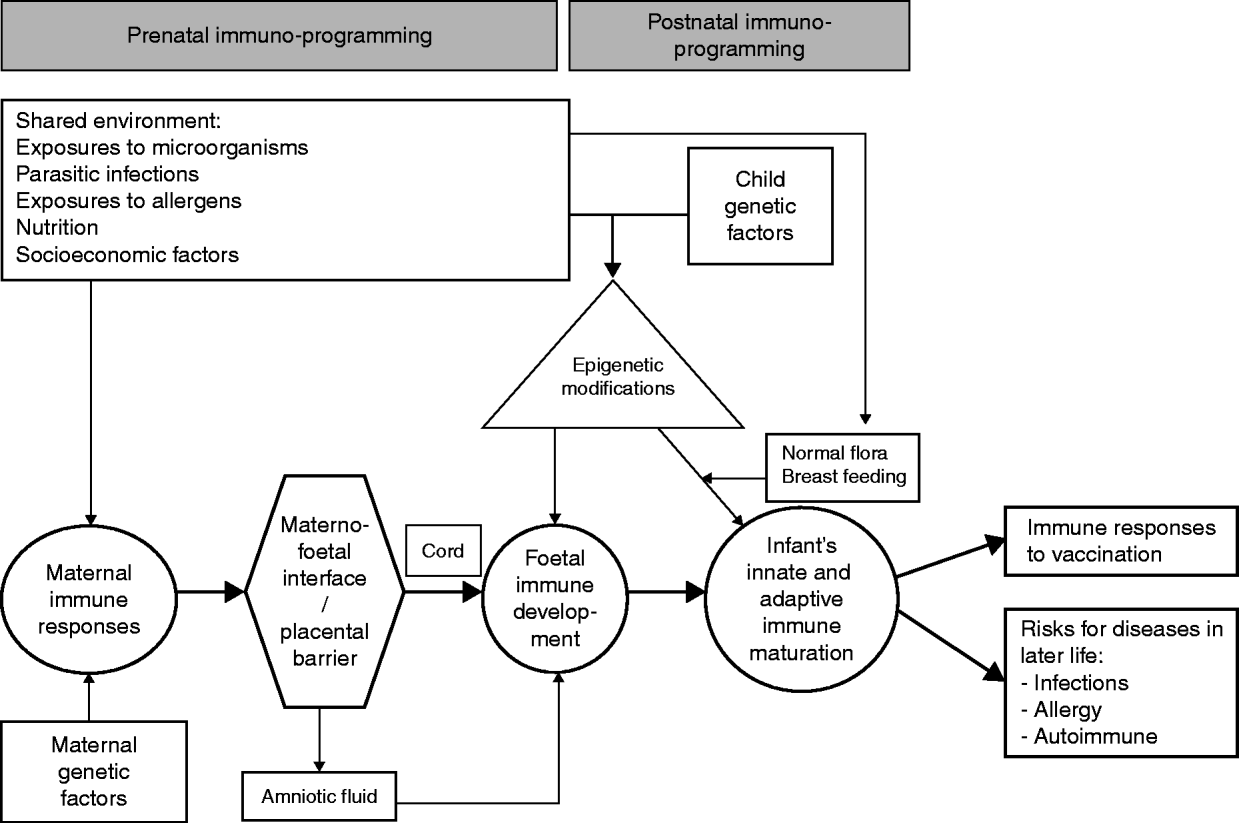
The development of the immune response is determined by the interaction between genetic factors and the environment. The influences from the environment are thought to start already in utero and continue after birth, with great and long-lasting impact on infants and young children whose immune system shows great plasticity and is amenable to modulation (Moore et al. Reference Moore, Collinson, Tamba, Aspinall and Prentice2006). This foetal-neonatal programming such as shown in studies on low birth weight infants can have negative consequences on the number and function of thymus-derived T cells as well as the thymus size (Ferguson, Reference Ferguson1978; Raqib et al. Reference Raqib, Alam, Sarker, Ahmad, Ara, Yunus, Moore and Fuchs2007; Moore et al. Reference Moore, Prentice, Wagatsuma, Fulford, Collinson, Raqib, Vahter, Persson and Arifeen2009). In this respect, nutritional deficiencies during pregnancy and infancy have been linked to diseases in adulthood, such as higher risk of cardiovascular diseases (Barker et al. Reference Barker, Gelow, Thornburg, Osmond, Kajantie and Eriksson2010) and insulin resistance (de Rooij et al. Reference de Rooij, Painter, Roseboom, Phillips, Osmond, Barker, Tanck, Michels, Bossuyt and Bleker2006; Eriksson et al. Reference Eriksson, Forsen, Tuomilehto, Jaddoe, Osmond and Barker2002). These epidemiological observations support the foetal origins hypothesis proposed by Barker (Barker, Reference Barker1995). One of the mechanisms which may explain the link between environmental exposures during foetal life and infancy to risk of diseases in adulthood is the alteration of epigenetic regulation (Hochberg et al. Reference Hochberg, Feil, Constancia, Fraga, Junien, Carel, Boileau, Le Boug, Deal, Lillycrop, Scharfmann, Sheppard, Skinner, Szyf, Waterland, Waxman, Whitelaw, Ong and Albertsson-Wikland2010). Although this phenomenon is the subject of a growing number of studies on the origins of metabolic diseases or cancer; the same phenomenon may possibly be applied to infectious and atopic diseases. In developing countries, an unborn child can be exposed to various pathogens or their components via the placenta, which may result in the engagement of the innate as well as the adaptive immune system and contribute to shaping the child's immunity. The type of pathogen or compounds, the timing and intensity of exposure, the household environment as well as genetic and epigenetic factors are all thought to determine the magnitude and direction of responses to specific and bystander antigens and altogether to the maturation of the immune network (Fig. 1).
A proposed scheme for the impact of early exposure to environmental factors on the development of children's Innate and adaptive Immune responses, with consequences on immune responses to vaccination and on diseases in later life.

In this review, the child's immune responses are considered from the prenatal stage to school-age, with particular emphasis on the very early events, and the impact of in utero priming, different living conditions and helminth infections on the innate and adaptive immune responses are discussed.
Early life
The early immunological cross talk
Cord blood immune responses, reflecting the immature foetal immune system (Levy, Reference Levy2005; Belderbos et al. Reference Belderbos, van Bleek, Levy, Blanken, Houben, Schuijff, Kimpen and Bont2009), are often used as a proxy for measurement of the effects that environmental stimuli exert through the foeto-maternal interface, the placenta. Neonatal immunoepidemiology is a relatively small area of research and has mostly been directed at studying allergic disorders. As allergy leads to serious paediatric diseases, much effort has gone into delineating in utero or early life events that might a few years later lead to the development of allergic disorders. Robust epidemiological data linking early environmental exposures to the development of allergies have been obtained in studies of European children born to farming and non-farming families, which show that farmer's children develop less atopy or asthma (Braun-Fahrlander et al. Reference Braun-Fahrlander, Gassner, Grize, Neu, Sennhauser, Varonier, Vuille and Wuthrich1999; Riedler et al. Reference Riedler, Eder, Oberfeld and Schreuer2000; Von Ehrenstein et al. Reference Von Ehrenstein, von Mutius, Illi, Baumann, Bohm and von Kries2000). The maternal exposure to stables and farm animals during pregnancy, was strongly associated with up-regulation of innate immune receptors and lower degree of allergic sensitization in a child born to a farmer mother (Ege et al. Reference Ege, Bieli, Frei, van Strien, Riedler, Ublagger, Schram-Bijkerk, Brunekreef, van Hage, Scheynius, Pershagen, Benz, Lauener, von Mutius and Braun-Fahrlander2006). In terms of cytokines, maternal exposure to microbial compounds and consumption of farm dairy products was associated with increased T helper 1 (Th1)-type (IFN-γ) and pro-inflammatory (TNF-α) cytokines in cord blood (Pfefferle et al. Reference Pfefferle, Buchele, Blumer, Roponen, Ege, Krauss-Etschmann, Genuneit, Hyvarinen, Hirvonen, Lauener, Pekkanen, Riedler, Dalphin, Brunekeef, Braun-Fahrlander, von Mutius and Renz2010). These studies provide strong evidence for the early programming of the immune system in the developing foetus. Moreover, Schaub and co-workers were able to show that cord blood from mothers living on traditional farms in Germany responded to microbial Toll-like receptor (TLR) ligands by increasing number and function of T regulatory cells, characterized by expression of the forkhead/winged-helix family transcriptional repressor p3 (FOXP3), and decreasing Th2-type cytokine (IL-5) (Schaub et al. Reference Schaub, Liu, Hoppler, Schleich, Huehn, Olek, Wieczorek, Illi and von Mutius2009). Taken together, these studies suggest that prenatal exposure to microbial compounds can modulate the foetal innate immune responses, which in turn can affect the development of adaptive immune responses during childhood. Furthermore, when the children are still exposed to the same farming environment, the higher expression levels of TLR-2 and CD14 genes on peripheral blood mononuclear cells compared to non-farmer children was sustained (Lauener et al. Reference Lauener, Birchler, Adamski, Braun-Fahrlander, Bufe, Herz, von Mutius, Nowak, Riedler, Waser and Sennhauser2002).
It is important to note that immediately after birth, a newborn has to face tremendous exposure to various microorganisms such as the normal flora which start to colonize body surfaces including the mucosa of the gastrointestinal tract. The introduction of normal flora to a newborn occurs first during delivery and it was shown that different modes of delivery could affect the composition of microbiota (Huurre et al. Reference Huurre, Kalliomäki, Rautava, Rinne, Salminen and Isolauri2008; Dominguez-Bello et al. Reference Dominguez-Bello, Costello, Contreras, Magris, Hidalgo, Fierer and Knight2010). The microbial diversity and composition increases with age and is influenced by life events such as breast feeding, introduction of solid food and antibiotics administration (Penders et al. Reference Penders, Thijs, Vink, Stelma, Snijders, Kummeling, van den Brandt and Stobberingh2006; Koenig et al. Reference Koenig, Spor, Scalfone, Fricker, Stombaugh, Knight, Angenent and Ley2010), as well as different environmental exposures or lifestyles (Adlerberth et al. Reference Adlerberth, Carlsson, De Man, Jalil, Khan, Larsson, Mellander, Svanborg, Wold and Hanson1991; Sepp et al. Reference Sepp, Julge, Vasar, Naaber, Bjorksten and Mikelsaar1997; Alm et al. Reference Alm, Swartz, Bjorksten, Engstrand, Engstrom, Kuhn, Lilja, Mollby, Norin, Pershagen, Reinders, Wreiber and Scheynius2002). Furthermore De Filippo and co-workers demonstrated large differences in faecal microbial communities between western European children and rural African children and for the first time linking this to the difference in the diet containing different proportions of carbohydrates and fibres in the daily food (De Filippo et al. Reference De Filippo, Cavalieri, Di Paola, Ramazzotti, Poullet, Massart, Collini, Pieraccini and Lionetti2010). Despite growing studies exploring the diversity of human microbiota and its impact on health and disease, the studies on immunological impact exerted by the presence of gut microbiota in early childhood are still very scarce and only studied in the context of probiotics whose introduction has been shown to be associated with decreased prevalence of atopic disorders in childhood (Kalliomäki et al. Reference Kalliomäki, Salminen, Poussa, Arvilommi and Isolauri2007; Wickens et al. Reference Wickens, Black, Stanley, Mitchell, Fitzharris, Tannock, Purdie and Crane2008; Kuitunen et al. Reference Kuitunen, Kukkonen, Juntunen-Backman, Korpela, Poussa, Tuure, Haahtela and Savilahti2009). Taken together, it is thought that the immune system of a newborn can benefit from the colonization of normal flora which helps the maturation of the immune system and contributes to the development of immuno-tolerant state in the gut (Björkstén, Reference Bjorksten2004; Conroy and Walker, Reference Conroy and Walker2008). Indeed certain species of early microbiota that colonize the infant gut are thought to be able to down-regulate pro-inflammatory responses (Sjogren et al. Reference Sjogren, Tomicic, Lundberg, Bottcher, Bjorksten, Sverremark-Ekstrom and Jenmalm2009).
Breast feeding is another way by which the neonatal immunity is affected, through the transfer of nutrients and bioactive factors present in breast milk, such as antibodies, soluble CD14, cytokines, immune cells and other immuno-active compounds (Hosea Blewett et al. Reference Hosea Blewett, Cicalo, Holland and Field2008). Interestingly, the presence of immunological factors in breast milk can be influenced by maternal environment, such as shown in a study of Italian mothers living in non-farm or farm areas (Peroni et al. Reference Peroni, Pescollderungg, Piacentini, Rigotti, Maselli, Watschinger, Piazza, Pigozzi and Boner2010). In this study the levels of TGF-β1, an anti-inflammatory cytokine, in breast milk from the farm-group was higher and more sustained than the levels in breast milk from the non-farm group, regardless of maternal atopic status. Similar patterns of TGF-β1 in breast milk were observed in Swedish immigrant or Malian mothers compared to native Swedish mothers, and moreover Malian mothers had higher soluble CD14, a pro-inflammatory cytokine, than the other 2 groups (Holmlund et al. Reference Holmlund, Amoudruz, Johansson, Haileselassie, Ongoiba, Kayentao, Traore, Doumbo, Schollin, Doumbo, Montgomery and Sverremark-Ekstrom2010). The latter study further performed the culture of breast milk with cord blood mononuclear cell (CBMC) and intestinal epithelial cell lines, and concluded that breast milk from immigrant mothers induces less cytokine or chemokine responses. Therefore the area of residence as well as the changing of environment (by migration) might affect the cytokine profiles in breast milk, with potential impacts on child health. All these studies indicate that, in addition to in utero exposures, the environmental exposures may act via alteration of the microbiota as well as changes in breast milk to further influence the development of the neonatal immune response.
The impact of in utero priming by helminth on the infant's immune responses to subsequent infections
Many studies in humans have shown that neonatal immune responses can be sensitized by maternal parasite infections, particularly helminths, during pregnancy (Eberhard et al. Reference Eberhard, Hitch, McNeeley and Lammie1993; King et al. Reference King, Malhotra, Mungai, Wamachi, Kioko, Ouma and Kazura1998; Malhotra et al. Reference Malhotra, Mungai, Wamachi, Kioko, Ouma, Kazura and King1999; Soboslay et al. Reference Soboslay, Geiger, Drabner, Banla, Batchassi, Kowu, Stadler and Schulz-Key1999; Malhotra et al. Reference Malhotra, Mungai, Wamachi, Tisch, Kioko, Ouma, Muchiri, Kazura and King2006; Bal et al. Reference Bal, Mandal, DAS, Kar, Sarangi and Beuria2010) but also by protozoan parasites of pregnant mothers such as malaria (Fievet et al. Reference Fievet, Ringwald, Bickii, Dubois, Maubert, Le Hesran, Cot and Deloron1996; Brustoski et al. Reference Brustoski, Moller, Kramer, Petelski, Brenner, Palmer, Bongartz, Kremsner, Luty and Krzych2005; Engelmann et al. Reference Engelmann, Santamaria, Kremsner and Luty2005; May et al. Reference May, Grube, Malhotra, Long, Singh, Mandaliya, Siegmund, Fusch, Schneider and King2009), trypanosomes (Neves et al. Reference Neves, Eloi-Santos, Ramos, Rigueirinho, Gazzinelli and Correa-Oliveira1999; Vekemans et al. Reference Vekemans, Truyens, Torrico, Solano, Torrico, Rodriguez, onso-Vega and Carlier2000) and Toxoplasma (Hara et al. Reference Hara, Ohashi, Yamashita, Abe, Hisaeda, Himeno, Good and Takeshita1996). The modulation of host immune responses by chronic helminth infections is characterized by increased Th2-type cytokines and immune regulatory cytokines such as IL-10 and TGF-β causing immune hyporesponsiveness which seems most prominent in the presence of tissue-dwelling helminths (Yazdanbakhsh, Reference Yazdanbakhsh1999; Maizels, Reference Maizels2009). Although many population studies have examined the effects of helminth infections on the immune system, studies during pregnancy and in neonates are still relatively scarce, in particular those with a birth cohort design where the parasitic infection status of mothers during pregnancy is known. Pregnant women living in endemic areas seem to have either the same or higher risk of being infected with helminths compared to the rest of the population (Adegnika et al. Reference Adegnika, Agnandji, Chai, Ramharter, Breitling, Kendjo, Issifou, Yazdanbakhsh, Kombila and Kremsner2007; Herter et al. Reference Herter, Petney, Pipitgool, Sithithaworn, Vivatpatanakul, Hinz and Andrews2007). The impact of maternal helminth infections on their offspring has been studied in a number of papers suggesting that in utero exposure appears to be associated with increased susceptibility to filarial infection but less filarial pathology during childhood and adulthood (Steel et al. Reference Steel, Guinea, McCarthy and Ottesen1994; Malhotra et al. Reference Malhotra, Ouma, Wamachi, Kioko, Mungai, Njzovu, Kazura and King2003, Reference Malhotra, Mungai, Wamachi, Tisch, Kioko, Ouma, Muchiri, Kazura and King2006). Studies in pigs, a model for Schistosoma japonicum infection of humans, showed that prenatally exposed piglets had higher expression of TGF-β1 mRNA in the liver accompanied with lower tissue egg density and less liver fibrosis compared to postnatally infected piglets (Techau et al. Reference Techau, Johansen, Aasted, Lind, Ornbjerg and Oswald2007). Similar observations have been made in experimental S. mansoni-infected pregnant mice where not only the offspring developed fewer liver granuloma but also had lower egg density in the liver or in the intestine after an experimental infection compared to the control group (Lenzi et al. Reference Lenzi, Sobral, Araripe, Grimaldi and Lenzi1987; Attallah et al. Reference Attallah, Abbas, Dessouky, El-emshaty and Elsheikha2006; Othman et al. Reference Othman, Shoheib, Saied and Soliman2010). It appears from these animal studies that prenatal exposure to maternal helminth infection leads to diminished worm burden and less pathology in the offspring. While in animal models the timing and duration of infection can be controlled, in human populations many factors are not easily controlled and can lead to very diverse spectrum of infections and clinical presentations (Bourke et al. Reference Bourke, Maizels and Mutapi2010): the diverse genetic background of the host, different levels of exposure to cercariae associated with behavioural patterns (Pinot de Moira et al. Reference Pinot de Moira, Fulford, Kabatereine, Ouma, Booth and Dunne2010), as well as genetic diversity of the parasites within an individual or the community (Beltran et al. Reference Beltran, Gourbal, Boissier, Duval, Kieffer-Jaquinod, Pierce, Grunau, Theron and Mitta2010; Standley et al. Reference Standley, Kabatereine, Lange, Lwambo and Stothard2010). To date there is only one study in pregnant women with schistosomiasis where the treatment of infected women with praziquantel was shown to increase both the cellular and humoral responses to schistosome egg antigens (Tweyongyere et al. Reference Tweyongyere, Mawa, Ngom-Wegi, Ndibazza, Duong, Vennervald, Dunne, Katunguka-Rwakishaya and Elliott2008, Reference Tweyongyere, Mawa, Emojong, Mpairwe, Jones, Duong, Dunne, Vennervald, Katunguka-Rwakishaya and Elliott2009); however a follow-up study is needed to determined whether these immunological boosting effects that antihelminthics induce in during pregnancy may have an impact on the child's immune responses in terms of susceptibility to the next infection or reduced pathology.
In human filariasis, Lammie and co-workers showed that maternal microfilaraemic status, when the study was conducted (the infection status at pregnancy was not known), was associated with higher prevalence of microfilaraemic children especially at the age of 10 years or younger (Lammie et al. Reference Lammie, Hitch, Walker Allen, Hightower and Eberhard1991). Moreover, in a cross-sectional study in Haiti the history of maternal filarial infection during pregnancy was found to be associated with cellular immune hyporesponsiveness to microfilarial antigen in non-infected young adults at 17–19 years of age, although the proportion of children with filarial specific antibodies were not different between those born to infected and non-infected mothers (Steel et al. Reference Steel, Guinea, McCarthy and Ottesen1994). Taken together, these findings suggest that cellular immune responses might be affected by exposure to maternal filarial infection during pregnancy and as such have long-lasting effects. However, no data were available on cellular immune hyporesponsiveness that could lead to higher risk of getting filarial infection under a given exposure pressure in the community. In a birth cohort study up to seven years of age performed by Malhotra and co-workers, the study children were categorized not only by maternal filarial infection status but also by the presence or absence of cord cytokine responses to filarial antigen (Malhotra et al. Reference Malhotra, Mungai, Wamachi, Tisch, Kioko, Ouma, Muchiri, Kazura and King2006). The study showed that children born to filarial-infected mothers but with no cord cytokine responses to filarial antigen, categorized as immuno-tolerant children, were more susceptible to filarial infection in childhood compared to the other groups.
The impact of in utero priming by helminth on the infant immune responses to vaccination
Immune hyporesponsiveness which is thought to result from immune modulation by helminth products may affect the immune responses to bystander antigens, such as to those present in vaccines. However, depending on the nature of the vaccine, type and intensity of parasite infections, different outcomes have been seen. Bacille Calmette-Guérin (BCG) vaccination is known to induce a Th1-type cytokine production in infants like in adults (Vekemans et al. Reference Vekemans, Amedei, Ota, D'Elios, Goetghebuer, Ismaili, Newport, Del, Goldman, McAdam and Marchant2001). In a study carried out in Kenya, it was shown that neonates from mothers living in helminth endemic area were able to generate IFN-γ, IL-4 and IL-5 responses to mycobacterial antigens even before BCG vaccination (Malhotra et al. Reference Malhotra, Ouma, Wamachi, Kioko, Mungai, Omollo, Elson, Koech, Kazura and King1997). In a later study, the same authors raised the question of whether in utero exposure to helminth antigens can affect the immune responses to purified protein derivative (PPD) in infants aged 10–14 months, who were given BCG vaccination at birth. The peripheral blood mononuclear cells (PBMC) of infants born to helminth-infected mothers produced a lower IFN-γ response to mycobacterial antigens but a higher IL-5, compared to the infants born to helminth-free mothers (Malhotra et al. Reference Malhotra, Mungai, Wamachi, Kioko, Ouma, Kazura and King1999). Using whole blood culture method, our birth cohort study in Indonesia found no difference in the cytokine responses to PPD after vaccination in infants up to 2 years of age, born to mothers infected or free of filarial and or geohelminth infections (Djuardi et al. Reference Djuardi, Sartono, Wibowo, Supali and Yazdanbakhsh2010). Another birth cohort study with whole blood culture in Uganda showed that maternal hookworm infection was associated with reduced maternal IFN-γ responses to mycobacterial culture filtrate protein (CFP) but higher IFN-γ responses in their one-year old children (Elliott et al. Reference Elliott, Namujju, Mawa, Quigley, Nampijja, Nkurunziza, Belisle, Muwanga and Whitworth2005b). Needless to say, in order to firmly establish whether helminth infections affect neonates’ responses to vaccines, it would be important to conduct trials which administer anthelmintics during pregnancy. Such an elegant design using double blind placebo-controlled trial was conducted by the group of Elliott who studied the immune responses of neonates after helminth-infected pregnant women were treated with anthelmintics or placebo (Elliott et al. Reference Elliott, Namujju, Mawa, Quigley, Nampijja, Nkurunziza, Belisle, Muwanga and Whitworth2005b). Here, maternal hookworm infection translated into increased IFN-γ response to CFP in one-year-old infants when the mothers were assigned to the placebo group but this increase was not as prominent when mothers were treated with albendazole during pregnancy. In a larger cohort study performed by the same group where one treatment was given during the second or third trimester of pregnancy, the effect of albendazole compared with placebo was a 37% reduction in infant IFN-γ responses to CFP, but this fell short of statistical significance (Elliott et al. Reference Elliott, Mawa, Webb, Nampijja, Lyadda, Bukusuba, Kizza, Namujju, Nabulime, Ndibazza, Muwanga and Whitworth2010). In this large study, there appeared to be a direct effect of albendazole; infant IFN-γ responses were higher when they were born to hookworm-uninfected mothers who were treated with albendazole (Elliott et al. Reference Elliott, Mawa, Webb, Nampijja, Lyadda, Bukusuba, Kizza, Namujju, Nabulime, Ndibazza, Muwanga and Whitworth2010), somehow complicating matters but highlighting the importance of caution when interpreting results from cross-sectional or uncontrolled treatment studies (Yazdanbakhsh and Luty, Reference Yazdanbakhsh and Luty2010). This group, in an earlier study, found that maternal infection with the filarial nematode Mansonella perstans was associated with higher infant IL-10 responses to CFP and tetanus toxoid (TT) but with no significant effect on Th1 and Th2-type cytokines to the two vaccine antigens (Elliott et al. Reference Elliott, Mawa, Webb, Nampijja, Lyadda, Bukusuba, Kizza, Namujju, Nabulime, Ndibazza, Muwanga and Whitworth2010). These studies all indicate that it is of utmost importance to have well powerful and placebo controlled studies that will determine the impact of helminth infections on the immune responses to vaccine antigen (Yazdanbakhsh and Luty, Reference Yazdanbakhsh and Luty2010). Even larger studies will be needed to evaluate the effect of helminthes, not only on immune responses to vaccines but also on the efficacy of the vaccination.
The impact of in utero priming by helminths on development of atopic disorders in early childhood
A study in cord blood mononuclear cells (CBMC) in an area highly endemic for parasitic infections in Gabon, showed lower TLR2 expression on monocytes and myeloid dendritic cells but higher numbers of antigen presenting cells and antigen-experienced T cells along with lower expression of FOXP3 compared to Austrian CBMC (Kohler et al. Reference Kohler, Adegnika, Van der Linden, Agnandji, Chai, Luty, Szepfalusi, Kremsner and Yazdanbakhsh2008). The results were interpreted as increased activation and possible modulation of the neonatal immune system in Gabon. Another study comparing neonatal innate immune responses between countries with different environmental settings, showed that CBMC of Papua New Guinean (PNG) newborns expressed lower TLR4 but higher TLR2 and TLR9 compared to CBMC of Australian newborns (van den Biggelaar et al. Reference van den Biggelaar, Prescott, Roponen, Nadal-Sims, Devitt, Phuanukoonnon, Pomat, Tulic, Lehmann, Siba, Richmond and Holt2009). The study also showed that stimulation with Staphylococcus aureus lipoteichoic acid (LTA) and lipopolysaccharides (LPS) resulted in lower IL-6, IL-10 and TNF-α responses in the PNG newborns. Our studies of a birth cohort study in Indonesia using functional immune response measurements, showed that area of residence affected the innate cytokine responses (IL-10 and TNF-α) to TLR4 ligand, LPS, in early infancy before receiving any vaccination (Djuardi et al. Reference Djuardi, Wibowo, Supali, Ariawan, Bredius, Yazdanbakhsh, Rodrigues and Sartono2009). Here lower innate responses were found, when cells in whole blood were activated by lipopolysaccharide a TLR4 agonist, in infants residing in a village where the pregnant mothers had a higher prevalence of helminths (filariae and geohelminths) as well as intestinal protozoan infections (our unpublished data). The down-regulation of innate immune responses, as shown in the studies in Africa and Indonesia, appears to be different from the findings in the European farm studies described earlier where exposure to farms leads to increased Th1 and TNF-α responses in cord blood (Pfefferle et al. Reference Pfefferle, Buchele, Blumer, Roponen, Ege, Krauss-Etschmann, Genuneit, Hyvarinen, Hirvonen, Lauener, Pekkanen, Riedler, Dalphin, Brunekeef, Braun-Fahrlander, von Mutius and Renz2010). It is expected that in European farms the exposure to helminths, if any, would be of low intensity and indeed that bacterial and fungal exposures are expected to be more prominent than helminths (Schram-Bijkerk et al. Reference Schram-Bijkerk, Doekes, Douwes, Boeve, Riedler, Ublagger, von Mutius, Benz, Pershagen, van Hage, Scheynius, Braun-Fahrlander, Waser and Brunekreef2005). In fact, a birth cohort study in the Netherlands found that low transmission of Ascaris suum, measured by Ascaris-specific IgG antibodies in children of 4 years of age, was associated with higher prevalence of allergic disorders (Pinelli et al. Reference Pinelli, Willers, Hoek, Smit, Kortbeek, Hoekstra, de Jongste, van Knapen, Postma, Kerkhof, Aalberse, van der Giessen and Brunekreef2009). Thus different exposures, whether helminths or bacteria, and the degree of exposures to micro-organisms (very high, high or low) may lead to different immune outcomes in terms of up or down-regulation of Toll-Like Receptors but both indicating an early activation of the immune system which might later translate into less vigorous immune reaction to environmental insults such as those inflicted by allergens. In an elegant study of pregnant mice, it was shown that besides the type and origin of bacteria, maternal functioning of TLR signaling was needed in order to confer protection from experimental asthma in the offspring (Conrad et al. Reference Conrad, Ferstl, Teich, Brand, Blumer, Yildirim, Patrascan, Hanuszkiewicz, Akira, Wagner, Holst, von Mutius, Pfefferle, Kirschning, Garn and Renz2009). This study was interesting in that it showed that bacterial exposure of mothers leads to a decreased expression of TLRs in the placenta; something that has not been studied to date in humans.
Most studies have investigated the effect of helminths on atopic disorders during childhood or adulthood, showing either negative or positive associations (Flohr et al. Reference Flohr, Quinnell and Britton2009). So far studies investigating the impact of maternal helminths on the development of atopic disorders in their children are still scarce. A small birth cohort and interventional study in Uganda comparing mothers treated with albendazole or placebo showed that the presence of geohelminth infection, especially with hookworm, during pregnancy or at delivery was associated with decreased risk of infantile eczema up to 15 months of age while the treatment with anthelmintics reversed this association (Elliott et al. Reference Elliott, Mpairwe, Quigley, Nampijja, Muhangi, Oweka-Onyee, Muwanga, Ndibazza and Whitworth2005a). Placebo-controlled trials are needed in order to confirm this finding in areas with a different helminth species (gut or tissue-dwelling helminths) and levels of endemicity and if possible to compare findings between areas with different degree of urbanization. While the benefit of anthelmintic administration during pregnancy on birth outcomes in hookworm-endemic areas has not been confirmed (Haider et al. Reference Haider, Humayun and Bhutta2009; Webb et al. Reference Webb, Mawa, Ndibazza, Kizito, Namatovu, Kyosiimire-Lugemwa, Nanteza, Nampijja, Muhangi, Woodburn, Akurut, Mpairwe, Akello, Lyadda, Bukusuba, Kihembo, Kizza, Kizindo, Nabulime, Ameke, Namujju, Tweyongyere, Muwanga, Whitworth and Elliott2011), the possibility that maternal helminth infections may suppress atopic disorders in their children and therefore treatment would increase the risk of developing allergies, would even suggest that this treatment option is less favourable. It is interesting to note that total IgE levels found in amniotic fluid were correlated with the levels in maternal serum and although foetal levels of circulating IgE were very low, they expressed low-affinity IgE receptors in the lymphoid follicles of the gut, which was thought to educate foetal immune responses to deal with IgE-mediated antigens such as allergen and helminth antigens (Thornton et al. Reference Thornton, Holloway, Popplewell, Shute, Boughton and Warner2003). This finding, together with the growing evidences for helminth-specific modulation of host immune responses (Erb, 2009), may open opportunities to use helminth-derived substances as vaccines for the mother to divert the child's immune responses into a less atopic phenotype.
SCHOOL-AGE CHILDREN
The impact of environmental factors on school-age children are numerous and range from nutritional status to infections and beyond (Ebrahim, Reference Ebrahim2004). Several well set up birth cohort studies have analyzed disease development in children and have tried to delineate risk and protective factors that range from sociological, immunological to genetic factors that govern disease development. In this respect much attention has been given to allergic disorders in affluent countries (Wickman et al. Reference Wickman, Kull, Pershagen and Nordvall2002; Maas et al. Reference Maas, Dompeling, van Schayck, Muris, Schönberger, Wesseling, Platts-Mills and Knottnerus2005). Here we will restrict our review to discuss the impact of helminth infections on the immune response of school children. There are no large-scale studies that evaluate in a birth cohort design the impact of helminth infections on school-age children. However, numerous studies have asked the question of how helminth infections affect school children's responses to co-infections, vaccines or allergens in cross sectional manner.
One of the first and most important measures in children's immunity is the response to vaccinations. Reponses to oral vaccines for polio, cholera or rotaviruses (Serazin et al. Reference Serazin, Shackelton, Wilson and Bhan2010), as well as to parenterally-administered BCG, measles or typhoid, are lower in African and Asian populations (Labeaud et al. Reference Labeaud, Malhotra, King, King and King2009), but the mechanism behind these observations remains less understood. In this context, parasitic infections are of particular interest as they are highly prevalent in developing countries. Helminth infections have been shown to affect responses to vaccines. For example, intestinal helminths may reduce responses to BCG vaccination; a study conducted in adolescents and adults, and attributed to the effect of immunosuppressive cytokine TGF-β (Elias et al. Reference Elias, Britton, Aseffa, Engers and Akuffo2008) while another study in adults showed that Ascaris lumbricoides infection affected responses to cholera vaccine (Cooper et al. Reference Cooper, Chico, Sandoval, Espinel, Guevara, Levine, Griffin and Nutman2001). For filarial infections, there are also studies that have shown lower responses to tetanus toxoid (Cooper et al. Reference Cooper, Espinel, Paredes, Guderian and Nutman1998; Nookala et al. Reference Nookala, Srinivasan, Kaliraj, Narayanan and Nutman2004). Our group has carried out a number of studies on vaccine responses in Gabonese school children. Van Riet and co-workers revealed lower influenza-specific antibody titers and whole blood IFN-γ production in response to influenza vaccine in children from a rural compared to a semi-urban area, and when data were analyzed as a function of helminth (Schistosoma haematobium and geohelminths) infection, there seemed to be lower responses in helminth positive compared to helminth negative subjects (van Riet et al. Reference van Riet, Adegnika, Retra, Vieira, Tielens, Lell, Issifou, Hartgers, Rimmelzwaan, Kremsner and Yazdanbakhsh2007a). However, in the same study in Gabon, children from the rural area displayed higher levels of IgG1 and IgG3 sub-classes in response to tetanus toxoid (TT) vaccination, although IFN-γ responses in whole blood cultured with TT did not develop as well as those in semi-urban area (van Riet et al. Reference van Riet, Retra, Adegnika, Jol-van der Zijde, Uh, Lell, Issifou, Kremsner, Yazdanbakhsh, van Tol and Hartgers2008). This indicates that helminth and other infections may have a profound effect on vaccines which need Th1 induction to generate protective cellular or humoral immune responses. The cellular immune responses were studied in more detail in terms of so-called multifunctional T cells, which co-produce IFN-γ, TNF-α and IL-2. Frequency of these cells was described to be predictive of the protective effect of Th1-based vaccines, such as Leishmania major immunization (Darrah et al. Reference Darrah, Patel, De Luca, Lindsay, Davey, Flynn, Hoff, Andersen, Reed, Morris, Roederer and Seder2007). Assessing frequencies of these cells in the Gabonese children we found a significant increase after influenza vaccination in children free of helminth infection, while the increase was much lower and not significant in the helminth-infected group (van Riet and Fillie, unpublished data). In the light of such data, it has been suggested that in order to improve vaccine efficacy it might be needed to de-worm the target population before administering vaccines (Urban et al. Reference Urban, Steenhard, Solano-Aguilar, Dawson, Iweala, Nagler, Noland, Kumar, Anthony, Shea-Donohue, Weinstock and Gause2007).
Another phenomenon that has been studied in recent years is the impact of helminth infection on the acquisition and severity of co-infections. For co-infection with malaria parasites, several cross-sectional studies have pointed at higher incidences in helminth-infected children, however less seem to proceed to severe disease due to the anti-inflammatory properties of helminth infections (Specht and Hoerauf, Reference Specht and Hoerauf2007; van Riet et al. Reference van Riet, Hartgers and Yazdanbakhsh2007b). However, recent work is not conclusive on this subject. In a study from Brazil, geohelminth infections such as hookworms protected against anaemia in school children with a Plasmodium vivax malaria (Melo et al. Reference Melo, Reyes-Lecca, Vitor-Silva, Monteiro, Martins, Benzecry, Alecrim and Lacerda2010). In contrast, an earlier study in Kenya concluded that haemoglobin levels were lowest in malaria-hookworm co-infections (Brooker et al. Reference Brooker, Akhwale, Pullan, Estambale, Clarke, Snow and Hotez2007). Aside from epidemiological studies, few immunological assessments have been made in this field. A study from Ghana showed higher IL-10 production in school children infected with schistosomes or geohelminths in response to P. falciparum-parasitized red blood cells (pRBC) (Hartgers et al. Reference Hartgers, Obeng, Kruize, Dijkhuis, McCall, Sauerwein, Luty, Boakye and Yazdanbakhsh2009). In this respect, the results of a double-blind randomized placebo-controlled albendazole trial to determine the effects of helminth treatment longitudinally on immunological and clinical measures of malaria (Wiria et al. Reference Wiria, Prasetyani, Hamid, Wammes, Lell, Ariawan, Uh, Wibowo, Djuardi, Wahyuni, Sutanto, May, Luty, Verweij, Sartono, Yazdanbakhsh and Supali2010) are eagerly awaited.
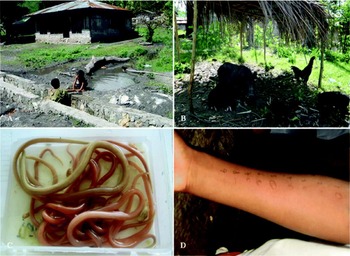
In the field of allergic diseases, long-term follow-up of birth cohorts has been highly informative, yet none has been conducted in areas where burden of micro-organisms and parasites in the environment is high (Fig. 2). Nonetheless, some birth cohort studies where viral infections were recorded as well as immunological responses of children followed up to 5 years of age have indicated that inflammation induced by both early viral infections and atopy together promote development of asthma in later life (Kusel et al. Reference Kusel, de Klerk, Kebadze, Vohma, Holt, Johnston and Sly2007). Interestingly, cord blood IL-5 and IL-10 responses were shown to predict prevalence of these acute respiratory infections, suggesting a very early immunological contribution to development of clinical atopy (Zhang et al. Reference Zhang, Rowe, Kusel, Bosco, McKenna, de Klerk, Sly and Holt2009). In contrast to this adverse effect of viral infections, childhood helminth infections have been shown to be protective against allergy in many studies but these were primarily cross-sectional in design. It is thought that helminth infections can induce not only a Th2 immune skewing, which would lead to allergies, but they also direct the development of strong regulatory responses, involving cytokines such as IL-10 and TGF-β, which might lead to the development of allergic disorders (Yazdanbakhsh et al. Reference Yazdanbakhsh, Kremsner and van Ree2002). It has also been proposed that prenatal exposure to helminths through maternal infection may provide sufficient levels of immune tolerance, which can in turn be associated with protection against atopy and allergy (Steel et al. Reference Steel, Guinea, McCarthy and Ottesen1994; Cooper, Reference Cooper2004). Several cross-sectional studies in school-age children have examined the effect of current helminth infections on skin prick test (SPT) responses to allergens. The majority of these studies show lower SPT positivity in children infected with schistosomes or geohelminths such as Ascaris lumbricoides, hookworms and Trichuris trichiuria infections (Flohr et al. Reference Flohr, Quinnell and Britton2009; Smits et al. Reference Smits, Everts, Hartgers and Yazdanbakhsh2010). A recent report has indicated that long-term treatment with ivermectin can lead to increased allergen SPT reactivity and eczema symptoms in school children, but it did not affect asthma or rhinoconjunctivitis (Endara et al. Reference Endara, Vaca, Chico, Erazo, Oviedo, Quinzo, Rodriguez, Lovato, Moncayo, Barreto, Rodrigues and Cooper2010). In a European study, atopic disease symptoms of children of farming and non-farming background were compared. Protective effects for wheezing, rhinoconjunctivitis and hay fever were found for children living on traditional farms, but this was not explained by results of nematode serology (Karadag et al. Reference Karadag, Ege, Bradley, Braun-Fahrlander, Riedler, Nowak and von Mutius2006). The comparison of studies is difficult as study set-ups, the intensities and chronicity of infections as well as non-uniform definitions for atopic disease may influence and explain the conflicting results obtained in epidemiological studies. Future studies with long-term follow-up that include immunological measurements should be able to provide clearer answers on the real relationship between helminth infections and allergies.
Exposure of children to environmental factors (A, B), the presence of helminths (Ascaris lumbricoides) (c) in many parts of the tropical world, and studies of atopy by allergen skin-prick testing on the arm of a school-aged child (D) are depicted.

Working towards an immunological explanation for the effects of helminths and other infections on allergy, or on responses to vaccines and co-infections, several groups have studied the immune regulatory network in detail. Cellular immune regulation can occur at different levels, both innate (dendritic cells) and adaptive (T and B lymphocytes) regulatory cell subsets have been described (Maizels et al. Reference Maizels, Balic, Gomez-Escobar, Nair, Taylor and Allen2004; van Riet et al. Reference van Riet, Hartgers and Yazdanbakhsh2007b). Within the T cell compartment, regulatory T cells (Tregs), characterized by expression of the transcription factor FOXP3, are able to down-regulate proliferation and cytokine responses of T helper and other cell subsets. Induction of Tregs by helminths is described as a mechanism to evade host immunity, but is at the same time beneficial for the host since extensive inflammation is dampened (Belkaid, Reference Belkaid2007). In human studies, increased frequencies and altered phenotypes of Treg have been described in filariasis, schistosomiasis, intestinal protozoan and geohelminth infections (Babu et al. Reference Babu, Blauvelt, Kumaraswami and Nutman2006; Watanabe et al. Reference Watanabe, Mwinzi, Black, Muok, Karanja, Secor and Colley2007; Garcia-Hernandez et al. Reference Garcia-Hernandez, Alvarado-Sanchez, Calvo-Turrubiartes, Salgado-Bustamante, Rodriguez-Pinal, Gamez-Lopez, Gonzalez-Amaro and Portales-Perez2009). We also recently reported that the functional properties of FOXP3+ Tregs were enhanced in geohelminth-infected Indonesian school children; suppressed in vitro immune responses to BCG and pRBC were restored by removal of Tregs (Wammes et al. Reference Wammes, Hamid, Wiria, de Gier, Sartono, Maizels, Luty, Fillie, Brice, Supali, Smits and Yazdanbakhsh2010). Whether the regulatory network is responsible for the long-term immunological effects of (maternal) helminth infection remains to be established.
Similar to allergic disorders, other immune-mediated diseases such as inflammatory bowel disease, type 1 diabetes and multiple sclerosis are less prevalent in developing countries. The presence of helminth infection has been proposed as one of many factors which may be responsible for this phenomenon, and so far epidemiological studies and experimental animal models show that helminth infections are associated with reduced inflammatory responses in autoimmunity (Wilson and Maizels, Reference Wilson and Maizels2004). It is still not known whether exposure to helminth infection per se in utero or during early childhood may already reduce the risk of developing auto-immune diseases in older age, or helminth-microbe-host interaction in vivo is needed before helminths can have more impact on host immune responses (Stewart et al. Reference Stewardt, Chadwick and Murray2005; Hayes et al. Reference Hayes, Bancroft, Goldrick, Portsmouth, Roberts and Grencis2010; Walk et al. Reference Walk, Blum, Ewing, Weinstock and Young2010).
CONCLUSION
Depending on the timing of first exposure to helminth parasites, prenatally or postnatally, worm burdens and a combination with exposure to other environmental factors, such as microbial-rich environment or altered nutrition, could together determine the shaping/programming childhood immune responses leaving a long-term immunological footprint. However, to prove this, long-term commitment to studies that are sufficiently powerful, have a placebo controlled design and have as one of their aims the delineation of mechanisms behind any associations seen, would be needed.
ACKNOWLEDGEMENT
We would like to thank the British Society for Parasitology (BSP) for inviting and facilitating us to present our work at the BSP Autumn Symposium 2010. Our work was supported by The Netherlands Foundation for the Advancement of Tropical Research (W93-364 and W93-468), European Union Grant (MEST-CT-2005-020524-GALTRAIN) and The Royal Netherlands Academy of Arts and Sciences SPIN projects (KNAW grant 05-PP-35).
GLOSSARY
TLR=Toll-like receptor
Th=T helper
IL=interleukin
IFN=interferon
TNF=tumor necrosis factor
FOXP3=forkhead/winged-helix family transcriptional repressor p3
TGF=transforming growth factor
CBMC=cord blood mononuclear cell
PBMC=peripheral blood mononuclear cell
PPD=purified protein derivative
BCG=Bacille Calmette-Guérin
CFP=culture filtrate protein
TT=tetanus toxoid
LTA=lipoteichoic acid
LPS=lipopolysaccharides
pRBC=Plasmodium falciparum-parasitized red blood cells
SPT=skin prick test
Treg(s)=regulatory T cell(s)