


Modern society is a society of strangers. Living in large-scale societies made up of millions, we continuously interact with people we do not know, and our welfare is affected by people we never meet. From the perspective of deep history, this is an unprecedented condition. As a species, we evolved in small groups (Dunbar Reference Dunbar1998; Kelly Reference Kelly1995), and correspondingly, human social psychology most likely evolved to operate on the basis of the intimate social experiences within such groups (Fowler & Schreiber Reference Fowler and Schreiber2008; Kurzban Reference Kurzban2001; Petersen Reference Petersen2012). Yet, despite our nature as small group social animals, mass society remains viable. How is this? The key, we suggest here, is that, although we cannot directly view most fellow citizens, we see them in our mind's eye. On the basis of these mental simulations, our rich, sophisticated social psychology enables us to feel, reason, and judge about the mass societies in which we live. This argument is an extension of a classical view running through a century of social science research. Anderson (Reference Anderson1983), for example, forcefully argued that the feeling of community underlying the modern nation-state only emerged because the print press allowed for the dissemination of information that enabled people to vividly imagine those others living within the state's territory. Similarly, Hunt (Reference Hunt2007) argued that the sense of a shared human dignity underlying the politics of indissoluble human rights was influenced by the invention of the novel. The novel allowed people to more vividly imagine the inner life of others and, hence, see the shared humanity through their mind's eye. Finally, regarding public opinion, Lippmann (Reference Lippmann1922, 43) noted how “our opinions cover a bigger space, a longer reach of time, a greater number of things, than we can directly observe,” and thus individuals are left to rely on the “pictures in their heads” of policy-relevant events, places, and target groups. Like Anderson (Reference Anderson1983) and Hunt (Reference Hunt2007), Lippmann (Reference Lippmann1922, 43) proposed that the cognitive feat of mentally picturing the unseen emerges from the interplay of two distinct processes and is “pieced together out of what others have reported and what we can imagine.”
Current research has made great progress in understanding how the reporting of others—social networks, political elites, and news media—provides a basis for political cognition in mass society (e.g., Druckman & Nelson Reference Druckman and Nelson2003; Iyengar and Kinder Reference Iyengar and Kinder1987; Mutz Reference Mutz1998; Nelson et al. Reference Nelson, Clawson and Oxley1997; Zaller Reference Zaller1992). In this article, we provide the first systematic test of the argument that a second and inner process, imagination, plays an equally crucial role in making mass political cognition possible.
On the basis of recent advances in the cognitive sciences, we argue that citizens use imagination―often referred to as “decoupled cognition”―to generate vivid mental simulations of relevant events and groups in mass politics (Boyer Reference Boyer2008; Buckner and Carroll Reference Buckner and Carroll2007; Cosmides and Tooby Reference Cosmides, Tooby and Sperber2000; Schacter and Addis Reference Schacter, Addis and Buckner2007). With these vivid mental representations as input, psychological mechanisms of social cognition facilitate citizens’ reasoning about mass political issues. By relying on their mind's eye, average citizens can reason as though mass political issues resemble the small-scale social problems they evolved to navigate, and thus they are able to form coherent political attitudes despite their lack of substantive political knowledge.
In testing this argument empirically, we rely on the recent observation from personality research in both psychology and political science that genetic and environmental differences create stable individual-level variation in traits such as imaginative capacity (Gerber et al. Reference Gerber, Huber, Doherty and Dowling2011; Mondak et al. Reference Mondak, Hibbing, Canache, Seligson and Anderson2010). If decoupled cognition is a key ingredient in the formation of political attitudes and behavior, individual differences in imagination should track important differences in how citizens think, feel, and act in the domain of mass politics.
In the following section we develop the theoretical argument for decoupled cognition as the link between social and political cognition. Next, we show how we across four measurement studies developed and validated a scale for measuring individual differences in imagination—the short imagination or S-IM scale—and present our set of empirical predictions on how imagination is expected to facilitate the use of social cognition by helping individuals simulate vivid social cues. In our tests, we focused on the issue of social welfare. To maximize cross-cultural leverage, we tested our predictions using comparable, nationally representative web surveys collected in the United States and Denmark. We conducted further tests with students in lab settings as well as in a survey experiment among a sample of the general Danish population. In total, we conducted seven main studies (in five separate samples) based on analysis of both opinion and behavioral measures. Our findings support that imagination facilitates the use of social cognition in public opinion formation by allowing people to feed vivid mental simulations of unseen events, groups, and individuals into basic mechanisms for social cognition. For a more detailed overview of the studies see Appendix 1.
PUBLIC OPINION AND SOCIAL COGNITION: DECOUPLED COGNITION AS THE LINK
Current evidence suggests that substantial aspects of human social cognition have evolved over the course of our biological evolution to help our ancestors solve recurring social problems relating to cooperation and conflict (Fowler and Schreiber Reference Fowler and Schreiber2008; Hatemi and McDermott Reference Hatemi and McDermott2011). For most of human evolutionary history, our ancestors lived in relatively small groups of perhaps between 30 and 250 individuals (Dunbar Reference Dunbar1998; Kelly Reference Kelly1995). Evolved parts of human social cognition such as heuristics and emotions would therefore be adapted to life in small groups and designed to take advantage of the cues available in intimate face-to-face interactions (Haley and Fessler Reference Haley and Fessler2005; Kurzban Reference Kurzban2001). In line with this argument, studies in social psychology have shown how social decisions and emotional reactions in everyday life are heavily influenced by the kinds of cues that are uniquely available in face-to-face interactions, such as the presence of bystanders (Haley and Fessler Reference Haley and Fessler2005), eye contact (Kurzban Reference Kurzban2001), facial expressions such as smiles (Scharlemann et al. Reference Scharlemann, Eckel, Kacelnik and Wilson2001), facial features such as attractiveness and masculinity (Sell, Tooby, and Cosmides Reference Sell, Tooby and Cosmides2009; Wilson and Eckel Reference Wilson and Eckel2006), and other kinds of nonverbal cues (Brown, Palameta, and Moore Reference Brown, Palameta and Moore2003).
In recent years, evidence has been provided that social cognition not only helps people navigate in small-scale everyday life but also helps citizens feel and reason about mass politics (Fowler and Schreiber Reference Fowler and Schreiber2008; Hatemi and McDermott Reference Hatemi and McDermott2011; Kuklinski and Quirk Reference Kuklinski, Quirk, Lupia, McCubbins and Popkin2000; Petersen Reference Petersen2012; Schreiber Reference Schreiber, Neuman, Marcus, Crigler and Mackuen2007). Yet, to the extent that mass political cognition emerges from more basic mechanisms for social decision making, these mechanisms are deployed in a radically less intimate context than the context in which they evolved (small groups) and in which they normally operate (everyday life): Modern politics is played out in mass societies consisting of millions of inhabitants, in which citizens will most often lack intimate, vivid knowledge of groups and events being debated (Lippmann Reference Lippmann1922, 43; Kuklinski and Quirk Reference Kuklinski, Quirk, Lupia, McCubbins and Popkin2000, 156–57; Zaller Reference Zaller1992, 6).
This informational deficit is far from trivial, and indeed current research suggests that a lack of vivid social cues normally inhibits social cognition. For example, studies using fMRI have shown how activity in brain regions related to emotional processing―a core element in social cognition (Haidt Reference Haidt, Davidson, Scherer and Goldsmith2003)―are downregulated when decision contexts resemble face-to-face interactions less (e.g., de Quervain et al. Reference de Quervain, Fischbacher, Treyer, Schellhammer, Schnyder, Buck and Fehr2004; Sanfey et al. Reference Sanfey, Rilling, Aronson, Nystrom and Cohen2003). Outside the laboratory, this effect has been validated by research on group efficiency showing that social and emotional forms of coordination in groups are inhibited when groups do not interact face to face (Baltes et al. Reference Baltes, Dickson, Sherman, Bauer and LaGanke2002).
How, then, do modern individuals in the course of political opinion formation compensate for the lack of vivid cues that ordinarily fuel social cognitive processes? In cognitive psychology, researchers are increasingly coming to understand the compensatory strategies that individuals use when making decisions in contexts with sparse information. These researchers point to the role played by internal psychological processes, often referred to as “decoupled cognition” (Buckner and Carroll Reference Buckner and Carroll2007; Cosmides and Tooby Reference Cosmides, Tooby and Sperber2000; Schacter and Addis Reference Schacter, Addis and Buckner2007). Their research suggests that, when cues are absent yet are required for decision making, people rely heavily on intense mental simulations of the absent cues as they “extract, recombine and reassemble” stored memory content “into imaginary events that never occurred” (Schacter and Addis Reference Schacter and Addis2007, 27). In short, in sparse information contexts, people engage in decoupled cognition to imagine what they cannot see and then feed these internally generated representations and beliefs into more basic cognitive and emotional mechanisms.
More formally, decoupled cognition involves representations that are (1) highly explicit in the sense of relying on thorough declarative memory searches, (2) imagined in the sense of operating without direct sensory input, and (3) vivid in the sense of being emotionally engaging.Footnote 1 Importantly, these features mean that imaginative decoupled processes could help bridge the gap between the informational needs of our social cognition and the sparse supply of cues in modern mass politics. Imaginative decoupled processes could add vividness and flavor to the otherwise meager information often available during political opinion formation and, hence, help engage the more basic cognitive and emotional mechanisms comprising social cognition.
By emphasizing the role of internal psychological sources of cues, we expand the traditional emphasis of political scientists on the role of the media and social networks as external sources of cues (e.g., Beck et al. Reference Beck, Dalton, Greene and Huckfeldt2002; de Vreese and Boomgarten Reference de Vreese and Boomgaarden2006; Iyengar and Kinder Reference Iyengar and Kinder1987). Such extant lines of research have provided important evidence that external information, especially media stories containing vivid social cues (Iyengar Reference Iyengar1991), increase the effects of basic psychological processes―such as emotions―on public opinion (Aarøe Reference Aarøe2011; Gross Reference Gross2008). Importantly, however, these external sources of cues often cannot facilitate opinion formation if unaided by decoupled cognition. First, although the print media and social networks allow for dissemination of indirect verbal descriptions of political events and groups, research suggests that many verbal descriptions require mental simulation to engage people (Green & Brock Reference Green and Brock2000; see also the later discussion of validation Study A). Second, although television in particular can offer a source of vivid social cues, political attitude formation often takes place unaided by such technology (e.g., at the polls, over the dinner table, at political meetings, when answering an opinion survey, or when signing a petition or donating money to a cause). Thus in many contexts for political attitude formation, vivid social cues from the media are not immediately accessible, but need to be pieced together and simulated from memory searches. In these contexts the need for decoupled cognition is not relieved.
MEASURING DECOUPLED COGNITION: AN INDIVIDUAL DIFFERENCES PERSPECTIVE
Imaginative decoupled processes arguably play a key role in public opinion formation across individuals. Yet prior research has produced ample evidence that the cognitive capabilities of individuals differ quite substantially, in no small part due to genetic factors (e.g., Wainwright et al. Reference Wainwright, Wright, Luciano, Geffen and Martin2008). The literature on individual differences has often discussed this variation with reference to imagination (or, at times, fantasy), which constitutes an everyday denotation of the same set of processes that we refer to as decoupled cognition. Although a range of approaches to the assessment of such individual differences exist in the psychological literature, there is now widespread acceptance that the Big Five model is one of the strongest taxonomies of human personality variation (for applications in political science, see Gerber et al., Reference Gerber, Huber, Doherty and Dowling2011; Mondak et al. Reference Mondak, Hibbing, Canache, Seligson and Anderson2010). The Big Five model includes imagination as a subcomponent of the “openness to experience” factor (see, e.g., Goldberg Reference Goldberg, Mervielde, Deary, De Fruyt and Ostendorf1999; McCrae and Costa Reference McCrae, Costa and Wiggins1996). As McCrae (Reference McCrae1994, 258) argues, “open people are characterized by an active pursuit of novelty” as well as flexible cognitive processing, such as “divergent thinking, in which remote associations are easily made, and . . . synesthesia, in which the distinctions between different sensory modalities are blurred.” The latter components are closely related to decoupled cognition as defined here.
Individual differences in imagination are important because they provide a window into how decoupled cognition shapes mass political attitudes and behavior. If decoupled cognition is used during opinion formation in order for social cognition to operate, individual differences in the ability to imagine should track how and, in particular, how easily individuals form political attitudes. Indeed, the literature on how differences in openness to experience influence political behavior has provided important evidence that these differences predict a variety of measures of political engagement such that open people are more likely to be politically engaged (Gerber et al. Reference Gerber, Huber, Doherty and Dowling2011; Mondak and Halperin Reference Mondak and Halperin2008; Mondak et al. Reference Mondak, Hibbing, Canache, Seligson and Anderson2010). Although these findings are consistent with the argument advocated here, they nonetheless provide only indirect evidence. According to McCrae (Reference McCrae1994), imagination constitutes only one-half of the general openness to experience trait, which also includes the novelty-seeking component of adventurousness (Goldberg Reference Goldberg, Mervielde, Deary, De Fruyt and Ostendorf1999). To validate our account, we need tests focusing directly on the relationship between individual differences in the imagination subtrait and differences in dynamics during public opinion formation (for a similar approach, see Hirsch et al. Reference Hirsh, DeYoung, Xu and Peterson2010).
A first step in providing such validation is building a scale that allows us to measure differences in imagination. Our ambition was to create a short but reliable scale that could easily be included in future surveys and applied cross-nationally with satisfactory reliability (cf. Mondak et al. Reference Mondak, Hibbing, Canache, Seligson and Anderson2010). As our point of departure, we used the primary open-access inventory of personality scales, the International Personality Item Pool (IPIP), which includes measures for all traits included in the Big Five model (Goldberg Reference Goldberg, Mervielde, Deary, De Fruyt and Ostendorf1999). Consistent with our theoretical argument, we selected the three standard items from the IPIP imagination scale that focused most directly on the decoupled cognition aspect of imaginative processes: “I have a vivid imagination,” “I do not have a good imagination,” and “I have difficulty imagining things.” To these items we added a fourth self-formulated item: “I can easily imagine persons I hear or read about.” Thus, all four statements focused exclusively on the decoupled cognition aspect of imaginative processes. To obtain a scale, we asked participants how accurately each statement described them on a 7-point scale ranging from “very inaccurate” to “very accurate” and summarized the answers as appropriate (see Online Appendix A1 for further discussion).Footnote 2
Given that the short imagination (S-IM) scale relies predominantly on well-tested items from the psychometric literature, its validity should be ensured. Still, to investigate the properties of this short-form scale, we ran four validation studies (Studies A–D), each providing detailed tests of the predictive, convergent, and divergent validity of the S-IM scale.Footnote 3 Across all studies, the imagination scale had satisfactory reliability (Study A: α = 0.74; Study B: α = 0.77; Study C: α = 0.78; Study D: α = 0.79).
The aim of Study A was to provide a face valid demonstration that the S-IM scale does in fact gauge individual differences in imagination. Because we wanted to establish the predictive validity of our measure outside a political context, we focused on an everyday situation in which decoupled cognition is engaged: the reading of fiction. Participants read a short fairytale-like story. Afterward, they first answered nine items from the well-validated transportation scale (Green and Brock Reference Green and Brock2000), which measures the extent to which readers of a narrative become immersed into the story and “see the action of the story unfolding before them and respond emotionally to story events” (Mazzocco et al. Reference Mazzocco, Green, Sasota and Jones2010, 361; see also Green and Brock Reference Green and Brock2000). Second, they engaged in two free association tasks in which they were asked to list the words they would use to describe one of the main characters and the story as a whole to another person. Finally, they completed the S-IM scale and answered a range of other questions about their personality and cognitive abilities.
Analyses showed that subjects’ values on the S-IM scale significantly and strongly correlated with differences in the degree to which they felt mentally transported into the story (r = 0.43, p < 0.001) and with the number of associations they freely recollected to describe the human main character (r = 0.33, p < 0.001) and the overall story (r = 0.25, p = 0.001). As detailed analyses in the Online Appendix A5 reveal, all three effects were highly robust to the inclusion of a large range of control variables related to both closely related personality constructs (general openness to experience, adventurousness, need for closure, and political ideology) and variables tracking cognitive abilities (need for cognition and need to evaluate). Testifying to the criteria validity of the scale, these findings document that the S-IM scale uniquely tracks how vividly individuals experience descriptions of unseen people and events, as well as how vividly they recollect these descriptions.
Study A relied on self-reports and quasi-behavioral measures of returned associations. The goal of Study B was, therefore, to provide evidence that the S-IM scale tracked individual differences in the abilities to engage in decoupled cognition using a genuinely behavioral task. The best validated behavioral tasks of visual imagery (a key component of decoupled cognition) in psychology are “mental rotation tasks” (see Shepard and Metzler Reference Shepard and Metzler1971). Mental rotation ability, as measured by these tasks, is the ability of people to “rotate figures in their minds’ eye” (Peters and Battista Reference Peters and Battista2008, 261); that is, to mentally visualize rotating complex figures of blocks in three-dimensional space. Specifically, we relied on the redrawn Vandenberg & Kuse Mental Rotation Task (Peters et al. Reference Peters, Laeng, Latham, Jackson, Zaiyouna and Richardson1995).Footnote 4 To investigate whether our imagination scale predicted success on the mental rotation task, participants completed the task and our scale online (see Online Appendix A2 for study details). Testifying to the validity of the S-IM scale, subjects’ values on the scale had a nontrivial and highly significant effect on the success rate on the mental rotation task (r = 0.35, p = 0.001).
Third, our argument hinges on the capacity of imaginative processes to engage more basic psychological and emotional processes. To verify that the S-IM scale tracks relevant individual differences in this regard, Study C provided a test of the effect of imagination on the responses of subjects to positive and negative still images. To obtain an unobtrusive and direct measure of the engagement of basic emotional mechanisms, we relied on a physiological reaction measure in the form of skin conductance response (SCR) during image presentation (see Oxley et al. Reference Oxley, Smith, Alford, Hibbing, Miller, Scalora, Hatemi and Hibbing2008). SCR provides a valid measurement of the activation of the sympathetic nervous system, which is a key circuit in the generation of emotional arousal (Figner and Murphy Reference Figner, Murphy, Schulte-Mecklenbeck, Kuehberger and Ranyard2011). All of the images of interest were strictly nonpolitical: a bright flower, a happy baby, a foot with an infected wound, and a large spider.
In the study, subjects were placed in front of a computer screen and asked simply to sit and look at the images. The analysis found that subjects’ score on the imagination scale was positively and significantly related to their SCR during the presentation of images (r = 0.27, p = 0.037).Footnote 5 Hence, people high in imagination, as measured by the S-IM scale, exhibit stronger physiological reactions to emotional images. These findings support that the scale reliably tracks individual differences in the ability to engage basic psychological mechanisms in the face of limited information.
Finally, we checked the extent to which the imagination scale overlapped with answers to other well-used cognitive ability measures in the political science literature, as well as to closely related personality constructs. To this end, we measured a range of prominent measures across the studies: general openness to experience (cf. Mondak et al. Reference Mondak, Hibbing, Canache, Seligson and Anderson2010), adventurousness (Goldberg Reference Goldberg, Mervielde, Deary, De Fruyt and Ostendorf1999), political ideology (related to openness; cf. Gerber et al. Reference Gerber, Huber, Doherty, Dowling and Ha2010), need for closure (cf. Webster and Kruglanski Reference Webster and Kruglanski1994), political awareness (Zaller Reference Zaller1992), need for cognition (Cacioppo and Petty Reference Cacioppo and Petty1982), need to evaluate (Jarvis and Petty Reference Jarvis and Petty1996), and grade point average as a measure of general cognitive abilities (cf. Frey and Detterman Reference Frey and Detterman2004, 376). Across the studies in this article, imagination as measured by the S-IM scale naturally correlated with adventurousness (average r = 0.30) and general openness (average r = 0.17). We also found correlations with the need for cognition (average r = 0.18) and need for closure (average r = −0.21). Importantly, however, the strength of all these correlations was relatively modest. The rest of the constructs did not seem to overlap with values on the S-IM scale. Together with the results from Study A, which showed that the S-IM scale uniquely tracks abilities to mentally simulate fictional descriptions, this finding suggests that the scale tracks individual differences left untapped by other available measures. We return to this finding in Studies 6 and 7.
STUDIES 1 AND 2: IMAGINATION AND VIVID REPRESENTATIONS OF POLITICS
Having established our key independent variable (i.e., the S-IM scale) and our individual differences approach to studying how decoupled cognition shapes public opinion, we then investigated how these differences influence the use of social cognition during political opinion formation. Our first two studies were oriented toward establishing a key premise of our argument: that imaginative people generate vivid mental representations of relevant target groups or events when forming opinions about mass politics.
Predictions
In the domain of mass politics, imagination is expected to facilitate opinion formation by helping individuals simulate vivid, social input to basic social decision-making mechanisms. Social psychologists consistently emphasize that the key attribute of well-structured opinions is attitude strength (e.g., Eagly and Chaiken Reference Eagly and Chaiken1993; Krosnick et al. Reference Krosnick, Boninger, Chuang, Berent and Carnot1993). Therefore, our first prediction is that individuals high in imagination should form stronger opinions on issues concerning mass politics (H1).
To develop precise predictions about how this effect emerges, we must consider the outlined cognitive components in decoupled cognition. Decoupled cognition emerges from (1) a thorough memory search and (2) the piecing together of vivid and engaging mental representations from the results of these search processes. In the domain of politics, this implies that differences in imagination should be related to both how individuals process policy statements and to the quality, vividness, and detailed nature of politically relevant mental representations.
Past research on public opinion has focused on two different modes through which individuals form political attitudes: memory-based processing and online processing (Lodge, McGraw, and Stroh Reference Lodge, McGraw and Stroh1989; Zaller Reference Zaller1992). Memory-based processing involves searching the memory for relevant considerations, whereas online processing involves the mere retrieval of an affective tag that applies to the relevant attitude object. Given the mental operations involved in decoupled cognition, we predict that people high in imagination should be more likely to engage in memory-based processing when forming political opinions (H2).
Some studies have suggested that individuals who process information in an online manner often have stronger attitudes (Druckman and Nelson Reference Druckman and Nelson2003). Nonetheless, among imaginative individuals, a memory-based processing mode is predicted to coexist with strong attitudes. We suggest that this relationship is due to the high-quality mental representations that imaginative people form on the basis of the memory search. Despite being vivid, such representations could principally be quite ambiguous and, hence, form a less useful basis for executing social cognition. Yet increasing evidence indicates that memory searches are often biased in a specific direction aligned with the predispositions of the individual (Kunda Reference Kunda1990; Taber and Lodge Reference Taber and Lodge2006). This finding suggests that more thorough memory searches by imaginative people should lead them to generate more vivid and more consistent mental representations of objects (e.g., target groups, events) relevant to the political issue in question. Our third prediction is therefore that, when individuals high in imagination form political opinions, they have more vivid, elaborated, and coherent mental representations available (H3).
Materials and Methods
To investigate these three predictions, we conducted two studies embedded in an online survey collected in the United States and Denmark by the YouGov survey agency. Based on quota sampling, nationally representative samples of citizens on the dimensions of gender, age (older than 18 and younger than 70), and geography (state in the U.S. case, region in the Danish case) were drawn from the agency's standing web panels (nUS = 1,009; nDK = 1,006).
We chose social welfare as the specific test case for the investigation of our predictions. Social welfare offers a prime example of a domain that is heavily influenced by social cognition. In particular, as demonstrated by a rich body of research, a powerful heuristic―the deservingness heuristic―compels citizens to seek information about the deservingness of the recipients of welfare programs, and these perceptions account for a substantial part of the variation in welfare opinions (Gilens Reference Gilens1999; Petersen Reference Petersen2012; Petersen et al. Reference Petersen, Slothuus, Stubager and Togeby2011; Skitka and Tetlock, Reference Skitka and Tetlock1993; Sniderman, Brody, and Tetlock Reference Sniderman, Brody and Tetlock1991; Van Oorschot Reference Van Oorschot2000). Citizens tend to support welfare provisioning if bad luck is perceived as the cause of economic need, whereas they oppose welfare provisioning when laziness is perceived as the root of the recipients’ situation (Petersen Reference Petersen2012). Importantly for our purpose, numerous studies have explicitly grounded the deservingness heuristic in core aspects of human social cognition. Thus, social psychologists have shown how the deservingness heuristic drives help-giving judgments in everyday situations far beyond the context of social welfare (Weiner Reference Weiner1995), in populations as different as North American citizens and Amazonian Indian tribe members (Sugiyama, Tooby, and Cosmides Reference Sugiyama, Tooby and Cosmides2002), and on the basis of the range of cues available in face-to-face interaction (Brown, Palameta, and Moore Reference Brown, Palameta and Moore2003). If differences in imagination are involved in enabling individuals to connect social cognition and mass political issues, these differences should be substantially related to how individuals use the deservingness heuristic when forming opinions on welfare provision.
The data for the two studies were collected in both the United States and Denmark, and all of the items in the two studies were fully parallel. In testing general psychological arguments about public opinion, replicating predicted effects across different macro contexts is key (Mondak et al. Reference Mondak, Hibbing, Canache, Seligson and Anderson2010). With respect to our focal issue, social welfare, the United States and Denmark constitute a “most different systems design,” which maximizes the variation on central national-level variables, including electoral and government systems, media systems, public engagement in politics, and type of welfare state (Esping-Andersen Reference Esping-Andersen1990).
Testing our predictions required four key measures: our measure of individual differences in imagination, the S-IM scale; a measure to gauge differences in attitude strength on the issue of social welfare; a measure of the degree to which an individual engages in memory-based processing when forming opinions on social welfare; and a measure of the vividness of the individuals’ mental image of welfare recipients. As described, we predict that imagination differences affect the variation in these three latter measures. All of the measures are described in detail in Online Appendix A6.
Imagination scale
To measure individual differences in imagination, all subjects provided answers on the S-IM scale. The scale was found to be satisfactorily reliable both overall (α = 0.69) and in the individual countries (αUS = 0.67; αDK = 0.72).
Social welfare attitudes and strength
To measure political attitudes in the issue domain of social welfare, we relied on a general question battery (αUS = 0.64; αDK = 0.87). Subjects were asked to indicate agreement or disagreement with three pro-statements and three con-statements about social welfare. According to Bassili (Reference Bassili1996), one of the best measures of attitude strength is attitude extremity. Following standard procedures for measuring strength in this way, we folded the attitude scale in the middle so that higher values on the attitude strength scale indicated stronger attitudes in either direction (Krosnick et al. Reference Krosnick, Boninger, Chuang, Berent and Carnot1993).
Memory-based versus online-based processing
To assess the processing mode of the respondents during opinion formation, we used response latencies—a classic measure of individual differences in memory-based versus online-based processing (e.g., Mackie and Asuncion Reference Mackie and Asuncion1990; Tormala and Petty Reference Tormala and Petty2001), with memory-based processors producing longer response latencies than online-based processors (Tormala and Petty Reference Tormala and Petty2001, 1601). For each respondent, we obtained the time in seconds used to answer the opinion battery about social welfare. Following earlier studies using response times obtained over the Internet, we ranked the response times from lowest through highest (Petersen et al. Reference Petersen, Slothuus, Stubager and Togeby2011, Reference Petersen2012). Higher values on the resulting measure indicated longer response latencies.
Vividness of mental images
To measure the vividness of the relevant mental representations that respondents used during opinion formation, they were asked to engage in a free association task (equivalent to those used in Study A) immediately after finishing the opinion battery. Specifically, they were asked to write the words they would use to describe people who receive social welfare in up to 20 boxes, with one word in each box. The content of the respondents’ associations was subsequently coded by two student coders (see Online Appendix A6 for details on coding scheme and intercoder reliability tests). Based on the coded associations, we created two measures, each tapping a distinctive aspect of the respondents’ mental images of welfare recipients.
First, to measure the elaborateness of the mental representation, we made an overall count of the number of deservingness-relevant associations returned by each respondent. High scores on this measure could be obtained in two ways: by having a large number of associations that were mutually contradictory with respect to deservingness (e.g., that those who first associated welfare recipients with laziness subsequently reasoned that some of them were actually unfortunate) or by having a large number of highly consistent associations (e.g., that those who associated welfare recipients with laziness also thought of them as ungrateful outgroup members who have never had a job but could get one if they genuinely wanted to do so). To discern between these possibilities, we then generated a second measure of association consistency by subtracting the number of deserving associations from the number of undeserving associations and obtained the numerical value of this calculation such that higher values indicated more consistent associations in either direction.
In all analyses, we included controls for demographics that have proven important in prior work on the effects of personality factors (e.g., Mondak et al. Reference Mondak, Hibbing, Canache, Seligson and Anderson2010) and of political sophistication (e.g., Sniderman, Brody, and Tetlock Reference Sniderman, Brody and Tetlock1991). Thus, we controlled for gender (1 = female), age (in years), and length of education. As Sniderman, Brody, and Tetlock (Reference Sniderman, Brody and Tetlock1991, 21) emphasize, education constitutes “the handiest proxy” for measuring political sophistication, because education is both well measured and covaries with political awareness and information. In addition, as evidenced by analyses in Online Appendix A4, the inclusion of education also served as a partial control for individual differences in general openness and need for cognition because education tracks both factors to a significant and nontrivial extent. Testifying to the discriminant validity of the S-IM scale, individuals’ scores on this scale were not related to educational achievement.
All variables ranged between 0 and 1 except for age (reported in years) and association measures (reported in numbers of associations). All analyses were performed using ordinary least squares (OLS) regression, and all reported coefficients were unstandardized.
Results
The first prediction to be investigated in the U.S. and Danish studies is whether individuals high in imagination have stronger opinions (H1). Table 1 shows the effect of imagination on the strength of respondents’ opinions on the social welfare issue (M1 and M5).
Effect of Imagination on Attitude Strength, Response Latency, Number of Associations, and Association Consistency

Notes: Entries are unstandardized OLS regression coefficients. Standard errors are reported in parentheses. To investigate the potential existence of national differences in the reported effects of imagination, we tested for the significance of two-way interactions between imagination and nationality on all dependent variables using a pooled dataset. None of the interactions are significant (p values are between .26 and .41).
1Number of associations is measured on a scale ranging from 0 to 20 associations.
2Association consistency is measured on a scale ranging from 0 to 20, with higher scores indicating a higher consistency of either deserving or undeserving associations.
All other variables range from 0 to 1 except for age, which is measured in years.
* p < 0.05, ** p < 0.01, *** p < 0.001. All p values are two-tailed.
Consistent with H1, we found a substantial and statistically significant effect of imagination on attitude strength in both the United States and Denmark (bUS = 0.20, p < 0.001; bDK = 0.13, p = 0.017). In both countries, imaginative respondents tended to hold stronger attitudes on social welfare issues than did unimaginative respondents.Footnote 6
The second prediction holds that people high in imagination engage more in memory-based processing when forming opinions. To test this, we relied on response latencies and, as revealed in models M2 and M6 in Table 1, imaginative people did have longer response latencies than unimaginative individuals in both the United States and Denmark (bUS = 0.23, p < 0.001; bDK = 0.14, p = 0.007). These observations support H2 and indicate that imagination tracks how people process information and that highly imaginative individuals conduct a more thorough memory search than unimaginative individuals.
Finally, according to H3, one consequence of these thorough memory searches is that individuals high in imagination are able to piece together more vivid and elaborate mental representations during opinion formation. To investigate this hypothesis, the total number of the respondents’ associations about welfare recipients (M3 and M7) and the internal consistency of these associations (M4 and M8) were regressed on imagination in Table 1. The number of associations ranged from 0 to 20, and association consistency ranged from 0 to 20, with higher values indicating stronger consistency. Consistent with H3, we found that both imaginative Americans and imaginative Danes generated a higher number of associations about welfare recipients than their unimaginative counterparts (bUS = 1.83, p < 0.001; bDK = 1.42, p < 0.001). Furthermore, as can be seen from the findings in M4 and M8, high levels of imagination increased not only the number of associations but also their internal consistency. This response pattern was robust across the U.S. and Danish studies (bUS = 0.81, p = 0.010; bDK = 1.17, p < 0.001). These observations support that, during opinion formation, highly imaginative individuals have more vivid―in the sense of more information-dense and unambiguous―mental representations available regarding the target group of primary relevance to the issue.
STUDIES 3 AND 4: IMAGINATION AND SOCIAL COGNITION
Studies 1 and 2 show that individual differences in imagination are related to people's tendency to piece together vivid mental representations of welfare recipients’ deservingness when forming opinions about social welfare. In this way, these studies focus on the input side of the deservingness heuristic. Although demonstrating that imaginative people had stronger opinions regarding welfare, the studies did not provide direct evidence that this effect occurred because the imagined, vivid representations were subsequently fed through social cognition in the form of the deservingness heuristic. Studies 3 and 4 were therefore designed to provide direct evidence that imaginative individuals specifically engage the deservingness heuristic to a greater extent than unimaginative individuals.
Predictions
As other tools in the social cognition toolbox (Gigerenzer, Todd, and the ABC Research Group Reference Gigerenzer and Todd1999), the deservingness heuristic is a sophisticated information-processing system that takes a highly defined set of information as input and produces a narrow set of emotions as output (Petersen et al. Reference Petersen, Sznycer, Cosmides and Tooby2012). Regarding the input side, a range of different studies have shown that the deservingness heuristic does not process all types of positive or negative information about needy individuals, but instead focuses attention on information about recipient effort (see Gilens Reference Gilens1999; Petersen et al. Reference Petersen, Sznycer, Cosmides and Tooby2012; Weiner Reference Weiner1995). In relation to deservingness-based welfare opinions, Gilens (Reference Gilens1999), for example, showed that of three racial stereotypes (that African Americans are lazy, unintelligent, and violent), Americans’ deservingness judgments in the domain of welfare are driven by laziness alone. Similarly, when examining Danes and Americans, Petersen et al. (Reference Petersen, Sznycer, Cosmides and Tooby2012) showed how, of two stereotypes about welfare recipients in general (that they are lazy and unintelligent), stereotypes about laziness predominantly regulate reactions to welfare recipients. On the basis of such perceptions of effort, the deservingness heuristic subsequently produces a particular set of emotions—anger and compassion—that then regulate helping decisions toward needy individuals (Petersen et al. Reference Petersen, Sznycer, Cosmides and Tooby2012; Skitka and Tetlock Reference Skitka and Tetlock1993; Weiner Reference Weiner1995). Requests for help from lazy individuals are met with anger, whereas requests from those who are making an effort are met with compassion. Testifying to the fine-grained operations of social cognitive mechanisms, perceptions of effort do not directly regulate emotions that are otherwise closely related to anger, such as anxiety (Petersen et al. Reference Petersen, Sznycer, Cosmides and Tooby2012).
Imaginative processes help us build vivid representations by extracting, recombining, and reassembling stored memory content (Schacter and Addis Reference Schacter and Addis2007, 27). In political attitude formation, stereotypes represent a particularly important form of memory content (e.g., Gilens Reference Gilens1999; Lippmann Reference Lippmann1922). Although both imaginative and unimaginative people should be able to hold stereotypes (e.g., believe that welfare recipients are lazy), the activation of stereotypes should result in a much richer and vivid set of representations among the imaginative. These richer representations, we claim, should allow for a deeper engagement of the deservingness heuristic. Given the above insights on the inputs to and the outputs of the deservingness heuristic, it becomes possible to test this claim empirically. If the claim is valid, more imaginative individuals should exhibit stronger links between the exact stereotypes that the heuristic takes as input and the exact emotions it delivers as output. Essentially, the stereotype that welfare recipients are lazy should lead to more anger and less compassion among those high in imagination as compared to those low in imagination. Likewise, the stereotype that welfare recipients are hard-working should lead to less anger and more compassion among the imaginative (H4). Furthermore, if the deservingness heuristic is indeed engaged, imagination should not moderate the effects of other stereotypes on anger and compassion (H5), nor should it moderate the effects of stereotypes about laziness on other types of emotions (H6).
Design and Measures
As parts of the surveys on which Studies 1 and 2 were based, we inquired as to the respondents’ stereotypes about welfare recipients and emotional reactions to them. See Online Appendix A7 for the specific question wording and coding for the measures in Studies 3 and 4.
Stereotypes
To measure stereotypes, we adapted standard measures from the American National Election Studies (ANES) about welfare recipients’ efforts (measured as perceived laziness) and, for comparison, their competences (measured as perceived intelligence).
Emotions
To measure emotions, we relied on the standard self-report format for measuring distinct but closely related emotions (Marcus et al. Reference Marcus, MacKuen, Wolak, Keele and Redlawsk2006). Anger and compassion constituted our two focal emotional measures, and we chose concern as the anxiety-related emotion most applicable to social welfare issues.
All measures were recoded to vary between 0 and 1. Higher values indicated stronger stereotypes about laziness and unintelligence and stronger feelings of anger, compassion, and concern.
Results
The deservingness heuristic takes stereotypes about effort as input and, as output, produces and regulates feelings of anger and compassion. As demonstrated in Studies 1 and 2, perceptions are embedded in richer sets of associations among the imaginative. On that basis, Table 2 tests whether imagination magnifies the relationship between holding the perception that welfare recipients are lazy and feelings of anger and compassion toward them. In statistical terms, the prediction entails the existence of a two-way interaction effect between imagination and the laziness stereotype on feelings of anger and compassion. Importantly, such interaction effects should not be observed in relation to neither stereotypes that are not processed by the deservingness heuristic (stereotypes about unintelligence) nor emotions that are not regulated by the heuristic (feelings of concern).
Effect of Imagination on the Impact of Laziness and Unintelligence Stereotypes on Anger, Compassion, and Concern

Notes: Entries are unstandardized OLS regression coefficients. Standard errors are reported in parentheses. To investigate the potential existence of national differences in the reported interactions between imagination and stereotypes, we tested for the significance of three-way interactions between imagination, stereotypes (laziness and unintelligence, respectively), and nationality on anger and compassion using a pooled dataset. None of the interactions are significant (p values are between .12 and .65). All variables range from 0 to 1 except age, which is reported in years. † p = 0.074, * p < 0.05, ** p < 0.01, *** p < 0.001. All p values are two-tailed.
Overview of Studies

Note. 1OA: Online Appendix. The table provides an overview of the studies included in the article by purpose, method, and main results. It also indicates where the study description and findings are reported.
As can be observed from the findings in Table 2, the predictions were generally supported in both the United States and Denmark. In the United States, feelings of anger toward welfare recipients were driven by a highly significant two-way interaction between individual differences in imagination and the stereotype that welfare recipients are lazy (b = 0.56, p = 0.001). As imagination increases, perceiving welfare recipients as lazy (equaling a high score on the stereotype measure) generates higher levels of anger. The same interaction was observed in Denmark, although there the interaction term was only marginally significant (b = 0.36, p = 0.074). In the case of compassion, the prediction was supported at conventional levels of significance in both the United States (b = −0.34, p = 0.023) and Denmark (b = −0.47, p = 0.023). Thus, among people high in imagination, the stereotype that welfare recipients are making an effort (equaling a low score on the stereotype measure) leads to greater levels of compassion in both the United States and Denmark. Across all models, there are no significant interaction effects with the alternative unintelligence stereotype, nor are there any interaction effects on the alternative emotion of concern. These observations are consistent with H5–6.
STUDY 5: IMAGINATION, SOCIAL COGNITION, AND IMPLICIT MEMORY CONTENT
Studies 3 and 4's reliance on self-reported measures of memory content raises concerns about endogeneity. Study 5 therefore sought to replicate the basic finding—that imaginative people form political opinions more easily by using stored memory content—by using the implicit association test (IAT). The IAT is a highly validated psychological measure of implicit rather than explicit, more endogenous stereotypes.
Predictions
Key features of implicit memory content are that it influences attitudes and opinions faster, with less possibility for control, than explicit memory content and that it can be unavailable to self-reports (Greenwald and Banaji Reference Greenwald and Banaji1995). Importantly, however, previous research has repeatedly and convincingly demonstrated that the explicit process of imagination has the power to enhance opinion effects of content in implicit memory (Blair Reference Blair2002). This implies that the basic findings from Studies 3 and 4 should, if valid, be replicable using implicit measures of stereotypes. As with explicit stereotypes, the opinion effects of implicit stereotypes should be stronger among the imaginative (H7).
Design and Measures
Study 5 was a small laboratory study conducted in Denmark, in which 61 university students participated. In a computer lab, the participants were seated in front of individual computer terminals and introduced to the IAT. They completed a short questionnaire about their social welfare attitudes and their imagination and then completed the IAT on the computers.
Implicit stereotypes
We measured implicit stereotypes about welfare recipients using the IAT. The IAT compares the response speed with which the subject matches positive and negative words to social categories. Its underlying logic is that responses will be facilitated—and thus faster—when the pairing task matches how the categories and words are paired in subjects’ memories; that is, their stereotypes (Lane et al. Reference Lane, Banaji, Nosek, Greenwald, Wittenbrink and Schwarz2007, 62; see Online Appendix A11 for further discussion). To measure specifically implicit stereotypes about welfare recipients, the IAT was set up to assess subjects’ associations of the category “unemployed” with attributes of being lazy, and the category “employed” with attributes of being hard-working. A higher IAT score therefore reflected the stronger implicit pairing of unemployment with laziness and employment with hard work.
Imagination
Imagination was measured using the four items from the S-IM scale, which were combined to form a satisfactorily reliable scale (α = 0.78).
Social welfare attitudes
In Studies 3 and 4, we used emotional reactions as dependent measures. In Study 5, we obtained a measure of social welfare attitudes rather than emotional reactions to increase the causal distance between the dependent and independent measures. To measure social welfare attitudes, we used the same scale as in Studies 1 and 2, which showed satisfactory reliability (α = 0.74). The scale was coded such that a high value reflected opposition to social welfare. All measures except the IAT score were recoded to vary between 0 and 1.
Results
We tested prediction H7 using an OLS regression model. In statistical terms, the prediction entails the existence of a two-way interaction effect between imagination and implicit stereotypes about welfare recipients (measured using IAT scores) on social welfare attitudes. Essentially, as imagination increases, the relationship between holding the implicit stereotype that unemployed individuals are lazy and opposition against social welfare should strengthen. As expected, we found the existence of a two-way interaction effect between imagination and implicit stereotypes (F = 3.7, p = 0.06, two-tailed test).Footnote 7 Calculations of the marginal effects of implicit stereotypes for the less and the more imaginative (as specified by the bottom and top of the interquartile range on the S-IM scale) showed that the marginal effect was insignificant among the less imaginative (b = ‒0.03, p = 0.77), but was significant, positive, and large among the more imaginative (b = 0.21, p = 0.04, two-tailed). Thus, as imagination increases, holding implicit stereotypes that the unemployed are lazy (equaling a high score on the IAT measure) generates higher levels of opposition to social welfare (the full interactive regression model is shown in Online Appendix A11, Table A10). Hence, using an implicit measure of stereotypes obtained in the laboratory, we were able to replicate the basic finding from Studies 3 and 4.
Study 6: Imagination in the Face of Vivid Social Cues
Studies 1–5 suggest that imagination serves as a bridge between public opinion formation and social cognition across highly different political systems. Specifically, they suggest that imagination facilitates opinion formation on social welfare because imaginative processes help individuals activate implicit and explicit memory content to build vivid perceptions of welfare recipients; these perceptions are then fed through the deservingness heuristic, resulting in intense emotional reactions. In Study 6, we investigated the boundary conditions of the role of imagination. As argued earlier, imagination is of particular importance in linking social and political cognition, because political views are often formed in the absence of vivid social cues. If valid, this claim implies that imagination should play less of a role when vivid social information is externally provided during opinion formation. Using an experimental design to manipulate the vividness of the available information, Study 6 provided compelling evidence for this key assertion. Furthermore, in Study 6, we increased statistical control and directly controlled for the other component of openness, adventurousness, to demonstrate that the predicted effects are specific to the imagination trait.
Predictions
When trying to form opinions about abstract mass politics, it is argued that imaginative individuals fill in the information gaps using their stored memory content to a much greater extent than do unimaginative people. Consistent with this argument, Studies 3–5 demonstrated how imagination increased the effects of stereotypes. Although these studies focused on the effect of stereotypes on reactions to the stereotyped group, stereotypes’ effect on people's responses to individual members of the stereotyped group has also been well studied (Krueger and Rothbart Reference Krueger and Rothbart1988; Kunda and Sherman-Williams Reference Kunda and Sherman-Williams1993). In politics, such effects become relevant when citizens encounter episodic media stories (Iyengar Reference Iyengar1991) depicting individual members of groups targeted by policies (Aarøe Reference Aarøe2011; Gross Reference Gross2008). Importantly, as argued by media researchers, elites can use such episodic stories to increase the vividness of their communications by emphasizing human interest details that personalize and emotionalize political issues by highlighting “a particular individual's story as illustrative of a broader issue” (Gross Reference Gross2008, 171). In this manner, episodic descriptions provide an excellent test case for the investigation of the role of imagination when vivid social information is externally provided during opinion formation.
Parallel to the results in Studies 3–5, we expect that imaginative people's opinions of specific members of stereotyped categories are more heavily influenced by stereotypes than unimaginative people's opinions (H8). Hence, when reading an episodic story, imaginative people should be better at filling in the gaps in this story using stored memory content in the form of stereotypes and, hence, will be more likely to interpret it along the lines of their prior beliefs about the group.
If, however, imagination is a cognitive tool deployed in mass politics to compensate for a lack of vivid social cues, the political role of imagination should change as a function of the direct availability of such cues. Thus, in the face of very vivid and detailed episodic information, all people should be able to build a sufficiently vibrant representation for social cognition to execute. Consistent with this argument, prior research has demonstrated that stereotypes drive impressions of specific individuals less in the face of highly detailed information (Krueger and Rothbart Reference Krueger and Rothbart1988; Kunda and Sherman-Williams Reference Kunda and Sherman-Williams1993). Likewise, studies in political science have shown that individuals rely less on prior beliefs and more on the available cues when forming opinions in the face of vivid and detailed cues (Peffley, Hurwitz, and Sniderman Reference Peffley, Hurwitz and Sniderman1997; Petersen et al. Reference Petersen, Slothuus, Stubager and Togeby2011) and that vivid episodic information facilitates reliance on emotional systems in the course of opinion formation (Aarøe Reference Aarøe2011). Given these observations, we predict that the availability of vivid information limits the cognitive advantages of imaginative people: Neither imaginative nor unimaginative individuals should feel a need to make use of their prior stereotypes in the face of very vivid information (H9).
Experimental Design and Measures
To investigate how imagination shapes opinion formation in the presence of vivid social cues, an experiment was designed and embedded in a nationally representative online survey conducted in Denmark in June 2011. Data were collected by the Epinion polling company. A total of 163 respondents participated in the experiment. See Online Appendix A8 for details about the study and measurements.
Experimental stimuli and the dependent variable
The respondents were randomly assigned to one of three experimental conditions, each depicting a social welfare recipient named Lars Jørgensen (a common Danish male name). They were then asked whether the eligibility requirements for social welfare should be made stricter for people like Lars. Answers were recoded to vary between 0 and 1, with higher values indicating stronger support for stricter eligibility requirements.
To maximize the experimental control, the descriptions of the welfare recipient varied only in terms of the vividness of the available cues, but were constant in terms of the strength of these cues. In keeping with the existing research, we manipulated the vividness of the episodic information by increasing the level of detail in the information provided (Kunda and Sherman-Williams Reference Kunda and Sherman-Williams1993). Hence, in the condition with lowest vividness, subjects were merely informed that Lars Jørgensen “has never had a regular job but he is in good health” and that “he is not motivated to get a job.” In the two other conditions, more vivid descriptions that illustrated and deepened this basic information were added (e.g., “in his neighborhood, there have often been relevant job ads, for example, as a janitor and cleaning assistant. But he has never gotten around to applying”). We held the strength of the cues constant by providing information that was equally suggestive about the deservingness of the recipient, independently of its vividness. The precise wordings are provided in Online Appendix A8. There, we also provide successful manipulation checks demonstrating that the conditions vary in vividness, but are equal in terms of the strength of the cues. However, although we had expected a gradual increase in the vividness of the three conditions, the manipulation checks showed that the conditions fell into two blocks: one low-vividness condition and two high-vividness conditions.
Stereotypes
Respondents’ prior stereotypes about welfare recipients were measured using agreement with two statements about laziness as an explanation for why people are in need. These responses were combined into a single scale of prior stereotypes ranging from 0 to 1, the higher values indicating that welfare recipients are stereotyped as lazy (correlation between the individual items was r = 0.72).
Personality
Again, in Study 6, the S-IM scale showed satisfactory reliability (α = 0.67). In addition, a scale of adventurousness based on the IPIP inventory showed similar satisfactory reliability (α = 0.74).
Results
According to H8, the opinions of imaginative people toward specific members of stereotyped categories should be more heavily influenced by stereotypes than unimaginative people's opinions. To support H8, we should thus observe that opinions toward the specific welfare recipient are driven by a two-way interaction between imagination and the prior stereotypes, such that the effect of stereotypes increases as imagination increases. According to H9, however, this cognitive advantage of imaginative people should be conditioned by the vividness of the descriptions of the specific welfare recipient. In the face of very vivid social cues, neither imaginative nor unimaginative individuals should then feel a need to filter in their prior stereotypes.
Thus, as a first test of these expectations, we ran separate two-way interaction models for the low-vividness condition and for the two high-vividness conditions and plotted the predicted marginal effect of the stereotypes on opinion across the levels of imagination for each condition (see Figure 1). As can be observed in the low-vividness condition (panel A), when vivid social cues were lacking, we found a strong tendency for imaginative people to filter in their own stereotypes to a greater extent than did unimaginative people. That is, as imagination increases, the predicted marginal effect of prior stereotypes on support for tougher means-testing increases as well (as indicated by the positively sloped line), and as the associated confidence intervals cease to include zero, this increase becomes significant. These observations are consistent with H8. Importantly, as can be observed in the two high-vividness conditions (panels B and C), when very vivid social cues are provided, there are no discernible effects of stereotypes on opinions among the imaginative and the unimaginative alike. The flat lines indicate that the effects of prior stereotypes do not change as a function of imagination, and as revealed by the associated confidence intervals, the effect is insignificant across the entire span of differences in imagination. This pattern of findings is consistent with H9.
Predicted Marginal Effect of Stereotypes on Support for Tougher Means-Testing by Vividness Condition and Imagination.
Notes: Graphs are created from separate OLS regressions for each experimental condition with imagination, laziness stereotype, and their two-way interaction. Marginal effects are shown for the interquartile range of values on the imagination scale. F and p values for the interaction terms: Panel A: F = 10.45, p = 0.002; Panel B: F = 0.10, p = 0.76; Panel C: F = 0.04, p = 0.84.

To further test the robustness of these conclusions, we estimated full three-way interactions between imagination, stereotypes, and the experimental manipulations of vividness in the externally provided descriptions (see Online Appendix A12, Table A11, M1–2). The findings corroborated the substantial nature of the difference in the effect of imagination that can be observed in Figure 1. Hence, when comparing the low-vividness condition to both high-vividness conditions, we found significant three-way interaction terms between imagination, stereotypes, and the experimental condition (comparison with High I: F = 7.07, p = 0.009; comparison with High II: F = 5.70, p = 0.019). This lends support to the notion that imagination facilitates the use of stereotypes significantly less when vivid social cues are externally provided.Footnote 8 In sum, these analyses show that when judging vaguely described welfare recipients, imaginative people are better able than unimaginative people at filtering in their prior stereotypes. Hence, when facing unvivid descriptions of specific welfare recipients, imaginative people who believe that most welfare recipients are lazy are highly supportive of tougher means-testing, whereas imaginative people who believe that most welfare recipients are unlucky are strictly against tougher means-testing. This stands in contrast to judgments in the face of vivid descriptions of specific welfare recipients. In such situations, all individuals—independently of stereotypes and imaginative capacity—follow the information given. In the present case, where the recipient is described as being low in effort, everybody supports tougher means-testing.
As argued in the theory section, imagination constitutes one component of the more general personality trait of openness to experience. Study 6 included a measure of the other component of openness: adventurousness. As analyzed in detail in Online Appendix A12, the effects of imagination stayed robust to control for adventurousness and were not replicable using adventurousness. These results support that the effects we predict and observe are specific for the imagination subtrait, which we address further in Study 7.
Study 7: Imagination, Social Welfare Attitudes, and Charity Donations
In Studies A–D and 1–6, we relied on a combination of physiological, behavioral, implicit, and self-report measures to show how individual differences in imagination help people link social and political cognition. In this final study, we extended our account to show how imagination is engaged during actual incentivized behavioral decisions. Furthermore, because the demonstrated effects of imagination are argued to be specific for imagination rather than related psychological constructs (as also shown in Study A and, to some extent, in Study 6), Study 7 included a large battery of cognitive and personality measures that can be included as control variables. The study showed that not only are more imaginative people more likely to follow the behavioral implications of their political attitudes but that this effect is also robust to controls for a very large range of closely related personality constructs (need for closure, ideology, general openness to experience, and adventurousness) and cognitive ability measures (need for cognition, need to evaluate, and political knowledge).
Predictions
As noted in the theory section, a key adaptive function of decoupled cognition is to help individuals plan. By facilitating vivid simulations of future scenarios and potential outcomes, imagination allows individuals to experience their reactions to these outcomes before they happen and adjust their behavior accordingly (Boyer Reference Boyer2008; Cosmides and Tooby Reference Cosmides, Tooby and Sperber2000; see also Schacter, Addis, and Buckner Reference Buckner and Carroll2007, 660). This process is particularly relevant in social and political situations in which individuals experience a constellation of cross-cutting incentives. In both social and political dilemmas, individuals often face choices about whether to sacrifice long-term principles and values for the short-term satisfaction of self-interest. Previous research on behavior in social dilemmas has shown that giving in to short-term temptations can elicit feelings of guilt and regret, which subsequently motivate behavior adjustment (Ketelaar and Au Reference Ketelaar and Au2003). By facilitating vivid and emotionally engaging simulations of different outcomes, high levels of imaginative capacity allow individuals to anticipate such feelings and stick to their principles in the first place.
In this way, individual differences in imaginative capacity should track not only the ease with which individuals form political attitudes but also how strongly these attitudes subsequently guide actual political behavior. In short, we predict that there are higher levels of attitude–behavior consistency (cf. Fazio and Roskos-Ewoldsen Reference Fazio, Roskos-Ewoldsen, Brock and Green2005) among the imaginative relative to the unimaginative (H10). In the study, we continued our focus on social welfare attitudes, asking whether imagination magnifies the effect of political support for helping the disadvantaged on actual behavior with real money in the form of money transfers to charity organizations and fellow individuals.
Design and Measures
As part of a larger study, 58 university students (33 males and 25 females, mean age = 23.5 years) participated in two incentivized behavioral social and political dilemmas and answered questions about their political attitudes, personality and cognitive abilities. For their participation, subjects entered a lottery of a number of gift certificates of a value of approximately $40 each (as described below, they could earn more money in the course of the study). Further study details and all measurement details are available in Online Appendix A13. All measures were scaled between 0–1 with higher values indicating higher support for social welfare, higher imagination, and higher donations in the donation dilemmas described below.
Social welfare attitudes
We wanted to obtain a morally binding measure of social welfare attitudes that could be expected to guide subjects’ subsequent behavioral decisions. To this end, we devised a new scale based on Turiel's (Reference Turiel1983) conceptualization of morally charged attitudes and asked subjects about the extent to which they viewed helping the poor and disadvantaged as a moral responsibility that is (1) serious to violate, (2) independent of cultural traditions, and (3) independent of the discretion of political authorities. The scale consisted of 9 Likert-scale items that were added together to form a reliable scale (α = 0.81).
Behavioral dilemmas
To investigate how these attitudes influence behavior, we placed subjects in two incentivized dilemmas: one interpersonal and one political. First, we used one of the most well studied interpersonal dilemmas in experimental economics: the dictator game (cf. Camerer Reference Camerer2003). In this game, subjects are asked to divide a real sum of money (here, approximately $350) between themselves and another anonymous participant in the study. They can divide the sum in any way they see fit. Subjects were (correctly) informed that the decision would be realized for one randomly chosen dictator and one randomly chosen recipient. Such decisions have been demonstrated to activate cross-cutting incentives. On the one hand, there is the self-oriented motive to keep the money for oneself. On the other hand, research has demonstrated that such decisions activate egalitarian motives in subjects, which create an urge to hand over some of the money to the other participant (Tricomi et al. Reference Tricomi, Rangel, Camerer and O'Dohert2010). Such egalitarian motives, we suggest, should be stronger among those who view social welfare and redistribution as a moral imperative. Second, at the end of the study, subjects were put in a similar but more directly politically relevant dilemma. Specifically, they were asked what they wanted to do with their winnings if they won a gift certificate in the lottery in which they participated for showing up. Did they want to keep the certificates for themselves —or did they prefer to donate them to a charity organization, the Danish Red Cross, which is heavily involved in social work among disadvantaged groups in Danish society? Whereas the dictator game allowed for continuous responses, this second dilemma was posed as a forced choice between keeping all of the money for oneself or giving it all to charity.
Personality
Again, the S-IM scale showed high levels of reliability (α = 0.89). In addition, as described later and in Online Appendix A9, we measured a range of other constructs related to personality and cognitive ability.
Results
We expect that individuals who support social welfare are more likely to provide money to charity organizations and directly to fellow individuals. Furthermore, we expect this attitude–behavior link to be facilitated by mental simulation processes, such that imaginative people's political behavior is more strongly guided by their political attitudes. In tandem, these expectations entail the existence of a two-way interaction between social welfare attitudes and imagination on the monetary donation tasks used in the study. For donations both in the dictator game and to the charity organization, F-tests revealed that the interaction between attitudes and imagination effect was significant (dictator game: F = 7.08, p = 0.010; charity donation: χ2 = 6.49; p = 0.011). In Figure 2, we graphically display these interaction effects (with the full models available in Online Appendix A13, Table A12). Panel A shows the marginal effects of social welfare attitudes on donation behavior in the dictator game, and Panel B shows the same in relation to the charity organization. As can be seen, imagination significantly increases the effect of people's political principles on incentivized behavior such that the imaginative are more likely to stick to their principles (i.e., donate if they are supportive of welfare) in the face of short-term temptations to sacrifice their principles for money. This supports H10.
Predicted Marginal Effect of Social Welfare Attitudes on Monetary Donations by Imagination
Notes: Marginal effects are shown for the interquartile range of values on the imagination scale. Test statistics and p values for the interaction terms: Panel A: F = 7.08, p = 0.010; Panel B: χ2 = 6.49; p = 0.011. Marginal effects in Panel A have been calculated on the basis of the OLS regression in Table A12, Model 1, reported in Online Appendix A13. Marginal effects in Panel B are changes in predicted probabilities (denoted Pr) calculated on the basis of the binary logistic regression in Table A12, Model 5, reported in Online Appendix A13.

Individual differences in imagination are, of course, just one part of the larger set of psychological differences existing between individuals. This leaves open the question of whether the effects we are reporting are specifically driven by differences in imagination or whether they are confounded by some of the other psychological variables to which imagination is related (cf. Studies A‒D). Because imagination forms part of a larger Big Five trait—openness to experience—other subparts of openness or indeed the general openness trait itself could be responsible for the effect. In addition, because a strong imagination allows for a deeper cognitive processing of information, the effects of imagination could be confounded by other measures of cognitive ability. In Study A, we showed that imagination has a unique effect on the ability to vividly experience and recollect fiction. Here, we followed the same strategy and controlled the effects of imagination for these potential confounds. All of the details for these analyses are found in Online Appendix A13.
First, we tried replicating the reported interaction effect on donation behavior using a general measure of openness to experience (cf. Mondak et al. Reference Mondak, Hibbing, Canache, Seligson and Anderson2010). For both donation tasks, the interaction effect between social welfare attitudes and openness was insignificant (p = 0.278 and p = 0.857 for the dictator and charity decisions, respectively). That the more refined measurement at the subtrait level of imagination is required to obtain the effect suggests that the demonstrated effects are specifically tied to this component of openness. Second, we examined a set of key personality measures that previous research in psychology and political science has found to be related to openness to experience and, therefore, potentially to imagination: adventurousness (Goldberg Reference Goldberg, Mervielde, Deary, De Fruyt and Ostendorf1999), political ideology (cf. Gerber et al. Reference Gerber, Huber, Doherty, Dowling and Ha2010), and need for closure (Webster and Kruglanski Reference Webster and Kruglanski1994). For each of these variables, we constructed two-way interaction terms with social welfare attitudes and regressed donation behavior on them. Importantly, the interactive effect of imagination was robust to the inclusion of these other personality measures in both donation tasks (after control: p = 0.077 and p = 0.028 with two-tailed tests for dictator and charity decisions, respectively). None of the alternative personality constructs had any consistent significant effects on behavior across the two decisions. Third, we controlled for measures of cognitive ability. In political science, three measures of cognitive ability are widely used: need for cognition (Cacioppo and Petty Reference Cacioppo and Petty1982), need to evaluate (Jarvis and Petty Reference Jarvis and Petty1996), and political knowledge (cf. Zaller Reference Zaller1992). Again, however, the effect of imagination remained robust to the inclusion of interaction terms with these cognitive variables (after control: p = 0.067 and p = 0.033 with two-tailed tests for dictator and charity decisions, respectively). Furthermore, neither the alternative personality constructs nor the measures of cognitive ability had any consistently significant effects on behavior across the two decisions. In sum, these analyses suggest that the effects we report are specifically tied to individual differences in imagination and, consistent with theoretical arguments, that decoupled cognition plays a unique role in facilitating attitude–behavior consistency in the face of short-term economic incentives to forgo one's political principles.
CONCLUSION
Despite the widespread lack of extensive political knowledge, citizens readily form opinions on what constitutes the best and most efficient policies. This behavior has correctly been identified as a classic puzzle in the literature on public opinion: How do citizens form opinions on something they do not understand (e.g., Sniderman, Brody, and Tetlock Reference Sniderman, Brody and Tetlock1991)? Since the initial phrasing of this puzzle, a long line of research on information processing has consistently produced evidence that citizens form such opinions by relying on simplifying cues and heuristics (e.g., Lau and Redlawsk Reference Lau and Redlawsk2006; Sniderman, Brody, and Tetlock Reference Sniderman, Brody and Tetlock1991; Zaller Reference Zaller1992). Our suggestion is that these important insights lead to a new, fundamental puzzle: The research into the processes that citizens use to organize political choice increasingly suggests that they were not first and foremost designed for decision making in mass politics. Rather, they are generic social cognitive devices used in a whole range of everyday social and moral judgments (Fowler and Schreiber Reference Fowler and Schreiber2008; Hatemi and McDermott Reference Hatemi and McDermott2011; Kuklinski and Quirk Reference Kuklinski, Quirk, Lupia, McCubbins and Popkin2000; Petersen Reference Petersen2012; Schreiber Reference Schreiber, Neuman, Marcus, Crigler and Mackuen2007). As evidenced by research in psychology, everyday social cognition operates on the basis of a massive number of intimate social cues (e.g., Kurzban Reference Kurzban2001; Scharlemann et al. Reference Scharlemann, Eckel, Kacelnik and Wilson2001). Hence, the new puzzle: How do citizens use social cognition to reason about mass political issues in the anonymous, abstract, and information-scarce context of mass politics? The analyses presented in this article provide evidence that when using social cognition in the formation of political opinions, citizens rely on decoupled cognition to generate the kind of vivid cues on which their social cognition operates.
Using psychological research on personality and individual differences, we developed and validated a short imagination scale, the S-IM scale, that tracks basic individual differences in how vividly information is simulated (Studies A–D). Testifying to the discriminant validity of the S-IM scale, it does not overlap substantially with previously established moderators in political science, and its effects are robust to controls for differences in cognitive abilities and in closely related personality constructs. In establishing the convergent validity of the S-IM scale, we showed that self-reported answers on the S-IM scale correlate with nonverbal, behavioral measures of imaginative capacity (including mental rotation ability and skin conductance sensitivity). An alternative strategy for future research will be to compare the predictive validity of the explicit S-IM scale with the predictive validity of these implicit measures to establish whether they each account for unique variance in relevant dependent variables (see, e.g., Smith et al. Reference Smith, Oxley, Hibbing, Alford and Hibbing2011).
Using the S-IM scale, we compared two very different countries, the United States and Denmark, revealing how imaginative people form more coherent social welfare opinions, engage in more thorough memory searches during opinion formation, and generate more elaborate and consistent mental representations of welfare recipients as input to the inferential mechanisms behind social welfare opinions (Studies 1–2). We also conducted a more specific investigation of the effects of imagination on the precise engagement and output of social cognitive mechanisms. The findings from the U.S. and Danish cases indicated that imaginative individuals exhibit stronger links between the laziness stereotypes that the deservingness heuristic takes as input and the emotions of anger and compassion it produces and regulates as output (Studies 3–4). Using the implicit association test, we replicated the basic effect using an implicit measure of stereotypes, which lends further confidence in the obtained results (Study 5). We then demonstrated that, when presented with cues lacking detail, imaginative individuals fill in the gaps using their prior stereotypes to a much greater extent than unimaginative individuals. Importantly, the findings also supported that when vivid social cues are provided, the cognitive advantages of imaginative people are inhibited. In these contexts, both imaginative and unimaginative individuals rely less on their prior stereotypes in the interpretation of the available information (Study 6). Finally, we demonstrated that the role of imagination extends beyond attitudes to actual incentivized behavior. Due to its role in planning and scenario simulation, imagination facilitates the ability of individuals to commit to and act on the basis of their political principles in the face of contrasting short-term incentives (Study 7). This last finding could suggest that imagination is a key part of the personality profiles of those who are engaged and participate in democratic politics despite the often low economic returns to the self.
Some of these findings may seem to run counter to folk intuitions about the effects of being imaginative. We have, for example, shown that, when imaginative individuals say that they think welfare recipients are “lazy,” this representation generates more opposition toward welfare than among the unimaginative. Similarly, when imaginative people say that they think welfare recipients are “making an effort,” this representation generates more support. Do these findings suggest that imaginative people are caught within the confines of their prior stereotypes? No. Rather they suggest that the semantic association between, for example, “welfare recipient” and “lazy” is embedded in a richer, more vivid, and more detailed set of associations among the imaginative (cf. Studies 1 and 2) and, hence, allow for a stronger activation of affective responses (cf. Studies 3–5). In fact, as evidenced in Study 6, the imaginative are more moved by information that counters their stereotypes and, hence, quickly absorb and generate alternative representations. At the same time, it should be noted that the concept of imagination is sometimes used to refer uncontrollable, wild flights of fantasy. In this article, in contrast, we equated imagination with the more technical term, “decoupled cognition,” and the S-IM scale was specifically designed to measure individual differences in this regard. Hence, the effects we observe originate specifically from individual differences in the ability to generate a mental simulation of events, people, places etc. that are not directly present.
Previous research has emphasized the role of external information sources in the generation of political behavior and attitudes. We extended this research by showing how indirect experiences become vivid and elaborate through an internal process, decoupled cognition, which allows basic processes of social cognition to become active and inform political cognition. Becoming engaged in mass politics is like becoming engaged in fiction and depends critically on one's ability to imagine the unseen. The importance of this finding lies in its capacity to facilitate the dialogue between two literatures that have come to very different conclusions regarding the competences of citizens: the classical public opinion literature and the emerging literature on the biological foundations of politics. Whereas the former has focused on citizens’ lack of political knowledge and interest and the instability and incoherence of their opinions, the latter has emphasized how the nature of the political animal gives rise to stable attitudes and deep intuitions about modern mass politics. Our findings suggest that both conclusions are valid, but that they apply to different individuals. Because social cognition does not influence political cognition in an unmediated manner, imaginative individuals will—to a much larger extent than the unimaginative—apply social cognition to politics and find politics easy, intuitive, and fun. This occurs not because the unimaginative segment is not naturally endowed with profound social and moral intuitions but because they are less capable of applying them to modern mass politics. Hence, the political animal's views on mass politics come from the mind's eye.
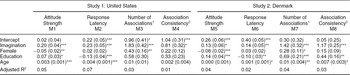
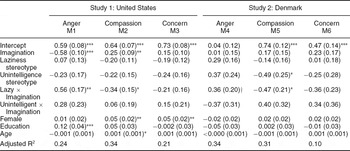
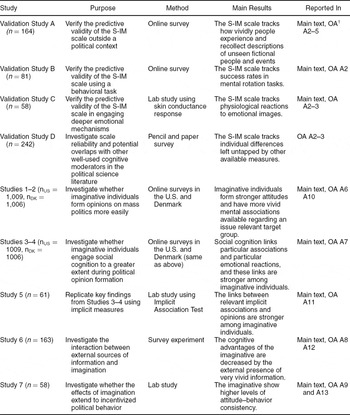
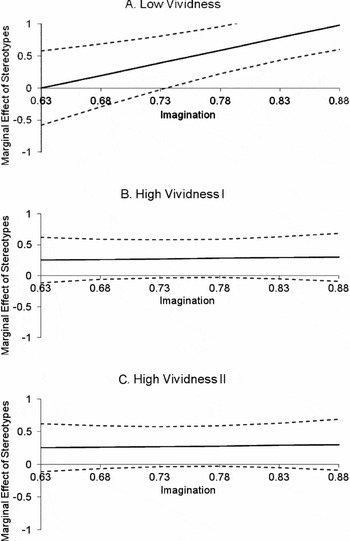
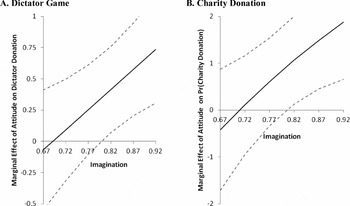




Comments
No Comments have been published for this article.