Influenza is associated with increased morbidity and mortality, especially in certain high-risk populations such as the elderly, obese, pregnant women, and patients with immunosuppression.Reference Harper, Bradley and Englund1 The typical time between exposure to clinical manifestation is 2–3 days, with a secondary attack rate of 25% in household contacts.Reference Cowling, Chan and Fang2–Reference Brankston, Gitterman, Hirji, Lemieux and Gardam4 Influenza outbreaks in the hospitals are a serious challenge, compounding the illness of patients already hospitalized for other reasons. To optimally prevent or control hospital influenza outbreaks, it is important to identify cases early and to implement multiple infection control measures as soon as possible.Reference Uyeki5, Reference Daugherty, Carlson and Perl6 A high hospital occupancy rate or overcrowding during the influenza season leads to higher rates of hospital transmission and excessive antibiotic usage as well as higher rates of morbidity and mortality.Reference Schilling, Campbell, Englesbe and Davis7, Reference Sprivulis, Da Silva, Jacobs, Frazer and Jelinek8
Currently, Israeli hospitals routinely operate at or near full capacity and have limited ability to rapidly increase services.Reference Glatman-Freedman, Kaufman and Stein9 The management of hospital surge capacity in the epidemic influenza season in southern Israel is a major challenge considering that Soroka University Medical Center (SUMC) is the only tertiary referral center in the region, serving ~1 million people, and it is the only hospital in a 60-km radius.
The diagnosis of influenza is often made by clinical criteria, especially during an epidemic. However, in hospitalized patients, it is important to establish the specific diagnosis quickly using laboratory testing.Reference Bruning, Leeflang and Vos10 Reverse-transcriptase real-time polymerase chain reaction (RT-PCR) is the most sensitive and specific test for diagnosing influenza infection. It yields relatively rapid results and differentiates between influenza types and subtypes. However, this method takes several hours, especially if it is batch tested or not performed in house, other rapid tests have been developed that provide quicker results (eg, antigen detection); however, they suffer from lack of sensitivity.Reference McGeer11, 12 The utility of rapid testing for influenza has been reported especially in the pediatric population and the outpatient setting or the emergency department.Reference Bonner, Monroe, Talley, Klasner and Kimberlin13 Routine practice does not include rapid testing in all patients suspected of having influenza, resulting in delayed diagnosis. Additionally, positive test results were not communicated to key hospital departments in a timely manner, probably increasing length of stay, unnecessary use of antibiotics, and in-hospital spread of influenza from undiagnosed cases.
We hypothesized that rapid and early detection of influenza in hospitalized patients followed by immediate text–short-message-service (SMS) notification to the healthcare providers, combined with strong administrative backing, would (1) lead to earlier discharge of patients, (2) reduce overcrowding, (3) prevent hospital acquired influenza cases, and (4) decrease unwarranted antibiotic use.
Methods
Design
In this ambidirectional before/after interventional study, we compared the 2016–2017 influenza season to the 2017–2018 season at SUMC and the occupancy rates with those of other institutions as reported by the Israel Ministry of Health. The intervention was formally implemented using a predefined protocol with predetermined end points. Data were collected prospectively; a multidisciplinary task force committee met on a weekly basis to monitor this intervention and to address issues as they arose. Approval was obtained from the institutional ethics committee, and we utilized the standards for transparency set by the ORION statement.Reference Stone, Cooper and Kibbler14
Participants
Our protocol included all patients admitted to the general medical wards during the epidemic phase of the influenza season who met the Centers for Disease Control and Prevention (CDC) criteria for influenza:15 fever (≥38.2°C) and at least 1 of the following symptoms: chills, cough, throat pain, rhinorrhea, muscle aches, headaches, and/or weakness. The beginning and the end of the epidemic phase of influenza season, defined as weekly visits due to influenza-like illness rate above 5 cases per 10,000 persons, was determined by the Israeli National Influenza surveillance program.Reference Glatman-Freedman, Kaufman and Stein9
Setting
The SUMC is a 1,100-bed referral hospital in southern Israel, has 7 general medicine wards (258 beds at 100% occupancy). Typical rooms host 3–4 patients separated by curtains or partial drywall partitioning. The number of patients per room substantially increases during the influenza season, and some patients are even admitted to the hallways leading to substantial overcrowding. Preintervention influenza testing was performed using in house RT-PCR or one of the following commercial tests: Simplexa Flu A/B & RSV Direct Kit by Focus (San Diego, CA) diagnostics or Xpert Flu A/B/RSV XC assay by Cepheid (Sunnyvale, CA). All tests were batched tested at noon, 5 days a week. Results were reported only through the patient’s electronic medical record. The standard protocol for isolation of patients identified as having Influenza at SUMC includes transferring the patient to a bed with partial drywall partitioning if one is available. Patients are instructed to remain in their beds with closed curtains and to use a face mask. The staff uses respiratory precautions including mask, gloves, and gowns. Patients admitted to the hallways are provided with rolling curtains. During both periods, all patients suspected of having influenza were given masks and were asked to observe other droplet precautions pending test results. However, due to manpower and space limitations, we were only able to ensure isolation of patients who tested positive for influenza.
Intervention
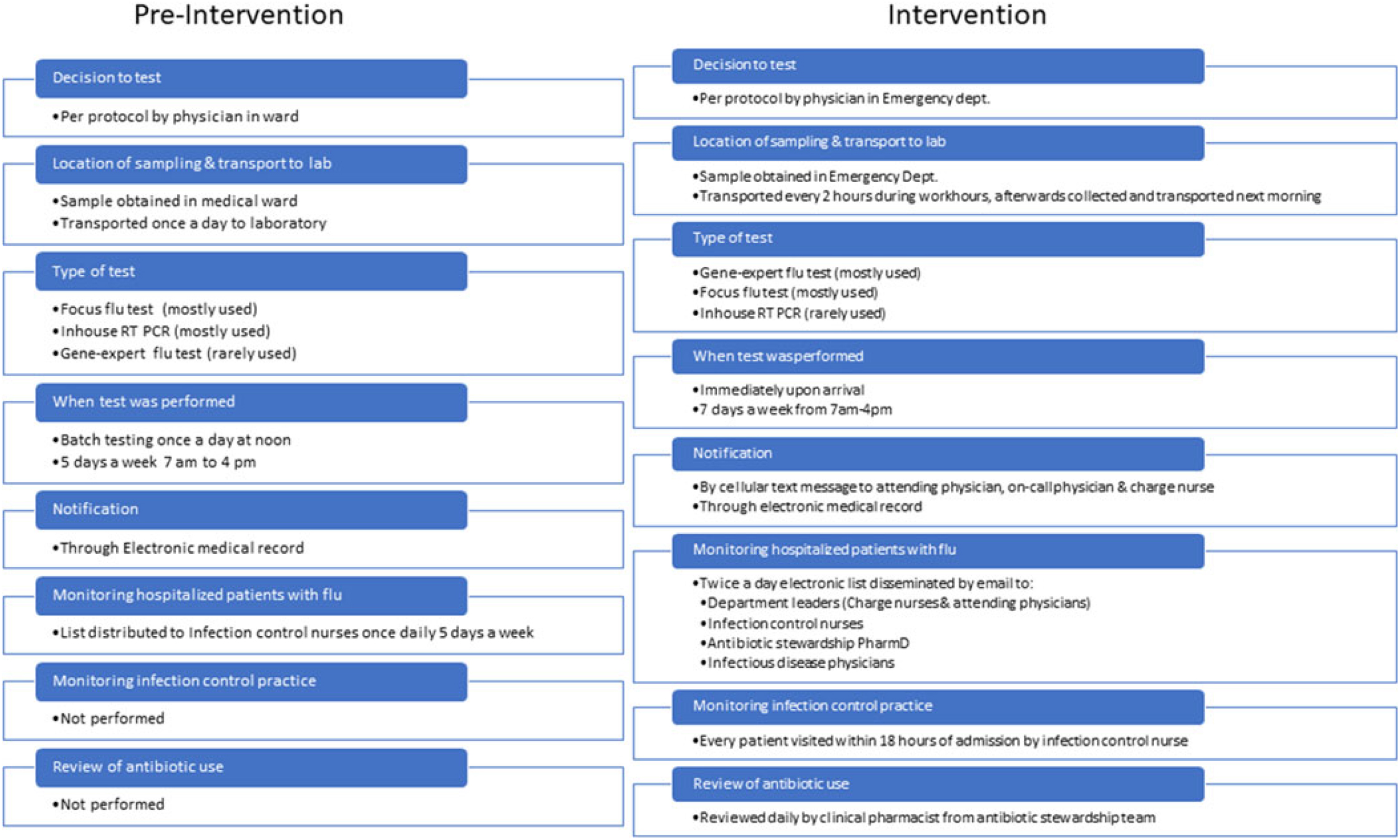
All patients who were admitted and met the inclusion criteria were sampled in the emergency department 24 hours a day, 7 days a week. Samples were transported to the laboratory every 2 hours between 7 a.m. and 4 p.m., 7 days a week, and were immediately tested using the Cepheid Xpert Flu A/B/RSV XC assay.Reference Sambol, Iwen and Pieretti16 Samples obtained after 4 p.m. were refrigerated and tested the following morning at 7 a.m. Positive results were reported immediately by SMS to the attending physician and charge nurse of the ward as well as through the patient’s electronic medical record. Electronic reports of all patients currently hospitalized with influenza were generated twice daily and were distributed to infectious disease staff, infection control staff, and ward leaders. All influenza patients were surveyed by an infection control nurse within 18 hours of notification to ensure proper infection control practices and to educate the patients and their families. These nurses filled out a comprehensive infection control checklist. The antibiotic stewardship service reviewed the charts of all influenza patients daily, encouraging physicians to stop inappropriate antibiotic therapy, involving infectious disease staff when necessary, and ensuring early treatment with oseltamivir (Fig. 1). Prior to the influenza season, educational sessions were conducted to reinforce SUMC protocols on the diagnosis and management of influenza patients. The administration strongly supported this intervention and met the additional costs with hospital funds.
Description and comparison of hospital influenza management prior to and after the intervention.

Data
We prospectively collected data during the Intervention season between December 24, 2017, and February 24, 2018, and we compared the cohort to data collected from a retrospective chart review from the previous influenza season between December 25, 2016, and February 25, 2017. Data on national weekly average occupancy for general internal medicine wards were obtained from reports published online by the Israel Ministry of Health and were compared with our occupancy rates.
Outcomes
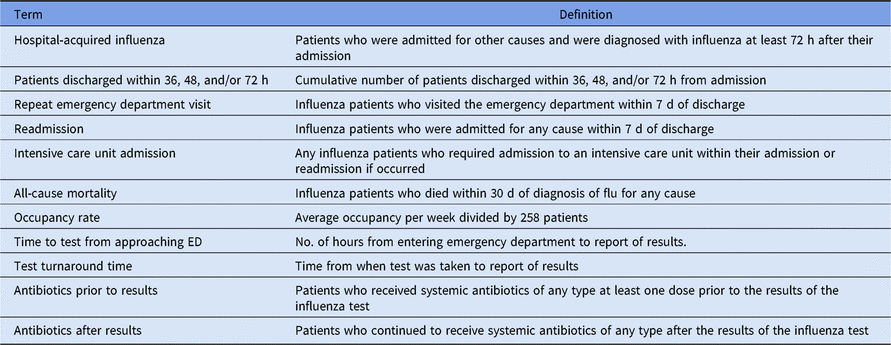
Definitions of outcomes can be found in Table 1. The outcome of time to discharge was subdivided into 3 groups; influenza patients who were discharged by 36 hours, 48 hours, and 72 hours, cumulatively. Other outcomes included hospital-acquired influenza, average weekly occupancy of general medical beds, and number of patients treated with antibiotics prior to and after test results.
Definitions of Outcomes for the Intervention

Note. ED, emergency department.
Statistical methods
Categorical variables are presented as percentages; continuous variables are presented as means with standard deviations or as medians with interquartile ranges when appropriate. Continuous variables were tested for normal distribution using the Shapiro-Wilk test. Comparisons between different variables across studied groups were performed using χ2 test for categorical variables and the independent t test or Mann-Whitney U test for continuous variables, as appropriate. Because intervention was aimed at new admissions only, hospital-acquired cases were excluded from all statistical analyses except when testing for occurrence of hospital-acquired infection as an outcome. To compare impact of intervention for length of stay, survival analyses were performed first using the Kaplan-Meier test for univariate comparison following by Cox regression for multivariate modeling where length of stay in hours was defined as the time variable and discharge was set as an event. Subgroup analyses were conducted by splitting the data according to the relevant group variable followed by a univariate Cox regression where event was set as early discharge up to 72 hours from admission. Stepwise multivariate Cox regression models were used to test the association between intervention and early discharge, adjusting for potential confounders. In all survival analyses, mortality and hospital-acquired cases were excluded from our analyses. For all statistical analyses, a 2-sided P < .05 was considered significant. We used SPSS version 21 software (IBM, Chicago, IL) for these analyses.
Results
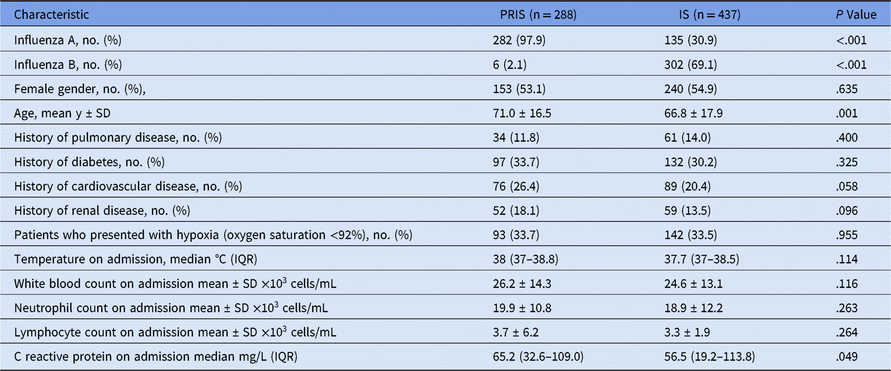
During the intervention season, 5,006 patients were admitted; 1,824 were tested for influenza, and 437 (23.9%) of these were positive. During the preintervention season, 4,825 patients were admitted; 1,225 were tested, and 288 (23.5%) were positive. Basic characteristics are shown in Table 2. No statistically significant differences were observed between the periods for aforementioned variables. The only difference was the type of influenza (type B during the intervention season and type A during the preintervention season).
Basic Characteristics of Patients Diagnosed With Community Acquired Influenza Comparing Preintervention Season (PRIS) to the Intervention Season (IS)

Note. IQR, interquartile range; SD, standard deviation.
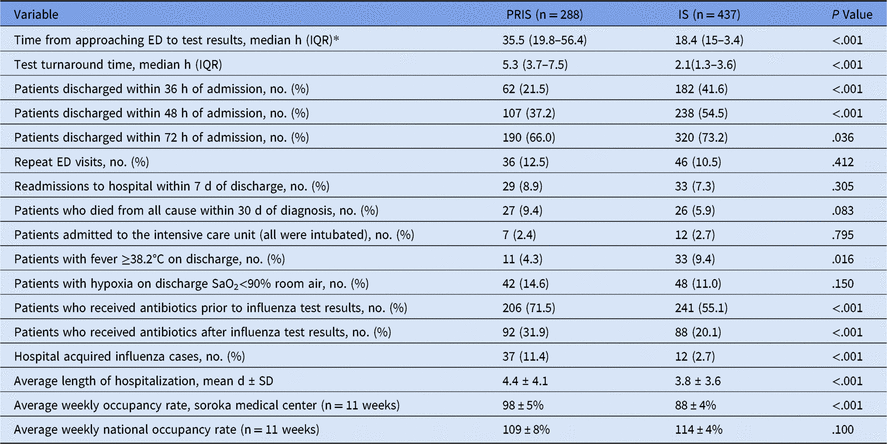
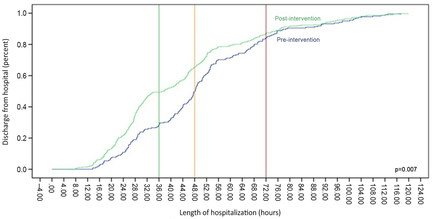
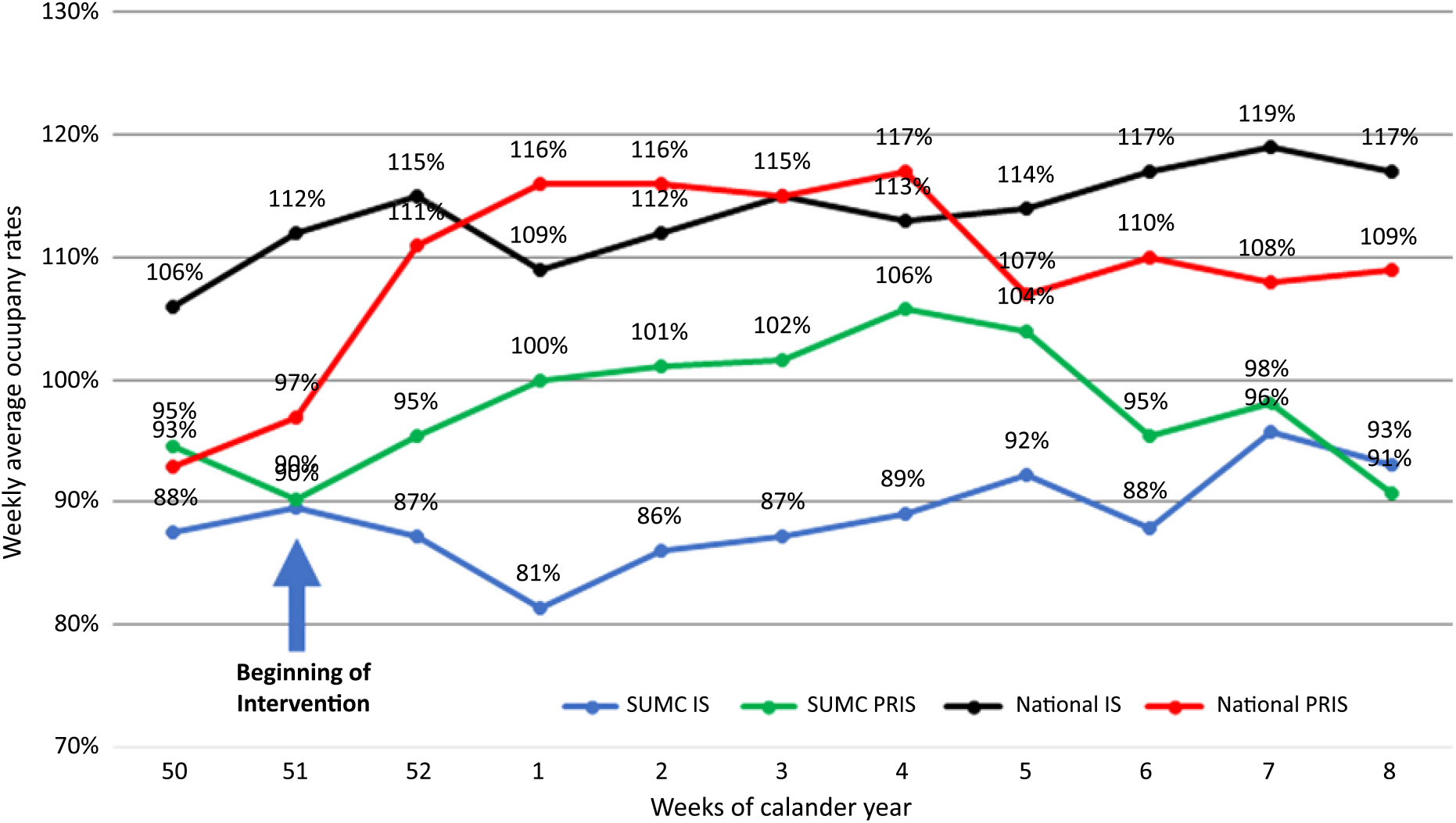
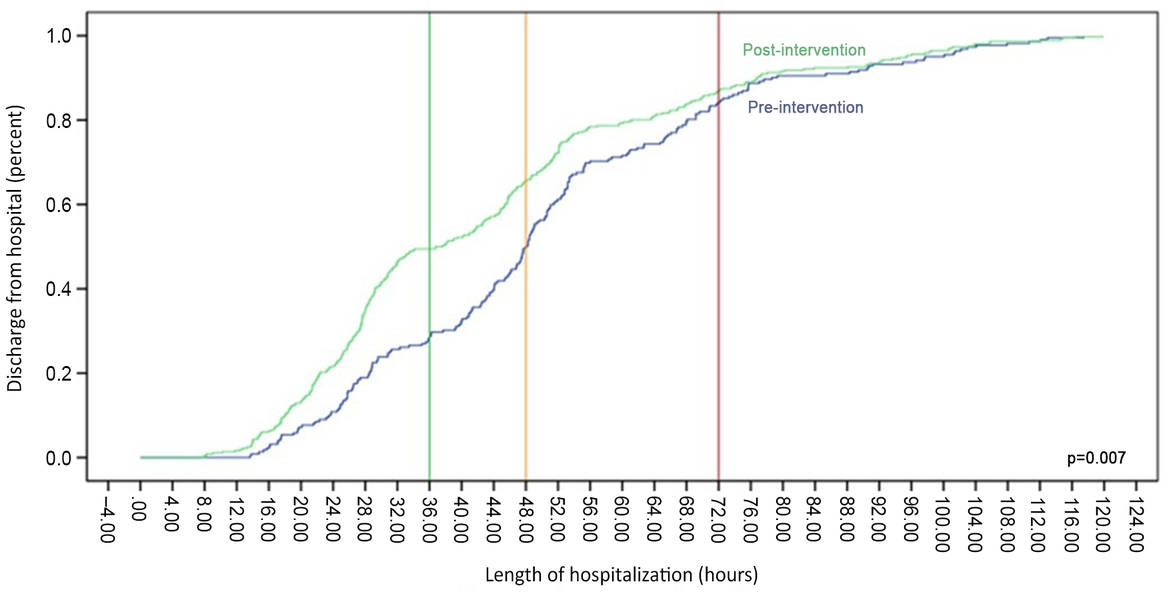
Outcomes are shown in Table 3. The time from admission to availability of test results was shorter (35.5–18.4 hours), as was the test turnaround time (5.3–2.1 hours) (P < .001). The percentage of influenza patients discharged at the 3 predefined time points was higher in the intervention season: 41.6% versus 21.5% (P < .001) at 36 hours; 54.5% versus 37.2% (P < .001) at 48 hours; and 73.2% versus 66% (P = .036) at 72 hours (Fig. 2). The average length of stay for influenza patients was reduced from 4.4 days to 3.8 days (P < .001). Hospital-acquired influenza cases were reduced from 37 (11.4%) in the preintervention season to 12 (2.7%) in the intervention season (P < .001). No significant difference was observed in repeat ER visits within 7 days of discharge (12.5% to 10.5%; P = .412); readmission within 7 days of discharge (8.9% to 7.3%; P = .305); and ICU admission (2.4% to 2.7%; P = .795). The percentage of patients treated with antibiotics both prior to and after the test results decreased from 71.5% to 55.1% and from 31.9% to 20.1%, respectively (P < .001). Weekly occupancy rates and overall average occupancy rates were lower in the intervention season compared to both our own rates in the preintervention season and to national occupancy rates (Fig. 3). An overall reduction in occupancy rates occurred from 98±5% for the preintervention season to 88±4% for the intervention season at SUMC (P < .001), with no change in the national rates of 109±8% for the preintervention season and 114±4% for the intervention season (P = .100).
Clinically Important Outcomes of Intervention Comparing Preintervention Season (PRIS) to the Intervention Season (IS)

Note. IQR, interquartile range; ED, emergency department; SD, standard deviation.
Kaplan-Meir analysis of time to discharge from hospital. Comparing the 2017–2018 influenza season (postintervention) to the previous 2016–2017 flu season (preintervention), qualifying event was discharge from hospital. Patients who died were censored. Data are presented as 1 minus cumulative percentage to discharge.
Weekly average occupancy rates of general medicine beds comparing Soroka University Medical Center (SUMC) to the national average of all hospitals as reported by the Israeli Ministry of Health (national) comparing the 2017–2018 intervention season (IS) to the previous 2016–2017 influenza season (PRIS). Blue arrow indicates beginning of intervention at SUMC.

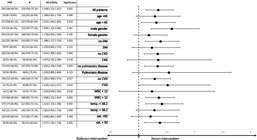
Our subgroup analyses of the impact of the intervention on early discharge are shown in Fig. 4. Overall, the intervention had a significant effect on early discharge among patients ≥65 years, male gender, and patients without significant comorbidities such as diabetes, pulmonary disease, or chronic renal disease. In several stepwise multivariate survival analyses (Supplement Table 1 online), the intervention remained the only factor that significantly positively affected early discharge up to 72 hours after adjusting for potential confounders.
Subgroup analysis of different factors comparing patients from the 2017–2018 intervention season (IS) to the previous 2016–2017 influenza season (PRIS).

Discussion
This intervention was initiated due to the severe impact on our institution of the previous influenza seasons, which included high occupancy rates, increased number of hospital-acquired influenza patients, and increased rates of unnecessary antibiotics usage. In this study, the implementation of an intervention affected all phases of diagnosis (sampling, delivery, testing, and notification of results) and had a significant impact on both test turnaround time (from 5.3 to 2.1 hours; P < .001), and on shortening the time to notification of positive results (from 35.5 to 18.4 hours; P < .001). In most laboratories, many rapid diagnostic tests are not performed when the patient presents; they are batched for testing once a day, which can result in delayed diagnoses.Reference Bruning, Leeflang and Vos10 A delayed diagnosis has many downstream effects such as delayed initiation of infection control practices, unnecessary antibiotic treatment, delayed discharge, and the use of unnecessary diagnostic resources while a patient is evaluated for other possible causes of fever. Following the intervention, both early diagnosis and early notification allowed providers to act quickly on this information to ensure proper isolation of the patient, withholding inappropriate antibiotics and earlier discharge home when appropriate.
We observed that one of the main effects of the intervention was the physician’s decision on when to discharge patients. Length of hospitalization during an influenza epidemic is influenced by many factors, including the patient’s clinical condition, confidence in the diagnosis, and need for oxygen or fluid support. In our study, every year only ~30% of the influenza patients require hospitalization >3 days, indicating illness severity and requiring prolonged hospital care. In contrast, most patients recovered sufficiently to be discharged within the first 3 days (Fig. 2), and the early use of oseltamivir may have been a contributing factor. Prior to the intervention, when physicians lacked the early knowledge of a conclusive diagnosis of influenza, they tended to hospitalize patients for longer periods of observation, probably to await further workup and for the fever to resolve. In our study, once the physicians were armed with the diagnosis of influenza, they discharged the patients earlier, even if they were still febrile. Early knowledge of a definitive diagnosis of influenza was the main factor in facilitating early discharge of patients within the first 3 days. Early discharge did not affect the safety of patients and did not result in an increase number of patients who returned to the emergency department or were readmitted. Early discharge also did not result in a change in all-cause mortality rates.
Most hospitals experience a shortage of bed space particularly during the influenza season, when demand for medical beds increases by 20% to 50%.Reference Schilling, Campbell, Englesbe and Davis7, Reference Fusco, Saitto, Massimo and Perucci17 In Israel, occupancy rates of medical beds during the non-influenza season average ~90%, and these rates peak at >110%–120% during influenza season.Reference Glatman-Freedman, Kaufman and Stein9 High-occupancy challenges infection control practices, particularly in patients located in hospital hallways, and increases the work load for the staff. Reduced occupancy rates enabled us to implement appropriate infection control practices in a timely manner, as reflected by reduced hospital spread of influenza. This result was observed only in our institution and was not observed in other institutions in Israel that did not have a similar intervention in place. These institutions continued to be burdened by high occupancy rates, as in every previous influenza season. This intervention was the only change in our practice, and no additional resources such as new beds or staff members were needed.
We observed a higher rate of influenza B compared to previous years. This finding is similar to reports from the World Health Organization (WHO) and the CDC, as well as other health organizations regarding the 2017–2018 influenza season.18, 19 Although it was believed that influenza B was more benign with a milder clinical course, this notion has been challenged in recent years, and it is currently believed that the influenza B virus is as virulent a virus as influenza A.Reference Su, Chaves and Perez20
The most significant limitations of our study are that we compared our clinical data to the previous influenza season at our institution and that were unable to compare results from the same season at other institutions. However, for the past several years, our occupancy rates have always been higher during the influenza season, including previous years in which influenza B was predominant. The only data we were able to compare were the occupancy rates between our institution and other Israeli hospitals for the 2017–2018 season. Comparing our data to other institutions in Israel in the current year also showed a significant reduction; thus, the type of virus did not impact our intervention outcome. Furthermore, there was a significant age difference between the seasons, and the patients in the preintervention season were older. This factor may have influenced the results obtained.
In conclusion, the use of a rapid diagnostic assay in combination with immediate notification to providers led to more appropriate antimicrobial and antiviral usage, earlier discharge of stable influenza patients, and significantly lower occupancy rates in the medical wards. The frequency rate of hospital-acquired influenza decreased, and effective infection control policies were implemented. Interventions such as ours can enable institutions, particularly those with limited resources, to better manage influenza seasons. We encourage hospitals administrators to prioritize this approach and to allocate the necessary resources.
Supplementary material
To view supplementary material for this article, please visit https://doi.org/10.1017/ice.2019.159
Author ORCIDs
Lior Nesher, 0000-0002-1230-0428
Acknowledgments
Financial support
No financial support was provided relevant to this article.
Conflicts of interest
All authors report no conflicts of interest relevant to this article.