Introduction
Coatings of metal, plastic, wood, and other substrates (having organic substances, including alkyd, acrylic ester, epoxy, and other polymers, as the main components) can protect surfaces. To increase further the service life of the surface and expand the range of uses for the substrate requires improvements in the functionality of traditional polymer coatings. As a result, research and development of multifunctional coatings have received a great deal of attention over recent decades.
Addition of functional montmorillonite (Mnt) to polymer coatings is of great significance in tuning the performance or developing new functions for polymer coatings. Part of the functionality of Mnt originates from its particular structure: Mnt is a dioctahedral smectite, namely a 2:1 clay mineral consisting of thin (<1 nm) layers of two tetrahedral sheets bonded to an octahedral sheet with a net negative layer charge of between 0.2 and 0.6 (per formula unit) containing hydrated exchangeable interlayer cations (Emmerich et al., Reference Emmerich, Wolters, Kahr and Lagaly2009). Isomorphic substitution within the sheets (e.g. Al3+ replaced by Mg2+ in the octahedral sheet) generates a negative layer charge. The broken edges of crystal layers produce a localized amphoteric charge (positive at low pH, negative at high pH) (Fig. 1a). Charged ions or organic molecules interact with the surface of Mnt; these interactions involve a range of mechanisms, including cation or anion exchange, hydrophobic interactions, hydrogen bonding, cation bridging, and proton transfer. Each interaction varies depending on the pH of the environment, as well as on the size and electrostatic properties of the ions or molecules (Fig. 1b) (Dawson & Oreffo, Reference Dawson and Oreffo2013; Guo et al., Reference Guo, Liu, Gates and Zhou2021; Shen et al., Reference Shen, Petit, Li, Li, Khatoon and Zhou2020). These properties enable Mnt to be used as a filler for polymers, and even a small proportion of filler (≤5 wt.%) results in significant changes in the mechanical and physical properties of the polymer, such as barrier properties, thermal stability, fire resistance, and rheological properties (Emmerich et al., Reference Emmerich, Wolters, Kahr and Lagaly2009; Taha-Tijerina et al., Reference Taha-Tijerina, Maldonado-Cortés, Peña-Parás, Sánchez, Caballero and Sánchez-Fernández2018; Usuki et al., Reference Usuki, Koiwai, Kojima, Kawasumi, Okada, Kurauchi and Kamigaito1995). Addition of Mnt to polymer coatings can improve their corrosion resistance (Laatar et al., Reference Laatar, Predeep, Romdhane and Srasra2018; Relosi et al., Reference Relosi, Neuwald, Zattera, Piazza, Kunst and Birriel2018) and fire resistance (Yang et al., Reference Yang, Li, Shields and Davis2015). Currently, Mnt is also used to endow protective coatings with more functions, including superhydrophobic (Yuan et al., Reference Zhang, Shao, Shi, Wang, Meng and Li2017), antibacterial (Semlali Aouragh Hassani et al., Reference Semlali Aouragh Hassani, El Bourakadi, Merghoub, Qaiss and Bouhfid2020), and solar-absorption properties (Micó-Vicent et al., Reference Micó-Vicent, López, Bello, Martínez and Martínez-Verdú2017b).
a Montmorillonite possesses a permanent negative surface charge arising from isomorphic substitutions in the crystal structure and a pH-dependent edge charge. b Potential interactions of organic molecules with clay-particle surfaces, species in the interlayer space and inter-particle space involving various mechanisms. (Reprinted with permission from John Wiley & Sons from Dawson and Oreffo (Reference Dawson and Oreffo2013), copyright 2013)

The physical properties of Mnt are utilized widely in polymer coatings. The layered Mnt dispersed evenly through a polymer coating can provide a physical barrier to prevent water, corrosive gases, or ions in the environment from diffusing into the substrate, thus avoiding the potential of electrochemical reaction (corrosion) with the substrate (Li et al., Reference Li, Li, Li, Jiang and Li2018; Lima et al., Reference Lima, Jou, Barcia and Margarit-Mattos2018) and increasing the corrosion resistance of the coating. The uniform distribution of Mnt in the coating matrix can also hinder gaseous emissions from the substrate surface through the coating. The comparatively rigid structure of the Mnt can, to some extent, prevent the polymer coating from deforming under high temperature and stresses (Hu et al., Reference Hu, Sun, Zhu and Sun2020). Additional functionality can be achieved by combining Mnt with materials that absorb sunlight or phase-change materials. For example, using layered Mnt as the template for shaping carbon materials or as the carrier for phase-change material in thermo-solar absorptive coatings can improve the absorbance and energy-storage capacity of the coating (Micó-Vicent et al., Reference Micó-Vicent, López, Bello, Martínez and Martínez-Verdú2017b; Relosi et al., Reference Relosi, Neuwald, Zattera, Piazza, Kunst and Birriel2018). Also, the addition of Mnt into polymer coatings can change its surface roughness (Qu et al., Reference Qu, Xue, Yuan, He, Abbas, Zhao, Wang, Liu and He2019).
Metal ions and organic cations can be used to modify Mnt through cation exchange, and even anion modifiers can be introduced to the interlayers of Mnt in acidic media (Guo et al., Reference Guo, Liu, Gates and Zhou2021). Organo-modified Mnt (OMnt) not only has improved compatibility (dispersion, miscibility) with the polymer coating, but also exhibits an increased interlayer space, so that the polymer can be better intercalated into or grafted onto the surface of the Mnt. OMnt cross-linked with polymers can form a compact physical and chemical barrier (Li et al., Reference Li, Ding, Shawgi and Qi2015; Li et al., Reference Li, Li, Li, Jiang and Li2018). Another aim in the use of OMnt is to produce hydrophobic coatings because OMnt surfaces are hydrophilic. In refractory coatings, e.g. Mnt/chitosan-containing coatings, at high temperature, the layered Mnt acts as the thermal center of carbonization reactions and then forms a rigid protective structure in the coating. For antibacterial formulations, substances such as silver (Ling et al., Reference Ling, Luo, Luo, Wang and Sun2013), quaternary ammonium salt (Chen et al., Reference Chen, Ye, Cai, Huang, Zhong, Chen and Wang2016), or triclosan (Soares et al., Reference Soares, Moreira, Fialho and Melo2012) are intercalated or interacted with Mnt surfaces to provide the coating with antibacterial properties.
The positive effects of functional Mnt in terms of improving the anticorrosive, fire-resistant, hydrophobic, and antibacterial properties of the polymer coatings are reviewed in the present article. A comprehensive understanding of the behavior and role of functionalized Mnt in polymer coatings is expected to stimulate new ideas for the industrial design of polymer coatings. The hope is that this review will be helpful in developing new research directions in which functionalized forms of Mnt are optimized in order to extend the range of functionalities of polymer coatings to meet the needs of modern industries.
Corrosion Resistance
In certain environments, such as soil, seawater, and bore holes for exploration, coatings are required to provide better protection against certain corrosives. Polymer coatings, such as epoxy resin and alkyd resin protect metal from corrosion due to their strong acid/alkali resistance and good adhesion to metal substrates. Traditional polymer coatings of metal surfaces, however, are not ideal for blocking corrosive agents such as H2O, O2, and aggressive ions such as SO4 2– and Cl– even under ambient conditions. These corrosive agents promote the generation and development of defects, such as micro-voids, blisters, and cracks, which degrade the protective barrier performance of coatings. The addition of corrosion inhibitors, such as a reactive transition metal with greater reduction potential and conductive polymers, into coatings, can realize the active protection of the coating and slow corrosion of the substrate. Direct incorporation of corrosion inhibitors in the coating usually fails to provide long-term protection because the inhibitors act uncontrollably and become depleted quickly. In addition, the presence of a large number of inhibitors reduces the resistance to water penetration of coatings because they result in bubbles in the coating and damage the physical and mechanical properties of polymer coatings. Therefore, recent research has focused on encapsulating or immobilizing inhibitors within micro/nanostructures, which themselves are embedded within the conventional polymer coatings, to avoid depleting corrosion inhibitor effects and to extend the time of active corrosion resistance (Dong et al., Reference Dong, Wang and Zhou2014; Hang et al., Reference Hang, Truc, Duong, Pébère and Olivier2012; Tedim et al., Reference Tedim, Kuznetsova, Salak, Montemor, Snihirova, Pilz, Zheludkevich and Ferreira2012).
The layered structure and chemical properties of Mnt make it suitable for encapsulation. Moreover, the encapsulated inhibitors can be released slowly from the Mnt by ion exchange, prolonging the corrosion resistance of the coating (Atta et al., Reference Atta, Al-Lohedan, El-Saeed, Al-Shafey and Wahby2017; Mohammadi et al., Reference Mohammadi, Izadi, Shahrabi, Fathi and Fateh2019). Mnt can improve the corrosion resistance of polymer coatings in two ways: (1) Mnt dispersed in the polymer coating at various dosages or loadings presents a physical barrier to increase the tortuosity of the diffusion pathway of water, gas, and corrosive ions (Bagherzadeh & Mousavinejad, Reference Bagherzadeh and Mousavinejad2012; Taha-Tijerina et al., Reference Taha-Tijerina, Maldonado-Cortés, Peña-Parás, Sánchez, Caballero and Sánchez-Fernández2018); and (2) Mnt acts as a carrier for corrosion inhibitors such as metal ions (Ahmad et al., Reference Ahmad, Tientong, D'Souza, Golden and Mohamed2014a, Reference Ahmad, Tientong, Nar, D'Souza, Mohamed and Golden2014b; Navarchian et al., Reference Navarchian, Joulazadeh and Karimi2014), polyaniline (PANI) (Ghazi et al., Reference Ghazi, Ghasemi, Mahdavian, Ramezanzadeh and Rostami2015), benzimidazole (Ghazi et al., Reference Ghazi, Ghasemi, Mahdavian, Ramezanzadeh and Rostami2015), and hydrated cetylpyridines to provide additional protection, including physical barrier and electrochemical protection, for metal substrates.
The charge transfer and diffusion in the coating that determine the corrosion rate of the coated surface can be represented by an equivalent circuit (Hosseini et al., Reference Hosseini, Jafari and Najjar2011). In this equivalent circuit, the solution resistance (R s), charge-transfer resistance (R ct), and the coating resistance (R c) can be measured to quantify the level of anticorrosion of a coating in an electrolyte solution. Studies which have compared the corrosion resistance of polymer coatings containing Mnt and modified Mnt vs. coatings without Mnt, found that the R c and protection time of the polymer coating containing functional Mnt were significantly improved (Bagherzadeh & Mousavinejad, Reference Bagherzadeh and Mousavinejad2012; Ghazi et al., Reference Ghazi, Ghasemi, Mahdavian, Ramezanzadeh and Rostami2015; Hosseini et al., Reference Hosseini, Jafari and Najjar2011; Micó-Vicent et al., Reference Micó-Vicent, López-Herraiz, Bello, Martínez and Martínez-Verdú2017a). Excessive Mnt loading, however, tends to form agglomerates and uneven dispersion in the polymer coating. The agglomerates disrupt the uniformity of the coating and thereby reduce its resistance to corrosion. To achieve a better anti-corrosion effect, not only must a suitable polymer or Mnt-modifier be selected, but also the amount of Mnt added must be limited. Worth noting is that the decrease in adhesion between coatings and substrates would allow corrosive agents to contact the substrate directly, thus reducing corrosion resistance. As a result, the positive and negative influence of functionalized Mnt on the adhesion should both be considered when Mnt is added to enhance the corrosion resistance of the coatings.
Functional Nanostructured Mnt/Epoxy Resin Coatings
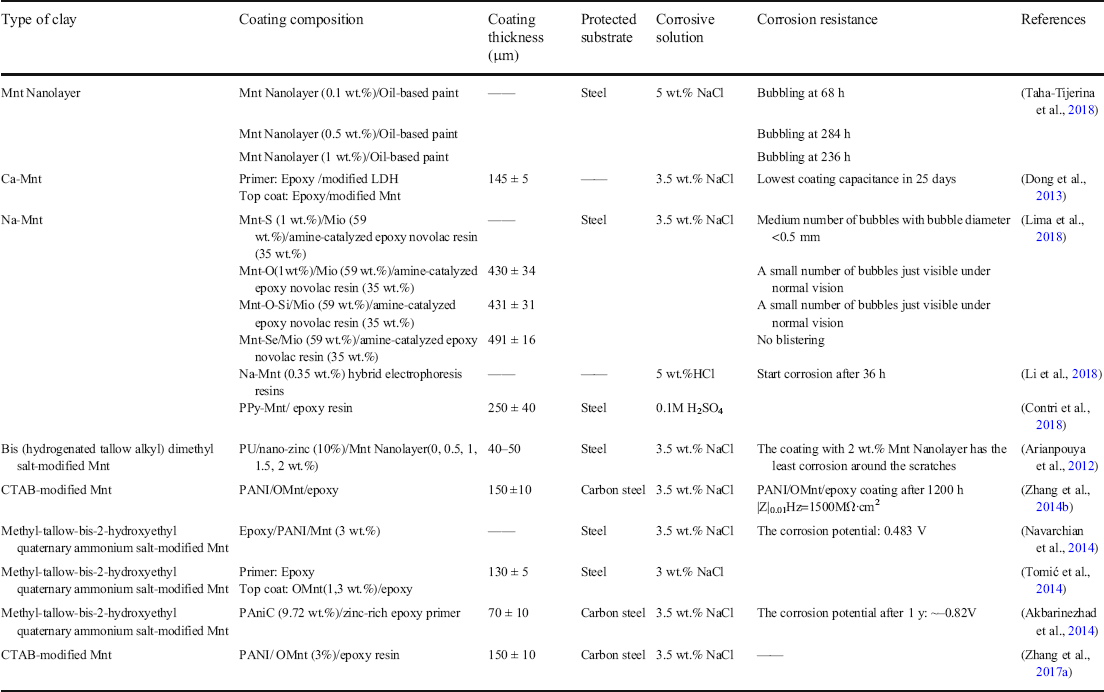
Epoxy resin has excellent mechanical properties, bonding, and heat resistance, and is used widely for coatings. Epoxy resin is a thermosetting material with a high degree of crosslinking, but has the disadvantages of insufficient toughness and easy cracking after curing, which means that it has poor corrosion resistance. Combination of functional nanostructured Mnt with epoxy resin can effectively improve the corrosion resistance of the resultant composite coating. Mnt with cation exchangeability can selectively capture aggressive ions entering the coating. In addition, Mnt serving as a carrier can release specific corrosion inhibitors as required (Arianpouya et al., Reference Arianpouya, Shishesaz and Ashrafi2012). Dong et al. (Reference Dong, Ma and Zhou2013) modified Mnt with Ca(NO3)2 and found that when such Ca (NO3)-Mnt was added into epoxy resin coatings, due to the barrier effect of the layered Mnt, water, O2, and CO2 had difficulty entering the coating. In addition, when Na+ penetrated the coating, it exchanged with Ca2+, so the impedance modulus of Ca(NO3)-Mnt epoxy resin coating was an order of magnitude greater than that of unmodified Mnt-epoxy resin. Ca(NO3)-Mnt/epoxy resin coating can be used as the top coat for the protecting substrate. Its anti-corrosion effect is comparable to the coatings containing harmful heavy metals (Table 1).
Corrosion resistance of various polymer/Mnt composite coatings

CTAB: Cetyltrimethyl ammonium bromide; HTAB: Hexadecyl trimethyl ammonium bromide; LDH:layered double hydroxide; Mio: micaceous iron oxide; Mnt: Montmorillonite; Mnt-S: Nm-sized hydrophilic Mnt; Mnt-O: nm-sized Mnt modified with 25–30 wt.% octadecylamine; Mnt-O-Si: nm-sized Mnt modified with 0.5–5 wt.% aminopropyltriethoxysilane and 15–35 wt.% octadecylamine; Mnt-Se: nm-sized Mnt modified with hydrogenated tallow methyl dihydroxyethyl ammonium; PANI: Polyaniline; PU: Polyurethane resin
The solution intercalation method was used to add various amounts of OMnt, modified with methyl-tallow-bishydroxyethyl quaternary ammonium salt (1,3,5 wt.%) (MTAB+-Mnt), to the epoxy resin (Tomić et al., Reference Tomić, Dunjić, Likić, Bajat, Rogan and Djonlagić2014). The resulting OMnt/epoxy resin coating was used as the top coat over an epoxy resin primer to protect the steel substrate. The MTAB+-Mnt in the epoxy resin coating with 1 wt.% loading was mainly exfoliated, but at greater loadings led to an agglomeration of the OMnt within the epoxy. Therefore, the coating with 1 wt.% OMnt loading had the most uniform macromolecular network and the smallest porosity. The corrosion resistance was quite good, therefore. Results from electrochemical impedance spectroscopy revealed that, after immersion in 3 wt.% NaCl for 20 days and 104 days, the coating with 1 wt.% OMnt had the largest R ct, compared with the coatings without OMnt and with 3 wt.% and 5 wt.% OMnt, indicating that the coating with 1 wt.% OMnt had the best immediate, short-term, and long-lasting barrier properties to the electrolyte.
Cerium can slow the reaction rate at the cathode or precipitate at cathodic areas, thus providing the base metal with electrochemical protection (Arenas et al., Reference Arenas, Conde and de Damborenea2002). Mohammadi et al. (Reference Mohammadi, Izadi, Shahrabi, Fathi and Fateh2019) embedded Ce3+, in the form of [Ce(H2O)6]3+, into the interlayer space of Mnt, and then introduced Ce3+-Mnt into the epoxy coating. An ICP-ES (Inductively Coupled Plasma Emission Spectrometry) test showed that, in 3.5 wt.% NaCl solution, the rate of released Ce3+ from the structure of Ce3+-Mnt was greater at the initial time of immersion than after longer immersion times. Presumably this was due to the existence of free Ce3+ on the surface of Ce3+-Mnt at the early stage of immersion, and the fact that Ce3+ precipitated preferentially as an insoluble hydroxide layer and/or cerium oxide at the cathode position with an alkaline pH and subsequently formed a dense surface film (Eqs. 1, 2, and 3) (Bahlakeh et al., Reference Bahlakeh, Ramezanzadeh and Ramezanzadeh2018). The main anodic reaction was the dissolution of iron. The dense surface film prevented corrosion of the metal by corrosive ions and improved the corrosion resistance.


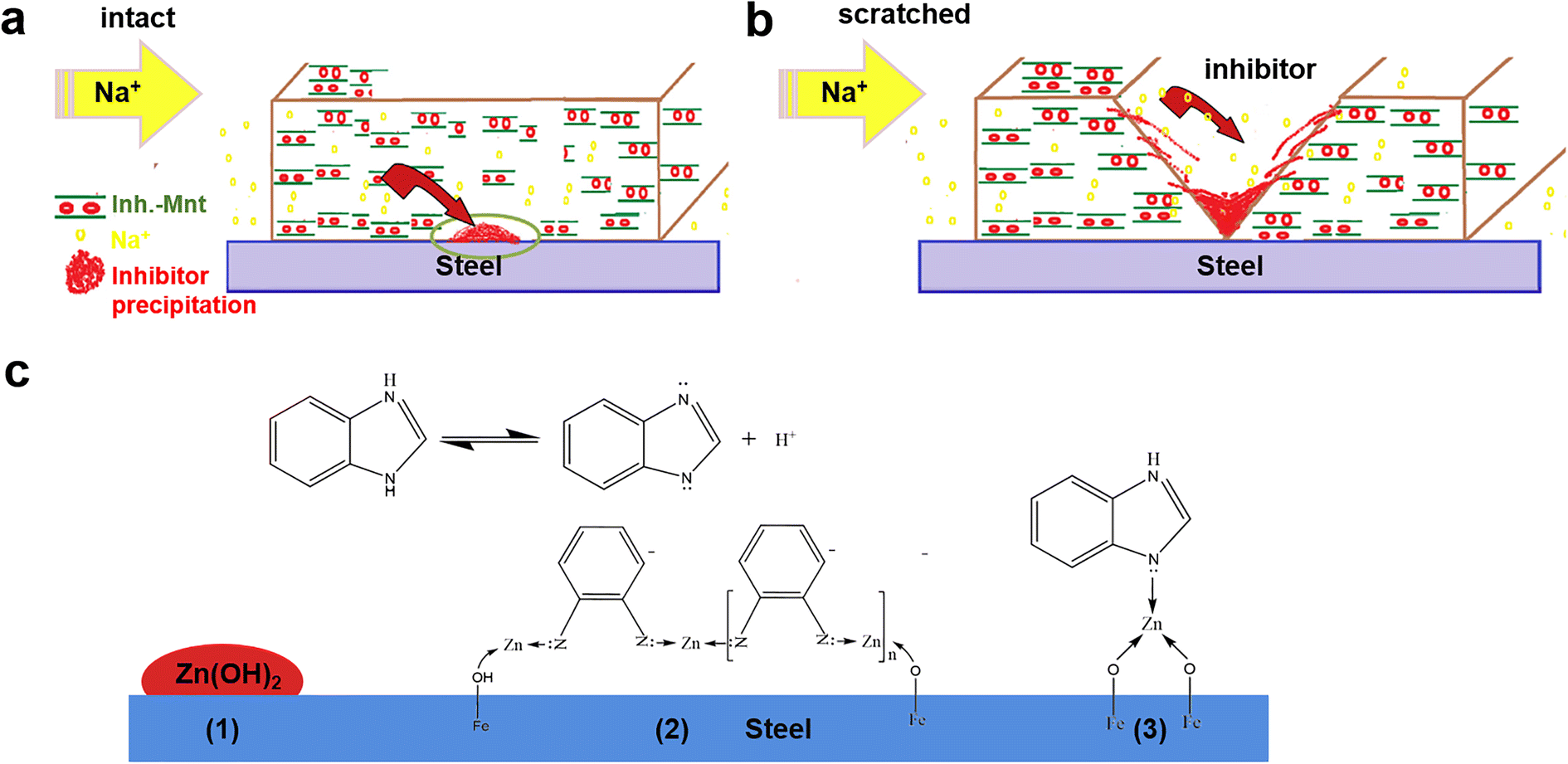
Defects in the epoxy resin coating, produced after being scratched, abraded, or struck by hard objects, or subsequent to partial corrosion, for example, can expose the metal surfaces to the humid environment and accelerate the peeling of the coating around the defect. Coatings with self-healing functions can minimize such problems. Benzimidazole+-Mnt and Zn2+-Mnt produced by cation exchange (Eqs. 4 and 5) in the epoxy coatings not only enhanced the corrosion resistance of the coatings without defects, but also initiated self-repair of defects in the coatings (Ghazi et al., Reference Ghazi, Ghasemi, Mahdavian, Ramezanzadeh and Rostami2015). Within the non-defect coatings, Zn2+-Mnt underwent cation exchange with Na+ in 3.5 wt.% NaCl solution, and the Zn2+ released intercepted oxygen and water at the interface between the coating and the substrate to form non-conductive ZnO, thereby inhibiting the corrosion of the substrate. For the defective (scratched) coatings, the Zn2+ exchanged from the defect edge was oxidized into insoluble ZnO. ZnO can be adsorbed on the surface of the steel substrate and form a complex with benzimidazole (Ghazi et al., Reference Ghazi, Ghasemi, Mahdavian, Ramezanzadeh and Rostami2015). The hydrophobic functional groups in the benzimidazole extend outward, which can isolate water and corrosion ions from the steel substrate, thereby protecting the substrate from corrosion (Fig. 2). While the modified Mnt served to release a corrosion inhibitor, the coatings containing modified Mnt had 10% less adhesion than the Na+-Mnt coating. The reduced adhesion may lead to the formation of voids at the interface between the coating and the substrate, thereby resulting in unexpected corrosion. This issue requires a solution.
Self-repairing process of epoxy coating containing (Zn-Mnt + Benzimidazole-Mnt). Inh.-Mnt: montmorillonite modified with inhibitor. (Reproduced from Ghazi et al. (Reference Ghazi, Ghasemi, Mahdavian, Ramezanzadeh and Rostami2015), copyright (2015), with permission from Elsevier)

Another study showed that 2-benzylbenzimidazolium chloride (2-BBI HCl) has good compatibility with Mnt due to the presence of two N+ functional groups in its structure (Mehrabian & Sarabi Dariani, Reference Mehrabian and Sarabi Dariani2018). Moreover, the bonds formed between 2-BBI and epoxy resin enabled 2-BBI-(Na+-Mnt) to be dispersed evenly in the epoxy coating. The evenly dispersed Mnt improved the barrier properties of the coating to corrosion agents. The best barrier, however, requires consideration of optimal loadings of 2-BBI-(Na+-Mnt). According to the electrochemical impedance spectroscopy results, compared with 2-BBI-(Na+-Mnt)-epoxy resin containing 1 wt.% and 2 wt.% 2-BBI-(Na+-Mnt), the composite resin containing 3 wt.% of 2-BBI-(Na+-Mnt) has the highest corrosion resistance after soaking in 3.5 wt.% NaCl solution for 120 days. Na+-Mnt agglomerated in the epoxy coating more easily than 2-BBI-(Na+-Mnt) in it. The agglomerated Mnt particles provided an uneven network in the polymer coating and reduced its barrier performance. The water adsorption of the coating containing 3 wt.% 2-BBI-(Na+-Mnt) was only 1.92%, while the water adsorption of the epoxy resin coating containing 3 wt.% unmodified Mnt reached 82%.


Conducting Polymer-Mnt/Epoxy Resin Coatings
Conducting polymers are those with electrical conductivity in the range of semiconductors and conductors, and have been used to form a passive protective layer on the metal surface, thereby providing an anodic protection and inhibiting corrosion. Among the conductive polymers, polyaniline (PANI) and polypyrrole (PPy) have been regarded as promising anti-corrosive polymers due to their environmental stability, mechanical strength, and electrical conductivity (Hosseini et al., Reference Hosseini, Raghibi-Boroujeni, Ahadzadeh, Najjar and Seyed Dorraji2009, Reference Hosseini, Jafari and Najjar2011; Spinks et al., Reference Spinks, Dominis, Wallace and Tallman2001; Tallman et al., Reference Tallman, Spinks, Dominis and Wallace2001). The rapid electrode reaction rate and uneven dispersion of conductive polymers in polymer coatings, however, result in poor corrosion resistance and short effective protection time of the coating. Combination of the polymer with Mnt provides a possible solution. The corrosion resistance of the reinforced conducting polymer-Mnt composite coating was attributed to the combination of the electrochemical protection of PANI and the barrier effect of the layered Mnt dispersed in the composite (Hosseini et al., Reference Hosseini, Jafari and Najjar2011; Zhang et al., Reference Gates, Bordallo, Bouazza, Carnero-Guzman, Aldridge, Klaproth, Iles, Booth, Mole, Seydel, Yu and de Souza2017a). Combination of the conductive polymer, Mnt, and the conventional organic coating can significantly improve the effectiveness and duration of the coating and provide protection against corrosion.
The PANI/hexadecyl trimethyl ammonium ion-Mnt powder prepared by in situ intercalative polymerization can be dispersed uniformly in epoxy resin, and significant improvement in the the anticorrosion has been achieved when such a composite resin was applied to coat magnesium alloys (Bagherzadeh et al., Reference Bagherzadeh, Mousavinejad, Akbarinezhad and Ahmadi2014). On the one hand, the oxidation ability of the emeraldine base salt on polyaniline formed a passivation film on the magnesium alloy. On the other hand, the OMnt was partially exfoliated and uniformly dispersed within the epoxy resin, where individual OMnt platelets increased the tortuosity of the diffusion path of water and oxygen in the coating. The R ct of PANI/OMnt coating after 216 and 1200 h was 10 and 1 GΩ cm2, respectively, which was three orders of magnitude greater than that of the epoxy varnish coating, and the R ct was two orders of magnitude greater than the epoxy varnish coating. PANI/cetyltrimethyl ammonium ions-modified Mnt/epoxy resin coating prepared by in situ intercalation polymerization also appeared to be very effective in terms of the protection of AZ91D magnesium alloy (Zhang et al., Reference Zhang, Zhang, Zhu, Gao, Lin and Li2013) and carbon steel (Zhang et al., Reference Morgan and Gilman2014a). PANI formed an oxide layer on the magnesium alloy surface by the oxidation–reduction reaction with O2 to improve anticorrosion of the coating, and in the absence of O2 the protection of PANI for AZ91D magnesium alloy decreased. In addition, the presence of cetyltrimethyl ammonium ions in OMnt made the dispersion of PANI/OMnt in the epoxy coating more uniform and elongated the path for oxygen and water diffusion in the coating. The hydrophobicity enhanced by OMnt inhibited corrosion by reducing water adsorption by the coating.
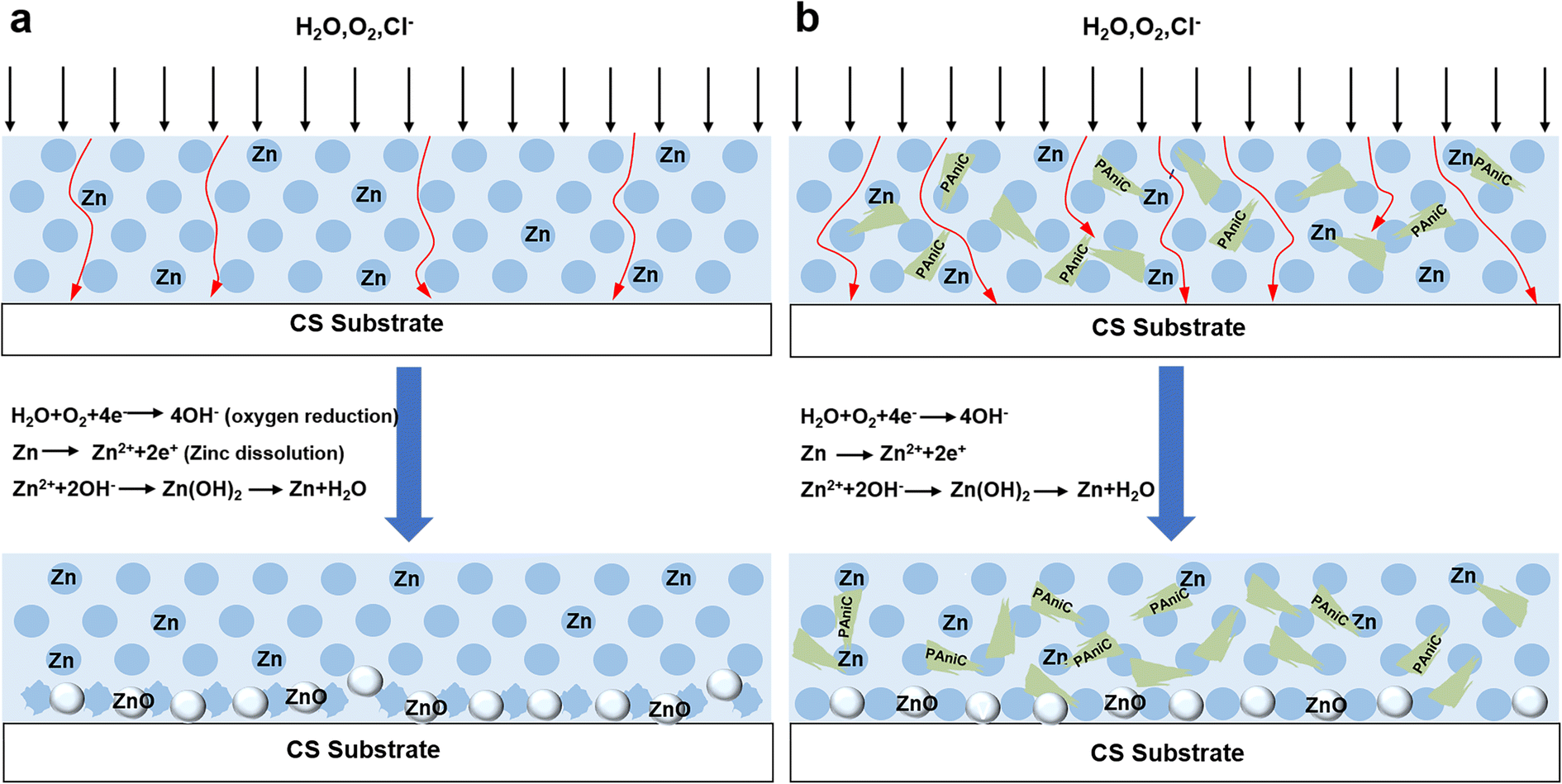
The amount of PANI/OMnt used also has a significant influence on the corrosion resistance of the epoxy resin coating. In the range of 1 to ~3 wt.%, increased loading of PANI/OMnt in the coating decreased water diffusion in the coating, but loadings >3 wt.% were not conducive to uniform dispersion of PANI/OMnt. On the surface of mild steel (Siva et al., Reference Siva, Rajkumar, Muralidharan and Sathiyanarayanan2019), PANI and OMnt formed a layered framework, resulting in improved adhesion between the metal-coating interfaces. Simultaneously, the amine group of PANI reacted with an epoxide ring-containing epoxy to form a cross-linked network. The bipolar coatings had impedance values approximately two orders of magnitudes greater than pure epoxy coatings, for exposures as long as 140 days in 3.5 wt.% NaCl solutions. Zhang et al. (Reference Zhang, Shao, Zhang, Meng and Wang2017b) prepared Ce3+-PANI/OMnt composites by in situ polymerization and cation exchange, and then dispersed the composites in an epoxy resin coating. The values for R ct of Ce3+-PANI/OMnt and PANI/Mnt epoxy resin coatings were 14,880 and 9220 Ω cm2, respectively. After immersion in the 3.5 wt.% NaCl solution for 48 h, the Ce-PANI/OMnt composites had better anticorrosion performance over areas of coating defects. The barrier effect of Mnt, the passivation film formed by the complexation of polyaniline with the metal matrix on the metal surface, and the formation of insoluble hydroxides at the coating/metal interface attributed to the release of Ce3+ at defects of the coating; together, these contributed to the strong anticorrosion of Ce3+-PANI/OMnt epoxy resin coating (Table 1). Due to the weak interaction between PANI and Mnt, however, simple mixing of PANI and Mnt led to agglomeration of Mnt in the coating. To overcome this shortcoming, Akbarinezhad et al. (Reference Akbarinezhad, Ebrahimi, Sharif and Ghanbarzadeh2014) produced PANI/exfoliated Mnt nanocomposites (PAniC) through in situ polymerization at the interface of water and supercritical CO2 and then added the PAniC to the Zn-rich primer in order to extend the protection of the carbon steel substrate (CS substrate) from corrosion. In the conventional Zn-rich primer, Zn acted as an anode, sacrificed to protect the CS substrate. With the addition of PAniC to the primer, water vapor and corrosive ions were intercepted, increasing the initial barrier effect of the coating. The barrier can delay the formation of ZnO in the primer to extend the cathodic protection of the PAniC-modified primer (Fig. 3) because the Zn powder is usually reactive after immersion in humid surroundings, water, or electrolyte to form non-conductive ZnO on the CS substrate.
Drawing of barrier protection. a Zn-rich epoxy primer; b Zn-rich epoxy primer with Cloisite 30B (reproduced from Akbarinezhad et al. (Reference Akbarinezhad, Ebrahimi, Sharif and Ghanbarzadeh2014), copyright (2014), with permission from Elsevier). Cloisite 30B: Methyl-tallow-bis-2-hydroxyethyl quaternary ammonium salt; CS: Carbon steel; PAniC: Polyaniline clay

As a polymer with inherent conductivity, PPy can be combined with epoxy resin coatings or electro-deposited separately on metal surfaces to improve the barrier properties of the coating. Uniformly dispersing PPy in epoxy resin is difficult, however. Functional organic-inorganic hybrid additives, PPy-Mnt, prepared by in situ polymerization based on Mnt and pyrrole can solve this problem (Ramôa et al., Reference Ramôa, Barra, Merlini, Schreiner, Livi and Soares2015). A highly site-specific interaction occurs between the protonated PPy (N+) and the negatively charged Si-O-Si groups of Mnt (Ramôa et al., Reference Ramôa, Barra, Merlini, Schreiner, Livi and Soares2015). The PPy-Mnt uniformly dispersed in the epoxy resin increased the barrier property of the epoxy coating. Compared with Mnt/epoxy coatings and PPy-epoxy coatings, the roughness of PPy-Mnt/epoxy coating was significantly reduced due to the uniform dispersion of PPy-Mnt in the epoxy coating. Consequently, the PPy/Mnt/epoxy coating had good hydrophobicity (Contri et al., Reference Contri, Barra, Ramoa, Merlini, Ecco, Souza and Spinelli2018; Hosseini et al., Reference Hosseini, Raghibi-Boroujeni, Ahadzadeh, Najjar and Seyed Dorraji2009). The lesser roughness and greater hydrophobicity of the coating surface gave it enhanced durability and barrier performance.
Functional Nanostructured Mnt/Alkyd Resin Coatings
Alkyd resin has the characteristics of fast drying, good adhesion, high gloss, and good durability, and is used widely in making solvent-based coatings. Alkyd resins containing long-chain fatty acids possess flexibility, however, and the low hardness means that the alkyd resins can be scratched easily by hard objects to produce defects, thereby losing anticorrosion (Jiratumnukul et al., Reference Jiratumnukul, Pruthipaitoon and Pitsaroup2006). Alkyd resins can hydrolyze under alkaline conditions due to the ester bonds they contain. Therefore, Mnt with high hardness and high aspect ratios as a filler can enhance the mechanical properties, barrier property, and corrosion resistance of alkyd resins. For example, various amounts of oleyl amine-Mnt were dispersed in alkyd resin and, through high shear and ultrasonic treatment, alkyd-clay nanocomposite coatings were obtained. When the oleyl amine-Mnt content in the coating was 1% and 3%, the corrosion resistance of alkyd coatings was improved significantly (Dhirde et al., Reference Dhirde, Chada, Mallik and Moitra2018). In the alkyd resin-based coatings with Ca2+-Mnt, the Ca2+ released from Ca2+-Mnt forms calcium deposits which inhibit stripping of the cathode substrate, thereby enhancing the coating's anticorrosion in an environment containing 0.2 mol/L SO2 (Vega et al., Reference Vega, Granizo, Simancas, Díaz, Morcillo and de la Fuente2017). When Cl– was used as a corrosive agent, however, the Ca2+-Mnt was insufficient to provide long-term protection.
Functional Nanostructured Mnt/Organo-Silica Sol-gel Coatings
Silicone sol-gels have been used to develop anticorrosion coatings on the surfaces of steel, copper, magnesium alloys, aluminum, and aluminum alloys. The protective effect of the silane film is achieved by the bonding between the metal and the silanol groups formed during the hydrolysis process and the silicon network above the metal substrate. Applications of Mnt to the organo-silica sol-gel coatings enhance the corrosion resistance of the coatings.
Callone et al. (Reference Callone, Ceccato, Deflorian, Fedel and Dirè2017) added Mnt, that had been subjected to a high-energy ultrasonic treatment, to a mixture of 3-glycidoxypropyltrimethoxysilane/tetraethoxysilane/methyltriethoxysilane. Al–O–Si bonds formed between the Al of the Mnt and the Si of the silane-based matrix after adding ultrasonified Mnt to the hybrid sol-gel network. Compared with the Mnt without ultrasonic treatment, and Mnt ultrasonified for 12 h, the composite material containing Mnt ultrasonified for 3 h had a larger number of Al–O–Si bonds, which was proportional to the strength of the filler/matrix interaction, and such a coating had a relatively high resistance to the penetration of water and ions.
The rosmarinic acid contained in basil (Ocimun basillicum) extract (BE) can form a chelate with Fe2+, and the chelate deposited on the surface of the steel sheet can inhibit corrosion (Izadi et al., Reference Izadi, Shahrabi, Mohammadi and Ramezanzadeh2019). Mnt intercalated by the BE can achieve long-term and slow release of the extract in the sol-gel silane coating, thereby achieving the long-term anti-corrosion of the coating. The R ct of the BE-Mnt-containing coating was three times greater than the R ct without BE-Mnt after 120 h, and the R ct of BE-Mnt at a concentration of 10 g/L was greater than that at 5 g/L. The concentration of the BE-Mnt was greater, and the corrosion-prevention effect was better (Izadi et al., Reference Izadi, Shahrabi, Mohammadi and Ramezanzadeh2019).
HOOC (CH2)17NH3-modified OMnt can be used as an anti-settling agent in water-based Zn-rich anticorrosive coating. The carboxyl groups on the OMnt reacted with Si–OH in the coating to form a network structure (Li et al., Reference Li, Ding, Shawgi and Qi2015). OMnt prevents the deposition and accumulation of Zn pigments caused by volume shrinkage during drying of the coating, resulting in a smooth and dense coating surface. The dense film inhibited electrolyte penetration. Ce3+/Zr4+ as a cationic corrosion inhibitor can be introduced into Al-pillared Mnt. The Ce3+/Zr4+-Mnt dispersed in a silica organic-inorganic sol-gel matrix and coated onto magnesium alloy AZ91D imparted active corrosion resistance to the coating (Adsul et al., Reference Adsul, Siva, Sathiyanarayanan, Sonawane and Subasri2018).
Flame Resistance
The flame resistance of polymer coatings is significant for fireproofing building materials. Inorganic particles in the polymer composites can reduce the flammability of the polymer. Similarly, the composite can be further combined with inorganic nanoparticles to produce a flame-retardant coating with a better balance of flammability/mechanical properties (Morgan & Gilman, Reference Morgan and Gilman2013). OMnt can be used in various forms to enhance the flame resistance of the coating. In terms of physical protection, the uniform dispersion of OMnt in the coatings can prevent the overflow of inert gas produced by the coating at high temperature and the infiltration of oxygen from the outside (Hu et al., Reference Hu, Sun, Zhu and Sun2020; Yang et al., Reference Yang, Li, Shields and Davis2015). A coating was made from PANI and Mnt-stabilized carbon nanotubes (CNTs) using the layer-by-layer method (Kim et al., Reference Kim, Lee, Jung, Min and Kim2021). Mnt served as a physical barrier that retarded the diffusion of heat and gas. Cone calorimetry showed that stacking the two nanomaterials (Mnt and CNTs) in a single coating over a polyurethane foam yielded a significant reduction in the peak heat-release rate (HRR) (up to 51%), total smoke release (up to 47%), and total heat release (up to 37%). OMnt can fill small cracks in the charred carbon layer on the surface of the coating. The dense structure of the carbon layer can prevent the transfer of heat and fire to the protected substrate (Liu et al., Reference Liu, Dai, Wang, Zhang, Zhang, Jin and Gao2016; Patel et al., Reference Patel, Kachhia, Patel and Shah2018). In terms of chemical protection, OMnt can enhance the strength and thermal insulation of the carbonized layer at high temperature (El-Fattah et al., Reference El-Fattah, El Saeed, Dardir and El-Sockary2015; Peila et al., Reference Peila, Malucelli, Lazzari and Priola2010). OMnt can also function as a synergistic agent of intumescent flame retardant and as a catalyst to promote the formation of inert gas (Liu et al., Reference Liu, Dai, Wang, Zhang, Zhang, Jin and Gao2016).
Mnt can enhance the formation of the carbonized layer in the flame-retardant coating during firing. For example, a coating composed of polypropylene amine (polycation) and Mnt (polyanion) was coated layer by layer on a polyamide-6 (PA6) substrate (Apaydin et al., Reference Apaydin, Laachachi, Ball, Jimenez, Bourbigot, Toniazzo and Ruch2013). During the combustion, a continuous charred layer on the surface of the coating covering the substrate formed due to the dense layered Mnt in the polymer. The continuous carbonized layer not only protects the coating but also restricts the transfer of heat and mass, and the peak HRR of the 20-layer PAHeMnt film was reduced by >60%. In addition, the ammonia released by the polyacrylamide expanded the coating to twice its original thickness. This expanded coating with a dense charred layer isolated heat and oxygen.
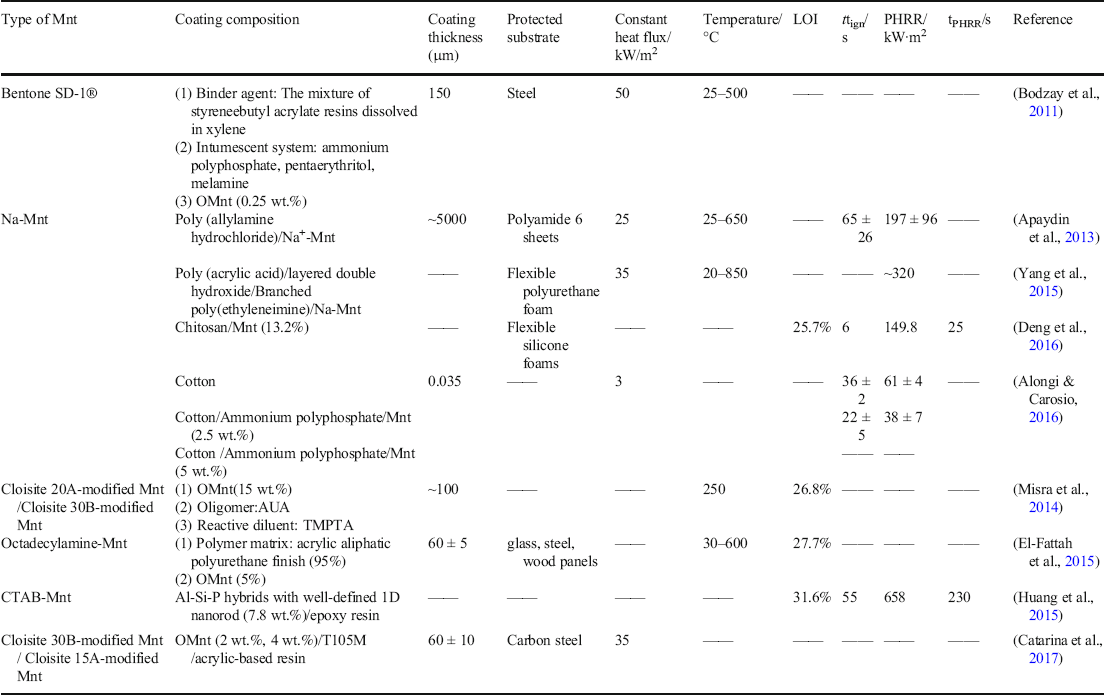
Similarly, in the chitosan/Mnt coating using chitosan as both the carbon and gas source, the layered Mnt facts as the thermal center of the carbonization (Deng et al., Reference Deng, Liao, Yang, Cao and Wang2016). The deposition of Mnt-polysaccharide bilayer films can form a thick and tight carbon layer on the surface of the substrate at high temperature, and the carbon layer can act as a thermal insulation layer (Table 2). For a Mnt-containing ammonium polyphosphate coating on cotton fibers, high temperature causes ammonium polyphosphate to dissociate and generate ammonia and polyphosphoric acid (Alongi & Carosio, Reference Alongi and Carosio2016). Polyphosphoric acid reacted with Mnt layers to form a silicoaluminophosphate-expanded structure. During flame propagation, the expanded coating can act as a protective layer for cotton and as an intensifier for char formation, thereby reducing the release of volatile combustibles from burning cotton (Table 2).
Composition of Mnt-containing flame-retardant coating and their flame-retardant performance

AUA: aliphatic urethane acrylate; Cloisite 15A: Dimethyldihydrogenated tallow quaternary ammonium salt; Cloisite 20A: Bis (hydrogenated tallow alkyl) dimethyl salt; Cloisite 30B: Methyl-tallow-bis-2-hydroxyethyl quaternary ammonium salt; CTAB: hexadecyl trimethyl ammonium bromide; LOI: limiting oxygen index; PHRR: peak heat release rate; TMPTA: trimethylolpropanetriacrylate; t ign: time to ignition; tPHRR: time to peak heat release rate. ®: This is a commercially available clay
The addition of OMnt to a polymer coating can limit the escape of volatiles formed during polymer decomposition. When the organic modifier in OMnt decomposes and escapes at high temperatures, the Mnt will collapse and become incompatible with the polymer matrix (Hedley et al., Reference Hedley, Yuan and Theng2007). Then the Mnt quickly migrates to the exposed surface and accumulates, thereby forming a barrier layer. The barrier layer can prevent the overflow of expanding gas in the coating and the intrusion of external oxygen and heat (Catarina et al., Reference Catarina, Borsoi, Romanzini, Piazza, Kunst, Scienza and Zattera2017; Liu et al., Reference Liu, Dai, Wang, Zhang, Zhang, Jin and Gao2016; Misra et al., Reference Misra, Kumar, Bahadur, Bhattacharya, Mazumder and Varshney2014). In thermosetting resin systems, however, the migration of Mnt from the inside of the coating to the surface may be prevented by the cross-linked polymer network, thereby inhibiting the formation of the thermally insulating surface layer. For example, the addition of OMnt in the powder coatings containing acrylic-based resin did not significantly change the combustion behavior of the coatings, especially for samples containing a large amount of OMnt (Catarina et al., Reference Catarina, Borsoi, Romanzini, Piazza, Kunst, Scienza and Zattera2017).
Moderate addition and uniform dispersion of OMnt in a polymer-based coating have a significantly positive effect on the fire resistance of the coatings. The excessive OMnt in the coating migrates quickly and accumulates on the coating surface to form a hard, non-deformable ceramic layer, which limits the expansion behavior of the coating, thereby reducing the fire resistance of the coating (Liu et al., Reference Liu, Dai, Wang, Zhang, Zhang, Jin and Gao2016). Tomczak et al. (Reference Tomczak, Łopiński, Kowalczyk, Schmidt and Rokicka2019) pre-expanded natural Mnt in cyclohexanol and then applied it to an expansive coating composed of polyvinyl acetate, ammonium polyphosphate, melamine, and pentaerythritol. The composite coating with Mnt reduced the time required for the temperature of the steel substrate to increase to 450°C. The expanded coating with excess Mnt, however, produced uneven coke and micro-cracks at high temperature. Although the rigid structure of Mnt improved the hardness of the carbonated layer, the mechanical durability of the carbonated layer against the strong airflow in fire was not ideal due to the existence of micro cracks. In addition, the accumulation of Mnt in the polymer can produce defects that reduce the effectiveness of such a surface layer in the reduction of HRR (Berta et al., Reference Berta, Maria, Phan, Gigmes, Fina and Camino2017).
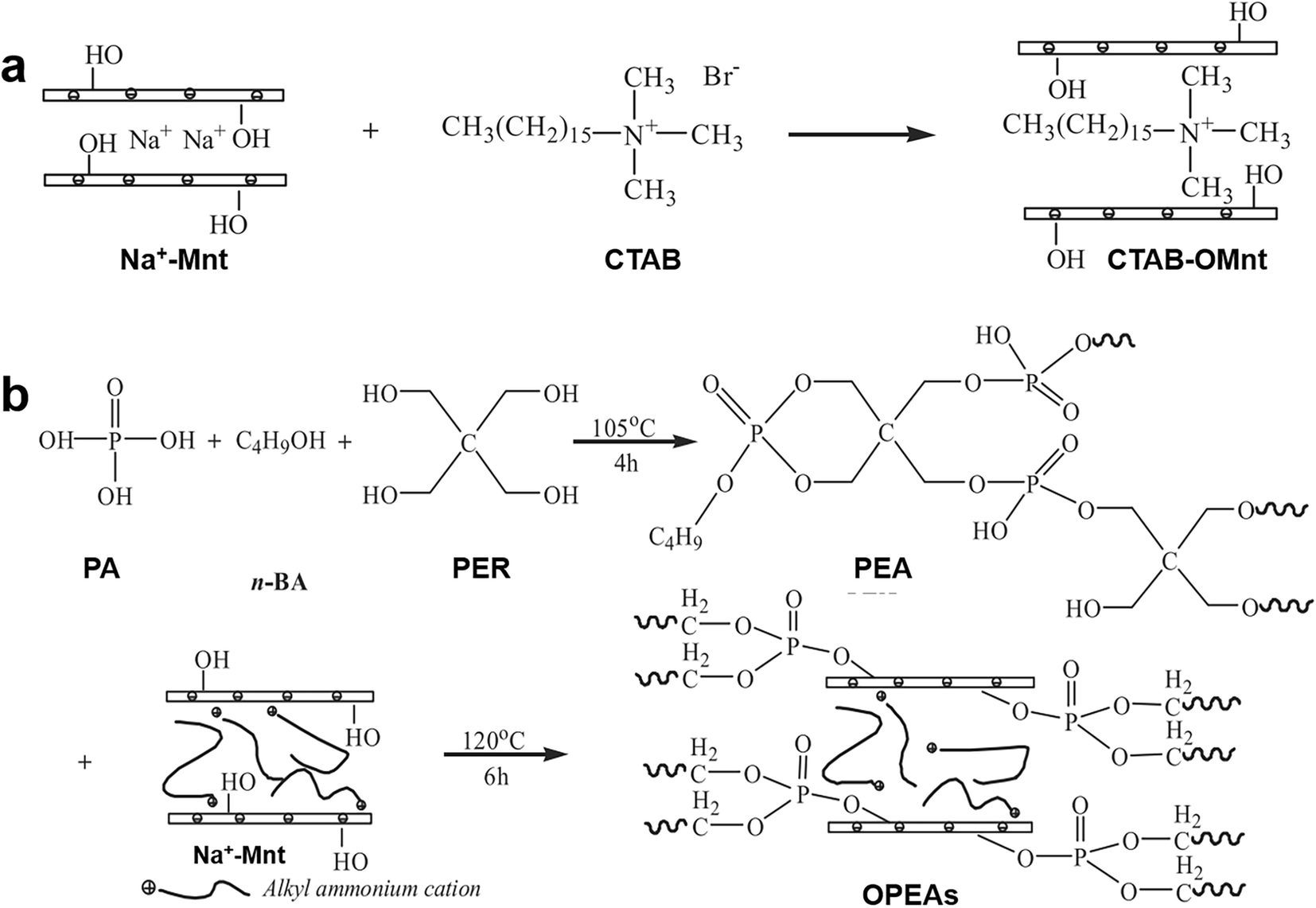
To obtain better clay dispersion in the polymer coating, the polymer coating with nano-structured Mnt can be modified either by using a high shear mixer or by modifying the Mnt through chemical grafting with an intumescent flame retardant, which facilitates good dispersion in the expandable system. Yan et al. (Reference Yan, Xu and Wang2018) modified Mnt with alkyl ammonium ions to yield OMnt, and took advantage of the reaction of the edge and interlayer hydroxyl groups of OMnt with the P–OH group in a phosphate ester acid to form a grafted OMnt–phosphate ester acid structure (Fig. 4). OMnt in such a coating was conducive to producing phosphorus-rich cross-linked coke and aromatic coke in the condensation phase, thereby forming a stable, dense, and expanded carbon layer. As a heat-resistant barrier, the carbon layer reduced effectively the heat release, smoke generation, and quality loss of the coating. Excessive OMnt enhanced the barrier effect of the coatings but led to incomplete combustion and mass loss of the expandable coatings, thus reducing the flame retardant and smoke suppression effects of the coatings (Yan et al., Reference Yan, Xu and Wang2018). The chemical grafting of melamine intumescent flame retardant on the surface of Mnt can be adopted to obtain favorable Mnt dispersion and high flame-retardant efficiency in linear, low-density polyethylene coating (Makhlouf et al., Reference Makhlouf, Hassan, Nour, Abdel-Monem and Abdelkhalik2017).
Methods for the synthesis of a CTAB-Mnt, b cyclophosphate and Mnt polyphosphate (reproduced from Yan et al. (Reference Yan, Xu and Wang2018), copyright (2018), with permission from Elsevier). CTAB: Cetyltrimethyl ammonium bromide; Mnt: Montmorillonite; OMnt: Organically modified montmorillonite; OPEA: Montmorillonite polyphosphate; PA: Phosphoric acid; PEA: Phosphate ester acid

The Fe contained in OMnt in the coating can act as a catalyst to promote gas production during the firing of coating (Guan et al., Reference Guan, Li, Zhang and Jin2006). OMnt might have the catalytic effect and gas barrier effect in butyl acrylate copolymer coatings (Bodzay et al., Reference Bodzay, Bocz, Bárkai and Marosi2011). The Fe released from OMnt can catalyze the decomposition of styrene-butyl acrylate resin, generating a large amount of gas. Evenly dispersed OMnt can result in closed honeycomb cells of the carbonized structure at high temperature, which effectively block heat transfer.
Appropriate use of the layered structure of Mnt has the potential to improve the fire resistance of coatings. For example, Mnt layers (2D) and β-FeOOH nanorods (1D), are deposited alternately on the surface of flexible polyurethane foam using layer-by-layer assembly (Wang et al., Reference Wang, Pan, Shi, Yu, Pan, Liew, Song and Hu2015). Structural and morphological characterization indicated that Mnt nanolayers and β-FeOOH nanorods were distributed homogeneously on the surface of the matrix and formed a sandwich-like topology. The coating can provide the polyurethane foam with flame retardancy, and prevent release of toxic gases produced by polyurethane. The Mnt nanolayers and β-FeOOH nanorods were evenly distributed on the surface of the substrate to form a random entangled network covered by the Mnt nanolayers, and the network hindered the transfer of heat, oxygen, and mass between the flame and the polyurethane matrix. Huang et al. (Reference Huang, Song, Yang, Cao, Yang and Chang2015) invented a process in which a hydrothermal reaction of montmorillonite with diphenyl phosphoric acid led to the decomposition of montmorillonite, the repolymerization to generate aluminum phosphonates, and the assembly via π–π stacking interactions to form 1D double-walled Al–P–Si hybrid decomposable nanorods, where silica is coated on aluminum phosphonate nanorods. The epoxy nanocomposites with Al–Si–P hybrid nanorods exhibited good flame retardancy. A possible reason was that the nanorods decomposed at ~400°C to yield nanoparticles composed mainly of aluminum silicates and then the nanoparticles migrated readily to the surface of epoxy resins to form a protective layer.
As shown above, Mnt can endow a polymer coating with improved flame retardancy by enhancing the density and continuity of the carbonized layer of the refractory coating, catalyzing the generation of inert gas and forming an entanglement network to isolate gas and heat. In particular, the uniform distribution of Mnt in the polymer significantly alters the resistance. Such distribution is expected to be achieved by physical stirring, chemical modification, or changing the Mnt structure. Controlling the amount of Mnt in the intumescent refractory coating is also important.
Super-Hydrophobicity
The principle of a self-cleaning coating is to give the coating surface a special topography of chemical groups to create superhydrophobicity. In recent years, inspired by natural self-cleaning lotus leaves, super-hydrophobic coatings with high contact angles (contact angle >150°) to water have been studied intensively. Functional Mnt containing hydrophobic groups added to the polymer coating can make the coating exhibit a certain enhanced hydrophobicity. The uniform dispersion of rigid Mnt on the surface of the hydrophobic coating results in greater surface roughness, accompanied by a greater hydrophobic property of the coating. In the superhydrophobic Mnt/polymer coating, Mnt can provide the coating with a special surface morphology: (1) natural Mnt has the large surface area (a few hundred nm long and wide) of two-dimensional nanolayers, and can provide the coating with special roughness (Cadene et al., Reference Cadene, Durand-Vidal, Turq and Brendle2005). (2) The layered structure of Mnt has a strong tendency to self-assemble, forming a unique topological structure at nano and micro levels. Although Mnt has strong water-adsorption ability due primarily to the hydration of interlayer cations and the micro- and meso-pores present in aggregates (Gates et al., Reference Gates, Bordallo, Bouazza, Carnero-Guzman, Aldridge, Klaproth, Iles, Booth, Mole, Seydel, Yu and de Souza2021), OMnt added in a coating can introduce special hydrophobic groups into the coating to reduce the surface energy.
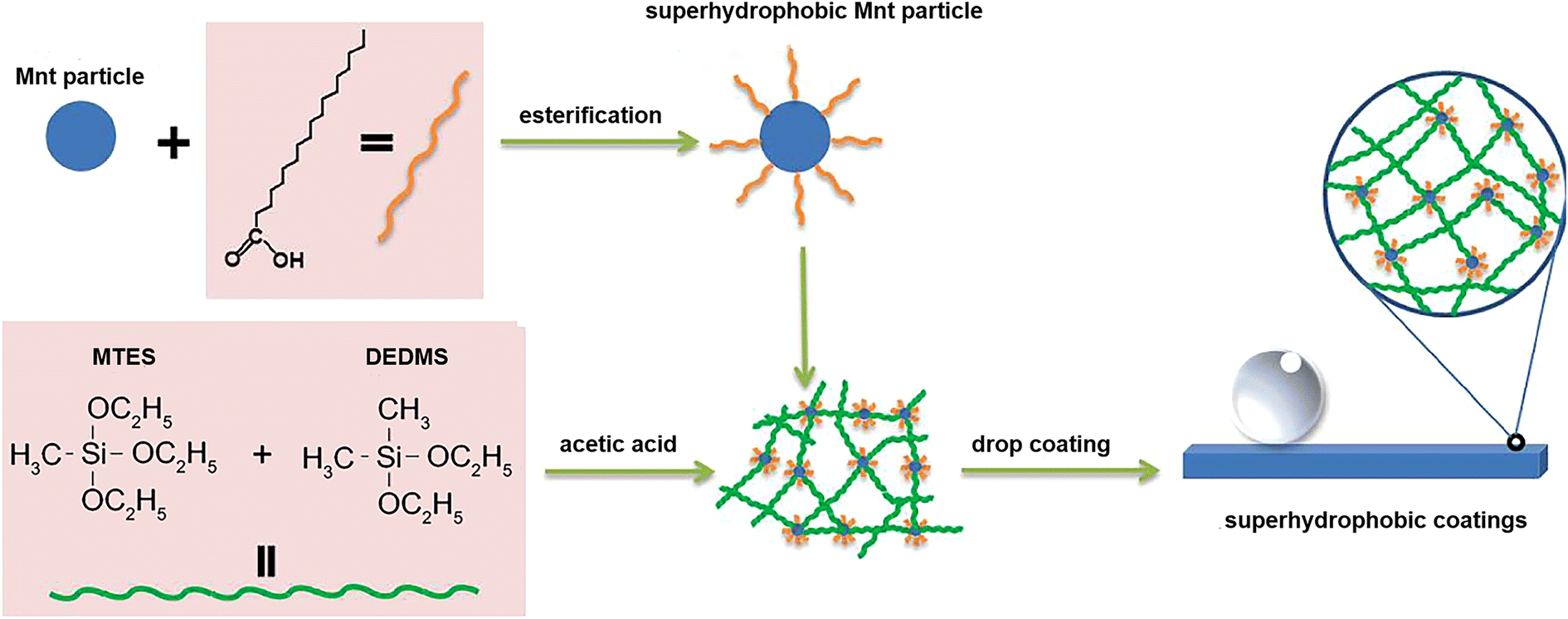
Mnt tethered with hydrophobic macromolecules can self-assemble to form a superhydrophobic surface. Cyclomethicone has low surface energy which gives it a hydrophobic film-forming ability (Frelichowska et al., Reference Frelichowska, Bolzinger, Pelletier, Valour and Chevalier2009). Moisture-curing polyurethane can cross-link within the cyclomethicone polymer network, and a siloxane polymer can be assembled along the coating-surface and within the coating-substrate interface, which significantly reduces the surface energy of the interface. During polyurethane crosslinking the assembly process of the cyclomethicone polymers along the coating surface does not result in a hierarchically rough surface with a low surface energy. However, addition of OMnt into polymeric cyclomethicone can help the formation of hierarchical structures to yield superhydrophobic composite coatings. For example, Mnt was modified by aminopropyl triethoxy silane and octadecylamine, and then treated with benzyl alcohol to obtain benzyl alcohol/OMnt (Bayer et al., Reference Bayer, Steele, Martorana and Loth2010). The introduction of self-curing polyurethane and benzyl alcohol/OMnt into the cyclopolysiloxane network resulted in a self-cleaning and water-repellent coating. Meera et al. (Reference Meera, Sankar, Murali, Jaisankar and Mandal2012) produced a hydrophobic sol-gel silica/OMnt (trimethylstearyl ammonium-Mnt) composite using a sol–gel polymerization technique in aqueous media. The ethyltrichlorosilane solution with 1 wt.% sol-gel silica/OMnt composites was then spin-coated onto a glass surface. Because of the presence of the bulky organic group, namely trimethylstearyl ammonium in the OMnt, the cleaved coating surface was brittle (Ho et al., Reference Ho, Lam, Lau, Ng and Hui2006; Meera et al., Reference Meera, Sankar, Murali, Jaisankar and Mandal2012). The surface of composites without OMnt lacked a layered and porous structure. As the surface roughness of the composite increased, the hydrophobicity of the coating to water increased. The surface free energy of the coating containing 5% Mnt is 51.49 mJ/m2 and that of the coating without Mnt was 59.65 mJ/m2, indicating that Mnt has influenced the anti-wetting properties (Meera et al., Reference Meera, Sankar, Murali, Jaisankar and Mandal2012). Stearic acid contains functional carboxyl groups and alkyl groups and the carboxyl groups can form a covalent bond with the hydroxyl of the Mnt surface through esterification, thereby forming a layer of stearic acid film on the surface of Mnt particles. The alkyl groups increased the hydrophobicity by reducing or shielding the polarity of Mnt. The organosiloxane solution with stearic acid-modified Mnt particles was drip-coated onto various substrates to obtain a durable super-hydrophobic coating after curing. Mnt nanoparticles accumulated irregularly on the coating surface forming a rough multilayer structure which increased the water contact angle of the coating (Fig. 5 ) (Qu et al., Reference Qu, Xue, Yuan, He, Abbas, Zhao, Wang, Liu and He2019).
Schematic illustration for the fabrication of superhydrophobic coatings (reproduced from Qu et al. (Reference Qu, Xue, Yuan, He, Abbas, Zhao, Wang, Liu and He2019) with the permission of Springer Nature, copyright, 2019). DEDMS: Diethoxydimethylsilane; Mnt: Montmorillonite; MTES: Methyltriethoxysilane

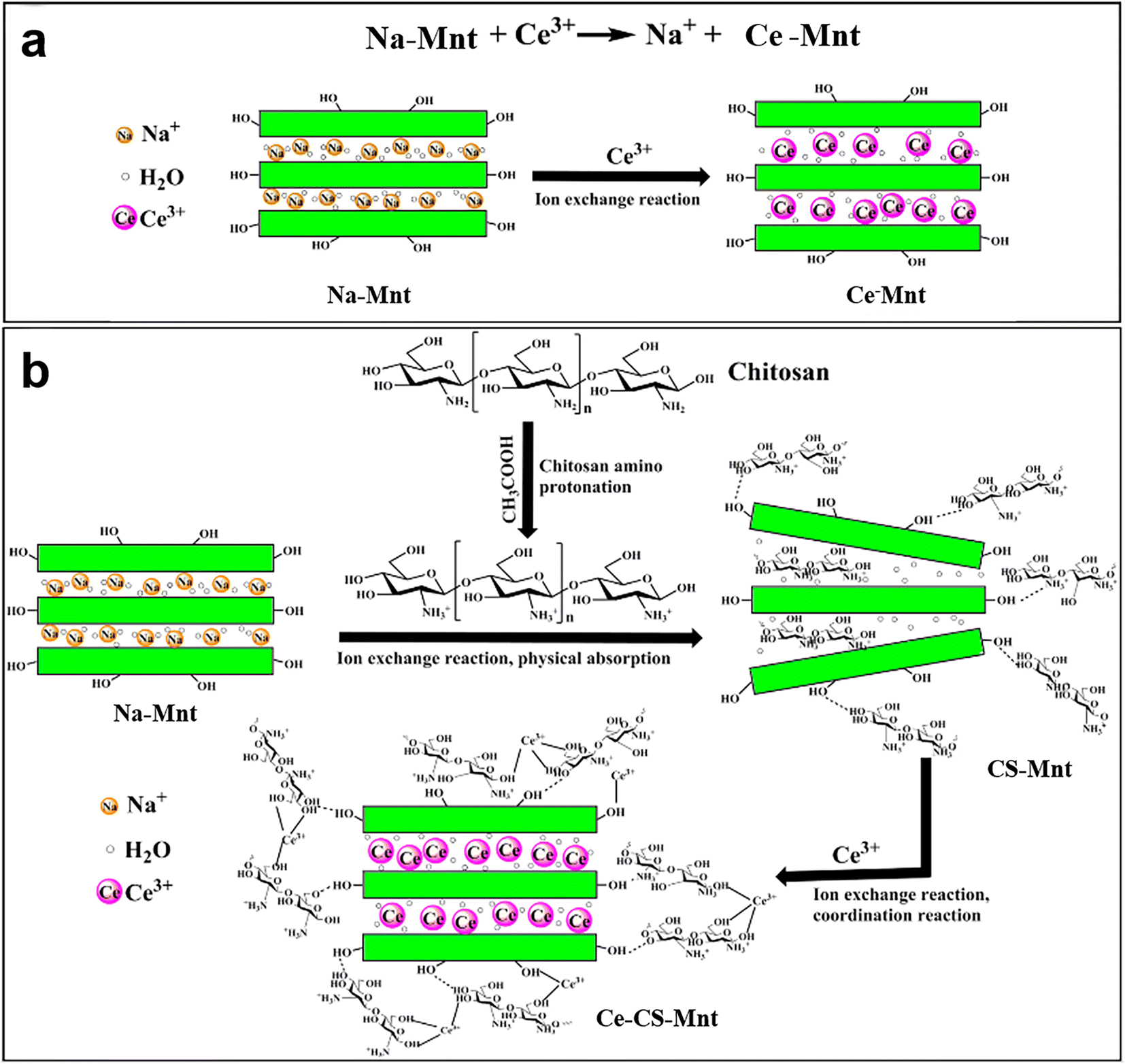
Mnt exchanged with metal ions or metal oxides can also provide enhanced super-hydrophobicity of the coating. Electrostatic interaction between Ce3+-Mnt and the aqueous polyurethane anionic matrix can occur. Active Ce3+ released from Ce3+-Mnt, moreover, can function with the hydroxyl groups in the polyurethane to increase significantly the crosslinking density of the polyurethane molecules (Fig. 6a) (Mo et al., Reference Mo, Li, Yang, Gu, Chen and Yang2019). Such Ce3+-Mnt can be dispersed uniformly in polyurethane coatings. The greater cross-linking density reduces the presence of micropores and defects in the coating surface and effectively prevents the diffusion of water molecules through the coating so that the coating has a strong hydrophobicity. In addition, the surface of the polyurethane coating becomes rough due to the addition of Ce3+-Mnt into it, which helps to increase the super-hydrophobicity of the coating. Pretreatment of Mnt with chitosan can increase the Ce3+ loading capacity of Mnt, and Ce3+-chitosan-Mnt particles in polyurethane coatings can enhance the hydrophobicity of the coatings (Fig. 6b) (Mo et al., Reference Mo, Li, Yang, Gu, Chen and Yang2019).
Schematic presentations of preparation steps: a Ce-Mnt and b Ce-CS-Mnt (reproduced from Mo et al. (Reference Mo, Li, Yang, Gu, Chen and Yang2019), copyright (2019), with permission from Elsevier). CS: Chitosan; Mnt: Montmorillonite.

Iron oxide/OMnt and Ag/OMnt composites were prepared by the interaction of Mnt modified by quaternary ammonium salt (hydrogenated tallow) dihydroxyethyl methyl chloride with hydrophobic iron oxide and Ag nanoparticle, respectively (Atta et al., Reference Atta, El-Mahdy, Al-Lohedan and Ezzat2014). Epoxy coatings containing iron oxide/OMnt and Ag/OMnt composites had rough surfaces at the nanoscale and thus have greater hydrophobicity than epoxy coatings. The degree of dispersion of Mnt in the coating, however, also affected the hydrophobicity of the coating. The seawater contact angle of the coating became smaller due to agglomeration of the Ag/OMnt in the coating when the loading of the the Ag/OMnt exceeded 5 wt.%. In addition, pores were generated within the rough surface of the coating containing Ag/OMnt composite material after curing. The pores promote the diffusion of water in the coating and reduce the hydrophobicity. In contrast, uniform dispersion of iron oxide/OMnt composites within the epoxy coating produced a superhydrophobic surface (Atta et al., Reference Atta, Ezzat, El-Saeed, Wahby and Abdallah2020). In this case, metal ions or metal oxides-intercalated Mnt probably assisted the formation of a dense crosslinking network to achieve the superhydrophobic coating.
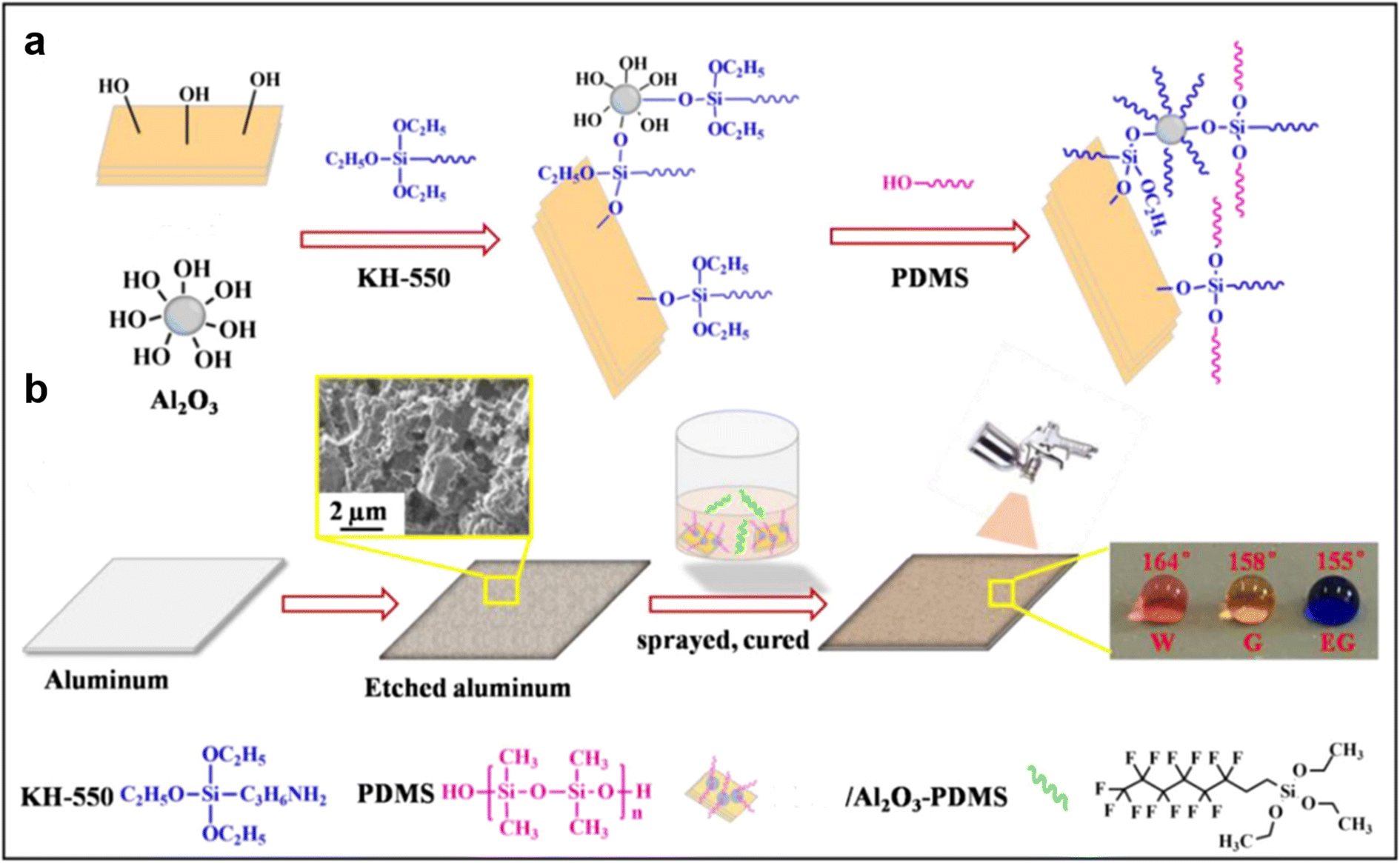
The superamphiphobic coating has better antifouling cability. Surface modification of Mnt presents a suitable layered surface structure with extremely low surface free energy. Such a surface exhibits superb hydrophobicity. In a study by Yuan et al. (Reference Zhang, Shao, Shi, Wang, Meng and Li2017), chemically grafting Al2O3 nanoparticles onto the Mnt was achieved through the bridging of NH2-C3H6-Si (OC2H5)3 (KH-550), and then the grafted Mnt was further modified with polydimethylsiloxane (PDMS), a low-surface-energy material (Fig. 7a). Ethylenetetrafluoroethylene (ETFE) composite coating prepared with 25 wt.% Mnt/Al2O3-PDMS binary nanocomposite in it had a good nanostructure, and provides high contact angles to water (164°), glycerol (158°), and ethylene glycol (155°) (Fig. 7b ). After mechanical abrasion testing (8000 times) or annealing at 350°C for 2 h, the coating maintained its superhydrophobicity.
Schematic illustration of a the preparation procedures for Mnt/Al2O3-PDMS nanocomposite and b the superamphiphobic ETFEMnt/Al2O3-PDMS composite coating (reproduced with the permission of Springer Nature from Yuan et al. (Reference Zhang, Shao, Shi, Wang, Meng and Li2017), copyright (2017). ETFE: ethylene tetrafluoroethylene; KH-550: NH2-C3H6-Si(OC2H5)3;Mnt: Montmorillonite; PDMS: Polydimethylsiloxane

The combination of hydrophobic molecules, ions or functional groups and chemically surface-modified Mnt results in the superhydrophobicity of the coating. Due to the introduction of hydrophobic groups into the coating and the self-assembly of Mnt on the surface of the coating, a low surface free energy of the coating is established and the diffusion of water molecules in the coating is hindered. Hydrophobic species that bind to Mnt usually include alkanes, oils, fats, etc., but these molecules are also generally lipophilic, and can stain the coating surface. Silicone rubber and fluorocarbons, both hydrophobic and oleophobic, combined with Mnt to be used for developing self-cleaning coatings, therefore, could be the direction of future development.
Antimicrobial Activity
The antibacterial properties of functional coatings play a significant role in ensuring hygiene for daily necessities and inhibiting or controlling the growth of harmful microorganisms on sanitized surfaces and medical supplies. The heavy metals, TiO2, special plant extracts, and other substances with antibacterial activity can give the coating an antibacterial property. Antibacterial substances, however, usually need to be combined with a carrier in order to exist stably in the coating and exert a lasting antibacterial effect. The layered structure and large specific surface area of Mnt can adsorb microorganisms and store antibacterial substances, making it a useful carrier (Semlali Aouragh Hassani et al., Reference Semlali Aouragh Hassani, El Bourakadi, Merghoub, Qaiss and Bouhfid2020) and provides other functionality (e.g. as described in the above sections) to the coating. Mnt can also be intercalated or delaminated within the polymer matrix, and thereby have strong interactions with both the polymer chains and the antimicrobial substances at the molecular level.
Silver (Ag) has been used for sterilization for centuries. The antibacterial properties may originate from the presence of Ag+ ions released through the oxidation of Ag particle on the surfaces. Ag+ ions are adsorbed onto negatively charged bacterial cell walls, thereby inactivating cell enzymes, destroyoing the selective permeability of the membrane, and ultimately leading to bacterial dissolution and death (Olad et al., Reference Olad, Rezvani and Nosrati2017). Ag+-Mnt, for example, is effectively an antibacterial agent used by adding it to epoxy–polyester powder coatings; the slow release of Ag+ from the Mnt layer had the long-term effect of inhibiting the growth of gram-negative bacteria (Armstrong et al., Reference Armstrong, Thornton, Ryan, Laffir, Russell, Bala, Keely and Babu2012). The addition of TiO2/Ag+-Mnt to a coating comprised of a polyacrylic acid emulsion can inhibit the growth of both gram negative and gram positive bacteria on the coating at the same time (Olad et al., Reference Olad, Nosrati, Najjari and Nofouzi2016). Ag+-Mnt biocomposite multilayer films have been developed using radio frequency magnetron sputtering (Iconaru et al., Reference Iconaru, Groza, Stan, Predoi, Gaiaschi, Trusca, Chifiriuc, Marutescu, Tite, Stanciu, Hristu, Ghegoiu, Badea, Turculet, Ganciu and Chapon2019). The resulting Ag+-Mnt biocomposite multilayer film effectively inhibited growth of Candida albicans cells on a silicon substrate, and the inhibitory effect of Ag+-Mnt on the adhesion of bacteria to the coating was more significant than that of Mnt alone. Worth noting, however, is that for polymer coatings with low wettability, e.g. epoxy resins/polyester resins, the release of Ag+ from the Ag+-Mnt composite is limited due to the poor wettability of the coating, which makes achieving effective sterilization difficult (Armstrong et al., Reference Armstrong, Thornton, Ryan, Laffir, Russell, Bala, Keely and Babu2012). In addition, as Ag nanoparticles themselves are insoluble in water, only a small amount of Ag+ is released ([Ag+] ~1×10⁻⁶ M in water). Certain Ag nanoparticles or Ag-containing compounds used as antibacterial agents are expected to release more Ag+ when intercalated into the interlayer space of Mnt. Sohrabnezhad et al. (Reference Sohrabnezhad, Pourahmad, Mehdipour Moghaddam and Sadeghi2015) used AgNO3 as the Ag precursor and ethylene glycol as the reducing agent to achieve spherical Ag and Ag2CO3 nanoparticles in the interlayer space of Mnt. Compared with Ag+-Mnt, Ag2CO3-Mnt nanocomposite had a greater inhibitory effect on gram-negative bacteria.
OMnt can serve not only as a carrier for a variety of bactericidal substances, but can also demonstrate better bactericidal effects on some bacteria. Chen et al. (Reference Chen, Ye, Cai, Huang, Zhong, Chen and Wang2016) used Gemini surfactant as the Mnt modifier, quaternized chitosan as the reducing agent and stabilizer for making Ag nanoparticles, and synthesized a chitosan/OMnt/Ag composite for a coating with antibacterial properties. The large specific surface area and the hydrophobic interaction between the hydrophobic alkyl chain and the lipophilic component of the microbial cell wall enabled OMnt to adsorb and immobilize microbes. The quaternary ammonium salt group in OMnt had antibacterial activity and the synergistic effects of quaternized chitosan, OMnt, and Ag enable the coating to have significant antibacterial activity against gram-positive bacteria, gram-negative bacteria, and fungi, thus exerting strong sterilization on steel surfaces. The antibacterial coating containing the quaternized chitosan/OMnt/Ag nanoparticle nanocomposite had an inactivation rate of 99.99% against E. coli and 99.83% against Staphylococcus aureus. Ling et al. (Reference Ling, Luo, Luo, Wang and Sun2013) used quaternized carboxymethyl chitosan to prepare quaternized carboxymethyl chitosan/OMnt/Ag nanocomposites for the coating of antibacterial paper, and the coating had strong antibacterial activity against bacteria and fungi.
Nanocomposites of Zn2+-Mnt can serve as a cheap, affordable and non-toxic substitute for Ag-based antibacterial materials (Roy et al., Reference Roy, Joshi and Butola2019). The Zn2+-exchanged Mnt (Zn2+-Mnt) and ZnO nanoparticle-loaded Mnt (ZnO-Mnt) were synthesized using a combination of a simple ion-exchange reaction and a reduction reaction, and further added into high-density polyethylene (HDPE) to produce bio-active nanocomposites. The HDPE-Zn2+-Mnt nanocomposites showed remarkable antimicrobial activity against bacteria E. coli and S. aureus and fungi A. niger. The antimicrobial performace improved with increased loading of Zn2+-Mnt intercalates in the HDPE.
Some plant extracts and their derivatives also have antibacterial activity. The use of Mnt as a host or carrier for such biological compounds can be used in antibacterial or antifungal coatings. Likewise, Mnt functionalized with antifungal drugs as a filler in coatings can also achieve antifungal properties. The surface of Mnt modified with soy lecithin and citronellol were changed from highly hydrophilic to hydrophobic (Fernández et al., Reference Fernández, Barberia Roque, Gámez Espinosa, Deyá and Bellotti2020). Citronellal is an active terpenoid, which has been used as an antifungal drug. When the modified Mnt was added to a coating, the coating proved to have the most effective antifungal activity. It is worth nothing that, as a natural clay mineral, Mnt may have potential biological contamination. Therefore pre-sterilization is necessary before using it as a component of antibacterial coating. A facile way is to decontaminate Mnt with 70% ethanol and to heat it at 120°C in an oven for 24 h (Favero et al., Reference Favero, Parisotto-Peterle, Weiss-Angeli, Brandalise, Gomes, Bergmann and dos Santos2016).
Solar Absorption and Storage
Coatings are crucial to the devices used for solar-energy harvest and storage. The order and structure of the light-absorbing material in the coatings is very important for developing durable and highly absorptive coatings. Layered Mnt has been used for intercalation of a light-absorbing material into its precursor. Calcining of the precursor-intercalated Mnt leads to an orderly arrangement of the light-absorbing material between the Mnt layers, which can help to improve the efficiency of the solar absorbtion when the composite is applied to a coating.
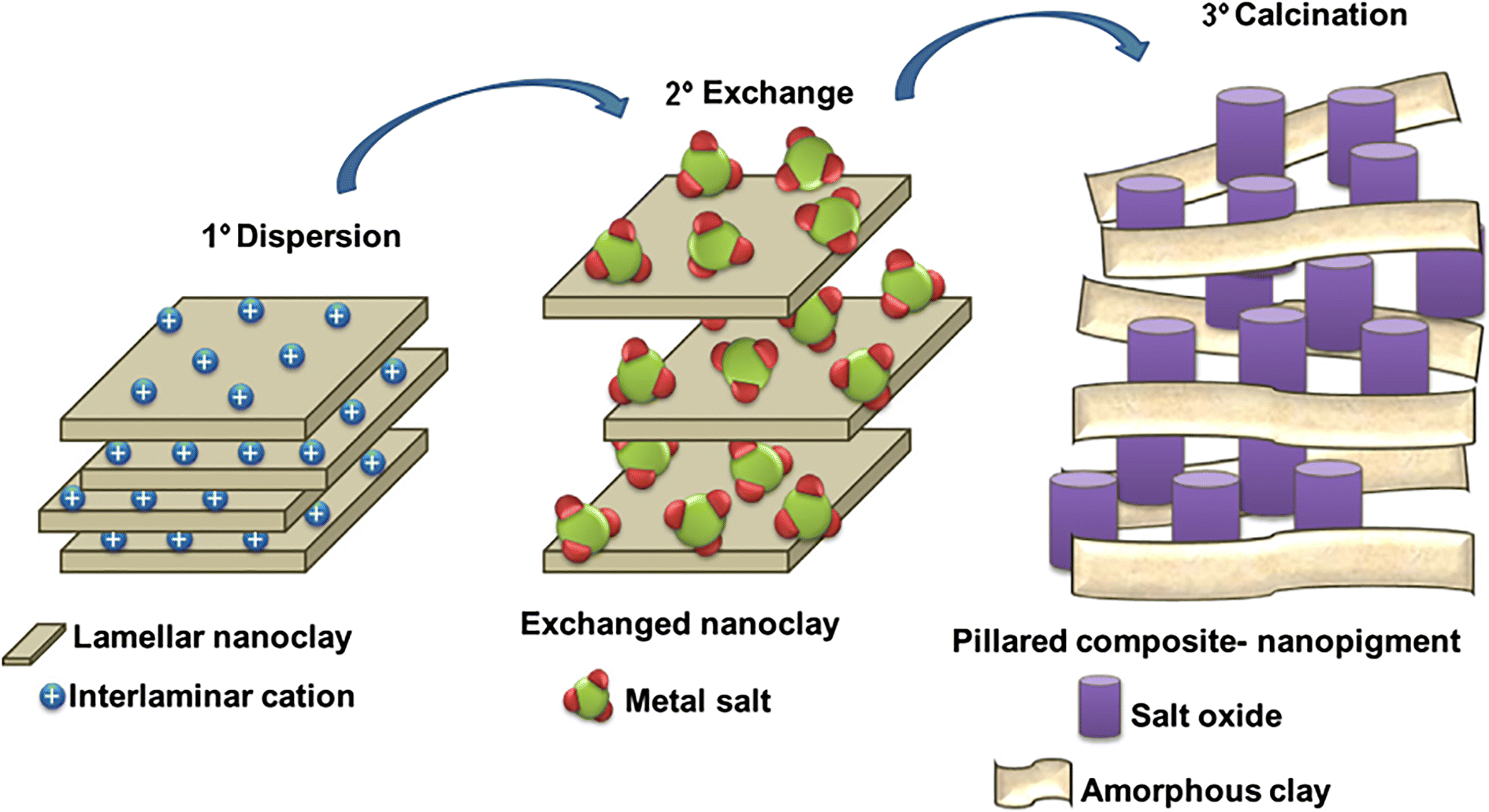
The cation exchangeability of Mnt, and its ability to host a variety of substances, provide easy routes for combining different light-absorbing precursors to make composites for solar-energy harvest. Sucrose as a carbon precursor, for example, has been inserted into the interlayer space of cetylpyridinium bromide hydrate/polyhedral oligomeric silsesquioxane-modified Mnt (Micó-Vicent et al., Reference Micó-Vicent, López, Bello, Martínez and Martínez-Verdú2017b). A light-absorbing material, layered graphene, can then be produced between Mnt layers after calcination at 800°C. The ordered structure of layered graphene enhances the heat resistance of the Mnt-graphene composite. This composite in a paint format on metallic coupons has a light absorbance of more than 96% after 24 h at 700°C. When iron and manganese were used as metal intercalation materials for Mnt and then calcined, a metal oxide-pillared Mnt hybrid was formed. The layered structure of the Mnt remained unchanged. After 20 h at 600°C, the light-absorption efficiency of the coating with the pillared Mnt hybrid remained at 84.8% (Fig. 8) (Micó-Vicent et al., Reference Micó-Vicent, López-Herraiz, Bello, Martínez and Martínez-Verdú2017a).
Mnt combined with different light-absorbing precursors to synthesize Mnt composites for use in solar-energy harvest coatings . (reproduced from Mo et al. (Reference Mo, Li, Yang, Gu, Chen and Yang2019) with the permission of Elsevier; copyright (2019)

Mnt is also a good carrier for solar-energy storage materials. Phase-change materials can be combined with Mnt by impregnation or microencapsulation treatment. The high-energy storage capacity of the phase-change composite provides potential advantages for enhancing the solar-energy storage of the coatings to which they are added (Fang et al., Reference Fang, Zhang and Chen2008; Peng et al., Reference Peng, Fu, Li, Ouyang and Yang2017). When a phase-change composite is prepared by a simple dipping impregnation method, it usually exhibits a limited capacity for heat storage due to the small amount of phase-change compounds. Microencapsulation has been used recently to wrap the phase-change material in a shell material, which is able to retain more phase-change compounds than achieved by the dipping method. Typically, the Mnt/stearic acid microcapsules are spherical, with a particle-size distribution of between 10 and 30 μm, and have greater energy storage than stearic acid alone. Little published research is currently available in which these phase-change composites have been added to polymer coatings. This is a direction for future development in the use of such Mnt composites in polymer coatings to improve solar-energy absorption and storage.
Conclusions
Functional Mnt is not only used in paints, drilling fluid, and cement, but it also shows potential in providing polymer coatings with good corrosion resistance, flame resistance, superhydrophobicity, antibacterial properties, and solar-energy harvest and storage. The rigid layered structure, ion-exchange capacity, and facility for exfoliation, self-assembly, and intercalation of Mnt enable it to provide various surface and interlayer interactions with metal ions, metal oxides, organic modifiers, and the polymers in coatings. In addition, layer-by-layer assembly, microencapsulation, and reconstruction after decomposition allow more strategies for using Mnt in polymer coatings. These strategies provide many new ways to use Mnt in the coatings. A critical need is to enhance the combination of Mnt with modifiers and functional substances in polymer coatings. Although significant progress in using functional Mnt for improving anticorrosion, flame resistance, superhydrophobicity, antibacterial activity, and solar-absorption or storage has been made over the past decade, further efforts are needed to overcome the following issues:
(1) Although the dispersibility of Mnt in a coating can be improved to some extent by modification, good dispersibility is limited by the amount of Mnt added. In anticorrosive coatings, excess functional Mnt leads to the reduction of corrosion resistance rapidly due to agglomeration. In an expansive refractory coating, the accumulation of Mnt can lead to the formation of a hard and over-dense carbon layer, thereby limiting the expansion behavior of the coating. Therefore, the appropriate dosage of functional Mnt in the coating and the side effects caused by excessive dosage should be considered fully.
(2) Metal ions, metal oxides, and organic species, such as Ag+, TiO2, quaternary ammonium ions, and terpenoid with high antibacterial activity have been introduced into the interlayer space and/or surafce of Mnt; the polymer coating containing this functional Mnt can be coated on medical devices and food packaging and shows antibacterial activity against gram-positive bacteria, gram-negative bacteria, and fungi. The release of antibiotic ions, however, may be limited by the wettability while the functions of the organic compounds may be limited by the type of polymer in the coating. Regulation of the wettability of a polymer coating and the corresponding degree of antibiotic substance with the polymer coating is worthy of attention in future research and development. In addition, the functional materials, such as solar-energy absorption precursors and phase-change compounds, can be fixed between Mnt layers or can form microcapsules with Mnt by means of intercalation or encapsulation. Adding Mnt-containing functional materials into a coating to improve solar-energy absorption and storage and thermal insulation is a technique in its infancy.
(3) Multiple organic modifications of Mnt and the synergistic use of Mnt with a variety of functional substances remain open for future study to improve the performance of the Mnt/polymer coating further. Therefore, judicious selection of functional modifiers and substances that can act synergistically is still required. Considering their bioavailability and eco-friendliness, plant extracts and their derivatives may be considered as organic modifiers in the future.
Acknowledgments
The authors wish to acknowledge financial support from the National Natural Scientific Foundation of China (41672033), the Zhejiang 151 Talents Project, The State Key Laboratory Breeding Base of Green Chemistry-Synthesis Technology, the Zhejiang University of Technology (GCTKF2014006), and the fund from Engineering Research Center of Non-metallic Minerals of Zhejiang Province, Zhejiang Institute of Geology and Mineral Resource, Hangzhou 310007, China (ZD2020K09). WPG acknowledges support of the Australian Research Council Industrial Transformation Training Centre scheme (IC190100034: ARC Training Centre for Green Chemistry in Manufacturing). Shu Qing Zhou and Jia Hui Liu contributed equally to this work.
Author Contribution
Shu Qing Zhou & Jia Hui Liu: Investigation, Writing – original draft, Writing – review & editing. Yu Qin Niu, Xi Xi Chen and Chun Sheng Li: Methodology, Investigation. Will P. Gates: Writing – review & editing. Chun Hui Zhou: Conceptualization, Supervision, Writing – review & editing, Project administration, Funding acquisition.
Declarations
Conflicts Interest
All authors have read and approved its content and ‘No Conflict’ of interest by all authors exists in the submission of this manuscript. The authors declare that they have no known competing financial interests or personal relationships that could have appeared to influence the work reported in this paper.