Introduction
The management of low-prognosis patients in assisted reproductive technology (ART) represents a challenge for reproductive specialists. Indeed, while a poor ovarian response can be seen in patients with diminished ovarian reserve (DOR), others, identified as hyporesponders, show unexpectedly poor or suboptimal response to controlled ovarian stimulation (COS) despite satisfying ovarian parameters (van der Gaast et al., Reference van der Gaast, Eijkemans, van der Net, de Boer, Burger, van Leeuwen, Fauser and Macklon2006; Gallot et al., Reference Gallot, Berwanger da Silva, Genro, Grynberg, Frydman and Fanchin2012; Grisendi et al., Reference Grisendi, Mastellari and La Marca2019; Chen et al., Reference Chen, Wang, Zhou, Bai, Wang, Shi and Shi2020). Recently, newly developed POSEIDON criteria stratified the poor responder in four categories based on age, antral follicle count (AFC), anti-Müllerian hormone (AMH), and response to stimulation when the ovarian stimulation has already been performed (POSEIDON Group, Reference Alviggi, Andersen, Buehler, Conforti, De Placido, Esteves, Fischer, Galliano, Polyzos, Sunkara, Ubaldi and Humaidan2016). In practice, the POSEIDON criteria classified the low-prognosis patients into two main categories: the ‘unexpected’ low ovarian response (Groups 1 and 2) and the ‘expected’ low ovarian response (Groups 3 and 4), taking into account not only patient age but also their ovarian reserve (Zegers-Hochschild et al., Reference Zegers-Hochschild, Adamson, Dyer, Racowsky, de Mouzon, Sokol, Rienzi, Sunde, Schmidt, Cooke, Simpson and van der Poel2017).
Patients in POSEIDON Groups 1 and 2 showed an initial slow response to COS in terms of estradiol levels and follicle growth and required longer stimulations, and/or greater cumulative follicle-stimulating hormone (FSH) doses despite their adequate ovarian parameters (Conforti et al., Reference Conforti, Esteves, Cimadomo, Vaiarelli, Di Rella, Ubaldi, Zullo, De Placido and Alviggi2019). Therefore, the traditional ovarian markers currently used, such as AFC and AMH, are inadequate to predict ovarian response accurately, notably for these ‘hyporesponders’ who raise the question of ovarian sensitivity to gonadotropins (Oliveira et al., Reference Oliveira, Baruffi, Petersen, Mauri, Nascimento, Vagnini, Ricci, Cavagna and Franco2012; Yadav et al., Reference Yadav, Malhotra, Mahey, Singh and Kriplani2019), therefore a tool to assess ovarian sensitivity to gonadotropin stimulation in low-prognosis patients is required.
Furthermore, debate exists regarding whether a single parameter or a combined index, such as age, AMH, AFC, FSH/luteinizing hormone (FSH/LH) ratio, follicular output rate (FORT), ovarian sensitivity index (OSI), ovarian response prediction index (ORPI), etc., is a superior tool for assessing the ovarian reserve or response (Broer et al., Reference Broer, Mol, Hendriks and Broekmans2009; Melo et al., Reference Melo, Garrido, Alvarez, Bellver, Meseguer, Pellicer and Remohí2009; Genro et al., Reference Genro, Grynberg, Scheffer, Roux, Frydman and Fanchin2011). There is little evidence supporting the validity of the parameters used in the outcome assessments for different subgroups in the POSEIDON criteria (Grisendi et al., Reference Grisendi, Mastellari and La Marca2019).
FORT, OSI, ORPI, and FOI are among the most promising markers for assessing ovarian reserve or response. Since introduced by Genro et al. (Reference Genro, Grynberg, Scheffer, Roux, Frydman and Fanchin2011), FORT has been confirmed as an efficient quantitative, as well as qualitative, marker of ovarian response during COS (Genro et al., Reference Genro, Grynberg, Scheffer, Roux, Frydman and Fanchin2011; Gallot et al., Reference Gallot, Berwanger da Silva, Genro, Grynberg, Frydman and Fanchin2012; Zhang et al., Reference Zhang, Hao, Zhuang, Liu, Gu, Liu and Chen2013; Hassan et al., Reference Hassan, Kotb, AwadAllah, Wahba and Shehata2017; Revelli et al., Reference Revelli, Gennarelli, Biasoni, Chiadò, Carosso, Evangelista, Paschero, Filippini and Benedetto2020). OSI, which refers to the number of oocytes retrieved per 1000 IU gonadotrophin administered, has been demonstrated to be strongly correlated with the number of retrieved oocytes and other measures of ovarian response in the study (Biasoni et al., Reference Biasoni, Patriarca, Dalmasso, Bertagna, Manieri, Benedetto and Revelli2011; Huber et al., Reference Huber, Hadziosmanovic, Berglund and Holte2013; Weghofer et al., Reference Weghofer, Barad, Darmon, Kushnir, Albertini and Gleicher2020). ORPI, calculated as the serum AMH level (ng/ml) multiplied by AFC and then divided by female age (years), was first reported by Oliveira et al. (Reference Oliveira, Baruffi, Petersen, Mauri, Nascimento, Vagnini, Ricci, Cavagna and Franco2012) who showed that ORPI was significantly correlated with, and had good prediction on, the number of oocytes; it also had fair prediction on the chance of pregnancy (Oliveira et al., Reference Oliveira, Baruffi, Petersen, Mauri, Nascimento, Vagnini, Ricci, Cavagna and Franco2012; Oliveira and Franco, Reference Oliveira and Franco2016; Ashrafi et al., Reference Ashrafi, Hemat, Arabipoor, Salman Yazdi, Bahman-Abadi and Cheraghi2017). Follicle-to-oocyte index (FOI) was proposed by Alviggi and colleagues as a novel parameter to estimate the hyporesponse, which might present most optimally the dynamic nature of follicular growth responding to exogenous gonadotropin (Alviggi et al., Reference Alviggi, Conforti, Santi, Esteves, Andersen, Humaidan, Chiodini, De Placido and Simoni2018a, Reference Alviggi, Conforti, Esteves, Vallone, Venturella, Staiano, Castaldo, Andersen and De Placido2018b).
In the present study, we aimed to:
-
1. Investigate the possible implications of FORT, OSI, ORPI, and FOI as efficient quantitative and qualitative markers of ovarian responsiveness to gonadotropins in low-prognosis patients for POSEIDON criteria.
-
2. Understand if FORT, OSI, ORPI, and FOI might predict the clinical pregnancy in low-prognosis patients; and (c) compare the pregnancy outcomes between the early follicular phase long-acting GnRH (gonadotropin-releasing hormone) agonist long protocol (EFLL) and the GnRH antagonist (GnRH-ant) protocol in low-prognosis patients.
Materials and methods
This study was a retrospective examination of the first fresh IVF cycles from January 2013 to December 2021 at our centre. Data were extracted from the electronic medical record system (Nanjing Difei, Version 9.2.5.8). The study was approved by the Ethics Committee for the Clinical Application of Human Assisted Reproductive Technology of Wuhan Kangjian Maternal and Infant Hospital.
Ovarian stimulation protocols
Gonadotropin-releasing hormone (GnRH) antagonist (GnRH-ant) protocol
COS was performed with the administration of 150–300 IU/day recombinant FSH (rFSH) from Day 2 or 3 of the cycle. Daily injections of 0.25 mg GnRH antagonist Ganirelix Acetate (Orgalutran, Merck Sharp and Dohme Ltd, USA) were administered in the presence of at least one follicle measuring ≥14 mm or on the sixth day of rFSH stimulation.
Early follicular phase long-acting GnRH agonist long protocol (EFLL): patients received a single dose of 3.75 mg long-acting triptorelin acetate (Decapeptyl; Ferring, Saint-Prex, Switzerland) on Day 2 of the cycle. At 28 days after the initiation of GnRHa, when complete pituitary desensitization was achieved, COS was started with the administration of rFSH.
Progestin-primed ovarian stimulation (PPOS) protocol
The patients in the PPOS protocol were administered a 4 mg/day medroxyprogesterone acetate (MPA; Beijing Zhong Xin Pharmaceutical, China) and a human menopausal gonadotropin (HMG; Lizhu Pharmaceutical Trading Co., Zhuhai, China) injection at a dose of 150–300 IU daily from Day 2/3 of the menstrual cycle to the day of trigger.
For protocols above, final oocyte maturation was induced by injection of 5000 to 8000 IU human chorionic gonadotrophin (hCG; Lizhu Pharmaceutical Trading Co., Zhuhai, China) as soon as two to three leading follicles reached 17–18 mm in size. Oocyte retrieval following COS was carried out 36 h after the ovulation trigger. Oocytes were fertilized conventionally or by intracytoplasmic sperm injection (ICSI). Embryo transfer was performed under ultrasound guidance. One or two good-quality embryos was/were transferred and the surplus embryos were cryopreserved by vitrification using the Cryotop system. Serum human chorionic gonadotropin (HCG) was tested on the 14th day after embryo transfer. Ultrasound was performed on the 28th to 30th day of transfer.
Luteal phase support
Vaginal micronized progesterone tablets (Utrogestan) 200 mg three times daily were administered for luteal phase support from Day 1 after oocyte retrieval onwards, until 7 weeks of pregnancy, after which the dose was gradually reduced and discontinued 1 week later.
Patient inclusion and classification
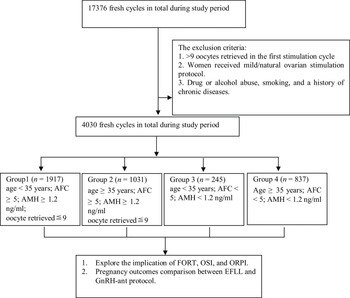
Inclusion criteria: patients were categorized according to the POSEIDON criteria, as outlined below. Only those who received conventional ovarian stimulation in the first cycle were included. Exclusion criteria were: (1) > 9 oocytes retrieved in the first ovarian stimulation cycle; (2) patients received mild/natural ovarian stimulation protocol in the first cycle; (3) a history of chronic medical disease (heart diseases, hepatonephric dysfunction, etc.). The eligible subjects were categorized into four groups based on the POSEIDON criteria:
-
Group 1 (n = 1917 cycles): age < 35 years; AFC ≥ 5; AMH ≥ 1.2 ng/ml; number of oocytes retrieved ≤ 9:
-
○ Group 1a (n = 159 cycles): number of oocytes retrieved < 4.
-
○ Group 1b (n = 1758 cycles): number of oocytes retrieved 4–9.
-
-
Group 2 (n = 1031 cycles): age ≥ 35 years; AFC ≥ 5; AMH ≥ 1.2 ng/ml; number of oocytes retrieved ≤ 9:
-
○ Group 2a (n = 154 cycles): number of oocytes retrieved < 4.
-
○ Group 2b (n = 877 cycles): number of oocytes retrieved 4–9.
-
-
Group 3 (n = 245 cycles): age < 35 years; AFC < 5; AMH < 1.2 ng/ml.
-
Group 4 (n = 837 cycles): age ≥ 35 years; AFC < 5; AMH < 1.2 ng/ml.
OSI, FORT, ORPI, and FOI definitions
-
OSI was calculated as the number of oocytes retrieved × 1000 divided by the total Gn dosage used.
-
FORT was defined as the ratio of pre-ovulatory follicle (16–22 mm in diameter) count (PFC) on hCG day/small antral follicle (3–8 mm in diameter) count at baseline.
-
ORPI = [AMH (ng/ml) × AFC (number)]/patient age (years).
-
FOI = the number of retrieved oocytes/AFC.
Outcome parameters
Clinical pregnancy was defined as the presence of a gestational sac under transvaginal ultrasound at 6–8 weeks of embryo transfer. The early miscarriage rate (EMR) was pregnancy loss before the 12th week of gestation.
Statistical analysis
SPSS 19.0 (IBM Corporation, New York, NY) was used for all statistical analysis. Continuous data were presented as the mean value ± standard deviation (SD), and differences in variables were compared using Student’s t-test or one-way analysis of variance (ANOVA). Categorical variables were presented by the number of cases and corresponding percentage and compared using the chi-squared test and Fisher’s exact test when the number of events was less than five. Pearson correlation analysis was used to assess the correlations between different parameters. Multivariate logistic regression analysis was used to study the association between clinical characteristics and clinical pregnancy rate (CPR). Receiver operating characteristic (ROC) curve analysis was used to analyze the predictive accuracy of variables, and to calculate the area under the curve (AUC). A P-value of <0.05 was considered statistically significant.
Results
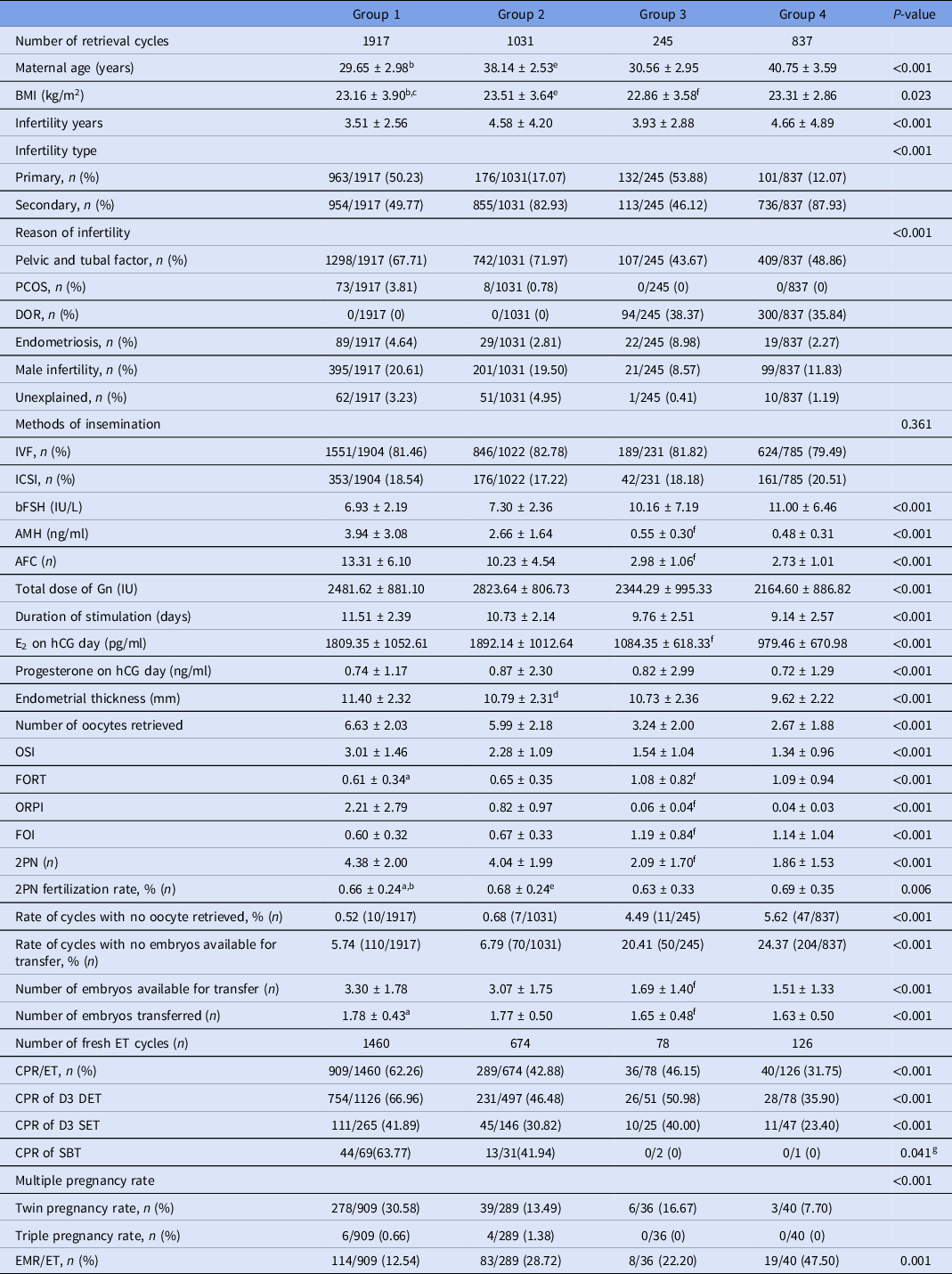
The flow chart and data processing procedure are displayed in Figure 1. The demographics and baseline characteristics of patients are presented in Table 1. There were significant differences in baseline characteristics in age (P < 0.001), body mass index (BMI, P = 0.023), infertility years (P < 0.001), infertility type (P < 0.001), reason for infertility (P < 0.001), basal FSH (bFSH, P < 0.001), AMH (P < 0.001), and AFC (P < 0.001) levels among patients in the four POSEIDON groups (Table 1).
Flowchart of patient recruitment between January 2013 and December 2018 at Wuhan Kangjian Maternal and Infant Hospital (4030 cycles).

Baseline patient characteristics and descriptive data of ovarian stimulation, oocytes and embryo transfer

AFC: antral follicle count; AMH: anti-Müllerian hormone; bFSH: basal follicle-stimulating hormone; BMI: body mass index; CPR: clinical pregnancy rate; DET: double embryo transfer; DOR: diminished ovarian reserve; EMR: early miscarriage rate; E2: estradiol; ET: embryo transfer; FOI: follicle-to-oocyte index; FORT: follicular output rate; Gn: gonadotropins; hCG: human chorionic gonadotrophin; ICSI: intracytoplasmic sperm injection; IVF: in vitro fertilization; OSI: ovarian sensitivity index; ORPI: ovarian response prediction index; PCOS: polycystic ovary syndrome; PN: pronucleus; SBT: single blastocyst transfer; SET: single embryo transfer.
a P > 0.05 between Groups 1 and 2.
b P > 0.05 between Groups 1 and 3.
c P > 0.05 between Groups 1 and 4.
d P > 0.05 between Groups 2 and 3.
e P > 0.05 between Groups 2 and 4.
f P > 0.05 between Groups 3 and 4.
g Comparison was performed between the EFLL and GnRH protocol.
Ovarian stimulation, oocyte retrieval and pregnancy outcomes in different POSEIDON groups
One-way ANOVA showed that there were significant differences in total dose of Gn (IU) (P < 0.001), duration of stimulation (days) (P < 0.001), E2 on hCG day (pg/ml) (P < 0.001), progesterone on hCG day (ng/ml) (P < 0.001), endometrial thickness (P < 0.001), no. of oocytes retrieved (P < 0.001), FORT (P < 0.001), OSI (P < 0.001), ORPI (P < 0.001), FOI (P < 0.001), no. of 2PN (P < 0.001), 2PN fertilization rate (P = 0.006), no. of embryos available for transfer (P < 0.001), no. of embryos transferred (P < 0.001), CPR (P < 0.001), multiple pregnancy rate (P < 0.001), and EMR (P = 0.001) among patients in the four POSEIDON groups. No difference was observed in the methods of insemination among patients in the four POSEIDON groups (P = 0.361). The FORT between Groups 1 and 2 (0.61 ± 0.34 vs. 0.65 ± 0.35, P = 0.081) and Groups 3 and 4 (1.08 ± 0.82 vs. 1.09 ± 0.94, P = 0.899) were similar. The OSI in the order from the highest to the lowest were 3.01 ± 1.46 in Group 1, 2.28 ± 1.09 in Group 2, 1.54 ± 1.04 in Group 3, and 1.34 ± 0.96 in Group 4 (P < 0.001). The trend of ORPI, no. of oocytes retrieved, 2PN and embryos available for transfer were consistent with those in the OSI. The number of embryos transferred between Groups 1 and 2 (1.78 ± 0.43 vs. 1.77 ± 0.50, P = 0.893) and Groups 3 and 4 (1.65 ± 0.48 vs. 1.09 ± 0.94, P = 0.776) were similar. In the order from the highest to the lowest, CPR were 62.26% in Group 1, 46.15% in Group 3, 42.88% in Group 2, and 31.75% in Group 4 (P < 0.001), while EMR were 47.50% in Group 4, 28.72% in Group 2, 22.20% in Group 3, and 12.54% in Group 1 (P = 0.001) (Table 1).
OSI, FORT, ORPI, and FOI of POSEIDON subgroups 1a, 1b, 2a, and 2b
OSI, FORT, and FOI of Group 1b were significantly higher than those of Group 1a (p OSI < 0.001, p FORT < 0.001, p FOI < 0.001), while there was no difference in ORPI between Group 1b and 1a (P = 0.190). In addition, OSI, FORT, ORPI, and FOI of Group 2b were significantly higher than those of Group 2a (p OSI < 0.001, p FORT < 0.001, p ORPI = 0.006, p FOI < 0.001; Table 2).
OSI, FORT and ORPI in POSEIDON subgroups 1a, 1b, 2a, and 2b

FOI: follicle-to-oocyte Index; FORT: follicular output rate; ORPI: ovarian response prediction index; OSI: ovarian sensitivity index.
OSI, FORT, ORPI, and FOI in different POSEIDON groups according to the use of EFLL, GnRH-ant and PPOS protocol
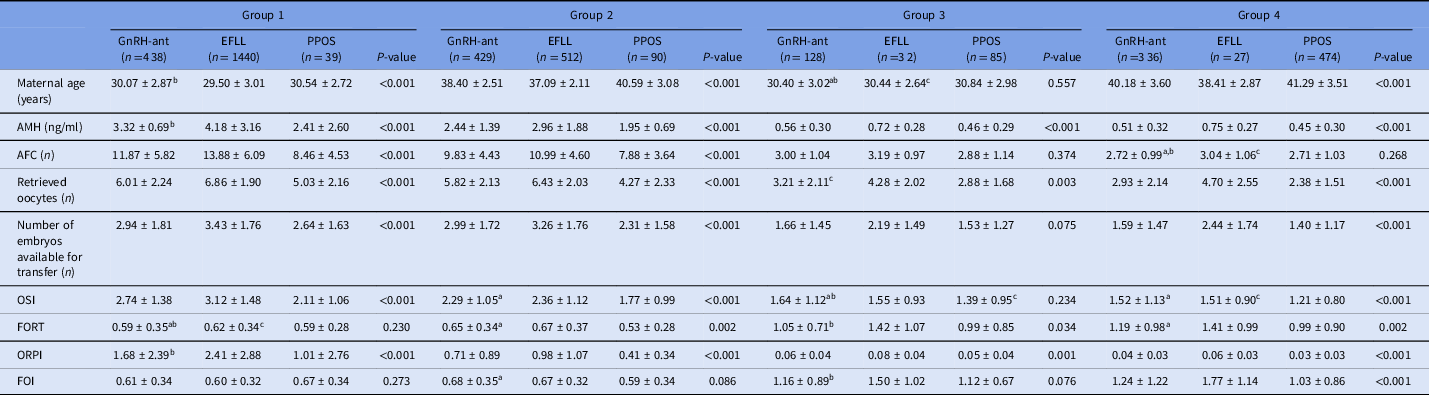
We then compared the efficacies of the EFLL, GnRH-ant and PPOS protocols in each POSEIDON group (Table 3).
OSI, FORT and ORPI in different POSEIDON groups according to the use of GnRH-ant, EFLL and PPOS protocol

AFC: antral follicle count; AMH: anti-Müllerian hormone; EFLL: early follicular phase long-acting GnRH (gonadotropin-releasing hormone) agonist long protocol; FOI: follicle-to-oocyte Index; FORT: follicular output rate; GnRH-ant: GnRH antagonist protocol; ORPI: ovarian response prediction index; OSI: ovarian sensitivity index; PPOS: progestin-primed ovarian stimulation.
a P > 0.05 between GnRH-ant and EFLL groups.
b P > 0.05 between GnRH-ant and PPOS groups.
c P > 0.05 between EFLL and PPOS groups.
In Group 1, the EFLL protocol was associated with younger age (P < 0.001), higher number of AFC (P < 0.001), higher AMH (P < 0.001), higher oocyte number (P < 0.001), higher number of embryos available for transfer (P < 0.001), higher OSI (P < 0.001), and higher ORPI (P < 0.001) than the GnRH-ant and PPOS protocols, respectively. No differences were observed in FORT and FOI among patients who underwent the three COS protocols in Group 1 (p FORT = 0.230, p FOI = 0.273).
In Group 2, the EFLL protocol was associated with younger age (P < 0.001), higher number of AFC (P < 0.001), higher AMH (P < 0.001), higher oocyte number (P < 0.001), higher number of embryos available for transfer (P < 0.001), and higher ORPI (P < 0.001) than the GnRH-ant and PPOS protocols, respectively. No differences were observed in FOI among patients who underwent the three COS protocols in Group 2 (p FOI = 0.086).
In Group 3, the EFLL protocol was associated with higher AMH (P < 0.001), higher oocyte number (P = 0.003), and higher ORPI (P = 0.001) than the GnRH-ant and PPOS protocols, respectively. No differences in age (P = 0.557), AFC (P = 0.374), number of embryos available for transfer (P = 0.075), OSI (P = 0.234), or FOI (P = 0.076) were observed among patients who underwent the three COS protocols in Group 3.
In Group 4, the EFLL protocol was associated with younger age (P < 0.001), higher AMH (P < 0.001), higher oocyte number (P < 0.001), higher number of embryos available for transfer (P < 0.001), higher ORPI (P < 0.001) and higher FOI (P < 0.001) than the GnRH-ant and PPOS protocols, respectively. No significant difference in AFC (P = 0.268) was observed among patients who underwent the three COS protocols in Group 4.
Pregnancy outcomes in different POSEIDON groups according to the use of EFLL and GnRH-ant protocol
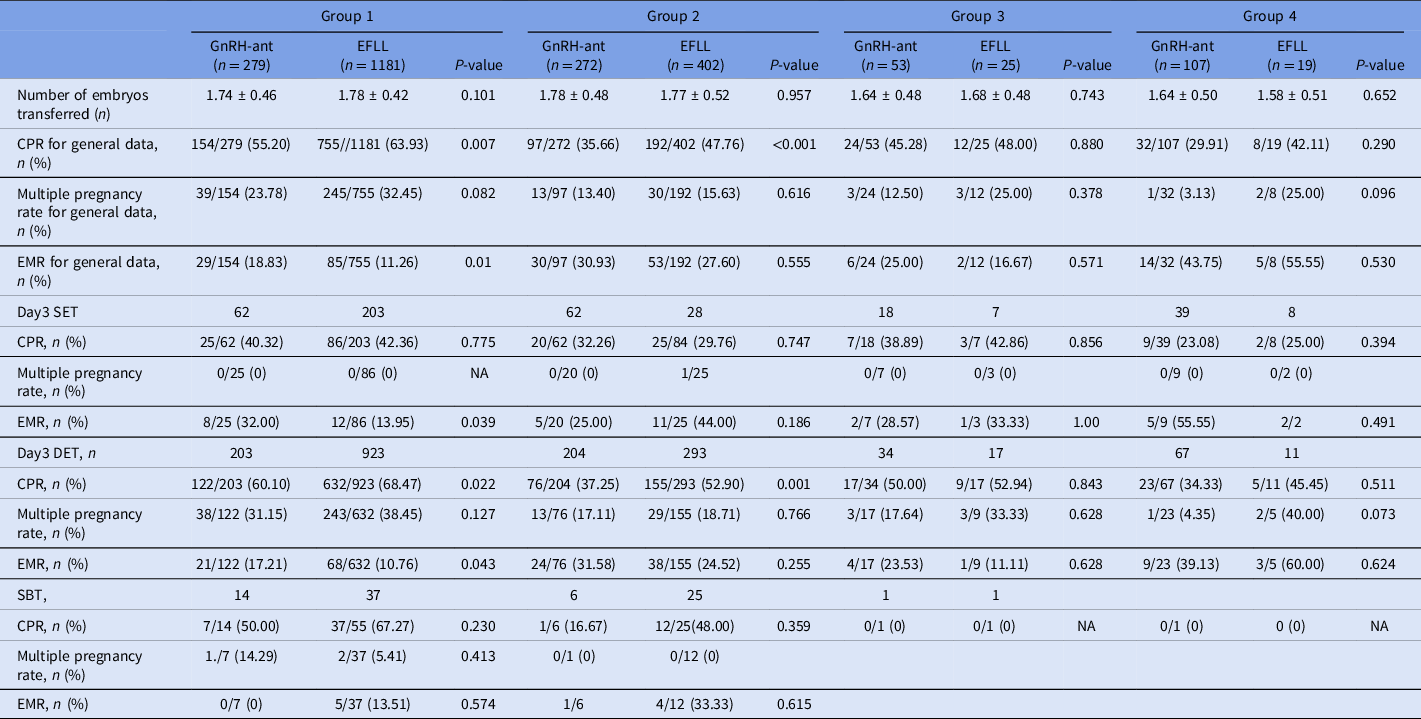
As fresh embryo transfer was cancelled in PPOS protocols, we compared the pregnancy outcomes of fresh cycles between EFLL and GnRH-ant protocols. The general data indicated that the EFLL protocol was associated with higher CPR than the GnRH-ant protocol in Group 1 (P = 0.007) and Group 2 (P < 0.001), respectively. There were no significant differences in CPR between EFLL and GnRH-ant protocols in Groups 3 and 4. Higher EMR was observed in the GnRH-ant protocol than in the EFLL protocol in Group 1 (P = 0.01). However, no differences in EMR were observed between EFLL and GnRH-ant protocols in Groups 1, 2, and 3. No differences in the multiple pregnancy rates were observed between EFLL and GnRH-ant protocol in the four POSEIDON groups (Table 4).
CPR of fresh cycles in different POSEIDON groups according to the use of GnRH-ant and EFLL protocol

CPR: clinical pregnancy rate; DET: double embryos transfer; EFLL: early follicular phase long-acting gonadotropin-releasing hormone (GnRH) agonist long protocol; EMR: early miscarriage rate; GnRH-ant: GnRH antagonist protocol; SBT: single blastocyst transfer; SET: single embryo transfer.
In Group 1, the CPR of the EFLL protocol was significantly higher than that of the GnRH-ant protocol (P = 0.001), while subgroup analysis indicated that the CPR of D3 single embryo transfer (SET, P = 0.775) and single blastocyst transfer (SBT, P = 0.230) did not have obvious differences between EFLL and GnRH-ant protocols. However, the CPR of D3 double embryo transfer (DET) in EFLL protocol was significantly higher than that in GnRH-ant protocol (P = 0.022). The GnRH-ant protocol was associated with higher EMR in D3 SET (P = 0.039) and DET (P = 0.043) than the GnRH-ant protocol, respectively, but the EMR in SBT showed no significant difference between EFLL and GnRH-ant protocols (P = 0.574). There were no differences of multiple pregnancy rates between EFLL and GnRH-ant protocols in Group 1 (Table 4).
In Group 2, the CPR of EFLL protocol was significantly higher than that of the GnRH-ant protocol (P < 0.001), while subgroup analysis revealed that the CPR of the D3 SET (P = 0.747) and SBT (P = 0.359) did not show an obvious difference between EFLL and GnRH-ant protocols, respectively. In addition, the CPR of the D3 DET showed an obvious difference (P = 0.001) between EFLL and GnRH-ant protocols. Additionally, there were no differences of multiple pregnancy rate and EMR between EFLL and GnRH-ant protocols in Group 2 (Table 4).
In Groups 3 and 4, there were no significant differences in CPR, multiple pregnancy rate, and EMR in general data or subgroup analysis between EFLL and GnRH-ant protocols (Table 4).
Pearson correlation analysis
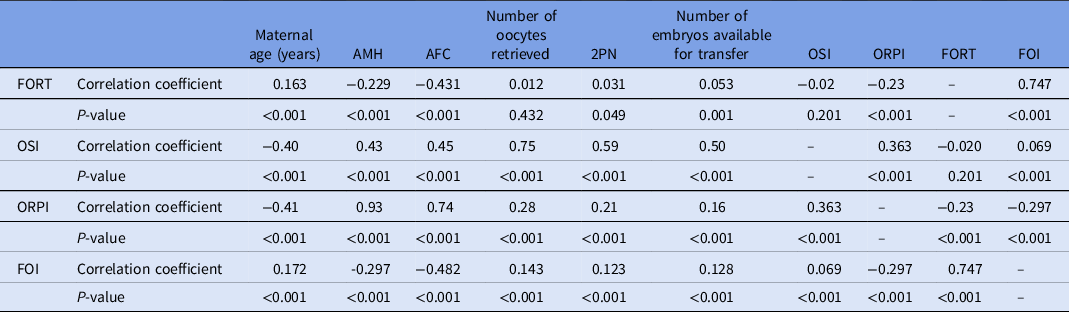
There were positive correlations between OSI and oocytes retrieved (P < 0.001), AFC (P < 0.001), AMH (P < 0.001), ORPI (P < 0.001), and FOI (P < 0.001); however, no correlation was found between FORT and OSI (P = 0.201) or FORT and retrieved oocyte numbers (P = 0.432). FORT was revealed to be inversely related to AMH (P < 0.001), AFC (P < 0.001), and ORPI (P < 0.001). There were negative correlations between age and OSI (P < 0.001), and age and ORPI (P < 0.001), while positive correlations were found between age and FORT, and age and FOI (P < 0.001; Table 5).
Correlation analysis between ovarian response markers and ART treatment outcomes

AFC: antral follicle count; AMH: anti-Müllerian hormone; ART: assisted reproductive technology; CPR: clinical pregnancy rate; FOI: follicle-to-oocyte index; FORT: follicular output rate; ORPI: ovarian response prediction index; OSI: ovarian sensitivity index; PN: pronucleus.
Multivariate logistic analysis of factors related to CPR
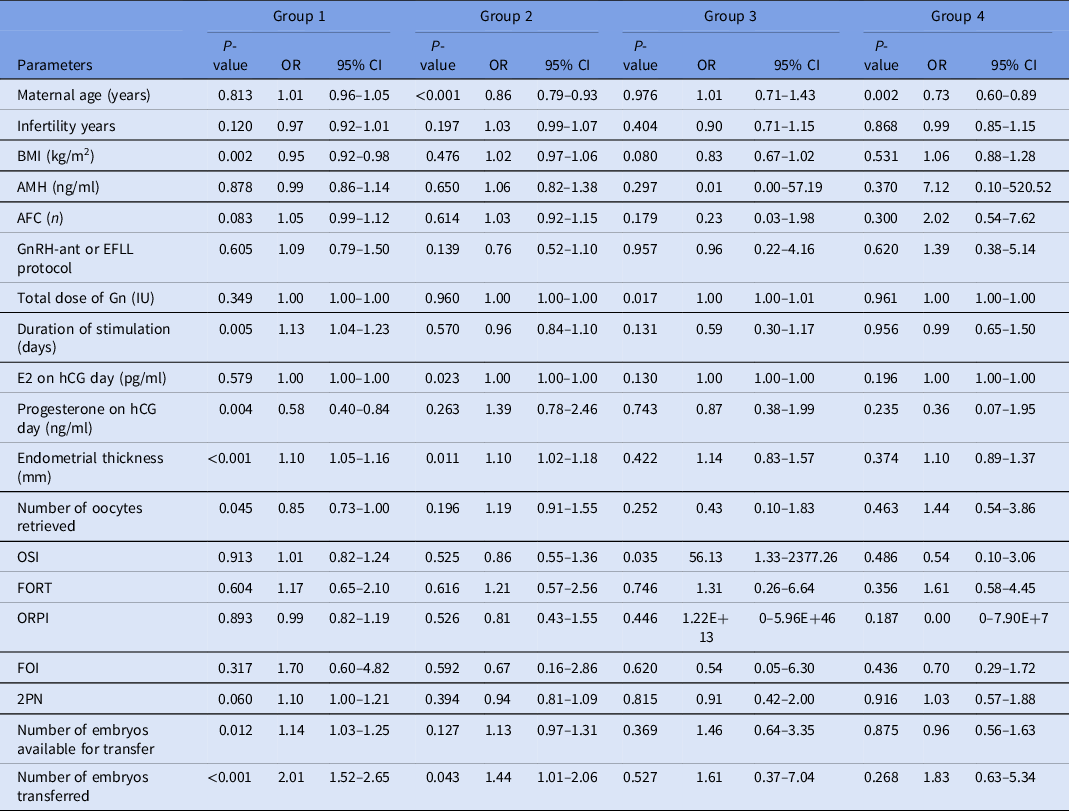
Multivariate logistic analysis revealed that the BMI (P = 0.002), duration of stimulation (P = 0.005), progesterone on hCG day (P = 0.004), endometrial thickness (P < 0.001), no. of oocytes retrieved (P = 0.045), embryos available for transfer (P = 0.012) and embryos transferred (P < 0.001) were significantly related to the CPR in Group 1. Moreover, maternal age (P < 0.001), E2 on hCG day (P = 0.023), endometrial thickness (P = 0.011) and no. of embryos transferred (P = 0.043) were found to be significantly related to the CPR in Group 2. The total doses of Gn (P = 0.017) and OSI (P = 0.035) were significantly related to CPR in Group 3, and maternal age (P = 0.002) was significantly related to the CPR in Group 4 (Table 6).
Multivariate logistic analysis of factors related to CPR in different POSEIDON groups

AFC: antral follicle count; AMH: anti-Müllerian hormone; BMI: body mass index; CPR: clinical pregnancy rate; EFLL: early follicular phase long-acting gonadotropin-releasing hormone (GnRH) agonist long protocol; E2: estradiol; FOI: follicle-to-oocyte index; FORT: follicular output rate; GnRH-ant: GnRH antagonist protocol; Gn: gonadotropins; hCG: human chorionic gonadotrophin; ORPI: ovarian response prediction index; OSI: ovarian sensitivity index; PN: pronucleus.
ROC curve
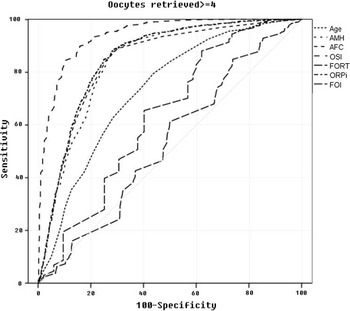
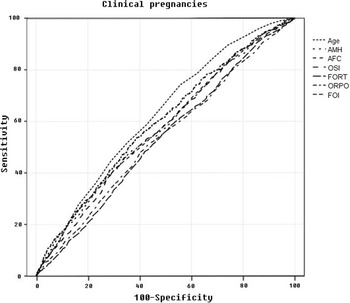
For the retrieval of ≥ 4 oocytes, OSI was the parameter with the highest AUC value (0.941), followed by ORPI (0.852), AMH (0.841), AFC (0.840), age (0.731), and FOI (0.632), whereas FORT had the lowest AUC value (0.530) among all the studied parameters (Figure 2). For the prediction of CPR, age was the parameter with the highest AUC value (0.623), followed by ORPI (0.594), AFC (0.576), AMH (0.575), OSI (0.572), FOI (0.535), and FORT (0.532) among all the studied parameters. The ovarian response tests did not have superiority for the prediction of clinical pregnancies (Figure 3).
ROC curve for oocytes retrieved ≥ 4.

ROC curve for clinical pregnancies.

Discussion
In the present study, we aimed to explore the implication of FORT, OSI, ORPI and FOI and compare the pregnancy outcomes of the EFLL and GnRH-ant protocols in low-prognosis patients stratified by the POSEIDON criteria, with the goal of providing guidance for their management in future clinical practice. The results from our study implied that the patients in the four categories had different profiles and biological characteristics beyond age, AMH and AFC, such as the infertility years, infertility type, reason for infertility, etc.
According to the data from this study, the observed FORT in Groups 1 and 2 was markedly lower than that in Groups 3 and 4, although the Gn dose was not significantly increased in Groups 3 or 4 (Table 1). The main hypotheses of this suboptimal response or ‘hyporesponse’ to COS are as follows:
-
1. polymorphisms related to the FSH and LH receptor, or polymorphisms related to circulating endogenous LH (Alviggi et al., Reference Alviggi, Clarizia, Pettersson, Mollo, Humaidan, Strina, Coppola, Ranieri, D’Uva and De Placido2009; La Marca et al., Reference La Marca, Sighinolfi, Argento, Grisendi, Casarini, Volpe and Simoni2013; Alviggi et al., Reference Alviggi, Conforti, Santi, Esteves, Andersen, Humaidan, Chiodini, De Placido and Simoni2018a, Reference Alviggi, Conforti, Esteves, Vallone, Venturella, Staiano, Castaldo, Andersen and De Placido2018b);
-
2. suboptimal dosing of gonadotropins;
-
3. asynchronous follicular development during the OS;
-
4. technical issues related to ovulation trigger and/or oocyte pickup (Conforti et al., Reference Conforti, Esteves, Cimadomo, Vaiarelli, Di Rella, Ubaldi, Zullo, De Placido and Alviggi2019).
Concurrently, Group 4 had higher FORT and this was in agreement with previous studies in the sense that, with ovarian ageing, antral follicles do not lose their aptitude to respond to FSH, and probably indicated a compensating mechanism for preserving ovulatory folliculogenesis. (Gallot et al., Reference Gallot, Berwanger da Silva, Genro, Grynberg, Frydman and Fanchin2012).
For Groups 1 and 2 multi-cycle patients with poor ovarian sensitivity in the previous cycle, treatment should be specifically tailored to optimize pregnancy outcomes. Adjustment to the Gn starting dose is recommended first, followed by adjusting the OS protocol. Utilization of higher gonadotrophin doses of more ‘potent’ recombinant formulations may be the solution in a significant percentage of these women (Polyzos and Drakopoulos, Reference Polyzos and Drakopoulos2019). In terms of the management of patients in Groups 3 and 4, greater attention should be paid to developing strategies to improve the oocyte quality rather than the oocyte quantity (Agarwal et al., Reference Agarwal, Gupta and Sharma2005; Humaidan et al., Reference Humaidan, La Marca, Alviggi, Esteves and Haahr2019). Feng et al. (Reference Feng, Sang, Kuang, Sun, Yan, Zhang, Shi, Tian, Luchniak, Fukuda, Li, Yu, Chen, Xu, Guo, Qu, Wang, Sun and Liu2016) found a series of genetic mutations related to oocyte abnormalities, such as TUBB8, PANX1 and WEE2 (Feng et al., Reference Feng, Sang, Kuang, Sun, Yan, Zhang, Shi, Tian, Luchniak, Fukuda, Li, Yu, Chen, Xu, Guo, Qu, Wang, Sun and Liu2016). As research progresses, more genes related to oocyte abnormalities are anticipated to be discovered in succession. Apparently, the younger group had a higher chance of success when compared with older women, which was verified in our study (De Geyter et al., Reference De Geyter, Fehr, Moffat, Gruber and von Wolff2015). We found that the level of association between the ovarian response tests and oocytes retrieved ≥ 4 was (in descending order): OSI, ORPI, AMH, AFC, age, FOI, and FORT (AUC = 0.941, 0.852,0.841, 0.840, 0.731, 0.632, 0.530, respectively), and OSI and ORPI could be superior to other ovarian responsiveness markers for evaluating ovarian responses on cycles with EFLL, GnRH-ant and PPOS protocols (Biasoni et al., Reference Biasoni, Patriarca, Dalmasso, Bertagna, Manieri, Benedetto and Revelli2011; Huber et al., Reference Huber, Hadziosmanovic, Berglund and Holte2013; Li et al., Reference Li, Lee, Ho and Ng2014a; Li et al., Reference Li, Lee, Lau, Yeung, Ho and Ng2014b; Oliveira and Franco, Reference Oliveira and Franco2016; Ashrafi et al., Reference Ashrafi, Hemat, Arabipoor, Salman Yazdi, Bahman-Abadi and Cheraghi2017). Our study showed that both AMH and AFC were good predictors of ovarian response with an AUC > 0.75, but that combining these variables was necessary as OSI and ORPI would improve the prediction value. In agreement with previous reports (Nejabati et al., Reference Nejabati, Mota, Farzadi, Ghojazadeh, Fattahi, Hamdi and Nouri2017; Yadav et al., Reference Yadav, Malhotra, Mahey, Singh and Kriplani2019; Weghofer et al., Reference Weghofer, Barad, Darmon, Kushnir, Albertini and Gleicher2020), we observed that OSI was significantly correlated with biomarkers that are currently used to predict ovarian responsiveness, such as age, BMI, AFC, and AMH, whereas it was inverse with age and BMI.
Although both AMH and AFC are good markers in predicting ovarian responses during IVF, discordant results may result in some women and, when this happens, an intermediate ovarian response has been reported (Li et al., Reference Li, Lee, Ho and Ng2014a; Li et al., Reference Li, Lee, Lau, Yeung, Ho and Ng2014b). Our results indicated that ORPI had good predictions for the possibility of collecting ≥ 4 oocytes (AUC = 0.852; Oliveira and Franco, Reference Oliveira and Franco2016). Its prediction of ovarian response was comparable with the serum AMH level alone, which is consistent with previous studies (Oliveira et al., Reference Oliveira, Baruffi, Petersen, Mauri, Nascimento, Vagnini, Ricci, Cavagna and Franco2012; Oliveira and Franco, Reference Oliveira and Franco2016; Ashrafi et al., Reference Ashrafi, Hemat, Arabipoor, Salman Yazdi, Bahman-Abadi and Cheraghi2017).
FORT may most optimally reflect the dynamic nature of follicular growth in response to exogenous Gn (Gallot et al., Reference Gallot, Berwanger da Silva, Genro, Grynberg, Frydman and Fanchin2012). Impaired sensitivity to FSH revealed by FORT should be considered in the decision of treatment protocol, gonadotropin, and stimulation doses to be used for hyporesponders. Nevertheless, the Spearman correlation analysis in this study revealed that FORT was not associated with the number of oocytes obtained. OSI makes up for this deficiency, as it is based on the number of retrieved oocytes and eliminates the confounding effect of the different initial doses of gonadotropin being used across the different subject groups. Our results indicated that OSI had superiority over individual AFC and AMH in predicting oocyte ≥ 4. However, OSI can be influenced not only by the ovarian response but also by the accessibility of follicles to transvaginal puncture and the willingness of physicians to retrieve oocytes from small follicles. Considering that only follicles between 16 and 22 mm on hCG day effectively respond to FSH may be a possible limitation of FORT. Smaller follicles might also present to a certain degree for FSH responsiveness (Genro et al., Reference Genro, Matte, De Conto, Cunha-Filho and Fanchin2012).
From the data in Table 4, we could find out that EFLL protocol was the first treatment option in controlled ovarian hyperstimulation (COH) concerning Groups 1 and 2. However, the GnRH-ant protocol was the first treatment option in Group 3 and the PPOS protocol was the first treatment option in Group 4. In other words, EFLL was chosen as the first treatment in correct ovarian reserve patients. Even so, the results of the GnRH-ant protocol established a crude baseline that could be compared with the results of the EFLL protocol. In Groups 1 and 2, the CPR of the D3 DET in the EFLL protocol was significantly higher than that in the GnRH-ant protocol (P Group1 = 0.022, P Group2 = 0.001). However, the CPR of the D3 SET and SBT displayed no differences between EFLL and GnRH-ant protocols. In Group 3 and 4, there were no significant differences in the CPR, multiple pregnancy rate, or EMR in general data or subgroup analysis between EFLL and GnRH-ant protocols.
The general data implied that the CPR in the four POSEIDON groups (62.26% in Group 1 vs. 42.88% in Group 2 vs. 46.15% in Group 3 vs. 31.75% in Group 4; P < 0.001) was ideal and relatively higher than that provided by Li et al. (Reference Li, Ye, Kong, Li, Hu, Jin, Su and Li2020) . The relatively higher number of transferred embryos may have contributed to the higher CPR in our study. Data in Table 4 manifested that most patients underwent D3 DET, and then D3 DET led to markedly higher multiple pregnancy rate (31.24% in Group 1 vs. 13.87% in Group 2 vs. 16.67% in Group 3 vs. 7.70% in Group 4, P < 0.001). To decrease the multiple pregnancy rate, it should be cautious about performing DET in Group 1. Even though the EFLL protocol yielded higher numbers of oocytes and transferable embryos than the GnRH-ant protocol, there was no distinguishing difference in the CPR of fresh SET between the EFLL and GnRH-ant protocols. Therefore, the GnRH-ant protocol should play a more important role in COH when clinicians are making individualizing and optimizing treatment decisions.
According to our results and previous reports in the literature, we supposed that FORT, OSI, ORPI, and FOI had excellent performances in estimating ovarian reserve and response. However, similar to that of AMH and AFC, FORT, OSI, ORPI, and FOI were not good predictors for CPR from IVF. It should be taken into account that various factors, such as embryo quality and endometrial features, could affect the occurrence of pregnancy (Carosso et al., Reference Carosso, van Eekelen, Revelli, Canosa, Mercaldo, Benedetto and Gennarelli2022; Ng et al., Reference Ng, Ko, Li, Lau, Yeung, Ho and Ng2020). In addition, based on the similar clinical outcomes of the EFLL and GnRH-ant protocols among women receiving SET in the four POSEIDON groups, we considered that it was appropriate to use the GnRH-ant protocol for low-prognosis patients (Griesinger et al., Reference Griesinger, Venetis, Tarlatzis and Kolibianakis2015; Humaidan et al., Reference Humaidan, La Marca, Alviggi, Esteves and Haahr2019; Al-Inany et al., Reference Al-Inany, Youssef, Ayeleke, Brown, Lam and Broekmans2016; Polyzos and Drakopoulos, Reference Polyzos and Drakopoulos2019. It is expected that a better understanding of low-prognosis patients undergoing ART will help to improve individualized ovarian stimulation management and identify more homogeneous populations for clinical trials, thereby, providing better approaches with which to maximize IVF success rates.
There are some limitations to this study, including its retrospective design. First, the sample size included in some groups is small. This limits the use of statistical tests and real significance values. The results of the study may be biased, and further research is needed to confirm the conclusion of this study. Second, in this research we did not collect data on live birth outcome-associated parameters. Moreover, until submission, many patients still had frozen embryos. Consequently the cumulative rate with all frozen cycles could not be calculated, which was a limitation of our study.
Data Availability
All data and materials are available and transparent.
Acknowledgements
The authors thank Jie Gao for statistical assistance. We acknowledge the Hormone Laboratory Group and operating room personnel at the Wuhan Kangjian Maternal and Infant Hospital for their great contribution to the entire laboratory work and data gathering.
Author Contribution
Zhilan Chen and Wei Li are responsible for the concept and the study design. Yanmin Li performed the data collection. Kecheng Huang and Shufang Ma did the statistical analysis. Zhilan Chen drafted the manuscript. Aidong Gong and Liqun Lv contributed to the critical discussion, interpretation and editing of the manuscript.
Funding
Not applicable.
Ethics Approval
All procedures performed in studies involving human participants were in accordance with the ethical standards of the institutional and/or national research committee and with the 1964 Helsinki Declaration and its later amendments or comparable ethical standards. This study was approved by the Ethics Committee of Wuhan Kangjian Maternal and Infant Hospital, Wuhan, China.
Disclosure statement
No potential conflict of interest was reported by the authors.