In Japan, an estimated 999 075 people (566 460 men and 432 607 women) were newly diagnosed with any cancer in 2019, with 381 505 deaths (222 467 men and 159 038 women) in 2021(1). Age-adjusted cancer incidence rate in Japan continually increased from 1985(2). Furthermore, cancer has been the leading cause of death in Japan since 1981(3). Cancer prevention is an important public health problem and could contribute to a person’s overall health and well-being.
Recently, the Japanese diet has attracted attention owing to its potential beneficial health effects. The Japanese diet is rich in rice, fish, shellfish, green and yellow vegetables, seaweed, Japanese pickles, green tea and miso (a fermented soyabean product) but low in added sugars and fats. Low intake of red meat is also characteristic of the Japanese diet(Reference Tsugane and Sawada4,Reference Suzuki, Goto and Ota5) . Previous studies have evaluated the effect of each food in the Japanese diet and examined the association between each food and cancer risk(Reference Akhter, Inoue and Kurahashi6–Reference Tanaka, Tamakoshi and Sugawara10). Therefore, adherence to the Japanese diet, which contains various foods, may reduce the risk of cancer among the Japanese.
Epidemiological evidence suggests that adherence to the Japanese diet is associated with multiple health outcomes, such as obesity, CVD, dementia and functional disability(Reference Imai, Miyamoto and Sezaki11–Reference Tomata, Watanabe and Sugawara13). In addition, some previous studies have reported that higher adherence to the Japanese diet was significantly associated with reduced mortality(Reference Abe, Zhang and Tomata14,Reference Matsuyama, Sawada and Tomata15) . A prospective study reported that a higher Japanese Diet Index (JDI) score was associated with a lower risk of all-cause mortality and longer survival time(Reference Abe, Zhang and Tomata14). Similarly, the results of the Japan Public Health Center‑based Prospective Study showed that a higher JDI score was significantly associated with a lower risk for all-cause and CVD mortality(Reference Matsuyama, Sawada and Tomata15). In contrast, a prospective cohort study in Japan reported that adherence to the Japanese food score may help prevent all-cause and CVD mortality, but not cancer mortality(Reference Okada, Nakamura and Ukawa16). Although the Japanese diet has been shown to provide an array of health benefits, few studies have examined the association between the Japanese diet and cancer risk. To date, research has primarily focused on the association between specific foods and cancer(17). Few previous studies have explored the potential of adherence to the Japanese diet score, comprised of food combinations characteristic of the Japanese diet, in cancer prevention. Thus, there is a need for epidemiological evidence on the impact of the Japanese diet on cancer risk.
Therefore, we used data from the Ohsaki Cohort Study to investigate the association between the Japanese diet and the risk of cancer among Japanese men and women.
Materials and methods
Study population
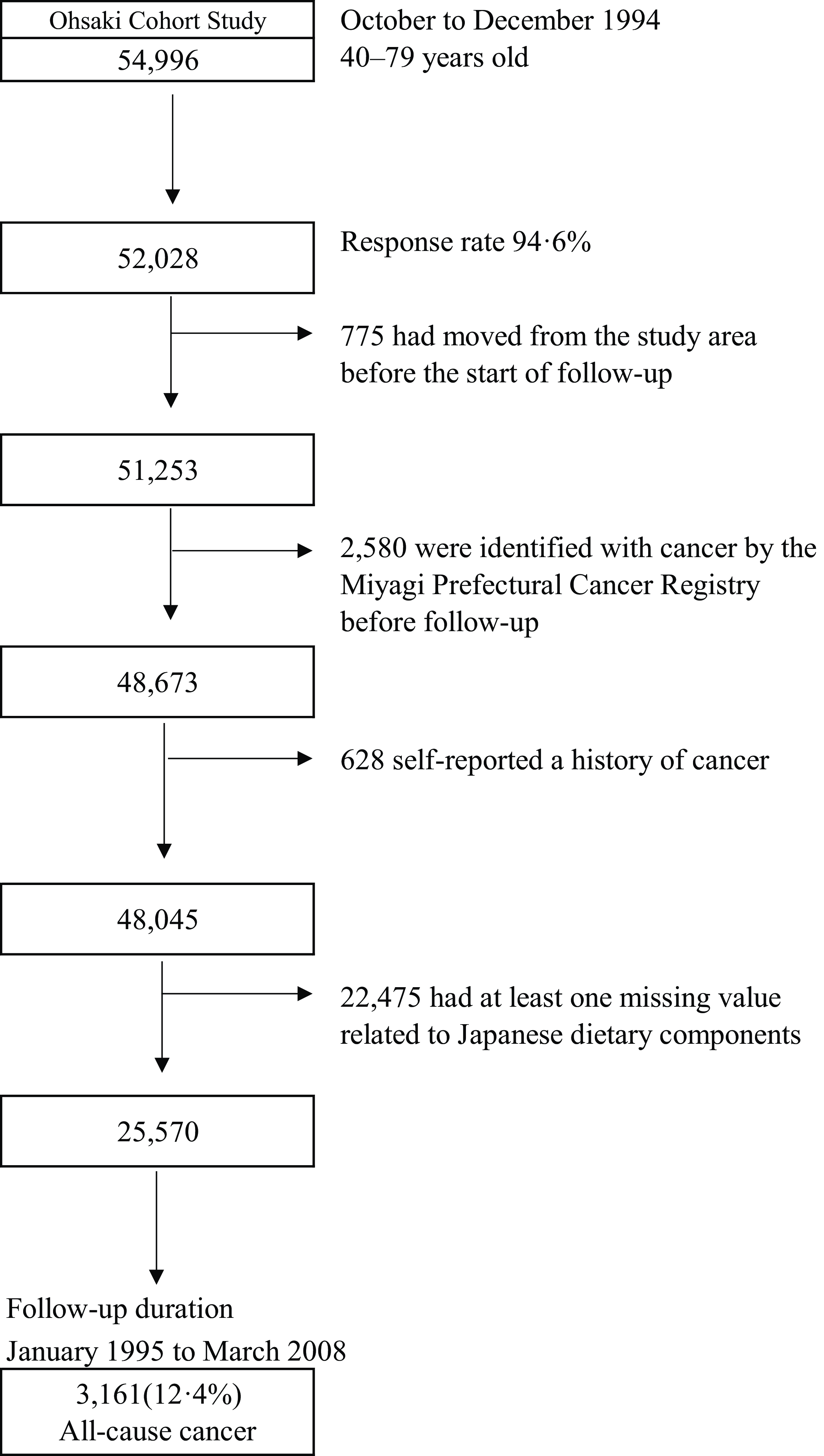
For this analysis, we used data from the Ohsaki Cohort Study, the design of which has been described in detail elsewhere(Reference Abe, Zhang and Tomata14,Reference Tsuji, Nishino and Ohkubo18,Reference Matsuyama, Shimazu and Tomata19) . In brief, between October and December 1994, we administered a self-administered questionnaire that included dietary habits (a thirty-nine-item FFQ) to men and women who were 40–79 years old and living in the catchment area of the Ohsaki Public Health Center, a local government agency that provides preventive health services for the residents of fourteen municipalities in Miyagi Prefecture, northeastern Japan. Among 54 996 eligible participants, 52 028 responded to the questionnaire (response rate: 94·6 %). We excluded 775 participants who withdrew from the Ohsaki National Health Insurance (NHI) before completing the baseline questionnaire. We further excluded 2580 subjects who were identified as having cancer by the Miyagi Prefectural Cancer Registry before follow-up (1 January 1995), 628 participants who self-reported a cancer history at baseline and 22 475 subjects with at least one missing value related to Japanese dietary components. This left 25 570 participants (12 628 men and 12 942 women) for this study (Figure 1).
Flow chart of participants: the Ohsaki Cohort Study.

Dietary assessment
We asked about the average frequency of consumption of each food item using a thirty-nine-item FFQ, for which we had previously conducted a validation study in the same region (the precinct of the Ohsaki Public Health Center, Miyagi)(Reference Ogawa, Tsubono and Nishino20). In the validation study, 113 participants (55 men and 58 women) provided four 3-d diet records over a 1-year period and subsequently responded to the FFQ, which was used to develop a method for calculating food and nutrient intake. We computed the age- and total energy-adjusted Spearman rank correlation coefficients between the amounts consumed according to the FFQ for the thirty-nine food items and the amounts consumed according to the dietary records. The medians (ranges) of the correlation coefficients were 0·35 (−0·30 to 0·72) for men and 0·34 (−0·06 to 0·75) for women. We also calculated the volume of consumption of individual foods and determined the energy and protein intake using a food composition table that corresponded to the items listed in the questionnaire. A food composition table was developed based on the Standard Tables of Food Composition published by the Science and Technology Agency of Japan(Reference Ogawa, Tsubono and Nishino20).
Japanese Diet Index
The details of the JDI score have been described in a previous study(Reference Matsuyama, Shimazu and Tomata19). In brief, we identified eight food items that formed the JDI score: rice, miso soup, seaweed, pickles, green and yellow vegetables (green vegetables, carrot, pumpkin and tomato), fish (raw fish, fish boiled with soy, roasted fish, boiled fish paste and dried fish), green tea and beef and pork (beef, pork, ham and sausage). For each of the seven positive components (rice, miso soup, pickles, seaweed, fish, green and yellow vegetables and green tea), participants were assigned one point if their intake was above or equal to the sex-specific median. For one negative component (beef and pork), participants were assigned one point if their intake was lower than the sex-specific median. Thus, the JDI score ranges from 0 to 8, with higher scores indicating greater dietary conformity. The participants were divided into quartiles based on their JDI scores: Q1 (0–4), Q2 (5), Q3 (6) and Q4 (7–8).
Case ascertainment
We ascertained incident cancer cases using a computer link with the Miyagi Prefectural Cancer Registry, which covers the Ohsaki cohort. The Miyagi Prefectural Cancer Registry is one of the oldest and most accurate population-based cancer registries in Japan. Cancer cases were registered in clinics and hospitals (inpatients and outpatients), radiology and pathology departments, autopsy records, mass-screening records and death certificates. In the cancer registry system, the percentages registered by death certificates only were 3·5 % during the period 2013–2017(Reference Bray, Colombet and Aitken21). The endpoints were the incidences of all-cause cancer and cancer at individual sites, defined according to the International Classification of Diseases for Oncology, 3rd ed (ICD-O-3). The number of new cancer cases for all cancers combined is C00-C97, excluding non-melanoma skin cancer (C44). Based on previous studies(Reference Papadimitriou, Markozannes and Kanellopoulou22,Reference Rock, Thomson and Gansler23) , in this study, we defined nine common cancer types: oesophageal cancer (C15), gastric cancer (C16), colorectal cancer (C18–20), liver cancer (C22), pancreatic cancer (C25), lung cancer (C33–34), breast cancer (C50), prostate cancer (C61) and kidney cancer (C64).
Follow-up
The endpoint of our analysis was the date of cancer diagnosis, death, emigration or the end of the follow-up period, whichever occurred first. To follow up on the subjects for migration and mortality, we collected data from Residential Records to identify those who had either died or emigrated during the observation period. We discontinued the follow-up of participants who moved from the study municipalities because we were unable to review their Residential Records outside the study area. In this study, the portion of subjects who were lost to follow-up was 15·7 % (n 3879).
Statistical analysis
We prospectively counted the person-years of follow-up for each participant from the beginning to the end of the follow-up period (31 March 2008). Baseline characteristics were evaluated using ANOVA for continuous variables and the χ 2 test for categorical variables. Next, we used multivariable-adjusted Cox proportional hazards regression analysis to estimate the hazard ratios (HR) and 95 % CI of cancer incidence according to the quartiles of the JDI score (the lowest quartile was used as a reference category) after adjusting for potential confounders. Model 1 was adjusted for age at baseline in years (40–44, 45–49, 50–54, 55–59, 60–64, 65–69, 70–74, 75–79 years) and sex. To examine whether the association between the Japanese diet and cancer was attributable to a health-related lifestyle factors or healthy physical status, model 2 was further adjusted for BMI (< 18·5, 18·5–24·9, ≥ 25·0 kg/m2 or missing), education level (age at last school graduation: < 16 years, 16–18 years, ≥ 19 years or missing), smoking status (never, former, current or missing), alcohol consumption (never, former, current or missing), time spent walking per day (< 0·5 h, 0·5–1 h, ≥ 1 h or missing), history of any disease (hypertension or diabetes; yes, no for each term) and energy intake (categories of sex-specific quartile). Missing confounder values were treated as an additional variable category and included in the model.
In addition, to consider the effect of reverse causality, we conducted a sensitivity analysis, excluding cases of cancer that occurred in the first 3 years.
Furthermore, we conducted stratified analyses by sex (male v. female), age (< 50 years v. ≥ 50 years), BMI (< 25 kg/m2 v. ≥ 25 kg/m2), years of education (< 19 years v. ≥ 19 years), smoking status (never v. ever), alcohol consumption (never v. ever) and time spent walking per day (< 1 h v. ≥ 1 h), because these factors may affect cancer risk.
A potential limitation of our analysis is the exclusion of 22 475 subjects with incomplete dietary data, which could introduce selection bias. To assess the impact of this exclusion, we performed a sensitivity analysis using a multiple imputation method. Specifically, we applied multiple imputation to generate ten imputed datasets, fit a Cox model to each one and then combined the resulting estimates into a single overall estimate and variance.
Additionally, the assumption of linearity for the continuous relationship between the JDI score and cancer incidence was examined using restricted cubic spline models.
The P values for the linear trend test (P-trend) were calculated using the JDI score as a continuous variable. The significance of multiplicative interactions between the JDI score and all confounders was examined using cross-product terms in the regression model. We did not find any statistically significant effect modification between the JDI score and any of the confounders.
All P values were two-sided, and differences at P < 0·05 were considered statistically significant. All statistical analyses were performed using the SAS statistical software package, version 9.4 (SAS Institute Inc.).
Results
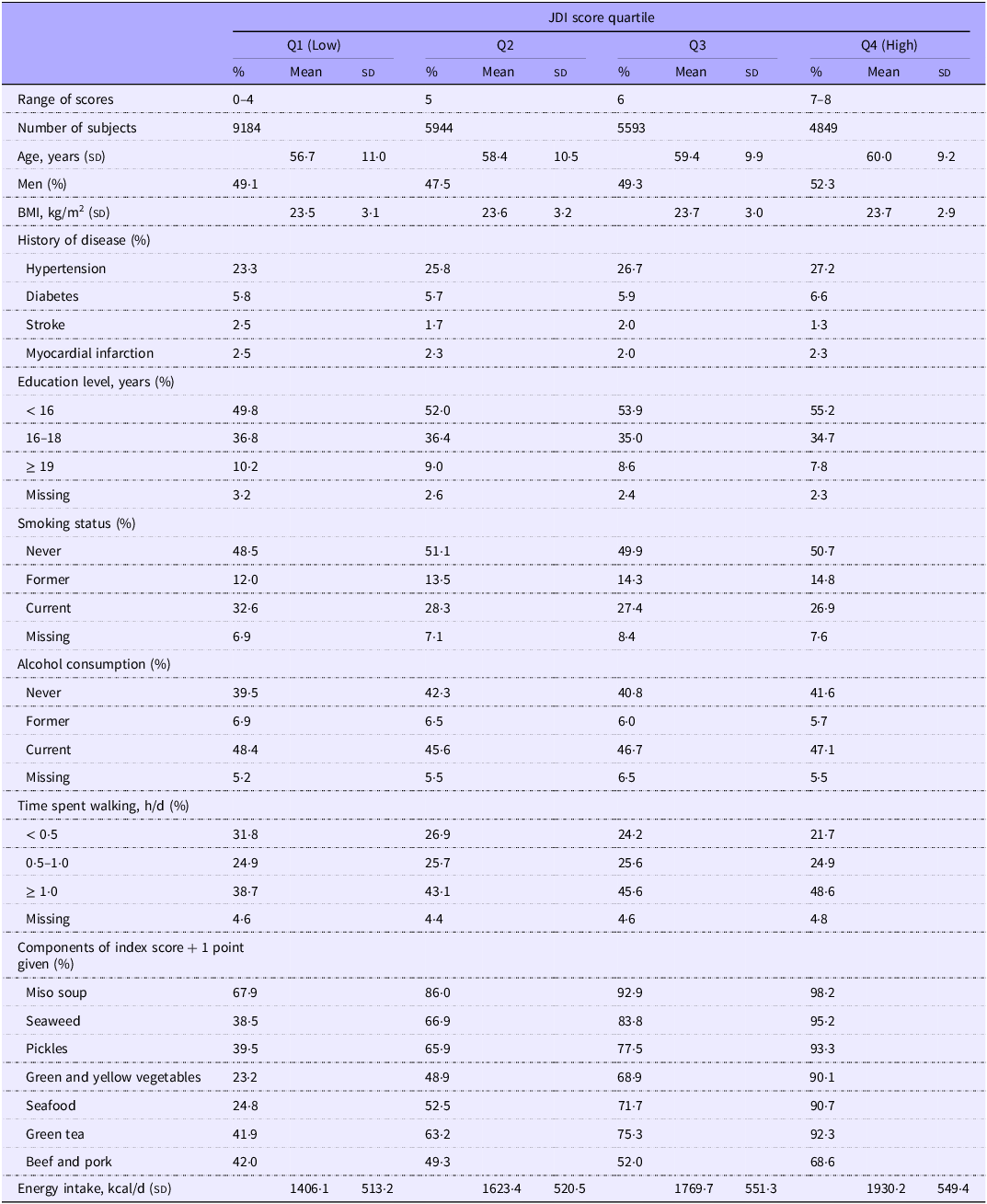
Table 1 shows the baseline characteristics of the study participants according to the quartiles of JDI scores. In total, 35·9 % of participants fell into Q1 (lowest category) of the JDI score, 23·2 % were in Q2, 21·9 % in Q3 and 19·0 % in Q4 (highest category).
Baseline characteristics according to Japanese Diet Index (JDI) score quartiles (n 25 570)

Participants with higher JDI scores tended to be older, were more likely to walk for > 1 h, had higher total caloric intake and had a history of hypertension. The proportion of current smokers was lower, with the highest JDI scores (Q4). There were no intergroup differences in mean BMI or history of diabetes, stroke or myocardial infarction.
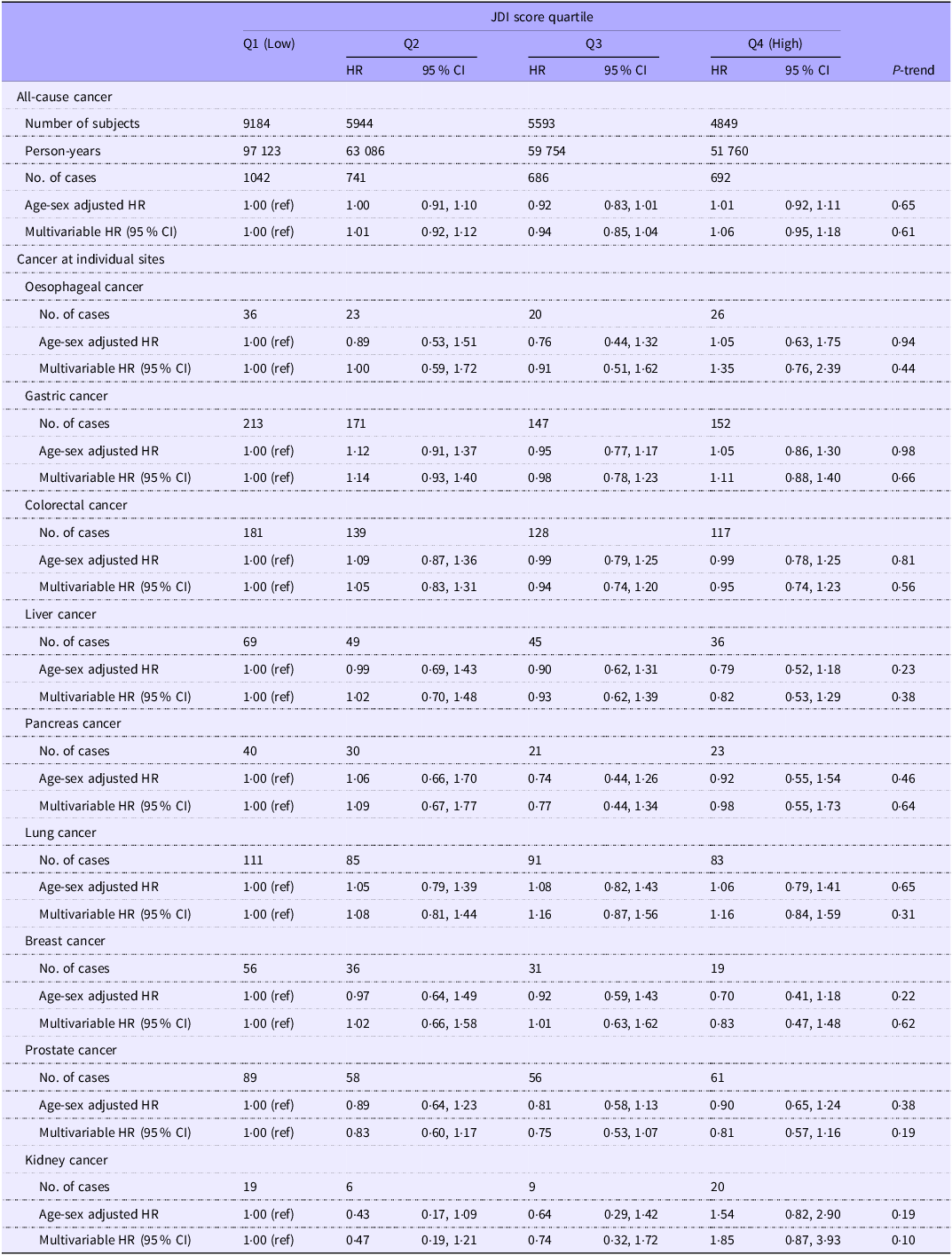
During the 271 723 person-years of follow-up, 3161 cases of cancer (2076 men and 1085 women) were observed. Table 2 shows the HR and 95 % CI for the risk of cancer incidence according to the quartiles of the JDI score. Multivariable analysis showed that the JDI score was not associated with all-cause cancer incidence in the Japanese population. The multivariable HR (95 % CI) for all-cause cancer incidence were 1·01 (0·92, 1·12) in Q2, 0·94 (0·85, 1·04) in Q3 and 1·06 (0·95, 1·18) in Q4, in comparison with Q1. We further examined the association between the JDI score and the risk of site-specific cancer. However, no statistically significant associations were observed for colorectal, liver, pancreatic, lung, breast, endometrial, ovarian, prostate or kidney cancer (Table 2).
Cox proportional hazard ratios (HR) of all-cause and site-specific cancers according to the quartiles

JDI, Japanese Diet Index.
P for trend was calculated using the JDI score category as a continuous variable.
Multivariable HR: adjusted for age (40–44, 45–49, 50–54, 55–59, 60–64, 65–69, 70–74, 75–79 years), sex, BMI (< 18·5, 18·5–24·9, ≥ 25·0 kg/m2 or missing), education level (age at last school graduation: < 16 years, 16–18 years, ≥ 19 years or missing), smoking status (never, former, current or missing), alcohol consumption (never, former, current or missing), time spent walking per day (< 0·5 h, 0·5–1 h, ≥ 1 h or missing), history of the disease (hypertension or diabetes; yes, no for each term) and energy intake (categories of sex-specific quartile).
In addition, after excluding incident cases that occurred within the first 3 years of follow-up, no association was observed (online Supplementary Table 1).
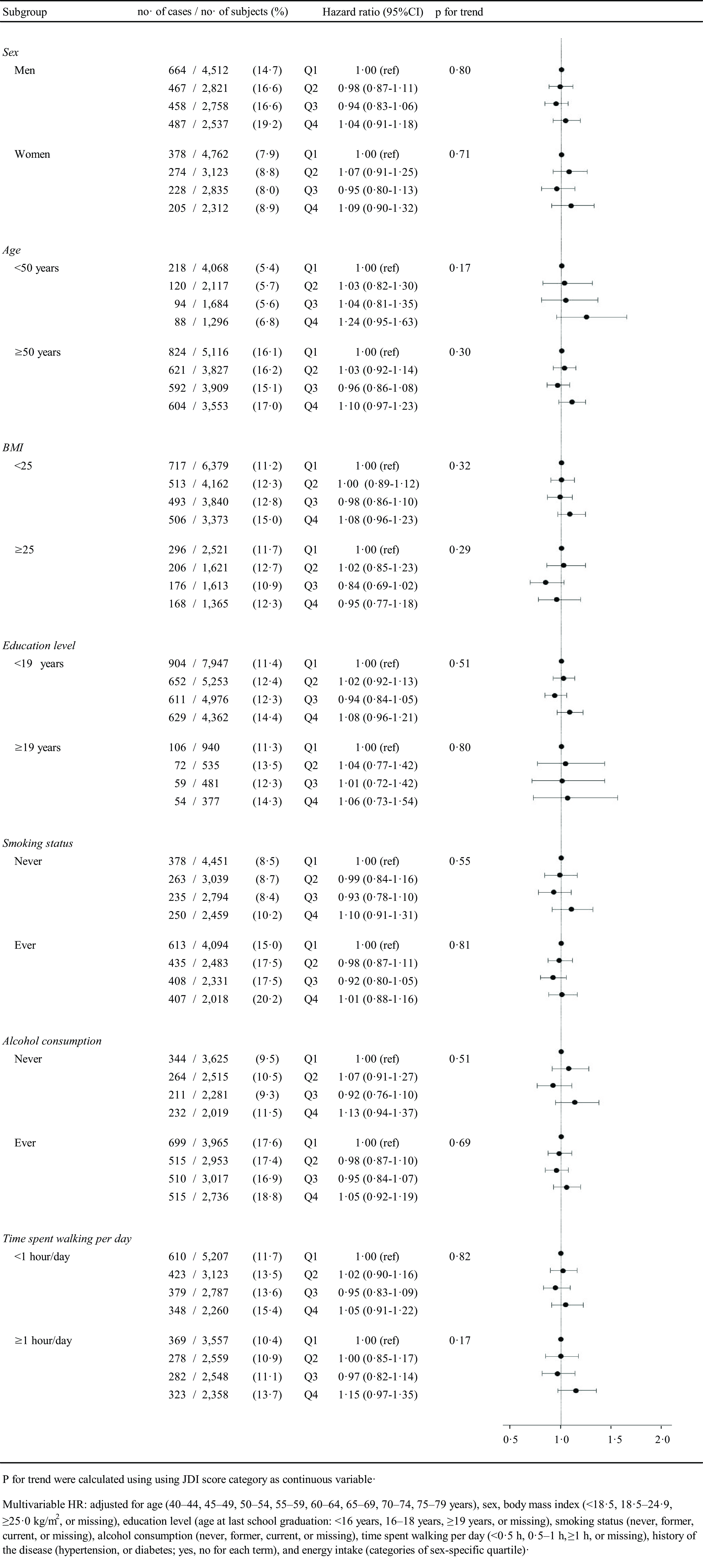
Figure 2 shows the resulting HR and 95 % CI for cancer incidence according to JDI score stratified by sex, age and several cancer-related lifestyle factors. The results from these stratified analyses were consistent across all subgroups, with no significant differences observed.
Subgroup analyses for the association between Japanese Diet Index score and the risk of cancer incidence.

Furthermore, we conducted a sensitivity analysis using multiple imputation to address the missing data. The resulting HR and 95 % CI derived from the imputed dataset (n 48 045) were not substantially different from those of the complete-case analysis (n 25 570) (online Supplementary Table 2).
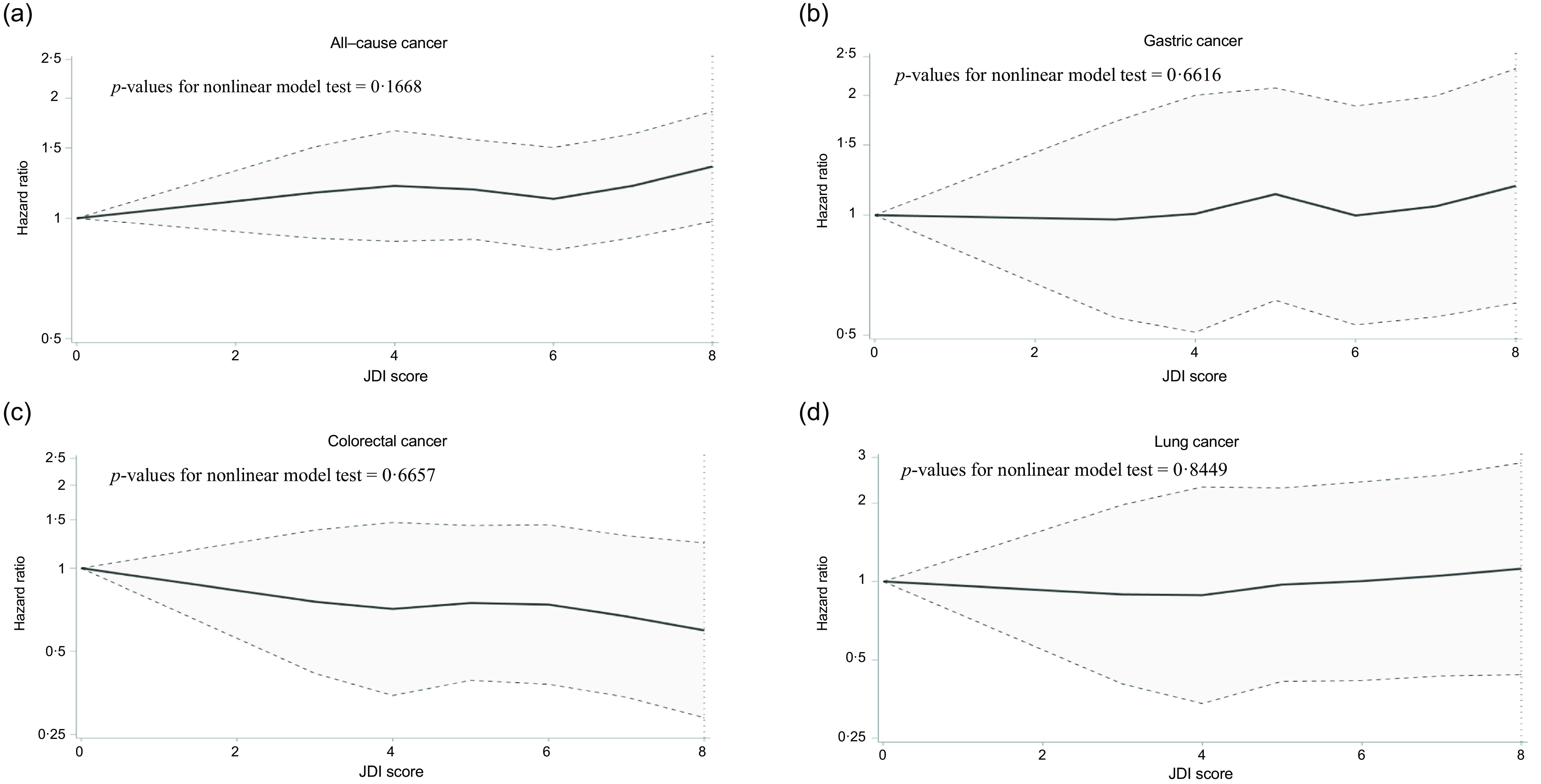
Additionally, we used restricted cubic spline models to present the continuous association between JDI scores and the incidence of several cancers (all-cause, gastric, colorectal and lung cancer) after adjusting for multiple covariates. This continuous association was consistent with our categorical findings (Figure 3).
Association between Japanese Diet Index (JDI) score and cancer incidence using a restricted cubic spline regression. Hazard ratios (95 % CI) for the non-linear relationship between JDI score and incidence of (a) all-cause cancer, (b) gastric cancer, (c) colorectal cancer and (d) lung cancer, evaluated with restricted cubic splines. The model adjusted for age, sex, BMI, education level, smoking status, alcohol consumption, time spent walking per day, history of the disease and energy intake. Black lines indicate the estimated hazard ratio, and the shaded ribbons represent a 95 % CI.

Discussion
We conducted a population-based prospective cohort study to examine the relationship between the Japanese diet and the risk of all-cause and site-specific cancers. To our knowledge, this is the first study investigating the association between the Japanese diet score and cancer incidence. The present study found no association between the Japanese diet and cancer risk.
Previous studies reported that increasing JDI score quartiles were inversely associated with all-cause mortality. One cohort study in Japan showed that a higher Japanese diet score was significantly associated with a lower risk of all-cause and CVD mortality(Reference Matsuyama, Sawada and Tomata15). Meanwhile, results from the Japan Collaborative Cohort (JACC) Study demonstrated that adherence to the Japanese food score may help prevent all-cause and CVD mortality, but not cancer mortality(Reference Okada, Nakamura and Ukawa16). The present study observed no association between the JDI score and all-cause or site-specific cancer incidence, which is consistent with the results of the JACC Study.
The Japanese diet is a food-based diet consisting primarily of fish, seafood and plant-based foods, such as vegetables and soyabeans. It is low in processed animal proteins, refined sugars and fat(Reference Tsugane and Sawada4,Reference Suzuki, Goto and Ota5) . All of these foods could contribute to the development and improvement of cancer(17,Reference Papadimitriou, Markozannes and Kanellopoulou22,Reference Rock, Thomson and Gansler23) . Carotenoid-rich foods (carrots, tomatoes and green leafy vegetables) may reduce the incidence of various types of cancer(17,Reference Rowles and Erdman24,Reference Gandini, Merzenich and Robertson25) . The diet also encompasses the consumption of a variety of fermented foods, including miso, soy sauce, natto (soyabeans) and tsukemono (pickled vegetables). It has been suggested that soy isoflavones have protective effects against cancer. Some meta-analyses suggested that increasing intake of soy was significantly associated with a lower risk of cancer incidence, particularly lung, prostate and breast cancer(Reference Boutas, Kontogeorgi and Dimitrakakis26,Reference Fan, Wang and Li27) . Additionally, the Japanese diet is characterised by a strong preference for green tea, which is renowned for its high antioxidant content including catechins(Reference Tsugane and Sawada4,Reference Suzuki, Goto and Ota5,Reference Schneider and Segre28) . These antioxidants are linked to a lower risk of cancer, viral infections and heart disease(Reference Reygaert29,Reference Shin, Lee and Loftfield30) .
The Japanese diet, as a dietary habit, is significant and may be effective for the primary prevention of cancer. The National Cancer Center of Japan published ‘Cancer Prevention Recommendations for Japanese’, based on guidelines for potential cancer risks derived from systematic reviews and summaries of existing research conducted among the Japanese population. In this report, diet and nutrition are currently defined as one of six Cancer Prevention Recommendations (smoking, drinking, food, physical activity, body weight and infections) for the Japanese population(31). Further, the population-attributable fraction of each cancer due to modifiable factors (tobacco smoking, alcohol drinking, excess bodyweight, physical inactivity, infectious agents and dietary intake) was calculated using the representative relative risks of the Japanese and the prevalence of exposure in the Japanese around 2005(Reference Inoue, Hirabayashi and Abe32). The population-attributable fraction of dietary intake was small among Japanese (0–3·0 % for cancer incidence and 0–2·5 % for cancer mortality), but there were some notes of caution (i.e. highly salted food intake, low fruit and vegetable intake and low dietary fibre intake)(Reference Inoue, Hirabayashi and Abe32). Accordingly, it’s also necessary to consider the quality and quantity of the Japanese diet.
Our findings do not dissuade from adhering to the Japanese diet, as it is suggested to reduce the risk of various health outcomes. The Japanese diet may also play a role in preventing obesity and other chronic conditions, such as type 2 diabetes and CVD(Reference Imai, Miyamoto and Sezaki11,Reference Matsuyama, Sawada and Tomata15,Reference Mizoue, Yamaji and Tabata33) . In addition, we have reported that adherence to the Japanese diet was associated with a decreased risk of all-cause and CVD mortality(Reference Matsuyama, Sawada and Tomata15). Previous studies have shown that adherence to the Japanese diet is associated with dementia and functional disability(Reference Tomata, Sugiyama and Kaiho12,Reference Tomata, Watanabe and Sugawara13) . In this study, we found that adhering to the Japanese diet, as assessed by the JDI8, was not associated with increased cancer incidence. Therefore, we can recommend adherence to the Japanese diet to maintain health without increasing the risk of cancer.
Our study has several strengths. First, it is the only study to date that examines the association between the Japanese diet and cancer risk among Japanese individuals. Second, this was a prospective study, and the response rate of the participants to the questionnaire was high (94·6 %). Therefore, the selection bias was small. Third, we adjusted for various potential confounders, including lifestyle habits, physical status and history of any disease.
This study has some limitations. First, the exclusion of approximately half of the eligible participants due to missing data might introduce selection bias. Cancer incidence rates among our study participants were lower than those observed in the Japanese population(1,2) . We included only complete dietary survey respondents in our analysis; the observed results may reflect the characteristics of a healthier population. However, a comparison of baseline characteristics between the included (n 25 570) and excluded (n 22 475) participants showed no differences in lifestyle factors related to cancer (online Supplementary Table 3). Second, we collected information on the Japanese diet only once, before the follow-up period, using a self-reported questionnaire at baseline. Therefore, some misclassification would have been inevitable, and the reported HR would have been closer to a null value than a true relationship. Third, we had no data on dietary habits during follow-up; therefore, the differences in consumption data may have changed during follow-up. Fourth, although we adjusted for many covariates in the multivariable model, a residual confounding effect on our results is likely to persist. Participants with higher JDI scores tended to be healthier, have higher levels of education and have healthier lifestyles, including better diets.
Conclusions
This prospective study conducted among Japanese subjects showed that the Japanese diet was not associated with cancer incidence. The results suggest that the Japanese diet could contribute to a person’s overall health and well-being without increasing cancer risk.
Supplementary material
For supplementary material/s referred to in this article, please visit https://doi.org/10.1017/S0007114525105977.
Acknowledgements
This study was supported by the National Cancer Center Research and Development Fund (2021-A-16, 2024-A-14, 30-A-15) and Grant-in-aid from the Ministry of Health, Labour and Welfare, Japan (Comprehensive Research on Cardiovascular and Life-Style Related Diseases: 23FA1006). The funding body was not involved in the research design, the data collection, the analysis and interpretation of the data or in the writing of the manuscript.
R. H. and Y. S. participated in the design of the study, analysis and interpretation of data and wrote the manuscript. K. N. participated in its design, conducted research and helped to draft the manuscript. A. H. participated in its design and provided commentaries to the manuscript text. All authors read and approved the final manuscript.
The authors declare that the research was conducted in the absence of any commercial or financial relationships that could be construed as a potential conflict of interest.
The study protocol for this cohort was approved by the Institutional Review Board of the Tohoku University Graduate School of Medicine (approval no. 2014–1-838). We considered the return of a signed, self-administered questionnaire to indicate each participant’s consent to participate in the study.
The datasets generated during and/or analysed during the present study are available from the corresponding author on reasonable request.