In late August 2019, Hurricane Dorian formed in the central Atlantic Ocean and as it moved west strengthened significantly. By the first of September, it had undergone rapid intensification with sustained winds of 185 miles/h and an exceptionally low central pressure of 910 millibars. The storm damaged the lesser Antilles islands before striking Abaco Island and Grand Bahama Island on September 1, 2019. With its wind speed, central pressure, and storm surge, Hurricane Dorian tied with the “Labor Day” hurricane of 1935 for the strongest Atlantic hurricane ever to strike land.
Heart to Heart International (HHI) is a medical humanitarian relief organization with a World Health Organization Type 1 (Mobile) Emergency Medical Team status. We deploy rapidly with a light, self-sustained operation capable of treating 50 or more patients a day within 72 h of notification of assignment by the Ministry of Health. While HHI can treat trauma, most of the patients that we see suffer from the intermediate effects of trauma requiring treatment of wounds and infections. We also treat patients with out of control chronic diseases as a result of the event or who suffered from diseases of poverty that were previously untreated.
It is difficult to plan for tropical hurricanes/cyclones/typhoons due to their erratic path and destructiveness. As HHI monitored Hurricane Dorian’s movements across the Atlantic Ocean, an initial plan was designed for a domestic response, likely in Florida. That plan was modified as Dorian hit the Bahamas, then stalled until September 3, when it finally moved northwest away from the islands. Based on the first reports out of the islands, we knew that the medical infrastructure was probably significantly compromised. HHI would need to respond.
On September 3, while the hurricane was still pummeling Abaco and Grand Bahama islands, our advance disaster response team landed in Nassau by means of commercial and private aircraft. To reach Abaco Island, HHI worked with other NGOs on the ground, as well as private individuals with access to transportation. On September 4, an HHI team, which included HHI’s Chief Medical Officer, flew to Abaco Island on a small aircraft with other relief workers and CBS News and New York Times reporters. Reports had begun to circulate around the islands that the government was enforcing mass evacuations. When we arrived at Treasure Cay airfield, we observed residents waiting for rumored evacuation planes. Although we were able to treat patients at the airfield, we had to return to Nassau that evening. The disrupted air traffic control system and abundance of private planes led to confusion and extensive delays in air transportation. This would prove to be a challenge for weeks to come.
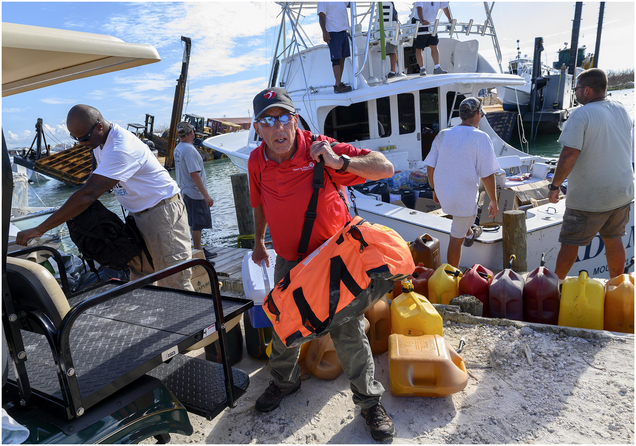
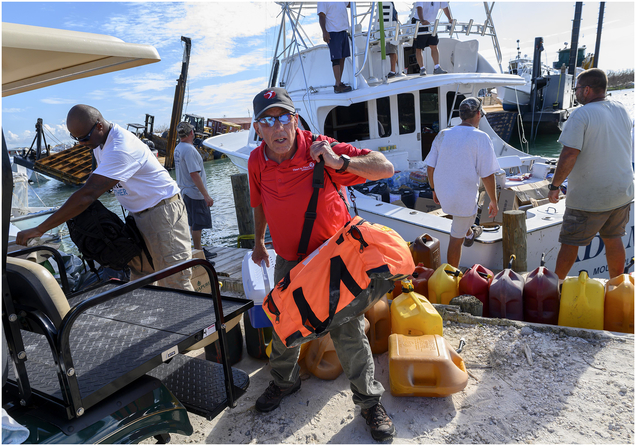
To solve transportation and logistics challenges and ensure medical teams reached the areas of most need, HHI resourced new and existing connections with partner organizations and government officials. Three members of the advance team flew by means of helicopter from Nassau to Marsh Harbor on Abaco island. A private citizen with a minimally damaged boat then conveyed the team to Man O War Cay. The team hand-carried medications and medical supplies to treat patients (Figure 1). We discovered upon arrival that we were the first medical providers on Man O War, and the medical needs were extensive. We established a medical clinic in a damaged church and treated patients with puncture wounds and lacerations from debris, as well as patients who lost their medications in the storm.
The storm had knocked out all electricity and running water on the island, and the daytime temperatures hovered around 100 degrees, with not much of a drop at night. The HHI team arrived completely self-sufficient (including carrying their own tents, water, and food) so as not to take away resources from individuals who had been impacted by the storm. This initial trip to Man O War had been intended to be a day trip, but the needs were so great, our team stayed on Abaco Island for a week before returning to Nassau for additional supplies.
Eventually, the patient trend shifted from punctures and lacerations. We saw an increasing number of patients coping with a lack of medications for chronic conditions (ie, hypertension and diabetes) and respiratory distress and gastrointestinal illnesses, the result of poor hygienic conditions caused by the storm.
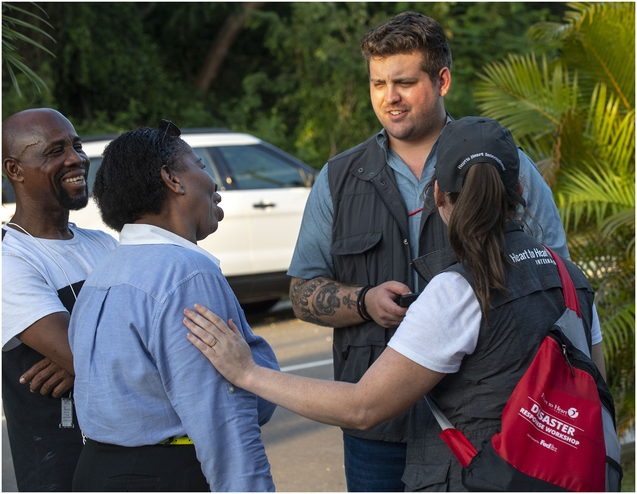
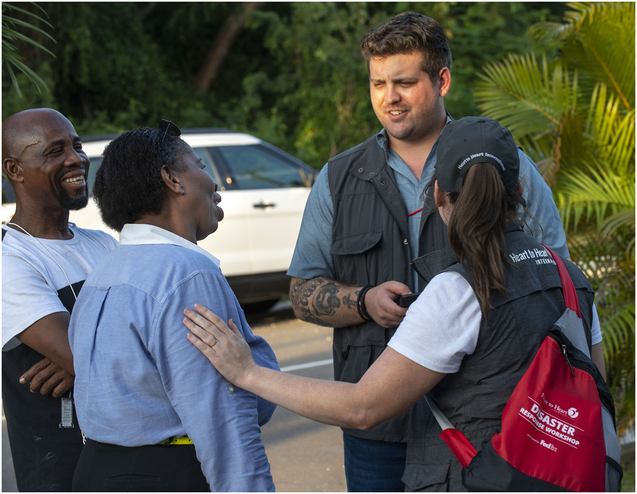
One member of the advance team remained in Nassau to coordinate with government officials and other NGOs (Figure 2). HHI had begun notifying members of our volunteer disaster response medical teams to prepare for deployment as we applied to respond through the Pan American Health Organization PAHO’s VOSOCC (Virtual Onsite Operations Center). HHI was accepted by PAHO and, on September 6, the Bahamian Ministry of Health sent an assignment of Treasure Cay. HHI immediately activated our volunteers, flying them to the Bahamas and placing them with the advance team, which had by then moved from Man O War Cay to Treasure Cay. On September 7, a full HHI Disaster Response Team started treating patients in the Treasure Cay clinic. The clinic did not have water or functioning latrines, although was structurally sound and used a generator to power refrigeration and lights.
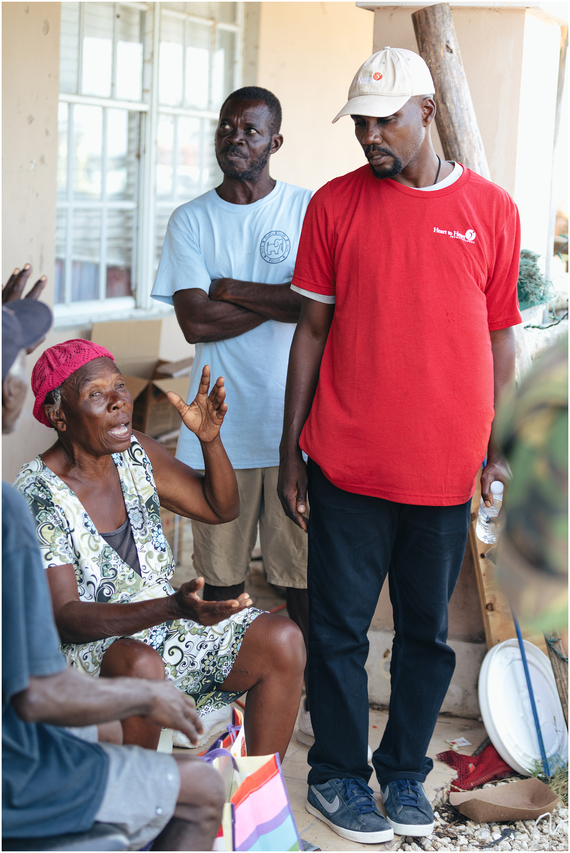
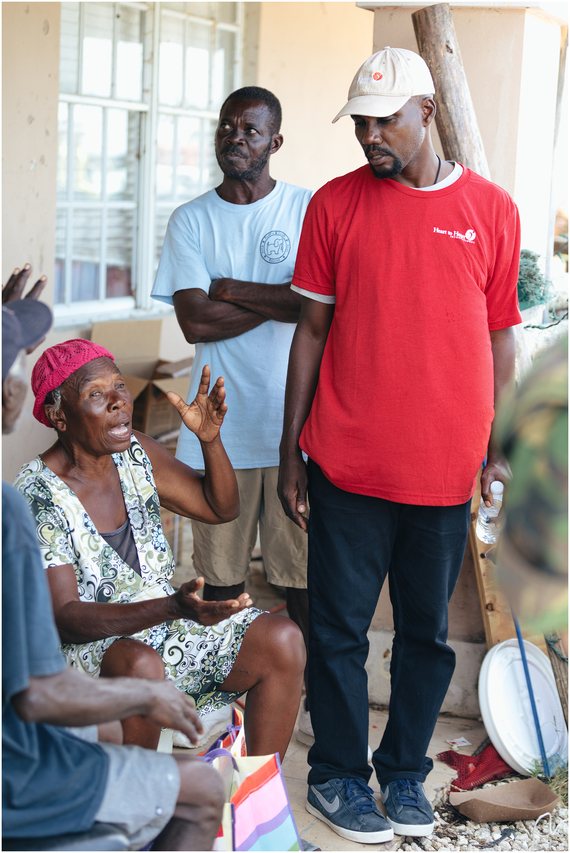
HHI also began conducting mobile outreach clinics to outlying areas, including a Haitian church and an area called The Farm. The island has a significant Haitian population with a largely undocumented immigration status. To aid in communication with this population, HHI brought in a member of our Haiti staff to serve as interpreter (Figure 3). With a Creole interpreter, we were able to account for cultural sensitivities while accurately explaining to the community what medical services we offered as well as allowing them the opportunity to explain their needs.
At the request of the Ministry of Health, HHI also provided medical support to the shelters in Nassau for evacuees.
Numerous challenges confronted our teams on the ground. Cell service on Abaco was virtually nonexistent, and because so many other NGOs and government officials used satellite phones, our satellite phone was often rendered useless. Fuel for vehicles and generators continued to be the scarcest resource on the island. The storm contaminated all water sources with saltwater, and although we had brought in our own water purification kits, these would not solve the problem of desalinization for safe drinking water.
The Nassau-based staff continued to support the team at Treasure Cay with logistics and coordinating efforts with the Bahama National Emergency Management Agency (NEMA), PAHO, local/international NGOs, and other private/commercial entities. These efforts enabled us to solve the myriad challenges that arose during this response.
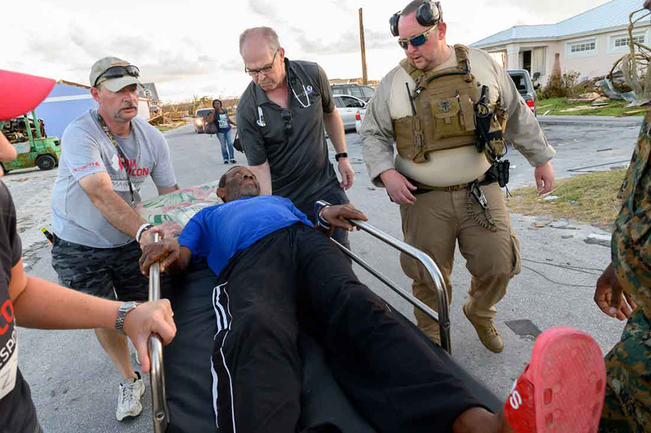
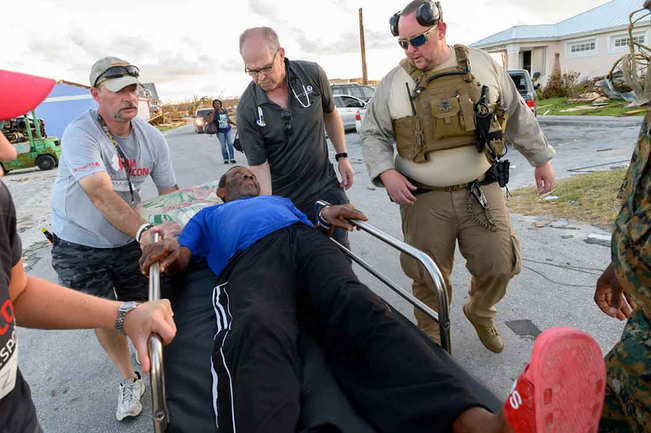
Fuel from Fuel Supply allowed for HHI providers to drive to the mobile outreach clinics and helped run generators for refrigeration of medications (HHI has since sent solar powered generators to the clinic). Water Mission set up a desalinization unit near the clinic to provide water to the clinic and members of the community. Airlink and donated private aviation transported HHI volunteers to the Bahamas. HHI treated any patients that Embark NW found during search and rescue missions on Abaco. HHI worked with Team Rubicon UK and the US Customs and Border Control to airlift critical patients off of the island for treatment in Nassau (Figure 4). Using the HHI Haitian translator, HHI facilitated communication between the Dutch and French military who were bringing supplies to The Farm. FedEx provided shipping for medications, supplies, and hygiene kits from the United States to the Bahamas.
Although evacuations were not mandatory, many Abaco island residents had evacuated of their own accord to Nassau before Hurricane Dorian made landfall. As these residents return, medical needs will increase substantially. The Ministry of Health has requested a commitment from HHI to remain on Abaco Island for 2 mo to provide medical care until the preexisting medical infrastructure can be re-established.
Dr. George Poehlman carries medicines and supplies to begin treating patients in Man O War Cay, Bahamas, after Hurricane Dorian. Photo by Robin Loznak, Heart to Heart International
Joan Kelly, Disaster Response Manager, and Wes Comfort, Director of Haiti Operations, coordinate with government officials in Nassau, Bahamas. Photo by Robin Loznak, Heart to Heart International
Heart to Heart International’s Augustave Saint Rosaire interprets for a Creole-speaking patient to communicate her health needs to the medical team. Photo by Josh Klein, Heart to Heart International
Dr. Rick Randolph prepares to transport a critical patient through air evacuation from Abaco island to Nassau, Bahamas. Photo by Robin Loznak, Heart to Heart International