Introduction
Unsafe abortion remains a considerable public health problem, with the most recent global incidence estimates suggesting that during 2010–2014 about 56 million induced abortions occurred worldwide and almost half of them (25 million) were unsafe abortions. Moreover, the majority of unsafe abortions (97%) occurred in developing countries in Africa, Asia and Latin America (Singh et al., Reference Singh, Shekhar, Acharya, Moore, Stillman, Pradhan and Sundaram2018b; WHO, 2018; Calvert et al., Reference Calvert, Owolabi, Yeung, Pittrof, Ganatra, Tunçalp and Filippi2018). Recent estimates reveal that 15.6 million abortions took place in India in 2015 and about 22% were provided by health facilities, with 11.5 million (73%) being medication abortions performed outside of health facilities. In 2015, abortions accounted for one-third of all pregnancies in India, and nearly half of pregnancies were unintended (Singh et al., Reference Singh, Shekhar, Acharya, Moore, Stillman, Pradhan and Sundaram2018b).
Unsafe abortion is a leading cause of maternal mortality and morbidity throughout the world (Khan et al., Reference Khan, Barge and Kumar2001; Prata et al., Reference Prata, Bell and Gessessew2013). Despite recent advances in technology, there are still too many unsafe abortions, with too many women continuing to suffer and die. At the global level, 8–11% of all maternal deaths are related to abortion (Johnston, Reference Johnston2004). This unmet health care need leads to many unintended pregnancies, unplanned births and unsafe abortions each year. Severe complications from unsafe abortion, if left untreated, contribute to maternal morbidity, and sometimes to long-term disability and maternal mortality (Banerjee et al., Reference Banerjee, Andersen and Warvadekar2012; Singh et al., Reference Singh, Remez, Sedgh, Kwok and Onda2018a). Almost every one of these deaths and disabilities could be prevented through sex education, family planning and the provision of safe, legal induced abortion and care for the complications of abortion (WHO, 2003).
In India, abortion is legal for a broad range of medical and social reasons. A woman can legally have an abortion up to 20 weeks of pregnancy if the pregnancy carries the risk of grave physical injury to the woman, would endanger her mental health or if it resulted from contraceptive failure in a married woman, or from rape, or is likely to result in the birth of a child with physical or mental abnormalities. In addition, it can only be carried out by trained medical personnel (Government of India, 1971; Khan et al., Reference Khan, Barge and Kumar2001; Stillman et al., Reference Stillman, Frost, Singh, Moore and Kalyanwala2014). Small-scale studies carried out in different parts of the country have found that limited access to authorized abortion providers, the threat of forced contraceptive acceptance, the financial costs associated with legal abortion, the stigma associated with induced abortion and low levels of awareness regarding the legality of the procedure prevent women accessing safe abortion services (Johnston, Reference Johnston2004). When women cannot access effective contraception and safe abortion services, there are severe consequences for their health and that of their families. The training and skills of providers are critical determinants of women’s choice of provider for abortion care (Stillman et al., Reference Stillman, Frost, Singh, Moore and Kalyanwala2014). A study by Glenton et al. (Reference Glenton, Sorhaindo, Ganatra and Lewin2017) in five counties (Bangladesh, Ethiopia, Nepal, South Africa and Uruguay) suggested that women focused less on the health worker and more on factors like trust, privacy, cost and closeness to home. Women who have access to fewer resources – for example, low-income rural women and adolescents – are among those most likely to turn to unsafe abortion and have complications. Other reasons for unwanted pregnancy, which may lead to abortion, include: financial reasons; already having too many children, specifically girls; pregnancy with a short birth interval; experiencing health problems during pregnancy; becoming pregnant at a very young age or older age; having an extra-marital pregnancy; and becoming pregnant as a result of rape (Barge & Philips, Reference Barge and Philips1997; Johnston, Reference Johnston2004; Jejeebhoy et al., Reference Jejeebhoy, Kalyanwala, Zavier, Kumar and Jha2010). Also, studies have shown that women’s abortion-seeking behaviour (including unsafe abortions) depends mainly on a country’s laws and policies on abortion, the financial cost of accessing safe abortion services, the availability of safe abortion services and trained health providers and societal attitudes towards abortion and gender equality. Restricting access to abortions, however, does not reduce the number of abortions (Stillman et al., Reference Stillman, Frost, Singh, Moore and Kalyanwala2014).
The Sustainable Development Goals (SDGs) for 2030 have renewed governments’ commitments, made under the Millennium Development Goals (MDGs), to reduce maternal mortality, achieve universal access to sexual and reproductive health information, education and services, ensure reproductive rights and achieve gender equality as a matter of women’s and girls’ human rights (IPAS, 2015). To the authors’ knowledge, no nationally representative study has been conducted to assess the pattern and predictors of abortion care seeking in India, and existing evidence is based on small-scale studies in selected states of India. This study therefore attempted to assess whether the choice of health care facility for abortion varies with the socio-demographic and economic characteristics of women, and to determine the significant predictors of choice of health care facility for abortion.
Methods
Data
Data were taken from the fourth round of the Indian National Family Health Survey conducted in 2015–16 (NFHS-4). The NFHS is a nationally representative household survey that provides data for monitoring and impact evaluation in the areas of population, health, nutrition and abortion. The sample was selected using a two-stage stratified sampling procedure with an overall response rate of 98%. Informed consent procedures were followed, and only those respondents who voluntarily consented to participate in the survey were included. Data for women aged 15–49 years of any marital status who had terminated their last pregnancy by induced abortion in the last five years before the survey were included in the analysis (N = 6876).
Outcome variable
The place where a woman’s abortion took place was taken as the outcome variable. Women perceived the quality of care and amenities provided by tertiary and primary/secondary health care centres to be different, and not all health personnel are authorized to perform an abortion. Hence, ‘place of abortion’ was categorized into five categories based on the responses given to the NFHS questionnaire question on the place of abortion. These were: 1) Public hospitals (included government/municipal hospitals); 2) Other public health facilities (included all primary and secondary public health facilities such as Vaidya/Hakim/homeopaths, government dispensaries, urban health centres/urban health posts/urban family welfare centres, community health centres, primary health centres, sub-centres and government mobile clinics); 3) Private hospitals (included private hospitals/clinics); 4) Other private health facilities (included all private AYUSHs, private dispensaries, NGOs or trust hospitals); and 5) Home. Due to the relatively small sample size in the ‘other private’ and ‘other public’ health facility categories, these were merged with private and public health facilities, respectively, and only three groups were used for the multinomial regression analysis, i.e. ‘public facilities’, ‘private facilities’ and ‘home’.
Predictor variables
Predictor variables were broadly divided into three groups: individual-level, household-level and community-level characteristics. Individual-level characteristics included: women’s present age (15–19, 20–24, 25–29, 30–34, 35–39 and 40–49 years), years of schooling (no schooling, <10 years and ≥10 years), exposure to mass media (no exposure, any exposure), number of surviving children (no child, <3 children and ≥3 children), gestational age of fetus (≤8 weeks, 9–20 weeks and ≥20 weeks), and concern about receiving medical aid, indicated by: whether getting money for treatment was a problem (problem, no problem), whether distance to health facility was a problem (problem, no problem) and concern that there was no provider available (problem, no problem). Household-level characteristics considered were: religion (Hindu, Muslim, other), caste (Scheduled Caste [SC], Scheduled Tribe [ST], Other Backward Classes [OBC], non-SC/ST/OBC), household size (<5 members, ≥5 members) and wealth index (poorest, poorer, middle, richer, richest). Community-level characteristics included place of residence (urban, rural) and geographical region (North, Central, East, North East, South and West).
Statistical analysis
Descriptive statistics and bivariate analyses were carried out to assess the socioeconomic and demographic differentials in choice of health care facility for an abortion. To further assess the predictors associated with the choice of type of health care facility for abortion care a multinomial logistic regression model was fitted. Multinomial logistic regression analysis was used because the dependent variable (place of abortion) was nominal with more than two categories, and there was more than one independent variable. Relative risk ratios (RRR) with standard deviations (SD) are presented in the tables. For a better understanding, the probability of visiting any of the health care facilities for an abortion care was also predicted. The predicted probability overcomes the problem of the reference variable in the case of regression modelling.
Results
Profile of women seeking an abortion
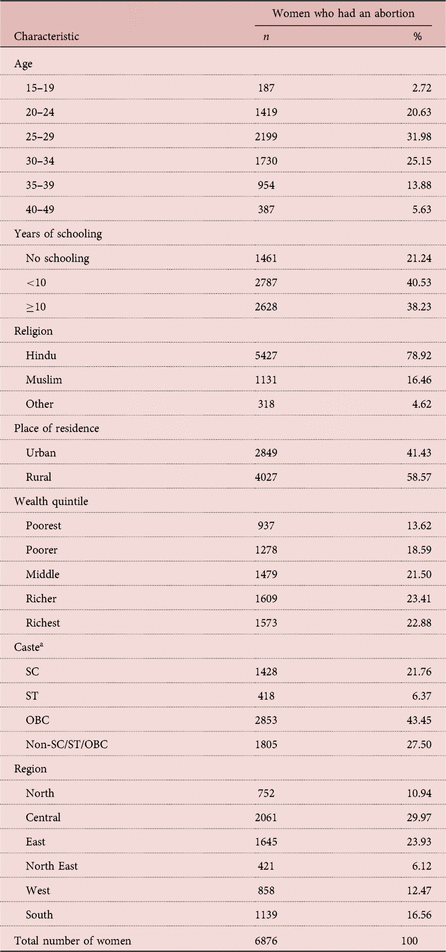
Ten per cent of all surveyed women reported that their last pregnancy in the five years preceding the survey ended in a non-live birth, i.e. in miscarriage, stillbirth or abortion. Furthermore, 1% of the surveyed women (6876) reported having an induced abortion for this pregnancy. Table 1 presents the profile of the women who had terminated their last pregnancy with an abortion in the five years prior to the survey. The majority were between the ages of 25 and 29 years, followed by women aged 30–34 and 20–24 years. Most of the abortion seekers were from Other Backward Classes and followed the Hindu religion. About two-fifths (38%) had 10 years or more of schooling, and around 60% came from rural areas. Most were relatively financially better off, with 68% belonging to the middle, richer or richest quintiles.
Profile of women aged 15–49 who terminated their last pregnancy with an abortion in the five years prior to the survey, India, 2015–16

a Total may not add to N due to missing cases.
Choice of place of abortion
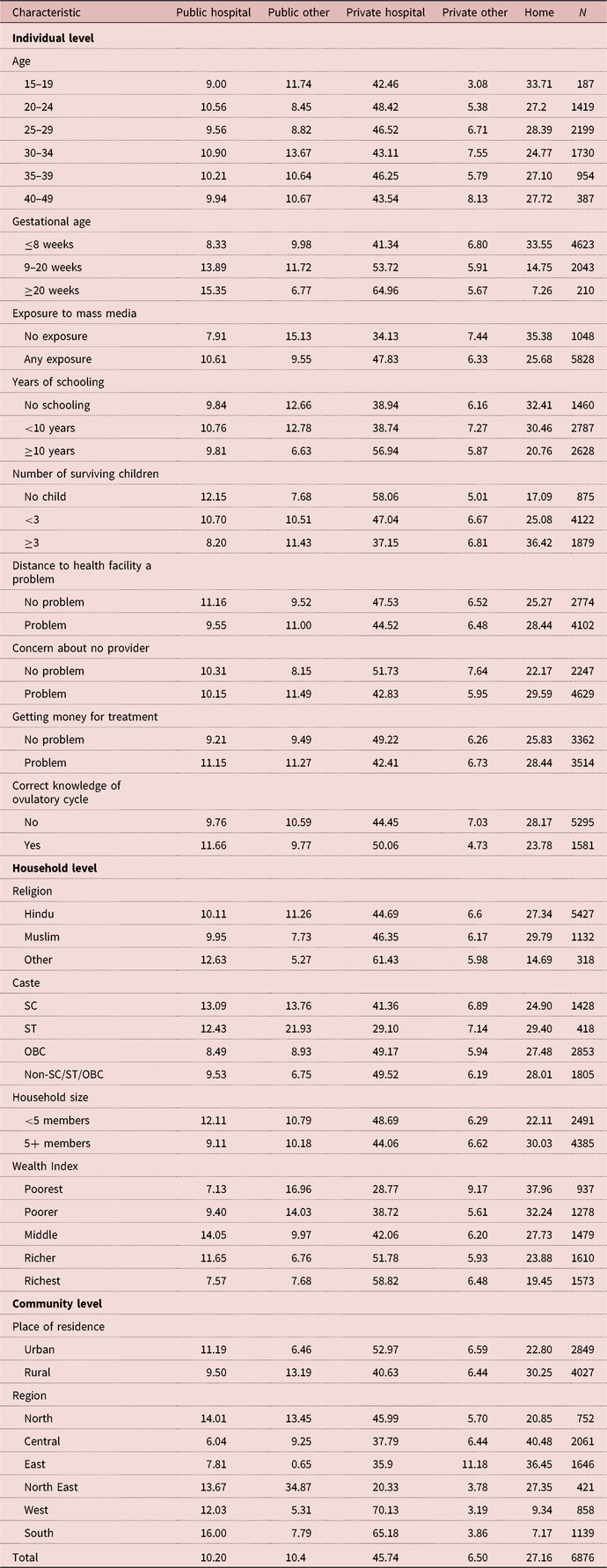
Table 2 shows the distribution of the women aged 15–49 whose last pregnancy in the five years before the survey ended in an abortion by place of abortion and background characteristics. Nearly half (46%) of the women terminated their last pregnancy in a private hospital and more than a quarter (27%) did so at home. Ten per cent had their abortion in a public hospital, and an equal percentage preferred ‘other’ public health facilities. Younger women aged 15–19 were either getting their pregnancy terminated at private hospitals (43%) or at home (34%). With increasing gestational age, women preferred tertiary hospitals – either public or private (50% of women with ≤8 weeks of pregnancy, increasing to 80% of women with ≥20 weeks). Termination at home was higher (34%) for women with fewer than 8 weeks of pregnancy. Also, the percentage of abortions at home decreased with the increase in gestational age. Women with exposure to any mass media preferred to go to health care providers rather than terminate their pregnancy at home. About half of woman (48%) with any exposure to mass media went to a private hospital for an abortion. With an increase in years of schooling, a higher percentage of women went to private and public hospitals (tertiary care) for an abortion. The proportion of women visiting a private facility decreased with an increase in the number of children they had. The percentage of women having an abortion at home increased from 17% for women with no child to 35% for women with more than three children. Women who reported that distance to the health care facility (accessibility) was a problem for them had terminated their pregnancy at either a primary or secondary level health care facilities (other public health facility, 11%; or other private facility, 6%). Twenty-eight per cent of the women aborted their pregnancy at home because the distance to the health provider was an issue for them. Nearly half (51%) of the women who had a problem getting money for health care used abortion facilities from a public health care provider or aborted at home.
Percentage of women aged 15–49 whose last pregnancy in the five years before the survey ended in an abortion, by place of abortion and background characteristics, India, 2015–16

Of the women without correct knowledge of the ovulatory cycle, more than a quarter (28%) aborted their pregnancy at home. A higher percentage of women from SC/ST sought their abortion from public facilities (SC: 27%; ST: 34%; OBC: 17%; non-SC/ST/OBC, 17%) compared with women in the non-SC/ST/OBC category. The richer the women, the greater their preference for private hospitals. As the wealth quintile increased from poorest to richest, the percentage of women terminating a pregnancy at home decreased from 38% to 19%, and those choosing private hospitals increased from 29% to 59%. Urban women had easier access to tertiary hospitals. Almost half of the women (53%) residing in urban areas sought their abortion from a private hospital and only 11% did so from a public hospital. For women from rural areas, 30% aborted their pregnancy at home, and 41% went to a private hospital.
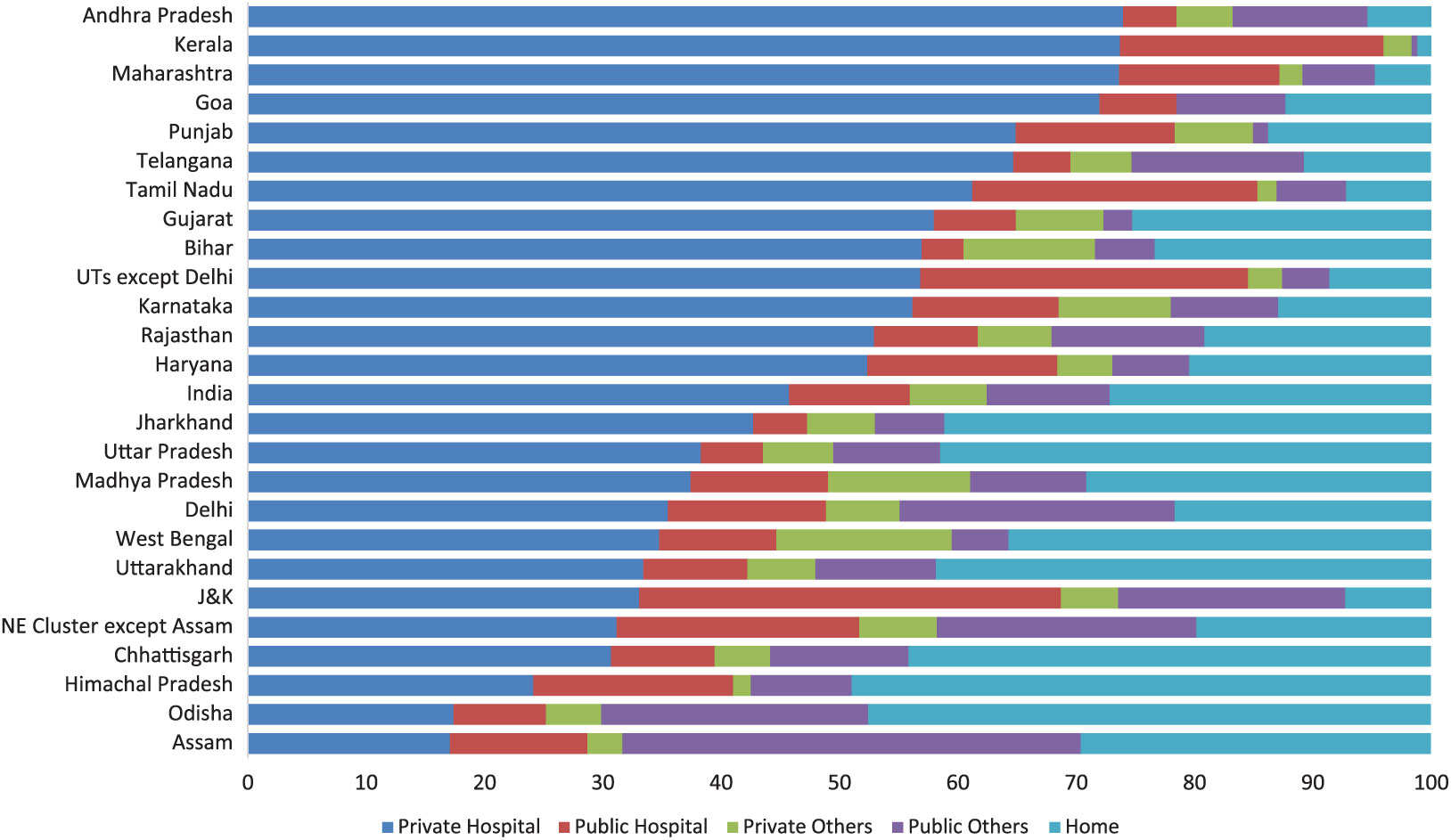
There was wide regional variation in the choice of provider for abortion care. Women in the West and South mostly preferred private hospitals (West, 70%; South, 65%) compared with a mere 20% of their counterparts from the North East. At the state level, the highest percentage of women visiting private hospitals for abortion was in Andhra Pradesh, while the lowest proportion was found in Assam (Fig. 1). Wide inter-state variation was also found in abortion seeking from public health facilities and terminating pregnancies at home.
Choice of place for abortion of last pregnancy of women aged 15–49 years by state, India, 2015–16. The North East states are grouped together (excluding Assam) due to small numbers.

Predictors of choice of place of abortion
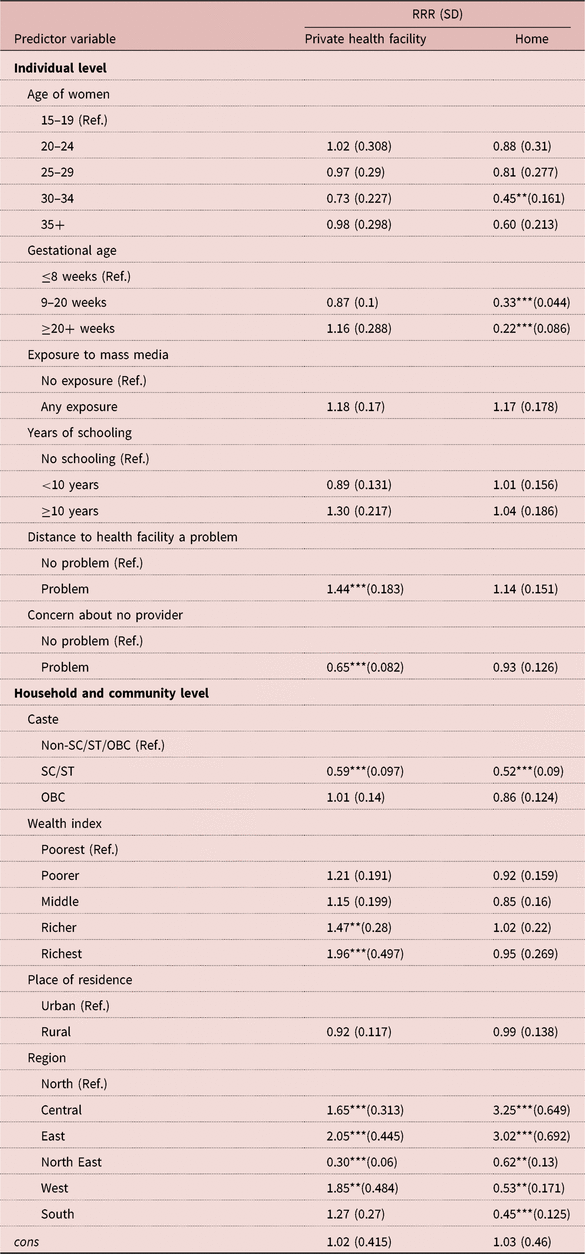
Table 3 shows the relative risks of choice of place of abortion for the sample women by background characteristics. Women in the 30–34 years age group were 55% less likely than those aged 15–19 to abort their pregnancy at home rather than visiting a public health facility for an abortion (RR: 0.45, SD: 0.16). Gestational age of the fetus was a highly significant predictor. Women with more than 20 weeks of pregnancy were 78% less likely than those with fewer than 8 weeks of gestation to seek an abortion at home rather than at a public facility (RR, 0.22; SD, 0.09). Distance to the health care facility and concern about having no provider at the facility were highly significant predictors of the choice of health care facility for abortion. Women for whom distance to the health care facility was a barrier to seeking an abortion were 44% more likely than those for which distance wasn’t a problem of going to a private facility rather than a public facility (RR, 1.44; SD: 0.18, significant at 95% CI). Women who have concerns regarding the unavailability of a provider were 35% less likely than women who had no concerns about the availability of a provider to visit a private health care facility rather than a public health care facility.
Relative risk ratio (RRR) of choosing a private health facility or home rather than a public health facility as place of abortion for women age 15–49 by background characteristics, India, 2015–16

***Significant at 99 % CI; **significant at 95 % CI; *significant at 90 % CI.
The relative risk of visiting a private facility was highly significantly associated with the woman’s wealth index. Women in the richest wealth quintile were 96% more likely than those in the poorest quintile of going to a private health facility for abortion care (RR, 1.96; SD, 0.49) rather than a public facility. Exposure to mass media didn’t have a significant effect on the place where abortions took place. Compared with the general population (non-SC/ST/OBC), women belonging to SC/ST were 41% less likely to go to a private health facility rather than a public facility (RR, 0.59; SD, 0.09, significant at 99% CI). There was wide geographical variation in the choice of a health care provider for abortion care. Compared with women from the North, women from the West were 85% more likely to visit a private facility for their abortion rather than a public health care facility. In the southern part of India, women were 55% less likely to have an abortion at home than those from the North, whereas the relative risk of having abortion at home was very high in the Central and East regions of India. In the North East, women were 70% less likely than the general population to visit a private facility rather than a public health facility.
Discussion
The study found that women in India in 2015–16 went to private more than public health care facilities for abortion care irrespective of their age, distance to health care facility and financial situation. Earlier studies found that women who had a choice between public and private providers felt more satisfied with the services provided by private providers as the physical infrastructure was better overall, with better equipment and instruments compared with public facilities. Government health facilities are also perceived to provide inadequate services and to be poor at maintaining client confidentiality, and tend to be far from where women live and thus difficult to access (Barge & Philips, Reference Barge and Philips1997; Duggal & Ramachandran, Reference Duggal and Ramachandran2004). Other studies have found that women seeking abortion services focus less on type of health worker and more on factors such as cost, closeness to home, confidentiality and privacy (Sri & Ravindran, Reference Sri and Ravindran2012; Glenton et al., Reference Glenton, Sorhaindo, Ganatra and Lewin2017). A study of women seeking abortion from either legal public or private sector clinics in India found that the highest priority of women accessing abortion services from private clinics was the clinic’s reputation for providing high-quality care (Barge & Philips, Reference Barge and Philips1997). In contrast, the priority for women seeking care from public clinics was the convenience of the location of the clinic (Barge & Philips, Reference Barge and Philips1997; Johnston, Reference Johnston2004).
Young women, possibly due to fear of disclosure and sensitivity, prefer to have an abortion at home, or at tertiary-level private facilities, and past studies (Santhya & Verma, Reference Santhya and Verma2004; Jejeebhoy et al., Reference Jejeebhoy, Kalyanwala, Zavier, Kumar and Jha2010; Elul, Reference Elul2010) have confirmed this finding. Recent research by Singh et al. (Reference Singh, Remez, Sedgh, Kwok and Onda2018a) on abortion worldwide also found that young women are more likely to hide early unions and any sexual activity outside of union, so are less likely to experience unintended pregnancy and prefer to have an abortion. For adolescents and unmarried women, the confidentiality of the abortion service is particularly crucial, and delays in accessing abortion are more likely (Johnston, Reference Johnston2004). As adolescents have less access to reproductive health information and services compared with their older married counterparts, they are more likely to delay recognizing a pregnancy, to delay obtaining care and to access care from unsafe providers (Johnston, Reference Johnston2004; Jejeebhoy et al., Reference Jejeebhoy, Kalyanwala, Zavier, Kumar and Jha2010).
This study found that the probability of visiting a private facility increased steeply with an increase in the gestational age of the fetus, probably because women at a later stage of pregnancy consider themselves to be at higher risk of complications. Most abortions were done in the first trimester, and many past studies have also indicated that the vast majority of abortions are at this stage of pregnancy (Dalvie, Reference Dalvie2008; Singh et al., Reference Singh, Remez, Sedgh, Kwok and Onda2018a). However, the same studies also reported a considerable number of second-trimester abortions, and argued that delays in decision-making and the availing of services were the main reasons for this. Second-trimester abortions increase the risks to women, as women are more likely to go to an uncertified provider because the procedure is difficult to obtain legally at this stage. Also, the risk of complications is higher in the second trimester for physiological reasons (Johnston, Reference Johnston2004).
The cost of services, and distance to a health facility, were significant factors affecting women’s choice of facility. The cost of services do not prevent women undergoing an abortion, but do determine which type of facility they choose. Women in the higher wealth quintiles were more likely to go to private facilities, and women who were socially and financially more ‘backward’ preferred public facilities. The probability of visiting a private facility increased with an increase in the wealth quintile of the women. In confirmation of this result, a past study by Barua and Apte (Reference Barua and Apte2007) found that women who could not afford the fees of a private qualified doctor sought care from a government facility or unqualified provider. Likewise, women for whom cost was a concern tended to seek care from those perceived to provide cheaper services. As far as place of residence was concerned, urban women tended to visit private facilities, whereas rural women were less likely to go to private hospitals and went instead to local health care facilities. Past evidence suggests that urban women, and particularly those of higher socioeconomic status, have stronger desires for autonomy and privacy in their reproductive decision-making than their rural and lower socioeconomic status counterparts (Elul, Reference Elul2010). Low-income women, and those living in rural areas, are severely limited in their choice of abortion services, causing them to be more likely to access abortion from providers who are cheaper and more easily accessible. In rural areas, uncertified providers thrive because they can offer abortion services at an affordable price, and are often located closer to women’s residences (Johnston, Reference Johnston2004; Shrestha et al., Reference Shrestha, Regmi and Dangal2018).
There was wide geographical variation in the choice of provider for abortions. In the western and southern states of India, the probability of visiting a private health care facility for an abortion was exceptionally high compared with the states in the north-eastern part of the country. In hilly areas like in the north-eastern states, transportation is a big challenge, which probably forces women to prefer their nearest health care facilities (other public facilities) rather than any tertiary facility. An earlier study by Singh et al. (Reference Singh, Shekhar, Acharya, Moore, Stillman, Pradhan and Sundaram2018b) reiterated the inter-state variation in the provision of abortion care facilities and the need to expand the provider base.
Women from socially backward classes visited public facilities more than private facilities, possibly due to their affordability and accessibility. A study in 1997 reported that while women from all socioeconomic groups access abortion, there was a class differential in the choice of health care facility used. Women who obtained abortions at safe facilities tended to be the women who could afford to pay the transport costs and additional associated fees (Barge & Philips, Reference Barge and Philips1997). Because legal abortion was not an option for most Indian women from lower socioeconomic classes, these women tended to obtain abortion services from less-well-trained, but more accessible, providers (Johnston, Reference Johnston2004). Women with accessibility as an issue went to local providers (other public and private health care facilities). Aside from issues of distance and flexible timing, women reported that manpower was also an issue, and this paper also found that women who reported that there was an unavailability of staff were significantly less likely to go to private facilities compared with women who sought abortion at a public facility. Despite higher fees and the need to travel longer distances, women sought care from providers whose skills were well known to clients or who were reported to conduct safe abortions with no complications, and women focused less on the type of health worker and more on factors like trust, privacy, cost and closeness to home (Barua & Apte, Reference Barua and Apte2007; Glenton et al., Reference Glenton, Sorhaindo, Ganatra and Lewin2017).
The strength of the present study is that it is, to the best of the authors’ knowledge, the first systematic description of the pattern and predictors of the place of abortion-seeking in India using data from a nationally representative household-based survey with a robust sampling design. The findings add to the existing limited and sporadic evidence on place of abortion care seeking and possible correlates, and are of importance for programmes and policies aimed at comprehensive abortion care. Knowing the reasons why women choose a health care facility for abortion further strengthens the understanding of the association of socioeconomic characteristics with place of abortion. The NFHS-4, however, did not ask specifically about the type of method used for abortion, so it was not possible to comment on why so many abortions were performed at home, particularly among women in their first trimester, or on whether home-based abortions were done using medicines or traditional methods.
To conclude, women in India were found to prefer to obtain abortions from private health care facilities rather than government health facilities, and there was wide socioeconomic, demographic and regional variation in choice of place for abortion care seeking by women. Presently in India not all health care personnel are authorized to provide safe abortion care services. To increase access to safe abortion the availability of comprehensive abortion care services at different levels of the health care system is important. This would not just reduce the burden of unsafe abortion to women, but would also reduce the number of women who have late terminations. Workers in primary or community care should be adequately trained as they are best suited to deliver abortion services in an emergency as they have good language skills and understanding. Increased awareness of service availability would reduce delays in reaching health care facilities.
Funding
This research received no grant from any funding agency, commercial entity or not-for-profit organization.
Conflicts of Interest
The authors have no conflicts of interest to declare.
Ethical Approval
All procedures contributing to this work comply with the ethical standards of the relevant national and institutional committees on human experimentation and with the Helsinki Declaration of 1975, as revised in 2008.