[T]here are those who study race and racial dynamics, and those who routinely use the concept of race in their studies. In the case of the former . . . race is seen as a profoundly social characteristic. The dynamism and fluidity of race is often used to better understand related social processes. . . . Racial delineations . . . result from historical patterns of racial hierarchy embedded in ongoing interactions . . . . In the case of the latter . . . those who use race or ethnicity in their research, as opposed to those who study race, tend to treat it as a primordial or fixed characteristic . . . . [A]s a function of fixed differences between “populations” . . . race is conceptualized as a cause of a myriad of social processes and distinctions.
–Angela James, “Making Sense of Race and Racial Classification,” Race and Society (2001, pp. 235-247)
INTRODUCTION
Our research places concerted attention on the conceptualization and measurement of race, developing multi-dimensional measures of race/ethnicity and then examining their impact on self-reported health status among U.S. Latinos. While our collective efforts have been directed toward a fuller understanding of the extent of racial/ethnic health disparities, we have reached the conclusion that the manner in which race and ethnicity are measured requires rethinking and developing measures of race in a more complex manner. Thus, the breadth of research on race/ethnicity needs to reflect race as a “lived experience.” It is only recently that different and multiple measures of race/ethnicity have been utilized to assess the impact of these important factors on health status (Miller and Wilson, Reference Mays, Cochran and Barnes2003; Saperstein and Penner, Reference Saperstein2012). Our interest lies in examining the impact of multiple measures of race/ethnicity on the self-reported health status of U.S. Latinos. This community can pose a challenge in the discussion of race and ethnicity. In this analysis, we develop and advocate for a multi-dimensional model of race/ethnicity to examine the collective impact of race as a lived experience on the health status of U.S. Latinos. More specifically, we utilize a unique survey that included several items that capture dimensions of race as a lived experience. These dimensions of lived experience include: skin color, ascribed race, and discrimination experiences.
We see our major contribution as constructing measures of race/ethnicity and modeling these measures more comprehensively than the more limited, nominal categories of racial/ethnic groups. As many social scientists would contend, race is much more complex than a single categorical variable. Using this particular array of measures constructs “race” as a measurement-related endeavor, advancing the explanatory power of race in health disparities. In this analysis, we assess the process by which skin color, ascribed race, and discrimination experiences influence self-rated health among U.S. Latinos. We hypothesize that these three measures of race, interpreted as the lived experience of people of color, are negatively correlated with self-rated health status. We use two approaches to test this hypothesis. The first is a modeling approach that uses traditional categorical regression models that specify skin color, ascribed race, and discrimination experiences independently. Our next approach uses scaling and dimensional analysis to combine and scale our race measures into one multi-dimensional measure of race as a lived experience.
This research design allows for a discussion of how the utilization of multiple measures of race can broaden our understanding of the mechanisms by which race impacts Latino health. In addition, we highlight methodological concerns associated with more complex measures of race. Our results will be of interest to all researchers seeking to understand how race influences social, political, and health outcomes in the United States.
We begin this paper with a discussion of the literature and theory focused on racial/ethnic health disparities and the various measures of race/ethnicity employed in this area of work; next we describe our research design and methods; then we present the results of our analyses and implications for future research. We demonstrate that not only are discrimination experiences and skin color negatively associated with self-rated health status, but a scale of race/ethnicity capturing race as a lived experience for persons of color is also negatively correlated with self-rated health status. Such findings suggest that incorporating a multi-dimensional approach to the study of race advances our knowledge of the relationship between race/ethnicity and health outcomes.
THE STUDY OF RACE/ETHNICITY AND HEALTH
The study of racial and ethnic health disparities has taken major strides of late, both theoretically and empirically. We reviewed hundreds of studies that have confirmed the persistence of pervasive racial/ethnic inequities in the delivery of healthcare, health outcomes, and health status. There has been a relative explosion of insightful research focused on uncovering how race and ethnicity influence health in the United States (e.g., Berenson et al., Reference Berenson, Wattigney and Webber1996; Chae et al., 2011; James et al., Reference Idler and Benyamini2007; Satcher et al., Reference Saperstein, Gomez and Lopez2005; Smedley et al., Reference Shippee, Henning-Smith, Shippee, Kemmick, Call, McAlpine and Johnson2003; Sternthal Reference Smedley, Stith and Nelson2011; Viruell-Fuentes Reference Uhlmann, Dasgupta, Elgueta, Greenwald and Swanson2011; Waidmann and Rajan, Reference Viruell-Fuentes2000; Woo et al., Reference Williams and Mohammed2011).
Further symbolizing the growth of this research, a recent volume co-edited by Nancy Lopez and Laura Gomez (Reference Layes, Asada and Kephart2013) titled Mapping “Race”: Critical Approaches to Health Disparities Research contains a notable collection of social science research advocating for a more in-depth approach to the measurement of race by matching the measures with the complexities of this concept, an approach which is critical to health disparities research. For example, the chapters by John Garcia (Reference Garcia2013) and by Aliya Saperstein (Reference Saperstein and Penner2013) discuss and develop multi-dimensional measures of the lived experiences of racial/ethnic group members. They discuss the limitations of treating race as simply a categorical variable that does not capture the full range of individual, structural, and historical components of what race and ethnicity mean in contemporary U.S. society. In addition, the chapter by Clarence Gravlee (2013) presents developed measures that represent a fuller meaning of race. Although the work of social scientists highlighted in this edited volume symbolizes the advancements in this area of research, we believe that there remains room for continued growth.
Early health researchers approached the study of race and health within the context of genetic and biological differences between the races, often assuming that observed differences in health conditions were due to underlying genetic or biological differences (e.g., Boyle Reference Boyle1970; Gardner et al., Reference Garcia, Gomez and Lopez1984; Keil et al., Reference Kandula, Lauderdale and Baker1977). We do not treat race as a genetic or biological construct. We utilize a social-determinants-of-health framework which asserts that race is a socio-cultural construct and that racial and ethnic minorities suffer from poorer health outcomes compared to non-Hispanic Whites due to their environments, social status, limited opportunities, and experiences with discrimination in the United States (Massey Reference Massey, Durand and Malone2004; Schulz et al., Reference Satcher, Fryer, McCann, Troutman, Woolf and Rust2002; Williams and Sternthal, Reference Williams2010).
We call this perspective “lived experiences for racial/ethnic groups.” Our emphasis places greater attention on internal variation within existing racial and ethnic categories while simultaneously acknowledging the complexities associated with the concept of race/ethnicity itself. We contend that traditional distinctions between race and ethnicity are highly problematic when studying their impact on outcomes in the contemporary U.S. context. For example, for ethnicity, acculturation-based explanations for poor health outcomes among Latinos assume that as individuals lose protective cultural traits with increased time in the United States, their health deteriorates. This conceptualization of culture not only essentializes groups but also fails to capture the fluidity of collective systems of meaning and action. The ways in which inter-subjective systems of meaning emerge and shift under specific social, historical, and political contexts is critical to understanding culture and groups (Benhabib Reference Benhabib2002; Grosofoguel 2011; Viruell-Fuentes Reference Tsai, Ford, Zhao and Balluz2011). Furthermore, because this model locates culture within individuals, it diverts our attention away from the structural conditions that impact individual and community health status.
Our approach is consistent with the work of critical race theorists who similarly emphasize the socially constructed nature of race. Recent scholarship has applied this theoretical framework to health outcomes (Ford and Airhihenbuwa, Reference Flores and Telles2010; Thomas et al., Reference Terkildsen2011). Critical race theory (CRT) provides a useful framework for our analysis, as it is a trans/multi-disciplinary approach that explicitly addresses the role of individual-level discrimination and structural racism in population- and individual-level health. Stephen Thomas and colleagues (2011) advance the foundations of CRT by advocating for a new generation of research they call health “critical race praxis,” which, among other things, calls for advanced methodological tools that can address racism and structural inequality. Chandra Ford and Collins Airhihenbuwa (2010) have developed a CRT-based methodology specifically for public health research—Public Health Critical Race Praxis (PHCR). PHCR is an “attempt to move beyond merely documenting health inequities toward understanding and challenging the power hierarchies that undergird them” (Ford and Airhihenbuwa, Reference Flores and Telles2010, p. 1390). PHCR is grounded in the basic CRT tenet that posits race and racialization as central facets of health and generalized inequality (Delgado and Stefancic, 1999-2000; Ford and Airhihenbuwa, Reference Flores and Telles2010). Our attempt to provide clarity in the measurement of race within the context of health disparities is very much in line with this overall framework.
Acknowledging that race and ethnicity are social constructions that evolve from systems of power, ideology, and stratification, we focus on the dialectical relationship between insiders and outsiders. We explore the ways in which hierarchical social relations produce poor health outcomes through the intersection of race and ethnicity. Our study builds on a growing body of ethno-racial research that documents how racialized, nativist policies adversely impact the health of Latinos and particularly Latino immigrants. This work investigates how individuals from a number of Latin American countries negotiate the tensions between constructing a sense of ethnic belonging while simultaneously confronting stigmatizing environments embedded within the current U.S. racial order (De Genova Reference Dawson2004; Viruell-Fuentes Reference Tsai, Ford, Zhao and Balluz2011).
For instance, Irene Browne and Mary Odem (2012) demonstrate that in the Southern United States, where the old Black-White dichotomy is still dominant, local policymakers have created new dimensions of racial stratification by lumping Dominican and Guatemalan immigrants together and imposing laws which criminalize immigrants and exclude them from important resources such as health care, education, and housing. Similarly, Ruth Gomberg-Munoz (Reference Geronimus, Hicken, Keene and Bound2012) elucidates how states and industries highly dependent on unauthorized Mexican workers have promoted stigmatizing rhetoric about their “illegality,” which facilitates the exploitation of these workers over time. This criminalization of Mexican workers depresses their wages and creates working conditions that heighten their vulnerability. Specific to health, Edna Viruell-Fuentes (Reference Tsai, Ford, Zhao and Balluz2011) demonstrates that Mexican immigrant women and second-generation Mexican American women face considerable stress in negotiating ethnic identities under stigmatizing environments, and this may be a key mechanism by which living in a racialized society adversely affects health outcomes. In sum, we build on this rich, qualitative literature by testing the impact of perceived Latino ethno-racial stratifications on health status by focusing on three key dimensions of these lived experiences: skin color, ascribed racial status, and experiences of discrimination. We now turn to a brief explanation of each construct.
Skin Color
A primary measure associated with the lived experiences of people of color is skin color.Footnote 2 Social scientists have found that phenotype, in this case skin color, impacts many social outcomes for African Americans. Darker-skinned African Americans on average make less money (Bowman et al., Reference Bowman, Muhammad, Ifatunji and Herring2004; Hersch Reference Helms and Helms2006; Keith and Herring, Reference Keil, Tyroler, Sandifer and Boyle1991), live in more highly segregated areas (Massey et al., Reference Massey and Denton2003), and even have a more difficult time garnering votes when running for office than African Americans with lighter skin color (Terkildsen Reference Telles and Steele1993). In short, skin color serves to pattern significant marginalization among African Americans (Cohen Reference Cobas, Duany and Feagin1999).
Research focusing on the role of skin color on social outcomes for Latinos is less developed. For example, Edward Telles and Edward Murguia (1990) find that darker-skinned Mexican Americans receive lower earnings than their lighter-skin co-ethnics. Similarly, Maria Christina Morales (Reference Miller and Wilson2008) finds that skin color can lead to Latinos being segmented within labor markets, with darker skin Latinos being stratified into lower-waged sectors of the labor market. Taking a more in-depth examination of the impact of skin color on occupational prestige, Rodolfo Espino and Michael Franz (2002) find that skin color magnifies lower prestige for Latinos of Mexican and Cuban origin but not for Puerto Ricans. Specific to political equality, Sonya Tafoya (2004) finds that a U.S.-born Latino’s whiteness is clearly and consistently associated with higher social status, higher levels of civic participation, and a stronger sense of social acceptance. Finally, scholars have compared the impact of phenotype across countries and found that those with darker skin colors report poorer health. Darker skin color influences self-rated health primarily by increasing exposure to class discrimination and low socioeconomic status (Perreira and Telles, Reference Paradies2014; Telles and Steele, Reference Telles and Lim2012; Uhlmann et al., Reference Tsai, Ford, Li, Zhao, Pearson and Balluz2002).
Many early health researchers approached the study of the impact of skin color on health with the assumption that they were testing the impact of genetics on health outcomes. The vast majority of this early work was on the relationship between skin color and hypertension among African Americans (Boyle Reference Boyle1970; Harburg et al., Reference Grosofoguel1978; Keil et al., Reference Kandula, Lauderdale and Baker1977; Klag et al., Reference Keith and Herring1991). One study found an association between skin color and cancer deaths among African Americans (Knapp et al., Reference Klonoff and Landrine1995), and another found an association between skin color and diabetes among Mexican Americans (Gardner et al., Reference Garcia, Gomez and Lopez1984). For the most part, early skin color/health studies were not conceptualizing skin color as a marker for racism or discrimination but rather as a marker for genetics and/or biology. In the last two decades, research has moved toward an interpretation of the relationship between skin color (or colorism) and health outcomes that sees race as more of a social construction (e.g., Klonoff and Landrine, Reference Klag, Whelton, Coresh, Grim and Kuller2000; Krieger Reference Krieger, Sidney and Coakley1999). This research has found that individuals with darker skin tend to have poorer health (Gravlee et al., Reference Gómez2005; Klonoff and Landrine, Reference Klag, Whelton, Coresh, Grim and Kuller2000).
A more recent development in work exploring the relationship between skin color on health, as well as discrimination and privilege, is to extend this examination beyond African Americans. Studies over the last decade have placed greater emphasis on the continuing significance of skin color as marker of status, stratification, and racial distinctions across many different minority populations (i.e., Latinos, Asian Americans, and Native Americans) (Gomez 2000; Harris and Sim, Reference Harrell, Burford, Cage, Nelson, Shearon, Thompson and Green2002; Hochschild Reference Hill2011). For example, Gabriel Sanchez and Vickie Ybarra (2013) find that skin color is negatively correlated with self-reported health status among Latinos, such that darker skin Latinos report worse health status than their lighter skin counterparts.
The inclusion of skin color as an indicator of race produces measurement challenges that have been addressed in several different ways. Most commonly, the respondent is placed in a skin tone category (ranging from lighter to darker skin ratings) based on her/his self-report or the report of an external observer. It seems clear that a respondent’s basis for such self-assignment (as well as the third party’s) will be based on the individual’s experiences, self-concept, social identity/ies, social networks, and other external influences. For our part, we have operationalized the skin color measure based upon a self-reported five-point scale on a continuum from very light to very dark.
Social meaning and value in U.S. society place a more positive value on being lighter so that the full range of the scale is seldom utilized; instead, a skewed distribution toward the “lighter” side of the scale is common (Garcia Reference Garcia1991). A related approach has been the interviewer’s placement of the respondent on the skin color scale. This has resulted in “race-of-interviewer effect” in which interviewers perceive greater variations in the skin tones of same-race respondents than among different-race respondents (for example, Black interviewers categorized White respondents as lighter than their White interviewer counterparts and vice versa) (Hill Reference Hicken, Lee, Morenoff, House and Williams2002). More recently, Joanna Chan and colleagues (2005) have included both self-reported skin “phenotype” as well as readings from a narrow band reflectance spectrometer. The primary purpose of this approach was to make “precise” measures of skin color to be used in the evaluation of patients and expand the clinical information collected (Chan et al., Reference Chae, Nuru-Jeter, Lincoln and Francis2005). The accuracy and precision of a reflectance spectrometer fails to capture the social meaning, status, and context from which skin color and race as a social construction are interconnected.
Social science scholars of health outcomes, such as Clarence Gravlee and colleagues (2005), find that ascribed skin color (rather than a specific racial category) is more important in predicting health outcomes than the more “objective” clinical measure determining skin color with a reflectometer.Footnote 3 These findings have potential implications for skin color measurement and begin to move towards the more structural/societal aspects of racism that William Dressler and colleagues (2005) and others (Gee and Ford, Reference Gardner, Stern, Haffner, Gaskill, Hazuda, Relethford and Eifler2011; Williams and Mohammed, Reference Waidmann and Rajan2009) note as having greater impact on health outcomes. This interconnection is taken into account in our model for our three measures of race. It is not skin color as a clinical measure that we are interested in; rather, it is the contribution of skin color to the social construction of race.
Ascribed Race/Ethnicity
Perceptions of others’ racial classifications represent the socio-political and structural underpinnings of the complexity and multi-dimensionality of race. While some researchers (Hochschild et al., Reference Hochschild2011; Prewitt Reference Perreira and Telles2005) have proposed the supplanting of skin color over the traditional categories of race, there is greater consensus that a broader conceptualization of race needs to include the phenotypic measure of skin tone/color (LaVeist Reference Lara, Gamboa, Iya Kahramanian, Morales and Hayes Bautista1994; Williams Reference Viruell-Fuentes, Morenoff, Williams and House1997; Woo et al., Reference Williams and Mohammed2011). The measurement challenges of two “sources” of skin color “categorization” do complement our notion of the complexity of race. Building upon our discussion of the multi-dimensional construction of race, the relational nature of race clearly indicates that categorization and identification of race extends beyond the individual. That is, factors affecting a person’s racial identification and lived experiences are shaped by social structures, common perceptions/stereotypes, norms and beliefs, and treatment by others (Frank et al., Reference Ford and Airhihenbuwa2010).
Our second dimension of race deals with racial “categorization” of individuals by others. While it can be related to skin color, racial classification maintains extant notions about racial groupings in society. Many surveys ask interviewers to place their respondents into racial categories (Telles and Lim, Reference Telles and Murguia1998); or respondents are asked to indicate their perceptions of the racial identification others use to describe them. This reflects the many dimensions of race and captures the broader scope of race as a lived experience (Tashiro Reference Tafoya2002). For our analysis, we call this aspect of race “externally ascribed race” or “perceived race.” This is consistent with our efforts to treat “race” as a multi-dimensional concept.
Externally ascribed race is an interesting and yet relatively understudied dimension in the study of race. Social identities indicate who we are, who other people are, and, receptively, who other people think we are (Helms Reference Harris and Sim1990). As a result, race as lived experiences includes the implications of being “categorized racially” by others. For example, psychologists have begun to differentiate between imposed ascribed identities and those chosen by individuals. Imposed ascribed identities were those assumed by White counselors and psychologists about their clients of color rather than characteristics of self-identity that are measured. For the most part, inferences were being made solely on physical appearance (Hogg and Terry, 2002). Jacqueline Martinez (Reference Marmot and Wilkinson2002), for example, tells the story of a person of color growing up in a predominantly White, upper-middle-class community and first coming to the realization that others saw her as non-White.
To our knowledge, Camara Jones and colleagues (2008) are the only scholars who directly measure ascribed race, or “socially assigned race,”Footnote 4 as we have done here to examine impacts on health status. They find that for Blacks, Hispanics, and Native Americans, discordance between their self-identified race/ethnicity and their socially-assigned race (i.e., being socially assigned as White) is most predictive of better health status regardless of self-identified race. A more recent study by Aliya Saperstein (Reference Saperstein2009) finds that perceived race more strongly predicts differences in screening outcomes than self-identified race. From this finding, Saperstein argues that “the results are more consistent with recent attention to the role of discrimination and implicit prejudice in clinical encounters” (2009, pp. 42-43).
Discrimination Experiences
When focusing on race, experiences of interpersonal racial discrimination are a prominent measure; thus, we cannot talk about race without talking about discrimination and racism.Footnote 5 Social science scholars have found that experiences of interpersonal racial discrimination foster group identity among racial and ethnic groups (Bernal and Martinelli, Reference Bernal and Knight1993; Masuoka Reference Massey2006). In the African American politics literature, “linked fate” is an appropriate connection to our discussion. For example, Michael Dawson’s (1995) theory of the “Black utility heuristic” posits that the historic and continued role of racial discrimination in the United States is the basis for linked fate for Blacks: Continuous exposure to racial discrimination makes African Americans more aware of their racial identity, and therefore heightens a sense of linked fate.
Similarly, Latinos have been subject to a long history of discriminatory and exclusionary practices by non-Latinos.Footnote 6 For example, the Latino population has endured the challenges historically associated with forced segregation, including having separate and unequal facilities like schools, theaters, swimming pools, and even cemeteries (Massey and Denton, Reference Massey and Denton1989a, Reference Massey and Denton1989b; Yzaguirre et al., Reference Williams and Sternthal1999). And Latinos, particularly Mexican Americans in the Southwest, were subjected to lynching and violence in response to their movements to acquire political power and equal representation (Nelson and Lavariega Monforti, Reference Myers2006).
Experiences of interpersonal racial discrimination play a prominent role in the literature on racial and ethnic health disparities. Scholars have speculated as to the biological mechanisms by which experiences of interpersonal racism and discrimination might be translated into poorer health outcomes. Many studies reflect a general assumption that the stress response mechanism due to discrimination plays the major role (Dressler et al., Reference Delgado and Stefancic2005; Flores et al., Reference Finch, Hummer, Kolody and Vega2008; Krieger Reference Krieger, Sidney and Coakley1999; Paradies Reference Nelson and Monforti2006; Williams and Mohammed, Reference Waidmann and Rajan2009). In addition, scholars have detailed other specific, potential biological mechanisms, including the “allostatic load,” or accumulated biological adversity over the life course (Geronimus et al., Reference Gee and Ford2006; Mays et al., Reference Masuoka2007), and “epigenetics,” or the biologic changes in the proteins surrounding the genome that can affect how the genes are expressed and can be passed from one generation to another (Kuzawa and Sweet, Reference Krieger2009). Furthermore, Hector Myers (Reference Mossey and Shapiro2009) suggests numerous and interacting complex biological mechanisms by which psychological stressors of the lived experience of race are translated into physical health status. Similarly, Camara Harrell and colleagues (2011) provide a detailed typology of the potential neuro-psycho-biological channels by which personal experiences with racism may impact health.
The commonality among these findings is that psychological stress associated with frequent experiences of interpersonal racism and discrimination are sufficient to produce physiological and biological changes observed as poorer health status. Although scholars have explored the relationship between African American experiences of interpersonal racial discrimination and health, there is relatively limited work exploring this relationship among Latinos.Footnote 7 For example, Kyung-Hee Choi and colleagues (2013) find that experiences of interpersonal racial discrimination are negatively correlated with self-reported health status among Latinos. In addition, Brian Finch and colleagues (2001) found that when Mexican Americans were isolated in their analysis as a group of national origin these respondents reported poorer self-rated health. These strands of research strongly suggest that interpersonal racial discrimination is not only a major component of the “lived experiences” of racial and ethnic minorities, but is also highly correlated with health outcomes.
Multi-Dimensionality of Race/Ethnicity
Studies by Mary Campbell (Reference Campbell2009), Aliya Saperstein (Reference Sanchez, Ybarra, Gomez and Lopez2006), and Edward Telles and Nelson Lim (1998) have found that different approaches to measuring race do in fact portray different pictures of the extent of racial inequality. In varying degrees, depending on the context and the outcome under scrutiny, the nature of the relationship differs. For example, Saperstein (Reference Sanchez, Ybarra, Gomez and Lopez2006) used measures of observed and self-reported race in the General Social Survey and found that the different measures “yield substantively different results when used to explain income inequality in the United States” (pp. 60-61). In an educational context, Campbell (Reference Campbell2009), using four measures of race—parent- and self-report, self-identification, and interviewer-report of race and color—found that a number of educational outcomes are associated with the observed race of Latinos and members of single race groups but not for members of multiracial groups.
Our multiple measures incorporate skin color, ascribed race, and experiences of discrimination. Our interests lie in establishing the effects of different measures of race on health indicators so that research findings are more accurate and useful. For example, ascribed race might be best suited for studies of discrimination or access to goods and services, while self-reported race might be more useful for studies of attitudes and motivations (Bruch and Loveman, Reference Bruch and Loveman2011). Our effort builds upon other researchers’ efforts to “re-conceptualize” race in order to capture the “lived experiences” of race and the use of multi-dimensional measures.
We anticipate that we will find poorer self-reported health among Latinos who are of a darker skin color, who are identified as being Latino by others, and who report experiences of discrimination, even after controlling for a range of covariates (such as income, education, and access to health insurance). We refer to our primary theory as the Lived Experience Hypothesis. Our inquiry into reconceptualizing race also includes the development of multi-dimensional measures of race and how they interact with each other to influence health outcomes, as well as other outcomes. We test this theory through principle component analysis in which we scale the three measures in a two-dimensional space.
DATA AND METHODS
We take advantage of a 2011 Latino Decisions/impreMedia survey that was designed in collaboration with the Robert Wood Johnson Foundation (RWJF) Center for Health Policy at the University of New Mexico (UNM) for our analysis. Latino Decisions conducted the field work for the survey and worked in conjunction with the RWJF Center for Health Policy at UNM to design the survey instrument. This survey was therefore designed by a community of scholars with a strong background in the methodological issues in the quantitative study of race and ethnicity. The authors were able to create several measures utilized in our analysis with a specific focus on testing the relationship between race measured from a multidimensional perspective and self-reported health status. This is therefore an ideal data set for our research question.
A total of 1200 Latinos were interviewed over the phone through two samples: 600 Latino registered voters and 600 non-registered Latinos. The non-voter sample was added for the specific purpose of ensuring that our ability to explore the relationship between multiple measures of race and health included non-citizen Latinos, who are excluded from registered voter samples.
All phone calls were administered by Pacific Market Research in Renton, Washington. The survey has an overall margin of error of +/- 4%, with an AAPOR response rate of 29%. Latino Decisions selected the twenty-one states with the highest number of Latino residents and that collectively account for 91% percent of the overall Latino adult population in the United States. The voter sample was drawn from registered voters using the official statewide databases of registered voters maintained by elections officials in each of the twenty-one states. A separate list of Hispanic households was used to identify respondents for the non-voter sample, which was designed to be proportionate to the overall population in those states. Probability sampling methods were employed in both samples based on the respective lists used to identify the universe of potential participants. Respondents were interviewed by telephone, and they could choose to be interviewed in either English or Spanish. A mix of cell phone only and landline households were included in the sample design, and both samples are weighted to match the 2010 Current Population Survey universe estimate of Latinos and Latino voters, respectively, for the twenty-one states with respect to age, place of birth, gender, and state. The survey was approximately twenty-two minutes long and was fielded from September 27, 2011, to October 9, 2011.
The primary outcome variable of interest is self-reported health status using a single health status question within the Latino Decisions dataset. The self-reported health status question included in the Latino Decisions survey is very close in wording to the item that has been included for many years in the Centers for Disease Control and Prevention (CDC) Behavioral Risk Factor Surveillance System (BRFSS).Footnote 8 Both questions utilize a 1 to 5 Likert scale, with respondents rating their health status from excellent to poor. The specific survey question we utilize is, “How would you rate your overall physical health -- excellent, very good, good, fair, or poor?” which is nearly identical to the CDC BRFSS question, “Would you say that in general your health is-- excellent, very good, good, fair, or poor?”
Numerous studies have found the overall BRFSS questionnaire to produce reliable and valid results (Nelson and Lavariega Monforti, Reference Myers2006).Footnote 9 Self-reported health status, as measured by the CDC BRFSS, has been especially well-studied in relation to mortality (Idler and Benyamini, Reference Hogg and Terry1997). Self-reported health status has also been found to be associated with a variety of health behaviors and health status indicators, including physician-rated health status, smoking behavior, alcohol use, healthy eating, physical activity, healthy days, diabetes-related complications, and cardiovascular disease (Mossey and Shapiro, Reference Morales1982; Rubin and Peyrot, Reference Prewitt1999; Tsai et al., Reference Thomas, Quinn, Butler, Butler and Garza2010a; Tsai et al., Reference Thomas, Quinn, Butler, Butler and Garza2010b; Zullig and Hendryx, Reference Yzaguirre, Arce and Kamasaki2010).
A number of health scholars have recently identified challenges in using self-rated health status to examine variation in health across diverse racial/ethnic and immigrant populations. Sharon Bzostek and colleagues (2007) find large differences in the proportion of Hispanic immigrants, U.S.-born Hispanics, and U.S.-born Whites who report fair/poor health status in Los Angeles. Hispanic immigrants report the highest rates of fair/poor health status, even in the face of objective measures of better health. They further find evidence for language and acculturation differences in how the self-rated response categories are interpreted among Hispanics. Viruell-Fuentes and colleagues (2011) find evidence that Spanish-speaking Latino immigrants make use of the “fair” response option more frequently than other response options and more than English-speaking Latinos, even after controlling for covariates known to impact health. Similar non-English effects have been noted among foreign-born Asians (Kandula et al., Reference Jones, Truman, Elam-Evans, Jones, Jones, Jiles, Rumisha and Perry2007) and foreign-born Arabs (Abdulrahim and Baker, Reference Abdulrahim and Baker2009) in the United States and among French-speaking Canadians (Layes et al., Reference LaVeist2012).
While we acknowledge the limitations documented by these scholars in the use of the self-reported health status measure, we note that the primary recommendation among these studies is the use of caution when using self-rated health in comparing health status between racial/ethnic groups, or in measuring health disparities. We have noted the primary methodological recommendations of these scholars and have incorporated them into our study. First, in translating the “fair” response option category, we follow the Viruell-Fuentes and colleagues (2011) recommendation of using “mas o menos” rather than the traditional “regular” translation. The original survey design included a split sample approach that randomly gave Spanish respondents (n = 601) the “regular” response (n = 302) and others the “mas o menos” response (n = 299). Our analysis includes only the subset of Spanish respondents who were provided the “mas o menos” response option so that our analysis is consistent with other major studies using this measure. Secondly, we make use of two important control variables specific to immigrant experience: language and nativity (Abdulrahim and Baker, Reference Abdulrahim and Baker2009; Bzostek et al., Reference Bzostek, Goldman and Pebley2007). Given that our study is examining differences within the population of U.S. Hispanics, and having addressed the major methodological recommendations of scholars, we feel confident that our self-reported health status measure is a viable measure to test our hypotheses.
Our explanatory variables are three measures of race/ethnicity that encompass our multi-dimensional approach to capturing race beyond self-identification. It is important to note that self-identification was utilized in our survey as a screener question to identify who was eligible for participation in the survey. The specific question is: “The most frequently used terms to describe persons of Latin American descent living in the United States are ‘Hispanic’ and ‘Latino.’ Of the two, which do you prefer, Hispanic or Latino, or are you not of Hispanic or Latino origin?” Given that this is a sample specific to Latinos, we do not have any variation on this item, which does not allow us to include a “self-identification” variable in our models. However, this approach is consistent with our research question: are multi-dimensional approaches to measuring race beyond self-identification useful in research focused on outcomes such as health? The three measures beyond self-identification that we utilize in our analysis are self-reported skin color, ascribed race, and experiences with racial/ethnic discrimination.
We utilize the following question to measure skin color: “We are interested in how you would describe your appearance. How would you describe your skin color with 1 being very light and 5 being very dark or somewhere in between?” The categories of the variable are very light, light, medium, dark, and very dark. We approach the concept of skin color in line with Clarence Gravlee and colleagues (2005), who contend that skin color may be a key cultural, not biological, variable of interest. Furthermore, we note that our approach of using self-reported skin color is consistent with the work of others (Klonoff and Landrine, Reference Klag, Whelton, Coresh, Grim and Kuller2000) who have found skin color to be correlated with health status. Our approach is different from those who have used reflectometers to assess skin color as more of a clinical measure and have found no association with health status (Araujo and Borrell, Reference Araújo and Borrell2006; Gravlee et al., Reference Gómez2005; Krieger et al., Reference Knapp, Keil, Sutherland, Rust, Hames and Tyroler1998).
We utilize the following question to measure ascribed race: “How do other people usually classify you in the United States? Would you say you are primarily viewed by others as…?” The response categories for this variable are Hispanic/Latino, Black/African American, White, American Indian/Native American, Mexican, and Some Other Group. We have coded this variable to create three mutually exclusive categories: (a) Latino which is coded: 0) all non-Latino, 1) defined as Latino; (b) Mexican which is coded: 0) all non-Mexican, 1) defined as Mexican; and (c) White which is coded: 0) all non-White, 1) defined as White. These set of dummy variables represent the racial/ethnic categories into which most Latinos fall under the U.S. racial “classification” schema. In addition, the respondent’s perception of how others place him/her racially can be based on a number of determinants (i.e., national origin, phenotypical characteristics, accent, cultural practices, etc.).
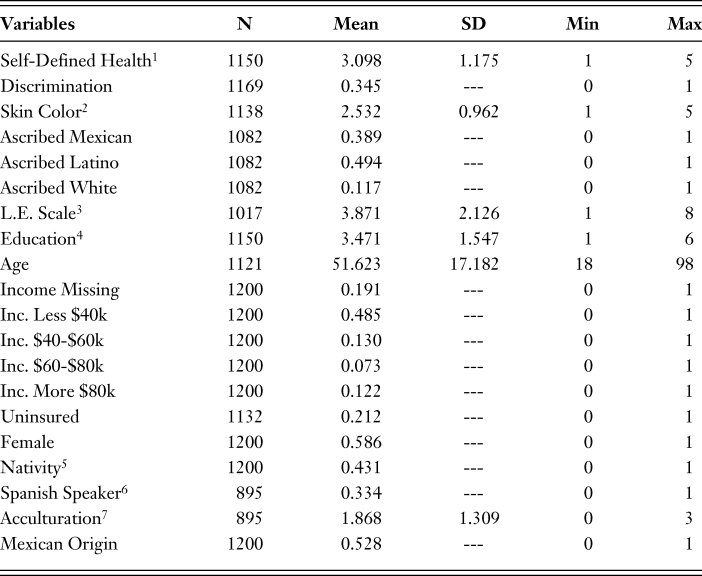
Finally, our measure of discrimination experience utilizes the following survey question: “Have you personally experienced discrimination, or been treated unfairly because of your race or ethnicity?” The response categories for this measure are 0 = No and 1 = Yes. This measure is specific to racial/ethnic discrimination, making it ideal for our purposes here. This measure is also very similar to most identified in Yin Paradies’ (2006) systematic review of the extant work focused on self-rated discrimination and health status. Summary statistics for all variables used in this analysis are listed in Table 1.
Summary Statistics

1 Health (1=Poor, 2=Fair, 3=Good, 4=Very Good, 5=Excellent)
2 Skin Color (1=Very Light, 2=Light, 3=Medium, 4=Dark, 5=Very Dark)
3 L.E. Scale is our lived experience scale which is outlined in Table 2.
4 Education (1=Grade 1-8, 2=Some HS, 3=HS, 4=Some College, 5=College Grad, 6=Post-Grad)
5 Nativity (0=Foreign Born, 1=U.S.-Born)
6 Spanish Interview (Only includes Spanish respondents who were given the “Mas o Menos” option)
7 Acculturation Scale (Combining Language and Nativity)
Our analytic approach is focused on the exploration of various techniques intended to determine if our measures of race/ethnicity provide a more clear depiction of the relationship between race and health outcomes among the Latino population than studies using more traditional measures. While our primary focus in this paper is to determine the impact that race, as measured from this multi-dimensional approach, has on the self-rated health of Latinos in the United States, we are also concerned with how scholars interested in more developed approaches to measuring race should approach modeling. Therefore, we conduct a number of different analyses, including principle components analysis and various interaction specifications to provide a guide as to how to best measure race as a lived experience.
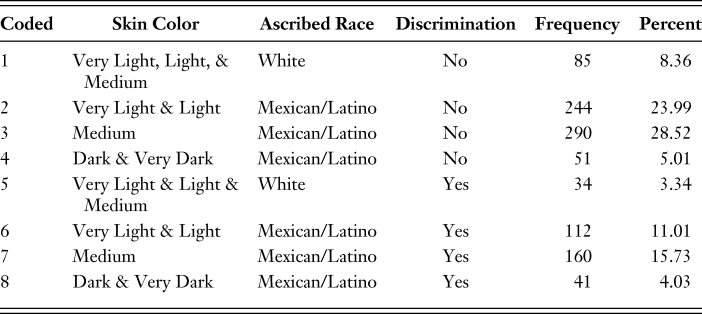
Our Race/Ethnicity as Lived Experienced Scale is intended to capture the lived experience of race for Latinos in a single “scaled” measure with the goal of parsimony and sensitivity to multi-dimensionality. Race is a highly-complex concept, and consequently, our effort to account for this complexity within the approach of scaling was a challenge. From a theoretical perspective, identifying the minimum and maximum values of the scale was straightforward; at the low end of the scale are Latinos who report the lightest skin color, reported no discrimination, and who are viewed by others as White. Conversely, the high category includes dark-skinned Latinos who have experienced discrimination and who report being viewed by others as non-White.
Establishing the categories in the middle as well as assigning those who are ascribed as “Mexican” on the scale proved to be more challenging, as this required us to determine where some respondents—those who, for example, reported dark skin but who did not experience discrimination—would fall along the scale relative to light-skinned Latinos who have experienced discrimination. Due to the lack of theory in this area, and for simplicity, we combined ascribed Mexican and ascribed Latino respondents. This parsimonious approach allows us to observe how being ascribed White compares to all other Latino/Hispanic categories. Among these two factors, we approached the scale from the standpoint that skin color was the more dominant dimension of race because: (a) skin color has been identified in the literature as a predictor of health outcomes; and (b) more importantly (and as discussed below), skin color is conceived as the antecedent to both ascribed race and discrimination experiences. The Race/Ethnicity as Lived Experience Scale is presented in Table 2.
Race as Lived Experienced Scale
Finally, we control for a handful of measures that have been found to be correlated with Latino health status in previous research. The inclusion of these factors is intended to provide clarity as to whether or not the relationship of interest in our analysis, a multidimensional approach to race and health status, holds when other factors known to influence Latino health are accounted for in the model. Among the demographic variables, we include standard measures of income, educational attainment, age, and gender. The impact of socio-economic status on Latino health outcomes is well established in the literature (Alder et al., Reference Alder, Boyce, Chesney, Cohen, Folkman, Kahn and Sym1994; Braveman et al., Reference Braveman, Cubbin, Egerter, Chldeya, Kristen, Metzler and Posner2005; Marmot Reference Lopez and Gomez2006). To assess income we have included several dummy variables representing different income categories: $40,000-$60,000; $60,000-$80,000; and greater than $80,000; with less than $40,000 serving as the reference category. We also include a variable of “unknown” income in the model which includes respondents who did not report their income as a means of saving cases. We also include a measure for whether respondents currently have health insurance, as we expect uninsured Latinos to have poorer self-rated health based on the findings from previous work exploring this relationship (Carrillo et al., 2011; Center for Disease Control 2011). Finally, we control for several Latino-specific factors, including nativity, language of survey, and national origin.
Research has documented that more acculturated Latinos, again, often measured by language, nativity, and length of stay, receive higher rates of preventive services, encounter fewer barriers in obtaining care, and are more likely to have health coverage (Lara et al., Reference Kuzawa and Sweet2005; Wells et al., 1989). However, scholars utilizing self-rated health as their dependent variable have found that foreign-born Latinos are more likely to report better self-reported health than their U.S.-born counterparts (Finch et al., Reference Espino and Franz2001; Massey et al., Reference Massey and Denton2003). This debate in the literature motivates our inclusion of measures of acculturation. For the purposes of this study, we construct a scaled acculturation variable incorporating both nativity and language of survey into a single measure, as these two measures are highly correlated and inclusion of both separately may lead to issues with multi-collinearity. Acculturation is measured on a scale from 0-3, with 0 representing the least acculturated and 3 representing the most acculturated (i.e., 0 = non-U.S.-born and Spanish survey administration; 1 = U.S.-born and Spanish survey; 2 = non-U.S.-born and English survey; 3 = U.S.-born and English survey) based on the following two questions: “Do you prefer that we speak in English or Spanish?” and “Were you born in the United States, on the island of Puerto Rico, or in another country?” Puerto Ricans are counted in our acculturation variable as U.S.-born if they were born in the United States and foreign-born if they reported being born outside the United States. We also include a measure for whether respondents are of Mexican origin, as this population has been found to have unique health outcomes relative to Latinos from other backgrounds (Center for Disease Control 2011; Alegria et al., Reference Alegria, Mulvaney-Day and Canino2007; Zsembik and Fennell, Reference Woo, Austin, Williams and Bennett2005).
RESULTS
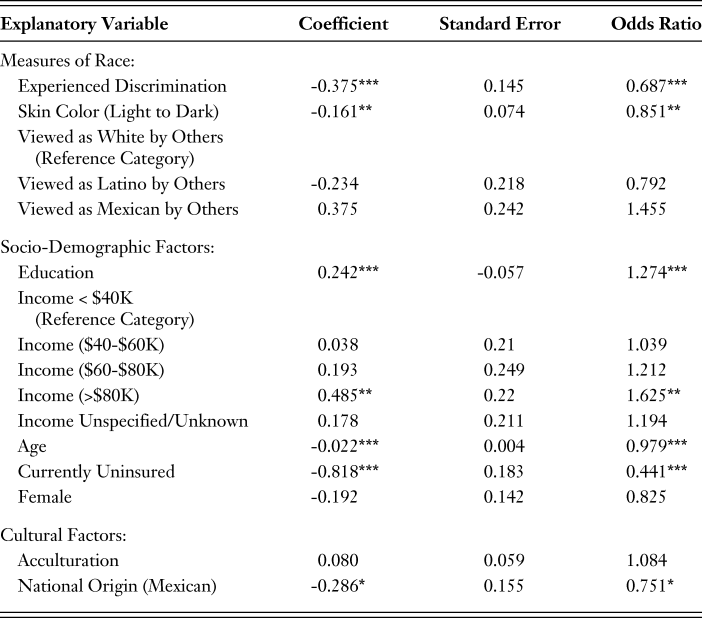
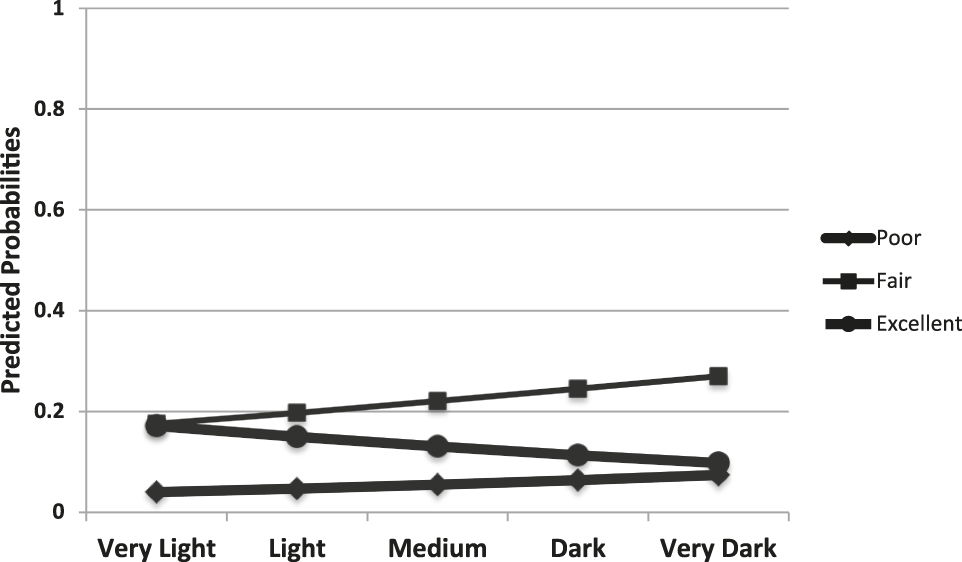
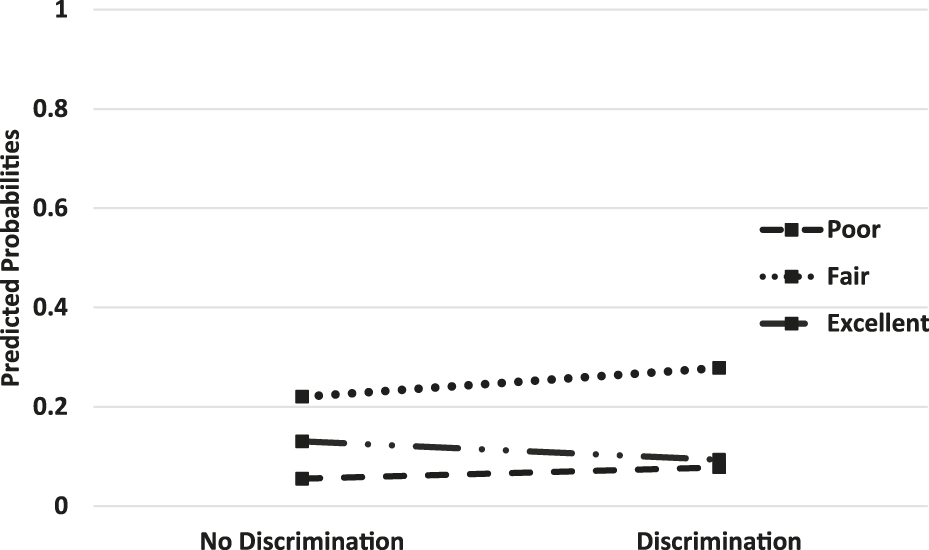
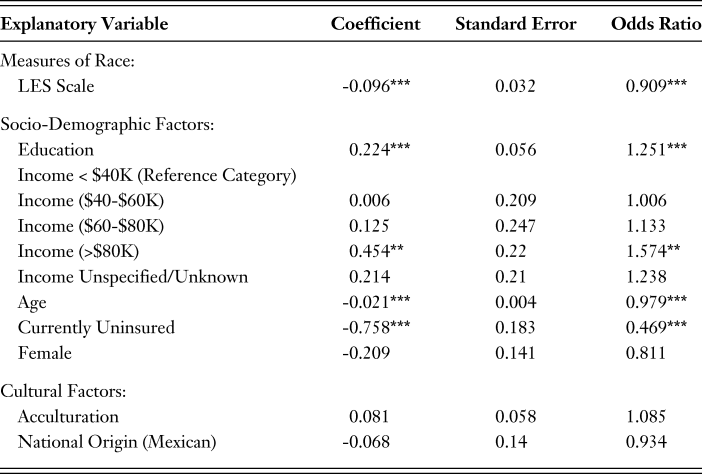
We begin our results with a discussion of our ordered-logistic model, which is intended to test the Lived Experience Hypothesis. Our multidimensional measures of race are negatively correlated with self-rated health among Latinos. The results of this model are depicted in Table 3. We find strong support for our primary hypothesis, as both discrimination and skin color are significantly and negatively associated with self-rated health status, indicating that Latinos who have faced discrimination and who have dark skin color report worse health status than Latinos who are lighter and who have not faced discrimination in the past year. To assess the substantive impact of these two variables on self-rated health, we also computed and plotted predicted probabilities for both skin color and discrimination (see Figures 2 and 3), allowing the values of these two variables to vary while holding the control variables at their means, medians, or modes. As we see in Figures 2 and 3, both skin color and discrimination have a marked substantive effect on Latino health, with the likelihood of reporting “excellent” health being 17.14% for very light skinned Latinos compared to 9.8% for very dark skinned Latinos. This represents a 7.34% point decrease in reporting “excellent” self-rated health as one moves from light to dark skin.
Ordered Logistic Regression Coefficients for Measures of Race as Lived Experienced on Latino Self-Rated Health
Source: Latino Decisions/UNM RWJF Survey.
N = 700 Pseudo R2 = .059
* <.01 **p <. 05 *** p <. 001
Similarly, Latinos who have not reported experiences of discrimination have a greater likelihood of reporting “excellent” health (13.04%) when compared to those who do report experiences of discrimination (9.34%). We also find a reasonable substantive impact of both skin tone and discrimination on the probability of individuals reporting “fair” health status when compared to “poor” health. For instance, as one moves from light to dark skin there is a 9.43% increase in the likelihood of reporting fair health, and as one moves from no experiences of discrimination to experiences of discrimination we find an increase in the likelihood of reporting fair health.
Although ascribed race is not statistically significant when other race variables are included, the results from the first stage of our analysis strongly suggest that Latinos who have a lived experience in which race and ethnicity has a marked impact on their daily lives have worse health than those with a different lived experience where race/ethnicity is not as prominent. That said, our model suggests that, when juxtaposed with discrimination and skin color, being viewed as Latino or “Mexican” (relative to White) does not have a significant impact on self-rated health. Moreover, the results of the principle components analysis and bi-plots reveal that ascribed race and skin color are highly correlated constructs that are orthogonal with experiences of discrimination. In other words, among these three constructs, skin color and ascribed race cluster and are more closely aligned compared to experienced discrimination.
In addition to our multi-dimensional measures of race, we will briefly discuss the performance of the control variables as well. The socio-demographic factors are very meaningful, as essentially all of these controls have an impact on Latino self-rated health status. In line with the extant literature on the relationship between education and income broadly (Marmot Reference Lopez and Gomez2006; Marmot and Wilkinson, Reference Marmot1999), both education and income are positively correlated with self-rated health among Latinos. However, we find that while Latinos who make more than $80,000 a year (relative to Latinos who make less than $40,000 a year) report better health, Latinos in the middle category of $60,000-$80,000 and Latinos who make between $40,000 and $60,000 are not statistically different from Latinos in the low-income category. Furthermore, and also consistent with previous research, age and not having health insurance are significantly and negatively correlated with self-rated health status. Finally, we do not find evidence that Latinas report poorer health status than Latino males after controlling for other factors. Among cultural factors, we find that Latinos who are more acculturated are no different than less acculturated Latinos. Lastly, we find that respondents of Mexican origin report worse health than non-Mexican-origin Latinos, a finding that is marginally significant at the 0.10 level. The fact that our control variables are in line with the extant literature lends some confidence in the results of our race measures. (See Fig. 1)
The Substantive Impact of Skin Color on Health Status.
Note: Controlling for Discrimination, Ascribed Race Categories, Age, Education, Income, Gender, Health Insurance, Nativity, Language of Interview, and Mexican Origin.
The Substantive Impact of Discrimination on Health Status.
Note: Controlling for Skin Color, Ascribed Race Categories, Age, Education, Income, Gender, Health Insurance, Nativity, Language of Interview, and Mexican Origin.
To further explore our multi-dimensional approach to measuring race, the next steps in our analysis include the specification of an interaction between skin color and discrimination. These two variables were found to be significantly correlated with self-rated health in the previous model. Now we explore whether these two specific aspects of race as an individual’s lived experience, which interact for Latinos who are darker skin and experienced discrimination, result in worse self-rated health reports than Latinos with iterations that are less “extreme.” The results from this model (not reported in this paper), however, reveal that the interaction term is not statistically correlated with Latino self-rated health. We therefore do not find evidence that these two measures of race have an interactive impact on Latino health status.
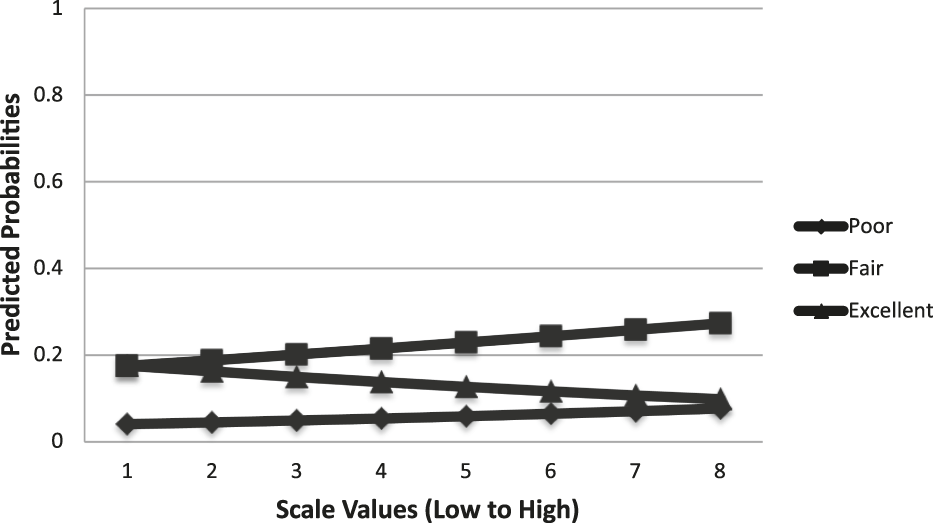
The final and arguably most ambitious component of our analysis is to test the association of a scale combining our three dimensions of race as lived experience of individuals with Latino self-rated health. Our scale ranges from a low value for Latinos with light skin tone who did not report discrimination and who are viewed by others as being White to a high value for Latinos with dark skin who did report discrimination and who are viewed by others as being Mexican or Latino. In short, this scale represents our approach to capture the effect race and ethnicity have on the lives of Latinos in the United States and how these lived experiences influence the health status of this population. As shown in Table 4, and in line with our Lived Experience Hypothesis, the race scale is significant and negatively correlated with Latino self-rated health. This relationship holds even when we control for other factors known to influence health outcomes, including having health insurance. Consequently, we find that when all three dimensions of race are combined in a scale, Latinos whose daily lives are directly influenced by their race/ethnicity report poorer health than Latinos for whom race is not a central factor. As shown in Figure 3, the substantive impact of the race scale indicates that the lived experiences associated with race have meaningful implications for the reported health status of Latinos. More specifically, we see in Figure 3 that as Latinos move along the scale from the minimum to maximum value, the likelihood of reporting “excellent” health decreases from 17.6% to 9.86%, a 7.74% point decrease. We conclude that the experiences associated with being a racial/ethnic minority in the United States do have significant consequences for the self-rated health of Latinos.
Ordered Logistic Regression Coefficients for the Lived Experienced Scale on Latino Self-Rated Health
Source: Latino Decisions/UNM RWJF Survey
N = 700 Pseudo R2 = .053
* <. 01**p <. 05 ***p <. 001
The Substantive Impact of Race as Lived Experience Scale on Health Status.
Note: Controlling for Age, Education, Income, Gender, Health Insurance, Nativity, Language of Interview, and Mexican Origin.
The performance of the control variables, for the most part, portrays a similar story to that described for the base model where each measure of race was specified independently. For example, younger Latinos and those with higher education levels report better health than their older and less educated counterparts. Furthermore, Latinos who lack health insurance report worse health than those who are currently insured. We note that the impact of combining our three dimensions of race into a scale generally has little impact on how the other variables in our model influence Latino self-rated health.
CONCLUSIONS AND DISCUSSION
As our nation continues to become more racially and ethnically diverse, understanding the ways in which the lives of individuals in society vary by race and ethnicity becomes more critical. We advocate for approaching the task of measuring race and ethnicity from the standpoint of capturing the lived experiences of individuals. This requires moving beyond single measures of race and/or ethnicity which are usually constructed through self-identification. We have suggested three specific measures relevant to the race and health literature that have the potential to move us in this direction: skin color, ascribed race, and discrimination experiences. By exploring the relationships between these concepts and self-reported health status, we are able to determine whether or not this multi-dimensional measurement strategy yields any significant results beyond what we might find if we relied on a single measure of race/ethnicity.
Our analysis reveals that, among these three factors, both skin color and discrimination experiences are significantly and negatively correlated with Latino self-rated health status. Therefore, Latinos who have darker skin color and who have faced discrimination in their daily lives have poorer self-rated health compared to Latinos who are of lighter skin color and who do not report any experiences with discrimination. Furthermore, when combined into a scale with ascribed race, we find that Latinos with a lived experience that includes being discriminated against, having darker skin, and being viewed as being non-White by others have poorer health than those on the other extreme of the scale. This represents solid evidence for our Lived Experience Hypothesis.
While promising at this early stage of development, we acknowledge that there are a number of unsettled issues with our analysis. Most prominently, we must conduct the path analysis component of our analysis to help determine the process by which these measures influence self-rated health status. We anticipate finding that skin color is the dominant factor which both directly and indirectly impacts health by driving ascribed race and experiences with discrimination. However, we need to test whether our theory that phenotype, in this case skin color, provides the context for the various lived experiences within racial and ethnic communities. The results from this final stage of our analysis can help improve our scaling efforts and potentially advance the theoretical foundation driving many research questions within racial and ethnic politics. Research in this area should consider protective factors such as marital status on the self-reported health of Latinos, an inquiry we could not explore due to the absence of this measure in the dataset.
Finally, although our primary focus in this paper has been to determine if these alternative measures to race and ethnicity impact the self-reported health status of Latinos, there are many other applications for this approach in communities of color. Scholars may gain new insights into a range of health, illness, social, and political outcomes in communities of color by applying this multidimensional measurement strategy. For example, the lived experience scale that we have developed in this analysis could be applied to study the group identity of Latinos, as well as their socio-economic status. Helping advance a fuller notion of “race” through a novel measurement approach has benefits to a wide range of scholars. As the nation continues to respond to a diversification of its population, scholars will need to rethink approaches to measuring race and ethnicity. With internal variation within groups becoming just as important as differences across them, our study provides an innovative measurement strategy for others to follow. We hope that this will spark a movement away from binary measures of race and ethnicity with the goal of improving our ability to tackle disparities in health and other outcomes.