Introduction
Mucociliary clearance is a vital component of the respiratory system. It plays an important role in the defence mechanism of the upper and lower respiratory system. Mucus and ciliary beat activity are two interrelated variables which control mucociliary clearance.
Respiratory mucus is a very complex biological material with properties such as viscosity, elasticity, ‘wettability’ and adhesiveness. It is composed of ions, proteins, glycoproteins, lipids, phospholipids and water. Effective mucociliary clearance requires the optimal amount and biochemical composition of mucus, together with other environmental factors.Reference Cohen1
The tear film consists of three components or layers: mucus, aqueous and lipid. The functions of the tear film include: lubrication of the ocular surface; removal of foreign material from the ocular surface; protection by antibacterial action; and tissue maintenance and wound healing at the ocular surface.Reference Perry2
The tear film drains into the nose through the nasolacrimal canal. We noted that most patients undergoing dacryocystorhinostomy for epiphora had a dry, crusty nasal mucous membrane on the impaired side but normal nasal mucosa on the healthy side. Upon consideration of the similar biochemical composition of tear film compared with respiratory mucus, and the optimal conditions of respiratory mucus for effective mucociliary clearance, we hypothesised that the lubricative, antibacterial and hydrative properties of the tear film may contribute to nasal mucociliary clearance.
We therefore examined the effect of the tear film on mucociliary clearance, by comparing the mucociliary transport time results of epiphora patients with those of healthy subjects.
Materials and methods
Study design
After obtaining approval from our institution's ethics committee, written, informed consent was obtained from the patients and volunteers. A prospective, randomised, clinical study was conducted on 18 patients with epiphora. Twenty healthy volunteers were also included as a control group.
Patients
The study group comprised 18 patients who had suffered epiphora for at least a six-month period. The study group was assessed as 26 nasal cavities, because 10 of the 18 patients had unilateral disease while the remaining eight had bilateral disease.
The exclusion criteria consisted of factors proven to impair mucociliary clearance, such as any respiratory tract infection six weeks prior to evaluation, chronic sinusitis, nasal polyposis, anatomical deformity of the nose, previous nasal surgery, allergic rhinitis, smoking, or use of any systemic or local medication.
All patients underwent nasal endoscopic examination and paranasal sinus computed tomography (CT) scanning. The Lund–McKay score was calculated for each patient. Patients who were found to have any endoscopic signs of paranasal sinus infection plus a Lund–McKay score greater than two were excluded from the study. The absence of allergic rhinitis was established using a symptom questionnaire and a skin prick test with 24 parameters.
Total obstruction of the nasolacrimal duct was determined by studying irrigation of the nasolacrimal system, and by a fluorescein dye study. Irrigation was performed by the same ophthalmologist for all patients.
Controls
The control group comprised 20 healthy volunteers without any eye or nasal complaints, and had a similar age and sex distribution to the study group. Nasal endoscopy and skin prick tests were performed in all control group volunteers; however, CT scanning was not performed for ethical reasons. The same exclusion criteria used for patients were applied to the control group subjects.
Evaluation of mucociliary transport
The saccharine transit test was used to assess mucociliary transport. A saccharine granule approximately 1 mm in diameter was introduced into the upper part of the inferior concha 1.5 cm from the nares. The time from the introduction of the granule until the patient reported a sweet taste was accepted as the saccharine transit time. The upper limit of the waiting time was 45 minutes (min). All saccharine transit tests were performed by the same examiner under the same conditions of room temperature, humidity and position. Tests were applied to all of the study patients for both nasal cavities, with tests at least two days apart. Tests were performed only on one side in control subjects. The saccharine transit times for all 26 diseased nasal cavities were compared with those of the 20 healthy control nasal cavities. In addition, the saccharine transit times of the healthy nasal cavities of patients with unilateral epiphora were compared with those of their diseased side, and also with those of the control group.
Statistical analysis
The Statistical Package for the Social Sciences for Windows version 15.0 software program was used for statistical analysis. Student's t-test was used for comparison of quantitative data. A p value of less than 0.05 was accepted as significant at the 95 per cent confidence level.
Results and analysis
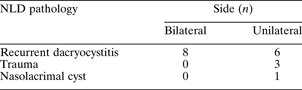
The study group comprised 18 patients – 11 (61.1 per cent) women and seven (38.9 per cent) men – with a mean age ± standard deviation (SD) of 47.27 ± 9.96 years (range 26–54 years). Ten of the patients had unilateral disease while the remaining eight had bilateral disease. The patients' clinical details are shown in Table I.
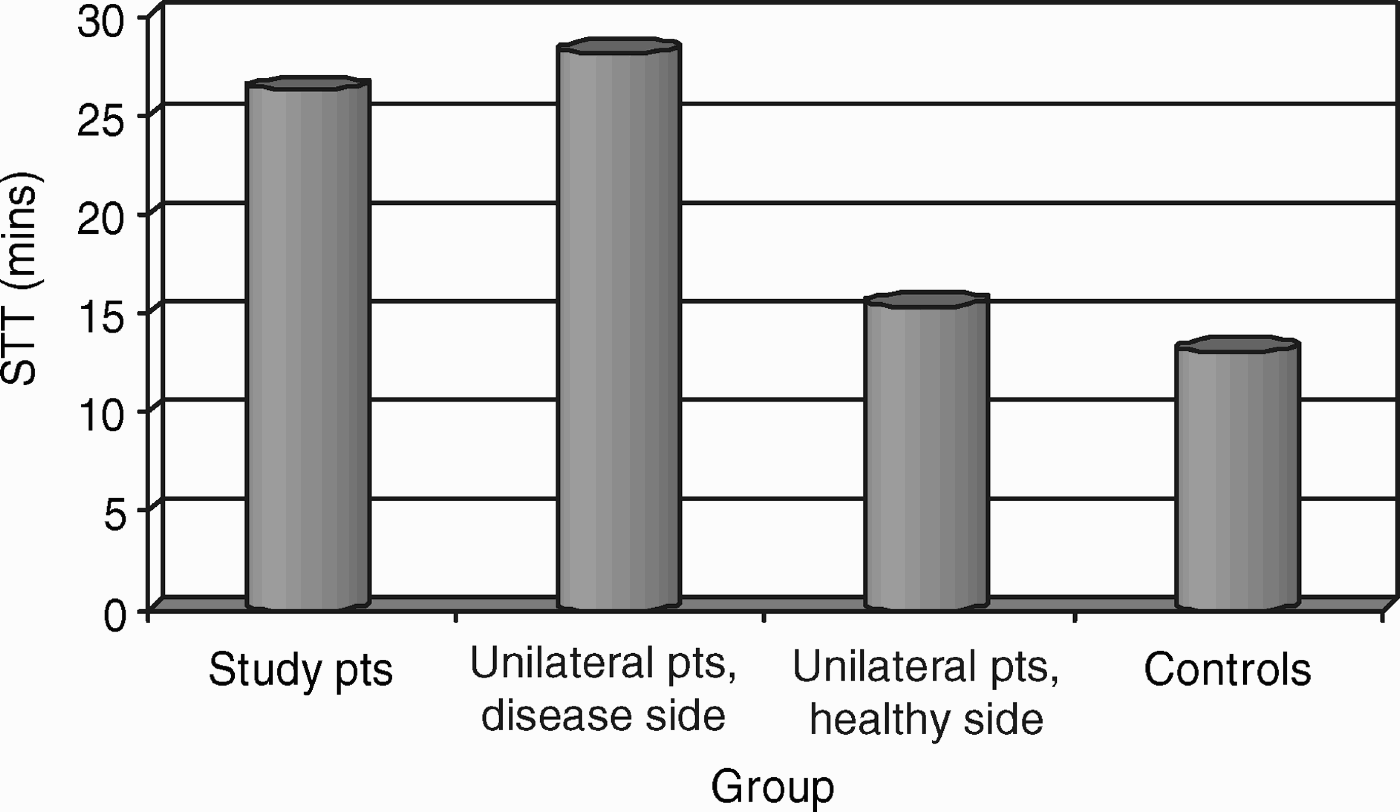
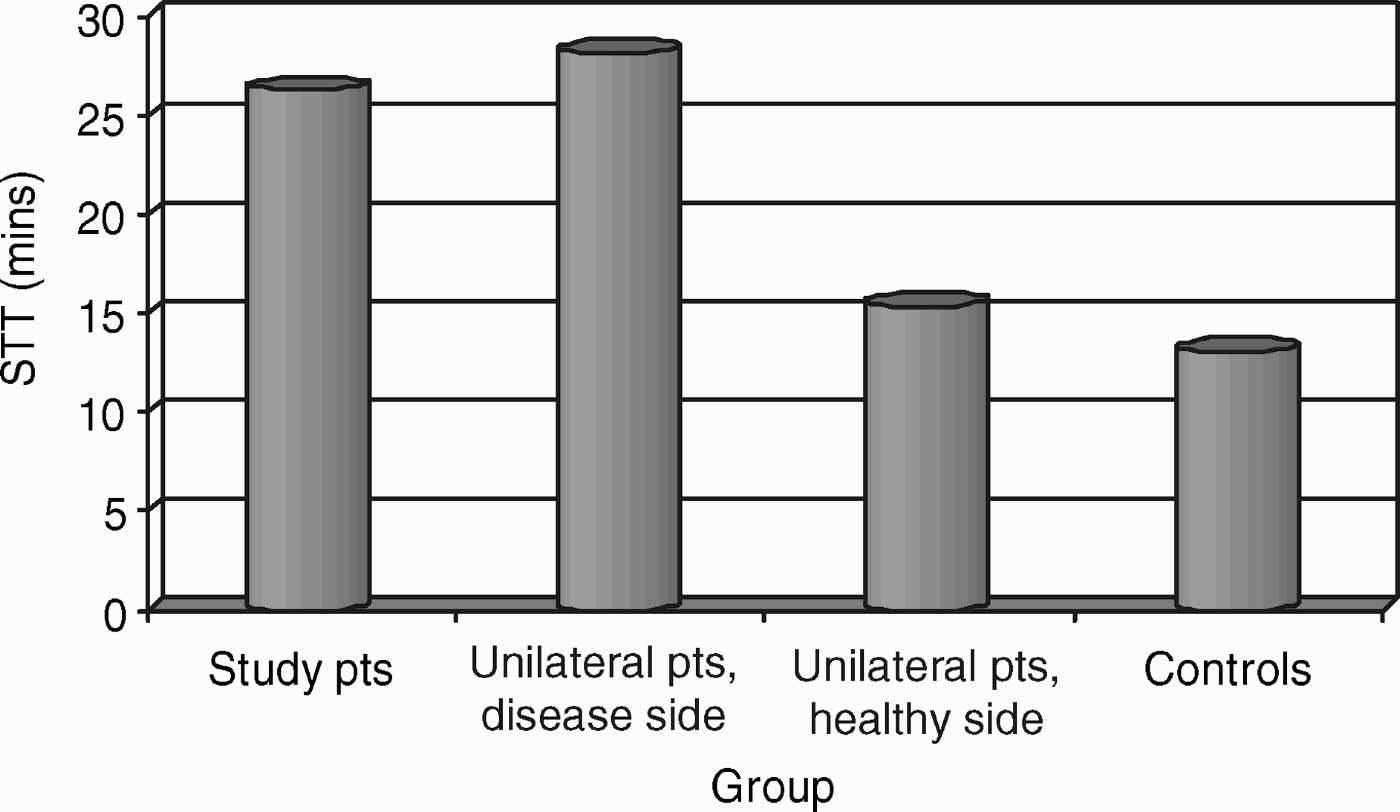
Mean nasal saccharine transit times (STTs) for the various groups.
Patients' clinical details
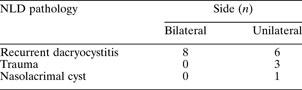
NLD = nasolacrimal duct
The control group comprised 20 healthy volunteers – 12 (60 per cent) women and eight (40 per cent) men – with a mean age ± SD of 42.46 ± 8.75 years (range 25–50 years).
The mean saccharine transit time ± SD was 26.30 ± 9.22 min for all 26 nasal cavities in the study group and 13.11 ± 3.33 min for the 20 tested nasal cavities of the control group. The mean saccharine transit times of the diseased and healthy sides of patients with unilateral epiphora were 28.20 ± 7.33 min and 15.40 ± 4.78 min, respectively. There was a highly statistically significant difference between the mean saccharine transit times of the study group and the control group (p < 0.01). There was also a highly statistically significant difference between the mean saccharine transit times of the healthy and diseased sides of patients with unilateral epiphora (p < 0.01). The mean saccharine transit time of the healthy sides of the unilateral epiphora patients was not statistically significantly different from that of the control group (p > 0.05). The saccharine test results of the study and control groups, and their statistical analysis, are shown in Table II and Figure 1.
Saccharine transit time for study and control groups

*Compared with controls; Student's t-test. †Compared with healthy side of unilateral epiphora patients. STT = saccharine transit time; SD = standard deviation; min = minutes; pts = patients
Discussion
The lacrimal function unit includes the lacrimal glands, ocular surface, eyelids, meiobian glands, and associated sensory and motor nerves.3 The tear film consists of three layers: mucous, aqueous and lipid. Blinking spreads the tear film over the ocular surface toward the medial canthus. There, the tears are drawn into the superior and inferior puncta to enter the lacrimal canaliculi. The canaliculi convey the tears to the lacrimal sac, the upper end of the nasolacrimal duct, which drains into the nose.
The mucous component is the innermost layer of the tear film, and is produced by conjunctival goblet cells. This layer contains multiple mucins. Functions of the mucous layer include lubricating the ocular surface and providing an adsorbent interface between the aqueous layer and the hydrophobic ocular surface epithelium. The mucous layer also traps foreign particles, cellular debris and microbes.Reference Gilbard4
The aqueous layer, the main portion of the tear film, lies on top of the mucous layer. It is produced by lacrimal glands and is composed of: water and electrolytes; antibacterial proteins such as lysozyme, lactoferrin and immunoglobulin; vitamin A; and growth factors. The functions of this layer are hydration of the mucous layer; supply of oxygen and electrolytes; antibacterial defence; and maintenance of cellular renewal.Reference Montes5, Reference Klenker and Sheardown6
The lipid component of the tear film covers the aqueous layer and is the outermost layer. It contributes to lubrication, enhances tear film spreading and provides a smooth ocular surface.Reference Gilbard4, Reference Foulks7
Epiphora is a common problem treated by ophthalmologists and otolaryngologists. It is caused by nasolacrimal duct obstruction. Aetiological factors include tumours, masses, and any infection or trauma to the duct resulting in scarring. Epiphora is diagnosed by studying the irrigation of the nasolacrimal system, followed by a fluorescein dye study.Reference Zaldivar, Buerger and Woog8, Reference Mills and Meyer9 Whatever the cause, the result of nasolacrimal duct obstruction is inhibition of drainage of tears into the nasal cavity.
Mucociliary clearance is an essential component of the respiratory system. It is the primary defence mechanism against inhaled particulate matter. Two processes contribute to mucociliary clearance: mucus production and mucus transport. Goblet cells secrete mucus, which traps inhaled matter. Ciliated cells beat and sweep the mucus into the gastrointestinal tract for elimination after swallowing. Mucociliary clearance is controlled by physiological, anatomical and biochemical variables. The physiological variables include the amount of mucus and the effectiveness of the ciliary beat.Reference Cohen1 Dynamic regulation of cilia is important. Mechanical or chemical stimulation from the environment can modulate ciliary beat frequency, as can hormonal, thermal and neurotransmitter stimulation from the host.Reference Sanderson and Dirksen10–Reference Gren, Smallman, Logan and Drake-Lee15
Respiratory mucus is a very complex biological material. It is composed of 1 per cent sodium chloride, 0.5–1 per cent free protein, 0.5–1 per cent mucins (carbohydrate-rich glycoproteins and proteoglycans), 1 per cent lipids and phospholipids, and approximately 95 per cent water.Reference Houtmeyers, Gosselink, Gayan and Decramer16 It possesses different rheological properties, such as viscosity (a liquid property), elasticity (a solid property), wettability and adhesiveness. The viscoelastic property is directly involved in mucus transport capacity. An intermediate viscoelasticity is required for optimal mucociliary transport.Reference Houtmeyers, Gosselink, Gayan and Decramer16–Reference Verdugo18 Different biochemical constituents contribute to the gel properties of respiratory mucus, such as proteins, glycoproteins, proteoglycans, lipids and the degree of hydration. Loss of water, absence of glycoproteins and an increase in macromolecules may result in mucociliary transport impairment because of an increase in viscosity and adhesiveness. Respiratory mucus requires appropriate physicochemical properties for optimal mucociliary transport.Reference Girod, Zahm, Plotkowski, Beck and Puchelle19 In our study patients, disruption of tear drainage into the nasal cavity may have led to an imbalance in the composition and tonicity of nasal mucus.
There has been much reported research assessing the effects on mucociliary clearance of thermal conditions, humidity, infection, anatomical anomalies and nasal surgery.Reference Mwimbi, Muimo, Gren and Mehta14, Reference Gren, Smallman, Logan and Drake-Lee15, Reference Clary-Meinesz, Cosson, Huitorel and Blaive20–Reference Hafner, Davris, Riechelmann, Mann and Amedee28 However, there has to date been no study assessing the interrelationship between the tear film and the respiratory mucus, nor any definitive report of the effect of tears on nasal mucociliary clearance.
We found mucociliary clearance to be seriously impaired in patients with epiphora. There was a statistically significant difference between the saccharine transit times of patients with epiphora and control subjects. In addition, we found a statistically significant difference between the saccharine transit times of the healthy and diseased nasal cavities of patients with unilateral epiphora. Furthermore, the saccharine transit times of the healthy nasal cavities of unilateral epiphora patients were not statistically significantly different from those of control subjects.
The negative effect of nasolacrimal duct obstruction on mucociliary clearance may be related to quantitative and qualitative changes in the nasal mucus.
As mentioned earlier, the quantity of mucus in the nasal cavity is an important determinant of the effectiveness of mucociliary clearance. Absence of tear film mucus may lead to nasal mucus deficiency, despite mucus production by nasal goblet cells.
Nasolacrimal duct obstruction may also negatively affect the quality of mucus by affecting its rheological properties. Different biochemical constituents such as water, proteins, glycoproteins and lipids all contribute to the rheological status of mucus. These biochemical substances also make up the aqueous, mucous and lipid layers of the tear film. Disruption of tear drainage into the nasal cavity may lead to an inappropriate composition of nasal mucus.
• Most patients with nasolacrimal duct obstruction have dry, crusty nasal mucosa
• Nasolacrimal duct obstruction disturbs the drainage of tears into the nasal cavity
• This study assessed the effect of nasolacrimal duct obstruction on the mucociliary transport of nasal mucosa, by comparing the saccharine test results of epiphora patients and healthy controls
• Nasolacrimal duct obstruction had a negative effect on nasal mucociliary clearance. This may be related to changes in the amount and biochemical composition of nasal mucus
In addition to these quantitative and qualitative effects on nasal mucus, tears may also assist the mechanical washing of particles and materials on the floor of the nose toward the nasopharynx.
To the best of our knowledge, the current study is the first to assess the effect of tears on mucociliary clearance. The negative effect of nasolacrimal duct obstruction on mucociliary clearance is clear. Further studies are required to obtain a definitive explanation of the reasons for mucociliary clearance impairment in patients with nasolacrimal duct obstruction. The effects of the absence of nasolacrimal tear drainage on the viscoelastic properties and quantitative amount of nasal mucus require wider examination. The coexistence of rhinosinusitis with epiphora, and the status of mucociliary clearance before and after dacryocystorhinostomy, are also worthy of investigation. Histological examination with an electron microscope would be helpful in assessing any changes in cilia.
After careful clarification of the reasons for mucociliary clearance impairment, nasolacrimal duct obstruction may be accepted as an aetiological factor in the disruption of nasal mucociliary activity.
Conclusion
Nasolacrimal duct obstruction has a negative effect on nasal mucociliary clearance. This impairment may be attributed to disruption of tear drainage, leading to reduced volume and altered biochemical composition of nasal cavity mucus. Further objective biochemical, histological and physiological studies are needed to elucidate this interrelationship. Nasolacrimal duct obstruction may facilitate the development of rhinosinusitis by impairing nasal mucociliary clearance.