INTRODUCTION
Unmind, a leading provider of global workplace mental health solutions, released the results of its Wellbeing in Law 2024 study towards the end of last year. Featuring insights from 4448 legal professionals across mid-size law firms in the US and UK, the report highlighted the significant emotional and financial toll that unaddressed mental health issues are taking on the legal sector.
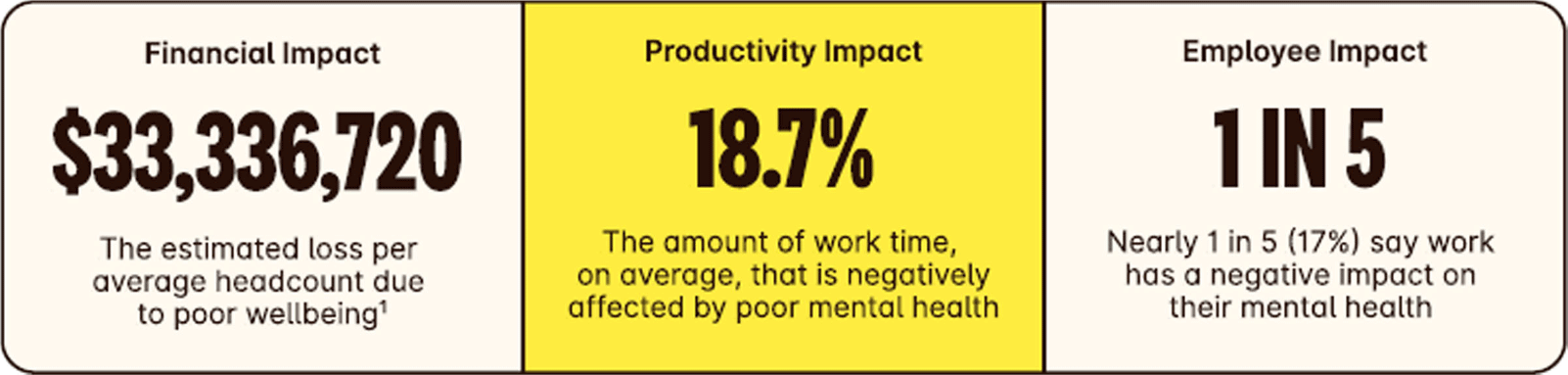
As far as the financial toll is concerned, mental health challenges are estimated to cost an average mid-size law firm over $33m (around £25m at the time of writing) in losses each year, and account for a 19% loss in productivity.
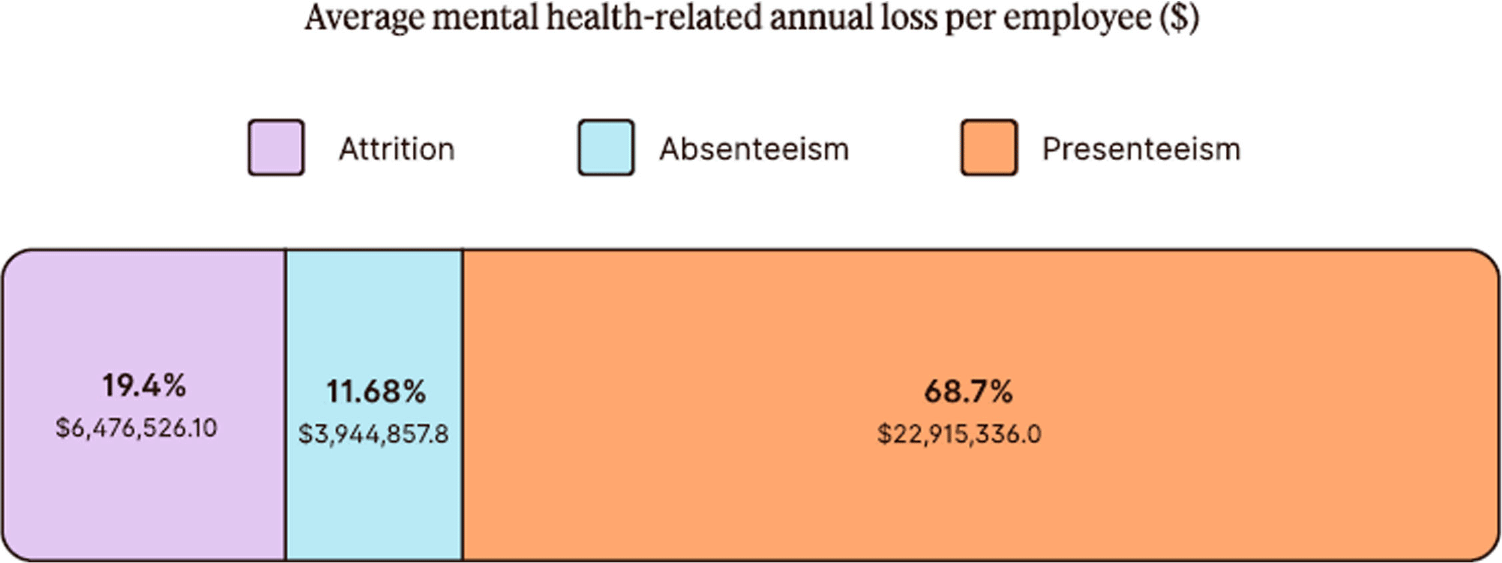
The analysis provides a stark assessment of the high levels of presenteeism (working while sick etc.), which account for 69% of all mental health-related annual productivity losses per employee, and details the substantial risks of burnout, particularly among younger and female lawyers. The study also reveals that almost one in five (17%) of lawyers say work negatively impacts their mental health. Three quarters (75%) of associates specifically cite burnout and mental health as primary reasons for leaving their firms. The disproportionate stress borne by associates, nearly double that experienced by partners and those in other roles, makes a compelling case for urgent reform within the industry.
“This report provides a sobering yet insightful analysis of the current state of mental health within the legal industry,” said James Keshvaratz, Committee member of the American Bar Association’s Wellbeing Pledge Committee. “Many of the challenges identified, such as high stress levels, lack of perceived support, and stigma surrounding mental health, will be familiar to those of us working in the field. We need a culture that promotes psychological safety, as well as a path to sustainable wellbeing in the legal profession.”
Advocating for a proactive approach to workplace wellbeing, Dr Nick Taylor, CEO of Unmind, said: “To remain competitive in this fiercely competitive space, it’s critical for leaders in the legal community to prioritise the wellbeing and performance of their teams by incorporating mental health strategies into their leadership models – investing in high-quality support services, harnessing AI to distribute the right care at the right time, and demonstrating impact with data.”
The study provides strong evidence that targeted interventions can effectively close the wellbeing gaps related to age and gender differences, thereby increasing employee satisfaction and boosting firm performance. By implementing these changes, law firms can not only increase their productivity and retention rates but also meet the stringent expectations regarding Environmental, Social, and Governance (ESG) compliance.
Unmind is championing a transformation in legal practice, encouraging leaders and influencers to utilise Wellbeing in Law 2024 as a blueprint for change.
The report, Unmind says, is a crucial tool for leaders who are eager to redefine their approach to mental health in the workplace to create sustainably high-performing firms.
Mental health issues in the workplace can equate to an average financial burden to mid-size law firms of $33m (£25m) the Unmind survey revealed

REPORT SUMMARY
The report’s Executive Summary states that it offers a comprehensive analysis of mental health within the legal sector, highlighting its financial and operational impacts. Drawing from data collected from over 4400 participants across nine mid-size law firms, the report quantifies the financial burden of poor mental health, estimating an annual loss of $33m per firm due to presenteeism, absenteeism and attrition.
Despite post-pandemic recovery marked by increased revenue and AI (artificial intelligence) investment, employee mental health remains a critical concern, with rising burnout and attrition risks, particularly among younger employees. The report identifies key challenges, such as high stress levels and low perceived support, and provides actionable recommendations to enhance performance, mental health and innovation in the sector.
In the introduction to the report Unmind tells us that while the legal sector is experiencing a period of growth and recovery, as mentioned above, persistent wellbeing challenges threaten to undermine this progress. The report underscores the significant impact of mental health issues on both employees and the financial health of law firms, and states that a 24% increase in support requests from lawyers in 2023 signals rising burnout and attrition risk.
The study also highlights disparities in wellbeing across age, gender and professional roles, with younger employees and women facing specific challenges. Addressing these disparities is crucial to sustain growth and ensure all employees can thrive, the report stresses.
FINANCIAL IMPACT OF POOR WELLBEING
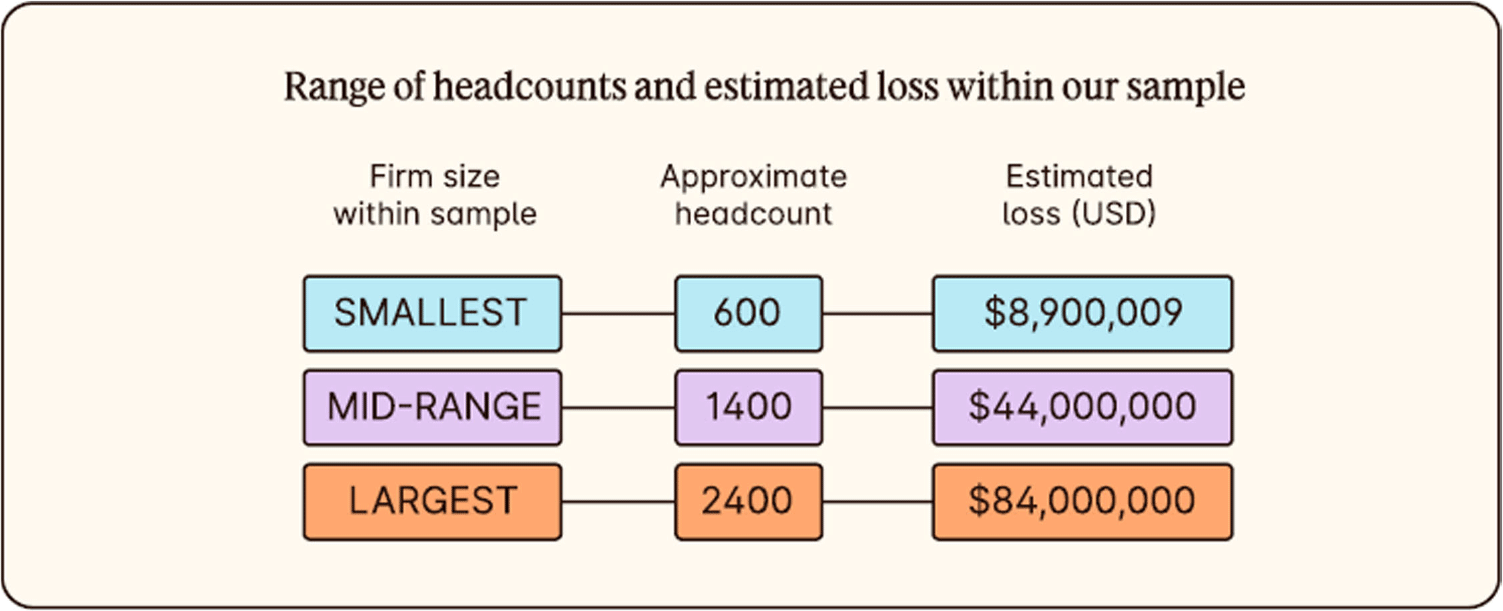
The report reveals that poor mental health costs mid-size law firms approximately 10% of their annual salary bills, translating to $33m (£25m) per firm (this is broken down in terms of size of firm and headcount in Figure 2). Presenteeism, or working while unwell, accounts for 70% of these costs, significantly affecting team morale, capacity and work quality. The financial impact is measured across three domains: presenteeism, absenteeism and attrition, with presenteeism being the leading driver of productivity loss (see Figure 3).
(Unmind)

(Unmind)

DRIVERS OF WORKPLACE HEALTH
Key challenges and strengths in the legal sector are identified in the report, including mental health maturity and senior leadership support. Poor mental health maturity is linked to stigma and limited access to support, while high levels of fulfilment and psychological safety enhance employee engagement and innovation. Addressing these areas can mitigate the financial impact of poor mental health and foster a more engaged workforce.
SECTOR CHALLENGES: STRESS, STIGMA, LEADERSHIP BUY-IN
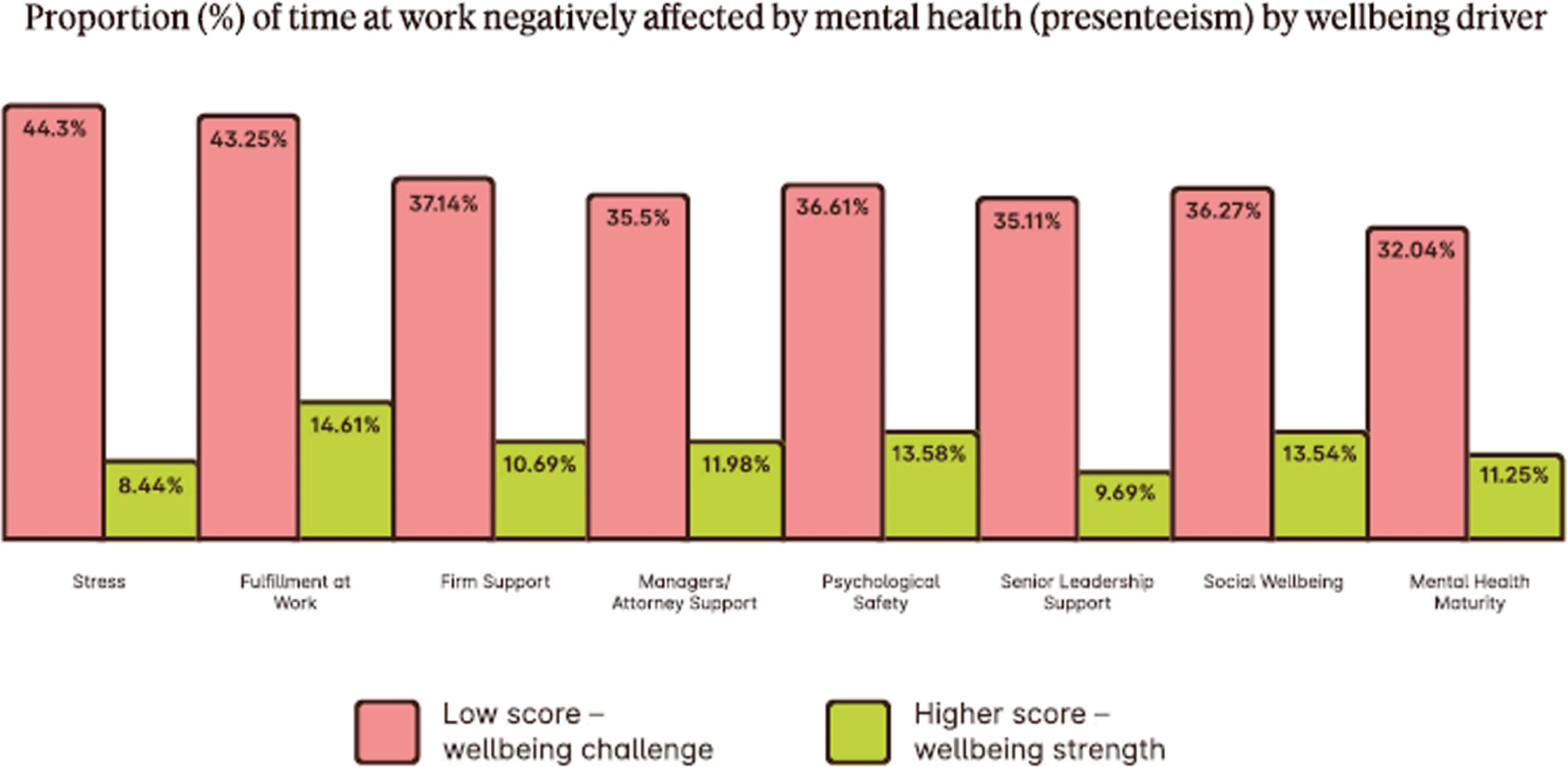
Unmind states in the report that excessive stress is harming performance, saying that for employees reporting high stress, only a quarter (27%) feel able to fulfil client demands and the expectations of their role. Meanwhile, employees who reported high levels of stress indicated that poor mental health impacted their work performance approximately 44% of the time. Also, it states that highly stressed employees are 3.7 times less likely to meet client demands.
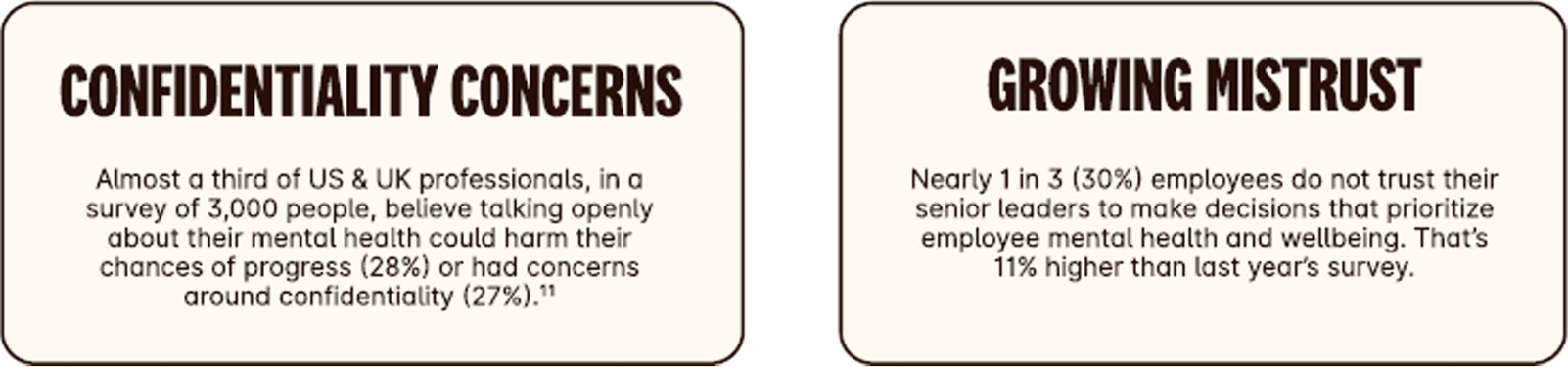
The report also notes that low scores in mental health maturity mean that employees experience greater stigma around these issues. Without being able to openly discuss mental health challenges at work, employees are less able to access support when they need it.
SECTOR STRENGTHS: MOTIVATION, SUPERVISOR SUPPORT AND PSYCHOLOGICAL SAFETY
Work fulfilment continues to have a positive impact on productivity, the report states. When employees feel challenged to learn and grow, their sense of meaning and work motivation is higher.
The report also states that psychological safety strengthens teams and that fostering psychological safety – where employees feel secure in taking risks, acknowledging mistakes or concerns and engaging in difficult conversations – supports innovation and strengthens team dynamics.
DISPARITIES IN WORKFORCE
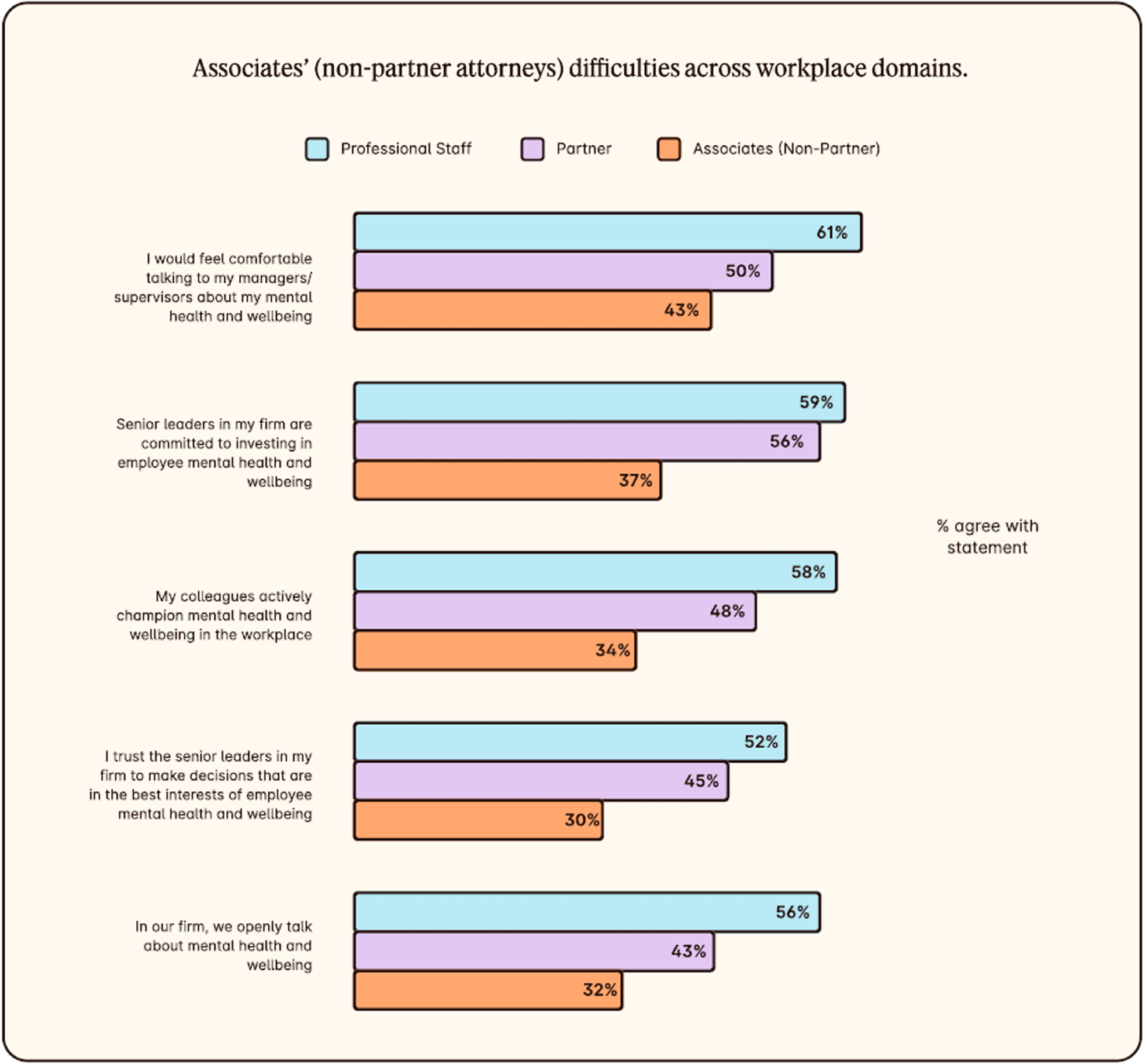
According to the survey associates face more stress and stigma than their colleagues, posing the greatest financial risk due to higher healthcare needs and reduced productivity – the survey reveals that 75% of associates cite burnout and mental health as primary reasons for leaving their firms.
Meanwhile, gender and age disparities reveal that younger employees experience poorer wellbeing, while women report lower psychological safety. Unmind says that targeted interventions are needed to address these challenges and sustain growth.
ANALYSIS OF IMPACTS
Mental health issues in the legal sector have profound financial and operational impacts. High stress levels and low perceived support contribute to burnout and attrition, particularly among younger employees and women. The report highlights the importance of integrating mental health into leadership development and leveraging AI to manage workloads. By addressing these challenges, law firms can improve employee wellbeing and enhance overall performance.
CONCLUSION
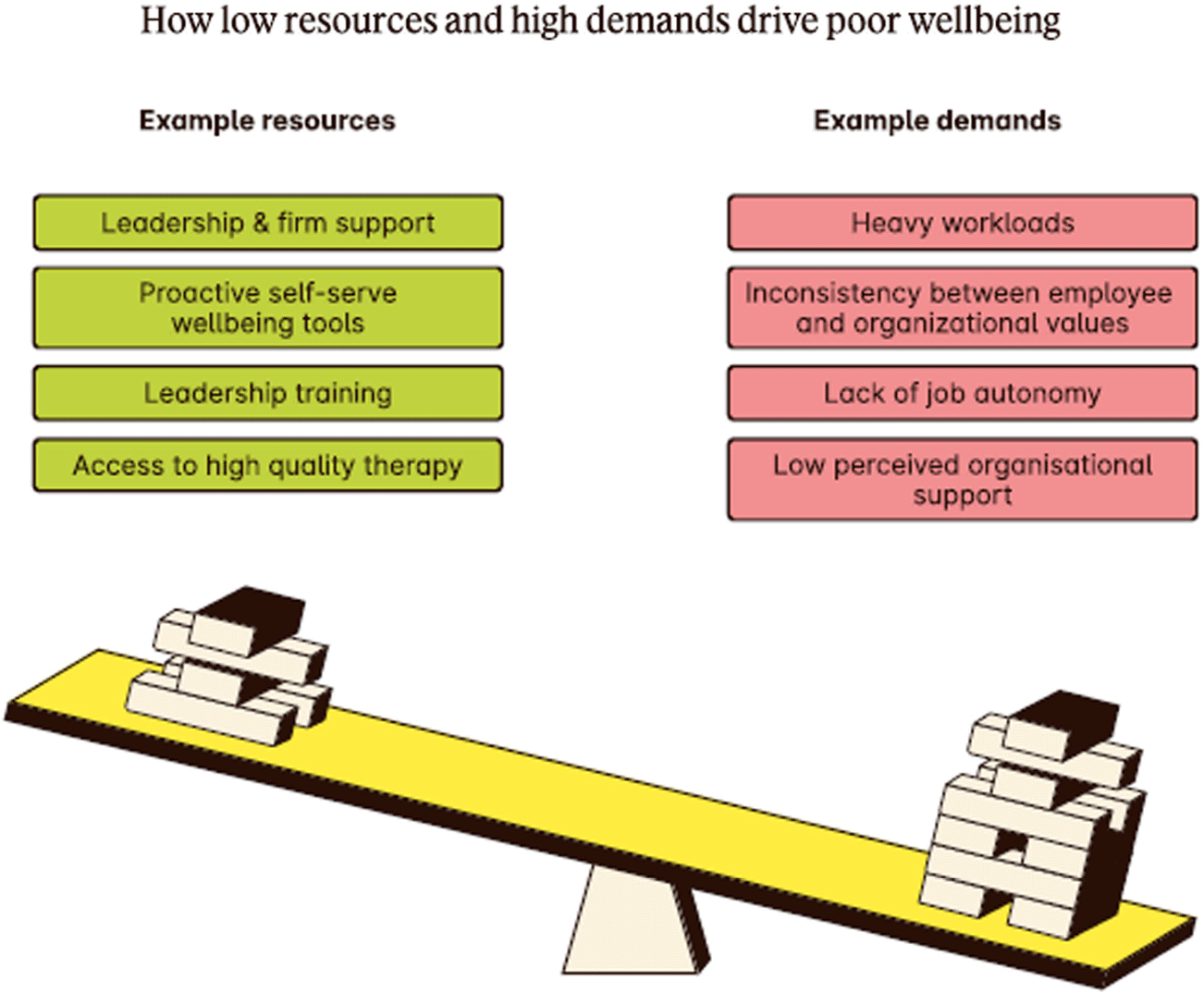
Creating a mentally healthy profession requires a holistic approach to wellbeing that balances work demands with adequate resources. Law firms should implement mental health training for leaders, integrate AI to reduce burnout, and offer accessible, high-quality mental health support. By focusing on these areas, the legal sector can create a healthier work environment, enhance performance and become an industry leader in employee wellbeing. Addressing disparities in wellbeing across age and gender is also essential for the sector’s long-term success and sustainability.
(Unmind)

(Unmind)

(Unmind)

(Unmind)

(Unmind)

(Unmind)

(Unmind)

About Unmind
Unmind is the leading workplace mental health platform for global enterprises. The platform combines the latest wellbeing science with cutting-edge AI to build measurable and sustainable performance cultures. Unmind powers the wellbeing strategies of some of the world’s biggest brands, including Uber, Major League Baseball, Disney, Standard Chartered, Diageo and British Airways. Its services support the whole organisation with data and ROI (return on investment) insights for execs, state-of-the-art training for leaders, full-spectrum wellbeing tools for employees, and company-wide access to a global network of coaches and therapists.