Introduction
Operational stress describes how an individual engaged in military and civilian operations experiences and reacts to variable occupational demands, operational tempo (OPTEMPO), and situations that are unfamiliar, unexpected, or out of one’s control. Operational stress is expected and has common symptoms; however, the individual effect is variable, tempered by the “hardiness” of one’s personality and the reaction to factors such as loss of usual social support, forced interaction with unfamiliar people, family separation, financial hardship, and unpredictable routine.Reference Bartone, Adler and Vaitkus 1 , Reference Britt, Adler and Bartone 2
Stress has a non-linear effect on job efficiency and productivity.Reference Westmana and Edna 3 , Reference Gould and Tuffey 4 A low level of stress may sharpen focus and improve responsiveness, while high levels of stress may overwhelm an individual, significantly degrading performance.Reference Motowidlo, Packard and Manning 5 - Reference Sanders 7 In medical personnel, cumulative stress can adversely affect physical health, mental health, and ultimately patient safety.Reference Jacobson, Aldana and Goetzel 8 - Reference Gaba and Howard 10 Maintaining optimal stress levels, therefore, is imperative to safely achieve short-term mission objectives while preserving human and material resources for sustained operations.
Operational stress is not only an important determinant of performance during military missions, but it also impacts the effectiveness of participants in medical humanitarian missions.Reference Curling and Simmons 11 Providing medical care in an austere, foreign environment is inherently stressful. Difficult communication, competing cultural and or religious beliefs, inhospitable environment, differing standards of care, inconsistent availability of durable medical equipment and pharmaceuticals, and unfamiliar pathology cause providers to worry about making diagnostic errors, undermine their empathy, and accelerate compassion fatigue.
The etiology and impact of stress has been documented in shore-based military medical humanitarian operations such as Medical Readiness Training Exercises or Medical/Dental Civil Action Programs.Reference Britt and Adler 12 There are limited publications, however, regarding operational stress in sea-based humanitarian operations.Reference Slusarcick, Ursano and Dinneen 13 - Reference Slusarcick, Ursano and Fullerton 15 Furthermore, there has been no systematic evaluation of the stress pattern during ship-based humanitarian missions. The present study was undertaken, therefore, to document the pattern of operational stress and its effect on the job performance of personnel attached to USNS COMFORT (T-AH 20) during Continuing Promise 2011 (CP11), a ship-based humanitarian medical mission.
Methods
Study Population, Design, and Data Collection
A retrospective analysis of Disease Non-Battle Injury (DNBI) data was conducted to document the pattern of and variables affecting operational stress in personnel aboard hospital ship USNS COMFORT (T-AH 20) from April to September 2011. Approximately 900 US military (both active duty and reserves), nongovernmental organization personnel, and merchant marines participated in CP11. Mission activities were varied and included ship- and shore-based clinical operations, subject matter expert exchange, training exercises, and non-medical shipboard activities.
Operational DNBI surveillance is mandated by the Department of Defense (Virginia USA) for the purpose of identifying DNBI trends and taking appropriate action to protect the health of deployed forces. Surveillance was performed during the mission in accordance to current Chairman of the Joint Chiefs of Staff policy. 16 The DNBI data were collected from two sources: (1) through passive collection of weekly DNBI aggregate data from the medical treatment facility sick-call clinic; and (2) through an active surveillance effort involving a weekly, self-reported, surveillance questionnaire (Enhanced DNBI; eDNBI).
Daily and weekly DNBI reports were generated. At the end of each mission day, an Independent Duty Hospital Corpsman (IDC) reviewed the log of final diagnoses for each patient receiving care in the sick-call clinic and assigned a standard DNBI category, such as dermatologic, gastrointestinal, ophthalmologic, respiratory, mental health, or operation/combat stress. The total number of patients in each category was then recorded. In order to decrease variability in the process of assigning DNBI categories, a specific IDC, trained in operational health surveillance, performed this task throughout the mission. At the end of the week, the rate (%) per week for each category was calculated using the weekly aggregate number of DNBI diagnoses along with the shipboard denominator. Hospitalization, Sick-in-Quarters (SIQ), and light duty days for each category also were collected.
As aggregate DNBI data, which are dependent upon health care seeking behavior, may under-report disease incidence, an active surveillance effort using a questionnaire was administered weekly to 150 ship personnel utilizing a convenience sampling design. Self-report questionnaires were voluntary, anonymous, and included categories aligned with those found in the clinic-based DNBI data. Preventive health division personnel distributed questionnaires and obtained a convenience sample by non-systematic selection. Personnel distributing the questionnaire were blinded to the study objectives. The effect of selection bias was minimized by seeking to survey a large number of mission participants. To this end, preventive medicine division personnel would either distribute questionnaires to all members of a division during morning muster or would actively distribute questionnaires to individuals who were waiting to leave the ship via tender, if at anchor, or gangway, if pier side.
Operational Stress/Mental Health (OS/MH) was ascertained by response to “Any mental health problem (eg, depression, anxiety, combat stress)?” currently or in the past week. Personnel responding affirmatively were asked to categorize their condition as “stress,” “depression,” and/or “anxiety.” In addition, they were prompted to grade the impact of the health problem on their mission ability or performance using the following categories: “had no impact,” “minor degree of impact,” “moderate degree of impact,” or “severe degree of impact.”
Statistical Analyses
Descriptive analyses were performed to estimate incidence of operational stress for the DNBI data. Incidence rates for DNBI from the clinic-based passive surveillance and active surveillance questionnaires were similarly calculated as new events per 100 person-weeks. These rates of disease were evaluated in relation to various OPTEMPO factors (eg, country visits, underway) and mitigation strategies (eg, strategic pause). In addition, for the active surveillance questionnaire data, Poisson regression was used to evaluate differences in incidence due to potential predictor variables of age, gender, rank, occupation, and service branch. Linearity assumptions were tested for dimensional variables and re-categorized as appropriate. After univariate analysis (using chi-square or Fisher’s exact tests), a multivariate model was developed, employing a reverse stepwise approach with retainment of variables at the significance level of<0.015. All data were entered into a Microsoft Access Database (Microsoft Inc.; Redmond, Washington USA) and Stata Version 12 (StatCorp; College Station, Texas USA) was used for all analyses. Except for the multivariate model development, statistical significance was two-tailed and set at P<.05 for analysis.
Human Subjects Research
Public health was surveilled during deployment in accordance to current Chairman of the Joint Chiefs of Staff policy. The institutional review board of Naval Medical Center, Portsmouth, Virginia USA approved the protocol for data analysis and reporting.
Results
Demographics
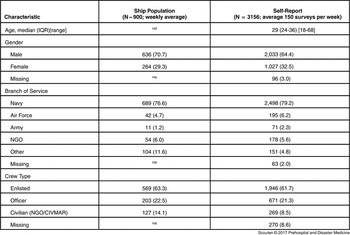
Based on weekly administrative rosters, there were, on average, 901 personnel aboard the ship during the 22-week deployment period under surveillance. The embarked crew was dynamic. Approximately five percent of that crew consisted of short-term participants, usually nurses, physicians, dentists, or dental assistants, who were with the mission for two mission stops (around four to six weeks) and were replaced by a new group of short-term participants. The weekly force strength remained fairly constant, with a low of 849 and high of 933 (95% confidence interval [CI], 891-912) personnel. Data were collected from 3,156 self-report surveys with an average of 150 (95% CI, 148-152) surveys (16.6% of ship’s complement) collected each week. In general, the self-report survey respondents were a representative sampling of the entire ship’s crew (Table 1). Approximately two-thirds of the ship’s complement was male and 77% was from the Navy. A slight over-sampling of females and US Navy personnel completed the questionnaire. Enlisted ranks made up 63% of the ship population and comprised 62% survey respondents. Three percent of respondents did not report gender.
Demographic Features of Shipboard and Survey Sample Populations

Abbreviations: IQR, interquartile range; na, not available; nd, not described; NGO, nongovernmental organization; CIVMAR, Civil Marine Service.
Operational Stress/Mental Health (OS/MH) Incidence
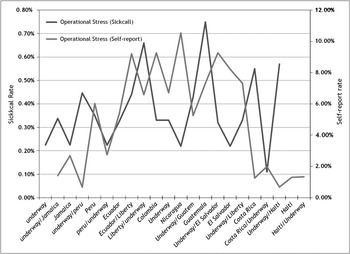
Based on those who sought care at the medical treatment facility sick-call clinic, OS/MH diagnoses were ranked sixth among the reasons for visits to medical (data not shown), and the incidence was 4.5 per 1,000 person-weeks. An OS/MH diagnoses represented 3.7% of all weekly sick-call visits. The self-report rate of OS/MH problems, in comparison, was 53 per 1,000 person-weeks and accounted for 12.0% of all self-reported DNBI conditions (fourth ranked behind respiratory, dermatological, and acute gastrointestinal illness). Sick-call and self-report OS/MH complaints increased soon after mission start, reached a stable plateau during the middle portion, and then decreased fairly quickly as the mission was interrupted by Hurricane Irene. In general, though not always, the incidence of OS/MH sick-call diagnoses increased during the underway time while self-reported OS/MH complaints decreased. Both sick-call and self-report OS/MH complaints remained fairly high during Ecuador liberty, while self-reported OS/MH complaints decreased dramatically during Costa Rica liberty (Figure 1).
Comparison of Weekly Rates of Operational Stress Based on Seeking Care as well as Self-Report.

Impact on Mission and Individuals
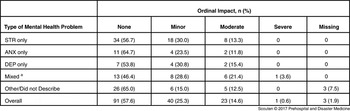
From clinic-based surveillance, OS/MH accounted for five out of 325 (1.5%) days lost for SIQ and two out of 12 (16.7%) hospitalizations during the entire mission. Of respondents who endorsed having an OS/MH problem, most (57.6%) reported that the problem did not impact their ability to perform their primary duties. Twenty-five percent of respondents reported minor impact on job performance (Table 2). Those individuals reporting problems with more than one mental health category (eg, stress and/or anxiety and/or depression) had a tendency to report higher rates of mild, moderate, or severe impact on job performance compared to those reporting only a single category (P>.05).
Impact of Operational Stress/Mental Health by Sub-Type of Self-Reported Condition

Abbreviations: ANX, anxiety; DEP, depression; STR, stress.
a Mixed: DEP+STR (11), ANX+STR (11), ANX+STR+DEP (5), ANX+DEP (1).
Factors Associated with Self-Reported OS/MH Problems
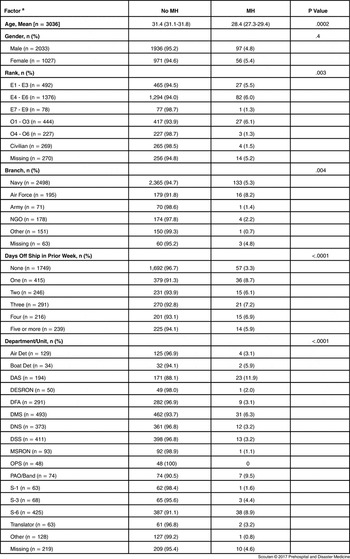
Univariate analysis revealed several factors associated with increased report of mental health problems during weekly surveillance (Table 3). While no differences were seen with gender, younger age was more likely associated with an OS/MH problem (P=.0002). There appeared to be higher rates of OS/MH problems among active duty service members in the mid-grade enlisted ranks (E4-E6: 6.0%) and junior officer ranks (O1-O3: 6.1%; χ2; P=.003). Branch of service also was found to have an effect, with Air Force reporting weekly OS/MH weekly rates of 8.2% (χ2; P=.004). Compared to those who reported staying on ship during the prior week, those who reported going off ship for one day had the highest rate of OS/MH problems (8.7%) with moderately high rates occurring among those spending two or more days off ship in the prior week (5.9-7.2%; χ2; P<.0001). The OS/MH weekly rates were higher among service members in the Ancillary Services Directorate (DAS; eg, lab, pharmacy, and radiology), Public Affairs Office/Band (PAO: 9.5%), and Equipment Management/BIOMED Repair (S-6).
Univariate Analysis of Factors Associated with Self-Reported Operational Stress and Mental Health Problems, N=3156

Abbreviations: DAS, Directorate of Ancillary Services; DESRON, Destroyer squadron; Det, detachment; DFA, Directorate for Administration; DMS, Directorate of Medical Services; DNS, Directorate of Nursing Services; MSRON, Maritime Expeditionary Security Squadron; OPS, Operations; PAO, Public Affairs Office; S-1, Administration; S-3, Operations; S-6, Equipment Management/Biomed Repair.
a Numbers for factors may not add up due to missing answers for given variable.
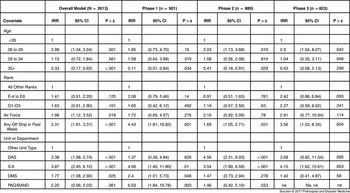
A multivariate Poisson regression model was fit with factors found to be significant in the univariate analysis (Table 4). Age did not meet the assumption for linearity and therefore was divided into age categories, which fit for differential risk strata. In the overall multivariate model, those who were 26 to 28 years of age had a 2-fold higher incidence (incidence rate ratio [IRR] 2.08; P=.001) of reporting an OS/MH problem compared to those aged 25 and less, whereas those who were 35 and older had a significant risk reduction (IRR 0.33; 95% CI, 0.17-0.65). While rank was significant in the univariate model, it failed to reach significance in the multivariate model, though effect estimates were in the same direction (increased risk) and P values met model inclusion specifications. Air Force service members also were noted to report OS/MH problems at approximately twice the rate of other service and non-service members (IRR 1.98; 95% CI, 1.12-3.52). Any time spent off ship was a risk factor for increased report of an OS/MH problem (IRR 2.31; P<.001) as were occupational assignments in DAS, S-6, and Directorate of Medical Services (DMS).
Multivariate Models of Factors Associated with Operational Stress by Phase of Deployment

Abbreviations: DAS, Directorate of Ancillary Services; IRR, incident rate ratio; PAO/BAND, Public Affairs Office/Band; S-6, Equipment Management/BIOMED Repair.
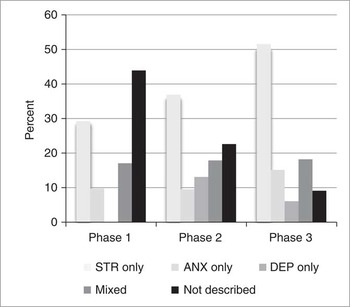
The frequency of OS/MH issues reported was non-linearly distributed across the deployment phases (Figure 2). In order to evaluate the effect of deployment phase on these risk factors, stratified models were fit using the same covariates, which were used in the overall multivariate model (Table 4). With respect to age, it appeared that risk in the 26-28 age group category increased across deployment phases one, two, and three (IRR: 1.85, 2.03, and 2.90, respectively). Rank appeared to have a non-linear effect over similar deployment phases with E4-E6 having highest rates in phase one and phase three (IRR: 2.08, 0.91, and 2.42) and O1-O3 having the highest risk towards the end of deployment (IRR: 1.60, 1.19, and 2.27). The unit or department risks appeared to have unique varying patterns over deployment phases (Table 4).
Frequency of Self-Reported Operational Stress/Mental Health Condition by Phase of Deployment. Abbreviations: ANX, anxiety; DEP, depression; STR, stress.

Discussion
Hospital ships and amphibious vessels have been platforms for civilian and military medical humanitarian and disaster relief missions for many years. For instance, the SS Hope, the hospital ship of Project HOPE (Health Opportunities for People Everywhere), completed 11 voyages providing medical care and training from 1960 to 1974. 17 Similarly, personnel deployed on hospital ships of the Mercy Ships international charity have provided medical care to more than 70 developing nations since 1983. 18
Over the past 10 years, following the USNS MERCY (T-AH 19) response in the wake of the 2004 Indian Ocean earthquake and tsunami, sea-based platforms have become increasingly important instruments for the US Government to strengthen security ties and governmental relationships while concurrently fostering working relationships between host nation and ship-based medical professionals. Hospital ships USNS COMFORT (T-AH 20), her sister ship USNS MERCY (T-AH 19), and several amphibious assault ships have been deployed to support operations Continuing Promise and/or Pacific Partnership, which are conducted under the direction of United States Southern Command (USSOUTHCOM) and United States Pacific Command (USPACOM), respectively. Shared patient care and medical education activities are expected to improve the quality of patient care and enable a more effective mutual response to a future disaster.
Operational stress is known to affect personnel in sea-based humanitarian operations. Even so, little has been published regarding the incidence and pattern of operational stress in these operations. The goal of this study, therefore, was to document the pattern of operational stress and identify factors that were associated with OS/MH as well as the extent to which these factors influenced job performance of personnel attached to USNS COMFORT (T-AH 20) during the CP11 mission. The DNBI data collected during the 22-week deployment were retrospectively analyzed to answer these questions.
Overall, the rate of complaints related to OS/MH issues was approximately 3.7% from sick-call log and 12.0% from self-report. When an OS/MH issue was reported, approximately 58% of respondents described the condition as not significantly impacting job performance, and approximately 25% reported stress as having only a minor impact on job performance. While the high proportion of “low or no impact” self-reported OS/MH issues may be explained by the crew’s preparation, readiness, and awareness of operational stress––a core educational topic in the militaryReference Szivak and Kraemer 19 ––responses may have been biased towards a dismissive effect given the ethos of military training.Reference Harper 20
There was a 10-fold higher incidence of self-reported complaints than sick-call encounters (50 per 1,000 person-weeks in self-report questionnaire versus 4.5 per 1,000 person-weeks in sick-call log). This finding suggests that there may have been barriers to mission participants seeking assistance for OS/MH-related problems. Some may have believed that a sick-call visit for OS/MH-related problem would result in personal stigma or did not know of options available to address stress-related symptoms. Alternatively, mission participants, when asked, may have just been more willing to volunteer that they were feeling stress, though not adversely affected.
Early in the deployment, the incidence of sick-call DNBI was higher than self-report OS/MH-related problems. Though the present data set does not allow analysis of individual response to deployment, these sick-call complaints may indicate the effect of baseline stress on those with pre-existing mental health diagnoses. Alternatively, the finding may reflect the combined effects of increased pre-deployment OPTEMPO and unfamiliarity with shipboard life (layout of the ship, limited living space) and customs (unfamiliar shipboard terminology, traditions, and processes) on mission participants, the majority of whom were from shore-based commands.
The results indicated a significant association between age and operational stress, such that the 26-28-year-old group––mid-grade enlisted (E4- E6) and junior officers (O1-O3)––self-reported a higher incidence of stress over the course of the mission compared to younger and older service members. These findings are consistent with Karasek’s Demand-Control model of work-related stress, which holds that work-related stress varies according to the psychological stress of the task and the amount of control that a worker has to meet the psychological demands of the task,Reference Shultz, Wang and Crimmins 21 and are similar to the findings of previous reports from similar settings.Reference Whybrow, Jones and Evans 22 Accordingly, mid-grade enlisted and junior officers quickly acquired new skill sets and learned new processes to complete tasks after assignment to various work places in the hospital ship, but may have experienced heightened job stress because they had little influence on how tasks were completed and no control over where they were assigned, compared to more senior personnel.
Younger personnel also may have reported a higher incidence of stress-related complaints for reasons that are unique to US Navy hospital ship-based missions. For instance, junior military members may have reported more stress because of inexperience – this may have been the first deployment for some members; thus, family separation and the environmental adjustments of shipboard life caused them anxiety. Further, younger enlisted members also may have experienced higher stress because some were required to complete a compulsory rotation as a food service attendant and others were required to learn new skills after assignment to an unfamiliar division. Similarly, junior officers may have been assigned to work night shifts with little opportunity to participate in the shore-based mission. Many younger personnel also participated in after-hours didactic sessions in order to earn the Enlisted Surface Warfare or Surface Warfare Medical Department Officer qualifications, which significantly decreased sleep time. Older participants, on the other hand, may have reported stress less often because their expectations were tempered by prior deployment or participation in similar missions, and because job assignments were commensurate with their specialized training. Additionally, they may have perceived that what they were doing was “good” or “meaningful.”
A number of risk associations that may be unique to the humanitarian assistance disaster response sea-based mission and have not been previously described were identified. For example, US Air Force participants were more likely than other service members to report stress during the mission. This increased stress among the Air Force members may have been because of inadequate integration of US Air Force participants into the operation, differences in command structures, or possibly due to the assignment to department or division that was not commensurate with rate or experience. In addition, the incidence of OS/MH complaints was inversely associated with the number of times a mission participant left the ship. Stress was reported less often in those leaving the ship on a daily basis or multiple times during the mission. The process for crew members leaving the ship, while structured, did not always proceed as expected due to variable sea-state, occasional mechanical problems, or onshore security concerns. Consequently, personnel who did not often leave the ship may have been confused or frustrated. In contrast, members who left the ship every day may have grown accustomed to such mishaps and anticipated possible delays and other issues. Service members who left the ship more frequently also may have felt some health benefits from being away from the ship environment, and hence, reported less stress as a result.
While the incidence of OS/MH-related complaints increased over the course of the deployment, participants reported OS/MH-related complaints less often when the ship was underway between mission stops. At the same time, however, sick-call visits for OS/MH-related complaints increased during the underway time, except during the transit between Columbia and Nicaragua, which was relatively short compared to the transit times between other mission stops. Reports of operational stress may have decreased during transit times because the OPTEMPO while underway is significantly lower for the majority of the embarked personnel. On the other hand, sick-call visits for treatment of stress-related complaints may have increased during underway times because personnel had more time to visit the clinic or were suffering from the “let-down effect.“Reference Brydon, Walker and Wawrzyniak 23
The incidence of OS/MH-related complaints also varied according to job description and phase of deployment. Members of the S-6 consistently reported stress throughout the mission. The PAO and DMS, on the other hand, reported higher levels of stress during the first phase of the mission, while personnel from the laboratory and radiology, comprising the DAS, reported highest levels of stress in the second and third phases of the mission. Persistent reports of operational stress from members of S-6 are not surprising because there is a steady need for equipment management and repair before, during, and after the mission. Reports of stress early in the mission by members of the PAO and DMS may be related to the adjustment necessary to practice one’s craft in a new environment, with new people, and with limited resources. Self-reported stress decreased as mission participants were acclimated.Reference Nash 24 Levels of stress in personnel working in the DAS increased as the mission progressed, most likely due to the increased workload required to care for the surgical case load. Alternatively, stress also may have increased because of factors unique to the workplace, such as interpersonal conflict.
Limitations
The present study has several limitations. First of all, the eDNBI was not written with the intent to describe the epidemiology of OS/MH. Rather, it was constructed to complement weekly aggregate DNBI data in efforts to identify clusters of illness that could adversely affect readiness. Secondly, data were collected at multiple time points from a variable population that was selected in a non-systematic manner. Sampling error and survey bias was minimized by active distribution of surveys to all division members rather than to just a few during muster and to mission participants who were arranged in waves, a mixture of various professionals waiting to leave the ship. Even so, baseline medical and behavioral health characteristics, which shape individual response, may not have been randomly distributed in the embarked crew. In addition, social desirability bias and wording of the question may have biased survey response. Thirdly, episodic collection of data from variable populations does not allow comment on longitudinal fluctuation of operational stress in specific groups. In fact, concurrent shipboard activities or division-specific factors such as physical illness, poor sleep hygiene, or stress management activities may have differentially affected group or individual responses. Finally, 17% of respondents did not complete demographic variables (nine percent rank, three percent gender, four percent age, and seven percent department/division) on self-report questionnaires detailing the incidence of OS/MH issues. These respondents may not have completed demographic data because of concern for identification within the department or division, and this could have impacted the ability to discriminate effects based on these characteristics.
Conclusions
Operational stress is well-recognized in participants of humanitarian operations and, while studied extensively in shore-based operations, has not been considered in sea-based humanitarian missions. The incidence of OS/MH-related complaints in CP11 mission participants was low in sick-call patients but was 11-times more frequent in those completing self-report health assessment questionnaires. Operational stress and mental health-related complaints did not significantly or only minimally affected job performance. After an initial increase in OS/MH-related complaints, the incidence of OS/MH-related complaints did not return to baseline until the end of the mission. Reports of OS/MH-related complaints were cyclical, increasing during the shore-based mission and ebbing during transit between mission stops. Age, branch of service, time spent off the ship, and occupational assignment were predictive of OS/MH-related complaints. Age, rank, and assigned unit/department also predicted when, during the mission, an OS/MH-related complaint would come. This information may be used by planners of similar missions to develop mitigation strategies for known stressors and by preventive medicine, behavioral health specialists, and mission leaders to develop sensitive surveillance tools to better detect and manage operational stress while on mission. Future research is necessary to generate a more comprehensive list of variables that impact the behavioral health of medical professionals and support staff during ship-based medical missions and to understand the role of unique personal and environmental factors in determining the manifestation of operational stress at the individual and unit levels.
Authors’ Contributions
William Scouten contributed to conception, design, analysis, and drafting of the manuscript. Melissa Mehalick contributed to analysis and interpretation of data, as well as the drafting the manuscript. Elizabeth Yoder contributed to interpretation of the data, as well as critically revising the manuscript. Both Andrea McCoy and Tracy Brannock contributed to the acquisition of data and critically revised the manuscript. Mark Riddle contributed to the conception, design, and acquisition of data, as well drafting the manuscript. All authors read and approved the final manuscript.
Acknowledgements
The authors would like to thank the entire Preventive Medicine Team (HM3 Ziegler, HM2 Hubbard, HM2 Lazo, HM2 Theopolus, 1st LT Nowocyznski, LTJG Sharp, and HMC Weber) who dedicated themselves to taking care of the crew during the deployment and helped to collect these valuable data.