Introduction
Long-term care (LTC) refers to a range of personal, social and medical services and support, such as support for dressing, washing or engaging with communities, which ensure that people maintain a level of functional ability consistent with their basic rights and dignity (World Health Organization 2022). With ongoing population ageing, the need for LTC has mounted and posed challenges to the welfare system in many countries. Globally, 142 million people older than 60 ;years are unable to meet their basic needs independently (World Health Organization 2020). Meanwhile, the accessibility of formal LTC services is generally limited, leaving 46 per cent of people worldwide without coverage from any form of formal services (Scheil-Adlung Reference Scheil-Adlung2015). The gaps in the needs for and the provision of LTC are defined as ‘unmet LTC needs’ (Spiers et al. Reference Spiers, Kunonga, Stow, Hall, Kingston, Williams, Beyer, Bower, Craig, Todd and Hanratty2022). Given the negative impacts of unmet LTC needs on people’s physical and mental wellbeing (Allen and Mor Reference Allen and Mor1997; Desai et al. Reference Desai, Lentzner and Weeks2001; Hu and Wang Reference Hu and Wang2019; Zhen et al. Reference Zhen, Feng and Gu2015), it is important for policy makers and LTC care providers to understand the patterns of unmet needs and effectively minimise these unmet needs.
Unlike most developed countries, where formal LTC systems are established, the development of policies and services for LTC in developing countries is at a nascent stage, lagging behind the rapid pace of population ageing and increasing demand for LTC in these societies (Feng Reference Feng2019). In China, the proportion of older people aged 65 and above doubled from 2000 to 2020 (up from 7.0 per cent to 13.5 per cent) (National Bureau of Statistics of China 2001, 2021). It was estimated that the number of older adults living with difficulties in performing activities of daily living (ADLs), including bathing, dressing, using the toilet, in-door moving, incontinence and eating, will rise from 45.3 million in 2020 to 59.3 million in 2030 (Gong et al. Reference Gong, Wang, Wang, Chen, Chen, Meng, Yang, Yao and Zhao2022). Shaped by the norms of filial piety, informal care provided by family members has been and remains the primary source of LTC in China (Zhan and Montgomery Reference Zhan and Montgomery2003). However, the norm and the role of family support have been weakened by a sharp decrease in fertility, a decline in multigenerational co-residence and large-scale internal migration in recent decades (Yang and Tan Reference Yang and Tan2021). Despite recent policy initiatives in China to develop alternative approaches for providing LTC, community-based and institutional-based care services remain inadequate (Feng et al. Reference Feng, Glinskaya, Chen, Gong, Qiu, Xu and Yip2020). These demographic and social contexts have heightened both public and government concerns regarding the unmet needs for LTC, which is evident in Healthy China 2030 (Chinese State Council 2016), China’s national health policy.
Understanding how unmet LTC needs change across the lifecourse (age), over time (period) and across different generations (cohorts) allows policy makers and practitioners to pinpoint critical periods for intervention and predict the amount of care resources required for societies. Disentangling these three temporal processes can also enrich our knowledge regarding the roles of biological ageing, historical contexts and social changes in shaping the care gap. Nevertheless, methodological challenges arise in decomposing the age, period and cohort effects due to the linear dependency of the three dimensions (Yang and Land Reference Yang and Land2013). Although two Chinese studies explored the age variation and period trends of unmet LTC needs (Cao et al. Reference Cao, Feng, Mor and Du2022; Peng et al. Reference Peng, Wu and Ling2015), they did not consider the confounding role of cohort effects and no research to date has analysed the three temporal dimensions of unmet needs for LTC simultaneously in both Chinese and international contexts. In addition to the temporal dynamics, how unmet LTC needs vary across places is also a matter of policy concern. The rural–urban divide in socio-economic development is deep-rooted in China, contributing to long-standing disparities in rural–urban social and health outcomes in later life (Zhang et al. Reference Zhang, Chandola and Zhang2022; Gong et al. Reference Gong, Liang, Carlton, Jiang, Wu, Wang and Remais2012; Whyte Reference Whyte2010). Previous studies have suggested that rural residents are more likely to experience unmet needs for LTC due to rural-to-urban migration, limited financial means and an underdeveloped rural LTC system (Glinskaya and Feng Reference Glinskaya and Feng2018; Zhu and Österle Reference Zhu and Österle2017), yet whether this rural–urban gap has widened or narrowed remains unexplored.
This study will contribute to the existing literature by using the newly developed, age-period-cohort interaction (APC-I) model (Luo and Hodges Reference Luo and Hodges2022) to investigate changes in experiencing unmet needs for LTC across different age groups, time periods and birth cohorts. This method addresses the identification problem of age, period and cohort effects by modelling cohort effects as the interaction of age and period effects. Data from the Chinese Longitudinal Health Longevity Survey (CLHLS) will be used, which allow us to follow older people aged between 70 and 105 ;years over 12 ;years (2005–2017/18). In addition, given the huge divide between rural and urban areas in China regarding socio-economic development and the arrangement of LTC, this study will further examine whether and how the age, period and cohort effects of unmet needs for LTC differ for rural and urban residents.
Literature review
LTC system in China
Informal care, especially care provided by family members, has been the main pillar of LTC provision for older people in China (Leung Reference Leung1997; Luo and Chui Reference Luo and Chui2019). Rooted in Confucianism, filial piety is a fundamental social ethic and moral obligation that prescribes children with the responsibility of attending to the needs of parents and providing care for ageing parents (Zhan and Montgomery Reference Zhan and Montgomery2003). The family responsibility for taking care of older people is not only a normative duty but codified in Chinese laws and policies, such as the Law of the PRC on Protection of the Rights and Interests of the Elderly (1996). Formal care (both public and private sector) has been playing a residual role in the LTC system in China. Before the 2000s, the concept of LTC was not explicitly integrated into the public policies aimed at addressing the needs of older people. Professional LTC services were extremely underdeveloped, and the public provision of LTC services was minimal and available only for welfare recipients (Feng et al. Reference Feng, Glinskaya, Chen, Gong, Qiu, Xu and Yip2020). In urban areas, free residential care services have been restricted to the ‘Three Nos’ – those who have no ability to work, no source of income and no families to support them (Leung Reference Leung1997). In rural areas, only childless older adults were eligible for the ‘five-guarantee’ scheme (wubao), which guaranteed the provision of food, healthcare, clothing, housing and burial expenses for those eligible.
Amid mounting concerns regarding rapid population ageing and the escalating demands for LTC, the Chinese government has initiated a series of reforms aimed at establishing an affordable and high-quality modern LTC system (Feng et al. Reference Feng, Glinskaya, Chen, Gong, Qiu, Xu and Yip2020). Developing the LTC services system for older people was mentioned for the first time as part of the 2006 policy document Opinions on Accelerating the Development of the Elderly Care Service Industry (Zhu Reference Zhu2019). In 2011, the central government proposed a ‘90-7-3’ LTC structure, whereby 90 per cent of older people receive (informal or formal) home care, 7 per cent are supported by community-based services and 3 per cent receive care from institutions. This LTC framework and the focus on home and community services were further iterated and highlighted in 2016 in the 13th Five-Year Plan (2016–2020). With the increasing policy initiatives and financial subsidies supporting both private and public institutional care facilities, the total number of institutional care beds increased from 2.3 million to 7.3 million from 2008 to 2018. In the meantime, home and community-based services were also improved, yet developed at a slower pace (Feng et al. Reference Feng, Glinskaya, Chen, Gong, Qiu, Xu and Yip2020). A more recent policy initiative is the LTC insurance pilot, which was launched in 15 cities in 2016. The insurance program supports eligible beneficiaries who were disabled for an extended period to pay for the LTC services (Lei et al. Reference Lei, Bai, Hong and Liu2022).
Despite the development of LTC services in China, there is uneven progress in rural and urban areas. While elderly care services and facilities characterised by social welfare or assistance mainly targeted disadvantaged rural older adults before the 1990s, more recent developments in home and community-based LTC services, as well as the professional residential care facilities during the past 20 ;years, were mainly found in urban areas (Feng et al. Reference Feng, Glinskaya, Chen, Gong, Qiu, Xu and Yip2020; Zhu Reference Zhu2019). The funding shortages, insufficient qualified providers and professionals, and geographical dispersion contribute to the slower development of the LTC system in rural areas than in their urban counterparts (Glinskaya and Feng Reference Glinskaya and Feng2018).
Defining unmet needs
Defining unmet needs for LTC depends on (1) definition of needs; and (2) assessment of whether needs are met. Vlachantoni et al. (Reference Vlachantoni, Shaw, Willis, Evandrou, Falkingham and Luff2011) adapted Bradshaw’s (Reference Bradshaw1972) conceptualisation of social needs to the context of social care, distinguishing five types of need: normative (defined by professional standards), felt (based on own belief of need), expressed (based on demand), comparative (based on comparison with others regarding access to resources) and technical (the need for a new solution beyond the existing provision). In relation to normative and felt needs, the majority of empirical studies define needs for LTC based on having difficulties in performing ADLs or instrumental activities of daily living (IALDs) (Allen and Mor Reference Allen and Mor1997; Dunatchik et al. Reference Dunatchik, Icardi and Blake2019; García-Gómez et al. Reference García-Gómez, Hernández-Quevedo, Jiménez-Rubio and Oliva-Moreno2015; Vlachantoni Reference Vlachantoni2019). Some studies have further distinguished different levels of need (e.g. broad, intermediate and narrow definitions) based on the number of ADLs or IADLs individuals have difficulties with (Kaye et al. Reference Kaye, Harrington and LaPlante2010; Vlachantoni Reference Vlachantoni2019; Zhu and Österle Reference Zhu and Österle2017). Another strand of research measures ‘need’ in line with the eligibility criteria for the receipt of LTC services (Cordingley et al. Reference Cordingley, Hughes and Challis2001; Dunatchik et al. Reference Dunatchik, Icardi and Blake2019). In China, national criteria for determining eligibility for LTC insurance beneficiaries were established as recently as 2021. The criteria encompass indicators measuring four aspects: ADLs, cognitive ability, sensory functioning and communication ability (National Healthcare Security Administration 2021).
Previous research has employed two types of measure to determine whether needs are met: absolute and relative measures (Vlachantoni Reference Vlachantoni2019). Absolute measure refers to an individual’s report on whether they receive any help with the activities that they have difficulties performing. Relative measure pertains to an individual’s perception of whether the assistance they have received is adequate. Other terminologies, such as subjective and objective unmet needs, completely unmet needs and under-met needs, have also been adopted to denote absolute and relative unmet needs (Cao et al. Reference Cao, Feng, Mor and Du2022; Gu and Vlosky Reference Gu and Vlosky2008; Peng et al. Reference Peng, Wu and Ling2015). To capture unmet needs more comprehensively, this study combines absolute and relative measures and defines unmet needs as either receiving no support or perceiving support received as insufficient.
Age, period and cohort effects on unmet needs for LTC
Age is associated with a range of factors that contribute to the risk of having unmet needs for LTC, such as health status and availability of family care-givers. Previous studies have consistently shown that poorer physical health, long-term disabilities and chronic conditions, which often develop with age, are associated with a higher risk of experiencing unmet needs (Chen et al. Reference Chen, Zheng, Chen, Xing, Cui, Ding and Li2018; Dubuc et al. Reference Dubuc, Dubois, Raîche, Gueye and Hébert2011; Momtaz et al. Reference Momtaz, Hamid and Ibrahim2012; Peng et al. Reference Peng, Wu and Ling2015). Moreover, the risk of being widowed also increases with age. As spouses serve as primary care-givers for many older adults, the risk of having unmet needs is likely to be higher for older people due to widowhood (Ryan et al. Reference Ryan, Smith, Antonucci and Jackson2012). However, empirical studies controlling for health status and marital status have mostly found a negative relationship between age and the risk of experiencing unmet care needs (Allen and Mor Reference Allen and Mor1997; Cao et al. Reference Cao, Feng, Mor and Du2022; Dubuc et al. Reference Dubuc, Dubois, Raîche, Gueye and Hébert2011; Spiers et al. Reference Spiers, Kunonga, Stow, Hall, Kingston, Williams, Beyer, Bower, Craig, Todd and Hanratty2022). For example, Allen and Mor (Reference Allen and Mor1997) showed that, in the US, younger adults aged below 65 reported lower levels of need for help with ADLs, IADLs and using transportation, but exhibited higher levels of unmet needs. The authors attributed the paradoxical findings to the fact that younger adults with a disability usually have fewer assets and are more deprived due to discontinuous working histories. Notably, the relationship between age and unmet needs for LTC is not necessarily linear. Cao et al. (Reference Cao, Feng, Mor and Du2022) used the CLHLS and found that older Chinese people aged 85 or older had 23 per cent and 77 per cent lower risk of experiencing under-met needs and completely unmet needs, respectively, than those aged between 65 and 74. Using the same dataset, Peng et al. (Reference Peng, Wu and Ling2015) did not find age associated with the risk of experiencing under-met needs among people aged 80 ;years and above. The inconsistency in the findings on age effects on unmet needs may be attributed to differences in the age compositions of the sample study period and how age is operationalised.
Period effects refers to variations over calendar years that affect all age groups and birth cohorts simultaneously (Yang and Land Reference Yang and Land2013). They usually relate to external factors and changes in social, economic or physical environments such as policy changes, economic crises and famine. In the case of LTC, a range of period-related factors can contribute to the decreasing unmet LTC needs in China during the past two decades. Firstly, the improvement of functional abilities among older adults in China could reduce care needs. China has witnessed a significant improvement in living standards, nutrition and hygiene, alongside notable progress in the health-care system in recent decades. Consequently, the risk of self-care disability among older adults decreased from 2.95 per cent in 2010 to 2.34 per cent in 2020 according to the census data (Guo et al. Reference Guo, Wang, Ge and Jiang2022), and the functional decline was also delayed (Chen et al. Reference Chen, Wang, Qian and Chen2022; Feng et al. Reference Feng, Zhen, Gu, Wu, Duncan and Purser2013; Zimmer et al. Reference Zimmer, Fang and Tang2014). Secondly, China has made significant strides in developing the LTC system, as discussed in earlier sections. The rise in the availability of formal care services since 2006 and the launch of the LTC insurance pilot in 2016 may bridge the gap between care needs and care provision over time (Lei et al. Reference Lei, Bai, Hong and Liu2022). Conversely, the increasing internal migration, caused by ongoing urbanisation and economic expansion could reduce the supply of informal care (Schoeni et al. Reference Schoeni, Cho and Choi2022), leading to an increase in unmet needs for LTC. Existing studies using the CLHLS data have shown that unmet LTC needs decreased between 2005 and 2014 (Cao et al. Reference Cao, Feng, Mor and Du2022; Peng et al. Reference Peng, Wu and Ling2015). However, these studies controlled only for age, without considering the confounding effect of cohort replacement.
A cohort is a group of people who experience a significant life event in the same year(s), such as birth. While period effects focus on uniform changes across age groups, cohort effects capture the varied effects of historic events and social changes on people at different life stages (Ryder Reference Ryder1965; Yang and Land Reference Yang and Land2013). Cohort effects can be conceived as the intersection of individual biographies and historical contexts (Yang and Land Reference Yang and Land2013, 9). Luo and Hodges (Reference Luo and Hodges2022) further challenged the idea that cohort effects are independent of age and period effects, but conceptualised cohort effects as the interaction between age and period effects.
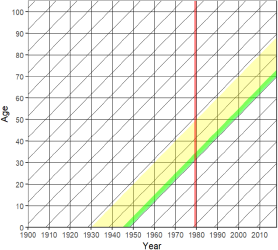
Research explicitly examining cohort effects on unmet LTC needs is scant. The birth cohorts examined in this study (those who were born between 1900 and 1947) differ in several aspects, which could affect trends in unmet needs across cohorts differently. Cohort trends in fertility, migration and multi-generational co-residence point towards the possibility of higher risks of unmet needs for more recent cohorts. A lexis diagram is provided to illustrate the potential cohort effects (Figure 1). Specifically, declining fertility rates observed in more recent cohorts may lead to a decrease in the availability of family care-givers for these groups. The family planning policy was tightened in the 1970s, with the implementation of the ‘late-long-few’ programmes (late marriage and child-bearing, birth spacing) in 1973 and the stricter ‘one-child’ policy in 1979. This means that the cohort who were at their peak reproductive years (aged 20–35) after the tightening of birth control (especially those who were born after 1945) were affected by this. Moreover, the mass internal migration may also influence the supply of family care-givers only among more recent cohorts. Specifically, the market-oriented economic reforms in 1978 and the relaxation of the household registration system (Hukou system) in the mid-1980s led to a gradual increase in migration and the number of internal migrants has rapidly surged since the 1990s (Zheng and Yang Reference Zheng, Yang, Guilmoto and Jones2016). As the migration rate peaked from age 20 to age 40 (Castro and Rogers Reference Castro and Rogers1981), only those who were born post-1960s were more likely to experience internal migration (Bernard et al. Reference Bernard, Bell and Zhu2019). Therefore, the parents of these cohorts, those who were mostly born after the 1930s, are likely to have fewer care resources due to their children’s migration. Additionally, the proportion of older adults aged 65 or above living with children declined from 73.2 per cent in 1982 to 57.2 per cent in 2010 according to the census, suggesting that more recent cohorts are less likely to receive immediate help from their children who typically live away from them (Hu and Peng Reference Hu and Peng2015).
Lexis diagram depicting the cohort effects.

The influence of changing norms regarding the care of older parents on the trend of unmet LTC needs is more uncertain compared to other cohort differences. Although modernisation theory posits that the rise in individualism and rationalism associated with industrialisation, urbanisation and increased education may erode the practice of filial piety and intergenerational support (Cheung and Kwan Reference Cheung and Kwan2009), some empirical studies have found that filial piety remains potent among recent cohorts (Yeh et al. Reference Yeh, C-c, Tsao and Wan2013). Additionally, Chinese people’s perception of institutional care has also evolved across cohorts. Institutional care has become less stigmatised among more recent cohorts, with more people expressing greater acceptance towards receiving care in an institutional setting (Feng Reference Feng, Zang and Zhao2017; Zhan et al. Reference Zhan, Liu and Guan2006).
Rural–urban inequalities in unmet LTC needs
The rural–urban divide is a fundamental feature of Chinese society, manifesting across multiple aspects, including health, income and infrastructure (Meng et al. Reference Meng, Zhang, Yan, Hoekstra and Zhuo2012; Whyte Reference Whyte2010). The divide has been institutionalised by the Hukou (household registration) system, which disadvantages rural people in critical life domains, including education, employment, housing, pension and health care (Chan and Buckingham Reference Chan and Buckingham2008; Treiman Reference Treiman2012). As access to LTC depends on education and financial resources, the Hukou system could contribute to lower access to LTC services and resources in rural areas (Zhu and Österle Reference Zhu and Österle2017). Zhu and Österle (Reference Zhu and Österle2017) estimated that rural Hukou holders had 2.7 times the odds of having unmet needs than urban Hukou holders. However, it is less clear how rural–urban differences in unmet LTC needs change across the lifecourse, periods and birth cohorts.
Among the limited evidence on age effects on unmet needs for LTC, Zhu (Reference Zhu2015)found that older age was associated with a lower risk of unmet needs among only urban older adults but not among rural older adults. They posited that older age may reduce the likelihood of engaging in social activities and therefore lead to fewer care needs among urban older adults. However, rural older adults were reluctant to express their care needs and therefore the age effects on unmet needs are not sensitive among rural older people.
The period effects on unmet needs may also differ among rural and urban older adults. Despite the decline in the risk of disability, several studies have shown that the rural–urban gap has widened over time with higher disability risk among rural people (Guo et al. Reference Guo, Wang, Ge and Jiang2022; Liu et al. Reference Liu, Han, Feng, Dupre, Gu, Allore, Gill and Payne2019; Peng et al. Reference Peng, Song, Sullivan, Qiu and Wang2010). Moreover, the recent development of the LTC system has been mainly concentrated in urban areas and LTC services in rural areas remain scarce (Feng et al. Reference Feng, Glinskaya, Chen, Gong, Qiu, Xu and Yip2020). Studies have shown that the positive effects of LTC insurance on health outcomes were significant only among urban residents (Liu et al. Reference Liu, Yang, Yang and Cheng2023). Taken together, the reduction in care needs and the increased supply of formal care, both associated with reduced unmet needs, may occur only in urban areas.
We also expect that rural–urban differences in unmet LTC needs vary across cohorts. The fertility transitions happened earlier in urban areas than in rural areas in China due to the uneven modernisation process and economic development. Moreover, the ‘late-long-few’ family-planning programme in the 1970s was more strictly implemented, relatively, in urban areas than in rural areas. Consequently, the total fertility rate (TFR) in China fell more sharply in urban areas (from 5.0 in 1950 to 1.4 in 1979) than in rural areas (from 6.0 in 1950 to 2.9 in 1980 (Attané Reference Attané2002; Yin Reference Yin2023). This implies that urban people born between the 1940s and early 1950s may face a higher risk of unmet needs compared to their rural counterparts due to having fewer informal care-givers. However, the migration trends suggest the opposite direction for cohort dynamics in the rural–urban gap in unmet needs. The mass internal migration in China since the 1980s has primarily involved the younger rural generation moving to urban areas. This migration has depleted the pool of informal care-givers for older individuals, particularly those from more recent cohorts born after the 1930s in rural areas (He and Ye Reference He and Ye2014).
In sum, the review of existing literature suggests that the age, period and cohort effects on unmet LTC needs in China remain elusive. Multiple theoretical perspectives and multi-dimensional social changes predict conflicted and unclear temporal patterns of unmet needs. Among the limited empirical studies, the confounding effects of the three temporal aspects have not been fully addressed. Furthermore, less is known about rural–urban inequalities in unmet LTC needs by age, period and cohort. This study aims to bridge these knowledge gaps by using a newly developed method to differentiate the age, period and cohort changes in unmet LTC needs and explore the rural–urban differences in these temporal patterns.
Method
Data and sample
The data were drawn from the CLHLS, a national longitudinal survey of older people aged 65 ;years and above in China (Zeng Reference Zeng, Zeng, Poston, Vlosky and Gu2008). The survey covers half of the counties and cities, randomly selected from 23 provinces in China, where the population takes up 85 per cent of the total Chinese population. The baseline survey was conducted in 1998 with seven follow-up waves. To replace deceased participants, refreshment samples were recruited in most waves. One advantage of this survey is that the oldest old (aged 80 or above) were oversampled, ensuring that centenarians, nonagenarians and octogenarians are well represented. Additionally, it contains rich data on health, disability, care use, socio-economic status and behavioural factors that are integral to our analysis. The CLHLS received approval from the Ethics Committee of Peking University (reference IRB00001052–13074).
The current study included only the most recent five waves of CLHLS data (2005, 2008–2009, 2011–2012, 2014 and 2017–2018), because CLHLS began collecting data related to unmet needs for LTC from 2005 onwards. The analytical sample included older people who need help with at least one of the ADLs. Given the limited sample size of individuals aged above 105 and those aged between 65 and 69 with care needs, the study focused solely on individuals aged between 70 and 105 who required care. In total, 36,370 people aged between 70 and 105 were interviewed across the five waves, of which 11,477 had care needs. After excluding all missing data, the final analytical sample size is 10,014 individuals (11,000 person-years).
Measures
Age, period and cohort: We constructed 12 three-year age groups (70–72, 73–75, …, 103–105) in five periods (2005, 2008, 2011, 2014, 2017)Footnote 1 during which the follow-up waves were conducted. As cohort was operationalised as the interaction of age and period, this resulted in 16 birth cohorts (1900–1902, 1903–1905, …, 1945–1947).Footnote 2
Unmet needs: Unmet needs were measured as a binary variable (no unmet needs, having unmet needs) based on respondents’ reports to two questions: ‘Who is the primary care-giver when you need assistance in bathing, dressing, using the toilet, indoor transferring, continence and eating?’ and ‘Does the assistance provided by care-givers meet your needs?’ For the former question, if the respondents chose ‘nobody’, they were considered as having unmet needs. If the respondents had at least one care-giver according to the response to the first question and reported ‘not met’ and ‘partially met’ regarding the latter question, they were also defined as having unmet needs. If ;their response to the latter question was ‘fully met’, they were considered as having no unmet needs.
Other covariates: Informed by previous studies, demographic and socio-economic characteristics, care needs, household characteristics and regional factors were adjusted in the model to account for the temporal trends of unmet needs. Demographic and socio-economic characteristics include gender (male, female) and years of education. Migration experience was also included because it is associated with social networks and care resources (Horn Reference Horn, Torres and Hunter2023). It was derived based on whether they still lived in the city of birth. Care needs were measured by the number of ADLs (bathing, dressing, using the toilet, in-door moving, incontinence and eating) requiring assistance to perform for more than three months. Household factors included the number of children and the proximity of children (no children alive/no children living in the same village/neighbourhood; at least one child living in the same village/neighbourhood but not co-residing with any child; co-residing with at least one child). Regional factors included the type of residence (urban,Footnote 3 rural) and geographic areas were defined by the National Bureau of Statistics of China (Eastern, Western, Central and Northeastern regions).
Analytical strategies
The methodological challenges in the age-period-cohort analysis arise from the perfect linear relationship, or linear dependency, between three variables (Cohort ;= ;Period –Age). When treated as independent linear effects, these three temporal effects cannot be fully identified using conventional linear regression methods (e.g. ordinary least squares estimators) because this leads to infinite solutions, known as the model identification problem (Yang and Land Reference Yang and Land2013, 63). This study adopted a recently developed approach, the age-period-cohort interaction (APC-I) model (Luo and Hodges Reference Luo and Hodges2022), to disentangle the age, period and cohort effects. The APC-I approach is different from previous APC models (which treat age, period and cohort as independent effects) as it recognises the interdependence between the three processes and explicitly estimates cohort effects as age-by-period interactions (Luo and Hodges Reference Luo and Hodges2022). This new method has three methodological strengths compared with other APC models. First, the operationalisation of the cohort effect under the APC-I framework is more consistent with the theoretical concept defined by Ryder (Reference Ryder1965). Second, since cohort effects are estimated not additively but as interactions, the APC-I model is not subject to linear dependency issues. It is, therefore, fully identified without imposing the explicit or implicit constraints and assumptions required by other APC methods. Third, unlike previous APC models which assume time-constant cohort effects, the APC-I model considers the variation of cohort effects and explicitly tests intra-cohort lifecourse dynamics.
We followed the three-step procedure proposed by Luo and Hodges (Reference Luo and Hodges2022) to test the age, period, inter-cohort and intra-cohort effects. The first step is conducting a global deviance test to examine how much variance of having unmet needs is attributed to the age-by-period interaction. It involves comparing the deviance score of a full model with both age and period main effects and all of their interactions, with a reduced model without the interaction effects. If a significant global test result shows that the full model has a better fit for the data, the cohort effects may exist. The second step is to examine the effect of a specific cohort membership and inter-cohort differences. Specifically, we calculated the average of age-by-period interaction terms (mean cohort deviation) corresponding to a specific cohort. Then a t-test was conducted to examine whether the probability of having unmet needs for a specific cohort is significantly different from its predicted probability determined by age and period main effects only. The third step is to quantify the intra-cohort lifecourse dynamics for each cohort and to examine whether the (dis)advantages of cohort members accumulate, remain stable or diminish across the lifecourse. This is achieved by examining the linear change in the interaction terms within each cohort, which involves a t-test of the linear orthogonal polynomial contrast of the age-by-period interaction terms. Given that the CLHLS is a longitudinal dataset, the generalised estimating equation (GEE) was used to correct the bias in standard error estimates caused by the correlation of repeated measures on the same individual.
It should be noted that, for ease of interpretation, the APC-I model employs effect coding rather than dummy coding. This means that all the coefficients of the age and period main effects should be interpreted as deviations from the grand mean. The coefficients of the interaction terms represent deviations from the expected values based on the age and period main effects.
To examine rural–urban differences in temporal trends in unmet needs, we estimated the APC-I models separately for urban older adults and rural older adults. A set of base models was first estimated, which contained only age, period and the interaction terms of age and period. Then, all the covariates were added to the models to explore whether they could explain the temporal patterns in unmet needs for rural and urban older adults. We conducted all of the APC analyses in R using the APCI package (Xu Reference Xu2024).
Results
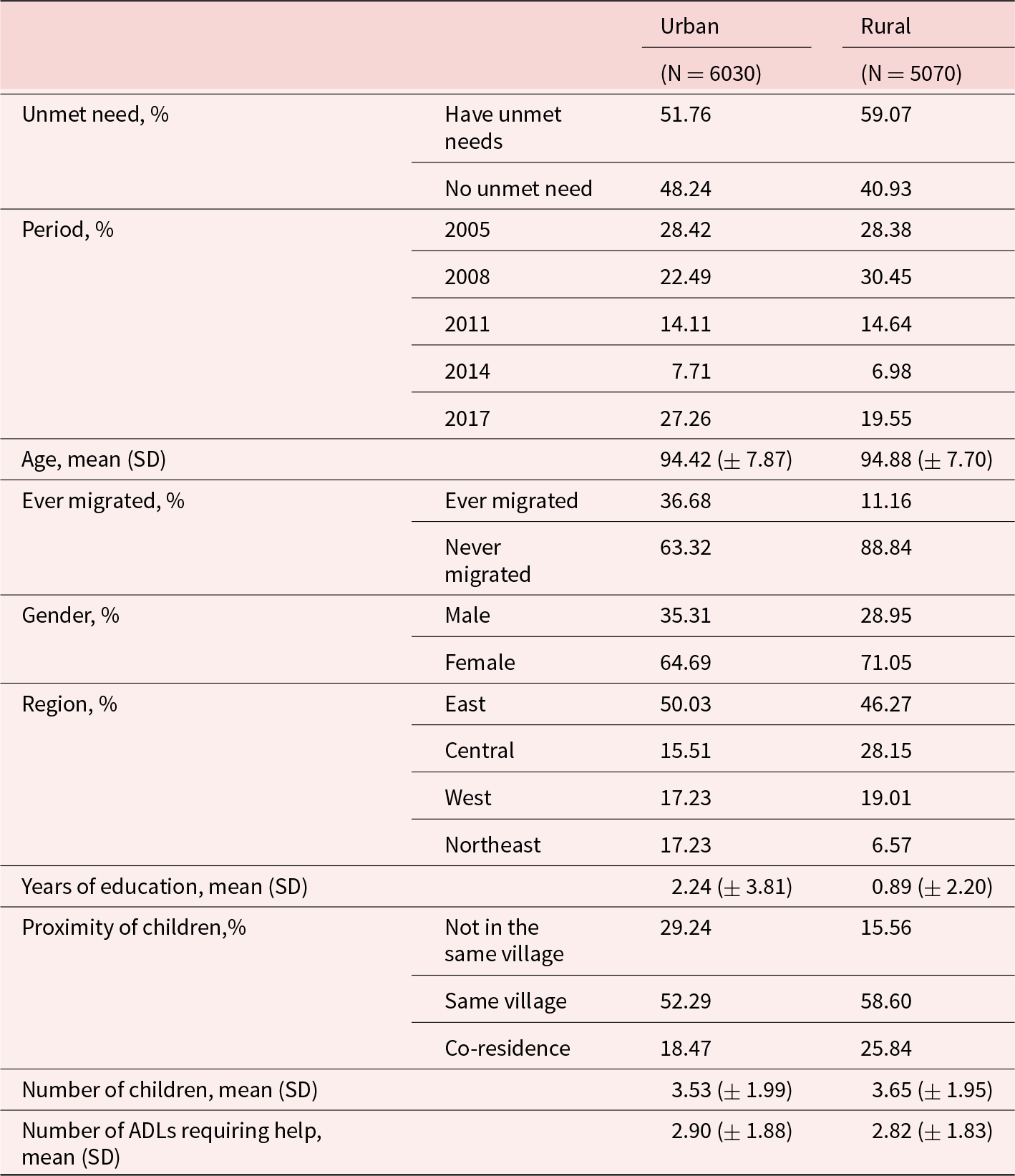
Table 1 presents the results of descriptive analysis for all of the variables used in this study by type of residence. Overall, there are 6,030 urban older adults and 5,070 rural older adults in our sample. The proportion of rural older adults aged 70 or above having unmet needs was 59.1 ;per cent, which was higher than that of their urban counterparts (51.8 per cent). The proportions of older adults having unmet needs by period and age group are presented in Table S2.
Descriptive statistics by type of residence, China, 2005–2017/18

Note: SD: standard deviation.
Following the three-step procedure described in the previous section, we first conducted a global deviance test to investigate whether cohort effects may exist for unmet needs. The results show that the full APC-I model fits the data significantly better than the reduced model with age and period effects only. Therefore, the interaction of age and period effects or cohort effects should be considered.
Age and period main effects
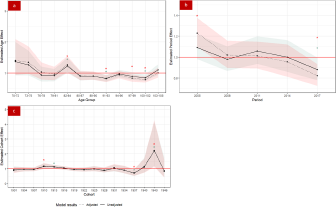
Figures 2(a) and ;2(b) depict the odds ratio of age and period main effects calculated based on the unadjusted and adjusted models reported in Tables S3 and S4. Deviation from the red line indicates deviation from the average odds of having unmet needs. As the solid line in ;Figure 2(a) shows, the probability of having unmet needs generally decreased with age despite the fluctuation. Specifically, being in the age groups 91–93 and 100–102 had a 17.1 per cent and 15.5 per cent lower probability of having unmet needs, respectively, compared to the global mean, while being in the age group 82–84 had a 22.9 per cent higher probability of having unmet needs. As the dotted line in ;Figure 2(a) illustrates, after adjusting for covariates, the age patterns became even more significant, with some of the younger age groups (73–75, 82–84) having at least marginally significantly higher risk of experiencing unmet needs while a few older age groups (91–93, 97–99, 100–102) had lower risk. Results of the stepwise regressionFootnote 4 suggest that some of the covariates, such as care needs, partly explain the age effects. Specifically, as more care needs are associated with a higher likelihood of having unmet needs as well as older age, the negative association between age and the likelihood of having unmet needs becomes stronger after accounting for care needs. However, it should be acknowledged that the covariates considered in this study do not fully explain the age effects on experiencing unmet needs.
Estimated age (a), period (b) main effects and cohort effects (c) on the odds of unmet needs.

As shown in ;Figure 2(b), before adjusting for other covariates, the probability of having unmet needs fluctuated over the 12 ;years without showing a clear linear trend (see the solid line in ;Figure 2(b)). The only significant period effect is in 2017, when the odds of having an unmet need were 11.8 per cent lower than the grand mean. After controlling for all the covariates, the decreasing trend of the probability of having unmet needs became evident (see the dotted line in ;Figure 2(b)). Results from the stepwise regression suggest that changes in the living distance from children contributed to the difference between the adjusted and the unadjusted models. Fewer and fewer older adults have co-resided with children in more recent years due to the increase in internal migration and the changes in familial norms. The model results also suggest that co-residing with children was associated with a lower risk of unmet needs; the decreasing trend became more pronounced after controlling for the proximity of children (see Table S11).
Inter-cohort variation and intra-cohort dynamics
Figure 2(c) presents the inter-cohort variation in the odds ratio of having unmet needs without and with covariates, respectively. The cohort effects can be interpreted as deviation from the expected probability of having unmet needs based on the age and period main effects. As ;Figure 2(c) shows, before adjusting for covariates, the cohort born between 1936 and 1938 had a lower-than-expected likelihood of having unmet needs. However, more recent cohorts born between 1942 and 1944 had 121.9 per cent higher odds of having unmet needs than the expected level. There are no significant differences between older cohorts born before 1935, except for the 1912–1914 cohort, and their probability of having unmet needs fluctuated around the expected risk of having unmet needs determined by age and period effects. After controlling for all the covariates, the effect sizes of the cohort membership of 1936–1938 and 1942–1944 were barely changed and remain significant.
Table S5 reports the intra-cohort changes in log odds of having unmet needs. Overall, the lifecourse changes in having unmet needs were not significant for most cohorts, which means that cohort effects remained largely stable over the lifecourse. The only significant cohort slopes present in cohorts 1903–1905 and 1918–1920. Considering that the average deviation of these two cohorts was not significant, the negative cohort slope indicates that the higher risk of having unmet needs at younger ages decreased as they got older. The pattern of intra-cohort dynamics did not change substantially after adjusting for all the covariates.
Rural and urban differences in the temporal trends
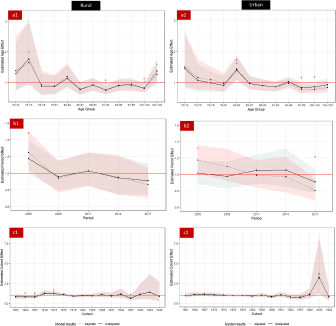
To examine whether the age, period and cohort effects varied by rural and urban older people, we conducted separate analyses for rural and urban samples. The intercepts from the unadjusted APC-I model suggest that, on average, the probability of experiencing unmet needs for LTC in rural areas was 61.3 per cent, which is significantly higher than the probability in urban areas (53.5 per cent). Figure 3 presents the age, period and cohort deviations from the average trends with and without adjusting for any covariates for rural and urban older adults.
Estimated age (a1, a2), period (b1, b2) main effects and cohort effects (c1, c2) on the odds of unmet needs for rural older adults (left) and urban older adults (right).

As Figure 3(a1) and (a2)depicts, variation in the age effects of unmet needs for LTC was larger among rural older adults than urban older adults. For rural older adults, the younger age group (age 73–75) and the oldest age group (age 103–105) had significantly higher risk of experiencing unmet needs for LTC compared with their group average, while those aged 85–87, 91–93 and 100–102 were less likely to have unmet needs (see ;Figure 3(a1)). However, among urban older adults, only those aged between 82 and 84 had a significantly higher risk of experiencing unmet needs for LTC than expected (see ;Figure 3(a2)).
Before adjusting for covariates, no significant period effect is observed for both rural (see ;Figure 3(b1)) and urban older adults (see ;Figure 3(b2)), although a declining trend is noticeable among rural older adults. However, after adjusting for covariates, more salient decreasing trends in the probability of experiencing unmet LTC needs over the 12 ;years emerged for both rural and urban older adults. For rural older adults, the probability of experiencing unmet LTC needs in 2005 was 25.1 per cent higher than the grand mean. For urban older adults, the differences in period effects estimated from unadjusted and adjusted models are even more prominent, with the risk of having unmet LTC needs 17.2 per cent significantly higher in 2005 and 19.5 per cent significantly lower in 2017 compared to the grand mean. The declining period trend emerging in the adjusted model can be attributed to the fact that increasing living distance from children was accounted for.
Figure 3(c1) and (c2) illustrates the between-cohort variation in the risk of experiencing unmet needs for rural and urban older adults. One striking finding is that the higher risk of having unmet needs for cohorts born in 1942–1944 was mainly driven by urban older adults, while the likelihood of having unmet needs among the same cohort in rural areas was not significantly different from their expected odds. Moreover, after adjusting for covariates, only rural residents born in 1936–1938, not their urban counterparts, exhibited a significantly lower risk of having unmet needs than expected.
Discussion
With growing concern about unmet needs for LTC in China, understanding the trends in unmet needs is becoming increasingly policy-relevant. This study is one of the first efforts to examine the complex temporal dynamics of unmet needs for LTC and their rural–urban differences among older people in China. Using an innovative approach, the APC-I model, we were able to decompose the confounding age, period and cohort effects on unmet care needs. Overall, our study reveals that: (1) although ‘younger’ older adults (aged below 85) have fewer care needs than older adults, they did not have lower risks of experiencing unmet needs; (2) unmet needs for LTC did not increase over the observed period; (3) the cohort born between 1936 and 1938, who are likely to be the parents of the baby boom generation, have lower risk of experiencing unmet needs, while the unmet needs for LTC among more recent cohorts (born between 1942 and 1944) were greater than previous generations; (4) rural older adults, on average, experienced a higher risk of unmet needs for LTC, yet the higher risk of experiencing unmet care needs for the cohort born between 1942 and 1944 was mainly found in urban older adults rather than rural older adults.
Our study contributes to prior research by identifying the age groups that are at higher risk of experiencing unmet care needs net of period and cohort effects. Additionally, rather than modelling age effects as linear or continuous, the APC-I framework allows us to examine the potential non-linear or discrete relationship between age and risk of unmet needs for LTC. The finding suggests that, although the risk of disability and widowhood increases with age, all the age groups having higher risks of experiencing unmet care needs were younger than 85 (ages 73–75, 82–84). After controlling for characteristics such as health status, the disadvantage of younger age groups was more prominent. Our finding is consistent with prior studies from the US and England that also found a negative relationship between age and unmet care needs (Allen and Mor Reference Allen and Mor1997; Cao et al. Reference Cao, Feng, Mor and Du2022; Vlachantoni et al. Reference Vlachantoni, Evandrou, Falkingham and Qin2024). As Dunatchik’s study (Reference Dunatchik, Icardi and Blake2019) suggested, ‘younger older people’ might be perceived as more independent and having fewer care needs. Therefore, informal care-givers and formal care service providers might ignore the care needs of ‘younger older people’. However, it should be noted that the age effects are not perfectly linear; the age group 76–81 does not deviate from the average age effects. As the sample of this study includes only people aged between 70 and 105, the findings cannot be generalised to people outside this age range. Additionally, the sample size for those aged below 80 is relatively small, which might prevent us from detecting smaller effects due to the lack of statistical power.
Contrary to concerns about increasing unmet LTC needs, our study did not observe a rise from 2005 to 2017/18. The finding indicates that while various factors, such as the growing living distance between older individuals and their children, could potentially contribute to the increase in unmet needs, countervailing factors appear to offset their effects on unmet care needs. Zhang et al. (Reference Zhang, Shi, Wang and Li2023) found that increases in income from 2005 to 2017/18 could explain the decrease in unmet needs for home visit services among older people. Another explanation might be that the recent development in the institutional- and community-based LTC sector in China provides more choices for older adults to meet their LTC needs (Feng et al. Reference Feng, Glinskaya, Chen, Gong, Qiu, Xu and Yip2020). However, as city-level and county-level geographical identifiers are not available from the CLHLS data, we are unable to examine whether changes in macro-level factors, such as local-level care resources and local government’s investment in LTC, can explain the period trends of unmet LTC needs. Future research could draw upon other data sources to further explore the mechanisms underlying the period changes.
Previous research has generally predicted that more recent cohorts may be at a higher risk of experiencing unmet needs due to their lower fertility rates and lower possibility of multi-generational co-residence (Ryan et al. Reference Ryan, Smith, Antonucci and Jackson2012; Yang and Tan Reference Yang and Tan2021). However, this study revealed a more complex picture of the cohort trends. There are two birth cohorts exhibiting larger deviation from the expectation based on main age and period effects than the rest. The cohort born between 1936 and 1938 showed a lower risk of experiencing unmet needs. Although this cohort experienced the Anti-Japanese War and the Liberation War during their childhood, most members of this cohort had enjoyed a relatively stable and peaceful life, compared with earlier cohorts, since their young adult years (Shu et al. Reference Shu, Chen and Zhu2023). They were in their reproductive years between the late 1950s and early 1970s, which means that they are the parents of the baby boom generation and still have sufficient informal support for their LTC. Moreover, the adulthood of this cohort paralleled the rapid industrialisation and urbanisation of China. Those from urban areas were able to enter industrial employment and the pre-reform socialist regime ensured that they had pension and financial support after their retirement. These multiple sources of support may explain their lower risk of unmet needs for LTC.
Conversely, the study shows that the cohort born in 1942–1944, especially those who lived in urban areas, were more likely to experience unmet needs. This cohort was characterised as the children of New China, who benefited from the expansion of education and employment since the 1950s. By the time of implementation of the one-child policy, most of them had passed their peak reproductive age (20 to 35 ;years) and therefore were unlikely to be affected by this policy. However, the programme campaigning for late marriage, late child-bearing and fertility limitation in the 1970s still lowered the fertility rate of this cohort, especially those in urban areas where the policy was more strictly enforced. Additionally, children of this cohort were mostly born between the 1960s and the early 1980s, so they were in their early adulthood after the economic reforms in 1978. Therefore, their children were more likely to be part of the numbers of mass internal migrants and live away from them, which resulted in a lower level of informal care support than previous generations. However, caution should be taken when interpreting the results related to cohorts born after 1942, considering that the sample size in these birth cohorts may undermine the explanatory power.
Consistent with previous studies, we found that rural older adults, net of age structure and period trends, have a higher risk of experiencing unmet needs than their urban counterparts. This could be related to the huge rural–urban divide in economic development, pension system and LTC resources and facilities with substantial rural disadvantage (Hu and Peng Reference Hu and Peng2015; Hu and Wang Reference Hu and Wang2019; Zhu and Österle Reference Zhu and Österle2017). However, we did not find a widening gap in unmet needs for LTC between rural and urban older adults from 2005 to 2017/18, despite the ongoing rural-to-urban migration of younger people and the slower development of the LTC system in rural areas. The adjusted models suggest that the reduction in living proximity and co-residency not only affected rural older adults’ care resources but also contributed to unmet LTC needs among urban older adults. Moreover, recent developments in social security systems in rural areas in China potentially mitigate the inequality in social support between rural and urban older adults. With the launch of the Rural New Cooperative Medical Scheme (NCMS) and the New Rural Social Pension (NRSP) in 2003 and 2009, respectively, most rural residents have been covered by the safety net during the past two decades (Cai and Du Reference Cai and Du2015). These programmes provide greater financial security for rural older people, which may explain why the inequality in unmet needs was not widened during the study period.
Several limitations of this study should be acknowledged. First, the primary focus of CLHLS is people aged 80 and above. Although since 2002, people aged 65 ;years have been interviewed, the sample size for people aged below 70 with care needs is small. Therefore, our analytical sample includes only those born before 1948. However, the one-child policy mainly influenced people who were born after 1950 and we are unable to examine the unmet needs for LTC of more recent cohorts, who may face a higher risk of not having enough family care-givers. Future studies could draw upon data with a larger sample of cohorts born after 1950 and examine the consequences of social and demographic transitions in recent decades on cohorts whose unmet care needs are more concerning. Second, the sample attrition may influence the estimation of this study, especially considering that our sample is the older population, which has higher mortality rates. As people with unmet needs have a higher risk of mortality (Zhen et al. Reference Zhen, Feng and Gu2015), those who survive to older age might be skewed towards being those whose care needs were met. Therefore, it is possible that the risk of experiencing unmet needs of the older age groups is underestimated. When interpreting age effects, the impacts of sample attrition should be considered. Lastly, due to the small sample size, we are unable to further distinguish people whose needs are partially met or completely unmet. According to previous studies, the characteristics of these two groups, such as household income and geographical distribution, are likely to be different (Cao et al. Reference Cao, Feng, Mor and Du2022). However, the heterogeneity among people with unmet needs was not fully considered in this study. Likewise, due to the issue of missing data, we cannot incorporate other explanatory variables, such as marital status, household income, medical insurance and pension status, into the APC-I model. However, the focus of this study is to decompose the age, period and cohort effects of unmet needs for LTC, rather than uncovering all the underlying mechanisms explaining these effects and patterns. The temporal dynamics that this study revealed may inform future research to further explore the social, demographic and cultural processes that explain the trends of unmet needs for LTC.
Despite the limitations, this study offers several valuable implications for policy making and future research, both within China and beyond. The finding that ‘younger older adults’ had a higher risk of unmet needs highlights the importance of further understanding age-specific care needs and developing more targeted care services. The period trends imply that the recent development of the LTC system may be one of the factors mitigating the negative consequences of the shrinking informal care provision. Given that more recent cohorts may have fewer informal care-givers, the government should further introduce policy and increase financing to support the development of formal LTC services and facilities. The persistent rural–urban gap in unmet LTC needs over the study period also calls for more policy attention to prioritise the resource allocation to rural areas. The insights gained from this study can offer valuable lessons for older ageing societies grappling with the outlook of mounting unmet LTC needs. It points to the importance of disentangling different temporal processes when analysing changes in care needs, care provision and unmet needs in different national contexts. The findings and policy implications regarding the cohort trends are particularly relevant to countries experiencing a second demographic transition where the availability of care provision by children and partners for more recent cohorts has dwindled. The growing gap in care needs and care provision is becoming more concerning globally as younger generations age. For countries experiencing large rural–urban disparities with less-establishedLTC systems than China, such as India and Thailand (Feng Reference Feng2019; Kraus and Riedel Reference Kraus and Riedel2022), understanding how unmet LTC needs change over time and space is particularly necessary to inform policy development to alleviate the regional inequality in LTC systems.
Supplementary material
The supplementary material for this article can be found at https://doi.org/10.1017/S0144686X24000370.
Acknowledgements
The author is grateful for the support, mentoring and constructive feedback provided by Professor Jessica Kelley during the conception of the research, as well as for the valuable comments and proofreading from Professor Matt Bennett. Additionally, the author is thankful for the useful feedback received from Research Group B at the ESRC Centre for Care.
Financial support
The author gratefully acknowledges the support of the Economic and Social Research Council (award reference ES/W002302/1). For the purpose of open access, the author has applied a Creative Commons Attribution (CC BY)* licence to any Author Accepted Manuscript version arising. The funding body played no role in the design, execution, analysis and interpretation of the data, or the writing of the study.
*Where permitted by UKRI, a CC-BY-ND licence may be stated instead.
Competing interests
The author declares none.
Ethical standards
This study relies only on secondary data containing no identifiable information, and therefore it does not require ethical approval.