Introduction
The rising consumption of poultry meat and eggs has been the main drivers for the poultry industry to change both in scale and in structure (Saxowsky and Duncan, Reference SAXOWSKY and DUNCAN1998; Klohn and Windhorst, Reference KLOHN and WINDHORST2003). The shift towards long-term sustainability of poultry production based on being economically profitable, ecologically sound and socially acceptable has been widely discussed in recent years.
Studies on sustainable poultry production were conducted in several regions: Brazil (Spies, Reference SPIES2003), the Netherlands (Mollenhorst and De Boer, Reference MOLLENHORST and DE BOER2004; Mollenhorst, Reference MOLLENHORST2005; Bokkers and De Boer, Reference BOKKERS and DE BOER2009; Van Asselt et al., Reference VAN ASSELT, VAN BUSSEL, VAN HORNE, VAN DER VOET, VAN DER HEIJDEN and VAN DER FELS-KLERX2015), France (Bonaudo et al., Reference BONAUDO, COUTINHO, POCCARD-CHAPUIS, LESCOAT, LOSSOUARN and TOURRAND2010) and Italy (Castellini et al., Reference CASTELLINI, BOGGIA, CORTINA, DAL BOSCO, PAOLOTTI, NOVELLI and MUGNAI2012). However, the findings identified both similarities and differences in regards to sustainability issues. This indicates that differences in agro-ecological and socio-economic circumstances as well as public policies in various regions have an impact on the sustainability of poultry production, especially between high-income and low-to-middle income countries. In high-income countries, such as Germany, consumers are increasingly concerned about sustainable food, especially food safety, animal welfare and environmental issues (Windhorst, Reference WINDHORST2015b). In middle-income countries, such as Thailand, animal husbandry is an important source of income and a top priority for feeding a growing population in the future (Soisontes, Reference SOISONTES2015a). Poultry industry is one of the most important agricultural sectors both in Germany and Thailand. However, the identification and prioritisation of sustainability issues that currently pose concern to the German and Thai poultry industries have not been investigated. The following Delphi study provides useful information on the current situation of the German and Thai poultry industries and additional sustainability issues that were not addressed in previous studies. A comparison of these two different contexts of poultry production can broaden the view on sustainability.
The process of Delphi study on the sustainability concerns in the poultry industry
The Delphi method was developed to obtain a reliable consensus from a group of experts (Dalkey and Helmer, Reference DALKEY and HELMER1963). The Delphi design is based on the features (Rowe et al., Reference ROWE, WRIGHT and BOLGER1991): 1) anonymity which is accomplished by using formal questionnaires, so group members can freely express their opinions without being influenced by others by completing the questionnaires in their own homes or offices, 2) iteration and controlled feedback which are done during the Delphi process, the survey is conducted in several iterations with carefully controlled feedback, giving the group members the chance to comment and revise their previous answers in each succeeding round, and 3) statistical group response which is obtained at the end of each round where group judgements are expressed as means, medians, interquartile ranges or standard deviations based on the numerical ratings of each item. In the final round, the group opinions are aggregated and presented as a simple statistical summary.
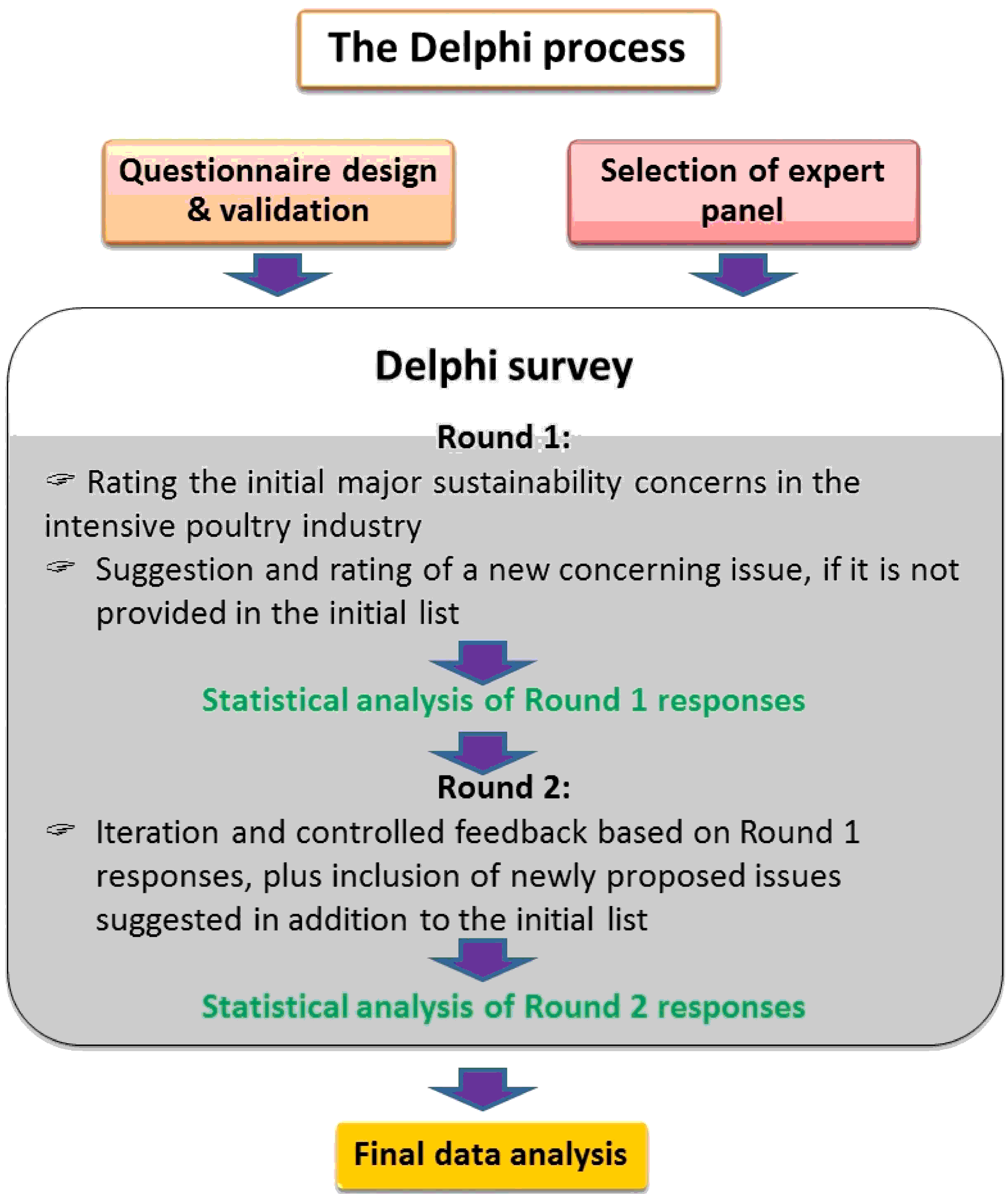
This Delphi study was conducted to identify the sustainability concerns in poultry production in Germany and Thailand. It consisted of four steps: questionnaire design and validation, selection of the experts, survey, and data analysis, as presented in Figure 1 . A literature review was conducted to identify the main sustainability issues in poultry production. This exploration focused on peer-reviewed articles, books, conference papers and reports. For example, the studies from Spies (Reference SPIES2003), Mollenhorst and De Boer (Reference MOLLENHORST and DE BOER2004), Mollenhorst (Reference MOLLENHORST2005) and Klohn and Windhorst (Reference KLOHN and WINDHORST1998) as well as issues published on the Poultry International and Deutsche Gefluegelwirtschaft and Schweineproduktion. The environmental, economic, social, political and animal welfare issues were taken into consideration while framing the Delphi questionnaire. Copies of this questionnaire were distributed to seven experts as a preliminary test to check its validity.
The process of the Delphi study.

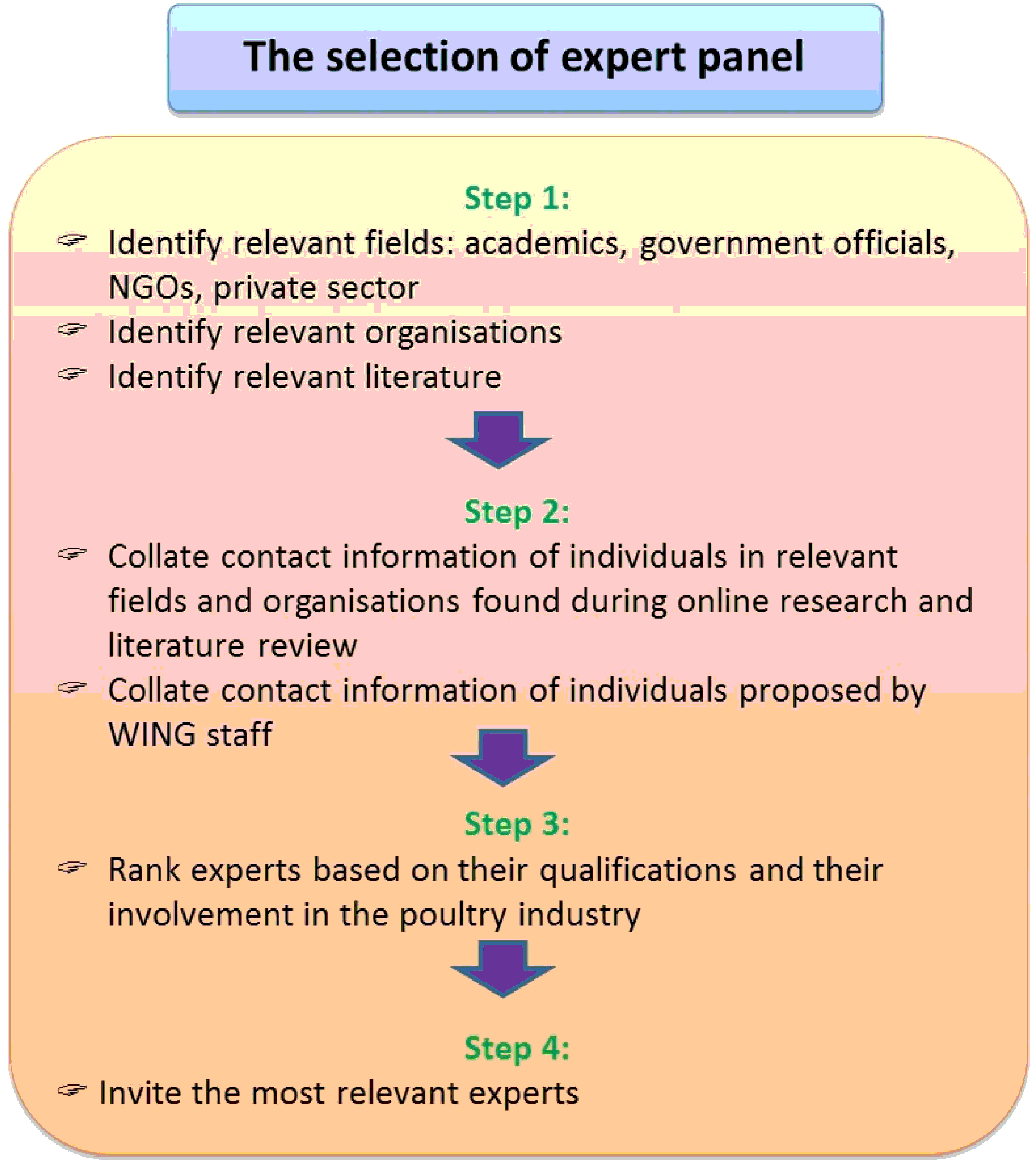
The experts were proposed by staff members of the Science and Information Centre for Sustainable Poultry Production at the University of Vechta, as well as from browsing organisation websites and journal databases. The selection of experts follows the guidelines of Okoli and Pawlowski (Reference OKOLI and PAWLOWSKI2004), and was based on the experts’ professional experiences in the poultry industry, including publications in the field, conference participation, project references and experience in academia, government, non-governmental organisations (NGOs) or the private sector. A four-step procedure for selecting the experts is shown in Figure 2 .
The Delphi study was designed and conducted from March to November 2014, in which the experts received a questionnaire by email. The first round of questionnaires (R1) was sent to 32 and 36 participants for the case studies in Germany and Thailand, respectively. They were asked to: a) rate their level of concern regarding the sustainability issues in the poultry industry provided in the questionnaire; and b) suggest further concerning issues, if they are not included in the list, and rate them using a 5-point Likert scale rating system. The second round of questionnaires (R2) was based on the responses from R1. It was an iteration of R1 which gave the participants the chance to revise their answers given in R1. Here, the responses from R1 were presented using percentage to reflect the group opinions, so that respondents could compare their previous responses to the rest of the group. In addition, new concerning issues proposed by the experts in R1 were added to the initial list of issues which were then rated by the respondents in R2.
The opinions of the expert panels on the main sustainability concerns in poultry production were expressed on a five-point Likert scale rating system which is based on Vagias (Reference VAGIAS2006): 1=not at all concerned, 2=slightly concerned, 3=somewhat concerned, 4=fairly concerned, and 5=very concerned. For each issue, mean values (MV) and standard deviations (SD) were calculated. The Kendall's W were computed for the level of agreement between the experts assessing a given set of concerning issues. The interpretation of statistical values was as follows:
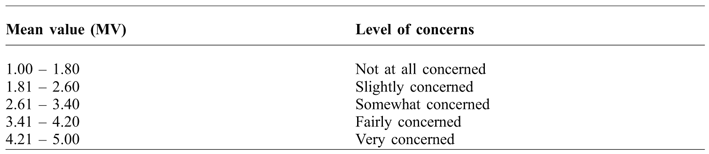
1) MV − used to identify the levels of concern. It was selected because the purpose of the Delphi method is to include all opinions. Based on the definition of the five-point Likert scale used in this Delphi study, the MV is interpreted following the guidelines created by the Australian government for internal purposes (Wrench, Reference WRENCH2013) as shown in Table 1 .
The procedure for selecting expert panel.

The interpretation of mean value in identifying the level of concerns.

Source: adapted from Wrench (Reference WRENCH2013).
2) Standard deviation (SD) – which reflected the level of consensus on one item amongst the expert panels in the Delphi study. In this study, the decision criteria for the level of consensus reached in the Delphi study were adapted from Christie and Barela (Reference CHRISTIE and BARELA2005), Grobbelaar (Reference GROBBELAAR2007) and Giannarou and Zervas (Reference GIANNAROU and ZERVAS2014), as presented in Table 2 .
Decision criteria for the level of consensus reached in the Delphi study.

Source: adapted from Christie and Barela (Reference CHRISTIE and BARELA2005), Grobbelaar (Reference GROBBELAAR2007) and Giannarou and Zervas (Reference GIANNAROU and ZERVAS2014).
3) Kendall's W − indicated the level of agreement between the experts assessing a given set of concerning issues. The values can vary from 0 to 1 (Schmidt, Reference SCHMIDT1997). If the test result was 1, then all the expert panels agreed unanimously, and each expert assigned the same order to the list of objects. If the test result was 0, then there was no overall consensus between the experts.
composition of the Delphi panel
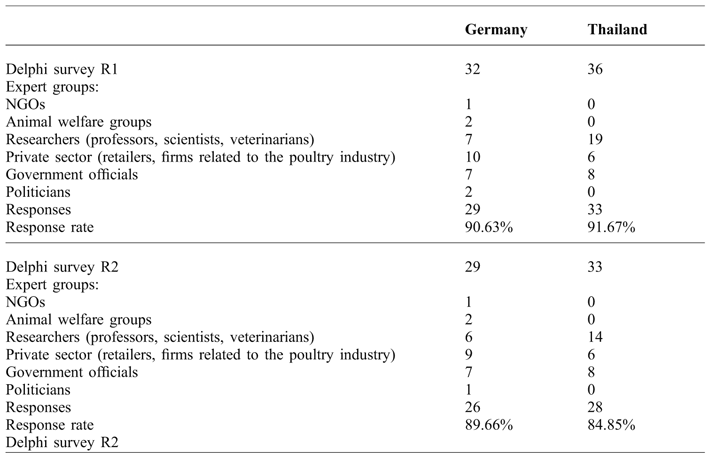
For Germany, there were 29 selected and 26 responded to the two rounds of questionnaires of this Delphi study, resulting in an average response rate of about 90% ( Table 3 ). Most of the answers were derived from the private sector, government officials and researchers, with nine, seven and six participants in the two rounds of research, respectively. For Thailand, the representatives of NGOs, animal welfare groups and politicians declined participation in the survey because they did not concentrate their activities in the poultry industry during the survey. There were 33 and 28 responses to the two rounds of questionnaires, respectively, resulting in an average response rate of 88%. The group of researchers provided the most responses with 14 participants, followed by the groups of government officials and representatives of the private sector, with eight and six respondents, respectively.
Response rates across the panellists and rounds for the case studies in Germany and Thailand.

Survey outcomes
major sustainability concerns
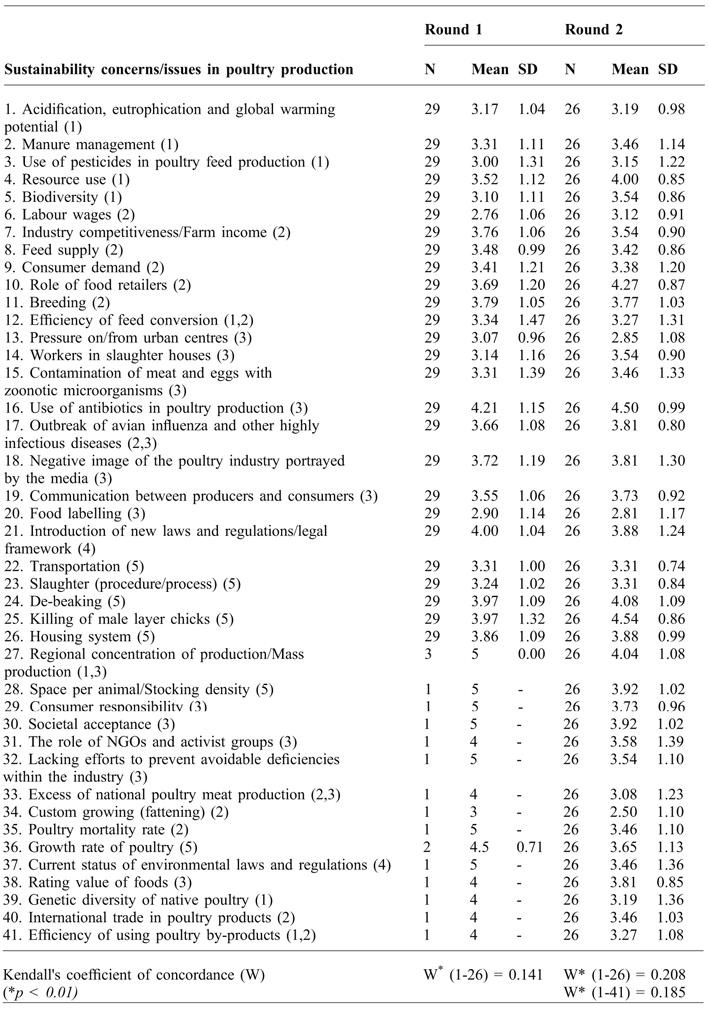
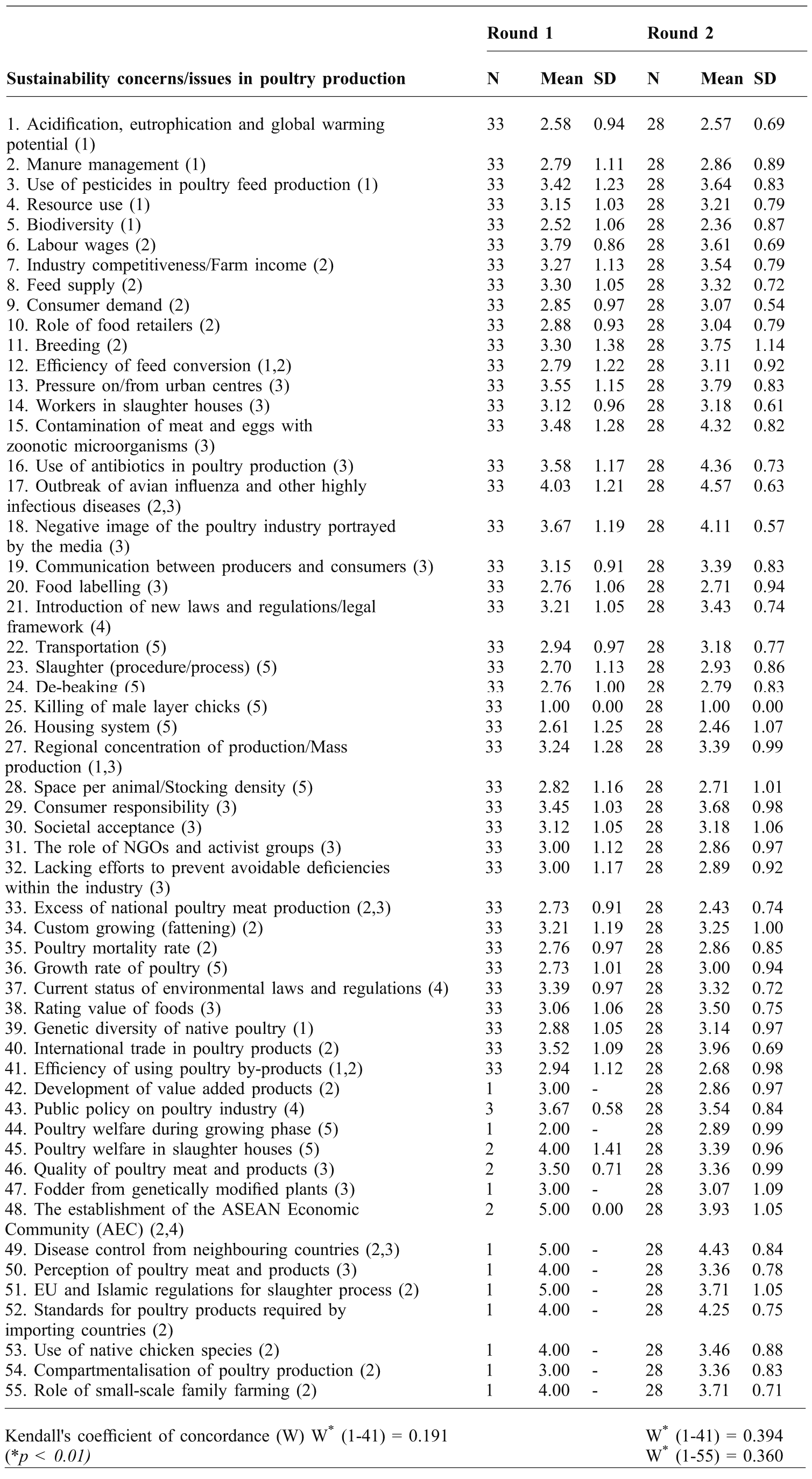
The 26 initial sustainability issues (1-26) in poultry production were identified based on a literature review. For Germany, the 15 additional issues (27-41) were proposed by the experts in the first survey. A total of 41 issues were identified and rated (see Table 4 ). For Thailand, the 41 sustainability issues in poultry production listed in the initial surveys were based on a literature review (26) and the results of the case study in Germany (15). The 14 additional issues (42-55) were proposed by the experts in the first survey. A total of 55 issues were identified and rated (see Table 5 ). Table 4 and 5 summarise the results of Delphi R1 and R2 for Germany and Thailand, respectively, giving: a) Sample size (N); b) The mean value (MV) and standard deviation (SD) for each issue; c) The Kendall's W for overall issues; and d) The sustainability aspects present as a number in parentheses after each issue: 1=environmental aspect, 2=economic aspect, 3=social aspect, 4=political aspect, and 5=animal welfare aspect.
Summary of first- and second-round Delphi results for Germany.

Summary of first- and second-round Delphi results for Thailand.

From Table 4 and 5, it can be concluded that there was a slight change in the mean values in the first and second surveys. In the second round, there were no new potential concerning issues proposed and all SD values were less than 1.50, which show that the level of consensus between the expert panels for each issue ranged from reasonable to high (see Table 2 ). Therefore, the Delphi survey could be concluded after the second round.
All concerning issues of the final round survey (R2) are categorised into five levels of concern based on MV (see Table 1 ). Based on Table 4, it can be concluded that the most sustainability concerns in the poultry industry in Germany as identified by the Delphi study are killing of male layer chicks, use of antibiotics in poultry production and role of food retailers. Based on Table 5 , the most concerning sustainability issues in the Thai poultry as identified by the Delphi study, are outbreak of avian influenza and other highly infectious diseases, disease control from neighbouring countries, use of antibiotics in poultry production, contamination of meat and eggs with zoonotic microorganisms, and standards for poultry products required by importing countries.
major sustainability concerns by stakeholder groups
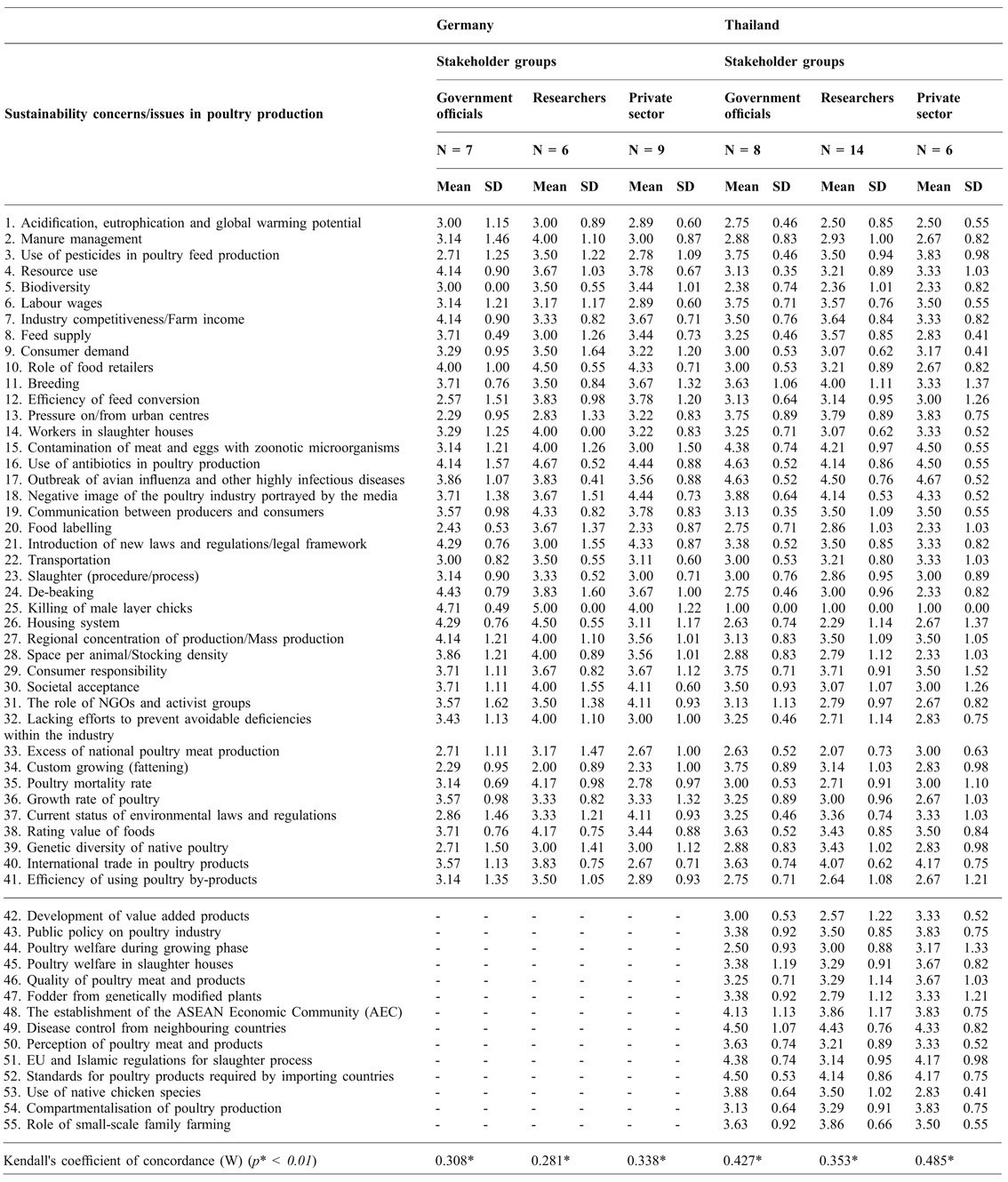
To further differentiate the results of the major sustainability concerns in the poultry industry in Germany and Thailand, the MV of the R2 of the Delphi study was analysed by the six stakeholder groups, including NGOs, animal welfare groups, researchers, the private sector, government officials and politicians, as presented in Table 3 . However, in this study, only the results between three stakeholder groups were compared (see Table 6 ) - researchers, the private sector and government officials, because the three remaining stakeholder groups of NGOs, animal welfare groups and politicians were too small a sample size to represent group results.
Results of the Delphi round 2 identified by stakeholder groups in Germany and Thailand.

For Germany, researchers and government officials rated killing of male layer chicks most highly, while the private sector considered negative image of the poultry industry portrayed by the media as the most concerning issue. The use of antibiotics in poultry production was considered as a very concerning issue by the researcher and private sector groups. The private sector and researchers ranked the role of food retailers as a very concerning issue, but this issue was not considered amongst the top five most concerning issues by government officials. The housing system was ranked as a very concerning issue by researchers and government officials. Only government officials considered the issue of de-beaking as a very concerning issue. The political issue, introduction of new laws and regulations/legal framework, was ranked as a very concerning issue amongst government officials and private sector groups. Researchers were the only group that considered communication between producers and consumers as a very concerning issue.
For Thailand, all three stakeholder groups raised substantial concerns over the outbreak of avian influenza and other highly infectious diseases, disease control from neighbouring countries, and contamination of meat and eggs with zoonotic microorganisms. The private sector and government officials both rated the use of antibiotics in poultry production as a very concerning issue, while this issue was less concerning for the group of researchers. The standards for poultry products required by importing countries was ranked as a very concerning issue by government officials, while it was only considered a fairly concerning issue by the private sector and researchers. The negative image of the poultry industry portrayed by the media was rated as a very concerning issue by the private sector and as a fairly concerning issue by the researchers, however it was not considered amongst the top five most concerning issues by government officials.
Comparison of results for the poultry industry in Germany and Thailand
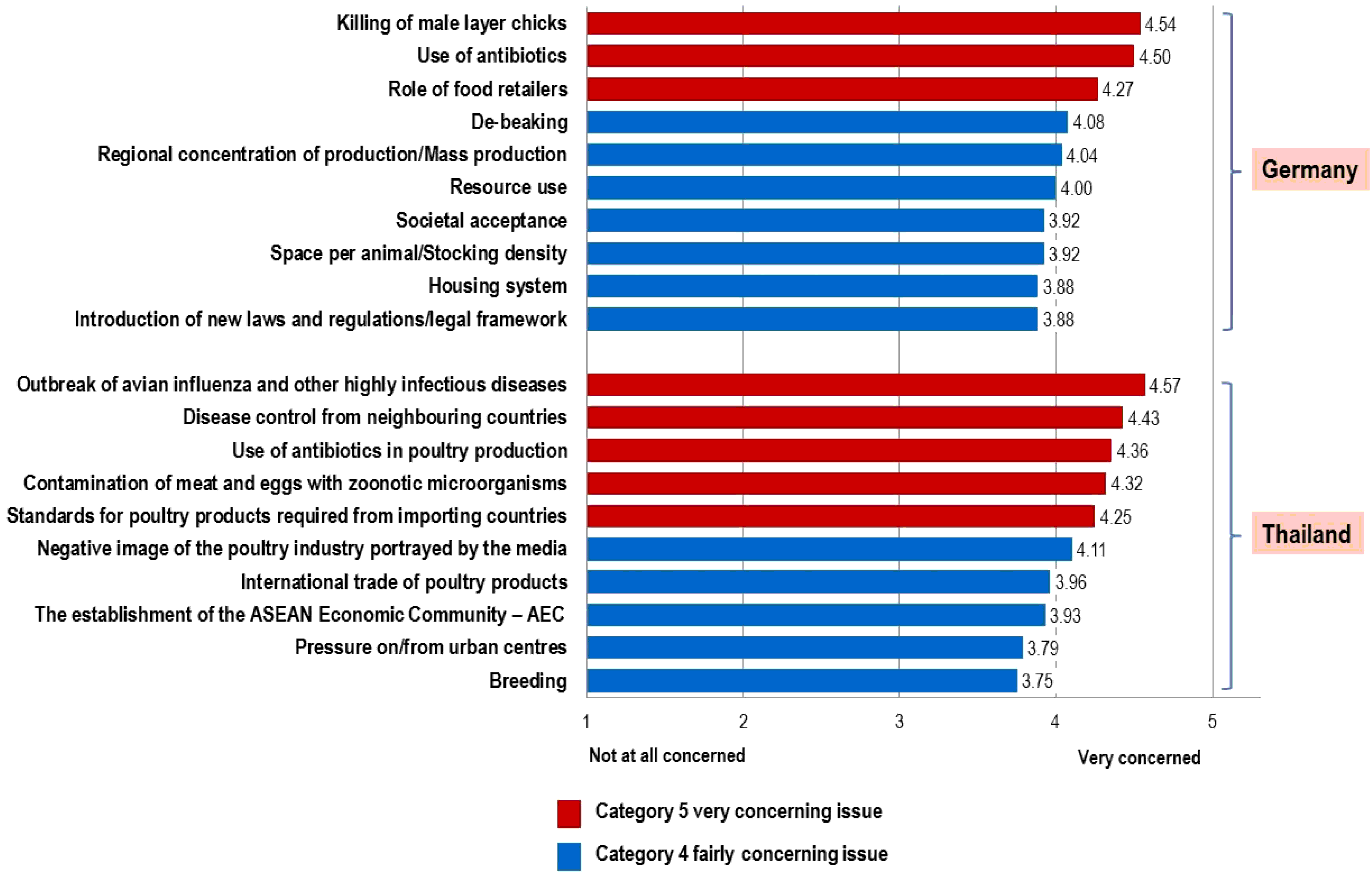
Figure 3 highlights the ten most concerning issues regarding the sustainability of poultry production in Germany and Thailand. The issue use of antibiotics in poultry production was considered as a top concern in both countries. The German experts were also highly concerned over the killing of male layer chicks and the role of food retailers, while the Thai experts felt the outbreak of avian influenza and other highly infectious diseases, disease control from neighbouring countries, contamination of meat and eggs with zoonotic microorganisms, and standards for poultry products required by importing countries were the top concerns for poultry production in Thailand. The German and Thai experts had different opinions on the remainder of the ten most concerning issues for poultry production.
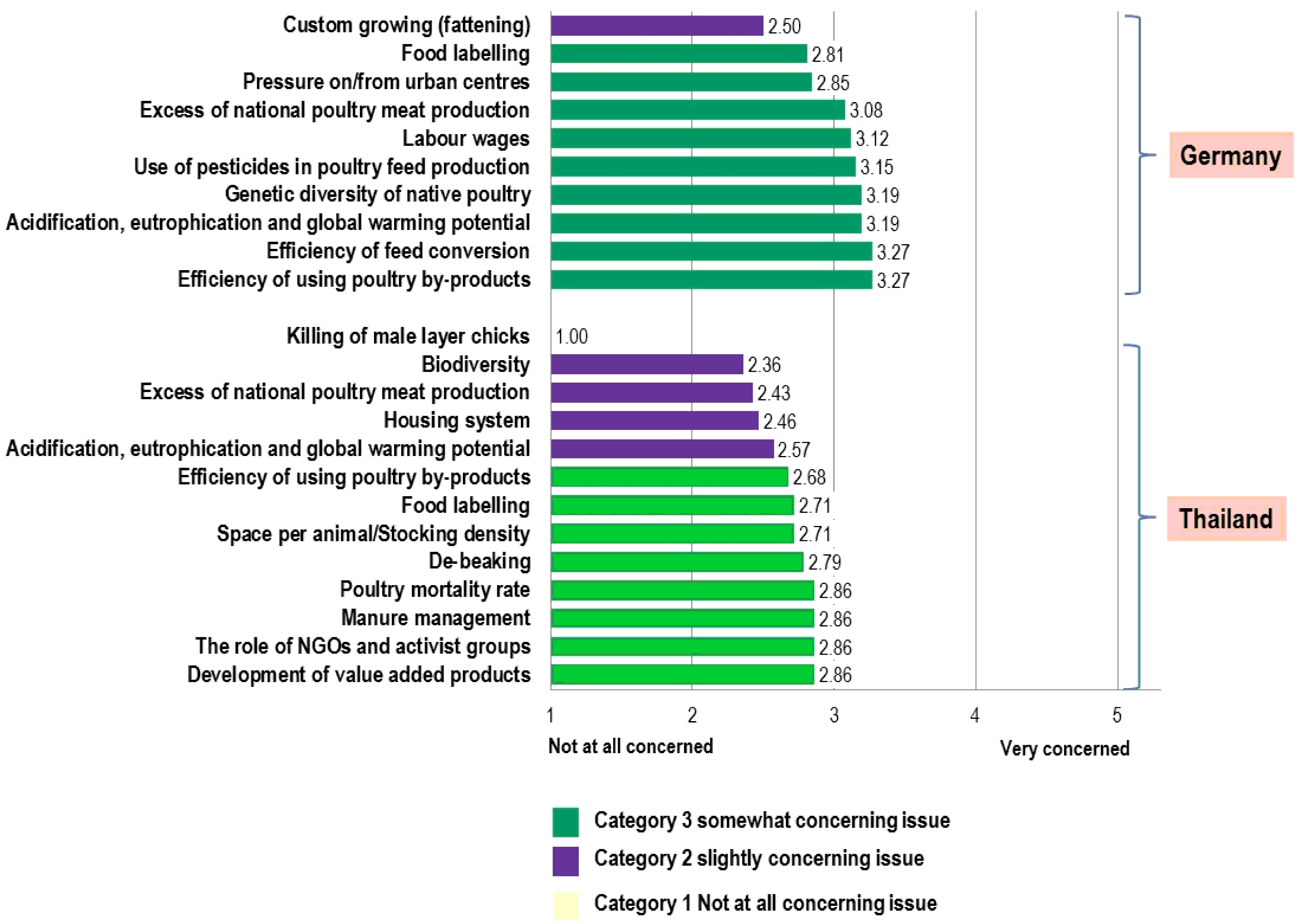
As highlighted in Figure 4 , the issue of killing of male layer chicks was not at all concerning and de-beaking was somewhat concerning for poultry production in Thailand. The German experts felt custom growing (fattening) was only slightly concerning, while biodiversity and housing system were considered slightly concerning by the Thai experts. Interestingly, acidification, eutrophication and global warming potential and excess of national poultry meat production were considered somewhat concerning for poultry production in Germany, while these were rated as only slightly concerning in Thailand.
In total, 41 concerning issues (1-41) were categorised into the five dimensions of sustainability (see Table 4 and 5). It can be concluded that environmental issues, especially resource use, biodiversity and regional concentration of production/mass production, were rated higher in Germany than in Thailand, except the use of pesticides in poultry feed production, which was of more concern in Thailand. Looking at the economic issues, outbreak of avian influenza and other highly infectious diseases was considered a more concerning issue for poultry production in Thailand than in Germany. An interesting result is that the role of food retailers was raised by the German experts, while this issue was of low concern for Thai experts. For political issues, the German experts felt that the introduction of new laws and regulations/legal framework could have a larger impact on poultry production than the Thai experts. The experts highlighted the use of antibiotics in poultry production as a highly concerning social issue in the two countries. Experts from Germany and Thailand had different opinions on animal welfare issues. It is clear that animal welfare issues such as killing of male layer chicks, housing system and de-beaking were more of a concern in Germany than in Thailand.
The 10 most concerning issues identified by experts from Germany and Thailand, ranked by mean value in the final round of the Delphi survey (round 2). The x-axis ranges from a mean value of 1 (not at all concerning issue) to 5 (very concerning issue).

The 10 least concerning issues identified by experts from Germanu and Thailand, ranked by mean value in the final round of the Delphi survey (Round 2). The x-axis ranges from a mean value of 1 (not at all concerning issue) to 5 (very concerning issue).

the usage of the Delphi method
Based on the final results of the two rounds of Delphi studies, 41 issues were evaluated by 26 German experts, and 55 issues were evaluated by 28 Thai experts. Dalkey et al. (Reference DALKEY, BROWN and COCHRAN1970) suggest that Delphi results are the most precise after round two and become less precise during additional rounds. Since the expert opinions were not affected by the panel size, there was no need to have the same number of panellists in both countries (Schmidt et al., Reference SCHMIDT, LYYTINEN, KEIL and CULE2001: Schmidt, Reference SCHMIDT1997). The Delphi method has some limitations: it is time-consuming, participants need to know how to use it, and the results may not be representative (Barnes, Reference BARNES1987). However, this technique aims to achieve a consensus on certain issues within a group of experts in the face of uncertainty and insufficient data (Angus et al., Reference ANGUS, HODGE, MCNALLY and SUTTON2003). One of the advantages of the Delphi method is that its use can mitigate the bandwagon effect by carefully selecting experts from diverse backgrounds (Angus et al., Reference ANGUS, HODGE, MCNALLY and SUTTON2003), and by controlling the feedback and iteration process during the Delphi survey (Rowe et al., Reference ROWE, WRIGHT and BOLGER1991). The Delphi method is a sound and effective instrument for identifying and ranking issues of concern and providing potential opportunities for improving sustainability (Blackburn, Reference BLACKBURN2007). One of the most challenging issues in using this method is maintaining the number of participating experts throughout various iteration rounds. This study overcame this drawback and achieved a response rate of more than 80% in the second round of Delphi surveys in the two countries, which ensured the accuracy of the research findings.
Although the level of consensus between experts assessing a set of issues, expressed by the Kendall's W (Schmidt, Reference SCHMIDT1997), was low for the final round of this Delphi study, there is a relatively high consensus amongst expert panels on an issue expressed by the SD (Grobbelaar, Reference GROBBELAAR2007; Christie and Barela, Reference CHRISTIE and BARELA2005). Since the aim of this study was to identify and explore new relevant sustainability issues that pose concern to the poultry industry, the consensus between experts on an issue (expressed by SD value) was taken into account. While the value of W was used to test the Delphi method in which the overall consensus amongst expert panels assessing a set of issues increased in the second round of the survey compared to the first survey. However, by looking at the Kendall's W, there is still a weak consensus. The W value is higher for the case of Thailand compared with Germany because of a lower heterogeneity within the Delphi panels. This study used a 5-point Likert scale for rating the sustainability issues. The decision criteria for measuring the level of consensus amongst expert panels on an issue were adapted based on the studies of Grobbelaar (Reference GROBBELAAR2007), Christie and Barela (Reference CHRISTIE and BARELA2005) and Giannarou and Zervas (Reference GIANNAROU and ZERVAS2014) since there was a similar range of SD value in a decision criterion of those studies. In this study, the overall SD values in the second round of surveys showed a consensus reached between experts and varied from reasonable to high. However, there are still different opinions on some issues within and between stakeholder groups, such as the use of antibiotics in poultry production, the role of NGOs and activist groups, and de-beaking. Therefore, for future study design, the additional round of discussion within stakeholder groups or experts for certain issues that received a low consensus, would be necessary and useful for the case that required agreement between expert panels, such as the explorative study for new policy or regulation making process in poultry production.
comparison of the results for Germany and Thailand
Environmental issues, especially resource use, biodiversity and regional concentration of production/mass production, were considered more concerning in Germany than in Thailand, apart from the use of pesticides in poultry feed production, which was more concerning in Thailand. This is partly due to the lack of a consolidated system for pesticide management, as well as the weak enforcement of regulations, resulting in an increase in environmental contamination and human exposure to pesticides (Panuwet et al., Reference PANUWET, SIRIWONG, PRAPAMONTOL, RYAN, FIEDLER, ROBSON and BARR2012).
The outbreak of avian influenza and other highly infectious diseases is a serious economic and social concern; avian influenza in particular has a direct impact on poultry flock productivity, temporary trade suspensions and the loss of export markets, as well as human health (Soisontes, Reference SOISONTES2015a). This issue was considered more concerning for poultry production in Thailand than in Germany. This can be attributed to the fact that the Thai poultry industry, especially broiler production, relies predominantly on export. Although Thailand has remained avian influenza-free since 2009, the level of concern on this issue is still very high. This is because outbreaks of bird flu continue to occur in other countries and the risk of the disease spreading to Thailand remains since it can be carried by migratory birds (Munster et al., Reference MUNSTER, BAAS, LEXMOND, WALDENSTRÖM, WALLENSTEN, FRANSSON, RIMMELZWAAN, BEYER, SCHUTTEN, OLSEN, OSTERHAUS and FOUCHIER2007). This could have a devastating effect upon the Thai poultry industry. In European countries, avian influenza only had a short-term impact on the market and trade due to an EU financial compensation programme and a short production cycle for poultry, which enables a particularly rapid supply response (European Parliament, 2010).
The most concerning economic issue in poultry production raised by the German experts was the role of food retailers, which dominate the food market in Germany (Rehder, Reference REHDER2012). Their changing policies with regard to consumer concerns have a direct impact on the poultry sector, as can be seen in the case of GMO-free animal feed (Breloh et al., Reference BRELOH, ALVES, FREIRE and KOESTER2015) and housing systems in laying hen husbandry (Windhorst, Reference WINDHORST2015b). As a result, poultry producers have to respond to the demands of retailers in order to sell their poultry products. However, the situation is different in Thailand, where local niche markets are still very competitive regarding poultry meat and eggs for consumers. About 60-70% of the Thai population buy these products at local markets (The Poultry Site, 2015).
With regard to political issues, the German experts felt that the introduction of new laws and regulations/legal framework could have a larger impact on poultry production than the Thai experts. New laws and regulations, including a total ban on conventional cage systems (Windhorst, Reference WINDHORST2015a), the prohibition of de-beaking (Soisontes, Reference SOISONTES2015a) and restrictions on the use of antibiotics in poultry production (Koeleman, Reference KOELEMAN2014) have already been implemented in Germany, while they are less frequently discussed in Thailand. The German poultry sector needs to invest in addressing these issues in order to comply with legal regulations and increase social acceptance.
The social issues, especially the contamination of meat and eggs with zoonotic microorganisms, which was consider very concerning issue in Thailand due to a wide range in levels of biosecurity in production system. The export products are produced at high levels of biosecurity standards, while the products for domestic consumption are produced at a wide range of low to high level of biosecurity standards (European Parliament, 2010; Bracke, Reference BRACKE2009). Poultry that is produced at the low level of biosecurity standards is therefore potentially contaminated with zoonotic microorganisms (Songpaisan, Reference SONGPAISAN2013), especially Salmonella and Campylobacter spp. (EFSA and ECDC, 2014). The use of antibiotics in poultry production is one of the most concerning issues in Germany and Thailand, as evaluated by the experts in the Delphi study. The survey of consumer opinions on food safety in Germany in 2015 conducted by BfR also shows that antibiotic resistance is the most concerning issue (72%) which increased by 8% compared to 2014 (BfR, 2015). The campaign against antibiotics use in animal production in developed countries clearly shows that today's consumers are aware of what they consume, which in turn drives the poultry sector to transform its production systems.
Animal welfare issues, especially the issues of de-beaking, killing of male layer chicks and housing systems were considered more concerning in Germany than in Thailand due to ethical concerns about poultry husbandry in the EU (Windhorst, Reference WINDHORST2015a). Meanwhile the issues of animal welfare in the context of laying hen housing systems and de-beaking have not been discussed in Thailand due to two main reasons: first, egg production is predominantly for domestic consumption, meaning that potential pressures regarding animal welfare from external countries do not apply here (Office of Agricultural Economics, 2014). Secondly, there is no pressure from national NGOs or animal welfare groups (Ursinus et al., Reference URSINUS, SCHEPERS, BOKKERS, BRACKE and SPOOLDER2009). For the issue of killing of male layer chicks, in Thailand male layer chicks are predominantly raised for meat production and are sold on local niche markets, since the meat of male chicken is preferred (Soisontes, Reference SOISONTES2015b).
Finally, the issue of most concern for the poultry industry is the negative image of the poultry industry portrayed by the media, which was raised by the private sector groups both in Germany and Thailand. This reflects the lack of communication between producers and consumers, an issue of very high relevance to the German researcher groups in the Delphi study. In addition, the influence of NGOs and animal welfare groups on the portrayal of the industry in the media contributes to a negative picture of the modern poultry industry (Veauthier, Reference VEAUTHIER2013). It is necessary to provide the public with a more realistic picture of modern poultry production systems and thus improve public perception and acceptance of the poultry industry, as the results of the Transparency Project showed (Heijne and Windhorst, Reference HEIJNE and WINDHORST2017).
newly identified sustainability issues in poultry production
In comparison to previous studies conducted by Spies (Reference SPIES2003) and Mollenhorst and De Boer (Reference MOLLENHORST and DE BOER2004) on the sustainability of poultry production, this Delphi study explored contemporary sustainability issues in the poultry industry, especially the issue of outbreaks of avian influenza and other highly infectious diseases, disease control in neighbouring countries, the compartmentalisation of poultry production, and use of antibiotics in poultry production. These four concerning issues are currently and widely discussed in the poultry industry due to the ongoing outbreak of avian influenza and development of resistant bacteria. The role of NGOs and activist groups was also added in this study. NGOs and activist groups play an active role in the EU, especially the poultry sector that these groups have often targeted. In addition, this study could identify specific issue the establishment of the ASEAN Economic Community for the poultry industry in Southeast Asian Countries which this economic cooperation could have a significant impact on the poultry industry within the member countries.
Conclusions
Improvements to poultry production that are led by the sector itself, especially on issues of concern identified in this study, such as the use of antibiotics, killing of day-old male layer chicks, de-beaking, outbreak of avian influenza, contamination of meat and eggs with zoonotic microorganisms, regional concentration of production and housing systems with the combination of improved communication between producers and consumers as well as the support from governments and politics, could ensure consumer confidence and promote sustainability in poultry production.