Introduction
Schistosomiasis, popularly known as ‘water belly’, is a chronic parasitic disease caused by the trematodes of the genus Schistosoma, which affects approximately 240 million people worldwide, especially in tropical and subtropical regions (WHO 2023). Classified by the World Health Organization as one of the main neglected tropical diseases, its epidemiological relevance is due both to its high prevalence and to the clinical complications it causes, including anaemia, hepatic fibrosis, portal hypertension, and impairment of the quality of life of the affected populations (McManus et al. Reference McManus, Dunne, Sacko, Utzinger, Vennervald and Zhou2018; WHO 2023).
Currently, treatment is based almost exclusively on the use of praziquantel (PZQ), a drug effective against adult forms of the parasite, but with limitations against immature forms, which impacts control strategies in endemic areas (Almeida Júnior et al. Reference Almeida Júnior, Leal, Marques, da Silva, Bezerra, de Souza, Silveira, Santos, Alves, Aires, Cruz Filho and de Lima2024; Moreira-Filho et al. Reference Moreira-Filho, Neves and Andrade2021). Furthermore, the reliance on PZQ in mass control regimens has fuelled concerns about reduced efficacy and the selection of less sensitive phenotypes, stimulating studies that investigate the genetic basis and mechanisms associated with tolerance/resistance (Cotton and Doyle Reference Cotton and Doyle2022; Eastham et al. Reference Eastham, Fausnacht, Becker, Gillen and Moore2024; Summers et al. 2022). In this context, the search for new schistosomicidal drugs remains an urgent need, particularly those with better performance at different stages of the parasite and with more robust safety and efficacy profiles (Caldwell et al. Reference Caldwell, Afshar, Baragaña, Bustinduy, Caffrey, Collins, Fusco, Garba, Gardner, Gomes, Hoffmann, Hsieh, Lo, McNamara, Komguep Nono, Padalino, Read, Roestenberg, Spangenberg, Specht and Gilbert2023; Moreira-Filho et al. Reference Moreira-Filho, Neves and Andrade2021).
Demonstrating the activity and safety of novel scaffolds and/or natural compounds as potential active pharmaceutical ingredients (APIs) is an essential initial step towards obtaining new therapies (Caldwell et al. Reference Caldwell, Afshar, Baragaña, Bustinduy, Caffrey, Collins, Fusco, Garba, Gardner, Gomes, Hoffmann, Hsieh, Lo, McNamara, Komguep Nono, Padalino, Read, Roestenberg, Spangenberg, Specht and Gilbert2023; Moreira-Filho et al. Reference Moreira-Filho, Neves and Andrade2021). In view of this, the scientific literature presents reports of screenings involving both natural and synthetic compounds with promising activity, including automated and artificial intelligence–assisted approaches to accelerate the identification of candidates (Moreira-Filho et al. Reference Moreira-Filho, Neves and Andrade2021; Villamizar-Monsalve et al. Reference Villamizar-Monsalve, Sánchez-Montejo, López-Abán, Vicente, Marín, Fernández-Ceballos, Peláez and Muro2024). In this sense, the investigation of molecular targets has become established as a strategic and innovative approach, since it favours studies of SARs and rational design, contributing to the development of more optimized drugs (Villamizar-Monsalve et al. Reference Villamizar-Monsalve, Sánchez-Montejo, López-Abán, Vicente, Marín, Fernández-Ceballos, Peláez and Muro2024).
However, for a target-based approach to be successful, the identification, characterization, and validation of the molecular target are necessary. Additionally, the target must be essential for the parasite’s survival and amenable to pharmacological inhibition. This last characteristic is influenced by pharmacokinetic and pharmacodynamic variables, making phenotypic screening irreplaceable, as it confirms efficacy at the cellular and/or systemic level (Moreira-Filho et al. Reference Moreira-Filho, Neves and Andrade2021). In this context, the study of enzymes and proteins involved in vital Schistosoma processes, such as DNA replication and repair, energy metabolism, detoxification, and immune modulation, has revealed concrete possibilities for therapeutic intervention (Caldwell et al. Reference Caldwell, Afshar, Baragaña, Bustinduy, Caffrey, Collins, Fusco, Garba, Gardner, Gomes, Hoffmann, Hsieh, Lo, McNamara, Komguep Nono, Padalino, Read, Roestenberg, Spangenberg, Specht and Gilbert2023).
The validation of the pharmacological target is supported by genomic and omics studies that attest to its presence, conservation, and functional relevance in the parasite, while its importance stems from its impact on maintaining the biological cycle and dissemination, including successful invasion, nutrition, and evasion of the host’s immune system (McManus et al. Reference McManus, Dunne, Sacko, Utzinger, Vennervald and Zhou2018; Soleymani et al. Reference Soleymani, Sadr, Santucciu, Dianaty, Lotfalizadeh, Hajjafari, Heshmati and Borji2024). Each developmental stage of schistosomes may exhibit different levels of expression of essential enzymes and proteins. Recent advances using proteomic and transcriptomic tools, together with the integration of parasite secretion/excretion data, have enabled a better understanding of the biology of these worms by identifying proteins and stage-specific profiles that expand the diversity of potential targets for new therapies (Kenney et al. Reference Kenney, Mann, Ittiprasert, Rosa, Mitreva, Bracken, Loukas, Brindley and Sotillo2022; Shakir et al. Reference Shakir, Rinaldi and Walker2023). Designing scaffolds aimed at inhibiting these components could result in valuable compounds capable of promoting healing, controlling the spread, and reducing the socioeconomic impacts of schistosomiasis.
Therefore, the objective of this review is to synthesize target-based studies on schistosomiasis published between 2020 and 2025, highlighting the enzymes investigated, compounds with inhibitory activity, and the mechanisms of action of the most promising scaffolds. By compiling this overview, we seek to contribute to a deeper and more up-to-date understanding of the most relevant schistosomicidal mechanisms currently available, as well as the trends in the most promising biological targets and the existing gaps in knowledge. Enzymes such as histone deacetylase 8 (HDAC8), sulfotransferases, components of the thiol-redox system (e.g., TGR), and purine nucleoside phosphorylase, among others, which play essential roles in parasite homeostasis, will be discussed (Ghazy et al. Reference Ghazy, Abdelsalam, Robaa, Pierce and Sippl2022; Guzman et al. Reference Guzman, Rugel, Alwan, Tarpley, Taylor, Chevalier, Wendt, Collins, Anderson, McHardy and LoVerde2022; Noce et al. Reference Noce, Di Bello, Zwergel, Fioravanti, Valente, Rotili, Masotti, Salik Zeya Ansari, Trisciuoglio, Chakrabarti, Romier, Robaa, Sippl, Jung, Häberli, Keiser and Mai2023; Petukhova et al. Reference Petukhova, Aboagye, Ardini, Lullo and Fata2023; Stephens et al. Reference Stephens, Fung, Han, Liang, Chen, Ready and Collins2025). A joint analysis of the literature reveals not only the diversity of mechanisms explored, but also the convergence of efforts towards the development of innovative therapies.
Bibliometric review of studies conducted on Schistosoma mansoni schistosomiasis and the search for new therapeutic alternatives
In this section, bibliometric techniques were employed to map the structure, profile, and quality of the literature on Schistosoma mansoni schistosomiasis, with an emphasis on studies aimed at prospecting new therapeutic alternatives. The synthesis of this bibliometric analysis not only consolidates the available knowledge but also provides a useful overview for researchers and professionals in the academic field.
The data were obtained from the Scopus and Web of Science databases, widely recognized for their coverage and scientific relevance. To reduce update bias and ensure consistency, data collection was performed on a single day (19 November 2025). The search strategy employed quotation marks, dollar signs, asterisks, and Boolean operators (‘AND’ and ‘OR’), using the following descriptors: (Schistosoma mansoni$) AND (Synthese$ OR Structure$ OR ‘Molecular target$’ OR ‘Biological application$’). The exported files were processed in R version 4.2.1, with duplicate removal, and metadata analysis was conducted using the bibliometrix package.
Articles published between 2020 and 2025, written in English, were included, prioritizing original articles and reviews from the last five years. Additional filters were applied to highlight studies reporting in vitro and/or in vivo assays against Schistosoma mansoni. Eligible studies were examined for the chemical structure of the molecules investigated, experimental models employed, proposed mechanisms of action, and efficacy and toxicity outcomes. Finally, the extracted data were organized and discussed qualitatively, with emphasis on emerging trends and persistent gaps in literature.
Bibliometric analysis and scientific performance from 2020 to 2025
A total of 1,640 records were retrieved from the Scopus and Web of Science databases. After removing 570 duplicate records, 1,070 unique documents remained for the bibliometric analysis, comprising 398 records from Web of Science and 672 from Scopus. These documents were published in 62 sources, including journals, books, and other publication venues, with 232 sources represented in Web of Science and 380 in Scopus. Figure 1A shows the distribution of publication sources by database, while Figure 1B presents the annual distribution of the 1,070 unique documents, reflecting robust academic activity on the topic of the search for new therapeutic alternatives. However, the analysis of annual growth in research involving therapeutic targets revealed fluctuations, with a 50% decline in publications in 2022 compared to 2021. Despite this reduction, scientific production progressively recovered, reaching 20 articles in 2025. Overall, 95 articles were published between 2020 and 2025, with a compound annual growth rate (CAGR) of 1.03%. Regarding the visibility and impact of scientific production, the average number of citations per document was 9.648, demonstrating that, despite the decline in production, the published works maintained a good level of recognition. In addition, the distribution of publications across journals covering different fields of knowledge showed a predominance of journals in Parasitology, Tropical Medicine, and Infectious Diseases, which is expected given that schistosomiasis is a neglected tropical disease caused by trematode parasites. However, publications were also found in areas such as Biochemistry and Molecular Biology, Medicinal Chemistry, and Immunology. This distribution of publications across distinct fields reinforces the multidisciplinary nature of schistosomiasis research, which integrates approaches from structural biology, medicinal chemistry, applied immunology, and parasitology, as shown in Table 1. Regarding funding sources, there was a predominance of major national and international agencies, highlighting the strategic and global importance of supporting research aimed at identifying new therapeutic targets for schistosomiasis control. Figures 1A–C and 2A–B comprehensively illustrate the patterns of scientific production and impact observed during the evaluated period.
The 10 journals with the most published articles

Table 1. Long description
Panel A is a bar chart comparing two databases. The x-axis lists Scopus and Web of Science. The y-axis is Number of Articles ranging from 0 to 1000. Scopus has approximately 670 articles and Web of Science has approximately 400 articles.Panel B is a bar chart showing a temporal trend. The x-axis is Years from 2020 to 2025. The y-axis is Number of Articles ranging from 0 to 300. Data points are labeled above each bar. 2020 has 153. 2021 has 154. 2022 has 174. 2023 has 177. 2024 shows a significant peak at 289. 2025 has 123.Panel C is a bar chart showing a different temporal dataset. The x-axis is Years from 2020 to 2025. The y-axis is Number of Articles ranging from 0 to 20. Data points are labeled above each bar. 2020 has 19. 2021 has 16. 2022 shows a trough at 8. 2023 has 15. 2024 has 17. 2025 has 16.
* International Journal for Parasitology: Impact factor 3.2, CiteScore 8.4.
* Tropical Medicine and Infectious Disease: Impact factor 3.2, CiteScore 8.4.
* Infectious Diseases Now: Impact factor 2.2, CiteScore 4.8.
* Acta Tropica: Impact factor 2.5, CiteScore 4.8.
* The Journal of Immunology: Impact factor 3.4, CiteScore 7.2.
* Experimental Parasitology: Impact factor 1.6, CiteScore 2.8.
* International Journal of Biological Macromolecules: Impact factor 8.5, CiteScore 10.3.
* Pharmaceuticals: Impact factor 4.8, CiteScore 7.7.
* Chemistry and Biodiversity: Impact factor 2.5, CiteScore 3.5.
* Chemico-Biological Interactions: Impact factor 5.4, CiteScore 8.6.
The source is cited as Web of Science and Scopus databases.
Source: Web of Science and Scopus databases.
(A) Number of publication sources found in the Web of Science and Scopus databases; (B) Annual scientific production relating to the 1,070 documents found; (C) Annual scientific output relating to 95 documents found in publications by biological targets.

Figure 1. Long description
A bar chart comparing the number of publication sources represented in Web of Science and Scopus. The x-axis is labelled Database, and the y-axis is labelled Number of Publication Sources, ranging from 0 to 400. Web of Science accounts for 232 publication sources and Scopus for 380.
A bar chart titled Number of Articles showing the annual distribution of the 1,070 unique documents included in the bibliometric analysis after deduplication. The x-axis is labelled Years, and the y-axis is labelled Number of Articles. Annual counts are 153 in 2020, 154 in 2021, 174 in 2022, 177 in 2023, 289 in 2024, and 123 in 2025.
Panel C A bar chart titled Number of Articles showing the annual distribution of the 95 articles focusing on biological targets. The x-axis is labelled Years, and the y-axis is labelled Number of Articles. Annual counts are 19 in 2020, 16 in 2021, eight in 2022, 15 in 2023, 17 in 2024, and 20 in 2025.
(A) Ten countries with the highest number of publications indexed in the Web of Science and Scopus databases. (B) Ten main funding bodies/agencies that finance research on Schistosoma mansoni.

Figure 2. Long description
Panel A, titled Ratio Articles Produced by Country, is a 3D pie chart divided into ten segments. Clockwise from the bottom right, the data is: United States 17 percent, Brazil 15 percent, China 13 percent, United Kingdom 11 percent, Germany 9 percent, South Africa 9 percent, Italy 8 percent, France 7 percent, Mexico 6 percent, and Nigeria 5 percent.
Panel B, titled Funding Sponsor, is a horizontal bar chart with an x-axis ranging from 0 to 16. The bars represent the following organizations from highest to lowest value:
* C N P q: 15
* CAPES: 14
* National Institute of Allergy and Infectious Diseases: 13
* National Institute of Health: 12
* National Natural Science Foundation of China: 11
* F A P E S P: 10
* National Research Foundation: 9
* Seventh Framework Programme: 8
* European Commission: 7
Bibliometric and qualitative analyses of the collected data suggest that one of the main obstacles to the discovery of new antischistosomal agents is the integration of pharmacokinetic/pharmacodynamic optimization with parasite-specific biological features. These include stage-dependent susceptibility, infected tissue characteristics, and species-related differences. As discussed by Caldwell et al. (Reference Caldwell, Afshar, Baragaña, Bustinduy, Caffrey, Collins, Fusco, Garba, Gardner, Gomes, Hoffmann, Hsieh, Lo, McNamara, Komguep Nono, Padalino, Read, Roestenberg, Spangenberg, Specht and Gilbert2023), the central challenge is to align the compound’s property profile, especially systemic exposure and tissue distribution, with the differences in habitat and physiology of Schistosoma throughout its life cycle, which vary between species and stages. In this context, in addition to establishing whether the candidate should prioritize rapid peak concentrations (Cmax) or sustained exposure (AUC and/or time above an effective threshold), it remains undefined which combinations of pharmacokinetic parameters are most decisive for maximizing parasite elimination under conditions that mimic real infection (Abla et al. Reference Abla, Keiser, Vargas, Reimers, Haas and Spangenberg2017; Bustinduy et al. Reference Bustinduy, Waterhouse, de Sousa-Figueiredo, Roberts, Atuhaire, Van Dam, Corstjens, Scott, Stanton, Kabatereine, Ward, Hope and Stothard2016).
This overview helps interpret a relevant finding from the bibliometric analysis: the low scientific output directly focused on biological targets, represented by only 91 articles (Figure 1C). In other words, the difficulty of translating mechanistic hypotheses into candidates with consistent pharmacological performance may help explain why strictly target-based studies remain underrepresented. This difficulty may favour more exploratory and/or phenotypic approaches in part of the literature.
Additionally, qualitative analysis of the selected studies suggests the underutilization of computational chemistry and artificial intelligence as tools capable of accelerating and improving this pipeline. Considering their applicability for virtual screening, prioritization of chemical series, modelling of ligand-target interactions, and prediction/optimization of PK/PD and ADMET properties, the use of these strategies suggests a concrete opportunity to boost research, reduce experimental costs, and increase the likelihood of identifying candidates with adequate exposure, stage-dependent efficacy, and a better safety margin (Padalino et al. Reference Padalino, Coghlan, Pagliuca, Forde-Thomas, Berriman and Hoffmann2023).
Medicinal chemistry
Medicinal chemistry is a central axis in antiparasitic research because it transforms hits obtained through phenotypic/target-based screenings into drug candidates, integrating SAR, potency and selectivity optimization, and fine-tuning of ADMET properties like solubility, permeability, metabolic stability, and safety margin (Broccatelli et al. Reference Broccatelli, Hop and Wright2019; Oliveira et al. Reference Oliveira, Cruz, Mollo, Dias and Kratz2021).
One of the main challenges in discovering new schistosomiasis drugs is the parasite’s long and complex life cycle, which makes screening research technically difficult (Ramirez et al. Reference Ramirez, Bickle, Yousif, Fakorede, Mouries and Nwaka2007). In this context, methodological repositioning becomes relevant, incorporating medicinal chemistry strategies in a more systematic way, including contemporary approaches such as fragment-based drug discovery (FBDD), capable of generating chemical series that can be optimized and used to develop drug candidates (Moreira-Filho et al. Reference Moreira-Filho, Neves and Andrade2021). Another strategy is target-based drug discovery (TDD), which consists of the search for ligands against a known biological target, according to its potential and relevance in each disease (Croston Reference Croston2017; Heilker et al. Reference Heilker, Lessel and Bischoff2019).
This approach is particularly relevant due to the need for new therapies and molecules with performance across multiple stages of the parasite, as well as more robust profiles for use in endemic settings (Caldwell et al. Reference Caldwell, Afshar, Baragaña, Bustinduy, Caffrey, Collins, Fusco, Garba, Gardner, Gomes, Hoffmann, Hsieh, Lo, McNamara, Komguep Nono, Padalino, Read, Roestenberg, Spangenberg, Specht and Gilbert2023). The quality of the initial chemical compounds (known as ‘hits’) for drug discovery projects is a crucial factor in increasing the likelihood of success for clinical candidates, and the subsequent optimization phase can take years and require financial investment (Caldwell et al. Reference Caldwell, Afshar, Baragaña, Bustinduy, Caffrey, Collins, Fusco, Garba, Gardner, Gomes, Hoffmann, Hsieh, Lo, McNamara, Komguep Nono, Padalino, Read, Roestenberg, Spangenberg, Specht and Gilbert2023; Katsuno et al. Reference Katsuno, Burrows, Duncan, Van Huijsduijnen, Kaneko, Kita and Slingsby2015).
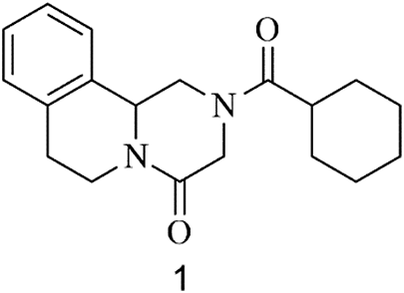
A wide variety of structural cores, commonly referred to as scaffolds, are employed in medicinal chemistry for the discovery and development of new drugs. Each scaffold possesses distinct physicochemical and pharmacokinetic properties, as well as the potential to modulate different biological targets (Welsch et al. Reference Welsch, Snyder and Stockwell2010). Based on these scaffolds, novel compounds can be rationally designed and synthesized to achieve a desired biological activity, such as schistosomicidal activity, preferably through distinct mechanisms of action (Caldwell et al. Reference Caldwell, Afshar, Baragaña, Bustinduy, Caffrey, Collins, Fusco, Garba, Gardner, Gomes, Hoffmann, Hsieh, Lo, McNamara, Komguep Nono, Padalino, Read, Roestenberg, Spangenberg, Specht and Gilbert2023). Therefore, the use of diverse scaffolds in the design of schistosomicidal compounds represents an important strategy for overcoming the limitations of praziquantel (Figure 3), which remains the primary drug used for the treatment of schistosomiasis (Alwan et al. Reference Alwan, Taylor, Rhodes, Tidwell, McHardy and LoVerde2023).
Chemical structure of praziquantel.

Heterocyclic nuclei
Heterocyclic compounds are cyclic chemical structures containing at least one heteroatom. Ring systems incorporating nitrogen (N), oxygen (O), and sulphur (S) are regarded as privileged scaffolds in medicinal chemistry. These scaffolds enable modulation of pKa, electronic density, and conformational geometry, thereby fine-tuning interactions with parasitic molecular targets through hydrogen bonding, ionic interactions, and π–π stacking. At the same time, they promote a balance between lipophilicity and polarity that is crucial for crossing biological barriers and reaching the biological target within the parasite (Darlami et al. Reference Darlami, Kumar and Sharma2024). Recent reviews have highlighted the ubiquity and versatility of heterocyclic motifs in bioactive molecules and approved drugs, including compounds with antiparasitic applications (Leśniewska et al. Reference Leśniewska and Przybylski2024; Ward and O’Boyle Reference Ward and O’Boyle2025).
Among heterocyclic structures, nitrogen stands out as the predominant heteroatom, occurring more frequently in both monocyclic and fused heterocyclic systems, although oxygen- and sulphur-containing heterocycles are also commonly found (Moreira-Filho et al. Reference Moreira-Filho, Neves and Andrade2021; Ward and O’Boyle Reference Ward and O’Boyle2025).
The structural and electronic diversity of heterocyclic cores favours interactions with multiple biological targets in Schistosoma species. Nitrogen-containing aromatic systems, such as quinolines, benzimidazoles, imidazoles, and triazoles, can establish diverse hydrogen-bonding and π–π interactions within catalytic sites or molecular recognition regions of epigenetic enzymes, including LSD1 and SmHDAC8 (Fabbrizi et al. Reference Fabbrizi, Hailu, Ganesan, Fioravanti, Zwergel, Lambona, Valente, Fianco, Iuzzolino, Trisciuoglio, Caroli, Mattevi, Häberli, Keiser, Rotili and Mai2025; Heimburg et al. Reference Heimburg, Chakrabarti, Lancelot, Marek, Melesina, Hauser, Shaik, Duclaud, Robaa, Erdmann, Schmidt, Romier, Pierce, Jung and Sippl2016). These nitrogen-containing compounds may also function as structural analogues or enzyme inhibitors targeting nucleotide metabolism pathways, such as SmDHODH, which is involved in pyrimidine biosynthesis, and purine nucleoside phosphorylase (PNP), an enzyme essential for the purine salvage pathway in Schistosoma mansoni (Mori et al. Reference Mori, Aleixo, Zapata, Calil, Emery and Nonato2021; Ja’afaru et al. Reference Ja’afaru, Uzairu, Hossain, Ullah, Sallau, Ndukwe, Ibrahim, Bayil and Moin2024).
In addition, electron-rich heterocyclic nuclei may interact with redox enzymes, including SmTGR, SmGST, and SmALDH, through interactions with nucleophilic residues or cofactor-binding regions (Petukhova et al. Reference Petukhova, Aboagye, Ardini, Lullo and Fata2023; Smith and Moran Reference Smith and Moran2023). Inhibition of these enzymes induces oxidative stress through the accumulation of reactive species, leading to widespread damage to parasite macromolecules (Petukhova et al. Reference Petukhova, Aboagye, Ardini, Lullo and Fata2023). Planar aromatic heterocycles may also facilitate recognition by enzymes associated with genomic integrity, such as SmFHII, and energy metabolism, such as SmGAPDH, through non-covalent interactions within catalytic regions, protein–protein interfaces, or cofactor-binding domains (Cardoso et al. Reference Cardoso, de Souza, Burgess, Chalmers, Hoffmann and Nonato2021; Motlhatlhedi et al. Reference Motlhatlhedi, Tembu and Mmutlane2025). Finally, the conformational versatility of ring systems such as piperidine and piperazine may contribute to the development of ligands capable of modulating tegumental and neuromuscular proteins, including SmTAChE, thereby affecting essential processes related to parasite survival, locomotion, and infection (Skelly and Da’dara Reference Skelly and Da’dara2025).
Taken together, these characteristics reinforce the role of heterocycles as privileged chemical platforms for the development of novel multitarget antischistosomal agents capable of exploiting distinct biological vulnerabilities of the parasite.
Heterocyclic scaffolds in schistosomicidal drug discovery
The search for novel antischistosomal agents has increasingly relied on heterocyclic compounds in studies integrating multiple levels of evidence, ranging from the discovery of bioactive molecules to preclinical validation stages (Dziwornu et al. Reference Dziwornu, Attram, Haeberli, Masike, Njoroge and Keiser2025). These translational approaches enable the correlation of activities observed in experimental assays with specific biological mechanisms, thereby facilitating the identification of compounds with the potential to advance through the antischistosomal drug development pipeline (Moreira et al. Reference Moreira, Gava, Haeberlein, Gueye, Santos, Weber, Abramyan, Grevelding, Mourão and Falcone2024).
Table 2 presents schistosomicidal candidates containing at least one heterocyclic ring in their structure. An overall analysis of these studies demonstrates that the chemical diversity of heterocyclic compounds, together with the possibility of modulating their physicochemical and biological properties through substituent modifications, makes them privileged scaffolds in the search for new schistosomicidal candidates.
Heterocyclic compounds with schistosomicidal activity

Table 2. Long description
The table contains 17 rows of chemical structures and data.1. Phthalimido-thiazole derivative: A phthalimide group bonded via an N-N H linker to a thiazole ring with an R substituent.2. Pyronaridine: A chloro-substituted acridine-like core linked via an N H bridge to a phenol ring with two pyrrolidin-1-ylmethyl substituents.3. Thiazolidine derivative: A central thiazolidine ring substituted with a bromophenyl group, an ethyl acetate moiety, and a trifluoromethoxyphenyl hydrazone chain.4. Eugenol derivative: A benzene ring with H 3 C O, O H, and an allyl group linked via a double bond to a nitrogen atom, connecting to a guanidine group N H C double bond N H N H 2.5. Phthalimido-thiazole: An isoindoline-1,3-dione group linked via an N-N H bridge to a 4-biphenyl-substituted thiazole ring.6. Thiosemicarbazone: A B r-substituted phenyl ring connected to N H-C double bond S-N H-N double bond C H-phenyl ring with an S O sub 2 C H sub 3 group.7. Thiazole compound: A central thiazolidine ring with N-linked and C-linked phenyl groups substituted with R sub 1 and R sub 2, and a hydrazone linkage to a para-phenol group.8. P 9 6: A fused tetracyclic system with a benzene ring, a piperazine-one core, and a cyclohexyl-carbonyl group at the N 4 position.9. 7-chloroquinoline derivative: A C l atom bonded to a quinoline ring system with an N H group at position 4 connecting to an N double bond C group with R sub 1 and R sub 2 substituents.10. Pinane-oxazole compound: A substituted bicyclic pinane ring connected via a nitrogen atom and a C H sub 2 group to a substituted oxazole ring.11. Thiazolidine-2,4-dione: A 2,6-difluorobenzyl group attached to a thiazolidine-2,4-dione ring, linked via a double bond to a 5-bromoindole moiety.12. L Q I T/L T-50: A 5-bromo-indole group linked via a hydrazone and thiourea bridge to a naphthalene ring.13. Hydantoin: A central five-membered ring with an exocyclic double bond to a carbon with R and H groups, an N H group, a carbonyl oxygen, and a 4-chlorobenzyl group.14. Meclonazepam derivative: A nitro-substituted benzene ring fused to a seven-membered diazepinone ring with a methyl group and a chlorophenyl substituent.15. P D A N 5 2: A phenyl ring bonded to a 1,3,4-thiadiazole ring, linked to a pyrazoline ring substituted with a C F sub 3 group, a methyl group, and a hydroxyl group.16. Clocinizine: A 4-chlorophenyl and phenyl group connected via a wavy bond to a central piperazine ring and a cinnamyl group.17. Copper complex: A central C u atom coordinated by six nitrogen atoms from three bidentate 1,10-phenanthroline-5,6-dione ligands in an octahedral arrangement.
* Phthalimido-thiazole: A phthalimide group bonded via an N-N H linker to a thiazole ring with an R substituent.
* Pyronaridine: A chloro-substituted acridine-like core linked via an N H bridge to a phenol ring with two pyrrolidin-1-ylmethyl substituents.
* Thiazolidine derivative: A central thiazolidine ring substituted with a bromophenyl group, an ethyl acetate moiety, and a trifluoromethoxyphenyl hydrazone chain.
* Eugenol derivative: A benzene ring with H 3 C O, O H, and an allyl group linked via a double bond to a nitrogen atom, connecting to a guanidine group N H C double bond N H N H 2.
* Phthalimido-thiazole (variant): An isoindoline-1,3-dione group linked via an N-N H bridge to a 4-biphenyl-substituted thiazole ring.
* Thiosemicarbazone: A B r-substituted phenyl ring connected to N H-C double bond S-N H-N double bond C H-phenyl ring with an S O sub 2 C H sub 3 group.
* Thiazole (P B T): A central thiazolidine ring with N-linked and C-linked phenyl groups substituted with R sub 1 and R sub 2, and a hydrazone linkage to a para-phenol group.
* P 9 6: A fused tetracyclic system with a benzene ring, a piperazine-one core, and a cyclohexyl-carbonyl group at the N 4 position.
* 7-chloroquinoline: A C l atom bonded to a quinoline ring system with an N H group at position 4 connecting to an N double bond C group with R sub 1 and R sub 2 substituents.
* Compound 2: A substituted bicyclic pinane ring connected via a nitrogen atom and a C H sub 2 group to a substituted oxazole ring.
* Thiazolidine-2,4-dione: A 2,6-difluorobenzyl group attached to a thiazolidine-2,4-dione ring, linked via a double bond to a 5-bromoindole moiety.
* L Q I T/L T-50: A 5-bromo-indole group linked via a hydrazone and thiourea bridge to a naphthalene ring.
* Hydantoin: A central five-membered ring with an exocyclic double bond to a carbon with R and H groups, an N H group, a carbonyl oxygen, and a 4-chlorobenzyl group.
* Meclonazepam: A nitro-substituted benzene ring fused to a seven-membered diazepinone ring with a methyl group and a chlorophenyl substituent.
* P D A N 5 2: A phenyl ring bonded to a 1,3,4-thiadiazole ring, linked to a pyrazoline ring substituted with a C F sub 3 group, a methyl group, and a hydroxyl group.
* Clocinizine: A 4-chlorophenyl and phenyl group connected via a wavy bond to a central piperazine ring and a cinnamyl group.
* Copper complex: A central C u atom coordinated by six nitrogen atoms from three bidentate 1,10-phenanthroline-5,6-dione ligands in an octahedral arrangement.
Miranda Filho et al. (Reference Miranda Filho, de Oliveira Barbosa, Oliveira, Santiago, de Souza, Lucena, Fernandes, dos Santos, Leão, dos Santos, Alves, Pereira, de Araújo, Leite and de Oliveira2020) demonstrated that phthalimido-thiazole derivatives bearing bulky substituents, such as biphenyl and naphthyl groups, induced 100% mortality of adult worms at concentrations of 80–100 μg/mL after 24 h, while also promoting worm-pair separation, reduced motility, and tegumental alterations. These effects suggest a direct action on the parasite surface and possible interference with processes related to attachment, intersexual communication, and oviposition. Expanding upon this approach, Miranda Filho et al. (Reference Miranda Filho, de Oliveira Barbosa, Rodrigues Oliveira, Ferreira Pinto, Lopes Araújo, Paula Lucena, Evêncio de Araújo, Andrade de Oliveira and Lima Leite2022) showed that phthalimido-thiazole derivatives also exhibited prophylactic and antifibrotic activities in vivo, reducing the number of immature eggs, decreasing egg deposition in the liver and intestine, lowering hepatic hydroxyproline levels, and reducing fibrotic areas. Collectively, these findings indicate that this class of compounds not only affects parasite viability but also interferes with virulence-associated factors, including egg deposition and hepatic fibrogenesis, which are key components of schistosomiasis pathology.
Thiosemicarbazones, thiazolidinones, thiohydantoins, and thiazoles also represent privileged scaffolds with promising schistosomicidal activity. Rocha et al. (Reference Rocha, de Almeida Júnior, Portela Júnior, do Nascimento, Leite, de Oliveira, de Lima, Feitosa, de Mélo, Brayner and Alves2022) reported that compounds from the JF series, particularly JF31 and JF43, induced 100% mortality of adult worms within 24 h and juvenile forms within 48 h at 200 μM. JF43, which contains a trifluoromethoxy substituent, exhibited enhanced activity against juvenile worms, causing complete mortality at concentrations ranging from 50 to 200 μM after 48–72 h. Treated parasites displayed complete loss of motility, worm-pair separation, absence of egg production, muscle exposure, tegumental blebbing, and destruction of tubercles and spines, further supporting the tegument as a major biological target. Similarly, Silva et al. (Reference Silva, do Nascimento, da Rocha, Marques, Brayner, Alves, de Araújo, da Cruz Filho, de Albuquerque, de Lima and Aires2023) demonstrated that the thiazole derivatives PBT2 and PBT5 induced 100% mortality at 200 μM after only 3 h and at 100 μM after 6 h, accompanied by extensive tegumental damage. Almeida Júnior et al. (Reference Almeida Júnior, Leal, Marques, da Silva, Bezerra, de Souza, Silveira, Santos, Alves, Aires, Cruz Filho and de Lima2024) identified the thiohydantoin derivative SC04 as the most active compound in its series, producing 100% mortality at 50 μM after 24 h and displaying an IC₅₀ of approximately 28 μM, also associated with pronounced surface alterations. Taken together, these findings suggest that sulphur- and nitrogen-containing heterocycles may facilitate interactions with tegumental targets, enzymes, or redox systems that are essential for parasite survival.
Another relevant mechanistic axis for heterocyclic compounds involves interference with ion transport systems and neuromuscular homeostasis. Souza et al. (Reference Souza, Novaes, Gonçalves, Fialho, Carvalho, de Souza, Dias, Lavorato, Souza, Marques and Castro2022) evaluated eugenol derivatives and identified FB4 as the most active compound, with an IC₅₀ of 0.167 mM. These derivatives caused damage to both the excretory system and tegument, suggesting that FB1 and FB9 may interact with the Na+/K+-ATPase pump. These findings highlight ion pumps and channels as promising yet still underexplored molecular targets for schistosomiasis drug discovery.
Neuromuscular modulation was also explored by Mian et al. (Reference Mian, Sharmin, Mondal, Belayet, Hossain, McCusker, Ryan, Fedorov, Green, Ericksen, Zamanian, Tiruveedhula, Cook and Chan2024), who developed meclonazepam analogues. Although meclonazepam is a benzodiazepine with well-established schistosomicidal activity, its clinical application is limited by sedative effects resulting from interactions with host GABAergic receptors. Structural modifications at the C3 position enabled the identification of derivatives that retained in vivo antiparasitic activity while exhibiting a reduced sedative profile compared with meclonazepam. This study illustrates how rational structural optimization can enhance the therapeutic potential of an established compound class by preserving antiparasitic efficacy while minimizing undesirable host effects.
In addition to novel synthetic compounds, drug repurposing has contributed significantly to accelerating the identification of schistosomicidal candidates. Koehne et al. (Reference Koehne, Zander, Rodi, Held, Hoffmann, Zoleko-Manego, Ramharter, Mombo-Ngoma, Kremsner and Kreidenweiss2021) demonstrated that pyronaridine, an antimalarial drug already used clinically, exhibited an IC₅₀ of 0.8 μM against schistosomula after 7 days and induced 100% mortality of adult worms ex vivo at 30 μM after 24 h. In a murine model, treatment with 500 mg/kg for five consecutive days reduced juvenile worm burden by 82% and achieved parasitological cure in 58% of animals. Furthermore, the pyronaridine–artesunate combination cured three of four children infected with Schistosoma haematobium in an observational study.
Castro et al. (Reference Castro, Teixeira, Siegl, Lopes, Espírito-Santo, Fernandes and de Moraes2025) synthesized a cinnarizine analogue, designated clocinizine, which displayed an IC₅₀ of 4.6 μM against adult S. mansoni worms. In a murine model, a single oral dose of 400 mg/kg reduced worm burden by 86% and egg production by 89%, demonstrating efficacy comparable to praziquantel at the same dose. Its structural relationship to cinnarizine-derived antihistamines suggests that alterations in lipophilicity, basicity, and membrane interactions may contribute to its antiparasitic activity.
Praziquantel derivatives also remain highly relevant, particularly for expanding efficacy against different developmental stages of the parasite. Xu et al. (Reference Xu, Dong, Sun, Huang, Zhang, Wang, Sun and Xia2023) demonstrated that P96, a derivative obtained by replacing the cyclohexyl moiety with a cyclopentyl group, exhibited superior activity to praziquantel against both juvenile and adult Schistosoma japonicum. The compound reduced parasite viability by 80–96% at 50 μM after 24 h and induced more extensive tegumental damage. These findings demonstrate that relatively minor structural modifications to praziquantel can improve efficacy against developmental stages that are less susceptible to the parent drug.
Metal complexes also represent a promising strategy. Cirino et al. (Reference Cirino2025) evaluated phendione and its metal complexes, demonstrating that Cu-phendione exhibited an IC₅₀ of 2.3 μM against S. mansoni and a selectivity index greater than 86.9. The presence of the metal centre may enhance redox-mediated mechanisms, interactions with biomolecules, and disruption of pathways essential for parasite survival (Chakraborty and Rahaman Reference Chakraborty and Rahaman2024). This approach may broaden the activity spectrum of previously described scaffolds and generate compounds capable of engaging multiple molecular targets within the parasite.
Paulino et al. (Reference Paulino, Santos, Rabello, da Silva, de Oliveira, de Lima, Rocha, Albuquerque, dos Santos, Alves, Brayner, Gomes, Aires, Rolim Neto and Silva2023) and Rocha et al. (Reference Rocha, dos Santos Lima, Nunes do Nascimento, Ferreira de Oliveira, de Oliveira Silva, Barbosa dos Santos, de Lima Aires, de Albuquerque Wanderley Sales, Atanazio Rosa, Rolim Neto, Camelo Pessôa de Azevedo Albuquerque, Alves de Lima and Ferreira da Silva2024) further demonstrated that pharmaceutical formulations based on solid dispersions can be as important as intrinsic molecular potency. Poorly soluble derivatives such as LPSF/GQ-238 and LQIT/LT-50 showed enhanced aqueous solubility and improved in vitro schistosomicidal activity (Paulino et al. Reference Paulino, Santos, Rabello, da Silva, de Oliveira, de Lima, Rocha, Albuquerque, dos Santos, Alves, Brayner, Gomes, Aires, Rolim Neto and Silva2023; Rocha et al. Reference Rocha, dos Santos Lima, Nunes do Nascimento, Ferreira de Oliveira, de Oliveira Silva, Barbosa dos Santos, de Lima Aires, de Albuquerque Wanderley Sales, Atanazio Rosa, Rolim Neto, Camelo Pessôa de Azevedo Albuquerque, Alves de Lima and Ferreira da Silva2024). These findings emphasize that solubility, stability, and bioavailability limitations should be addressed early in the development of schistosomicidal candidates (Cabrera et al. Reference Cabrera, Keiser and Spangenberg2024).
Overall, the studies analysed indicate that numerous heterocyclic compounds possess considerable potential as novel schistosomicidal agents. However, many investigations still lack comprehensive validation of biological targets and full elucidation of the molecular mechanisms underlying parasite death in Schistosoma mansoni. Another critical aspect is the development of pharmaceutical formulations capable of improving the physicochemical properties of these compounds, thereby enhancing their biological activity and strengthening the drug discovery pipeline for new schistosomicidal therapies.
Molecular targets in Schistosoma species
Based on the bibliometric analysis, 91 articles published between 2020 and 2025 were selected, revealing a predominance of studies focused on the structural, functional, and pharmacological characterization of enzymes essential to the parasite. These findings reinforce the importance of such targets in the development of rational, mechanism-based drug design approaches.
Among the 91 articles analysed, 11 studies were selected because they provided comprehensive information on different compounds acting against key molecular targets in Schistosoma species. These targets encompass essential pathways involved in epigenetic regulation (LSD1 and SmHDAC8), pyrimidine metabolism (SmDHODH), prodrug bioactivation (SULTs), redox homeostasis (SmTGR), detoxification and antioxidant defence (SmGST and SmALDH), as well as enzymes associated with energy metabolism and pleiotropic functions (SmGAPDH), genomic integrity (SmFHII), and tegumental and neuromuscular processes that are critical for parasite infection and survival (SmTAChE). Collectively, these findings highlight that the exploration of these targets provides a rational foundation for the development of more selective and effective therapies, with the potential to act against multiple stages of the parasite life cycle.
Table 3 summarizes the principal studies focused on molecular targets in Schistosoma, their respective inhibitors, and the most relevant experimental findings reported in the literature.
Molecular targets with the strongest evidence in Schistosoma (2020–2025)

Table 3. Long description
The table consists of five columns: Compound (chemical structure), Molecular target, Result, Mechanism of action, and References.
* Row 1: A structure with a terminal alkyne on a benzene ring, an amide bond, and a cyclopropyl group with an N H sub 2 H C l substituent. Target: Lysine-specific demethylase (S m L S D 1).
* Row 2: A 1,4-naphthoquinone core with an N H group linked to a para-fluorophenyl ring and a hydroxyl O H group. Target: Dihydroorotate dehydrogenase (S m D H O D H).
* Row 3: A multi-ring molecule with a fluorinated phenyl ring, an oxygen atom, a chlorinated phenyl ring, a triazole ring, and a hydroxamic acid group. Target: Histone deacetylase 8 (S m H D A C 8).
* Row 4: H O C H sub 2 (O sub 2 N) C sub 6 H sub 3 N H C H sub 2 linked to a pyrrolidine ring with a C F sub 3 phenyl group and an indole group. Target: Schistosome sulfotransferase (S m S U L T).
* Row 5: A naphthalene derivative with a dimethylaminomethyl group at position 1 and a hydroxyl group at position 2. Target: Thioredoxin-glutathione reductase (S m T G R).
* Row 6: Two fused polycyclic aromatic systems with oxygen-containing rings and methyl groups. Target: Glutathione S-transferase (S m G S T).
* Row 7: Disulfiram structure with a central S-S disulfide bond connecting two thiocarbonyl groups and nitrogen atoms with ethyl groups. Target: Aldehyde dehydrogenase (S m A L D H).
* Row 8: A bicyclic pinane-like ring connected via nitrogen and C H sub 2 to a substituted oxazole ring with R 1 and R 2 groups. Target: S m T G R.
* Row 9: A furoxan ring linked via an amide bond to a tricyclic core with two thioacid groups. Target: S m T G R.
* Row 10: A para-ethylaniline derivative linked to a methylated pyrimidinium cation with a C l minus counterion. Target: Non-neuronal acetylcholinesterase (S m T A C h E).
* Row 11: A flavonoid molecule with a catechol ring connected to a fused bicyclic ring system with multiple hydroxyl groups and a ketone group. Target: S m T G R.
The studies analysed highlight the modern transition from purely phenotypic screening towards a target-oriented translational approach. Enzyme inhibition assays, crystallographic studies, target structure elucidation, and structure-based drug design and optimization have emerged as major trends in the search for new compounds for the treatment of schistosomiasis (Moreira-Filho et al. Reference Moreira-Filho, Neves and Andrade2021; Mori et al. Reference Mori, Aleixo, Zapata, Calil, Emery and Nonato2021).
These strategies are particularly relevant in the context of schistosomiasis because of the parasite’s complex life cycle and the challenges associated with identifying and validating specific molecular targets in Schistosoma mansoni (Caldwell et al. Reference Caldwell, Afshar, Baragaña, Bustinduy, Caffrey, Collins, Fusco, Garba, Gardner, Gomes, Hoffmann, Hsieh, Lo, McNamara, Komguep Nono, Padalino, Read, Roestenberg, Spangenberg, Specht and Gilbert2023; Moreira-Filho et al. Reference Moreira-Filho, Neves and Andrade2021). The structural diversity of the molecules investigated enables the exploration of multiple biological targets, helping to overcome the limitations of praziquantel-based monotherapy, including its inability to prevent reinfection, the emergence of resistant strains, and its reduced efficacy against juvenile worms (Alwan et al. Reference Alwan, Taylor, Rhodes, Tidwell, McHardy and LoVerde2023; Petukhova et al. Reference Petukhova, Aboagye, Ardini, Lullo and Fata2023).
The inhibition of epigenetic enzymes represents one of the most promising strategies for disrupting global processes involved in parasite development and survival. Pharmacological inhibition of S. mansoni lysine-specific demethylase 1 (SmLSD1) by MC3935 impaired the viability of schistosomula and adult worms, reduced motility and oviposition, induced tegumental damage, and promoted widespread transcriptional dysregulation (Carneiro et al. Reference Coutinho Carneiro, de Abreu da Silva, Amaral, Pereira, Silveira, Pires, Verjovski-Almeida, Dekker, Rotili, Mai, Lopes-Torres, Robaa, Sippl, Pierce, Borrello, Ganesan, Lancelot, Thiengo, Fernandez, Vicentino, Mourão, Coelho and Fantappié2020). The mechanism of action was associated with inhibition of the demethylase activity towards H3K4me1/2, resulting in altered expression of genes involved in proteolysis, digestive pathways, RNA metabolism, kinases, and phosphatases (Carneiro et al. Reference Coutinho Carneiro, de Abreu da Silva, Amaral, Pereira, Silveira, Pires, Verjovski-Almeida, Dekker, Rotili, Mai, Lopes-Torres, Robaa, Sippl, Pierce, Borrello, Ganesan, Lancelot, Thiengo, Fernandez, Vicentino, Mourão, Coelho and Fantappié2020). These findings suggest that tranylcypromine-derived compounds can be further optimized to exploit the FAD-dependent catalytic domain, although the development of more selective inhibitors and in vivo validation remain necessary (Carneiro et al. Reference Coutinho Carneiro, de Abreu da Silva, Amaral, Pereira, Silveira, Pires, Verjovski-Almeida, Dekker, Rotili, Mai, Lopes-Torres, Robaa, Sippl, Pierce, Borrello, Ganesan, Lancelot, Thiengo, Fernandez, Vicentino, Mourão, Coelho and Fantappié2020).
SmHDAC8 has also been investigated as a molecular target through the development of hydroxamate-based inhibitors containing a triazole ring (Kalinin et al. Reference Kalinin, Jana, Pfafenrot, Chakrabarti, Melesina, Shaik, Lancelot, Pierce, Sippl, Romier, Jung and Holl2020). The lead compound 2b exhibited selectivity towards SmHDAC8 relative to human HDACs. In this series, the hydroxamate group acts as a chelator of the catalytic zinc ion, whereas the triazole ring occupies the acetylated lysine-binding channel. Ortho-substitution on the phenyl ring led to the identification of compound 21, bearing a 4-fluorophenoxy moiety, which displayed an IC₅₀ of approximately 0.50 μM against SmHDAC8. The enhanced potency was attributed to the closer positioning of the triazole ring to residue H292, a characteristic feature of SmHDAC8, together with additional interactions between the fluorophenyl group and Y341. This SAR pattern demonstrates that selectivity can be achieved by exploiting subtle structural differences between parasite and human HDACs (Kalinin et al. Reference Kalinin, Jana, Pfafenrot, Chakrabarti, Melesina, Shaik, Lancelot, Pierce, Sippl, Romier, Jung and Holl2020).
The crystal structure of SmDHODH, an essential enzyme in the de novo pyrimidine biosynthesis pathway, in complex with QLA, a simplified atovaquone analogue, revealed an unexpected binding mode within the quinone tunnel (Mori et al. Reference Mori, Aleixo, Zapata, Calil, Emery and Nonato2021). The compound interacted with amino acid residues in the catalytic site through hydrogen bonds and hydrophobic interactions. Replacement of the cyclohexyl group of atovaquone with a fluorophenyl ring linked by an amino spacer reduced both molecular weight and lipophilicity relative to the parent drug, potentially facilitating membrane permeation and intracellular target engagement (Mori et al. Reference Mori, Aleixo, Zapata, Calil, Emery and Nonato2021). Furthermore, the identification of a protruding domain unique to S. mansoni DHODH suggests an opportunity to modulate enzyme binding-site dynamics and develop compounds with improved selectivity over the human enzyme (Mori et al. Reference Mori, Aleixo, Zapata, Calil, Emery and Nonato2021; Nonato et al. Reference Nonato, de Pádua, David, Reis, Tomaleri, D’Muniz Pereira and Calil2019).
The sulfotransferase family in Schistosoma is directly involved in the bioactivation of oxamniquine and its derivatives (Pica-Mattoccia et al. Reference Pica-Mattoccia, Cioli and Archer2006). Activation of oxamniquine analogues depends on sulfotransferases from S. mansoni, S. haematobium, and S. japonicum, and RNAi-mediated silencing of SmSULT conferred resistance to CIDD-0066790, confirming that the mechanism of action of these reengineered derivatives remains dependent on sulfotransferase-mediated activation (Guzman et al. Reference Guzman, Rugel, Alwan, Tarpley, Taylor, Chevalier, Wendt, Collins, Anderson, McHardy and LoVerde2022). These findings support the rationale for oxamniquine reengineering to broaden its spectrum of activity and overcome the original species specificity of the drug (Guzman et al. Reference Guzman, Rugel, Alwan, Tarpley, Taylor, Chevalier, Wendt, Collins, Anderson, McHardy and LoVerde2022).
Alwan et al. (Reference Alwan, Taylor, McHardy, Cameron and LoVerde2025) described the development of CIDD-0150303 through structural optimization of oxamniquine, a drug formerly used in schistosomiasis treatment. Over 350 derivatives were synthesized and evaluated targeting the parasite’s sulfotransferase (SmSULT), the enzyme responsible for prodrug bioactivation, by optimizing hydrophobic interactions within the active site. In antiparasitic assays, CIDD-0150303 achieved 100% mortality across all S. mansoni developmental stages in vitro at 143 μM. In vivo, a single oral dose of 100 mg/kg reduced worm burden by 81.8%. Notably, when combined with praziquantel, CIDD-0150303 reduced the burden of resistant parasites by 90.8%. Beyond demonstrating the efficacy of CIDD-0150303 against juvenile stages and resistant S. mansoni strains, these findings reinforce the importance of structure-based drug design (SBDD). This approach enables the rational optimization of established chemical scaffolds to overcome key therapeutic gaps, refine target interactions, and streamline the discovery of next-generation schistosomicidal agents.
SmTGR is a particularly attractive target because it combines the functions of glutathione reductase and thioredoxin reductase, both of which are essential for parasite redox homeostasis (Kuntz et al. Reference Kuntz, Davioud-Charvet, Sayed, Califf, Dessolin, Arnér and Williams2007). Silvestri et al. (2022) identified the ‘doorstop pocket’, a regulatory site located near the NADPH entry channel, enabling the rational design of selective non-covalent enzyme inhibitors. Fragments containing a naphthyridine core and HEPE derivatives occupied distinct subregions of this pocket, providing evidence that FBDD strategies can be applied to optimize ligand affinity and selectivity (Silvestri et al. 2022).
Similarly, Petukhova et al. (Reference Petukhova, Aboagye, Ardini, Lullo and Fata2023) developed non-covalent SmTGR inhibitors with both in vitro and in vivo activity. Compound 2 exhibited IC₅₀ values of 12.5 μM against adult S. mansoni worms, 0.6 μM against newly transformed schistosomula, 7.2 μM against juvenile worms, and 11.1 μM against adult S. japonicum worms. The mechanism of action was associated with TGR inhibition, as evidenced by a reduction in the GSH/GSSG ratio and inhibition of TGR activity in schistosomula. Importantly, the compounds did not react covalently with glutathione, selenocysteine, or TGR itself (Petukhova et al. Reference Petukhova, Aboagye, Ardini, Lullo and Fata2023).
Recent computational studies have further expanded the exploration of SmTGR as a therapeutic target in S. mansoni. Methyl sulfonyl acetate derivatives displayed favourable interactions and stability in molecular dynamics simulations, although experimental validation is still lacking (Ja’afaru et al. Reference Ja’afaru, Uzairu, Hossain, Ullah, Sallau, Ndukwe, Ibrahim, Bayil and Moin2024). Phytochemicals from Azadirachta indica, including isomargolonone and nimbionol, have also been proposed as promising candidates; however, predictions of mutagenicity, CYP450 interactions, and pharmacokinetic limitations indicate the need for biochemical and phenotypic validation (Onile et al. Reference Onile, Raji, Omoboyede, Fadahunsi, Onile, Momoh, Olukunle, Nour and Chtita2025). Likewise, drug repurposing studies identified sorangicin A as the top-ranked compound in docking analyses, although several approved drugs exhibited more favourable physicochemical and ADMET profiles (Silva-Mendonça et al. 2026).
In addition to SmTGR, several other targets associated with detoxification, metabolism, and parasite–host interactions have been investigated. For SmGST, the natural perylenequinones scutiaquinone A and scutiaquinone B were identified as potential enzyme inhibitors, although their utility may be limited by poor solubility and high lipophilicity (Otarigho and Falade Reference Otarigho and Falade2023). Regarding SmALDH_312, disulfiram and compounds from the MMV Pathogen Box, particularly L3, L6, and L10, exhibited selective inhibition with IC₅₀ values of 21.8, 7.5, and 12.5 μM, respectively, while showing reduced activity against human aldehyde dehydrogenase 2 (ALDH2) (Beutler et al. Reference Beutler, Harnischfeger, Weber, Hahnel, Quack, Blohm, Ueberall, Timm, Lochnit, Rennar, Gallinger, Houhou, Rahlfs, Falcone, Becker, Schlitzer, Haeberlein, Czermak, Salzig and Grevelding2023). Using a screening campaign of 1,894 compounds, Skelly and Da’dara (Reference Skelly and Da’dara2025) identified ZD-7288 (Compound #1) as a potent inhibitor of recombinant SmTAChE, with an IC₅₀ of 0.416 μM and approximately 47-fold selectivity over recombinant human acetylcholinesterase (IC₅₀ = 19.5 μM).
Collectively, these studies demonstrate that S. mansoni molecular targets offer significant opportunities for the development of novel schistosomicidal agents. The most promising advances integrate structural validation, in vitro activity, in vivo efficacy, and rational medicinal chemistry optimization, as exemplified by SmSULT and SmTGR. Conversely, purely computational approaches should be regarded primarily as hypothesis-generating tools and require biochemical, phenotypic, and pharmacokinetic validation. Overall, SmSULT, SmTGR, SmTAChE, SmALDH_312, SmHDAC8, SmLSD1, SmDHODH, and SmGST represent valuable platforms for the discovery of schistosomicidal agents with distinct mechanisms of action and strong translational potential.
Conclusion
The review on Schistosoma mansoni schistosomiasis and new treatment alternatives highlights its therapeutic dependence on PZQ, making it necessary to intensify efforts to identify pharmacological alternatives. The relevance of the results found lies in the resumption of efforts in the search for interventions involving synthetic and natural molecules in the interactions they establish with various biomolecular targets, making them important in different research areas. However, the need for improvement in experimental procedures that ensure the success of this approach in reagents with valuable biological properties, such as antioxidant and enzyme-inhibitory activities, is observed. Nevertheless, a notable decline in the number of publications is observed over the years analysed, with an AGR of −6.81%. In view of this scenario, the resumption of research involving molecular targets stands out as promising, with a focus on biological applications, especially regarding the elucidation of the probable mechanisms of action at molecular targets. This advancement includes the possibility of developing new compounds with therapeutic potential for the treatment of antiparasitic diseases, such as Schistosoma mansoni schistosomiasis.
Acknowledgements
This study was funded by the Pernambuco State Research Support Foundation – FACEPE (Process APQ-0498-4.03/19), Research Scholarship – FACEPE (Process BFP-0038-04.03/21 and Process BFP-0087-4.03/23), and a scholarship from the National Council for Scientific and Technological Development – CNPq (Process 305885/2023-5).