

The launch of the East India Company (EIC) at a meeting on 22 September 1599 brought together a group of investors whose participation in risky new ventures overseas was driving England's commercial and imperial expansion. However, despite the impact that the EIC would have on finance, investment, and empire over the course of the following two centuries, our understanding of how and why investors chose to participate in the new company remains imperfect. In part, this limitation is a consequence of incomplete statistical records related to the period, but it also reflects an enduring historiographical tradition that treats the EIC as a homogeneous, monolithic enterprise rather than as an organization made up of, and resting upon, social networks of individuals.Footnote 1 In this article, data drawn from surviving trading company, but also livery company, probate, parish, and state records has been used to reconstruct the wider networks of EIC investors to examine how these informed the investors’ decision-making.Footnote 2 In doing so, the article presents the corporation's formulation within an intensely interconnected environment that maintained many of the institutional structures that helped create an investing public before the ‘financial revolution’.Footnote 3
Studies of the processes by which individuals made decisions about investment in early modern England have largely been restricted to the post-1688 period. These have argued, for instance, that diversification within investment portfolios was uncommon; that people depended on the public dissemination of financial information; and that constitutionally mandated state-backing was a necessary precursor to wider public engagement in the market.Footnote 4 Yet the foundation of the EIC in 1599 depended on participants choosing not only to diversify, but also to entrust their fortunes and creditability to a company with no track record, limited support from the state, and no presence in the Asian markets in which it would operate.Footnote 5 Especially for inexperienced participants, investing significant sums in the EIC must have been a daunting and highly risky decision.Footnote 6 Why, then, did they choose to invest? This article seeks the answer in the distinct, yet overlapping, social networks of the founding investors in the EIC, which rested on partnership, family, neighbourhood, livery company, business, and seniority. It uses the case study of Richard Saltonstall's network to expose both the intimate texture and the surprising breadth of these links, revealing the widespread connectivity of social networks, and posits that they performed an essential means of sharing information and experience related to investment in early modern England. In sum, the article suggests that relationships forged through business and family networks, as well as social and civic participation, played an important role in early modern people's decisions about where, when, and how much to invest during the vast expansion of investment opportunities in the late sixteenth and early seventeenth centuries.Footnote 7
By providing essential structures for potential investors to share information, discuss creditability, and forge stable partnerships, social networks helped create the ecosystem necessary for financial innovation and fundraising success that made new corporations, like the EIC, possible.Footnote 8 Yet, historians of English corporations during this period, and the country's emerging overseas interests more broadly, have often overlooked the prevalence of connection across different enterprises.Footnote 9 Typically, they have examined the EIC independently of ventures undertaking colonial ventures in the Atlantic, trading into Europe, or launching voyages of exploration to the north-east and north-west, and this has stymied our understanding of how individuals actually decided where to invest.Footnote 10 Brenner's Merchants and revolution epitomizes this trend, presenting the EIC as an organization of import-focused merchants who ‘tended, increasingly, to constitute a unified group and to treat each new venture in the expansionary process as part of a single project’. Brenner uses the so-called Levant–East India combine to depict EIC investors as a discrete, easily identifiable group – merchants who were conservative, royalist, and unable to innovate effectively.Footnote 11 This interpretation retains a key place in the historiography of England's imperial and commercial development, yet fails to appreciate the diverse experiences of individual investors and understates connectivity across the wider commercial community.Footnote 12
In this article, the social networks of investors are used for two reasons: first, to demonstrate the density of social connection between early modern English merchants; and second, to suggest ways in which inexperienced investors could be attracted to invest through relationships with more experienced investors. The connections represented are not meant to be demonstrative, necessarily, of influence, but instead show how relationships that can be found across the community helped sustain common standards among investors and the effective distribution of relevant information between them. The multiplicity of social networks upon which the EIC rested reveals not only connectivity between it and other organizations and groups, but also how they created the social and cultural links that made doing business possible. In this respect, the EIC was by no means unique, and similar practices and networks can be found across the corporate organizations that came to dominate England's overseas trade during this period.
In this environment, communal forms of governance and reciprocal behaviours generated trust, creating ‘communities of mercantile trust’ that made undertaking long-distance trade possible and established the conditions for financial information to be transmitted effectively.Footnote 13 As Trivellato has shown, rather than being a natural by-product of familial, national, or religious ties, stable networks ‘developed where channels of communication were numerous enough to permit the diffusion of information about a merchant's conduct and the enforcement of collective boycotts against those who proved untrustworthy’.Footnote 14 Historians have explained these relationships through numerous devices – including ‘social capital’, ‘creditability’, or ‘communal governance’ – that help to explain how personal relationships fulfilled such an important role in facilitating investment.Footnote 15 In early modern England, social networks functioned as institutional structures that enabled the public dissemination of financial information, helped ensure and demonstrate the creditability of corporations and individuals, and provided mechanisms for resolving disputes. As this article will show, the EIC owed its successful capitalization to the diverse, wide-ranging social networks of its members.
Through their social networks and the institutions that buttressed them, investors from across England's investing public could be persuaded as to the creditability and desirability of the nascent EIC.Footnote 16 In turn, the new company took advantage of its members’ social networks and the communal forms of regulation that already underpinned business in early modern London.Footnote 17 The development of capital markets depended on their ability to effectively accumulate and distribute savings – offering liquidity to savers and access to capital for firms.Footnote 18 However, at the turn of the seventeenth century, there was no public secondary market for shares nor public distribution of financial information about prices, profits, or available shares. Instead, social networks between individual merchants – strengthened and regulated in places by civic, urban, and trading corporations – helped to secure and demonstrate the viability of specific financial opportunities.Footnote 19 These same linkages were used to distribute information and provide access to seemingly illiquid markets. Instead of depending on a highly liquid stock market and government-backed securities, the new EIC relied on the independent networks of its members both to demonstrate the creditability of the organization and to effectively share information regarding price and potential rates of return to viable investors.Footnote 20 While the ‘financial revolution’ radically altered the relationship between the state, investors, and financial organizations, this process does not adequately explain the development of an investing public in England, especially in London.Footnote 21 Social networks, and the institutional frameworks that supported them, provided the critical environment for the EIC's foundation, as well as the framework for England's broader financial, economic, and imperial development in the early seventeenth century.Footnote 22 Exploring the social context and practices of investment therefore allows us to ask new questions about the role of individual agency in the shaping of Britain's economic development, and about the structures of financial capitalism in the early modern world.
I
The variety of investment opportunities available to merchants and other commercial actors in England expanded rapidly in the last decades of the sixteenth century as new corporations and other forms of partnership sought to take advantage of a globally expanding world of trade.Footnote 23 Efforts to develop new financial models for driving England's commercial and imperial expansion overseas led to the adoption and adaptation of investment vehicles that had already proven viable elsewhere.Footnote 24 Methods for investing in overseas activities were diverse, from individual ownership of ships, simple profit participation, and shared ownership to regulated trades and joint-stock companies. Following the foundation of the Muscovy Company in 1555, the establishment of the Turkey Company in 1581 with its meagre 12 participants, and the expansion of the Spanish Company in 1570 with 522 members, people could invest their time, capital, and goods in more and more new ventures.Footnote 25 Across these companies, hundreds of people participated in England's overseas expansion, and attracting interest from a broad cross-section of this commercial community would be crucial for the EIC to gather the significant capital it required to establish trade with Asia.
On 22 September 1599, London's maturing commercial community produced a group of merchants who joined together to petition Elizabeth I for a charter granting them privileges to trade with the East Indies.Footnote 26 They would obtain this on 31 December 1600.Footnote 27 The foundation of the EIC brought together a community of individuals with diverse interests and personalities within a single corporate body directed towards the execution of transcontinental trade. By investing in the company, individuals became ‘free brothers’ and members, which meant that they became part of the company's generality and were able to participate in its decision-making process.Footnote 28 Understanding how these groups came together sheds new light on our understanding of how the EIC was founded, how trust functioned within the early modern commercial community, and how people approached investment opportunities in early modern England. In time, the EIC came to command considerable resources, govern people, and impose its rule over distant lands, but, as a collaborative organization and community, it began and remained a complex group of individuals with diverse interests, expectations, and risk profiles.
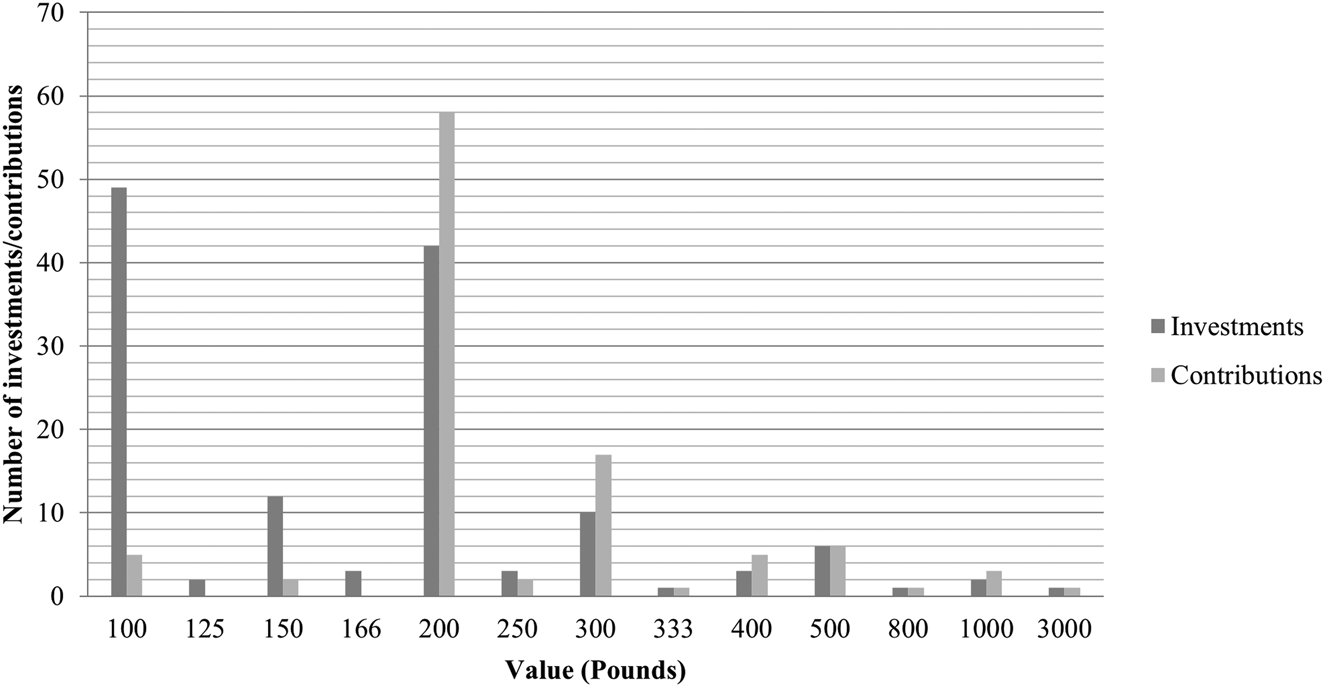
The 1599 petition, which included ‘the names of such persons to venture into the voyage to the East Indies’, listed 101 separate contributions, ranging from £100 to £3,000, and amounting to £30,133 6s. 8d. in total.Footnote 29 The most common size of listed contribution was £200, with fifty-eight of the contributions (57.4 per cent) promising this amount. The average size of contributions was just over £298.Footnote 30 As Figure 1 shows, contributions at the extremes (for much larger or much smaller amounts than the average) were very uncommon. This suggests that the EIC relied on a broad base of investors, rather than drawing only on an oligarchy of large-scale investors.Footnote 31 The company needed to engage with a wider investing public in early modern London and they were able to do so because the social networks of investors provided the means for both new entrants and old hands to make decisions about their participation.
Value of listed contributions and individual investments in the EIC, 1599

II
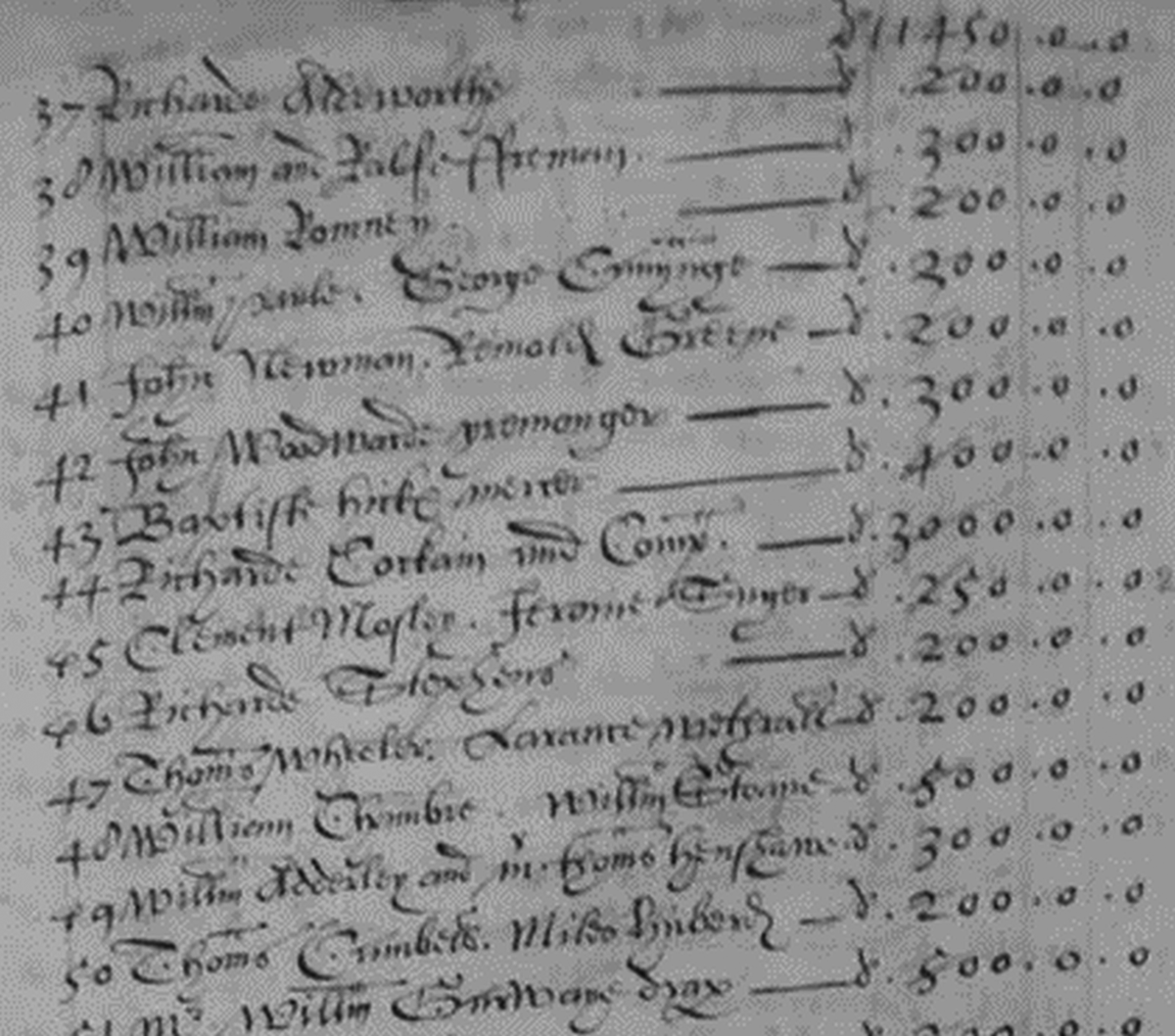
Although the petition promised investment in the form of 101 contributions, many of these were on behalf of pairs of investors or small groups (see Figure 2). In total, thirty-six contributions (35.6 per cent) came in this form. Separating these grouped contributions reveals 136 named investors, though the total number of investors would have been slightly higher, as some are not named and simply listed as investing ‘in company’ with someone else. Assuming, for the moment, that contributions from two or three named individuals were divided equally between each party – that is to say, a £200 contribution from two investors represents two separate £100 investments from individuals – suggests that much of the investment in the EIC was in the form of smaller sums.Footnote 32 The second set of data presented in Figure 1 shows the number of people who joined the EIC by the value of their individual investment. Although forty-two people (30.1 per cent) invested £200 individually (mostly people who had not invested in partnership with others), £100 was the most common amount invested, with forty-nine individuals (36.0 per cent) subscribing this amount. While the average contribution was just over £298, the average investment per individual was £225.
Extract from BL, IOR/B/1, 22 September 1599. Investments were subscribed by investors acting alone, such as Richard Aldworth (no. 37), or in partnership, such as William and Ralph Freeman (no. 38), and by groups such as Richard Cockaine and Company (no. 44)
Source: Image courtesy of the British Library.

Investing in small groups allowed company members to spread their risks further, which would have been important in attracting new investors to what was, despite all efforts to limit risk, an inherently risky enterprise. Different types of relationships brought different individuals together to invest, and novice investors were likely and able to follow the example of more experienced partners. Of the 136 investors, 82 (60.1 per cent) had never invested before, leaving 54 (39.9 per cent) who had participated in previous ventures, but partnerships and personal connections across the two types were vital to securing investment in the EIC. Tracing these links shows that far fewer that 82 individuals promised to invest in the EIC without help from someone with greater experience than their own. If we consider that shared investments may have been split unevenly – such as £200 being split £175 and £25 between experienced and inexperienced partners respectively – these arrangements presented new investors with the opportunity to overcome potentially inferior experiential and financial status simultaneously. Trust was essential in encouraging investment, personal relationships between investors were crucial, and there were several ways in which partners and group investors drew together.
There were three types of partnerships listed in the 1599 petition: people investing in pairs, people investing in threes, and people investing as larger groups. The larger groups of investors, where the numbers involved are difficult to ascertain, were led by Nicholas Crispe, Richard Burrell, Richard Saltonstall (who invested with ‘his children’), Sir Stephen Soame and Richard Carter (who led a company investment together), Richard Browne, and Richard Cockayne.Footnote 33 Interestingly, Sir Stephen Soame, who was lord mayor of London at the time and a member of the Grocers’ Company, also invested £200 as an individual, and so he may have lent his reputation and support to Richard Carter's group to encourage further investment. Neither Soame nor Carter had ever invested in overseas ventures before; this partnership was not built on the principle of novice investors following more experienced ones, but civic responsibility and reputation may have assisted in forming a group for investment. However, this did not mean that they were investing blind, and Soame's connections to more practised traders are explored further below.
In addition to Soame and Richard Carter's ‘company’, there were five other group contributions, two of which were also led by unexperienced investors. Burrell's group invested £200, Browne's put in £500, and Richard Cockaine led an investment of an incredible £3,000 – three times larger than any other contribution, individual or otherwise. Burrell and Browne probably both led groups where individual risk was minimized by group investment, perhaps utilizing relationships within their livery companies (the Grocers’ and the Clothworkers’ respectively) or relying on family or parish relationships to build the group.Footnote 34 The huge investment from Richard Cockaine and company, on the other hand, can be explained more easily: while Richard (the senior family member) led the group, his relative William Cockaine had significant experience in overseas trade and influence in the trading community. William had already participated in a wide range of investments, including privateering in the Atlantic (funding ships to raid Spanish shipping during wartime) and the Spanish Company (through which he funded trade with Spain during peacetime), and was a founding director of the EIC who would remain an influential member of its inner circle.Footnote 35 We do not know how many people participated in Richard Cockaine's group or their personal experiences of trade, but it seems plausible that they invested at least in part because they trusted William Cockaine's experience and ability to direct them successfully in the risky trading environment.
The final two group investments followed the alternative pattern, with experienced investors clearly leading the way. Nicholas Crispe was a member of the Merchant Adventurers, participating in the woollen cloth trade with the continent.Footnote 36 Whether he viewed the EIC as a potential replacement for this trade, or supplementary to it, is impossible to know for sure, but considering the EIC's decision to attempt woollen export it could conceivably have been a little of both. Despite his limited experience of trading further afield, Crispe was selected as one of the original fifteen directors of the EIC, perhaps to help attract further Merchant Adventurer investment, such as that of his relation Ellis Crispe, who invested in 1600 and may have been part of the group led by Nicholas from the start. As well as drawing on the expertise of their experienced investors where possible, four of the five groups included multiple members who came from the same family.Footnote 37 A degree of trust was likely already present in these relationships, and working together commercially was probably a common experience for them.Footnote 38
Beyond these groups, where the specific number of individual investors is unknown, there were several investments made by either two or three men working together: twenty-seven two-person partnerships and four three-person investments. A pattern of inexperienced investors following experienced ones is apparent in many of these partnerships. All the three-person investors had this dynamic, as did fifteen of the two-person contributions (55.5 per cent), leaving twelve pairs of investors where neither had earlier experience trading overseas. By partnering with experienced investors, these individuals could mitigate their personal risk in contributing to the EIC, and through them some of the benefits of the network that supported commercial expansion in London become clear. For example, six of the two-person contributions were made by members of the same family, suggesting a trusted relationship that pre-dated the investment that reinforced benefits of partnerships – either when an inexperienced family member followed a more experienced one, or when family members spread their risk together. Such group investments in the new company meant that, overall, only thirty-nine individuals invested in the EIC without either them or a partner having previous experience, whereas ninety-seven investors (71.3 per cent) participated with some awareness of practices of overseas trade, through either their own experience or that of their investment partners.
Such partnerships did not only benefit inexperienced investors: sharing expertise and capital expenditure was useful for even the most experienced merchants.Footnote 39 Two pairs and two triplets contained only experienced investors A further triplet included Rowland Backhouse, Bartholomew Barnes, and Edward Barnes, who together invested £300 – a grouping including two experienced partners and one inexperienced one.Footnote 40 The Barnes family connection is clear, but the group had links beyond that. Bartholomew Barnes was a Merchant Adventurer, a trading experience he shared with Backhouse, and all three were members of the Mercers’ livery company.Footnote 41 This group was linked through family, commercial, and civic relationships, all of which pre-dated the individuals’ investment in the EIC. Overlapping networks brought investors together and provided a means for sharing information about the company effectively.
III
As the investments made by Cockaine and Barnes show, familial relationships were an important way for individuals to build connections in early modern London.Footnote 42 Although these relationships are more difficult to trace than the specified partnerships, the importance of family networks in the EIC should not be understated, and a number of different family groups invested in the company. For example, Miles Hubbard invested £200 with his father-in-law, Thomas Cambell, while John Suzan similarly partnered with Samewell Garrard, whose daughter he had married fifteen years earlier.Footnote 43 However, whereas Cambell was more experienced with international trade than Hubbard, having been a member of both the Eastland and Spanish companies, it was the Barbary Company member and privateer Suzan who likely persuaded the elder, but less experienced, Garrard to join the EIC.Footnote 44
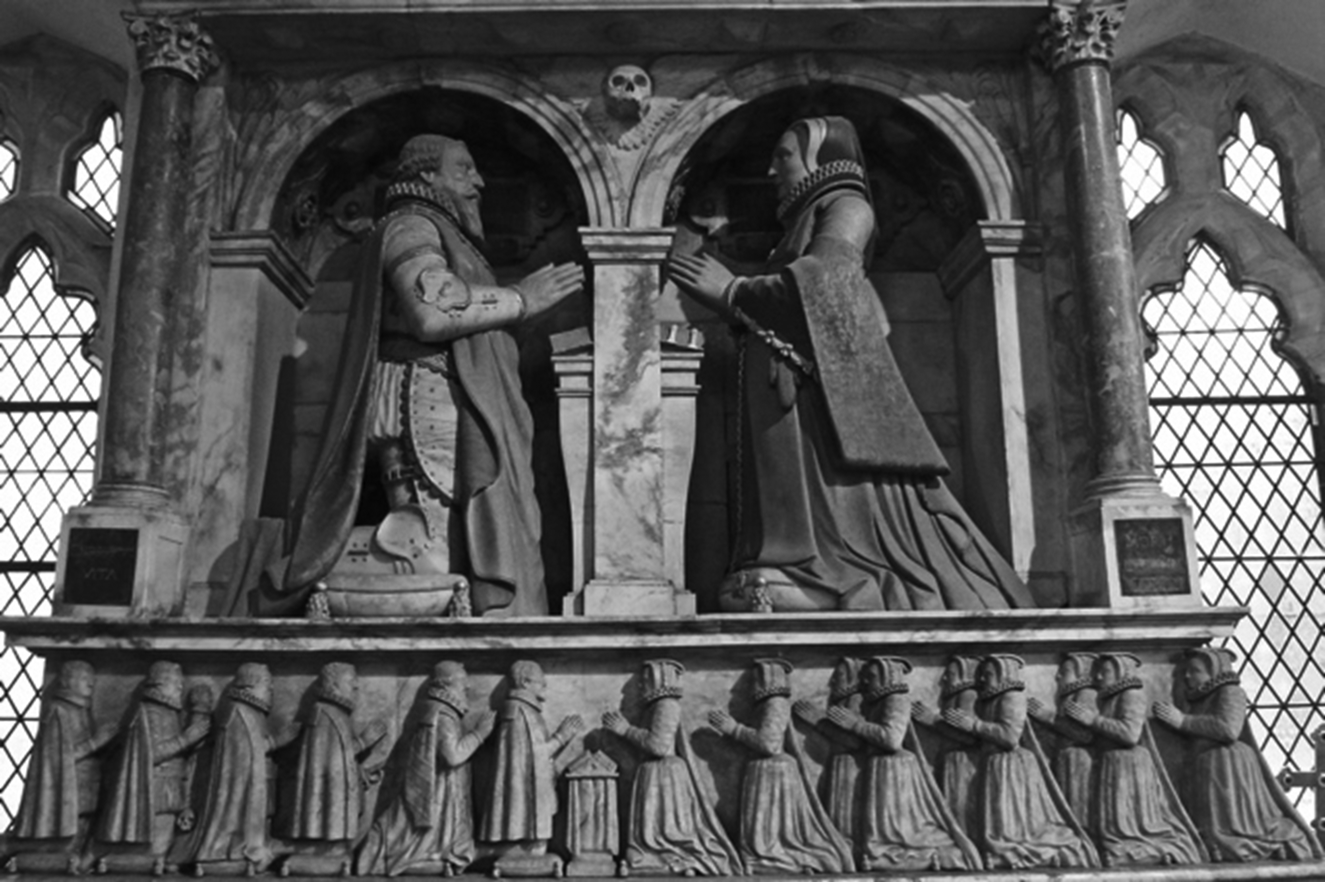
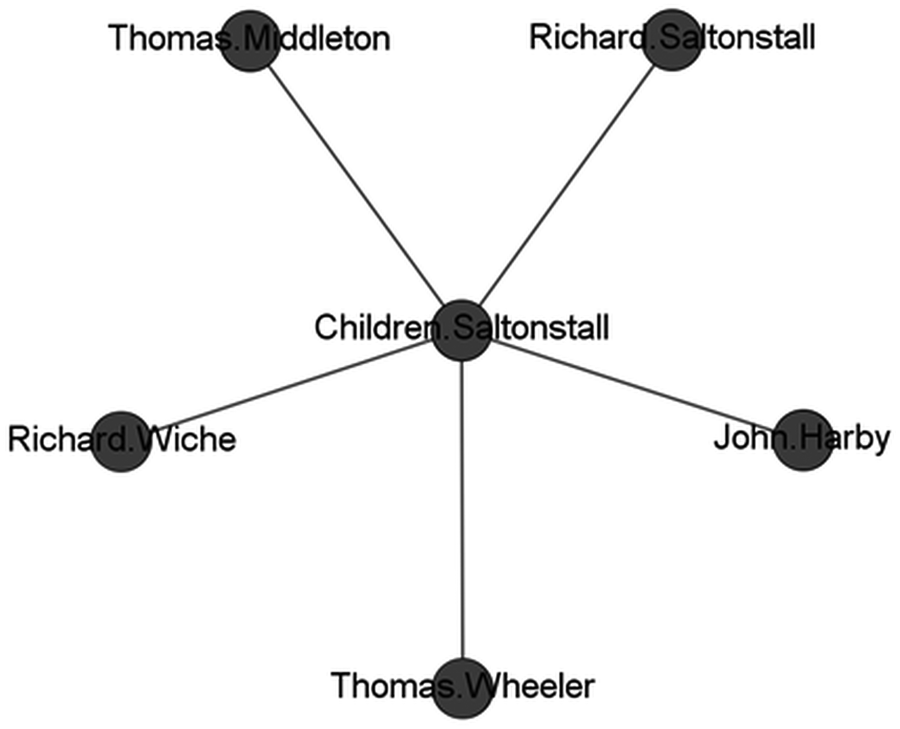
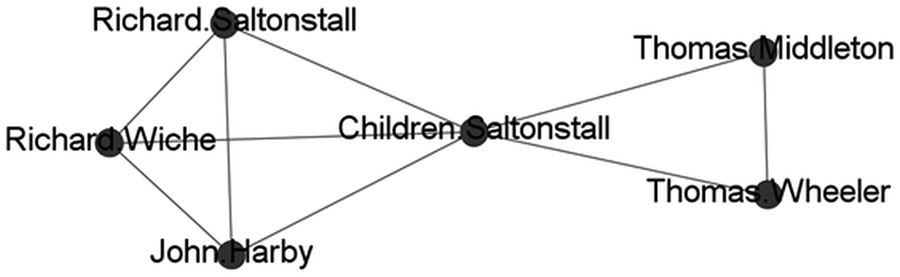
Perhaps the most extensive family network in the EIC in 1599 was that of Richard Saltonstall, an experienced investor who chose to make his contribution of £200 to the EIC on behalf of himself and his sixteen children (Figure 3).Footnote 45 A member and governor of the Merchant Adventurers, a member and master of the Skinners’ Company, and an investor with interests in the Spanish, Muscovy, and Levant trades, as well as privateering in the Atlantic, Saltonstall was a well-known and successful figure in the merchant community, undoubtedly confident in his ability to lead his family into investment in risky voyages to the East Indies. Through his familial network, we can see how different relationships brought inexperienced and experienced investors together. For example, Richard Wiche, who invested £200 alongside his family member James Wiche, was an investor for whom family was clearly important. Although Richard had participated in privateering voyages in the Atlantic, neither he nor James had invested in a primarily trading organization before the EIC, and their partnership was likely intended to reduce personal risk as much as it was to exchange information about the new company. However, Richard Wiche was also married to Elizabeth Saltonstall, one of the daughters of Richard Saltonstall.Footnote 46 It is not hard to imagine that Wiche was following the example of his father-in-law in choosing to invest. Three of Richard Saltonstall's other daughters were married to EIC investors too: to Thomas Wheeler (an inexperienced investor), Thomas Middleton (who, like his father-in-law, had invested in privateering in the Atlantic, as well as taking part in the proposed colonization of Guiana), and John Harby (who had already invested alongside Saltonstall in the Spanish and Muscovy companies).Footnote 47 In other words, Saltonstall and his children were connected to four other EIC investors through their familial network alone (Figure 4).Footnote 48
Memorial to Sir Richard and Susannah Saltonstall, including figures for each of their sixteen children, St Nicholas of Myra, South Ockendon
Source: Image courtesy of Father Rabin.

Richard Saltonstall's family network, 1599

The Saltonstall example shows how family ties could bring EIC investors together. They reinforced, and likely informed, investors’ bonds of partnership, and they were a means of establishing mutually reinforcing bonds of creditability and trustworthiness across the commercial community. Familial networks also offered inexperienced investors an opportunity to follow the example of more experienced family members, even when they were not investing together directly.
IV
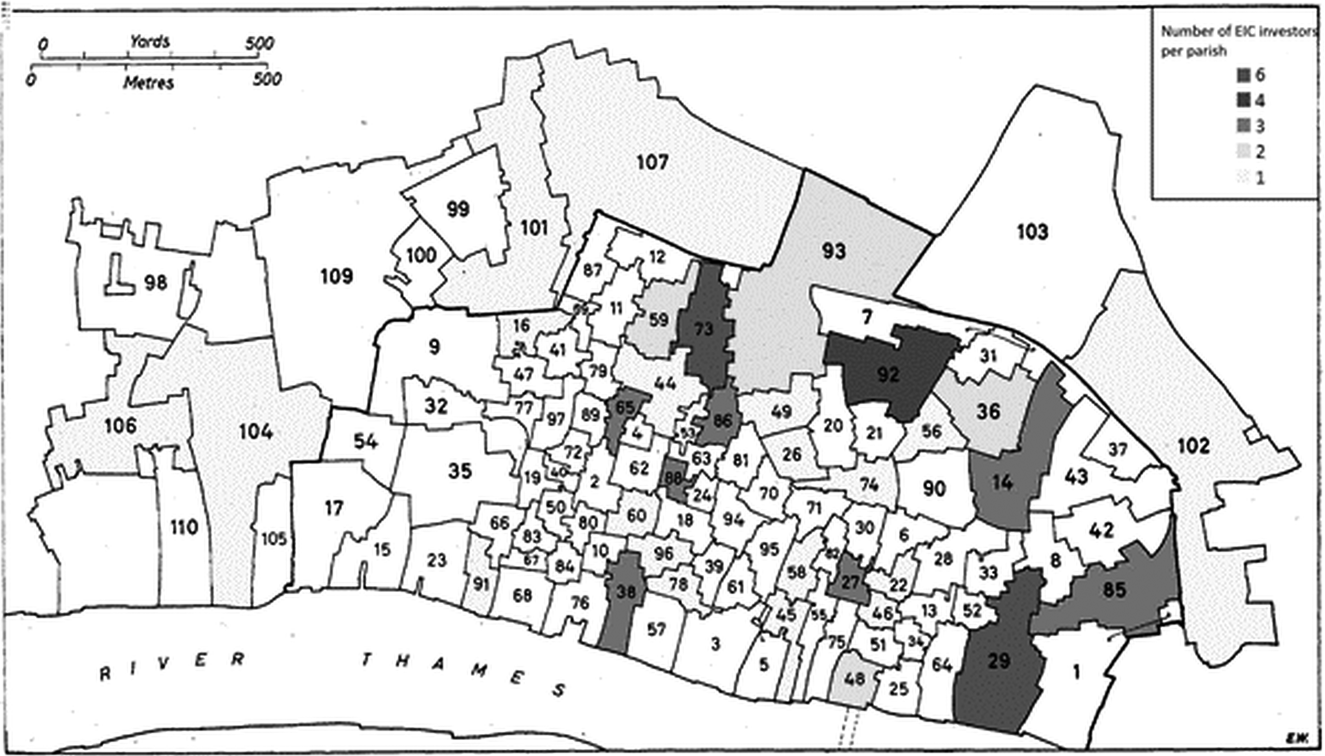
London's parishes were both religious and administrative centres, and rising within them was seen as a key route to increasing social standing in the early modern period.Footnote 49 Analysing parish records is a useful means of understanding where investors lived, whether they clustered in particular districts, and how shared parish affiliation and neighbourhood may have brought together EIC members. Figure 5 illustrates the numbers of EIC members in London's parishes in 1599: sixty-six founding members across thirty-four different parishes.Footnote 50 St Dunstan-in-the-East and St Michael Bassishaw were the most popular areas, with six EIC investors living in each (9.1 per cent of identified members). The rest were spread quite broadly across the City, with a slightly higher concentration of members living in areas around the Guildhall. St Dunstan-in-the-East was a notable mercantile parish; John Stow, in his A survey of London, said that it had ‘many rich merchants, and other occupiers of diverse trades’.Footnote 51 Among the EIC members resident here was the aforementioned Richard Saltonstall, but the cluster of investors in this parish also included four members of the Skinners’ livery company, demonstrating another layer of interaction within the group. St Michael Bassishaw, meanwhile, was one of six parishes around the Guildhall that EIC members called home. This area contained the headquarters of a number of different livery companies, which provided further opportunities for social and business interaction between investors.
EIC investors by parish, 1599

As well as living in the same parishes, EIC investors were drawn together as neighbours by renting living spaces in the same streets and buildings. Paul Banning and Thomas Juxon both lived in property rented from the Drapers’ livery company in Dow Gate; John Duckett and Thomas Cordell shared rooms in a Mercers’ owned property on Milk Street; and Bartholomew Barnes, Richard Barrett, and Thomas Cordell all shared space in a Mercers’ stable in Coleman Street – a property adjacent to a garden rented by Edward Barnes.Footnote 52 These examples suggest that many members of the EIC lived close to other investors, and their day-to-day lives would have included numerous moments for contact and communication. EIC supporters leveraged these relationships to encourage investment, and their close geographic proximity added another layer to the company's wide social networks. Richard Goddard's, Thomas Garraway's, and William Garraway's willingness to invest, for instance, was surely strengthened not only by their family and livery company links (all were drapers), but also by their everyday experience of living in property on the same street (Lothbury Street). Such shared spaces helped to strengthen relationships between EIC investors and expanded the possibilities for sharing information between members of the investing public in early modern England.
V
The social networks of EIC investors, identified through partnerships and familial links and evidently existing within the social spaces of everyday life, were reinforced by common membership in London's livery companies.Footnote 53 Livery companies were important parts of the social life of London during the late sixteenth and early seventeenth centuries and provided essential regulatory structure for the commercial community. Membership was almost essential for progressing through the upper echelons of civic or commercial office: it was through livery companies that individuals could become freemen and citizens of London.Footnote 54 Furthermore, trading companies like the EIC could trace their origins to the societas – the organization of Italian financiers in England in the thirteenth and fourteenth centuries – and to the guild system that regulated many trades in England.Footnote 55 They therefore drew on long-standing traditions and accepted norms of social organization even as they created innovative approaches to the government of people, trade, and behaviour. Livery companies provided a corporate infrastructure for their members, creating an internal network controlled by their own laws and customs; members were expected to turn to the company to mediate disputes before approaching any external body.Footnote 56 Understanding how livery company members invested reveals not only further relationships and connections within commercial networks but also the practices of corporate organization that investors in the company brought with them.
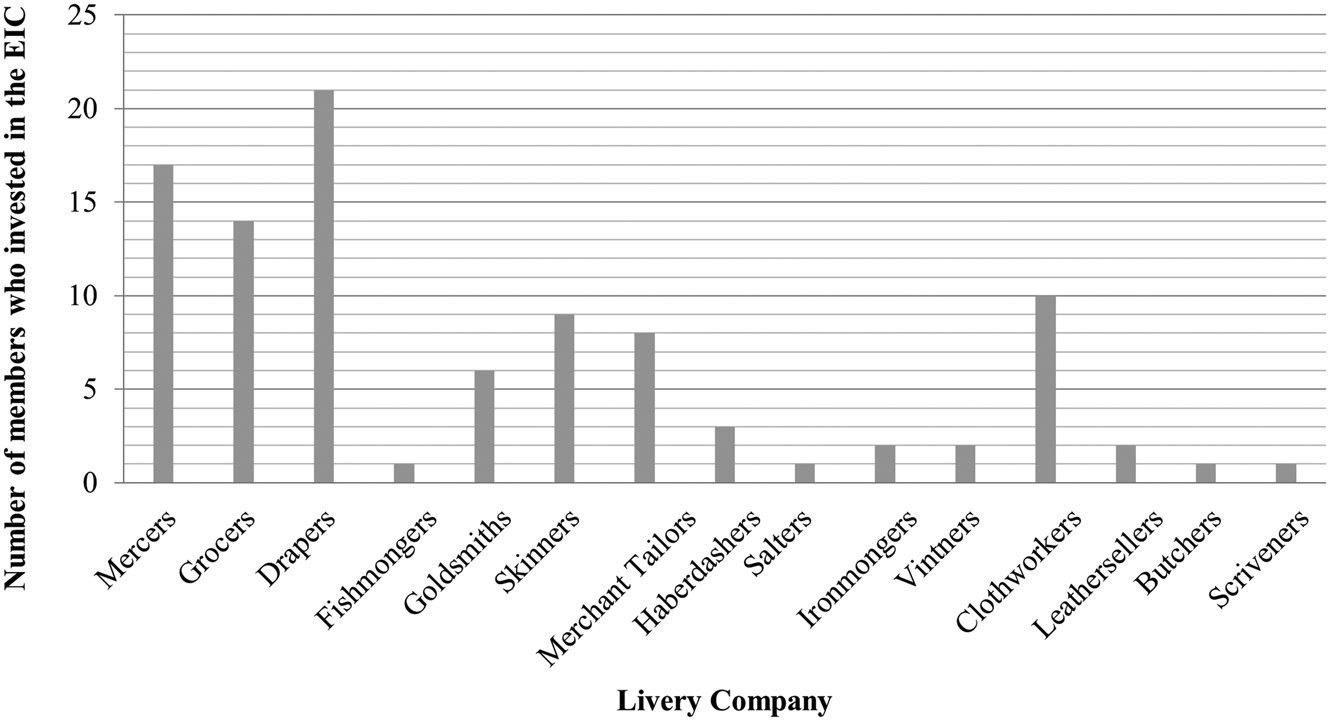
Regardless of any other relationship that might exist between two investors, if they were both members of the same livery company, they would have known each other professionally. Of the EIC's initial investors, 102 are identifiable members of a livery company and all twelve great livery companies were represented in the new company (Figure 6).Footnote 57 Members of the Mercers’, Grocers’, and Drapers’ companies represented the largest share of investors, and these three companies accounted for fifty-two investors – just over half of those whose livery company membership can be identified. These were the three largest livery companies in London, so their prominence in the EIC is perhaps unsurprising. However, while other companies provided fewer members, some invested greater sums in the EIC.
Number of livery company members who invested in the East India Company, 1599

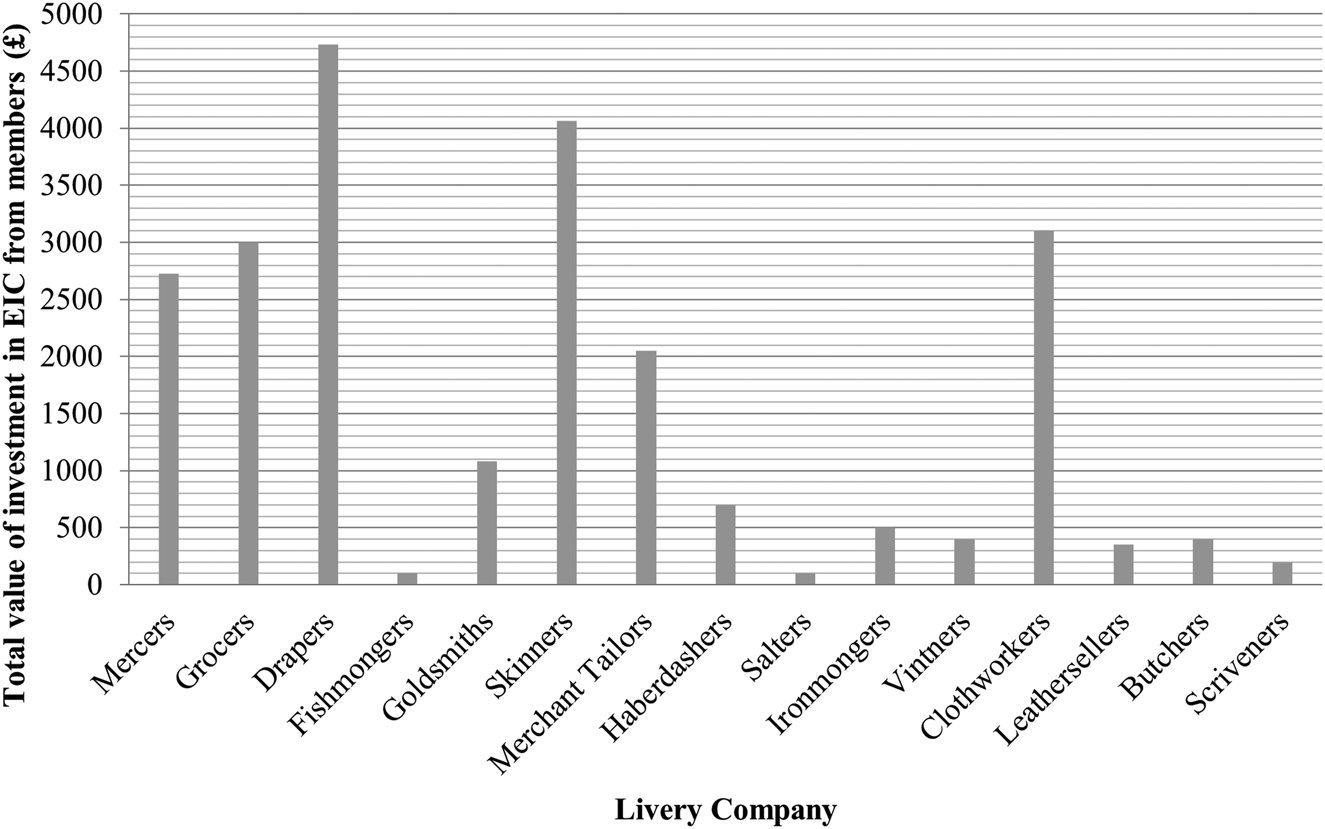
Figure 7 illustrates that members of the Drapers’, Skinners’, and Clothworkers’ companies were most prominent in terms of total contribution to the EIC. The huge sum invested by the Skinners’ Company was partly driven by the efforts of Richard Cockaine, who, as discussed above, led a group that invested £3,000 in the new company, but the Skinners’ Company also had a long-standing interest in overseas trade, particularly exports, as many furs were accessed through trading routes to Muscovy and North America. The larger investments from members of the Clothworkers’ Company can also be explained by traditional trading activities. The EIC was likely seen as a way for Clothworkers’ members to find new markets for their goods – the woollen trade to Europe organized by the Merchant Adventurers was in a period of decline – or to acquire new sources of Asian material such as silk and cotton, and ingredients for dyeing such as indigo. In the case of the Clothworkers’ Company, no single investor drove the combined contribution to higher levels: investments from all members were higher than average, indicating a genuine shared interest within this organization in establishing trade to the East Indies.
Combined value of investment from members of livery companies in the EIC, 1599

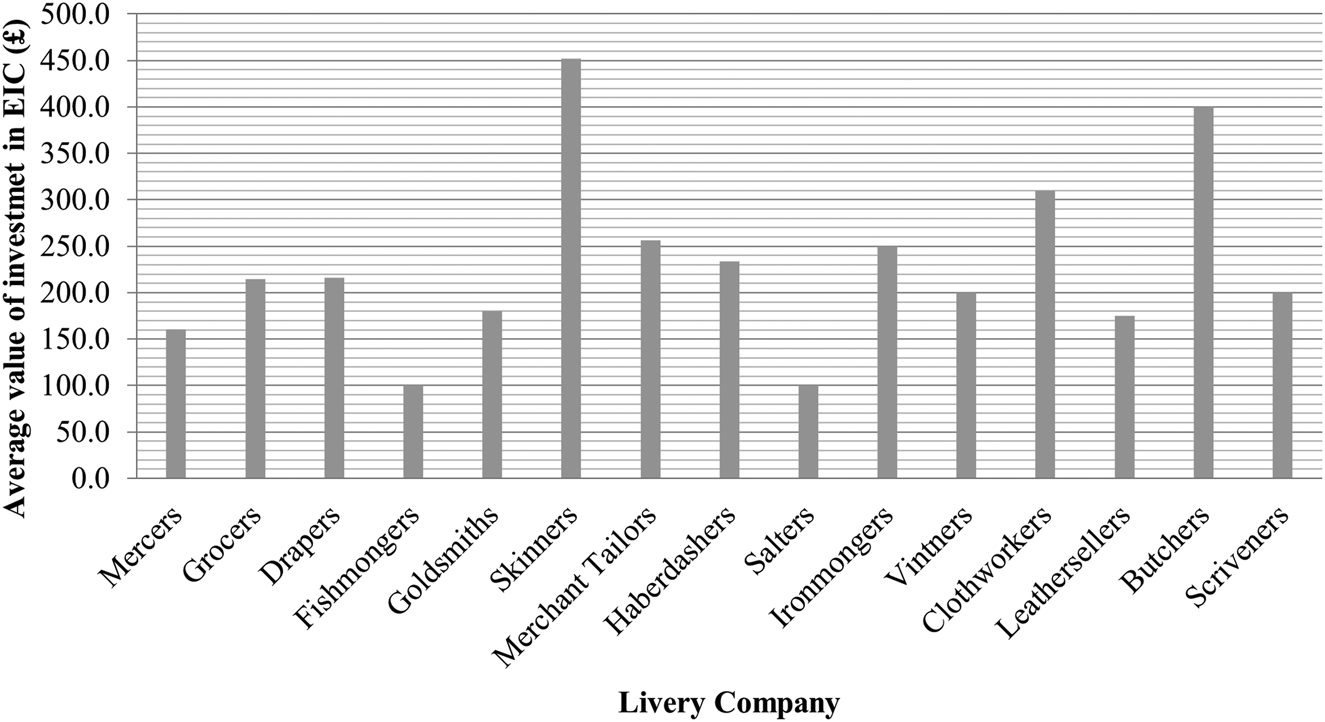
Figure 8 demonstrates that livery companies who had fewer members join the EIC were not necessarily those with less interest in this new overseas trade. The average individual investment in the EIC, as discussed above, was just over £225. This average-size investment was not met by members of the Mercers’, Grocers’, or Drapers’ livery companies, but it was exceeded by members of the Skinners’, Merchant Tailors’, Haberdashers’, Ironmongers’, Clothworkers’, and Butchers’ companies. Members of the three largest livery companies were more likely to invest small amounts, keeping risks to a minimum, whereas the smaller numbers of more generous investors from the other livery companies suggest greater confidence in the EIC within these groups. This may have been the result of personal experience in overseas trading, close connections with someone who had such experience, or a commercial interest in the trade through their livery company activities. The social networks of EIC investors cut across their other corporate affiliations, drawing not only capital but also a diverse range of expectations about how the new company should be organized and governed. Connections through corporate bodies may well have helped the EIC attract a wide range of merchants to investment, but in so doing the new organization risked any common vision for trade in Asia, as pre-existing commitments and business relationships would also contribute to disagreements about the company's objectives and practices for years to come.
Average value of investment in the EIC by livery company members, 1599

The addition of livery company connections also reveals more about the relationship between the EIC investors in the Saltonstall family network. Figure 9 adds the livery connections within the group to the network. Richard Saltonstall, John Harby, and Richard Wiche were all skinners, with Saltonstall acting as master for this company in 1599. The other two sons-in-law were both drapers, suggesting that they had at least a professional relationship that preceded them becoming part of the extended Saltonstall family. As well as demonstrating further connections between this particular group, understanding livery company links helps to show the multiplicity of different relationships that underpinned the early modern investing community and how family, livery, or other relationships could reinforce each other. Webs of shared interest and connection drew individuals together.
Saltonstall family network, including livery company connections, 1599

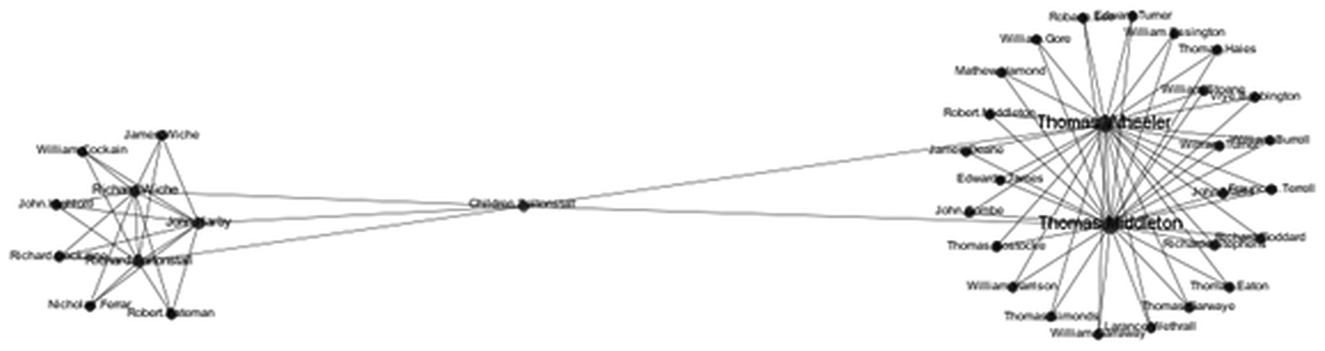
Figure 10 expands on this network by including the EIC investors known to Saltonstall, Wiche, Harby, Wheeler, and Middleton through their livery companies, demonstrating how this form of relationship could assist in the transmission of information and trust across different livery companies prior to the foundation of the EIC. Thirty-six investors were connected to Saltonstall and his sons-in-law through these links, which were corporate and business as much as social. For novice investors within this network, their potentially close links to experienced investors across the boundaries of their livery company, as well as within it, would have been an encouraging influence regarding the EIC. More importantly, the network demonstrates how personal and business relationships could overlap, much as they might for merchants living and working together, thereby facilitating the institutional practices upon which investors in early modern England depended.
Relationships between the Saltonstall family network and other EIC investors through livery company connections, 1599

VI
Beyond these overlapping familial, spatial, and corporate networks, investors in the EIC were connected by relationships built through participation in previous overseas activities.Footnote 58 Such shared experience connected experienced investors, who could draw on their expertise to advance future projects, which would be integral to the EIC's success. As discussed above, a considerable proportion of EIC investors in 1599 had participated in at least one other type of overseas venture. This would have facilitated relationships between people by virtue of their shared willingness to invest money in ventures and their shared interests in different types of overseas activity.
These previous investments not only show the diversity of experience among the EIC's investors: they also indicate both how the new company might have been perceived, and what preconceptions of international commerce were built into its organization.Footnote 59 Corporations functioned as communities, with trust, reputation, and good relationships essential for their success, and their members were engaged and proactive, not just investors or passive participants.Footnote 60 Even when corporations operated as functioning ‘company-states’, imposing their authority over employees, members, and others, they were restricted and directed by individuals within the complex web of social interactions and relationships that made up their memberships.Footnote 61 Corporations like the EIC were political and social bodies in their own right and, rather than functioning solely as business concerns, they created ‘institutions and ideologies that condition[ed] political authority, obedience, coercion, and negotiation’.Footnote 62 Indeed, their relative distance from state regulation during this period created an environment where companies both needed to and were able to adapt their legal, commercial, and financial institutions rapidly.Footnote 63 The social networks of the EIC's investors were built on the certainties that such corporate infrastructure provided, easing their decision to trust their funds to the new company and providing ample institutional heritage that it would be able to draw upon.
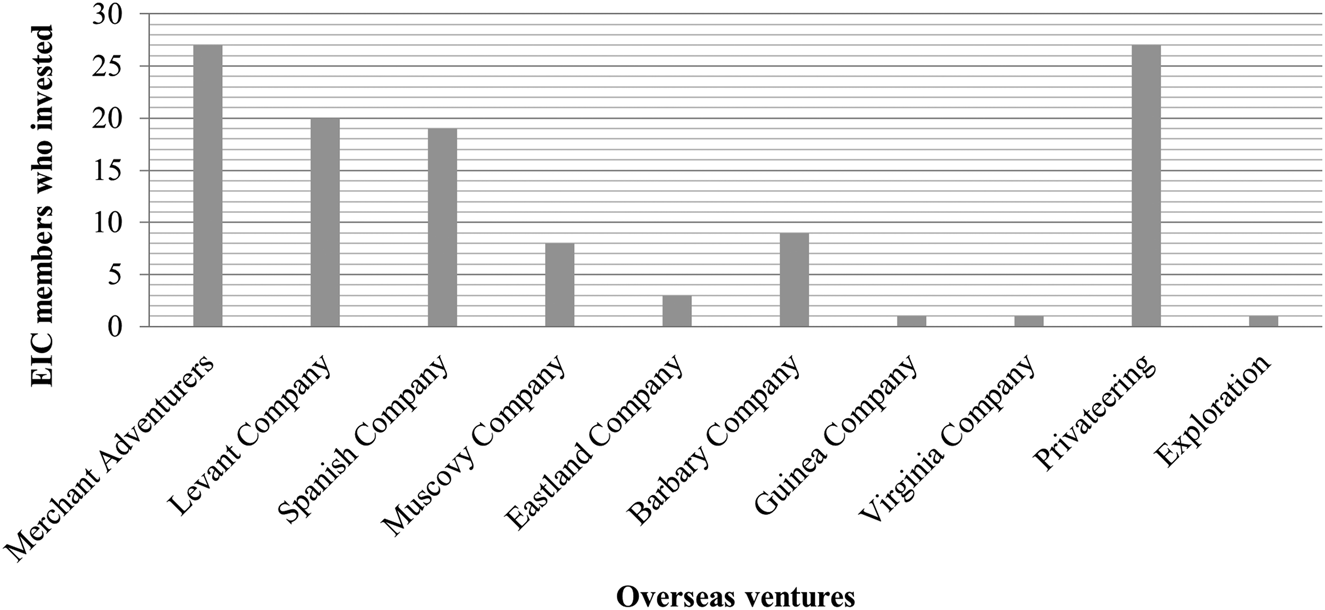
As Figure 11 shows, the Merchant Adventurers and privateering in the Atlantic were the two types of venture where the largest number of EIC investors had previous experience: twenty-seven of the fifty-four experienced investors (50 per cent) had participated in each of these activities. Clearly, the EIC was not formed from a different part of the commercial community from the Merchant Adventurers, and many of its members had also participated in the trade of woollen goods across the channel. This suggests that the EIC was far from a replacement for the Merchant Adventurers, or a company largely in opposition to it. Similarly, privateering ventures of the 1580s and 1590s are not an activity often associated with the EIC, but they were an experience held by half of all experienced investors in the company. Meanwhile, experience of the Levant Company was shared by twenty experienced investors (37 per cent), suggesting that the EIC was closely connected to this body, but certainly not an offshoot from it. Combining all of the ‘new trades’, including the Muscovy, Levant, Spanish, and Barbary trading ventures, reveals that thirty-nine of the experienced investors (72.2 per cent) had invested in at least one type of trading venture other than the Merchant Adventurers, but no single organization or shared experience dominated the EIC's network. These overseas activities were the areas where founding members of the EIC had previous experience, and this expertise – of earlier success or the lessons learned from failure – could be used to attract novice investors to the cause. It is likely, then, that many investors in the EIC were aware of the potential of non-trading activities, and that their expectations of the company might vary, and to significant degrees, depending on their experiences. The governance of the EIC during the first decades of the seventeenth century would have been affected by the ideas held by these investors and the influence of these networks within the company's community.
EIC members’ experience of other overseas ventures before 1599

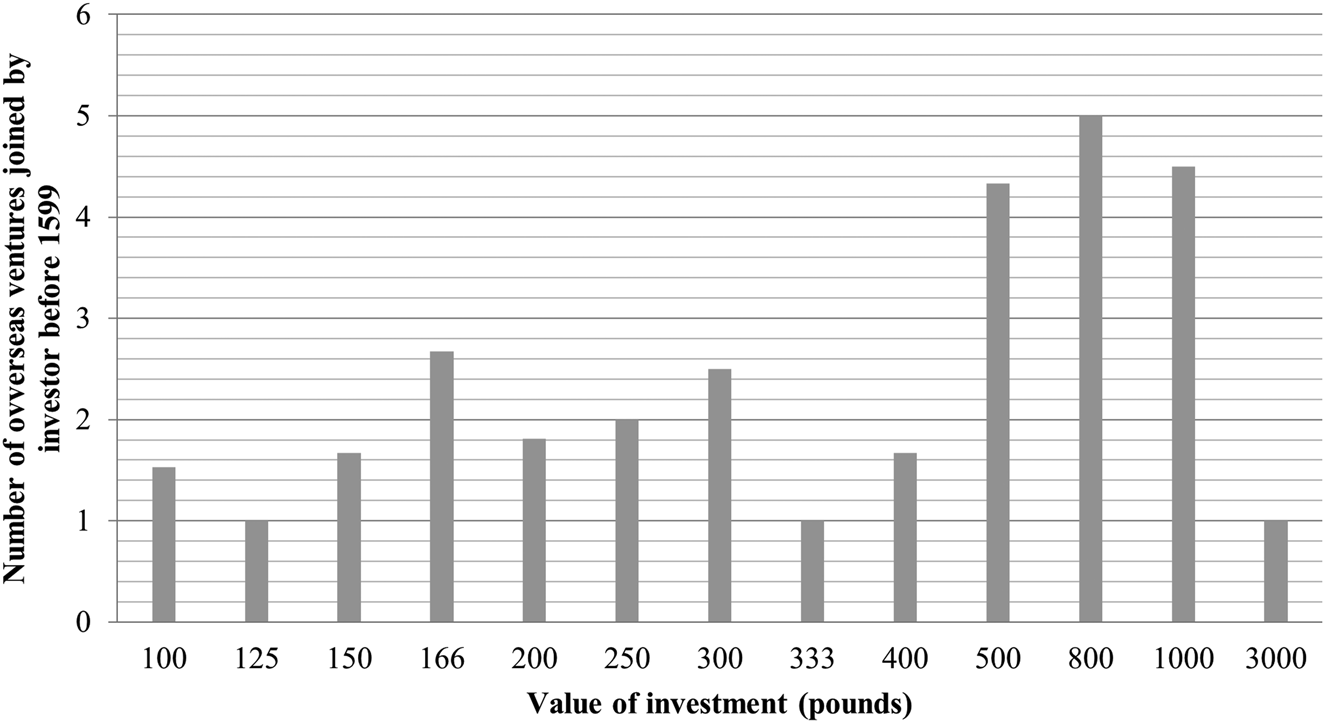
The interconnectedness of commercial activity in early modern England created important networks between investors in the EIC, and enthusiastic support for the new organization correlated strongly with commercial experience and success elsewhere. For example, comparing the value of investments with the amount of experience the investor had demonstrates that those with a greater level of experience (those who had invested in a greater number of ventures prior to the EIC) were more likely to invest larger sums in the company (Figure 12). In total, the ten most experienced members invested £4,700 in the EIC, while the total investment among the ten least experienced members was £1,728. Confident in their ability to judge profit potential, experienced investors were willing to part with, on average, more than twice the amount of money as inexperienced members when investing in the EIC. It was therefore crucial that the company attracted these experienced investors: not only would they be more likely to invest larger sums in the company, but also they might influence less experienced members of the community to follow their lead.
Experience of EIC investors compared to value of investment, 1599

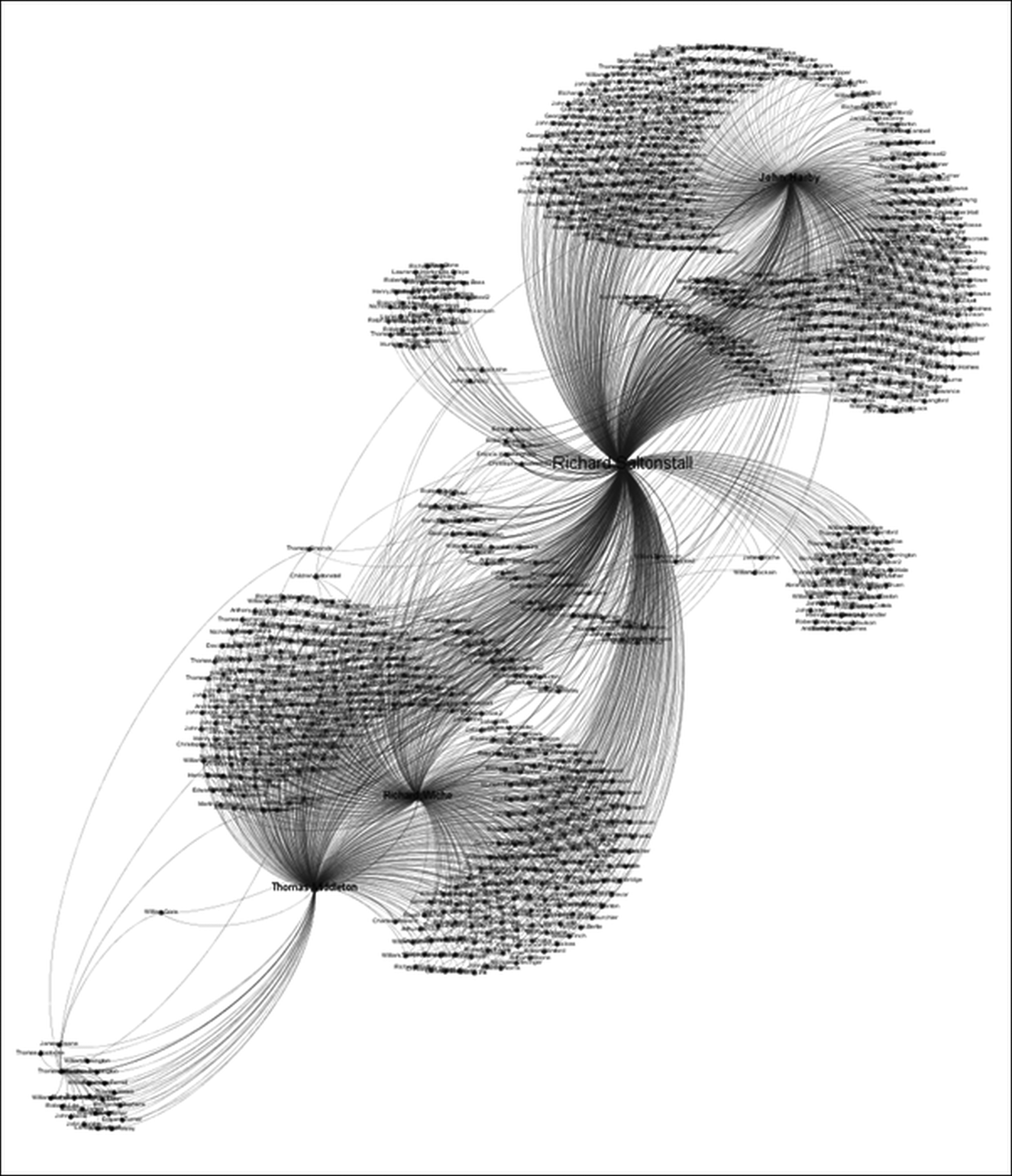
This range of investing experience, and the role that commercial relationships played in forming the EIC, can be visualized in the Saltonstall network. By adding individuals who shared a previous commercial experience with Richard Saltonstall or one of his four sons-in-law to the existing network, the potential influence of this small, highly experienced group in the commercial community is made clear (Figure 13). The Saltonstall family shared commercial experience and relationships with 844 investors from across England's overseas ventures – a network that therefore spread across a large part of the commercial community in London. By investing in the EIC, Saltonstall was influencing not only his sons-in-law but also, potentially, hundreds of other prospective investors who might follow their lead.
Saltonstall family network including livery company and shared commercial experiences, 1599

VII
As demonstrated throughout this analysis, the EIC relied on a wide range of different social and commercial networks to attract investors, and these networks centred on nodes of experienced or influential investors. However, thus far each investor has been considered of equal value to the network. Focusing on those members chosen to represent and manage the EIC – its directors – reveals much about how the company sought to present itself to the commercial community and the state.Footnote 64 Fifteen directors were selected by investors during a meeting on 24 September 1599 to represent the company during the petition process.Footnote 65 They were chosen not for the size of their investments but for their connections, their social capital, their experience, and their ability to bring essential tools to bear for the successful management of the company.
The directors’ investment interests were broad, and, between them, they had experience of almost every type of overseas venture from the previous fifty years. The most common experience held by directors was not the Levant Company but privateering voyages: 25 per cent of all investments of the company directors were made in this area, and nine of the fifteen had taken part in this activity. The Spanish and Levant companies were the second most common experience, with five directors investing in each; including the other ‘new trades’, a total of 48 per cent of directors’ investments were in these ventures. However, these investments only came from eight of the directors – one fewer than the number who had participated in privateering – and, while the joint most common experience among all investors in the company was the Merchant Adventurers, only three directors had taken part in this activity. This could suggest that, while many Merchant Adventurers took advantage of investment opportunities in the EIC, the company itself was not closely aligned with this organization. Indeed, it seems probable that investors consciously separated the EIC from the export-focused Merchant Adventurers by choosing directors with experience in long-distance ventures and the import of luxury goods. Even though many members of the EIC were Merchant Adventurers, there was no expectation that the company would export large quantities of woollen cloths. Excepting the Merchant Adventurers, then, the spread of investments and experience held by the founding directors of the EIC aligned closely with the investment community as a whole.
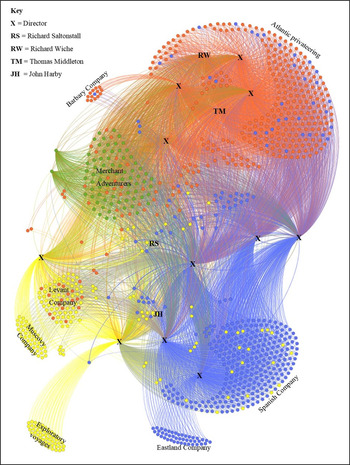
Analysing the network of the investment community (Figure 14) reflects the directors’ influential role within it, which suggests that they played an important role in bringing together the diverse interests of investors in London and directing them towards the establishment of the EIC.Footnote 66 The visualization includes individuals in the merchant community who had invested in the same ventures as one or more of the original directors of the EIC. Each node represents a single investor and every line denotes an investment that the director and the other individual shared. The clusters in the visualization represent different ventures, with the strength of different clusters relative to each other affecting their final position within the network. For example, the investors in privateering form a cluster at the opposite side of the network to investors in the exploratory voyages seeking to find a north-west passage. This indicates that the two groups were not connected through any of the directors of the EIC. On the other hand, the clusters for the Muscovy Company and the Levant Company are very close together, indicating a higher level of connection between these two groups. The colours in this visualization (red, blue, green, and yellow) represent the four main communities identified through the application of modularity analysis. Each of the communities in this visualization is about the same size, but they can be clearly demarcated. Red represents privateering activities, blue the long-popular trade with Spain and the Baltic, yellow the ‘new trades’ to Muscovy and the Levant, and green the Merchant Adventurers.
Network of EIC directors’ connections with investors in overseas ventures before 1599, including Richard Saltonstall and his sons-in-law John Harby, Thomas Middleton, and Richard Wiche

The visualization also highlights the connectivity within London's commercial community and the scope of London merchants’ commercial interests in the late sixteenth century. There are 794 investors represented, all connected through personal relationships or shared experiences with the EIC's directors. Some of these, such as Richard Staper (the central X in the network), who among the directors had invested most widely, had connections in almost every other overseas activity. Staper was also a member of the Clothworkers’ livery company, lived a short distance from the Guildhall and Royal Exchange, and was the brother-in-law of John Hewett and father-in-law of Nicholas Leate and Roger Offield – all of whom followed his lead and invested in the EIC in 1599. Once again, Richard Saltonstall's family network can be used to highlight connections across this community, and two of his sons-in-law, Richard Wiche and Thomas Middleton, were directors of the newly formed company. However, the relative prominence of these to Richard Saltonstall himself, and a third son-in-law, John Harby, whose business connections drew upon distinct communities across the EIC, are an important reminder how influence or connection did not necessarily translate into official authority or representation within the corporation.
In individuals like Staper and Saltonstall, we see how the EIC drew on all of the strands of English overseas activity, taking experience, methods, and personnel from each of them. Recognizing how each node in this network represents an individual actor also means that we can move beyond stereotyped representations of the EIC as a homogeneous entity. Instead, we can recognize how social networks provided the necessary institutional framework for merchants to take the plunge and invest in risky ventures in distant seas.
VIII
Richard Saltonstall died in 1601, but his extended family would play a key role in the development of English overseas activities for decades to come. The Saltonstall family network is the most extended network for which evidence is available, but there were a number of marriages between the families of other EIC members: this tight-knit community would continue to develop in the seventeenth century, and the company increasingly became a central pillar of London's social milieu. Relationships between investors, through familial links, livery company connections, and shared commercial experience, created overlapping networks in early modern London and underpinned the EIC. These networks allowed investors to discuss the trade with experienced investors, spread their risk with trusted partners, and develop the expertise necessary to undertake ventures that had previously been impossible. Ultimately, the networks brought investors together, so that in 1599 the EIC could draw on the expertise and capital of people from across the community. The EIC was not an offshoot of part of the existing commercial community, nor was it an institution that can be explored in isolation from the rest. It included members who had traded, raided, explored, settled, stolen, and warred across much of the globe, and these members came together to form a company that shared commonalities and connections with the multiplicity of networks that made up England's commercial community.