Introduction
Rice (Oryza sativa L.) is one of the world's most important crops. It grows mainly in warm latitudes and is sensitive to cold stress, particularly in the early seedling stages (Datta and Datta, Reference Datta and Datta2006). Cold stress can cause significant losses in rice production, affecting agricultural economies negatively. Therefore, enhancing rice tolerance to cold stress is necessary for greater crop yield.
Plants have developed cold stress response strategies to reduce damage. The main methods include: inhibiting root elongation and plant aerial growth, accumulating osmoregulation substances, balancing ion concentrations, clearing excess reactive oxygen species (ROS) via the antioxidant defence system and photosynthesis inhibition (Wang et al., Reference Wang, Chen, Zhang, Wang, Zhao, Du and Yin2015). For the plant itself, just surviving in a chilling or cold environment is difficult, let alone producing a good yield. Nowadays, in addition to breeding abiotic stress-resistant plants (Khan et al., Reference Khan, Ahmad and Khan2015b; Marco et al., Reference Marco, Bitrián, Carrasco, Rajam, Alcázar, Tiburcio, Bahadur, Venkat Rajam, Sahijram and Krishnamurthy2015), application of chemical abiotic resistance enhancing compounds is the main way to enhance plant abiotic resistance (Leborgne et al., Reference Leborgne, Teulieres, Travert, Rols, Teissie and Boudet1995; Sakamoto and Murata, Reference Sakamoto and Murata2002; Park et al., Reference Park, Jeknic and Chen2006; Kumar et al., Reference Kumar, Kaur and Nayyar2008; Reference Kumar, Rahman, Lee, Hwang, Kim and Yun2009; Korkmaz et al., Reference Korkmaz, Korkmaz and Demirkıran2010; Fu et al., Reference Fu, Sun, Chu, Xu and Hu2014; Chan and Shi, Reference Chan and Shi2015; Khan et al., Reference Khan, Fatma, Per, Anjum and Khan2015a; Nahar et al., Reference Nahar, Hasanuzzaman, Alam and Fujita2015; Nazar et al., Reference Nazar, Umar and Khan2015; Marta et al., Reference Marta, Szafrańska and Posmyk2016; Mutlu et al., Reference Mutlu, Atıcı, Nalbantoğlu and Mete2016; Sami et al., Reference Sami, Yusuf, Faizan, Faraz and Hayat2016; Kurepin et al., Reference Kurepin, Ivanov, Zaman, Pharis, Hurry, Hüner, Hou, Najafpour, Moore and Allakhverdiev2017). In order to avoid chemical reagent pollution and residues in the environment, it is urgent and necessary to find an effective and environmentally friendly agent to promote biological abiotic stress tolerance. Several oligosaccharides, such as chitooligosaccharides (COS) (Dzung et al., Reference Dzung, Khanh and Dzung2011; Hamed et al., Reference Hamed, Özogul and Regenstein2016; Zhang et al., Reference Zhang, Li, Liu, Zou, Xing, Yu, Chen, Qin and Li2017), raffinose family oligosaccharides (Minorsky, Reference Minorsky2003; El Sayed et al., Reference El Sayed, Rafudeen and Golldack2014), xylo-oligosaccharides (Chen et al., Reference Chen, Guo, Hussain, Zhu, Deng, Xue, Geng and Wu2016) and alginate oligosaccharides (AOS) (Liu et al., Reference Liu, Zhang, Yin, Wang, Zhao and Du2013), have been developed.
COS, a class of water-soluble oligosaccharides degraded from chitosan, are the only existing cationic oligo(aminosaccharides) among the natural oligosaccharides. They have many biological activities, such as anti-diabetic (Kumar et al., Reference Kumar, Rahman, Lee, Hwang, Kim and Yun2009), antioxidant (Chen et al., Reference Chen, Taguchi, Sakai, Kikuchi, Wang and Miwa2003; Mendis et al., Reference Mendis, Kim, Rajapakse and Kim2007), antimicrobial (Allan and Hadwiger, Reference Allan and Hadwiger1979; Hirano and Nagao, Reference Hirano and Nagao1989; Jumaa et al., Reference Jumaa, Furkert and Müller2002; Hart et al., Reference Hart, Kwon, Lohakara, Heo and Chae2007), anti-inflammatory (Yoon et al., Reference Yoon, Moon, Park, Kim, Im, Lee and Kim2008), antimutagenesis (Shen et al., Reference Shen, Chen, Chan, Jeng and Wang2009), immune modulation, etc. (Ding et al., Reference Ding, Shie, Hoshiba, Kawazoe, Chen and Chang2010). They also have eliciting activities and have been used as biopesticides and biofertilizers for seed, leaf and fruit treatment in vegetable and crop production (Hamed et al., Reference Hamed, Özogul and Regenstein2016; Yin et al., Reference Yin, Du and Dong2016). COS can activate innate immunity in rice, oilseed rape and tobacco (Lin et al., Reference Lin, Hu, Zhang, Rogers and Cai2005; Zhao et al., Reference Zhao, She, Du and Liang2007; Li et al., Reference Li, Yin, Wang, Zhao, Du and Li2009; Zhang et al., Reference Zhang, Zhao, Yang, Yin, Wang, Lu and Du2011; Yin et al., Reference Yin, Li, Zhang, Wang, Lu, Grevsen, Zhao and Du2013), affect the yield components and production quality of wheat (Wang et al., Reference Wang, Chen, Zhang, Wang, Zhao, Du and Yin2015), promote development and enhance drought resistance of coffee (Dzung et al., Reference Dzung, Khanh and Dzung2011), and improve tolerance to cadmium (Zong et al., Reference Zong, Li, Liu, Song, Xing, Chen and Li2017), salt stress (Zou et al., Reference Zou, Li, Liu, Xing, Qin, Yu, Zhou and Li2015; Reference Zou, Li, Liu, He, Zhang, Xing and Li2016; Zhang et al., Reference Zhang, Li, Liu, Zou, Xing, Yu, Chen, Qin and Li2017) and cold stress (Kuang et al., Reference Kuang, Ye and Qin2009; Zou et al., Reference Zou, Tian, Dong and Zhang2017). Though COS exhibit potential to improve the cold tolerance of rice seedlings (Kuang et al., Reference Kuang, Ye and Qin2009), little detailed information has been reported regarding the physiological and molecular mechanism of cold tolerance as enhanced by COS in rice.
To reveal the physiological mechanisms of COS on improving cold stress tolerance of rice and the genes involved, in the current study, the phenotypic symptoms, physiological and biochemical indicators involved in response to cold stress were compared between distilled water treated and COS pre-soaked rice seeds (II YOU 1259). Differentially expressed genes were identified by start codon targeted (SCoT) polymorphism technology together with quantitative real-time polymerase chain reaction (qRT-PCR). A possible mechanism for COS improvement of rice seedling cold tolerance was proposed.
Materials and methods
Characterization of chitosan oligosaccharides
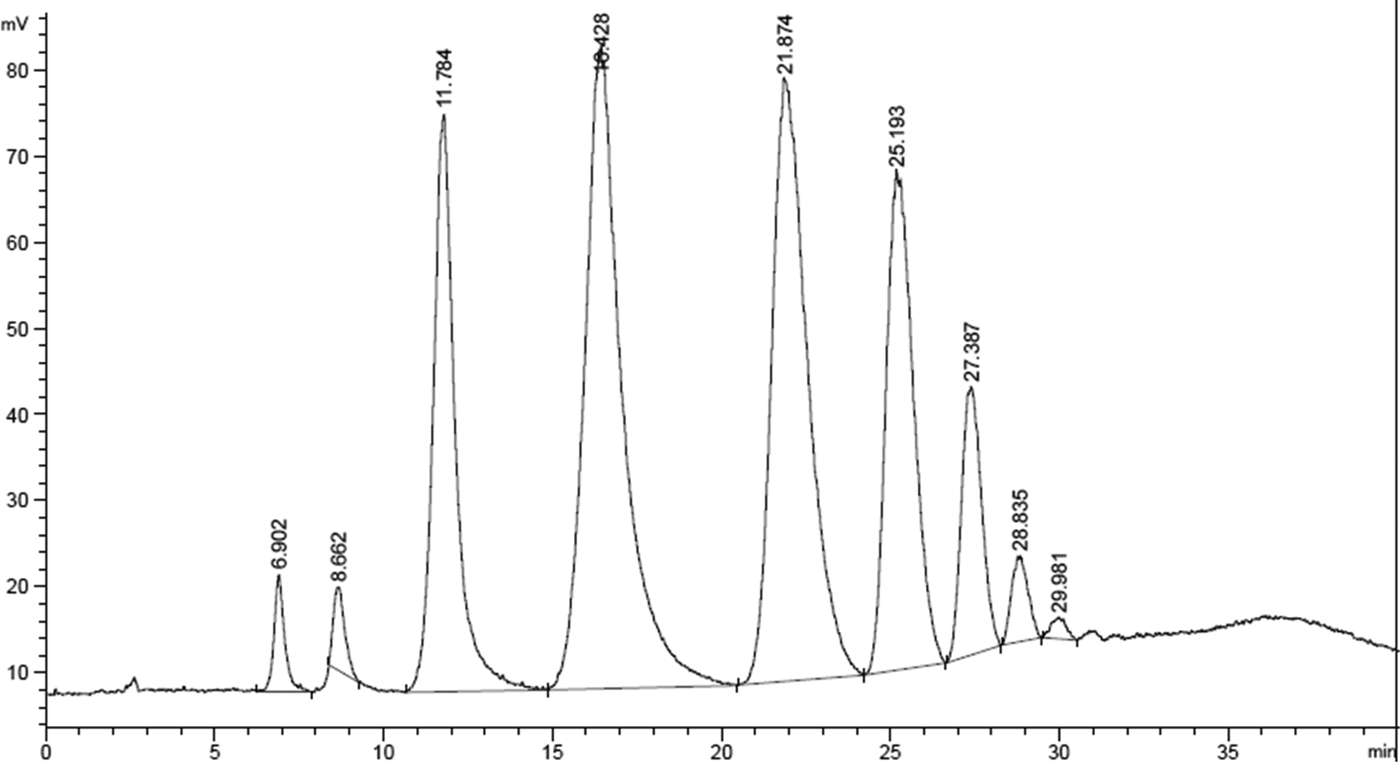
COS with an 86% degree of deacetylation (DD) and average molecular weight (MW) of 3500 were purchased from Hainan Zheng Zhong Agricultural High Science Co., Ltd., China. The COS sample was analysed by high-performance liquid chromatography (HPLC; Fig. 1).
High-performance liquid chromatography analysis of chitosan oligosaccharide sample.

Plant material, growth and treatments
The rice variety used in the current study was II YOU 1259, acquired from the Shanghai Academy of Agricultural Sciences, China. The rice seeds were sterilized in alcohol solution (75/25, v/v) for 15 min and rinsed five times with distilled water. Then the seeds were soaked in different concentrations of COS (0, 50, 100, 150 and 200 mg/l) for 72 h, germinated in Petri dishes and sown in sand. Plants were grown under a 13/11 h light/dark cycle at 28/25 °C and 70% relative humidity.
When the rice seedlings had produced up to three leaves, 40 rice seedlings of each group that had similar morphology were selected, divided into five sub-groups of eight, and transplanted into plastic hydroponic boxes (15 cm × 10 cm × 10 cm). After chilling treatment at 0 °C for 0, 24, 48 or 72 h, the samples were harvested and placed in a refrigerator at −80 °C.
Chlorophyll content
The amounts of chlorophyll a, chlorophyll b and total chlorophyll were determined according to the method of Lichtenthaler and Buschmann (Reference Lichtenthaler, Buschmann, Wrolstad, Acree, An, Decker, Penner, Reid, Schwartz, Shoemaker and Sporns2001) with a slight modification. Samples (0.5 g leaf tissue) were homogenized in 10 ml ethanol/water solution (95/5, v/v) in a mortar with a small amount of quartz sand and calcium carbonate (CaCO3), then filtered into a 25 ml volumetric flask to the 25 ml volume mark with ethanol/water solution (95/5, v/v). After measuring the absorbance values at A 649 and A 665, respectively, the chlorophyll content was calculated according to the below formulas:
 $$chl\; a = \; \displaystyle{ \eqalign{&\lpar {13{\cdot}95\; A_{665}-6{\cdot}88A_{649}} \rpar \times \hbox{extraction liquid volume (ml)} \cr &\quad \times \hbox{diluted times}} \over \hbox{fresh weight (g)}}$$
 $$chl\; b = \; \displaystyle{ \eqalign{&\lpar {24{\cdot}96\; A_{665}-7{\cdot}32A_{649}} \rpar \times \hbox{extraction liquid volume (ml)} \cr& \quad\times \hbox{diluted times}} \over \hbox{fresh weight(g)}}$$
 $$chl = chl\,a + chl\,b$$
where chl a is the content of chlorophyll a, chl b is the content of chlorophyll b and chl is the content of total chlorophyll.
Content of soluble saccharides, soluble protein and proline
Soluble saccharides from 0.5 g of leaf tissue were extracted in boiled water for half an hour, filtered and diluted with distilled water to a constant volume of 25 ml. After reacting with anthrone and concentrated sulphuric acid, the absorbance at A 630 was measured. The soluble saccharide content was calculated and expressed as amount of saccharide over sample fresh weight (mg/g FW).
Soluble proteins from 0.2 g leaves were extracted with 5 ml distilled water after homogenizing at low temperature (0–4 °C) and centrifuged at 10 000 r/min for 10 min at 4 °C. Protein concentrations in the supernatant were determined by the Bradford method (Bradford, Reference Bradford1976) and soluble protein contents were expressed as mg/g FW.
The proline content was measured following the method of Bates (Bates et al., Reference Bates, Waldren and Teare1973) by determining the quantity of red colour produced by proline reacting with sulphosalicylic acid after toluene extraction and A 520 absorbance measuring.
Malondialdehyde and hydrogen peroxide content and superoxide dismutase activity
Malondialdehyde (MDA) content was determined by the thiobarbituric acid (TBA) method (Hu et al., Reference Hu, Shi, Zhang, Zhang and Li2012) with some modifications. Briefly, samples (0.2 g leaf tissue for each experimental unit) were ground in a mortar with 5 ml 10% trichloroacetic acid and then centrifuged at 3000 r/min for 10 min. The supernatant was mixed with 6.7 g/l TBA in boiling water for 10 min, cooled to room temperature and centrifuged again. The absorbance was recorded at A 532, A 450 and A 600. The MDA content was calculated according to the following formula and results were expressed as μmol/g FW:
 $$\hbox{MDA content} = \displaystyle{ \eqalign{ & \lpar {6{\cdot}45A_{532}-6{\cdot}45A_{600}-0{\cdot}56A_{450}} \rpar \cr &\quad \times \hbox{extraction liquid volume (ml)} \times \hbox{diluted times}} \over {\hbox{fresh weight (g)}}}$$
Superoxide dismutase (SOD) activity was analysed according to the protocol of the SOD test kit (A001-1, Nanjing Jiancheng, China).
Hydrogen peroxide (H2O2) content was analysed according to Ferguson's method (Freguson et al., Reference Freguson, Watkins and Harman1983). In brief, sulphuric acid was used to dissolve the yellow precipitate produced from H2O2 reaction with titanium sulphate and absorbance was recorded at A 415. Standards in the range of 20–100 mmol/l H2O2 were also reacted with titanium tetrachloride and carried through the above procedure to make the standard curve. The H2O2 content was calculated and expressed as μmol/g FW.
Total RNA extraction and qRT-PCR
Extraction of total RNA was conducted using a total RNA Extractor Kit (SK1312, Shanghai Sangon Biotech, China), following the manufacturer's instructions. First-strand cDNA synthesis was conducted using an AMV First Strand cDNA Synthesis Kit (SK2445, Shanghai Sangon Biotech, China) from 800 ng total RNA according to the manufacturer's recommendations.
Differentially expressed genes were analysed using the SCoT polymorphism technique. In brief, 18-mer SCoT primers were designed based on the conserved region surrounding the translation initiation codon (ATG) (Collard and Mackill, Reference Collard and Mackill2009; Luo et al., Reference Luo, He, Chen, Ou and Gao2010) and synthesized by Shanghai Sangon Biological Engineering Technology and Services (Shanghai, China). PCR was carried out as follows: an initial denaturation step at 94 °C for 3 min, followed by 36 cycles of 94 °C for 50 s, 50 °C for 1 min and 72 °C for 2 min; and a final extension at 72 °C for 5 min. After electrophoresis of PCR amplifications, differentially expressed genes were cloned into the pMD18-T vector (Takara, Dalian, China) and sequenced by Shanghai Sangon Biological Engineering Technology and Services (Shanghai, China).
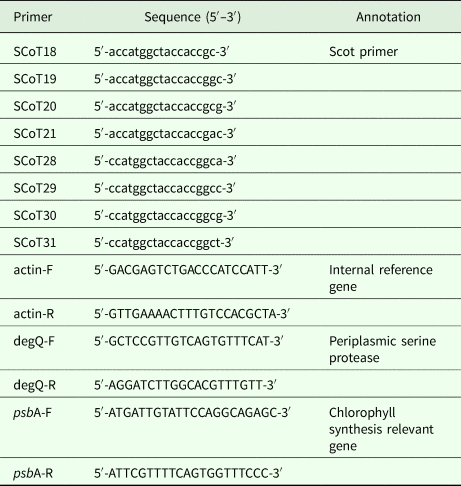
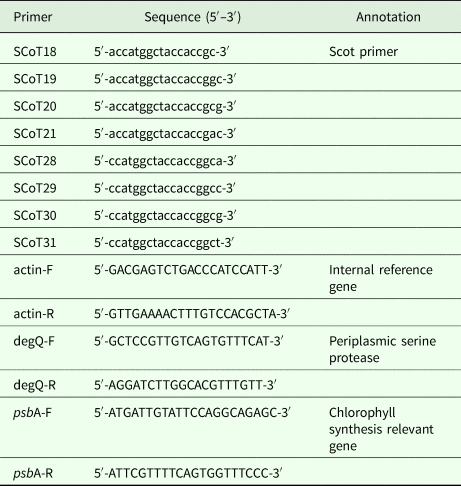
The qRT-PCR analysis was performed with SYBR Green qPCR Master Mix (Shanghai Sangon Biotech, China) using the ABI Stepone plus real-time system. The actin gene was used as the reference gene. The primers used are shown in Table 1. The PCR conditions were as follows: one cycle at 95 °C for 3 min; 40 cycles at 95 °C for 7 s, 57 °C for 10 s, 72 °C for 15 s. Three technical replications were performed, and the results were calculated using the 2−ΔΔct method. The relative transcript level of each gene at 0 h was defined as 1.
Primer sequence
Statistical analysis
The experiment was a completely randomized design with three replicates. Each replicate contained at least eight plants. All data were expressed as the means ± s.d. of three independent replicates. Statistical procedures (one-way analysis of variance) were carried out using the software package SPSS 11.0 for windows. Duncan's multiple range test was used to analyse differences among treatments taking P < 0.05 as significant.
Results
The growth of rice under cold stress
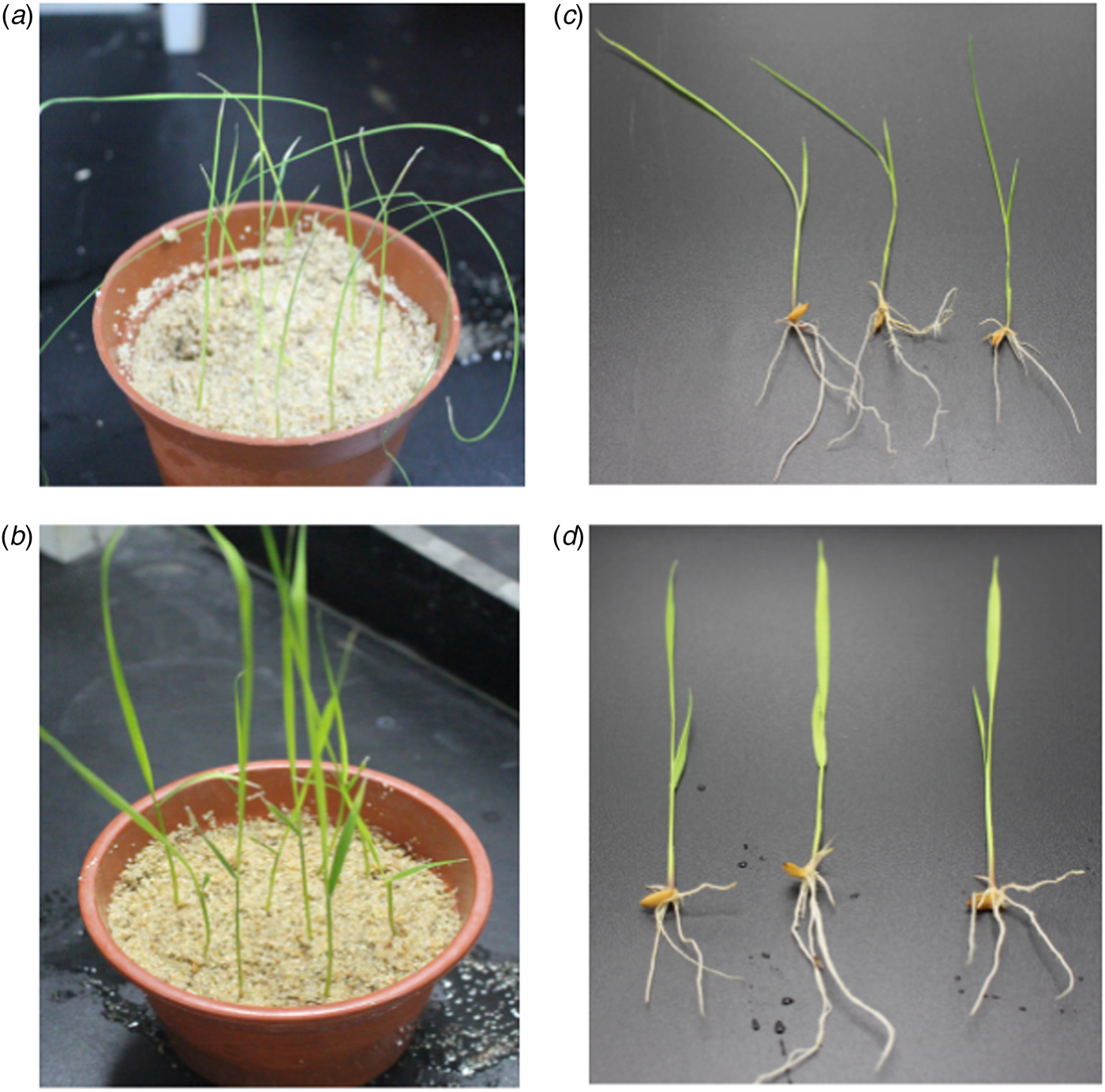
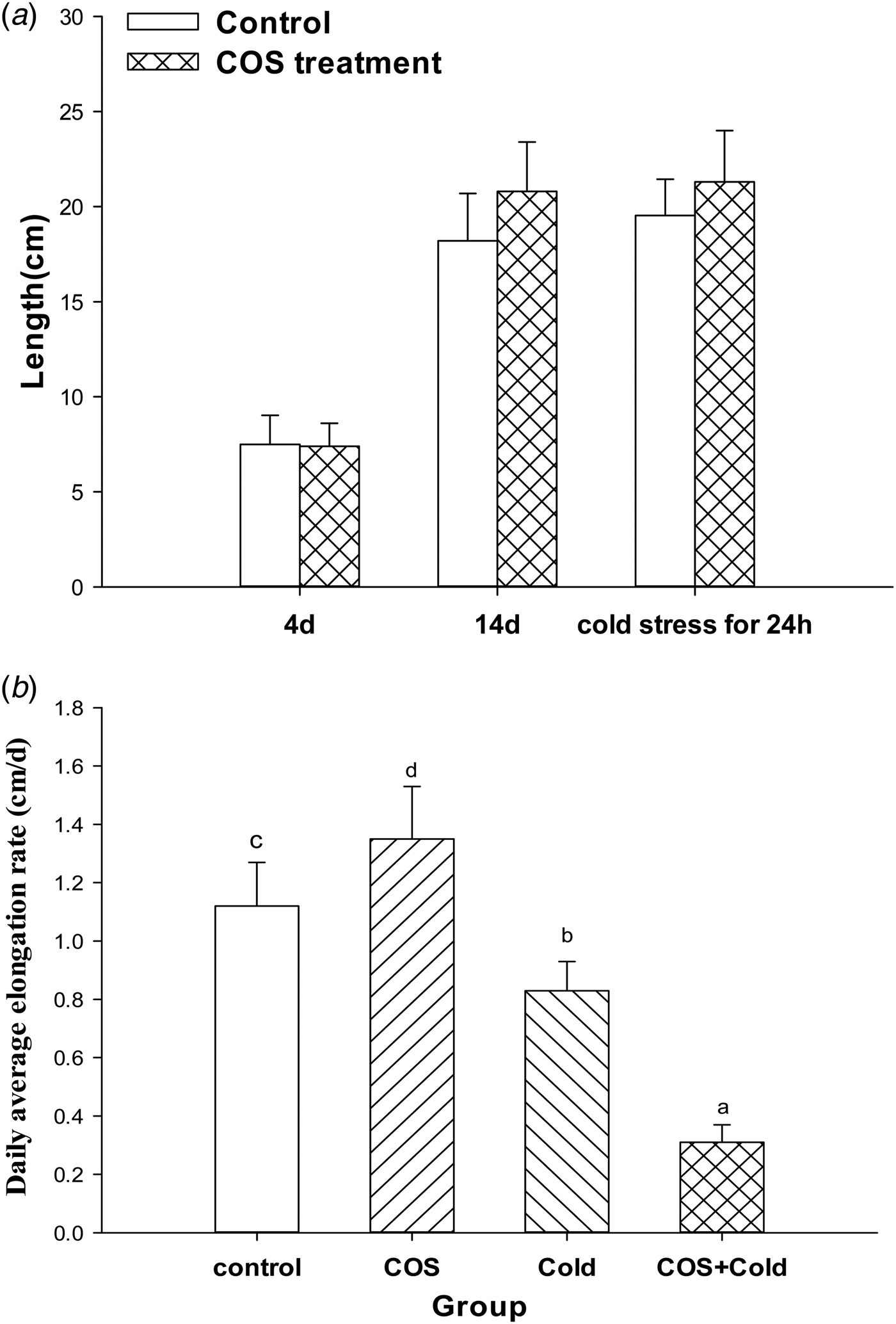
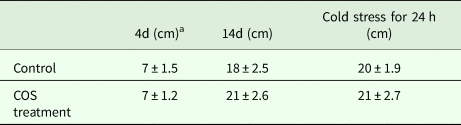
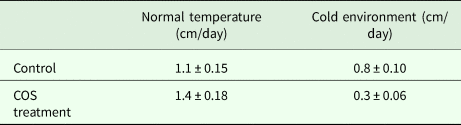
After chilling treatment for 24–72 h, rice seedling growth status, root length and root thickness were better in all COS-treated groups than in the control group (P < 0.05, data not shown), especially in the 100 mg/l COS-treated group. The cold tolerance ability of rice seedlings pre-treated with 100 and 200 mg/l COS was similar, but much better than that of seedlings pre-treated with 50 mg/l COS. However, growth of rice seedlings in the 200 mg/l COS-treated group was lower than those in 50 and 100 mg/l COS-treated groups (P < 0.05). Therefore, the 100 mg/l COS pre-soaking treatment was used for further study. Figure 2 shows the phenotypic appearance of rice seedlings in the control group and 100 mg/l COS pre-treated group after 24 h chilling-stress. Under normal conditions, there was no significant difference in seedling length between the control and COS-treated groups at day 4 (Fig. 3(a), Table 2), while the difference became obvious as time went on. The average seedling length of the COS-treated group at day 14 and the average daily seedling elongation rate during the 14 days were 11.9 and 20.5% higher than for the control group, respectively (Fig. 3 and Table 3). Upon cold treatment, the growth rates of both the control and COS-treated groups were reduced significantly (P < 0.05). After chilling treatment at 0 °C for 24 h, the growth rate of the COS-treated group was 37.3% that of the control group, that is to say, 62.7% lower than that of the control group (Fig. 3(b) and Table 3), which indicated that rice itself improved its cold tolerance by reducing the growth rate and that COS treatment enhanced the rice self-regulation effect.
Phenotypic appearance of rice seedlings in the control group (a and c) and 100 mg/l COS pre-treated group (b and d) after 24 h chilling-stress.

Growth parameters of rice seedlings after chilling treatment for 24 h. (a) Length of rice seedlings. Control: seeds soaked with distilled water. COS treatment; seeds soaked with 100 mg/l COS. (b) Daily average elongation of rice seedlings. Control: seeds without COS treatment growing at normal temperature; COS: seeds soaked with 100 mg/l COS solution growing at normal temperature; cold: seeds without COS treatment growing under chilling stress for 24 h; COS + cold: seeds soaked with 100 mg/l COS solution growing under chilling stress for 24 h. Each value represents the mean ± s.d. of three replicates.

Length of rice seedlings
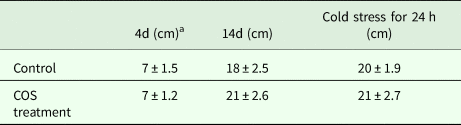
a 4d, normal temperature growth for 4 days; 14d, normal temperature growth for 14 days; cold stress for 24 h, low temperature treatment for 24 h after growing for 14 days
Data are represented as means ± s.d. from three separate experiments.
Daily average elongation rate of rice seedlings
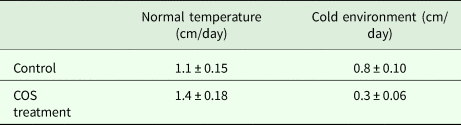
Data are represented as means ± s.d. from three separate experiments.
Chlorophyll content
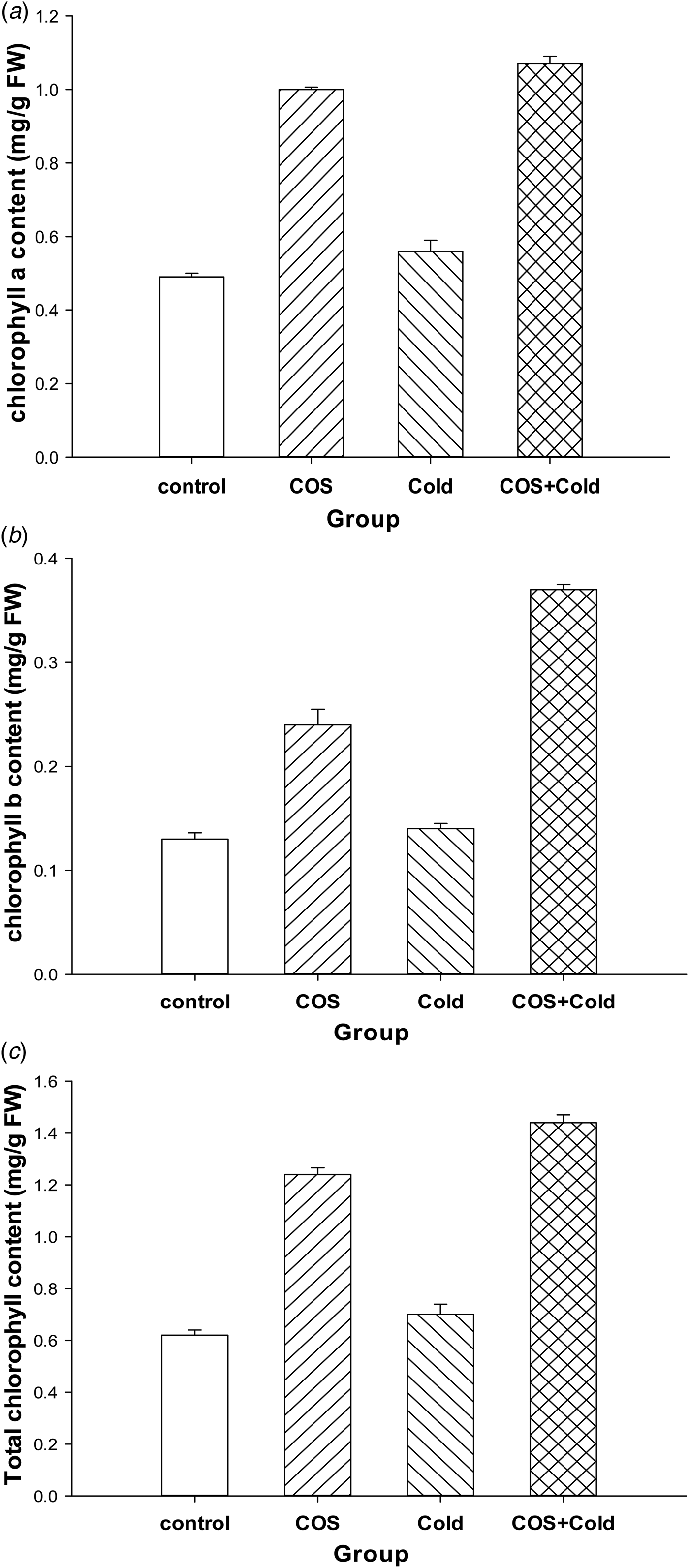
The chlorophyll a, chlorophyll b and total chlorophyll content in the COS-treated group were about twofold those in the deionized water-treated control group in the normal environment (Fig. 4, Table 4). After 24 h cold stress, the total chlorophyll and chlorophyll a content increased by a similar degree in both the control and COS-treated groups (11.1 and 16.7% and 12.0 and 7.0%, respectively; Figs 4(a) and (c), Table 4), while the chlorophyll b content (Fig. 4(b), Table 4) increased by only 7.0% in the control group but 54.2% in the COS-treated group. The final chlorophyll b content in the COS-treated group was 3.6-fold that in the control group. The results indicated that COS treatment promoted chlorophyll synthesis, especially chlorophyll b, under chilling stress.
Effects of COS on (a) chlorophyll a, (b) chlorophyll b and (c) total chlorophyll content of rice seedlings. Each value represents the mean ± s.d. of three replicates. Control: seeds without COS treatment growing in normal temperature; COS: seeds soaked with 100 mg/l COS solution growing at normal temperature; cold: seeds without COS treatment growing under chilling stress for 24 h; COS + cold: seeds soaked with 100 mg/l COS solution growing under chilling stress for 24 h.

Effect of COS on the chlorophyll contents of rice seedlings

a Control: seeds without COS treatment growing at normal temperature; COS: seeds soaked with 100 mg/l COS solution growing at normal temperature; cold: seeds without COS treatment growing under chilling stress for 24 h; COS + cold: seeds soaked with 100 mg/l COS solution growing under chilling stress for 24 h.
Data are represented as means ± s.d. from three separate experiments.
Oxidative damage
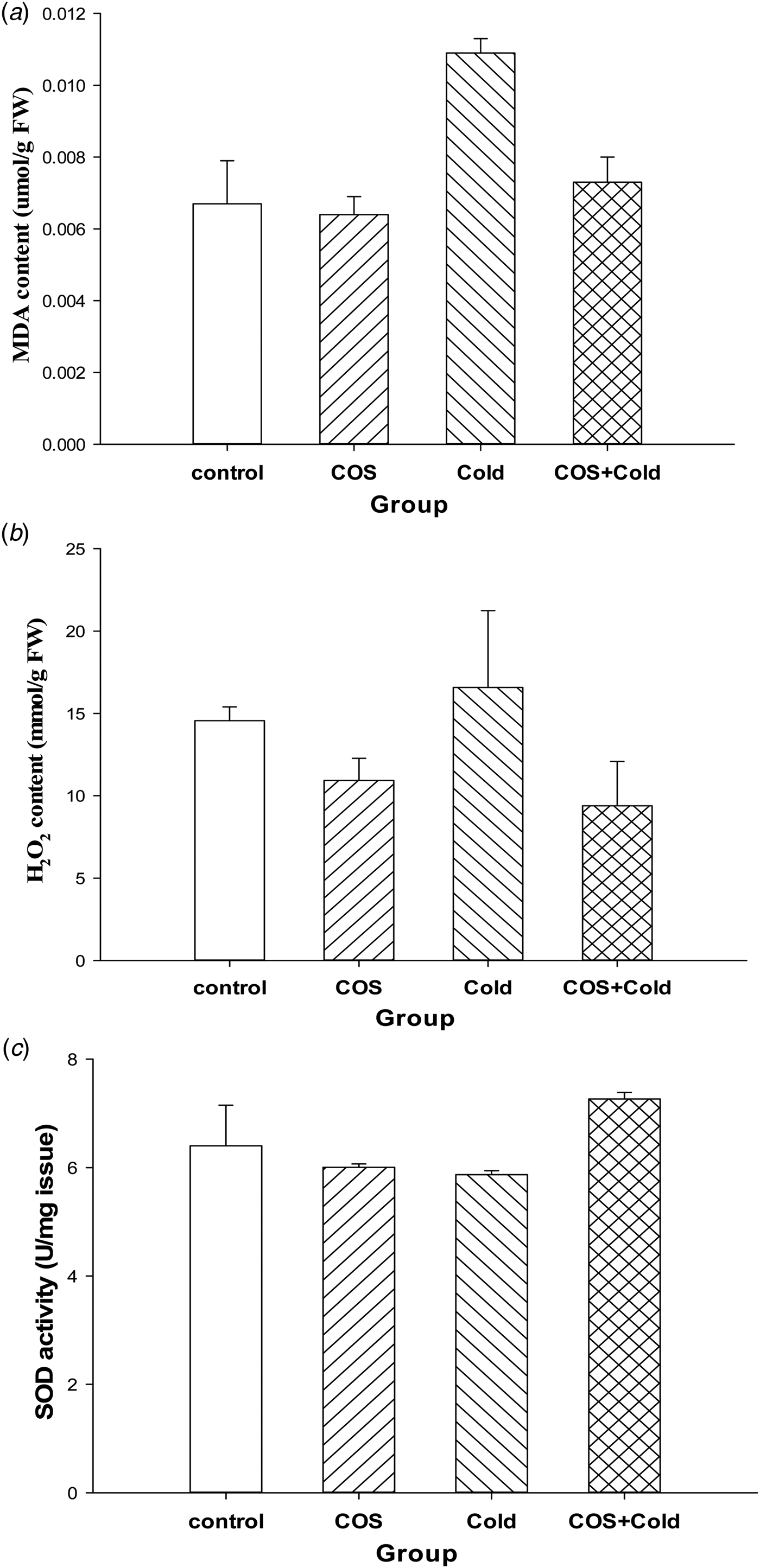
MDA, a product of lipid peroxidation, is generally used as an indicator of free radical damage to cell membranes caused by severe oxidative stress. Figure 5(a) shows that MDA content in the COS-treated group was lower than that in the control group, especially in the cold growing environment. After 24 h of chilling stress, MDA content was increased by 62.0% in the control group and 13.8% in the COS-treated group (Fig. 5(a), Table 5). Pre-treatment with COS reduced the MDA content by 29.7% (P < 0.05) compared with the control group under chilling stress. This indicated that cold treatment could cause membrane damage in rice, and that COS pre-treatment could reduce the cold damage by diminishing lipid peroxidation.
Effects of COS on (a) MDA content, (b) H2O2 content and (c) SOD activity of rice seedlings. Each value represents the mean ± s.d. of three replicates. Control: seeds without COS treatment growing at normal temperature; COS: seeds soaked with 100 mg/l COS solution growing at normal temperature; cold: seeds without COS treatment growing under chilling stress for 24 h; COS + cold: seeds soaked with 100 mg/l COS solution growing under chilling stress for 24 h.

Effect of COS on MDA content, H2O2 content and SOD activity of rice seedlings

a Control: seeds without COS treatment growing at normal temperature; COS: seeds soaked with 100 mg/l COS solution growing at normal temperature; cold: seeds without COS treatment growing under chilling stress for 24 h; COS + cold: seeds soaked with 100 mg/l COS solution growing under chilling stress for 24 h.
Data are represented as means ± s.d. from three separate experiments.
H2O2, a form of active oxygen species (AOS), is generated via superoxide during electron transport processes such as photosynthesis and mitochondrial respiration and is induced in plants following exposure to a wide variety of abiotic and biotic stimuli, such as drought, low temperature and salt. Over-production or accumulation of AOS in cells can disturb the redox system of the cell and influence the main metabolic pathways. The H2O2 content of the COS-treated group was clearly lower than that in the control group both under chilling and normal conditions. After 24 h of chilling stress, the H2O2 content of the control group was increased by 13.9%, while that of the COS-treated group was decreased by 14.2% (Fig. 5(b), Table 5). This indicates that the COS treatment could protect rice from oxidative damage caused by H2O2 release under both normal and cold growing conditions and enhance the protective response under cold growing conditions.
SOD is one of the antioxidant enzymes that can clear excess AOS effectively and maintain a redox balance. Figure 5(c) shows the effect of COS on the SOD activity of rice seedlings under normal growing conditions and chilling stress: SOD activity was higher under chilling stress than under normal conditions, which indicated that cold stress could cause oxidative damage. In the COS pre-treated group, SOD activity was 21.2% higher than that in the control group under normal conditions, and 23.9% higher than that in the control group under chilling stress (Fig. 5(c), Table 5). Higher SOD activity in turn reduced more superoxide free radicals and protected rice from AOS damage.
In all, cold treatment could cause increased AOS production and biological function damage: COS pre-treatment could protect rice from oxidative damage caused by cold by decreasing the MDA and H2O2 content and increasing SOD activity.
Content of osmotic adjustment substances
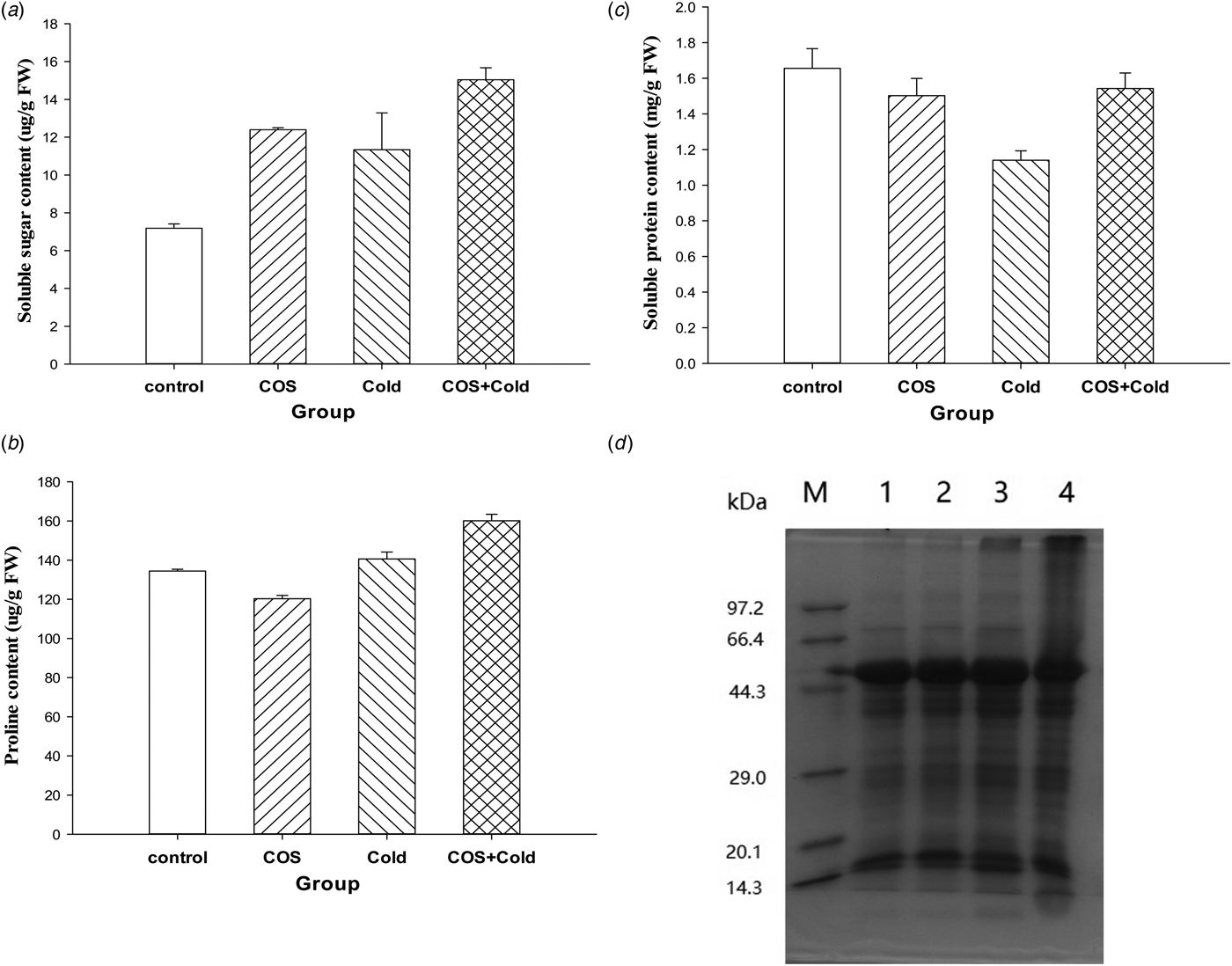
Soluble sugar content of the COS-treated group was higher than that of the control group no matter what temperature the rice grew in. Compared with rice growing under normal conditions, after chilling treatment for 24 h, the soluble sugar content in the control and COS-treated groups increased by 86.6 and 21.3%, respectively (Fig. 6(a), Table 6).
Effects of COS on the content of (a) soluble sugar, (b) proline and (c) soluble protein in rice seedlings. Each value represents the mean ± s.d. of three replicates. (d) SDS-PAGE profile of soluble proteins. Lane 1: control, lane 2: COS, lane 3: cold, lane 4: COS + cold. Control: seeds without COS treatment growing at normal temperature; COS: seeds soaked with 100 mg/l COS solution growing at normal temperature; cold: seeds without COS treatment growing under chilling stress for 24 h; COS + cold: seeds soaked with 100 mg/l COS solution growing under chilling stress for 24 h.

Effect of COS on the content of soluble sugar, proline and soluble protein in rice seedlings

a Control: seeds without COS treatment growing at normal temperature; COS: seeds soaked with 100 mg/l COS solution growing at normal temperature; cold: seeds without COS treatment growing under chilling stress for 24 h; COS + cold: seeds soaked with 100 mg/l COS solution growing under chilling stress for 24 h.
Data are represented as means ± s.d. from three separate experiments.
In the control group, there was almost no difference in proline content at normal and chilling growing temperatures. However, in the COS pre-treated group, proline content increased by 33.2% in cold environments. At normal growing temperature, proline content of the COS pre-treated group was lower than that of the control group, while after 24 h of cold stress, proline content in the COS pre-treated group was 13.9% more than that of the control group (Fig. 6(b), Table 6). This indicates that COS could enhance rice cold tolerance by increasing proline accumulation.
Under normal growing conditions, soluble protein in the COS pre-treated group was 9.1% less than that in the control group, but after 24 h of cold stress, it was 35.1% higher than that of the control group. Compared with normal growing conditions, after 24 h of cold stress the soluble protein content of the control group decreased by 31.3%, while that of the COS pre-treated group increased a little (2.7%), and the soluble protein of the COS pre-treated group was 35.1% more than that of the control group (Fig. 6(c), Table 6). To identify whether the soluble protein decrease is a general decrease in all proteins or a decrease in specific proteins, the extracted proteins were adjusted to the same amount according to their protein concentrations and analysed on sodium dodecyl sulphate polyacrylamide gel electrophoresis (SDS-PAGE). As shown in Fig. 6(d), the protein profiles of different samples were similar, which indicates that cold-treatment induced decrease in most soluble proteins rather than a few specific ones. This may be because the decreased proteins were not abundantly expressed in different samples (normal or cold-stress, control or COS treatment) and any differences under different conditions were difficult to observe. The above results indicated that COS could also protect cells from chilling injury by preventing the degradation of proteins, mainly through a general decrease in all proteins rather than a decrease of specific proteins.
Expression level of DegQ protein and D1 protein encoding psbA genes
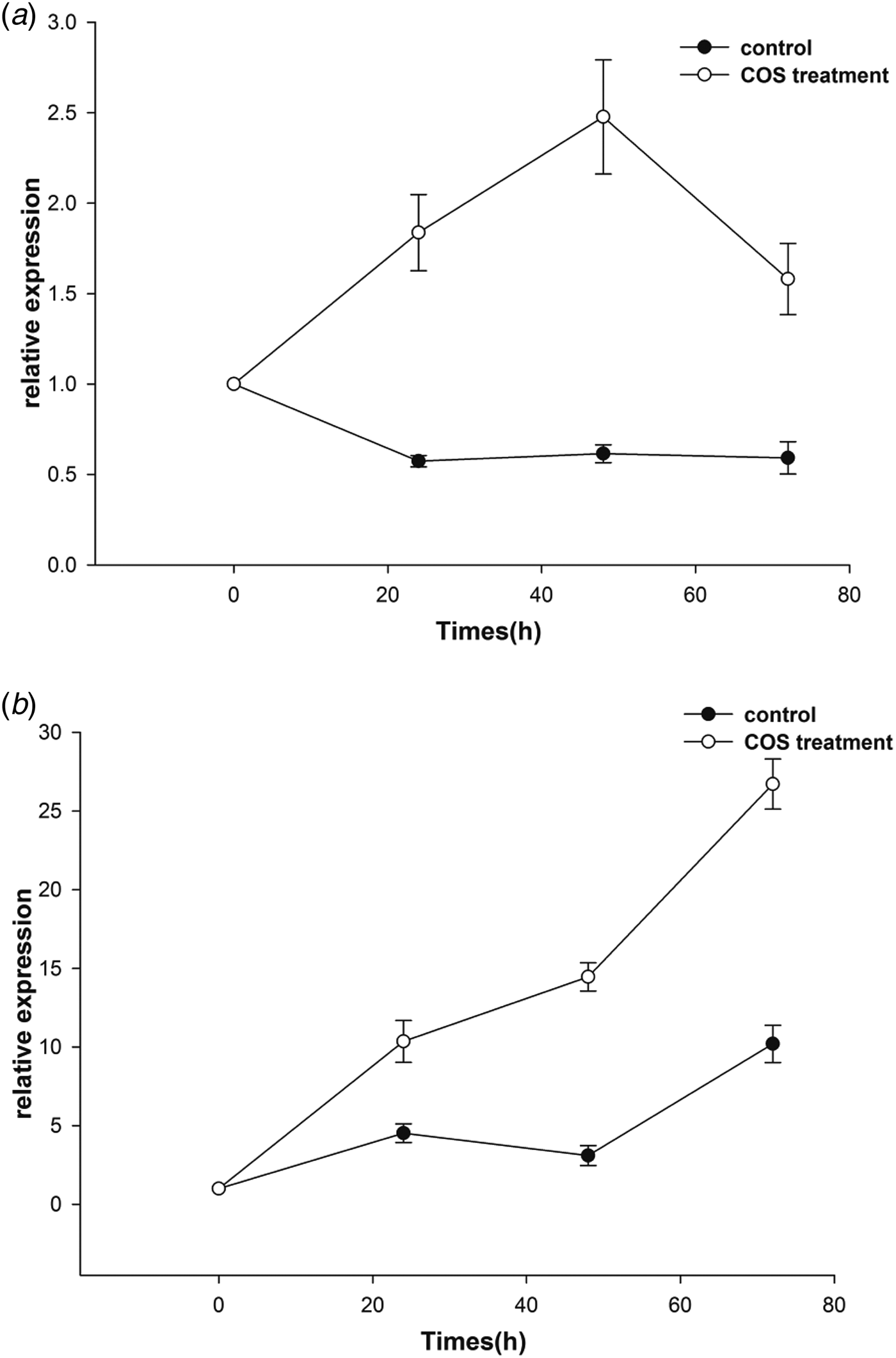
Several different expressed genes were identified by SCoT assay (data not shown), including a novel gene encoding one Deg family protease (degQ). Figure 7 shows the relative expression levels of degQ and psbA genes after low temperature treatment for different periods. At 24 h, expression of DegQ in the control group decreased by 43% while that in the COS-treated group increased by 84% compared with 0 h. As time passed, the expression level of degQ in the control group was almost the same as the level at 24 h, while the COS group continued to increase and reached a peak at 48 h (Fig. 7(a)).
The expression of DegQ protease gene degQ and D1 protein encoding gene psbA in rice seedlings in the control and COS pre-soaking treated groups during different cold stress times. Each value represents the mean ± s.d. of three replicates. (a) DegQ protease gene degQ and (b) D1 protein encoding gene psbA.

Several Deg family proteases have been reported to show function by adjusting the amount of photosystem II (PS II) D1 protein (Haußühl et al., Reference Haußühl, Andersson and Adamska2001; Barker et al., Reference Barker, de Vries, Nield, Komenda and Nixon2006; Huesgen et al., Reference Huesgen, Schuhmann and Adamska2009; Zheng et al., Reference Zheng, Zhao, Lin, Chen, Xu, Zhou, Teng and Dong2016). In the current study, the relative expression level of the PS II D1 protein encoding gene (psbA) was compared in the control and COS-treated groups. As shown in Fig. 7(b), the expression level of psbA in the control group increased to 4.52-, 3.10- and 10.20-fold that of 0 h at 24, 48 and 72 h, respectively, while in the COS pre-treated group, the expression level was 10.35-, 14.47- and 26.72-fold that of 0 h at the corresponding time points, respectively. At each time point, the expression level of psbA was much higher in the COS pre-treated group than that in the control group (2- to 5-fold higher).
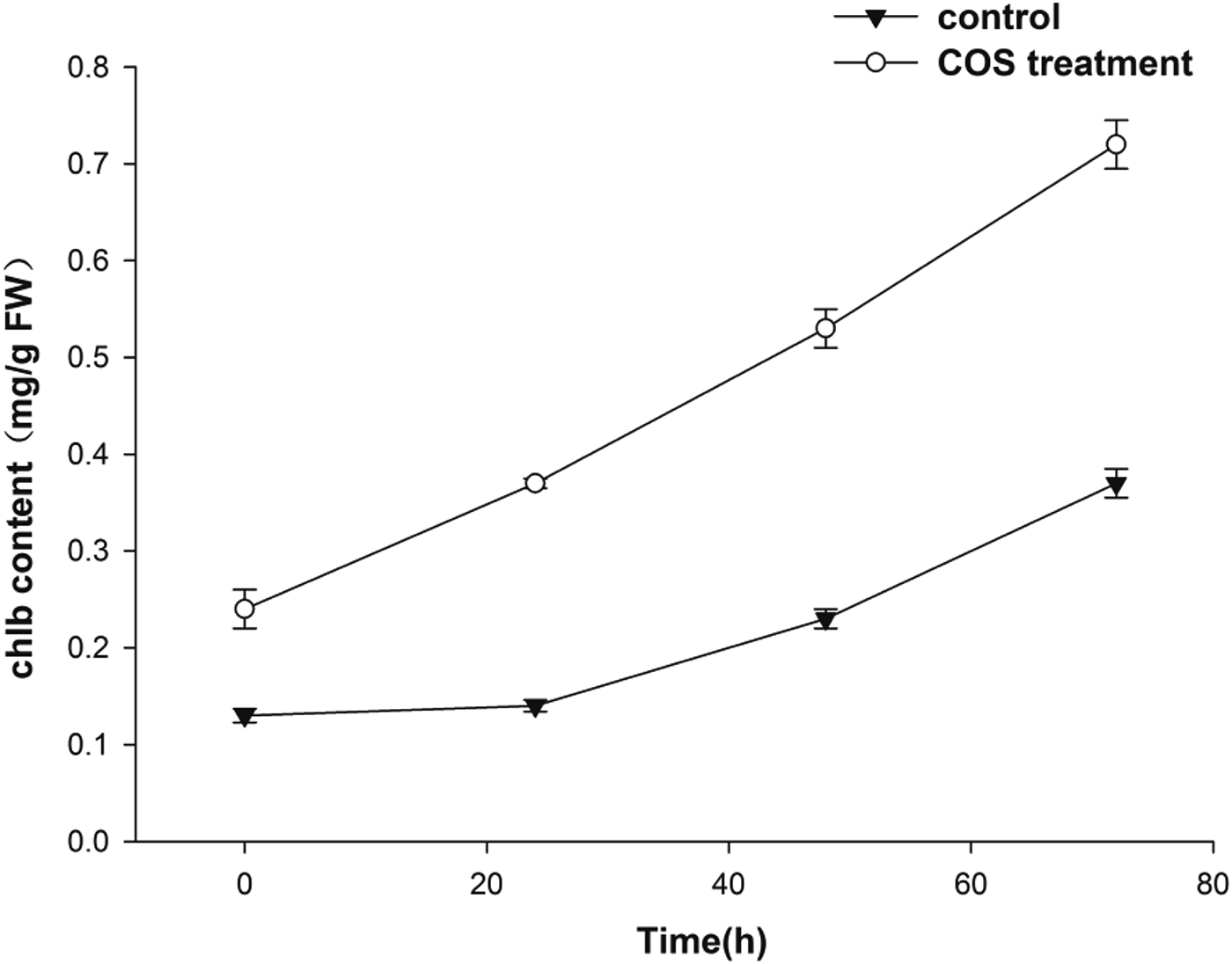
The physiological study in the current paper indicated that COS pre-treatment mainly affected the accumulation of chlorophyll b. It is generally believed that chlorophyll b content is closely correlated with the PS II activity (Hu et al., Reference Hu, Shi, Zhang, Zhang and Li2012). To explore whether the change in expression of the D1 protein could affect chlorophyll b content, contents of chlorophyll b were determined for different cold stress periods. The content and accumulation rate of chlorophyll b in the COS-treated group were both higher than those in the control group at all time points (Fig. 8).
Content of chlorophyll b during different cold stress times. Each value represents the mean ± s.d. of three replicates.

Pre-treatment with COS could induce the expression of both psbA and degQ genes as well as promote the accumulation of chlorophyll b under chilling stress. The changing chlorophyll b content was consistent with those of the expression of the DegQ protein and D1 protein encoding genes (degQ and psbA, respectively), which indicated that COS enhanced cold tolerance by repairing the photodamaged PS II.
Discussion
Improving the quality and biotic/abiotic resistances of crops has become a topic of considerable interest throughout the world. Progress in breeding biotic and abiotic stress-resistant crops and developing biotic and abiotic stress resistance-inducing reagents, especially oligosaccharide-like, environmentally friendly reagents, has been achieved (Thomashow, Reference Thomashow1999; Dzung et al., Reference Dzung, Khanh and Dzung2011; Liu et al., Reference Liu, Zhang, Yin, Wang, Zhao and Du2013; Sun et al., Reference Sun, Qi, Wang, Li, Wu, Zhang and Zhao2013; Qiang et al., Reference Qiang, Yu, Jiang, Sun, Zhang, Wei and Cheng2015; Jing et al., Reference Jing, Zou, Kong, Hu, Wang, Yang and Xie2016; Fei et al., Reference Fei, Xue, Du, Yang and Deng2017).
Rice is the main crop in China, with more planted area given to it than any other type of crop. One of the main factors influencing rice yield is low temperature injury. By comparing four kinds of chitosan application methods – no chitosan application, seed soaking, seed soaking and soil application, and seed soaking and foliar spraying – Boonlertnirun et al. (Reference Boonlertnirun, Boonraung and Suvanasara2008) found that application of chitosan by seed soaking and soil application increased subsequent rice yield significantly over the other treatments, whereas application by seed soaking and foliar spraying showed the best ability to control (limit) disease (Boonlertnirun et al., Reference Boonlertnirun, Boonraung and Suvanasara2008). Though oligochitosan exhibits the potential to improve rice cold resistance (Kuang et al., Reference Kuang, Ye and Qin2009), little detailed information has been reported regarding the physiological and molecular mechanism of cold tolerance as enhanced by COS in rice. In the current study, different physiological mechanisms of exogenous COS were investigated between rice seedlings treated with distilled water and those pre-soaked with COS growing under both normal conditions and cold stress, including oxidative damage, osmotic adjustment substances accumulation and the process of PS II. A possible mechanism for COS improvement of rice seedling cold tolerance by repairing the photodamaged PS II, altering osmotic regulation and reducing oxidation damage was proposed.
The effect of COS on the chlorophyll and the substances that effect photosynthesis
Photosynthesis is the basis of agricultural production that turns solar energy into chemical energy. It plays an important role in plant stress tolerance mechanisms. In higher plants, chlorophyll is a critical component of photosynthesis in all photoautotrophs and the content of chlorophyll has a major influence on plant growth. To some extent, the change of chlorophyll content reflects plant health (Liu et al., Reference Liu, Zhang, Yin, Wang, Zhao and Du2013). The content of chlorophyll has been widely studied under biotic and abiotic stress, and a decrease in chlorophyll content of leaves under water stress is well known. Application of exogenous substances (such as proline, glycine and chitooligomers) has been reported to improve chlorophyll content and plant performance under different stress treatments (Kumar and Yadav, Reference Kumar and Yadav2009; Ben Ahmed et al., Reference Ben Ahmed, Ben Rouina, Sensoy, Boukhriss and Ben Abdullah2010; Chen et al., Reference Chen, Guo, Hussain, Zhu, Deng, Xue, Geng and Wu2016; Wang et al., Reference Wang, Liu, Chen, Zhou, Li, Zhao, Pan, Zaidi and Cheng2016; Zou et al., Reference Zou, Tian, Dong and Zhang2017). In the current study, COS pre-treatment increased the content of total chlorophyll, chlorophyll a and chlorophyll b to about twofold under normal growing conditions. After 24 h cold stress, the content of total chlorophyll, chlorophyll a and chlorophyll b showed slight improvement (11, 12 and 7%, respectively) in the control group, while those in the COS pre-treated group increased by 16.7, 7 and 54.2%, respectively. The increment, instead of usually reported decrement, of the chlorophyll contents in the control group may be because the cold treatment time was only 24 h, which was not long enough to damage the cells or organelles, and the plants tried to adapt to the stress by self-adjusting their chlorophyll content. It is interesting to note that the content of chlorophyll b in the COS pre-treated group increased to 3.6-fold that in the control group under cold-stress. Studies on mutants lacking chlorophyll b have shown that chlorophyll b mutation reduces the content of optical antenna pigment protein complexes, thus affecting the donor lateral stability of PS II (Havaux and Tardy, Reference Havaux and Tardy1997). A study on the characteristics of two new types of rice mutants lacking chlorophyll b also showed that the largest PS II's optical efficiency of the mutants was close to or lower than the wild ones (Lin et al., Reference Lin, Peng, Lin, Ou, Yang and Zhang2003). The current results indicated that treatment with the appropriate concentration of COS could increase accumulation of chlorophyll b, reduce decomposition of leaf chlorophyll under chilling conditions and contribute to the photosynthetic process, especially the PS II system, by maintaining high chlorophyll b and overall chlorophyll content.
ROS, such as the superoxide radical, hydroxyl radical and H2O2, are often produced under abiotic stress, including chilling injury. They can damage many biologically functional molecules and cause membrane lipid peroxidation, which in turn results in destruction of the cell membrane system (Jiang et al., Reference Jiang, Li and Weng2002). MDA is an intermediate product of membrane lipid peroxidation and formation of MDA is used to assess the level of lipid peroxidation. The content of MDA is a typical indicator of the degree of membrane damage (Hu et al., Reference Hu, Shi, Zhang, Zhang and Li2012). Antioxidant enzymes, such as SOD, catalase and glutathione reductase, are effective quenchers of ROS and their activation helps plants to maintain cellular homoeostasis in both biotic and abiotic stress environments (Chaoui et al., Reference Chaoui, Mazhoudi, Ghorbal and El Ferjani1997; Mir et al., Reference Mir, Mir, Khazir, Tonfack, Cowan, Vyas and Koul2015). Several researchers have reported a positive correlation between the degree of cellular damage induced by biotic/abiotic stress and the ROS produced together with antioxidant enzymes (Chaoui et al., Reference Chaoui, Mazhoudi, Ghorbal and El Ferjani1997; Foyer and Noctor, Reference Foyer and Noctor2005; Dzung et al., Reference Dzung, Khanh and Dzung2011; Liu et al., Reference Liu, Zhang, Yin, Wang, Zhao and Du2013; Mir et al., Reference Mir, Mir, Khazir, Tonfack, Cowan, Vyas and Koul2015). The current results demonstrated that 24 h chilling stress induced an 88.5% increase in MDA content, 15.5% increase in H2O2 content and 4.8% decrease in SOD activity. Contents of MDA and H2O2 as well as SOD activity in the COS pre-treated group were lower than those in the control group under normal growing conditions, which indicated generation of less ROS. Reduced increases in MDA, reduced H2O2 production and increased SOD activity (even higher than that in the control group under normal growing conditions) in the COS pre-treated group upon chilling treatment suggested that COS treatment could relieve the oxidative damage and further induce the inhibition of photosynthesis by promoting antioxidant enzyme activity, decreasing the MDA content and reducing lipid peroxide of rice leaves under cold conditions. Similar results have been reported previously (Chaoui et al., Reference Chaoui, Mazhoudi, Ghorbal and El Ferjani1997; Foyer and Noctor, Reference Foyer and Noctor2005; Dzung et al., Reference Dzung, Khanh and Dzung2011; Liu et al., Reference Liu, Zhang, Yin, Wang, Zhao and Du2013; Mir et al., Reference Mir, Mir, Khazir, Tonfack, Cowan, Vyas and Koul2015). Glycine enhances antioxidant enzyme activities to protect rice against chilling injury (Cao et al., Reference Cao, Zhong, Zhu, Zhang, Sajid, Wu and Jin2017). Acetylsalicylic acid reduces MDA content and antioxidant enzyme activities (Soliman et al., Reference Soliman, Alayafi, El Kelish and Abu-Elsaoud2018). COS decrease the concentration of MDA, increase the content of chlorophyll, modulate the activities of antioxidant enzymes and regulate the expression of antioxidant enzyme genes in wheat seedlings under chilling stress (Zou et al., Reference Zou, Tian, Dong and Zhang2017).
Osmoregulation substances, such as proline, soluble saccharides and soluble proteins, are induced under abiotic stress (Jiang et al., Reference Jiang, Li and Weng2002; Kumar and Yadav, Reference Kumar and Yadav2009). They can improve the photosynthetic rate, maintain stomatal conductivity, promote the capture of light energy and alleviate osmotic stress (Wright and Smith, Reference Wright and Smith1983; Rathinasabapathi, Reference Rathinasabapathi2000). Soluble saccharides and soluble proteins play important roles in minimizing the negative effects of drought-induced damage in plants by maintaining leaf turgor to improve stomatal conductance for efficient intake of carbon dioxide, promoting the root's ability to uptake more water (Blum, Reference Blum2005; Kiani et al., Reference Kiani, Grieu, Maury, Hewezi, Gentzbittel and Sarrafi2007). In the current study, the content of soluble saccharides in rice seedlings was improved by COS even without stress, and the improvement was more remarkable under cold-stress. Compared with normal growing conditions, the content of proline in the control group increased slightly under cold stress, while that in the COS pre-treated group increased significantly under cold-stress, about 113.9% that of the control group. Meanwhile, the content of soluble proteins in the control group decreased markedly under cold stress compared with normal growing conditions, while that in the COS pre-treated groups showed no difference between normal growing conditions and cold-stress and was 13.9% more than that in the control group under cold stress. It is suggested that COS could enhance the cold-resistance effect by increasing rice's osmotic regulation ability, a mechanism similar to poly-glutamate on salt stress (Lei et al., Reference Lei, Xu, Liang, Luo, Zhang, Feng and Xu2016) and AOSs on drought stress (Liu et al., Reference Liu, Zhang, Yin, Wang, Zhao and Du2013).
The effects of COS on PS II repair capacity at the transcriptional level
In the current study, SCoT assay revealed several different expressed genes including a novel gene (degQ) encoding one Deg family protease. Deg proteases are present in nearly all organisms, including Archaea, Bacteria and Eukarya (Kieselbach and Funk, Reference Kieselbach and Funk2003). They are adenosine triphosphate-independent serine type endopeptidases, besides the trypsin-type domain, most of these proteases also possess characteristic PDZ or PDZ-like domains in the C-terminal region, which are involved in protein–protein interactions and regulation of proteolytic activity (Walsh et al., Reference Walsh, Alba, Bose, Gross and Sauer2003; Wilken et al., Reference Wilken, Kitzing, Kurzbauer, Ehrmann and Clausen2004). These proteases are involved in responses to a variety of stress conditions, such as heat shock or oxidative stress (Pallen and Wren, Reference Pallen and Wren1997; Kieselbach and Funk, Reference Kieselbach and Funk2003). Several Deg family proteases have been reported to be the components of a network for PS II quality control in chloroplasts and be responsible for the degradation the damaged D1 protein or the adjustment of the amount of D1 protein in PS II (Prasil et al., Reference Prasil, Adir, Ohad and Barber1992; Haußühl et al., Reference Haußühl, Andersson and Adamska2001; Allakhverdiev et al., Reference Allakhverdiev, Nishiyama, Miyairi, Yamamoto, Inagaki, Kanesaki and Murata2002; Kieselbach and Funk, Reference Kieselbach and Funk2003; Nishiyama et al., Reference Nishiyama, Allakhverdiev, Yamamoto, Hayashi and Murata2004; Barker et al., Reference Barker, de Vries, Nield, Komenda and Nixon2006; Huesgen et al., Reference Huesgen, Schuhmann and Adamska2009; Qian et al., Reference Qian, Li, Sun, Chen, Sheng, Liu and Fu2009; Zheng et al., Reference Zheng, Zhao, Lin, Chen, Xu, Zhou, Teng and Dong2016). The degQ gene encoding product, a novel Deg family protease member (DegQ), might also be involved in the degradation of the damaged D1 protein or its content regulation.
The repair process of photodamaged PS II includes three important steps: (1) the degradation of damaged D1 protein; (2) the synthesis of new D1 protein and (3) the incorporation of D1 protein into PS II. Chilling stress causes much damage to the D1 protein. Under chilling stress in the current study, relative expression of the degQ gene increased rapidly in the COS pre-treated group but decreased in the control group. The amount of degQ gene encoding product, DegQ, might also increase or decrease along with relative expression of the degQ gene in the COS pre-treated group or the control group. The decreased amount of DegQ might result in insufficient degradation of damaged D1 protein in the control group, while rapidly increased DegQ in the COS pre-treated group might remove damaged D1 protein quickly. Expression of psbA gene, the D1 protein encoding gene, in the control group increased more slowly than that in the COS pre-treated group under chilling stress, which might cause lower levels of new synthesized D1 protein in the control group compared with that in the COS pre-treated group. Insufficient degradation of damaged D1 protein and less new D1 protein synthesis in the control group under cold stress, in turn, caused photodamaged PS II. Pre-treatment with COS could reverse the photodamage of PS II caused by cold stress. The rapidly induced expression of degQ and psbA genes under cold stress caused increases of degQ and psbA mRNA transcripts, increased amounts of DegQ protein and new synthesized D1 protein, accelerated the degradation and replacement of damaged D1 protein, and in turn increased activity of PS II and electron transfer rates which could be observed by the corresponding increase of chlorophyll b content during cold treatment time. Similarly, several previous studies have shown that many abiotic stresses could prevent the repair of photodamaged PS II by inhibiting expression of the psbA gene (D1 protein encoding gene) (Nishiyama et al., Reference Nishiyama, Allakhverdiev, Yamamoto, Hayashi and Murata2004; Qian et al., Reference Qian, Li, Sun, Chen, Sheng, Liu and Fu2009; Liu et al., Reference Liu, Zhang, Yin, Wang, Zhao and Du2013; Sen et al., Reference Sen, Eryilmaz and Ozakca2014; Wang et al., Reference Wang, Liu, Chen, Zhou, Li, Zhao, Pan, Zaidi and Cheng2016). It has been reported that AOSs enhanced Triticum aestivum L. tolerance to drought stress through alleviating photo-inhibition by inducing psbA gene expression and increasing chlorophyll content (Liu et al., Reference Liu, Zhang, Yin, Wang, Zhao and Du2013). Qian et al. (Reference Qian, Li, Sun, Chen, Sheng, Liu and Fu2009) showed that copper and cadmium inhibited the expression of psbA at the transcriptional level in Chlorella vulgaris. Wang et al. (Reference Wang, Liu, Chen, Zhou, Li, Zhao, Pan, Zaidi and Cheng2016) reported that the transcriptional expression of several key genes (psbA, psbB, psbC and OsFtsH2) involved in D1 protein biosynthesis and PS II repair cycle was seriously suppressed in senescent leaves.
Conclusions
The current study showed the positive effects of COS on cold stress tolerance of O. sativa L. by increasing the chlorophyll (especially chlorophyll b), proline, soluble saccharides contents, preventing soluble proteins content from decreasing, enhancing antioxidant enzyme activities and decreasing the MDA and H2O2 content. Moreover, the photosynthesis-system recovering related genes degQ and psbA were up-regulated, in accordance with the increment of chlorophyll b amount under cold stress. The current results demonstrated that COS improved the tolerance of rice seedlings to cold stress by repairing the photodamaged PS II. The application of COS is a promising way to enhance rice tolerance to frost stress. However, the molecular mechanisms of COS inducing rice's cold tolerance is complex and the current study explored only a small part of the mechanisms, focusing on the photosynthesis process; additional mechanisms should be further studied.
Acknowledgements
This work was financially supported by “Shuguang Program” project supported by Shanghai Education Development Foundation and Shanghai Municipal Education Commission (NO. 15SG28) and National High Technology Research and Development Program of China (863 Program) (No. SS2014AA021202). We also wish to thank Shanghai Academy of Agricultural Sciences, China for providing the II YOU 1259 rice seed.
Conflict of interest
None.
Ethical standards
Not applicable.