Cardiovascular disease is the leading cause of death among non-communicable diseases in the world (Roth et al., Reference Roth, Johnson, Abajobir, Abd-Allah, Abera, Abyu and Alam2017), including Australia (Australian Bureau of Statistics, 2017). Cardiac rehabilitation (CR) is a systematic program that has been shown to reduce mortality rate and prevent future cardiac events through health behaviour change (Anderson et al., Reference Anderson, Oldridge, Thompson, Zwisler, Rees, Martin and Taylor2016). Despite evidence from previous research supporting CR advantages (del Pozo-Cruz, Carrick-Ranson, Reading, Nolan, & Dalleck, Reference del Pozo-Cruz, Carrick-Ranson, Reading, Nolan and Dalleck2018; Dunlay, Pack, Thomas, Killian, & Roger, Reference Dunlay, Pack, Thomas, Killian and Roger2014), a large number of eligible patients in Australia do not participate in the program (Clark, Redfern, & Briffa, Reference Clark, Redfern and Briffa2014), and those who participate must be actively involved or engaged in the program to maximise rehabilitation benefits (Lequerica & Kortte, Reference Lequerica and Kortte2010).
Patient engagement is a concept aimed at developing the participation construct more profoundly than in terms of therapy attendance and motivation (Kortte, Falk, Castillo, Johnson-Greene, & Wegener, Reference Kortte, Falk, Castillo, Johnson-Greene and Wegener2007). Engagement in rehabilitation has been defined as ‘an interest in, and an intentional effort to, work toward the rehabilitation goals’ (Kortte et al., Reference Kortte, Falk, Castillo, Johnson-Greene and Wegener2007, p. 878). Increasing patient engagement in management of their health care is a priority for healthcare programmers to develop more responsive services based on patient preference (Graffigna, Barello, & Triberti, Reference Graffigna, Barello and Triberti2016). Whether a rehabilitation effort will succeed or fail depends on the program's success in facilitating the engagement of patients and which impacts their motivation to attend, as well as their participation in the program (Kortte et al., Reference Kortte, Falk, Castillo, Johnson-Greene and Wegener2007; Medley & Powell, Reference Medley and Powell2010).
Engagement is thought to be affected by both environmental (Godlaski et al., Reference Godlaski, Butler, Heron, Debord and Cauvin2009; Lequerica & Kortte, Reference Lequerica and Kortte2010) and intrinsic factors (Godlaski et al., Reference Godlaski, Butler, Heron, Debord and Cauvin2009; Lequerica & Kortte, Reference Lequerica and Kortte2010; O'Brien et al., Reference O'Brien, White, Fahmy and Singh2009). However, the detail of how patient engagement develops remains largely unexplained (Graffigna et al., Reference Graffigna, Barello and Triberti2016). The model of therapeutic engagement (MTE), although hitherto untested in any form of rehabilitation program, has been formulated in an attempt to articulate the complexity of the engagement process in the rehabilitation context (Lequerica & Kortte, Reference Lequerica and Kortte2010). The MTE contains three temporal stages: (1) intention to engage in CR programs; (2) CR initiation; and (3) sustained engagement in CR programs. The first stage is shaped by perceived need, outcome expectancies, and perceived self-efficacy, which are mediated by willingness to consider the treatment. In the second stage, goals must be set and a treatment plan must be developed accordingly, leading to CR initiation. In the third stage, patients who have engaged in CR assess the advantages and disadvantages of CR programs and decide whether to continue CR.
A recent systematic review has demonstrated that much less is known about the process of translating patient intention into action and then sustaining the engagement over time (Jahandideh, Kendall, Low-Choy, Donald, & Jayasinghe, Reference Jahandideh, Kendall, Low-Choy, Donald and Jayasinghe2018). That review examined the extent to which existing evidence supports each of the relationships proposed in the MTE, and importantly, found no research examining the rehabilitation engagement process from this holistic perspective. The majority of existing research focuses on the initial stage of the MTE, namely prediction of patient intention to engage (Bakker, Nijkamp, Sloot, Berndt, & Bolman, Reference Bakker, Nijkamp, Sloot, Berndt and Bolman2015; Bennett, Mayfield, Norman, Lowe, & Morgan, Reference Bennett, Mayfield, Norman, Lowe and Morgan1999; Blanchard et al., Reference Blanchard, Reid, Morrin, McDonnell, McGannon, Rhodes and Edwards2009; Broadbent, Ellis, Thomas, Gamble, & Petrie, Reference Broadbent, Ellis, Thomas, Gamble and Petrie2009; de Melo Ghisi, Grace, Thomas, & Oh, Reference de Melo Ghisi, Grace, Thomas and Oh2015; Dohnke, Nowossadeck, & Müller-Fahrnow, Reference Dohnke, Nowossadeck and Müller-Fahrnow2010; Sniehotta, Scholz, & Schwarzer, Reference Sniehotta, Scholz and Schwarzer2005; Sullivan, White, Young, & Scott, Reference Sullivan, White, Young and Scott2009). The principle of the MTE was consistently supported, with all studies confirming the proposed relationships between intention to engage in rehabilitation, and perceived need, perceived self-efficacy, and outcome expectations. However, much less is known about the latter two stages of the MTE: the process of translating intention into action (Hutchinson, Meyer, & Marshall, Reference Hutchinson, Meyer and Marshall2015; Jolly et al., Reference Jolly, Taylor, Lip, Greenfield, Raftery, Mant and Stevens2007; Sniehotta, Gorski, & Araújo-Soares, Reference Sniehotta, Gorski and Araújo-Soares2010); and sustaining engagement over time (Alexander & Wagner, Reference Alexander and Wagner2006; Araya-Ramírez et al., Reference Araya-Ramírez, Briggs, Bishop, Miller, Moncada-Jiménez and Grandjean2010; Gardiner et al., Reference Gardiner, Nwose, Regan, Park, Bwititi, Crockett and Wang2018; Marzolini, Mertens, Oh, & Plyley, Reference Marzolini, Mertens, Oh and Plyley2010).
To deeply examine the relationships between the proposed constructs, this study tests the proposed relationships embedded in the MTE, with the aim of achieving a more holistic understanding of patient engagement. Therefore, to broaden understanding of the complex multistage processes underlying therapeutic engagement, the specific study objectives were to measure and test the way in which the components of the MTE interact with each other over time to understand patient engagement in CR in the context of physical activity behaviour. The study further identified the potential to use these findings to implement a plan to improve the process of engagement.
Method
Participants and Procedure
This study used a prospective design with consecutive recruitment of patients in hospital, from April 2017 to February 2018. Patient eligibility criteria were: (1) hospitalised for cardiac disease; (2) eligible for CR; (3) no severe neurological impairments; (4) not too ill to volunteer in the study; (5) able to speak English; and (6) informed consent to participate in the study provided. Consenting participants were recruited twice: as Gold Coast University Hospital (GCUH) cardiology ward inpatients, and followed up as Robina Cardiac Rehabilitation Clinic outpatients.
Two questionnaires were used to collect data at the first, second, and third stages of the MTE. Participants completed the first questionnaire while they were in hospital. The second questionnaire was mailed at the end of the program to patients’ home addresses with a stamped return-addressed envelope. For participant convenience and to improve response rate, questionnaires were available in either paper or online format through the SoGo Survey website (https://www.sogosurvey.com/). In addition, the participants could have their questionnaires collected from their home and were invited to contact the researcher with any research project questions by telephone or email. Intensive follow-up sought patient agreement (via phone call) to mail questionnaires with unanswered questions sent back to patients for completion, with a stamped return-addressed envelope. The quadrant software program was utilised to manage the prospective data collection process (http://www.quadrant.edu.au/).
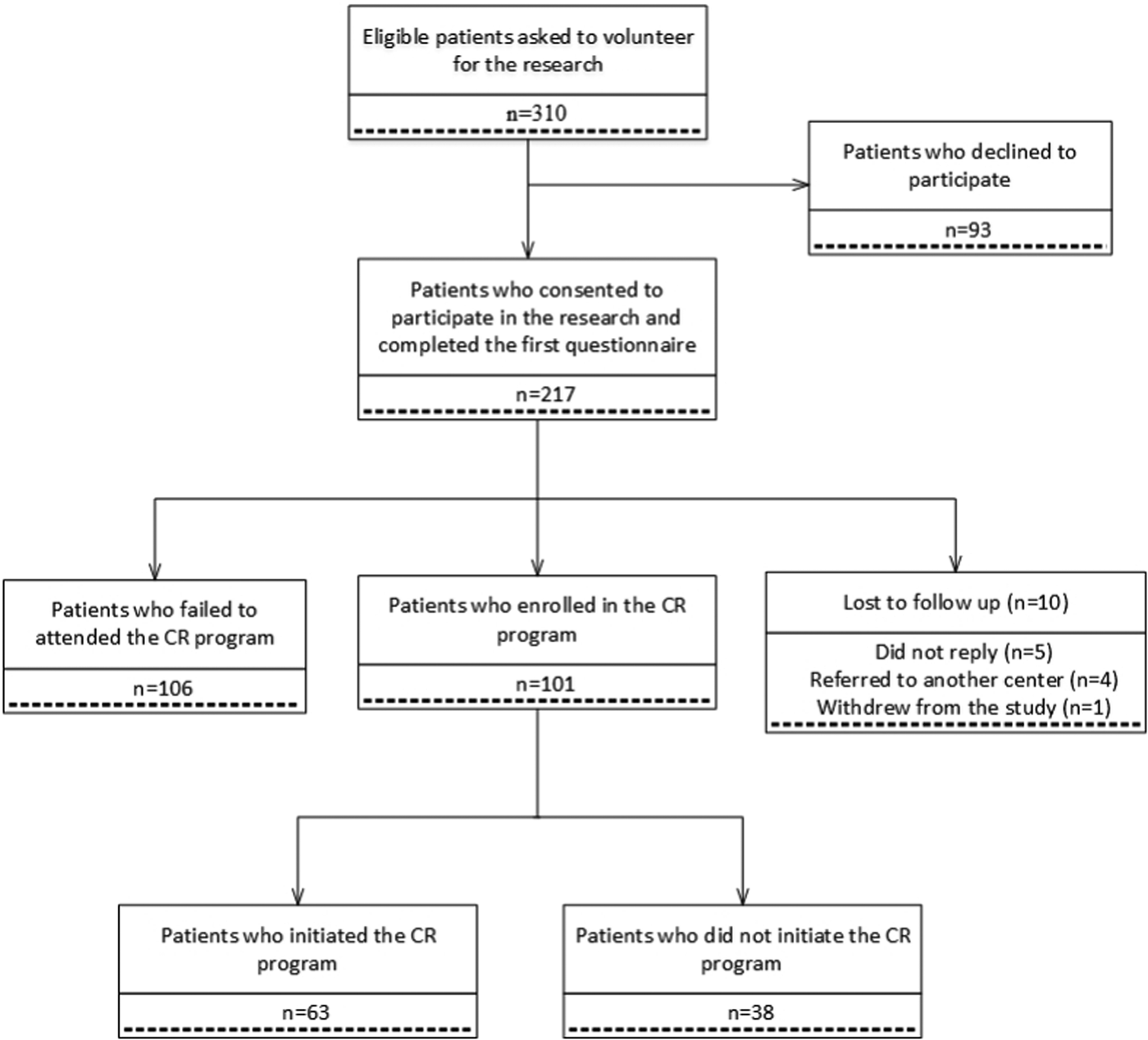
Given that the MTE focuses on a potentially fluctuating, dynamic concept (i.e., engagement), participants could drop out during the process of CR program engagement. This attrition cannot be ignored. Hence, the participants eventually included in this study were those patients who provided informed consent, completed the first and second questionnaires, and also enrolled in the CR program (Figure 1). This sample size met the minimum of 100 participants considered adequate for structural equation modelling (SEM), based on the standard sample size rule (Ding, Velicer, & Harlow, Reference Ding, Velicer and Harlow1995). Also, the minimum required sample size for the model structure was calculated using statistic calculators (Soper, Reference Soper2018). This calculator computed the required sample size by giving the number of observed and latent variables in the MTE, the anticipated effect size, the desired probability and statistical power levels. A minimum sample size of 85 would have power of 0.8 to detect an effect of 0.4 with an alpha level of 0.05 for the entire MTE before performing confirmatory factor analysis for all latent constructs. The required sample size for this study was also calculated after performing confirmatory factor analysis for all latent constructs. A sample size of 89 for the entire MTE would have power of 0.8 to detect an effect of 0.3 with an alpha level of 0.05.
Flow diagram of study participant.

The National Ethics Application Form (NEAF) was approved by the Gold Coast Health Service District Human Research Ethics Committee (HREC) in April 2017, before study commencement (Reference: HREC/16/QGC/329).
Study Measures
Questionnaire 1 addressed the first stage of the MTE, Intention to Engage, and the second questionnaire covered second and third stages of the MTE (CR Initiation, and Sustained Engagement in CR). One part of the second questionnaire was completed by a clinician in the cardiac rehabilitation centre. The measures for both questionnaires were validated in the current study.
Stage 1 Questionnaire
Measures
The survey comprised 65 items, 56 using a five-point Likert scale, and 9 using a semantic differential scale. A pilot study was conducted on patients in the hospital and colleagues in academia to identify and amend vague questions before collecting data. The scales are detailed below.
Demographic and medical variables
The demographic questions, comprising nine items, assessed the participant's age, gender, marital status, religion, ethnicity, work status, highest level of education, annual combined household income, and medical diagnosis.
Dependent Variable Stage 1: Intention to Engage
Intention refers to personal goals, imposed by self or others (Fishbein & Ajzen, Reference Fishbein and Ajzen1975). The Short Version of Recovery Intention Questionnaire (six items) was adapted to a rehabilitation setting through a slight change of question wording; the original scale was validated on 380 Australian employees (Blasche & Marktl, Reference Blasche and Marktl2011). The internal consistency of the scale using Cronbach's alpha was found to be good (0.87).
Predictor Variables Stage 1: Intention to Engage
Perceived Need for Rehabilitation
Two subgroup variables, awareness of deficits and perceived general benefits of rehabilitation, were used to measure Perceived Need for Rehabilitation. Awareness of deficits was measured using a subscale of the Motivation for Traumatic Brain Injury Rehabilitation Questionnaire (MOT-Q): Lack of Denial (eight items; Chervinsky, Ommaya, Spector, Schwab, & Salazar, Reference Chervinsky, Ommaya, deJonge, Spector, Schwab and Salazar1998). Perceived general benefits of rehabilitation were measured using two subscales from the MOT-Q: (a) Interest in Rehabilitation (seven items) and (b) Lack of Anger (five items). Answers to each item of the scales ranged from strongly disagree to strongly agree. The scales were validated on 122 inpatients and 92 outpatients in the brain injury rehabilitation program by Boosman, van Heugten, Winkens, Smeets, and Visser-Meily (Reference Boosman, van Heugten, Winkens, Smeets and Visser-Meily2016). Internal consistency of the subscales Interest in Rehabilitation and Lack of Denial was acceptable in the inpatient group (α = 0.66, α = 0.63 respectively) and good in the outpatient group (α = 0.83, α = 0.84 respectively). Regarding Lack of Anger, internal consistency was good in the inpatient group (α = 0.80) and acceptable in the outpatient group (α = 0.68; Boosman et al., Reference Boosman, van Heugten, Winkens, Smeets and Visser-Meily2016).
Outcome Expectancies
These refer to beliefs about the positive and negative outcomes of alternative behaviours. Outcome expectancies were measured by two subgroup variables: (a) Perceived Success and (b) Value of Outcomes. A subscale of Rehabilitation Representations Scale, Treatment Outcome Beliefs (Bains, Powell, & Lorenc, Reference Bains, Powell and Lorenc2007), was used to assess Perceived Success (six items), and the Outcome Expectancies Questionnaire (Sniehotta et al., Reference Sniehotta, Scholz and Schwarzer2005) was used to measure the Value of Outcomes (five items). The Rehabilitation Representations Scale had been validated on a population of 40 acquired brain injury rehabilitation patients (Bains et al., Reference Bains, Powell and Lorenc2007). A sample item was ‘Rehabilitation will help me learn new ways of doing things’. The internal consistency of the original scale using Cronbach's alpha was found to be good (0.70; Bains et al., Reference Bains, Powell and Lorenc2007). Also, the Outcome Expectancies Questionnaire had been validated on 307 CR patients (Sniehotta et al., Reference Sniehotta, Scholz and Schwarzer2005). A sample item was ‘Rehabilitation will have a positive impact on my health’.
Perceived Self-Efficacy
Two subgroup variables were used to measure Perceived Self-Efficacy: (a) Awareness of Capabilities and (b) Perceived Demands. Six items of the Control Cognition subscale from the Rehabilitation Representations Scale (RRS) were used to measure Awareness of Capabilities (Bains et al., Reference Bains, Powell and Lorenc2007). A sample item was ‘I have the confidence that I can cope with doing rehabilitation’. The internal consistency for this scale was found to be good (0.83; Bains et al., Reference Bains, Powell and Lorenc2007). Seven items from the Perceived Barriers subscale of the RRS were used to measure the construct Perceived Demands (Bains et al., Reference Bains, Powell and Lorenc2007). The internal consistency for this subscale was found to be good (0.89). A sample item was ‘I have more important things to get on with than doing rehabilitation’ (Bains et al., Reference Bains, Powell and Lorenc2007). Subjects responded on a Likert-type scale ranging from strongly disagree to strongly agree. Both subscales of the RRS, Control Cognition and Perceived Barriers, were validated on a population of 40 acquired brain injury rehabilitation patients (Bains et al., Reference Bains, Powell and Lorenc2007).
Willingness to Consider the Treatment
Willingness to Consider the Treatment has been suggested as a mediating variable in the MTE (Lequerica & Kortte, Reference Lequerica and Kortte2010). The construct Willingness to Follow Treatment Recommendations (six items; Chervinsky et al., Reference Chervinsky, Ommaya, deJonge, Spector, Schwab and Salazar1998) was used, which had been validated on 122 inpatients and 92 outpatients in the brain injury rehabilitation program (Boosman et al., Reference Boosman, van Heugten, Winkens, Smeets and Visser-Meily2016). Items were rated on a 5-point scale ranging from strongly disagree to strongly agree. Internal consistency of the subscale was acceptable for both the inpatient and outpatient groups (α = 0.70, α = 0.73 respectively). A sample item was ‘Doctors know what I need and I'll do what they say’.
Stages 2 and 3 Questionnaire
Measures
The second questionnaire covered the Initiation of Rehabilitation (15 items) and Sustained Engagement stages (29 items). Several measures have been considered to cover these stages.
Dependent Variable Stage 2: CR Initiation
CR Initiation required both (1) the initiation of a formal CR program by a cardiac disease patient, and (2) attendance at a minimum of four out of the first six exercise sessions (Shanks, Moore, & Zeller, Reference Shanks, Moore and Zeller2007) based on a nurse report of patient attendance in at least four of the first six CR sessions. Otherwise, the patient was categorised as not initiating CR.
Predictor Variables Stage 2: CR Initiation
Preparation for Rehabilitation was measured by two constructs: Goal Setting and Treatment Planning.
Goal Setting
One questionnaire measured goal engagement and goal satisfaction, which accounted for a number of factors: how well goals matched patient priorities for rehabilitation; the extent to which patients agreed with the goals; the extent of choices available regarding goals; and the extent to which patients felt involved with/in charge of the goal-setting process. This questionnaire consisted of one item with a Likert-type scale ranging from excellent to none (Turner-Strokes et al., Reference Turner-Stokes, Vanderstay, Stevermuer, Simmonds, Khan and Eagar2015).
Treatment Planning
Treatment planning was measured using the Client-Centeredness of Goal Setting construct (C-COGS; Doig, Prescott, Fleming, Cornwell, & Kuipers, Reference Doig, Prescott, Fleming, Cornwell and Kuipers2015). The C-COGS scale has three subscales evaluating goal alignment, goal planning participation, and client-centeredness of goals, and can be used to evaluate goal planning from the patient's perspective. This scale consists of 13 items using a Likert-type scale from strongly disagree to strongly agree. The reliability of this scale was found to be fair, with an average 67% agreement across all test items (Doig et al., Reference Doig, Prescott, Fleming, Cornwell and Kuipers2015).
Dependent Variable Stage 3: Sustained Engagement in CR
Patient Engagement in Cardiac Rehabilitation
The psychometric properties of the Hopkins Rehabilitation Engagement Rating Scale (HRERS) were used to quantify information from a rehabilitation nurse regarding patients’ levels of engagement in therapy at various stages of their rehabilitation (Kortte et al., Reference Kortte, Falk, Castillo, Johnson-Greene and Wegener2007). The HRERS contains five items with a Likert-type scale from never to always, and was designed to be completed by a clinician to quantify patient engagement in rehabilitation settings. The HRERS was validated on a population of 206 subjects (with spinal cord injury, ischemic or haemorrhagic stroke, amputation, or hip or knee replacement), and found to have good internal consistency (0.91) and interrater reliability (intraclass correlation coefficient, 0.73), hence useful as a unidimensional construct (Kortte et al., Reference Kortte, Falk, Castillo, Johnson-Greene and Wegener2007). A sample item was ‘The patient acknowledged a need for rehabilitation services and the benefit of therapy exercises or rehabilitation activities’.
Predictor Variables Stage 3: Sustained Engagement in CR
Analysis of Experience
Analysis of experience was measured by two variables: perceived quality of service and perceived achievements.
Perceived Quality of Service
The outpatients’ perceptions of the quality of services were measured using McMurray et al.’s (Reference McMurray, McNeil, Lafortune, Black, Prorok and Stolee2016) questionnaire, with 10 items measured via a Likert-type scale from never to always. The reliability of the questionnaire has been found to be good, with inter-item Pearson correlations ranging from 0.13 to 0.74, and an internal consistency of 0.88 (McMurry et al., Reference McMurray, McNeil, Lafortune, Black, Prorok and Stolee2016). A sample item was ‘I was always treated with courtesy in rehabilitation’.
Perceived Achievements
The Canadian Model of Occupational Performance (COPM) questionnaire is based on a client-centred approach to establishing treatment goals and assessing changes in perceived performance and satisfaction with occupational performance over time (Law et al., Reference Law, Baptiste, Carswell, McColl, Polatajko and Pollock2014). The COPM questionnaire consisted of 13 items, has demonstrated acceptable test–retest and interrater reliability (Cup, Scholte op Reimer, Thijssen, & van Kuyk-Minis, Reference Cup, Scholte op Reimer, Thijssen and van Kuyk-Minis2003), and has also demonstrated acceptable content, criterion, and construct validity (Cup et al., Reference Cup, Scholte op Reimer, Thijssen and van Kuyk-Minis2003). A sample item was ‘Did you get an opportunity to describe/explain your problems during the rehabilitation sessions?’
Maintenance
Maintaining attendance was defined as attendance at 90% of scheduled CR sessions, measured by a nurse report. Otherwise, the patient was categorised as not maintaining CR.
Statistical Analysis
SPSS (version 21.0 for Windows; IBM SPSS Statistics, Armonk, NY, USA) was used for performing descriptive statistics and preliminary analyses. Also, SPSS Amos (version 12; Arbuckle, Reference Arbuckle2012) was used to fit structural equation models (SEM), to examine (a) the measurement model that defines latent constructs in terms of measured indicators, and also (b) the structural model specified by the proposed relationships among constructs.
Prior to analysis, multivariate outliers were identified via the Mahalanobis distance score (JR Hair, Black, Babin, Anderson, & Tatham, Reference Hair, Black, Babin, Anderson and Tatham2006) and removed from the dataset. The use of SEM may also be affected (in terms of goodness-of-fit) by multicollinearity, where the measured indicators are so highly correlated that some are redundant (Baumgartner & Homburg, Reference Baumgartner and Homburg1996). Therefore, screening bivariate correlations of all indicators helped check for multicollinearity, with values exceeding r = 0.85 indicative (Kline, Reference Kline2005). Furthermore, multicollinearity was also tested by using a variance inflation factor (VIF; J Hair Jr., Black, Babin, & Anderson, Reference Hair, Black, Babin and Anderson2010), with values exceeding 2.5 associated with multicollinearity (J Hair Jr. et al., Reference Hair, Black, Babin and Anderson2010).
The next step before fitting the SEM was to test the measurement model by conducting a confirmatory factor analysis (CFA). The resulting coefficients quantify the contribution of each indicator to each latent construct (like components of a score) and therefore help assess the reliability and validity of each construct (Kline, Reference Kline2005). Convergent validity estimates to what degree the indicators within each construct should be related to each other in order to arrive at the same results if some are missing (J Hair Jr. et al., Reference Hair, Black, Babin and Anderson2010). Average variance extracted (AVE) for each construct should exceed the recommended threshold of 0.50, to indicate that convergent validity is adequate (José Liébana-Cabanillas, Sánchez-Fernández, & Muñoz-Leiva, Reference José Liébana-Cabanillas, Sánchez-Fernández and Muñoz-Leiva2014). Discriminant validity ensures that a construct and its indicators are unique compared to other constructs and their indicators. If the AVE of each construct is more than its corresponding squared correlations or maximum shared variance (MSV), then its discriminant validity is deemed acceptable (George & Mallery, Reference George and Mallery2003). Furthermore, internal consistency reliability of constructs was checked using Cronbach's alpha, with values below 0.5 reflecting unacceptable reliability (George & Mallery, Reference George and Mallery2003). The Stats Tools Package (Gaskin, Reference Gaskin2016) was used to measure convergent and discriminant validity.
Then, after the measurement model was validated, SEM was employed to analyse the relationships proposed within the MTE. SEM permitted testing of the direct effect of the proposed variables at each stage of the MTE and the mediating effect of Willingness to Consider the Treatment on Intention to Engage in CR. A bootstrap procedure based on 2,000 bootstrap samples and a 95% bias-corrected two-tailed confidence interval was used to estimate the standard error in the test for the mediator. In this way, SEM enables evaluation of the general compatibility (i.e., the goodness-of-fit) of the model with the data, as well as the estimated strength of relationships among constructs. Goodness-of-fit of the model was judged using six indices, which should be considered together to evaluate a model. First, chi-squared to degree of freedom is one of goodness-of-fit indices, which was used to assess whether predictions from the proposed model were aligned with the data, with a recommended threshold of 3 (Norušis, Reference Norušis2012). We view these values with caution, since a chi-squared test, like all null hypothesis tests, has a high tendency to indicate significance with increasing sample size (J Hair Jr. et al., Reference Hair, Black, Babin and Anderson2010; Wasserstein & Lazar, Reference Wasserstein and Lazar2016). Second, five other indices of model fit were used: the parsimony comparative fit index (PCFI; recommended >0.5; (Safarnia, Akbari, & Abbasi, Reference Safarnia, Akbari and Abbasi2011), the comparative fit index (CFI) (recommended ≥0.90; J Hair Jr. et al., Reference Hair, Black, Babin and Anderson2010), the incremental fit index (IFI; recommended ≥0.90; Arbuckle & Wothke, Reference Arbuckle and Wothke1999), Tucker-Lewis index (TLI; recommended ≥0.90; Arbuckle & Wothke, Reference Arbuckle and Wothke1999), and root mean square error of approximation (RMSEA; recommended ≤0.08; Browne & Cudeck, Reference Browne and Cudeck1993) with standard thresholds. In addition, indicators with low loadings and modification indices (MI) were considered to identify any areas of misfit in the proposed model, where the fit indices revealed that the proposed model did not provide a satisfactory fit to the collected data. The parameter with the largest MI value was freed only if it made substantive sense; if it was not meaningful, then the parameter with the next largest MI value was considered (J Hair Jr. et al., Reference Hair, Black, Babin and Anderson2010). In this study, we also evaluated the model after omitting variables found non-significant, following best practice (Greenland et al., Reference Greenland, Senn, Rothman, Carlin, Poole, Goodman and Altman2016).
Data Analysis Results
The findings are presented in four steps: (1) participants’ demographic and clinical characteristics, (2) preliminary analyses, (3) the measurement model, and (4) the SEM.
Participants’ Demographic and Medical Characteristics
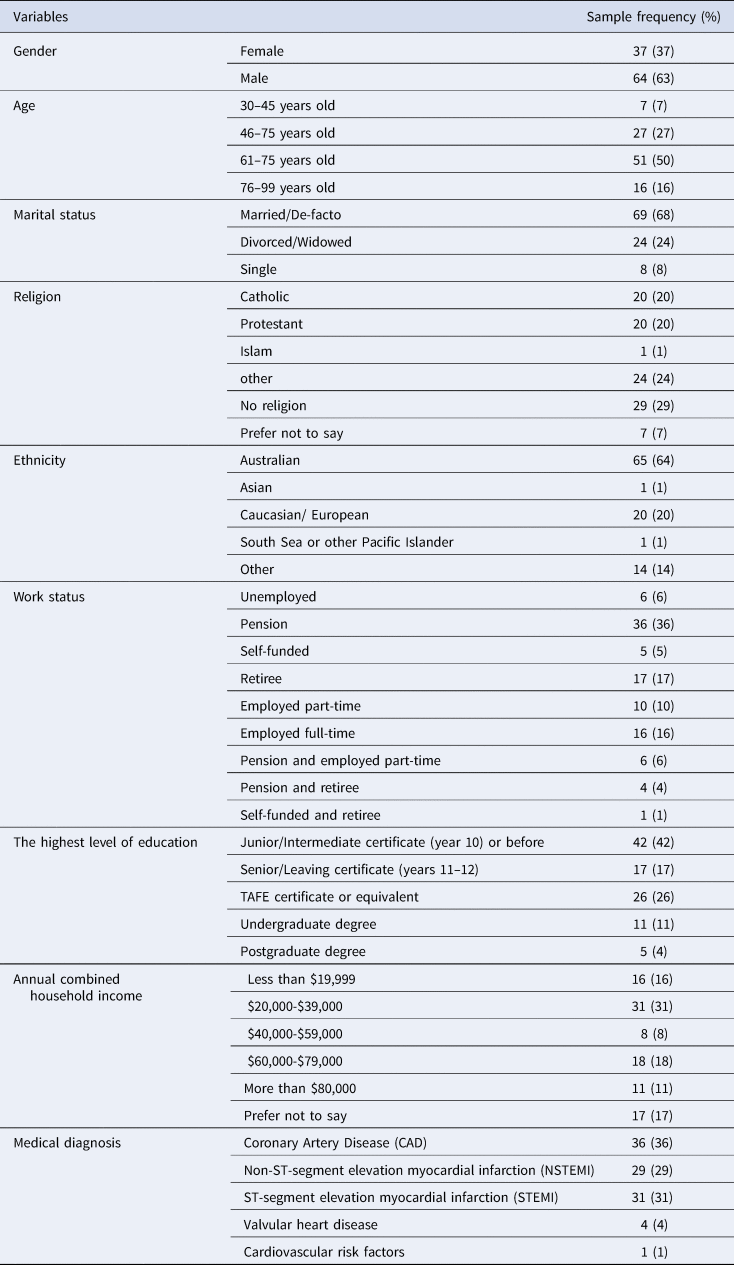
The flow of participants throughout the study is presented in Figure 1. The participants for this study were those patients who provided informed consent, completed the first and second questionnaires, and also enrolled in the CR program. Three hundred and ten patients were eligible to participate in this study; however, 217 patients completed the consent form. Of the 217 participants, 10 were lost to follow-up, and 106 failed to attend the CR program. As such, a sample of 101 participants out of 217 consenting patients remained for inclusion in this study on all three CR stages. Of these 101 patients, 63 participants initiated the rehabilitation program, while 38 did not. The participants’ demographic and medical profiles are summarised in Table 1. There was an approximately two-thirds majority of males: 63% male and 37% female. The average age of the patients was 65 (SD = 12, range 36–91). Approximately 42% reported receiving a level of education of junior or intermediate certificate (Year 10) or less; 17% completed a senior or leaving certificate (Years 11–12); 26% completed a TAFE certificate or equivalent; 11% completed an undergraduate degree; and 4% attained postgraduate degrees. Furthermore, regarding diagnosis of disease, nearly 36% of patients were diagnosed with coronary artery disease; 29% with non-ST-segment elevation myocardial infarction (NSTEMI); 31% with ST-segment elevation myocardial infarction (STEMI); 4% with valvular heart disease; and 1% with cardiovascular risk factors.
Patients’ demographic and medical profile

Preliminary Analyses
All received questionnaires containing unanswered questions were posted back to patients and then returned to the researcher fully completed, so ultimately there was no missing data. Multicollinearity was rejected since all VIFs ranging between 1.23 and 3.02 were below the decision threshold of 10. Also, all pairwise correlations ranged between 0.00 and 0.71 among Outcome Expectancies, Perceived Self-Efficacy, Perceived Need, Willingness to Consider the Treatment, Intention to Engage in the CR programs, Preparation, CR Initiation, Engagement, Maintenance, and Analysis of Experience. Lastly, the Mahalanobis distance scores evidenced there were no obvious multivariate outliers among the 101 patients.
The Measurement Model
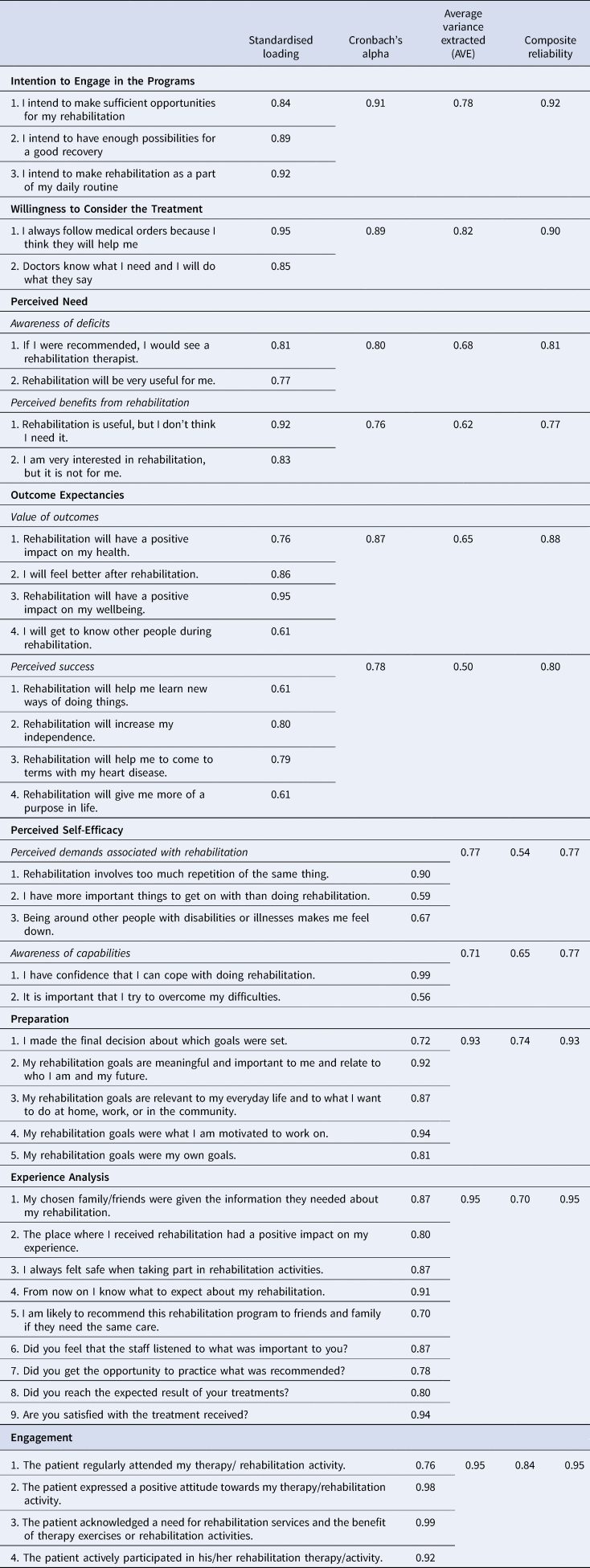
The contributions of subscales and items for each MTE construct, estimated during the confirmatory factor analysis, are shown in Table 2. Cronbach's alphas for each construct varied from 0.71 to 0.95, showing that their internal consistency fell within an acceptable range. Perceived Need items were similarly weighted (0.77–0.92) and in strong agreement (Cronbach's alpha: Awareness of Deficits = 0.80, and Perceived Benefits from Rehabilitation = 0.76). Factor loadings of items in Outcome Expectancies ranged from 0.61–0.95 and items were in strong agreement (Cronbach's alpha: Perceived Success = 0.78 and Value of Outcomes = 0.87). Closer inspection showed that items 1 and 4 from Perceived Success, and item 4 from Value of Outcomes differed slightly from other subgroup items. Factor loadings of Perceived Self-Efficacy items ranged from 0.56–0.99. These constructs were sufficiently internally consistent (Cronbach's alpha: Awareness of Capabilities = 0.71 and Perceived Demands Associated with Rehabilitation = 0.77). Also, Cronbach's alpha for Intention to Engage in CR and Willingness to Consider the Treatment indicated strong agreement and had high loadings (Intention to Engage in CR = 0.91 and Willingness to Consider the Treatment = 0.89).
Instrument Reliability and Convergent Validity (N = 101)

The composite reliability indices for all constructs exceeded the 0.7 threshold, indicating high reliability of each construct. Furthermore, the average variance extracted (AVE) indices for all subgroups always fell above 0.5, representing an adequately high convergent validity for all subgroups.
Six goodness-of-fit indices were evaluated to determine how well the measurement model fitted with the collected data. At the first stage, when all scales with their indicators were included, the model fit the data poorly. After removing indicators with low loadings (3 items from the Intention questionnaire, 6 items from Willingness to Consider the Treatment, 16 items from the Perceived Need questionnaire, 3 items from Outcome Expectancies, 8 items from Perceived Self-Efficacy, 8 items from Treatment Planning, 15 items from Experience Analysis, and 1 item from Engagement) and modifying the model by modification indices, the model fit was acceptable (Table 3.).
Measures of the Model Fit (n = 101)

Note: PCFI = parsimony comparative fit index, CFI = comparative fit index, IFI = incremental fit index, TLI = Tucker-Lewis index, RMSEA = root mean square error of approximation.
The Structural Model
The SEM was modified based on the modification index provided by AMOS 22. Correlations of structured residuals were specified for highly related pairs of variables in order to quantify the degree of correlation and improve model fit. Table 3 demonstrates that all goodness-of-fit indices fell within the recommended range, after this modification.
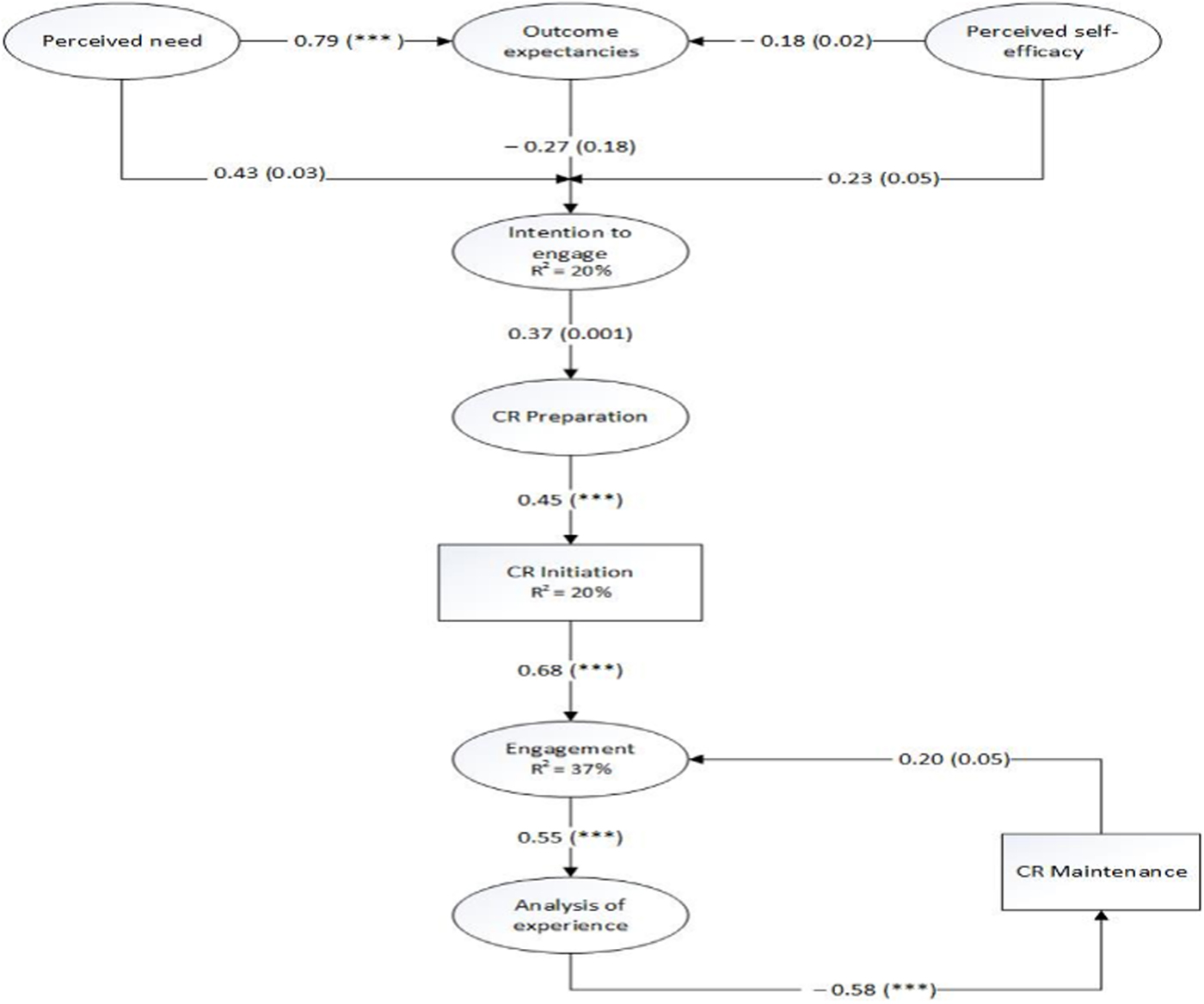
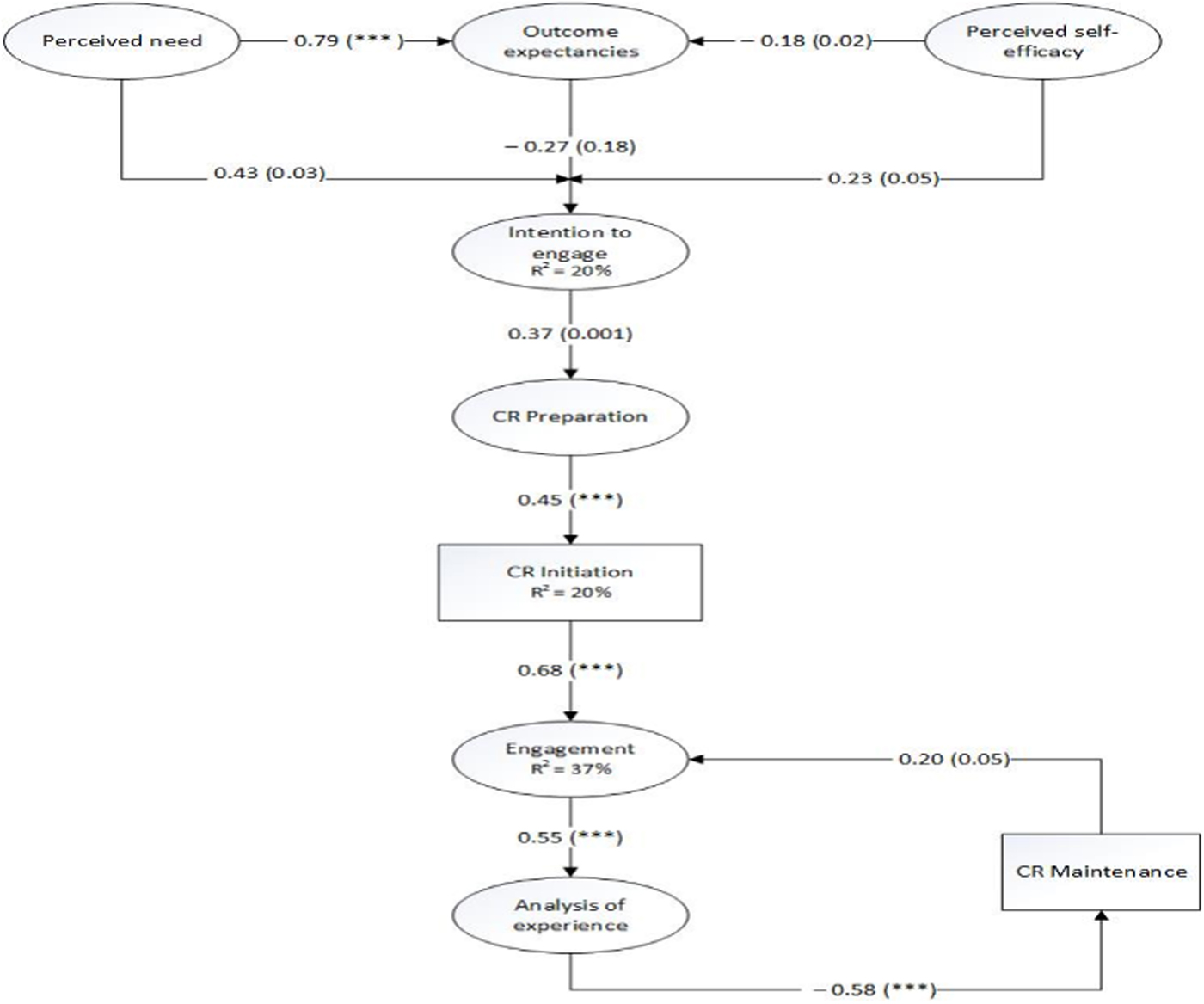
The SEM confirmed that the collected data were consistent with the majority of the proposed relationships within the MTE. The exceptions were the relationship between Outcome Expectancies and Intention to Engage in the CR program (standardised effect β = −0.27; unstandardised effect B = −0.31; standard error of standardised effect SE = 0.23; p = 0.18). Although a negative relationship was estimated, the variability was too large to reject a null hypothesis that the effect was in fact zero. A negative relationship was found between Perceived Self-Efficacy and Outcome Expectancies (β = −0.18; B = −0.16; SE = 0.07; p = 0.02). Results also showed significant though typically positive relationships of moderate size, between: Perceived Need and Intention to Engage in CR (β = 0.43; B = 0.63; SE = 0.29; p = 0.03); Perceived Self-Efficacy and Intention to Engage in CR (β = 0.23; B = 0.24; SE = 0.13; p = 0.05); Intention and Preparation (β = 0.37; B = 0.28; SE = 0.09; p = 0.001), CR Initiation and Engagement (β = 0.68; B = 0.20; SE = 0.03; p ≤ 0.001); Engagement and Analysis of Experience (β = 0.38; B = 0.38; SE = 0.08; p ≤ 0.001); Analysis of Experience and Maintenance (β = −0.58; B = −0.30; SE = 0.05; p ≤ 0.001); and Maintenance and Engagement (β = 0.20; B = 0.56; SE = 0.29; p = 0.05). Figure 2 illustrates the final results of the SEM path analysis. A very large positive relationship was found between Preparation and Initiation (β = 0.45; B = 2.70; SE = 0.70; p ≤ 0.001).
SEM path analysis with standardised regression coefficients.
Analysis of Mediation Effects
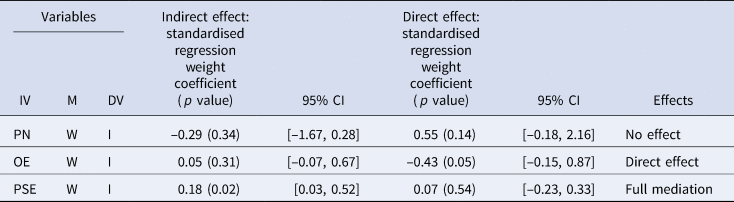
It was proposed that Willingness to Consider the Treatment would act as a mediator between Outcome Expectancies, Perceived Self-Efficacy, Perceived Need, and Intention to Engage in CR (Lequerica & Kortte, Reference Lequerica and Kortte2010). As presented in Table 4, Willingness to Consider the Treatment fully mediated the relationship between Perceived Self-Efficacy and Intention to Engage in CR, with small positive effects (βIndirect = 0.18, CI [0.03, 0.52], p = 0.02;). Thus, although perceived need and perceived self-efficacy did not significantly directly predict intention (βdirect = 0.07, CI [−0.23, 0.33], p = 0.54), the impact of perceived self-efficacy on intention to engage in CR was only through Willingness to Consider the Treatment. However, Outcome Expectancies directly affected Intention to Engage in CR (βdirect = 0.43, CI [−0.15, 0.87], p = 0.05), with moderate positive effect.
Mediating Effect Evaluated Using Bootstrapping (N = 101)

Note: IV = independent variable, M = mediator, DV = dependent variable, CI = confidence interval, I = intention to engage in CR, W = willingness to consider the treatment, PN = perceived need, OE = outcome expectancies, PSE = perceived self-efficacy.
Discussion
The concept of engagement encompasses multiple elements, including the patient's attitudes toward the therapy, the level of understanding or acknowledgement of a need for treatment, the need for verbal or physical prompts to participate, the level of active participation in the therapy activities, and the level of attendance across the rehabilitation program. Researchers had not proposed this level of complexity until Lequerica and Kortte (Reference Lequerica and Kortte2010) proposed the theoretical model of therapeutic engagement (MTE), and this present study is the first to examine these relationships at this level of complexity, in a holistic manner. SEM provides a mechanism for evaluating the MTE. Visually the nodes and pathways in the SEM provide a smooth transition from the nodes and links in Lequerica and Kortte's (Reference Lequerica and Kortte2010) causal model, and statistically the signs of the effect sizes in the SEM explicitly test the signs on links in the original causal model.
The MTE conceptualises engagement as a complicated multistage process influenced by different factors at different points in time, which we explicitly tested using surveys targeted to each of the three stages of patient engagement. The MTE also incorporates multiple dimensions of engagement, including a process and a patient state (Bright, Kayes, Worrall, & McPherson, Reference Bright, Kayes, Worrall and McPherson2015). This SEM transparently evaluates their role by defining latent constructs to represent each dimension. At each stage of the MTE, the measurement error analysis (conducted via a factor analysis in SEM) evaluated whether the set of predictors obtained from patient surveys adequately represent each dimension. The MTE, proposed in concept by Lequerica and Kortte (Reference Lequerica and Kortte2010) and quantified via our SEM, enables understanding of the dynamic interplay between variables at various stages of the MTE. In addition to providing empirical evidence for the MTE, our research addresses two other significant gaps in the literature: the MTE had not previously been tested in any actual rehabilitation settings; research had been limited to subsets of its stages, so that the MTE required examination as a whole to improve understanding of causal pathways.
By using empirical data to understand patient engagement, this study explored, measured and validated the components of the MTE and then examined the way in which the components of this conceptual model interact with each other. The findings showed that the proposed relationships between the variables are mainly consistent with the overall model proposed by Lequerica and Kortte (Reference Lequerica and Kortte2010) and the findings from previous research conducted in the CR context. One exception was the relationship between Outcome Expectancies and Intention to Engage in CR, where the estimated effect size was consistent with the original MTE, but variability was too large to enable clear detection of a ‘signal’. This gives clear direction for further investigation, such as a larger sample that either focuses solely on examining this relationship or considers this stage of the MTE, or the MTE as a whole. It is, however, possible that this exception could arise because patients are not being motivated by Outcome Expectancies, at least not at this stage. The other exception was the negative relationship between Perceived Self-Efficacy and Outcome Expectancies, in contrast to the expected positive relationship (Williams, Reference Williams2010).
In the MTE, like previous research (Blanchard et al., Reference Blanchard, Reid, Morrin, McDonnell, McGannon, Rhodes and Edwards2009; Woodgate, Brawley, & Weston, Reference Woodgate, Brawley and Weston2005), self-efficacy is not only examined by a patient capability to engage in the program (task self-efficacy) but also examined by a patient capability to engage in the program in the context of demands and challenges (barrier self-efficacy). This negative relationship found in the current study shows that the higher level of perceived demands associated with rehabilitation, as a subgroup of Perceived Self-Efficacy, may cause a negative impact on patient's Outcome Expectancies. However, this negative relationship arose because of the sample. In the current study, the sample was patients who started the program. Therefore, patients perceived that they are capable of carrying out the CR program, but perceived demands related to the rehabilitation were dominant at this stage.
The findings also confirmed that Perceived Self-Efficacy was mediated by Willingness to Consider the Treatment, that is, those with higher levels of Perceived Self-Efficacy were more likely to express Willingness to Consider the Treatment, which in turn predicted Intention to Engage. Despite the importance of willingness in changing risky health behaviour (Kasila, Hallman, Kautiainen, Vanhala, & Kettunen, Reference Kasila, Hallman, Kautiainen, Vanhala and Kettunen2018; Wray, Funderburk, & Maisto, Reference Wray, Funderburk and Maisto2017), to our knowledge, no empirical research has explored the role of Willingness to Consider the Treatment of patient intention to engage in CR. Perceived Need was the most influential predictor of Intention to Engage in the program in the present study. When considered together — Perceived Need, Outcome Expectancies, Perceived Self-Efficacy, and Willingness to Consider the Treatment — these variables formed the basis for Intention to Engage in CR. Thus, this model provides the first holistic and empirical perspective on how all of these variables interact, building on other studies that investigated only some of these links empirically (de Melo Ghisi et al., Reference de Melo Ghisi, Grace, Thomas and Oh2015; Dohnke et al., Reference Dohnke, Nowossadeck and Müller-Fahrnow2010; Sullivan et al., Reference Sullivan, White, Young and Scott2009).
In the MTE, Intention to Engage is followed by Preparation to Engage in CR, which has been confirmed in different populations (Barg et al., Reference Barg, Latimer, Pomery, Rivers, Rench, Prapavessis and Salovey2012; Hattar, Pal, & Hagger, Reference Hattar, Pal and Hagger2016; Kersten, McPherson, Kayes, Theadom, & McCambridge, Reference Kersten, McPherson, Kayes, Theadom and McCambridge2015). As such, patient involvement in the preparation process had a positive impact on the CR Initiation stage, confirming the findings of Kjær, Gyrd-Hansen, and Willaing (Reference Kjær, Gyrd-Hansen and Willaing2006). CR Initiation was also proposed to influence Patient Engagement in CR positively. The data analysis in the current study revealed that there was a positive relationship between Initiation and Patient Engagement in CR. The MTE process then follows a feedback loop where patients assess the advantages and disadvantages of engagement and make decisions based on their experience, whether to continue the activity or disengage. This feedback loop had not previously been tested (Jahandideh et al., Reference Jahandideh, Kendall, Low-Choy, Donald and Jayasinghe2018). Patient expectations of the rehabilitation programs may be met, and this was found to negatively affect CR maintenance. Furthermore, reassessment of previous attitudes, beliefs, and expectations may support a patient's decision whether to continue to be involved in the program or not. We found that this reassessment of the patient's experience is a critical regulatory step in the process, in line with previous findings (Banner et al., Reference Banner, Lear, Kandola, Bates, Horvat, Ignaszewski and Singer2017; Hansen et al., Reference Hansen, Berg, Sibilitz, Zwisler, Norekvål, Lee and Buus2018). In addition, we found a negative relationship between Analysis of Experience and Maintenance, in line with the findings reported by Gardiner et al. (Reference Gardiner, Nwose, Regan, Park, Bwititi, Crockett and Wang2018). It can be concluded that patients simply decided to continue to attend the program if their needs were not met and also if their experiences were enjoyable and worthwhile (Lequerica & Kortte, Reference Lequerica and Kortte2010). Furthermore, the collected data showed a positive relationship between CR Maintenance and Patient Engagement, which indicated that a higher level of Maintenance was associated with a higher level of Engagement in CR. Also, a higher level of engagement may lead to a higher level of sense of accomplishment in patients (Araya-Ramirez et al., Reference Araya-Ramírez, Briggs, Bishop, Miller, Moncada-Jiménez and Grandjean2010). These results showed that the therapist and patient might need to adjust goals and the treatment plans to take full advantage of any preferred patient outcomes at this stage.
Research on the process of patient engagement in CR is still in its infancy, with several papers investigating only one or two pathways in this model. For instance, researchers have focused on the way in which a patient's knowledge about rehabilitation and goals has facilitated participation (Carroll, Rankin, & Cooper, Reference Carroll, Rankin and Cooper2007; Holliday, Ballinger, & Playford, Reference Holliday, Ballinger and Playford2007; Ozer, Reference Ozer1999). Furthermore, patient motivation has received a great deal of attention as an important construct that can partly explain patient participation in cardiac rehabilitation (Lee & Kim, Reference Lee and Kim2003; Rouleau et al., Reference Rouleau, King-Shier, Tomfohr-Madsen, Bacon, Aggarwal, Arena and Campbell2018; Walker, Valentiner, & Langberg, Reference Walker, Valentiner and Langberg2018). This study makes an essential contribution by mapping out the relationships between the variables within the three stages of the MTE for the first time in an actual cardiac rehabilitation setting. Through a significant effort to approach 317 potential patients, sufficient patients were enlisted to investigate each stage of the MTE: Intention to Engage; CR Initiation; Sustained Engagement (N = 101 from 317). Thus, this study acquired a minimal sample size (Ding et al., Reference Ding, Velicer and Harlow1995) to investigate the previously untested MTE. These findings revealed the data are consistent with a finding that the MTE is applicable for understanding the process of patient engagement in CR programs, thus narrowing the gap that currently exists in the literature.
In addition, healthcare providers may be able to use these findings in their supervisory process of patient engagement in outpatient CR programs in order to alter variables that represent points of leverage, to facilitate the cardiac patient's recovery journey. Due to its large loading, an obvious lever is Preparation, which if increased, could greatly improve the chance of whether a patient chooses to Initiate. Therapists could choose to motivate patients by involving them in the goal-setting stage to design an individualised treatment plan based on patients’ preference. Another lever is Perceived Need, including patient-perceived treatment benefits and awareness of deficits, which if increased could greatly improve patient intention to engage in CR. As stated above, it is important that therapists note that among the negative effects are Demands, which could deter patient's Perceived Self-Efficacy and Outcome Expectancies and eventually could act as a marker to decrease patient Intention to Engage in CR.
The findings of the current prospective study are limited as data has been collected from only one cardiac rehabilitation centre. Accordingly, the generalisability of these findings might be limited (Colombo, Bucher, & Sprenger, Reference Colombo, Bucher and Sprenger2017). In addition, it is well established that small studies may lack power, making it difficult to refute the proposed relationships (Wasserstein & Lazar, Reference Wasserstein and Lazar2016; Greenland et al., Reference Greenland, Senn, Rothman, Carlin, Poole, Goodman and Altman2016). Also, there are many variables unaccounted for in the background to the process of patient engagement, such as facilitators like social support from family and friends, and individual and environmental barriers to participating in the programs. For future studies, we suggest embedding these facilitators and barriers into the MTE, to achieve a better understanding of the process of patient engagement, and to ensure that model misspecification has not distorted the findings thus far (Weston, Gore, Chan, & Catalano, Reference Weston, Gore, Chan and Catalano2008).
Conclusion
Conceptually narrow definitions of engagement have been a limitation for exploring strategies in previous studies, which have led to inadequate knowledge about the process of patient engagement. Our study used the Lequerica and Kortte MTE in the context of rehabilitation to explore how patients became engaged in CR following hospitalisation. Despite being a relatively small study on a single population, this quantitative study provides proof-of-concept, as well as initial evidence related to the MTE, with the first empirical evidence that several factors facilitate or detract from (or mediate) the three stages of therapeutic engagement in CR. Hence, this study contributes to the more rigorous interrogation of the proposed relationships contained in the MTE, including support for future meta-analyses of evidence of effect sizes accumulated over multiple studies. Therefore, given the novelty of the results, replication is warranted before any firm conclusions can be drawn. In addition, this study provides a firm basis for extension to include other factors, such as social support and mental distress factors influencing perceived self-efficacy.
Conflict of interest
None.