Introduction
In couples of childbearing age, reciprocal translocation (RecT) and Robertsonian translocation (RobT) are the two major chromosomal abnormalities responsible for the high occurrence of abortion (Xu et al., Reference Xu, Zhang, Niu, Yang, Yao, Shi, Jin, Song, Chen, Zhang, Guo, Su, Hu, Zhai, Zhang, Dong, Gao, Li and Bo2017). Its incidence is higher in newborns and couples of childbearing age and ranges from 0.1% to 0.2% and 0.4%, respectively (Alfarawati et al., Reference Alfarawati, Fragouli, Colls and Wells2012). According to published studies, the miscarriage rates for RecT and RobT are ∼2–5% (Zhai et al., Reference Zhai, Wang, Li, Wang, Zhu, Kuo, Guan, Li, Song, He, An, Zhi, Lian, Huang, Li, Qiao, Yan and Yan2022). RecT is caused by the translocation of two chromosome segments on both sides of the breakpoint and can occur in all chromosomes. The formation of RobT is related to the centromere region and involves the long-arm connection of two chromosomes that were restricted to chromosomes 13, 14, 15, and 21 (Xu et al., Reference Xu, Zhang, Niu, Yang, Yao, Shi, Jin, Song, Chen, Zhang, Guo, Su, Hu, Zhai, Zhang, Dong, Gao, Li and Bo2017; Zhai et al., Reference Zhai, Wang, Li, Wang, Zhu, Kuo, Guan, Li, Song, He, An, Zhi, Lian, Huang, Li, Qiao, Yan and Yan2022). Previous studies have revealed the occurrence of RecT/RobT during gamete formation (including oocytes or sperm), therefore indicating that the onset of most RecT/RobT was novel.
The intrinsic characteristic of RecT/RobT is the change in chromosome fragments; however, the majority of patients did not exhibit a loss of key genes. Therefore, RecT/RobT carriers do not possess any genetic diseases (Findikli et al., Reference Findikli, Gultomruk, Boynukalin and Ogur2019). Most RecT/RobT carriers were detected using chromosomal karyotype analysis of peripheral blood for recurrent abortion and infertility. However, RecT/RobT carriers can exhibit a higher frequency of chromosomal abnormalities in oocytes and sperm, ultimately resulting in offspring with congenital diseases such as Down’s syndrome and Pato syndrome (Xu et al., Reference Xu, Zhang, Niu, Yang, Yao, Shi, Jin, Song, Chen, Zhang, Guo, Su, Hu, Zhai, Zhang, Dong, Gao, Li and Bo2017). According to the adjacent and 3:1 theory for RobT carriers, they may possess 1/6 normal and 1/6 balanced gametes (Liu et al., Reference Liu, Mao, Xu, Liu, Ma and Zhang2020), and this results in phenotypically normal offspring based on the normal and balanced gametes possessing normal expression of genes from the entire genome (Jin et al., Reference Jin, Ping, Jie, Ying and Yongjian2010). For RecT, to ensure proper alignment of translocated chromosomes and homologous sequences, quadrivalents were formed and generated alternately, an adjacent-1, adjacent-2, 3:1, and 4:0 segregation could be performed (Kushnick, Reference Kushnick1992; Yuan et al., Reference Yuan, Zheng, Ou, Zhao, Li, Luo, Tan, Zhang and Wang2021). Therefore, 1/18 normal and 1/18 balanced gametes were ultimately formed, and the remaining 16/18 unbalanced gametes would theoretically cause recurrent abortion in RecT carrier couples. Sex can also exert different effects on the formation of normal, carrier, and unbalanced gametes (Ko et al., Reference Ko, Cho, Park, Kim, Koong, Song, Kang and Lim2010; Zhang et al., Reference Zhang, Lei, Wu, Sun, Zhou, Zhu, Wu, Fu, Sun, Lu, Sun and Zhang2018). Preimplantation genetic testing (PGT) for aneuploidies (PGT-A) and structural rearrangement (PGT-SR) can select embryos by performing a genetic test to identify and abandon those with chromosomal abnormalities and transfer the normal embryos to the uterus of patients with IVF in a suitable situation, and this can improve the outcomes of IVF (Xu et al., Reference Xu, Zhang, Niu, Yang, Yao, Shi, Jin, Song, Chen, Zhang, Guo, Su, Hu, Zhai, Zhang, Dong, Gao, Li and Bo2017; Zhang et al., Reference Zhang, Lei, Wu, Sun, Zhou, Zhu, Wu, Fu, Sun, Lu, Sun and Zhang2018; Findikli et al., Reference Findikli, Gultomruk, Boynukalin and Ogur2019; Shi et al., Reference Shi, Jiang, Zhou, Ye, Qin, Huang, Chen and Xu2021).
However, the theoretical rate of normal/balanced gametes for RecT/RobT carriers did not represent the true situation of normal/balanced gametes and embryos of these carriers, as several of the theoretical gametes were eliminated directly during the formation stage. Therefore, the rate of normal/balanced embryos in RecT/RobT carriers was not consistent with the theoretical results. The normal/balanced embryo rates among patients with RecT/RobT were observed to be different in previous studies (Boynukalin et al., Reference Boynukalin, Gultomruk, Turgut, Rubio, Rodrigo, Yarkiner, Ecemis, Karlikaya, Findikli and Bahceci2021; Yuan et al., Reference Yuan, Zheng, Ou, Zhao, Li, Luo, Tan, Zhang and Wang2021; Zhai et al., Reference Zhai, Wang, Li, Wang, Zhu, Kuo, Guan, Li, Song, He, An, Zhi, Lian, Huang, Li, Qiao, Yan and Yan2022), and it remains controversial if sex could affect the rate of normal/balanced embryos of patients with RecT/RobT. Certain scholars believe that there are differences in the normal/balanced ratio results among different embryos during the biopsy period (Beyer and Willats, Reference Beyer and Willats2017; Wang et al., Reference Wang, Li, Xu, Diao, Zhou, Lin and Zhang2019). The normal/balanced embryo ratio during the cleavage stage is lower than that during the blastocyst stage, and this can ensure that doctors provide more accurate genetic counselling services. Consequently, the genetic consultation of RecT/RobT carriers has primarily been based on the theoretical rate of gametes that was much lower than the reported normal/balanced embryos of patients with RecT/RobT, and this may also cause anxiety in patients. Accordingly, in this study the rates of normal/balanced embryos of 39,063 embryos were analyzed, and among 39,063 embryos, 9568 RobT carriers and 29,495 RecT carriers were included. Additionally, sex was considered in our study to reveal the plausible effect of sex on the rate of normal/balanced embryos in patients with RecT or RobT, and we verified the difference in the normal/balanced embryo ratio between the cleavage and blastocyst stages.
Materials and methods
Editorial policies and ethical considerations
This study was approved by the reproductive ethics board of the First Affiliated Hospital of Kunming Medical University, and informed consent was obtained from all patients.
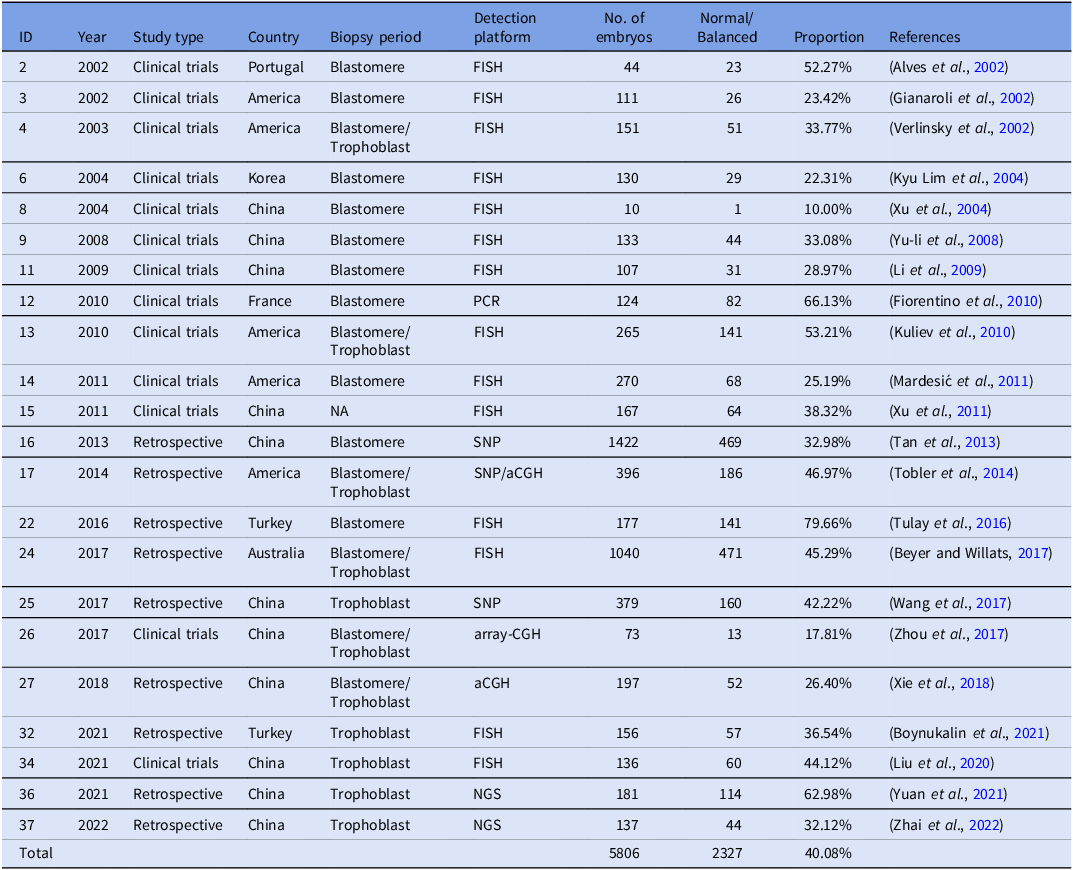
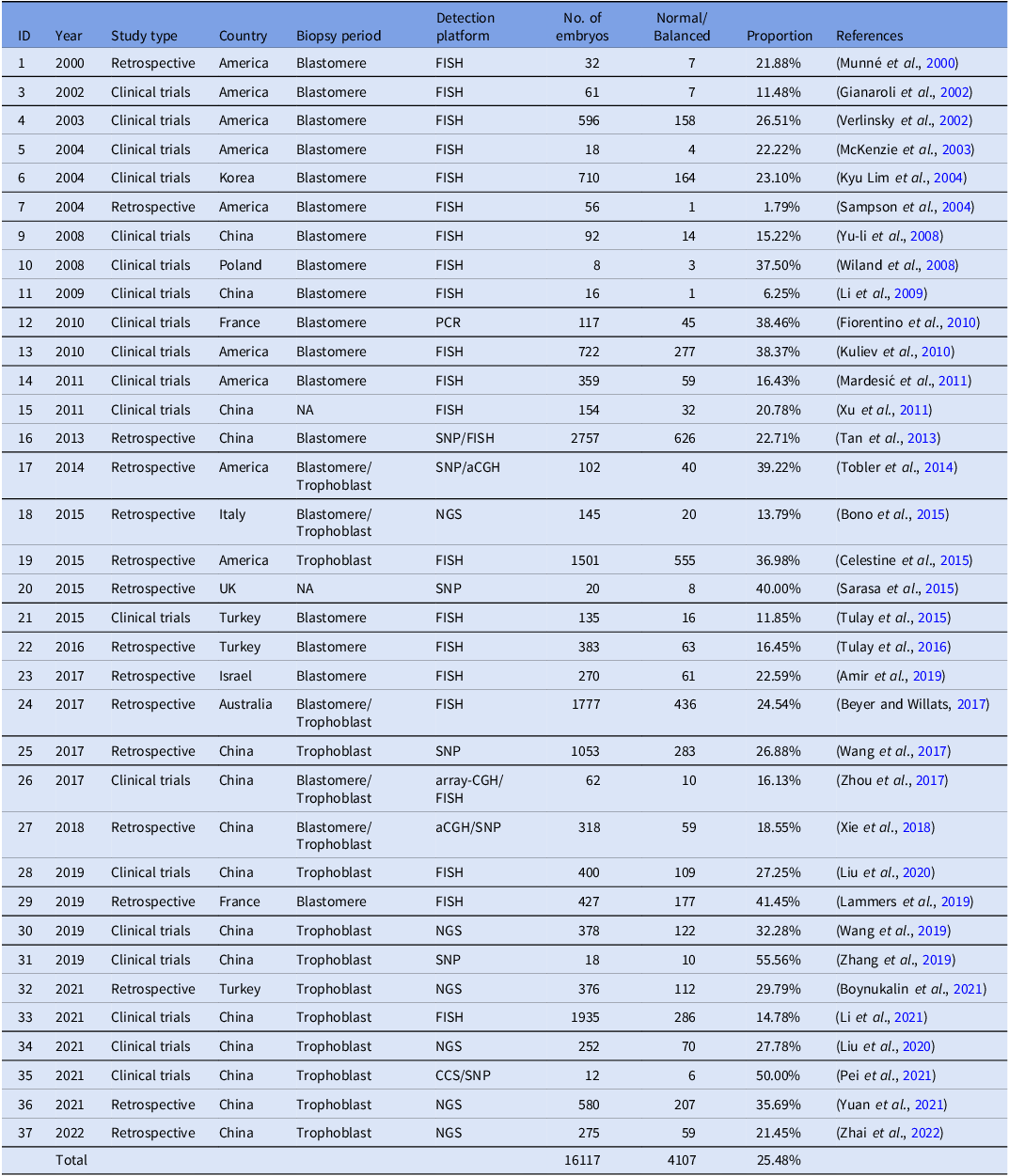
To determine the normal/balanced embryo rate of patients with RecT/RobT with PGT, 9568 embryos from RobT carriers and 29,495 embryos from RecT carriers were analyzed. In this study, 4158 embryos from 856 RobT carriers and 13,378 embryos from 2924 RecT carriers were newly reported and provided by the Department of Medical Genetics of the Yikon Genomics Company in Jiangsu Suzhou, China. As presented in Tables 1 and 2, 5410 embryos from RobT carriers and 16,117 RecT carriers were retrieved from the literature (Tables 1 and 2). RecT and RobT carriers with preimplantation genetic testing (PGT)/preimplantation genetic diagnosis (PGD) were used as keywords to screen the literature in the PubMed, Cochrane Library, Web of Science, and Embase databases, respectively, and October 2022 was deemed as the deadline for the published literature. The abstract of each study was read, and balanced/normal embryo data of RecT and RobT carriers with PGT were retrieved from the literature to evaluate the rate of normal/balanced embryos from patients with RecT/RobT with PGT that were analyzed in this study. To further reveal the effect of sex, 856 RobT carriers and 2924 RecT carriers were grouped according to sex. Of the 856 RobT carriers, 420 were male and 436 were female. Similarly, 2924 RecT carriers included 1336 male and 1558 female carriers. Additionally, to verify the effect of the biopsy period on embryo karyotype, we divided all embryo data into two groups based on the biopsy period (cleavage stage and blastocyst stage). The cleavage and blastocyst stage embryos from both groups are recorded in detail in Table 5. Some of the embryonic karyotypes were not included for two reasons: they were obtained using methods other than biopsy; there were no detailed records of the biopsy period in the literature.
Basic information obtained from the literature on RobT carriers

NA, Not available.
Basic information obtained from the literature on Rec. T carriers

NA, Not available.
Statistical analysis
The ratio of normal to balanced embryos to the total embryos was recorded and calculated. The numbers of normal/balanced and unbalanced embryos were compared using the chi-squared test. A P-value < 0.05 was considered statistically significant in this study.
Results
General characteristics of the subjects
Normal/balanced embryos possess the common gene expression of the entire human genome, and this would not result in any clinical characteristics in patients. These types of embryos could be used for translation of couples suffering from RobT/RecT, despite the possibility that the offspring of the balanced carrier embryo could experience complications such as recurrent abortion. However, most RobT/RecT carriers with PGT might not possess sufficient embryos for transfer. Therefore, balanced embryos were also considered for transplantation. To determine the rate of normal/balanced embryos of RobT/RecT carriers and provide reliable genetic evidence for genetic consultation in clinics, 3780 patients with RobT/RecT were recruited for this study (856 RobT carriers and 2924 RecT carriers). In total, 4158 RobT carriers and 13,378 embryos RecT carrier embryos were identified. Averages of 4.86 (2924/856) embryos of RobT carriers and 4.56 (13,178/2924) embryos for each RecT carrier were subjected to PGT-A/PGT-SR. The average number of embryos in RobT carriers was higher than that in RecT carriers with PGT.
The rate of normal/balanced embryos from RobT/RecT carriers
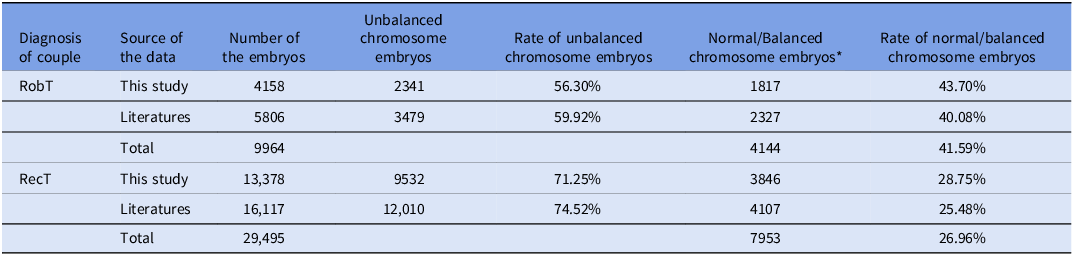
The transfer of normal/balanced embryos from RobT/RecT carriers with PGT produced offspring without a phenotype. Therefore, normal/balanced embryos were present. However, the rate of normal/balanced embryos exhibited a large range of fluctuations, and this was not conducive for clinicians in regard to performing genetic counselling. Accordingly, to determine the probability of normal/balanced embryos in RobT/RecT carriers, the rate was analyzed among 39,063 embryos from patients with PGT. Among 856 RobT carriers, in total, 4158 embryos were retrieved with 1817 embryos characterized as normal/balanced embryos, and the rate of normal/balanced embryos was 43.70% (1817/4158) for RobT carriers. The limited embryos from the literature may not reflect the plausible rate of normal/balanced carrier embryos among all the embryos from RobT/RecT carriers. Therefore, the data for normal/balanced embryos were retrieved from the literature as presented in Table 3. By combining with the datasets from the literature, 2141 normal/balanced embryos were identified from 5140 embryos, and the rate of normal/balanced embryos was 39.57% (2141/5140). The total rate of normal/balanced embryos was 41.37% (3958/9568), and this was much higher than that based on the theory of gamete production.
The rate of abnormal and normal phenotype embryos from RobT carriers and RecT carriers

* Chromosome normal or balanced embryos from RobT and RecT carriers.
Stratified analysis of normal/balanced embryo distribution based on carrier gender
It is well established that male RecT/RobT carriers produce a larger number of gametes each month compared with those of females, and this may cause less of an effect on normal or balanced embryos. Therefore, male RecT/RobT carriers may exhibit a higher proportion of normal/balanced embryos than female carriers. To explore if sex could affect the rate of normal/balanced embryos from RecT/RobT carriers, RecT/RobT carriers were grouped according to sex. Our data revealed that the rate of normal/balanced embryos in male RobT carriers was higher than that in female RobT carriers (49.60% vs. 37.44%), and a significant difference was detected between the two subgroups (P < 0.01) as presented in Table 4. Furthermore, the RecT carriers of PGT were also divided into male and female groups, and the data indicated a similar rate to that of RobT carriers (29.84% vs. 27.67%) (Table 4).
The rate of abnormal and normal phenotype embryos from RobT carriers and RecT carriers

* Chromosome normal or balanced embryos from RobT and RecT carriers.
The rate of normal/balanced embryos selected for biopsy during blastomere or trophoblast stages

* Chromosome normal or balanced embryos from RobT and RecT carriers.
Stratified analysis of normal/balanced embryo distribution of the biopsy period
Embryo cells from the third and fifth/sixth day of development were selected for biopsy during the cleavage and blastocyst stages, respectively. The number of fertilized egg cells on the third day of development was relatively small (only 6–8). Therefore, to reduce the effect on the embryo, only a small number of cells can be biopsied, and this leads to low accuracy of the results. On the fifth/sixth day of development there were more trophoblast cells, and 5–10 cells can be selected for biopsy, therefore greatly improving the accuracy and success rate of the results. Additionally, certain studies have reported that the normal/balanced rate of embryos in the blastocyst stage biopsy is slightly higher than that in the cleavage stage, and this is consistent with the results of the present study. There were 2534 cleavage-stage embryos in the Robertson translocation group. Of these, 914 were normal/balanced. There were 4571 embryos in the blastocyst stage, and of these 1985 were normal/balanced. For RecT, there were, in total, 6769 cleavage stage embryos and, of these, 1684 were normal/balanced embryos. In total, 18,064 embryos were in the blastocyst stage and, of these, 4998 were normal/balanced. The proportions of normal/balanced embryos at different biopsy periods in both groups were statistically significant (36.07% vs. 43.43% and 24.88% vs. 27.67%, respectively).
Discussion
Carrying RecT or RobT is the major reason for abortion and infertility due to the risk of generating imbalanced chromosome gametes. Natural pregnancy combined with prenatal diagnosis after pregnancy, oocyte or sperm donation, and PGT are different strategies to produce a phenotypically normal infant with a normal or balanced chromosome karyotype. Additionally, PGT has been widely approved by the carriers of RecT/RobT for producing phenotypically normal and genetic material that is consistent with that of the parents. However, most PGT procedures were performed by genetic diagnosis of blastula trophoblast cells for the blastosphere, and the culture of embryos from the cleavage-stage to the blastocyst stage led to the loss of embryos. This enhances the anxiety of patients with PGT during assisted reproductive technology (ART) and also increases the difficulty for doctors who perform genetic counselling. Due to the lack of large-scale datasets for normal/balanced embryos from RecT/RobT carriers with PGT, the theoretical probability rate of normal/balanced gametes of these carriers remains uncertain. For example, RobT carriers could possess 1/6 gametes with normal chromosomes, 1/6 gametes with balanced chromosomes, and 4/6 gametes with unbalanced chromosomes. RecT carriers would possess 1/18 gametes with normal chromosomes, 1/18 gametes with balanced chromosomes, and 16/18 gametes with unbalanced chromosomes. The unbalanced gametes would cause recurrent abortions. Accordingly, we aimed to provide robust genetic evidence supporting the proportion of normal/balanced gametes in RobT/RecT carriers and to determine if gender was a factor affecting the proportion of normal/balanced gametes in RobT/RecT carriers.
In total, 4158 embryos from 856 patients were obtained from RobT carriers with PGT, and this was slightly higher than the 13,378 embryos obtained from 2924 RecT carriers with PGT. Furthermore, in this study 4158 embryos from RobT carriers and 13,378 embryos from 2924 RecT carriers were analyzed, and our data revealed that each RobT carrier possessed 4.86 (2924/856) embryos and 4.56 (13,378/2924) embryos for each RecT carrier. Patients with RecT possessed fewer embryos than did RobT PGT carriers. Further analyses indicated that ∼41.37% (3958/9568) of RobT carriers with PGT possessed normal/balanced embryos, and this was higher than that for RecT carriers (26.96%; 7953/29495). Interestingly, the proportion of RobT carriers with PGT in this study was 43.70% (1817/4158), and this was higher than that reported in the literature (39.57%; 2141/5410). The consistent rate of normal/balanced embryos for RobT carriers with PGT from datasets in this study and the literature supported the reliable evidence that RobT carriers may exhibit a rate for obtaining ∼41.37% embryos for embryo transplantation, and this was consistent with that in previous studies (44.1%; 60/136; Liu et al., Reference Liu, Mao, Xu, Liu, Ma and Zhang2020). The pattern for RecT carriers was similar, in which the total rate of normal/balanced embryos for RecT carriers with PGT was 26.96% (7953/29,495), and the rate from datasets in this work was 28.75% (3846/13,378) and was consistent with datasets from literature (25.48%; 4107/16,117). Additionally, this rate is similar to that reported in recent studies (70/252, 27.8%). The rate of normal/balanced embryos in RobT/RecT carriers with PGT was higher than the theoretical value of synaptonemal complex segregation for RobT (2/6, 33.33% vs. 3958/9568; 41.37%) and RecT (2/18, 11.11% vs. 7953/29,495; 26.96%). Natural selection may play a crucial role during the processes of gametogenesis and embryogenesis (Mateu-Brull et al., Reference Mateu-Brull, Rodrigo, Peinado, Mercader, Campos-Galindo, Bronet, García-Herrero, Florensa, Milán and Rubio2019; Liu et al., Reference Liu, Mao, Xu, Liu, Ma and Zhang2020), and the higher ratio of normal/balanced embryos for RobT carriers (41.37%; 3958/9568) compared with that of RecT carriers (26.96%; 7953/29,495) may be caused by the higher alternate segregation of RobT carriers compared with that of RecT carriers (Liu et al., Reference Liu, Mao, Xu, Liu, Ma and Zhang2020). Specifically, both RobT carriers and RecT carriers exhibit a greater chance of obtaining a transferable embryo compared with the theoretical value, and this provides reliable genetic evidence for clinical genetic consulting for RobT/RecT carriers with the aim of performing PGT.
To further determine if sex could affect the rate of normal/balanced embryos, the 856 RobT carriers and 2924 RecT carriers were divided into two groups according to their sex. For RobT carriers, our data indicated that male carriers possess more normal/balanced embryos than female carriers (49.60% vs. 37.44). A significant difference between the two groups was detected with P = 0.000 (P < 0.05), and this indicated that male carriers possess a higher number of transferable embryos than do female carriers. However, for RecT carriers a higher transferable embryo rate was observed in 29.84% (1996/6690) of male carriers than was observed in female carriers (27.67%; 1850/6687) with P = 0.006 (P < 0.05). These data also indicated a higher number of transferable embryos in male RecT carriers. Our data illustrated that male carriers possess more normal/balanced embryos than do female RobT and RecT carriers. This is consistent with the results of a previous study (Liu et al., Reference Liu, Mao, Xu, Liu, Ma and Zhang2020). Therefore, the gender of the carrier should be considered when performing genetic consulting for patients with the aim of PGT. Additionally, according to the results of biopsy period grouping, the normal/balanced ratio of embryos in the blastocyst stage was higher than that in the cleavage stage (36.07% vs 43.43%; 24.88% vs 27.67%) in both groups of carriers for both RobT and RecT, therefore indicating a higher likelihood of obtaining normal/balanced embryos through blastocyst stage biopsy. This phenomenon may be explained by the observation that the process of embryo development from days 3 to 5/6 naturally eliminated poor-quality embryos.
However, the absence of patient information for data retrieved from the literature, including the age of RobT/RecT carriers, the number of patients participating in the research, and the clinical outcomes of PGT, restricts a better understanding of the clinical outcomes of PGT. Additionally, mosaic embryos with a low proportion of unbalanced chromosomes or a high proportion of unbalanced chromosomes were included in the datasets of this study and those from the literature, and this could be caused by technology such as fluorescence in situ hybridization (FISH) used for performing genetic diagnosis in the literature.
In conclusion, the performance of PGT could diagnose the normal/balanced embryos of RobT/RecT carriers, and this could reduce the clinical pregnancy rate of the carriers. However, the conventional genetic consulting of RobT/RecT carriers was primarily explained with theoretical values of 2/6 and 2/18, and this did not reflect the real ratios of the normal/balanced embryos and may cause anxiety to carriers. The plausible ratios were illustrated in previous studies and ranged from 1.79% to 55.56% for RecT carriers (Sampson et al., Reference Sampson, Ouhibi, Lawce, Patton, Battaglia, Burry and Olson2004; Zhang et al., Reference Zhang, Zhao, Zhang, Mao, Kong, Zhang, Liang, Sun and Xu2019) and from 10.00% to 79.66% for RobT carriers (Tulay et al., Reference Tulay, Gultomruk, Findikli and Bahceci2016; Xu et al., Reference Xu, Jin, Qian, Ye, Zhu and Huang2004). The small sample size was the major factor responsible for causing the fluctuations in the normal/balanced embryo rate of RobT/RecT carriers. Consequently, to provide reliable genetic datasets for genetic consulting, the large-scale embryos of RobT/RecT carriers were collected and analyzed in this study. The datasets illustrated that the rates of normal/balanced embryos were 41.37% among 9568 embryos from RobT carriers and 26.96% from 29,495 embryos from RecT. The rates were much higher than the theoretical values of 2/6 and 2/18. The male carriers for both RobT and RecT exhibited a higher rate of normal/balanced embryos compared with that of female groups, and the ratio of normal/balanced embryos in the blastocyst stage was higher than that in the cleavage stage. This supplied robust genetic evidence for performing genetic consulting for RobT/RecT carriers with PGT.
Financial support
This study was supported by funds from the Shanghai Key Laboratory of Embryo Original Diseases (Shelab202003), the Applied Basic Research Joint Project of Yunnan Province Science and Technology Department and Kunming Medical University (202301AY070001-087), the Project of Education Teaching Research of Kunming Medical University(2023-JY-Y-108), and Yunnan Province High-level Personnel Training Programme (RLMY20200017).
Competing interests
The authors declare no conflicts of interest.
Ethical standard
The authors assert that all procedures contributing to this work complied with the ethical standards of the relevant national and institutional committees on human experimentation and the Declaration of Helsinki of 1975 as revised in 2008.