





No CrossRef data available.
Article contents
Improving the use of biological data in Antarctic management
Published online by Cambridge University Press: 24 August 2016
Abstract
The Antarctic Treaty System requires that the effects of potential human disturbance be evaluated, such as through the development and evaluation of Initial and Comprehensive Environmental Evaluations (IEEs and CEEs), and through the implementation of Management Plans for Antarctic Specially Protected Areas (ASPAs) and Antarctic Specially Managed Areas (ASMAs). The effectiveness of these management processes hinges on the quality and transparency of the data presented, particularly because independent validation is often difficult or impossible due to the financial and logistical challenges of working in the Antarctic. In a review of these documents and their treatment of wildlife survey data, we find that the basic elements of best data practices are often not followed; biological data are often uncited or out-of-date and rarely include estimates of uncertainty that would allow any subsequent changes in the distribution or abundance of wildlife to be rigorously assessed. We propose a set of data management and use standards for Antarctic biological data to improve the transparency and quality of these evaluations and to facilitate improved assessment of both immediate and long-term impacts of human activities in the Antarctic.
Keywords
Information
- Type
- Opinion
- Information
- Copyright
- © Antarctic Science Ltd 2016
References
Alfred Wegener Institute
. 2004. Rebuild and operation of the wintering station Neumayer III and retrogradation of the present Neumayer Station II Comprehensive Environmental Evaluation draft. Bremerhaven, Alfred Wegener Institute for Polar and Marine Research.Google Scholar
ATCM (Antarctic Treaty Consultative Meeting). 2005. Guidelines for Environmental Impact Assessment in Antarctica. Available at http://www.ats.aq/documents/recatt/Att266_e.pdf.Google Scholar
ATCM (Antarctic Treaty Consultative Meeting). 2006. Draft Comprehensive Environmental Evaluation of new Indian research base at Larsemann Hills, Antarctica. ATCM XXX working paper 004. Available at http://www.ats.aq/documents/ATCM30/wp/ATCM30_wp004_e.doc.Google Scholar
ATCM (Antarctic Treaty Consultative Meeting). 2011a. On the need of constant monitoring of the values of Antarctic Specially Protected Areas and Antarctic Specially Managed Areas. ATCM XXXIV working paper 057. Available at www.ats.aq/documents/ATCM34/wp/ATCM34_wp057_e.doc.Google Scholar
ATCM (Antarctic Treaty Consultative Meeting). 2011b. Remote sensing techniques for improved monitoring of environment and climate change in Antarctica. ATCM XXXIV working paper 015 rev.1. Available at www.ats.aq/documents/ATCM34/wp/ATCM34_wp015_e.doc.Google Scholar
ATCM. 2011c. Draft Comprehensive Environmental Evaluation construction and operation of the Jang Bogo Antarctic research station, Terra Nova Bay, Antarctica. ATCM XXXIV working paper 042. Available at www.ats.aq/documents/ATCM34/wp/ATCM34_wp042_e.doc.Google Scholar
ATCM (Antarctic Treaty Consultative Meeting). 2012. Penguin monitoring via remote sensing. ATCM XXXV working paper 018. Available at http://www.ats.aq/documents/ATCM35/wp/ATCM35_wp018_e.doc.Google Scholar
ATCM (Antarctic Treaty Consultative Meeting). 2013. Remote sensing for monitoring Antarctic Specially Protected Areas: progress on use of multispectral and hyperspectral data for monitoring Antarctic vegetation. ATCM XXXVI information paper 029. Available at http://www.ats.aq/documents/ATCM36/ip/ATCM36_ip029_e.doc.Google Scholar
ATCM (Antarctic Treaty Consultative Meeting). 2014a. Informal intersessional discussion on the need of ASPA values monitoring in connection with ASPA Management Plan reviews. ATCM XXXVII working paper 059. Available at http://www.ats.aq/documents/ATCM37/wp/ATCM37_wp059_e.doc.Google Scholar
ATCM (Antarctic Treaty Consultative Meeting). 2014b. Draft Comprehensive Environmental Evaluation for the construction and operation of a new Chinese research station, Victoria Land, Antarctica. ATCM XXXVII working paper 016. Available at http://www.ats.aq/documents/ATCM37/wp/ATCM37_wp016_e.doc.Google Scholar
ATCM (Antarctic Treaty Consultative Meeting). 2016. Report of the intersessional contact group established to review the guidelines for Environmental Impact Assessment in Antarctica. ATCM XXXIX working paper 015. Available at http://www.ats.aq/documents/ATCM39/wp/ATCM39_wp015_e.doc.Google Scholar
Barber-Meyer, S.M., Kooyman, G.L. & Ponganis, P.J.
2007. Estimating the relative abundance of emperor penguins at inaccessible colonies using satellite imagery. Polar Biology, 30, 1565–1570.Google Scholar
Bargagli, R.
2008. Environmental contamination in Antarctic ecosystems. Science of the Total Environment, 400, 212–226.CrossRefGoogle ScholarPubMed
Bender, N.A., Crosbie, K. & Lynch, H.J.
2016. Patterns of tourism in the Antarctic Peninsula region: a 20-year analysis. Antarctic Science, 28, 10.1017/S0954102016000031.Google Scholar
British Antarctic Survey
. 2007. Proposed construction and operation of Halley VI Research Station, and demolition and removal of Halley V Research Station, final Comprehensive Environmental Evaluation. Cambridge: British Antarctic Survey.Google Scholar
Brown, A.L.
1990. Measuring the effect of aircraft noise on sea birds. Environmental International, 16, 587–592.Google Scholar
Burgman, M., Carr, A., Godden, L., Gregory, R., McBride, M., Flander, L. & Maguire, L.
2011. Redefining expertise and improving ecological judgement. Conservation Letters, 4, 81–87.Google Scholar
Chown, S.L., Huiskes, A.H.L., Gremmen, N.J.M., Lee, J.E., Terauds, A., Crosbie, K., Frenot, Y., Hughes, K.A., Imura, S., Kiefer, K., Lebouvier, M., Raymond, B., Tsujimoto, M., Ware, C., van de Vijver, B. & Bergstrom, D.M.
2012. Continent-wide risk assessment for the establishment of nonindigenous species in Antarctica. Proceedings of the National Academy of Sciences of the United States of America, 109, 4938–4943.Google Scholar
Clark, W., Mitchell, R., Cash, D. & Alcock, F.
2002. Information as influence: how institutions mediate the impact of scientific assessments on global environmental affairs. Cambridge, MA: John F. Kennedy School of Government, Harvard University, 7 pp.Google Scholar
Cook, C.N., Inayatullah, S., Burgman, M.A., Sutherland, W.J. & Wintle, B.A.
2014. Strategic foresight: how planning for the unpredictable can improve environmental decision-making. Trends in Ecology & Evolution, 29, 531–541.Google Scholar
Cooper, J., Crawford, R.J.M., de Villiers, M.S., Dyer, B.M., Hofmeyr, G.J.G. & Jonker, A.
2009. Disease outbreaks among penguins at sub-Antarctic Marion Island: a conservation concern. Marine Ornithology, 37, 193–196.Google Scholar
Copsey, A.D.
1999. Including best available science in the designation and protection of critical areas under the Growth Management Act. Seattle University Law Review, 23, 97–143.Google Scholar
Croxall, J.P. & Nicol, S.
2004. Management of Southern Ocean fisheries: global forces and future sustainability. Antarctic Science, 16, 569–584.CrossRefGoogle Scholar
Curry, C.H., McCarthy, J.S., Darragh, H.M., Wake, R.A., Todhunter, R. & Terris, J.
2002. Could tourist boots act as vectors for disease transmission in Antarctica?
Journal of Travel Medicine, 9, 190–193.Google Scholar
Czech Republic
. 2004. Draft Comprehensive Environmental Evaluation for Czech scientific station in Antarctica. Prague: Ministry of the Environment of the Czech Republic, 132 pp. Available at http://citeseerx.ist.psu.edu/viewdoc/download;jsessionid=CB0E3FEFCD5AC2BDC9471E1D79AA1C0A?doi=10.1.1.118.381&rep=rep1&type=pdf.Google Scholar
Doak, D.F. & Cutler, K.
2014. Re-evaluating evidence for past population trends and predicted dynamics of Yellowstone grizzly bears. Conservation Letters, 7, 312–322.CrossRefGoogle Scholar
Doremus, H.
2004. The purposes, effects, and future of the Endangered Species Act’s best available science mandate. Environmental Law, 34, 397–450.Google Scholar
Drescher, M., Perera, A.H., Johnson, C.J., Buse, L.J., Drew, C.A. & Burgman, M.A.
2013. Toward rigorous use of expert knowledge in ecological research. Ecosphere, 4, 10.1890/ES12-00415.1.CrossRefGoogle Scholar
Frenot, Y., Chown, S.L., Whinam, J., Selkirk, P.M., Convey, P., Skotnicki, M. & Bergstrom, D.M.
2005. Biological invasions in the Antarctic: extent, impacts and implications. Biological Reviews, 80, 45–72.Google Scholar
Fretwell, P.T., LaRue, M.A., Morin, P., Kooyman, G.L., Wienecke, B., Ratcliffe, N., Fox, A.J., Fleming, A.H., Porter, C. & Trathan, P.N.
2012. An emperor penguin population estimate: the first global, synoptic survey of a species from space. PLoS ONE, 7, 10.1371/journal.pone.0033751.Google Scholar
Gerlach, J.D., Williams, L.K. & Forcina, C.E.
2012. Data selection for making biodiversity management decisions: best available science and institutionalized agency norms. Administration & Society, 45, 213–241.CrossRefGoogle Scholar
Glicksman, R.L.
2008. Bridging data gaps through modeling and evaluation of surrogates: use of best available science to protect biological diversity under the National Forest Management Act. Indiana Law Journal, 83, 485–527.Google Scholar
Gosselin, F.
2009. Management on the basis of the best scientific data or integration of ecological research within management? Lessons learned from the northern spotted owl saga on the connection between research and management in conservation biology. Biodiversity & Conservation, 18, 777–793.Google Scholar
Kiernan, K. & McConnell, A.
2001. Impacts of geoscience research on the physical environment of the Vestfold Hills, Antarctica. Australian Journal of Earth Sciences, 48, 767–776.CrossRefGoogle Scholar
King, S.L., Schick, R.S., Donovan, C., Booth, C.G., Burgman, M., Thomas, L. & Harwood, J.
2015. An interim framework for assessing the population consequences of disturbance. Methods in Ecology and Evolution, 6, 1150–1158.Google Scholar
Knol, A.B., Slottje, P., van der Sluijs, J.P. & Lebret, E.
2010. The use of expert elicitation in environmental health impact assessment: a seven step procedure. Environmental Health, 9, 10.1186/1476-069X-9-19.Google Scholar
LaRue, M.A., Lynch, H.J., Lyver, P.O.B., Barton, K., Ainley, D.G., Pollard, A., Fraser, W.R. & Ballard, G.
2014. A method for estimating colony sizes of Adélie penguins using remote sensing imagery. Polar Biology, 37, 507–517.Google Scholar
Landinfo
. 2014. Buying satellite imagery: high resolution satellite imagery pricing info. Landinfo Worldwide Mapping. Available at: http://www.landinfo.com/satellite-imagery-pricing.html.Google Scholar
Lynch, H.J. & LaRue, M.A.
2014. First global census of the Adélie penguin. Auk, 131, 457–466.CrossRefGoogle Scholar
Martin, T.G., Burgman, M.A., Fidler, F., Kuhnert, P.M., Low-Choy, S., McBride, M. & Mengersen, K.
2012. Eliciting expert knowledge in conservation science. Conservation Biology, 26, 29–38.Google Scholar
McMahon, C.R., Howe, H., van den Hoff, J., Alderman, R., Brolsma, H. & Hindell, M.A.
2014. Satellites, the all-seeing eyes in the sky: counting elephant seals from space. PLoS ONE, 9, 10.1371/journal.pone.0092613.Google Scholar
Murray, J.V., Goldizen, A.W., O’Leary, R.A., McAlpine, C.A., Possingham, H.P. & Choy, S.L.
2009. How useful is expert opinion for predicting the distribution of a species within and beyond the region of expertise? A case study using brush-tailed rock-wallabies Petrogale penicillata
. Journal of Applied Ecology, 46, 842–851.Google Scholar
Nowacek, D.P., Thorne, L.H., Johnston, D.W. & Tyack, P.L.
2007. Responses of cetaceans to anthropogenic noise. Mammal Review, 37, 81–115.Google Scholar
Pullin, A.S., Knight, T.M., Stone, D.A. & Charman, K.
2004. Do conservation managers use scientific evidence to support their decision-making?
Biological Conservation, 119, 245–252.Google Scholar
Pullin, A.S. & Stewart, G.B.
2006. Guidelines for systematic review in conservation and environmental management. Conservation Biology, 20, 1647–1656.CrossRefGoogle ScholarPubMed
Ryder, D.S., Tomlinson, M., Gawne, B. & Likens, G.E.
2010. Defining and using ‘best available science’: a policy conundrum for the management of aquatic ecosystems. Marine and Freshwater Research, 61, 821–828.Google Scholar
Stark, J.S., Snape, I. & Riddle, M.J.
2006. Abandoned Antarctic waste disposal sites: monitoring remediation outcomes and limitations at Casey Station. Ecological Management & Restoration, 7, 21–31.Google Scholar
Sutherland, W.J., Pullin, A.S., Dolman, P.M. & Knight, T.M.
2004. The need for evidence-based conservation. Trends in Ecology & Evolution, 19, 305–308.Google Scholar
Sullivan, P.J., Acheson, J.M., Angermeier, P.L., Faast, T., Flemma, J., Jones, C.M., Knudsen, E.E., Minello, T.J., Secor, D.H., Wunderlich, R. & Zanetell, B.A.
2006. Defining and implementing best available science for fisheries and environmental science, policy, and management. Fisheries, 31, 460–465.Google Scholar
Tuck, G.N., Polacheck, T. & Bulman, C.M.
2003. Spatio-temporal trends of longline fishing effort in the Southern Ocean and implications for seabird bycatch. Biological Conservation, 114, 1–27.Google Scholar
Van Cleve, F.B, Simenstad, C., Goetz, F. & Mumford, T.
2004. Application of the “best available science” in ecosystem restoration: lessons learned from large-scale restoration project efforts in the USA. Puget Sound Nearshore Partnership Technical Report No. 2004-01. Seattle: Washington Sea Grant Program, University of Washington, 36 pp.Google Scholar
Waluda, C.M., Dunn, M.J., Curtis, M.L. & Fretwell, P.T.
2014. Assessing penguin colony size and distribution using digital mapping and satellite remote sensing. Polar Biology, 37, 1849–1855.Google Scholar
Weimerskirch, H.
2004. Diseases threaten Southern Ocean albatrosses. Polar Biology, 27, 374–379.CrossRefGoogle Scholar
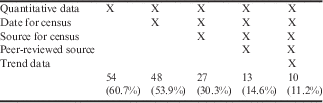
Table I Number (and percentage) of penguin species accounts in ASPA/ASMA Management Plans that meet suggested criteria for Best Available Science.
 You have
Access
- 3
- Cited by
Introduction
Antarctica is managed by a unique multinational system, the Antarctic Treaty System (ATS), through which 53 nations (29 of whom are Consultative Parties) work to manage and protect a continent reserved for peace and science. Antarctica’s ecosystem contains many endemic species and is one of the few remaining regions on earth with relatively little human impact. Despite the progress made under the ATS with respect to environmental conservation, anthropogenic disturbance continues to be a concern in the Antarctic due to factors such as increased tourism, pollution, invasive species, infectious disease, overfishing, bycatch and physical damage to terrestrial environments (e.g. Kiernan & McConnell Reference Kiernan and McConnell2001, Curry et al. Reference Curry, McCarthy, Darragh, Wake, Todhunter and Terris2002, Tuck et al. Reference Tuck, Polacheck and Bulman2003, Croxall & Nicol Reference Croxall and Nicol2004, Weimerskirch Reference Weimerskirch2004, Frenot et al. Reference Frenot, Chown, Whinam, Selkirk, Convey, Skotnicki and Bergstrom2005, Stark et al. Reference Stark, Snape and Riddle2006, Bargagli Reference Bargagli2008, Cooper et al. Reference Cooper, Crawford, de Villiers, Dyer, Hofmeyr and Jonker2009, Chown et al. Reference Chown, Huiskes, Gremmen, Lee, Terauds, Crosbie, Frenot, Hughes, Imura, Kiefer, Lebouvier, Raymond, Tsujimoto, Ware, van de Vijver and Bergstrom2012, Bender et al. Reference Bender, Crosbie and Lynch2016). The 1991 Protocol on Environmental Protection to the Antarctic Treaty (‘The Madrid Protocol’) recognizes that improved protection of the Antarctic environment is in ‘the interest of mankind as a whole’ and requires all activity south of 60°S to be planned and conducted in a way that will limit adverse environmental impacts. To this end, the Protocol also provides for the designation of protected areas that have restricted access and areas with special management requirements.
Environmental impact assessments under the Antarctic Treaty System
Under Annex 1 of the Madrid Protocol, an environmental impact assessment (EIA) must be made for any proposed activity, from commercial tourism to more significant undertakings such as the construction of a research base or permanent field camp. Environmental impacts are assessed in four main areas: i) the scope, duration and intensity of potential impacts, ii) the cumulative effects of the proposed action and other existing actions, iii) whether the impact could be reduced by using different technology or procedures, and iv) the capacity to monitor impacts and to respond quickly to environmental degradation. For activities with no more than ‘minor or transitory’ impacts, an Initial Environmental Evaluation (IEE) is required to describe the activity in question, its potential impacts and the alternatives considered. For those activities that will have more than a ‘minor or transitory’ impact, a Comprehensive Environmental Evaluation (CEE) is required. A CEE must contain a description of the environment including a forecast of the future state of the environment if the proposed activity is not undertaken, the methods and data that were used for the assessment and forecast, and estimates of the nature, extent, duration and intensity of any impacts. A CEE must also consider indirect and cumulative impacts, measures that could minimize or mitigate these impacts, identify early warning signs of unforeseen impacts, and address knowledge gaps and uncertainties (Annex 1).
The Madrid Protocol requires ‘regular and effective’ monitoring of ongoing activities to verify the projected impacts and to facilitate early detection of unforeseen impacts (Article 3). However, there are few recommendations regarding the depth and rigor of these assessments of environmental impact, evaluation of alternatives or monitoring. There are guidelines in the ATS for preparing an environmental impact statement, but these focus on methodology and scope rather than guidelines for assessing whether the ‘Best Available Science’ has been considered (ATCM 2005). Per the recommendations of the Committee for Environmental Protection (CEP), however, and further discussion at the XXXIX Antarctic Treaty Consultative Meeting (ATCM) (ATCM 2016), a number of revisions to these guidelines are being made to close data gaps and to make the guidelines more relevant to current environmental concerns facing the CEP.
Protected and managed areas under the Antarctic Treaty System
The Madrid Protocol allows for the designation of Antarctic Specially Protected Areas (ASPAs) and Antarctic Specially Managed Areas (ASMAs). An ASPA can be any marine, terrestrial, glacial or aquatic area that is deemed to have outstanding environmental, historical, scientific, aesthetic or wilderness values. Designating an area as an ASPA restricts human impact and requires that a permit be obtained before the area can be entered. Activities that are being conducted in ASMAs require co-management or co-operation between Parties, but no permits are required for entry. For both ASPAs and ASMAs, the proponents must describe the area and the values being protected and develop a Management Plan that addresses restrictions on access or activities within the area. Management Plans for proposed ASPAs and ASMAs are submitted to the CEP and Commission for the Conservation of Antarctic Marine Living Resources (CCAMLR), as appropriate, prior to being brought to the annual ATCM for discussion. Unlike CEEs, there is no public comment period for ASPA/ASMA Management Plans and there is no requirement for monitoring. However, all Parties are responsible for co-ordinating information exchange on any significant changes or damage to the protected features of an ASPA or ASMA. Recent discussions within the CEP have focused on how to best monitor the protected values of a Management Plan, but consensus has not yet been reached on how to balance the needs for regular monitoring against the impact that monitoring itself may entail (e.g. ATCM 2011a, 2014a).
Documents such as IEEs, CEEs and ASPA/ASMA Management Plans are integral to environmental protection under the ATS, but the logistical and financial challenges of accessing these sites usually precludes verification of the data presented. Thus it is the responsibility of authors of such documents to use the Best Available Science alongside good data management and reporting practices. Given the recent discussions of the CEP and the five year working plan to improve EIAs within the ATCM, it is timely to discuss the effectiveness of the current standards for scientific assessment in both CEEs and ASPA/ASMA Management Plans.
What constitutes Best Available Science?
The concept of using Best Available Science throughout the policy process has been discussed extensively in the conservation literature (e.g. Copsey Reference Copsey1999, Doremus Reference Doremus2004, Pullin et al. Reference Pullin, Knight, Stone and Charman2004, Sullivan et al. Reference Sullivan, Acheson, Angermeier, Faast, Flemma, Jones, Knudsen, Minello, Secor, Wunderlich and Zanetell2006, Glicksman Reference Glicksman2008, Cook et al. Reference Cook, Inayatullah, Burgman, Sutherland and Wintle2014). Clark et al. (Reference Clark, Mitchell, Cash and Alcock2002) define effective science as that which is relevant to the policy process, scientifically rigorous, technically accurate, fair and unbiased. Van Cleve et al. (Reference Van Cleve, Simenstad, Goetz and Mumford2004) note that credibility is best assured with a strong peer-review process both internal and external to the organization, and that sound science must be incorporated at the earliest planning stages so that programme goals may be translated into scientific objectives with adequate time for data collection and analysis. The review process is often cited as a point at which environmental managers and scientists must be held to a high standard. Given that limited data on population trajectories or life history may reduce the effectiveness of conservation actions (Doak & Cutler Reference Doak and Cutler2014), many authors present frameworks that rely on the best science that is available at the time (e.g. Sutherland et al. Reference Sutherland, Pullin, Dolman and Knight2004, Pullin & Stewart Reference Pullin and Stewart2006, Cook et al. Reference Cook, Inayatullah, Burgman, Sutherland and Wintle2014) and promote improved data collection on biodiversity and population trends for use in environmental policy (e.g. Chown et al. Reference Chown, Huiskes, Gremmen, Lee, Terauds, Crosbie, Frenot, Hughes, Imura, Kiefer, Lebouvier, Raymond, Tsujimoto, Ware, van de Vijver and Bergstrom2012). There is no clear consensus on what constitutes Best Available Science, how it should be used when it is available (Glicksman Reference Glicksman2008, Gosselin Reference Gosselin2009, Ryder et al. Reference Ryder, Tomlinson, Gawne and Likens2010, Gerlach et al. Reference Gerlach, Williams and Forcina2012), or what actions should be taken in its absence (Sullivan et al. Reference Sullivan, Acheson, Angermeier, Faast, Flemma, Jones, Knudsen, Minello, Secor, Wunderlich and Zanetell2006). However, factors such as early engagement in the planning process, statistical rigor, clear documentation and the use of peer-review emerge as common themes.
While the peer-review process is important to providing the Best Available Science to the policy process, it is important to note that information is often sparse and the time frame of the policy action may not allow for a rigorous scientific examination (Cook et al. Reference Cook, Inayatullah, Burgman, Sutherland and Wintle2014). In cases such as these, expert elicitation is a useful and effective tool for providing baseline information to be quantitatively assessed at a later date (King et al. Reference King, Schick, Donovan, Booth, Burgman, Thomas and Harwood2015), or used as priors in Bayesian modelling (e.g. Murray et al. Reference Murray, Goldizen, O’Leary, McAlpine, Possingham and Choy2009). Expert knowledge may be extremely useful for the policy making process, but it is important to note the distinction between simply using personal communications with experts and using a structured elicitation process that attempts to minimize error and standardize its use (Knol et al. Reference Knol, Slottje, van der Sluijs and Lebret2010, Burgman et al. Reference Burgman, Carr, Godden, Gregory, McBride, Flander and Maguire2011, Martin et al. Reference Martin, Burgman, Fidler, Kuhnert, Low-Choy, McBride and Mengersen2012, Drescher et al. Reference Drescher, Perera, Johnson, Buse, Drew and Burgman2013).
Here, we assess the scientific data quality of current management documents and propose a set of data management and use standards for Antarctic biological data that we think will improve the transparency and quality of these documents, and facilitate improved assessment of both immediate and long-term impacts of human activities in the Antarctic.
Methods
We reviewed all 73 ASPA and seven ASMA Management Plans, as well as 19 CEEs submitted as of November 2014. Of the CEEs, 11 involved the construction or expansion of a research station and five involved a scientific drilling campaign. We chose to focus our attention on data provided for penguin species in these documents because penguins are easily identified and well-studied, and because population data for penguins are well-documented compared to many Antarctic species. Given the large amount of information on penguin populations and breeding locations, and the fact that penguins are noted in many Management Plans as a resource to be protected from disturbance, we consider these species to be some of the easiest to identify in an impact statement, and thus a best case scenario when compared to species that are more difficult to monitor due to behaviour or inaccessibility. As such, our assessment reflects a highly conservative view of whether the Best Available Science is being used in the Antarctic. It is important to note that our focus on penguins does not imply that penguins are unique in their value for protection or that other taxa are not also important for the evaluation of Management Plans, merely that penguins provide a lens through which to examine the use of science for the Antarctic management process.
After eliminating all ASPA/ASMA Management Plans or CEEs that did not mention penguin species, 45 ASPAs, five ASMAs and 12 CEEs remained for our review. We examined ASPA and ASMA Management Plans as well as draft and final CEE documents for the use of quantitative population estimates, reports of uncertainty and population trends, and citations of peer-reviewed literature (see Table I for criteria). We evaluated these criteria for each penguin species mentioned in any given ASPA or ASMA, which resulted in 89 species records (from the 45 ASPAs and five ASMAs that discuss penguins). For documents that did not have recent data provided or did not provide a source, we performed a literature search to determine if more recent population estimates had been available at the time of the document’s submission, and to identify the source referred to in the policy document. We also assessed the quality of the maps or high-resolution imagery, as well as the precision of the geographical data presented in ASPA/ASMA Management Plans and CEEs. We examined specific ASPA/ASMA Management Plans and CEEs as case studies in the effective use of Best Available Science in Antarctic policy, both to illustrate the need for greater standardization and to highlight cases that could be improved following the guidelines discussed.
Number (and percentage) of penguin species accounts in ASPA/ASMA Management Plans that meet suggested criteria for Best Available Science.
Results
Of the species records examined, only ten included population estimates and trends with complete citations. Of the 89 records examined, 35 did not provide any quantitative data, six provided quantitative data but gave no indication of the date that the data were collected, and 48 provided dated, quantitative data but no source. While 27 provided a source for their data, 14 cited a non-peer-reviewed source (Table I).
The level of detail provided on penguin populations in these Management Plans also varied widely. While 27 Management Plans provided an assessment of multi-year trends, only ten of the 43 population trends were from peer-reviewed sources, and only one included an estimate of uncertainty associated with these data (ASPA 115). Some Management Plans gave non-quantitative population estimates but with no cited source, such as ASMA 1, which states that ‘Pygoscelid penguins make up 91% of the number and up to 95% of the biomass of the breeding community’, with no specific data provided on the size of those populations. Others cite personal communications or other unpublished data (ASPAs 120, 124, 127, 173, ASMA 7).
Data quality in the CEEs is similarly varied. Of the 12 CEEs examined, four cited quantitative assessments of penguin populations, and only two of those used peer-reviewed sources. Only one CEE presented population trend data for the potentially impacted penguin populations. There was also a wide range in the quality and presentation of spatial data produced in both ASPA/ASMA Management Plans and CEEs. Some proposals provided multiple maps with clearly defined locations of interest and proximity to important environmental features, including animal colonies (e.g. Larsemann Hills Station (ATCM 2006), Jang Bogo Research Station (ATCM 2011c)), while others provided maps of the proposed site but no explicit co-ordinates for the location (Czech Station (Czech Republic 2004)).
Standardization was lacking in many aspects of assessing wildlife impacts in CEEs. Several documents referred to ‘nearby’ wildlife while providing no citation or specific distances (e.g. Larsemann Hills Station, Jang Bogo Research Station). One CEE reported that ‘the impact on skua and Adélie Penguin habitats will be indirect and minor … because the colonies are located at a safe distance from the proposed site’ (ATCM 2014b); however, no justification was provided for the distance (2 km) being considered ‘safe’, nor was any reference made to scientific studies that examine distance limits for impacts. Aside from a lack of standardization in terms of what constitutes the affected area of a proposed activity, many CEEs were not quantitative in their assessments. Many of the CEEs provided exceptional detail on projected noise pollution from construction and operation, but few provided an assessment of how that noise pollution may affect surrounding wildlife. While this may reflect a lack of available studies on Antarctic systems, there are many studies that have investigated the impacts of anthropogenic sound on marine mammals (reviewed in Nowacek et al. Reference Nowacek, Thorne, Johnston and Tyack2007) and on seabirds (e.g. Brown Reference Brown1990), which could provide guidance for the assessment of impact.
Overall, we find that some policy documents are following best practices to obtain and use the Best Available Science (e.g. Neumayer III Station (Alfred Wegener Institute 2004)), with several CEE and ASPA/ASMA Management Plans showing thorough and appropriately cited descriptions of wildlife and potential impacts to wildlife (e.g. ASPA 134, ASPA 149, Halley VI Station (British Antarctic Survey 2007)). However, we also found a high degree of variability in the quality of EIAs and a lack of standardization in the quality and transparency of the biological data presented. The lack of required minimum standards for such ecological data is at odds with the values of environmental protection that are clearly affirmed by the Madrid Protocol.
Discussion
Our findings illustrate that Antarctic environmental policy documents often fall short in using the most recent and accurate data to assess biological impacts (here assessed through effects on penguin habitat use, population size and population trajectories). Specifically, the inconsistencies we document highlight the need for standardization and increased data quality, as well as for better systems for distributing and communicating policy-relevant data to improve the overall quality of Antarctic EIA documents. There is a critical need for accurate and up-to-date biological data in order to effectively manage both protected areas and to predict and mitigate adverse environmental impacts by human activities in Antarctica. Within protected areas, population abundance was not cited in 39% of accounts for the penguin species that were listed as a ‘resource to conserve’. Aside from a lack of data, many Management Plans did not cite recent, peer-reviewed data, and did not assess the population abundance trends or uncertainties associated with these data. The inadequacies of the data used limit the effectiveness of environmental protection and management.
We suggest that, with respect to IEEs and CEEs, the Parties to the ATS should adopt more stringent standards to ensure that best practice be used to collect and communicate ecological data to the policy process. The Parties to the ATS should modify their current process to include more detailed, consistent requirements and to actively foster a culture of peer-review and public comment. It is important to note, however, that the solution does not lie solely with the ATS; a more scientifically rigorous policy process also requires scientists to not only continue to collect data on the abundance, distribution and temporal trends of Antarctic wildlife, but also to make a sincere effort to publish those data in a timely manner, to include in those assessments measures of observation error and to make these data readily accessible to all ATS Parties.
Many of the CEE documents cited a lack of information on the presence of nearby penguin breeding colonies (e.g. Czech Station (Czech Republic 2004)). While scarce or missing data are certainly a challenge in the Antarctic, we suggest that such knowledge gaps should be addressed rather than simply acknowledged. The Madrid Protocol requires assessment of impacts as well as monitoring of impacts and, as such, Parties proposing activities that require a CEE should also establish a pre-activity baseline. If those data are not available, the proponent should gather those data, preferably via direct on-the-ground surveys of the region at biologically relevant times of the year, in order to make an accurate assessment of environmental impacts. This would require effort from all Parties to ensure that any proposed action uses Best Available Science to provide baseline data, and to hold the proponents accountable for that information. Increasingly, high-resolution satellite imagery has been used for surveying penguin and marine mammal populations and tracking human disturbance and site remediation (Barber-Meyer et al. Reference Barber-Meyer, Kooyman and Ponganis2007, Fretwell et al. Reference Fretwell, LaRue, Morin, Kooyman, Wienecke, Ratcliffe, Fox, Fleming, Porter and Trathan2012, LaRue et al. Reference LaRue, Lynch, Lyver, Barton, Ainley, Pollard, Fraser and Ballard2014, Lynch & LaRue Reference Lynch and LaRue2014, McMahon et al. Reference McMahon, Howe, van den Hoff, Alderman, Brolsma and Hindell2014, Waluda et al. Reference Waluda, Dunn, Curtis and Fretwell2014). Such mapping and survey data should be used for both ASPA/ASMA Management Plans and for CEEs. While the CEP has agreed that remote sensing data can be beneficial for environmental impact statements (e.g. ATCM 2011b, 2012, 2013), many CEEs do not actually make use of this technology.
We recognize the challenges involved in the collection of new biological survey data for CEEs, yet we emphasize that the costs imposed by this requirement are usually minor compared to the costs of the proposed activity itself (high-resolution satellite imagery (e.g. Worldview-2) costs approximately 25 USD per square km (LandInfo 2014)). Because CEEs are invoked for activities being actively and voluntarily pursued by a proponent, the burden of proof must lie with that proponent to catalogue the abundance and distribution of wildlife potentially impacted by the proposed activity. Data sharing, timely publication of data and collaboration among Antarctic programmes should also increase the availability of relevant biological data for impact assessments and Management Plans.
Proposed guidelines
While we recognize that a one-size-fits-all approach may not work in all cases, we suggest a simple set of guidelines that can be used to evaluate whether Management Plans and CEEs meet the minimal standards for Best Available Science. All CEEs and ASPA/AMSA Management Plans should use sound data from reliable sources with appropriate analytic techniques, provide in-depth projections that are relevant to the spatial and temporal scale of the proposed action or conservation area, free of political or other biases and reproducible. In short, we suggest five guiding questions for assessment:
i) Are the data presented the most recent data available?
ii) Is there sufficient metadata provided to allow traceability back to the original source (a citation, or contact information for an unpublished result or expert opinion)?
iii) Is sufficient information presented that would allow for a comparison between these data and a future survey? Is information provided on the date and method of all survey data as well as on the uncertainties of all estimates presented?
iv) Are the maps or imagery of sufficient quality and are geographical co-ordinates presented with sufficient precision to permit a re-examination of the site resources at a future date?
v) If data are insufficient for evaluation, is the proponent able to collect the data required to establish baseline conditions?
Specifically, we propose that the most recent data be used, preferably from the peer-reviewed literature, and that multi-year trends and measures of uncertainty be reported whenever possible. Finally, we suggest that ASPA/ASMA Management Plans and CEEs be subject to a transparent, rigorous, scientific review process that allows for more structured expert comment and subsequent revision before any actions are undertaken.
We recognize that while the burden of using Best Available Science falls initially on the proponent, it is critical that all Parties ensure that their review processes also adhere to these guidelines, and that scientists from all Parties undertake studies to produce these data. Some of these standards and requirements are clearly not easy to meet in the Antarctic due to cost, accessibility or limited options for independent review. However, that does not mean that the Antarctic research and policy community should not strive to attain the most stringent standards possible. These models should be adapted and applied to the unique scenarios facing Antarctic environmental evaluations and Management Plans.
Successful environmental management requires that we often apply the Best Available Science rather than wait for the Best Science Possible, and this requires effective communication and translation between policy makers and scientists. The Antarctic presents a unique challenge in terms of both conservation and quality science for environmental management because, while the continent remains relatively unblemished, increased stressors such as human activity and climate change have already affected the ecosystem and pose threats of increased change in the future. Policy makers must be able to respond to these challenges in a timely manner, which in turn requires relevant scientific information to be made available to policy makers. Therefore, scientists must be willing to provide policy-ready data on the time frame that decision makers need, and policy makers need to be willing to support and fund baseline surveys and continued monitoring that may fall outside of the scope of traditional hypothesis-driven scientific research.
Finally, we emphasize that the Best Available Science in the impact assessment is only half the solution because our understanding of environmental impacts requires long-term monitoring of impacted sites to evaluate whether the impacts that are observed are of the correct type and magnitude as those that had been anticipated. Ideally the CEE document would show multi-year monitoring prior to the actual proposal; at minimum, any Party proposing new construction or activity that would significantly impact the Antarctic ecosystem should be required to monitor environmental impacts during and after the activity. While this is listed as a requirement for a CEE, few explicitly propose plans for long-term monitoring or publish any data from those studies. Management Plans for ASPAs are reviewed every five years, thus providing an excellent opportunity to update these plans with monitoring data, and to re-evaluate changes in wildlife abundance or distribution. Monitoring data is not only critical for assessing current and projected impacts, but also increases our knowledge of the Antarctic ecosystem and can be used as the basis for further scientific investigation.
We are encouraged by recent efforts within the CEP to revise the EIA guidelines, which recognize the importance of data that is both quantitative and accompanied by appropriate metadata (ATCM 2016). However, we note that the accompanying checklist for recording baseline information on the state of the environment (Appendix 1 of the Revised EIA Guidelines) does not yet reflect this goal; no explicit request is included for quantitative information on wildlife abundance and no space is included for annotating biological data with metadata such as its original source.
Effective management requires revisiting and revising Management Plans and the process by which we create those Management Plans. Taking care to ensure that CEE and ASPA/ASMA Management Plans are treated as part of a process to improve and assess conservation rather than static documents could greatly improve the effectiveness of these documents and, in turn, the effectiveness of environmental management within the ATS.
Acknowledgements
We would like to acknowledge financial support from the National Science Foundation/Office of Polar Programs (Award No. 1255058 (HJL)) and the National Aeronautics and Space Administration (Award No. NNX14AC32G (MAL, CMF, HJL)). We would like to thank Ron Naveen and Claire Christian for comments and suggestions on earlier versions of this manuscript, as well as the reviewers who provided insight and comments on a previous version.
Author contribution
All authors contributed to the data collection, analysis and writing of this manuscript.