A human stampede (HS) often results in a mass casualty incident (MCI) when it occurs in a mass gathering (MG) event setting and can be associated with serious injuries and/or death, both frequently reported in medical and nonmedical literature.Reference Alotaibi, Molloy, Mechem, Ciottone, Biddinger and Darling 1-Reference Ngai, Burkle and Hsu4 Investigators have simulated crowd dynamics and MG behavior using computerized mathematical formulae to understand motion dynamics in different MG event scenarios, including religious, recreational, and rush reaction scenarios.Reference Ali, Nishino and Manocha5 Video analysis techniques have been used to evaluate the architectural design,Reference Gao6, Reference Jiang, Li and Shen7 flow dynamics,Reference Piazza8 and MG event themselvesReference Zhang, Zhang and Yuan9 as composite factors that may lead to HS events resulting in casualties.Reference Golas, Narain and Lin10 There is a knowledge gap among medical professionals concerning the basic principles of mass gathering physics along with the application of human body dynamics and kinetics of motion as a single unit of mass in the complex mass gathering events.Reference Dixon11 As there is currently no standard international reporting system for HSs, HS events are often reported as independent incidents and not grouped and examined for shared variables that may determine HS mechanisms of injury. In this manuscript, we apply principles of physics to crowd dynamics in historical HS events that have resulted in mass casualties to better understand the mechanisms of injury. The goal is to identify variables that may have predictive value when applied proactively to the preparedness and response phases of mass gatherings.
METHODS
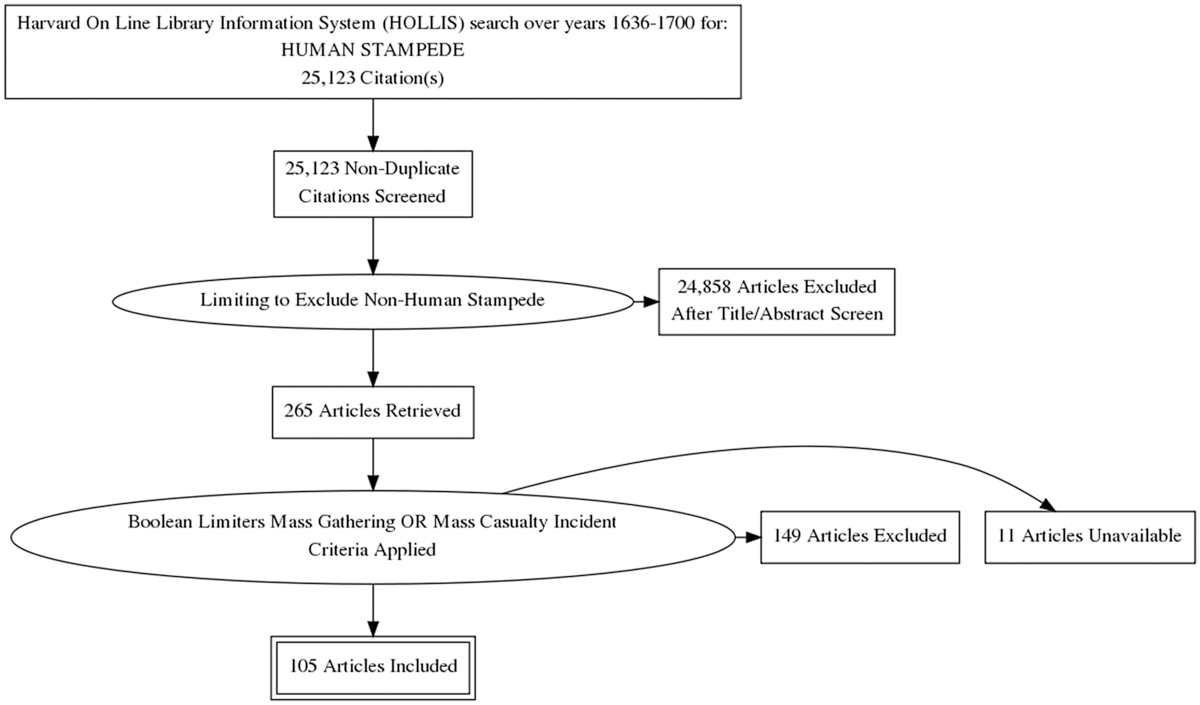
A systematic review was undertaken using the Harvard On Line Library Information System (HOLLIS) interface using the Preferred Reporting Items for Systematic Reviews and Meta-Analyses (PRISMA) standard.Reference Moher, Liberati and Tetzlaff12 Within the date range of 1636-2017, the search filter was used for the following databases Academic Search Premier (EBSCOhost), Business Source Complete, Google Scholar, JSTOR, LexisNexis Academic, MLA Int’l Bibliography, ProQuest Dissertations and Theses, PsycINFO (EBSCOhost), PubMed (MEDLINE), Web of Science, WorldCat (FirstSearch), Medbox.org, and Disasterlit. Medical Subject Headings (MeSH), title, abstracts, and body text were searched for the term << HUMAN STAMPEDE>> resulting in 25,123 references. Limiting results to exclude nonhuman “STAMPEDE” events restricted the set to 265 unique references. Further Boolean limitations using the terms << MASS GATHERING>> AND << MASS CASUALTY INCIDENT >> resulted in a final set of 105 references as seen in Figure 1.
PRISMA Chart.

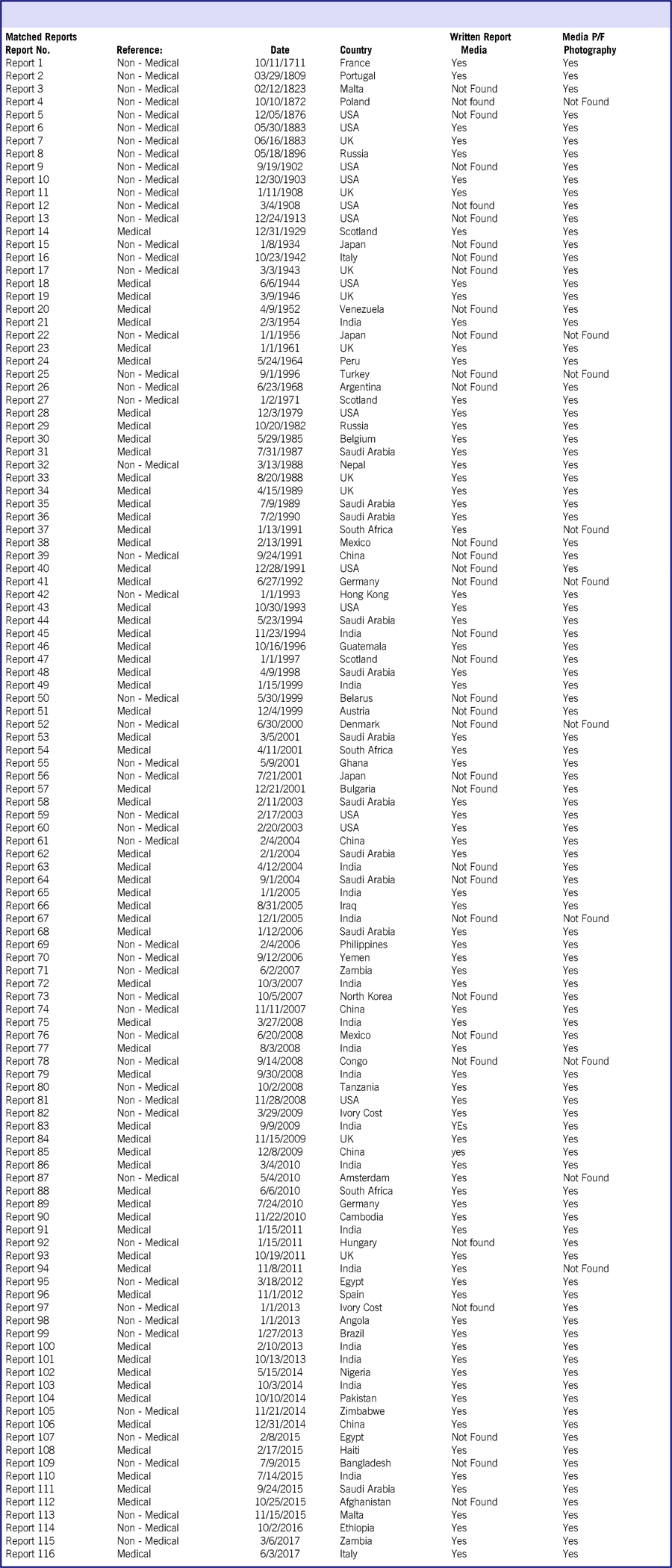
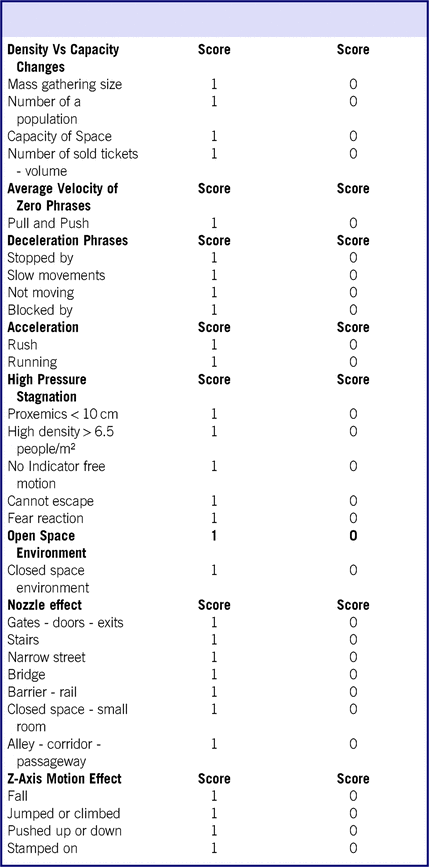
These 105 references met enrollment criteria for HS reports available for review (Table 1), and of these, 73 reports had either photographic images, video footage, or both available for analysis. Predefined physics principles variables were identified by a physicist including unit mass, density change, average velocity, XYZ-axis motion dynamics, fluid dynamics principles, and nozzle structure effects (Table 2).Reference Young and Freedman13 Data collection used a single source entry method for each HS event by the primary investigator in Microsoft Excel (Microsoft Excel 2016 version 16.0, Redmond, WA). Each report was analyzed, and frequency of occurrence of these principles was abstracted by shared variables and grouped accordingly.
The Final Reports
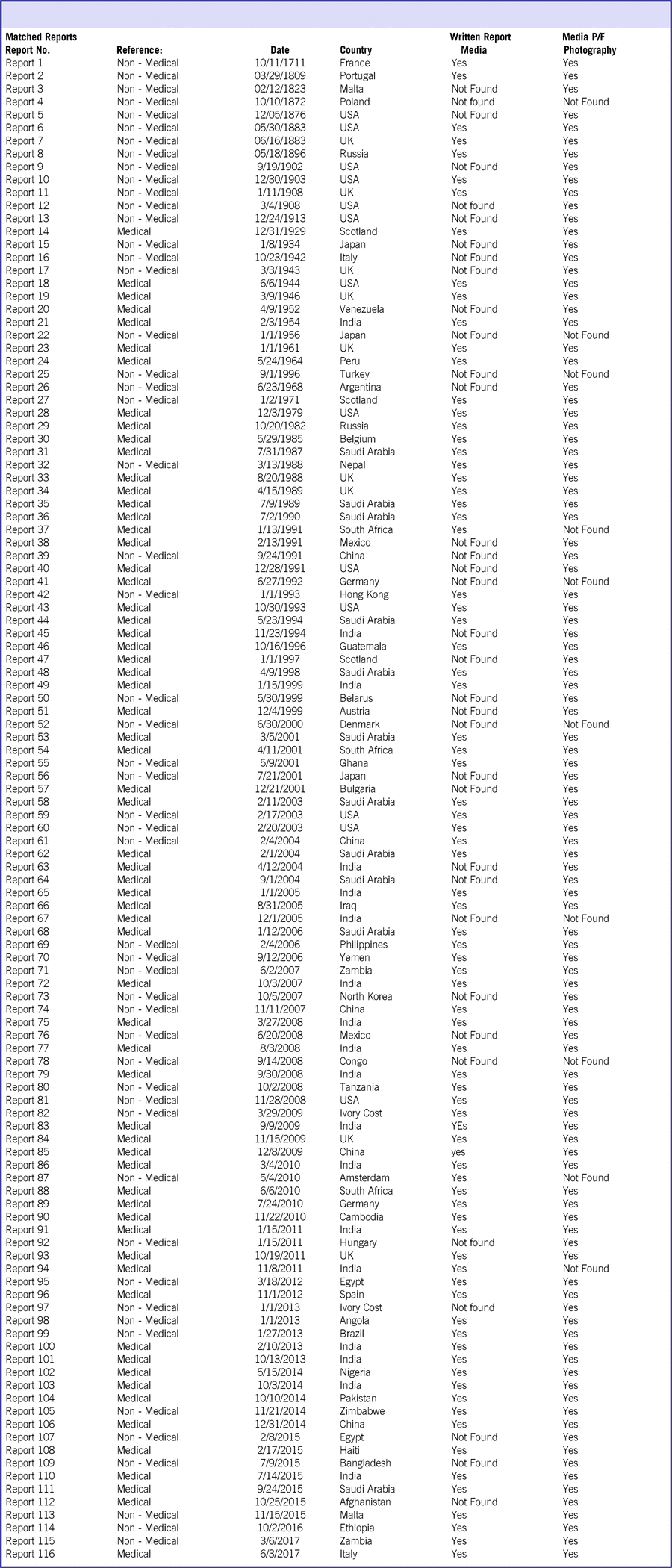
Note: “Not Found” refers to reports for which the media report and/or photograph/footage (Media P/F) are not available for a variety of reasons, such as not having been photographed, political suppression of an event, or loss of records.
Predetermined Physics Terms/Principles
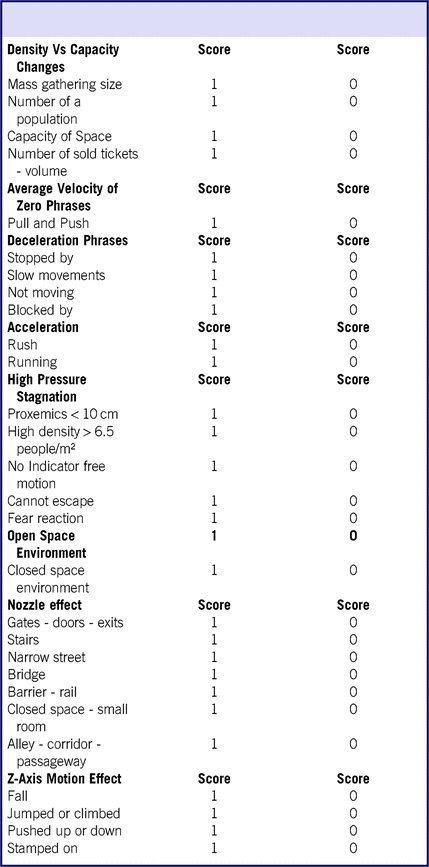
Note: Extracted phrases and reading scoring system indicate physics score 1 for present - score zero not present.
The phrases included the following: Density and capacity phrases: MG event, numbers of persons in attendance, capacity [space], number of tickets sold. Average velocity of zero phrases: pull and push, fast then stopped, jammed against, pushed against. Motion phrases: fast, rush, slow, stopped by, stand still, not moving, blocked by. XYZ-axis displacement force phrases: fall, jumped off, pushed up, stamped on, climbed, fell off. Architectural evidence of nozzle effect: gates, doors, exits, stairs, narrow street, ditch, mud, pits, bridge, barrier, rail, alley, corridor, passageway, tunnel. High pressure stagnation phrases: proxemics < 10 cm, no indicator of free motion, push and pull, fear reaction, squeezed, crushed, on each other (Table 2).
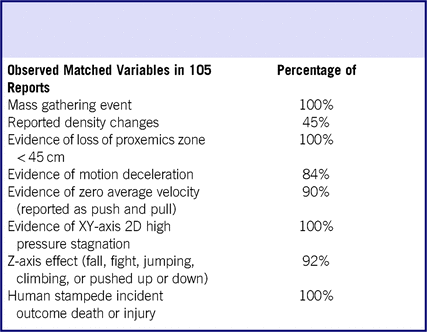
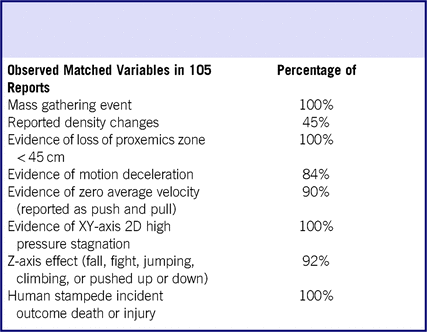
Rate of Occurrence of Predetermined Physics Principles in Reports (n = 105)
The reports were independently reviewed by a physicist who predefined the physics principles that matched mass gathering flow dynamics. The physicist also matched the extracted phrases to specific principles and variables such as unit mass, density change, average velocity, XYZ-axis motion dynamics, fluid dynamics principles, and nozzle structure effects. To measure the occurrence of repeated equally weighted phrases, a scoring system was created, with a score of 1 indicating the presence of a phrase related to a specified physics principle, and a score of zero, indicating its absence. Scores were entered in a Microsoft Excel 2016 spreadsheet for analysis. All data processing and statistical analysis were preformed using R 3.4.2 (R Core Team 2017. A language and environment for statistical computing. R Foundation for Statistical Computing, Vienna, Austria). Additionally, several R packages were used, including the “tidyverse” (Hadley Wickham 2017; R package version 1.2.1.), “psych” (Revelle, W. 2018; Procedures for Personality and Psychological Research Version = 1.8.4.), “lubridate” (Garrett Grolemund, Hadley Wickham 2011), and “Hmisc” (Frank E. Harrell Jr, 2018; Hmisc: Harrell Miscellaneous. R package version 4.1-1.) packages.
All the results from R system were converted into Excel sheets and sent to primary investigator for final analysis. (R open access language and environment for statistical computing and graphics available from https://www.r-project.org/about.html) was used to calculate descriptive statistics on this final dataset using the frequency of each observed variable. They were then analyzed using an abstracted phrase reading-scoring system to rank the variables based on the extracted phase matching the predefined physics principles. The mode of occurrence for each phrase from each of the 105 events were calculated. These were then used to calculate the frequencies of each phrase within each physics principle group, to give the final proportions of the presence of density change, loss of proxemics, average velocity, XYZ-axis motion dynamics, principles of fluid dynamics, and nozzle structure effects.
RESULTS
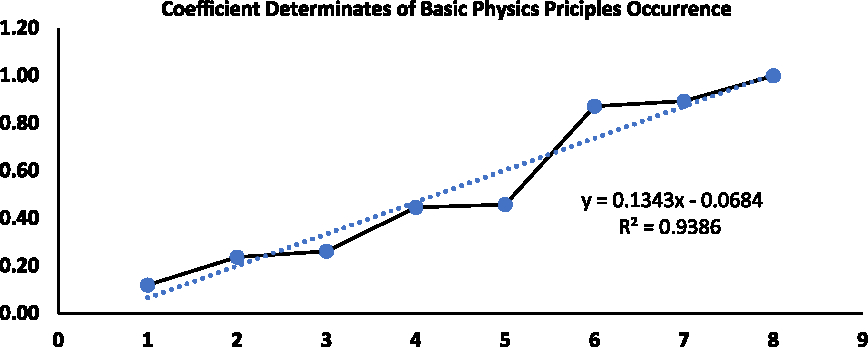
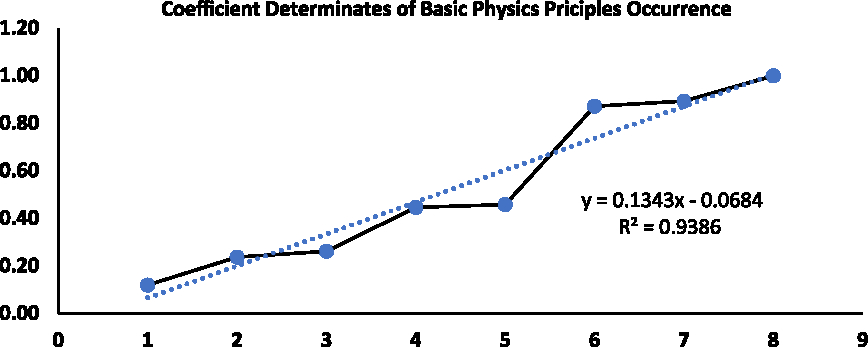
In 105 reports of HS resulting in injury or death, 61% of HSs reportedly occurred in an open space and 39% occurred in a closed space (hall, gymnasium, temple, church, mall, mosque). The density change in a limited capacity event correlated in 45% of the reports to a sudden population change in a limited space and, thus, reported more often in closed space situations. XY-axis motion failure was reported to have occurred in 100% of events, loss of proxemics was also found in 100%, and motion deceleration with average velocity of zero occurred in 90%. Z-axis displacement pathology (fall, jump, pushed up, or fall off) was present in 92% of reported events. An associated structural design with a nozzle effect was found in 93% of the cases, while 100% demonstrated a fluid dynamic principle of high-pressure stagnation in the MG (Table 3). To determine how well this research model measured matching the descriptive phrases to reports of HSs with casualties, the coefficient of determination (R2) was calculated and found to be 0.94 (with 1.0 being highest “goodness-of-fit”) (Figure 2).
Coefficient of Determination (R²).
DISCUSSION
The first well-documented HS with photographic or illustrative evidence occurred on the bridge of the Guillotière in Lyon, France, on 11 October 1711. Two hundred forty-five were killed in this event initiated by the coach of Madame Servient situated in the middle of the bridge while crowds were returning from a festival on the other side of the Rhône. Death during HS events often occurs from traumatic asphyxia due to loss of proxemics and crowd stagnation, with Gill and Landi concluding from autopsy findings that victims who die typically do so standing up as a result of compressive forces applied antero-posterior or vice versa and that those experiencing side-side compressive forces were more likely to survive.Reference Gill and Landi14
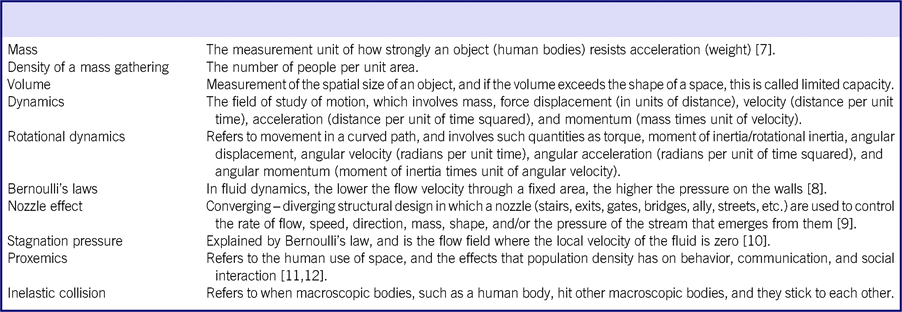
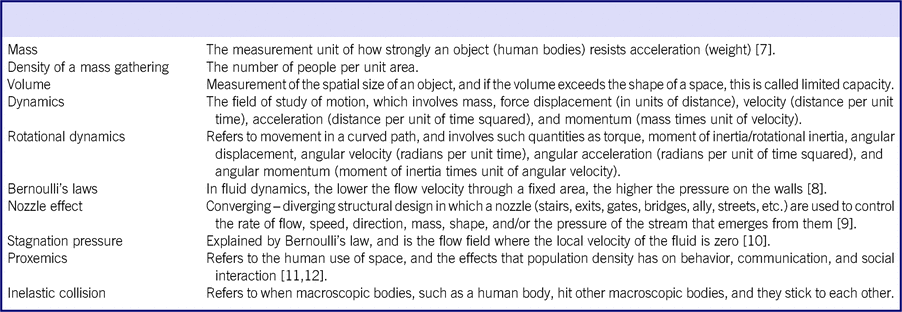
This study analyzes more than 300 years of medical and nonmedical literature including drawings, photography, and video footage identifying HS as an independent mass gathering emergency event, which can result in severe morbidity, mortality, and have possible political implications. HS can be described with basic physics principles that create pockets of motion under 3 circumstances. Most commonly HSs occur at recreational eventsReference Ngai, Burkle and Hsu4, Reference Hsieh, Ngai and Burkle15 (musicReference Johnson16, sportReference Madzimbamuto and Madzimbamuto17, shopping, shows, festivalsReference Hsu and Burkle18), religious events,Reference Illiyas, Mani and Pradeepkumar3, Reference Burkle and Hsu19, Reference Greenough20 and also in a rush-reactive eventsReference Alaska, Aldawas and Aljerian21, Reference Begum22 (rallies, wars, and disasters). In all circumstances, there are shared basic principles of physics variables that relate to the nature of the unit mass, which in this case is the human body.Reference Bhave and Neilson23 This is why flow dynamics, the nozzle shape of certain spaces (stairs, doors, bridges, narrow streets, and small halls), and understanding the basic principles of motion are factors often seen in MGs and are essential in understanding the dynamics of HSs and mechanisms of injury resulting from them (Table 4).
Basic Physics Principles and Definitions
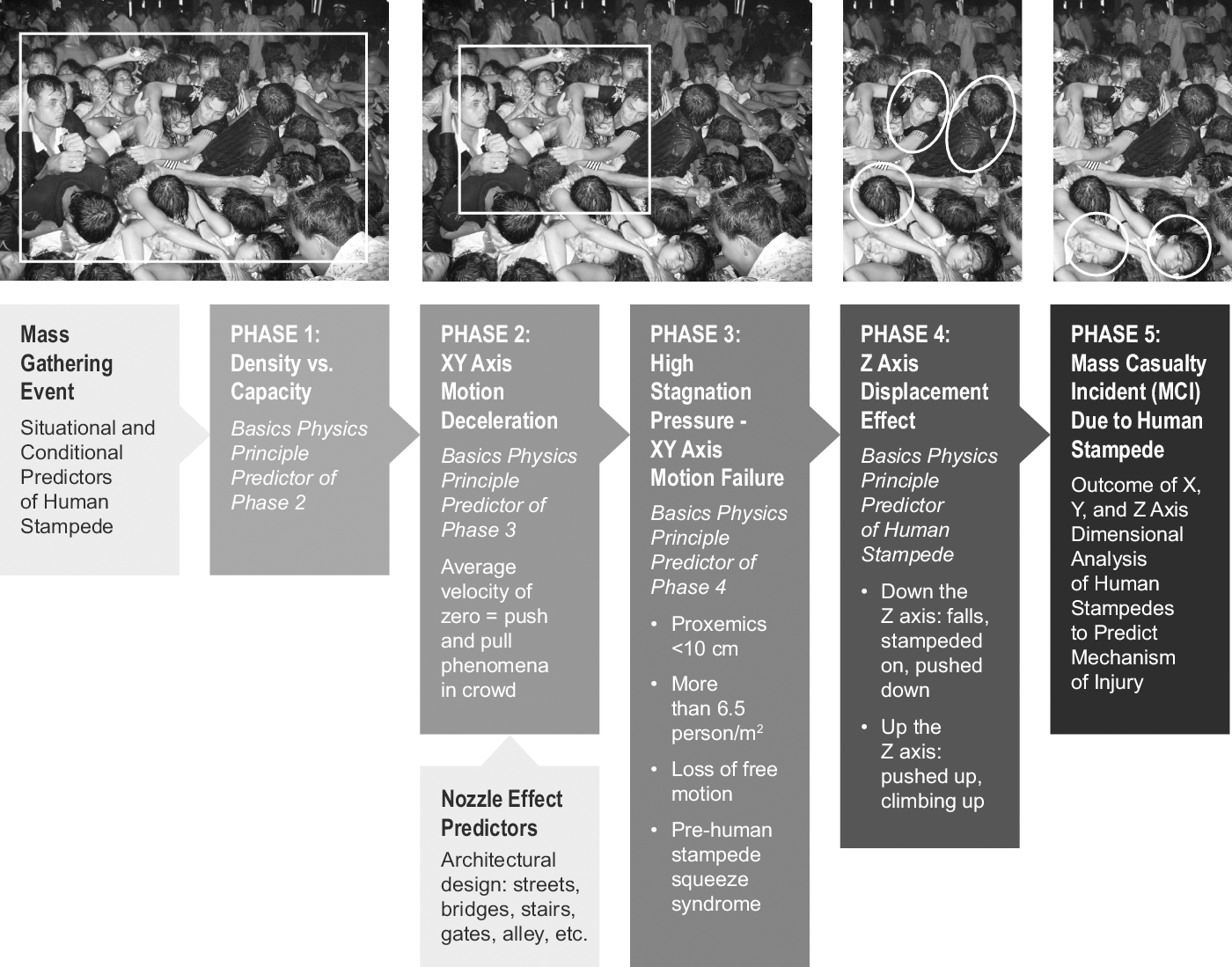
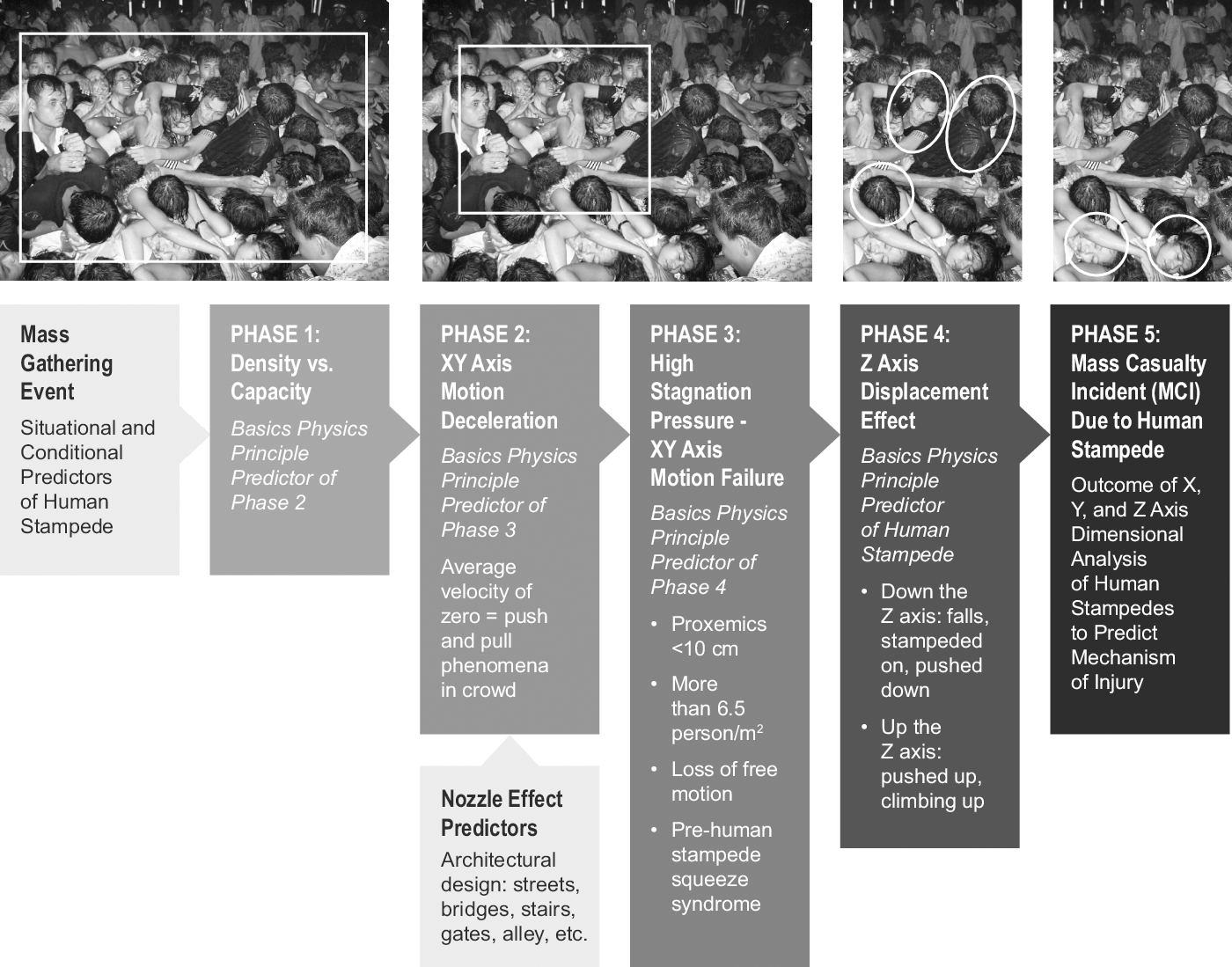
The extracted data support the idea that a cascade of events may take place during a mass gathering that can lead to a HS. Principles of physics that determine the spatial relationship between people can be applied to the understanding of these events as follows. Crowds normally move in a 2-dimensional (XY) environment during a mass gathering, where the motion along the Z-axis is generally zero during stable crowd motion. If Z-axis movement is detected, it may be predictive of unstable crowd dynamics that may lead to injury or death.
The motion in a MG is consistent with concepts of fluid flow dynamics, where the participants are considered as particles. When the number of people increases in a limited space, this can lead to a high density per unit area, and each unit mass (a person) will lose proxemics, resulting in contact between them. When an increase in mass gathering density > 6.5 persons per /m2 occurs, bodies tend to compress together rather than move apart, which causes the crowd to move in a linear direction.Reference Still24, Reference Still25 In a MG in an open space, this movement will frequently be in a circular motion due to the rotational dynamics caused by the center point creating a torque of inertia.Reference Gómez, Hernandez-Gomez and Marquina26 In a closed space with high crowd density, the motion described can be accentuated with any nozzle-like architectural design.Reference Yang, Qitai and Wang27 Progression leads to motion failure along the XY-axis with high-pressure stagnation on the unit mass. A squeeze phenomenon develops, and the unit mass (person) may exhibit a motion along the Z-axis such as a fall, jump, or climb. A third, but less likely, change at such high-pressure stagnations is the MG-induced structural failure (Figure 3).Reference Wardhana and Hadipriono28
Motion Analysis Showing Cascade of Events (Phases) as Predictors of Injury or Death During a Human Stampede. (Image: Human Stampede on Nov. 22nd, 2010. Cambodia, Phnom Penh. Getty Image No. 107401316. Educational: Research and Publications Licence No. 2058233856).
Identifying the cascade of physical variables in HSs that result in mass casualties may have great predictive value if these factors can be incorporated into preplanning and real-time monitoring of mass gathering events, thereby enhancing mitigation, preparedness, and response. Before high-risk mass gathering events structural modifications can be constructed to limit occurrences of crowd-stagnation, nozzle effects, and loss of proxemics. Installing a real-time monitored video crowd motion analysis system to detect stagnation and sudden Z-axis motion changes may facilitate early protective measures potentially avoiding deterioration into a mass casualty event. Educating ourselves on the physics of crowd dynamics and those predictors of traumatic injury will help to limit morbidity and mortality so commonly seen in HSs. This XYZ dimensional analysis using principles of flow dynamics offers the first step toward realizing that goal.
CONCLUSIONS
Historically, event analyses and simulation models of HSs have not considered the Z-axis displacement effect and the implementation of XY-axis motion failure predictors. This study supports the conclusion that a cascade of physical events during a MG can lead to HS. Real-time video analysis monitoring of high capacity events or those with known nozzle effects for loss of proxemics and Z-axis displacement pathology offers the opportunity to prevent mortality from HSs. Further studies on real-time crowd XYZ-axis motion analysis are required to create predictive modelling scenarios.