

In this article, we show that conservatives and liberals differ in their cognitive skills and that those differences favor each group separately in diverse nonideological contexts. A rather recent — and growing — literature is narrowing the distance between biology, psychology, and political science. Various studies are beginning to show that political preferences — and even political behaviors — are influenced by factors such as genetic variations, hormone levels, brain structure, and personality traits. Some seminal papers in this area Reference Alford, Funk and Hibbing1,Reference Smith, Alford, Hatemi, Eaves, Funk and Hibbing2,Reference Dawes, Loewen and Fowler3,Reference Hibbing, Smith and Alford4,Reference Jones, Noorbaloochi, Jost, Bonneau, Nagler and Tucker5 show this path from biology to psychology to political science. Alford, 6 for instance, argues that political orientation can be partly genetically transmitted. Weissflog Reference Weissflog, Choma, Dywan, van Noordt and Segalowitz7 found correlations between political attitudes and neurophysiological responsivity. Schreiber Reference Schreiber, Fonzo, Simmons, Dawes, Flagan, Fowler and Paulus8 used functional imaging to demonstrate that the brains of liberals and conservatives differ in activity when performing a risk-taking task. Kanai Reference Kanai, Feilden, Firth and Rees9 found that increased volume of gray matter in the anterior cingulate cortex is statistically significantly associated with liberalism, while increased volume of gray matter in the right amygdala is statistically significantly correlated with conservatism. The complexity of cerebral processes notwithstanding, it has been shown that the amygdala plays a greater role in the intuitive threat response, for example, whereas the cortical region deals more prominently with logical decision-making. Reference Öhman10,Reference Öhman, Carlsson, Lundqvist and Ingvar11,Reference Zald12,Reference Liddell, Brown, Kemp, Barton, Das, Peduto, Gordon and Williams13,Reference Carter, Braver, Barch, Botvinick, Noll and Cohen14,Reference Opris and Casanova15,Reference Gehring and Willoughby16,Reference Downar, Crawley, Mikulis, Karen and Davis17 Carraro Reference Carraro, Castelli and Macchiella18 offers evidence that conservatives pay greater attention to negative stimuli. Dodd Reference Dodd, Hibbing and Smith19 found that conservatives are less likely to be influenced by others, whereas liberals exhibit a larger gaze-cuing effect. The underlying hypothesis in the relevant literature is that conservatives and liberals differ in nonideological preferences and task performance because they show different psychological needs or traits. For example, these different traits include cognitive flexibility, the need for order and closure, and openness to novel information.
Intuitive thinking would argue that political or ideological orientation does not correlate with nonpolitical decisions, and certainly not with nonideological tasks. The expectation is that liberals should not outperform conservatives in a task requiring clicking on a button when the letter
 $W$
appears on a computer monitor and not clicking on it when the letter
 $M$
appears. However, evidence suggests that ideological preferences are indeed correlated with nonideological matters in some cases. Wilson,
Reference Wilson, Ausman and Mathews20
for example, found correlations between ideology and art preferences. Previous studies
Reference Amodio, Jost, Master and Yee21,Reference Jost, Glaser, Kruglanski and Sulloway22
have found that liberals are more adept at dealing with novel information than conservatives. Conservatives tend to show less cognitive flexibility, which is required when the environment improves a person’s position if a previous decision is modified. These findings suggest that conservatives and liberals possess different cognitive skills or abilities; one could inquire as to whether this divergence in cognitive skills is limited to ideology.
In a study of the neurocognitive correlates of liberalism and conservatism, Reference Wilson, Ausman and Mathews20 Amodio and colleagues found that the minds of conservatives and liberals work differently in nonpolitical tasks. Moreover, liberals showed better performance in a task in which deviating from the current path was the optimal choice. To use a technical term from neuroscience, conservatives show greater disinhibition, which causes them to perform relatively poorly when the environment requires them to switch from a prompted behavior. When a behavior becomes habitual and we are required to stop it, we must inhibit it. The mental process that makes this possible is called inhibition. A lack of inhibition, or disinhibition, is the difficulty we have in stopping a habitual response after a stimulus requires us to do so. For example, suppose you are hammering a nail and a child puts her finger on the nail in the middle of a strike. Inhibition is required to prevent you from completing the strike. In this case, greater disinhibition would make it more difficult to hold back the strike.
Within this crossover area of research, there are studies dealing particularly with the issue of how brain processes differ among individuals from distinct ideological groups. However, the need remains for (1) studies to corroborate the findings in the literature, in the form of replications or sensitivity analyses, and (2) expand on the link between conservative cognitive skills and simple versus complex strategy choice. This article draws from the findings in this subarea and questions whether ideology can at least partly explain performance in psychomotor tasks devoid of any ideological meaning. We attempt to contribute to this debate first by modifying a standard psychological test to check whether previous results from the literature are robust to different specifications, and then by creating an entirely new psychomotor task to test whether there is a relationship between a conservative cognitive skill and a simple rather than complex strategy choice. Hence, the relevance of our studies to ongoing debates.
For the purposes of this article, two studies were conducted to test whether this difference persists in alternative experimental designs. The first study tested whether this liberal “advantage” remains present in a task in which disinhibition is a lesser issue but cognitive flexibility still plays a role. To this end, a modified go/no-go task was designed such that the adequacy of the response to a random stimulus depended on a previous stimulus, but without inducing a behavioral pattern. The expectation was that liberals would still outperform conservatives. The results suggest that this expectation was correct. Liberals made fewer errors than conservatives in the task, even though their response times to the stimuli were essentially equivalent. This result supports the findings mentioned earlier, Reference Wilson, Ausman and Mathews20 as liberals performed better even when disinhibition was taken out of the situation.
The second study attempted to create an environment favoring the conservative mind-set. Here, an original task was designed because of the difficulty of creating such a context in the scenarios used previously. In our task, subjects had to quickly make a choice between performing a complex action or a simpler action and then perform the chosen action. We expected that in such an environment, conservatives would perform better because they would choose the simpler action more frequently. We found evidence confirming this expectation. Conservatives chose the simpler action more frequently than liberals and scored higher in the overall task.
Neuropolitics: Findings and expectations
Individuals who support an ideology leaning toward the liberal side of the spectrum are more likely than conservatives to show openness to novelty, tolerance of uncertainty, and cognitive complexity. Evidence for these claims can be found in several studies. Reference Jost and Amodio23,Reference Carney, Jost, Gosling and Potter24,Reference Gerber, Huber, Doherty, Dowling and Ha25,Reference Jost26 These correlations indicate a motivated basis to the formation of ideology — that is, the formation of one’s ideology might have a psychological input.
Amodio and colleagues
27
engaged a sample of 43 subjects in a go/no-go task while their brain activity was monitored using electroencephalography. The task consisted of stimuli presented on a screen, which required a response consisting of pushing a button or not. The stimulus was either the letter
 $W$
(go stimulus) or the letter
 $M$
(no-go stimulus). When the letter
 $W$
appeared, the subjects were expected to push the button as quickly as possible. When the letter
 $M$
appeared, they were expected to refrain from pushing the button. However, the letter
 $W$
appeared more frequently than the letter
 $M$
, inducing a habitual response. When the letter
 $M$
appears after a sequence of
 $W$
’s, there is a conflict response. This conflict triggers a signal called the error-related potential, which is associated with greater activity in the anterior cingulate cortex.
The results demonstrate that the amplitude of the signal was lower for more conservative individuals. This lower-signal amplitude in conservative subjects was expected because the task posed a response conflict. Response conflicts and executive control are dealt with by the anterior cingulate cortex. The anterior cingulate cortex, in turn, is responsible for more general decision-making processes. It is activated more frequently when greater informational complexity exists in the environment. Because liberals are more open to novelty, tolerate ambiguity, and show greater cognitive flexibility than conservatives, it is expected that their information processing style will differ from that of conservatives. However, there is no causality claim here. What is being probed here is the link between ideology and psychological trait, psychological trait and brain physiology, and brain physiology and behavior.
In our first study, liberals’ superior performance was investigated to identify whether it would persist in a task (which will be explained later) that did not induce a habitual behavior. In such an absence, the greater disinhibition that is characteristic of conservatives is not a significant problem. In the task presented, there was no response pattern from which to change. On the other hand, the cognitive complexity of the task was preserved. The expected outcome was then a small yet persistent effect of ideology on executive control. Our hypothesis was that liberals would commit fewer errors than conservatives in our variation of the task found in Amodio et al. 28
Commenting on their results, Amodio and col leagues 29 argued that conservatives would presumably perform better in a task in which a more fixed type of response was optimal. Our second study addresses this claim. We developed a task that presented subjects with the possibility of choosing their course of action. Although the actions were the same throughout the different manipulations in the study, the optimal action varied with the specific treatment. In these manipulations, no response pattern was induced — as is the case in standard go/no-go tasks. The choice was between an action that required greater cognitive flexibility and an action that required less cognitive flexibility. The expectation was that conservatives would outperform liberals when the task made the action requiring less cognitive flexibility more rewarding. We hypothesized that conservatives would choose an optimization path superior to that which liberals were expected to choose. We predicted that liberals would choose the path containing a global optimum while conservatives would choose the path containing a local optimum. However, as the attempt to reach the global optimum was much more difficult to accomplish, it would result in lower performance. In turn, the compromise with a local optimum, which we predicted conservatives would make, would result in higher performance.
Study 1
In this study, we attempted to measure cognitive flexibility in an environment in which there was no inhibition. We claim that our experimental design is a valid measure of that construct because the task we used required agility, while not making any response was habitual. This study was based on a go/no-go task. In a standard go/no-go task, the subjects’ optimal decision is to hold back the response (no-go stimulus) after repeated go stimuli induce a habitual response. In this setup, no response pattern was induced. The letters
 $W$
and
 $M$
randomly appeared on the screen with the same probability — 250 trials — with each event lasting one second. Subjects were asked to quickly answer if the letter on the screen was the same as the previous one. Records were kept of the time elapsed (in milliseconds) between the moment the letter appeared and the moment the subject responded and the errors the subject made (i.e., responding to a no-go stimulus and failing to respond to a go stimulus). Subjects were incentivized to perform with precision by the provision of a reward. In some sessions, subjects’ scores were a function of response-to-stimuli time and the number of errors they committed. In other sessions, subjects’ scores were a function only of the number of errors they committed.
Carter Reference Gehring and Willoughby16 and Nieuwenhuis Reference Nieuwenhuis, Yeung, van den Wildenberg and Ridderinkhof30 demonstrate that when a response conflict exists, the anterior cingulate cortex shows a higher level of activity than usual. In Amodio et al., 31 the authors identify increased anterior cingulate cortex activity in the brains of liberals performing a standard go/no-go task. The authors also claim that liberals showed enhanced behavioral accuracy in the same task, indicated by error-related negativity amplitudes. As there was no induced response pattern in this study, a go stimulus was not expected to cause a disinhibition problem. However, the complexity of the task still required cognitive flexibility. The complexity of the task came from the brief time for responding, the randomness of the stimuli, the need to mentally retain a stimulus for a period of time followed by the need to discard it afterward, and the overall ability to modify behavior as appropriate. Given these task characteristics and the previous findings, we predict the following:
- H1:
-
Liberals will outperform conservatives in this study by committing fewer errors in the identification task.
However, it was also expected that this difference in behavioral accuracy would not be substantial, since there was no major disinhibition problem involved. For the control variable, we expected that individuals who frequently play video games would perform better.
Data
In this study, a total of 99 students answered a recruitment survey, performed the required task in the laboratory, and completed a follow-up questionnaire. A total of 103 students participated, but four did not finish the study. We ran two sets of sessions. The first set took place at the University of São Paulo (USP) with 45 students, and the second set took place at New York University (NYU) with 58 students. The study was conducted between October 2013 and March 2014. At USP, we recruited students by mailing them through the university’s Listserv. At NYU, we recruited students registered in the experimental pool. In the data analysis, we combined the two samples to gain statistical power. Nonetheless, when studied individually, both samples behaved according to our predictions. This fact reassures us that our findings are sound and increases the relevance of the study as a replication or extension of the study by Amodio et al. 32 in two different countries.
For the task sessions in Brazil, the best performance won a local bookstore gift card worth 1,000 Brazilian reais, or roughly US $450. This kind of incentive has been shown to be more effective than individual small payments, given our pool of potential subjects. At USP, the students tend to come from high-income families. They prefer the small chance of winning a significant prize more than the certainty of earning a small amount such as 1.5 reais, even though the expected utility may be the same or even less in the case of the gift card. In a follow-up survey, we asked subjects whether they preferred the gift card or smaller individualized payments. Two-thirds of them said they preferred the gift card. The response time was used to break ties.
For the sessions in the United States, we converted each correct response to $0.0096. The results for the different samples — Brazil and the United States — were similar. The effect size was slightly greater in the first sample. Both effects have the same sign and significance, however. The results presented here are from the combined samples. Questions regarding ideology and a control variable were asked in a follow-up survey. This survey provided a more detailed description of the subjects’ ideology, which was not addressed in the recruitment stage to avoid biasing the subjects’ behavior in the study.
A conservatism index was created based on questions regarding abortion rights, same-sex marriage, the legal use and sale of marijuana, gun control, and taxation. This index ranged from 0 to 11, with 11 representing the most conservative. The mean and standard deviation for ideology in the Brazilian sample were 3.16 and 1.76, respectively. The mean and standard deviation for ideology in the American sample were 2.30 and 1.80, respectively. After being recruited through Survey Monkey and Qualtrics, subjects were scheduled a time slot. Once in the laboratory, they were given verbal instructions on how to perform the task but not about the specific nature of the study. They also received a sheet with the instructions and were told that they could read them at their own pace and ask questions. Finally, they provided signed agreements. The instructions and task took about 10 minutes.
Results
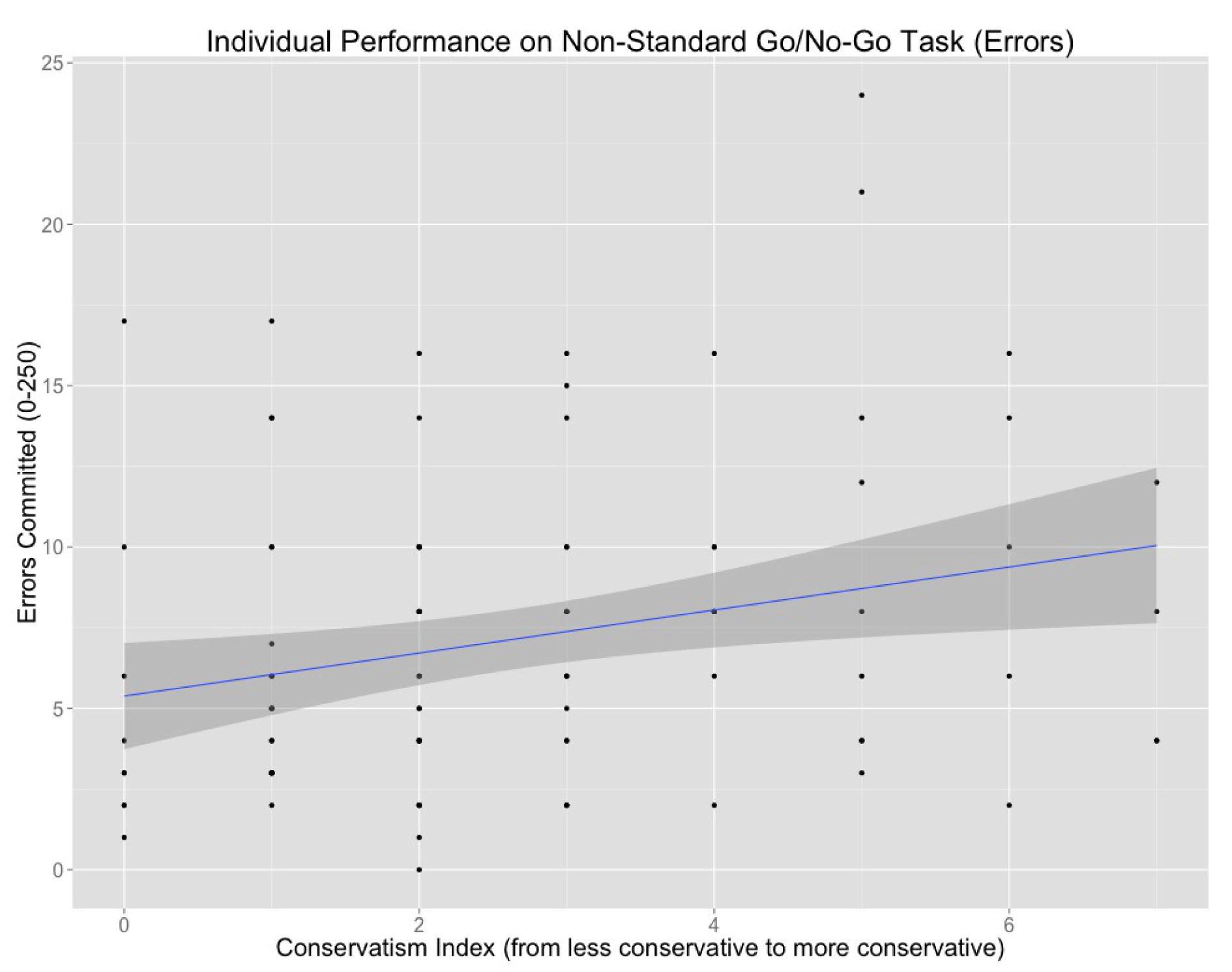
In total, 24,750 actions were taken. The percentage of errors was 2.9%, indicating that the subjects understood how the task was supposed to be completed. We found a correlation between the number of errors committed and ideology (
 $r$
(99)
 $=$
0.25,
 $p<0.05$
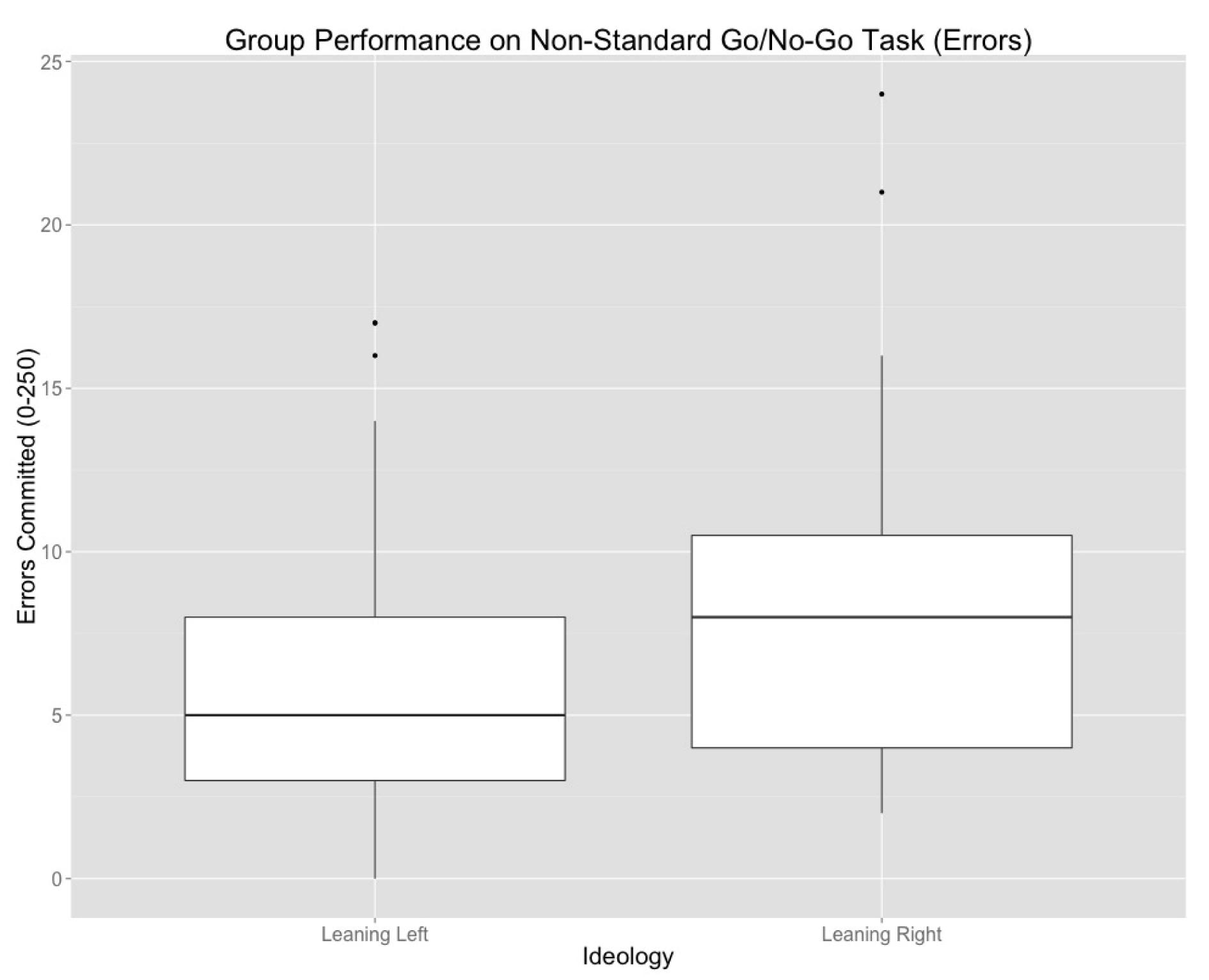
). Confirming the prediction, liberals outperformed conservatives in the task, as illustrated by Figures 1 and 2. Figure 1 shows that the number of errors committed increases as the conservatism index increases. The central line depicts the linear model estimate and the shaded area comprises the 95% confidence interval. To obtain a better sense of group performance, we aggregated subjects into two groups. Those whose conservatism index was 0, 1, or 2 were labeled “left leaning” (55.6% of the sample). We could not do a 50/50 cut in the sample because many subjects had the same position on the index.
Individual Errors.

Group Errors.

Figure 2 illustrates the effect on the aggregated data. The central horizontal line in the box on the left represents the median number of errors committed by the subjects on the left of the ideological spectrum. The median for the liberals is 5 and the median for the conservatives is 8. The white area between the top and bottom horizontal lines encompasses 50% of the group sample. The dots above the vertical line are subjects whose score is unusual in relation to their group performance. Comparing the two boxes, we see that those leaning right committed more errors on average in this task.
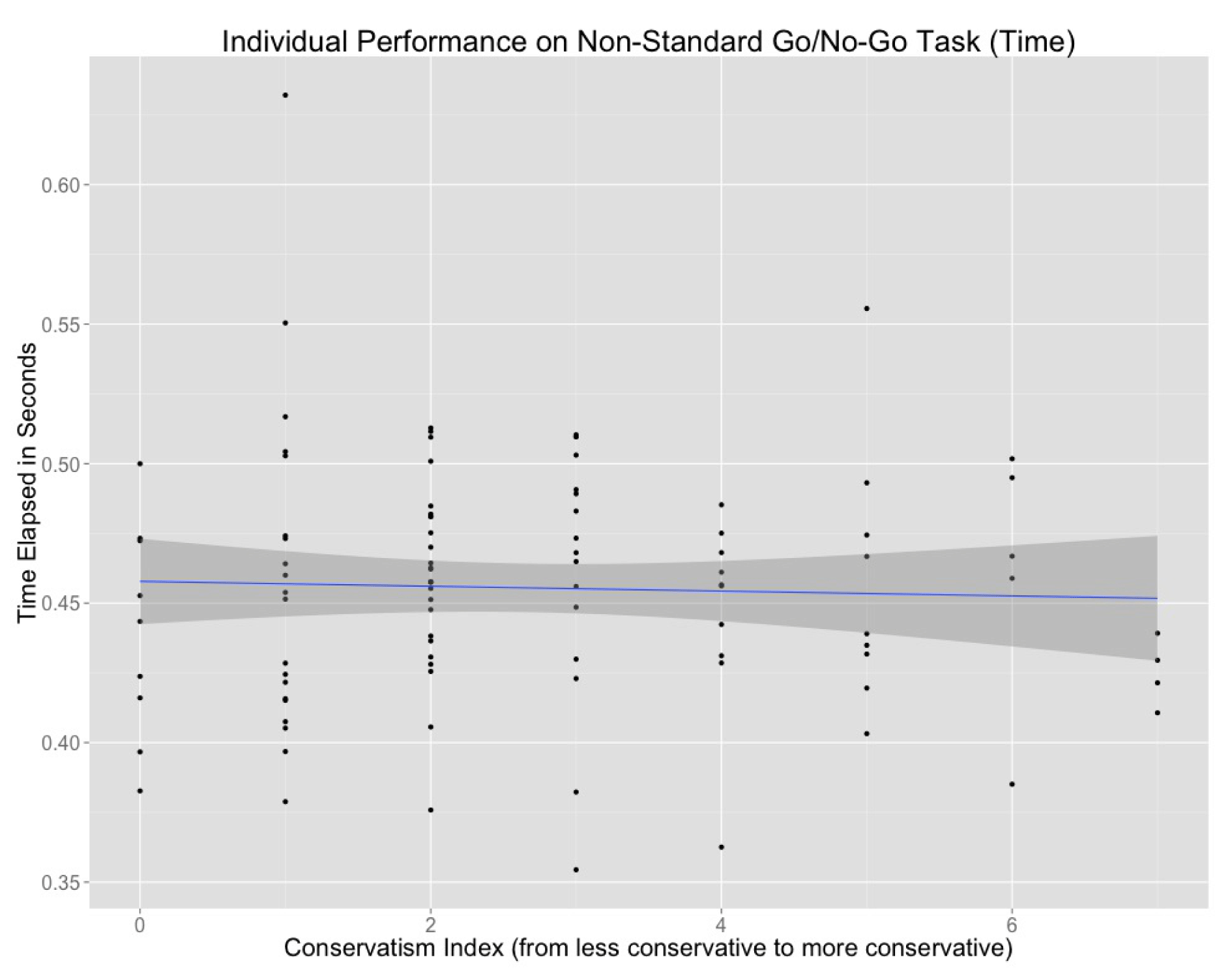
Individual Time.

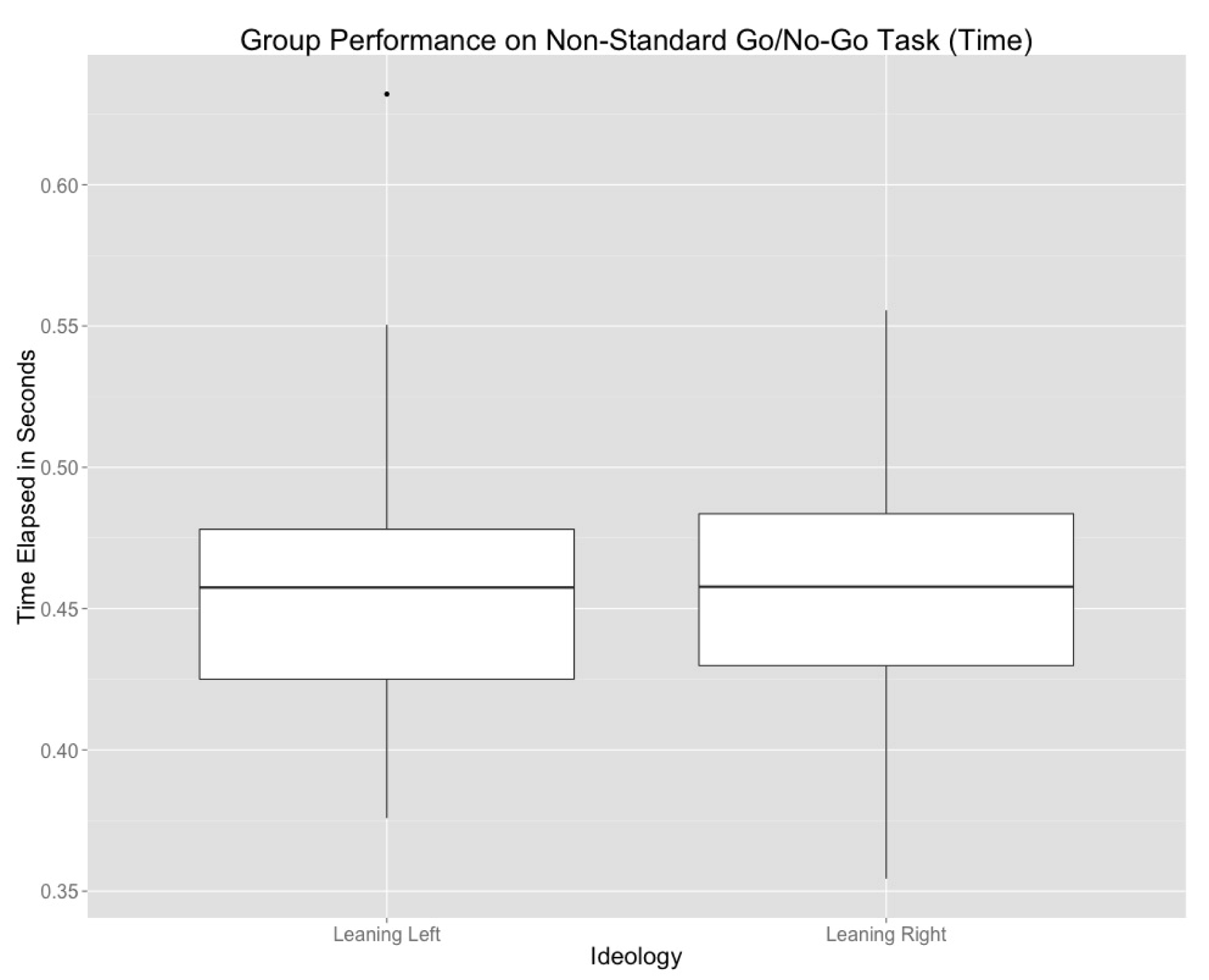
Group Time.

Curiously, the response time was the same for both groups (see Figures 3 and 4). Figures 1–4 show that although they committed fewer mistakes, liberals took about the same amount of time to respond to the stimuli as conservatives. The correlation between ideology and time is not statistically significant (
 $r$
(99)
 $=$
 $-$
0.04,
 $p>0.72$
). The median response time was 0.458 seconds for both liberals and conservatives. These results suggest that liberals possess a higher degree of cognitive flexibility. They perform better than conservatives even when there is no disinhibition issue, and they do not take additional time to achieve that finer accuracy.
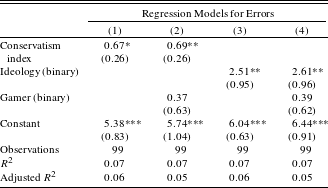
Table 1 depicts a regression explaining errors as a function of conservatism and gaming habit. In Column 1, we see that there is a statistically significant relation between ideology (Conservatism Index) and the number of errors that subjects committed. For each unit increase in the ideological index, 0.666 more errors are expected. The coefficient is statistically significant with a
 $p$
-value of 0.05. This finding corroborates our expectation that liberals perform better in that task. In addition, the effect is small, as expected, since even though the task requires cognitive flexibility, there is no disinhibition issue. Column 2 depicts the regression using a control variable. Gamer indicates that the subject plays video games frequently.
OLS regression models for errors.

 $\text{}^{\ast }p<0.05$
;
 $\text{}^{\ast \ast }p<0.01$
;
 $\text{}^{\ast \ast \ast }p<0.001$
.
Intuition suggests that frequent gamers might outperform less frequent gamers in an activity involving game-like movements. The ideology coefficient increases in size and statistical significance. The control variable coefficient is not statistically significant. In Columns 3 and 4, the regression models explain errors as a function of ideology, which is a binary measure. The simple model in Column 3 shows a statistically significant coefficient for ideology. An individual classified as conservative is expected to commit 2.509 more errors in this task than an individual classified as liberal. Column 4 shows the model with the Gamer control variable. The coefficient of ideology increases and maintains the same level of statistical significance. The coefficient for the control variable is not statistically significant.
Study 2
In this study, we attempted to find a robust link between a conservative cognitive skill and simple versus complex strategy choice. We attempted to measure this construct by creating a novel cognitive motor task with no ideological underpinning. The task’s originality comes from the creation of an experimental environment in which a conservative cognitive skill is favored. Therefore, that cognitive skill should be better adapted to making the optimal choice in the task, which consisted of selecting a simpler, unwavering strategy rather than a complex strategy.
This study involved the conception of an original cognitive task. For the purpose of presentation, we label it the “squares” task. With this task, we were able to further investigate whether situations exist in which a cognitive skill that favors a less flexible way of playing performs better than a cognitive skill in which cognitive flexibility is greater. As substantiated by the recent literature combining neuroscience and politics, as well as by our first study, tasks in which action switching is the optimal response to a stimulus tend to favor liberals more than conservatives. With the squares task, we were able to create situations in which greater cognitive flexibility could be a disadvantage. Even though it is not surprising that there are contexts that favor cognitive skills more commonly found in conservatives, to the best of our knowledge, this study is the first to attempt to show this relationship. Thus, the main point we were seeking was a robust link between conservatism and simple versus complex strategy choice.
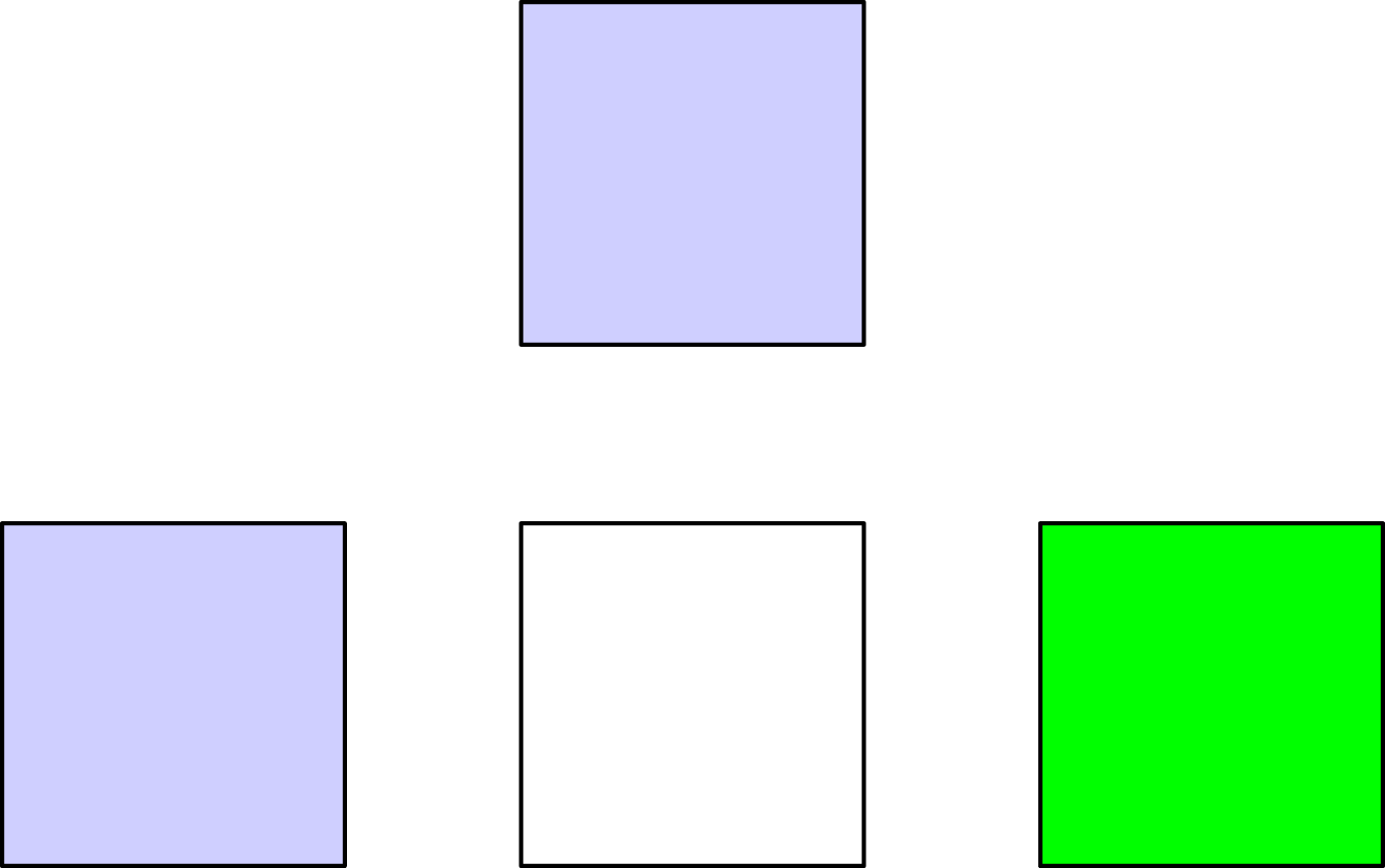
Experimental Task, Stimulus Example.

The task consisted of responding rapidly to stimuli. The stimuli were colored squares appearing on the computer monitor. The disposition of the squares can be seen in Figure 5. The squares were purple, white, or green. The square in the top row was never white; it could only be purple or green. There was always a purple, a white, and a green square in the bottom row. The color of the squares changed at random every 0.35 seconds. The color of the squares changed simultaneously. There were two possible actions that participants could take each time the colors changed (a trial): they could either indicate the position of the white square, or they could indicate the position of the square in the bottom row, which had the same color as the square in the top row — we called this action “matching.” To indicate the position of a square, subjects used the arrow keys. Subjects had to press the left arrow key to indicate left, the down arrow key to indicate center, and the right arrow key to indicate right. For example, if the squares were arrayed as in Figure 5, and the subjects wanted to indicate the position of the white square, they had to press the down arrow key. If they wanted to indicate the position of a square in the bottom row, which had the same color as the square in the top row, they had to press the left arrow key. The manipulation had 60 trials.
Given the speed of the treatments, indicating the position of the square in the bottom row that had the same color as the square in the top row was more difficult than just indicating the position of the white square. Indicating the position of the white square required only finding the position of that square. Indicating the position of the square in the bottom row that had the same color as the square in the top row required first internalizing the color of the square in the top row, then finding out where the square with the same color was located in the bottom row.
To make the matching personally valuable to subjects, we incentivized it. Each correct match was worth 1 point, and each correctly indicated white square yielded 0.8 points. Each point was converted into $0.0191. As the subjects participated in a variety of manipulations and tasks, they could earn up to $28 in the session. This task differed from other cognitive motor tasks in the sense that it required a choice between possible “strategies.” In go/no-go tasks, there is only one correct action in each trial. Here, there were two. However, the speed of the treatment still required some degree of cognitive flexibility. We needed a speedy treatment because we did not want the task to be simply a matter of choice. A good performance in this task thus required a combination of the “right” strategy and the ability to correctly undertake the chosen strategy. In line with the above discussion, it can be predicted that:
- H2:
-
Conservatives will outperform liberals in the squares task.
- H3:
-
Conservatives will choose the simpler task more frequently than liberals.
When we say performance, we mean the subject’s total score in the manipulation. The reason we expected the first result was that conservatives presumably have a more rigid mind-set and would thus adopt a strategy that favored the simpler task — that is, indicating the position of the white square. Hence, the second prediction helps explain the first.
As control variables, we asked the subjects whether they usually played video games (Gamer), whether they felt anxious during the task (Anxious (binary)), and whether they were left- or right-handed (Right-handedness). We expected those who usually played video games to perform better than those who did not; we expected those who felt anxious during the task to perform worse than those who did not; but, based on theory alone, we had no expectations regarding the effect of right- or left-handedness. However, one might wonder whether the keyboard disposition favored right-handed subjects, as the keys used in the study were more to the right of the keyboard. Thus, the left-handed subjects faced a less comfortable set up. It was reasonable, then, to expect that right-handed subjects would perform better in this study.
Data
For this study, we recruited students from the American university only through its pool of subjects. Forty-eight subjects completed the study. In total, 58 students participated, but data pertaining to 10 of them could not be gathered. Out of the 10, one of them accidentally quit the program in the middle of the task; 5 of them did not complete the follow-up questionnaire; and 5 of them entered an incorrect identity number upon completion. Once in the laboratory, subjects received instruction sheets for the tasks. After completing the tasks, they answered a follow-up questionnaire on Qualtrics, received the payment vouchers that reflected their individual performances on the tasks, and were then dismissed. Each session lasted one hour. On average, subjects made $16.24.
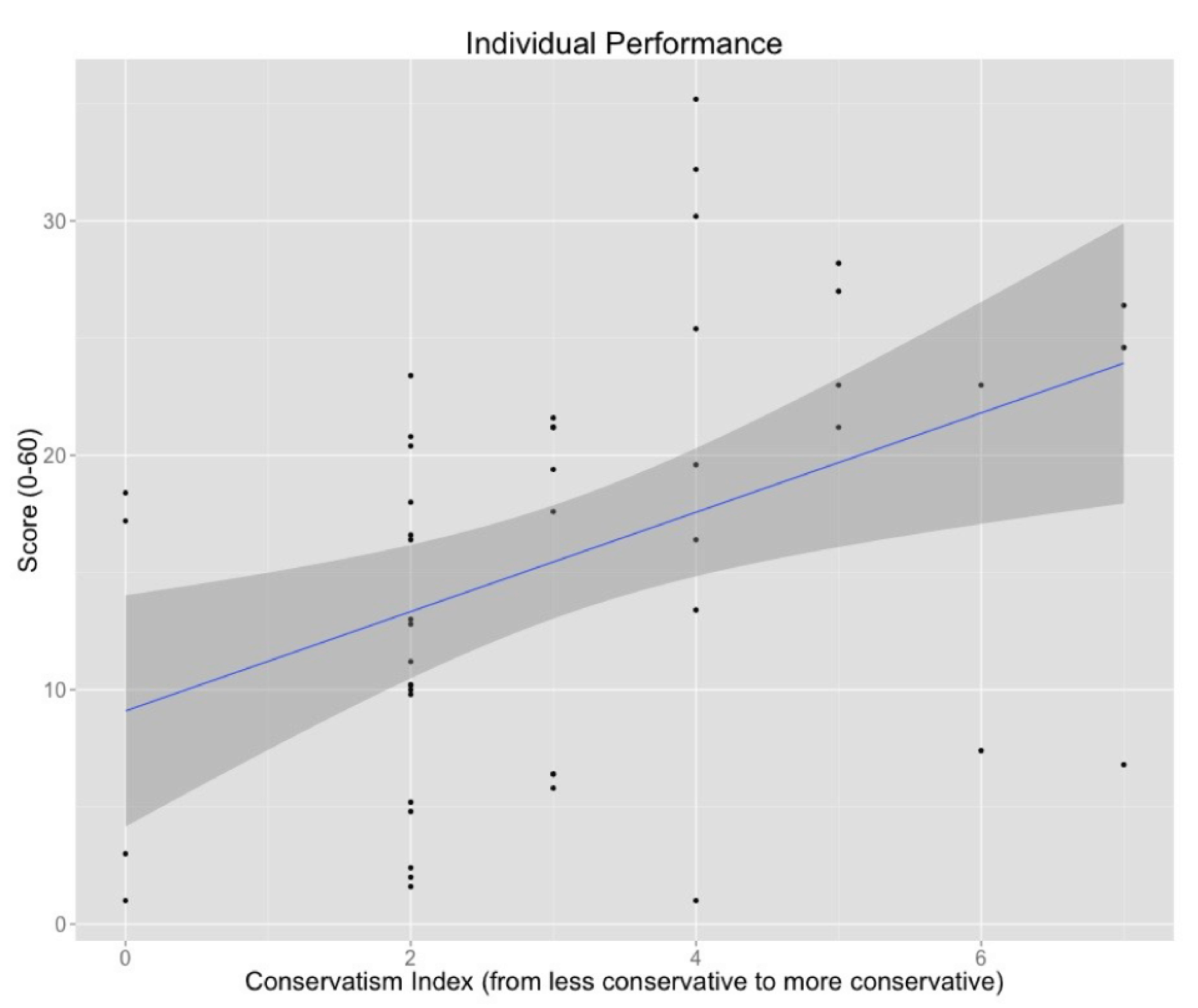
Individual Score.

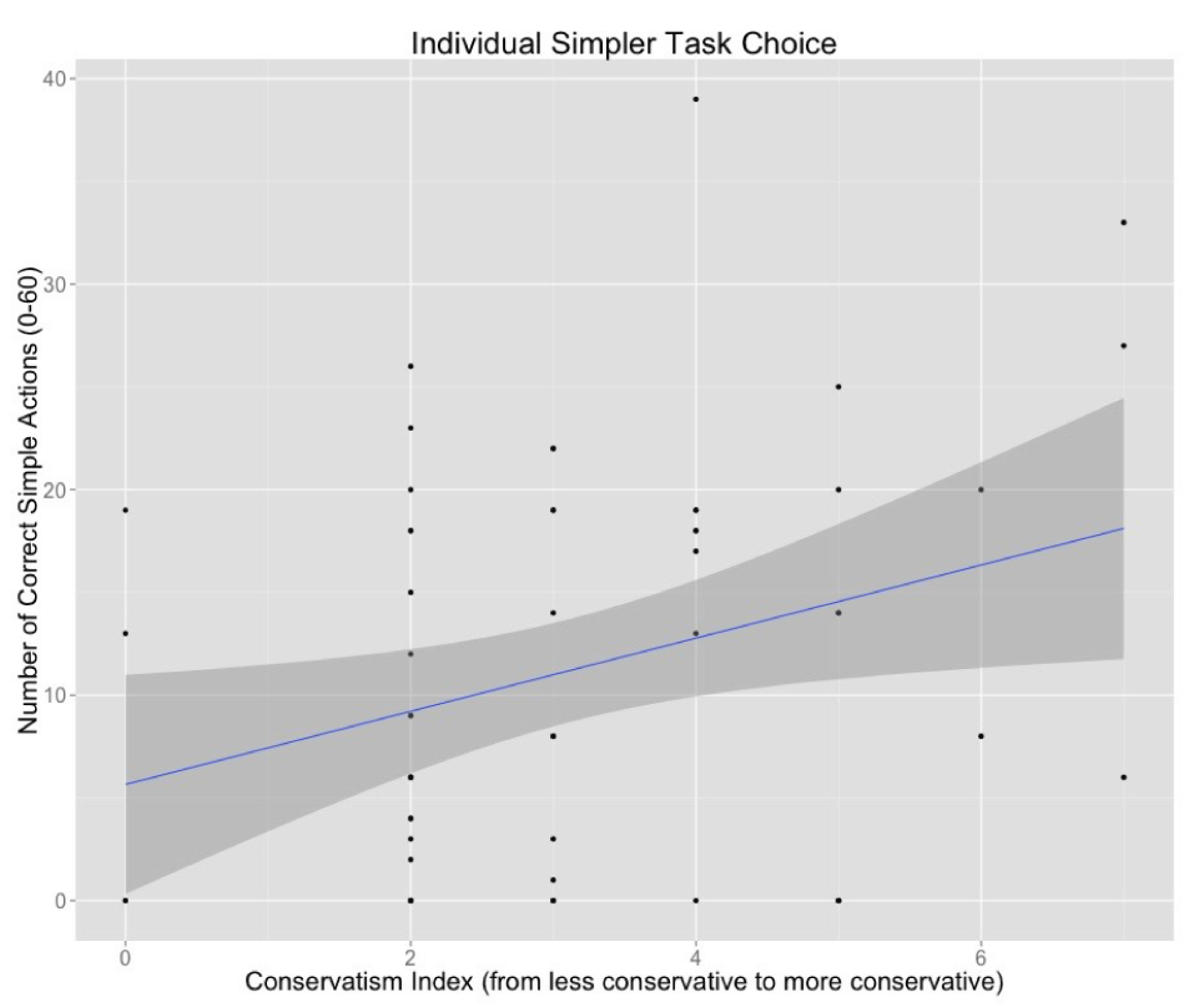
Individual Choice.

The post-test questionnaire contained several items about policy preferences. As in the previous study, the questions were about the subjects’ preferences regarding abortion rights, same-sex marriage, the legal use and sale of marijuana, gun control, and taxation. These questions were used to construct a conservatism index ranging from 0 to 11, where 0 is the least conservative and 11 is the most conservative. The mean ideology of our sample was 3.12 with a standard deviation of 1.68.
Results
We found a sizable and statistically significant correlation between ideology and performance in the task (
 $r$
(48)
 $=$
0.41,
 $p<0.001$
). Confirming H2, conservatives outperformed liberals in this task. In Figure 6, we can see that the more conservative the participants, the higher they scored on the task. The central line indicates the linear model estimate for this relation. The shaded area encompasses the 95% confidence interval. This result confirms our expectation that conservatives would perform better than liberals in this task. Figure 7 is the evidence for H3 — that the superior performance of conservatives is due to their choosing the simpler action more frequently. As we can see, the more conservative the individuals, the more they chose to locate the white squares. Again, the central line indicates the linear model estimate for this relation and the shaded area encompasses the 95% confidence interval.
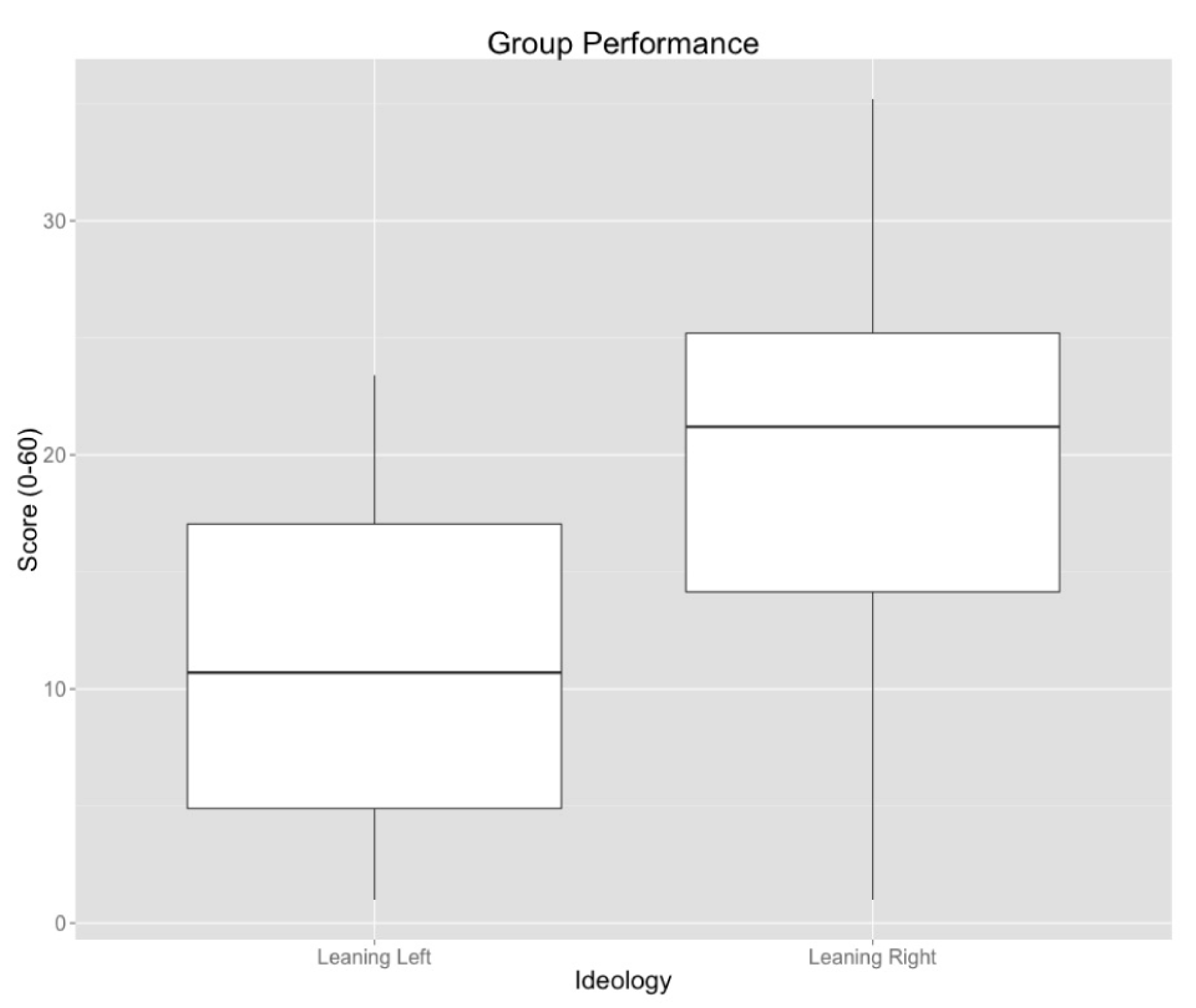
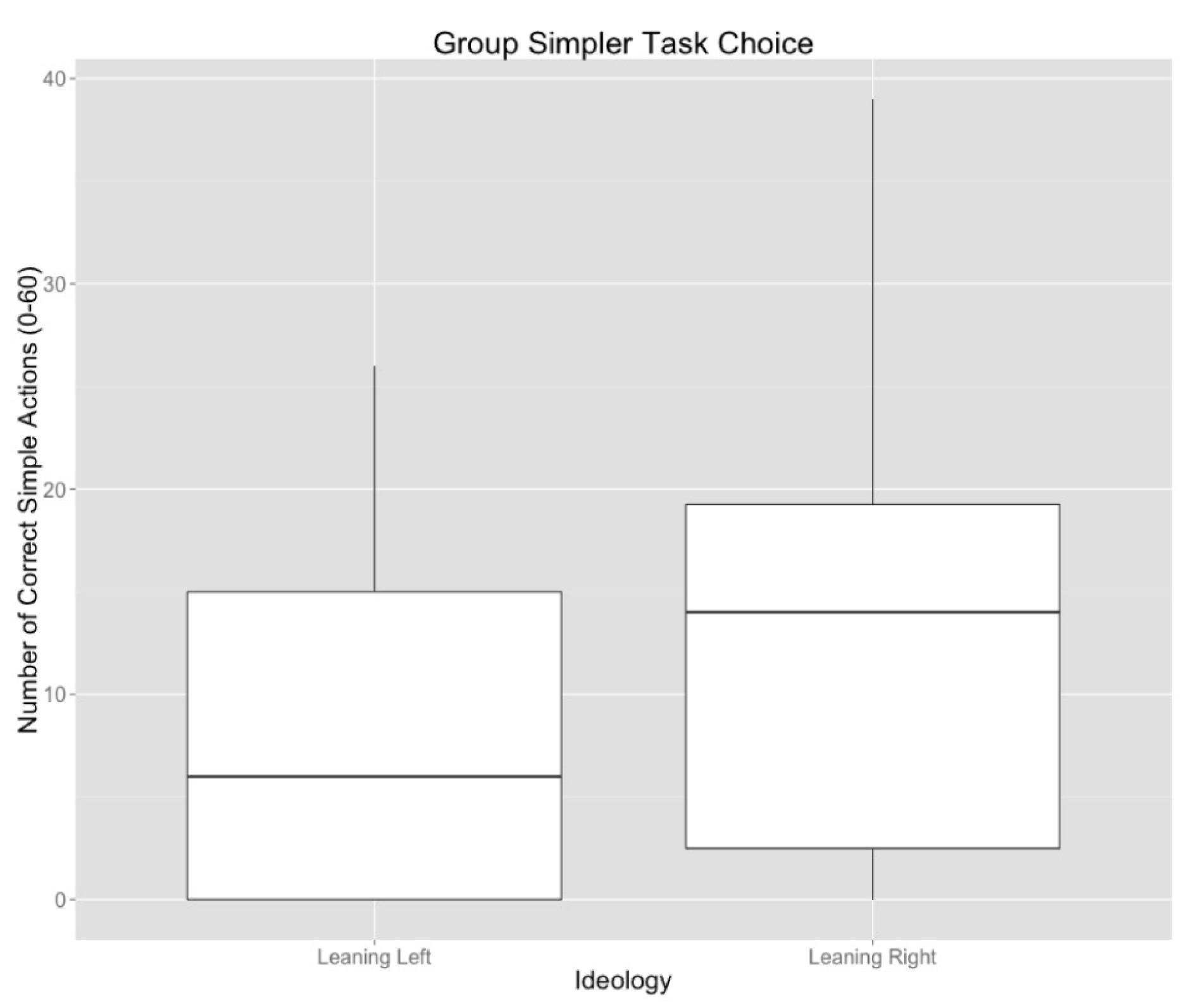
Figure 8 depicts the performance aggregated at the group level. The group of individuals leaning more to the left of the ideological spectrum has a median score of 12.8, while the group leaning more to the right has a median score of 21.2. A comparison of the two boxes indicates that, on average, conservatives scored higher than liberals in this task. Figure 9 indicates that conservatives chose the simpler task more frequently.
Group Score.

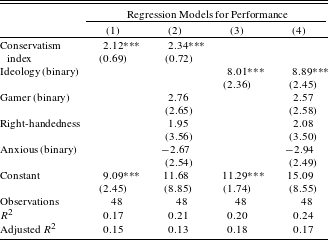
Table 2 shows the ordinary least squares (OLS) regression models that help us to better quantify these relationships. In all models, we have the regression of performance on the independent variables — individual performance in the models in Columns 1 and 2, and group performance in Columns 3 and 4. The dependent variable is the total number of points the subject scored in the task. In Column 1, we see that when the Conservatism Index is higher by 1 point, the individual performance is higher by 2.119 points, on average. This coefficient is significant at a
 $p$
-value of 0.001. Column 2 shows the coefficients for the model including the control variables. The coefficient for conservatism increases and remains statistically significant at a 0.001% level. The coefficients for the control variables are not statistically significant. In Column 3, we see the coefficient of the regression of group performance on Ideology. On average, an individual leaning to the right of the ideological spectrum is expected to score 8.009 more points than an individual leaning toward the left side of the spectrum. This coefficient is statistically significant with a
 $p$
-value of 0.001. The model in Column 4 shows that the control variables are not statistically significant. However, the coefficient of Ideology is. Our findings are robust to different cut points in aggregating ideological groups.
Group Choice.

OLS regression models for performance.

 $\text{}^{\ast }p<0.05$
;
 $\text{}^{\ast \ast }p<0.01$
;
 $\text{}^{\ast \ast \ast }p<0.001$
.
Discussion
We begin this section by pointing out an important feature of our sample of subjects. Both our Brazilian and American samples consisted of very left-leaning subjects. Note that on a 0–11 conservatism index, our sample means were 3.16 in Brazil and 2.30 in the United States. We believe that this distribution strengthens our results, since a sample compacted on one of side of the ideological spectrum works against treatment effects. One could argue that the findings in this article might be even more pronounced in a sample distributed more evenly across the ideological spectrum. However, we must remember that our mentions of conservatism in this context must be made in relative rather than absolute terms. This caveat is particularly important when we dichotomize the ideology variable. We created two groups to make the analysis clearer, but we acknowledge that this implies a less informative variable.
Studies 1 and 2 are consistent with the idea that liberals and conservatives exhibit different brain processes, even regarding nonideological issues. We found that liberals performed better in a nonstandard go/no-go task. Amodio et al. 33 found that disinhibition is an issue in neurocognitive correlates of liberalism and conservatism. However, Study 1’s nonstandard go/no-go task and the results obtained support the realization that even when there is no disinhibition issue — disinhibition being crucial in standard go/no-go tasks — conservatives perform worse. Therefore, we have not only a replication of the findings in Amodio et al. 34 but also a strengthening of the results.
On the other hand, conservatives outperformed liberals in a task in which the simpler action was the optimal one (Study 2). The expectation was that conservatives would outperform liberals when the task made the action requiring less cognitive flexibility more rewarding. Note that both conservatives and liberals started the task trying the matching strategy, but conservatives opted for the simple action more quickly. This more frequent choice might be caused by an ability to acknowledge that the complex task was more difficult earlier than liberals. The results in our second study are robust to a set of control variables richer than the one we had in our first study. The findings from Study 1 advance the work of Shook and Fazio concerning ideology, novel stimuli, and attitude formation. Reference Shook and Fazio35 In their research, these authors show that liberals and conservatives might have different approaches to a non-ideological task and might learn different things in the end. In our research, we have shown that different approaches can result in different overall performances. There are environments — even ones that are not political — in which the different cognitive skills of conservatives and liberals alternate as the most payoff-maximizing.
Conclusion
The recent and growing literature linking political behavior and biology has brought about a plethora of new avenues for empirical study in political science. The studies reported here prompt questions about whether different optimization tasks that require human cognition correlate with political opinions not readily classified in the liberal-conservative spectrum.
However, we believe that one of the most important contributions to the biopolitics literature is the implications for tolerance in our polarized world. Once we start to realize that those who hold an opinion different from ours might do so because they are predisposed to it, we might be able to stop jumping to conclusions and be more careful in our value judgments. This finer perception of the causes of ideology should be shared by both sides of the liberal-conservative spectrum.