1 Introduction
1.1 General notation
Let K be a field of characteristic not equal to
 $2$
with algebraic closure
 $\overline {K}$
, and let
 $f(z)\in K[z]$
be a polynomial of degree
 $2$
. After conjugating by a K-rational change of coordinates, we may assume that
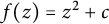 $f(z)=z^2+c$
for some
 $c\in K$
.
We consider the iterates
 $f^n$
of f under composition, where
 $f^0(z):=z$
, and where
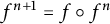 $f^{n+1}=f\circ f^n$
for each integer
 $n\geq 0$
. A point
 $y\in \overline {K}$
is said to be preperiodic if
 $f^n(y)=f^m(y)$
for some
 $n>m\geq 0$
. In the special case that y is periodic (i.e.,
 $m=0$
with the above notation), then its exact period is the smallest
 $n\geq 1$
for which
 $f^n(y)=y$
. An even further special case of periodicity occurs when
 $n=1$
, in which case, we say that y is fixed under the action of f. If y is preperiodic but not periodic, then we say that it is strictly preperiodic.
Given a point
 $x_0\in K$
, then for every integer
 $n\geq 0$
, we define
 $$\begin{align*}K_n:=K_{x_0,n}:= K(f^{-n}(x_0)) \quad\text{and}\quad G_n:= G_{x_0,n}:=\operatorname{\mathrm{Gal}}(K_n/K) \end{align*}$$
to be the nth preimage field and its associated Galois group. Note that
 $\dots K_3/K_2/K_1/K$
is a tower of field extensions, which we view as contained in
 $\overline {K}$
. Thus, we may further define
 $$\begin{align*}K_\infty:=K_{x_0,\infty}:=\bigcup_{n\geq 0} K_{x_0,n} \qquad\text{and}\qquad G_\infty:=G_{x_0,\infty}:=\operatorname{\mathrm{Gal}}(K_{x_0,\infty}/K)\cong \varprojlim_n G_{x_0,n} .\end{align*}$$
If the backward orbit
 $$\begin{align*}\operatorname{\mathrm{Orb}}_f^-(x_0) := \bigcup_{n\geq 0} f^{-n}(x_0) \end{align*}$$
contains no critical values of f, then each
 $f^{-n}(x_0)$
has exactly
 $2^n$
elements. If, in addition,
 $x_0$
is not periodic under f, then the sets
 $f^{-n}(x_0)$
are pairwise disjoint, and hence
 $\operatorname {\mathrm {Orb}}_f^-(x_0)$
has the structure of an infinite binary rooted tree
 $T_\infty $
, with
 $x\in f^{-(n+1)}(x_0)$
connected to
 $f(x)\in f^{-n}(x_0)$
by an edge. Thus, the action of the Galois group
 $G_{\infty }$
on the backward orbit induces an embedding of
 $G_{\infty }$
into the automorphism group
 $\operatorname {\mathrm {Aut}}(T_\infty )$
of the tree. Similarly, for each
 $n\geq 0$
, the action of
 $G_n$
on
 $f^{-n}(x_0)$
induces an embedding of
 $G_n$
into the automorphism group
 $\operatorname {\mathrm {Aut}}(T_n)$
of the finite binary rooted tree
 $T_n$
with n levels. For this reason, the groups
 $G_n$
and
 $G_\infty $
have come to be known as arboreal Galois groups. Moreover, given our interest in this action, whenever we discuss homomorphisms or isomorphisms between groups acting on trees, we always mean homomorphisms that are equivariant with respect to this action. The problem of fully understanding the arboreal Galois groups has generated a great deal of research in the recent years (see, e.g., [Reference Ahmad, Benedetto, Cain, Carroll and FangABCCF22, Reference Bridy, Doyle, Ghioca, Hsia and TuckerBDGHT21, Reference Benedetto, Faber, Hutz, Juul and YasufukuBFHJY17, Reference Benedetto, Ghioca, Juul and TuckerBGJT25a, Reference Benedetto, Ghioca, Juul and TuckerBGJT25b, Reference Benedetto and JuulBJ19, Reference Juul, Kurlberg, Madhu and TuckerJKMT16, Reference JuulJuu19, Reference PinkPin13]).
1.2 Postcritically finite quadratic polynomials
In this article, we consider the case that f is postcritically finite, or PCF, meaning that all of the critical points of f are preperiodic. Since we have assumed
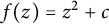 $f(z)=z^2+c$
, the critical points are
 $0$
and
 $\infty $
, with
 $\infty $
necessarily fixed; thus, to say that f is PCF is equivalent to saying that
 $0$
is preperiodic under f. In this case, it is well known that
 $G_{\infty }$
is of infinite index in
 $\operatorname {\mathrm {Aut}}(T_{\infty })$
. Following the notation in [Reference PinkPin13], there is a maximal integer
 $r\geq 1$
such that the values
 $f(0), f^2(0),\ldots ,f^r(0)$
are all distinct. That is, we have
 $f^{r+1}(0)=f^{s+1}(0)$
for some minimal integers
 $r>s\geq 0$
. Equivalently, since the two preimages of
 $f(y)$
are
 $\pm y$
, we have
 $f^r(0)=-f^s(0)$
for minimal integers
 $r>s\geq 0$
. We are interested in the case that the critical point
 $0$
is strictly preperiodic, in which case
 $s\geq 1$
, and the (strict) forward orbit
 $$\begin{align*}\operatorname{\mathrm{Orb}}_f^+(0) := \{f^i(0) : i\geq 1 \}\end{align*}$$
of
 $0$
under f consists of precisely r points. Also, we note that the point
 $f^{s+1}(0)=f^{r+1}(0)$
is periodic of exact period
 $r-s\geq 1$
, preceded by a tail
 $\{0,f(0),\ldots ,f^s(0)\}$
of cardinality
 $s+1\geq 2$
.
1.3 Pink’s work over function fields
In [Reference PinkPin13], Pink describes the group
 $G_{\infty }$
for each of the various choices of
 $r,s$
when the quadratic polynomial f is PCF, in the case that
 $K=\overline {k}(t)$
is a rational function field over an algebraically closed field
 $\overline {k}$
, and that the root point of the preimage tree is
 $x_0=t$
. Pink denotes this group
 $G^{\text {geom}}$
, and he proves that it is isomorphic to a subgroup of
 $\operatorname {\mathrm {Aut}}(T_{\infty })$
that he simply calls G, but which we denote
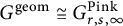
 $G^{\text {Pink}}_{r,s,\infty }$
. (When
 $s=0$
, we sometimes write simply
 $G^{\text {Pink}}_{r,\infty }$
.) He defines
 $G^{\text {Pink}}_{r,s,\infty }$
via explicit (topological) generators, each arising from the action of inertia in the context of
 $G^{\text {geom}}$
.
When
 $K=k(t)$
for k not algebraically closed, Pink denotes the resulting group
 $G_{\infty }$
as
 $G^{\text {arith}}$
, and he describes how it fits into a short exact sequence
 $$\begin{align*}1 \longrightarrow G^{\text{Pink}}_{r,s,\infty} \longrightarrow G^{\text{arith}} \longrightarrow \operatorname{\mathrm{Gal}}(\overline{k}/k)/N \longrightarrow 1, \end{align*}$$
for some normal subgroup N of
 $\operatorname {\mathrm {Gal}}(\overline {k}/k)$
depending on r, s, and k.
1.4 Our results
For each pair of integers
 $r>s\geq 1$
, we construct subgroups
 $B_{r,s,\infty }\subseteq M_{r,s,\infty }$
of
 $\operatorname {\mathrm {Aut}}(T_{\infty })$
(see Definition 1.1 and also Theorem 3.3), coinciding with Pink’s groups
 $G^{\text {Pink}}_{r,s,\infty }\cong G^{\text {geom}}\subseteq G^{\text {arith}}$
, and we show that the arboreal Galois group
 $G_{\infty }$
is isomorphic to a subgroup of
 $M_{r,s,\infty }$
. Thus, for each
 $r>s\geq 1$
, we work with the following groups:
-
G arith Pink’s notation for the arboreal Galois group
 $\operatorname {\mathrm {Gal}}(K_{t,\infty }/K)$
, where
$K=k(t)$
with k not algebraically closed.
G geom Pink’s notation for the arboreal Galois group
$\operatorname {\mathrm {Gal}}(K_{t,\infty }/K)$
, where
$K=\overline {k}(t)$
with
$\overline {k}$
algebraically closed.-
G r, s, ∞Pink Our notation for Pink’s abstract subgroup G of
$\operatorname {\mathrm {Aut}}(T_{\infty })$
. He proves
$G^{\text {geom}}\cong G^{\text {Pink}}_{r,s,\infty }$
. -
M r, s, ∞ One of our abstract subgroups of
$\operatorname {\mathrm {Aut}}(T_{\infty })$
, related to Pink’s
$G^{\text {arith}}$
. -
B r, s, ∞ Another of our abstract subgroups of
$\operatorname {\mathrm {Aut}}(T_{\infty })$
, related to Pink’s
$G^{\text {geom}}$
.







See our outline of the article in Section 1.7 for more details on the relationships between our groups above and Pink’s.
In this article, we work under the assumption that
 $s\ge 1$
, since we covered the special case
 $s=0$
(i.e.,
 $0$
is periodic under the action of f) in our earlier paper [Reference Benedetto, Ghioca, Juul and TuckerBGJT25b]. We also exclude the case of the Chebyshev quadratic polynomial
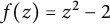 $f(z)=z^2-2$
(which is the case
 $s=1$
and
 $r=2$
), since the Galois group in this case has a simpler classical description, due to the connection between the Chebyshev polynomials and the multiplicative group
 $\mathbb {G}_m$
. Indeed, the quadratic Chebyshev polynomial satisfies
 $$\begin{align*}f^n(z+1/z) = z^{2^n} + 1/z^{2^n} \quad\text{for all}\quad n\geq 0. \end{align*}$$
Hence, letting
 $\mu (z):=z+1/z$
, then we have a skew commutation between
 $f(z)$
and the endomorphism
 $z\mapsto z^2$
of
 $\mathbb {G}_m^2$
since
 $f(\mu (z))=\mu (z^2)$
. Thus, arboreal extensions arising from the Chebyshev polynomial
 $f(z)=z^2-2$
, and hence their associated Galois groups, can be expressed in terms of classical Kummer extensions. (For more details regarding the relevant Kummer extensions, covering the more general case of semiabelian varieties, see [Reference RibetRib79]).
Our arguments apply over general fields with arbitrary base points, rather than restricting to the case
 $K=k(t)$
with base point t. Our approach is also more concrete than Pink’s; we define the groups
 $B_{r,s,\infty }$
and
 $M_{r,s,\infty }$
not by generators but rather as the set of all
 $\sigma \in \operatorname {\mathrm {Aut}}(T_{\infty })$
satisfying certain parity conditions, which also describe the action of elements of
 $G_\infty $
on
 $\sqrt {2}$
and on
 $2$
-power roots of unity in
 $K_\infty $
. As a by-product of our method, we obtain necessary and sufficient conditions for
 $G_{\infty }$
to be the whole group
 $M_{r,s,\infty }$
(see Theorem 7.4).
Our approach follows the general strategy of our previous paper [Reference Benedetto, Ghioca, Juul and TuckerBGJT25b], but there are additional technical complications arising in the strictly preperiodic cases. In particular, one of the cases (
 $s=2$
and
 $r=3$
) requires a significantly more delicate argument than any other case. (Analogous complications arose in Pink’s analysis of the same case in [Reference PinkPin13].)
1.5 Tree labelings
To prove and even state our main results, we label the nodes of the binary rooted trees
 $T_n$
and
 $T_{\infty }$
, using words in the two symbols a, b. That is, for each integer
 $m\geq 0$
and each node y at the mth level of the tree, we assign y a label in the form of a word
 $w\in \{a,b\}^m$
of length m, in such a way that for every such m and y, the two nodes lying above y have labels
 $wa,wb\in \{a,b\}^{m+1}$
. (Of course, in the tree
 $T_n$
, this latter restriction is vacuous for nodes y in the top level
 $m=n$
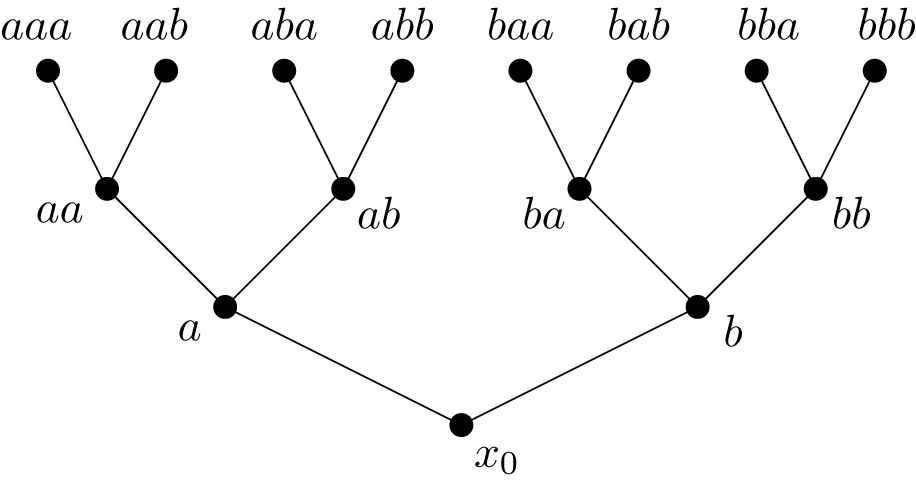
.) See Figure 1 for an example of a labeling of the tree
 $T_3$
. Although the root node has the empty label
 $()$
, we will often denote it as
 $x_0$
.
A labeling of
 $T_3$
.

We usually consider the nodes of
 $T_\infty $
as corresponding to the backward orbit
 $\operatorname {\mathrm {Orb}}_f^-(x_0)\in \overline {K}$
of
 $x_0\in K$
under
 $f(z)=z^2+c\in K[z]$
. Thus, we will often conflate a point
 $y\in f^{-n}(x_0)$
with the corresponding node y of the tree. Having assigned a labeling to the tree, we will also sometimes conflate a node y with its label. On the other hand, when further clarity is needed for the backward orbit
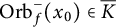 $\operatorname {\mathrm {Orb}}_f^-(x_0)\in \overline {K}$
, viewed as a tree of preimages, we will often write the value
 $y\in f^{-n}(x_0)\subseteq \overline {K}$
corresponding to the node with label
 $w\in \{a,b\}^n$
as
 $y=[w]$
.
Having labeled the tree, any tree automorphism
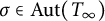 $\sigma \in \operatorname {\mathrm {Aut}}(T_\infty )$
or
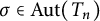 $\sigma \in \operatorname {\mathrm {Aut}}(T_n)$
must satisfy the following conditions:
-
(1) For every level
$m\geq 0$
(up to
$m\leq n$
for
$T_n$
),
$\sigma $
permutes the labels in
$\{a,b\}^m$
. -
(2) For every level
$m\geq 0$
(up to
$m\leq n-1$
for
$T_n$
), for each word
$s_1\ldots s_m\in \{a,b\}^m$
, we have either or
$$\begin{align*}\sigma(s_1 \dots s_m a) = \sigma(s_1 \dots s_m) a \quad\text{and}\quad \sigma(s_1 \dots s_m b) = \sigma(s_1 \dots s_m) b \end{align*}$$
$$\begin{align*}\sigma(s_1 \dots s_m a) = \sigma(s_1 \dots s_m )b \quad\text{and}\quad \sigma(s_1 \dots s_m) b = \sigma(s_1 \dots s_m) a. \end{align*}$$





For any tree automorphism
 $\sigma $
and m-tuple
 $x\in \{a,b\}^m$
, we define the parity
 $\operatorname {\mathrm {Par}}(\sigma ,x)$
of
 $\sigma $
at x to be
 $$\begin{align*}\operatorname{\mathrm{Par}}(\sigma,x) := \begin{cases} 0 & \text{ if } \sigma(xa)=\sigma(x)a \text{ and } \sigma(xb)=\sigma(x)b \\ 1 & \text{ if } \sigma(xa)=\sigma(x)b \text{ and } \sigma(xb)=\sigma(x)a. \end{cases} \end{align*}$$
Thus, any set of choices of
 $\operatorname {\mathrm {Par}}(\sigma ,x)$
for each node x of
 $T_{\infty }$
(resp.
 $T_{n-1}$
) determines a unique automorphism
 $\sigma \in \operatorname {\mathrm {Aut}}(T_{\infty })$
(resp.
 $\sigma \in \operatorname {\mathrm {Aut}}(T_n)$
).
Note that if
 $\sigma (x)=x$
, then
 $\operatorname {\mathrm {Par}}(\sigma ,x)$
is
 $0$
if
 $\sigma $
fixes the two nodes above x, or
 $1$
if it transposes them. However,
 $\operatorname {\mathrm {Par}}(\sigma ,x)$
is defined even if
 $\sigma (x)\neq x$
, although in that case, its value also depends on the labeling of the tree.
We further define
 $\operatorname {\mathrm {sgn}}(\sigma ,x)=(-1)^{\operatorname {\mathrm {Par}}(\sigma ,x)}$
. We have the following elementary relations:
 $$ \begin{align} \operatorname{\mathrm{sgn}}(\sigma \tau, x) = \operatorname{\mathrm{sgn}}\big(\sigma, \tau(x) \big) \cdot \operatorname{\mathrm{sgn}}(\tau, x) , \end{align} $$
and hence
 $$ \begin{align} \operatorname{\mathrm{Par}}(\sigma\tau,x) = \operatorname{\mathrm{Par}}\big(\sigma, \tau(x)\big) + \operatorname{\mathrm{sgn}}\big(\sigma,\tau(x)\big) \operatorname{\mathrm{Par}}(\tau,x). \end{align} $$
Equation (2) follows from equation (1) by writing
 $\operatorname {\mathrm {Par}}(\cdot ,\cdot )=(1-\operatorname {\mathrm {sgn}}(\cdot ,\cdot ))/2$
, or simply by checking the four possible choices of
 $\operatorname {\mathrm {Par}}(\tau ,x)$
and
 $\operatorname {\mathrm {Par}}(\sigma ,\tau (x))$
.
In particular, working modulo
 $2$
, we have
 $$ \begin{align} \operatorname{\mathrm{Par}}(\sigma\tau,x) \equiv \operatorname{\mathrm{Par}}\big(\sigma, \tau(x)\big) + \operatorname{\mathrm{Par}}(\tau,x) \pmod{2}. \end{align} $$
Definition 1.1 Fix a labeling of
 $T_{\infty }$
, and fix integers
 $r>s\geq 1$
. For any word x in the symbols
 $\{a,b\}$
and any
 $\sigma \in \operatorname {\mathrm {Aut}}(T_{\infty })$
, define
 $$\begin{align*}P^a_{r,s}(\sigma,x) := \sum_{w\in\{a,b\}^{r-1}} \operatorname{\mathrm{Par}}(\sigma,xaw) + \sum_{w'\in\{a,b\}^{s-1}} \operatorname{\mathrm{Par}}(\sigma,xbw') \in\mathbb{Z}/2\mathbb{Z} \end{align*}$$
and
 $$\begin{align*}P^b_{r,s}(\sigma,x) := \sum_{w\in\{a,b\}^{r-1}} \operatorname{\mathrm{Par}}(\sigma,xbw) + \sum_{w'\in\{a,b\}^{s-1}} \operatorname{\mathrm{Par}}(\sigma,xaw') \in\mathbb{Z}/2\mathbb{Z} .\end{align*}$$
Define
 $M_{r,s,\infty }$
to be the set of all
 $\sigma \in \operatorname {\mathrm {Aut}}(T_{\infty })$
for which
 $$ \begin{align} P^a_{r,s}(\sigma,x_1) = P^b_{r,s}(\sigma,x_1) = P^a_{r,s}(\sigma,x_2) = P^b_{r,s}(\sigma,x_2) \in\mathbb{Z}/2\mathbb{Z} \end{align} $$
for all nodes
 $x_1,x_2$
of
 $T_{\infty }$
.
For
 $\sigma \in M_{r,s,\infty }$
, define
 $P_{r,s}(\sigma )\in \mathbb {Z}/2\mathbb {Z}$
to be this common value. Define
 $B_{r,s,\infty } := \{\sigma \in M_{r,s,\infty } : P_{r,s}(\sigma )=0 \}$
.
We will see in Proposition 2.2 that
 $M_{r,s,\infty }$
and
 $B_{r,s,\infty }$
are groups, and that
 $P_{r,s}$
is a homomorphism.
For
 $0\leq m\leq n\leq \infty $
, it will be convenient to define homomorphisms
 $$\begin{align*}\operatorname{\mathrm{Res}}_{n,m}:\operatorname{\mathrm{Aut}}(T_n)\rightarrow \operatorname{\mathrm{Aut}}(T_m) \end{align*}$$
given by restricting elements of
 $\operatorname {\mathrm {Aut}}(T_n)$
to the mth level of the tree. In particular, for each integer
 $n\geq 1$
, we may define
 $B_{r,s,n}:=\operatorname {\mathrm {Res}}_{\infty ,n}(B_{r,s,\infty })$
and
 $M_{r,s,n}:=\operatorname {\mathrm {Res}}_{\infty ,n}(M_{r,s,\infty })$
.
1.6 Main result
We can now state our main theorem; for a more general version, see Theorem 7.6.
Theorem 1.2 Let K be a field of characteristic not equal to
 $2$
, and let
 $f(z)=z^2+c\in K[z]$
such that
 $0$
is strictly preperiodic under f. Let
 $r>s\geq 1$
be minimal so that
 $f^r(0)=-f^s(0)$
, and assume
 $r\ge 4$
and
 $s\ge 2$
.
Let
 $x_0\in K$
, and define
 $K_{x_0,n}=K(f^{-n}(0))$
,
 $K_{x_0,\infty }=\bigcup _{n=1}^\infty K_{x_0,n}$
,
 $G_{x_0,n}=\operatorname {\mathrm {Gal}}(K_{x_0,n}/K)$
, and
 $G_{x_0,\infty }=\operatorname {\mathrm {Gal}}(K_{x_0,\infty }/K)$
. In addition, define
 $D_1,\dots , D_r \in K$
by
 $$\begin{align*}D_i:=\begin{cases} x_0-c & \text{ if } i=1,\\ f^i(0)-x_0 & \text{ if } i\geq 2. \end{cases} \end{align*}$$
Then the following are equivalent:
-
(1)
$[K(\zeta _4, \sqrt {D_1}, \dots , \sqrt {D_r}):K]= 2^{r+1}.$
-
(2)
$[K_{x_0,r+1}:K]=|M_{r,s,r+1}|$
. -
(3)
$G_{x_0,r+1}\cong M_{r,s,r+1}$
. -
(4)
$G_{x_0,n}\cong M_{r,s,n}$
for all
$n\geq 1$
. -
(5)
$G_{x_0,\infty }\cong M_{r,s,\infty }$
.



In Theorem 7.6, we address the remaining cases:
 $s=1$
and
 $r\ge 3$
, and also
 $(s,r)=(2,3)$
. There are technical subtleties appearing in these other cases, especially when
 $(s,r)=(2,3)$
.
Remark 1.3 Theorems 1.2 and 7.6 are mainly of interest in the case that
 $x_0$
is not periodic under f. However, we do not include this hypothesis in the statement, because if
 $x_0$
is periodic, then all of statements (1)–(5) are false. Indeed, in that case, the two preimages of
 $x_0$
under f are both K-rational (as one of them is in the periodic cycle of
 $x_0$
) – making statements (2)–(5) false – and one of those K-rational points is
 $\sqrt {D_1}$
, making statement (1) false.
1.7 Outline of the article
In Section 2, we present several auxiliary results that we will use in later sections. We then divide our polynomials
 $z^2+c$
with strictly preperiodic critical point into three cases: the long-tail case, where
 $r>s\ge 2$
, the special long-tail case, where
 $(r,s) = (3,2)$
, and the short-tail, non-Chebyshev case, where
 $r\ge 3$
and
 $s=1$
.
In Section 3, we treat the long-tail case. We begin by writing
 $\sqrt {-1}$
as an explicit combination of inverse images of a point in Lemma 3.1. Then, in Theorem 3.4, we prove that the image of our iterated Galois group
 $G_\infty $
in
 $\operatorname {\mathrm {Aut}}(T_\infty )$
must be contained in
 $M_{r,s,\infty }$
, by describing its action on
 $\sqrt {-1}$
in terms of
 $P^a_{r,s}$
and
 $P^b_{r,s}$
.
In Section 4, we deal with the special long-tail case
 $(r,s)=(3,2)$
, which requires additional attention. In Lemma 4.1, we show that it is also possible to write
 $\sqrt {2}$
as an explicit combination of inverse images of a point. (Note that, for a general root point
 $x_0$
, it is not possible to do this for
 $r>s\ge 2$
when
 $(r,s) \not = (3,2)$
.) We further introduce a new function
 $R_{3,2}$
in Definition 4.2 and use it to define a special subgroup
 $\tilde {M}_{3,2,\infty }$
of
 $M_{3,2,\infty }$
. Then, in Theorem 4.5, we show that the image of
 $G_\infty $
in
 $\operatorname {\mathrm {Aut}}(T_\infty )$
must be contained in
 $\tilde {M}_{3,2,\infty }$
, by describing its action on
 $\sqrt {2}$
in terms of
 $R_{3,2}$
.
In Section 5, we treat the short-tail, non-Chebyshev case. Following the pattern of the previous two sections, we write
 $\sqrt {2}$
as an explicit combination of inverse images of a point (in Lemma 5.1), define a subgroup
 $\tilde {M}_{r,1,\infty }$
of
 $B_{r,1,\infty }$
in terms of a function
 $R_{r,1}$
(in Definition 5.3), and then show that the image of our iterated Galois group
 $G_\infty $
in
 $\operatorname {\mathrm {Aut}}(T_\infty )$
must be contained in
 $\tilde {M}_{r,1,\infty }$
(in Theorem 5.6).
Next, we relate our groups to Pink’s in Section 6, by first showing that Pink’s generators for
 $G_{r,s,\infty }^{\text {Pink}}$
lie in
 $B_{r,s,\infty }$
in the long-tail case, and in corresponding groups
 ${\tilde B}_{r,s,\infty }$
when
 $s=1$
or when
 $(r,s) = (3,2)$
. We then prove that Pink’s group
 $G_{r,s,\infty }^{\text {Pink}}$
in fact coincides with
 $B_{r,s,\infty }$
or
 ${\tilde B}_{r,s,\infty }$
by comparing their rates of growth.
Finally, we derive explicit conditions for the arboreal Galois groups to be of maximal size in Section 7. The full version of our main result (Theorem 1.2) appears here as Theorem 7.6.
2 Preliminary results
2.1 Iterated preimages of given point
We proved the following elementary result in [Reference Benedetto, Ghioca, Juul and TuckerBGJT25b, Proposition 2.1]. We will use it extensively in the current article, so we restate it here for the convenience of the reader.
Proposition 2.1 Let K be a field of characteristic not equal to
 $2$
. Let
 $c\in K$
, define
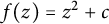 $f(z)=z^2+c$
, let
 $y\in \overline {K}$
, and let
 $m\geq 1$
. Choose
 $\alpha _1,\ldots ,\alpha _{2^{(m-1)}}\in f^{-m}(y)$
so that the roots of
 $f^m(z)=y$
, repeated according to multiplicity, are precisely
 $$ \begin{align} \pm\alpha_1, \ldots, \pm \alpha_{2^{(m-1)}}. \end{align} $$
Then
 $$\begin{align*}\big( \alpha_1 \alpha_2 \dots \alpha_{2^{(m-1)}} \big)^2 = \begin{cases} f^m(0)-y & \text{ if } m\geq 2, \\ y-f(0) & \text{ if } m=1. \end{cases} \end{align*}$$
Our next proposition will be helpful for describing some subgroups of
 $\operatorname {\mathrm {Aut}}(T_\infty )$
. When applying it, X will be the set of nodes of
 $T_{\infty }$
, and
 $\Gamma $
will be a subgroup of
 $\operatorname {\mathrm {Aut}}(T_\infty )$
, which acts on X. (Often, we will have
 $\Gamma =\operatorname {\mathrm {Aut}}(T_\infty )$
, in fact.) An appropriate function P, as described in the proposition, then allows us to define a subgroup of
 $\Gamma $
.
Proposition 2.2 Let
 $\Gamma $
be a group with identity element e, and let H be a group with subgroup
 $H_0$
. Let X be a nonempty set, and let
 $P:\Gamma \times X \to H$
be a function. Define
 $$\begin{align*}\displaystyle G:=\{\sigma\in\Gamma : \forall x_1,x_2\in X, \, \, P(\sigma,x_1)=P(\sigma,x_2)\in H_0 \} .\end{align*}$$
Suppose that
 $e\in G$
, and that for all
 $\sigma \in G$
,
 $\tau \in \Gamma $
, and
 $x\in X$
, we have
 $$ \begin{align} P(\sigma) P(\tau,x) = P(\sigma\tau,x), \end{align} $$
where
 $P(\sigma ):=P(\sigma ,x)\in H_0$
is the constant value of
 $P(\sigma ,\cdot )$
. Then G is a subgroup of
 $\Gamma $
, and
 $P:G\to H_0$
is a group homomorphism.
Proof By hypothesis, G is nonempty. Given
 $\sigma ,\tau \in G$
and
 $x_1,x_2\in X$
, we have
 $$\begin{align*}P(\sigma\tau, x_1) = P(\sigma) P(\tau,x_1) = P(\sigma) P(\tau,x_2) = P(\sigma\tau, x_2),\end{align*}$$
and this common value lies in
 $H_0$
, since
 $P(\sigma ), P(\tau ,x_1) \in H_0$
. Thus,
 $\sigma \tau \in G$
. In addition,
 $$\begin{align*}P(\sigma) P(\sigma^{-1}, x_1) = P(\sigma\sigma^{-1}, x_1) = P(e, x_1) = P(e, x_2){=} P(\sigma\sigma^{-1}, x_2) {=} P(\sigma) P(\sigma^{-1}, x_2) .\end{align*}$$
Multiplying both sides on the left by
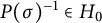 $P(\sigma )^{-1}\in H_0$
, we have
 $$\begin{align*}P(\sigma^{-1}, x_1) = P(\sigma^{-1}, x_2) = P(\sigma)^{-1} P(e, x_1) \in H_0, \end{align*}$$
proving that
 $\sigma ^{-1}\in G$
. Thus, G is a subgroup of
 $\Gamma $
; and by equation (6), the map
 $\sigma \mapsto P(\sigma )$
is a homomorphism.
2.2 Ramification in number fields generated by a PCF parameter
The results in this section concern the fields of definition of maps
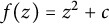 $f(z)=z^2+c$
with particular critical orbit structures. We will not use them until Section 7.1.
Write
 $f_x(z)=z^2+x\in \mathbb {Z}[x,z]$
. For any integer
 $n\geq 1$
, observe that
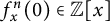 $f_x^n(0)\in \mathbb {Z}[x]$
is a polynomial in x. For each pair of integers
 $r>s\geq 0$
, define
 $F_{r,s}(x) = f_x^r(0) + f_x^s(0)$
. The roots of
 $F_{r,s}\in \mathbb {Z}[x]$
are those values of
 $c\in \overline {\mathbb {Q}}$
for which
 $f_c^r(0)=-f_c^s(0)$
.
Lemma 2.3 For any integers
 $m,n\geq 1$
, we have
 $$\begin{align*}f_x^n(0) \equiv \sum_{i=0}^{n-1} x^{2^i} \pmod{2\mathbb{Z}[x]}. \end{align*}$$
Proof We proceed by induction on n. For
 $n=1$
, we have
 $f_x(0)=x$
as desired. Assuming it holds for n, then modulo 2, we have
 $$\begin{align*}f_x^{n+1}(0) = \big(f_x^n(0))^2 + x \equiv x+\sum_{i=0}^{n-1} \Big(x^{2^i}\Big)^2 = \sum_{i=0}^{n} x^{2^i}. \end{align*}$$
Lemma 2.4 Let
 $r>s\geq 1$
be integers. Let
 $c\in \overline {\mathbb {Q}}$
be a root of the polynomial
 $F_{r,s}(x)=f_x^r(0)+f_x^s(0)$
such that the
 $r+1$
iterates
 $\{f_c^i(0) \, | \, 0\leq i\leq r\}$
are all distinct. Let
 $v_2$
be the valuation on
 $\mathbb {Q}_2(c)$
normalized so that
 $v_2(2)=1$
, and let
 $n:=r-s$
. Then:
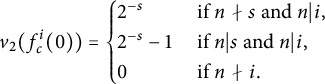
-
(1) For every
$i\geq 1$
, we have
$\displaystyle v_2(f_c^{i}(0))=\begin {cases} 2^{-s} & \text { if } n\nmid s \text { and } n|i, \\ 2^{-s}-1 & \text { if } n|s \text { and } n|i, \\ 0 & \text { if } n\nmid i. \end {cases}$
-
(2) If
$n\nmid s$
, then the ramification index
$e(\mathbb {Q}_2(c)/\mathbb {Q}_2)$
is exactly
$2^s$
. -
(3) If
$n|s$
, then the ramification index
$e(\mathbb {Q}_2(c)/\mathbb {Q}_2)$
is exactly
$2^s-1$
.





Proof Since the
 $r+1$
listed iterates are distinct, c must be a root of the relevant Misiurewicz polynomial (see Section 1 of [Reference GokselGok20] or equation (1) of [Reference Benedetto and GokselBG23]). Statement (1) is therefore the content of Theorem 1.3 of [Reference GokselGok20] with
 $i=n=r-s$
.
Define
 $\displaystyle g(x):=x^{2^{n-1}} + x^{2^{n-2}} + \cdots + x$
. Then Lemma 2.3 gives us
 $$ \begin{align} F_{r,s}(x) \equiv \sum_{i=s}^{r-1} x^{2^i} \equiv \big( g(x) \big)^{2^s} \pmod{2}. \end{align} $$
Since
 $g'(x)\equiv 1 \pmod {2}$
, we have that
 $g(x)$
is separable modulo 2. Therefore, it follows from equation (7) that the desired ramification index satisfies
 $e(\mathbb {Q}_2(c)/\mathbb {Q}_2)\leq 2^s$
.
If
 $n\nmid s$
, then statement (1) of this lemma says that
 $v_2(f_c^{n}(0))=2^{-s}$
, and hence
 $e(\mathbb {Q}_2(c)/\mathbb {Q}_2)$
is divisible by
 $2^s$
. Since we just showed that
 $e(\mathbb {Q}_2(c)/\mathbb {Q}_2)\leq 2^s$
, we must have
 $e(\mathbb {Q}_2(c)/\mathbb {Q}_2)=2^s$
, proving statement (2).
If
 $n|s$
and
 $s\geq 2$
, then statement (1) of this lemma shows that
 $e(\mathbb {Q}_2(c)/\mathbb {Q}_2)$
is divisible by
 $2^s - 1$
. Combined with the above fact
 $e(\mathbb {Q}_2(c)/\mathbb {Q}_2)\leq 2^s$
, we have
 $e(\mathbb {Q}_2(c)/\mathbb {Q}_2)=2^s-1$
, proving statement (3) when
 $s\geq 2$
.
Finally, if
 $n|s$
and
 $s=1$
, then we must have
 $r=2$
, so that
 $F_{r,s}(x)=x^2+2x =x(x+2)$
, and hence
 $c\in \{0,-2\}$
. (Actually, the case
 $c=0$
is excluded by the assumption that the first
 $r+1$
iterates
 $f_c^i(0)$
are distinct.) Thus,
 $\mathbb {Q}_2(c)=\mathbb {Q}_2$
, so that
 $e(\mathbb {Q}_2(c)/\mathbb {Q}_2)=1 = 2^s-1$
, completing the proof of statement (3).
For the case
 $s=1$
, we have the following result.
Proposition 2.5 Let
 $r\geq 3$
, and let
 $c\in \overline {\mathbb {Q}}$
be a root of the polynomial
 $F_{r,1}(x) =f_x^r(0)+x$
. Then
 $\sqrt {2}\not \in \mathbb {Q}(c)$
.
Proof We will prove the stronger result that
 $\sqrt {2}\not \in \mathbb {Q}_2(c)$
. Let
 $n:=r-1\geq 2$
, and let
 $a:=f_c^{n-1}(0)$
and
 $y:= f_c(a) = f_c^n(0)$
, so that
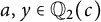 $a,y \in \mathbb {Q}_2(c)$
. By Lemma 2.4(1), we have
 $v_2(a)=0$
and
 $v_2(y)=1/2$
.
Because
 $y^2=f_c(y)-c=f_c^r(0)-c$
and
 $a^2=f_c(a)-c=y-c$
, we have
 $$\begin{align*}\big(y-a\sqrt{2}\big)\big(y+a\sqrt{2}\big) = y^2 - 2a^2 = f_c^r(0) - c - 2( y- c ) = F_{r,1}(c) - 2y = -2y ,\end{align*}$$
where the final equality is because
 $F_{r,1}(c)=0$
. Thus, if
 $\sqrt {2}\in \mathbb {Q}_2(c)$
, we would have
 $$ \begin{align} v_2\big( y - a\sqrt{2} \big) + v_2\big( y + a\sqrt{2} \big) = 1 + v_2(y) = \frac{3}{2}. \end{align} $$
If
 $v_2( y - a\sqrt {2})> v_2( y + a\sqrt {2} )$
, then by the triangle equality for valuations, we would have
 $$\begin{align*}v_2\big(y-a\sqrt{2}\big)> v_2\big(y+a\sqrt{2}\big) = v_2\big( 2a\sqrt{2} \big) = \frac{3}{2},\end{align*}$$
contradicting equation (8). Similarly, we cannot have
 $v_2( y - a\sqrt {2}) < v_2( y + a\sqrt {2} )$
, either.
Thus,
 $v_2( y - a\sqrt {2}) = v_2( y + a\sqrt {2} )$
, and hence equation (8) yields
 $v_2( y - a\sqrt {2})=3/4$
. Since
 $y-a\sqrt {2}\in \mathbb {Q}_2(c)$
, it would follow that the ramification index of
 $\mathbb {Q}_2(c)/\mathbb {Q}_2$
is at least
 $4$
, contradicting Lemma 2.4(2), which says that
 $e(\mathbb {Q}_2(c)/\mathbb {Q}_2)=2$
. Therefore, we must have
 $\sqrt {2}\not \in \mathbb {Q}_2(c)$
.
For
 $s\geq 2$
, we have the following result.
Proposition 2.6 Let
 $r> s \geq 2$
, and let
 $c\in \overline {\mathbb {Q}}$
be a root of the polynomial
 $F_{r,s}(x)=f_x^r(0)+f_x^s(0)$
. Then
 $\sqrt {2},\sqrt {-1},\sqrt {-2}\not \in \mathbb {Q}(c)$
.
Proof Let
 $n:=r-s$
. If
 $n|s$
, then by Lemma 2.4(3), the extension
 $\mathbb {Q}_2(c)/\mathbb {Q}_2$
has odd ramification degree. Therefore,
 $\mathbb {Q}_2(c)$
cannot contain any of
 $\sqrt {2},\sqrt {-1},\sqrt {-2}$
, each of which has ramification index 2 over
 $\mathbb {Q}_2$
. For the remainder of the proof, then, we assume that
 $n\nmid s$
.
Pick
 $\ell \geq 1$
such that
 $n|(s+\ell )$
, let
 $\alpha :=f_c^\ell (0)$
, and let
 $a:=\alpha ^{2^{s-1}}$
. Since
 $n\nmid s$
, we also have
 $n\nmid \ell $
, and therefore
 $v_2(a)=v_2(\alpha )=0$
by Lemma 2.4(1).
Let
 $\omega :=f_c^n(0)$
and
 $y:=\omega ^{2^{s-1}}$
, so that by Lemma 2.4(1), we have
 $v_2(\omega )=2^{-s}$
and hence
 $v_2(y)=1/2$
.
Also define
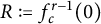 $R:=f_c^{r-1}(0)$
and
 $S:=f_c^{s-1}(0)$
. By Lemma 2.3, we have
 $$\begin{align*}y + S \equiv \bigg( \sum_{i=0}^{n-1} c^{2^i} \bigg)^{2^{s-1}} + \sum_{i=0}^{s-2} c^{2^i} \equiv \sum_{i=s-1}^{r-2} c^{2^i} + \sum_{i=0}^{s-2} c^{2^i} = \sum_{i=0}^{r-2} c^{2^i} \equiv R\ \pmod{2\mathbb{Z}[c]} , \end{align*}$$
and hence
 $$\begin{align*}y^2 + 2yS + S^2 = (y+S)^2 \equiv R^2\ \pmod{4\mathbb{Z}[c]} .\end{align*}$$
On the other hand, we also have
 $R^2+S^2 + 2c = F_{r,s}(c)=0$
, and therefore
 $$ \begin{align} y^2 = y^2 - F_{r,s}(c) \equiv \big(\! R^2 - S^2 - 2yS \!\big) - \big(\!R^2 + S^2 + 2c \!\big) \equiv 2(c+ S^2 + yS)\ \pmod{4\mathbb{Z}[c]}. \end{align} $$
Let
 $\gamma $
be any of
 $\sqrt {2},\sqrt {-2}$
, or
 $1+\sqrt {-1}$
. Let
 $\tilde {\gamma }:=-\gamma $
if
 $\gamma =\sqrt {\pm 2}$
, or
 $\tilde {\gamma }:=2-\gamma $
if
 $\gamma =1+\sqrt {-1}$
. Define
 $Q(t)\in \mathbb {Z}[c][t]$
to be
 $$\begin{align*}Q(t) := (t-a\gamma)(t-a\tilde{\gamma}) = \begin{cases} t^2 \mp 2a^2 & \text{ if } \gamma=\sqrt{\pm 2}, \\ t^2 - 2at+2a^2 & \text{ if } \gamma=1+\sqrt{-1}. \end{cases} \end{align*}$$
Noting that
 $0 < 2v_2(\omega )\leq v_2(y) < 1$
, then, and working modulo
 $2\omega ^2\mathbb {Z}[c]$
, we have
 $2y\equiv 0$
, and hence
 $$\begin{align*}Q(y) &\equiv y^2 + 2a^2 \equiv 2(c + S^2 + a^2) \equiv 2\bigg( c + \sum_{i=1}^{s-1} c^{2^i} + \sum_{i=s}^{s+\ell-1} c^{2^i} \bigg)\\ & \equiv 2 f_c^{s+\ell}(0) \ \pmod{2\omega^2\mathbb{Z}[c]} ,\end{align*}$$
where the second congruence is by equation (9), and the third and fourth are by Lemma 2.3 and the definition of a. Since
 $n | (s+\ell )$
, we have
 $v_2(f_c^{s+\ell }(0))=2^{-s} = v_2(\omega )$
by Lemma 2.4(1), and therefore
 $v_2(Q(y)) = 1 + 2^{-s}$
.
If
 $\gamma \in \mathbb {Q}_2(c)$
, then we would have
 $$ \begin{align} v_2\big( y - a\gamma \big) + v_2\big( y - a\tilde{\gamma} \big) = v_2(Q(y)) = 1+2^{-s}. \end{align} $$
If
 $v_2( y - a\gamma )> v_2( y + a\tilde {\gamma } )$
, then as in the proof of Proposition 2.5, we would have
 $$\begin{align*}v_2\big(y-a\gamma\big)> v_2\big(y-a\tilde{\gamma}\big) = v_2\big( a (\gamma-\tilde{\gamma}) \big) \geq 1, \end{align*}$$
contradicting equation (10). Similarly, we cannot have
 $v_2( y - a\gamma ) < v_2( y + a\tilde {\gamma } )$
, either.
Thus,
 $v_2( y - a\gamma ) = v_2( y + a\tilde {\gamma } )$
, so that equation (10) yields
 $v_2( y - a\gamma )=1/2 + 2^{-s-1}$
. Since
 $y-a\gamma \in \mathbb {Q}_2(c)$
, it would follow that the ramification index of
 $\mathbb {Q}_2(c)/\mathbb {Q}_2$
is at least
 $2^{s+1}$
, contradicting Lemma 2.4(2), which says that
 $e(\mathbb {Q}_2(c)/\mathbb {Q}_2)=2^s$
. Therefore, we must have
 $\gamma \not \in \mathbb {Q}_2(c)$
.
3 The long-tail case (
$r>s\geq 2$
)

Throughout this section, we suppose that
 $0$
is preperiodic under
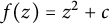 $f(z)=z^2+c$
, and
 $r>s\geq 0$
are minimal such that
 $f^r(0)=-f^s(0)$
. We assume that
 $s\geq 1$
, and usually that
 $s\geq 2$
.
3.1 A fourth root of unity arising in backward orbits
Lemma 3.1 Let
 $r>s\geq 2$
. Let
 $x\in \overline {K}$
, and let
 $\pm y$
be its two immediate preimages under f. Let
 $\pm \alpha _1,\ldots , \pm \alpha _{2^{r-1}}$
be the roots of
 $f^r(z)=y$
, and let
 $\pm \beta _1,\ldots , \pm \beta _{2^{s-1}}$
be the roots of
 $f^s(z)=-y$
. Suppose that
 $f^s(0)\neq -y$
, and define
 $$\begin{align*}\gamma := \frac{\alpha_1\dots \alpha_{2^{r-1}} } {\beta_1 \dots \beta_{2^{s-1}} } .\end{align*}$$
Then
 $\gamma ^2=-1$
.
Proof By Proposition 2.1 and the fact that
 $f^r(0)=-f^s(0)$
, we have
 $$\begin{align*}\gamma^2 = \frac{f^r(0) - y}{f^s(0)-(-y)} = \frac{-f^s(0) - y}{f^s(0)+y} = -1. \\[-42pt] \end{align*}$$
Recall from Section 1.5 that given a labeling of the tree of preimages
 $\operatorname {\mathrm {Orb}}_f^-(x_0)$
, then for any word
 $w\in \{a,b\}^i$
, we write
 $[w]$
for the element of
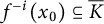 $f^{-i}(x_0)\subseteq \overline {K}$
that appears as the node with label w in the ith level of the tree.
Lemma 3.2 Let
 $r>s\geq 2$
. Let
 $x_0\in K$
not in the forward orbit of
 $0$
, and choose a primitive
 $4$
th root of unity
 $\zeta _4\in \overline {K}$
. It is possible to label the tree
 $T_{\infty }$
of preimages
 $\operatorname {\mathrm {Orb}}_f^-(x_0)$
in such a way that for every node x of the tree, we have
 $$ \begin{align} \frac{\prod_{w\in\{a,b\}^{r-1}} [xawa]}{\prod_{w' \in\{a,b\}^{s-1}} [xbw'a]} = \frac{\prod_{w\in\{a,b\}^{r-1}} [xbwa]}{\prod_{w' \in\{a,b\}^{s-1}} [xaw'a]} = \zeta_4. \end{align} $$
Proof We will label the tree inductively, starting from the root point
 $x_0$
. Label the tree (using the symbols a and b) arbitrarily up to level r.
For each successive
 $n\geq r+1$
, suppose that we have labeled
 $T_{n-1}$
in such a way that for every node x of
 $T_{n-1}$
up to level
 $n-r-2$
, the identity of equation (11) holds. (Note that this condition is vacuously true for
 $n= r+1$
.) For each node y at level
 $n-1$
, label the two points of
 $f^{-1}(y)$
arbitrarily as
 $ya$
and
 $yb$
. We will now adjust these labels that we have just applied at the nth level of the tree.
For each node x at level
 $n-r-1$
, consider the first ratio
 $\gamma _1$
in equation (11), which is a product of
 $2^{r-1}$
nodes sitting r levels above
 $xa$
, divided by a product of
 $2^{s-1}$
nodes sitting s levels above
 $xb$
. By Lemma 3.1, we have
 $\gamma _1^2=-1$
, so
 $\gamma _1=\pm \zeta _4$
. If
 $\gamma _1=-\zeta _4$
, then exchange the labels of the two level-n nodes
 $xaa\ldots aa$
and
 $xaa\ldots ab$
; otherwise, make no change to the labels of nodes above
 $xa$
.
Similarly, let
 $\gamma _2$
denote the second ratio in equation (11), which is a product of
 $2^{r-1}$
nodes sitting r levels above
 $xb$
, divided by a product of
 $2^{s-1}$
nodes sitting s levels above
 $xa$
. Again by Lemma 3.1, we have
 $\gamma _2^2=-1$
, so
 $\gamma _2=\pm \zeta _4$
. If
 $\gamma _2=-\zeta _4$
, then exchange the labels of the two level-n nodes
 $xba\ldots aa$
and
 $xba\ldots ab$
; otherwise, make no change to the labels of nodes above
 $xb$
.
Having made these (possible) label changes to various nodes at the nth level of the tree, we have labeled
 $T_n$
so that for every node x at every level
 $0\leq \ell \leq n-r-1$
of
 $T_n$
, the identity of equation (11) holds. Thus, our inductive construction of the desired labeling is complete.
3.2 A preliminary result regarding the associated arboreal subgroup
Lemma 3.2 inspires the following result; we state it for the more general case that
 $r>s\geq 1$
, so that we may apply it in Sections 4 and 5 as well. Recall the definitions of the sets
 $M_{r,s,\infty }$
and
 $B_{r,s,\infty }$
and the function
 $P_{r,s}$
from Definition 1.1.
Theorem 3.3 Fix integers
 $r>s\geq 1$
. Then
 $M_{r,s,\infty }$
and
 $B_{r,s,\infty }$
are subgroups of
 $\operatorname {\mathrm {Aut}}(T_{\infty })$
. Moreover,
 $P_{r,s}:M_{r,s,\infty }\to \mathbb {Z}/2\mathbb {Z}$
is a homomorphism with kernel
 $B_{r,s,\infty }$
.
Proof
Step 1. We claim that for all
 $\sigma \in M_{r,s,\infty }$
, all
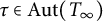 $\tau \in \operatorname {\mathrm {Aut}}(T_\infty )$
, and all nodes x of the tree, we have
 $$ \begin{align} P_{r,s}(\sigma) + P^a_{r,s}(\tau,x) = P^a_{r,s}(\sigma \tau,x) \quad\text{and}\quad P_{r,s}(\sigma) + P^b_{r,s}(\tau,x) = P^b_{r,s}(\sigma \tau,x). \end{align} $$
Indeed, given such
 $\sigma $
,
 $\tau $
, and x, suppose first that
 $\operatorname {\mathrm {Par}}(\tau ,x)=0$
. Then
 $\tau (xa)=\tau (x) a$
and
 $\tau (xb)=\tau (x) b$
, and hence, writing
 $P_{r,s}(\sigma )$
as
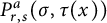 $P^a_{r,s}(\sigma ,\tau (x))$
, we have
 $$ \begin{align*} P_{r,s}(\sigma) &= \sum_{w\in\{a,b\}^{r-1}} \operatorname{\mathrm{Par}}(\sigma,\tau(x)aw) + \sum_{w'\in\{a,b\}^{s-1}} \operatorname{\mathrm{Par}}(\sigma,\tau(x)bw') \\ &= \sum_{w\in\{a,b\}^{r-1}} \operatorname{\mathrm{Par}}(\sigma,\tau(xa)w) + \sum_{w'\in\{a,b\}^{s-1}} \operatorname{\mathrm{Par}}(\sigma,\tau(xb)w') \\ &= \sum_{w\in\{a,b\}^{r-1}} \operatorname{\mathrm{Par}}(\sigma,\tau(xaw)) + \sum_{w'\in\{a,b\}^{s-1}} \operatorname{\mathrm{Par}}(\sigma,\tau(xbw')). \end{align*} $$
Therefore, since we are working in
 $\mathbb {Z}/2\mathbb {Z}$
, equation (3) yields
 $$ \begin{align} P_{r,s}(\sigma) + P^a_{r,s}(\tau,x) &= \sum_{w\in\{a,b\}^{r-1}} \big[ \operatorname{\mathrm{Par}}(\sigma,\tau(xaw)) + \operatorname{\mathrm{Par}}(\tau, xaw) \big] \notag \\ & \quad + \sum_{w'\in\{a,b\}^{s-1}} \big[ \operatorname{\mathrm{Par}}(\sigma,\tau(xbw')) + \operatorname{\mathrm{Par}}(\tau, xbw') \big] \notag \\ &= \sum_{w\in\{a,b\}^{r-1}} \operatorname{\mathrm{Par}}(\sigma\tau, xaw) + \sum_{w'\in\{a,b\}^{s-1}} \operatorname{\mathrm{Par}}(\sigma\tau, xbw')\nonumber\\ & = P^a_{r,s}(\sigma \tau,x), \end{align} $$
proving the first identity of equation (12). The second follows by a similar calculation, writing
 $P_{r,s}(\sigma )$
as
 $P^b_{r,s}(\sigma ,\tau (x))$
.
The only other possibility is that
 $\operatorname {\mathrm {Par}}(\tau ,x)=1$
, and hence that
 $\tau (xa)=\tau (x) b$
and
 $\tau (xb)=\tau (x) a$
. Therefore, writing
 $P_{r,s}(\sigma )$
as
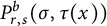 $P^b_{r,s}(\sigma ,\tau (x))$
, we have
 $$ \begin{align*} P_{r,s}(\sigma) &= \sum_{w\in\{a,b\}^{r-1}} \operatorname{\mathrm{Par}}(\sigma,\tau(x)bw) + \sum_{w'\in\{a,b\}^{s-1}} \operatorname{\mathrm{Par}}(\sigma,\tau(x)aw') \\ &= \sum_{w\in\{a,b\}^{r-1}} \operatorname{\mathrm{Par}}(\sigma,\tau(xa)w) + \sum_{w'\in\{a,b\}^{s-1}} \operatorname{\mathrm{Par}}(\sigma,\tau(xb)w') \\ &= \sum_{w\in\{a,b\}^{r-1}} \operatorname{\mathrm{Par}}(\sigma,\tau(xaw)) + \sum_{w'\in\{a,b\}^{s-1}} \operatorname{\mathrm{Par}}(\sigma,\tau(xbw')). \end{align*} $$
The first identity of equation (12) then follows by exactly the calculation of equation (13). The second follows by a similar calculation, writing
 $P_{r,s}(\sigma )$
as
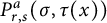 $P^a_{r,s}(\sigma ,\tau (x))$
, and proving our claim.
Step 2. In the notation of Proposition 2.2, let
 $\Gamma = \operatorname {\mathrm {Aut}}(T_{\infty })$
, let X be the set of nodes of
 $T_{\infty }$
, let
 $H=\mathbb {Z}/2\mathbb {Z} \times \mathbb {Z}/2\mathbb {Z}$
, let
 $H_0\subseteq H$
be the diagonal subgroup, and define
 $P:\Gamma \times X\to H$
by
 $P(\sigma , x):=( P_{r,s}^a (\sigma ,x), P_{r,s}^b (\sigma ,x) )$
.
Then
 $M_{r,s,\infty }$
is precisely the subset G of Proposition 2.2, and equation (12) gives precisely hypothesis (6). Moreover, the identity
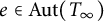 $e\in \operatorname {\mathrm {Aut}}(T_{\infty })$
satisfies
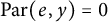 $\operatorname {\mathrm {Par}}(e,y)=0$
for all nodes y, so that
 $P_{r,s}^a(e,x) = P_{r,s}^b(e,x)=0$
for all nodes x, and hence
 $e\in M_{r,s,\infty }$
.
Therefore, by Proposition 2.2,
 $M_{r,s,\infty }$
is a subgroup of
 $\operatorname {\mathrm {Aut}}(T_{\infty })$
, and P is a homomorphism. Moreover,
 $P_{r,s}$
is the composition of P with the unique isomorphism
 $H_0\to \mathbb {Z}/2\mathbb {Z}$
, so that
 $P_{r,s}$
is a homomorphism. By definition, its kernel is
 $B_{r,s,\infty }$
, which is therefore a subgroup of
 $M_{r,s,\infty }$
.
3.3 The action of Galois
When
 $r>s\geq 2$
, Lemma 3.2 shows that there are many different parameterizations of
 $\zeta _4=\sqrt {-1}$
in terms of the backward orbit of
 $x_0$
. The following result shows that the restrictions defining membership in
 $M_{r,s,\infty }$
are precisely the conditions that a Galois automorphism
 $\sigma \in G_{\infty }$
must act in the same way on each of these parameterizations of
 $\zeta _4$
.
Theorem 3.4 Let
 $r>s\geq 2$
. Let
 $x_0\in K$
not in the forward orbit of
 $0$
, and choose a primitive
 $4$
th root of unity
 $\zeta _4\in \overline {K}$
. Label the tree
 $T_{\infty }$
of preimages in
 $\operatorname {\mathrm {Orb}}_f^{-}(x_0)$
as in Lemma 3.2. Then for any node
 $x\in \operatorname {\mathrm {Orb}}_f^-(x_0)$
and any
 $\sigma \in G_{\infty }=\operatorname {\mathrm {Gal}}(K_{\infty }/K)$
, we have
 $$ \begin{align} \sigma(\zeta_4) = (-1)^{P^a_{r,s}(\sigma,x)}\zeta_4 = (-1)^{P^b_{r,s}(\sigma,x)}\zeta_4. \end{align} $$
In particular, the image of
 $G_{\infty }$
in
 $\operatorname {\mathrm {Aut}}(T_{\infty })$
, induced by its action on
 $\operatorname {\mathrm {Orb}}_f^-(x_0)$
via this labeling, is contained in
 $M_{r,s,\infty }$
. Furthermore, if
 $\zeta _4\in K$
, then this Galois image is contained in
 $B_{r,s,\infty }$
.
Proof It suffices to prove equation (14) for all
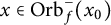 $x\in \operatorname {\mathrm {Orb}}_f^-(x_0)$
and all
 $\sigma \in G_{\infty }$
. Indeed, in that case, equation (4) would hold for all such x viewed as nodes of the tree, since
 $\sigma (\zeta _4)/\zeta _4 \in \{\pm 1\}$
must be independent of x. That is, every
 $\sigma \in G_{\infty }$
would be in
 $M_{r,s,\infty }$
; and if
 $P_{r,s}(\sigma )=0$
for all
 $\sigma \in G_{\infty }$
, then by definition every
 $\sigma $
is in
 $B_{r,s,\infty }$
.
Because of the specified labeling of the tree, for any such
 $\sigma $
and x, we have
 $$ \begin{align} \prod_{w\in\{a,b\}^{r-1}} \big[ \sigma(xawa) \big] = \sigma(\zeta_4) \prod_{w' \in\{a,b\}^{s-1}} \big[ \sigma(xbw'a) \big]. \end{align} $$
Note that for each node y of the tree, we have
 $$\begin{align*}\big[ \sigma(ya) \big] = (-1)^{\operatorname{\mathrm{Par}}(\sigma,y)} \big[ \sigma(y) a \big] ,\end{align*}$$
and hence equation (15) becomes
 $$\begin{align*}(-1)^{P^a_{r,s}(\sigma,x)}\prod_{w\in\{a,b\}^{r-1}} \big[ \sigma(xaw)a \big] = \sigma(\zeta_4) \prod_{w' \in\{a,b\}^{s-1}} \big[ \sigma(xbw')a \big]. \end{align*}$$
Since each product above is over all
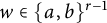 $w\in \{a,b\}^{r-1}$
or all
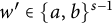 $w' \in \{a,b\}^{s-1}$
, this equation becomes either
 $$\begin{align*}(-1)^{P^a_{r,s}(\sigma,x)}\prod_{w\in\{a,b\}^{r-1}} \big[ \sigma(x)awa \big] = \sigma(\zeta_4) \prod_{w' \in\{a,b\}^{s-1}} \big[ \sigma(x)bw'a \big] \end{align*}$$
if
 $\operatorname {\mathrm {Par}}(\sigma ,x)=0$
, or
 $$\begin{align*}(-1)^{P^a_{r,s}(\sigma,x)}\prod_{w\in\{a,b\}^{r-1}} \big[ \sigma(x)bwa \big] = \sigma(\zeta_4) \prod_{w' \in\{a,b\}^{s-1}} \big[ \sigma(x)aw'a \big] \end{align*}$$
if
 $\operatorname {\mathrm {Par}}(\sigma ,x)=1$
. Either way, by Lemma 3.2 applied to
 $\sigma (x)$
in place of x, we have
 $$\begin{align*}\sigma(\zeta_4) = (-1)^{P^a_{r,s}(\sigma,x)} \zeta_4. \end{align*}$$
By similar reasoning, we also have
 $\sigma (\zeta _4) = (-1)^{P^b_{r,s}(\sigma ,x)} \zeta _4$
.
4 The special long-tail case (
$r=3$
and
$s=2$
)


In the notation of the previous section, assume that
 $r=3$
and
 $s=2$
. Since
 $f^3(0)=-f^2(0)$
but
 $f(0)\neq 0$
, the parameter
 $c\neq 0$
satisfies
 $$\begin{align*}c^4 + 2c^3 + c^2 + c = -(c^2+c) \end{align*}$$
and hence
 $$ \begin{align} c^3+2c^2+2c+2=0. \end{align} $$
In this specific circumstance, as first observed in [Reference PinkPin13, Section 3.8], there are extra subtleties that lead to significantly more involved computations. In particular, besides
 $\zeta _4$
arising as an arithmetic combination of elements of
 $f^{-4}(x)$
as in Lemma 3.1, it happens that
 $\sqrt {2}$
can also be written as a (much more complicated) arithmetic combination of elements of
 $f^{-5}(x)$
. We present this formula in Lemma 4.1, but we begin with its derivation, as follows.
4.1 A second square root arising in backward orbits
Fix a primitive fourth root of unity
 $\zeta _4$
, and label the tree
 $T_{\infty }$
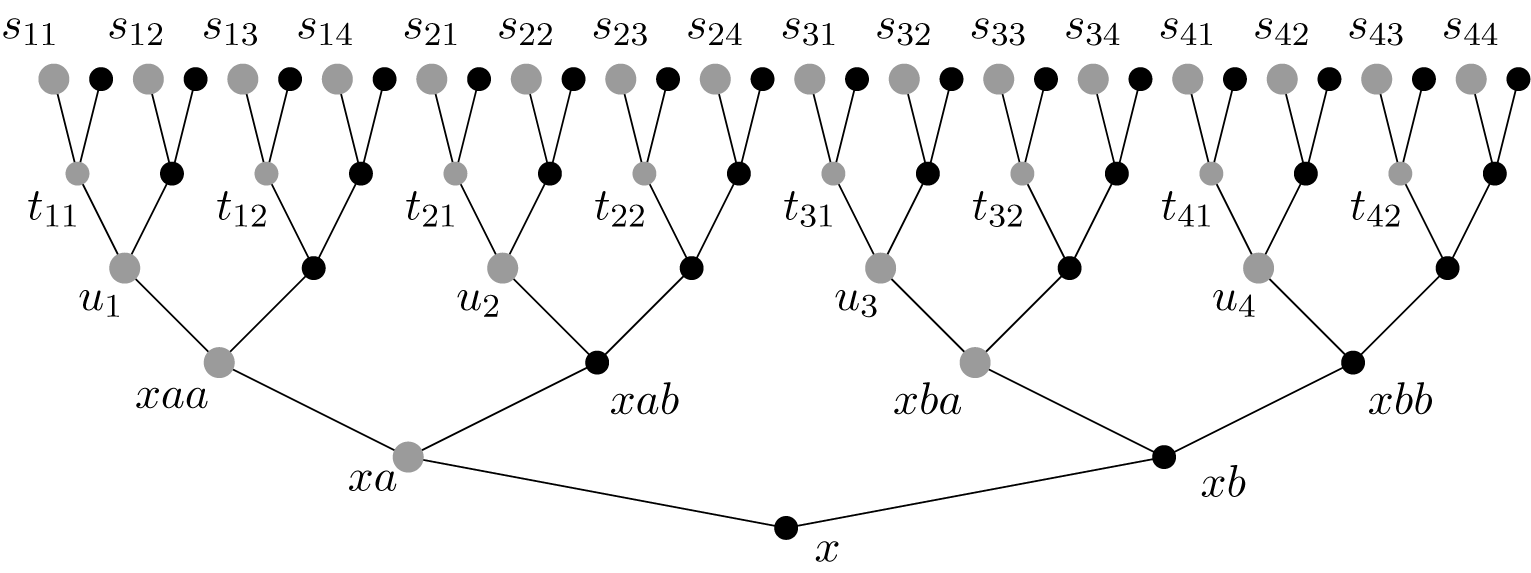
according to Lemma 3.2. For any node x of the tree, it will be convenient to use the abbreviated labels shown in Figure 2 for some of the nodes above x. (For example, the node
 $t_{21}$
is
 $xabaa$
, and the node
 $-s_{34}$
is
 $xbabbb$
.) By Lemma 3.2, we have
 $$ \begin{align} \frac{t_{11} t_{12} t_{21} t_{22}}{u_3 u_4} = \frac{t_{31} t_{32} t_{41} t_{42}}{u_1 u_2} = \zeta_4 , \end{align} $$
and
 $$ \begin{align} \frac{s_{11} s_{12} s_{13} s_{14}}{t_{21} t_{22}} = \frac{s_{21} s_{22} s_{23} s_{24}}{t_{11} t_{12}} = \frac{s_{31} s_{32} s_{33} s_{34}}{t_{41} t_{42}} = \frac{s_{41} s_{42} s_{43} s_{44}}{t_{31} t_{32}} = \zeta_4. \end{align} $$
Five levels of the tree above x.

For each word
 $w\in \{a,b\}^2$
, define
 $$ \begin{align} \gamma_w(x) := [xwaaa][xwaba][xwba] + [xwbaa][xwbba][xwaa], \end{align} $$
which we also write as
 $\gamma _i(x) := s_{i1} s_{i2} t_{i2} + s_{i3} s_{i4} t_{i1}$
for
 $i=1,2,3,4$
. By Proposition 2.1 and equations (17) and (18), we have
 $$ \begin{align} \gamma_1(x)^2 &= \big(f^2(0) - u_1\big)(-u_1-c) + 2s_{11} s_{12} s_{13} s_{14} t_{11} t_{12} + \big(f^2(0) + u_1\big)(u_1-c) \notag \\ &= 2\big( u_1^2 - cf^2(0) + \zeta_4 t_{11} t_{12} t_{21} t_{22} \big) = 2\big( [xaa] -c - cf^2(0) -u_3 u_4 \big) \\ &= 2\big( [xaa] + (c^2+c+2 - u_3 u_4) \big), \notag \end{align} $$
where the final equality is by equation (16), since
 $cf^2(0) = c^3+c^2$
. Similarly, we have
 $$ \begin{align} \gamma_2(x)^2 = 2\big( [xab] + (c^2+c+2 - u_3 u_4) \big). \end{align} $$
Noting that
 $[xab]=-[xaa]$
, combining equations (20) and (21) yields
 $$ \begin{align} (\gamma_1(x) \gamma_2(x))^2 &= 4\big(-[xaa]^2 + (c^2+c+2 - u_3 u_4)^2\big) \notag \\ &= 4\big( (c-[xa]) + (c^2 + c+2)^2 -2(c^2+c+2) u_3 u_4 + (u_3 u_4)^2 ) \notag \\ &= 4\big[(c-[xa]) + (3c^2 + 2c+4) {-} 2(c^2+c+2) u_3 u_4 {+} \big( f^2(0) {-} [xb] \big) \big] \\ &= 4\big[ 4c^2 + 4c + 4 -2(c^2+c+2) u_3 u_4 \big] = 8(c^2+c+1) \big( 2 + c u_3 u_4 \big), \notag \end{align} $$
again using Proposition 2.1 and equation (16), as well as the fact that
 $[xb]=-[xa]$
. A similar computation yields
 $$\begin{align*}(\gamma_3(x) \gamma_4(x))^2 = 8(c^2+c+1)( 2 + c u_1 u_2 ), \end{align*}$$
and hence
 $$ \begin{align} (\gamma_1(x) \gamma_2(x) \gamma_3(x) \gamma_4(x))^2 = 64 (c^2+c+1)^2 (2+U_a(x)) (2+U_b(x)), \end{align} $$
where
 $$ \begin{align} U_a(x):= c[xaaa][xaba]=cu_1u_2 \quad\text{and}\quad U_b(x):= c[xbaa][xbba]=cu_3u_4. \end{align} $$
On the other hand, writing
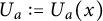 $U_a:=U_a(x)$
and
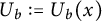 $U_b:=U_b(x)$
for short, we have
 $$ \begin{align} \big( 2 + U_a + U_b \big)^2 &= 4 + 4\big(U_a + U_b\big) + c^2\big( (u_1 u_2)^2 + (u_3 u_4)^2 \big) + 2U_a U_b \notag \\ &= 4 + 4\big(U_a + U_b\big) + c^2\big( f^2(0)-[xa] + f^2(0)-[xb]\big) + 2U_a U_b \notag \\ &= 2\big[ \big(2 + c^2 f^2(0) \big) + 2\big(U_a+U_b\big) + U_a U_b \big] \\ &= 2\big[ 4 + 2U_a + 2U_b + U_a U_b \big] = 2\big(2+U_a\big) \big(2+U_b\big), \notag \end{align} $$
where we have again used Proposition 2.1, equation (16), and the fact that
 $[xb]=-[xa]$
. The foregoing computations inspire the following result.
Lemma 4.1 Let
 $x_0\in K$
not in the forward orbit of
 $0$
, and choose both
 $\sqrt {2}\in \overline {K}$
and a primitive
 $4$
th root of unity
 $\zeta _4\in \overline {K}$
. It is possible to label the tree
 $T_{\infty }$
of preimages
 $\operatorname {\mathrm {Orb}}_f^-(x_0)$
in such a way that for every node x of the tree, equation (11) of Lemma 3.2 holds for
 $r=3$
and
 $s=2$
, and in addition, for every node x of the tree, we have
 $$ \begin{align} \frac{\gamma_{aa}(x) \gamma_{ab}(x) \gamma_{ba}(x) \gamma_{bb}(x)} {4(c^2+c+1) (2 + U_a(x) + U_b(x) )} = \sqrt{2}, \end{align} $$
where the quantities
 $\gamma _w(x)$
and
 $U_t(x)$
are as in equations (19) and (24).
Proof Choose a labeling of the tree according to Lemma 3.2. We will now adjust this labeling, working inductively up from the root point
 $x_0$
.
For each
 $n\geq 0$
, suppose that under our current labeling of the tree, the identities (11) and (26) hold for every node x of the tree up to level
 $n-1$
. This condition is vacuously true for
 $n=0$
.
For each node x at level n, denote by
 $\delta (x)$
the expression on the left side of equation (26). We first claim that
 $\delta (x)$
makes sense, in that its denominator is nonzero. Equivalently, by equation (25), we are claiming that neither
 $U_a(x)$
nor
 $U_b(x)$
is
 $-2$
. However, if
 $U_a(x)=-2$
, then
 $$\begin{align*}u_1 u_2 = -\frac{2}{c} = c^2 + 2c+2 \end{align*}$$
by equation (16), and hence
 $$\begin{align*}f^2(0)-[xa] = (u_1 u_2)^2 = c^4 + 4c^3 + 8c^2 + 8c + 4 = 2c^2 + 2c = 2f^2(0),\end{align*}$$
again by Proposition 2.1 and equation (16). But then we would have
 $$\begin{align*}[xa]=-f^2(0) = f^3(0), \end{align*}$$
and hence
 $x=f^4(0)$
would be postcritical, which we assumed does not happen. By this contradiction, we have
 $U_a(x)\neq -2$
. By a similar argument, we also have
 $U_b(x)\neq -2$
, proving our claim.
Combining equations (23) and (25) yields
 $$ \begin{align} \delta(x)^2 = \frac{ 64 (c^2+c+1)^2 (2+U_a(x)) (2+U_b(x))}{32(c^2+c+1)^2 (2+U_a(x))(2+U_b(x)) } = 2, \end{align} $$
so that
 $\delta (x)=\pm \sqrt {2}$
. If
 $\delta (x)=\sqrt {2}$
, then make no change to the labeling above x. On the other hand, if
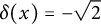 $\delta (x)=-\sqrt {2}$
, then swap the labels of the nodes
 $xaaaa$
and
 $xaaab$
, and also swap the labels of the nodes
 $xaaba$
and
 $xaabb$
. (That is, in the notation of Figure 2, make two parity changes four levels above x: specifically, by switching the labels of
 $\pm t_{11}$
, and also switching the labels of
 $\pm t_{12}$
. At five levels above x, this also forces swapping
 $s_{11}=[xaaaaa]$
with
 $s_{12}=[xaaaba]$
, as well as
 $-s_{11}=[xaaaab]$
with
 $-s_{12}=[xaaabb]$
, and at the same time swapping
 $s_{13}=[xaabaa]$
with
 $s_{14}=[xaabba]$
, and
 $-s_{13}=[xaabab]$
with
 $-s_{14}=[xaabbb]$
.)
This change reverses the sign of
 $\gamma _{aa}(x)$
but no other factors in the expression for
 $\delta (x)$
, which therefore becomes
 $+\sqrt {2}$
as desired. In addition, the change does not affect the value of expression (26) at any other node (in place of x) at or below level n of the tree.
Moreover, the only nodes for which equation (11) might be affected by these swaps are x (for the numerator of the first expression in that equation) and
 $xa$
(for the denominator of the second). In both cases, however, the signs of exactly two terms of the relevant product change, and hence the value of the full expression is unaffected. Thus, the change of labels above preserves property that equation (11) holds at every node of the whole tree.
Having made this adjustment above every node x at level n, then, our labeling satisfies equation (26) at every node up to and including level n, and also still satisfies equation (11) at every node of the whole tree. Our inductive construction of the desired labeling is therefore complete.
4.2 A preliminary result regarding the associated arboreal subgroup
We already saw the group
 $M_{3,2,\infty }$
and its action on
 $\zeta _4$
via
 $P_{3,2}$
in Theorem 3.4. Detecting the action of Galois on
 $\sqrt {2}$
is much more subtle, but the following definition turns out to be the appropriate quantity, in light of Lemma 4.1.
Definition 4.2 Fix a labeling
 $a,b$
of
 $T_{\infty }$
. For any word x in the symbols
 $\{a,b\}$
and any
 $\sigma \in \operatorname {\mathrm {Aut}}(T_{\infty })$
, define
 $$ \begin{align} R_{3,2}(\sigma,x) := & \sum_{w\in\{a,b\}^{2}} \bigg[ \operatorname{\mathrm{Par}}(\sigma,xw) + \operatorname{\mathrm{Par}}(\sigma,xwb) + \sum_{t\in\{a,b\} } \operatorname{\mathrm{Par}}(\sigma,xwat) \bigg] \\ & + \big[ \operatorname{\mathrm{Par}}(\sigma,xaa) + \operatorname{\mathrm{Par}}(\sigma,xab) \big] \big[ \operatorname{\mathrm{Par}}(\sigma,xba) + \operatorname{\mathrm{Par}}(\sigma,xbb) \big] \in \mathbb{Z}/2\mathbb{Z}. \notag \end{align} $$
Define
 $\tilde {M}_{3,2,\infty }$
to be the set of all
 $\sigma \in M_{3,2,\infty }$
for which
 $$ \begin{align} R_{3,2}(\sigma,x_1) = R_{3,2}(\sigma,x_2) \in\mathbb{Z}/2\mathbb{Z} \end{align} $$
for all nodes
 $x_1,x_2$
of
 $T_{\infty }$
. For
 $\sigma \in \tilde {M}_{3,2,\infty }$
, define
 $R_{3,2}(\sigma )$
to be this common value. Finally, define
 $\tilde {B}_{3,2,\infty } := \{\sigma \in \tilde {M}_{3,2,\infty } \cap B_{3,2,\infty } : R_{3,2}(\sigma )=0 \}$
.
Theorem 4.3 The sets
 $\tilde {M}_{3,2,\infty }$
and
 $\tilde {B}_{3,2,\infty }$
are subgroups of
 $M_{3,2,\infty }$
. Moreover,
 $R_{3,2}:\tilde {M}_{3,2,\infty }\to \mathbb {Z}/2\mathbb {Z}$
is a homomorphism with kernel
 $\tilde {B}_{3,2,\infty }$
.
To prove Theorem 4.3, it will be convenient to define
 $$ \begin{align} V_{3,2}(\sigma,y) := \sum_{w\in\{a,b\}^2} \operatorname{\mathrm{Par}}(\sigma,yw) + \sum_{w'\in \{a,b\}} \operatorname{\mathrm{Par}}(\sigma,yw'), \end{align} $$
for any node y of the tree
 $T_{\infty }$
. Note that whereas the expressions
 $P_{3,2}^{a}(\sigma ,x)$
and
 $P_{3,2}^{b}(\sigma ,x)$
of Definition 1.1 involve sums one and two levels above
 $xa$
and
 $xb$
separately, the sums defining
 $V_{3,2}(\sigma ,y)$
lie one and two levels above the same node y.
We will also need the following lemma.
Lemma 4.4 Let
 $\sigma \in M_{3,2,\infty }$
, and let x be any node of
 $T_{\infty }$
. Then
 $$ \begin{align} V_{3,2}(\sigma,xaa) = V_{3,2}(\sigma,xab) = \operatorname{\mathrm{Par}}(\sigma,xba) + \operatorname{\mathrm{Par}}(\sigma,xbb) \end{align} $$
and
 $$ \begin{align} V_{3,2}(\sigma,xba) = V_{3,2}(\sigma,xbb) = \operatorname{\mathrm{Par}}(\sigma,xaa) + \operatorname{\mathrm{Par}}(\sigma,xab). \end{align} $$
Proof We will prove half of equation (31), that
 $V_{3,2}(\sigma ,xaa) = \operatorname {\mathrm {Par}}(\sigma ,xba) + \operatorname {\mathrm {Par}}(\sigma ,xbb)$
. The proof of the other half, and the proofs of both halves of equation (32), are similar.
By definition of
 $P_{3,2}$
(from Definition 1.1) written as
 $P^a_{3,2}(\sigma ,xa)$
, bearing in mind that we are working in
 $\mathbb {Z}/2\mathbb {Z}$
, we have
 $$\begin{align*}\sum_{w\in\{a,b\}^2} \operatorname{\mathrm{Par}}(\sigma,xaaw) = P_{3,2}(\sigma) + \sum_{w'\in\{a,b\}} \operatorname{\mathrm{Par}}(\sigma,xabw'),\end{align*}$$
and hence
 $$ \begin{align*} V_{3,2}(\sigma,xaa) & = \sum_{w\in\{a,b\}^2} \operatorname{\mathrm{Par}}(\sigma,xaaw) + \sum_{w'\in \{a,b\}} \operatorname{\mathrm{Par}}(\sigma,xaaw') \\ &= P_{3,2}(\sigma) + \sum_{w'\in\{a,b\}} \operatorname{\mathrm{Par}}(\sigma,xabw') + \sum_{w'\in \{a,b\}} \operatorname{\mathrm{Par}}(\sigma,xaaw') \\ & = P_{3,2}(\sigma) + \sum_{w\in \{a,b\}^2} \operatorname{\mathrm{Par}}(\sigma,xaw) = 2P_{3,2}(\sigma) + \sum_{w'\in \{a,b\}} \operatorname{\mathrm{Par}}(\sigma,xbw') \\ & = \operatorname{\mathrm{Par}}(\sigma,xba) + \operatorname{\mathrm{Par}}(\sigma,xbb), \end{align*} $$
where the fourth equality is by writing
 $P_{3,2}(\sigma ) = P^a_{3,2}(\sigma ,x)$
, and the fifth is because we are working in
 $\mathbb {Z}/2\mathbb {Z}$
.
Proof of Theorem 4.3
Step 1. We claim that for all
 $\sigma \in \tilde {M}_{3,2,\infty }$
, all
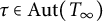 $\tau \in \operatorname {\mathrm {Aut}}(T_{\infty })$
, and all nodes x of the tree, we have
 $$ \begin{align} R_{3,2}(\sigma,\tau(x)) + R_{3,2}(\tau,x) = R_{3,2}(\sigma\tau,x). \end{align} $$
Indeed, for such
 $\sigma ,\tau , x$
, the left side of equation (33) is
 $$ \begin{align} \sum_{w\in\{a,b\}^2} & \big[ \operatorname{\mathrm{Par}}(\sigma,\tau(x) w) +\operatorname{\mathrm{Par}}(\tau, x w) \big] + \sum_{w\in\{a,b\}^2} \big[ \operatorname{\mathrm{Par}}(\sigma,\tau(x)wb) +\operatorname{\mathrm{Par}}(\tau, x wb) \big] \notag \\ & + \sum_{w\in\{a,b\}^2} \bigg[ \sum_{t\in\{a,b\} } \operatorname{\mathrm{Par}}(\sigma,\tau(x)wat) +\operatorname{\mathrm{Par}}(\tau, x wat) \bigg] \notag \\ & + \big[ \operatorname{\mathrm{Par}}(\sigma,\tau(x)aa) + \operatorname{\mathrm{Par}}(\sigma,\tau(x)ab) \big] \big[ \operatorname{\mathrm{Par}}(\sigma,\tau(x)ba) + \operatorname{\mathrm{Par}}(\sigma,\tau(x)bb) \big] \notag \\ & + \big[ \operatorname{\mathrm{Par}}(\tau,xaa) + \operatorname{\mathrm{Par}}(\tau,xab) \big] \big[ \operatorname{\mathrm{Par}}(\tau,xba) + \operatorname{\mathrm{Par}}(\tau,xbb) \big] \notag \\ = \sum_{w\in\{a,b\}^2} & \big[ \operatorname{\mathrm{Par}}(\sigma,\tau(xw)) +\operatorname{\mathrm{Par}}(\tau, x w) \big] + \sum_{w\in\{a,b\}^2} \big[ \operatorname{\mathrm{Par}}(\sigma,\tau(xw)b) +\operatorname{\mathrm{Par}}(\tau, x wb) \big] \notag \\ & + \sum_{w\in\{a,b\}^2} \bigg[ \sum_{t\in\{a,b\} } \operatorname{\mathrm{Par}}(\sigma,\tau(xw)at) +\operatorname{\mathrm{Par}}(\tau, x wat) \bigg] \\ & + \big[ \operatorname{\mathrm{Par}}(\sigma,\tau(xaa)) + \operatorname{\mathrm{Par}}(\sigma,\tau(xab)) \big] \big[ \operatorname{\mathrm{Par}}(\sigma,\tau(xba)) + \operatorname{\mathrm{Par}}(\sigma,\tau(xbb)) \big] \notag \\ & + \big[ \operatorname{\mathrm{Par}}(\tau,xaa) + \operatorname{\mathrm{Par}}(\tau,xab) \big] \big[ \operatorname{\mathrm{Par}}(\tau,xba) + \operatorname{\mathrm{Par}}(\tau,xbb) \big]. \notag \end{align} $$
By equation (3), the first sum on the right side of equation (34) is
 $\sum _{w\in \{a,b\}^2} \operatorname {\mathrm {Par}}(\sigma \tau ,xw)$
.
We consider the second and third sums together. The contribution of each
 $w\in \{a,b\}^2$
to these sums is
 $$ \begin{align} \operatorname{\mathrm{Par}}(\sigma,\tau(xw)b) + \operatorname{\mathrm{Par}}(\tau, xwb) + \sum_{t\in\{a,b\} } \big[ \operatorname{\mathrm{Par}}(\sigma,\tau(xw)at) +\operatorname{\mathrm{Par}}(\tau, x wat) \big]. \end{align} $$
If
 $\operatorname {\mathrm {Par}}(\tau ,xw)=0$
, so that
 $\tau (xw)a=\tau (xwa)$
and
 $\tau (xw)b=\tau (xwb)$
, then expression (35) is
 $$ \begin{align*} \operatorname{\mathrm{Par}}(\sigma,\tau(xwb)) &+ \operatorname{\mathrm{Par}}(\tau, xwb) + \sum_{t\in\{a,b\} } \big[ \operatorname{\mathrm{Par}}(\sigma,\tau(xwat)) +\operatorname{\mathrm{Par}}(\tau, x wat) \big] \\ & = \operatorname{\mathrm{Par}}(\sigma\tau,xwb) + \sum_{t\in\{a,b\} } \operatorname{\mathrm{Par}}(\sigma\tau,xwat). \end{align*} $$
On the other hand, if
 $\operatorname {\mathrm {Par}}(\tau ,xw)=1$
, so that
 $\tau (xw)a=\tau (xwb)$
and
 $\tau (xw)b=\tau (xwa)$
, then a similar computation shows that expression (35) is
 $$\begin{align*}V_{3,2}(\sigma,\tau(xw)) + \operatorname{\mathrm{Par}}(\sigma\tau,xwb) + \sum_{t\in\{a,b\} } \operatorname{\mathrm{Par}}(\sigma\tau,xwat), \end{align*}$$
where
 $V_{3,2}$
is as in equation (30). In either case, then, expression (35) is
 $$\begin{align*}V_{3,2}(\sigma,\tau(xw)) \operatorname{\mathrm{Par}}(\tau,xw) + \operatorname{\mathrm{Par}}(\sigma\tau,xwb) + \sum_{t\in\{a,b\} } \operatorname{\mathrm{Par}}(\sigma\tau,xwat). \end{align*}$$
Hence, the second and third sums of equation (34) together are
 $$ \begin{align*} \sum_{w\in\{a,b\}^2} & \bigg[ V_{3,2}(\sigma,\tau(xw)) \operatorname{\mathrm{Par}}(\tau,xw)+ \operatorname{\mathrm{Par}}(\sigma\tau,xwb) + \sum_{t\in\{a,b\} } \operatorname{\mathrm{Par}}(\sigma\tau,xwat) \bigg] \\ &= \sum_{w\in\{a,b\}^2} \bigg[ \operatorname{\mathrm{Par}}(\sigma\tau,xwb) + \sum_{t\in\{a,b\} } \operatorname{\mathrm{Par}}(\sigma\tau,xwat) \bigg] \\ &\quad + \big[ \operatorname{\mathrm{Par}}(\sigma,\tau(xba)) + \operatorname{\mathrm{Par}}(\sigma,\tau(xbb)) \big] \big[ \operatorname{\mathrm{Par}}(\tau,xaa) + \operatorname{\mathrm{Par}}(\tau,xab) \big] \\ &\quad + \big[ \operatorname{\mathrm{Par}}(\sigma,\tau(xaa)) + \operatorname{\mathrm{Par}}(\sigma,\tau(xab)) \big] \big[ \operatorname{\mathrm{Par}}(\tau,xba) + \operatorname{\mathrm{Par}}(\tau,xbb) \big], \end{align*} $$
where the equality is because by Lemma 4.4, we have
 $$\begin{align*}V_{3,2}(\sigma,\tau(xa)a) = V_{3,2}(\sigma,\tau(xa)b) = \operatorname{\mathrm{Par}}(\sigma,\tau(xb)a) +\operatorname{\mathrm{Par}}(\sigma,\tau(xb)b) \end{align*}$$
and
 $$\begin{align*}V_{3,2}(\sigma,\tau(xb)a) = V_{3,2}(\sigma,\tau(xb)b) = \operatorname{\mathrm{Par}}(\sigma,\tau(xa)a) +\operatorname{\mathrm{Par}}(\sigma,\tau(xa)b). \end{align*}$$
Thus, combining all three sums and the last two expressions from equation (34), we have
 $$\begin{align*}R_{3,2}(\sigma,\tau(x)) + R_{3,2}(\tau,x) = R_{3,2}(\sigma\tau, x) + Z_{3,2}(\sigma,\tau,x), \end{align*}$$
where
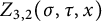 $Z_{3,2}(\sigma ,\tau ,x)$
is
 $$ \begin{align*} \big[ \operatorname{\mathrm{Par}}( & \sigma,\tau(xba)) + \operatorname{\mathrm{Par}}(\sigma,\tau(xbb)) \big] \big[ \operatorname{\mathrm{Par}}(\tau,xaa) + \operatorname{\mathrm{Par}}(\tau,xab) \big] \\ & + \big[ \operatorname{\mathrm{Par}}(\sigma,\tau(xaa)) + \operatorname{\mathrm{Par}}(\sigma,\tau(xab)) \big] \big[ \operatorname{\mathrm{Par}}(\tau,xba) + \operatorname{\mathrm{Par}}(\tau,xbb) \big] \\ & + \big[ \operatorname{\mathrm{Par}}(\sigma,\tau(xaa)) + \operatorname{\mathrm{Par}}(\sigma,\tau(xab)) \big] \big[ \operatorname{\mathrm{Par}}(\sigma,\tau(xba)) + \operatorname{\mathrm{Par}}(\sigma,\tau(xbb)) \big] \\ & + \big[ \operatorname{\mathrm{Par}}(\tau,xaa) + \operatorname{\mathrm{Par}}(\tau,xab) \big] \big[ \operatorname{\mathrm{Par}}(\tau,xba) + \operatorname{\mathrm{Par}}(\tau,xbb) \big] \\ & - \big[ \operatorname{\mathrm{Par}}(\sigma\tau,xaa) + \operatorname{\mathrm{Par}}(\sigma\tau,xab) \big] \big[ \operatorname{\mathrm{Par}}(\sigma\tau,xba) + \operatorname{\mathrm{Par}}(\sigma\tau,xbb) \big]. \end{align*} $$
Applying (3) to expand each instance of
 $\operatorname {\mathrm {Par}}(\sigma \tau ,y)$
in the last line above as
 $\operatorname {\mathrm {Par}}(\sigma ,\tau (y)) + \operatorname {\mathrm {Par}}(\tau ,y)$
, and expanding each of the resulting products, all of the terms cancel. That is,
 $Z_{3,2}(\sigma ,\tau ,x)=0$
, proving the claimed identity (33).
Step 2. In the notation of Proposition 2.2, let
 $\Gamma = M_{3,2,\infty }$
, let X be the set of nodes of
 $T_{\infty }$
, let
 $H=H_0=\mathbb {Z}/2\mathbb {Z}$
, and let
 $P= R_{3,2}$
. Then
 $\tilde {M}_{r,s,\infty }$
is precisely the subset G of Proposition 2.2, the identity element
 $e\in M_{3,2,\infty }$
clearly satisfies
 $R_{3,2}(e,x)=0$
for all nodes x, and equation (33) gives hypothesis (6). Therefore, by Proposition 2.2,
 $\tilde {M}_{r,s,\infty }$
is a subgroup of
 $M_{3,2,\infty }$
, and
 $R_{3,2}$
is a homomorphism. By definition, the kernel of
 $R_{3,2}$
is
 $\tilde {B}_{r,s,\infty }$
, which is therefore a subgroup of
 $\tilde {M}_{r,s,\infty }$
.
4.3 The action of Galois
As in Section 3.3, the following result shows that in our current case, that
 $r=3$
and
 $s=2$
, membership in
 $\tilde{M}_{r,s,\infty }$
is determined by the condition that any
 $\sigma \in G_{\infty }$
must act in the same way on each of the parameterizations of
 $\zeta _4=\sqrt {-1}$
given in Lemma 3.2, and also must act in the same way on each of the parameterizations of
 $\sqrt {2}$
given in Lemma 4.1.
Theorem 4.5 Let
 $x_0\in K$
not in the forward orbit of
 $0$
, and fix a choice of
 $\sqrt {2}\in \overline {K}$
. Label the tree
 $T_{\infty }$
of preimages
 $\operatorname {\mathrm {Orb}}_f^{-}(x_0)$
as in Lemma 4.1. Then for any node
 $x\in \operatorname {\mathrm {Orb}}_f^-(x_0)$
and any
 $\sigma \in G_{\infty }=\operatorname {\mathrm {Gal}}(K_{\infty }/K)$
, we have
 $$ \begin{align} \sigma(\sqrt{2}) = (-1)^{R_{3,2}(\sigma,x)}\sqrt{2}. \end{align} $$
In particular, the image of
 $G_{\infty }$
in
 $\operatorname {\mathrm {Aut}}(T_{\infty })$
, induced by its action on
 $\operatorname {\mathrm {Orb}}_f^-(x_0)$
via this labeling, is contained in
 $\tilde {M}_{3,2,\infty }$
. Furthermore, if
 $\zeta _4, \sqrt {2}\in K$
, then this Galois image is contained in
 $\tilde {B}_{3,2,\infty }$
.
Proof
Step 1. We begin with several technical identities needed to prove equation (36). For every node
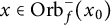 $x\in \operatorname {\mathrm {Orb}}_f^-(x_0)$
, word
 $w\in \{a,b\}^2$
, and symbol
 $t\in \{a,b\}$
, define the quantities
 $\gamma _w:=\gamma _w(x)$
and
 $U_t:=U_t(x)$
as in equations (19) and (24). Further define
 $$\begin{align*}\gamma^{\prime}_w = \gamma^{\prime}_{w}(x) := [xw aaa] [xw aba] [xw ba] - [xw baa] [xw bba] [xw aa] .\end{align*}$$
Then, borrowing the notation of Figure 2, we have
 $$ \begin{align*} \frac{\gamma^{\prime}_{aa} \gamma^{\prime}_{ab}}{\gamma_{aa} \gamma_{ab}} &= \frac{\gamma^{\prime}_{aa} \gamma_{aa} \gamma^{\prime}_{ab}\gamma_{ab}}{\gamma_{aa}^2\gamma_{ab}^2} = \frac{[ (s_{11} s_{12} t_{12})^2 - (s_{13} s_{14} t_{11})^2 ] [ (s_{21} s_{22} t_{22})^2 - (s_{23} s_{24} t_{21})^2 ]} { 8(c^2+c+1) (2 + U_b) } \\ &= \frac{\prod_{i=1}^2[(f^2(0) - u_i)(-c-u_i) - (f^2(0) + u_i)(-c+u_i)]} { 8(c^2+c+1) (2 + U_b) } \\ &= \frac{ [2 (c-f^2(0))u_1] [2 (c-f^2(0))u_2]}{ 8(c^2+c+1) (2 + U_b) } = \frac{4 c^4 u_1 u_2 }{ 8(c^2+c+1) (2 + U_b) } = - \frac{U_a }{2 + U_b}, \end{align*} $$
by equations (16) and (22), along with Proposition 2.1. Similarly, we also have
 $$\begin{align*}\frac{\gamma^{\prime}_{ba} \gamma^{\prime}_{bb}}{\gamma_{ba} \gamma_{bb}} = - \frac{ U_b }{2 + U_a} .\end{align*}$$
Proposition 2.1 and equation (16) also give us
 $$ \begin{align*} (2-U_a-U_b)(2+U_a+U_b) &= 4 - c^2 (u_1^2 u_2^2 + u_3^2 u_4^2) - 2 U_a U_b \\ &= 4 - c^2\big( (f^2(0)- [xa]) + (f^2(0)- [xb]) \big) - 2 U_a U_b \\ &= 4 - 2c^2 f^2(0) - 2 U_a U_b = - 2 U_a U_b, \end{align*} $$
using the fact that
 $[xb]=-[xa]$
. Thus, we have
 $$\begin{align*}\frac{2 + U_a + U_b}{2 -U_a - U_b} &= \frac{(2 + U_a + U_b)^2}{(2 -U_a - U_b)(2+U_a+U_b)} = \frac{2(2+U_a)(2+U_b)}{-2U_a U_b}\\ & = - \frac{(2+U_a)(2+U_b)}{U_a U_b} , \end{align*}$$
by equation (25). We also have
 $$ \begin{align*} (2+U_a-U_b)& (2+U_a+U_b) = (2+U_a)^2 - c^2 u_3^2 u_4^2 = (2+U_a)^2 - c^2 (f^2(0)-[xb]) \\ &= (2+U_a)^2 - c^2 \big( f^2(0) + [xa] \big) = (2+U_a)^2 {-} c^2 \big( f^2(0) {+} f^2(0) {-} u_1^2 u_2^2 \big) \\ &= 4 -2c^2f^2(0) + 4U_a + 2U_a^2 = 4U_a + 2U_a^2 = 2U_a (2+U_a), \end{align*} $$
and hence
 $$\begin{align*}\frac{2 + U_a + U_b}{2 + U_a - U_b} = \frac{(2 + U_a + U_b)^2}{(2 +U_a - U_b)(2+U_a+U_b)} = \frac{2(2+U_a)(2+U_b)}{2U_a (2+U_a)} = \frac{2+U_b}{U_a} .\end{align*}$$
Reversing the roles of a and b, a similar argument yields
 $$\begin{align*}\frac{2+U_a+U_b}{2-U_a+U_b} = \frac{2+U_a}{U_b}.\end{align*}$$
Step 2. Given any
 $\sigma \in G_{\infty }$
, by Theorem 3.4, we have
 $\sigma \in M_{3,2,\infty }$
. For each
 $t\in \{a,b\}$
, let
 $\tilde {t}\in \{a,b\}$
satisfy
 $\sigma (xt)=\sigma (x)\tilde {t}$
. Let
 $t'\in \{a,b\}$
be the opposite symbol of t (meaning that
 $\{t,t'\} = \{a,b\}$
), and let
 $\tilde {t}'\in \{a,b\}$
be the opposite symbol of
 $\tilde {t}$
. Then
 $$ \begin{align} \sigma\big(U_t(x)\big) = (-1)^{V(t)} c [\sigma(xt)aa][\sigma(xt)ba] = (-1)^{V(t)} U_{\tilde{t}}( \sigma(x) ), \end{align} $$
where the parity
 $V(t)$
of the sign in equation (37) is
 $$\begin{align*}V(t) := \operatorname{\mathrm{Par}}(\sigma,xta) + \operatorname{\mathrm{Par}}(\sigma,xtb) =V_{3,2}(\sigma,xt'a) = V_{3,2}(\sigma,xt'b), \end{align*}$$
where the second and third equalities are by Lemma 4.4.
Thus, if the sign in equation (37) is
 $+1$
(i.e., if the exponent
 $V(t)$
is even), then
 $$\begin{align*}\sigma\big( \gamma_{t'a}(x) \gamma_{t'b}(x) \big) = \pm \gamma_{\tilde{t}'a}(\sigma(x)) \gamma_{\tilde{t}'b}(\sigma(x)), \end{align*}$$
since
 $V_{3,2}(\sigma ,xt'a)=V_{3,2}(\sigma ,xt'b)=0$
, and hence an even number of
 $-$
signs will appear across the two summands that comprise each
 $\gamma _w(x)$
. On the other hand, if the sign in equation (37) is
 $-1$
(i.e., if the exponent
 $V(t)$
is odd), then
 $$\begin{align*}\sigma\big( \gamma_{t'a}(x) \gamma_{t'b}(x) \big) = \pm \gamma^{\prime}_{\tilde{t}'a}(\sigma(x)) \gamma^{\prime}_{\tilde{t}'b}(\sigma(x)), \end{align*}$$
since an odd number of
 $-$
signs will appear in each
 $\gamma _w(x)$
. That is, the sign that
 $\sigma $
applies to
 $U_t(x)$
determines whether the
 $\gamma $
terms above
 $xt'$
are mapped to plus-or-minus
 $\gamma $
terms or to plus-or-minus
 $\gamma '$
terms.
Step 3. We now compute
 $\sigma (\sqrt {2})$
according to formula (26) for
 $\sqrt {2}$
. In light of Step 2, we have four cases to consider.
Case 1: The parities
 $V(a)$
and
 $V(b)$
in equation (37) are both even, that is,
 $$ \begin{align} \operatorname{\mathrm{Par}}(\sigma,xaa) + \operatorname{\mathrm{Par}}(\sigma,xab) = \operatorname{\mathrm{Par}}(\sigma,xba) + \operatorname{\mathrm{Par}}(\sigma,xbb) = 0 \in\mathbb{Z}/2\mathbb{Z}. \end{align} $$
In formula (28) defining
 $R_{3,2}(\sigma ,x)$
, then, the four terms
 $\operatorname {\mathrm {Par}}(\sigma ,xw)$
sum to
 $0$
, while the product on the second line of that formula is also
 $0$
. It remains to consider the 12 terms
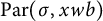 $\operatorname {\mathrm {Par}}(\sigma ,xwb)$
and
 $\operatorname {\mathrm {Par}}(\sigma ,xwat)$
.
Moreover, as discussed in Step 2,
 $\sigma $
maps each
 $\gamma _w(x)$
to
 $\pm \gamma _{\tilde {w}}(\sigma (x))$
(where
 $\sigma (xw)=\sigma (x)\tilde {w}$
). In fact, the sign with which
 $\sigma $
maps
 $\gamma _w(x)$
is the sign with which it maps either one of the terms in the sum defining
 $\gamma _w$
, namely,
 $$ \begin{align} \operatorname{\mathrm{Par}}(\sigma,xwaa) + \operatorname{\mathrm{Par}}(\sigma,xwab) + \operatorname{\mathrm{Par}}(\sigma,xwb). \end{align} $$
Thus,
 $\sigma (\prod _w \gamma _w) = \pm \prod _w \gamma _w$
, where the product is over all
 $w\in \{a,b\}^2$
, and the parity of the
 $\pm $
sign is the sum of expression (39) across all four such words w. But that sum is precisely the sum of the remaining 12 terms of
 $R_{3,2}(\sigma ,x)$
. Combining these observations with the
 $+$
signs in equation (37), it follows that the image of expression (26) under
 $\sigma $
is
 $(-1)^{R_{3,2}(\sigma ,x)}\sqrt {2}$
, as desired.
Case 2: The parities in equation (37) are
 $V(a)=0$
and
 $V(b)=1$
, that is,
 $$ \begin{align} \operatorname{\mathrm{Par}}(\sigma,xaa) + \operatorname{\mathrm{Par}}(\sigma,xab) = 0, \quad \operatorname{\mathrm{Par}}(\sigma,xba) + \operatorname{\mathrm{Par}}(\sigma,xbb) = 1 \in\mathbb{Z}/2\mathbb{Z}. \end{align} $$
In formula (28) defining
 $R_{3,2}(\sigma ,x)$
, then, the four terms
 $\operatorname {\mathrm {Par}}(\sigma ,xw)$
sum to
 $1$
, while the product on the second line of that formula is
 $0$
.
Because
 $V(a)=0$
, Step 2 shows that
 $\sigma $
maps
 $\gamma _{ba}(x)\gamma _{bb}(x)$
to
 $\pm \gamma _{\tilde {b}a}(\sigma (x))\gamma _{\tilde {b}b}(\sigma (x))$
, with the parity of the
 $\pm $
sign being the sum of expression (39) for
 $w=ba$
and
 $w=bb$
. On the other hand, because
 $V(b)=1$
, Step 2 shows that
 $\sigma $
maps
 $\gamma _{aa}(x)\gamma _{ab}(x)$
to
 $\pm \gamma ^{\prime }_{\tilde {a}a}(\sigma (x))\gamma ^{\prime }_{\tilde {a}b}(\sigma (x))$
. This time, the parity of the
 $\pm $
sign on each individual
 $\gamma _w\mapsto \gamma ^{\prime }_{\tilde {w}}$
is
 $$ \begin{align} \operatorname{\mathrm{Par}}(\sigma,xw) + \operatorname{\mathrm{Par}}(\sigma,xwaa) + \operatorname{\mathrm{Par}}(\sigma,xwab) + \operatorname{\mathrm{Par}}(\sigma,xwb), \end{align} $$
where the extra
 $\operatorname {\mathrm {Par}}(\sigma ,xw)$
term (as compared with expression (39)) is because swapping the two terms comprising
 $\gamma '$
introduces a factor of
 $-1$
.
Thus,
 $\sigma (\gamma _{aa}\gamma _{ab}\gamma _{ba}\gamma _{bb}) = \pm \gamma ^{\prime }_{\tilde {a}a}\gamma ^{\prime }_{\tilde {a}b}\gamma _{\tilde {b}a}\gamma _{\tilde {b}b}$
, where the parity of the sign is the sum of expression (39) for
 $w=ba,bb$
plus the sum of expression (41) for
 $w=aa,ab$
. By equation (40), this sum is off by
 $1$
from
 $R_{3,2}(\sigma ,x)$
. On the other hand, equations (37) and (40) dictate that
 $\sigma (U_a)=U_{\tilde {a}}$
but
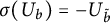 $\sigma (U_b)=-U_{\tilde {b}}$
. We observe that
 $$ \begin{align*} \frac{ \gamma^{\prime}_{\tilde{a}a} \gamma^{\prime}_{\tilde{a}b} \gamma_{\tilde{b}a} \gamma_{\tilde{b}b} } { 4(c^2+c+1) (2+U_{\tilde{a}} - U_{\tilde{b}} )} \cdot & \frac{4(c^2+c+1) (2+U_{a} + U_{b})} {\gamma_{aa}\gamma_{ab}\gamma_{ba}\gamma_{bb}} \\ & = \frac{\gamma^{\prime}_{\tilde{a}a} \gamma^{\prime}_{\tilde{a}b} }{\gamma_{\tilde{a}a} \gamma_{\tilde{a}b}} \cdot \frac{2 + U_{\tilde{a}} + U_{\tilde{b}}}{2+U_{\tilde{a}} - U_{\tilde{b}}} = \bigg(\! - \frac{U_{\tilde{a}}}{2 + U_{\tilde{b}} }\! \bigg) \cdot \bigg(\! \frac{2 + U_{\tilde{b}} }{U_{\tilde{a}}} \!\bigg) =-1, \end{align*} $$
by the identities from Step 1. Once again, then, the image of expression (26) under
 $\sigma $
is
 $(-1)^{R_{3,2}(\sigma ,x)}\sqrt {2}$
.
Case 3: The parities in equation (37) are
 $V(a)=1$
and
 $V(b)=0$
. This case is the same as Case 2 with the roles of a and b reversed.
Case 4: The parities
 $V(a)$
and
 $V(b)$
in equation (37) are both odd, that is,
 $$ \begin{align} \operatorname{\mathrm{Par}}(\sigma,xaa) + \operatorname{\mathrm{Par}}(\sigma,xab) = \operatorname{\mathrm{Par}}(\sigma,xba) + \operatorname{\mathrm{Par}}(\sigma,xbb) = 1 \in\mathbb{Z}/2\mathbb{Z}. \end{align} $$
In formula (28) defining
 $R_{3,2}(\sigma ,x)$
, then, the four terms
 $\operatorname {\mathrm {Par}}(\sigma ,xw)$
sum to
 $0$
, while the product on the second line of that formula is
 $1$
.
Because
 $V(a)=V(b)=1$
,
 $\sigma $
maps each
 $\gamma _w(x)$
to
 $\pm \gamma ^{\prime }_{\tilde {w}}(\sigma (x))$
, where the parity of the
 $\pm $
sign is given by expression (41), for the reasons discussed in Case 2. Summing these expressions together is off from
 $R_{3,2}(\sigma ,x)$
by
 $1$
, because of the aforementioned expression on the second line of formula (28).
At the same time, equations (37) and (42) dictate that
 $\sigma (U_a)=-U_{\tilde {a}}$
and
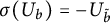 $\sigma (U_b)=-U_{\tilde {b}}$
. The relevant quotient is therefore
 $$ \begin{align*} \frac{ \gamma^{\prime}_{\tilde{a}a} \gamma^{\prime}_{\tilde{a}b} \gamma^{\prime}_{\tilde{b}a} \gamma^{\prime}_{\tilde{b}b} } { 4(c^2+c+1) (2-U_{\tilde{a}} - U_{\tilde{b}} )} & \cdot \frac{4(c^2+c+1) (2+U_{a} + U_{b})} {\gamma_{aa}\gamma_{ab}\gamma_{ba}\gamma_{bb}}\\& = \frac{\gamma^{\prime}_{aa} \gamma^{\prime}_{ab} }{\gamma_{aa} \gamma_{ab}} \cdot \frac{\gamma^{\prime}_{ba} \gamma^{\prime}_{bb} }{\gamma_{ba} \gamma_{bb}} \cdot \frac{2 + U_a + U_b}{2 - U_a - U_b} \\ & = \bigg( - \frac{U_a}{2 + U_b} \bigg) \cdot \bigg( - \frac{U_b}{2 + U_a} \bigg)\\ & \cdot \bigg( - \frac{(2 + U_a)(2+U_b)}{U_a U_b} \bigg) =-1, \end{align*} $$
by the identities from Step 1. Yet again, then, the image of expression (26) under
 $\sigma $
is
 $(-1)^{R_{3,2}(\sigma ,x)}\sqrt {2}$
, as desired.
Step 4. Having verified equation (36) for every
 $\sigma \in G_{\infty }$
, it follows that
 $R_{3,2}(\sigma ,x_1)=R_{3,2}(\sigma ,x_2)$
for all nodes
 $x_1$
,
 $x_2$
of the tree, and hence that
 $\sigma \in \tilde {M}_{3,2,\infty }$
. (Recall that we already observed that
 $\sigma \in M_{3,2,\infty }$
because of its action on
 $\zeta _4$
, by Theorem 3.4.)
Finally, if
 $\zeta _4,\sqrt {2}\in K$
, then
 $\sigma $
must fix both of these elements, and hence
 $\sigma \in B_{3,2,\infty }$
with
 $R_{3,2}(\sigma )=0$
. That is,
 $\sigma \in \tilde {B}_{3,2,\infty }$
.
5 The non-Chebyshev short-tail case (
$s=1$
and
$r\geq 3$
)


We now turn to the case that
 $r>s=1$
. That is, throughout this section, we suppose that
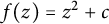 $f(z)=z^2+c$
such that
 $0$
is not periodic under f, but
 $f^r(0)=-f(0)$
for minimal
 $r>1$
. We will usually further assume that
 $r\geq 3$
.
5.1 A square root arising in backward orbits
Lemma 5.1 Let
 $x\in \overline {K}$
, let
 $\pm y$
be its two preimages under f, let
 $\pm w_1$
be the two preimages of y under f, and let
 $\pm w_2$
be the two preimages of
 $-y$
under f. Setting
 $m=2^{r-2}$
, write
 $$\begin{align*}f^{-(r-1)}(w_1) = \{ \pm \alpha_1,\ldots,\pm\alpha_m \} \quad\text{and}\quad f^{-(r-1)}(-w_1) = \{ \pm \alpha^{\prime}_1,\ldots,\pm\alpha^{\prime}_m \}. \end{align*}$$
Then
 $$ \begin{align} \prod_{i=1}^m \alpha_i \prod_{i=1}^m \alpha^{\prime}_i = \pm w_2. \end{align} $$
Moreover, if the expression in equation (43) equals
 $w_2$
, and if
 $f^{r-1}(0)\neq -w_2$
, then writing
 $$\begin{align*}f^{-(r-1)}(-w_2) = \{ \pm \beta_1,\ldots,\pm\beta_m \} ,\end{align*}$$
we have
 $\gamma ^2=2$
, where
 $$ \begin{align} \gamma = \frac{\alpha_1 \dots \alpha_m + \alpha^{\prime}_1 \dots \alpha^{\prime}_m}{\beta_1\dots \beta_m}. \end{align} $$
Proof By Proposition 2.1 and the fact that
 $f^r(0)=-f(0)$
, we have
 $$\begin{align*}\big( \alpha_1 \dots \alpha_{m} \alpha^{\prime}_1 \dots \alpha^{\prime}_{m} \big)^2 = f^{r}(0) - y = -y - f(0) = w_2^2. \end{align*}$$
Equation (43) follows immediately.
Assume for the remainder of the proof that the product in equation (43) is
 $w_2$
. Let
 $\gamma \in K$
be the expression in equation (44). Then by Proposition 2.1 again, we have
 $$\begin{align*}\gamma^2 = \frac{(f^{r-1}(0) - w_1) + 2w_2 + (f^{r-1}(0) + w_1)} {f^{r-1}(0) + w_2} = \frac{2(f^{r-1}(0)+w_2)}{f^{r-1}(0) + w_2} = 2. \\[-42pt] \end{align*}$$
Lemma 5.2 Let
 $x_0\in K$
not in the forward orbit of
 $0$
, and fix a choice of
 $\sqrt {2}\in \overline {K}$
. Given a labeling of the tree
 $T_{\infty }$
of preimages
 $\operatorname {\mathrm {Orb}}_f^-(x_0)$
, then for every node y of the tree, define
 $$\begin{align*}E_y = \prod_{w'\in\{a,b\}^{r-2}}[yw'a] \in \overline{K}. \end{align*}$$
It is possible to label the tree in such a way that for every node x of the tree, we have
 $$ \begin{align} E_{xaa}E_{xab} = [xba] \quad\text{and}\quad E_{xba}E_{xbb} = [xaa], \end{align} $$
and in addition,
 $$ \begin{align} \frac{E_{xaa}+E_{xab}}{E_{xbb}} = \frac{E_{xab}-E_{xaa}}{E_{xba}} = \frac{E_{xba}+E_{xbb}}{E_{xab}} = \frac{E_{xbb}-E_{xba}}{E_{xaa}} = \sqrt{2}. \end{align} $$
Proof We will label the tree inductively, starting from the root point
 $x_0$
. Label the tree (using the symbols a and b) arbitrarily up to level r.
For each successive
 $n\geq r+1$
, suppose that we have labeled
 $T_{n-1}$
in such a way that for every node x of
 $T_{n-1}$
up to level
 $n-r-2$
, the desired identities hold. (This condition is vacuously true for
 $n = r+1$
.)
For each node y at level
 $n-1$
, label the two points of
 $f^{-1}(y)$
arbitrarily as
 $ya$
and
 $yb$
. We will now adjust these labels, if necessary.
For each node x at level
 $n-r-1$
, we have
 $$\begin{align*}E_{xaa}E_{xab} = \pm [xba] \quad\text{and}\quad E_{xba}E_{xbb} = \pm [xaa], \end{align*}$$
by equation (43) of Lemma 5.1. If the first is
 $-[xba]=[xbb]$
, then exchange the labels
 $ya$
and
 $yb$
above a single node
 $y\in f^{-(r-1)}([xa])$
, and the adjusted labeling then satisfies
 $E_{xaa}E_{xab} = [xba]$
. If the second is
 $-[xaa]=[xab]$
, make a similar swap above a single node
 $y\in f^{-(r-1)}([xb])$
. Equation (45) now holds for x.
Still for the same node x at level
 $n-r-1$
, having made these adjustments, call the first four quantities in equation (46)
 $A_1,A_2,B_1,B_2$
, respectively. By equation (44) of Lemma 5.1, each is
 $\pm \sqrt {2}$
. (The negative sign in the numerator of
 $A_2$
is there because
 $E_{xaa} E_{xab}=[xba]=-[xbb]$
, so to get the desired value
 $[xbb]$
on the right side of equation (43), we replace
 $\alpha ^{\prime }_1 = [xabaa\dots a]$
by its negative. Similar reasoning yields the negative sign in the numerator of
 $B_2$
.) By Proposition 2.1, we have
 $$\begin{align*}A_1 A_2 = \frac{ E_{xab}^2 {-} E_{xaa}^2}{E_{xba} E_{xbb}} = \frac{(f^{r-1}(0) - [xab]) - (f^{r-1}(0) {-} [xaa])}{[xaa]} = \frac{[xaa] {+} [xaa]}{[xaa]} = 2,\end{align*}$$
since
 $[xab]=-[xaa]\neq 0$
. Since both are square roots of
 $2$
, it follows that
 $A_1=A_2$
. Similarly,
 $B_1=B_2$
. We also have
 $$ \begin{align*} \frac{A_1}{B_1} &= \frac{E_{xaa}E_{xab} + E_{xab}^2}{E_{xba}E_{xbb} + E_{xbb}^2} = \frac{[xba] + (f^{r-1}(0) - [xab])}{[xaa] + (f^{r-1}(0) - [xbb])} \\ &= \frac{f^{r-1}(0) + [xaa] + [xba]}{f^{r-1}(0) + [xba] + [xaa]} = 1, \end{align*} $$
where the second equality is by Proposition 2.1 and (the now verified) equation (45), and the third equality is because
 $[xab]=-[xaa]$
and
 $[xbb]=-[xba]$
. Thus, we have
 $A_1=A_2=B_1=B_2=\pm \sqrt {2}$
.
If this common value is
 $-\sqrt {2}$
, then pick
 $y_1\in f^{-(r-2)}([xaa])$
, and exchange the labels of
 $y_1 a$
and
 $y_1 b$
. Also pick
 $y_2\in f^{-(r-2)}([xab])$
, and exchange the labels of
 $y_2 a$
and
 $y_2 b$
. These two switches have the effect of sending each of
 $E_{xaa}$
and
 $E_{xab}$
to its negative. Thus, equation (45) remains true, but each of
 $A_1,A_2,B_1,B_2$
is replaced by its negative, that is, equation (46) holds.
Having made these (possible) label changes to various nodes at the nth level of the tree, we have labeled
 $T_n$
so that for every node x at every level
 $0\leq \ell \leq n-r-1$
of
 $T_n$
, equations (45) and (46) hold. Thus, our inductive construction of the desired labeling is complete.
5.2 A preliminary result regarding the associated arboreal subgroup
Recall the functions
 $P_{r,1}^a$
and
 $P_{r,1}^b$
and the groups
 $M_{r,1,\infty }$
and
 $B_{r,1,\infty }$
from Definition 1.1, with
 $s=1$
. In particular, we have
 $$\begin{align*}P^a_{r,1}(\sigma,x) := \operatorname{\mathrm{Par}}(\sigma,xb) + \sum_{w\in\{a,b\}^{r-1}} \operatorname{\mathrm{Par}}(\sigma,xaw) \in \mathbb{Z}/2\mathbb{Z} \end{align*}$$
and
 $$\begin{align*}P^b_{r,1}(\sigma,x) := \operatorname{\mathrm{Par}}(\sigma,xa) + \sum_{w\in\{a,b\}^{r-1}} \operatorname{\mathrm{Par}}(\sigma,xbw) \in \mathbb{Z}/2\mathbb{Z} .\end{align*}$$
As in previous sections, Lemma 5.2 inspires the following definition.
Definition 5.3 Fix a labeling
 $a,b$
of
 $T_{\infty }$
, and fix an integer
 $r\geq 3$
. For any word x in the symbols
 $\{a,b\}$
and any
 $\sigma \in \operatorname {\mathrm {Aut}}(T_{\infty })$
, define
 $R_{r,1}(\sigma ,x) \in \mathbb {Z}/2\mathbb {Z}$
by
 $$\begin{align*}R_{r,1}(\sigma,x) := \operatorname{\mathrm{Par}}(\sigma,xa)\operatorname{\mathrm{Par}}(\sigma,xb) + \sum_{w\in\{a,b\}^{r-2}} \Big( \operatorname{\mathrm{Par}}\big(\sigma,xabw\big) + \operatorname{\mathrm{Par}}\big(\sigma,xbbw\big) \Big), \end{align*}$$
and define
 $\tilde {M}_{r,1,\infty }$
to be the set of all
 $\sigma \in B_{r,1,\infty }$
for which
 $$ \begin{align} R_{r,1}(\sigma,x_1) = R_{r,1}(\sigma,x_2) \in \mathbb{Z}/2\mathbb{Z} \end{align} $$
for all nodes
 $x_1,x_2$
of
 $T_{\infty }$
. For
 $\sigma \in \tilde {M}_{r,1,\infty }$
, define
 $R_{r,1}(\sigma )\in \mathbb {Z}/2\mathbb {Z}$
to be this common value of
 $R_{r,1}(\sigma ,\cdot )$
. Define
 $\tilde {B}_{r,1,\infty } := \{\sigma \in \tilde {M}_{r,1,\infty } : R_{r,1}(\sigma )=0 \}$
.
Theorem 5.4 Fix an integer
 $r\geq 3$
. Then
 $\tilde {M}_{r,1,\infty }$
and
 $\tilde {B}_{r,1,\infty }$
are subgroups of
 $\operatorname {\mathrm {Aut}}(T_{\infty })$
. Moreover,
 $R_{r,1}:\tilde {M}_{r,1,\infty }\to \mathbb {Z}/2\mathbb {Z}$
is a homomorphism with kernel
 $\tilde {B}_{r,1,\infty }$
.
Proof
Step 1. We claim that for all
 $\sigma \in \tilde {M}_{r,1,\infty }$
, all
 $\tau \in \operatorname {\mathrm {Aut}}(T_\infty )$
, and all nodes x of the tree, we have
 $$ \begin{align} \operatorname{\mathrm{Par}}(\tau,xa) \operatorname{\mathrm{Par}}\big(\sigma,\tau(xb) \big) + \!\sum_{w\in \{a,b\}^{r-2}} \operatorname{\mathrm{Par}}\big( \sigma,\tau(xab)w \big) = \!\sum_{w\in \{a,b\}^{r-2}} \operatorname{\mathrm{Par}}\big( \sigma,\tau(xa)bw \big), \end{align} $$
where we continue to work modulo 2.
If
 $\operatorname {\mathrm {Par}}(\tau ,xa)=0$
, then
 $\tau (xab)=\tau (xa)b$
, and the first term in equation (48) is zero, so our claim holds trivially.
Otherwise, we have
 $\operatorname {\mathrm {Par}}(\tau ,xa)=1$
, and hence
 $\tau (xab)=\tau (xa)a$
. Then because we are working modulo 2, the difference between the two sides of equation (48) is
 $$ \begin{align*} \operatorname{\mathrm{Par}}\big( \sigma,\tau(xb) \big) & + \sum_{w\in \{a,b\}^{r-2}} \Big( \operatorname{\mathrm{Par}}\big( \sigma,\tau(xa)aw \big) + \operatorname{\mathrm{Par}}\big( \sigma,\tau(xa)bw \big) \Big) \\ &= \operatorname{\mathrm{Par}}\big( \sigma,\tau(xb) \big) + \sum_{w'\in \{a,b\}^{r-1}} \operatorname{\mathrm{Par}}\big( \sigma,\tau(xa)w' \big) \\ &= \begin{cases} P_{r,1}^a (\sigma,\tau(x)) \text{ if } \operatorname{\mathrm{Par}}(\tau,x)=0, \\ P_{r,1}^b (\sigma,\tau(x)) \text{ if } \operatorname{\mathrm{Par}}(\tau,x)=1. \end{cases} \end{align*} $$
Since
 $\sigma \in B_{r,1,\infty }$
, this value is
 $0$
, and hence equation (48) holds, proving our claim.
By similar reasoning, we also have
 $$ \begin{align} \operatorname{\mathrm{Par}}(\tau,xb) \operatorname{\mathrm{Par}}\big(\sigma,\tau(xa) \big) + \!\sum_{w\in \{a,b\}^{r-2}} \operatorname{\mathrm{Par}}\big( \sigma,\tau(xbb)w \big) =\! \sum_{w\in \{a,b\}^{r-2}} \operatorname{\mathrm{Par}}\big( \sigma,\tau(xb)bw \big). \end{align} $$
Step 2. Again with
 $\sigma ,\tau ,x$
as in Step 1, we now claim that
 $$ \begin{align} R_{r,1}(\sigma) + R_{r,1}(\tau,x) = R_{r,1}(\sigma \tau,x). \end{align} $$
Indeed, by equation (3) and the definition of
 $R_{r,1}$
, we have
 $$ \begin{align*} R_{r,1}(\sigma\tau,x) &= \Big( \operatorname{\mathrm{Par}}\big(\sigma,\tau(xa) \big) + \operatorname{\mathrm{Par}}(\tau,xa) \Big) \Big( \operatorname{\mathrm{Par}}\big(\sigma,\tau(xb) \big) + \operatorname{\mathrm{Par}}(\tau,xb) \Big) \\ & \phantom{\operatorname{\mathrm{Par}}} + \sum_{w\in\{a,b\}^{r-2}} \big( \operatorname{\mathrm{Par}}(\tau,xabw) + \operatorname{\mathrm{Par}}(\tau,xbbw) \big) \\ & \phantom{\operatorname{\mathrm{Par}}} + \sum_{w\in\{a,b\}^{r-2}} \Big( \operatorname{\mathrm{Par}}\big(\sigma,\tau(xabw)\big) + \operatorname{\mathrm{Par}}\big(\sigma,\tau(xbbw)\big) \Big) \\ &= R_{r,1}(\tau,x) + \operatorname{\mathrm{Par}}\big(\sigma,\tau(xa) \big) \operatorname{\mathrm{Par}}\big(\sigma,\tau(xb) \big) \\ & \phantom{\operatorname{\mathrm{Par}}} + \operatorname{\mathrm{Par}}(\tau,xa) \operatorname{\mathrm{Par}}\big(\sigma,\tau(xb) \big) + \sum_{w\in \{a,b\}^{r-2}} \operatorname{\mathrm{Par}}\big( \sigma,\tau(xab)w \big) \\ & \phantom{\operatorname{\mathrm{Par}}} + \operatorname{\mathrm{Par}}(\tau,xb) \operatorname{\mathrm{Par}}\big(\sigma,\tau(xa) \big) + \sum_{w\in \{a,b\}^{r-2}} \operatorname{\mathrm{Par}}\big( \sigma,\tau(xbb)w \big) \\ &= R_{r,1}(\tau,x) + \operatorname{\mathrm{Par}}\big(\sigma,\tau(xa) \big) \operatorname{\mathrm{Par}}\big(\sigma,\tau(xb) \big) \\ & \phantom{\operatorname{\mathrm{Par}}} + \sum_{w\in \{a,b\}^{r-2}} \Big( \operatorname{\mathrm{Par}}\big( \sigma,\tau(xa)bw \big) + \operatorname{\mathrm{Par}}\big( \sigma,\tau(xb)bw \big) \Big) \\ &= R_{r,1}(\tau,x) + \operatorname{\mathrm{Par}}\big(\sigma,\tau(x)a \big) \operatorname{\mathrm{Par}}\big(\sigma,\tau(x)b \big) \\ & \phantom{\operatorname{\mathrm{Par}}} + \sum_{w\in \{a,b\}^{r-2}} \Big( \operatorname{\mathrm{Par}}\big( \sigma,\tau(x)abw \big) + \operatorname{\mathrm{Par}}\big( \sigma,\tau(x)bbw \big) \Big) \\ &=R_{r,1}(\tau,x) +R_{r,1}\big(\sigma,\tau(x)\big), \end{align*} $$
where the second equality is by grouping the terms of
 $R_{r,1}(\tau ,x)$
and rearranging the sums; the third is by equations (48) and (49); and the fourth is by observing that the two-element sets
 $\{\tau (xa),\tau (xb)\}$
and
 $\{\tau (x)a,\tau (x)b\}$
coincide. Thus, because
 $R_{r,1}(\sigma ,\tau (x))=R_{r,1}(\sigma )$
, we have proven equation (50).
Step 3. Once again, we will finish our proof via Proposition 2.2. Let
 $\Gamma :=B_{r,1,\infty }$
, which we know to be a group by Theorem 3.3. Let
 $H=H_0:=\mathbb {Z}/2\mathbb {Z}$
, and let
 $P(\sigma ,x):=R_{r,1}(\sigma ,x)$
.
Clearly, the identity
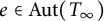 $e\in \operatorname {\mathrm {Aut}}(T_{\infty })$
satisfies
 $R_{r,1}(e,x)=0$
for all nodes x, so that
 $e\in \tilde {M}_{r,1,\infty }$
, which is the group G of Proposition 2.2. In addition, equation (50) provides precisely hypothesis (6). By Proposition 2.2, then,
 $\tilde {M}_{r,1,\infty }$
is a subgroup of
 $B_{r,1,\infty }$
, and
 $R_{r,1}$
is a homomorphism. By definition, its kernel is
 $\tilde {B}_{r,1,\infty }$
, which is therefore a subgroup of
 $\tilde {M}_{r,1,\infty }$
.
Remark 5.5 We stated Definition 5.3 and Theorem 5.4 for the case that
 $s=1$
and
 ${r\geq 3}$
, but they also work with
 $s=1$
and
 $r=2$
. However, in that special case, corresponding to the Chebyshev map
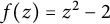 $f(z)=z^2-2$
, the associated arboreal Galois groups are much smaller than the groups defined in Definition 5.3, because many more special values of the base field arise as arithmetic combinations of backward orbit elements.
5.3 The action of Galois
As in previous sections, the following result shows that for
 $r\geq 3$
, membership in
 $\tilde{M}_{r,s,\infty }$
is determined by the condition that any
 $\sigma \in G_{\infty }$
must act in the same way on each of the parameterizations of
 $\sqrt {2}$
given in equations (45) and (46) of Lemma 5.2.
Theorem 5.6 Let
 $x_0\in K$
not in the forward orbit of
 $0$
, and fix a choice of
 $\sqrt {2}\in \overline {K}$
. Label the tree
 $T_{\infty }$
of preimages
 $\operatorname {\mathrm {Orb}}_f^{-}(x_0)$
as in Lemma 5.2. Then for any node
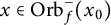 $x\in \operatorname {\mathrm {Orb}}_f^-(x_0)$
and any
 $\sigma \in G_{\infty }=\operatorname {\mathrm {Gal}}(K_{\infty }/K)$
, we have
 $$ \begin{align} P^a_{r,1}(\sigma,x) = P^b_{r,1}(\sigma,x) = 0 \quad\text{and}\quad \sigma(\sqrt{2}) = (-1)^{R_{r,1}(\sigma,x)}\sqrt{2}. \end{align} $$
In particular, the image of
 $G_{\infty }$
in
 $\operatorname {\mathrm {Aut}}(T_{\infty })$
, induced by its action on
 $\operatorname {\mathrm {Orb}}_f^-(x_0)$
via this labeling, is contained in
 $\tilde {M}_{r,1,\infty }$
. Furthermore, if
 $\sqrt {2}\in K$
, then this Galois image is contained in
 $\tilde{B}_{r,1,\infty}$
.
Proof It suffices to prove equation (51) for all
 $x\in \operatorname {\mathrm {Orb}}_f^-(x_0)$
and
 $\sigma \in G_{\infty }$
. Indeed, in that case, we have that
 $\sigma \in B_{r,1,\infty }$
from Definition 1.1, and that equation (47) holds for all nodes
 $x_1,x_2$
of the tree, since
 $\sigma (\sqrt {2})/\sqrt {2} \in \{\pm 1\}$
must be independent of x. That is, equation (51) implies that every
 $\sigma \in G_{\infty }$
is in
 $\tilde {M}_{r,1,\infty }$
. Furthermore, if
 $\sqrt {2}\in K$
, then it would follow that
 $R_{r,1}(\sigma )=0$
for all
 $\sigma \in G_{\infty }$
, and hence that every such
 $\sigma $
lies in
 $\tilde {B}_{r,1,\infty }$
.
Note that for any
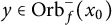 $y\in \operatorname {\mathrm {Orb}}_f^-(x_0)$
, we have
 $$ \begin{align} \sigma(E_y) = (-1)^{R(\sigma,y)} E_{\sigma(y)}, \quad\text{where } R(\sigma,y) := \sum_{w\in\{a,b\}^{r-2}} \operatorname{\mathrm{Par}}(\sigma,yw). \end{align} $$
Indeed, equation (52) is immediate from the definition of
 $E_y$
in Lemma 5.2, combined with the fact that for each node u of the tree, we have
 $$\begin{align*}\sigma\big([ua]\big) = (-1)^{\operatorname{\mathrm{Par}}(\sigma,u)} \big[ \sigma(u) a \big] .\end{align*}$$
Step 1. We begin by proving the first part of equation (51). Given
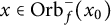 $x\in \operatorname {\mathrm {Orb}}_f^-(x_0)$
and
 $\sigma \in G_{\infty }$
, if
 $\operatorname {\mathrm {Par}}(\sigma ,x)=0$
, so that
 $\sigma (xa)=\sigma (x)a$
and
 $\sigma (xb)=\sigma (x)b$
, then by the first equation of (45) and the fact that the two-element sets
 $\{\sigma (xaa),\sigma (xab)\}$
and
 $\{\sigma (x)aa,\sigma (x)ab\}$
coincide, we have
 $$ \begin{align*} 1 &= \sigma(1) = \frac{\sigma(E_{xaa}) \sigma(E_{xab})}{\sigma( [xba] ) } = (-1)^{R(\sigma,xaa) + R(\sigma,xab)} \frac{E_{\sigma(x)aa} E_{\sigma(x)ab} } {(-1)^{\operatorname{\mathrm{Par}}(\sigma,xb)} [\sigma(x)ba]} \\ &= (-1)^{P_{r,1}^a(\sigma,x)} \frac{E_{\sigma(x)aa} E_{\sigma(x)ab} }{[\sigma(x)ba]} = (-1)^{P_{r,1}^a(\sigma,x)}. \end{align*} $$
(Here, the second and fifth equalities are by the choice of labeling of the tree, the third is by equation (52), and the fourth is by the definitions of
 $P_{r,1}^a$
and R.) On the other hand, if
 $\operatorname {\mathrm {Par}}(\sigma ,x)=1$
, then
 $\sigma (xa)=\sigma (x)b$
and
 $\sigma (xb)=\sigma (x)a$
, and hence
 $$ \begin{align*} 1 &= \sigma(1) = \frac{\sigma(E_{xaa}) \sigma(E_{xab})}{\sigma( [xba] ) } = (-1)^{R(\sigma,xaa) + R(\sigma,xab)} \frac{E_{\sigma(x)ba} E_{\sigma(x)bb} } {(-1)^{\operatorname{\mathrm{Par}}(\sigma,xb)} [\sigma(x)aa]} \\ &= (-1)^{P_{r,1}^a(\sigma,x)} \frac{E_{\sigma(x)ba} E_{\sigma(x)bb} }{[\sigma(x)aa]} = (-1)^{P_{r,1}^a(\sigma,x)}. \end{align*} $$
Either way, then, we have
 $P_{r,1}^a(\sigma ,x)=0$
in
 $\mathbb {Z}/2\mathbb {Z}$
. By similar reasoning applied to the second equation of (45), we also have
 $P_{r,1}^b(\sigma ,x)=0$
, verifying the first portion of equation (51).
Step 2. Given
 $x\in \operatorname {\mathrm {Orb}}_f^-(x_0)$
and
 $\sigma \in G_{\infty }$
, then by equation (52) and property (46) of the specified labeling of the tree, we have
 $$\begin{align*}(-1)^{R(\sigma,xaa)} E_{\sigma(xaa)} + (-1)^{R(\sigma,xab)} E_{\sigma(xab)} =\sigma(\sqrt{2}) \cdot (-1)^{R(\sigma,xbb)} E_{\sigma(xbb)} .\end{align*}$$
Multiplying both sides of this equation by
 $(-1)^{R(\sigma ,xab)} / E_{\sigma (xbb)}$
, and applying the identity
 $P^a_{r,1}=0$
proven in Step 1, that is,
 $R(\sigma ,xaa)+R(\sigma ,xab)=\operatorname {\mathrm {Par}}(\sigma ,xb)$
, we obtain
 $$ \begin{align} (-1)^{R(\sigma,xab)+R(\sigma,xbb)} \sigma(\sqrt{2}) = \frac{ E_{\sigma(xab)} + (-1)^{\operatorname{\mathrm{Par}}(\sigma,xb)} E_{\sigma(xaa)} } {E_{\sigma(xbb)} }. \end{align} $$
We consider three cases. First, if
 $\operatorname {\mathrm {Par}}(\sigma ,xb)=0$
, then equation (53) becomes
 $$\begin{align*}(-1)^{R(\sigma,xab)+R(\sigma,xbb)} \sigma(\sqrt{2}) = \frac{ E_{\sigma(xa)a} + E_{\sigma(xa)b} } {E_{\sigma(xb)b} } = \sqrt{2}, \end{align*}$$
by considering the first expression in equation (46) if
 $\operatorname {\mathrm {Par}}(\sigma ,x)=0$
, or the third if
 $\operatorname {\mathrm {Par}}(\sigma ,x)=1$
. Here, we have used the fact that the two-element sets
 $\{\sigma (xaa),\sigma (xab)\}$
and
 $\{\sigma (xa)a,\sigma (xa)b\}$
coincide.
Second, if
 $\operatorname {\mathrm {Par}}(\sigma ,xa)=0$
and
 $\operatorname {\mathrm {Par}}(\sigma ,xb)=1$
, then equation (53) becomes
 $$\begin{align*}(-1)^{R(\sigma,xab)+R(\sigma,xbb)} \sigma(\sqrt{2}) = \frac{ E_{\sigma(xa)b} - E_{\sigma(xa)a} } {E_{\sigma(xb)a} } = \sqrt{2}, \end{align*}$$
by considering the second expression in equation (46) if
 $\operatorname {\mathrm {Par}}(\sigma ,x)=0$
, or the fourth if
 $\operatorname {\mathrm {Par}}(\sigma ,x)=1$
.
Third, if
 $\operatorname {\mathrm {Par}}(\sigma ,xa)=\operatorname {\mathrm {Par}}(\sigma ,xb)=1$
, then equation (53) becomes
 $$\begin{align*}(-1)^{R(\sigma,xab)+R(\sigma,xbb)} \sigma(\sqrt{2}) = \frac{ E_{\sigma(xa)a} - E_{\sigma(xa)b} } {E_{\sigma(xb)a} } = - \sqrt{2}, \end{align*}$$
again by considering the second or fourth expression in equation (46).
Recalling that
 $$\begin{align*}R_{r,1}(\sigma,x)=\operatorname{\mathrm{Par}}(\sigma,xa)\operatorname{\mathrm{Par}}(\sigma,xb) + R(\sigma,xab)+R(\sigma,xbb) ,\end{align*}$$
then in all three cases, we have
 $\sigma (\sqrt {2}) = (-1)^{R_{r,1}(\sigma ,x)}\sqrt {2}$
, as desired.
6 The geometric Galois groups
In this section, we show that our groups
 $B_{r,s,\infty }$
and
 $\tilde {B}_{r,s,\infty }$
coincide with Pink’s geometric groups
 $G^{\text {Pink}}_{r,s,\infty }\cong G^{\text {geom}}$
, which we introduced in Section 1.3. (We will relate his larger arithmetic group
 $G^{\text {arith}}$
to our larger groups
 $M_{r,s,\infty }$
,
 $\tilde {M}_{r,s,\infty }$
in Section 7.)
6.1 Restricting to finite subtrees
For
 $0\leq m\leq n\leq \infty $
, define homomorphisms
 $$\begin{align*}\operatorname{\mathrm{Res}}_{n,m}:\operatorname{\mathrm{Aut}}(T_n)\rightarrow \operatorname{\mathrm{Aut}}(T_m) \end{align*}$$
given by restricting elements of
 $\operatorname {\mathrm {Aut}}(T_n)$
to the mth level of the tree. Note that
 $\operatorname {\mathrm {Aut}}(T_\infty )$
is naturally isomorphic to the inverse limit of the finite groups
 $\operatorname {\mathrm {Aut}}(T_n)$
with respect to these restriction homomorphisms. In particular, these homomorphisms induce a natural profinite topology on
 $\operatorname {\mathrm {Aut}}(T_\infty )$
from the discrete topology on each of the finite groups
 $\operatorname {\mathrm {Aut}}(T_n)$
.
Lemma 6.1 The groups
 $B_{r,s,\infty }$
,
 $M_{r,s,\infty }$
,
 $\tilde {B}_{3,2,\infty }$
,
 $\tilde {M}_{3,2,\infty }$
,
 $\tilde {B}_{r,1,\infty }$
, and
 $\tilde {M}_{r,1,\infty }$
are closed subgroups of
 $\operatorname {\mathrm {Aut}}(T_\infty )$
.
Proof Let X be the set of nodes of
 $T_{\infty }$
. Each of the subgroups G in question is defined by relations involving functions
 $P:\operatorname {\mathrm {Aut}}(T_{\infty })\times X\to \mathbb {Z}/2\mathbb {Z}$
for which
 $P(\sigma ,x)$
depends only on
 $\operatorname {\mathrm {Par}}(\sigma ,y)$
for nodes y lying a bounded number of levels above x. (Here, P is any of
 $P^a_{r,s}$
or
 $P^b_{r,s}$
or
 $R_{3,2}$
or
 $R_{r,1}$
.) By definition of the profinite topology, then, for each
 $x\in X$
, the function
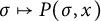 $\sigma \mapsto P(\sigma ,x)$
is continuous, and thus each of the equations defining the subgroup G (for a single
 $x\in X$
or a pair
 $x_1,x_2\in X$
) defines a closed subset of
 $\operatorname {\mathrm {Aut}}(T_{\infty })$
. The subgroup G is therefore an intersection of closed sets and hence is closed.
For each integer
 $n\geq 1$
, define
 $$\begin{align*}B_{r,s,n}:= \operatorname{\mathrm{Res}}_{\infty,n}( B_{r,s,\infty} ) \quad\text{and}\quad G^{\text{Pink}}_{r,s,n}:=\operatorname{\mathrm{Res}}_{\infty,n}( G^{\text{Pink}}_{r,s,\infty}) , \end{align*}$$
which are subgroups of
 $\operatorname {\mathrm {Aut}}(T_n)$
. Similarly, define the subgroups
 $\tilde {B}_{r,s,n}:= \operatorname {\mathrm {Res}}_{\infty ,n}( \tilde {B}_{r,s,\infty } )$
for
 $s=1$
and for
 $(r,s)=(3,2)$
. By [Reference PinkPin13, Proposition 3.3.3], we have
 $$ \begin{align} \log_2 \big|G^{\text{Pink}}_{r,s,n} \big|= \begin{cases} 2^n-1 & \text{if } n\leq r,\\ n+1 & \text{if } s=1 \text{ and } r=2 \text{ and } n\geq 2,\\ 2^n-3\cdot 2^{n-r}+2 & \text{if } s=1 \text{ and } r\geq 3 \text{ and } n\geq r,\\ 2^n-5\cdot 2^{n-4}+2 & \text{if } s=2 \text{ and } r=3 \text{ and } n\geq 4,\\ 2^n-2^{n-r+1}+1 & \text{if } s\geq 2 \text{ and } r\geq 4 \text{ and } n\geq r. \end{cases} \end{align} $$
6.2 Pink’s generators
In equation (0.4) of [Reference PinkPin13], Pink defines his subgroups
 $G^{\text {Pink}}_{r,s,\infty }\subseteq \operatorname {\mathrm {Aut}}(T_\infty )$
in terms of topological generators, as follows. Let e denote the identity element of
 $\operatorname {\mathrm {Aut}}(T_{\infty })$
, and let
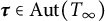 $\boldsymbol {\tau }\in \operatorname {\mathrm {Aut}}(T_\infty )$
be the automorphism that swaps the two subtrees rooted at the two nodes
 $a,b$
at level 1. That is, for all nodes x of the tree, we have
 $$\begin{align*}\operatorname{\mathrm{Par}}(e,x)=0 \quad \text{and} \quad \operatorname{\mathrm{Par}}(\boldsymbol{\tau},x) = \begin{cases} 1 & \text{ if } x=x_0, \\ 0 & \text{ otherwise}. \end{cases} \end{align*}$$
For any
 $\boldsymbol {\alpha },\boldsymbol {\beta }\in \operatorname {\mathrm {Aut}}(T_\infty )$
, write
 $(\boldsymbol {\alpha },\boldsymbol {\beta })\in \operatorname {\mathrm {Aut}}(T_{\infty })$
for the automorphism that fixes the nodes
 $a,b$
at level 1, and acts as
 $\boldsymbol {\alpha }$
on the subtree rooted at a, and as
 $\boldsymbol {\beta }$
on the subtree rooted at b. That is,
 $\operatorname {\mathrm {Par}}( (\boldsymbol {\alpha },\boldsymbol {\beta }), x_0)=0$
, and for any word w in the symbols
 $\{a,b\}$
, we have
 $$\begin{align*}\operatorname{\mathrm{Par}}\big( (\boldsymbol{\alpha},\boldsymbol{\beta}), aw \big) = \operatorname{\mathrm{Par}}(\boldsymbol{\alpha},w) \quad \text{and}\quad \operatorname{\mathrm{Par}}\big( (\boldsymbol{\alpha},\boldsymbol{\beta}), bw \big) = \operatorname{\mathrm{Par}}(\boldsymbol{\beta},w) .\end{align*}$$
Pink’s subgroup
 $G^{\text {Pink}}_{r,s,\infty }$
is the closure of the subgroup generated by elements
 $\boldsymbol {\alpha }_1,\ldots ,\boldsymbol {\alpha }_r\in \operatorname {\mathrm {Aut}}(T_{\infty })$
given by the recursive relations
 $$ \begin{align} \boldsymbol{\alpha}_1 = \boldsymbol{\tau}, \qquad \boldsymbol{\alpha}_{s+1} = (\boldsymbol{\alpha}_s, \boldsymbol{\alpha}_r), \qquad\text{and}\qquad \boldsymbol{\alpha}_i = (\boldsymbol{\alpha}_{i-1}, e) \quad \text{for } i\neq 1, s+1. \end{align} $$
These formulas apply recursively, moving one level at a time up through the tree. That is, at level
 $0$
, consisting of just the root node
 $x_0$
, each
 $\boldsymbol {\alpha }_i$
is obviously trivial. At level
 $1$
,
 $\boldsymbol {\alpha }_1=\boldsymbol {\tau }$
swaps the two nodes at that level, while every other
 $\boldsymbol {\alpha }_i$
is trivial. More generally, having defined each
 $\boldsymbol {\alpha }_i$
up to level n, formula (55) defines each
 $\boldsymbol {\alpha }_2,\ldots ,\boldsymbol {\alpha }_r$
up to level
 $n+1$
.
Equivalently, we may understand Pink’s generators as follows. For
 $1\leq i\leq s$
, we have
 $$ \begin{align} \operatorname{\mathrm{Par}}(\boldsymbol{\alpha}_i,y) = \begin{cases} 1 & \text{ if } y = a^{i-1}, \\ 0 & \text{ otherwise}, \end{cases} \end{align} $$
where we write
 $w^j$
for the word
 $ww\dots w$
consisting of j consecutive copies of the word w. After all, formula (56) is clearly true for
 $\boldsymbol {\alpha }_1=\boldsymbol {\tau }$
, and then it follows for
 $2\leq i\leq s$
by the relation
 $\boldsymbol {\alpha }_i = (\boldsymbol {\alpha }_{i-1}, e)$
of (55).
On the other hand, for
 $i\geq s+1$
, the recursive definition comes into play. Define
 $\ell :=r-s\geq 1$
, and let
 $w_{\ell }$
be the word of length
 $\ell $
given by
 $w_{\ell }:= b a^{\ell -1}$
. We claim that for each
 $i=s+1,\ldots , r$
, the automorphism
 $\boldsymbol {\alpha }_i$
of equation (55) is given by
 $$ \begin{align} \operatorname{\mathrm{Par}}(\boldsymbol{\alpha}_i, w) = \begin{cases} 1 & \text{ if } w = a^{i-s-1} w_\ell^n a^s \text{ for some } n\geq 0, \\ 0 & \text{ otherwise}. \end{cases} \end{align} $$
We prove equation (57) by induction on
 $m\geq 0$
, where the inductive claim for each m is that for each
 $i=s+1,\ldots ,r$
, the desired formula holds for all words w of length up to
 $i-1+m\ell $
. Indeed, for
 $m=0$
and
 $i=s+1$
, the claim is immediate from equation (56) for
 $\boldsymbol {\alpha }_s$
and the relation
 $\boldsymbol {\alpha }_{s+1} = (\boldsymbol {\alpha }_s, \boldsymbol {\alpha }_r)$
of (55), since
 $\boldsymbol {\alpha }_r$
is trivial up to (at least) level s. For
 $m=0$
and
 $s+2\leq i\leq r$
, the claim then follows from the relation
 $\boldsymbol {\alpha }_i = (\boldsymbol {\alpha }_{i-1}, e)$
of (55). Assuming the inductive claim holds for some
 $m\geq 0$
, the relation
 $\boldsymbol {\alpha }_{s+1} = (\boldsymbol {\alpha }_s, \boldsymbol {\alpha }_r)$
again shows that it holds for
 $m+1$
and
 $i=s+1$
; and finally, it holds for
 $m+1$
and
 $s+2\leq i\leq r$
by
 $\boldsymbol {\alpha }_i = (\boldsymbol {\alpha }_{i-1}, e)$
.
By Lemma 6.1, to prove that one of our groups
 $B_{\infty }=B_{r,s,\infty }$
or
 $B_{\infty }=\tilde {B}_{r,s,\infty }$
contains Pink’s group
 $G^{\text {Pink}}_{r,s,\infty }$
, it suffices to show that each generator
 $\boldsymbol {\alpha }_i$
lies in
 $B_{\infty }$
. Then, to prove that in fact
 $G^{\text {Pink}}_{r,s,\infty }=B_\infty $
, it remains to show that
 $|G^{\text {Pink}}_{r,s,n}| = |B_n|$
for each n. We prove precisely these claims in the various cases in the next few sections.
6.3 The general long-tail case
Proposition 6.2 For any integers
 $r>s\geq 1$
, Pink’s subgroup
 $G^{\text {Pink}}_{r,s,\infty }$
is contained in
 $B_{r,s,\infty }$
.
Proof By Lemma 6.1, it suffices to prove that each of the generators
 $\boldsymbol {\alpha }_1,\ldots ,\boldsymbol {\alpha }_r$
of Pink’s group belongs to
 $B_{r,s,\infty }$
. As in equation (57), let
 $\ell :=r-s\geq 1$
, and let
 $w_{\ell }:= b a^{\ell -1}$
.
Fix a node x of the tree, and an integer
 $i\in \{ 1,\ldots , r\}$
. Recalling Definition 1.1, we must show that
 $P_{r,s}^t(\boldsymbol {\alpha }_i,x)\equiv 0\pmod {2}$
for both
 $t=a$
and
 $t=b$
. We consider three cases.
First, suppose
 $i\leq s$
. Then
 $\operatorname {\mathrm {Par}}(\boldsymbol {\alpha }_i,w)=0$
for all words w of length at least s. In particular, all of the terms appearing in the definition of
 $P_{r,s}^a(\boldsymbol {\alpha }_i,x)$
and
 $P_{r,s}^b(\boldsymbol {\alpha }_i,x)$
are zero, as desired.
Second, suppose that
 $i=s+1+j$
for some
 $0\leq j \leq \ell -1$
, and that there is some node y exactly s levels above x for which
 $\operatorname {\mathrm {Par}}(\boldsymbol {\alpha }_i, y) =1$
. Then according to equation (57), we must have
 $y=a^j w_{\ell }^n a^s$
for some
 $n\geq 0$
, and hence
 $x=a^j w_{\ell }^n$
. Thus,
 $y=xaa^{s-1}$
is the only node s levels above x for which
 $\operatorname {\mathrm {Par}}(\boldsymbol {\alpha }_i, y) =1$
, and
 $y':=xw_{\ell }a^s = xb a^{r-1}$
is the only node r levels above x for which
 $\operatorname {\mathrm {Par}}(\boldsymbol {\alpha }_i, y') =1$
. Therefore,
 $$\begin{align*}P_{r,s}^a(\boldsymbol{\alpha}_i,x) = 0 + 0 = 0, \quad\text{and}\quad P_{r,s}^b(\boldsymbol{\alpha}_i,x) = 1 + 1 \equiv 0 \quad\pmod{2}, \end{align*}$$
as desired.
Third, suppose that
 $i=s+1+j$
for some
 $0\leq j \leq \ell -1$
, and that
 $\operatorname {\mathrm {Par}}(\boldsymbol {\alpha }_i, y) =0$
for all nodes y that are s levels above x. Again by equation (57), x cannot be of the form
 $a^j w_{\ell }^n$
for any
 $n\geq 0$
, and therefore we must have
 $\operatorname {\mathrm {Par}}(\boldsymbol {\alpha }_i, y') =0$
for all nodes
 $y'$
that are r levels above x, since the word
 $w_{\ell } a^s$
has length r. Thus, all of the terms appearing in the definition of
 $P_{r,s}^a(\boldsymbol {\alpha }_i,x)$
and
 $P_{r,s}^b(\boldsymbol {\alpha }_i,x)$
are zero, as desired.
Theorem 6.3 For all integers
 $r>s\geq 2$
with
 $r\geq 4$
, we have
 $G^{\text {Pink}}_{r,s,\infty }=B_{r,s,\infty }$
.
Proof For each integer
 $n\geq 1$
, define
 $$\begin{align*}B^{\prime}_{r,s,n}:= \{ \sigma\in \operatorname{\mathrm{Aut}}(T_n) : \forall m<n-r \text{ and } \forall x\in\{a,b\}^m, \, P^a_{r,s}(\sigma,x)=P^b(\sigma,x)=0\},\end{align*}$$
where we recall
 $P^a_{r,s}$
and
 $P^b_{r,s}$
take values in
 $\mathbb {Z}/2\mathbb {Z}$
. By Proposition 6.2 and Definition 1.1, we have
 $$\begin{align*}G^{\text{Pink}}_{r,s,n} \subseteq B_{r,s,n} \subseteq B^{\prime}_{r,s,n}. \end{align*}$$
Thus, it suffices to show that
 $|B^{\prime }_{r,s,n}| \leq |G^{\text {Pink}}_{r,s,n}|$
for all
 $n\geq 1$
.
We proceed by induction on n. For
 $n\leq r$
, we have
 $B^{\prime }_{r,s,n}= \operatorname {\mathrm {Aut}}(T_n)$
, and hence
 $$\begin{align*}\log_2\big|B^{\prime}_{r,s,n}\big|=\log_2|\operatorname{\mathrm{Aut}}(T_n)|= 2^n-1 = \log_2 \big|G^{\text{Pink}}_{r,s,n}\big|, \end{align*}$$
recalling formula (54) for
 $\log _2 |G^{\text {Pink}}_{r,s,n}|$
.
Now let
 $n\geq r+1$
, and suppose
 $|B^{\prime }_{r,s,n-1}|\leq |G^{\text {Pink}}_{r,s,n-1}|$
. Let
 $S_{r,s,n}$
denote the kernel of the map
 $\operatorname {\mathrm {Res}}_{n,n-1} : B^{\prime }_{r,s,n}\rightarrow B^{\prime }_{r,s,n-1}$
, so that
 $$\begin{align*}\big|B^{\prime}_{r,s,n}\big| = \big|\operatorname{\mathrm{Res}}_{n,n-1}(B^{\prime}_{r,s,n})\big|\cdot \big|S_{r,s,n}\big| \leq \big|B^{\prime}_{r,s,n-1}\big|\cdot \big|S_{r,s,n}\big| .\end{align*}$$
We now compute
 $|S_{r,s,n}|$
. Let
 $Y_n$
denote the kernel of
 $\operatorname {\mathrm {Res}}_{n,n-1} : \operatorname {\mathrm {Aut}}(T_n)\to \operatorname {\mathrm {Aut}}(T_{n-1})$
. Then
 $S_{r,s,n}$
is the set of
 $\sigma \in Y_n$
for which
 $$ \begin{align} P^a_{r,s}(\sigma,x)=P^b_{r,s}(\sigma,x)=0\in \mathbb{Z}/2\mathbb{Z} \end{align} $$
for all
 $0\leq m < n-r$
and all
 $x\in \{a,b\}^m$
.
For
 $\sigma \in Y_n$
, condition (58) is trivially satisfied for every node x at levels
 $m<n-r-1$
. Thus, we only need to consider nodes x at level
 $m=n-r-1$
. For such x, condition (58) holds if and only if
 $$ \begin{align} \sum_{w\in \{a,b\}^{r-1}} \operatorname{\mathrm{Par}}(\sigma,xaw) \quad\text{and } \sum_{w\in \{a,b\}^{r-1}} \operatorname{\mathrm{Par}}(\sigma,xbw) \quad\text{are both even}. \end{align} $$
To determine whether a given
 $\sigma \in Y_n$
belongs to
 $S_{r,s,n}$
, for each node x at level
 $n-r-1$
, the values of
 $\operatorname {\mathrm {Par}}(\sigma ,xaw)$
for
 $w\in \{a,b\}^{r-1}$
can be arbitrary except for
 $\operatorname {\mathrm {Par}}(\sigma ,xab^{r-1})$
, which must be chosen so that the first sum in condition (59) is even. Similarly, the values of
 $\operatorname {\mathrm {Par}}(\sigma ,xbw)$
for
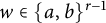 $w\in \{a,b\}^{r-1}$
can be arbitrary except for
 $\operatorname {\mathrm {Par}}(\sigma ,xbb^{r-1})$
, which must be chosen so that the second sum is even, yielding two parity restrictions at the node x. Since there are
 $2^{n-r-1}$
nodes x at level
 $n-r-1$
, each with independent such parity restrictions, there are
 $2\cdot 2^{n-r-1}$
parity restrictions in total. There are no restrictions on the parities at the remaining
 $2^{n-1}-2^{n-r}$
nodes at level
 $n-1$
, and therefore
 $$\begin{align*}\log_2\big|S_{r,s,n}\big|=2^{n-1}-2^{n-r}.\end{align*}$$
By equation (54),
 $$ \begin{align*} \log_2 \big|G^{\text{Pink}}_{r,s,n}\big|-\log_2 \big|G^{\text{Pink}}_{r,s,n-1}\big| & = (2^n-2^{n-r+1}+1) -(2^{n-1}-2^{n-1-r+1}+1)\\ &=2^{n-1}-2^{n-r} =\log_2\big|S_{r,s,n}\big|. \end{align*} $$
It follows that
 $\log _2 |G^{\text {Pink}}_{r,s,n-1}| + \log _2|S_{r,s,n}| = \log _2 |G^{\text {Pink}}_{r,s,n}|$
, and hence
 $$\begin{align*}\big|B^{\prime}_{r,s,n}\big| \leq \big|B^{\prime}_{r,s,n-1}\big| \cdot \big|S_{r,s,n}\big| \leq \big|G^{\text{Pink}}_{r,s,n-1}\big| \cdot \big|S_{r,s,n}\big| = \big|G^{\text{Pink}}_{r,s,n}\big|, \end{align*}$$
as desired.
6.4 The special long-tail case
Recall from Section 4 that when
 $r=3$
and
 $s=2$
, we defined a proper subgroup
 $\tilde {B}_{3,2,\infty }$
of
 $B_{3,2,\infty }$
in Definition 4.2. In this case, it is this smaller group that realizes
 $G^{\text {geom}}$
. To see this, first observe that Pink’s generators in this case are
 $$ \begin{align} \boldsymbol{\alpha}_1 = \boldsymbol{\tau}, \qquad \boldsymbol{\alpha}_2 = (\boldsymbol{\tau}, 1), \qquad\text{and}\qquad \boldsymbol{\alpha}_3 = (\boldsymbol{\alpha}_2, \boldsymbol{\alpha}_3). \end{align} $$
In particular, we have
 $\operatorname {\mathrm {Par}}(\boldsymbol {\alpha }_1,x)=1$
only for
 $x=x_0$
, and
 $\operatorname {\mathrm {Par}}(\boldsymbol {\alpha }_2,x)=1$
only for
 $x=a$
, while
 $$ \begin{align} \operatorname{\mathrm{Par}}(\boldsymbol{\alpha}_3, w) = \begin{cases} 1 & \text{ if } w = b^n aa \text{ for some } n\geq 0, \\ 0 & \text{ otherwise}. \end{cases} \end{align} $$
Proposition 6.4 Pink’s subgroup
 $G^{\text {Pink}}_{3,2,\infty }$
is contained in
 $\tilde {B}_{3,2,\infty }$
.
Proof By Proposition 6.2, we already have
 $G^{\text {Pink}}_{3,2,\infty }\subseteq B_{3,2,\infty }$
. It suffices to show that each of
 $\boldsymbol {\alpha }_1,\boldsymbol {\alpha }_2,\boldsymbol {\alpha }_3$
belongs to
 $\tilde {B}_{3,2,\infty }$
.
Fix a node x of the tree. We must show that
 $R_{3,2}(\boldsymbol {\alpha }_i,x)\equiv 0\pmod {2}$
for each of
 $i=1,2,3$
. For
 $i=1,2$
, this is trivial, because the formula for
 $R_{3,2}(\boldsymbol {\alpha }_i,x)$
from Definition 4.2 involves
 $\operatorname {\mathrm {Par}}(\boldsymbol {\alpha }_i,y)$
only for nodes y lying at least two levels above x, for which
 $\operatorname {\mathrm {Par}}(\boldsymbol {\alpha }_i,y)=0$
. It remains to consider
 $\boldsymbol {\alpha }_3$
, via two cases.
First, suppose
 $x=b^n$
for some
 $n\geq 0$
, and consider equation (28) defining
 $R_{3,2}(\sigma ,x)$
. According to equation (61), for any word w of length
 $2$
, the first term
 $\operatorname {\mathrm {Par}}(\boldsymbol {\alpha }_3,xw)$
is equal to
 $1$
for
 $w=aa$
and
 $0$
otherwise. The second term
 $\operatorname {\mathrm {Par}}(\boldsymbol {\alpha }_3,xwb)$
is always
 $0$
. The third and fourth terms
 $\operatorname {\mathrm {Par}}(\boldsymbol {\alpha }_3,xwaa)$
and
 $\operatorname {\mathrm {Par}}(\boldsymbol {\alpha }_3,xwab)$
are equal to
 $1$
and
 $0$
(respectively) for
 $w=bb$
, whereas they are both
 $0$
otherwise. In addition, we have
 $\operatorname {\mathrm {Par}}(\boldsymbol {\alpha }_3,xba) = \operatorname {\mathrm {Par}}(\boldsymbol {\alpha }_3,xbb)=0$
, and hence the expression on the second line of equation (28) is
 $0$
. Adding it all up, we get
 $R_{3,2}(\sigma ,x)=1+1\equiv 0 \pmod {2}$
.
Second, suppose x is not of the form
 $b^n$
. Then for any word w of two or more symbols, we have
 $\operatorname {\mathrm {Par}}(\boldsymbol {\alpha }_3,xw)=0$
, by equation (61), whence
 $R_{3,2}(\sigma ,x)=0$
, as desired.
Theorem 6.5
 $G^{\text {Pink}}_{3,2,\infty }=\tilde {B}_{3,2,\infty }$
.
Proof For each integer
 $n\geq 1$
, define
 $$\begin{align*}\tilde{B}^{\prime}_{3,2,n}:= \{ \sigma\in B^{\prime}_{3,2,n} : \forall m < n-4 \text{ and } \forall x\in \{a,b\}^m, \, R_{3,2}(\sigma,x)=0\} , \end{align*}$$
where we recall that
 $R_{3,2}$
takes values in
 $\mathbb {Z}/2\mathbb {Z}$
, and where
 $B^{\prime }_{r,s,n}$
is as in the proof of Theorem 6.3. By Proposition 6.4 and Definition 4.2, we have
 $$\begin{align*}G^{\text{Pink}}_{3,2,n} \subseteq \tilde{B}_{3,2,n} \subseteq \tilde{B}^{\prime}_{3,2,n}. \end{align*}$$
Thus, it suffices to show that
 $|\tilde {B}^{\prime }_{3,2,n}| \leq |G^{\text {Pink}}_{3,2,n}|$
for all
 $n\geq 1$
.
We proceed by induction on n. For
 $n\leq 3$
, we have
 $\tilde {B}^{\prime }_{3,2,n}= \operatorname {\mathrm {Aut}}(T_n)$
, and hence
 $$\begin{align*}\log_2\big|\tilde{B}^{\prime}_{3,2,n}\big| = \log_2|\operatorname{\mathrm{Aut}}(T_n)| = 2^n-1= \log_2\big|G^{\text{Pink}}_{3,2,n}\big|, \end{align*}$$
recalling formula (54) for
 $\log _2 |G^{\text {Pink}}_{r,s,n}|$
. For
 $n=4$
, we have
 $\tilde {B}^{\prime }_{3,2,4}=B^{\prime }_{3,2,4}$
, so by the argument of Theorem 6.3, we obtain
 $$\begin{align*}\log_2\big|\tilde{B}^{\prime}_{3,2,4}\big|=\log_2\big|B^{\prime}_{3,2,4}\big|\leq 13 = \log_2\big|G^{\text{Pink}}_{3,2,4}\big| .\end{align*}$$
Now let
 $n>4$
, and suppose
 $|\tilde {B}^{\prime }_{3,2,n-1}|\leq |G^{\text {Pink}}_{3,2,n-1}|$
. Let
 $\tilde {S}_{3,2,n}$
denote the kernel of the map
 $\operatorname {\mathrm {Res}}_{n,n-1} : \tilde {B}^{\prime }_{3,2,n}\rightarrow \tilde {B}^{\prime }_{3,2,n-1}$
, so that
 $$\begin{align*}\big|\tilde{B}^{\prime}_{3,2,n}\big| = \big|\operatorname{\mathrm{Res}}_{n,n-1}(\tilde{B}^{\prime}_{3,2,n})\big|\cdot \big|\tilde{S}_{3,2,n}\big| \leq \big|\tilde{B}^{\prime}_{3,2,n-1}\big|\cdot \big|\tilde{S}_{3,2,n}\big| .\end{align*}$$
As before, let
 $Y_n$
be the kernel of
 $\operatorname {\mathrm {Res}}_{n,n-1}:\operatorname {\mathrm {Aut}}(T_n)\to \operatorname {\mathrm {Aut}}(T_{n-1})$
. Then by the definition of
 $\tilde {B}^{\prime }_{3,2,n}$
in terms of
 $B^{\prime }_{3,2,n}$
, the subgroup
 $\tilde {S}_{3,2,n}$
is the set of
 $\sigma \in Y_n$
for which condition (58) holds for all nodes x at level
 $n-4$
, and for which the further condition
 $$ \begin{align} R_{3,2}(\sigma,y) = 0\in \mathbb{Z}/2\mathbb{Z} \end{align} $$
holds for nodes y at all levels
 $0\leq m<n-4$
. Since
 $\sigma \in Y_n$
acts trivially on
 $T_{n-1}$
, condition (62) is trivially satisfied for every node y at levels
 $m<n-5$
.
Thus,
 $\sigma \in Y_n$
belongs to
 $\tilde {S}_{3,2,n}$
if and only if, on the one hand, condition (59) holds for all nodes x at level
 $n-4$
, and on the other hand,
 $$ \begin{align} \sum_{w\in \{a,b\}^2}\sum_{t\in\{a,b\}}\operatorname{\mathrm{Par}}(\sigma,ywat) \quad \text{is even} \end{align} $$
for all nodes y at level
 $n-5$
.
Therefore, to determine whether
 $\sigma \in Y_n$
belongs to
 $\tilde {S}_{3,2,n}$
, then for each node y at level
 $n-5$
, the values of
 $\operatorname {\mathrm {Par}}(\sigma ,ywat)$
for
 $w\in \{a,b\}^{2}$
and
 $t\in \{a,b\}$
can be arbitrary except for
 $\operatorname {\mathrm {Par}}(\sigma ,ya^{4})$
, which must be chosen so that the sum in condition (63) is even. Since there are
 $2^{n-5}$
nodes at level
 $n-5$
, there are
 $2^{n-5}$
parity restrictions imposed in this step. Next, as in the proof of Theorem 6.3, for each node x at level
 $n-4$
, the values of
 $\operatorname {\mathrm {Par}}(\sigma ,xaw)$
for
 $w\in \{a,b\}^{2}$
that have not already been set can be arbitrary except for
 $\operatorname {\mathrm {Par}}(\sigma ,xab^{2})$
, which must be chosen so that the first sum in condition (59) is even. Similarly, the values of
 $\operatorname {\mathrm {Par}}(\sigma ,xbw)$
for
 $w\in \{a,b\}^{2}$
that have not already been set can be arbitrary except for
 $\operatorname {\mathrm {Par}}(\sigma ,xbb^{2})$
, which must be chosen so that the second sum in condition (59) is even. Together, these steps impose a further
 $2\cdot 2^{n-4}$
parity restrictions. There are no restrictions on the parities at the remaining nodes at level
 $n-1$
, and therefore
 $$\begin{align*}\log_2\big|\tilde{S}_{3,2,n}\big|= 2^{n-1}-2^{n-5} - 2^{n-3} = 2^{n-1}-5\cdot 2^{n-5}.\end{align*}$$
By equation (54),
 $$ \begin{align*} \log_2 \big|G^{\text{Pink}}_{3,2,n}\big|-\log_2 \big|G^{\text{Pink}}_{3,2,n-1}\big| & = (2^n-5\cdot 2^{n-4}+2) -(2^{n-1}-5\cdot 2^{n-5}+2)\\ &=2^{n-1}-5\cdot 2^{n-5} = \log_2\big|\tilde{S}_{3,2,n}\big|. \end{align*} $$
It follows that
 $\log _2 |G^{\text {Pink}}_{3,2,n-1}| + \log _2|\tilde {S}_{3,2,n}| = \log _2 |G^{\text {Pink}}_{3,2,n}|$
, and hence
 $$\begin{align*}\big|\tilde{B}^{\prime}_{3,2,n}\big| \leq \big|\tilde{B}^{\prime}_{3,2,n-1}\big| \cdot \big|\tilde{S}_{3,2,n}\big| \leq \big|G^{\text{Pink}}_{3,2,n-1}\big| \cdot \big|\tilde{S}_{3,2,n}\big| = \big|G^{\text{Pink}}_{3,2,n}\big|, \end{align*}$$
as desired.
6.5 The non-Chebyshev short-tail case
When
 $s=1$
and
 $r\geq 3$
, recall from Section 5 that we defined a proper subgroup
 $\tilde {B}_{r,1,\infty }$
of
 $B_{r,1,\infty }$
in Definition 5.3. Once again, it is this smaller group that realizes
 $G^{\text {geom}}$
. To see this, first observe that in this case, we have
 $\boldsymbol {\alpha }_1=\boldsymbol {\tau }$
, and for
 $i\geq 2$
, equation (57) becomes
 $$ \begin{align} \operatorname{\mathrm{Par}}(\boldsymbol{\alpha}_i, w) = \begin{cases} 1 & \text{ if } w = a^{i-2} w_{r-1}^n a \text{ for some } n\geq 0, \\ 0 & \text{ otherwise}, \end{cases} \end{align} $$
where
 $w_{r-1}:=ba^{r-2}$
.
Proposition 6.6 For any integer
 $r\geq 3$
, Pink’s subgroup
 $G^{\text {Pink}}_{r,1,\infty }$
is contained in
 $\tilde {B}_{r,1,\infty }$
.
Proof By Proposition 6.2, we already have
 $G^{\text {Pink}}_{r,1,\infty }\subseteq B_{r,1,\infty }$
. It suffices to show that
 $\boldsymbol {\alpha }_i\in \tilde {B}_{r,1,\infty }$
for each
 $i\in \{1,\ldots , r\}$
.
Fix a node x of the tree, and fix
 $i\in \{1,\ldots , r\}$
. We must show that
 $R_{r,1}(\boldsymbol {\alpha }_i,x)\equiv 0\pmod {2}$
, where
 $R_{r,1}$
is as in Definition 5.3. For
 $i=1$
, we have
 $\boldsymbol {\alpha }_i=\boldsymbol {\tau }$
, and
 $\operatorname {\mathrm {Par}}(\boldsymbol {\tau },y)=0$
for all of the nodes y appearing in that definition. Thus, we may assume for the rest of the proof that
 $i\geq 2$
.
By equation (64), we must have
 $\operatorname {\mathrm {Par}}(\boldsymbol {\alpha }_i,xb)=0$
, and hence the first term in the sum defining
 $R_{r,1}(\boldsymbol {\alpha }_i,x)$
is zero. The remaining terms are all of the form
 $\operatorname {\mathrm {Par}}(\boldsymbol {\alpha }_i,xw')$
, where
 $w'$
is a word of length r whose second symbol is b. On the other hand, according to equation (64), all of the nodes y for which
 $\operatorname {\mathrm {Par}}(\boldsymbol {\alpha }_i,y)=1$
either are
 $a^{i-1}$
(which has length less than r) or else end with the word
 $ba^{r-1}$
, whose second symbol is a. Thus, every term in the sum defining
 $R_{r,1}(\boldsymbol {\alpha }_i,x)$
is zero, as desired.
Theorem 6.7 For any integer
 $r\geq 3$
, we have
 $G^{\text {Pink}}_{r,1,\infty }=\tilde {B}_{r,1,\infty }$
.
Proof For each integer
 $n\geq 1$
, define
 $$\begin{align*}\tilde{B}^{\prime}_{r,1,n}:= \{ \sigma\in B^{\prime}_{r,1,n} : \forall m < n-r \text{ and } \forall x\in \{a,b\}^m, R_{r,1}(\sigma,x)=0\} , \end{align*}$$
where we recall that
 $R_{r,1}$
takes values in
 $\mathbb {Z}/2\mathbb {Z}$
, and where
 $B^{\prime }_{r,s,n}$
is as in the proof of Theorem 6.3. By Proposition 6.6 and Definition 5.3, we have
 $$\begin{align*}G^{\text{Pink}}_{r,1,n} \subseteq \tilde{B}_{r,1,n} \subseteq \tilde{B}^{\prime}_{r,1,n}. \end{align*}$$
Thus, it suffices to show that
 $|\tilde {B}^{\prime }_{r,1,n}| \leq |G^{\text {Pink}}_{r,1,n}|$
for all
 $n\geq 1$
.
We proceed by induction on n. For
 $n\leq r$
, we have
 $\tilde {B}^{\prime }_{r,1,n}= \operatorname {\mathrm {Aut}}(T_n)$
, and hence
 $$\begin{align*}\log_2 \big|\tilde{B}^{\prime}_{r,1,n}\big| = \log_2\big|\operatorname{\mathrm{Aut}}(T_n)\big| = 2^n-1= \log_2\big|G^{\text{Pink}}_{r,1,n}\big|, \end{align*}$$
yet again recalling formula (54) for
 $\log _2 |G^{\text {Pink}}_{r,s,n}|$
.
Now let
 $n>r$
, and suppose
 $|\tilde {B}^{\prime }_{r,1,n-1}|\leq |G^{\text {Pink}}_{r,1,n-1}|$
. Let
 $\tilde {S}_{r,1,n}$
denote the kernel of the map
 $\operatorname {\mathrm {Res}}_{n,n-1} : \tilde {B}^{\prime }_{r,1,n}\rightarrow \tilde {B}^{\prime }_{r,1,n-1}$
, so that
 $$\begin{align*}\big|\tilde{B}^{\prime}_{r,1,n}\big| = \big|\operatorname{\mathrm{Res}}_{n,n-1}(\tilde{B}^{\prime}_{r,1,n})\big|\cdot \big|\tilde{S}_{r,1,n}\big| \leq \big|\tilde{B}^{\prime}_{r,1,n-1}\big|\cdot \big|\tilde{S}_{r,1,n}\big| .\end{align*}$$
As before, let
 $Y_n$
be the kernel of
 $\operatorname {\mathrm {Res}}_{n,n-1}:\operatorname {\mathrm {Aut}}(T_n)\to \operatorname {\mathrm {Aut}}(T_{n-1})$
. Then by the definition of
 $\tilde {B}^{\prime }_{r,1,n}$
in terms of
 $B^{\prime }_{r,1,n}$
, the subgroup
 $\tilde {S}_{r,1,n}$
is the set of
 $\sigma \in Y_n$
for which condition (58) holds for all nodes x at level
 $n-r-1$
, and for which the further condition
 $$ \begin{align} R_{r,1}(\sigma,x)=0\in \mathbb{Z}/2\mathbb{Z} \end{align} $$
holds for nodes x at all levels
 $0\leq m<n-r$
. Since
 $\sigma \in Y_n$
acts trivially on
 $T_{n-1}$
, condition (65) is trivially satisfied for every node y at levels
 $m<n-r-1$
.
Thus,
 $\sigma \in Y_n$
belongs to
 $\tilde {S}_{r,1,n}$
if and only if for all nodes x at level
 $n-r-1$
, condition (59) holds, and in addition,
 $$ \begin{align} \sum_{w\in \{a,b\}^{r-2}} \big( \operatorname{\mathrm{Par}}(\sigma,xabw) + \operatorname{\mathrm{Par}}(\sigma,xbbw) \big) \quad \text{is even}. \end{align} $$
Therefore, to determine whether
 $\sigma \in Y_n$
belongs to
 $\tilde {S}_{r,1,n}$
, then for each node x at level
 $n-r-1$
, the values of
 $\operatorname {\mathrm {Par}}(\sigma ,xaw)$
for
 $w\in \{a,b\}^{r-1}$
can be arbitrary except for
 $\operatorname {\mathrm {Par}}(\sigma ,xa^{r})$
, which must be chosen so that the first sum in condition (59) is even. Next, the values of
 $\operatorname {\mathrm {Par}}(\sigma ,xbbw)$
for
 $w\in \{a,b\}^{r-1}$
can be arbitrary except for
 $\operatorname {\mathrm {Par}}(\sigma ,xb^{r})$
, which must be chosen so that the sum in condition (66) is even. Finally, the values of
 $\operatorname {\mathrm {Par}}(\sigma ,xbaw)$
for
 $w\in \{a,b\}^{r-2}$
can be arbitrary except for
 $\operatorname {\mathrm {Par}}(\sigma ,xba^{r-1})$
, which must be chosen so that the second sum in condition (59) is even. Thus, there are three parity restrictions for each of the
 $2^{n-r-1}$
such nodes x, all of which are independent of one another. There are no restrictions on the parities at the remaining nodes at level
 $n-1$
, and therefore
 $$\begin{align*}\log_2\big|\tilde{S}_{r,1,n}\big|= 2^{n-1}-3\cdot 2^{n-r-1}.\end{align*}$$
By equation (54),
 $$ \begin{align*} \log_2 \big|G^{\text{Pink}}_{r,1,n}\big|-\log_2 \big|G^{\text{Pink}}_{r,1,n-1}\big| & = (2^n-3\cdot 2^{n-r}+2) -(2^{n-1}-3\cdot 2^{n-1-r}+2)\\ &=2^{n-1}-3\cdot 2^{n-r-1} = \log_2\big|\tilde{S}_{r,1,n}\big|. \end{align*} $$
It follows that
 $\log _2 |G^{\text {Pink}}_{r,1,n-1}| + \log _2|\tilde {S}_{r,1,n}| = \log _2 |G^{\text {Pink}}_{r,1,n}|$
, and hence
 $$\begin{align*}\big|\tilde{B}^{\prime}_{r,1,n}\big| \leq \big|\tilde{B}^{\prime}_{r,1,n-1}\big| \cdot \big|\tilde{S}_{r,1,n}\big| \leq \big|G^{\text{Pink}}_{r,1,n-1}\big| \cdot \big|\tilde{S}_{r,1,n}\big| = \big|G^{\text{Pink}}_{r,1,n}\big|, \end{align*}$$
as desired.
7 Obtaining the arboreal Galois groups
To simplify notation for the remainder of the article,
 $\tilde {B}_{r,s,\infty }:=B_{r,s,\infty }$
and
 $\tilde {M}_{r,s,\infty }:=M_{r,s,\infty }$
when
 $r\geq 4$
and
 $s\geq 2$
. (On the other hand, when
 $(r,s)=(3,2)$
or when
 $s=1$
, we keep our existing definitions of
 $\tilde {B}_{r,s,\infty }$
and
 $\tilde {M}_{r,s,\infty }$
as in Sections 4 and 5, respectively.) Thus, in all cases, our arboreal Galois groups are always contained in
 $\tilde {M}_{r,s,\infty }$
, and we have
 $\tilde {B}_{r,s,\infty } = G^{\text {Pink}}_{r,s,\infty }$
. We also define a group H and homomorphism
 $\tilde {P}_{r,s}: \tilde {M}_{r,s,\infty }\to H$
to be
-
•
$H:=\mathbb {Z}/2\mathbb {Z}$
and
$\tilde {P}_{r,s} := P_{r,s}$
when
$r\geq 4$
and
$s\geq 2$
, -
•
$H:=\mathbb {Z}/2\mathbb {Z}\times \mathbb {Z}/2\mathbb {Z}$
and
$\tilde {P}_{r,s} := P_{3,2}\times R_{3,2}$
when
$(r,s)=(3,2)$
, or -
•
$H:=\mathbb {Z}/2\mathbb {Z}$
and
$\tilde {P}_{r,s} := R_{r,1}$
when
$r\geq 3$
and
$s=1$
.


7.1 The arithmetic Galois group over function fields
Let k be an arbitrary field of characteristic not equal to
 $2$
. Let
 $K=k(t)$
, let
 $x_0=t$
, let
 $f(z)=z^2+c\in k[z]$
for which
 $0$
is preperiodic with
 $r\geq 3$
and
 $s\geq 1$
, and let
 $K_{\infty }$
be the resulting arboreal extension. Let
 $k_{\infty }$
be the constant field extension in
 $K_{\infty }$
, that is,
 $k_{\infty }\subseteq K_{\infty }$
is the maximal algebraic extension of k in
 $K_{\infty }$
. In this section, we show how our groups
 $\tilde {M}_{r,s,\infty }$
relate to Pink’s group
 $G^{\text {arith}}=\operatorname {\mathrm {Gal}}(K_{\infty }/K)$
and to the extension
 $k_\infty / k$
.
Lemma 7.1 For any
 $r\geq 3$
and
 $s\geq 1$
, we have
 $$\begin{align*}k_\infty=\begin{cases} k(\zeta_4) & \text{ if } r\geq 4, s\geq 2\\ k(\zeta_8) & \text{ if } (r,s) = (3,2) \\ k(\sqrt{2}) & \text{ if } r \geq 3, s = 1. \end{cases} \end{align*}$$
Proof Recall the definitions of
 $\tilde {P}_{r,s}$
and H from the start of Section 7, and the definitions of
 $G^{\text {arith}}=\operatorname {\mathrm {Gal}}(K_{\infty }/K)$
and
 $G^{\text {geom}}$
from Section 1.3. Define
 $$\begin{align*}\ell:=\begin{cases} k(\zeta_4) & \text{ if } r\geq 4, s\geq 2\\ k(\zeta_8) & \text{ if } r = 3, s = 2\\ k(\sqrt{2}) & \text{ if } r \geq 3, s = 1.\\ \end{cases} \end{align*}$$
By Lemmas 3.1, 4.1, and 5.1, we have
 $\ell \subseteq k_\infty $
, so we can consider the homomorphism
 $$\begin{align*}\chi:\operatorname{\mathrm{Gal}}(k_\infty/k)\longrightarrow H,\end{align*}$$
defined by
 $$ \begin{align} \chi: \sigma \mapsto \begin{cases} P & \text{ if } \sigma(\zeta_4)=(-1)^{P}\zeta_4 \text{ and } r\geq 4, s\geq 2\\ (P,R) & \text{ if } \sigma(\zeta_4)=(-1)^{P}\zeta_4, \,\, \sigma(\sqrt{2})=(-1)^R\sqrt{2}, \text{ and } (r,s) = (3,2) \\ R & \text{ if } \sigma(\sqrt{2})=(-1)^R\sqrt{2} \text{ and } r \geq 3, s = 1. \end{cases} \end{align} $$
Applying Theorems 3.3 and 3.4 in the case
 $r\geq 4, s\geq 2$
, Theorems 4.3 and 4.5 in the case
 $(r,s) = (3,2)$
, and Theorems 5.4 and 5.6 in the case
 $r\geq 3, s = 1$
, there is an equivariant injective homomorphism
 $\rho : G^{\text {arith}}\hookrightarrow \tilde {M}_{r,s,\infty }$
making the following diagram commute. By Theorems 6.3, 6.5, and 6.7, the restricted map
 $\rho : G^{\text {geom}}\to \tilde {B}_{r,s,\infty }$
is an isomorphism:

Now consider the induced homomorphism
 $\bar {\rho }: G^{\text {arith}}/G^{\text {geom}}\to \tilde {M}_{r,s,\infty }/\tilde {B}_{r,s,\infty }$
given by
 $$\begin{align*}\bar{\rho}(\sigma G^{\text{geom}})=\rho(\sigma)\tilde{B}_{r,s,\infty}.\end{align*}$$
We claim that
 $\bar {\rho }$
is injective. Indeed, suppose
 $\bar {\rho }(\sigma G^{\text {geom}}) = e \tilde {B}_{r,s,\infty }$
, and hence
 $\rho (\sigma )\in \tilde {B}_{r,s,\infty }$
. Since
 $\rho $
is injective and
 $\rho (G^{\text {geom}})=\tilde {B}_{r,s,\infty }$
, it follows that
 $\sigma \in G^{\text {geom}}$
, proving that
 $\bar {\rho }$
has trivial kernel, as claimed. Consider the following commutative diagram:

Since
 $\bar {\rho }$
and
 $\tilde {M}_{r,s,\infty }/\tilde {B}_{r, s,\infty }\to H$
are injective, and
 $G^{\text {arith}}/G^{\text {geom}}\to \operatorname {\mathrm {Gal}}(k_\infty /k)$
is an isomorphism, the map
 $\chi $
must also be injective. Thus,
 $\operatorname {\mathrm {Gal}}(k_\infty /\ell ) = \ker \chi $
is trivial, whence
 $k_\infty =\ell $
.
Lemma 7.2 For any
 $r\geq 3$
and
 $s\geq 1$
, the homomorphism
 $\tilde {P}_{r,s}:\tilde {M}_{r,s,\infty } \to H$
is surjective.
Proof Let
 $c\in \overline {\mathbb {Q}}$
be a root of the polynomial
 $F_{r,s}(x)=f_x^r(0)+f_x^s(0)\in \mathbb {Q}[x]$
such that the
 $r+1$
iterates
 $\{f_c^i(0) \, | \, 0\leq i\leq r\}$
are all distinct. Such c does indeed exist; as noted in the proof of Lemma 2.4, c is a root of a Misiurewicz polynomial, as described in Section 1 of [Reference GokselGok20] or equation (1) of [Reference Benedetto and GokselBG23]. Let
 $k=\mathbb {Q}(c)$
.
If
 $s\geq 2$
, then by Proposition 2.6, we have
 $[k(\zeta _8):k]=4$
; and if
 $s=1$
, then by Proposition 2.5, we have
 $[k(\sqrt {2}):k]=2$
. Therefore, the homomorphism
 $\chi $
of equation (67) is surjective. In diagram (68), then, the composed map
 $G^{\text {arith}}\to H$
is surjective as well, and hence so is
 $\tilde {P}_{r,s}$
.
Remark 7.3 Lemma 7.2 can also be proven directly from the definitions of the groups
 $\tilde {B}_{r,s,\infty }$
and
 $\tilde {M}_{r,s,\infty }$
, by finding explicit elements of
 $\tilde {M}_{r,s,\infty }$
mapping to each element of H under
 $\tilde {P}_{r,s}$
.
Theorem 7.4 Let
 $K=k(t)$
, let
 $x_0=t$
, let
 $f(z)=z^2+c\in k[z]$
for which
 $0$
is preperiodic with
 $r\geq 3$
and
 $s\geq 1$
, let
 $K_{\infty }$
be the resulting arboreal extension, and let
 $G^{\text {arith}}=\operatorname {\mathrm {Gal}}(K_\infty /K)$
. Then the following are equivalent:
-
(1)
$G^{\text {arith}}\cong \tilde {M}_{r,s,\infty }$
-
(2)
$\begin {cases} [k(\zeta _4):k]=2 & \text { if } r\geq 4, s\geq 2 \\ [k(\zeta _8):k]=4 & \text { if } r= 3, s=2 \\ [k(\sqrt {2}):k]=2 & \text { if } r\geq 3, s=1. \end {cases}$


7.2 Conditions over general fields
Throughout this section, let k be a field of characteristic not equal to
 $2$
, let
 $f(z)=z^2+c\in k[z]$
, and let
 $x_0\in k$
. For each
 $i\geq 1$
, define
 $$ \begin{align} D_i:=\begin{cases} x_0-c & \text{ if } i=1,\\ f^i(0)-x_0 & \text{ if } i\geq 2. \end{cases} \end{align} $$
It is well known (see [Reference Aitken, Hajir and MaireAHM05, Proposition 3.2] and also, the proof of [Reference Benedetto, Ghioca, Juul and TuckerBGJT25b, Lemma 7.2]) that
 $\sqrt {D_i}\in k(f^{-i}(x_0))$
for every
 $i\geq 1$
, since the discriminant of the polynomial
 $f^i(z)-x_0$
is a square in k times
 $D_i$
.
Lemma 7.5 With notation as above, let
 $K_{x_0,n}:=k(f^{-n}(x_0))$
and
 $G_n:=\operatorname {\mathrm {Gal}}(K(f^{-n}(x_0))/k)$
. For each
 $n\geq 1$
, the following are equivalent:
-
(1)
$G_n\cong \operatorname {\mathrm {Aut}}(T_n)$
. -
(2)
$[ k(\sqrt {D_1},\ldots ,\sqrt {D_{n}}) : k ] =2^n$
.


Proof This is a standard result in the study of arboreal Galois representations. For proofs of various versions of it, see, for example, [Reference OdoniOdo88, Lemma 4.2], [Sto92, Lemmas 1.5 and 1.6], [Reference JonesJon13, Section 2.2], [Reference Benedetto and DietrichBD24, Proposition 5.3], or [Reference Benedetto, Ghioca, Juul and TuckerBGJT25b, Lemma 7.2].
We can now prove our fully general version of Theorem 1.2.
Theorem 7.6 Let k be a field of characteristic not equal to
 $2$
, and let
 $f(z)=z^2+c\in k[z]$
such that
 $0$
is strictly preperiodic under f. Let
 $r>s\geq 1$
be minimal so that
 $f^r(0)=-f^s(0)$
, and assume
 $r\geq 3$
. Let
 $x_0\in k$
, and define
 $K_{x_0,n}=k(f^{-n}(0))$
,
 $K_{x_0,\infty }=\bigcup _{n=1}^\infty K_{x_0,n}$
,
 $G_{x_0,n}=\operatorname {\mathrm {Gal}}(K_{x_0,n}/k)$
, and
 $G_{x_0,\infty }=\operatorname {\mathrm {Gal}}(K_{x_0,\infty }/k)$
. Further, define
 $D_1,\dots , D_r\in k$
as in equation (69), and also define
 $$\begin{align*}\gamma:=\begin{cases} \sqrt{2} & \text{ if } r\geq 3 \text{ and } s=1,\\ \zeta_8 & \text{ if } r=3 \text{ and } s=2,\\ \zeta_4 & \text{ if } r\geq 4 \text{ and } s\geq 2, \end{cases} \quad\text{and}\quad e:=\begin{cases} 2 & \text{ if } r=3 \text{ and } s=2, \\ 1 & \text{ otherwise.} \end{cases} \end{align*}$$
Then the following are equivalent:
-
(1)
$[k(\gamma , \sqrt {D_1}, \dots , \sqrt {D_r}):k]= 2^{r+e}$
. -
(2)
$[K_{x_0,r+e}:k]=|\tilde {M}_{r,s,r+e}|$
. -
(3)
$G_{x_0,r+e}\cong \tilde {M}_{r,s,r+e}$
. -
(4)
$G_{x_0,n}\cong \tilde {M}_{r,s,n}$
for all
$n\geq 1$
. -
(5)
$G_{x_0,\infty }\cong \tilde {M}_{r,s,\infty }$
.


Proof The implications (5)
 $\Leftrightarrow $
(4)
 $\Rightarrow $
(3)
 $\Leftrightarrow $
(2) are trivial. Thus, it suffices to show (1)
 $\Rightarrow $
(5) and (3)
 $\Rightarrow $
(1). Define
 $$\begin{align*}L:=k(\sqrt{D_1},\dots,\sqrt{D_r}).\end{align*}$$
Note that
 $r+e$
is the smallest integer n for which Lemmas 3.1, 4.1, and 5.1 force
 $\gamma \in K_{x_0,n}$
. In addition, by Theorems 3.4, 4.5, and 5.6,
 $r+e$
is also the smallest integer n for which the restriction
 $\tilde {P}_{r,s,n}:\tilde {M}_{r,s,n}\to H$
(of
 $\tilde {P}_{r,s}$
to the bottom n levels of the tree) is onto.
First suppose (1) holds, so that
 $[L(\gamma ):k]=2^{r+e}$
. Then because
 $[k(\gamma ):k]\leq 2^e$
and
 $[L(\gamma ):k(\gamma )]\leq 2^r$
, we must have both
 $[k(\gamma ):k]= 2^e$
and
 $[L(\gamma ):k(\gamma )]= 2^r$
. Now since
 $[k(\gamma ):k]= 2^e$
, Theorem 7.4 tells us that
 $\tilde {M}_{r,s,\infty }\cong G^{\text {arith}}$
, where
 $G^{\text {arith}}=\operatorname {\mathrm {Gal}}(k(t)_{\infty }/k(t))$
.
On the other hand, by Lemma 7.5, we have
 $$\begin{align*}\operatorname{\mathrm{Gal}}\big( k(\gamma) \cdot K_{x_0,r} /k(\gamma)\big) \cong \operatorname{\mathrm{Aut}}(T_r)\cong \tilde{M}_{r,s,r},\end{align*}$$
and therefore,
 $$ \begin{align} \big| \operatorname{\mathrm{Gal}}\big( k(\gamma) \cdot K_{x_0,r} /k \big) \big| = \big| \operatorname{\mathrm{Gal}}\big( k(\gamma) \cdot K_{x_0,r} /k(\gamma)\big) \big| \cdot [k(\gamma):k] = \big|\tilde{M}_{r,s,r}\big|\cdot [k(\gamma):k]. \end{align} $$
Recall that the (strict) forward orbit
 $\{f^i(0) : i\geq 1\}$
of
 $0$
has cardinality r. In addition, since
 $k_\infty = k(\gamma )$
by Lemma 7.1, the compositum of all degree
 $2$
extensions of k contained in
 $k_{\infty }$
is
 $k_{\infty }=k(\gamma )$
itself. These observations, including equation (70), provide precisely the hypotheses of [Reference Benedetto, Ghioca, Juul and TuckerBGJT25a, Theorem 4.6], and hence
 $G_{x_0,\infty }\cong G^{\text {arith}}\cong \tilde {M}_{r,s,\infty }$
, proving statement (5).
Finally, suppose statement (3) holds. Then restricting to level r, we have
 $$\begin{align*}G_{x_0,r} \cong \tilde{M}_{r,s,r} = \tilde{B}_{r,s,r} = G^{\text{Pink}}_{r,s,r} = \operatorname{\mathrm{Aut}}(T_r). \end{align*}$$
(The last equality here holds by equation (54), and the others hold because
 $\tilde {B}_{r,s,r} \subseteq \tilde {M}_{r,s,r} \subseteq \operatorname {\mathrm {Aut}}(T_r)$
.) Thus, Lemma 7.5 implies that
 $[L:k]=2^r$
.
As noted at the start of this proof, we have
 $\gamma \in K_{x_0,r+e}$
, and
 $\tilde {P}_{r,s,r+e}:\tilde {M}_{r,s,r+e}\to H$
is onto, so that
 $| \tilde {M}_{r,s,r+e}| / |\tilde {B}_{r,s,r+e}| = |H|=2^e$
. By condition (3), then, we have
 $$ \begin{align*} \big| \tilde{B}_{r,s,r+e} \big| \cdot [k(\gamma) : k] &= [K_{x_0,r+e} : k(\gamma)] \cdot [k(\gamma) : k] \\ & = [K_{x_0,r+e} : k] = \big| G_{x_0,r+e} \big| = \big| \tilde{M}_{r,s,r+e} \big| = 2^e \big| \tilde{B}_{r,s,r+e} \big|, \end{align*} $$
and hence
 $[k(\gamma ):k]=2^e$
.
In addition, since
 $L\subseteq K_{x_0,r}$
and
 $G_{x_0,r}\cong \tilde {B}_{r,s,r}$
, we must have
 $k(\gamma )\cap K_{x_0,r}=k$
, and therefore
 $k(\gamma )\cap L = k$
. Thus,
 $[L(\gamma ):L] = [k(\gamma ):k]$
, and hence
 $$\begin{align*}[L(\gamma):k] = [L(\gamma):L] \cdot [L:k] = [k(\gamma):k] \cdot [L:k]= 2^{e} \cdot 2^r = 2^{r+e} ,\end{align*}$$
proving statement (1).
Remark 7.7 We quoted [Reference Benedetto, Ghioca, Juul and TuckerBGJT25a, Theorem 4.6] in the proof of Theorem 7.6 above. That result is stated under the assumption that k is a number field, but as noted in [Reference Benedetto, Ghioca, Juul and TuckerBGJT25a] just before its statement, this assumption is needed only so that
 $\operatorname {\mathrm {char}} k\neq 2$
, and so that there are only finitely many extensions of k of degree
 $2$
in
 $k_{\infty }$
; but we know both of these facts already in the proof of Theorem 7.6.
There is also a typographical error in [Reference Benedetto, Ghioca, Juul and TuckerBGJT25a] when defining the length of the forward orbit of
 $0$
. This quantity is defined in the statement of [Reference Benedetto, Ghioca, Juul and TuckerBGJT25a, Lemma 4.1] as
 $|\{f^i(0) : i\geq 0\}|$
, but that should have been the strict forward orbit, with
 $i\geq 1$
. Indeed, the proof of [Reference Benedetto, Ghioca, Juul and TuckerBGJT25a, Lemma 4.1] quotes [Reference Juul, Kurlberg, Madhu and TuckerJKMT16, Theorem 3.1], which in turn uses the strict forward orbit. The reason that the strict forward orbit is important is that for
 $K=k(t)$
with
 $x_0=t$
, the finite primes that ramify in
 $K_{\infty }/K$
are precisely those of the form
 $(t-f^i(0))$
for
 $i\geq 1$
.
Acknowledgements
The authors thank the anonymous referee for their useful comments and suggestions, which improved our article.