Introduction
The most recurrent keywords in the scientific papers associated with cellulose are renewable materials, environmental concern, shortage of fossil fuels, low-cost, and sustainable development. It has been applied to simple and usual products such as paper to sophisticated technologies such as flexible energy storage devices,[Reference Yao, Zhang, Kou, Song, Liu and Li1] humidity sensor,[Reference Han, Kim, Li and Meyyappan2] and methanol sensors.[Reference Noremberg, Silva, Paniz, Alano, Gonçalves, Wolke, Labidi, Valentini and Carreno3] Despite all these great features mentioned, its use usually has limitations related to the durability and maintenance of high performance. An example is the use of cellulose in flexible electrodes for supercapacitors, which requires the usage of some conductive and capacitive components. Several authors have tested conductive polymers to promote electrical conductivity and flexibility.[Reference Devarayan, Lei, Kim and Kim4–Reference Anothumakkool, Soni, Bhange and Kurungot6] However, the use of materials with pseudocapacitive properties tends to reduce the stability and life cycle of these devices. Since these parameters are important for real applications, their limitation may deprive its use. Therefore, this study aimed to use an effective method to promote a homogeneous and strong interaction between carbon nanotubes and cellulose, extracted from Eucalyptus. The resulting material called conductive paper was used to assembly a renewable supercapacitor. As separator and electrolyte, a cellulose sponge impregnated with 1-n-butyl-3-methylimidazolium bis(trifluoromethane sulfonyl)imide ([Bmim][NTf2]) ionic liquid (IL) was used because the IL is able to form a stable hybrid material with cellulose.[Reference Gelesky, Scheeren, Foppa, Pavan, Dias and Dupont7] ILs also present excellent thermal stability and exhibit a good electrochemical performance despite having low conductivity. It is important to highlight the stability achieved at higher potentials compared to those used in aqueous electrolytes, which allows a higher power and energy density stored and better stability.[Reference Martins and Torresi8]
Experimental
The conductive paper used as a capacitive electrode was prepared similarly to the process described in our preview work.[Reference Noremberg, Silva, Paniz, Alano, Gonçalves, Wolke, Labidi, Valentini and Carreno3] In this case, Eucalyptus cellulose pulp (kindly supplied by Celulose Riograndense) was used as a cellulose source; also, 20 wt% of carboxymethylcellulose sodium salt (CMC-Synth) was added to improve mechanical properties and durability of the paper. The material was produced by mixing two solutions in a hydrolysis process. Solution A was obtained by dispersing 100 mg of carboxylated multiwalled carbon nanotubes (MWCNT-COOH, >8% carboxylic acid, 9.5 mm × 1.5 µm, Sigma-Aldrich) with 100 mg of sodium dodecylbenzene sulfonate (Synth) in 200 mL of distilled water (DI) using a tip-sonicator (20 kHz for 30 min). Solution B was prepared by mixing 200 mL of DI, 5 mL of sulfuric acid (Synth), and 400 mg of Eucalyptus cellulose pulp (kindly supplied by Celulose Riograndense, Brazil). After mixing A and B, the resulting solution was stirring at 85°C for 3 h followed by an ultrasonic bath (25 kHz) at 65°C for 3 h. Then, the dispersion was filtered and washed with DI until neutral pH was achieved. The resulting slurry and 100 mg of carboxymethylcellulose sodium salt (Synth) were then redispersed in 100 mL of DI using an ultrasonic bath (25 kHz) for 30 min to form the final dispersion (~6 mg/mL). To prepare the electrode, 1 mL of the final dispersion was dropwise deposited on 2 cm2 stainless-steel current collectors, which were posteriorly dried in a vacuum oven at 60°C for 24 h. The separator was prepared using cellulose extracted from banana stem as reported by Noremberg et al.[Reference Noremberg, Silva, Paniz, Alano, Gonçalves, Wolke, Labidi, Valentini and Carreno3] In total, 500 mg of banana stem cellulose was exposed to acid hydrolysis using 1% v/v sulfuric acid (Synth) at 80°C for 60 min in an ultrasonic bath (25 kHz). Afterward, the suspension was neutralized using 1% v/v sodium hydroxide (Synth) and washed with DI.[Reference Pelissari, Sobral and Menegalli9] Then, the cellulose was redispersed in 500 mL of DI in an ultrasonic bath (25 kHz) for 60 min. The dispersion was fractionated into ten 2.5 cm diameter tubes, frozen, and freeze-dried to obtain a cellulose sponge.
The separator was molded by pressing 20 mg of sponge under 2 kgf/cm2 in a 2 cm2 mold. Conductive paper and separator were characterized by x-ray diffraction (XRD; XRD6000, Shimadzu), Brunauer–Emmett–Teller (BET) surface area (Autosorb, Quantachrome), scanning electron microscopy (SSX-550, Shimadzu), and transmission electron microscopy (TEM; JEM-1400, JEOL).
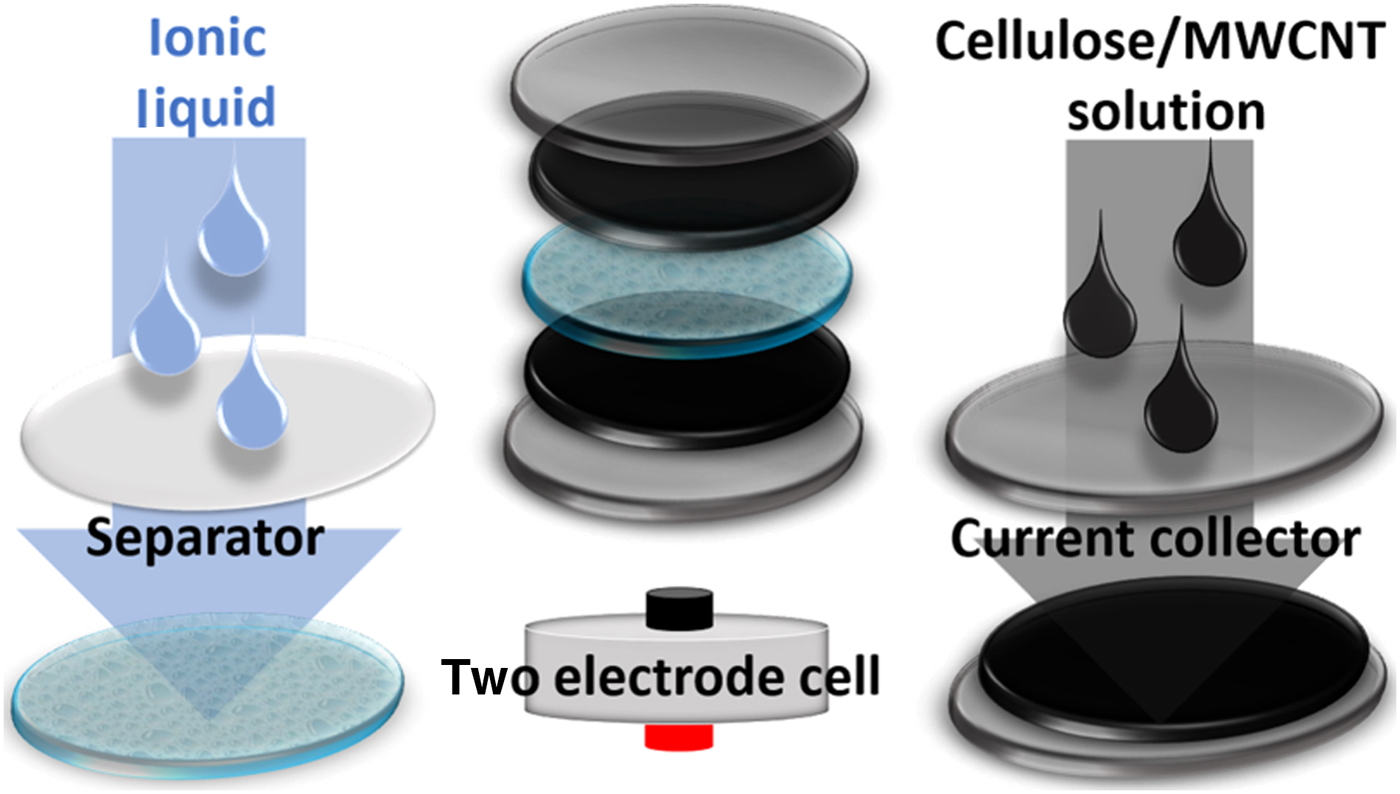
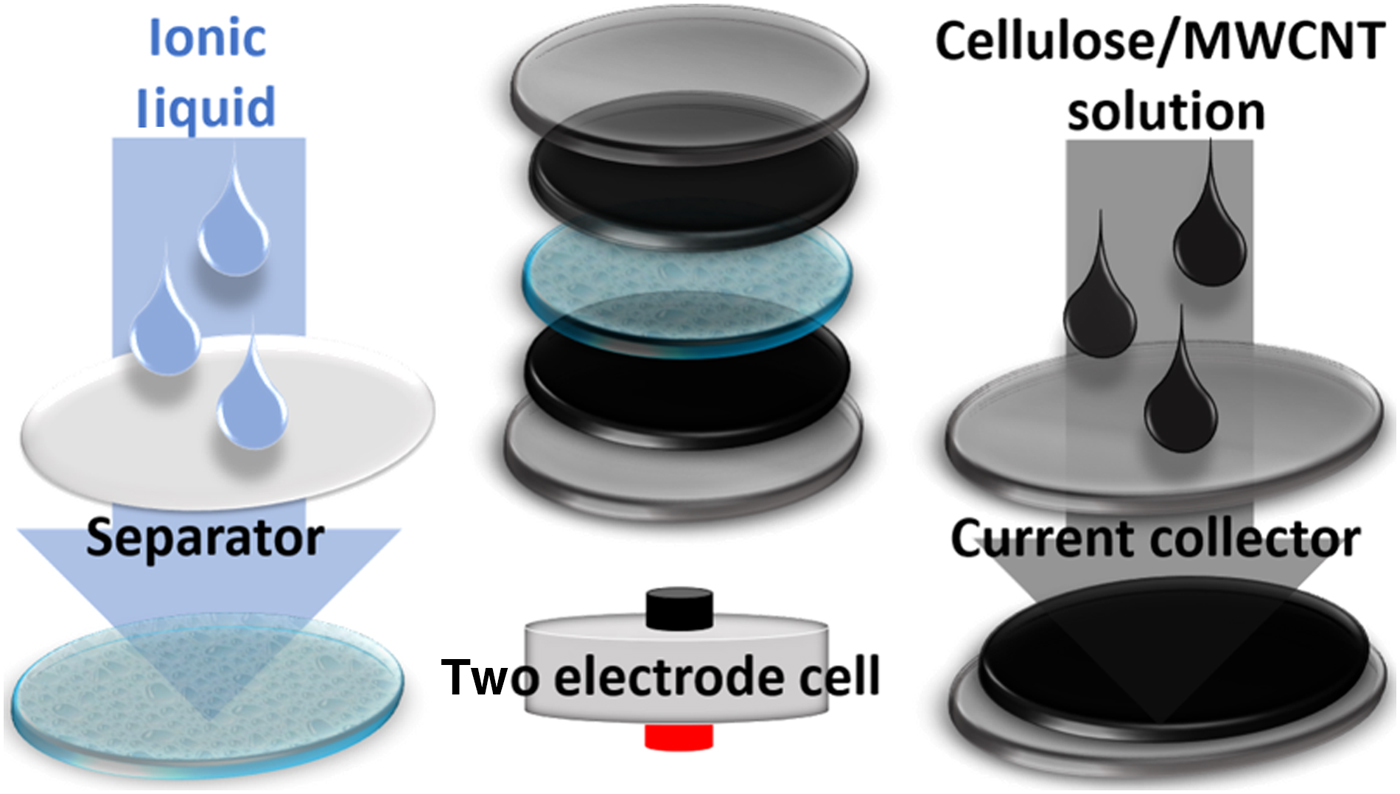
A two-electrode cell was configured as shown in Fig. 1, using the conductive paper as the electrode (on stainless-steel) and one separator impregnated with 200 µL of [Bmin][NTf2], which was prepared by a well-known procedure, and had its purity determined by 1H nuclear magnetic resonance through 13C satellites.[Reference Cassol, Ebeling and Ferrera10]
Illustration of a two-electrode cell assembly.
Electrochemical measurements
Cyclic voltammetry (CV) and electrochemical impedance spectroscopy (EIS) were performed in a two-electrode cell in a Potentiostat (Compacstat.e, IVIUM). Galvanostatic charge/discharge (GCD) was performed on the same cell in a sourcemeter (2651A, Keithley). All measurements were performed in a 0–2 V potential window. The specific capacitance (C SP) was calculated using Eqs. (1)–(3) according to the respective CV, GCD, and EIS techniques. Here, I a is the anodic current, ΔV is the potential window, ν is the scan rate, m is the mass of the electrode, I dc is the discharge current, dV/dt is the slope of the discharge curve, f is the frequency (0.01 Hz), and Z″ is the imaginary component of impedance.
 $$C_{{\rm SP}} = \displaystyle{{4\mathop \int I_{\rm a}dV} \over {\nu \cdot m\cdot {\rm \Delta} V}}$$
 $$C_{{\rm SP}} = \displaystyle{{4\; I_{{\rm dc}}} \over {m\lpar {dV/dt} \rpar }}$$
 $$C_{{\rm SP}} = -\displaystyle{4 \over {m\lpar {2\pi f\,{Z}^{\prime \prime}} \rpar }}$$
Results and discussion
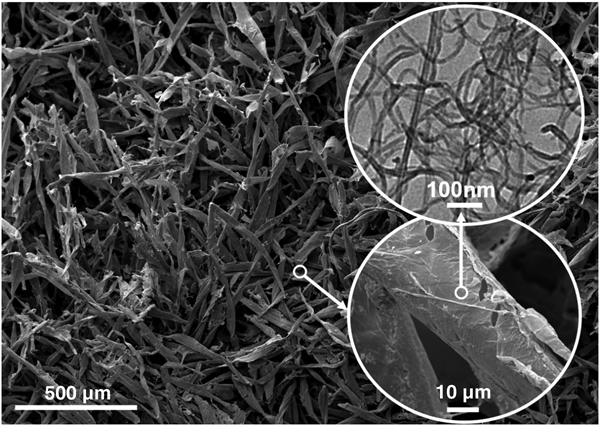
Figure 2 shows the micrographs of the electrode surface. It is possible to observe fibers of the paper and its three-dimensional structure. In addition, a selected area was observed in detail through TEM, revealing the presence of a MWCNT network on the cellulose fibers. The surface area of the conductive paper was analyzed by the BET method and presented a satisfactory value of 74.4 m2/g, since the capacitance is directly related to the surface area, especially in materials based on carbon, where the electrical storage occurs through the double-layer mechanism.[Reference Ji, Zhao, Qiao, Jung, Zhu, Lu, Zhang, MacDonald and Ruof11]
SEM and TEM micrographs of the conductive paper electrode.

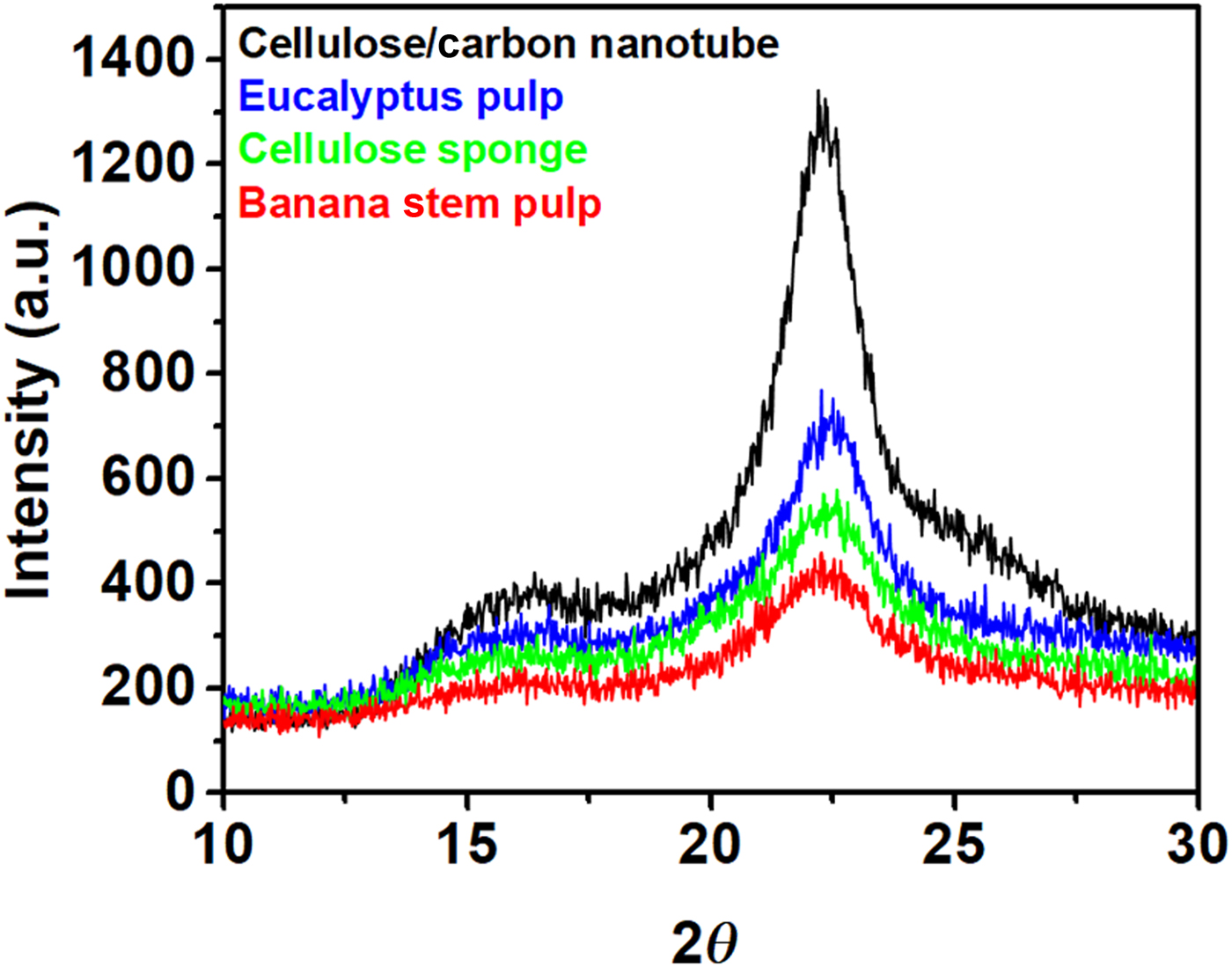
Figure 3 reveals XRD spectra of all samples that exhibit the two characteristic peaks at 15.7° and 22.5° related to type-I cellulose crystalline structure. These peaks increase with the acid hydrolysis process, indicating a higher crystallinity. It occurs due to the addition of MWCNTs and the breakdown of the cellulose glycosidic bond.[Reference Noremberg, Silva, Paniz, Alano, Gonçalves, Wolke, Labidi, Valentini and Carreno3,Reference Rosa, Zhao, Qiao, Jung, Zhu, Lu, Zhang, MacDonald and Ruof12] Additional characterization and discussions regarding these materials can be found in our previous studies.[Reference Noremberg, Silva, Paniz, Alano, Gonçalves, Wolke, Labidi, Valentini and Carreno3,Reference Cassol, Ebeling and Ferrera10,Reference Silva, Noremberg, Marins, Alano, Santana, Valentini and Carreño13]
XRD diffractograms of conductive paper, separator, and cellulose precursors.

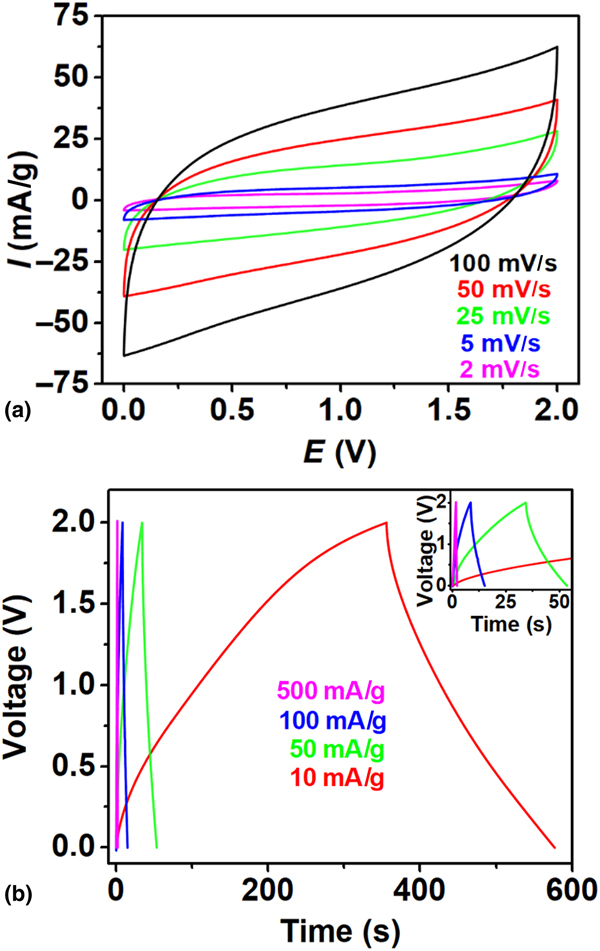
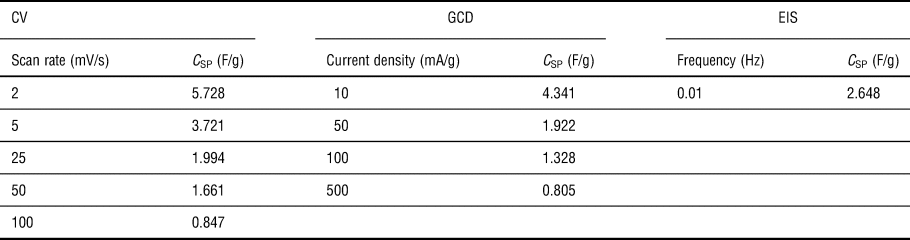
The electrochemical results are presented in Figs. 4 and 5. They demonstrate a capacitive behavior in all tested techniques. Figure 4(a) shows CV curves obtained at different scan rates of 2, 5, 25, 50, and 100 mV/s that present a shape close to a rectangle, without oxidation–reduction peaks, indicating an electrical double-layer capacitance behavior. In this storage mechanism, the charge is retained electrostatically on the surface of active materials.[Reference Li, Huang, Yang and Zhang14] As expected, at lower scanning rates higher capacitance values were obtained because these conditions allow longer time for electrolyte diffusion in the active surface of the material. This phenomenon was also evident in the GCD and EIS results. Figure 4(b) shows the GCD curves where at low current densities the capacitance value is higher, as exhibited in Table I.
CV curves of two electrode cell (a) and GCD of two-electrode cell (b).

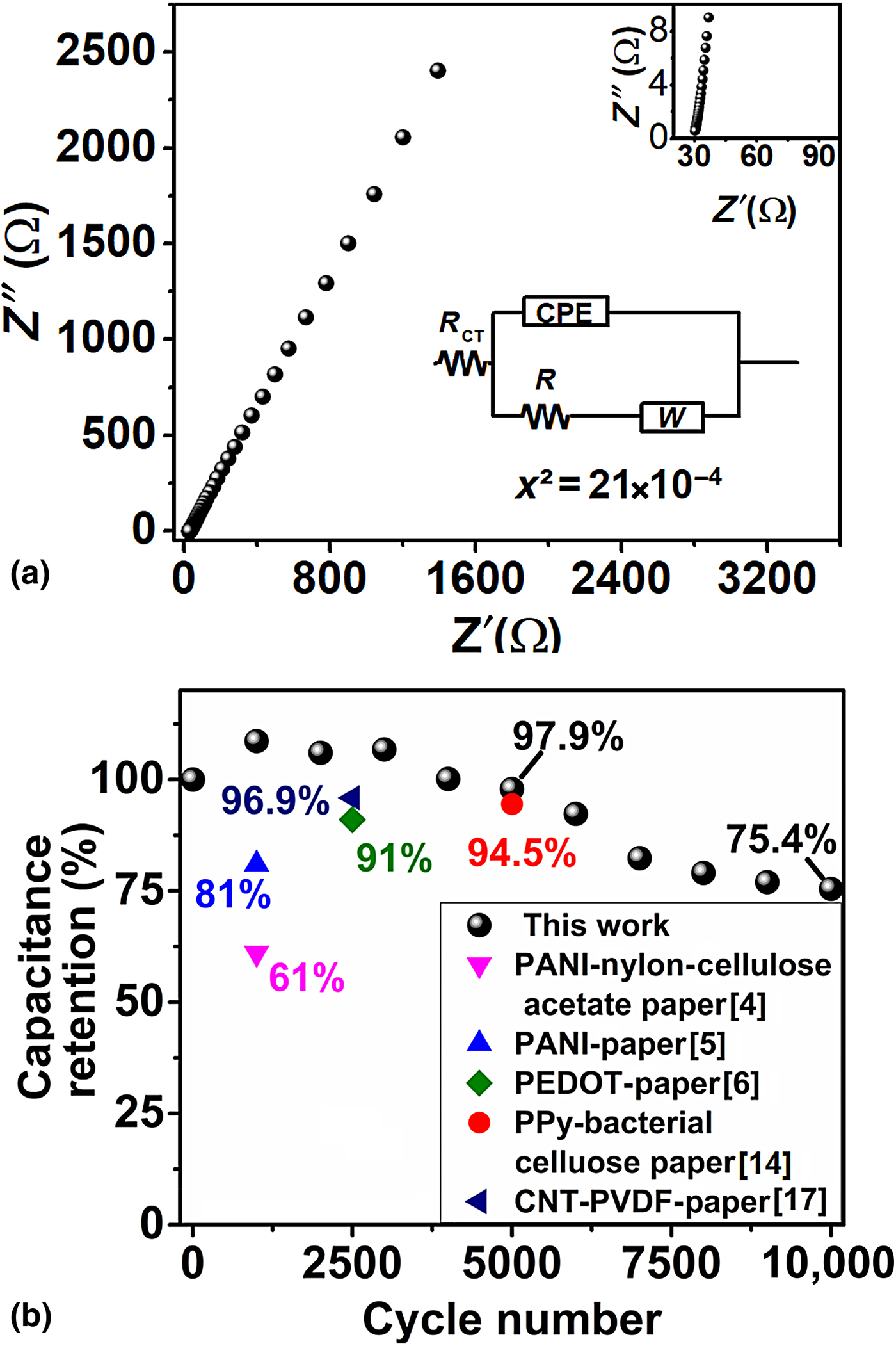
Nyquist plot with ECM (a) and capacitance retention after 5000 cycles at 20 mA/g compared to similar materials (b).

Specific capacitance obtained from CV, EIS and GCD

The Nyquist plot obtained from EIS, presented in Fig. 5(a), shows a predominantly resistive behavior at high frequency, which includes the ionic resistance of the electrolyte, electrode/electrolyte interface, and cell contact with measuring instrument as shown in the inserted equivalent circuit model (ECM). The absence of a typical RC semicircle suggests very low resistance associated with charge transfer processes between the electrode and electrolyte. In the low-frequency region, the spectrum shows an approximate slope of 45°, indicating the presence of a Warburg component, which is related to an impedance associated with ionic diffusion. In addition to the good dispersion of the nanotubes, the electrode/electrolyte interface is heterogeneous, so to represent the double-layer capacitance a constant phase element was used instead of a capacitor.[Reference Jorcin, Orazem, Pébère and Tribollet15]
Therefore, when scan rate, current density, and frequency are high (100 mV/s, 500 mA/g, and 1 Hz, for example), there is no time required for the ions to permeate through the active surface, being distributed only in the most accessible part, consequently, reducing the capacitance, as shown in Table I.
This time dependence is related to the low mobility of the IL due to high viscosity when compared to aqueous electrolytes.[Reference Thangavel, Kannan, Ponraj, Thangavel, Kim and Lee16] In addition to the dependence of a slow charge mechanism to obtain a high-capacitance value, the proposed material presented a good stability of 97.9% after 5000 charge/discharge cycles at 20 mA/g where the average time of discharge was 20 s. As shown in Fig. 5(b), the retention was higher than several similar materials until 5000 cycles.[Reference Devarayan, Lei, Kim and Kim4–Reference Anothumakkool, Soni, Bhange and Kurungot6,Reference Li, Huang, Yang and Zhang14,Reference Hu, Liu, Eskilsson, Zheng, McDonough, Wagberg and Cui17]
Conclusion
A simple combination of a renewable material with carbon nanotubes and IL has proven to be an excellent alternative for applications in flexible energy storage devices. The proposed acid hydrolysis process was efficient to obtain a homogeneous, conductive, and capacitive material. The cellulose sponge impregnated with IL showed a good performance as a separator/electrolyte. The two-electrode device assembled with these materials was tested in a large potential window (0–2 V) and gave a specific capacitance of 34.37 F/g considering the active mass. Also, the device remained stable since the retention after 5000 charge/discharge cycle was 97.9%. Thus, with a simple, low-cost, and scalable process we demonstrated that is possible to use cellulose to conciliate the environmental concern with high-performance in electronic devices.
Acknowledgments
This study was financed in part by the Coordenação de Aperfeiçoamento de Pessoal de Nível Superior-Brasil (CAPES)-Finance Code 001. The authors would like to acknowledge Fapergs/PqG 2017 17/2551-0001157-0, CAPES PDSE/88881.187730/2018-01, and Celulose Riograndense-Brazil.