Introduction
This paper considers the photography of Frederick A. Cook (1865–1940) to examine the role played by it in the making of his polar explorer-hero image. It considers a number of portraits which Cook used in his own publications and illustrated lectures, and which he provided for press articles; it also examines Arctic and Antarctic photographs which he took himself and used in publications and lectures. The paper is underpinned by discourse analysis (Gee Reference Gee2011) and the concept of the photograph as a messenger (Barr Reference Barr2000), a representation of reality filtered through different lenses: the photographer's intentions, the viewer's responses. The visual impact and discursive messages of Cook's photographs were aimed at situating readers and lecture audiences in responsive attitudes that would generate a public persona which he exploited to increase his fame and heroic reputation.
Cook, a highly controversial polar explorer, is best remembered for his contentious claims to have been first, in 1906, to climb Mt McKinley, North America's highest peak, and in 1908 to reach the North Pole. But he was an Arctic and Antarctic explorer of wide experience. He was surgeon on the first Robert Peary expedition to northwest Greenland in 1891–1892. He exploited this experience in advertising ventures of his own, using a photograph of himself, young, bearded, in suit and tie, and referring to himself as ethnologist of the Peary expedition (Bryce no date a (circa 2013)). He recruited paying passengers for a summer excursion to west Greenland on the schooner yacht Zeta in 1893, and again for the Miranda expedition to Greenland in 1894. In 1897–1899 he was surgeon and official photographer on the Belgian Antarctic Expedition. In 1901 he was physician and second in command of the relief expedition in Erik, sent by the Peary Arctic Club to locate Peary and his wife and daughter in Greenland. By the time Cook made his claims about Mt McKinley and the North Pole, he had significant standing in the exploration community, and was sitting president of the Explorers Club by 1907. He had also become known to a section of the general public, through newspaper articles on his exploits on the Belgian Antarctic Expedition and his own writings in popular magazines.
Visual representations and discourses of the Arctic
Throughout the nineteenth century, public attention was gripped by the Arctic, fuelled by images evoking danger, endurance, heroism and the sublime (Potter Reference Potter2007). Arctic explorers had used photography to record expeditions from soon after the medium was invented in 1839, despite the challenges of climate and environment (Wamsley and Barr Reference Wamsley and Barr1996: 314). The emphasis was on documenting places, people, and events, but photographs were also taken with an artistic purpose, tending to accentuate romantic aspects (David Reference David2000). Photography contributed significantly to the shaping of the public's impressions of the region (Condon Reference Condon1989), constructing representations which informed the way viewers were able to imagine it (King and Lidchi Reference King and Lidchi1998). The public's consciousness of national histories of northern exploration and colonisation was heavily influenced by images selectively presenting interpretations that in some cases persist today (Geller Reference Geller2004). As part of these, visual representations of the Inuit informed the anthropological as well as the popular consciousness, in which the tendency was to conflate the varied Inuit peoples into one generic representation (Trott Reference Trott2001).
Representations of the Arctic and polar exploration were characterised by an interplay of often intersecting discourses, heroic adventure, patriotism, honour and manliness, as well as scientific progress. Recurring motifs and metaphors enabled a sense of familiarity within which imaginations of the region were formed, ‘a consolidated, self-perpetuating vision promoted by inherited images . . . reproduced and naturalised, taken for granted’ (Ryall and others Reference Ryall, Schimanski, Wærp, Ryall, Schimanski and Wærp2010: x). Those discourses increasingly intersected in the theme of the race for the North Pole.
Theoretical approach to analysis of images
Photographs are dynamic sites at which many gazes intersect (Lutz and Collins Reference Lutz and Collins1991). Images contain textual arrangements and discursive practices, producing multi-layered cultural messages in which creator, subject and viewer all play their roles (Barthes Reference Barthes1977). Photographers’ gazes are mediated by cultural, social, and historical contexts, as are the gazes of viewers of the photographs, who may be situated in various responsive attitudes by the photographer's choice between different compositional structures (Sekula Reference Sekula2010). In the taking and viewing of photographs, objectivity and subjectivity co-exist. In the photographs there is ‘an indisputable flicker of reality’ (Brody Reference Brody and Lewis-Jones2008: 279), but this is ‘a reality filtered through various lenses’ (Barr Reference Barr2000: 584), with an inevitable tension between facts and meanings. Discourse analysis (Gee Reference Gee2011), a technique for analysing the components of texts for their operant values, is an appropriate method used here to examine the multi-layered cultural messages within Cook's photographs.
Cook's photography
It is not known how much of the Arctic photographic tradition Cook was acquainted with, but it is likely to have been limited. He had, however, read books on Arctic exploration (Henderson Reference Henderson2005), including authors Elisha Kent Kane, whose Arctic explorations (Reference Kane1856) was illustrated by many engravings from sketches by Kane, and Charles Francis Hall, whose Life with the Esquimaux (Reference Hall1864) also contained illustrations drawn after Hall's photographs. Once in the field, Cook would have learned from Robert Peary, the leader on his first expedition, who photographed it comprehensively, including ethnographical documentation of the Inuit of northern Greenland (Condon Reference Condon1989). Cook may also have learned something about the Arctic photographic tradition from Rudolf Kersting, official photographer on the Miranda Expedition.
Cook became a skilled photographer. His numerous publications included many of his own photographs, and some by others (usually unattributed). However, there is only brief and general comment about them in the literature. A contemporary reviewer of Cook's book, Through the first Antarctic night (Reference Cook1900a), about the Belgian Antarctic Expedition, found that the photographs were skilfully composed (Zimmermann Reference Zimmermann1901: 455). A descendant of expedition leader Adrien de Gerlache de Gomery described them: ‘Taken on glass plates with the rudimentary equipment of that time, [they] are not only the earliest pictures that we have of a South Polar winter, but they still astonish by their quality . . .’ (de Gerlache de Gomery Reference De Gerlache d de Gomery and Cook1979: iv).
Bryce (Reference Bryce, Decleir and De Broyer1998, Reference Bryce2013) and Raraty (Reference Raraty and de Gerlache de Gomery1998) refer to Cook's photography on the same expedition as excellent and superb, but do not elaborate. It is to be hoped that some future scholar will undertake a detailed consideration of the photographs in terms of their documentary and artistic value, their technical quality, and their possible influence on later Arctic and Antarctic photographers. This present article examines only a small number to consider their role in the making of Cook's polar explorer-hero image.
Cook's early expedition photographs
The first of Cook's expedition photographs were taken on Peary's north Greenland expedition of 1891–1892. Peary included five of them in his narrative (Peary Reference Peary1898: 102, 103, 105, 106, 110). These photographs depict Inuit and igloos, in keeping with Cook's role as ethnographer. He probably used one of the Eastman Kodaks with which the expedition was equipped. Peary mentions a specially constructed Eastman Kodak no. 4 camera with a capacity of 250 negatives, ‘very light, strong, and in every way satisfactory’ (Peary Reference Peary1898: lxvii).
Cook also took photographs on his three-month Zeta trip to settlements in Danish Greenland in 1893. The Library of Congress holds 74 photographic prints (Lot 13288) showing people and places, some of which were probably taken by Cook. He had developed a deep interest in the native people of the north, then referred to as Eskimo. He learned to speak their language, and studied and adopted many of the practices that enabled them to survive in the harsh environment.
The intention of the Miranda expedition, organised and led by Cook in 1894, was to cruise the western coast of Greenland, but Miranda struck an iceberg. After repairs, it set off again, only to hit a reef and sink, with all on board rescued. The expedition included an official photographer, Rudolf Kersting. The members of the expedition, many of them academics, were amateur photographers, but at least one was considered a noted amateur (Kersting Reference Kersting and Walsh1896: 221). There were seventeen cameras at work, and developing was done on board. Many photographs were lost in the disaster, but the account of the expedition is ‘profusely illustrated from photographs taken on the trip’ (Walsh Reference Walsh1896: title page). None are attributed, and it is unknown if any were taken by Cook.
Developing photographic skills in Antarctica
Cook may have learnt aspects of photographic technique from Kersting and the Miranda passengers, but his experience remained limited to a simple Kodak (Gibbons Reference Gibbons and Cook1998). He upgraded his skills in Antarctica. On Belgica his equipment was French and German, with Zeiss lenses and glass plates, and he wrote that ‘there were headaches ahead’ for him in camera technique (Cook Reference Cook1938: 14).
In his later years Cook published an account of his camera work in Antarctica in a February 1938 Popular Photography magazine article, ‘My experiences with a camera in the Antarctic’, introduced with editorial praise of his photography's ‘great technical excellence’ (Cook Reference Cook1938: 12). By experimentation, he learned how to deal with the polar light: ‘Exposures must be longer as you near the Pole, for there the sun is never high and there is little actinic light. For this reason, snapshots seldom gave good negatives’ (Cook Reference Cook1938: 91). He learned that slow emulsion plates gave far better results than fast ones. Exposed plates could not be taken home successfully across the torrid zone unless developed, fixed and well packed, and with depleted resources he became innovative with developing, devising an alternative fixing bath of highly toxic hydrocyanic acid (Cook Reference Cook1938: 92).
The topics of Cook's Belgica photographs include the ship, scenes and icescapes, activities of the crew, and natives of farthest South America. There are also photographs of wildlife, including heads, skulls, and claws, in deference to the goals of the expedition, which, he wrote, were ‘wholly in the interest of science’ (Cook Reference Cook1900a: ix).
The polar explorer-hero image
The explorer-hero image is largely an expression of the values held by a culture, and the American version of the time contained important connections to frontier wilderness, regarded as ‘a source of national virility and toughness’ (Bloom Reference Bloom1993: 32). Cook tapped into these associations in his self-representation as polar explorer-hero, as well as into representations of the Arctic which had entered what has been called the ‘cultural imaginary’: the ‘networks interlinking discursive themes, images, motifs and narrative forms that are publicly available at a given culture at any one time, and articulate its psychic and social dimensions’ (Dawson Reference Dawson1994: 48). Cook's selection of photographs for publication highlighted cultivated Arctic and frontiersman aspects of his identity.
He had pulled himself up from poverty by obtaining his medical degree from New York University in 1890 (Bryce Reference Bryce2013: ix), but he did not want to remain simply a doctor. When he came upon a newspaper article about Peary's search for a surgeon for his 1891–1892 expedition, ‘It was as if a door to a prison cell had opened. I felt the first indomitable, commanding call of the Northland’ (quoted in Henderson Reference Henderson2005: 33). His writings indicate that he became used to merging his explorer and medical roles; for example, in ‘The Antarctic's challenge to the explorer’ (Cook Reference Cook1894a), ‘How polar expeditions are equipped’ (Cook Reference Cook1894b), ‘Medical observations among the Eskimos’ (Cook Reference Cook1894c), ‘Some physical effects of Arctic cold, darkness and light’ (Cook Reference Cook1895) and ‘The Greenlanders’ (Cook Reference Cook and Walsh1896). But he came to identify primarily with the explorer role, secondly with the medical one.
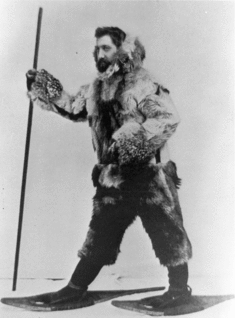
His first publication about the Belgica expedition came in a copyrighted story in the New York Herald (2 July 1899), written in South America on his way home, ‘Dr. F.A. Cook gives his first account of his Antarctic discoveries’, in which he describes himself as surgeon and anthropologist. It had nine sketches from photographs under Cook's copyright. The central image was Fig. 1.
Dr F. A. Cook, photographed probably before the Belgian Antarctic Expedition (1897–1899).

Cook's construction of his polar explorer persona owed much to his absorption in Inuit customs (Robinson Reference Robinson, Kaplan and Peck2013). He had had a fur costume made in 1894, a modification of Eskimo dress, including a bird-skin under-garment, which he was confident would withstand the most extreme temperatures (Cook Reference Cook1894a: 512). He frequently chose to represent himself in this outfit, appealing to audiences as a man of the wild and frozen frontier, adapted to its challenges, and implying a rejection of modern civilisation and its excesses (Robinson Reference Robinson, Kaplan and Peck2013: 55). As part of this stance, he lessened any emphasis of the discourse of science (Bryce Reference Bryce2013: 19), which for many other polar explorers was their most often professed motivation. Science gave credibility to expeditions that included it among their goals, and was a strong theme in explorers’ books (for example, Nansen's Reference Nansen1897 story of his attempt to reach the North Pole, and Scott's Reference Scott1905 narrative of his first Antarctic expedition). Science was never the motivation for Cook's expeditions.
Fig. 1 was a studio portrait, and Cook had a number of similar photographs which he used regularly. There is one version without the stick, retouched with gouache (Mission du patrimoine photographique 1997). The Library of Congress, Washington D.C., has two similar photographs (Anon. circa 1900, 1911); in the first, Cook is on skis. Another photograph, with a different fur outfit but otherwise similar, had appeared on the cover of an 1894 magazine featuring an article about the Miranda cruise (Illustrated American 1894). The photographs were probably all taken around that time, for the purpose of marketing his Arctic excursions.
The Fig. 1 image appeared again to illustrate a lengthy article about the Belgica expedition in McClure's Magazine (Cook Reference Cook1899), and again the following year in his book, the first to be published on the expedition (Cook Reference Cook1900a: 111), in which it was included with the caption ‘Dr. Frederick A. Cook’ and no comment. The section of the book deals with the Indians of farthest South America, and is illustrated with Cook's photographs of Ona tribesmen dressed in animal skins. Cook's fur clothing was one of only five skin suits on the expedition (Cook Reference Cook1900a: 346). It reminds the reader of his experience in polar regions, and of his practice of drawing on Inuit ways to survive.
The photograph, or the one with skis, recurred in newspaper accounts of his North Pole claim, and in 1909 it was used in an advertisement by the Victor Talking Machine Co., promoting a recording of ‘How I reached the North Pole’ by Cook (Cook Reference Cook1909b).
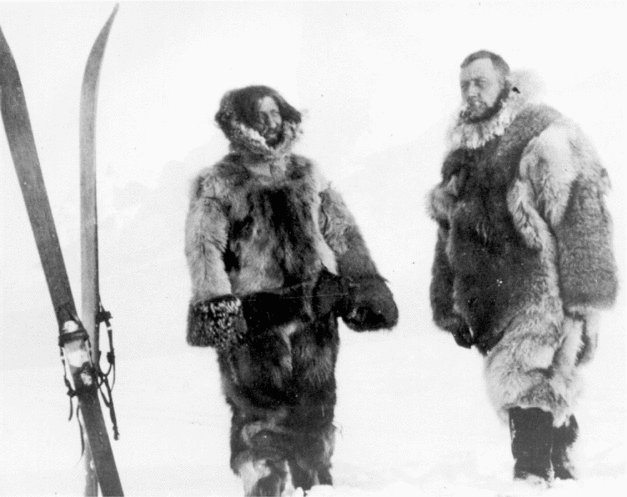
Fig. 2, taken by Cook and showing him with Roald Amundsen, second mate on the Belgica, was first used by Cook in a magazine article in 1900 (Cook Reference Cook1900c: 421).
Cook and Amundsen (Cook).
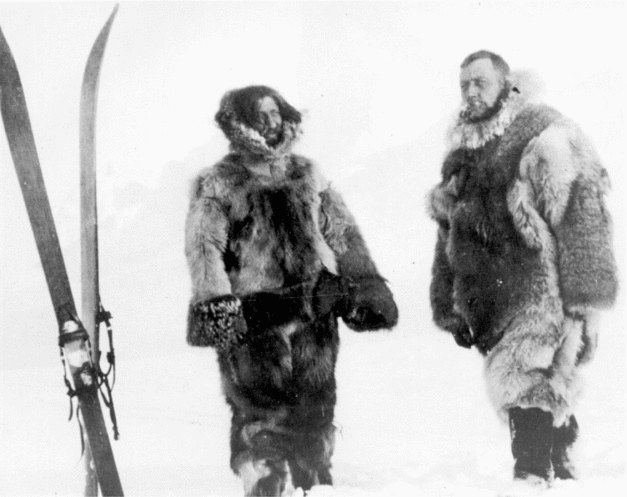
The Norwegian, then on his first polar expedition, frequently mentions Cook with favour in his writings. The photograph was of necessity posed, but has a candid look. It draws on discourses of masculine heroism in exploration of extreme places. Cook and Amundsen were in many ways kindred spirits. The photograph captures a moment in the intersection of their careers. Amundsen would go on to navigate the northwest passage in 1903–1906, then reach the South Pole in 1911. The two remained friends.
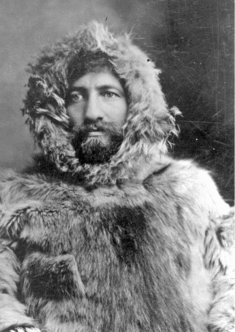
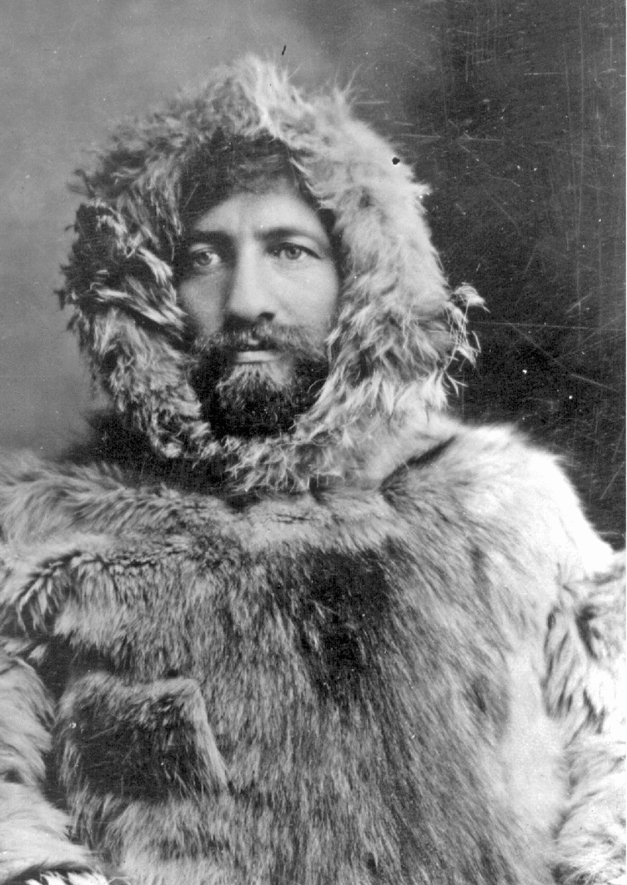
Meanwhile, other photographs reinforced Cook's polar explorer-hero image. He used Fig. 3, an unattributed studio portrait, in a magazine article in September 1900 (Cook Reference Cook1900c: 419). The calm and approachable expression suggests something of the man Amundsen described. But the visionary gaze and the photograph's nuanced light and shade also give the subject a romantic quality, lifting the depiction beyond the personal to something of the legendary. The portrait represents Cook in line with the predominant polar explorer ideal of the period. Nansen, the epitome of the polar explorer (Greve Reference Greve1994), had also been studio-photographed in furs, around 1890 (Van der Weyde circa Reference Van der Weyde1890). The Cook photograph intensifies a frontiersman aspect, as did Fig. 1.
Dr F. A. Cook.
Ice and ethnography
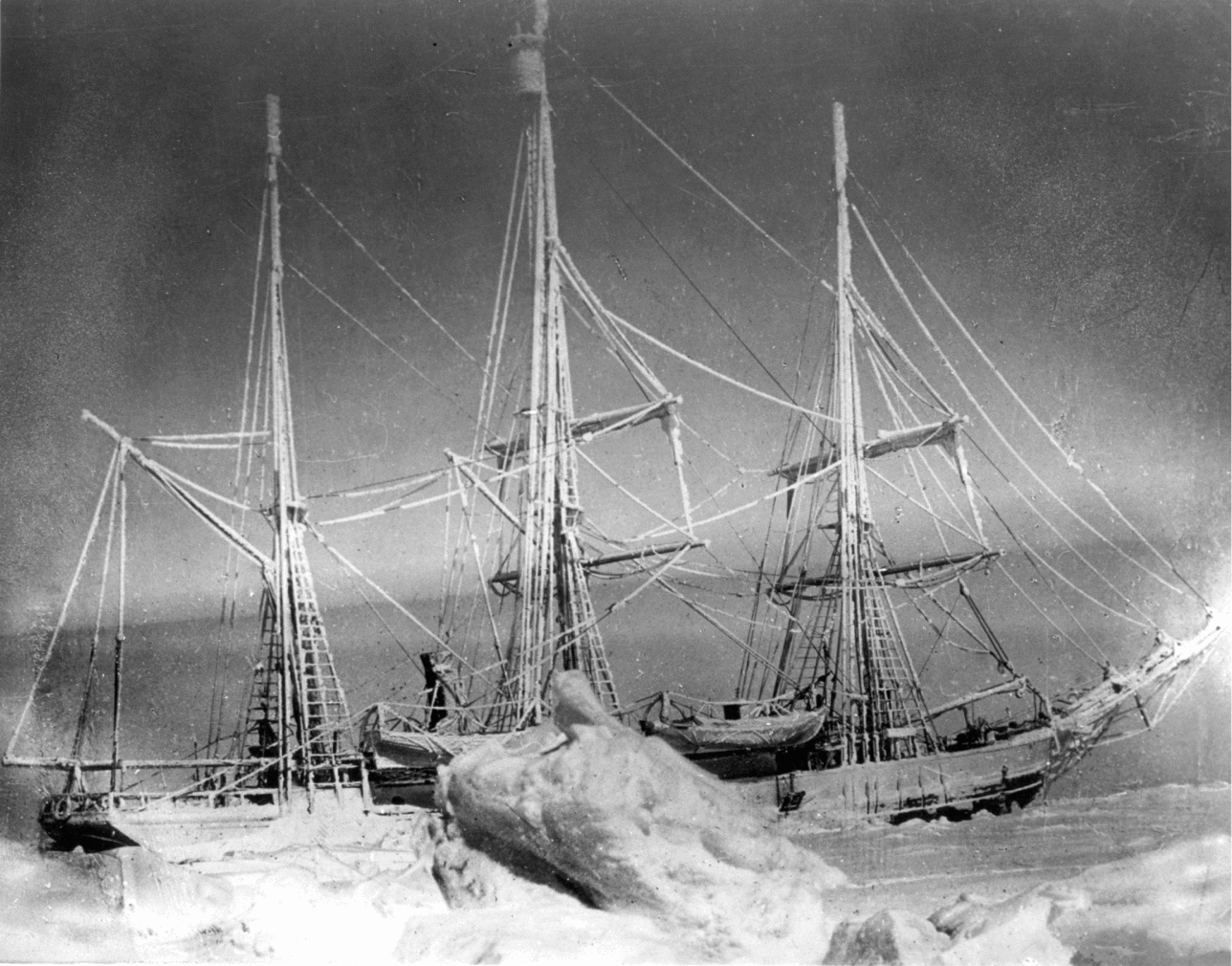
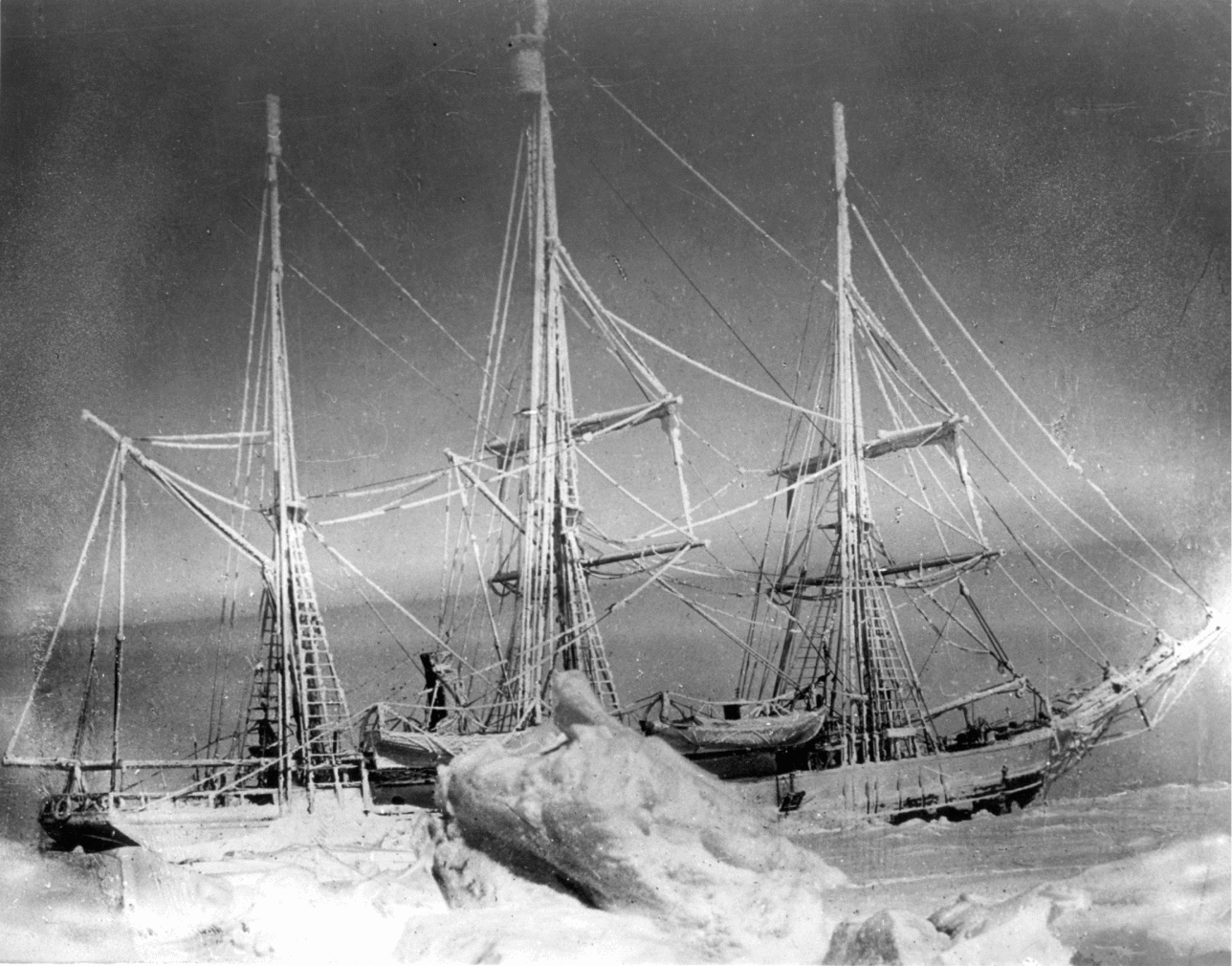
One of Cook's most striking photographs is shown in Fig. 4, which he included in Through the first Antarctic night. The photograph of Belgica, beset by ice and spectral, dates from midwinter 1898. It was taken by moonlight, carefully planned and executed with an exposure of 90 minutes in a temperature of 40 degrees below zero (Cook Reference Cook1938: 92). The composition of the image, the foreground dominated by blocks of ice, frosty masts rising skeletally towards a black sky, reconstructs the motif familiar from the Arctic: Europeans risking all in exploration of the farthest seas. For the reader and viewer, the dramatic image would have added to Cook's polar explorer-hero credentials.
Moonlight photograph of Belgica, 20 May 1898 (Cook).
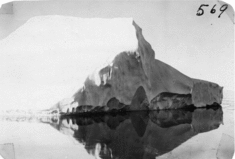
As in early Arctic photography generally, Cook's photographic style was predominantly pictorial (Cook Reference Cook1938: 92), typical of nineteenth and early twentieth century representations of untamed nature and human spiritual responses to it (Barr Reference Barr1997). Icebergs naturally figured prominently in his work. He used a photograph of an iceberg as frontispiece to the first edition of Through the first Antarctic night, foreshadowing the danger and daring of his story, and he had it vividly hand-coloured, enhancing the reader's impression of a hostile, alien new world. Such images evoke a sense of the sublime, the mixture of awe and frailty arising from recognition of humanity's vulnerable relationship to nature, ‘an individual experience but also a collective cultural construct’ (Wråkberg Reference Wråkberg2007: 196). Cook's photographs tapped into this sense, setting his polar explorer-hero image in its context. For example Fig. 5 taken on the 1901 Peary Arctic Club Relief Expedition of 1901 to the Arctic captures the mystique of the iceberg with its grottoes and reflections.
Iceberg. Peary Arctic Club Relief Expedition of 1901 (Cook).

Cook was very susceptible to the special beauty of polar regions, the spell of their ‘dazzling white, eerie glamor’ (Reference Cook1912b: 42), and especially of the icebergs:
. . . towering masses of crystal rose gloriously, dazzling the eye and gladdening the heart with their superb beauty. Although this striking beauty of the North . . . possesses a splendor of color equal to the gloriousness of tropical seas, it always impresses one with a steely hardness of quality suggestive of the steely hardness of the heart of the North (Cook Reference Cook1912b: 32).
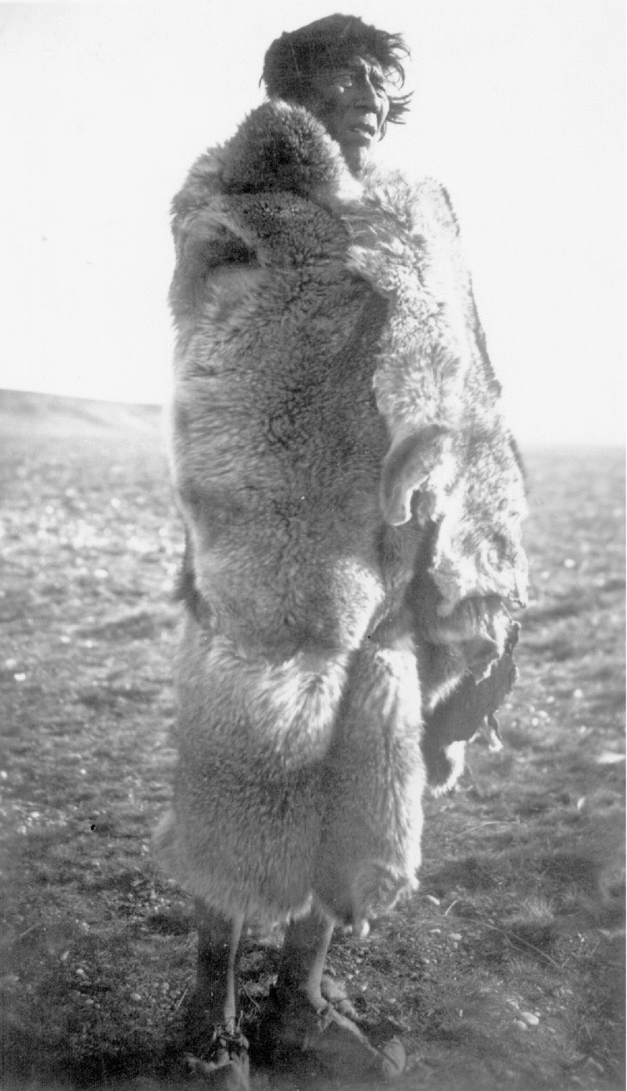
Another important aspect of Cook's explorer credentials was his work in ethnography. As science, this work has been deemed ‘very mediocre’ (Malaurie Reference Malaurie1993: 134). It was also derivative, as Cook drew on the work of South American missionary and ethnographer Thomas Bridges (Bridges Reference Bridges1948), though mentioning him only passingly, as ‘a farmer’ (Cook Reference Cook1900a: 107). But Cook was the first person to study the lives of the inhabitants of both farthest northern and farthest southern regions. He related strongly to these people, and the ethnographer merged with his polar explorer-hero representation. Fig. 6, an Indian of Tierra del Fuego, was photographed during the Belgica expedition.
An Ona Chief (Cook).
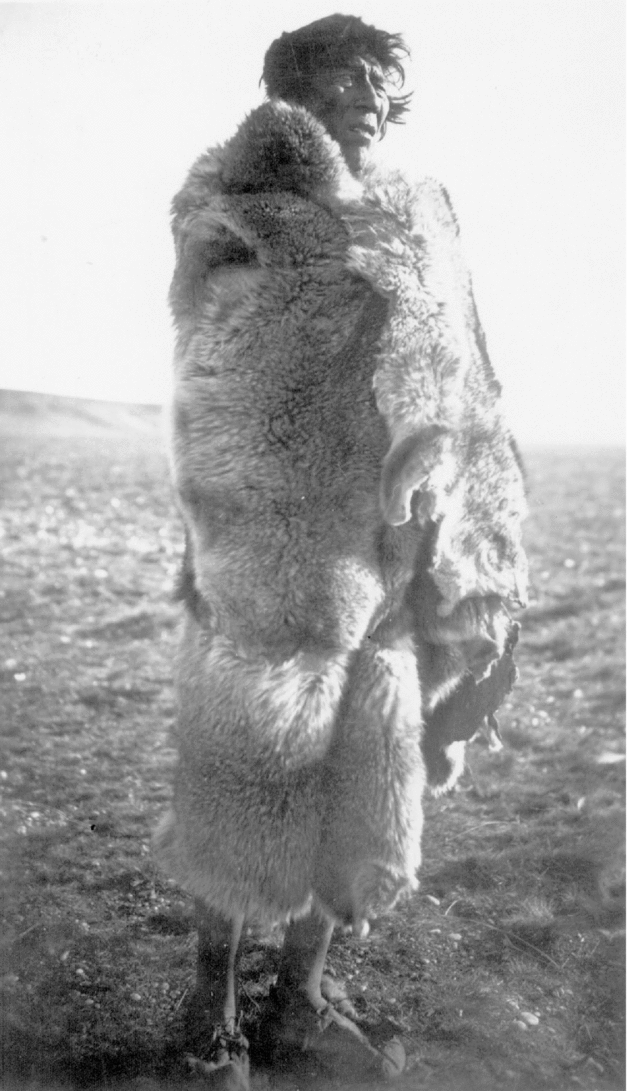
Taken from a lower angle, the photograph emphasises the man's height. The Ona were, Cook wrote, ‘a race of giants’ (Cook Reference Cook1900a: 99). The chief's somewhat pained gaze is away from the photographer and the viewer, looking into the distance beyond the frame. The photograph is a romantic representation. The chief may be seen as an emblem of his tribe, an isolated and ‘fast vanishing race’ (Cook Reference Cook1938: 13), looking towards an uncertain future. The view that primitive races were doomed to extinction was a common trope in nineteenth- and early twentieth-century discourse, which was often used to rationalise colonialist expansion (Brantlinger Reference Brantlinger2003). Though often expressed elegiacally, as in Cook's photograph, tribal fates tended to be attributed to their own flaws. Cook's writings show that he found much to admire in people such as the Ona, a ‘noble band of human strugglers’ (Cook Reference Cook1900b: 729), but extinction discourse emerges in statements such as ‘the mental equipment of the Ona is by no means equal to his splendid physical development’ (Cook Reference Cook1900b: 725), and ‘To the present they have had their worst enemies among their own people’ (Cook Reference Cook1900b: 721).
Cook used the photograph in Through the first Antarctic night, captioned ‘Chief Colchicoli’ (Cook Reference Cook1900a: 90), and again in an article, ‘The giant Indians of Tierra del Fuego’, written for The Century Magazine (Cook Reference Cook1900b: 723), where it was redrawn by an illustrator with a dramatic aura surrounding the chief. Cook's photographs of the Ona, he later claimed, ‘had not been equalled before, and have not been surpassed since’ (Cook Reference Cook1938: 14) although after his death a book with fine photographs was published by the son of Thomas Bridges (Bridges Reference Bridges1948).
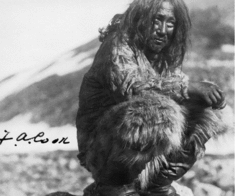
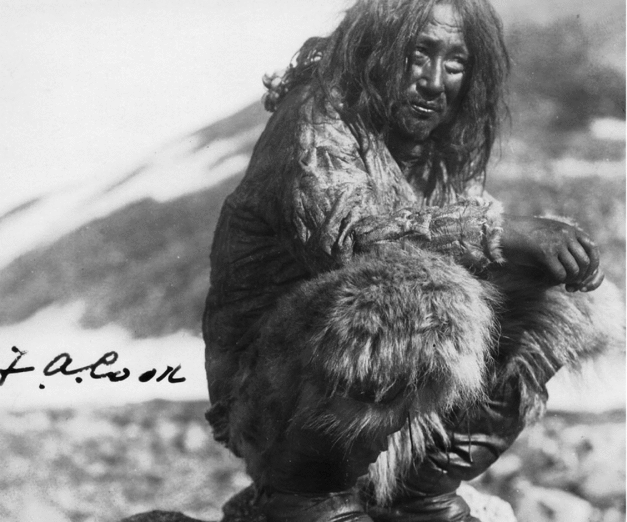
Fig. 7 is an Arctic native. A similar photograph by Cook has been captioned ‘Ootoonioksuah, Inuit from Cape York’ (Gillis and Ayer c. Reference Gillis and Ayer2002: 78). It is an arresting character study. The eye-level angle puts the viewer on an equal footing with the subject, promoting empathy. Environmental conditions have etched lines on the man's face, intensified in the sunlit photograph. The gaze, past the photographer and viewer but directed nearby, has a suggestion of a question. The Inuit ‘other’ is not distanced, but characterised as approachable (Lutz and Collins Reference Lutz and Collins1991: 139), someone possible to get to know.
A Greenland Eskimo (Cook).
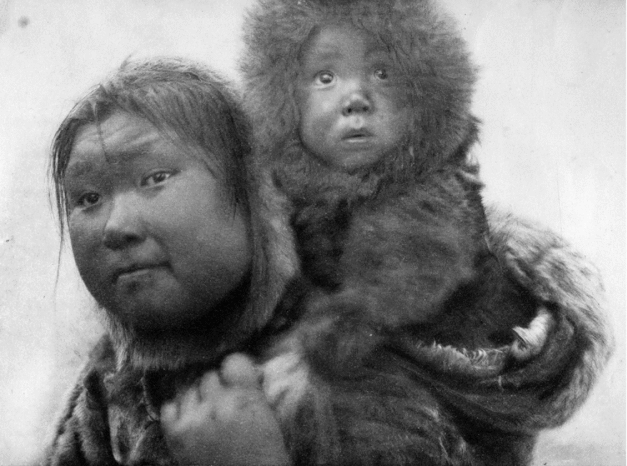
The original sepia print of the beautiful image in Fig. 8 is marked on the lower left: ‘copyright 1908 by Dr. F.A. Cook’, and on the lower right: ‘Photogravure & Color Co.’ The New York printer has reproduced the image by etching a gravure plate from the film positive. The Library of Congress has a black and white photographic print of the image, titled ‘The Eskimo madona (sic)’ (Cook Reference Cook1891–1916), in a group of photographs noted as possibly assembled by Cook for publication or lecture purposes.
Eskimo mother and child (Cook).
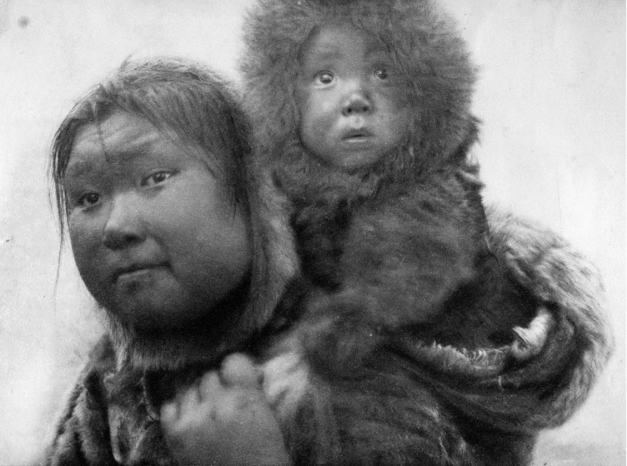
The child looks baffled, but the mother has a matter-of-fact look, suggesting that she may have seen photographers before. There had been several expeditions to west Greenland in the period and cameras were taken on all these expeditions (Achton Friis Reference Achton Friis1910; Peary Reference Peary1898, Reference Peary1907, Reference Peary1910). Cook's photograph was taken on the Peary Arctic Club Relief Expedition of 1901. The subjects are polar Inuit. The photograph marks a development in style since the formulaic Zeta snapshots of more southerly Inuit in the Danish settlements a decade earlier. In many of those, the subjects are lined up in stilted poses. In contrast, the composition of Fig. 8 is likely to evoke empathy in the viewer. The pose has a sentimental aspect (the mother holding the child's hand) which recurred in photography of the time, for example, in the work of Geraldine Moodie a few years later (White Reference White1998). Cook was documenting appearance and custom of the Inuit while simultaneously presenting a portrait expressing a loving family relationship.
Cook's representation of himself as polar explorer-hero was carefully crafted. For most other polar explorer-photographers of the time, the Arctic and the Antarctic were transitional, liminal spaces in their lives. For Cook, polar exploration was a central aspirational design. His ambitions with regard to it became fused with the whole meaning of his life, and the photographs he selected for publication, or used as lantern slides in his lectures, were inextricably involved with that meaning. In many aspects, Cook was not a well-organised person. Many errors and inconsistencies are to be found in his writings (Bryce Reference Bryce1997, Reference Bryce2013) and the records of his photography are unsystematic and often incomplete. But ‘the thought always filled [his] mind . . . that in some way the attainment of one of the Poles—the effort on which [he] had spent sixteen years—would become possible’ (Cook Reference Cook1912b: 29). His books, articles, the publicity about him, and the photography involved, were akin to qualifications evidencing progress in the course he had set himself. Seen in this light, the photographs reproduced here, the portraits, the ship, the iceberg, the natives, become projections of an identity Cook wanted the world to recognise: the polar explorer-hero.
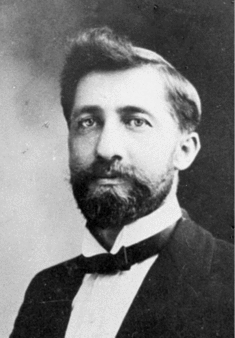
But a later edition of Through the first Antarctic night (Cook Reference Cook1909a) has as frontispiece a very different representation of Cook, an autographed portrait in a dinner suit, as if ready for a social round. The print reproduced here, at Fig. 9, is dated 1900 in Cook's handwriting.
Dr F. A. Cook, 1900.
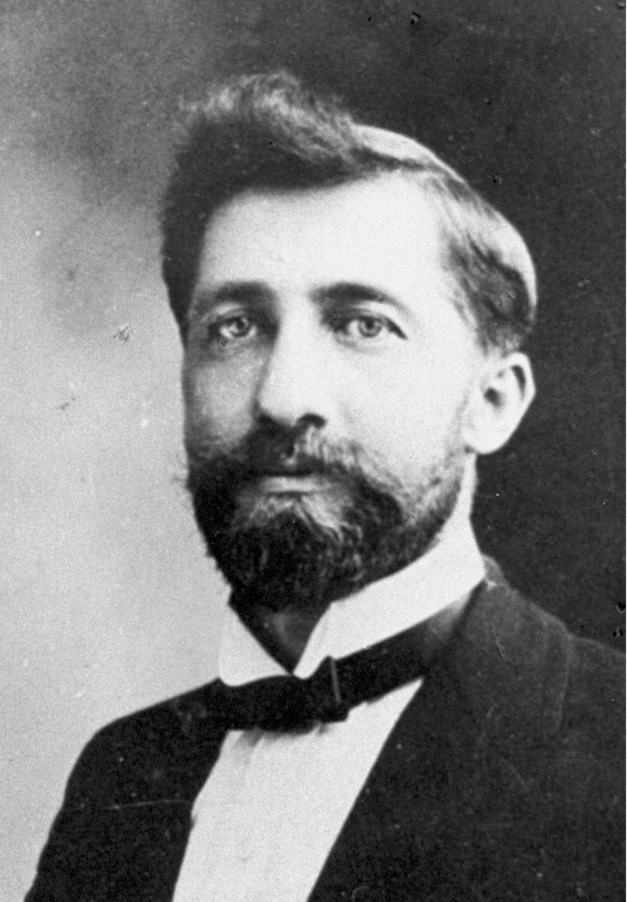
The choice of this image was probably the publisher's. No other portrait of Cook appears in this edition, the intention of which was probably to take advantage of Cook's fame in the wake of his claim to have attained the North Pole. The photograph had been used widely elsewhere. Cook had provided it for a chapter (Cook Reference Cook and Kersting1902: 134) he wrote for a collection of articles on Arctic exploration. Newspapers writing about his North Pole claim had also used it; for example, the New York Herald (Bryce no date b (circa 2013)), and the Chicago Daily News. The effect was to present Cook as something other than explorer of the polar wilderness. Far from rejecting modern civilisation, he appears in Fig. 9 as an urbane figure of society.
By 1909 Cook had made his Mt McKinley and North Pole claims, and both had come under attack. He published books about his achievements (Reference Cook1908, Reference Cook1912b) and lectured persistently, but he was losing the battle for credibility (Dick Reference Dick2004: 20). From this time his selection of promotional photographs, and the ones presented by his publishers, indicate a certain unravelling of the image he had constructed for public consumption.
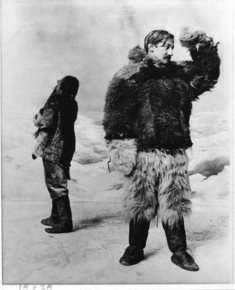
Seeking to tap in to the popularity of motion pictures, he made a short film, a ‘picture drama’, as he called it, re-enacting his North Pole achievement and depicting his detractors as nefarious and conspiratorial. Titled ‘The truth about the North Pole, with Dr. Frederick A. Cook in the leading role’ (Cook Reference Cook1912a), it was made in Chicago (Bryce Reference Bryce1997), cinematographer unknown. The image in Fig. 10 would appear to have been taken on the set.
Dr F. A. Cook, 1911.
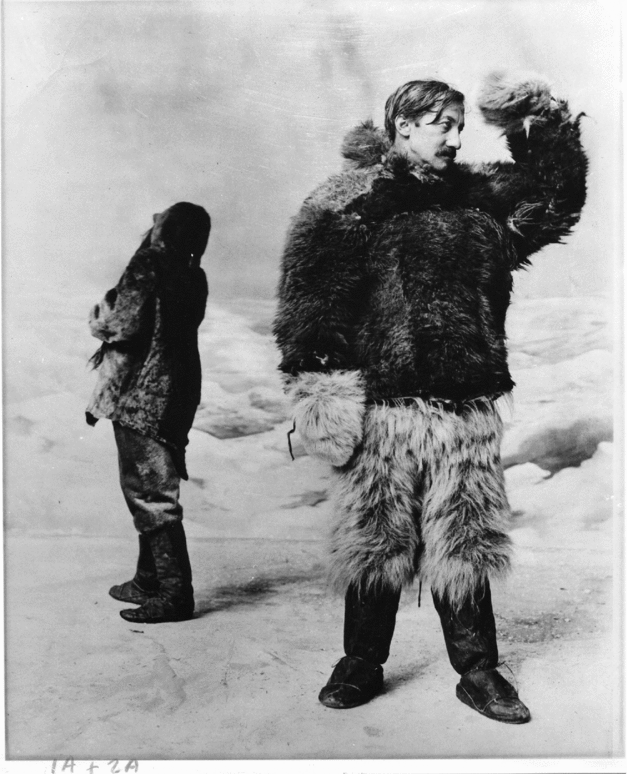
It is a return to the representation as man of the wild and frozen frontier, but the photograph has limitations. Whereas the pose in portraits in Figs. 1 and 3 was naturalistic, in Fig. 10 it is histrionic, deriving from characteristics of the silent film of the period. The hooded man in the background is unexplained. The film reveals him to be an unnamed actor playing one of Cook's companions on the North Pole trek. A related still is held in the Library of Congress (Anon. no date). It depicts Cook in the same Arctic wear, seated on a sledge and holding a sextant, with two companions and dogs.
The record of the film dates it as 1912, but it was actually first shown in February 1911 (Bryce Reference Bryce1997: 527), when it was poorly received. In the climate of heated controversy, and considering the quality of the film, this is unsurprising. Expeditions had been producing original footage of polar exploration for years: Anthony Fiala made a motion picture, A dash for the North Pole, of his 1903–1905 Arctic expedition (Diesen Reference Diesen2012), and a number of Antarctic expeditions of the early twentieth century produced cinematographic films (Millar Reference Millar2013: 141, 158, 171, 175). Cook's re-enactment looked amateurish and fake. The film does not seem to have been shown again (Bryce Reference Bryce2008). He had crossed the line between heroic imagery, which audiences wanted to believe in, and propaganda, which they rejected. Neither, apparently, did Cook make much use of the photographs associated with the film. From mid-1911 Ponting's fine character studies of Scott were appearing in the British press (for example Daily Mirror (London) 10 May 1911). It is not improbable that Cook became aware of them. In comparison, the theatrical style of his motion picture stills was old-fashioned and silly.
Cook took a great many photographs during his career as explorer, but he does not seem to have been identified as a photographer. Other polar explorers photographed themselves, or were photographed, with cameras (Millar Reference Millar2013: 103, 149). But photographs of Cook with camera are rare. There are two such photographs from the 1901 Peary Arctic Club Relief Expedition of 1901 (Gillis and Ayer c. Reference Gillis and Ayer2002: 55, 59), presenting a very different Frederick Cook. Dressed in everyday wear and focused on the photographic task, he looks commonplace, with no sign of the explorer-hero persona.
Collapse of the image
Ironically, photography was at the core of the downfall of Cook's hero image. Photographs purporting to support his claims of success on Mt McKinley and at the North Pole were subjected to intense scrutiny, and found wanting. In this, the final photographs in this article were critical. Their part in the assessment of his claims has been much discussed elsewhere (for example Washburn and others Reference Washburn, Carter and Carter1958; Bryce Reference Bryce1997, Reference Bryce2013; Washburn and Cherici Reference Washburn and Cherici2001), and will not be detailed here. In the end, Cook's abnegation of science was his undoing: his claims lacked the rigour of scientific method. His photographs were not enough.
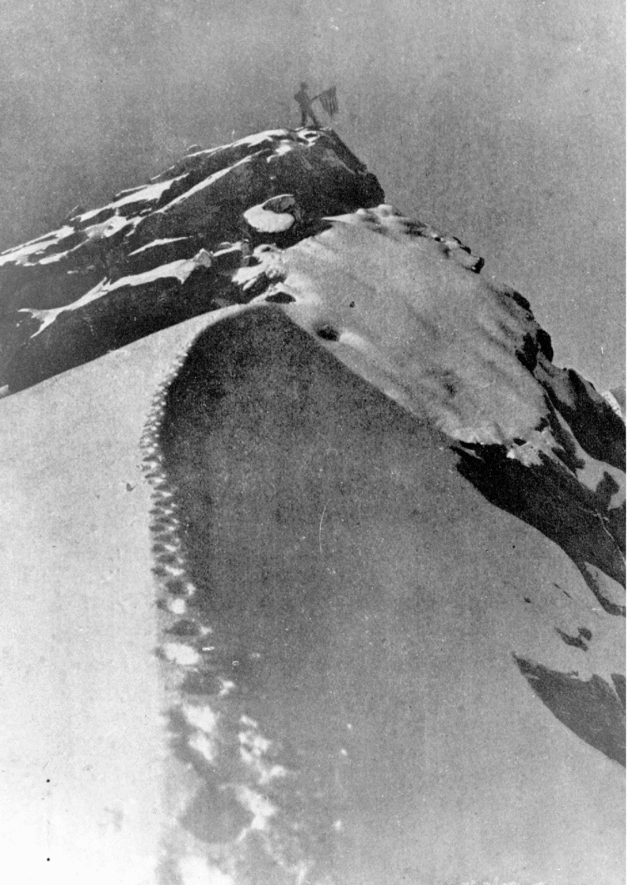
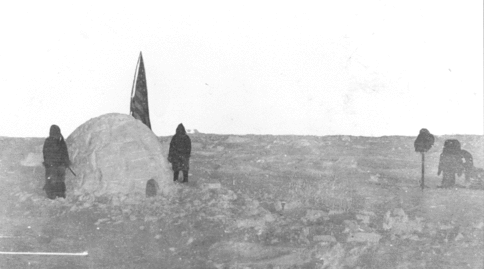
A surprising thing about the photographs is that Cook himself is not depicted. The main actor is present only as photographer. This would appear to be a misjudgement. In contrast, Amundsen's and Scott's photographs at the South Pole in 1911 and 1912 depicted team effort, but with main actors present. Cook used narrative to attempt to sustain a credible explorer-hero image. But again, it was not enough.
Fig. 11 is the cropped version of Cook's Mt McKinley summit photograph, used in his book To the top of the continent (1908: 227), and featuring one of his companions.
The top of our continent (Cook).
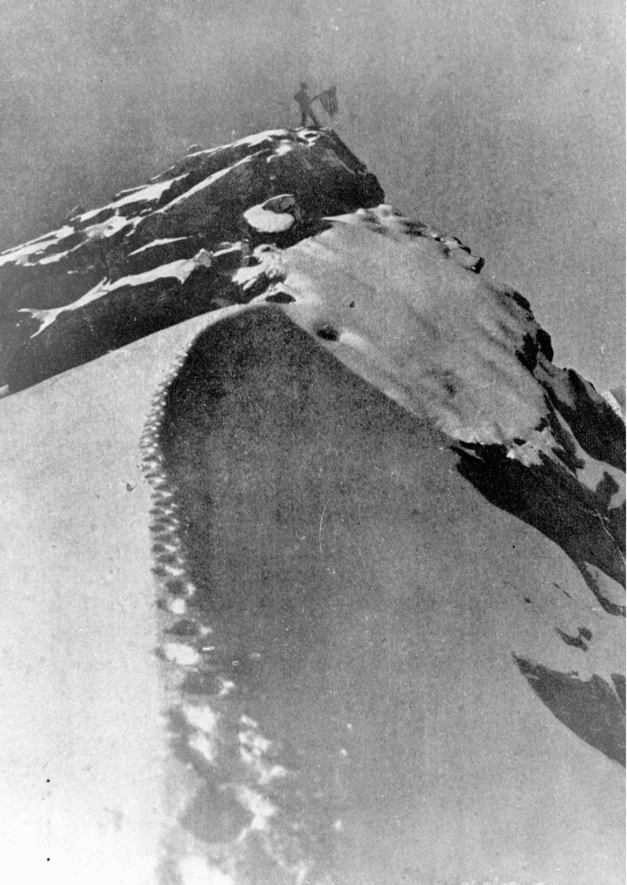
The patriotic achievement denoted by the flag was an important aspect of Cook's persona. He had taken an American flag to Antarctica. But for effective publicity purposes, he needed to be in the photograph with it.
The Mount McKinley claim had additional importance because its credibility, or lack of it, affected the assessment of Cook's North Pole claim three years later (Robinson Reference Robinson, Kaplan and Peck2013: 53). Once again, his patriotism was on show: ‘pinning the Stars and Stripes to a tent-pole, I asserted the achievement in the name of the ninety millions of countrymen who swear fealty to that flag. And I felt a pride as I gazed at the white-and-crimson barred pinion, a pride which the claim of no second victor has ever taken from me’ (Cook Reference Cook1912b: 287).
His two Inuit companions presumably did not know how to use the camera, but he could have photographed himself in the moment of conquest. It is noted that, similarly, Robert Peary does not appear in photographs allegedly taken at the North Pole, and that there may be good reasons for the absence of the leaders, who may have preferred to be in control of their photographs’ content. But the public response to the achievement was something Cook had looked forward to for years: ‘The public wants the Pole and nothing short of it . . . The hero-worshippers are ready’ (Cook Reference Cook1900c: 419). A self-photograph at the point of achievement would have been ideal. Instead, he produced photographs of his companions (Fig. 12).
First camp at the Pole, 21 April 1908 (Cook).

His polar explorer-hero image was becoming less focused, partly because he was losing control of the way he was presented in published material. The portraits in editions of To the top of the continent and My attainment of the Pole, probably chosen not by Cook, but by the publishers, are half-length studio photographs taken from around 1908. They represent him more as the doctor than the explorer. His anti-modern self-representation had always been supported by a very modern and commercial approach to self-marketing on lecture circuits and in the popular press, and the courting of wealthy sponsors. He had also commonly identified his name with his original profession, authoring his books and articles as ‘Dr. Frederick A. Cook’ or ‘Frederick A. Cook, M.D.’ In the climactic years around the Mt McKinley and North Pole claims, the medical persona emerges more strongly in visual representation. The image of the sound, rational, medical-scientific man buttresses the authority of his claims in the western discursive context. But as Robinson (Reference Robinson, Kaplan and Peck2013: 54, 58) has suggested, in Cook's apparent rejection of modern civilisation, he ‘fit an increasingly common profile of behavior at the turn of the century . . . [He was] a figure of his age’, and when publishers moved away from the rugged frontiersman image, they may have misread the public appetite.
Conclusion
Cook's success in constructing a polar explorer-hero image owed much to his use of photographs. He was a skilful assessor of the public's appetite for heroic imagery, and he fashioned his visual representations accordingly. In the tumultuous years around the major claims of his life, his shrewdness regarding the image, and his control over it, appears to have faltered. The decisions he made during that time may never be understood. As Amundsen would later put it, Cook was a psychological enigma (Bryce Reference Bryce, Decleir and De Broyer1998). In the end, his photography also contributed to his downfall.
Acknowledgements
Photographs are reproduced courtesy of the Byrd Polar Research Center Archival Program, Frederick A. Cook Society Records at Ohio State University.