Introduction
In the last 20 years, the worldwide prevalence of suicide has decreased by 36%. This reduction was observed in all regions of the globe, except for the Americas, which registered a 17% increase in the same period (World Health Organization, 2021). Although suicide occurs among individuals of all age groups (Bachmann, Reference Bachmann2018), suicidal behaviors are most prevalent among adolescents and young adults and are the fourth leading cause of death among people aged 15–29 years (World Health Organization, 2021). Within this age group, due to the various stressors characteristic of the academic environment, university students are particularly susceptible to the development of mental disorders (Demenech, Oliveira, Neiva-Silva, & Dumith, Reference Demenech, Oliveira, Neiva-Silva and Dumith2021b; Ibrahim, Kelly, Adams, & Glazebrook, Reference Ibrahim, Kelly, Adams and Glazebrook2013; Pacheco et al., Reference Pacheco, Giacomin, Tam, Ribeiro, Arab, Bezerra and Pinasco2017). Consequently, the frequency of suicidal behavior tends to be higher in this population. It is estimated that approximately a quarter of university students around the world present suicidal ideation at some point in their lives, and 10.6% in the previous 12 months (Mortier et al., Reference Mortier, Cuijpers, Kiekens, Auerbach, Demyttenaere, Green and Bruffaerts2018). In Brazil, a recent meta-analysis identified that suicidal behaviors are present in almost one in 10 undergraduate students in the country (Demenech et al., Reference Demenech, Oliveira, Neiva-Silva and Dumith2021b).
However, this complex scenario may have worsened. The coronavirus disease 2019 (COVID-19) pandemic has negatively impacted populations across the globe (Hiscott et al., Reference Hiscott, Alexandridi, Muscolini, Tassone, Palermo, Soultsioti and Zevini2020), and the short-, medium-, and long-term consequences are not yet fully understood. The environment of uncertainty, high numbers of illnesses and deaths, and the individual and collective consequences arising from economic and political instability seem to have implications for mental health, such as increased levels of anxiety, stress, and depression (Cullen, Gulati, & Kelly, Reference Cullen, Gulati and Kelly2020; Hiscott et al., Reference Hiscott, Alexandridi, Muscolini, Tassone, Palermo, Soultsioti and Zevini2020; Planchuelo-Gómez, Odriozola-González, Irurtia, & Luis-García, Reference Planchuelo-Gómez, Odriozola-González, Irurtia and Luis-García2020). The contingency measures adopted during the pandemic, such as the need to wear a mask and social distancing, have radically changed the configuration of people's lives during this period (Hiscott et al., Reference Hiscott, Alexandridi, Muscolini, Tassone, Palermo, Soultsioti and Zevini2020), in addition to the increase in unemployment, reductions in family income, and growth in food insecurity (Neves et al., Reference Neves, Machado, Oliveira, Moreno, Medeiros and Vasconcelos2021). In the university context, specific changes have also impacted undergraduate students, among which the suspension of face-to-face activities, adoption of online education models, and delay in the academic calendar stand out (Deng et al., Reference Deng, Zhou, Hou, Silver, Wong, Chang and Huang2021).
Brazil was one of the countries hardest hit by the health crisis (Ferigato et al., Reference Ferigato, Fernandez, Amorim, Ambrogi, Fernandes and Pacheco2020), with hundreds of thousands of deaths due to the disease against the backdrop of a health system under pressure (Noronha et al., Reference Noronha, Guedes, Turra, Andrade, Botega, Nogueira and Ferreira2020) and a generalized state of social unrest. Undergraduate students represent a group that is susceptible to social change; thus, the negative effects of the pandemic are expected to rapidly affect these individuals. Consequently, the mental health implications of the current health crisis may also impact this subgroup, as suggested in recent studies (Kecojevic, Basch, Sullivan, & Davi, Reference Kecojevic, Basch, Sullivan and Davi2020; Kibbey, Fedorenko, & Farris, Reference Kibbey, Fedorenko and Farris2021; Lee, Jeong, & Kim, Reference Lee, Jeong and Kim2021). It is possible that a greater number of undergraduates is at risk of suicide. Therefore, the objective of this study was to evaluate changes in the suicide risk rate from the period before to during the COVID-19 pandemic, as well as the factors associated with this outcome among Brazilian undergraduate students.
Methods
Study design and locations
The survey ‘Health and Wellness of Undergraduate Students’ (SABES-Grad) was conducted in two stages: (1) a face-to-face unicentric cross-sectional study in 2019 and (2) an online multicenter cross-sectional study in 2020/2021. The 2019 unicentric data collection was carried out at the Federal University of Rio Grande (FURG), located in the municipality of Rio Grande/RS, southern Brazil. For multicenter data collection, in addition to FURG, undergraduates were included from the Fluminense Federal University (UFF, Niterói/RJ, southeast region), Federal University of Mato Grosso (UFMT, Cuiabá/MT, central-west region), Amazonas State University (UEA, Manaus/AM, northern region), and Federal Rural University of Pernambuco (UFRPE, Recife/PE, northeast region). The participating universities were chosen for convenience, with one located in each of the five regions of Brazil, to include the social, economic, demographic, and cultural diversity existing in the country to the greatest extent possible. Details about methodological procedures of the SABES-Grad study can be found elsewhere (Demenech et al., Reference Demenech, Neiva-Silva, Brignol, Marcon, Lemos, Tassitano and Dumith2021a).
Target population and eligibility criteria
The target population of the study was undergraduates from participating universities. The inclusion criteria were being 18 years of age or older at the time of data collection and being formally enrolled in one of the participating institutions in the year of the research. Individuals who had given up or suspended enrollment at the time of the research and people with physical and/or cognitive limitations that made it impossible to understand and complete the self-administered questionnaire were considered ineligible. Participants were volunteers and did not receive any type of compensation.
Sample calculation
Two sample size calculations were performed: (1) for the descriptive study and (2) for the analysis of associated factors. The first sample calculation indicated that at least 847 participants were needed in each institution [parameters: expected prevalence of 15% risk of suicide, margin of error of 3 percentage points, power of 80%, significance level of 5%, with an added 10% for possible losses and refusals and a design effect (deff) of 1.5]; the second sample calculation, in turn, indicated that a sample of 1089 respondents per university was necessary (parameters: exposed/nonexposed ratio 1:3, prevalence ratio of 2.0, power of 80%, significance level of 5%, with an added 10% for possible losses and refusals, 15% for control of confounders, and a deff of 1.5).
Variables and instruments
To characterize the risk of suicide in both data collection periods, an adapted self-administered version of the suicide section of the Mini International Neuropsychiatric Interview questionnaire was used. Participants who scored 10 points or more on this scale were considered to be at a high risk of suicide (Amorim, Reference Amorim2000).
The independent variables of the study, also collected in the same way in both the 2019 and 2020/2021 studies, were sex, sexual orientation, age, race and ethnicity, per capita income, housing status (lives with family members, lives alone, lives with friends/peers), housing quality (better = adequate access to energy, treated water, sewage, and garbage collection; worse = lack of adequate access to at least one of these services), food insecurity [through a reduced version of the Brazilian Food Insecurity Scale – EBIA (Segall-Corrêa, Marin-León, Melgar-Quiñonez, & Pérez-Escamilla, Reference Segall-Corrêa, Marin-León, Melgar-Quiñonez and Pérez-Escamilla2014)], social support (low, medium, or high), through the Social Support Scale (Griep, Chor, Faerstein, Werneck, & Lopes, Reference Griep, Chor, Faerstein, Werneck and Lopes2005; Zanini, Peixoto, & Nakano, Reference Zanini, Peixoto and Nakano2018), desired course on entry to university, satisfaction with current course, and physical activity in the previous week (if any activity was performed on at least one day).
The presence of clinically relevant symptoms of generalized anxiety was measured using the General Anxiety Disorders-7 (GAD-7) (Moreno et al., Reference Moreno, DeSousa, Souza, Manfro, Salum, Koller and Crippa2016) instrument. Depressive symptomatology was measured with the Patient Health Questionnaire-9 (PHQ-9) (Munhoz, Nunes, Wehrmeister, Santos, & Matijasevich, Reference Munhoz, Nunes, Wehrmeister, Santos and Matijasevich2016; Santos et al., Reference Santos, Tavares, Munhoz, Almeida, Silva, Tams and Matijasevich2013). In addition, stress levels were evaluated using the Perceived Stress Scale-14 (PSS-14) (Luft, Sanches, Mazo, & Andrade, Reference Luft, Sanches, Mazo and Andrade2007).
For the 2020/2021 data collection of the multicenter stage of the study, information about the COVID-19 pandemic and its implications was also collected, namely, the number of days for which the individual had left their home in the previous 2 weeks, the number of days that the individual accessed information about the pandemic in the previous week, the impacts of the pandemic on family income, the presence of any risk factor for aggravation of COVID-19 [age (65 years or older), hypertension, diabetes, high cholesterol or triglycerides, heart disease, history of stroke, cancer, respiratory problems, and/or obesity], COVID-19 infection, concern about delay in graduation due to the COVID-19 pandemic, COVID-19 infection of a close person, and death of a close person due to COVID-19. In addition, the fear of COVID-19 was evaluated through the Fear of Covid-19 Scale (little, moderate, or very afraid) (Faro, Silva, Santos, & Feitosa, Reference Faro, Silva, Santos and Feitosa2020; Peres et al., Reference Peres, Frick, Queliz, Fernandes, Priolo-Filho, Pereira and Cortez2021).
Logistics and procedures
Data collection in 2019
The 2019 fieldwork was conducted only at FURG during the months of September and November. The classes were randomly selected and visited in a standardized way, with initial presentation of the research and ethical and confidentiality measures. For those who agreed to participate, a Free and Informed Consent Form was delivered, followed by the questionnaire. Each class was visited at least twice, with new attempts being made in those with 10 losses or more after the second visit. Individuals who were not found or who refused to participate were considered lost. Data were double-entered by different professionals using EpiData 3.1 software (Christiansen & Lauritsen, Reference Christiansen and Lauritsen2010).
Data collection in 2020
Fieldwork at the five universities took place between September 2020 and May 2021. The form was made available on the Research Electronic Data Capture (REDCap) platform (Harris et al., Reference Harris, Taylor, Thielke, Payne, Gonzalez and Conde2009). Initially, invitations were sent to all students with active enrollments through the university systems, followed by emails to the coordinators and to the students themselves. Wide dissemination was also made on the social networks of the participating institutions and research groups involved in the investigation, as well as invitations through instant messaging applications. All forms with adequate completion of the first section on the link between the participant and the university were considered valid. The questionnaire was available at each institution for 2 months and could be left for another 2 months if the university had not reached the number of participants indicated in the sample calculation.
Statistical analysis
First, univariate analyses were carried out to describe the sample according to exposure categories and to calculate the prevalence of a high risk of suicide. Subsequently, bivariate analyses were carried out to evaluate significant differences in the structures of the FURG sample between 2019 and 2020/2021 and between the samples of the five universities in the 2020/2021 collection (χ2 test (for differences in the proportions in the categories of exposure) and the Kruskal–Wallis test (to measure differences in per capita income)). Interaction tests were used to measure the possible influence of exposure characteristics on the occurrence of severe suicide risk between stages one (2019) and two (2020/2021) in the single-center study, and among the five universities (FURG, UFF, UFMT, UEA, UFRPE) in the multicenter study.
Finally, to identify factors associated with the high risk of suicide in the context of the pandemic, multivariate analysis was conducted using Poisson regression with robust variance adjustment (Barros & Hirakata, Reference Barros and Hirakata2003) from a hierarchical model of analysis (Victora, Huttly, Fuchs, & Olinto, Reference Victora, Huttly, Fuchs and Olinto1997) with four levels: (1) socioeconomic position; (2) current conditions and academic variables; (3) implications of the COVID-19 pandemic; and (4) behavioral and mental health variables. The variables were selected using the backward method, with those with p value <0.2 remaining in the final adjusted model. The final adjusted model's p values were calculated using Benjamini–Hochberg correction for multiple comparisons (Benjamini & Hochberg, Reference Benjamini and Hochberg1995; Lee & Lee, Reference Lee and Lee2018). The results of these analyses are presented in terms of prevalence ratios (PRs), 95% confidence intervals (95% CIs), and p values. In addition, the interaction between participants' age and all variables in the model was tested due to the importance of this variable to suicide risk.
The analyses were performed using STATA 15 software (StataCorp, 2017). The estimates of the statistical analyses were calculated considering a significance level of 5% for two-tailed tests.
Ethical aspects
The 2019 study was approved under opinion 3.474.128 (CAAE: 5159119.1.1001.5324). The 2020/2021 study was approved under opinions 4.146.935 (FURG), 4.351.740 (UFF), 4.229.295 (UFMT), 4.417.328 (UFRPE), and 4.335.298 (UEA) (CAAE: 24520719.3.2003.5016). For both collections, those responsible received training in reception and mental health, and a team of psychologists was available at all times (in person or online) to attend any serious situations.
Results
A total of 6716 undergraduate students participated in the study. In the 2019 data collection, 996 people participated out of a total of 1169 eligible enrollments (response rate = 85.2%). In 2020/2021, 5720 undergraduates responded to the form, with 4822 completed questionnaires (response rate = 84.3%). The distribution of participants was 1437 from FURG (1209 completed, 84.1%), 1101 from UEA (933 completed, 82.3%), 1132 from UFF (977 completed, 86.3%), 1762 from UFMT (1450 completed, 82.3%), and 288 from UFRPE (253 completed, 87.9%). There were 1574 responses in September 2020 (27.4%), 858 in October 2020 (15.0%), 1373 in November 2020 (24.0%), 707 in December 2020 (12.3%), 415 in January 2021 (7.3%), 140 in February 2021 (2.5%), 507 in March 2021 (8.9%), 89 in April 2021 (1.6%), and 57 in May 2021 (1.0%). There were no significant differences between those with complete responses and those with loss of information for the suicide risk outcome.
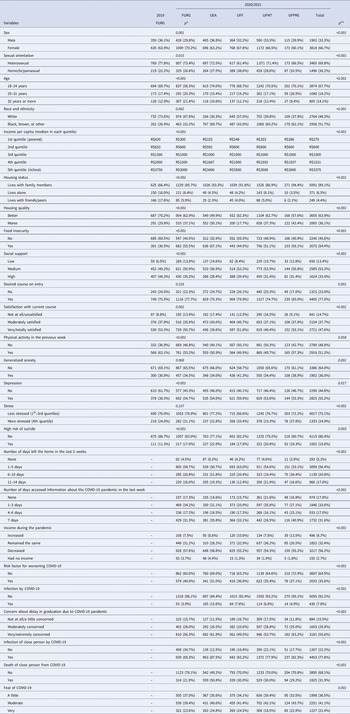
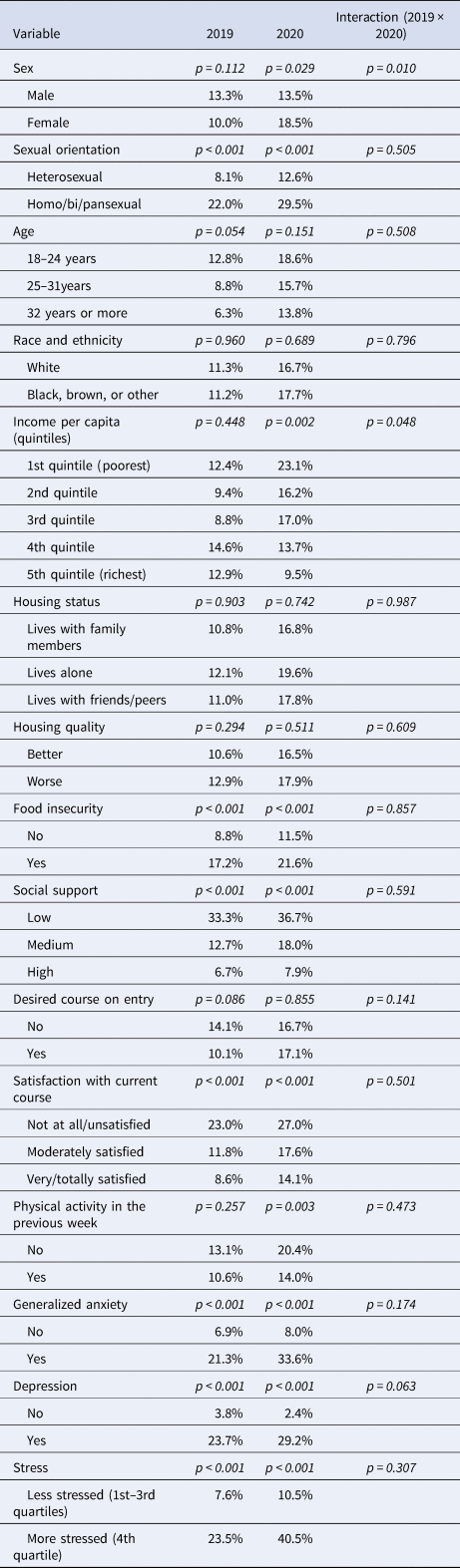
A change in the structure of FURG samples was observed between 2019 and 2020 (see Table 1). The prevalence of a high suicide risk increased from 11.3% (95% CI 9.3–13.3%) in 2019 to 17.0% (95% CI 15.0–19.0%) in 2020 (p < 0.001) (Table 1). Table 2 presents the interaction tests to assess which individual characteristics might have contributed to this phenomenon. The results suggest that the increase in high suicide risk occurred especially among females (10.0% v. 18.5%, p of interaction = 0.010), and among poorer individuals (12.4% v. 23.1%, p of interaction = 0.048).
Description of the sample of undergraduate students from the Federal University of Rio Grande (FURG) in 2019 (N = 996) and of the institutions participating in the multi-center study in 2020/2021: FURG (N = 1437), Amazonas State University (UEA) (N = 1101), Fluminense Federal University (UFF) (N = 1132), Federal University of Mato Grosso (UFMT) (N = 1762), and Federal Rural University of Pernambuco (UFRPE) (N = 288)

SABES-Grad Study, Brazil, 2021.
Notes: *p value of the χ2 test to measure the difference in the proportions of the categories at FURG between 2019 and 2020; **p value of the χ2 test to measure the difference in the proportions of the categories between the five universities in the 2020/2021 collection. There are variations in the absolute values of valid responses according to the categories in each institution, due to information lost from incomplete filling out of some blocks of the questionnaire.
Prevalence of high risk of suicide among undergraduate students at the Federal University of Rio Grande (FURG) according to exposure categories in the 2019 (N = 996) and 2020 (N = 1437) collections

SABES-Grad Study, Brazil, 2021.
Returning to Table 1, it can be seen that participants in the 2020/2021 sample were mostly female (66.7%), heterosexual (69.8%), aged 18–24 (67.7%), lived with family members (89.1%), and had adequate access to housing services (63.9%). The proportion of individuals with black, brown, or other race and ethnicity was slightly higher (51.7%). Twenty-three percent of the undergraduates were not on their desired course, and 14.7% reported being not at all/slightly satisfied with the current course. The presence of generalized anxiety was observed among 36.0% of the sample, and 55.2% had clinically relevant depressive symptoms. The prevalence of a high suicide risk among participants was 19.6% (95% CI 18.5–20.7%), with the lowest prevalence in FURG (17.0%) and the highest prevalence in UEA (22.9%) (Table 1). Although there was a wide period of data collection in this phase, prevalence of high suicide risk remained stable throughout all months (p = 0.633).
Considering the variables related to the COVID-19 pandemic, 5.2% reported having been confined in the previous 2 weeks, 31.6% sought information about the health crisis every day of the previous week, and 58.9% had reduced family income or had no income during the pandemic. Approximately one-third reported having a risk factor for the worsening of COVID-19 cases, and 7.8% had contracted the disease. More than half of the sample reported being very/extremely worried about the delay in graduation due to the contingency measures of the pandemic, 77.8% had a close person who contracted COVID-19, 31.9% lost a close person due to complications from the disease, and 22.4% were very afraid of COVID-19 (Table 1).
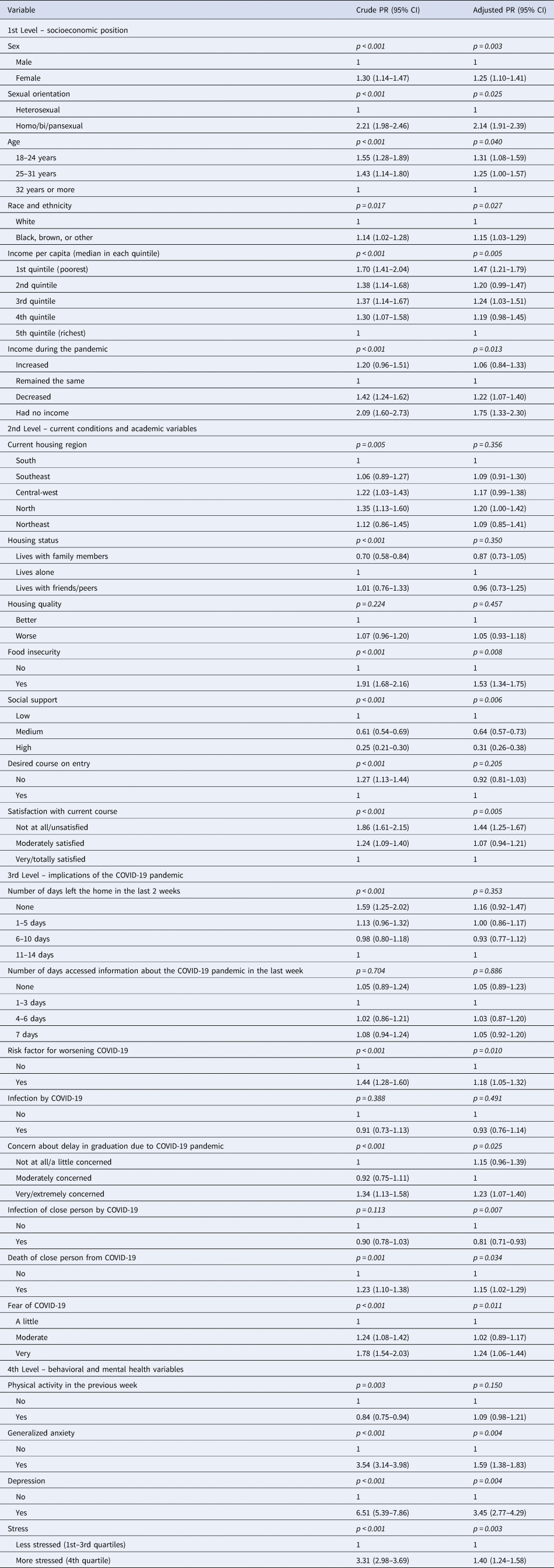
The results of the crude and adjusted analysis for factors associated with the high risk of suicide (Table 3) showed that, after adjustments, females; homo/bi/pansexuals; younger individuals; those with black, brown, or other race and ethnicity; those who were poorer, had reduced income, or had no income during the pandemic; those experiencing food insecurity; those who were not satisfied with their current course; those who had a risk factor for severe cases of COVID-19; those who were concerned about the delay in graduation; and those who had a close person who died due to COVID-19 and were very afraid of COVID-19 were more likely to be at a high risk of suicide. The presence of generalized anxiety, depressive symptoms, and high levels of stress were also factors associated with a high risk of suicide. The protective factors for a high suicide risk were having and high social support, as well as reporting having had a close person become infected with COVID-19. Tests of the interaction of age within the model only showed that the increased probability of high risk of suicide observed in women occurred mainly among younger ones (18–24 years) (p = 0.017).
Crude and adjusted prevalence ratios of factors independently associated with suicide risk among Brazilian undergraduates

SABES-Grad Study, Brazil, 2021.
Notes. PR, prevalence ratio; 95% CI, 95% confidence interval. Multivariate analysis using Poisson regression with robust variance adjustment according to a four-level hierarchical model.
Although the sample structures were relatively similar, due to the sample size, there were significant differences between universities for all exposure categories, except physical activity (p = 0.058). However, among the associated factors, only sex (p of interaction = 0.010) showed significant interaction (data not shown in tables).
Discussion
The results of the current work show empirical evidence of a temporal and multicultural nature on the relationships between factors intrinsic to the COVID-19 pandemic and the production of psychological suffering, especially on the risk of suicide. Data from 21 high- and upper-middle-income countries indicate that suicide numbers remained largely unchanged or declined (Pirkis et al., Reference Pirkis, John, Shin, DelPozo-Banos, Arya, Analuisa-Aguilar and Spittal2021). There was also a decrease in suicide rates in Brazil, but with an excess of suicide mortality among different age groups and sexes from the north and northeast region of the country (Orellana & Souza, Reference Orellana and Souza2022). Regarding university students, there were increases in suicide rates in Japan (Fuse-Nagase et al., Reference Fuse-Nagase, Marutani, Tachikawa, Iwami, Yamamoto, Moriyama and Yasumi2021) and in suicide ideation in Germany (Brailovskaia, Teismann, Friedrich, Schneider, & Margraf, Reference Brailovskaia, Teismann, Friedrich, Schneider and Margraf2021). Although there are studies investigating suicide risk among Brazilian undergraduates, we were not able to identify investigations that have explored the trends in the rates of this outcome. Therefore, the increased proportion of high suicide risk in this study consists of a novel finding.
The increase in the prevalence of a high suicide risk in the prepandemic period and during the period occurred in part due to the significant increase among women. When examining the results of the multicenter data, female subjects were 25% more likely to present a high suicide risk than males, especially among younger ones. During the pandemic, due to social distancing measures, women seem to be more exposed to unemployment and loss of income (Furno, Fogo, Toneto, Cardomingo, & Paes, Reference Furno, Fogo, Toneto, Cardomingo and Paes2021), in addition to more frequently having taken on housework and child care (tasks that have become more difficult due to social isolation) (Connor et al., Reference Connor, Madhavan, Mokashi, Amanuel, Johnson, Pace and Bartz2020; Furno et al., Reference Furno, Fogo, Toneto, Cardomingo and Paes2021). As a consequence, there may be an increase in physical and psychological exhaustion, making it difficult to engage in academic and leisure activities, which could lead to thoughts about death and suicide.
Participants with a ‘homo/bi/pansexual’ orientation had the second highest effect measure for a high risk of suicide (PR = 2.14). A greater risk of psychological suffering is systematically identified in the lesbian, gay, bisexual, transsexual, and other gender diversities and affective expressions (LGBTQIA+) populations due to discrimination and stigma (King et al., Reference King, Semlyen, Tai, Killaspy, Osborn, Popelyuk and Nazareth2008; Marcon et al., Reference Marcon, Monteiro, Ballester, Cassidy, Zimerman, Brunoni and Passos2020; Santos, Marcon, Espinosa, Baptista, & Paulo, Reference Santos, Marcon, Espinosa, Baptista and Paulo2017). Additionally, there is a notable increased probability of a high risk of suicide among undergraduates with black, brown, or other race and ethnicity. In addition to material losses (income and work), the rates of illness and death were also greater in these subgroups due to the context of structural vulnerability experienced by these people in Brazil (Baqui, Bica, Marra, Ercole, & van der Schaar, Reference Baqui, Bica, Marra, Ercole and van der Schaar2020). It is worth highlighting the suffering imposed by the racism present in Brazil and in many countries, which can be observed in the protests triggered in the midst of the health crisis (Franz, Milner, & Braddock, Reference Franz, Milner and Braddock2021; Kampmark, Reference Kampmark2020). Together, these factors can contribute to an increase in the emotional exhaustion of these individuals and, consequently, the risk of suicide. Younger individuals were also more likely to be at a high risk of suicide than older individuals. Suicidal behaviors are more prevalent among teenagers and young adults (Bachmann, Reference Bachmann2018; World Health Organization, 2021). It is plausible that older participants have, due to greater life experience, a larger repertoire of coping strategies to deal with the challenges imposed by the pandemic.
Labor and economic impacts have been highlighted as some of the most severe implications of the pandemic (Kathirvel, Reference Kathirvel2020; Pak et al., Reference Pak, Adegboye, Adekunle, Rahman, McBryde and Eisen2020). It was observed that the risk of suicide significantly increased among the poorest in the period from before to during the pandemic. When examining multicenter data, the poorest individuals were 47% more likely to be at risk of suicide than the richest. Furthermore, undergraduates whose family incomes decreased or who were left without an income were also at an increased risk of suicide. Income most directly impacts people's lives, as it influences quality of life, material circumstances, and the general sense of security (Shim et al., Reference Shim, Compton, Manseau, Koplan, Langheim, Powers, Compton and Shim2015; Solar & Irwin, Reference Solar and Irwin2010). It is plausible that undergraduates who came from poverty as well as those who ended up with reduced income both suffered from the difficulties in facing the pandemic imposed by the deprivation of resources. Participants with food insecurity (a subgroup that almost doubled from one year to the next) also had a higher risk of suicide. Insecurity regarding basic nutritional capacity is detrimental to mental health, either through the psychological effects of fear, worry, and weakness (Henry, Reference Henry2017; Shayo & Lawala, Reference Shayo and Lawala2019) or the physiological effects resulting from the deprivation of a nutrient-rich diet (Davison, Marshall-Fabien, & Tecson, Reference Davison, Marshall-Fabien and Tecson2015).
Students who were not at all/little satisfied with their current degree programs were also more likely to be at a high risk of suicide. Being satisfied with the course contributed to the individual being engaged with curricular activities and being more willing to face the challenges arising from graduation (including in the context of a pandemic) (Lamis, Ballard, May, & Dvorak, Reference Lamis, Ballard, May and Dvorak2016). Dissatisfaction with the course could lead to dissatisfaction with life, since for most participants, the current graduation was the main project under development. The high risk of suicide also appeared to be associated with greater concern about the delay in graduation. It is possible that this occurred especially among those with greater socioeconomic vulnerability, for whom this delay could represent a longer time with difficult investments of time and money until completing their graduation course (Machado, Bonan, Perez, & Martelli Júnior, Reference Machado, Bonan, Perez and Martelli Júnior2020). On the other hand, participants with medium or high levels of social support were less likely to be at a high risk of suicide. An effective social support network helps in coping with problems, resulting in better mental health outcomes (Grey et al., Reference Grey, Arora, Thomas, Saneh, Tohme and Abi-Habib2020; Saltzman, Hansel, & Bordnick, Reference Saltzman, Hansel and Bordnick2020).
Participants who had not left their home any day in the previous 2 weeks were 59% more likely to be at a high risk of suicide in the crude analysis. However, this association lost its effect when the variable risk factor for the aggravation of COVID-19 cases was inserted into the adjusted model (data not shown). This result suggests that the high risk of suicide is not necessarily due to increased risk factors but rather to the behavior of isolation as a way of avoiding contact with the virus (Douglas, Katikireddi, Taulbut, McKee, & McCartney, Reference Douglas, Katikireddi, Taulbut, McKee and McCartney2020; Plagg, Engl, Piccoliori, & Eisendle, Reference Plagg, Engl, Piccoliori and Eisendle2020; Usher, Bhullar, & Jackson, Reference Usher, Bhullar and Jackson2020). Another result supports this argument, since undergraduates who were very afraid of COVID-19 also had a higher risk of suicide. Several studies have pointed out the relationship between fear of COVID-19 and psychological suffering (Gritsenko et al., Reference Gritsenko, Skugarevsky, Konstantinov, Khamenka, Marinova, Reznik and Isralowitz2020; Zolotov, Reznik, Bender, & Isralowitz, Reference Zolotov, Reznik, Bender and Isralowitz2020). Worry can contribute to the development or reappearance of stress, anxiety, and depressive disorders, increasing the chance of suicidal behavior (Arora, Jha, Alat, & Das, Reference Arora, Jha, Alat and Das2020; Goyal, Chauhan, Chhikara, Gupta, & Singh, Reference Goyal, Chauhan, Chhikara, Gupta and Singh2020).
COVID-19 infection did not demonstrate an association with suicide risk in either the crude or adjusted analyses. Infection of a close person, in turn, exerted a protective factor (PR = 0.81), while the death of a close person was associated with a greater probability of a high suicide risk (PR = 1.15). It is noteworthy that, when the variable infection of a close person was removed from the model, the death of a close person lost its significant association (and vice versa) (data not shown). For those who had close people who were infected, but who did not die, the perception of the risk of COVID-19 and the pandemic may have been reduced, while for those who had deaths among close people, the perception of the risk may have intensified (Dyregrov, Fjærestad, Gjestad, & Thimm, Reference Dyregrov, Fjærestad, Gjestad and Thimm2021; Yang et al., Reference Yang, Gong, Sassine, Morsa, Tchogna, Drouin and Jantchou2020), increasing psychological suffering and the risk of suicide.
Elevated levels of stress, generalized anxiety symptoms, and especially depressive symptoms (the study's highest measure of effect, PR = 3.45) were associated with a high risk of suicide. It is believed that the proportion of people with common mental disorders increased during the pandemic (Daly, Sutin, & Robinson, Reference Daly, Sutin and Robinson2021; Debowska, Horeczy, Boduszek, & Dolinski, Reference Debowska, Horeczy, Boduszek and Dolinski2020; Feter et al., Reference Feter, Caputo, Doring, Leite, Cassuriaga, Reichert and Rombaldi2021), and that cases with preexisting depressive symptoms may have aggravated. People with high levels of stress and anxiety can also develop psychopathologies that can lead to suicidal behavior (Barlow, Durand, & Hofmann, Reference Barlow, Durand and Hofmann2017). Exploratory analyses within the regression model itself indicated that anxiety, stress, and depression mediated the association between the pandemic variables ‘risk factor for worsening COVID-19’, ‘concern about graduation delay’, ‘death of a close person due to COVID-19’, and ‘fear of COVID-19’ and the high risk of suicide. Thus, it is plausible to suggest that the pandemic has had a direct impact on the mental health of Brazilian undergraduates, contributing to an increase in the risk of suicide in this population.
Finally, this investigation has limitations. First, the comparison of the 2019 sample at a single university with the 2020/2021 samples showed a difference in the sampling method and reduced generalization capacity, as it was a single-center study. Second, selection bias may have occurred in the 2020/2021 collection, as only people on the Internet who were willing to participate were included. Individuals with worsened mental health may be more prone to participate in mental-health-related surveys, overestimating the prevalence of such outcomes; also limiting comparisons between results from 2019 and 2020/2021 samples. Furthermore, there was no information regarding from which invitation channel participants accessed the survey, not allowing the understanding of its impact on selection bias. Third, one of the study's sites (UFRPE) did not reach a minimum sample size, not allowing single-site data analysis and diminishing the inclusion of the social and cultural diversity of the undergraduates from the northeast region. Lastly, there may have been survival bias, as the included data were from those who have thus far survived the pandemic.
Based on the results, we conclude that the severe risk of suicide increased from the period before to during the COVID-19 pandemic, mainly due to its increase among women and poorer individuals. Social, economic, material, academic, pandemic, and psychological determinants exerted important influences on the risk of suicide, which was present in approximately one in five Brazilian undergraduate students. Based on the results, the following recommendations are made: (a) strengthening of affirmative actions within the scope of student assistance; (b) development of collaborative services within universities (including student assistance and school physical and mental health services); (c) promotion of epidemiological research focused on mental health in universities; and (d) implementation of an institutional policy to address the risk of suicide in Brazilian universities.
Financial support
This research received no specific grant from any funding agency, commercial or not-for-profit sectors.
Conflict of interest
None.
Ethical standards
The authors assert that all procedures contributing to this work comply with the ethical standards of the relevant national and institutional committees on human experimentation and with the Helsinki Declaration of 1975, as revised in 2008.