Introduction
Out-of-hospital cardiac arrest (OHCA) is a leading cause of death in the United States, with over 326,000 deaths annually.Reference Mozaffarian, Benjamin and Go1 Emergency Medical Service (EMS) providers often initiate cardiopulmonary resuscitation (CPR) and Advanced Cardiac Life Support (ACLS) in the field. Depending on the outcome of the resuscitation, patients are either transported to the hospital or care is terminated in the field. As prehospital providers now approach a patient in cardiac arrest, they are faced with the challenge of maximizing outcomes in patients, where possible, while not extending futile care. Thus, EMS systems enact policies and protocols to help frontline personnel identify patients who would benefit from transport to the hospital and reduce unnecessary transports.Reference Morrison, Visentin and Kiss2,Reference Jordan, O’Keefe, Weiss, Cubberley, MacLean and Wolfson3
Efforts have been made to identify objective clinical criteria predictive of successful resuscitation to better guide prehospital care.Reference Sasson, Hegg, Macy, Park, Kellermann and McNally4-Reference Jaslow, Barbera, Johnson and Moore6 Recent studies have identified end-tidal carbon dioxide (EtCO2) as a predictor for resuscitative outcome.Reference Levine, Wayne and Miller7-Reference Eckstein, Hatch, Malleck, McClung and Henderson10 In particular, patients in prehospital cardiac arrest with EtCO2 greater than 10mmHg are almost five-times more likely to have return of spontaneous circulation (ROSC) than patients with EtCO2 less than 10mmHg.Reference Eckstein, Hatch, Malleck, McClung and Henderson10 Conversely, an EtCO2 less than 10mmHg is predictive of failure to obtain ROSC.Reference Levine, Wayne and Miller7
At the same time, over the last decade, many advances in prehospital cardiac arrest care have improved survival rates, with approximately 10% of patients surviving to discharge nationally.Reference Mozaffarian, Benjamin and Go1 In particular, progress has been made in improving neurologically-intact survival of OHCA patients with shockable rhythms.Reference Chan, McNally, Tang and Kellermann11,Reference Larribau, Deham, Niquille and Sarasin12 In fact, due to advances in CPR and other resuscitative performance, some EMS systems have reported substantial gains in the rate of survival for patients with Utstein criteria cardiac arrests, even after prolonged resuscitation, with ROSC occurring sometime far beyond the previously futile marker of 25 minutes.Reference Morrison, Visentin and Kiss2
Recently, the EMS agency serving this study’s municipality revised their termination of resuscitation protocol to incorporate these changes. The agency oversees prehospital care for an urban and suburban area encompassing approximately 47 square miles with over 1.5 million daytime inhabitants.13 The EMS system units are all staffed at Advanced Life Support (ALS) level and respond to approximately 115,000 calls per year. Patients can be transported to ten receiving hospitals, five of which are locally certified cardiac care centers capable of receiving ST-elevation myocardial infarction (STEMI) and OHCA patients.14 On January 30, 2017, a protocol change was made that extended the length of OHCA resuscitation from 25 to 40 minutes and added a requirement of persistent EtCO2 less than 5mmHg prior to termination of resuscitation.15,16 This study examines how patient transport rates, as well as patient outcomes, changed following the change in termination protocol.
Methods
Study Design
This study is a retrospective analysis utilizing data from the Cardiac Arrest Registry to Enhance Survival (CARES); CARES is a prospective registry established among 24 states and community hospitals in 18 additional states in the United States that collects demographic, dispatch, prehospital EMS, and hospital-based data on patients who suffer OHCA. This study uses data from 2016 and 2017 from one local reporting EMS system.Reference McNally, Stokes, Crouch and Kellermann17 The CARES registry is administered by the Department of Emergency Medicine at Emory University (Atlanta, Georgia USA), and supported by the Centers for Disease Control (Atlanta, Georgia USA) as a benchmarking and performance improvement tool for EMS systems to track interventions and outcomes for patients following OHCA.18 The Institutional Review Board at the University of California, San Francisco (USA), reviewed and approved this study (IRB number 18-24649).
Study Setting
This study population included patients aged 18 years or older treated for prehospital cardiac arrest in an urban EMS system from January 1, 2016 through December 31, 2017. Patients presenting from January 31, 2017 to the end of the study period were subject to the new termination protocol (Appendix A; available online only), while the remainder of patients were subject to the old protocol (Appendix B; available online only). The new protocol extended the required time of ALS interventions from 25 to 40 minutes and added a requirement of EtCO2 of less than 5mmHg prior to terminating resuscitation. If these requirements were not met, EMS was required to make base contact for physician consultation. Patients with presumed traumatic cardiac arrest etiology or patients for whom resuscitation was stopped for do-not-resuscitate status were excluded, as these aspects of the protocol were not revised.
Outcome Measures
The primary outcome of interest was transport to a receiving hospital. Secondary outcomes of interest included survival to hospital discharge and arrival to emergency department (ED) with ROSC.
Data Analysis
In this study, all analyses were performed using Stata 13/IC (Version 13.1; StataCorp; College Station, Texas USA; 2016). Patient demographics, clinical characteristics, and prehospital interventions were tabulated before and after the protocol change. To examine changes in rates of transport, survival, and arrival to the ED with ROSC before and after the protocol change, chi-square analysis was used to test unadjusted differences. An unadjusted analysis was also performed, stratified by Utstein factors for cases from cardiac etiologies utilizing chi-squared analysis.Reference Jacobs, Nadkarni and Bahr19
To further assess these outcomes following the protocol revision, an adjusted analysis was performed with logistic regression. The regression model included factors thought to potentially influence outcomes, namely the change in protocol, age, gender, race, socioeconomic status of the arrest location, presumed arrest etiology, initial cardiac rhythm, witnessed arrest, layperson CPR, medication administration, advanced airway interventions, and on-scene time. Due to the large number of missing values for on-scene time (34% overall; 40% before protocol change and 27% after) and race/ethnicity (28% overall; 24% before protocol change and 34% after), multiple imputation by chained equations was utilized to address these deficiencies, a standard practice when dealing with missing values.Reference White, Royston and Wood20,Reference Rubin and Schenker21 Regression analysis was performed on 20 imputation data sets, and the final result obtained via Rubin’s rules of recombination.
A power analysis was performed as part of this study’s design. To detect a 10-percentage point difference in rate of transport, the sample size required was 732. Similarly, the analysis yielded a sample size of 294 for a 10-percentage point difference in survival, and a sample size of 792 for a 10-percentage point difference in prehospital ROSC.
For this analysis, the arrest location, tabulated in the CARES database, was used as a proxy for patient socioeconomic status. The median individual income for the 27 ZIP codes comprising the county served by the EMS agency were obtained from the 2016 American Community Survey, a demographic dataset produced by the United States Census Bureau (Suitland, Maryland USA).22 The ZIP codes were then stratified into tertiles by median income, and this stratification by ZIP code is used as a proxy for socioeconomic status.
Results
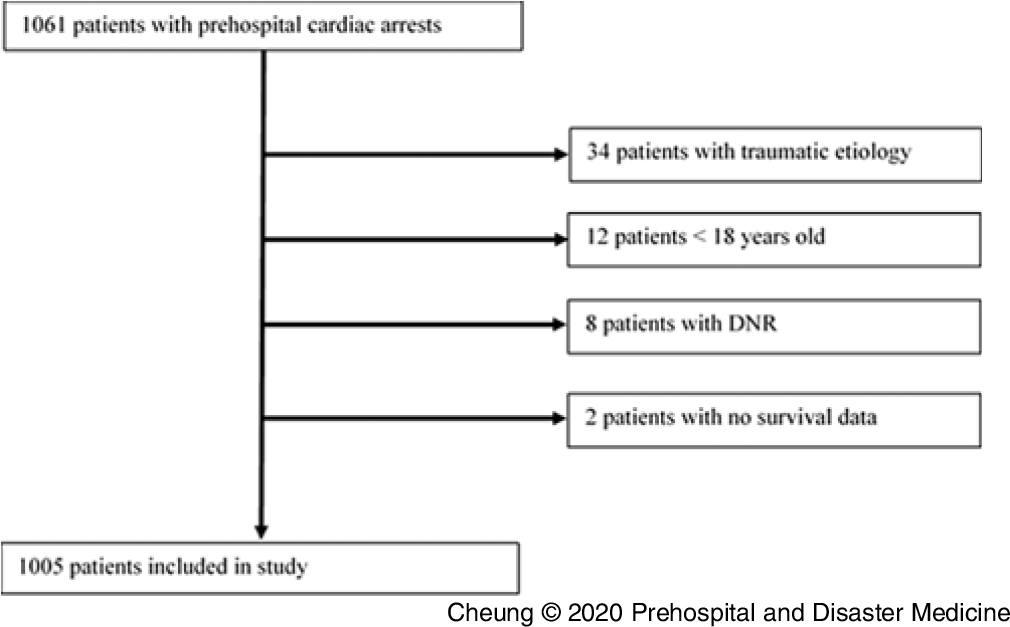
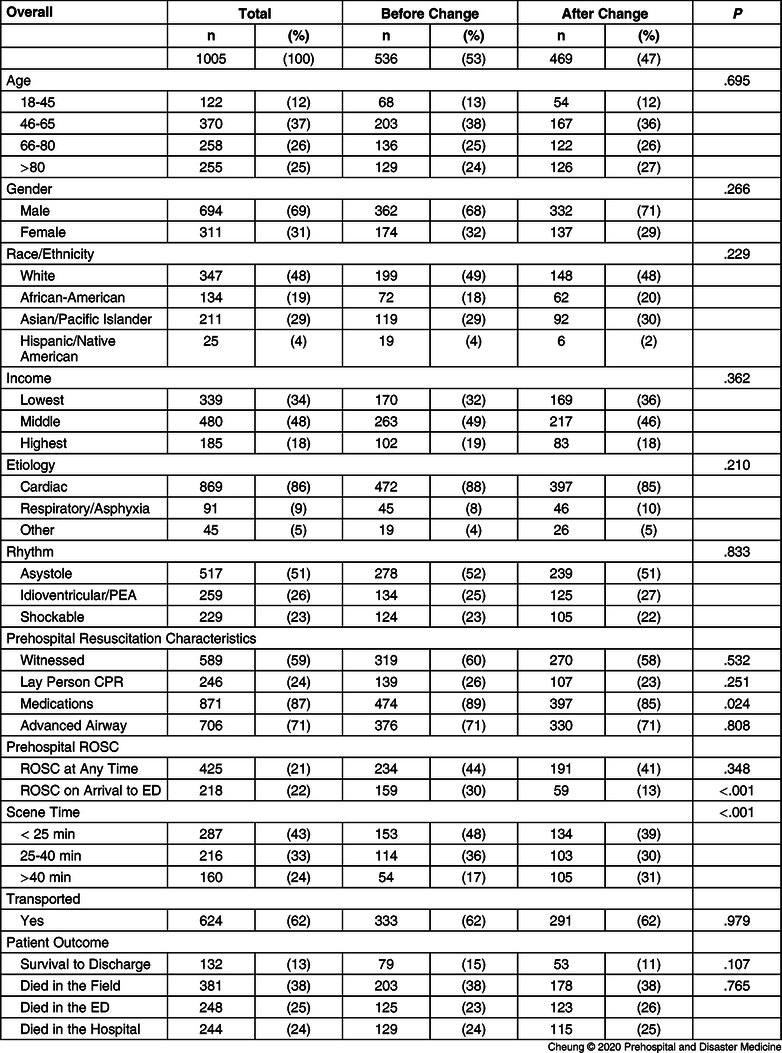
Based on the inclusion criteria, this study included 1,005 adult patients who suffered OHCA in 2016-2017 within an urban EMS system in California (Figure 1). Of these patients, 536 patients (53%) were treated using the old protocol, and 469 patients (47%) were treated after the modification. Demographic information for these patients was largely not significantly different between the two groups and are summarized in Table 1. The majority of patients suffered cardiac arrest, presumed to be due to a cardiac etiology (86%), and were found to be in asystole (51%) on EMS arrival. Fifty-nine percent (59%) of patients had witnessed arrested, but only 25% received layperson CPR. Emergency Medical Services personnel administered medications (87%) and performed advanced airway maneuvers (71%), such as intubation or insertion of a supraglottic airway, to the majority of patients. Forty-three percent (43%) of resuscitations lasted less than 25 minutes, while 24% lasted greater than 40 minutes. The majority of patients did not achieve ROSC in the field (58%), with only 22% arriving to the ED with ROSC. Sixty-two percent (62%) of patients were transported to hospitals, and 13% of patients survived to discharge.
Study Exclusion Criteria.

Summary of Patient and Prehospital Characteristics

Abbreviations: CPR, cardiopulmonary resuscitation; ED, emergency department; PEA, pulseless electrical activity; ROSC, return of spontaneous circulation.
Case characteristics before and after the change of resuscitation termination protocol and chi-squared unadjusted analysis are also summarized in Table 1. Overall, not many characteristics were significantly different. However, following the protocol change, there was a statistically significant decrease in the percentage of patients receiving medications (89% versus 85%; P <.001). In addition, a significantly greater proportion of resuscitations lasted over 40 minutes (17% versus 31%; P <.001) following the protocol change, which was consistent with the new protocol requirements.
The primary outcome for this study was the overall rate of transport to a hospital, and no significant difference was found following the protocol change (62% versus 62%; P = .979). A secondary outcome for this study was the rate of survival to discharge, which decreased following the protocol change (15% versus 11%; P = .107), but this difference was not statistically significant. Another secondary outcome was arrival to the ED with ROSC, with a statistically significant decrease following the protocol change (30% versus 13%; P <.001).
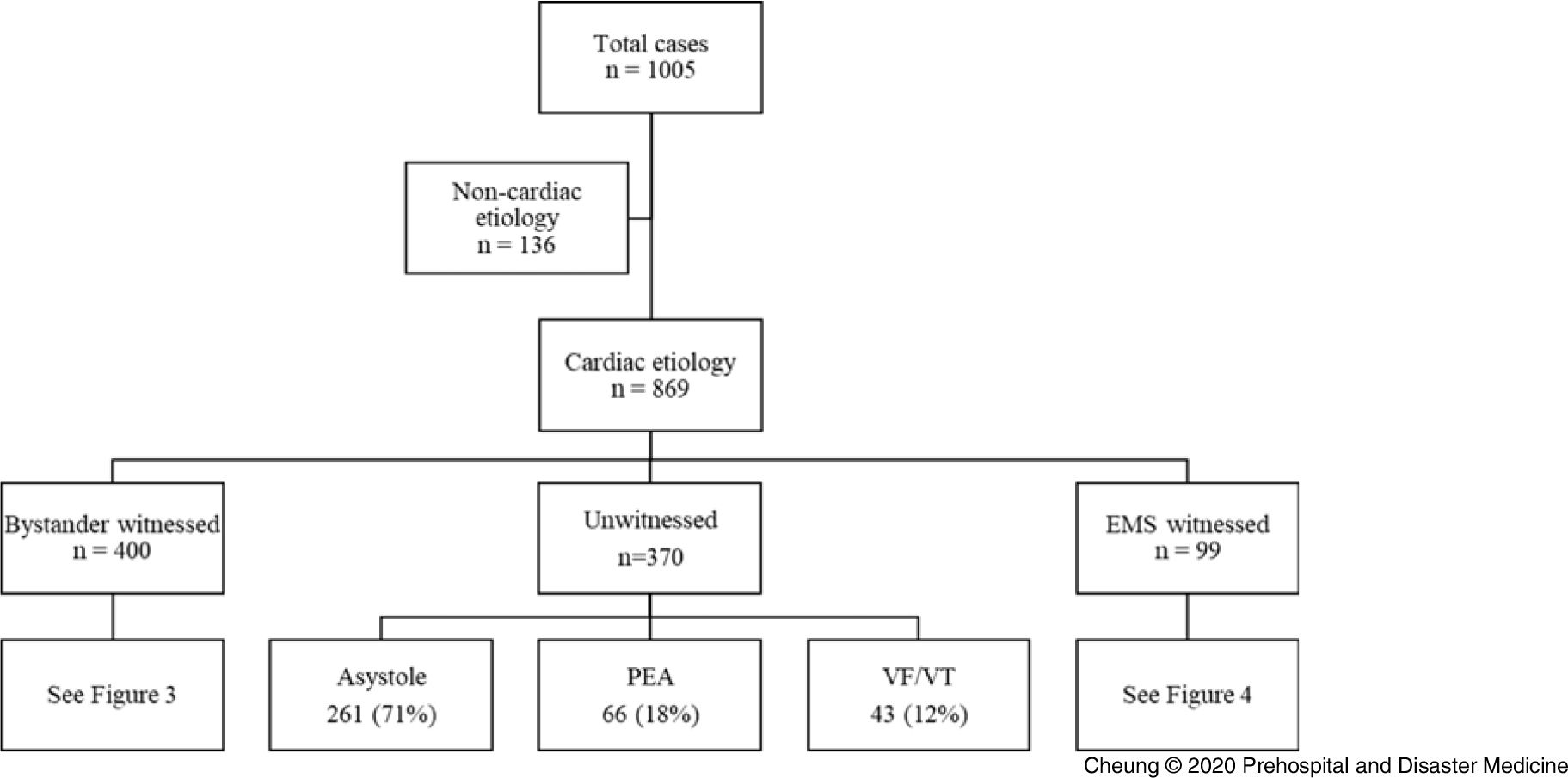
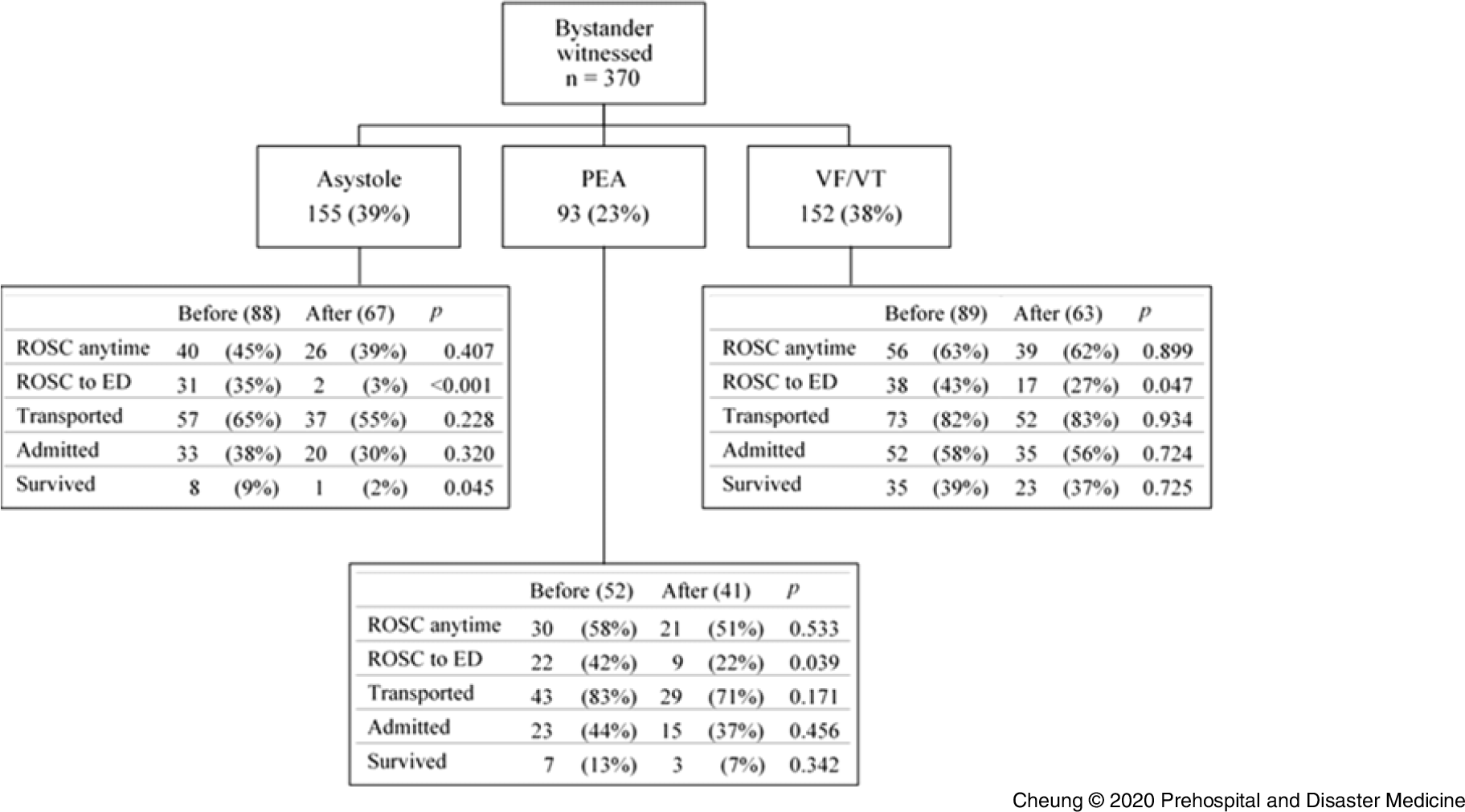
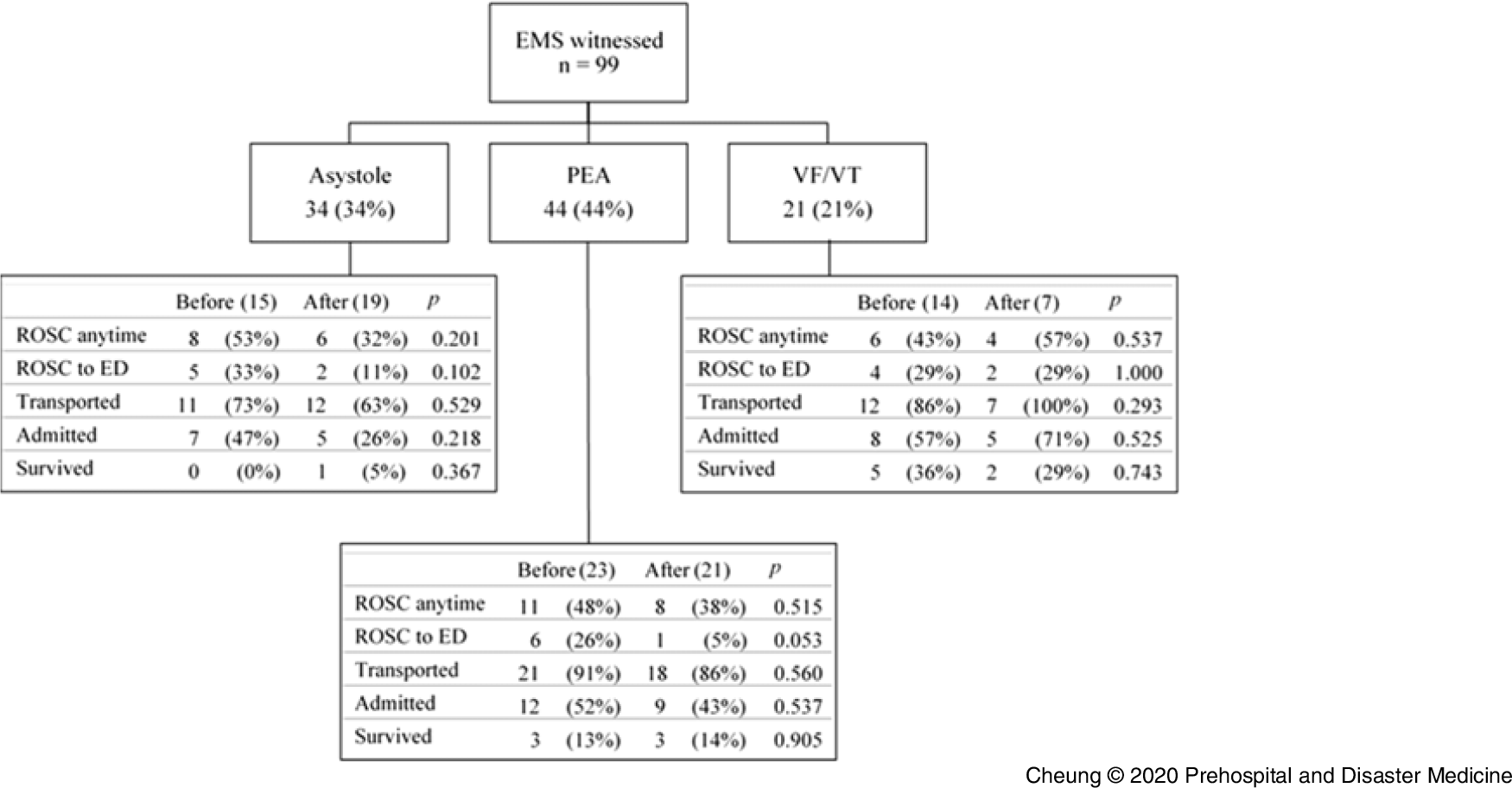
An Utstein style analysis of OHCA cases from cardiac etiology was also performed comparing outcomes before and after the protocol change, as shown in Figure 2, Figure 3, and Figure 4. For the primary outcome of transport to the hospital, no statistically significant change in the rate of transport in any subgroup was seen. There was a statistically significant decrease with bystander witnessed asystolic OHCA (9% versus 2%; P = .045) for the secondary outcome of survival to discharge, but no statistically significant change was seen for other subgroups. For the secondary outcome of arriving to the ED with ROSC, there was a statistically significant decrease for unwitnessed asystolic OHCA (13% versus 4%; P = .013), as well as for bystander witnessed asystolic OHCA (35% versus 3%; P <.001), pulseless electrical activity (PEA; 42% versus 22%; P = .039), and ventricular fibrillation (VF)/ventricular tachycardia (VT; 43% versus 27%; P = .047) OHCA.
Utstein Analysis for Unwitnessed OHCA of Cardiac Etiology.

Utstein Analysis for Bystander Witnessed OHCA of Cardiac Etiology.

Utstein Analysis for EMS Witnessed OHCA of Cardiac Etiology.

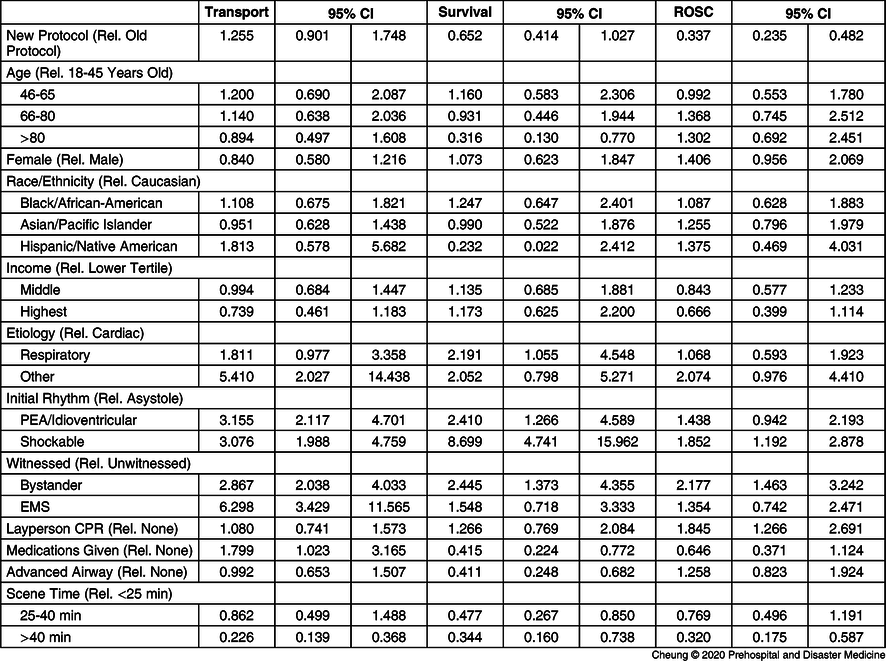
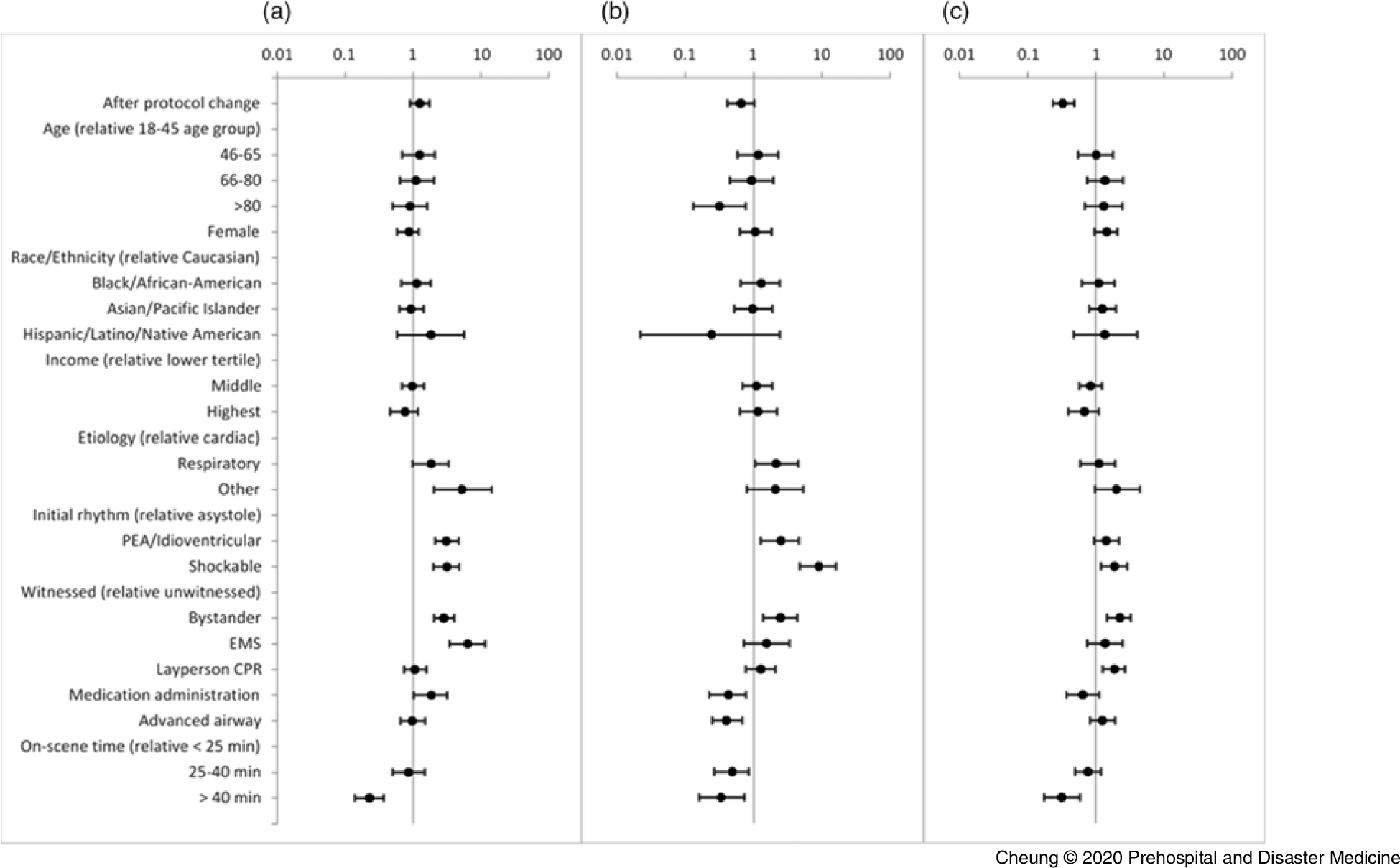
Results from adjusted logistic regression analysis for all included patients are summarized in Table 2 and are displayed in Figure 5 as forest plots. The adjusted odds ratio (OR) for transport to the hospital following the change in protocol was 1.255 (95% CI, 0.901-1.748), though it was not significant. Patients presenting with Utstein factors were significantly associated with increased odds of transport relative to patients presenting without these factors, in particular bystander (OR = 2.867; 95% CI, 2.038-4.033) or EMS (OR = 6.298; 95% CI, 3.429-11.565) witnessed arrest, as well as shockable rhythms (OR = 3.076; 95% CI, 1.988-4.759). Patients with PEA rhythms were also significantly more likely to be transported (OR = 3.155; 95% CI, 2.117-4.701) than patients in asystole. Non-cardiac etiologies of arrest (OR = 5.410; 95% CI, 2.027-14.438) were also more likely to be transported than cardiac etiologies. On-scene time greater than 40 minutes was significantly associated with lower odds of transport (OR = 0.226; 95% CI, 0.139-0.368).
Adjusted Odds Ratios for Transport to Hospital, Survival Following OHCA, and Arrival to ED with ROSC from Logistic Regression Accounting for Patient and Case Characteristics

Abbreviations: CPR, cardiopulmonary resuscitation; ED, emergency department; EMS, Emergency Medical Services; OHCA, out-of-hospital cardiac arrest; PEA, pulseless electrical activity; ROSC, return of spontaneous circulation.
Odds Ratios and 95% CI for (a) Transport; (b) Survival; and (c) Sustained ROSC Associated with Various Patient and Case Characteristics.

The odd ratios for survival to discharge following the protocol change was 0.652, which was not statistically significant (95% CI, 0.414-1.027). Statistically significant factors associated with decreased odds of survival included age greater than 80 years old (OR = 0.316; 95% CI, 0.130-0.770), medication administration in the field (OR = 0.415; 95% CI, 0.224-0.772), advanced airway in the field (OR = 0.411; 95% CI, 0.248-0.682), and on-scene time greater than 25 minutes (OR = 0.477; 95% CI, 0.267-0.850 for 25-40 minutes and OR = 0.344; 95% CI, 0.160-0.738 for greater than 40 minutes). Conversely, patients with Utstein factors of shockable presenting rhythms (OR = 8.699; 95% CI, 4.741-15.962) as well as bystander witnessed arrest (OR = 2.445; 95% CI, 1.373-4.355) had significantly increased odds of survival as compared to patients without these factors. Patients with PEA arrest also had statistically increased odds of survival (OR = 2.410; 95% CI, 1.266-4.589) as compared to patient with asystole.
The protocol change was significantly associated with decreased odds of arriving in the ED with sustained ROSC (OR = 0.337; 95% CI, 0.235-0.482). The only other factor significantly associated with decreased odds of sustained ROSC was on-scene time greater than 40 minutes (OR = 0.320; 95% CI, 0.175-0.587). Increased odds of sustained ROSC were significantly associated with Utstein factors: shockable rhythm (OR = 1.852; 95% CI, 1.192-2.878), bystander witnessed arrest (OR = 2.177; 95% CI, 1.463-3.242), and layperson CPR (OR = 1.845; 95% CI, 1.266-2.691).
Discussion
One goal of termination of resuscitation protocols is to identify patients who would benefit from prolonged resuscitation and transport, generally patients with favorable Utstein characteristics. This protocol revision had limited success in this regard. The overall rate of patients arriving in the ED with ROSC decreased following the protocol revision from 30% to 13%, a statistically significant difference. In particular, patients with bystander witnessed arrest were more likely to arrive in the ED without ROSC. It is unclear why a larger proportion of patients in the revised protocol group did not have sustained ROSC, though this result does suggest patients in that group were overall sicker. Despite the likely sicker population, the overall survival rate remained largely constant (14% versus 11%), with no statistically significant change. Thus, the protocol revision did seem to encourage the transport of sicker patients, in particular, those with witnessed arrest, who prior to the revision, may have had their resuscitations terminated in the field.
One notable feature of the local EMS guidelines is the utilization of an EtCO2 cutoff of 5mmHg, whereas current guidelines have identified a cutoff of 10mmHg.Reference Mancini, Diekema and Hoadley23 This conservative value likely leads to over-triage of OHCA patients, which would be consistent with the unchanged rate of transport at 62% following implementation, despite the likely sicker population less likely to arrive in the ED with ROSC. This result suggests an EtCO2 cutoff of 5mmHg is too low to usefully screen OHCA for patients who would benefit from transport to the hospital.
Termination of resuscitation protocols are also implemented in part to decrease utilization of resources for patients who are unlikely to survive their OHCA.Reference Morrison, Visentin and Kiss2-Reference Sasson, Hegg, Macy, Park, Kellermann and McNally4 The results from this study suggest the protocol adopted by this municipality’s EMS system did not achieve this goal. The rate of transport did not change overall and remained at 62%, and therefore, there was no difference in hospital utilization after protocol revision. In addition, the data show the proportion of resuscitations lasting over 40 minutes increased from 17% to 31% following the protocol revision, a statistically significant difference. Thus, not only did hospital utilization remain unchanged following protocol revision, but EMS units were held for significantly longer, increasing the burden on the EMS system as a whole. This increased EMS utilization is likely due to the revised protocol requirement for 40 minutes of resuscitation regardless of EtCO2 monitoring, which differs from guidelines specifying 20-minute cutoff for patients with EtCO2 less than 10mmHg.Reference Mancini, Diekema and Hoadley23 The strict requirement of a 40-minute resuscitation limits the utility of EtCO2 monitoring and its prognostic benefits, which limits the impact of the protocol revision on decreasing transport.
Overall, this study found the protocol revision with the inclusion of a conservative EtCO2 cutoff and prolonged resuscitation time did not decrease the rate of hospital transport, and was associated with an increased rate of patients pronounced deceased in the ED. While this study is not able to establish causation, this result suggests inclusion of overly conservative requirements in implementing a termination of resuscitation may be counterproductive, and motivates the revision of the protocol to be more consistent with published guidelines. Further work could examine the effects on utilization and patient outcomes if the protocol were modified to reflect these guidelines.
Limitations
There are several limitations in this study. Findings are based only on a single EMS system in one geographic region. The CARES database is largely complete for prehospital data, but a significant portion of the prehospital time data are missing, as well as patient race and ethnicity data. While this study addresses this deficiency with the standard multiple imputation analysis, a complete data record would be ideal. In addition, the study is observational by design, and thus, cannot establish causality between characteristics and outcomes. Additionally, unmeasured confounders may contribute to observed associations, though this study uses a logistic regression analysis to mitigate confounding. Another study limitation is that it is designed to detect a 10-percentage point difference in survival, and enough data were obtained to detect a 6-percentage point difference, which is not sufficient to detect the observed difference in survival and will require further investigation to evaluate this outcome. In addition, due to the available case volume, this study was not powered to assess neurologic outcome, and further work will also be necessary to evaluate the influence, if any, this protocol revision had on neurologically intact survival rates. Finally, this study cannot provide insight into how the protocol change is applied by paramedics in the field.
Conclusion
After revising its termination of resuscitation protocols to include an EtCO2 measurement and an increased resuscitation time, one urban EMS system found no statistically significant change in rates of transport or survival. However, a significant decrease in the rates of patients arriving to the ED with ROSC was observed, particularly for those with bystander witnessed OHCA. In addition, results from the study also show a larger proportion of OHCA resuscitation lasting 40 minutes or more following the protocol change.
Conflicts of interest
none
Supplementary Material
To view supplementary material for this article, please visit https://doi.org/10.1017/S1049023X20000473